Fo Guang Shan
Fo Guang Shan, Taiwan
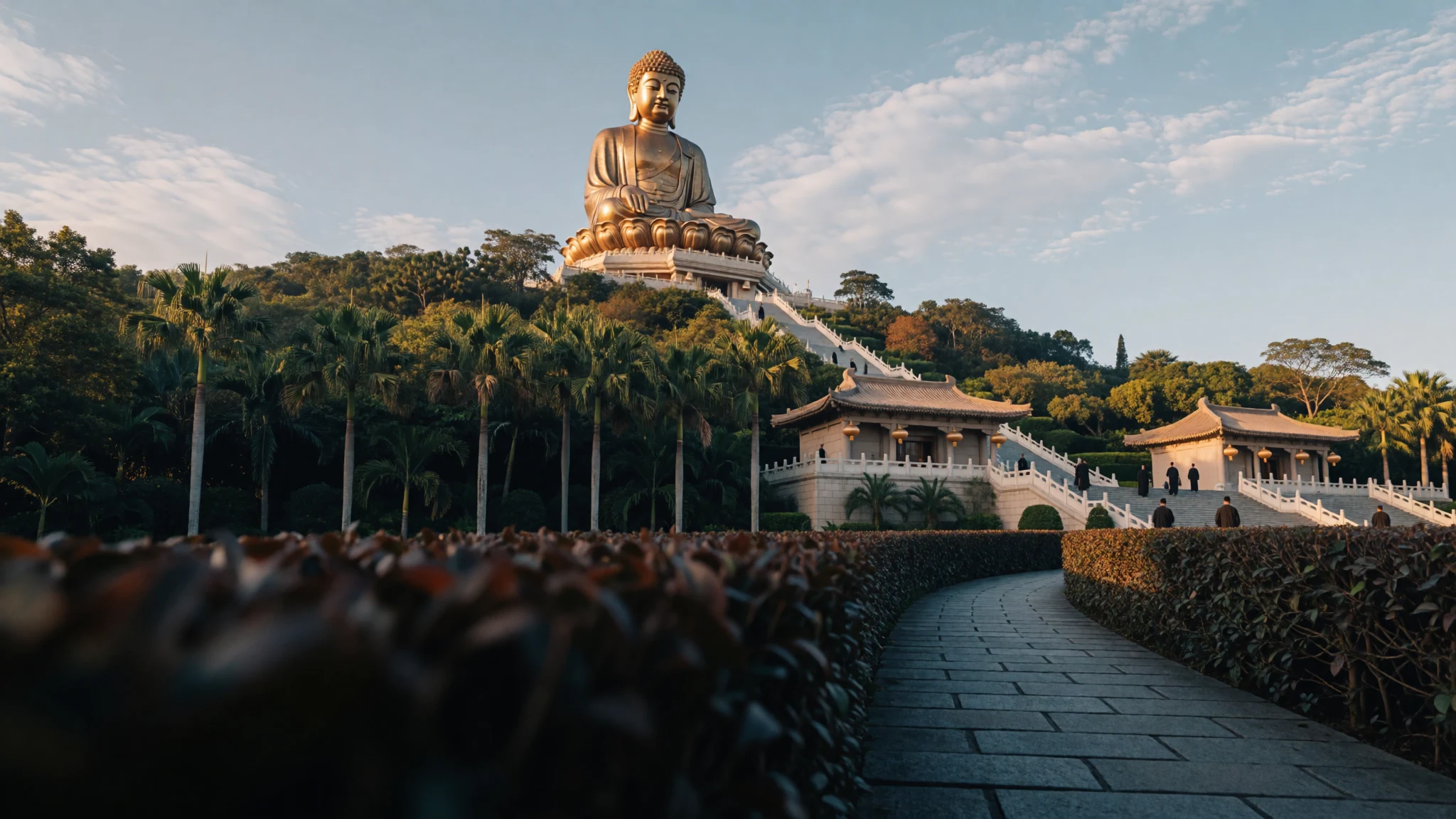
Fo Guang Shan is a large, calm Buddhist monastery in southern Taiwan, where a giant Amitābha statue meets modern, welcoming Humanistic Buddhism.
The place
Fo Guang Shan (佛光山, 'Buddha's Light Mountain') is both a place and an organisation: a Chinese Mahāyāna Buddhist monastic order, and the hill monastery in Dashu District, Kaohsiung, that serves as its headquarters. The monastery is described as the largest Buddhist monastery in Taiwan, and the order also runs one of the island's bigger charities. Its counterpart for lay followers is the Buddha's Light International Association. The teaching is called Humanistic Buddhism, an approach that tries to carry practice into everyday life, schools and charity work rather than keep it behind monastery walls. Its roots lie in the Linji school of Chan, though the founder described the order as drawing on all eight schools of Chinese Buddhism. Technology is part of the character: the order is known for fitting its temples with modern equipment, and it has associated universities in Taiwan and the United States. Within Taiwan it is counted among the 'Four Great Mountains' of Buddhism, alongside Dharma Drum Mountain, Tzu Chi and Chung Tai Shan. The setting is outside the main city of Kaohsiung, which has the country's largest port, so most visitors treat the monastery as a day out from town and pair it with sights, lakes and night markets in the city. It is a working religious community first and a sightseeing stop second, so the atmosphere is calmer and more devotional than the size of the buildings might suggest. Weekends and public holidays are likely to be busier than weekdays.
Its story
The story of Fo Guang Shan begins in 1967, when the monk Hsing Yun bought more than 30 hectares of land in Dashu, then part of Kaohsiung County, and held a groundbreaking ceremony on 16 May that year. Decades of building followed: university halls, shrines, residences for monastics, retirement homes and a cemetery. In 1975 the 36-metre statue of Amitābha Buddha was consecrated, and it remains the monastery's best-known image. The Great Hero Hall was completed in 1981. Meanwhile branch temples were rising elsewhere, carrying the order's style well beyond its mother monastery. A turning point came in May 1997, when Hsing Yun closed the mountain gate to the general public. His stated reason was to give the resident monastics the cloistered calm that serious practice needs, a step that many Chinese monasteries have also taken. The closure did not sit easily with everyone. At the end of 2000 the then president, Chen Shui-bian, and officials from Kaohsiung visited, bringing requests from local people that the gate be opened again. After consideration, the order agreed to reopen to a degree, offering the public a place to practise Pure Land Buddhism. Access arrangements have shifted over the years, which is a good reason for any traveller to read the current visiting information on the official site rather than assume the rules of an older guidebook still apply.
What to see
- Amitābha Buddha statue — Fo Guang Shan Monastery, Dashu District
The 36-metre Amitābha Buddha statue, consecrated in 1975, is the image most people associate with Fo Guang Shan. Amitābha is the central Buddha of Pure Land practice, the strand of Buddhism the reopened monastery offers to the public. It dominates the hillside from many angles, so walk around it slowly rather than taking one photograph and leaving.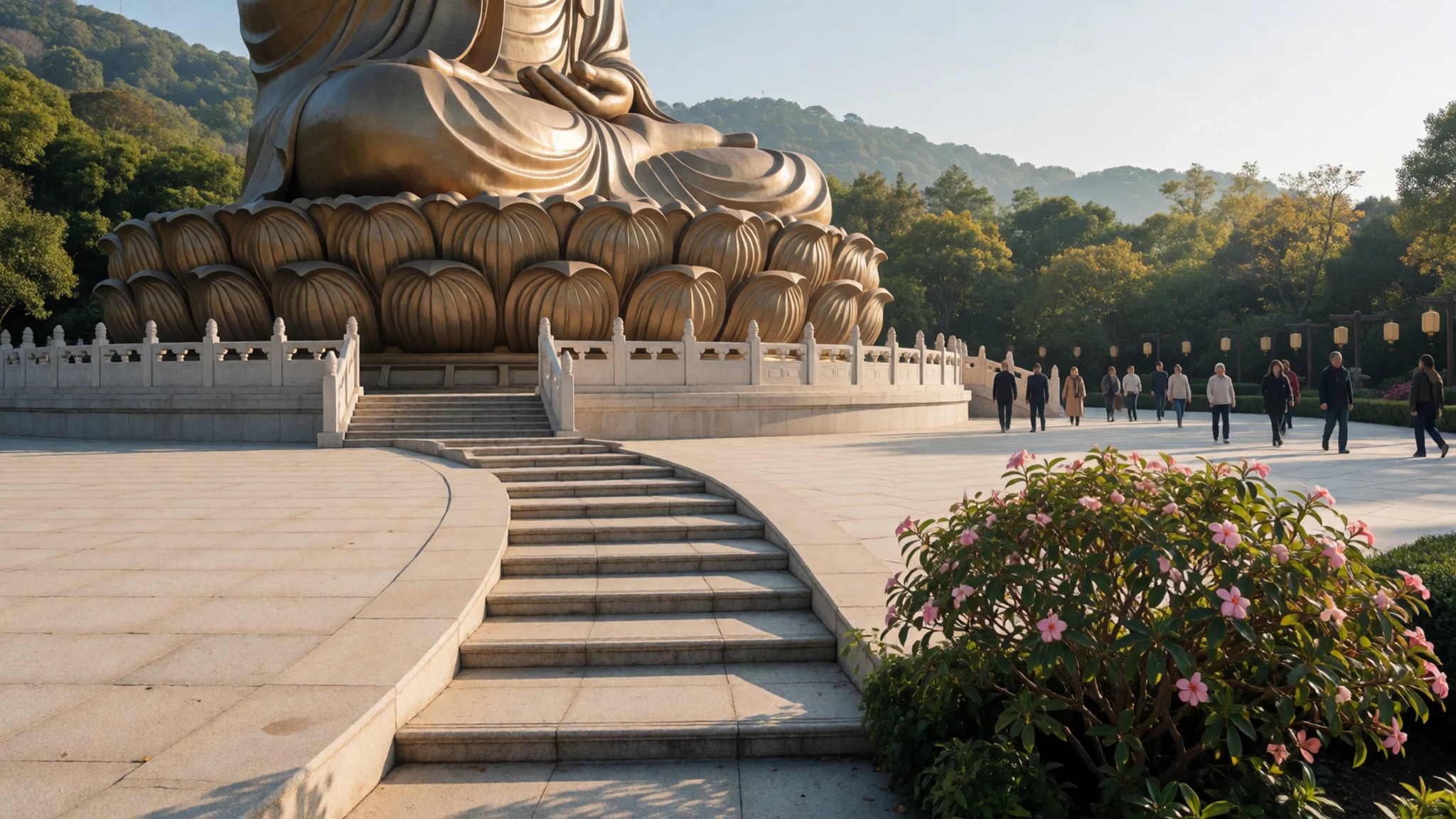
- Great Hero Hall — Fo Guang Shan Monastery, Dashu District
The Great Hero Hall, completed in 1981, is the monastery's principal shrine hall and the place where the order's religious life is most visible. Visitors who arrive during a service should stand quietly towards the back. Dress modestly, speak softly, and take photographs only where signs clearly allow it.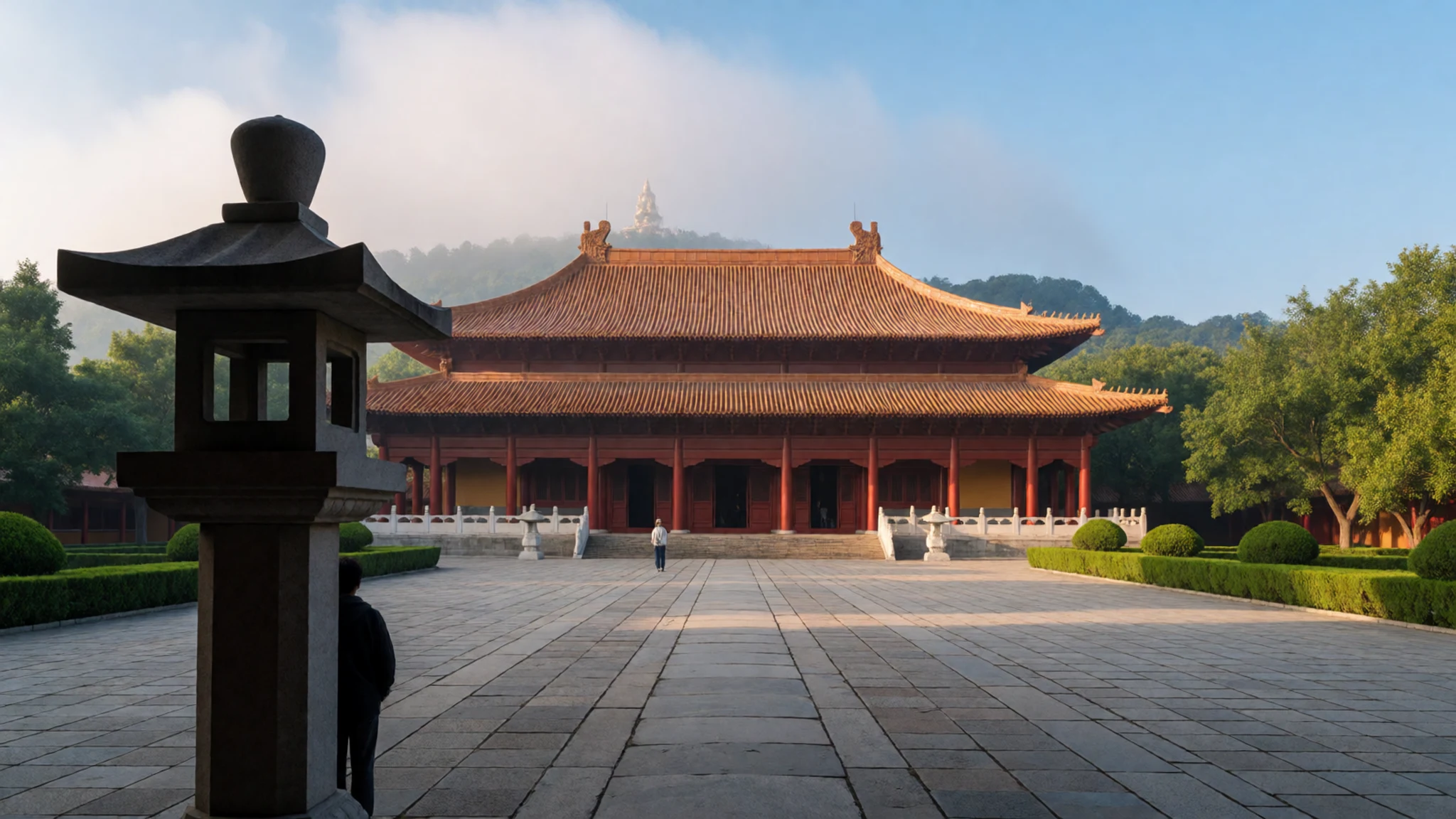
- Buddha Memorial Center — Fo Guang Shan, Dashu District
The Buddha Memorial Center is part of the wider Fo Guang Shan community and appears in aerial photographs as a large, orderly group of buildings on the hillside. Opening arrangements and the route from the main monastery are not something to guess at, so check the official website before building a day around it.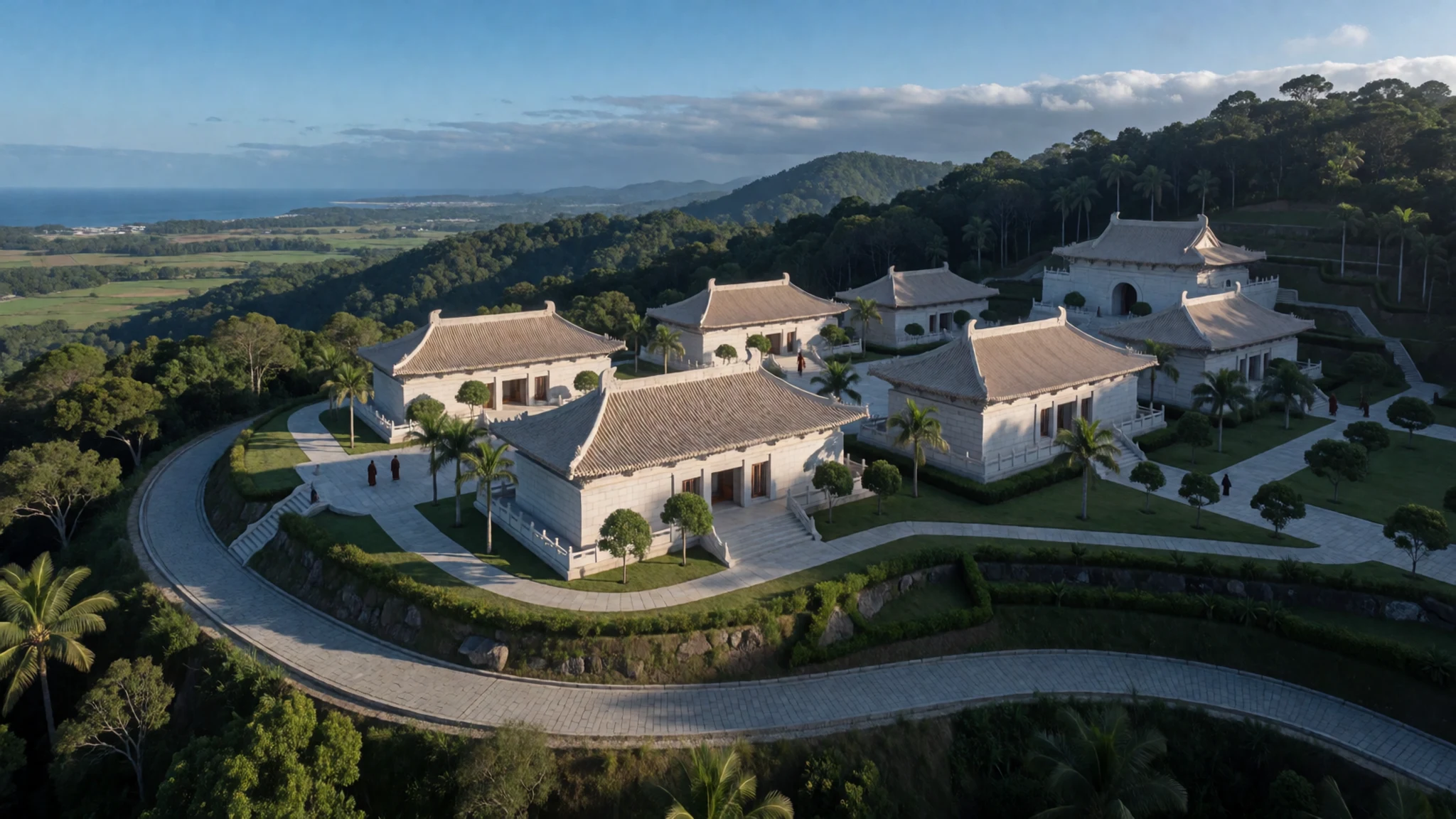
- Sutra Repository — Fo Guang Shan Monastery, Dashu District
The Sutra Repository is described as Fo Guang Shan's newest building and is home to the Institute of Humanistic Buddhism. It shows that the order sees itself as a centre of study and scholarship as well as ritual. As a working institute it may have restricted access, so ask at the visitor desk about what is open.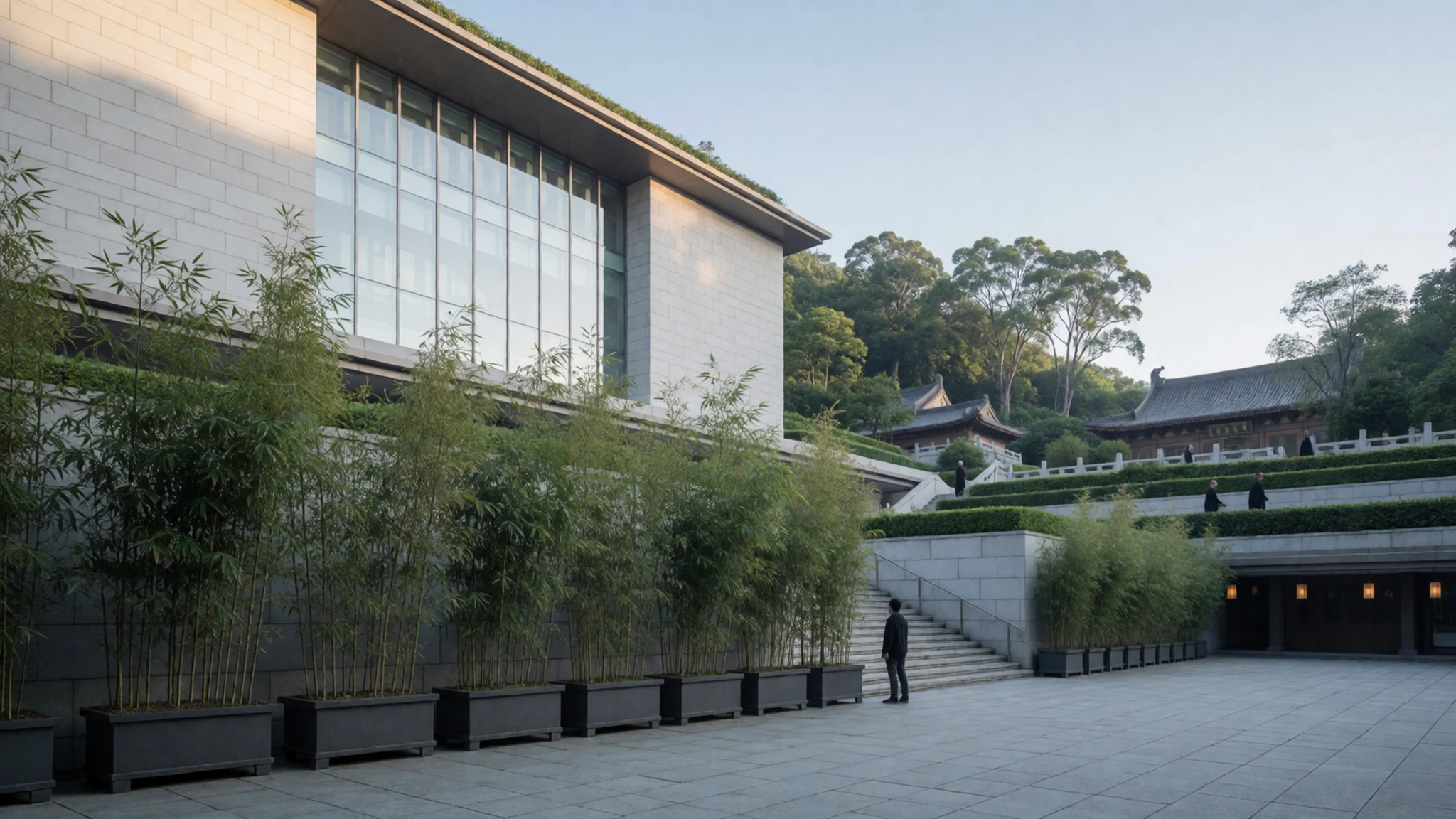
- Lotus Lake — Zuoying, Kaohsiung
Lotus Lake lies in the northern part of Kaohsiung city, well away from the monastery, and makes a sensible second stop on the same day. Temples ring the shore, and a few have been built out over the water. The flat loop suits a stroll or a bike ride, best done early or late because midday is hot.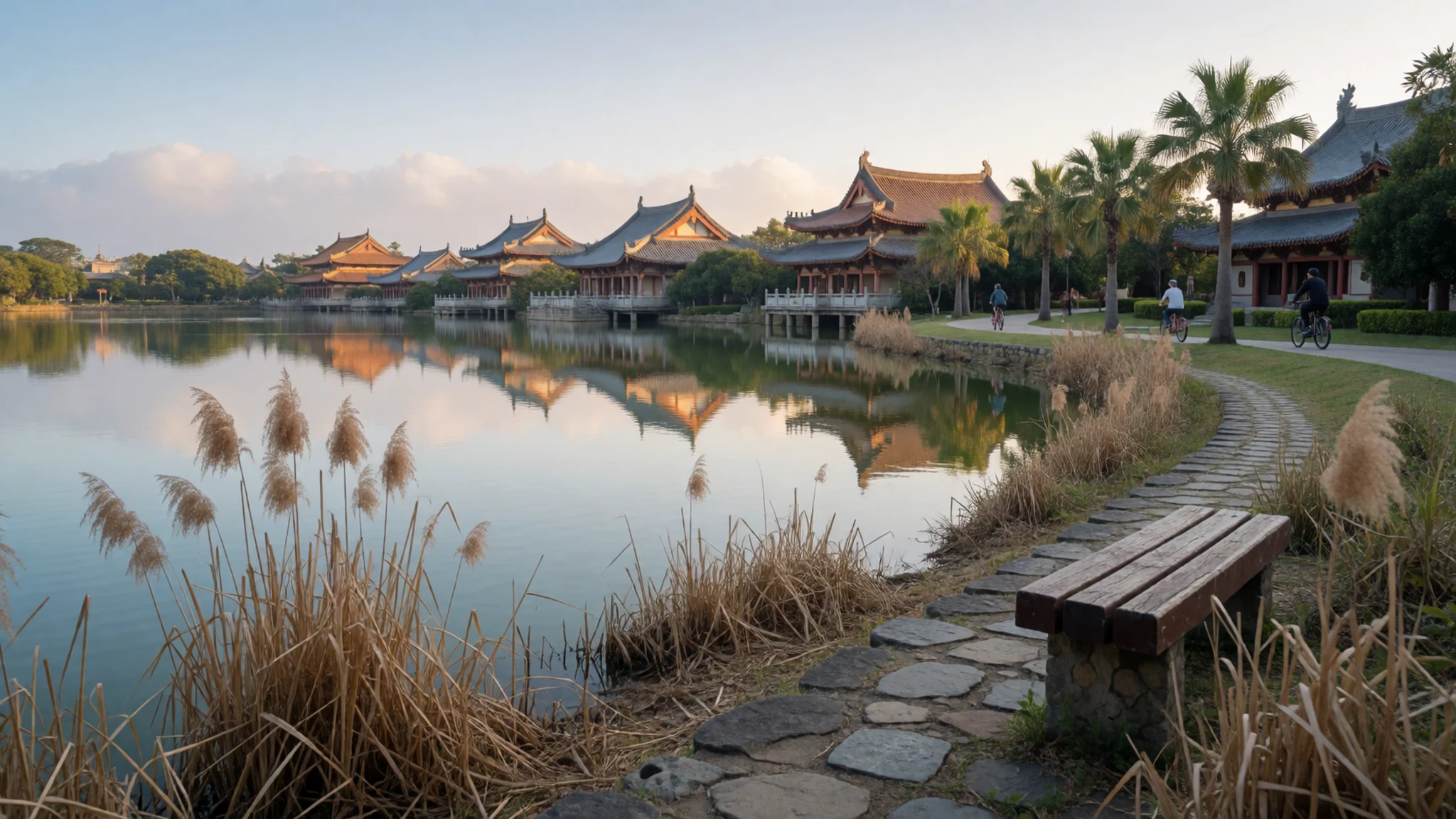
- Pei Chi Pavilion — Lotus Lake, Kaohsiung
Pei Chi Pavilion is a large statue of Beiji standing on Lotus Lake. The figure is hollow and contains a temple inside. A plank walkway lined with animal sculptures links it to the shore. It makes a lively contrast with Fo Guang Shan: a popular temple on the water beside a quiet monastic order on the hill.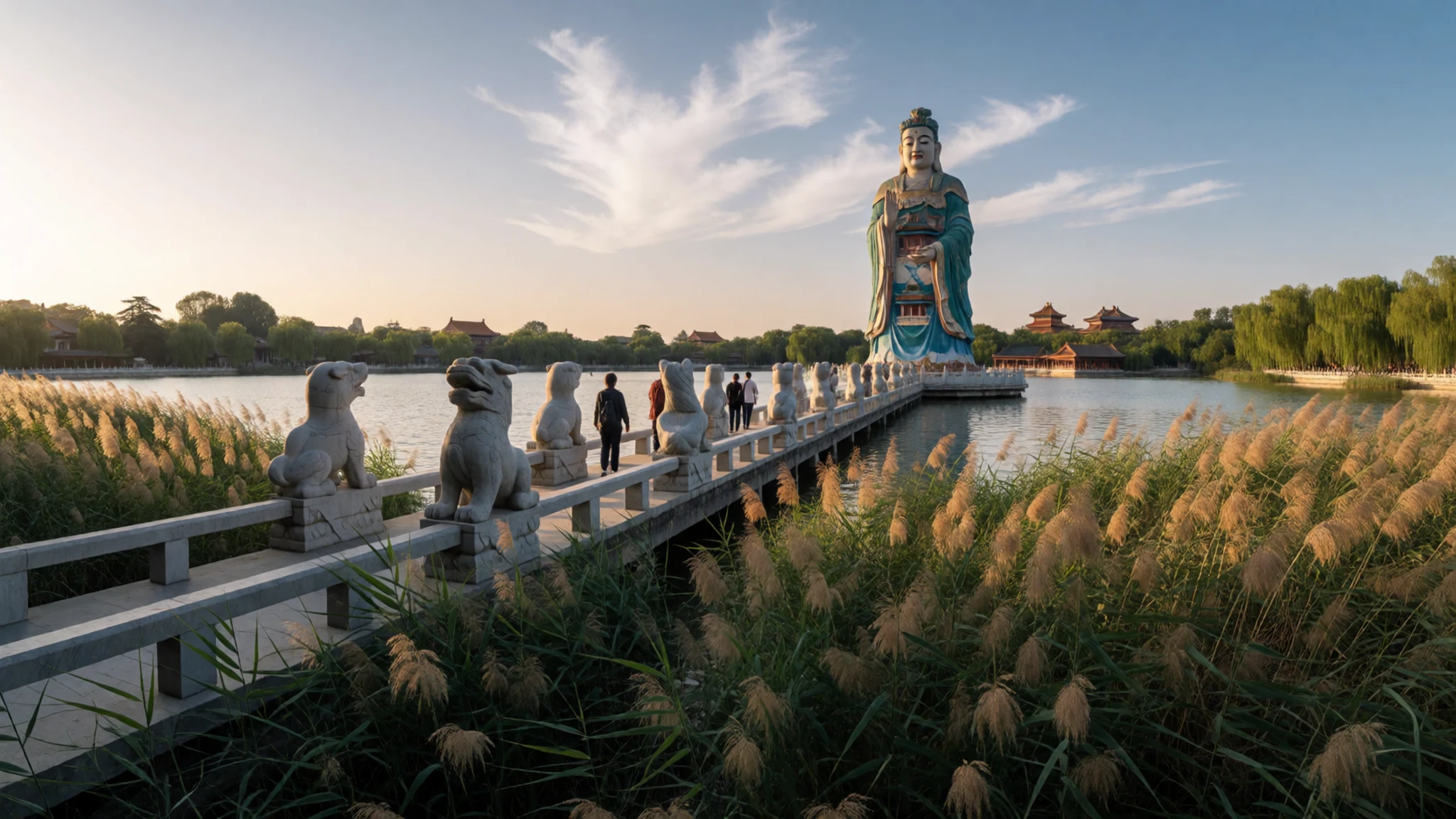
Culture
Fo Guang Shan belongs to Chinese Mahāyāna Buddhism, and in particular to the Humanistic Buddhism promoted by its founder Hsing Yun: the idea that the Buddha's teaching belongs in daily life, education, culture and charity as much as in the meditation hall. That outlook explains why the order runs universities and a lay association, and why its temples are set up to receive visitors. Pure Land practice, centred on Amitābha, is the form offered to the public here. In Taiwan the order is one of four large Buddhist organisations often named together, and Buddhist life sits comfortably beside Taoist and folk temples, such as those around Lotus Lake in the city. The resident monks and nuns are a community in training, and the 1997 decision to close the mountain gate shows how seriously the order takes quiet. Visitors will often see robed monastics going about their work, hear chanting from the halls, and find vegetarian food at the centre of communal meals. A common greeting is palms pressed together with a slight bow, and a visitor can simply mirror it. Gifts, donations and incense are matters of personal choice and nobody is pressed into them. In every shrine hall, keep your voice low, remove your hat, wear modest clothing, and follow the signs and the monastics on where to walk and whether photographs are allowed.
What to wear
Fo Guang Shan's most visible traditional dress is the monastic robe: loose, simple garments worn daily by resident monks and nuns, who also shave their heads as part of monastic discipline. Lay followers at ceremonies sometimes wear a plain long robe over their ordinary clothes, though this varies by event. Beyond the monastery, Taiwan's older dress traditions include the changshan and qipao of Chinese tailoring, made in silk or cotton and seen today mostly at weddings, festivals and performances, the woven and embroidered textiles of Taiwan's Indigenous peoples, and the indigo-dyed cotton clothing traditionally linked with Hakka communities. Day to day, people in Kaohsiung wear light, practical clothes: T-shirts, shorts or thin trousers, trainers or sandals, with an umbrella or rain jacket when the weather turns. Visitors to the monastery have two jobs at once: staying cool and showing respect. Breathable cotton or linen with covered shoulders and knees works well, and a light scarf is handy for the shrine halls. Slip-on shoes help where footwear comes off. Expect a lot of walking across open paved areas with limited shade, so comfortable shoes, a hat, sunscreen and a compact umbrella for sun or rain are all sensible. Slogan T-shirts, very short shorts and bare shoulders are best left for the beach.
What to eat
- Vegetarian buffet plates — small vegetarian buffet eateries in central Kaohsiung
Tofu, vegetables and mock meats made from soy or wheat gluten, piled onto a plate from a self-service counter. Vegetarian food is central to Buddhist life here, and these eateries are a natural stop after a morning at the monastery. Tell the cashier if rice is wanted.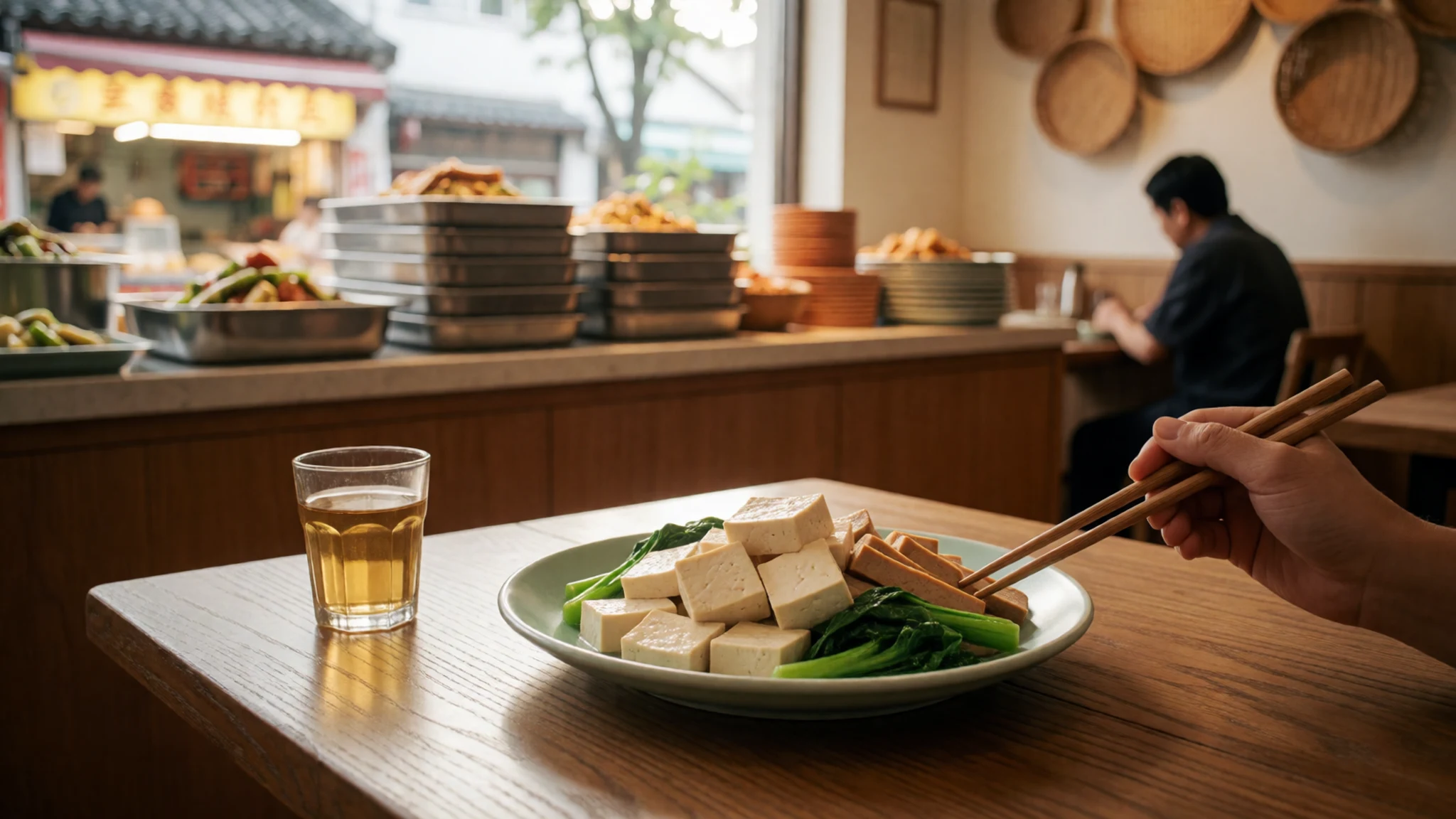
- Cijin seafood — the main street of Cijin Island
Fresh fish, prawns and shellfish, usually grilled, fried or steamed and ordered by the dish to share. Many restaurants line the same street and sell much the same catch, so walk the length of it and choose by the size of the crowd.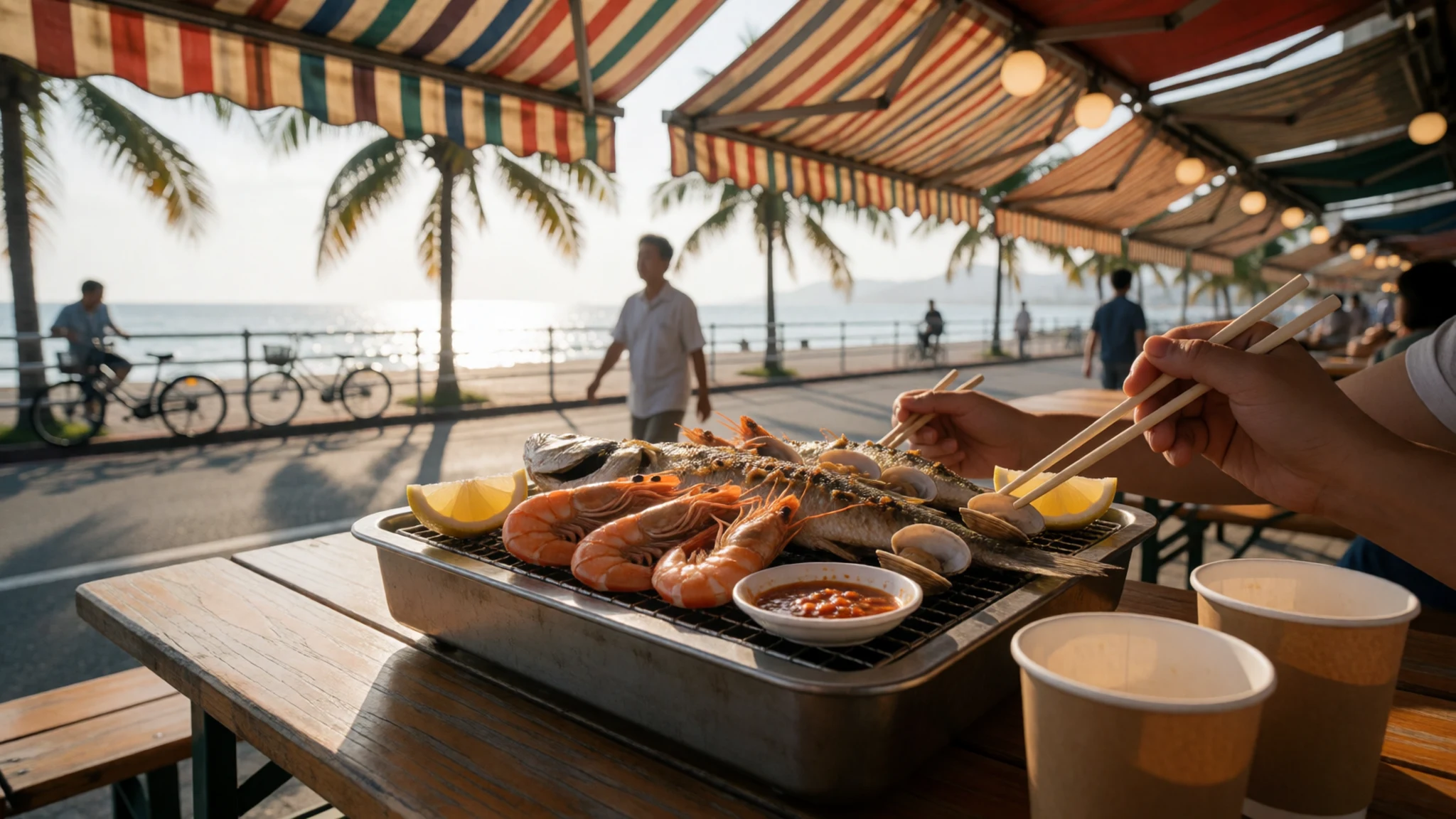
- Night-market snacks — Liouhe Night Market, Kaohsiung
Liouhe Night Market is the most popular in the city and very much a tourist favourite, with plenty of seafood and snacks from several cuisines. Local dishes are there too, but take some looking for. Go early in the evening for elbow room. - Conveyor-belt sushi — sushi-train restaurants around central Kaohsiung
Sushi trains offer a wide range of plates, including vegetarian ones, which makes them a useful stop for mixed groups of meat-eaters and vegetarians. Plates are taken from the belt as they pass, and the stack of empties is counted at the end. - Café brunch plates — café-style diners in central Kaohsiung
Omelettes, sandwiches, salads and burgers served as breakfast or brunch in diner-style cafés. They are a practical start before an early bus or train to the monastery, and a familiar fallback for anyone tired of travelling on unfamiliar menus.
Plan it
Best time. November to March is usually milder and more comfortable for a site with so much walking in southern Taiwan. Summers are hot and humid, with rain and typhoon risk, so check forecasts before committing to dates.
How long. 1–2
Getting there. Taiwan Taoyuan International Airport serves Taipei and is linked to the High Speed Rail; from there, trains run to Zuoying station in Kaohsiung (about 2 hours). From Taipei the fastest high-speed trains take around 1½ hours. Kaohsiung also has its own international airport with more limited service. The last leg to the monastery in Dashu is by local bus, taxi or organised tour; confirm current options on the official site.
Budget. mid
Tips
- Check the official website (https://www.fgs.org.tw/) for current visiting arrangements before travelling, as public access has changed over the years
- Start early, because the paved areas have little shade and the middle of the day is hot
- Carry water, sun protection and an umbrella that works for both sun and rain
- Book high-speed rail seats ahead and ask for a designated seat if travelling with luggage
- Keep some cash for small eateries and night-market stalls
Etiquette
- Dress modestly and keep voices low in shrine halls
- Follow signs and the monastics' guidance on photography and where visitors may enter
- Remove your hat in prayer halls, and take off shoes only where a step or shoe rack shows it is expected
Nearby
Sources
- Wikidata Q548694 (CC0)
- Wikipedia: Fo Guang Shan (rev 1362746967) (CC BY-SA 4.0)
- Wikivoyage: Kaohsiung (rev 5430369) (CC BY-SA 4.0)
- Photo: Fo Guang Shan Buddha Memorial Center, Huicheng1967 (CC BY-SA 4.0)
- Photo: Fo Guang Shan logo, Huicheng1967 (CC BY-SA 4.0)
- Photo: Aerial View of Fo Guang Shan, Huicheng1967 (CC BY-SA 4.0)
- Photo: Sutra Repository, Huicheng1967 (CC BY-SA 4.0)
- Photo: 西來寺住持慧濟法師, Tktru (CC BY 3.0)
- Photo: 1995 FGS World Buddhology Exam bookmark, Solomon203 (CC BY 3.0)
- Photo: Exhibition by Fo Guang Shan at the 2008 Taiwan Lantern Festival, Pascal Terjan (CC BY-SA 2.0)
- Photo: Fo Guang Shan stand at the 2013 Taipei International Book Exhibition, 玄史生 (CC BY 3.0)


