Florianópolis
Florianópolis, Brazil
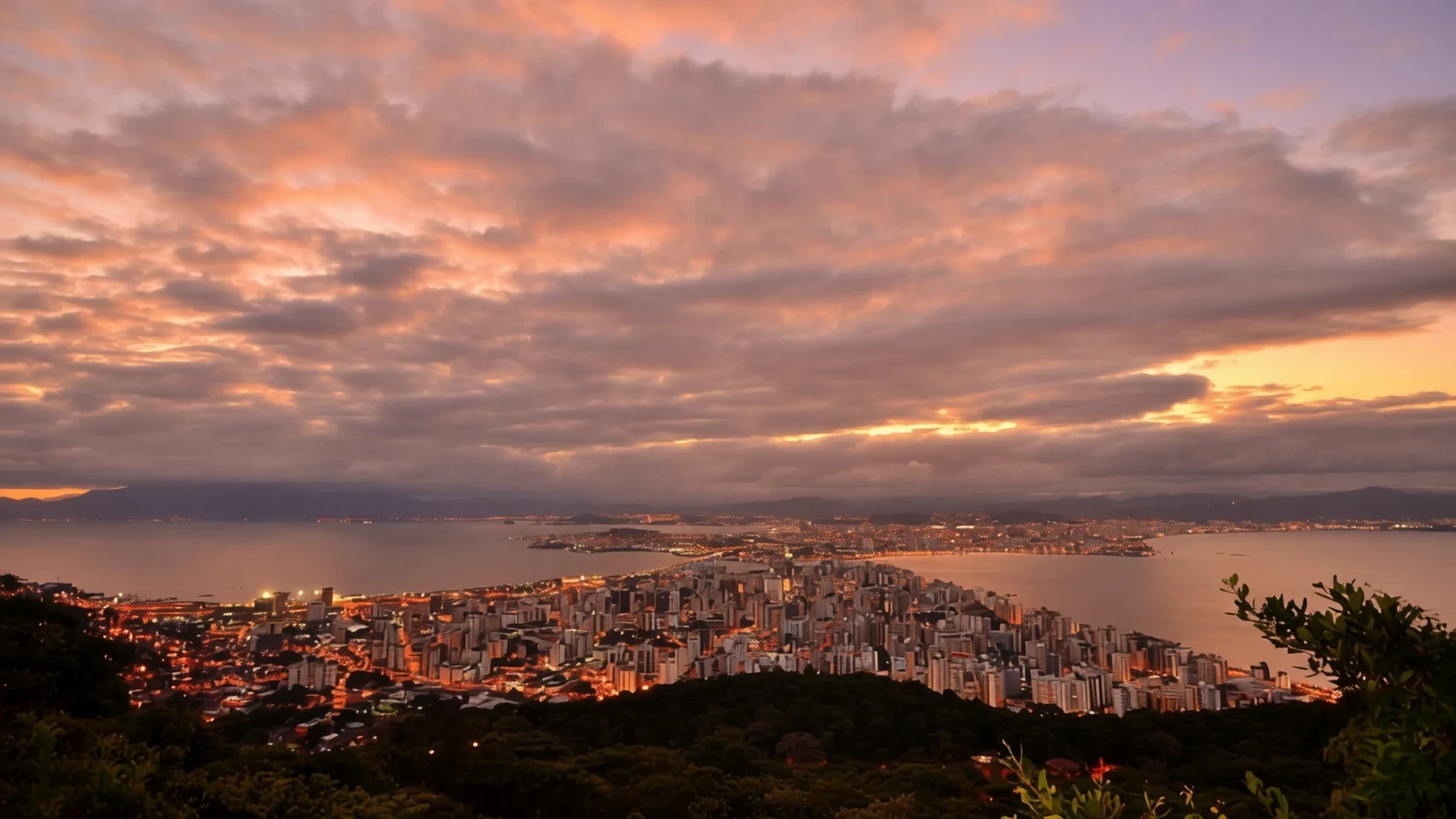
Florianópolis is a surf-and-lagoon island city in southern Brazil, with a colonial centre, Azorean fishing villages and beaches for every mood.
The place
Florianópolis is the capital of Santa Catarina state, in the South Region of Brazil, and most of it sits on an island rather than the mainland. The municipality also takes in smaller islands and a strip of the continent, and a bridge from 1926 ties the two parts together. About 587,000 people live there, and the locals call it Floripa or the Magic Island.
The population is unevenly spread. The centre, the north and the middle of the island are busy and built up, while the southern half is quieter, with fishing hamlets, trails and long stretches of sand. The city is low-lying, at about 3 metres above sea level at its core, but hills rise behind the bays and give the island its folded, green skyline.
The economy leans on technology, tourism and services, which gives the place a younger, more international feel than many beach towns. Surfers, remote workers, Argentine holidaymakers and Brazilians from São Paulo all mix here, especially in summer.
The beaches are the draw, and the island has dozens, each with its own character: some are wide and wave-battered, others sheltered and calm. Lagoa da Conceição, the big lake in the middle of the island, is the social hub for water sports, restaurants and nightlife. The honest trade-off is crowds: in peak summer the roads and beaches fill up, traffic crawls and prices climb. Outside that window the island is far more relaxed, and the sea is still pleasant for much of the year.
Its story
Florianópolis begins with the Carijós, a Tupi people who lived around the island and left shell mounds, called sambaquis, that archaeologists date back as much as 4,000 years. Their name for the place, Meiembipe, is usually translated as mountain along the channel, which describes the geography neatly.
Portuguese ships reached the area in the early sixteenth century. It was first called the Island of the Ducks, then renamed Santa Catarina Island, and for a long time it mainly served as a stop for vessels heading to the River Plate region, supplying them on the way.
Permanent settlement came later, in the 1670s, when a bandeirante named Francisco Dias Velho brought an agricultural venture and built a chapel to Nossa Senhora do Desterro. That name stuck to the growing village, which the Crown formally recognised as a town in 1726, the year recorded as the city's founding.
Its position was the point. The port lay roughly halfway between Rio de Janeiro and Buenos Aires, then two major Atlantic cities, so the Portuguese treated it as a strategic place to hold. In 1739 a separate captaincy was created for the island, with Desterro as its capital.
Later came the Azorean settlers whose villages, church squares and fishing traditions still shape the island's older districts, and the city eventually took the name Florianópolis. The layers are easy to read today: indigenous names on the map, Portuguese colonial streets in the centre, and Azorean houses in the south.
What to see
- Praça XV de Novembro and the Cathedral — Centro
The old centre of Florianópolis is organised around this shady square, and the Metropolitan Cathedral faces it. Go in the morning, when the heat is gentler, and take time to sit under the trees before looking inside the church and wandering the surrounding lanes.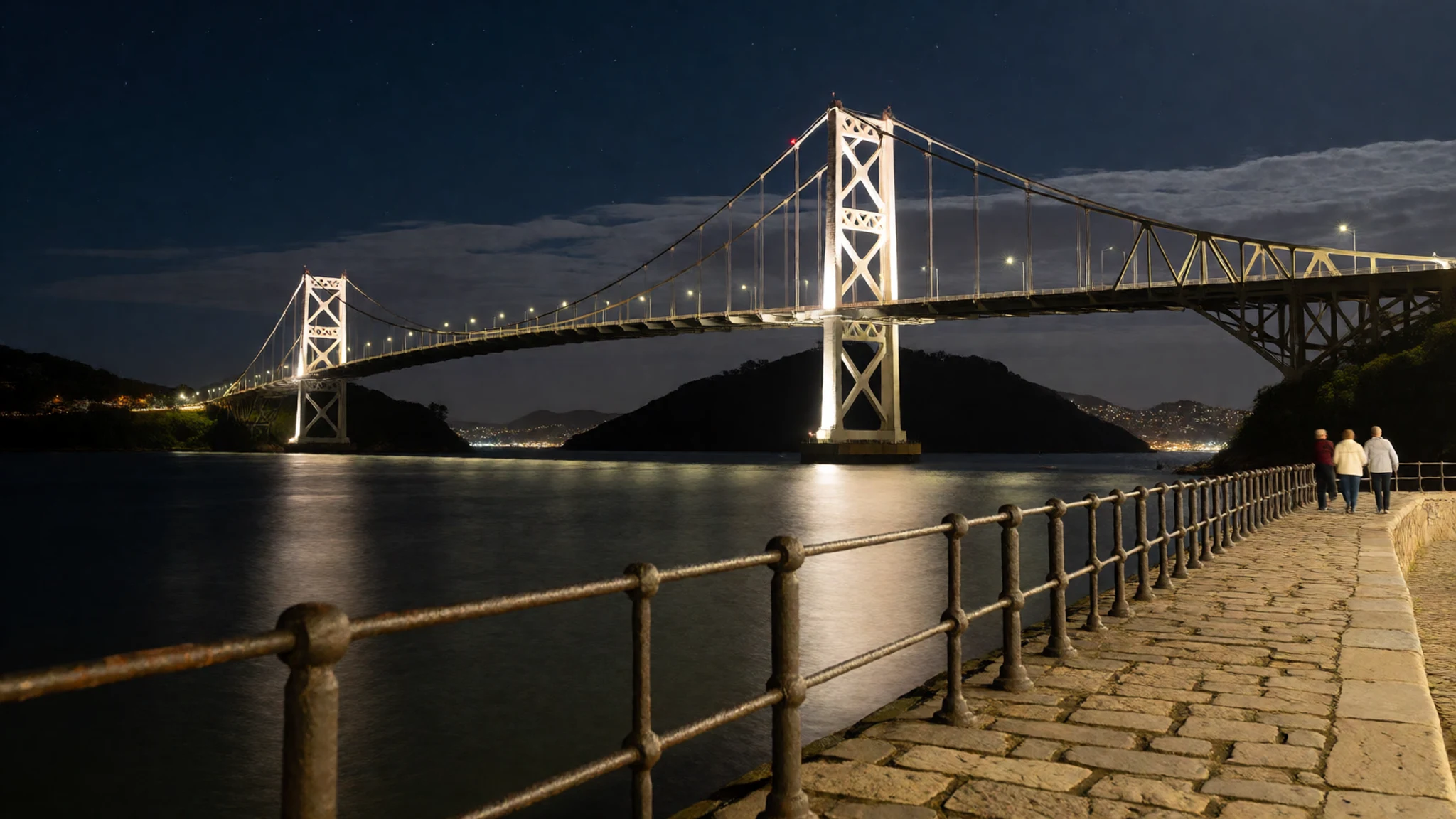
- Cruz e Sousa Palace — Centro, near Praça XV
Built in the eighteenth century as the governor's residence and office, this building near the main square was later dedicated to the symbolist poet Cruz e Sousa. It now works as a museum of the region's history, so it is a good first stop for context on the island.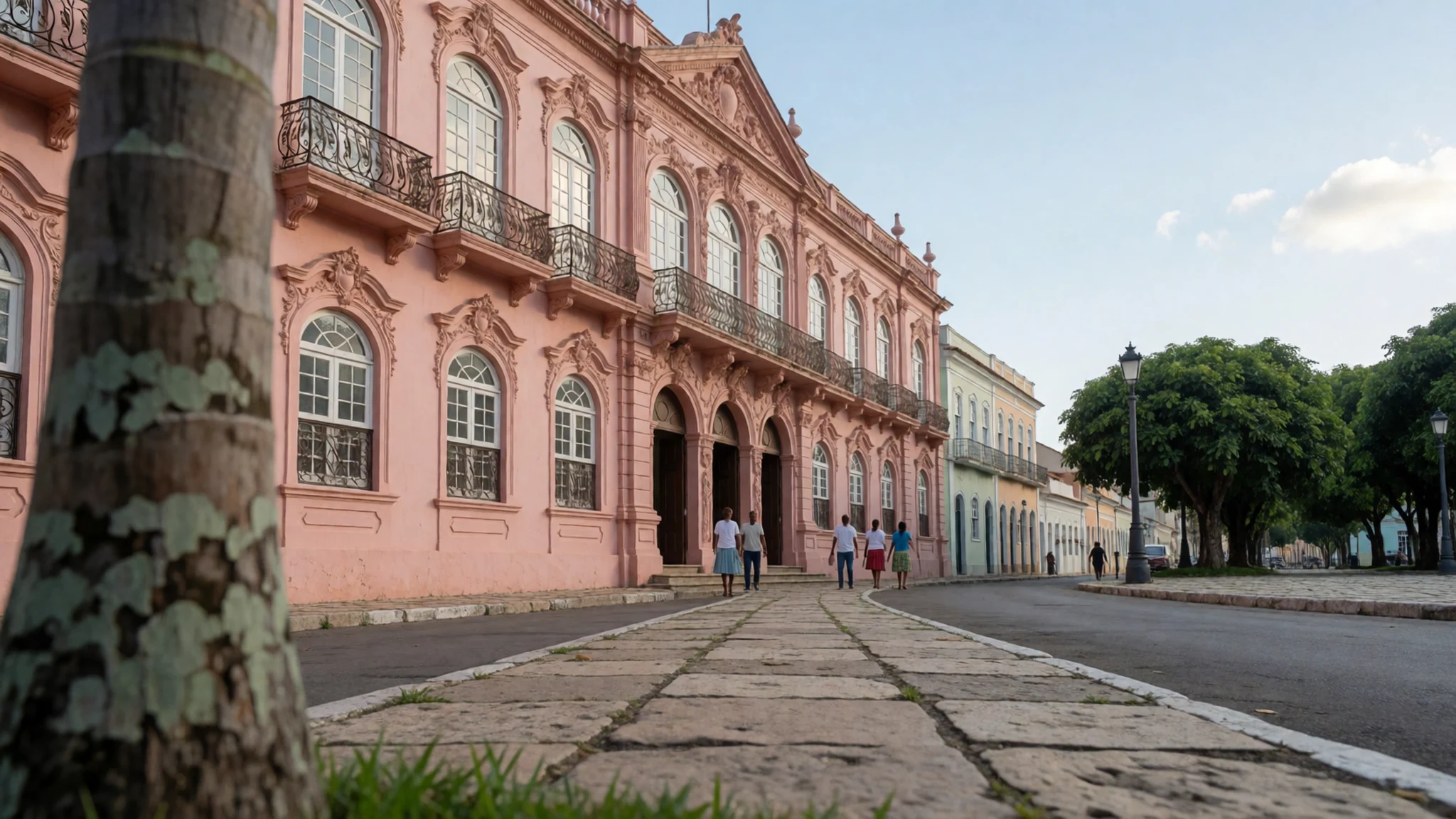
- Municipal Market — Centro
The former city market stands on Largo da Alfândega. It is more of a social room than a shopping trip: stalls, small eateries and a steady stream of locals. Come around midday for atmosphere, and check opening times with the city website before going.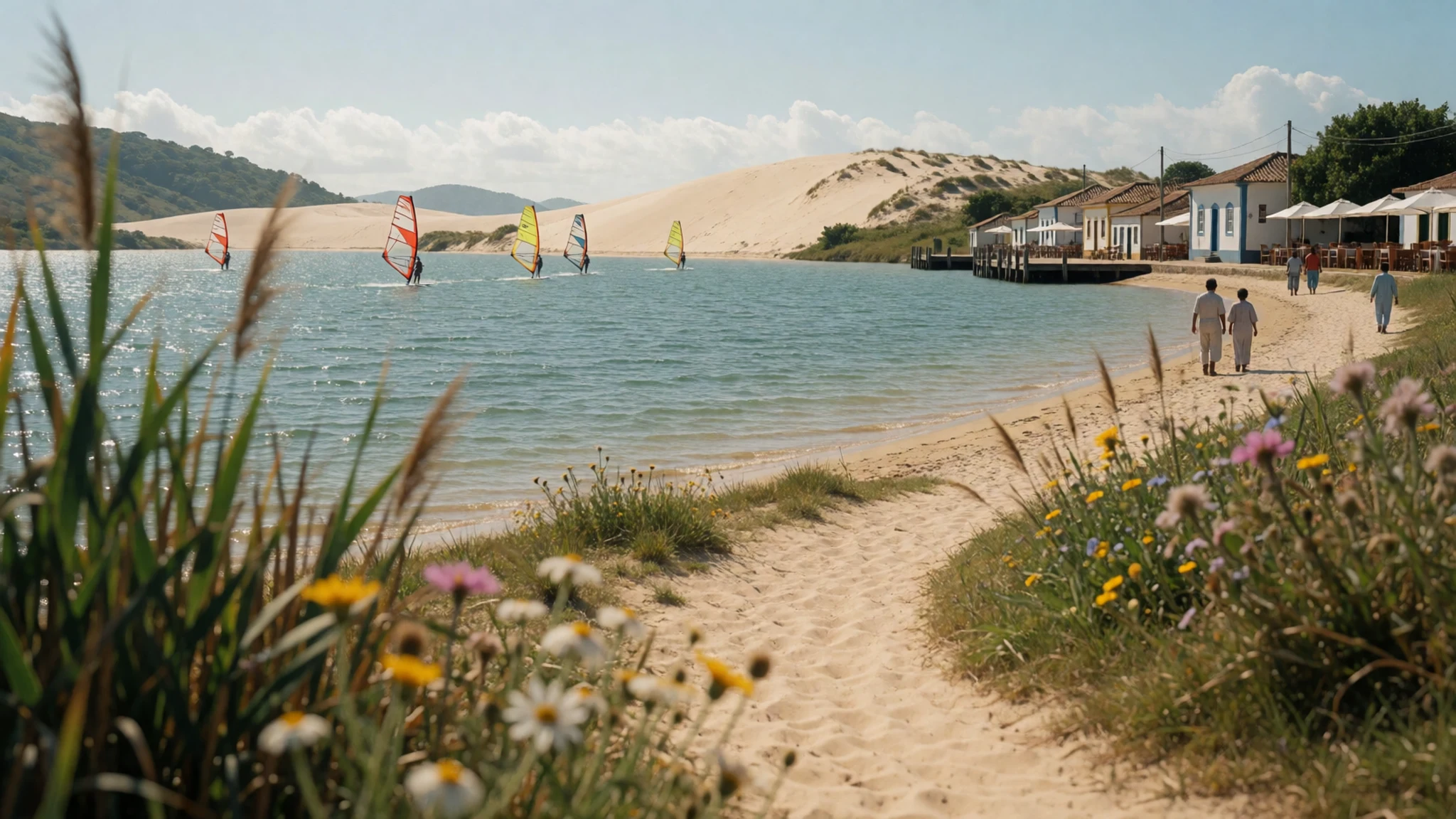
- Hercílio Luz Bridge — Between the island and the mainland
Opened in 1926, this bridge links the island with the mainland and is the picture most people associate with the city. It looks best at dusk, when the structure is lit, and the waterfront near it is a pleasant place for a slow evening walk.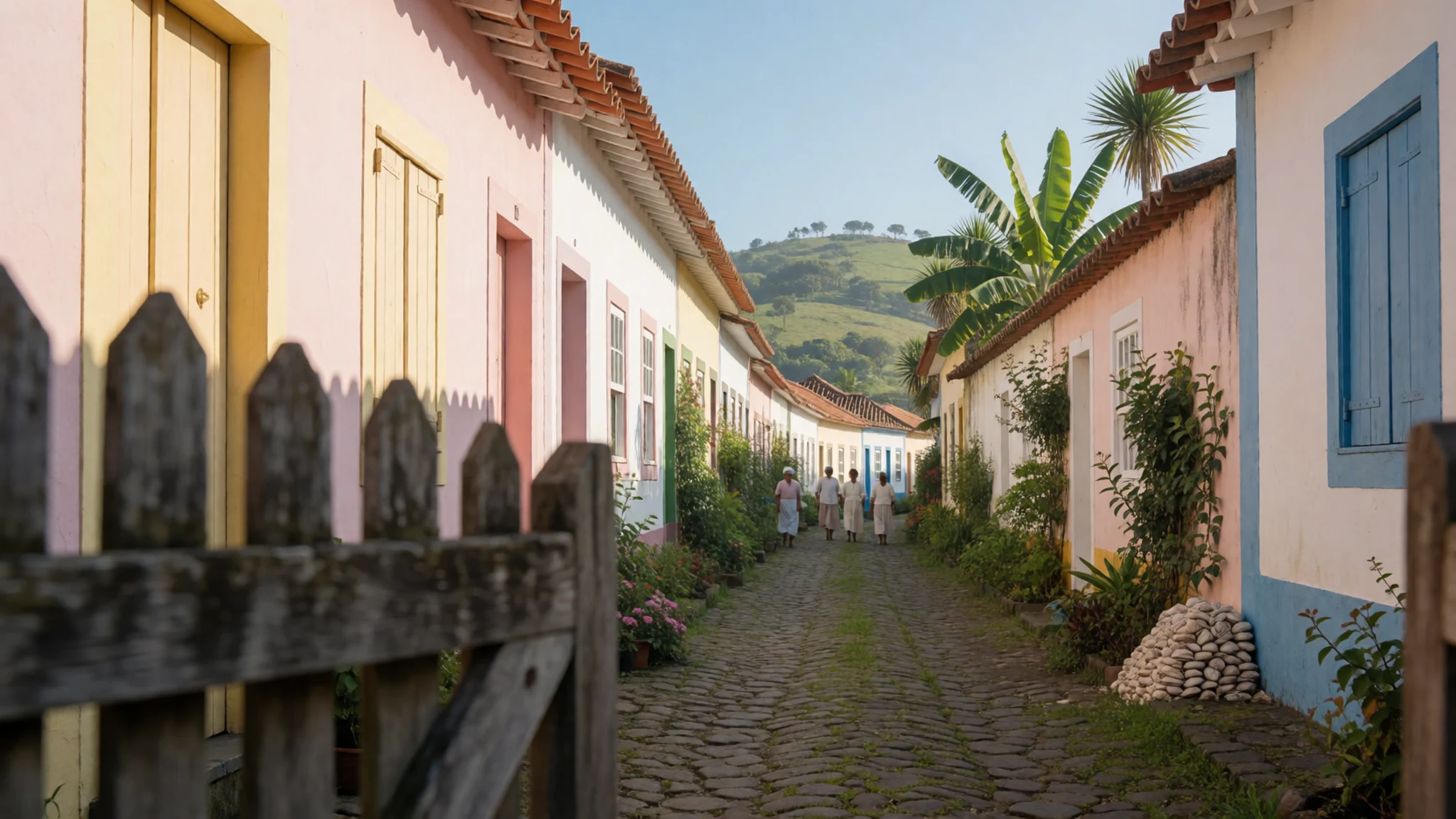
- Lagoa da Conceição — Central island
A big lake in the middle of the island, ringed by hills, dunes and a lively village. Expect water sports, restaurants and colonial-era buildings, plus busy evenings in summer. Wind and kite sports are popular on the water, and the surrounding paths suit walking.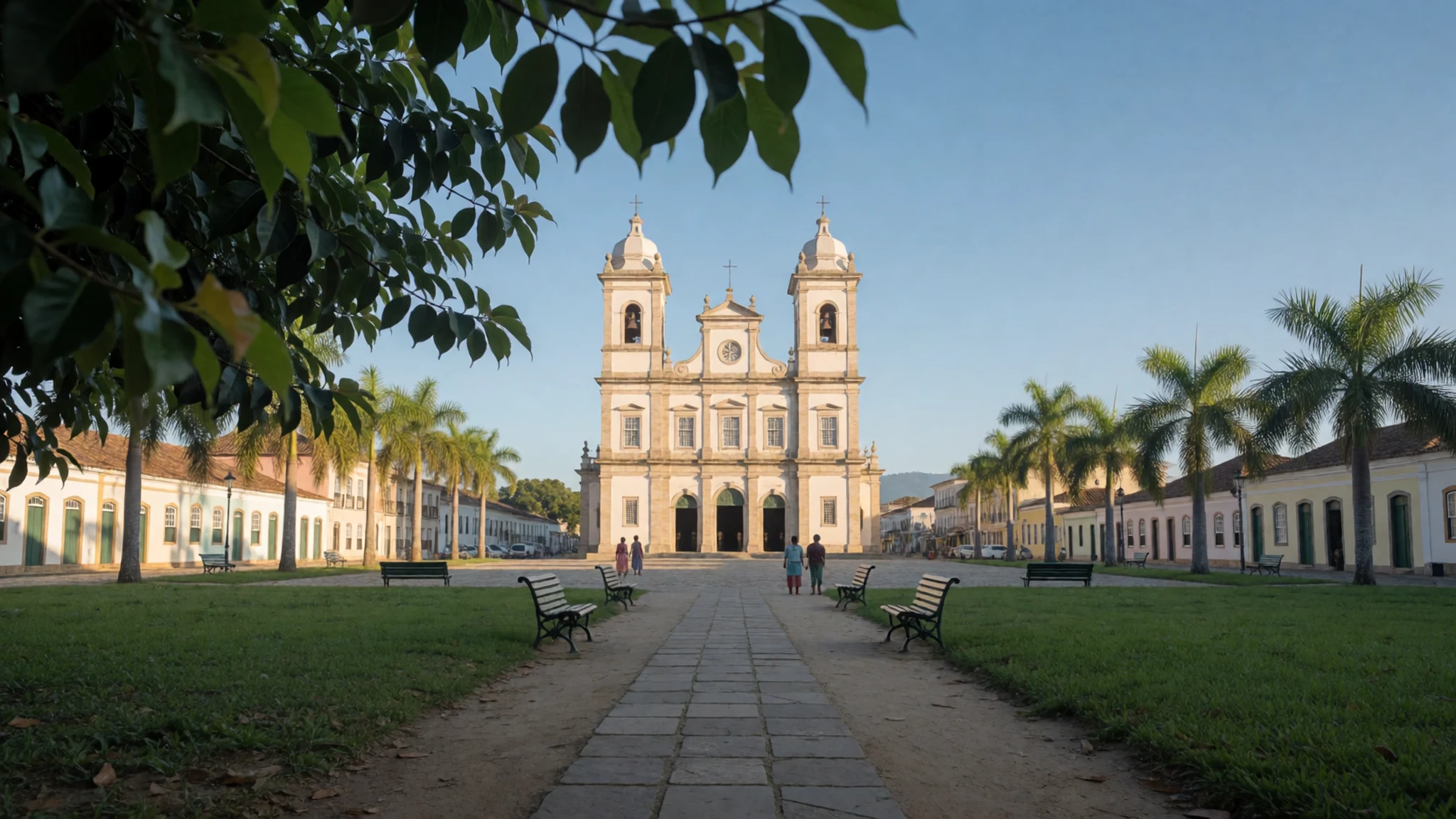
- Ribeirão da Ilha — Southwest island
This old fishing district in the south, about 36 km from the centre, shows the Azorean side of the island. Low colourful houses, a church by the water and seafood restaurants make it a calm contrast with the beaches and the city. Allow time for the bus or drive.
Culture
Florianópolis has a culture shaped by three overlapping layers: indigenous heritage, Azorean settlement and a modern surf-and-technology scene. The Azorean influence is strongest in the south of the island, where fishing, lace-making, church festivals and small family restaurants carry on traditions brought from the Atlantic islands centuries ago. In the older districts, the church square is still the centre of village life.
In the north and around the lagoon the mood is different: international, sporty and youthful, with a busy nightlife and a steady flow of visitors from Argentina, Uruguay, Chile and the rest of Brazil. Locals are often called manezinhos, a name tied to the island's older families, and many are proud of the island's slower, sea-facing rhythm.
Surfing is part of daily identity rather than a tourist activity. Early mornings at beaches such as Joaquina bring out surfers and spectators, and the sport gives conversations an easy starting point. Football, beach volleyball and long lunches follow the same unhurried logic.
Portuguese is the language of daily life, and a few polite phrases go a long way, since English is not widely spoken outside tourist businesses. People are generally warm, relaxed and informal, greetings are friendly, and a handshake or a light kiss on the cheek is normal among friends.
On the beach, respect the surf zones and the lifeguard flags, and ask before photographing strangers, especially children or people at work on the fishing boats.
What to wear
Florianópolis has no single formal costume, but its heritage dress comes from the Azorean settlers who shaped the island. Traditional village outfits, seen mainly at folk festivals and dance groups, use simple cotton and linen, with embroidered or lace trimmings, long skirts, aprons and headscarves for women and plain shirts, trousers and hats for men. Lace-making, called renda de bilro, is the island's best-known textile craft and is still sold in the south.
Everyday dress now is casual and beach-ready. Locals wear shorts, sandals, flip-flops, light cotton shirts and swimwear, and many people move between the sand and the street without changing. Surf brands are common, and in the evening people dress up only a little, with linen shirts, sundresses and clean trainers. In winter, from roughly June to August, it can feel cool, and locals put on jeans, hoodies and light jackets.
For a visitor, pack for sun, sea and walking. Bring light, breathable clothing, a hat, sunglasses, high-factor sunscreen and a swimsuit or two. Sandals suit the beach, but take proper trainers or walking shoes for coastal trails, which can be rocky and muddy after rain. A light rain jacket is useful in any season, and a thin layer helps in the evening breeze. For churches, such as the cathedral, covering shoulders and knees is polite, though no strict code is applied. Away from the beach, put a shirt or sarong on rather than walking through shops or restaurants in swimwear.
What to eat
- Fresh oysters — Ribeirão da Ilha and the southern bays
Oysters are the island's signature seafood, farmed in the bays and served simply with lemon, steamed, or baked with cheese. The best place to try them is at the waterside eateries in the southern fishing districts, where they arrive straight from the water.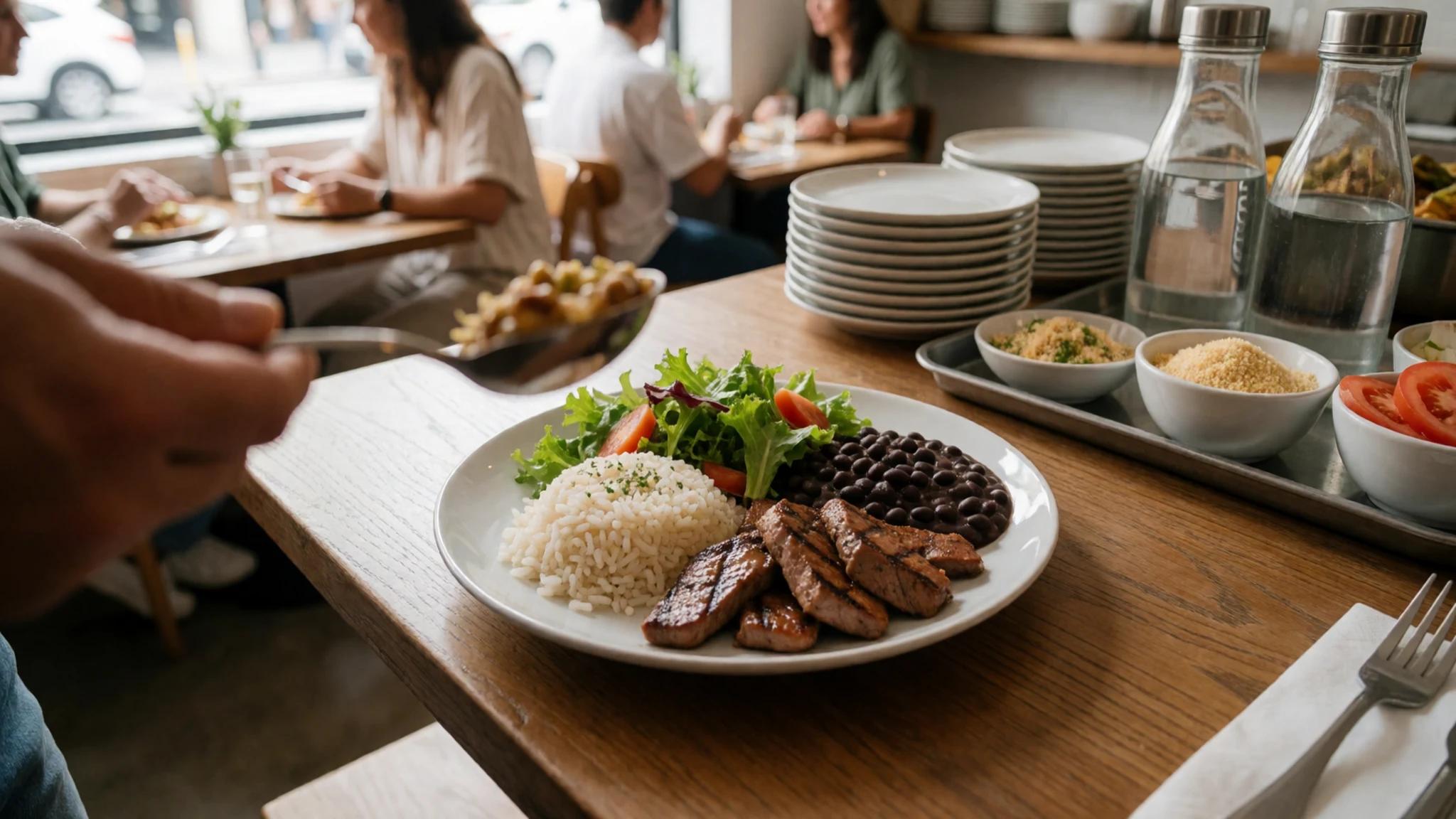
- Seafood stew (moqueca and similar) — Beachfront restaurants and Lagoa da Conceição
Fish and shrimp stews, often with coconut milk, peppers and herbs, are a staple of coastal Brazilian cooking, and they appear on menus all over the island. Order one to share, with rice and farofa, at a beachfront restaurant or in a village by the lagoon.
- Fried fish and prawns — Beach kiosks and simple seafood eateries
Casual beach food here means crisp fried fish, prawns and squid, often served by the plate with chips, salad and lemon. It is an easy, affordable lunch after a morning on the sand, and the kiosks near the busiest beaches are the simplest places to find it. - Homemade buffet lunches — Centro, around the market and Praça XV
In the city centre, many local restaurants serve self-service lunches of rice, beans, grilled meat, salads and stews, sold by weight. It is honest everyday food, good for a quick meal, and the streets around the main square and the market have plenty of options. - Burgers with green mayonnaise — Lanche shops in the north of the island
Burger counters are a local habit, and one well-liked style comes with a homemade green mayonnaise made from herbs. It suits a late snack or a relaxed dinner, and the casual lanche shops in the northern neighbourhoods are the usual place to look. - Vegetarian and vegan plates — Centro and Lagoa da Conceição
Florianópolis has a good range of vegetarian and vegan restaurants, with varied buffets, oriental-style dishes and creative salads. They are easy to find in the centre and around the lagoon, so travellers who avoid meat or fish can eat very well here.
Plan it
Best time. December to March is the warm beach season, with the hottest weather and the biggest crowds and prices, especially in January and February. November and March are good compromises with warm sea, lighter crowds and more room on the beaches. June to August is cooler and quiet, better for walking than swimming.
How long. 4–5
Getting there. Florianópolis has its own airport, and most international travellers connect through São Paulo or another Brazilian hub. In summer there are also charter flights from Argentina and Chile. Long-distance buses link the city with São Paulo and Foz do Iguaçu, and the journeys are long, usually overnight, so a flight can be easier. By car, the main north–south highway reaches the island region, then a signed express road leads in. Check the official city website, https://www.pmf.sc.gov.br, for current local information.
Budget. mid
Tips
- Book accommodation early for January and February, when the island is at its busiest and prices rise.
- Base yourself in the centre, near the lagoon or near a beach you like, because getting around the island can be slow in traffic.
- Go to beaches early in the morning for space, calmer water and cooler air.
- Carry some cash for small kiosks and village stalls, though cards are widely accepted.
- Use high-factor sunscreen and drink plenty of water, as the sun is strong even on cloudy days.
Etiquette
- Greet people politely in Portuguese before asking a question.
- Respect lifeguard flags and swimming warnings at surf beaches.
- Cover up with a shirt or sarong when leaving the beach for shops and restaurants.
Nearby
Sources
- Wikidata Q132997 (CC0)
- Wikipedia: Florianópolis (rev 1383899992) (CC BY-SA 4.0)
- Wikivoyage: Florianopolis (rev 5411080) (CC BY-SA 4.0)
- Photo: Av. Beira-mar em Florianópolis, Herr stahlhoefer (Public domain)
- Photo: Morro da Cruz, oscar fava (CC BY 3.0)
- Photo: Ponte Hercílio Luz a noite, Ricardo Gomes Faraco (CC BY 3.0)
- Photo: Florianópolis' Cathedral, Luís Flávio Loureiro dos Santos (CC BY 3.0)
- Photo: Avenida Beira Mar Norte, Rodrigo Soldon (CC BY 2.5)
- Photo: Public market of Florianópolis, Fernando Dall'Acqua (CC BY 2.5)
- Photo: Praia da Joaquina, Camilla Costa Gonçalves (CC BY-SA 4.0)
- Photo: Fortaleza São José Ponta Grossa, GLandovsky (CC BY-SA 4.0)


