Flaming Cliffs
Flaming Cliffs, Mongolia
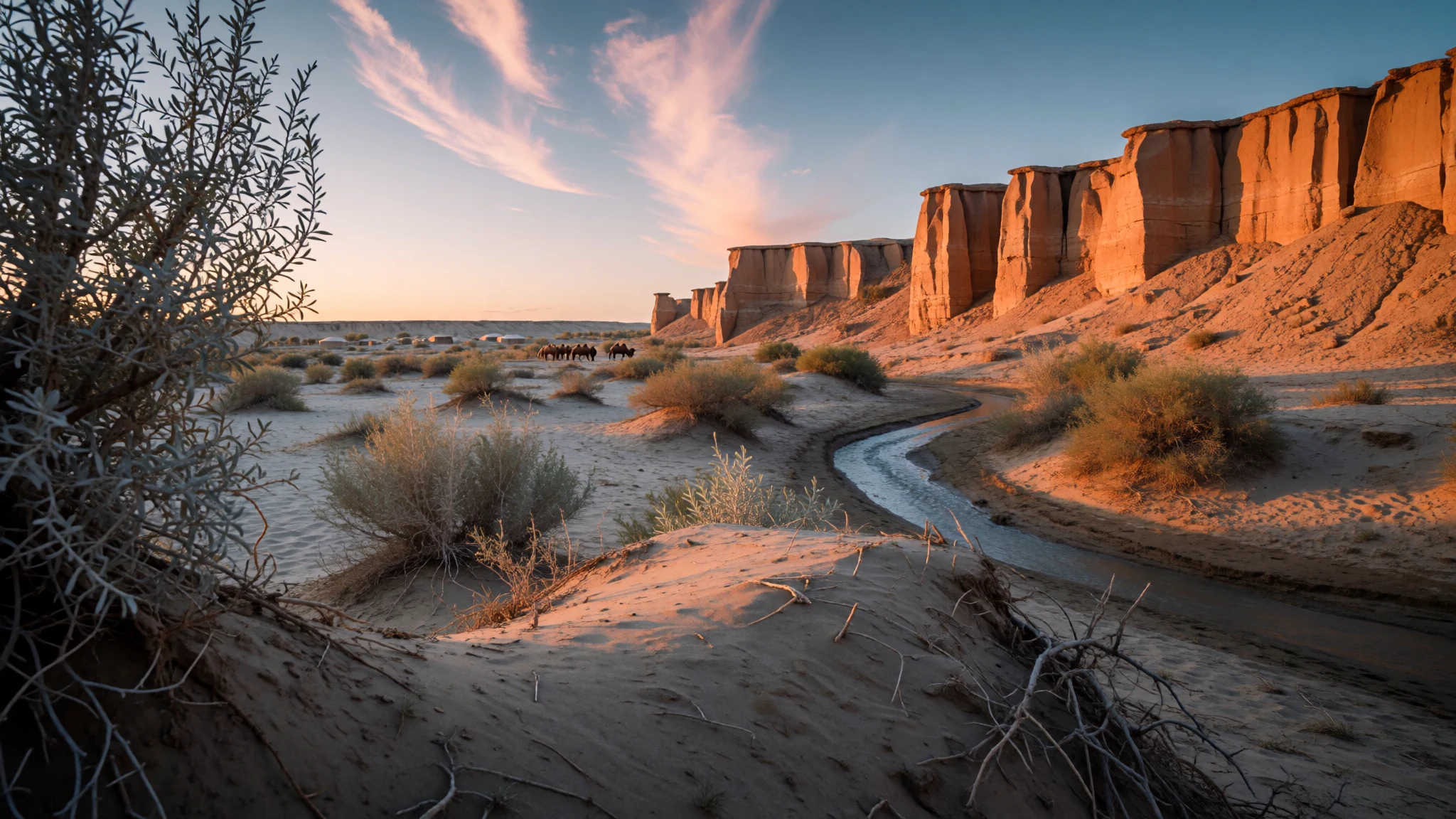
Flaming Cliffs is where Gobi sandstone glows red at sunset and where dinosaur eggs were first found, in a vast, empty desert.
The place
Flaming Cliffs is a stretch of eroded sandstone in the Gobi Desert, in Ömnögovi Province, southern Mongolia. Mongolians call it Bayanzag (Баянзаг), meaning rich in saxaul, after the gnarled desert shrub that grows on the flats below. An older name, Улаан Эрэг, translates as red cliffs, and the colour explains both names: the rock runs from rust to orange and deepens sharply once the sun drops.
The site is an escarpment rather than a single monument. Gullies and buttresses fall from a flat rim to a sandy basin, with saxaul dotted across the floor and a few ger camps far off. Nothing here is built up or curated. It is open desert, wind and long views, and services are thin.
Geologically, the cliffs expose the Djadochta Formation, layered rock that has preserved fossils well. That is why the place matters to scientists as much as to photographers, and why taking fossils away without a permit is illegal.
The surrounding country is landlocked and sparsely peopled, nicknamed the Land of Blue Skies for its sunshine. In the Gobi, summers are hot and winters bitterly cold, and the clear dry air makes late-afternoon light the main event, while midday is flat, hard glare. Most visitors come as one stop on a driven loop through the southern Gobi, so the evening light is shared with other travellers in the main season.
Its story
Flaming Cliffs owes its English name, and much of its reputation, to the American palaeontologist Roy Chapman Andrews, who visited in the 1920s and gave the escarpment the nickname that stuck. Mongolian names are older and plainer: Bayanzag points to the saxaul shrubs on the flats, Улаан Эрэг to the red rock.
What made the place famous was dinosaur eggs, recognised here for the first time, which carried the site's name far beyond Mongolia. Other finds followed, including Velociraptor and small early mammals of the eutherian group, which includes today's placental mammals. Later researchers have revised which animals laid which eggs, a reminder that fossils keep being reinterpreted long after they leave the ground.
The fossils come from the Djadochta Formation, sandstone that records an ancient dry landscape. Burial in sand helps explain how fragile things such as nests and whole skeletons survived, and the softness of the same rock is why the cliffs erode into gullies and pinnacles today.
Mongolia itself kept few grand buildings from the empire of Genghis Khan, so this desert is one of the places where the deep past, rather than the medieval one, is on show.
Today the law forbids taking fossils from the area without permits, and loose fragments are best treated as part of an unfinished investigation. The cliffs are still giving up material, which is why leaving everything in place matters.
What to see
- The rim at sunset — Edge of the escarpment
Flaming Cliffs at sunset is the reason most people come. Walk to the rim of the escarpment an hour or so before dusk and watch the rock shift from tan to orange to deep red as the light flattens. The wind often rises in the evening, so bring a layer and stay until the colour fades.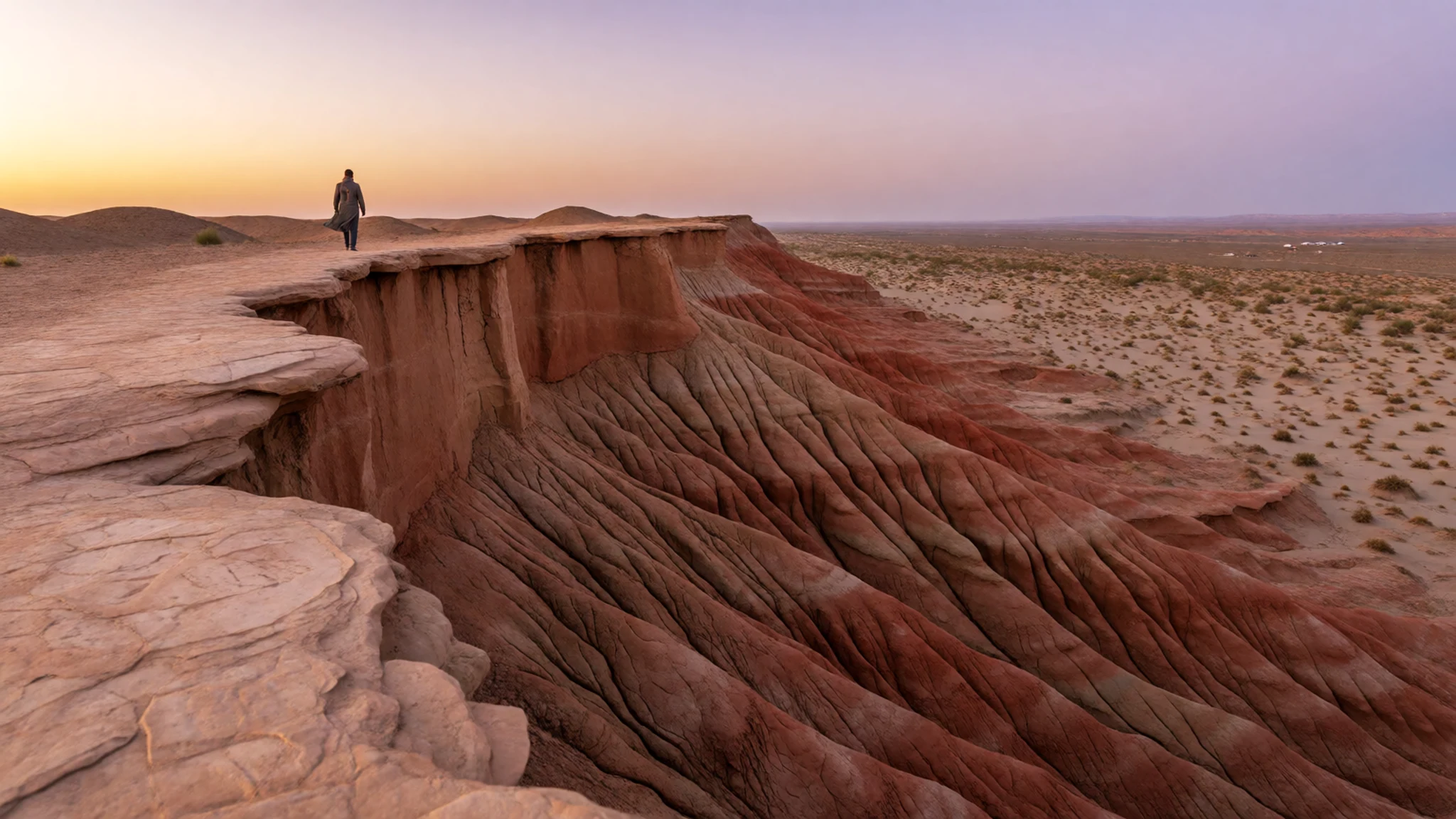
- Gullies and buttresses — Base of the cliffs
The eroded gullies below the rim reward a slow wander in the cooler part of the day. Wind and rare heavy rain have carved the sandstone into ridges, pinnacles and small amphitheatres, each catching light differently. Footing is loose and crumbly, so wear sturdy shoes, keep to firm ground and stay off fragile edges.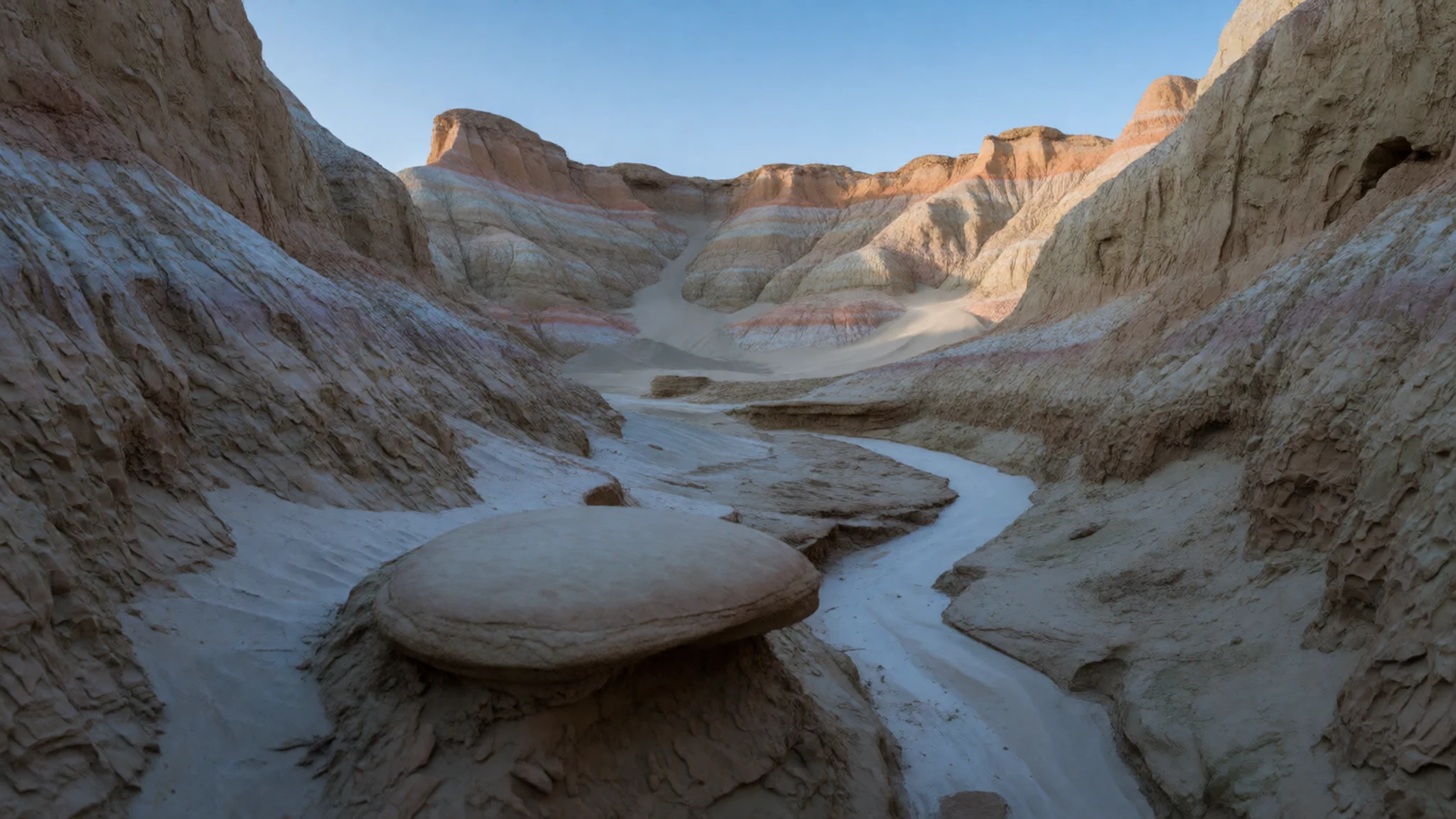
- The saxaul flats — Basin floor
The sandy basin beneath Flaming Cliffs is dotted with saxaul, the woody desert shrub that gives Bayanzag its name. Walking among the low, twisted trees gives a sense of scale against the cliffs and a good view back up at the red walls. Look for animal tracks in the sand, but give wildlife and herds room.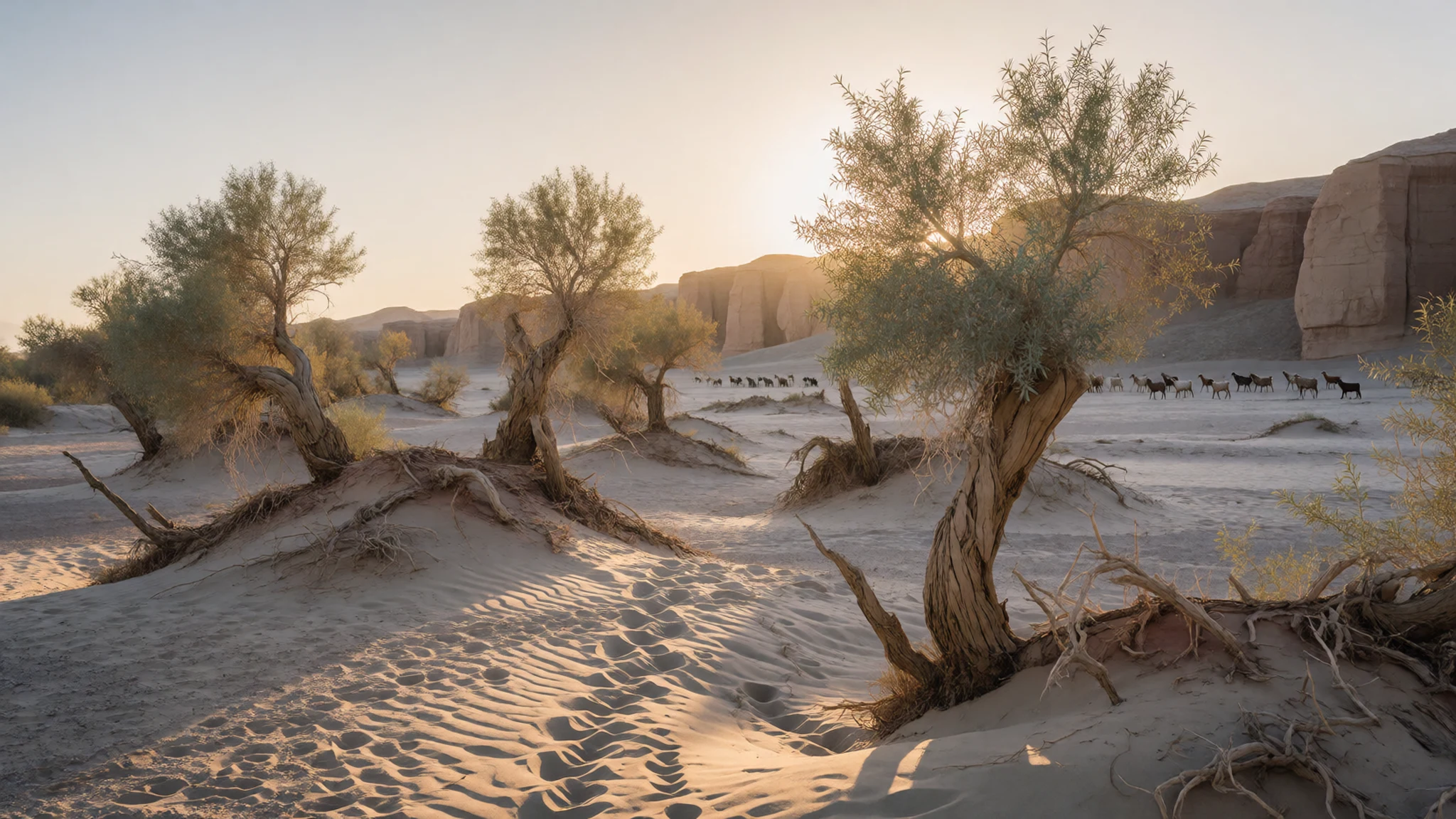
- The fossil-bearing layers — Exposed cliff faces
Look closely at the sandstone itself and the Djadochta Formation becomes the attraction. These pale and reddish layers are where Velociraptor, dinosaur eggs and early mammals were found. There are no museum-style displays here; the interest lies in knowing what the rock held. Leave every fragment where it lies, since permits are needed to remove fossils.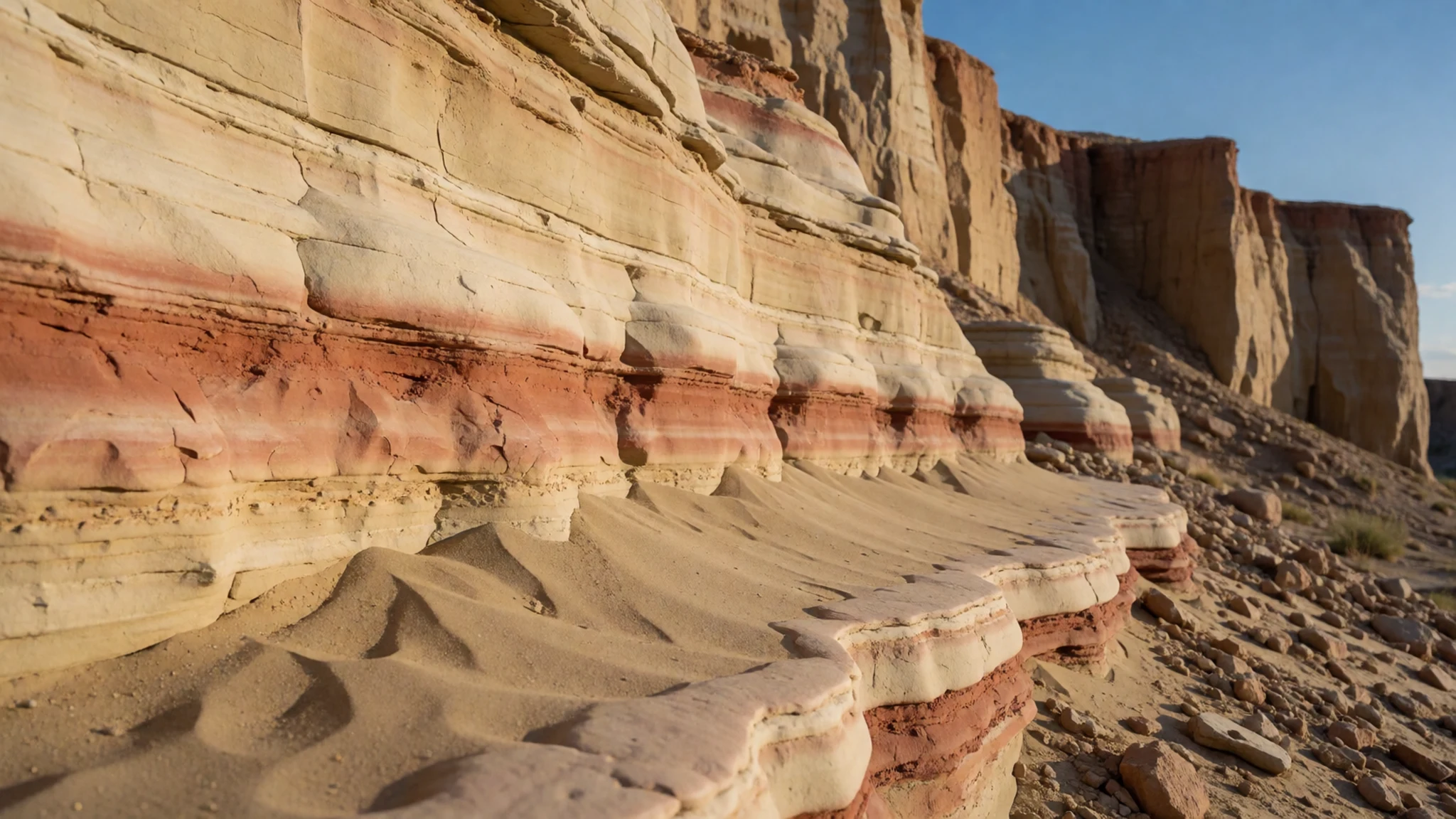
- A night at a ger camp — Camps near the cliffs
Spending a night at a ger camp near Flaming Cliffs turns a stop into a proper Gobi evening. Camps vary in comfort, and facilities are basic by city standards. Mongolia is called the Land of Blue Skies, and away from town lights the desert night is dark enough for a clear view of the stars, weather permitting.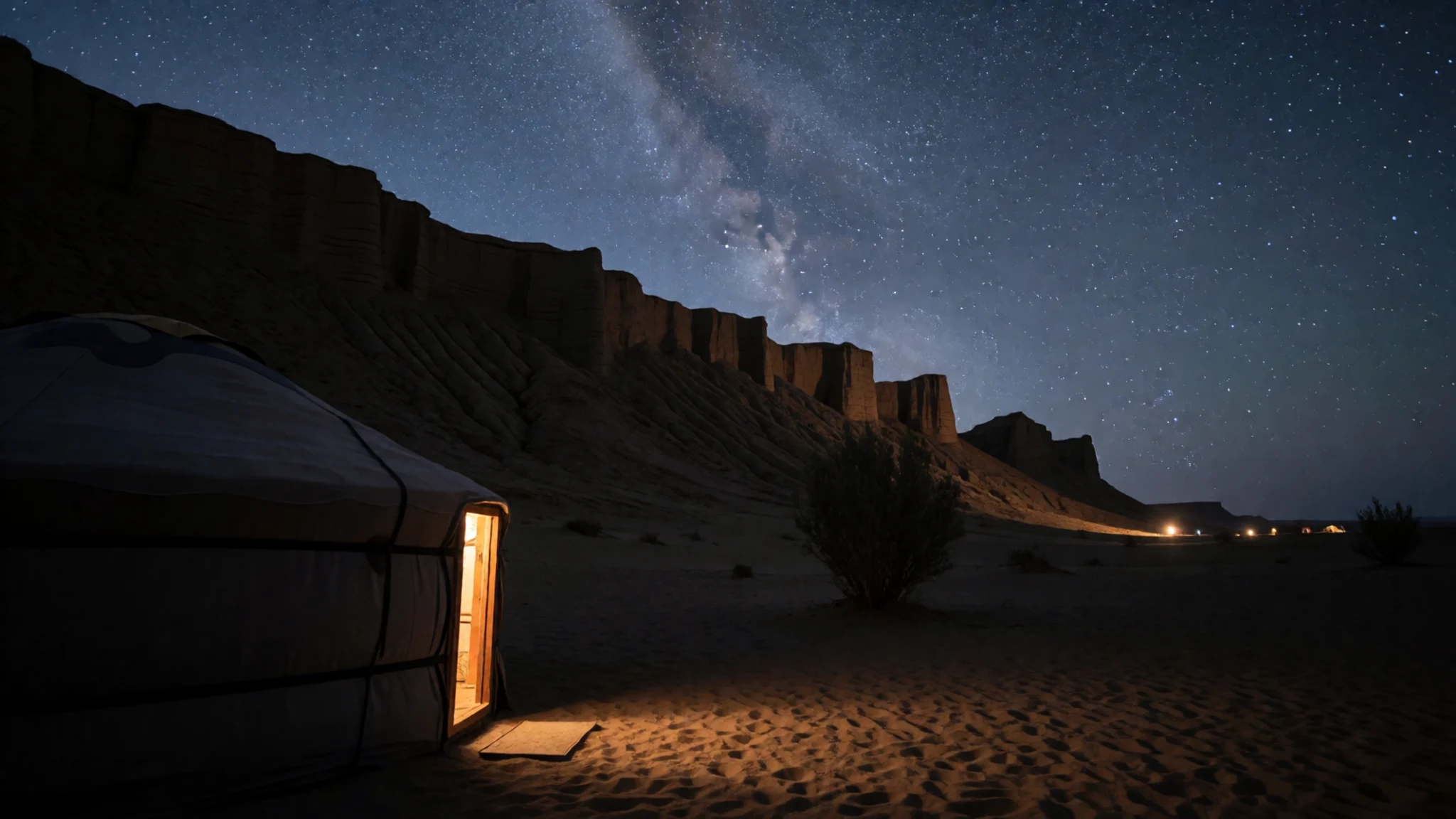
Culture
Flaming Cliffs sits in herding country, and the manners people expect there come from steppe life more than from city habits. Mongolians are generally direct: someone may tell you plainly what they think, and that is usually honesty rather than rudeness. Western pleasantries do not always land as intended, so it pays to follow local custom instead.
Hospitality is central. When tea, snacks or a small gift are offered, the polite response is to accept, and refusing outright is considered rude. If a plate of sweets or dried curds is passed round, take at least a small taste from something. Items are received with the right hand, palm facing up, and drinks are taken the same way.
History shapes conversation too. The Mongol Empire, with Genghis Khan at its centre, is a source of national pride, while relations with China are a sensitive subject for many Mongolians. Visitors do well to avoid China-related clothing and to leave the subject alone. The Chinese region of Inner Mongolia is commonly called southern Mongolia by Mongolians.
Most of Mongolia's Tibetan Buddhist monasteries were lost in the Stalinist religious purges, so the few that survive deserve quiet, respectful behaviour from visitors.
Always take anything a host offers with your right hand, palm up, and never carry fossils or rock fragments away from the cliffs.
What to wear
Around Flaming Cliffs, as across rural Mongolia, the traditional garment is the deel, a long wrap-over robe with a high collar that fastens at the right side and is held in by a broad sash. Everyday deels are cotton or wool, with sheepskin or padded linings for winter, while festival and wedding versions use silk and brocade in strong colours. Leather boots with upturned toes and felt or fur hats complete the outfit. Deels are worn at Naadam, at the lunar new year festival Tsagaan Sar, and daily by many herders.
What people wear now is mixed and practical. Herders often pair a deel with modern trousers, jackets, caps and sturdy boots, and ride motorbikes as readily as horses. In towns, jeans, fleeces and padded jackets are normal, with the deel kept for occasions.
For a visit, dress for sun by day and cold at night. Light, long-sleeved layers, a wide-brimmed hat, sunglasses and a scarf for wind and dust work well, with a fleece or down jacket for the evening. Wear closed, grippy shoes or light boots, because the ground is sandy and crumbly. Cover shoulders and knees at monasteries, and avoid anything with Chinese branding or imagery.
What to eat
- Buuz — Ger camps and canteens in provincial towns
Steamed meat dumplings, usually mutton, pleated shut at the top and eaten by hand. Many Mongolians treat them as the country's signature dish, and they are related to Chinese baozi. Hot, filling and easy to share, they turn up at most camp dinners and canteens.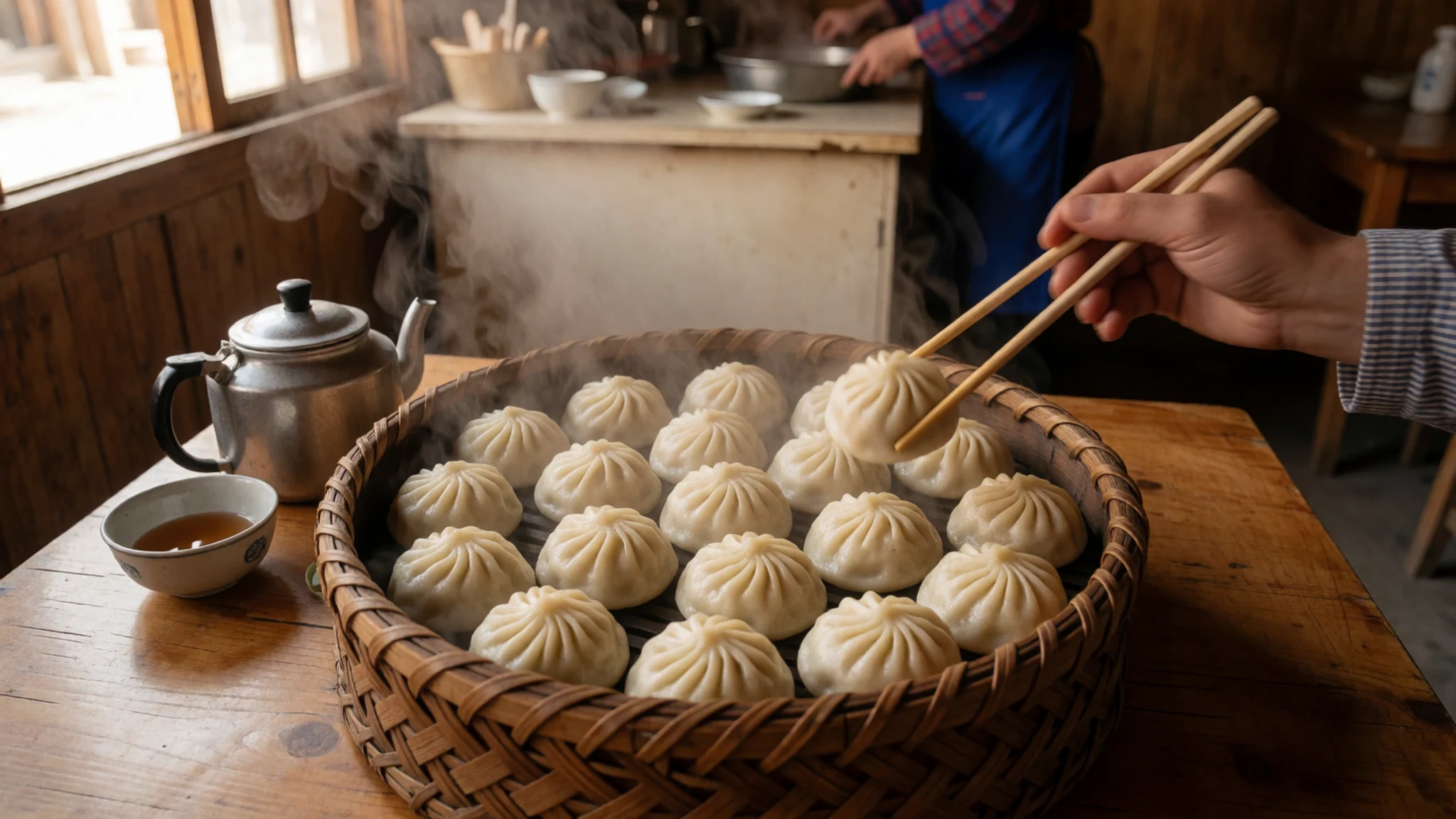
- Khuushuur — Roadside canteens and tea shops on the drive south
A flat, deep-fried pastry pocket filled with minced meat and onion, crisp outside and juicy within. Once a festive dish, now sold almost everywhere. A few make a decent lunch on a long desert drive. Eat them hot, as the grease sets quickly in cool air.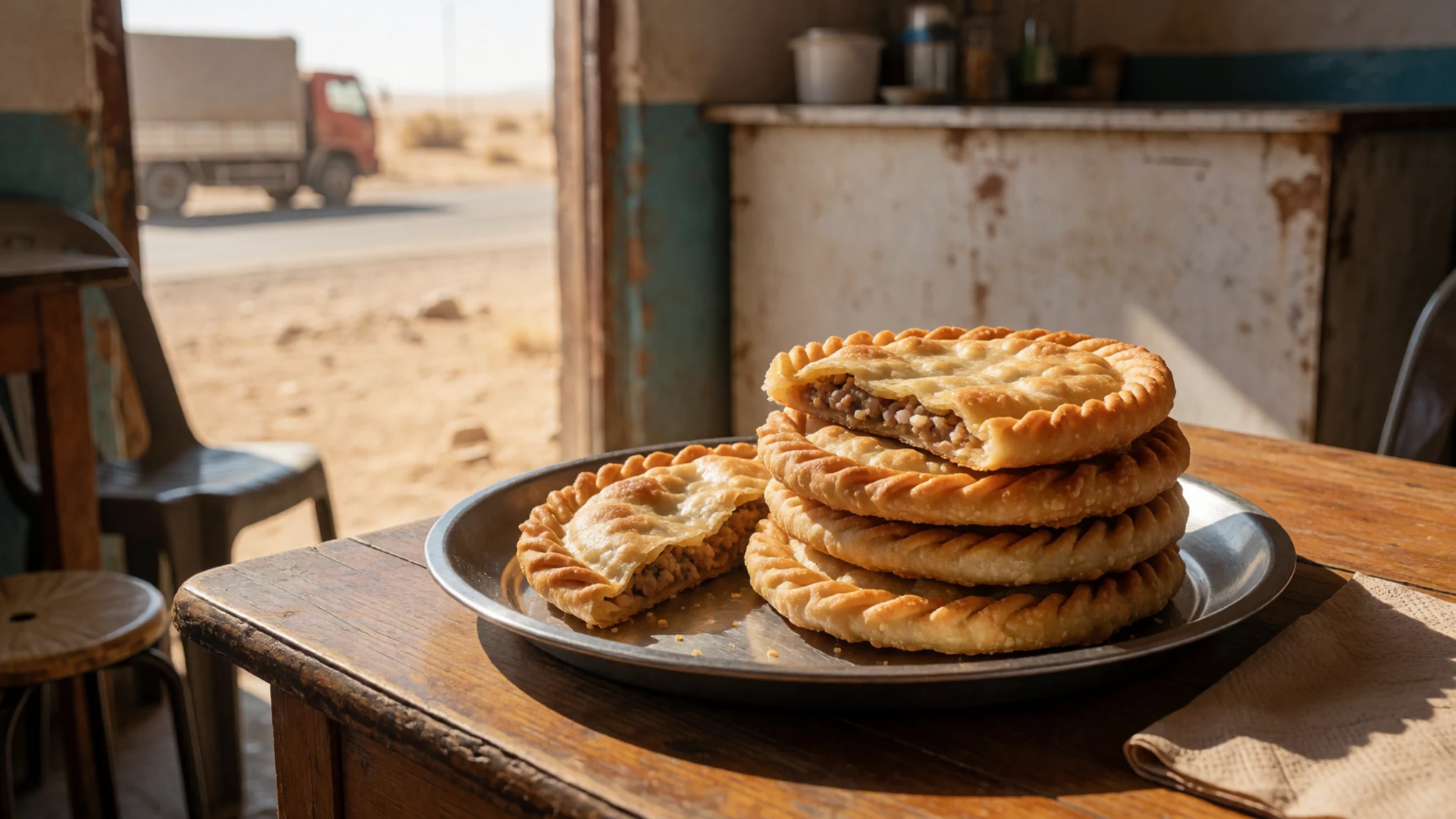
- Tsuivan — Canteens and ger camps
Hand-cut noodles stir-fried with chopped meat and a little vegetable, a practical plate after a day on desert tracks. Some places set a bottle of tomato sauce beside it, so look before asking. Portions are generous and it suits sharing between travellers. - Boiled mutton — A herder family's ger, if invited, or a camp dinner
Boiled mutton is the everyday centre of Mongolian eating, seasoned with little more than salt. Meat comes on the bone and is eaten simply. Vegetables and spices are scarce in the Gobi, so expect plain, hearty cooking rather than variety. - Byaslag and öröm — Herder families' gers and village shops
Byaslag is a soft, mild fresh cheese close to paneer, and öröm is a thick clotted cream. Both are dairy staples of herding households and often set out as welcome snacks. Taking a small taste from the plate is polite.
Plan it
Best time. Late May to June and September are the kindest months: the Gobi is warm rather than fierce, and evenings cool off. July and August are hot, and winter is bitterly cold, so most camps and tours run in the warmer months.
How long. 2–3
Getting there. Fly into Ulaanbaatar, then take a domestic flight to Dalanzadgad in Ömnögovi or make the long overland drive south; the last leg to the cliffs is on desert tracks in a four-wheel-drive vehicle with a driver, usually arranged through a tour operator or camp. Check visa rules for your passport before booking, as relaxed entry for many nationalities has been introduced for limited periods.
Budget. mid
Tips
- Arrange a driver and four-wheel-drive vehicle through a tour operator or camp in advance; tracks are unmarked and distances are long.
- Be at the cliffs for late afternoon and stay through sunset, but take care with travel after dark.
- Carry plenty of water, sun protection and a warm layer, as shade is scarce and evenings cool.
- Bring cash for camps and small shops, since card payment is patchy away from towns.
- Keep your distance from loose dogs, which can run in packs, and stay near shelter if the weather turns.
Etiquette
- Never remove fossils or rock fragments; permits are required.
- Receive gifts and food with your right hand, palm up, and try at least a little of what is offered.
- Avoid China-related clothing and steer clear of the subject in conversation.
Nearby
Sources
- Wikidata Q677164 (CC0)
- Wikipedia: Flaming Cliffs (rev 1278025610) (CC BY-SA 4.0)
- Wikivoyage: Mongolia (rev 5427090) (CC BY-SA 4.0)
- Flaming Cliffs, Mongolia, Christopher Michel (CC BY 2.5)
- Panorama of The Flaming Cliffs, Zoharby (CC BY 3.0)
- Bajanzag, Lohen11 (CC BY 4.0)
- Bayanzag (Flaming Cliffs) Mongolia, Richard Mortel (CC BY 2.5)
- Bayanzag (12), Richard Mortel (CC BY 2.5)
- Bayanzag (27), Richard Mortel (CC BY 2.5)
- Bayanzag (28), Richard Mortel (CC BY 2.5)
- Bayanzag (29), Richard Mortel (CC BY 2.5)


