Fatu Hiva
Fatu Hiva, France
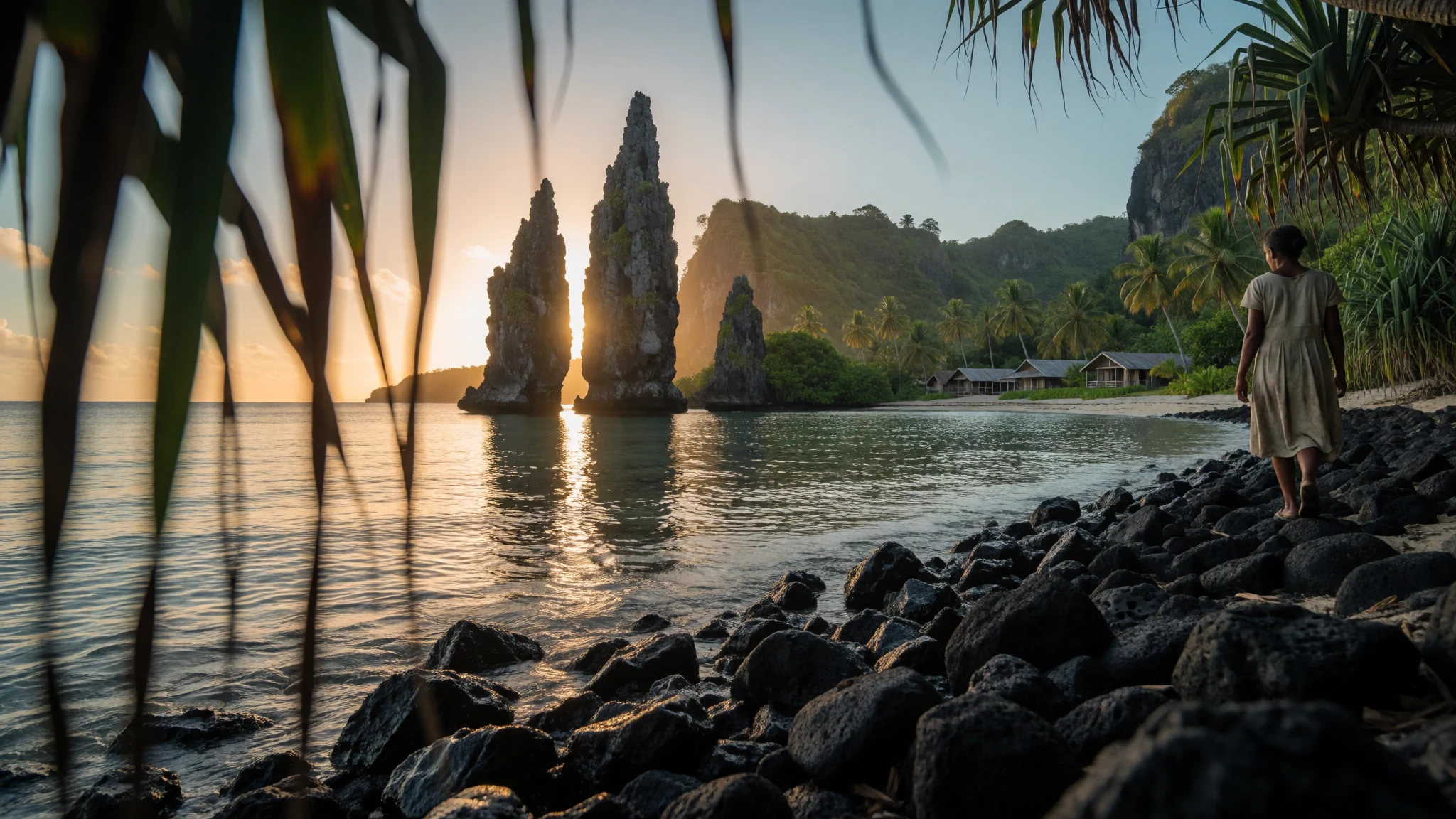
Fatu Hiva is the remote southern end of the Marquesas, where basalt spires, two small villages and a cross-island walk make a slow, rewarding journey.
The place
Fatu Hiva sits at the southern end of the Marquesas Islands in French Polynesia, a green volcanic island with very little around it. Its closest neighbour is the rock of Motu Nao, and it counts as the most isolated of the inhabited Marquesan islands. The commune has about 600 residents, living mainly in two villages: Hanavave on the northwest bay and Omoa towards the south.
The island is the eastern half of two overlapping volcanoes, and that shapes everything. The western side has the two sheltered bays where people settled. The eastern side is cut into narrow valleys, each ending in a sea cliff, so the only ways between them are over the high ridges or by boat. The middle of the island is an open plateau of tall grass and pandanus. A ridge runs south from it to Tauauoho, whose summit, at 1,125 m, is the island's high point.
Hanavave's bay is also called the Bay of Virgins, or Baie des Vierges, and is lined with tall, weathered rock pillars that rise straight from the village. It is the view most people remember. Omoa has the better-protected harbour, which is why yachts tend to gather there.
There are no resorts and no crowds. Visitors arrive in small numbers, mostly on yachts or supply ships, and the day is organised around weather, boats and village life rather than any schedule.
Its story
Fatu Hiva was settled by Polynesians, who most likely arrived from Western Polynesia, as on the other Marquesan islands. The steep valleys kept communities apart, and rivalry between them was common. One account from around the mid-1800s describes a clash between the Anainoapa people of Hanavave and the Tiu of Omoa. The defeated Tiu left on bamboo rafts and reached Napuka, an atoll in the Tuamotus, where their descendants are said to live still. Their sorcerer stayed behind, named the places of the valley for the victors, a gesture of accepting their authority, and then had himself buried head-down, marking the end of his people.
Much of what Fatu Hiva was like before outside contact has been lost, because the arrival of missionaries changed island life so thoroughly. In 1897 the German explorer Karl von den Steinen recorded nine tribes spread across six valleys. In Hanavave alone, archaeology points to four.
Proper excavation has not been carried out. In 1920–21 the American anthropologist Ralph Linton surveyed the surface for the Bishop Museum in Honolulu. He found fewer remains than on other Marquesan islands, suggesting less large-scale building. In Omoa he found the traces of several tohua, the ceremonial and political gathering grounds, with paepae house platforms and small me'ae, sacred enclosures. In Hanavave he found only slight remains.
In the 1930s the explorer Thor Heyerdahl lived on the island and wrote Fatu Hiva about it, which remains the best-known book on the place.
What to see
- Hanavave and the Bay of Virgins — Northwest coast
Hanavave is the northern village, set in a bay whose sides are crowded with tall rock pillars. The harbour is small and the village compact, so a slow walk takes in most of it. Light is best early and late, when the pillars catch the sun and the day is cooler.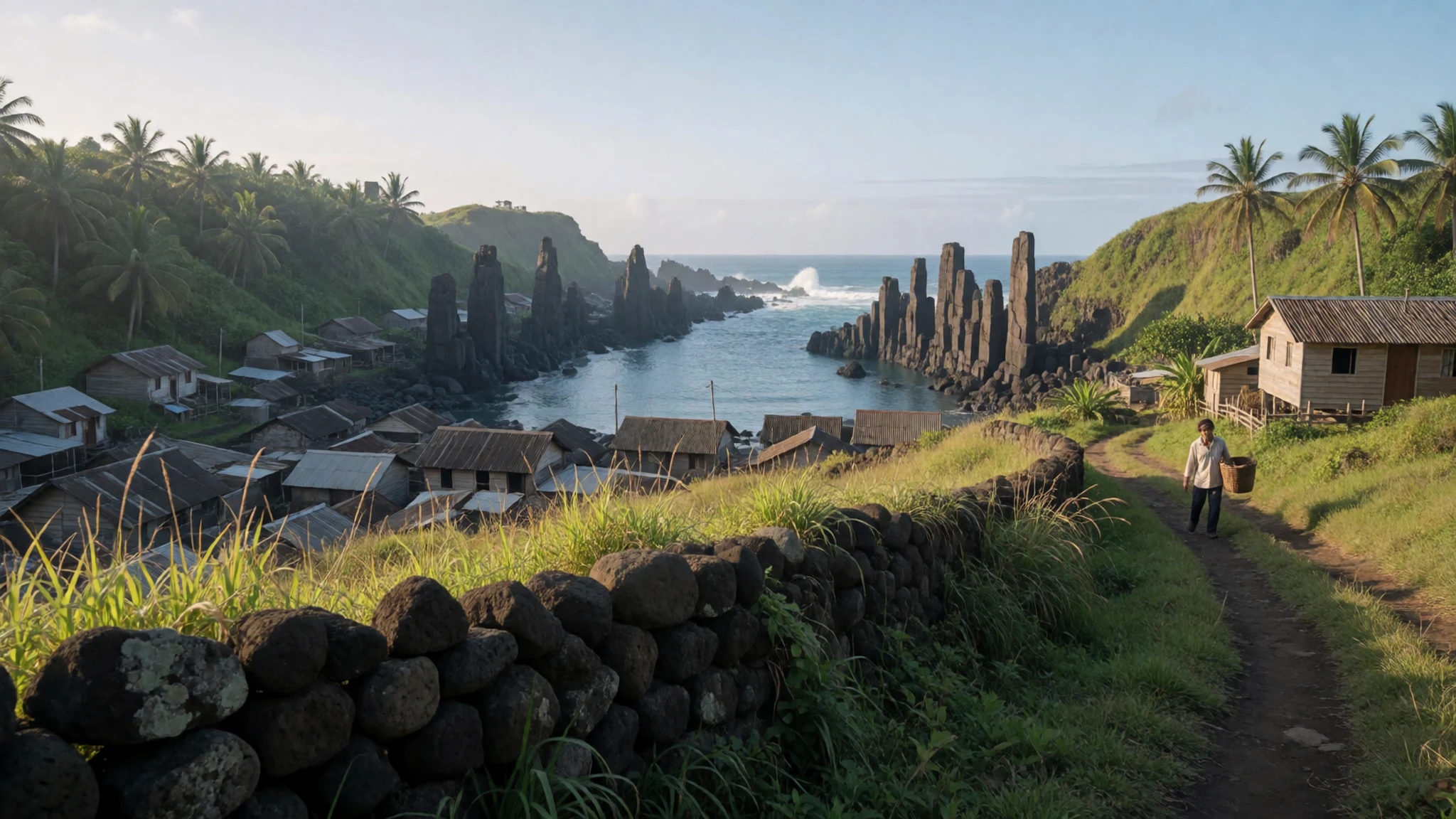
- Omoa village and bay — Southwest coast
Omoa lies near the southern end of the west coast on the island's most sheltered harbour. It is the quieter of the two villages, with a church, gardens and a waterfront where yachts anchor. Fishing boats and a daily rhythm of village errands are the main entertainment, and conversation comes easily.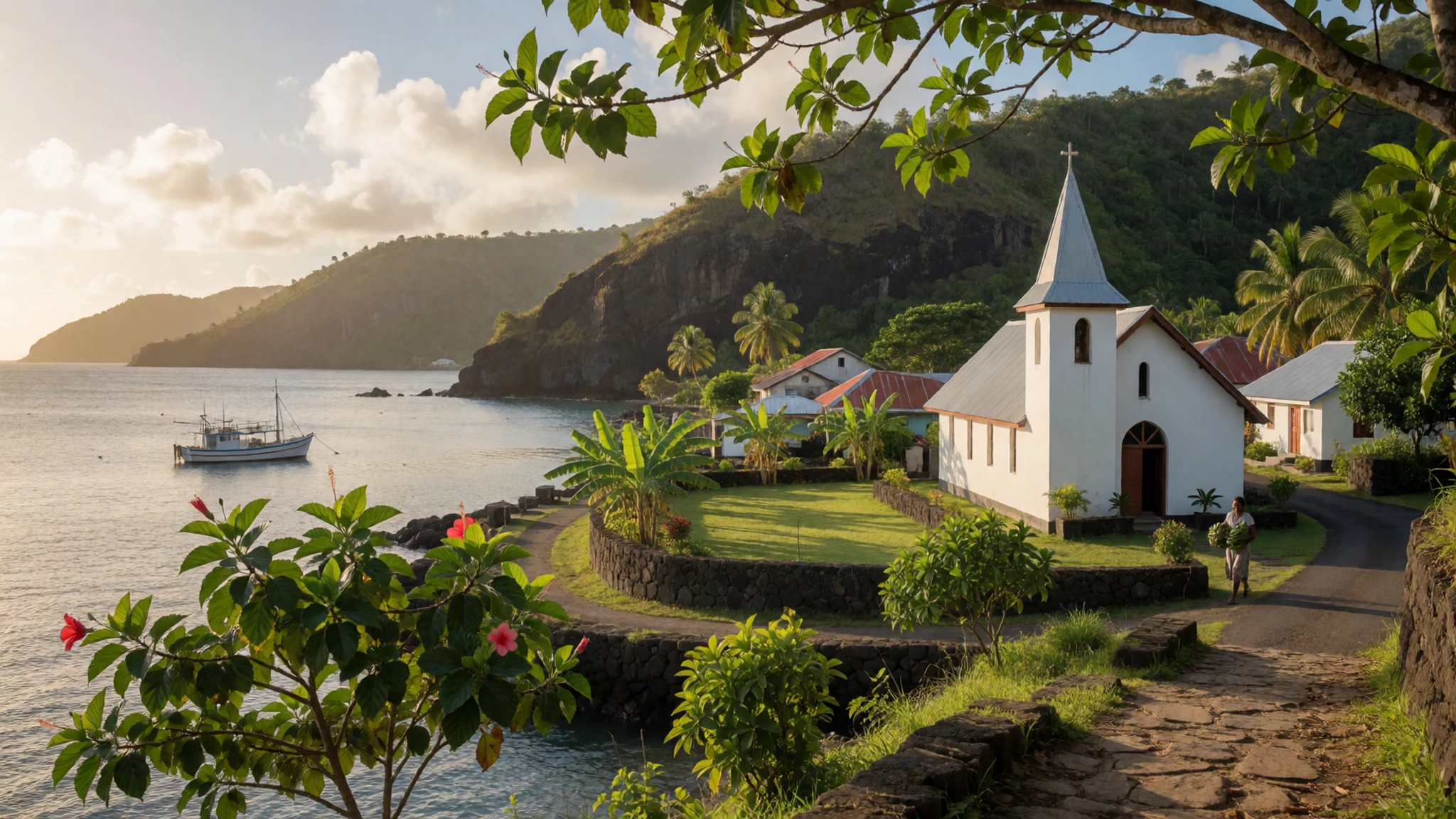
- The ridge walk between villages — Interior plateau
The two villages are linked by a route over the island's high interior, passing the open plateau of grass and pandanus. It is steep, exposed in places and hot by midday. Start early, carry plenty of water, and ask locally about the best route and conditions before setting out.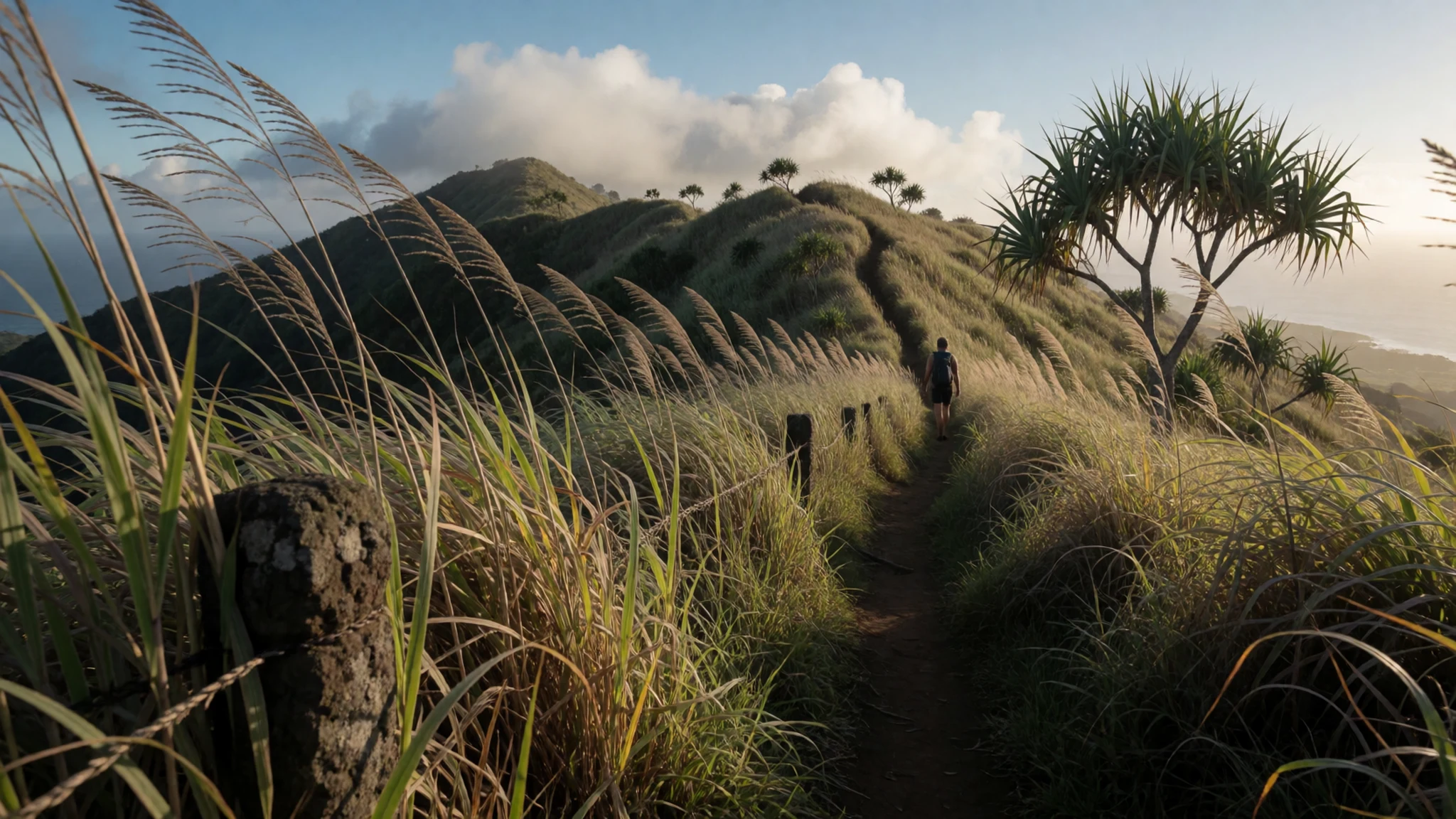
- Archaeological remains in Omoa valley — Omoa valley
Omoa valley holds the stone traces of former ceremonial grounds, house platforms and small sacred enclosures, recorded by researchers in the early twentieth century. Little is signed or restored, and the sites are best seen with a local guide who knows what is where and what is respectful.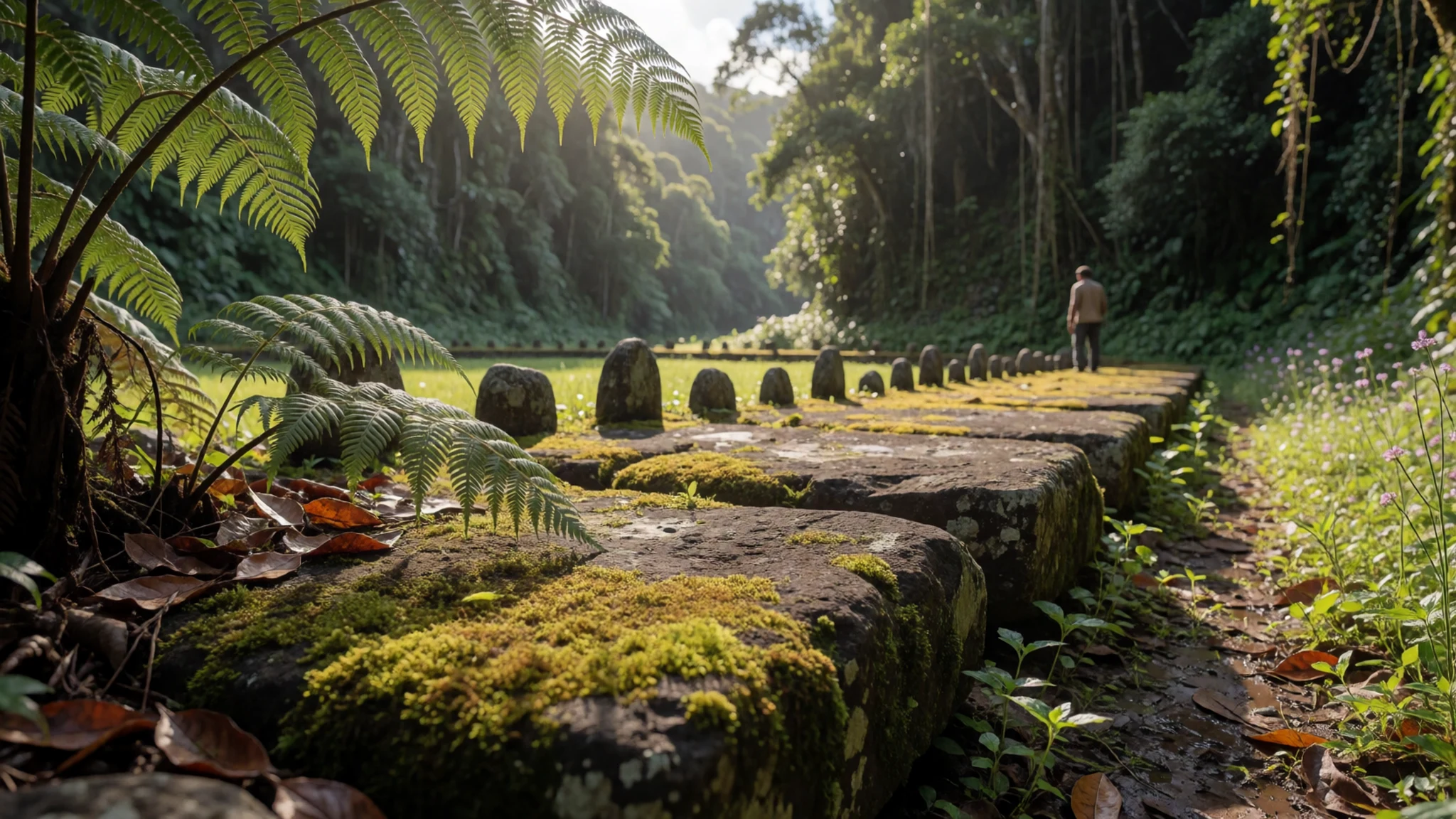
- Uia valley and the eastern coast — East coast
The eastern side of the island is cut into narrow valleys that end in cliffs, with Uia the largest. There is no road along this coast, so it is mostly seen from a boat, and then only when the sea allows. Ask village boat owners about trips.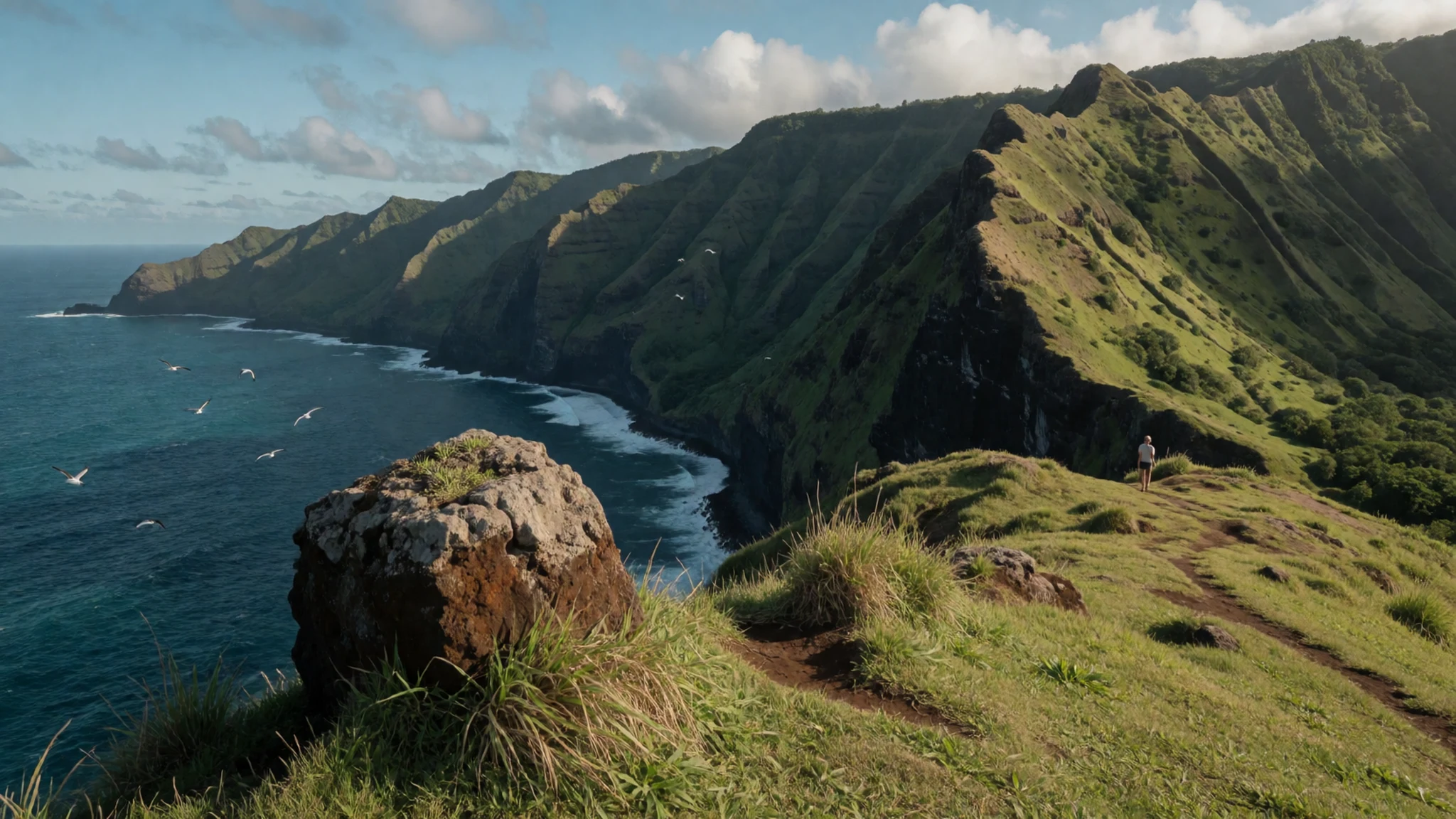
Culture
Fatu Hiva is a small Marquesan community in which most people know one another, and visitors are noticed and usually greeted. Daily life revolves around fishing, gardens of fruit and root crops, the church and family. Marquesan and French are both spoken, and a few words of French go a long way.
The island is known across the archipelago for crafts, especially tapa, the cloth beaten from tree bark and decorated with patterns, along with wood carving. Many pieces are made in homes in Omoa and Hanavave, and buying directly from the maker is the usual way. The patterns often draw on older Marquesan motifs, including those found in tattooing, which has strong cultural meaning here and elsewhere in the Marquesas.
The past is also present in the landscape. Old stone platforms and ceremonial grounds sit within valleys that people still farm, so some places that look like ruins are still considered important. The tales of valley rivalries, such as the Tiu leaving for the Tuamotus, remain part of local memory.
Life here is not organised around visitors. Boats run when the sea allows, shops are small and supplies depend on the next ship. Patience and good humour are part of the experience, and the wider Polynesian attitude of taking things easily applies.
Ask before photographing people or their carvings and tapa, and always ask permission before entering a garden or stepping onto old stone platforms.
What to wear
Traditional dress on Fatu Hiva is closely linked to tapa, the bark cloth made from trees and beaten into sheets, historically used for wrapped garments and today mostly seen in ceremonial costumes, dance and craft pieces. Dancers also wear woven plant fibres, seeds, shells, carved bone and wood, and crowns of leaves and flowers. Marquesan tattoo patterns remain an important form of dress and identity.
Day to day, people wear what suits a hot, humid island with steep paths: shorts, T-shirts, cotton dresses and the printed cotton wrap known as the pareo, with rubber sandals or bare feet around the house and garden. In church on Sundays, clothes are neater, with long skirts, dresses and collared shirts common. Flower crowns and fresh blossom in the hair are still worn on special occasions.
Visitors should pack light, quick-drying clothing in cotton or similar fabrics, with a hat, sunglasses and plenty of sun protection. A light rain jacket is useful, since showers can arrive at any time. For the village, shoulders and knees covered is the more respectful choice, and swimwear belongs on the beach or boat. For the ridge walks, bring sturdy shoes with good grip, as trails can be muddy and slippery. Reef shoes or old trainers are sensible for any rocky shoreline, and long trousers help against scratchy vegetation. Take a small waterproof bag for camera and phone.
What to eat
- Poisson cru — Family kitchens and village meals in Hanavave and Omoa
Raw tuna or other fresh fish, marinated in lime or lemon juice and coconut milk, with chopped vegetables. It is the common dish across French Polynesia and is at its freshest here when the catch has just come in.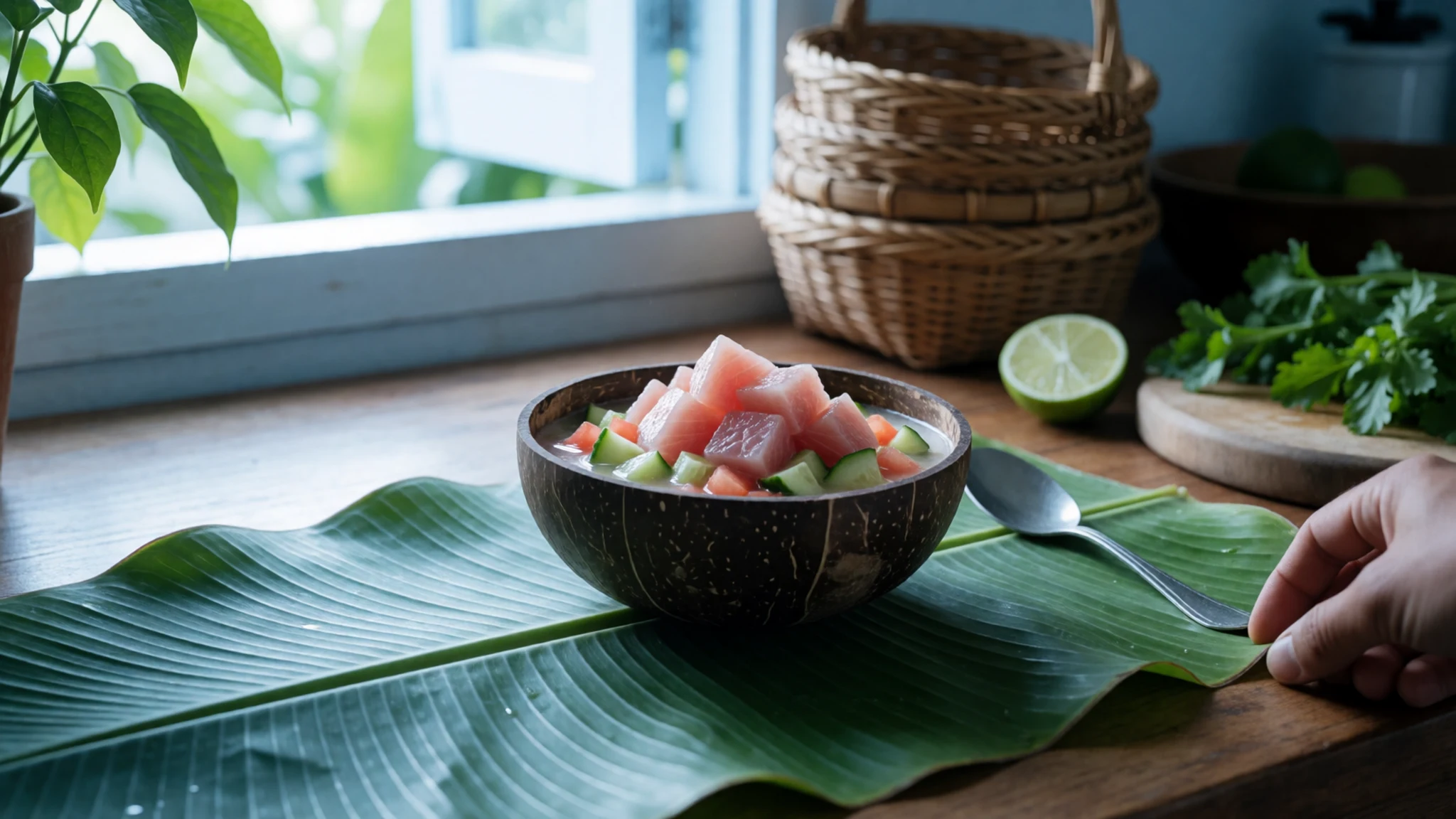
- Grilled or roasted fish — Home-cooked meals arranged through a guesthouse
Fish from the surrounding sea, such as tuna, bonito or mahimahi, cooked simply over a fire or in the oven. Served plain with rice, breadfruit or manioc, the quality comes from freshness rather than technique.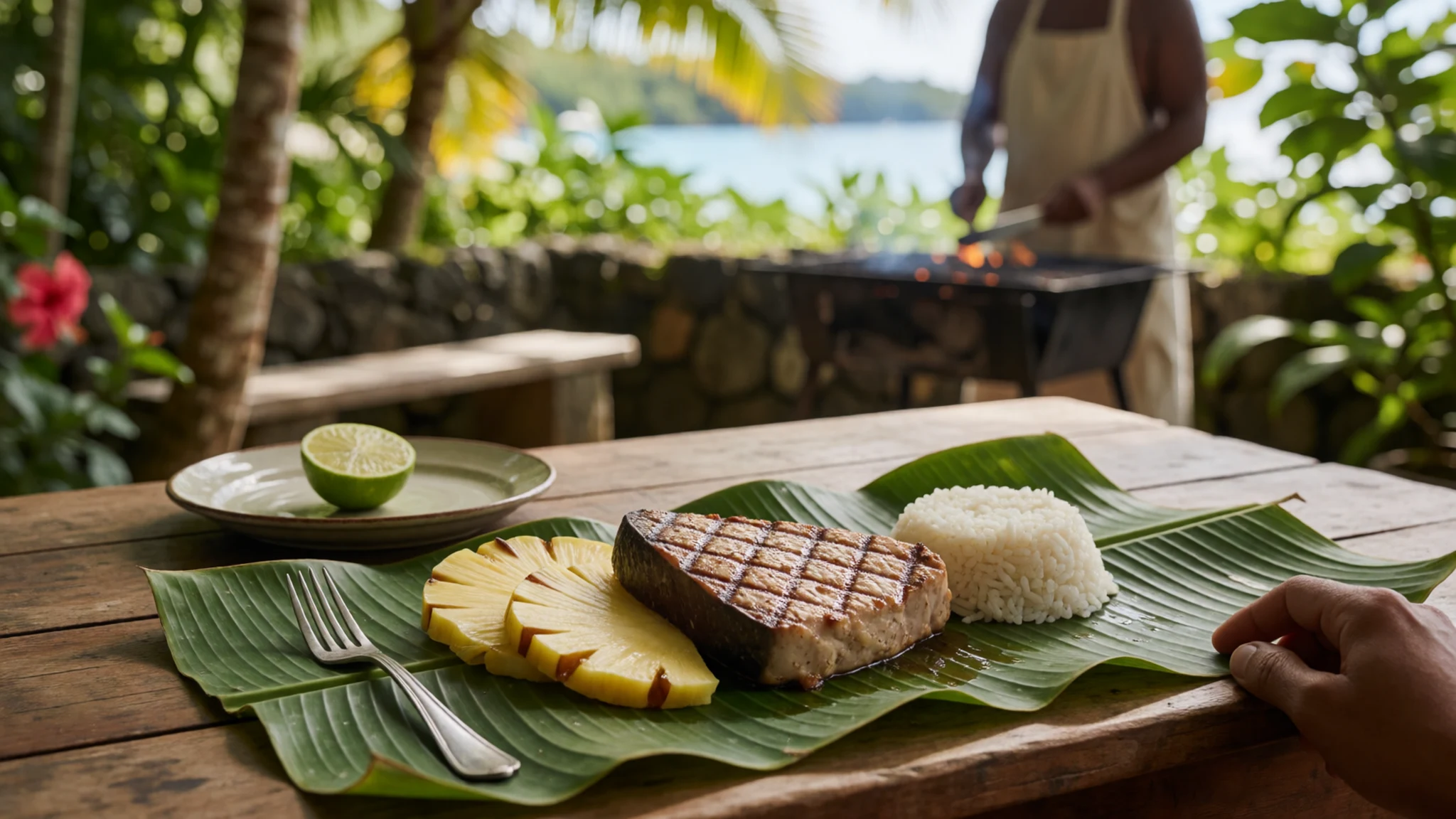
- Breadfruit — Village gardens and family tables
A starchy fruit that grows on trees around the villages, baked, roasted or boiled and eaten much as potato or rice would be. It has a mild, filling taste and goes well with fish and coconut sauces. - Pork and earth-oven cooking — Village celebrations and by arrangement with a guesthouse
For celebrations, Polynesian communities cook food wrapped in leaves in an oven dug into the ground and heated with hot stones. Pork, fish, breadfruit and bananas are typical. It is a feast dish, usually arranged for special occasions. - Local fruit and coconut — Village gardens and roadside trees; ask before picking
Island fruit such as bananas, papaya, citrus and fresh coconut is eaten at most meals. Drinking from a freshly cut coconut is a daily pleasure, and growers often share extra fruit with visitors.
Plan it
Best time. The cooler, drier months from about June to October are the most comfortable for walking and boat travel. The island is warm all year, and wetter periods bring muddy trails and rougher seas, so check recent conditions before booking.
How long. 3–5
Getting there. Fly from Tahiti to Hiva Oa in the Marquesas with Air Tahiti, then continue to Fatu Hiva by boat; services are limited and depend on the sea, so check with the airline and local operators. Some visitors arrive by yacht or on supply ships that call at the island.
Budget. mid
Tips
- Book flights, boat connections and a guesthouse well ahead, and allow spare days in case weather delays a crossing
- Bring cash from Tahiti or Hiva Oa, since card payment and cash machines cannot be relied on
- Carry water, snacks and any medicines, as supplies are limited
- Walk early in the morning to avoid heat and afternoon showers
- Wear reef shoes or old trainers for rocky shorelines and bring insect repellent
Etiquette
- Greet people you pass in the village and ask before photographing them
- Ask locally before visiting old stone platforms or entering private land
- Dress modestly in the villages and especially for church
Nearby
Sources
- Wikidata Q1398288 (CC0)
- Wikipedia: Fatu Hiva (rev 1381809042) (CC BY-SA 4.0)
- Wikivoyage: French Polynesia (rev 5399125) (CC BY-SA 4.0)
- Photo: Village and harbour of Hana Vave, by Sémhur (CC BY-SA 2.5)
