Esch-sur-Sûre
Esch-sur-Sûre, Luxembourg
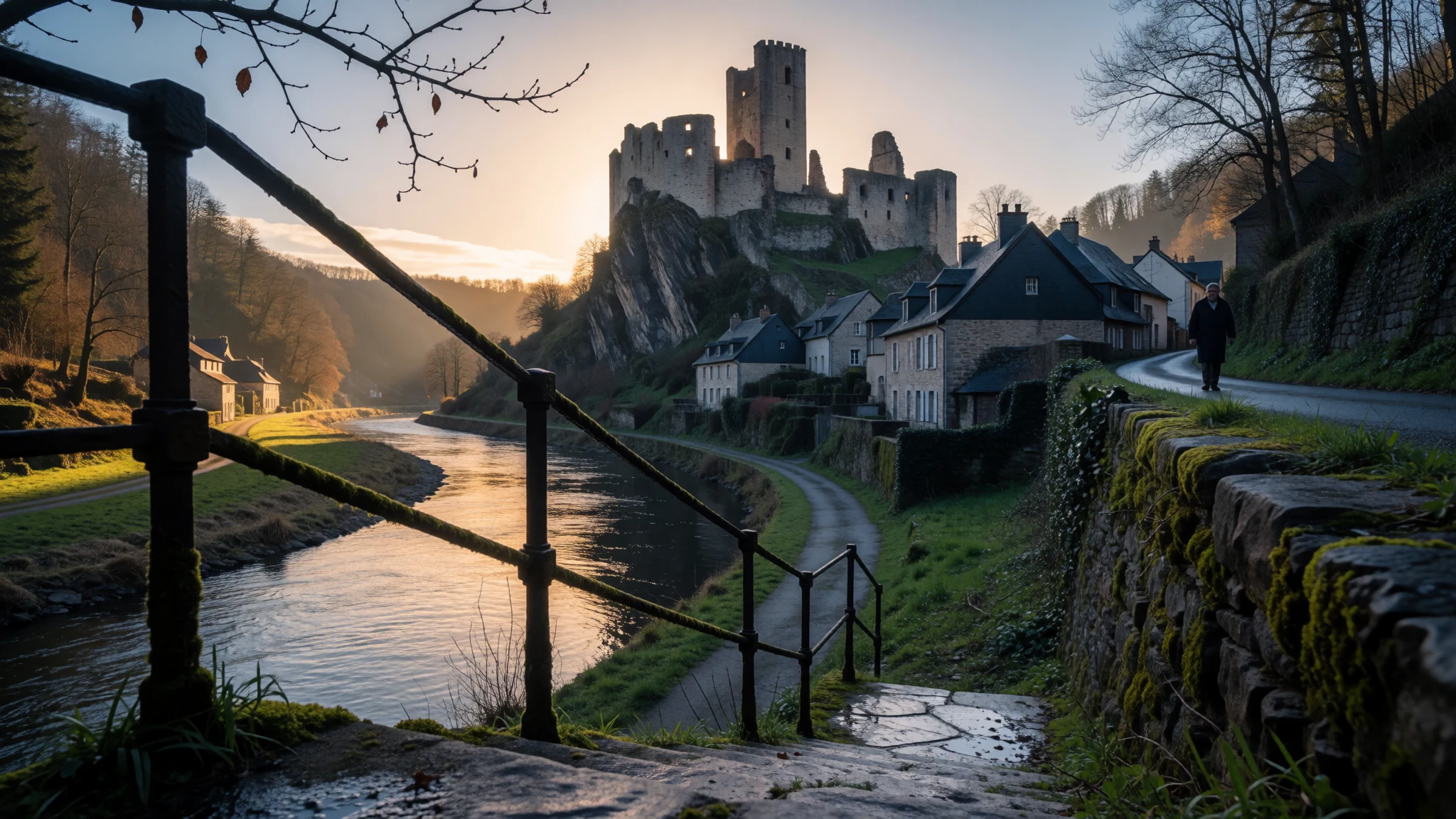
Esch-sur-Sûre is a small Luxembourg town looped by the Sûre, with a castle on the rock and forested hills all around.
The place
Esch-sur-Sûre stands where the Sûre loops around a rocky spur in the Luxembourg Ardennes. The river enters the bend, presses close to the foot of the rock, and leaves only a narrow neck of land, so the old town feels cupped in water. Luxembourgish speakers know the place as Esch-Sauer, and both forms appear on road signs. French, German and Luxembourgish share the streets, as they do across the country, and a visitor hears each of them in the course of an ordinary morning.
This is the Éislek, Luxembourg's slice of the Ardennes. Hills rise quickly from the valley, covered in mixed forest and small pastures, and the light is softer than on the open southern plateau. Administratively it falls under Wiltz. Houses step up from the bank toward the castle, a church holds a small square, and the town hall looks onto lanes still used for daily errands. A short stroll from the castle and the houses thin out. A little further, a dam holds back the Upper Sûre and forms a long lake among the trees.
That lake is both a landscape and a utility. It stores drinking water, and the shoreline belongs to the Upper Sûre Nature Park, with paths and viewpoints set beside stretches of bank kept quiet so the water stays clean. Stone lanes and an old castle sit next to a modern reservoir that changed the valley without erasing the bend. Rain is ordinary: cloud on the ridges, a tea-coloured river after a wet week, and slick paths up to the castle in winter.
Its story
Esch-sur-Sûre took its shape from the river bend long before anyone built a wall on the rock. A meander that nearly closes makes a settlement hard to approach: water does the work of a ditch, and the remaining neck of land is the only easy way in. The castle that still crowns the spur belongs to that logic. It was the seat of the local lords of Esch, a family whose name is tied to this valley rather than to industrial Esch-sur-Alzette in the south of the country. Those are different places, and they are easy to confuse on a quick glance at a map of Luxembourg.
Through the medieval centuries the fortress watched the Sûre, changed hands among noble lines, and slowly lost its military point as borders and weapons moved on. What remained was a ruin above a farming village: walls, a keep, and a view down the loop of water. Later repairs have made the ruin safe enough to wander, without turning it back into a palace.
The other great change in the valley is the dam. Built to hold a drinking-water reservoir, it put the upstream reach of the river under the Upper Sûre lake and gave the commune another identity. Beside the old story of a castle on a bend, there is now the story of a park, a shoreline and a carefully guarded supply of water. Farms and forest did not vanish. They sit behind the tourist lanes, and daily life still follows weather, school terms and the weekend influx. Esch-sur-Sûre keeps both stories in the same short walk, from ruin to reservoir.
What to see
- Castle of Esch-sur-Sûre — the rocky spur
The castle of Esch-sur-Sûre stands on the rock above the river loop, a compact medieval ruin rather than a furnished palace. Walls and a keep survive, and the climb through the lanes is short and steep. From the top the bend in the Sûre explains the site at a glance: water nearly meeting water, roofs packed between.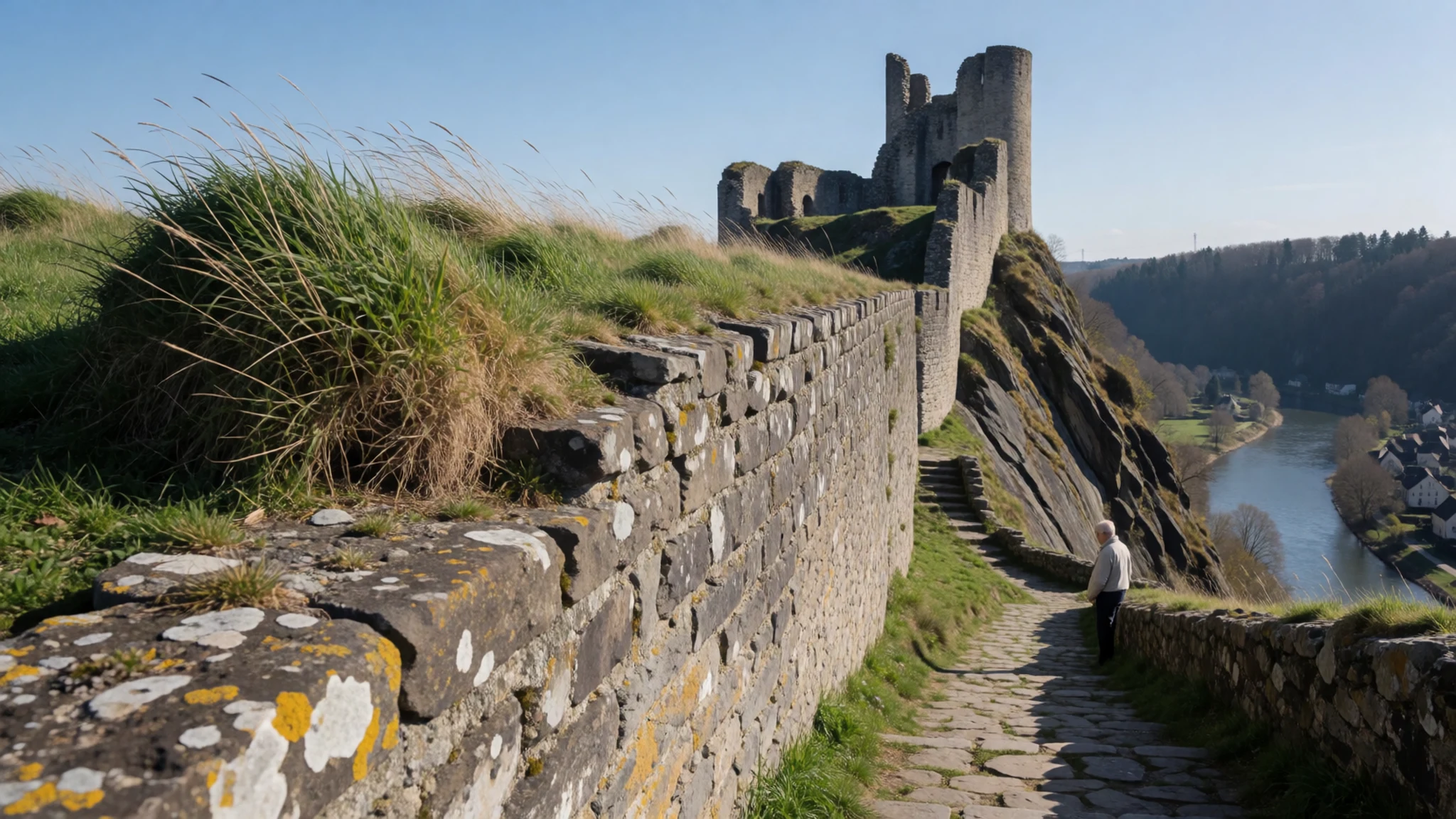
- The Sûre bend — around the old town
The Sûre bend is the town's outline. Esch-sur-Sûre occupies the land inside a meander that curls so tightly the river seems ready to pinch the spur off. Paths and bridges follow the water along the foot of the houses and offer a look back up at the castle. After rain the current runs faster and browner.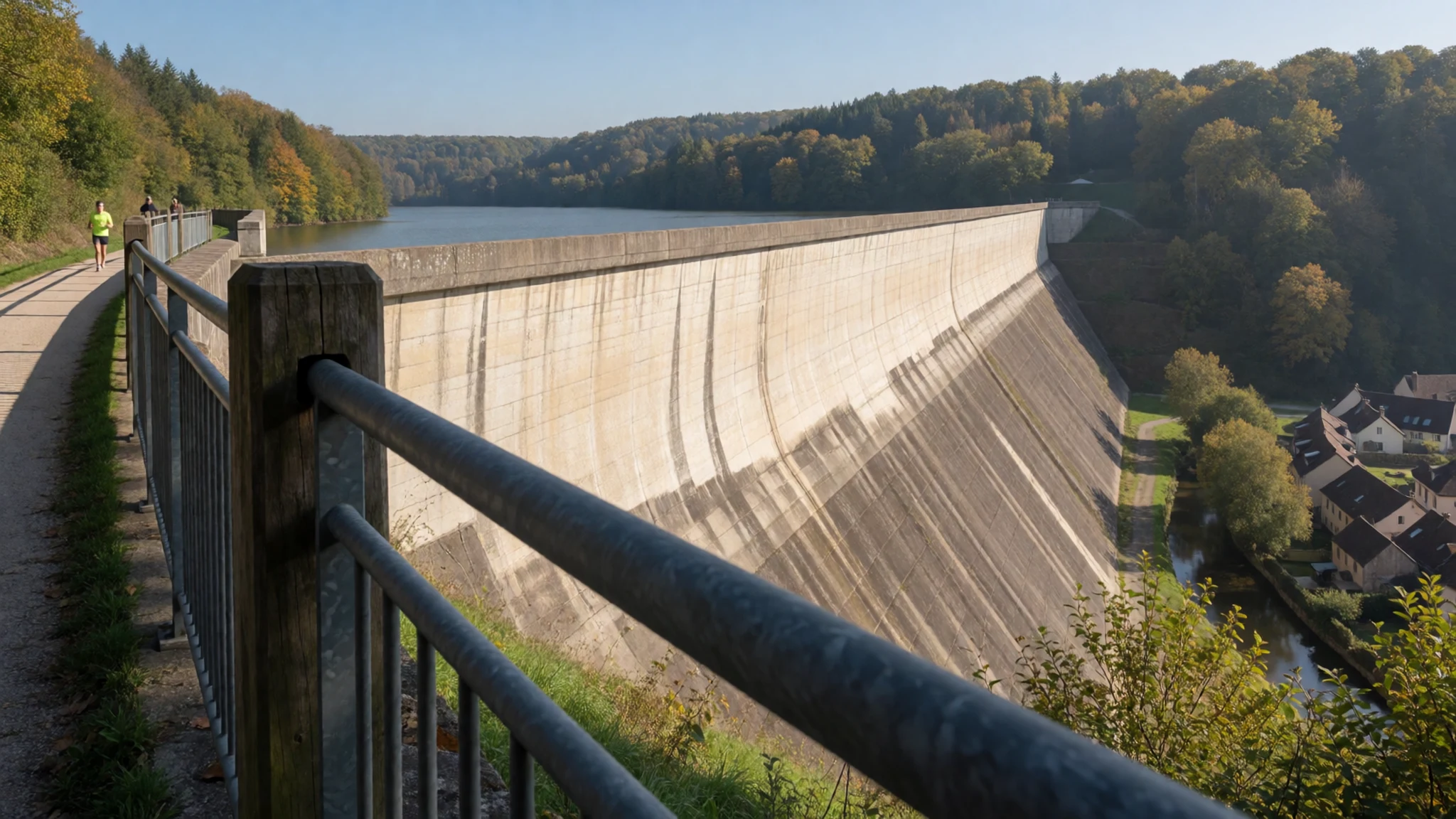
- Upper Sûre dam — just upstream of the town
The Upper Sûre dam closes the valley just upstream of Esch-sur-Sûre and holds the lake that supplies drinking water. The wall is blunt concrete after the small scale of the lanes, and the road across it shows how far the reservoir stretches into the forest. Swimming and boating are not free for all on this water: signs mark what the drinking-water rules allow.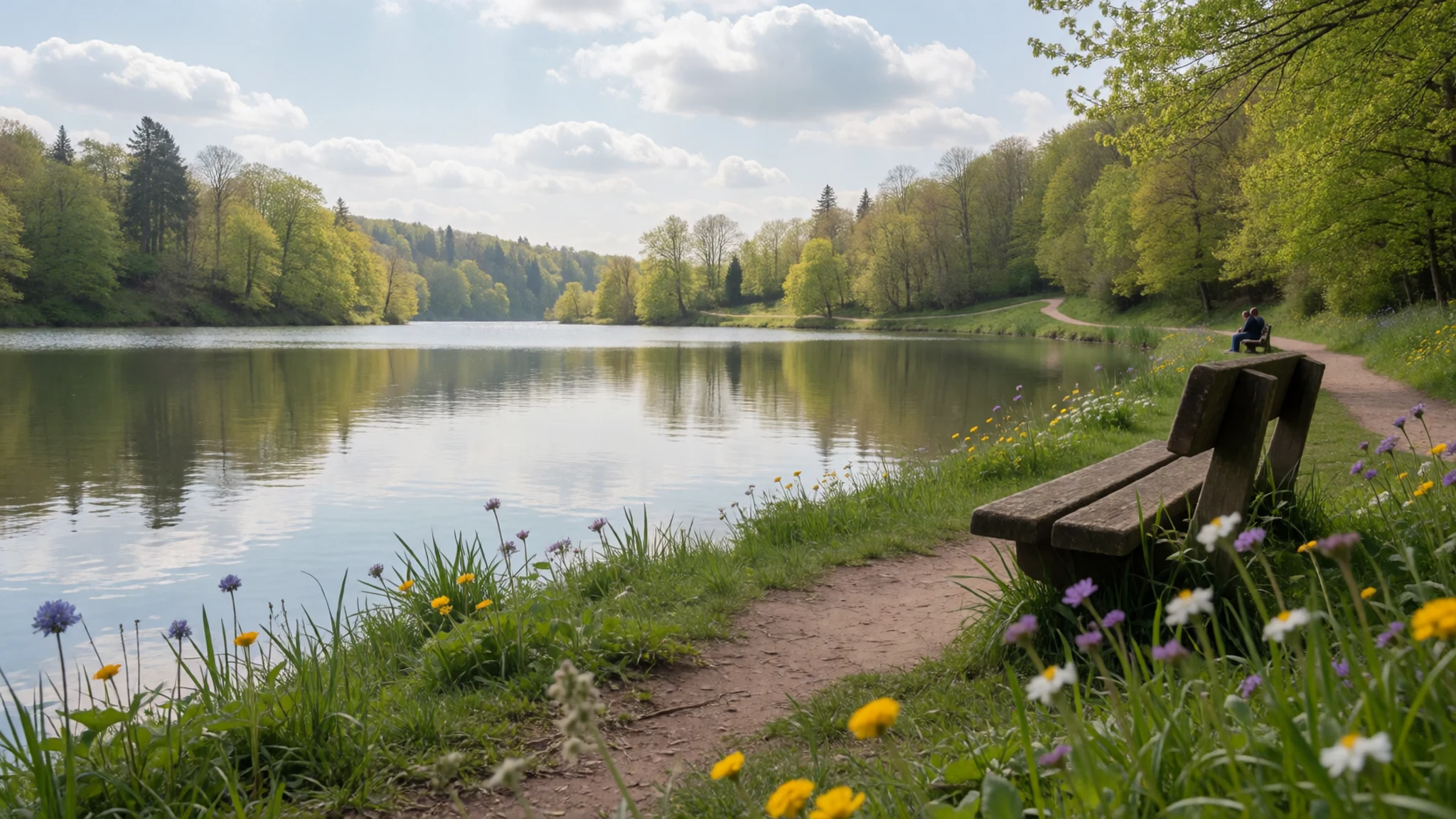
- Town hall — the town centre
The town hall of Esch-sur-Sûre, the Stadhaus of the commune of Esch-Sauer, is the civic face of a very small municipality. It is a modest public building among the houses, a working commune office as well as a photograph. Noticeboards nearby often carry both French and German.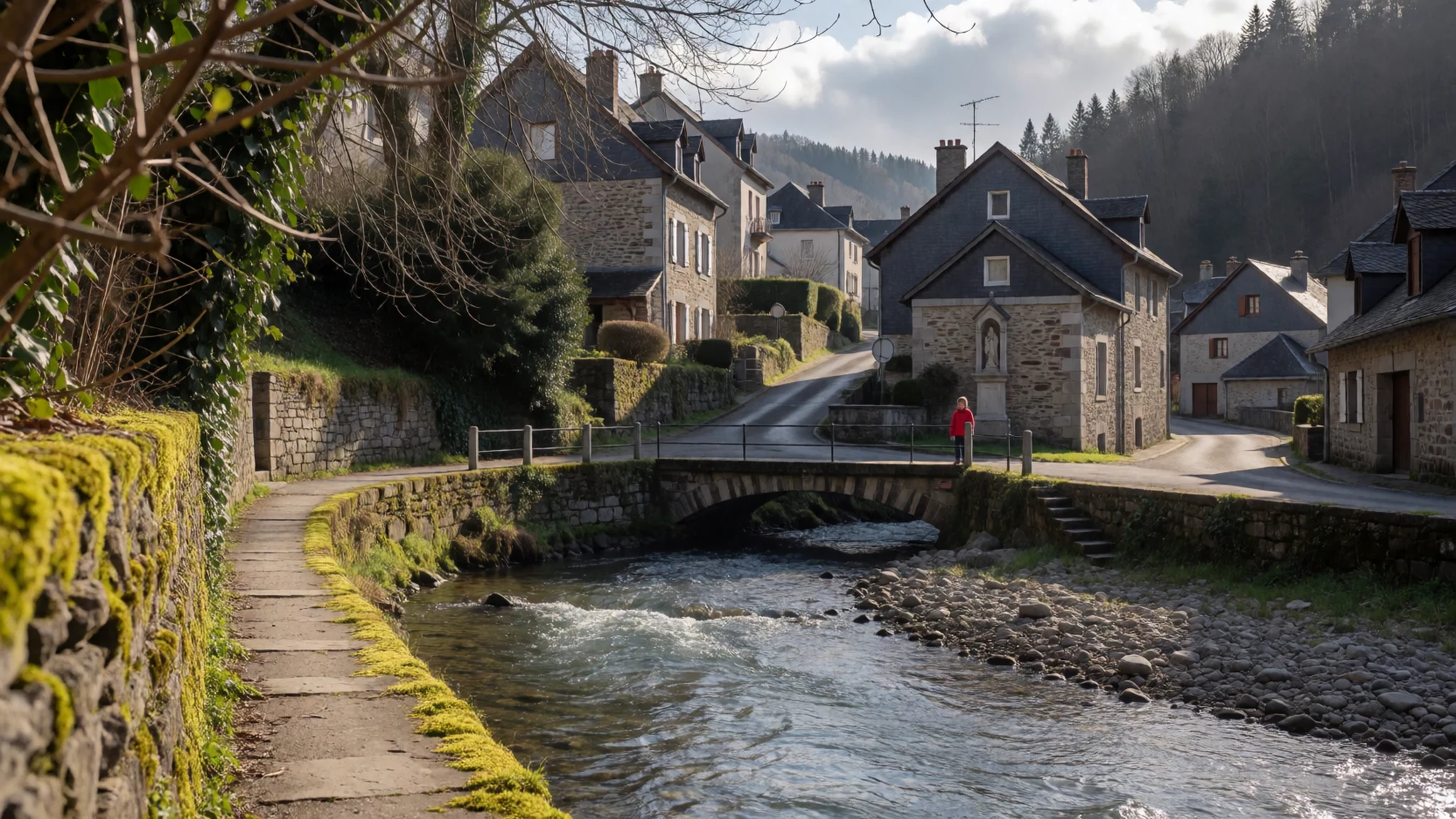
- St Antoine wayside shrine — the road between Eschdorf and Esch-sur-Sûre
The wayside shrine of St Antoine stands on the road between Eschdorf and Esch-sur-Sûre, a small devotional stop rather than a church. A statue of the saint is set by the verge, the kind of rural marker that still punctuates Luxembourg lanes. It rewards a slow pass: moss, a niche, and parish landscape beyond the castle rock.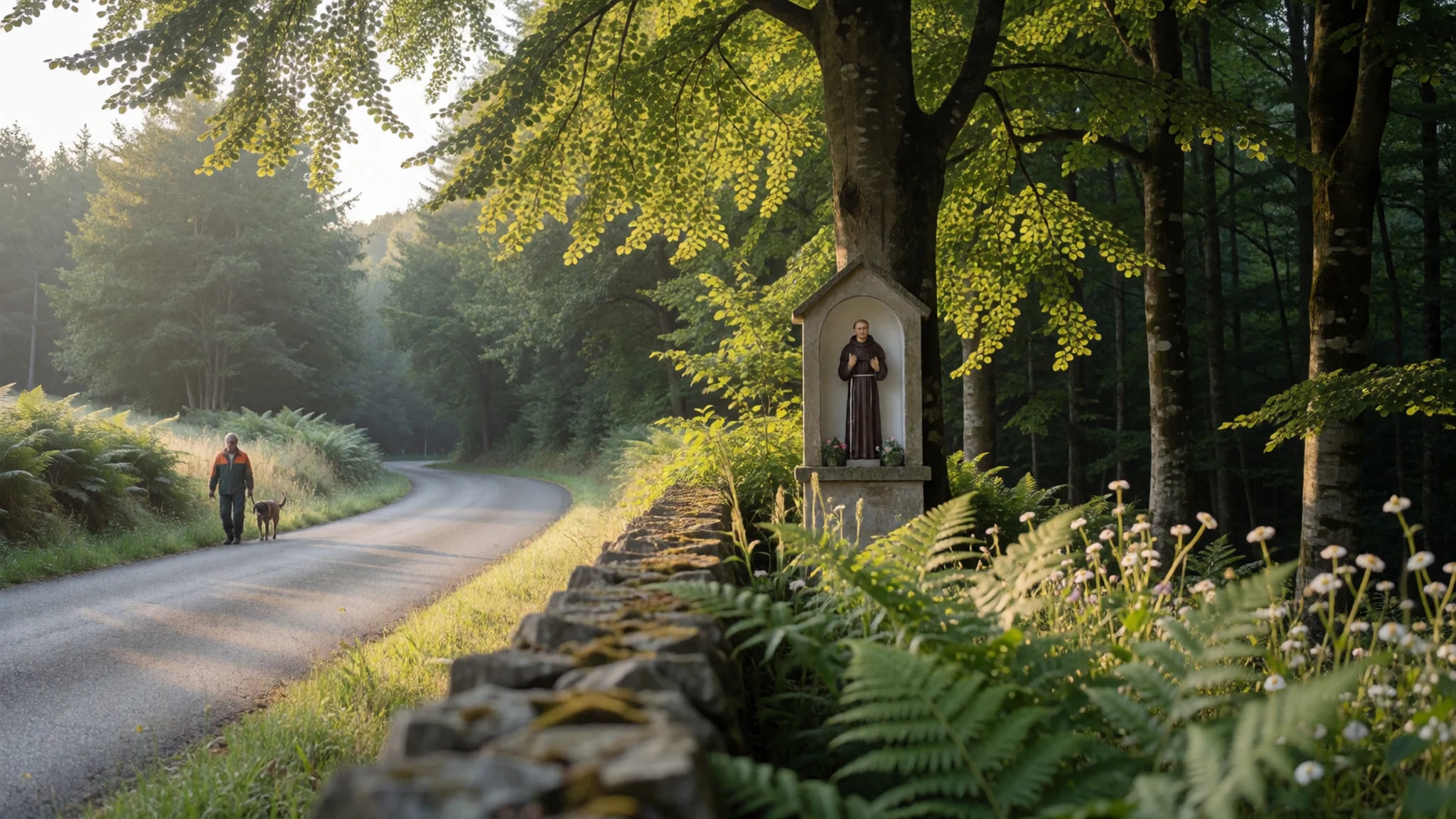
Culture
Esch-sur-Sûre lives in Luxembourgish, with French and German close behind. A greeting of Moien lands well in a shop or on a path; French will carry almost any practical conversation, and German is widely understood in the Éislek. The commune is small, so people notice strangers, and a nod on a narrow lane is ordinary courtesy rather than a performance. Weekend life leans outdoors: walkers on the castle path, families heading for the lake, cyclists on the valley roads. Weekdays are quieter, closer to school runs, council business and farm work than to a resort timetable.
Faith still marks the landscape. The parish church, the Virgin's statue and wayside shrines such as St Antoine belong to a Catholic rural tradition that is lived lightly by many residents and seriously by others. National Day brings out flags and, in towns that still keep them, pieces of traditional dress, but Esch-sur-Sûre is more likely to mark the summer with a local fête, a band and extra tables in the cafés than with a grand procession. The nature park adds another culture, of trail signs, ranger rules and a shared understanding that the lake is somebody's tap water as well as a view.
Leave the wayside shrines and the church undisturbed, keep voices down inside, and obey the reservoir signs that protect drinking water.
What to wear
Esch-sur-Sûre has no costume unique to the bend, so what people wear draws on Luxembourg as a whole and on the Ardennes weather. Traditional dress appears on National Day and at folk occasions: for women a dark dress, an embroidered apron, a lace cap or bonnet and a shawl; for men a dark jacket, a light shirt and a cap. The textiles are wool, linen, cotton and lace, made for church and festival rather than for mud. It is heritage clothing, kept for the day the flags come out, and in a commune this small it may stay unseen outside a festival or a published photograph.
Everyday clothes in Esch-sur-Sûre are the same practical European mix found across the north of the country: jeans, knitwear, waterproof jackets, and trainers or walking shoes. Café terraces in summer bring lighter layers, though a jumper on the chair is wise once the valley loses the sun. Hikers heading into the nature park look equipped, with boots and a shell, because the paths are real dirt and root, not a promenade.
The castle lanes are steep and polished by rain, so shoes with a grip matter more than a smart sole. Shoulders and knees are not policed in the street; at the church, covered shoulders and a quiet manner are enough, and there is no custom of removing shoes at the door.
What to eat
- Judd mat Gaardebounen — village eateries in Esch-sur-Sûre
Smoked pork collar with broad beans is a dish Luxembourg kitchens treat as their own, and Esch-sur-Sûre serves it in the same spirit. The meat is salted and smoked, then cooked with savoury and served beside a heap of beans and potatoes. It turns up in village eateries.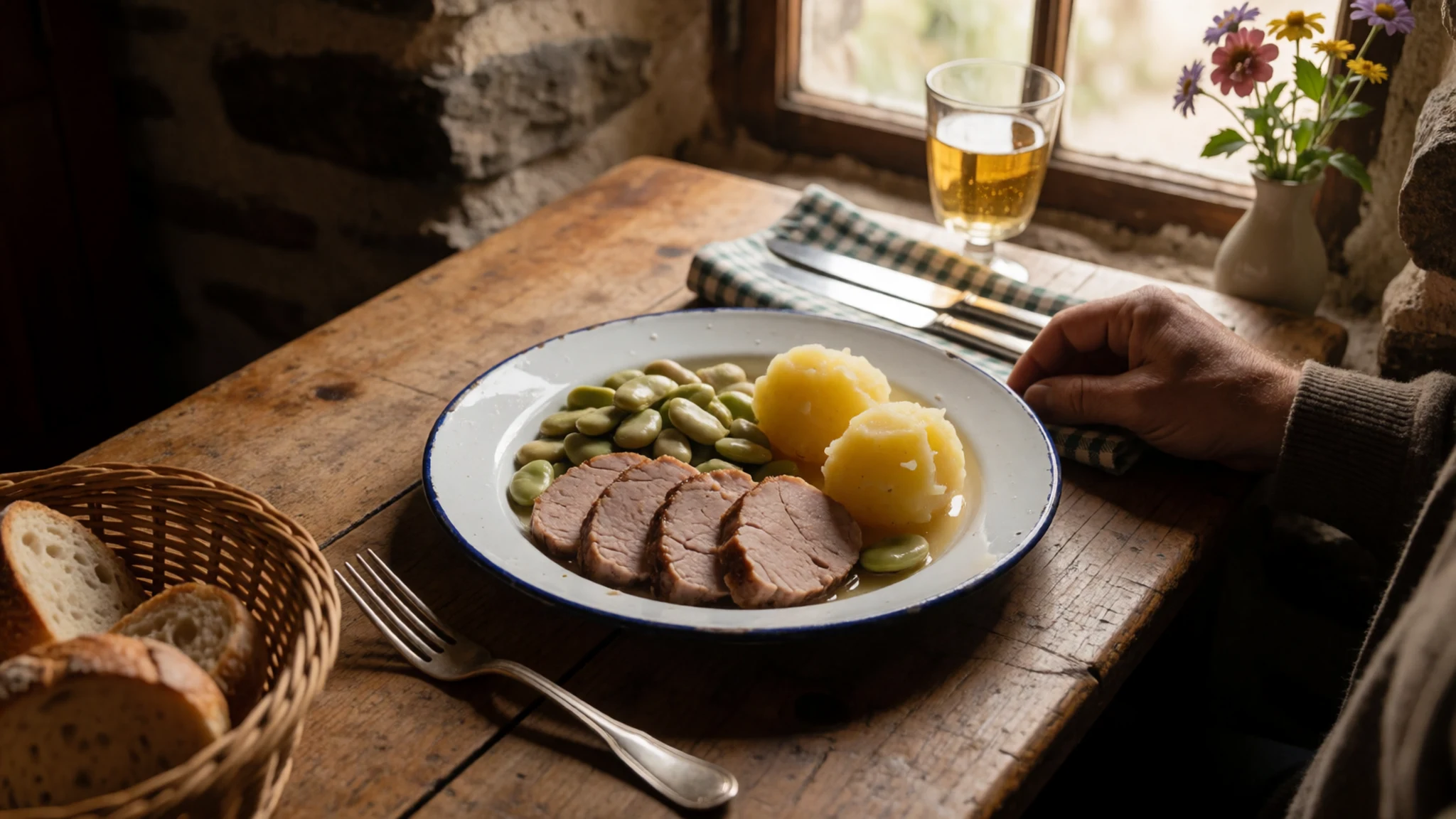
- Bouneschlupp — simple eateries in the town
Bouneschlupp is a green-bean soup that Luxembourg homes and simple eateries still make when beans are plentiful. Potatoes, onion and often a piece of smoked sausage thicken the pot, and a spoon of cream is common. In Esch-sur-Sûre it suits a damp lunch better than a terrace snack.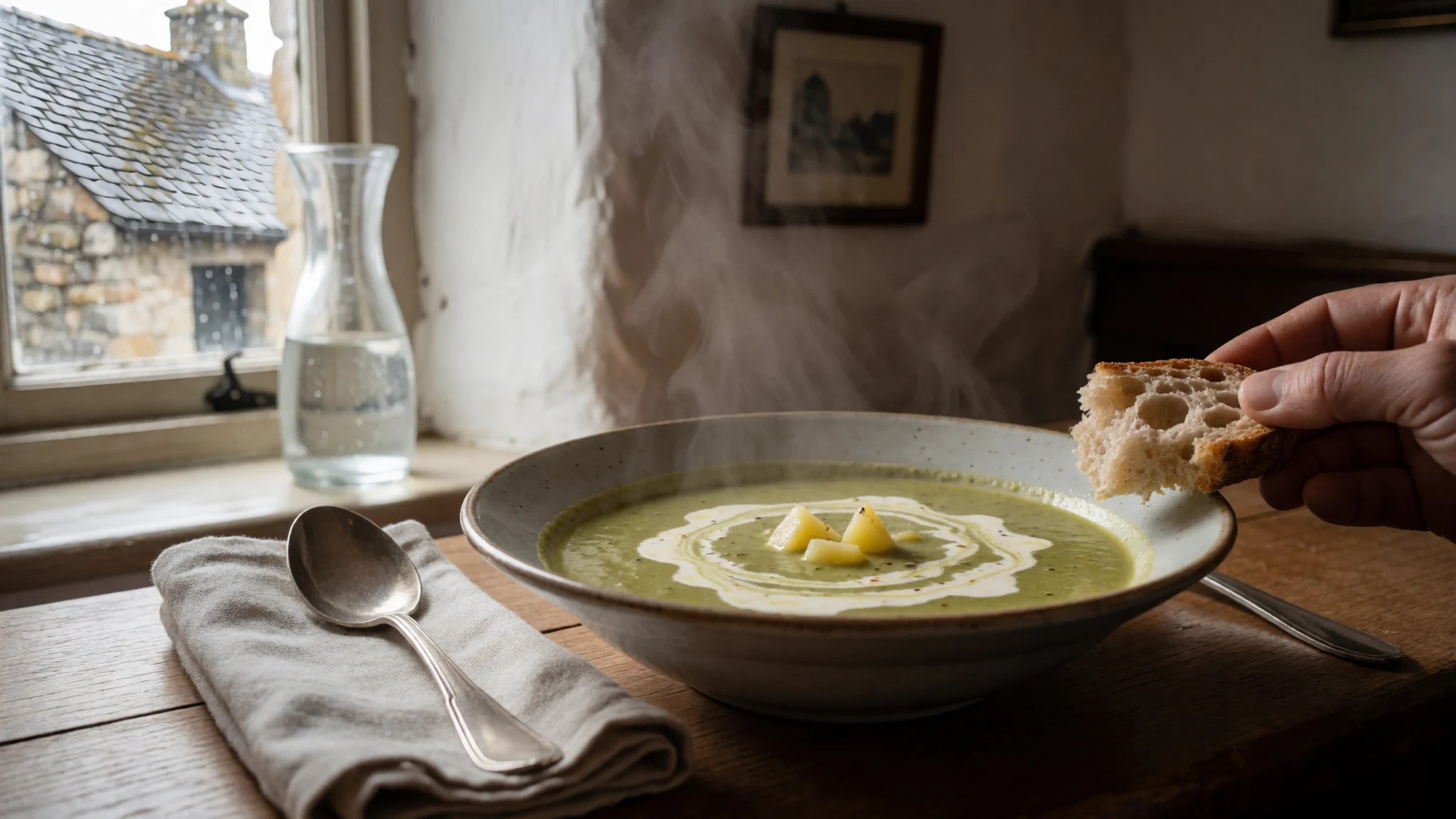
- Gromperekichelcher — fête stalls and snack counters
Gromperekichelcher are shredded-potato fritters, fried until the edges crisp, and eaten with apple sauce or as they are. Fête stalls and snack counters around Esch-sur-Sûre produce them when a fair or a busy weekend is on. Salt and apple sauce are the usual company. - Träipen — cold-weather eateries off the castle lanes
Träipen, Luxembourg's black pudding, is sliced and pan-fried, often with apple sauce and mashed potato beside it. The flavour is deep and slightly sweet, closer to a farm kitchen than to a café cake counter. In Esch-sur-Sûre, cold-weather eateries still put it on a local menu. - Quetschentaart — bakeries in Esch-sur-Sûre and neighbouring villages
Quetschentaart is an open tart of damsons or plums on a yeasted or pastry base, sugared and baked until the fruit collapses. Bakeries in Esch-sur-Sûre and in the neighbouring villages sell it by the slice, especially in late summer and autumn when the fruit is in.
Plan it
Best time. Late spring and early autumn suit Esch-sur-Sûre: mild days for the castle path and colour in the woods, before the deep winter damp. Early summer can be lush and wet. High summer is pleasant and busier, especially when the lake is the draw. Winter is quiet, cold and often grey, and some shore activities pause.
How long. 2–3
Getting there. Esch-sur-Sûre has no airport and no mainline station of its own. Fly into Luxembourg Airport, then continue by train toward the north of the country and change to a regional bus for the valley, or drive the last stretch along the Sûre. The final approach is a winding valley road, slow behind a coach on a sunny weekend.
Budget. high
Tips
- Come early on fair weekends if the castle lanes and the dam road matter, because coaches fill the small centre.
- Carry a waterproof and shoes that grip wet stone.
- Check the official commune or nature-park site for which stretches of the lake allow swimming or boats, and do not guess from a postcard.
- Cards are widely used in Luxembourg, yet a little cash still helps at a fête stall or a small café.
- Daylight fades quickly in the valley in the shoulder seasons, so start wooded walks early.
Etiquette
- Greet shop staff with a Moien or a Bonjour before you ask for something.
- Do not climb on loose castle masonry, and stay off any bank the reservoir signs close.
- At the church and the wayside shrines, keep quiet and do not rearrange flowers or candles.
Nearby
Sources
- Wikidata: Esch-sur-Sûre (CC0)
- Wikipedia: Esch-sur-Sûre (CC BY-SA 4.0)
- Wikivoyage: Esch-sur-Sûre (CC BY-SA 4.0)