Beaufort Castle
Beaufort Castle, Luxembourg
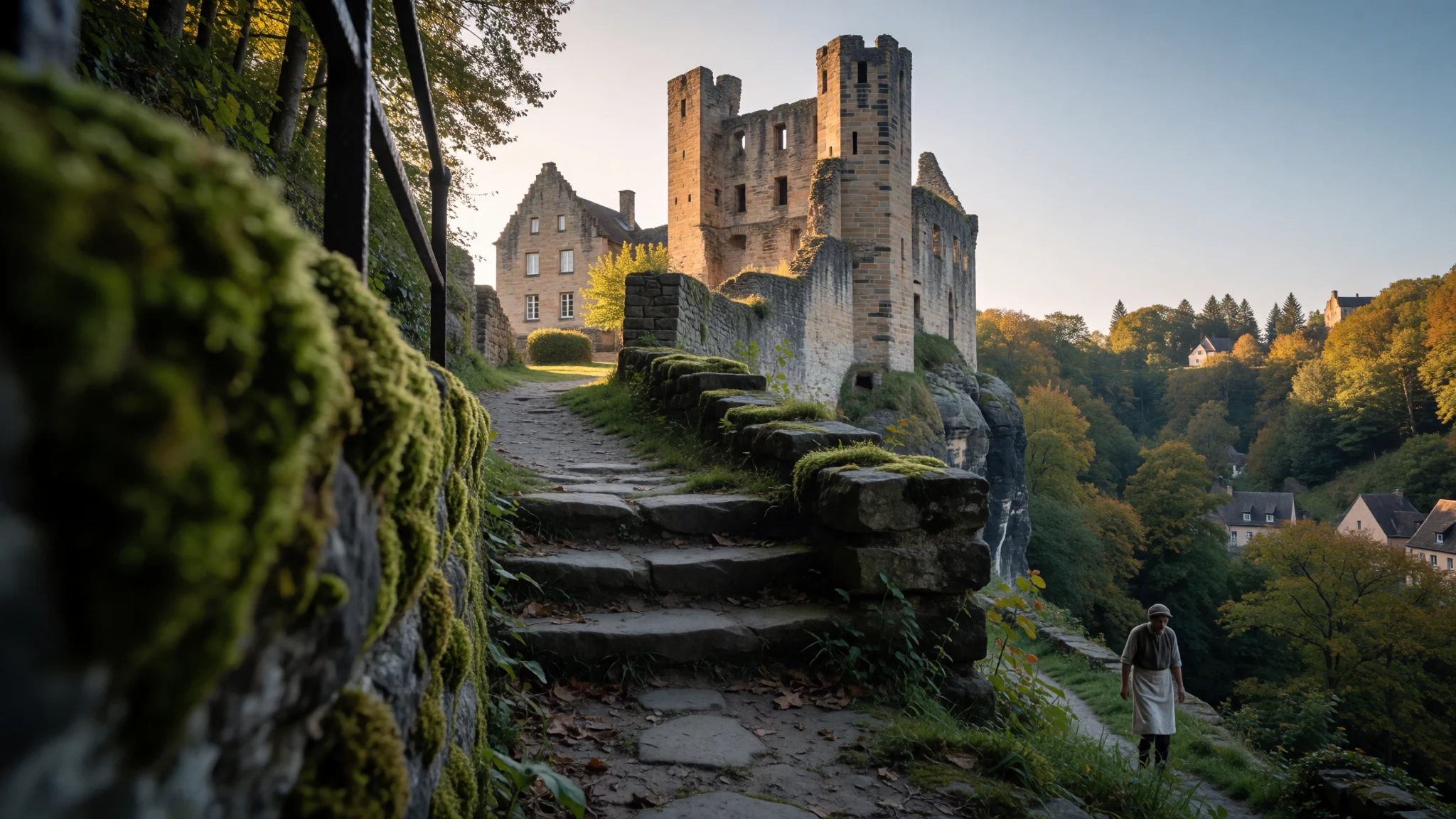
Beaufort Castle is a ruined medieval fortress on a rock in eastern Luxembourg, with a later manor beside it and forest trails all around.
The place
Beaufort Castle stands at the edge of the small town of Beaufort in eastern Luxembourg, in the Mullerthal region of wooded sandstone valleys. It is really two buildings side by side. One is the ruin of the medieval fortress, a tangle of walls, towers and cellars on a rocky spur. The other is a later residence from the seventeenth century, which was kept up and still has its roofs and windows. Locally the castle is Buerg Beefort, in French Château de Beaufort, and the town grew up around it and took its name.
The ruin is the reason to come. Walls rise straight out of the rock, cuts in the stone show where a moat once protected the first defenders, and stairways lead to openings with views over the valley and the village roofs. Many ruined castles are fenced off and viewed from a distance. Here visitors can walk through chambers, passages and gateways with open sky overhead, which suits children and anyone who likes to see how old masonry was put together.
The site has been protected as a national monument since 1850 and has belonged to the Luxembourg state since 1981. It is a modest place rather than a vast one, and a visit to the ruin itself can be done in an hour or two. Most people pair it with a walk in the surrounding forest. Expect crowds on summer weekends and school holidays, and expect the stone steps to be slippery after rain.
Its story
Beaufort Castle likely started in the 1100s as a small, square fortress on a big rock, protected by a ditch and another wall overlooking the valley. A record from 1192 names Wauthier de Wiltz et Beaufort as its first lord. A keep was added in the following decades and the gate was moved and widened. After a marriage in the mid-fourteenth century the estate passed to the Orley family, who extended the buildings along the edge of the valley.
Ownership then shifted through inheritance, forfeiture and debt. A breach of trust cost one Orley heir the castle, and in the sixteenth century Bernard von Velbrück gained it by marriage and constructed a wide wing featuring cross-framed windows atop the ancient walls. His granddaughter's husband, Gaspard de Heu, backed the Dutch resistance and the House of Orange. The Spanish captured him, accused him of heresy and treason, and had him executed in public in Luxembourg city. The Spanish king confiscated the estate.
The Thirty Years War ruined a later owner, who had to sell. Johann von Beck, who served the Spanish crown, took over much of the property and began a new house beside the old fortress. He died of wounds from the Battle of Lens, and his son finished the work in the same decade.
After more changes of owner the castle was abandoned, and for a while locals took its stone as if from a quarry. The state listed it as a national monument in 1850. Henri Even restored the newer house, and in 1928 Edmond Linkels cleared the rubble from the medieval castle and opened it to visitors. The state bought the property in 1981.
What to see
- The medieval ruin — Beaufort, castle grounds
The old fortress is the main sight: roofless halls, thick walls and narrow passages cut into and built onto the rock. Allow time to wander slowly, look up at the surviving towers, and peer through window openings at the valley. Some stairs are steep and worn, so sturdy shoes matter.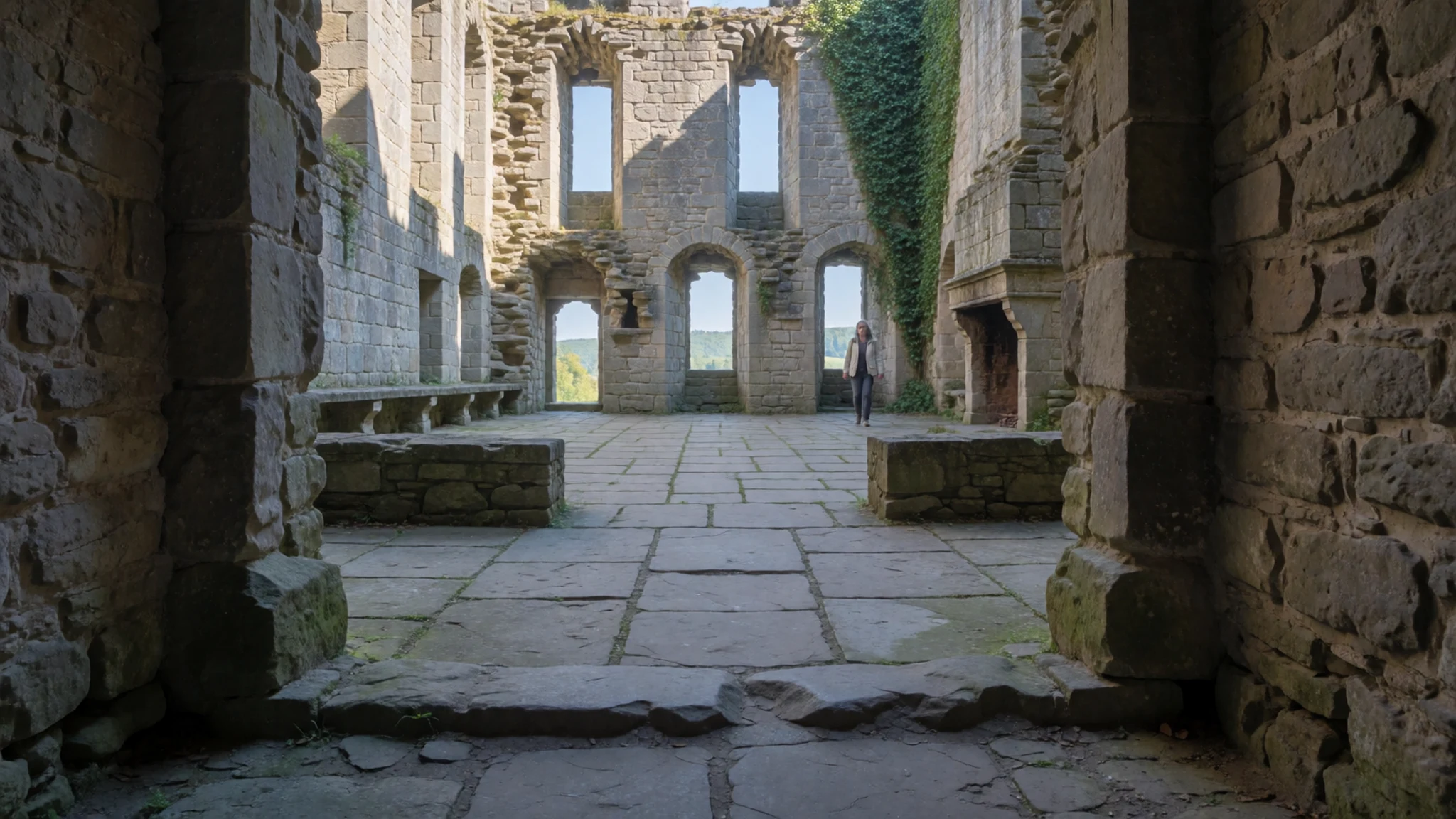
- The later residence — Beaufort, castle grounds
Beside the ruin stands the house begun in the mid-seventeenth century, finished by the son of its first builder. It looks calm and domestic next to the broken fortress, and the contrast shows how the site changed from a defensive stronghold to a place to live. Check the official site for access to its interior.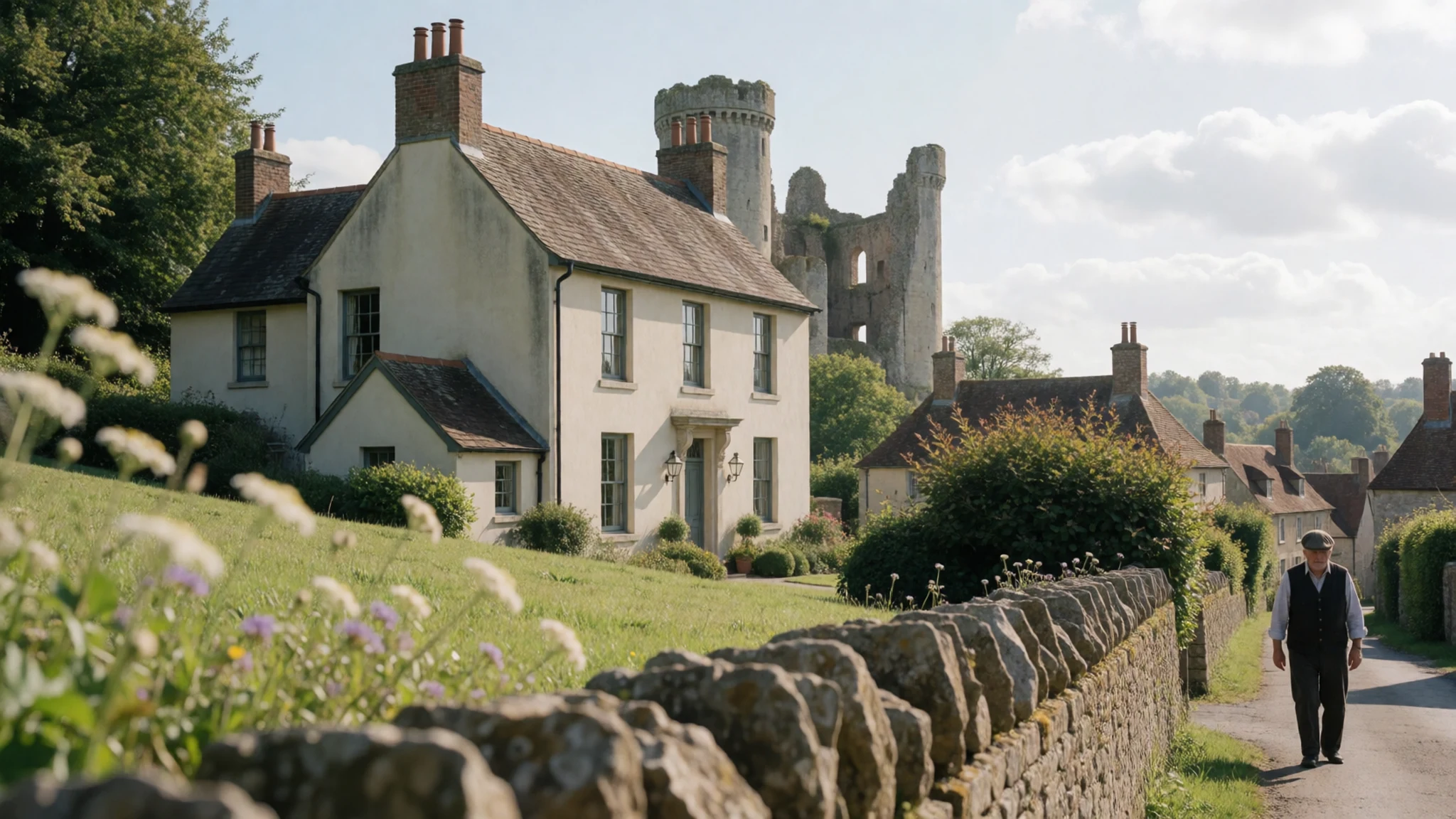
- The keep and upper walls — Beaufort, castle grounds
The keep, added in the twelfth century, anchors the oldest part of the site. Climbing towards the upper levels gives the clearest sense of why this rock was chosen: the ground falls away on several sides, and any approach was visible from far off. The views over the treetops are the reward.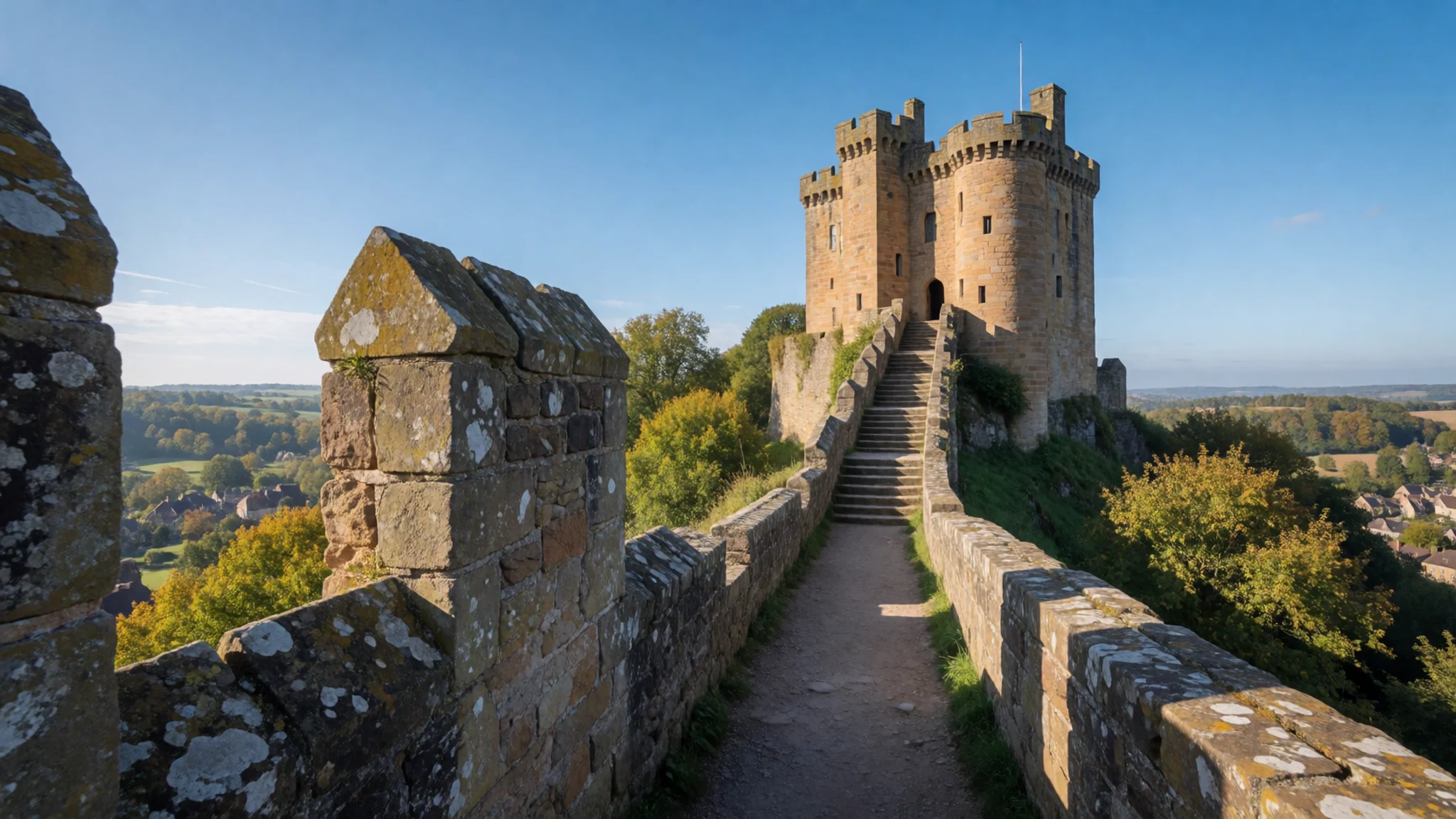
- The rock and moat cuts — Beaufort, below the walls
Look at the foundations as well as the towers. The castle sits on a large rock, and the ditches and cut stone around its base were part of the defence. Seen from below, the walls seem to grow out of the ground, which is also where the best photographs of the whole ruin are taken.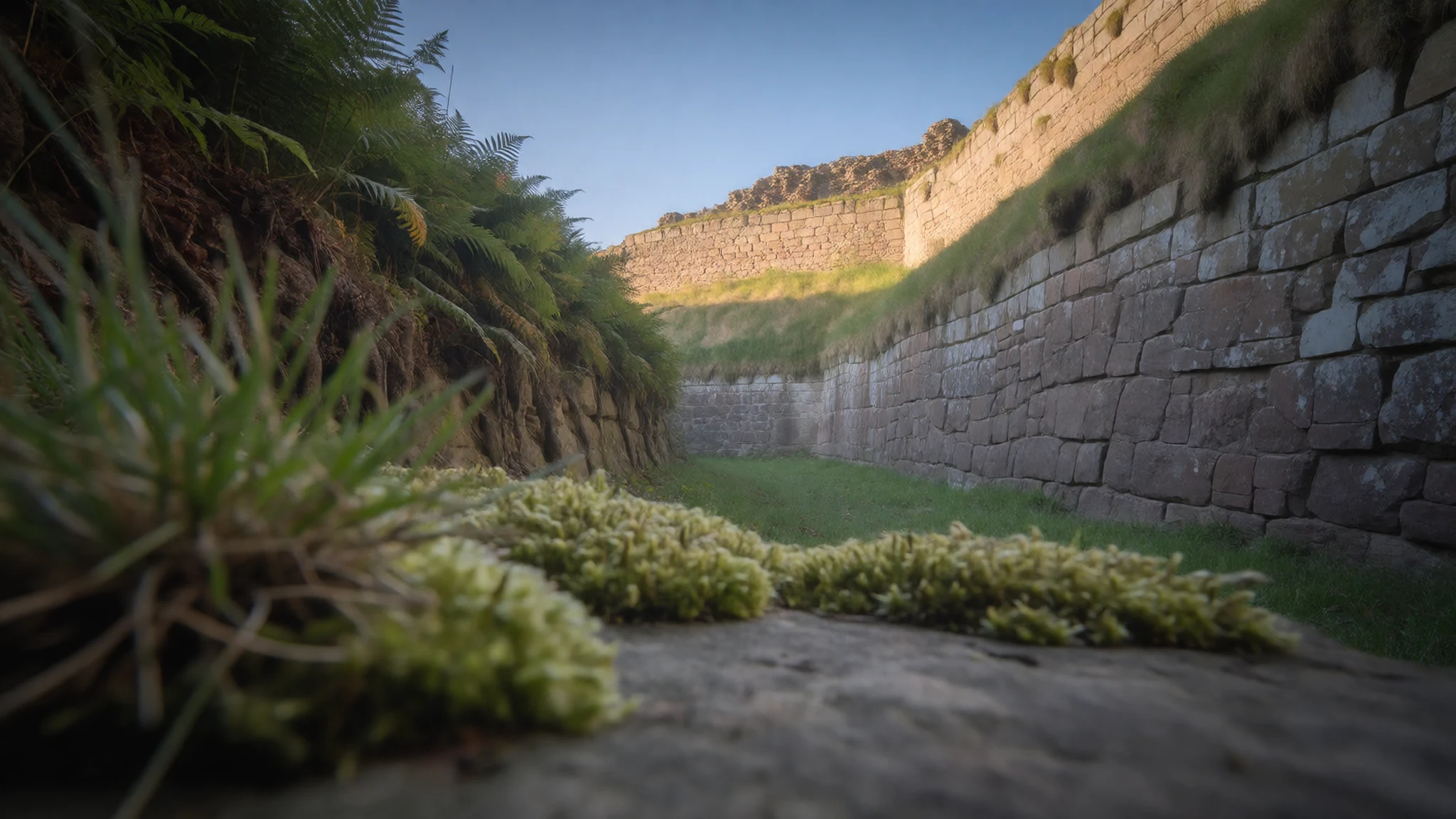
- Forest walking trails — Beaufort and the surrounding Mullerthal
A walking route into the Mullerthal begins close to the old castle, and a photo from the area describes it as the start of one of the more interesting trails in the region. Paths run through woods and past rock formations. Even a short loop adds variety to the visit, but check the weather first.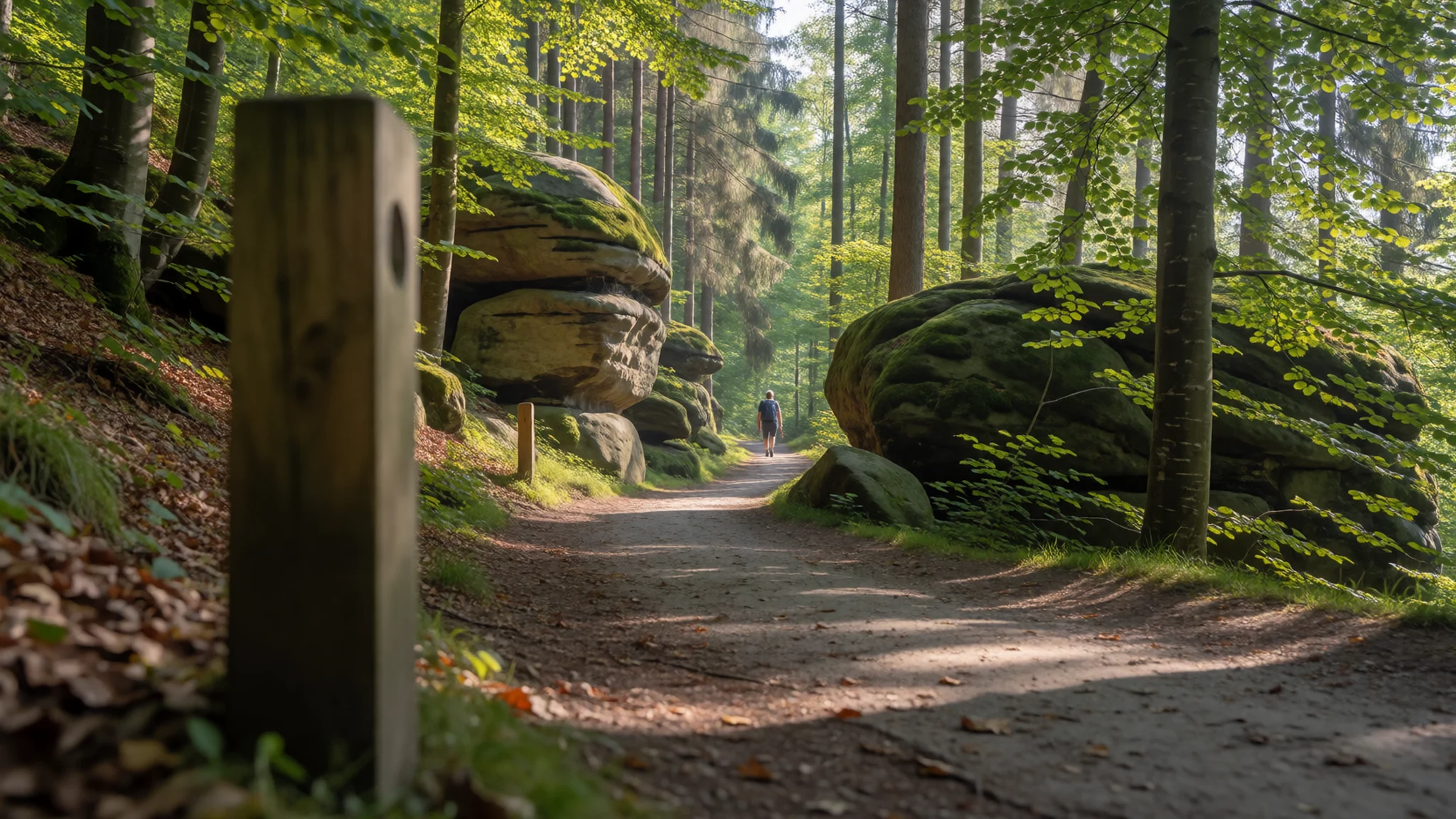
Culture
Beaufort Castle sits in a country with three official languages: Luxembourgish, French and German. Signs, conversation and menus around the castle may move between them, and many local people also speak English. A greeting in any of the three is welcomed, and a polite "moien" (hello in Luxembourgish) goes a long way in a village like Beaufort.
The castle is a protected monument, and heritage here is treated as something shared. The ruin was a quarry for a time, then listed, restored in parts and finally bought by the state, so the idea of looking after old stone is taken seriously. Local visitors tend to come for a quiet outing: a walk, a coffee, a look at the ruin, and lunch in the village. Voices are generally kept moderate, queues are orderly, and rubbish is taken away or put in the bins provided.
The story of the castle also reflects the wider history of the region, which passed between powers and families for centuries. Names in the history, from Orley to Velbrück to Spanish governors, point to a borderland where the Low Countries, France and the German lands met. That mix still shows in the language, the food and the way people tell the local past.
Please stay on the marked routes, do not climb on the ruined walls or take stones as souvenirs, and give way to people coming the other way on the narrow stairways.
What to wear
Beaufort Castle sits in a part of Europe without an everyday national dress. Older rural clothing in Luxembourg was practical: wool and linen, aprons, sturdy boots and caps for farm and forest work. Historic costume now mostly appears with folklore groups and at local festivals and parades, so a visitor is more likely to see it in a photograph or a display than on the street.
What people wear now is ordinary European smart-casual. In the village you will see walking trousers, jeans, fleeces and light waterproof jackets, with a little more polish for restaurant dinners or a day in Luxembourg City. Outdoor clothing is common because so many visitors come for the trails as well as the castle, and nobody will look twice at hiking boots.
For a visit, dress for terrain and weather rather than for formality. The ruin has uneven stone floors, worn steps and damp patches, so shoes with a good grip are far more useful than sandals or smooth soles. Bring layers, since a cool shaded passage can feel quite different from the open walls in sun. A compact rain jacket is sensible in any season, and a hat and sunscreen help in summer. There is no strict dress code at the castle, but if you also visit a village church, cover bare shoulders and remove a hat. Dress a little warmer than you think you need if you plan to walk the forest paths into the evening.
What to eat
- Judd mat Gaardebounen — Village restaurants and inns in Beaufort and the Mullerthal
Smoked pork collar served with broad beans in a creamy sauce, usually with boiled potatoes. It is often described as Luxembourg's national dish, and it is hearty rather than delicate. Look for it on the menu in village restaurants and inns.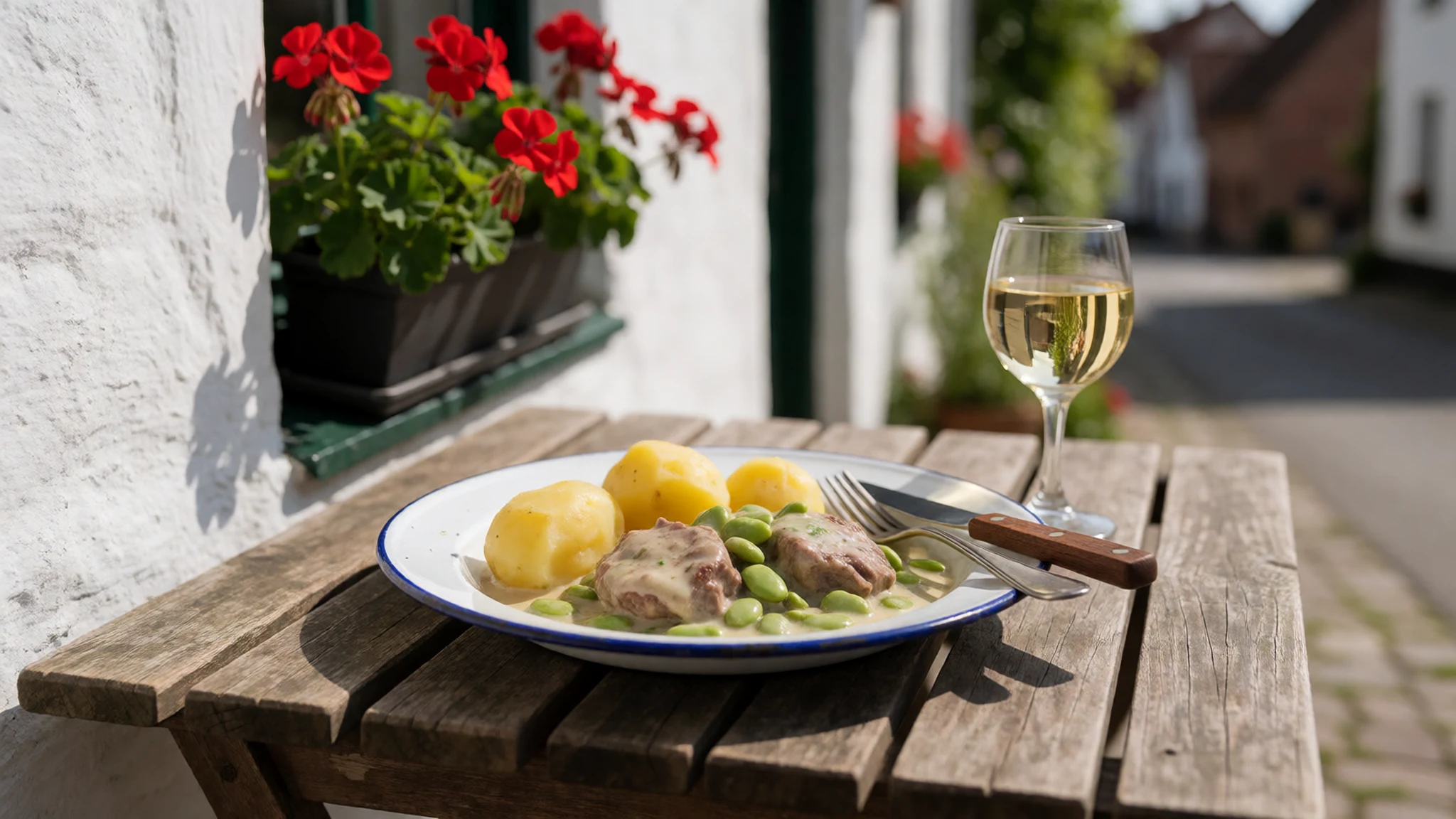
- Bouneschlupp — Family-run eateries in the village and nearby towns
A thick green bean soup with potatoes, often with bacon or sausage added. It is a plain, warming dish that suits a cool day after a walk around the ruin. Ask for it as a starter or light lunch.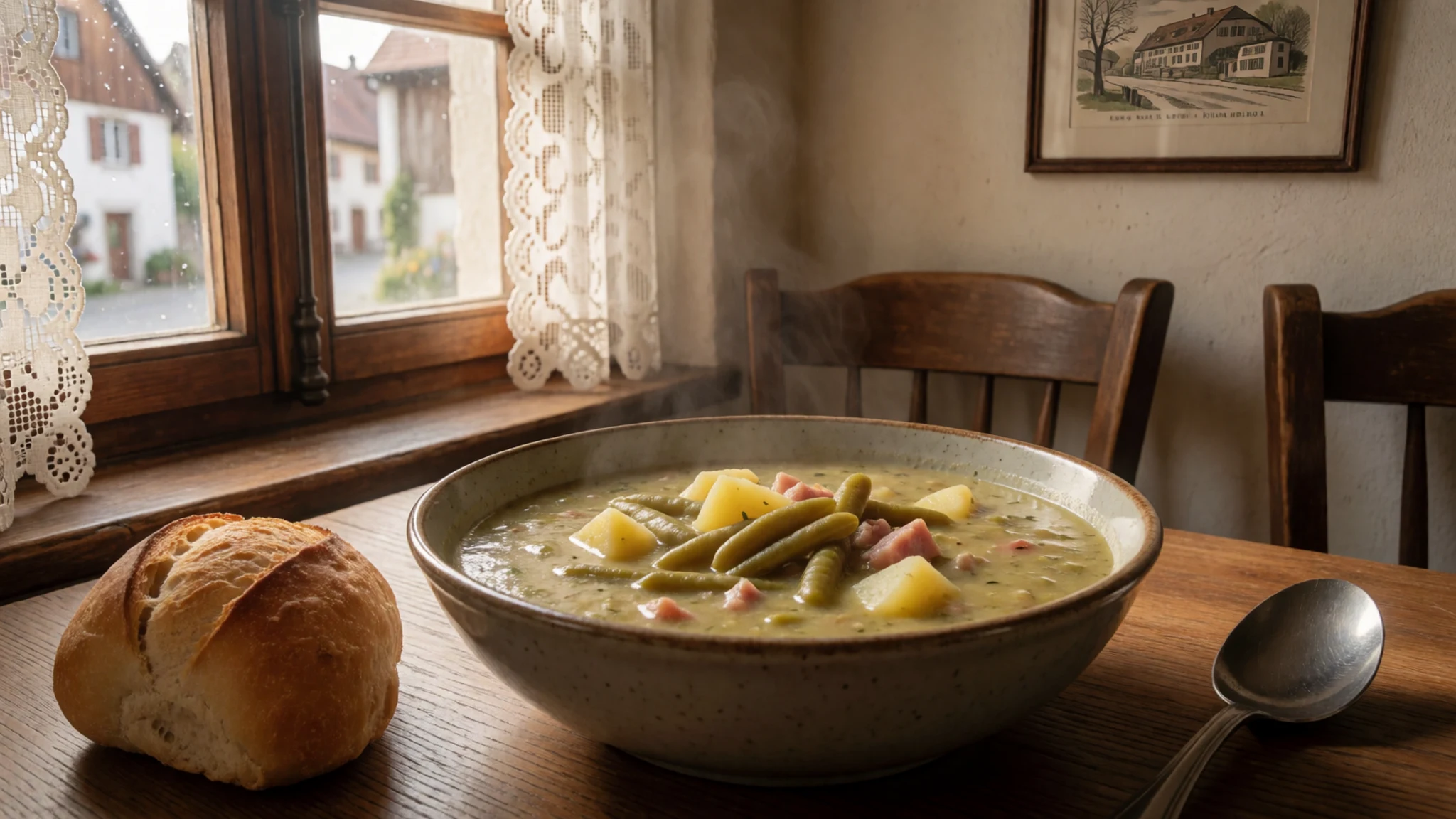
- Gromperekichelcher — Fairs, markets and casual cafés in the region
Crisp potato fritters, fried until golden and often served with apple sauce or a dip. They are a common street and fair snack, and you may find them at local festivals or markets as well as on restaurant menus. - Kachkéis — Delicatessens and café menus in the area
A soft, strongly flavoured cooked cheese spread, usually eaten on bread. It is an acquired taste for some, but a good way to try something distinctly local. Look for it in cheese shops and on simple lunch plates. - Blackcurrant liqueur — Village shops and restaurants around Beaufort
Beaufort is known locally for blackcurrant, and the fruit appears in liqueurs and sweet drinks. It is worth tasting in small amounts after a meal, or ask at the village shops what is made nearby.
Plan it
Best time. May, June, September and October suit best: the woods are green or turning, walking is comfortable, and the stone is more likely to be dry. July and August are busier on weekends. Winter can be cold and damp, with slippery steps, so check the castle's official site for opening arrangements before you go.
How long. 1
Getting there. Fly to Luxembourg Airport and go into Luxembourg City. Bus 107 runs directly from Luxembourg City to Beaufort, hourly on weekdays and every two hours on Saturday, leaving from Charlys Gare near the city park, a short walk from Hamilius; it does not stop at Gare Centrale. On Sundays, take a train to Ettelbruck, then bus 502 (every two hours) to Beaufort. By car, the route runs via Echternach, Consdorf and Berdorf. From the village stop, the castle is a short walk.
Budget. mid
Tips
- Check the castle's official site for opening times and ticket details before travelling; they change by season.
- Wear shoes with good grip, because the steps and stone floors are uneven and slippery when wet.
- Arrive early on summer weekends and school holidays to enjoy the ruin before the crowds.
- Check the Sunday bus connections carefully, because the service is far less direct than on weekdays.
- Combine the visit with a forest walk or a trip to Echternach to make a fuller day.
Etiquette
- Stay on marked paths and keep off the ruined walls.
- Take your rubbish with you or use the bins provided.
- Greet people with a simple hello in Luxembourgish, French or German.
Nearby
Sources
- Wikidata Q1010933 (CC0)
- Wikipedia: Beaufort Castle, Luxembourg (rev 1357190000) (CC BY-SA 4.0)
- Wikivoyage: Beaufort (Luxembourg) (rev 5394599) (CC BY-SA 4.0)
- Photo: Castle Beaufort in Beaufort (Luxembourg), Kauk0r (CC BY 3.0)
- Photo: Beaufort Castle, Kristina D.C. Hoeppner (CC BY-SA 2.0)
- Photo: Beaufort, Luxembourg, Mullerthal region, Cayambe (CC BY 3.0)
- Drawing: The ruins of the castle of Beaufort, Nicolas Liez (Public domain)
- Photo: The castle of Beaufort, Luxembourg, Mspier (CC BY-SA 3.0 lu)
- Photo: Beaufort altes Schloss, Tychon (CC BY-SA 3.0 lu)
- Photo: Beaufort Castle, Luxembourg, Teunie (1) (CC BY-SA 1.0)
- Photo: Beaufort Castle, Luxembourg, Teunie (2) (CC BY-SA 1.0)


