Bourscheid Castle
Bourscheid Castle, Luxembourg
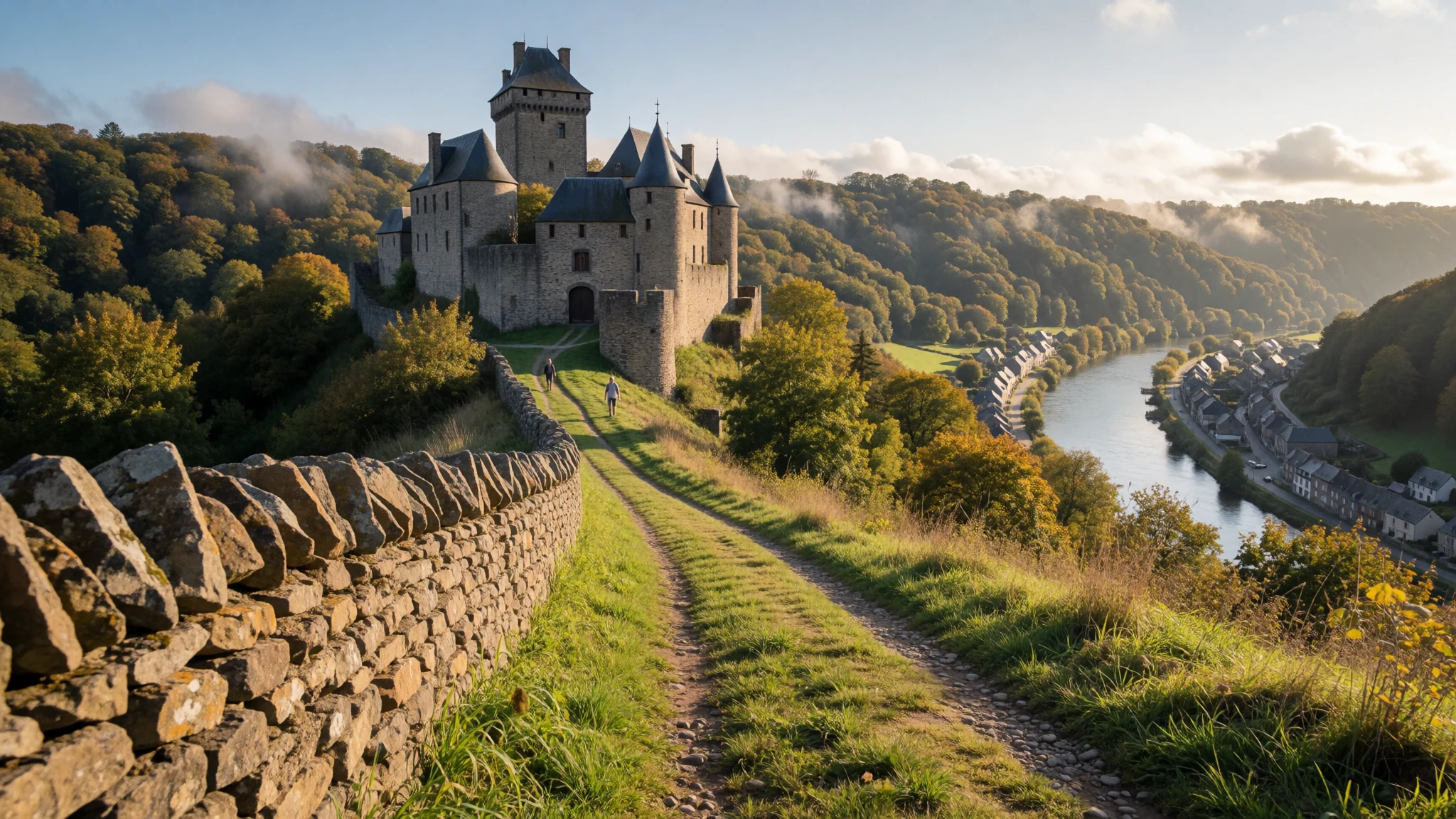
Bourscheid Castle crowns a wooded ridge above the River Sûre, and its towers, ramparts and rooms can be walked in a single afternoon.
The place
Perched on a ridge roughly 150 metres above the River Sûre, Bourscheid Castle sits right by the village of the same name in north-eastern Luxembourg. The valley below is wooded and winding, and the castle sits high enough that its outline shows from the road long before the village appears. A circular wall with 11 watchtowers encloses the site, and archaeologists have found traces of structures here from Roman times, so the hill was in use well before the medieval stronghold was built.
The castle is not one building but a layered one. A lower castle and an upper castle share the ridge, separated by a ditch and a gateway, and each part belongs to a different period. Rough grey stone, restored roofs and open ruins sit side by side, which makes it easy to see where later owners rebuilt, strengthened or simply gave up. The keep, called the Bergfried in German, has its entrance on the second floor, reached by wooden stairs. That was a defensive choice rather than a convenience.
Luxembourg is a small country, and this northern corner is much quieter than the capital. Bourscheid village is small, and the castle is the main reason most visitors stop. Visitors should expect a steep walk on uneven stone, wind on the exposed ramparts and, in summer, busier midday hours when groups arrive. Mornings and late afternoons are calmer. The castle appears on signs and maps as Château de Bourscheid, Burg Bourscheid and Buerg Buerschent, so it helps to recognise all three names.
Its story
Bourscheid Castle first turns up in written records in 1095, but the stronghold seems to have been raised around the year 1000, on older foundations, when the area belonged to the County of Luxemburg within the Holy Roman Empire. Owners kept adding to it for centuries. The outer wall went up about 1350, the Stolzembourg house followed in 1384, and the courtyard was laid out in 1477. A late fifteenth-century gateway led to a ditch watched over by four towers, which kept the upper and lower castles apart. The southern and eastern towers came in 1498, and artillery bastions were added in the sixteenth century, as cannon changed what a castle had to withstand.
The upper castle was enlarged in the fifteenth century, and its great fireplace and tall chimney were finished roughly a hundred years later. From 1626 the House of Metternich held the castle, until the Revolution in France ended feudal rule of that kind. Schenk von Schmidtburg bought it near the close of the eighteenth century and carried out some repairs, but the decay went on. In the nineteenth century the chapel collapsed, and people began to talk seriously of demolishing what was left.
The castle survived anyway. It was listed as a protected site in 1936, and in 1972 the Luxembourg State bought it, encouraged by a society called the Friends of the Castle of Bourscheid, and began extensive repairs. What visitors walk through today is a medieval castle that owes its survival partly to public effort in the twentieth century.
What to see
- The gateway and north-west bastion — Main approach to the castle
The approach to Bourscheid Castle passes the north-west bastion, built after 1477, before reaching the gates. It is the best place to understand how the defences were meant to work: a narrow, exposed climb under the walls, with the ditch and its towers waiting beyond. Take the slope slowly, as the stone is uneven.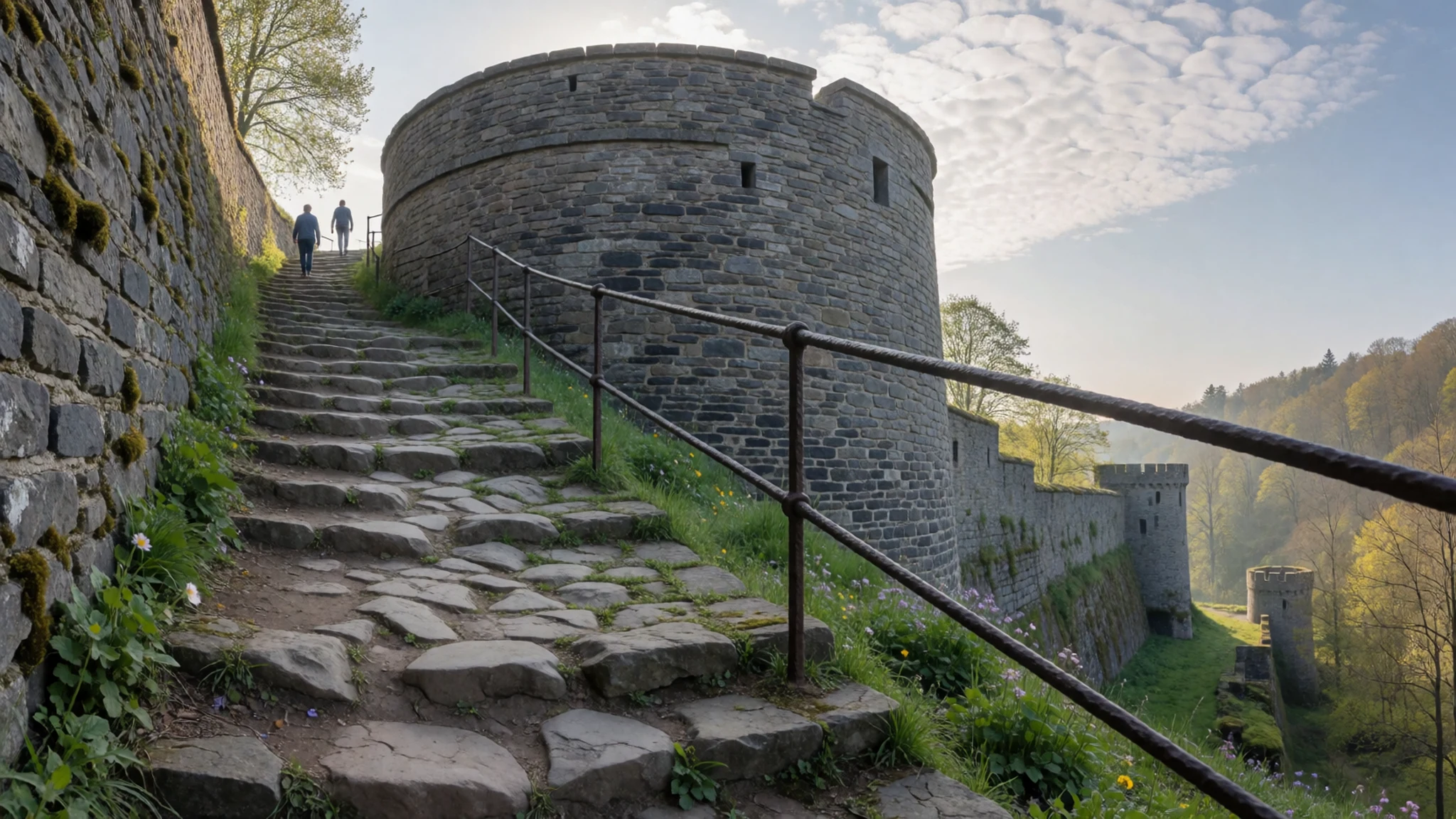
- The keep (Bergfried) — Upper castle
The keep at Bourscheid Castle has a raised doorway on its second floor, reached by a set of wooden stairs. That arrangement made it harder for attackers to storm and gave defenders a last refuge. Climbing inside gives a sense of wall thickness, and the upper levels open onto wide views over the wooded valley.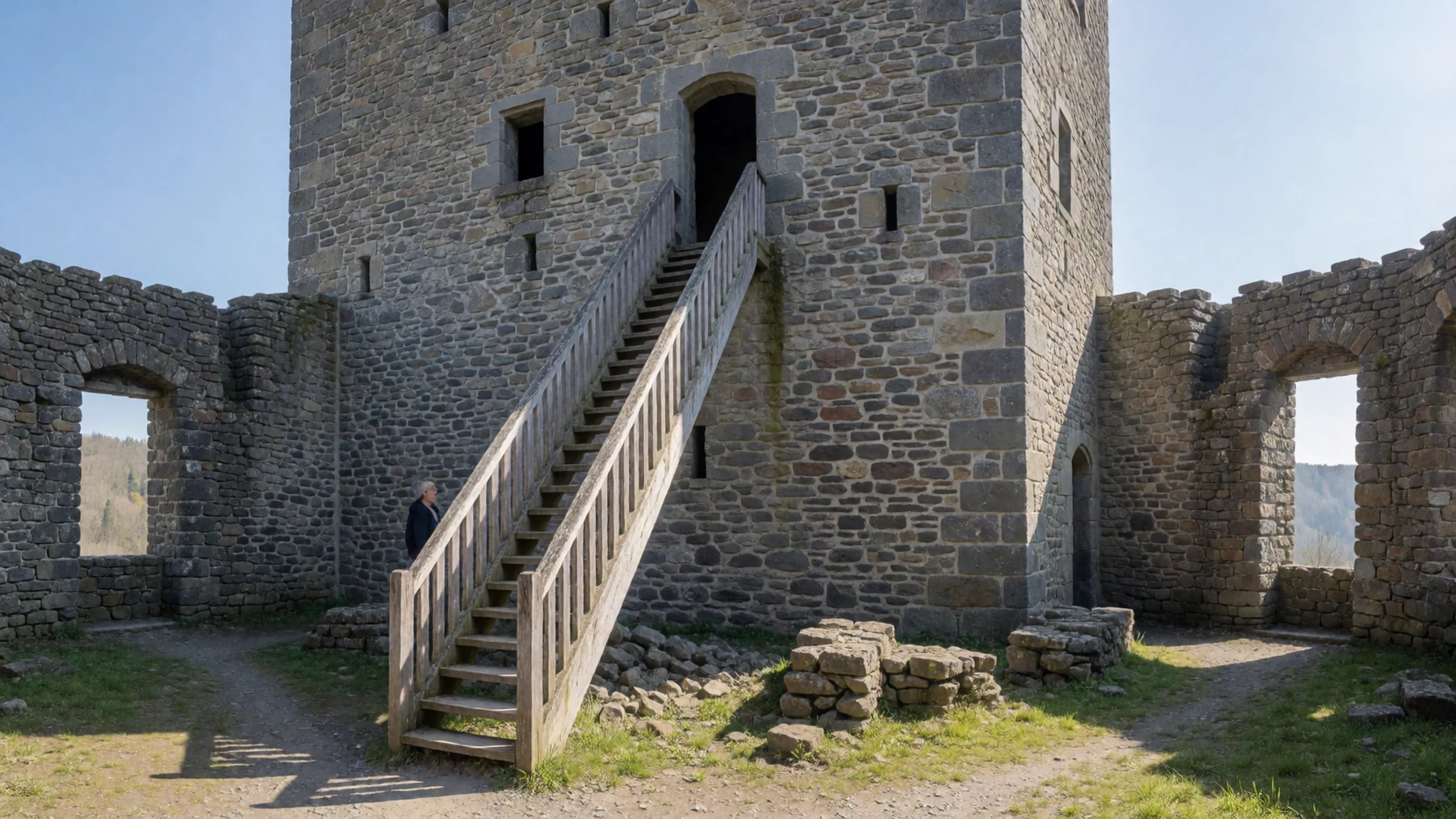
- The fifteenth-century upper castle — Upper castle
The upper part of Bourscheid Castle was extended in the fifteenth century, and the view across it from between the ruined twin towers shows how much survives. Roofless rooms, window openings and the great fireplace with its tall chimney give a good picture of domestic life behind the military walls.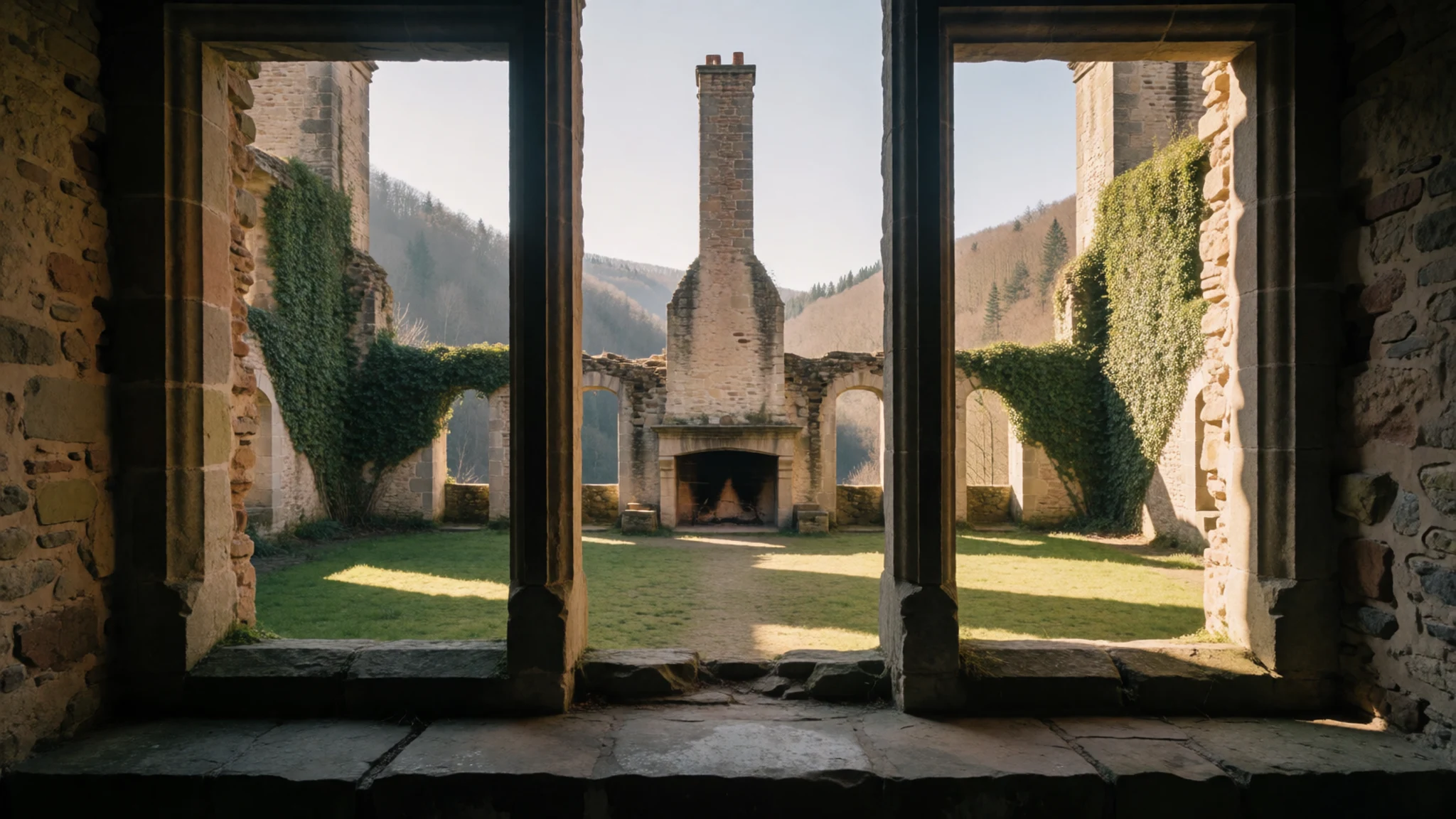
- Outer wall and watchtowers — Around the castle perimeter
A circular wall with 11 watchtowers rings Bourscheid Castle, and walking part of its line is the simplest way to grasp the size of the site. The eastern side looks especially solid from outside, with towers stepping along the ridge. Allow time for photographs, as the light changes quickly in the valley.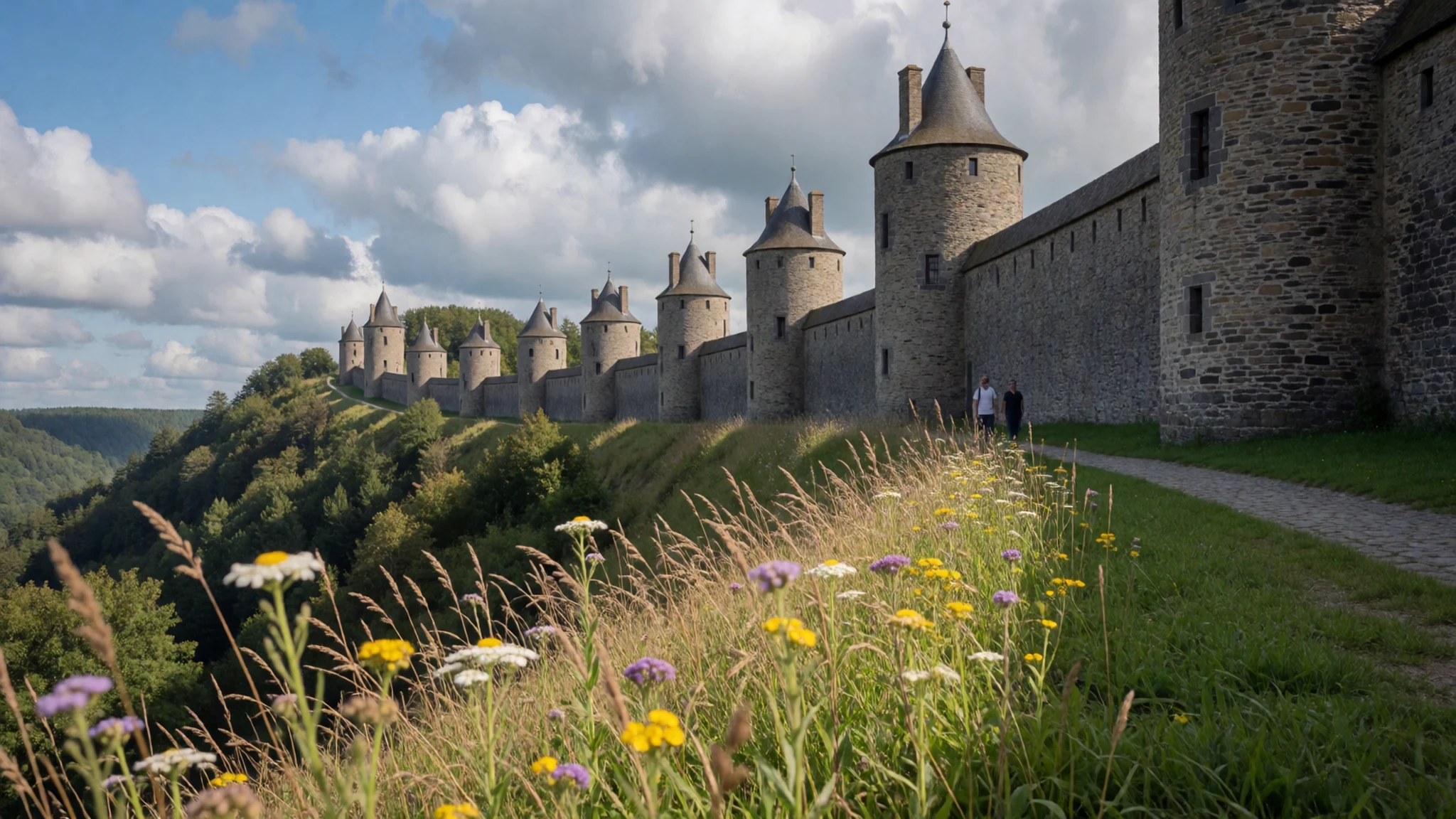
- The castle from the valley — Bourscheid village and the Sûre valley
Seen from the road and the village below, Bourscheid Castle shows its full silhouette against the forested slope, with the keep and towers rising above the trees. This view explains why the ridge was chosen for a fortress. It is worth a stop on arrival, before the climb, and again on the way out.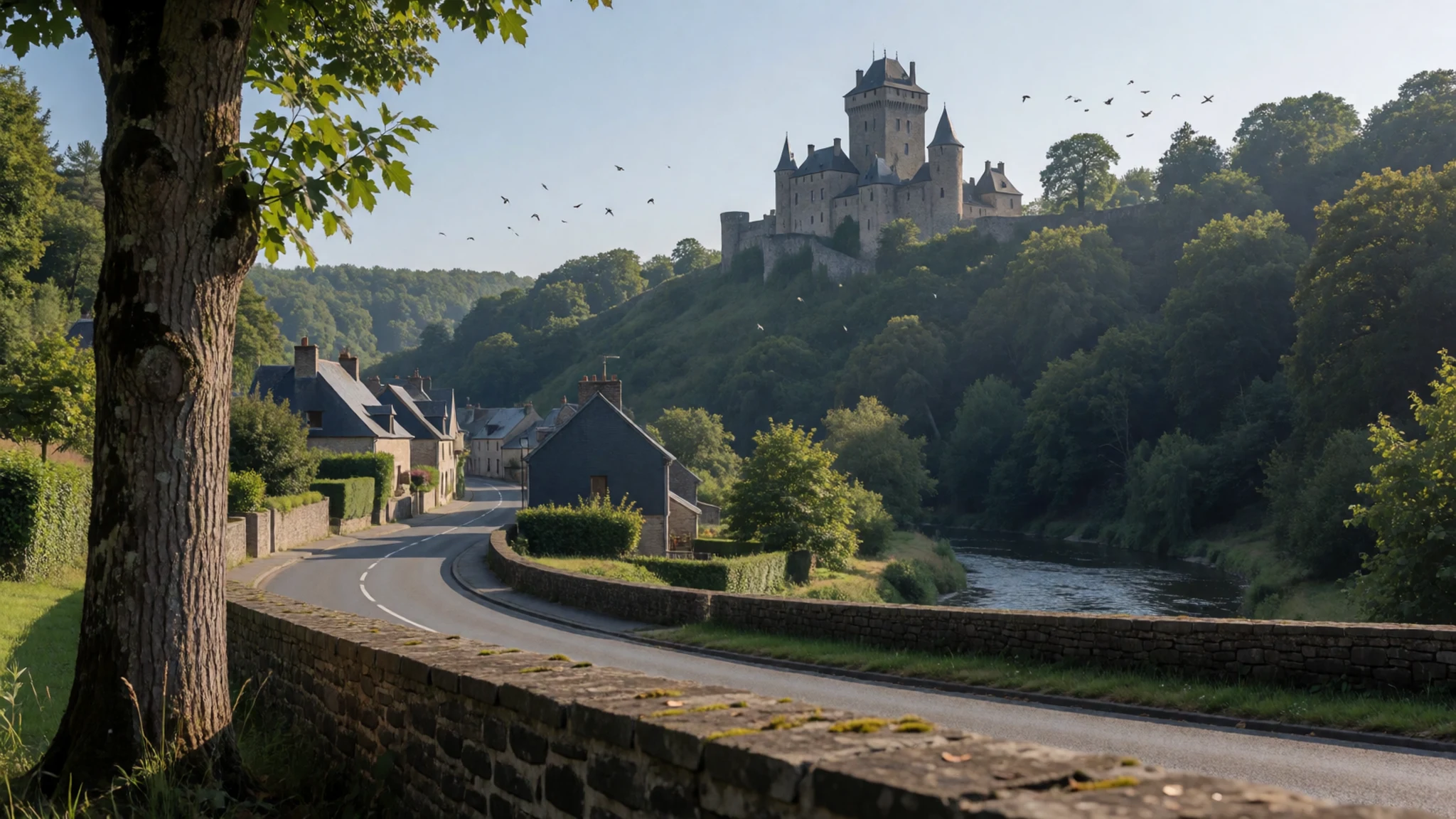
Culture
Bourscheid Castle sits in a country with its own language, Luxembourgish, and a firm sense of separate identity. A greeting of "Moien" goes down well, especially in small villages like Bourscheid, where people are friendly and many know one another personally. Family ties matter in rural Luxembourg, and parents often stay closely involved in their children's choices, so village life runs on familiarity and routine.
Luxembourgers are not Germans, Belgians or French, even though the country sits between those neighbours and borrows from all of them in its food, its place names and its languages. Comparing Luxembourg with the countries around it is a common visitor mistake and tends to land badly. Conversation is direct but tactful, and being blunt or loudly opinionated is considered rude.
The castle itself is a protected historic monument. It came close to demolition in the nineteenth century and was saved by public effort in the twentieth, so many local people feel a quiet pride in it. Its name appears in French, German and Luxembourgish, which says something about how the country lives with several languages at once. Walking in the area, in the woods and along the river, is an everyday pastime for residents as well as visitors, and the pace is unhurried.
Greet staff and villagers with a friendly "Moien" before switching to English, French or German, and keep to the marked paths and stairs, because the ruined walls are old and can be unstable.
What to wear
Bourscheid Castle is in a part of Luxembourg where traditional dress is a matter for festivals and folklore groups rather than daily life. Where it appears, regional folk costume is typically made from wool, linen and cotton, with embroidered bodices, aprons and hats for women and waistcoats and breeches for men, and it is worn at village fairs, parades and heritage events. Visitors may spot it at such gatherings, but it is not worn on ordinary days.
What people wear now is plain and practical, much as in neighbouring parts of western Europe. In the villages of the Sûre valley, locals wear jeans, fleeces, walking boots and waterproof jackets, with smarter clothes saved for the capital, church and family occasions. Hikers and cyclists in technical gear are a common sight.
For a visit, the terrain matters more than any dress code. The castle path is steep and the ground inside is rough stone, with wooden stairs in places, so sturdy shoes with good grip are essential; sandals and smooth soles are a poor choice, especially after rain. Layers work best, since the ridge is exposed to wind and the stone interior stays cool even in summer. A light waterproof is sensible in any month, and a warm hat and gloves are worth packing for winter. No special modesty rules apply at the castle, although covered shoulders and knees are a courtesy if a visit includes a village church.
What to eat
- Judd mat gaardebounen — Traditional village restaurants and inns
Smoked neck of pork served with broad beans, often called the unofficial national dish. It is hearty and salty, usually eaten with potatoes. Look for it on the menu at traditional village restaurants and inns in the Sûre valley, particularly on cooler days.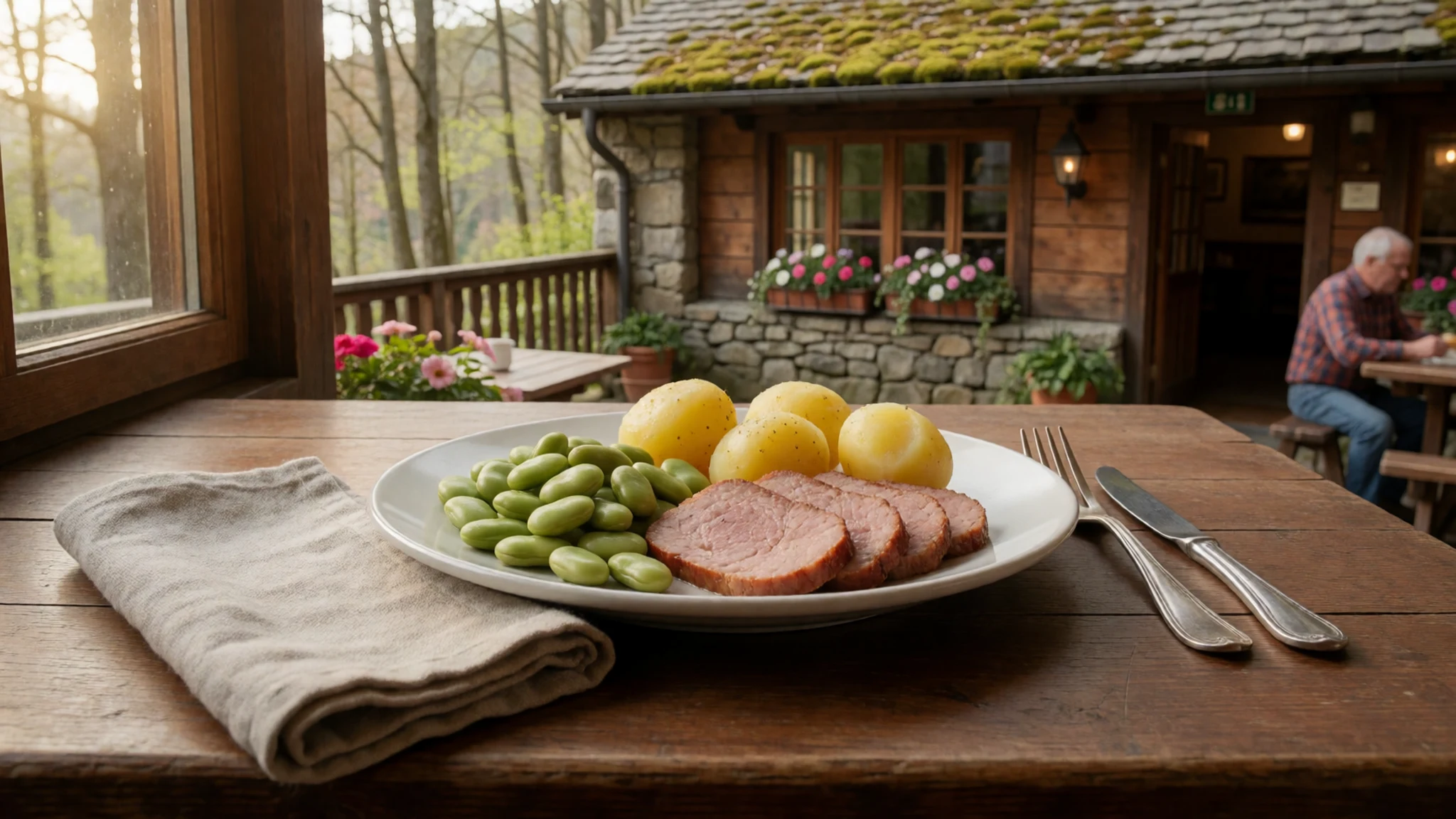
- Gromperekichelchen — Markets, funfairs and village fairs
Fried shredded-potato cakes flavoured with onion, shallot and parsley. They are crisp outside and soft within, and are usually sold hot at outdoor events. Fairs, funfairs and markets are the best places to find them, and they suit a cold day well.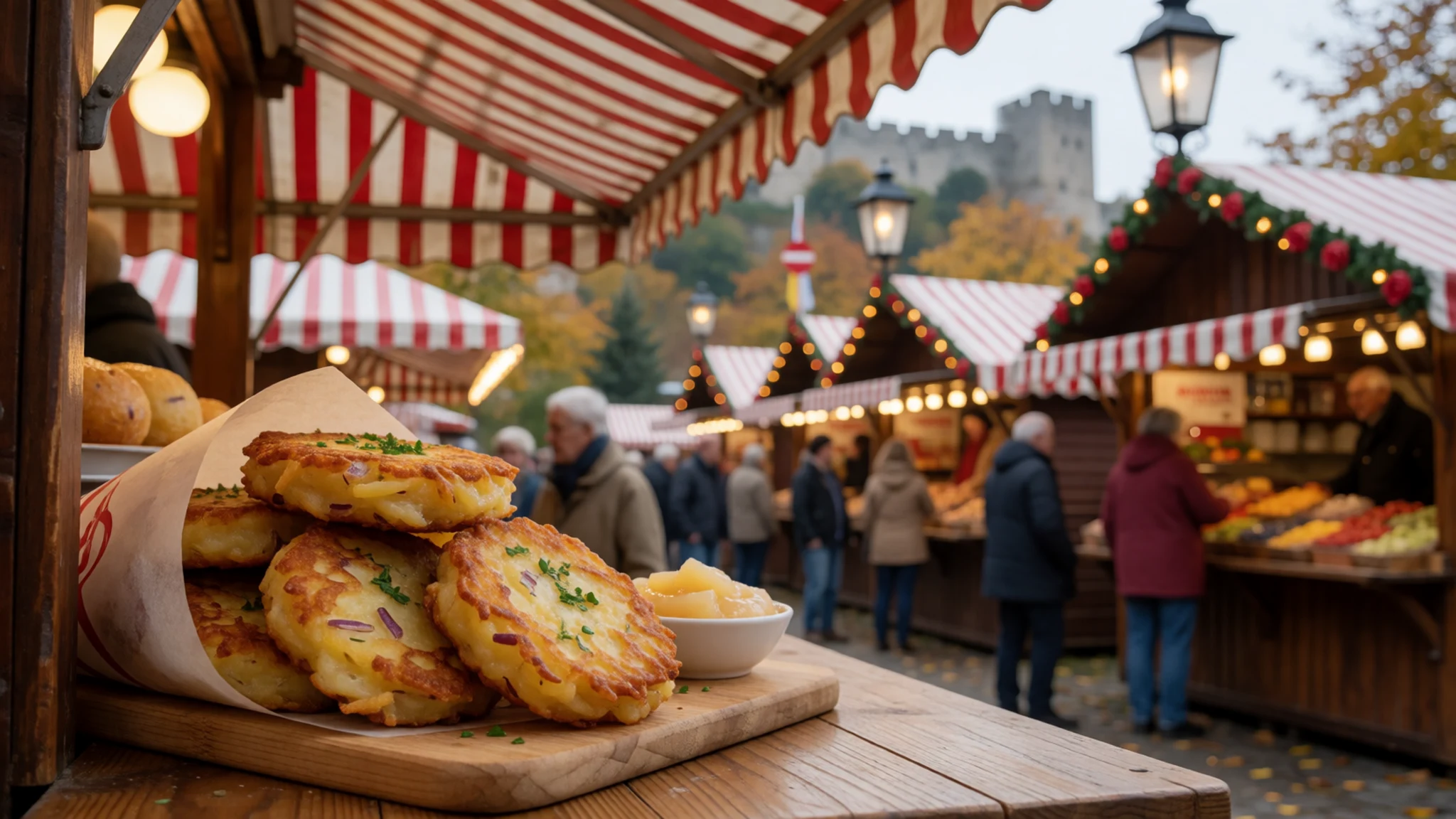
- Bouneschlupp — Local eateries and village inns
A thick green-bean soup, typically made with potato, smoked bacon and cream or stock. It is a filling lunch before or after the castle climb, and is found on the menu at simple local eateries, often as a starter. - Träipen — Autumn markets and traditional butchers' stalls
Luxembourg's version of black pudding, usually fried and served with mashed potato and apple sauce. It is strongly flavoured and a regular at autumn markets and festivals. Visitors who like blood sausage will enjoy it, and those who do not can safely skip it. - Quetschentaart — Village bakeries and cafés, late summer and autumn
A plum tart made with the small dark Quetsch plums that ripen in late summer. The fruit is baked until soft and slightly sharp, often on a thin pastry base. Bakeries and cafés in small towns sell slices in season.
Plan it
Best time. May–June and September–October, when days are long enough for the climb and the valley is green or turning colour. July and August can be busy at midday. Winter is cold, the paths can be icy, and opening arrangements may change, so check before travelling.
How long. 1
Getting there. Fly to Luxembourg Airport, then take a train from Luxembourg City towards the north and finish with a local bus or taxi to Bourscheid village. A car is the easiest way to reach the castle, with a short but steep walk up from the car park. Check current timetables on the national public transport site.
Budget. mid
Tips
- Check the castle's official website or the local tourist office for current opening times and ticket prices before setting out, as they change by season.
- Arrive in the morning or late afternoon to avoid group visits around midday.
- Wear shoes with good grip, as the path and the interior stonework are steep and uneven.
- Carry water and a light waterproof; the ridge is exposed and there is little shelter on the ramparts.
- Carry a little cash and a card in case village cafés or small shops accept only one.
Etiquette
- Greet people with "Moien" and make a small effort in the local language before switching to another.
- Stay on marked paths and stairs, and do not climb on the ruined walls.
- Keep noise down in the village, where many residents live right beside the castle approach.
Nearby
Sources
- Wikidata Q1011162 (CC0)
- Wikipedia: Bourscheid Castle (rev 1367169281) (CC BY-SA 4.0)
- Wikivoyage: Luxembourg (rev 5321164) (CC BY-SA 4.0)
- Photo: Bourscheid, le château (GilPe) (CC BY-SA 4.0)
- Photo: The castle. Bourscheid, Diekirch, Luxembourg (LBM1948) (CC BY-SA 4.0)
- Photo: North-West Bastion (Caranorn) (CC BY-SA 1.0)
- Photo: 15th century part of Castle Bourscheid (Caranorn) (CC BY-SA 2.0)
- Photo: Donjon Bourscheid (Manu25) (CC BY-SA 2.5)
- Photo: Bergfried Bourscheid (Caranorn) (CC BY-SA 1.0)
- Photo: Bourschaid Castle (Nikilux) (CC BY-SA 3.0 lu)
- Photo: Bourscheid Burg Ostseite von NO (Heinrich Stürzl) (CC BY-SA 4.0)


