Clervaux
Clervaux, Luxembourg
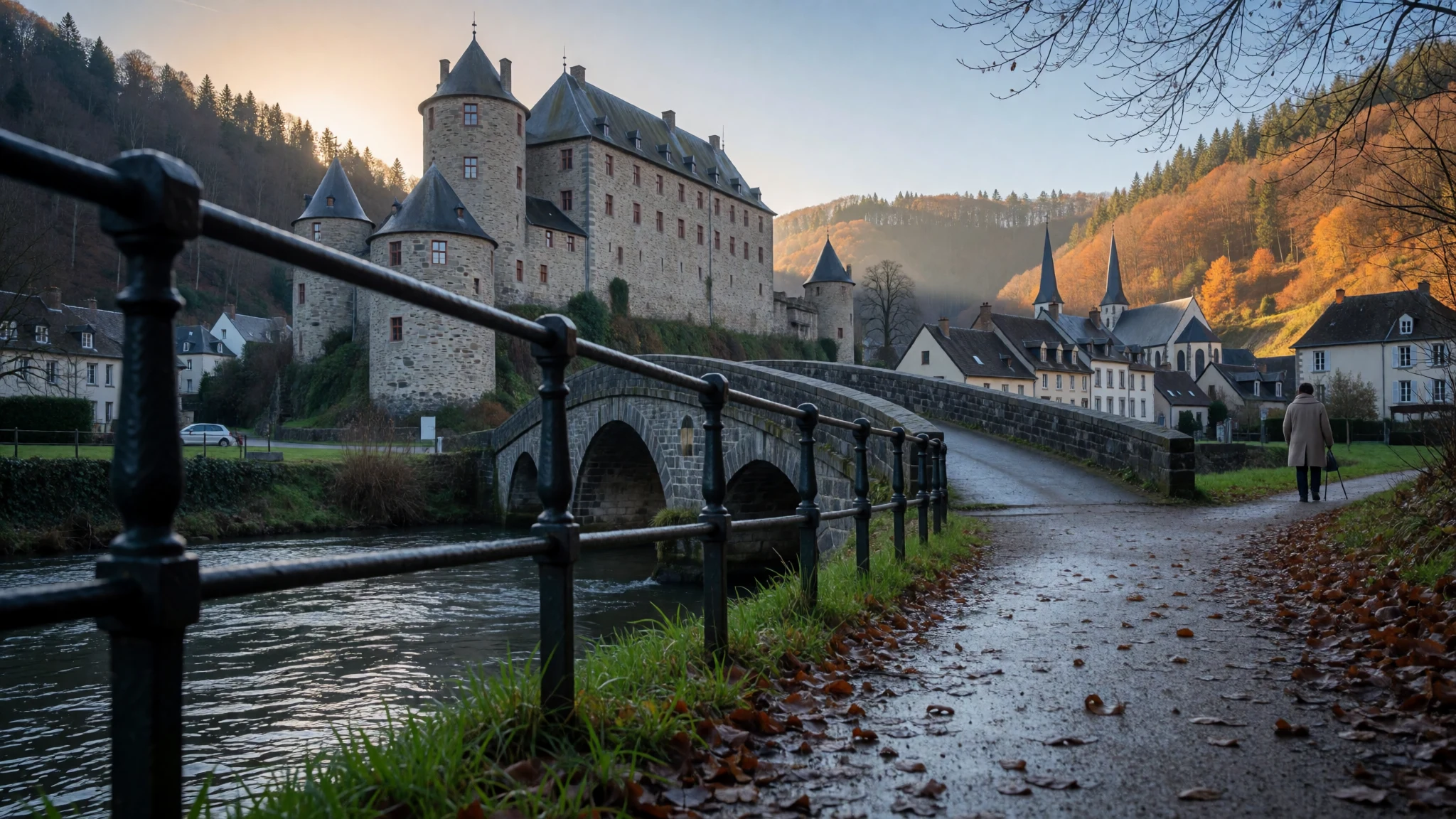
Clervaux is a quiet Ardennes town where a rebuilt castle, a working abbey and a famous photography exhibition sit beside forest walks.
The place
Clervaux is a small Ardennes town in northern Luxembourg and the seat of the canton that carries its name. The wider commune has 6,327 people, and the town centre stands at 521 metres above sea level in a steep, wooded river valley. Most of those people live in villages and farms around the centre, so the town itself feels more like a large village crowned by a castle than a city. The name changes with the language on the sign: Clervaux in French, Clerf in German and Klierf in Luxembourgish, and all three turn up on timetables and maps. The castle sits among the old streets, the deanery church with its small spires stands close by, and an abbey occupies the slope a short walk to the north-west. The railway station lies outside the centre, so arrival begins with a short walk or a bus ride. Roads and footpaths climb out of the valley in every direction, which is why walkers use Clervaux as a base for the surrounding forest and farmland. The pace is quiet. Nightlife is thin, a few bars and restaurants and little else, and most visitors treat the town as a day trip from Luxembourg City or as a calm night or two between walks. Hill weather changes quickly, with mist in the valley on autumn mornings and cold, sometimes snowy winters, so the season matters more here than it does in the capital.
Its story
Clervaux began as a settlement around its castle. The oldest parts of the fortress go back to the twelfth century and Gerard, Count of Sponheim, whose brother was Count of Vianden. The big palace and the round towers are thought to date from about 1400, when the Brandenbourg lords, a prosperous family, lived there. Later the castle passed by inheritance to a branch of the Lannoy family and, like several castles in Luxembourg, slid into decay. It was patched up enough to take paying guests for a time, but it was wrecked in the Second World War and rebuilt afterwards. The war reached the town in December 1944, when the Battle of Clervaux was fought as part of the Battle of the Bulge. The other layer of the story is the abbey. In 1901 anti-clerical laws in France pushed Benedictine monks from the Abbey of St Maur at Glanfeuil out of the country. They found shelter in Baronville in Belgium, then searched for a permanent home and settled on Clervaux. In 1908 the community voted to close the old house and found a new monastery dedicated to St Maurice. Work began in 1909 on a neo-Romanesque design by Johann Franz Klomp, a Dutch architect working in Germany, who also drew up the parish church in the same years. The monks moved in during 1910. More recently the abbey made the news when Prince Charles, heir apparent to the Luxembourg throne, was baptised there on 19 September 2020. Official records give the commune a founding date of 1795.
What to see
- Castle of Clervaux — Old town centre
The castle is the reason the town exists and the first stop for most visitors. Its round towers and large palace block rise over the old streets, and the layers from the twelfth century to about 1400 can be read from outside. It was rebuilt after wartime destruction, so treat it as a careful reconstruction. Check the town website for visiting arrangements.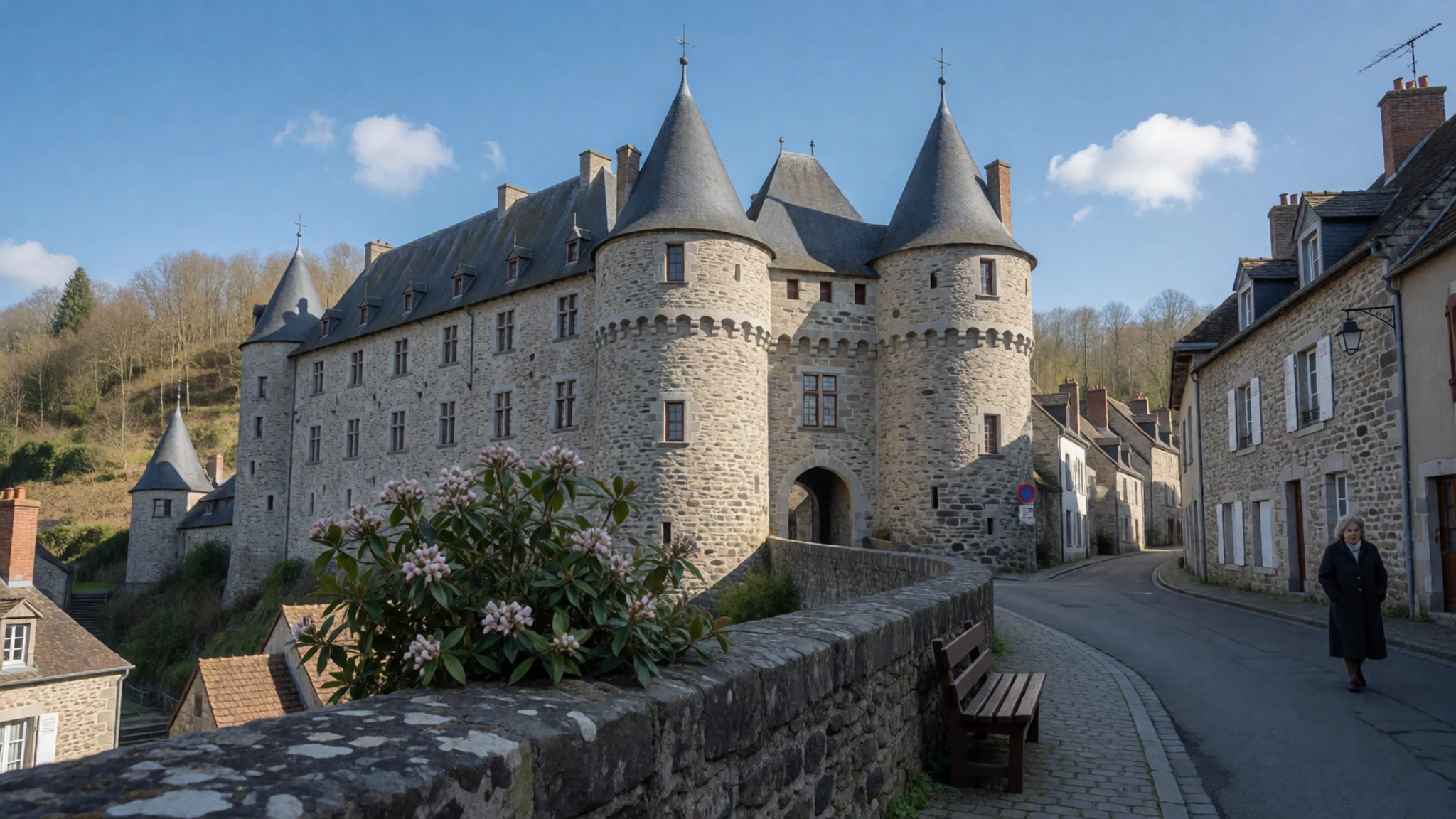
- The Family of Man — Town centre, near the castle
Edward Steichen, the Luxembourgish American photographer who directed the photography department at New York's Museum of Modern Art, assembled this exhibition of portraits of people from many countries and walks of life. It is shown close to the castle in the town centre. Allow an hour or so, and check the official site for opening times and tickets.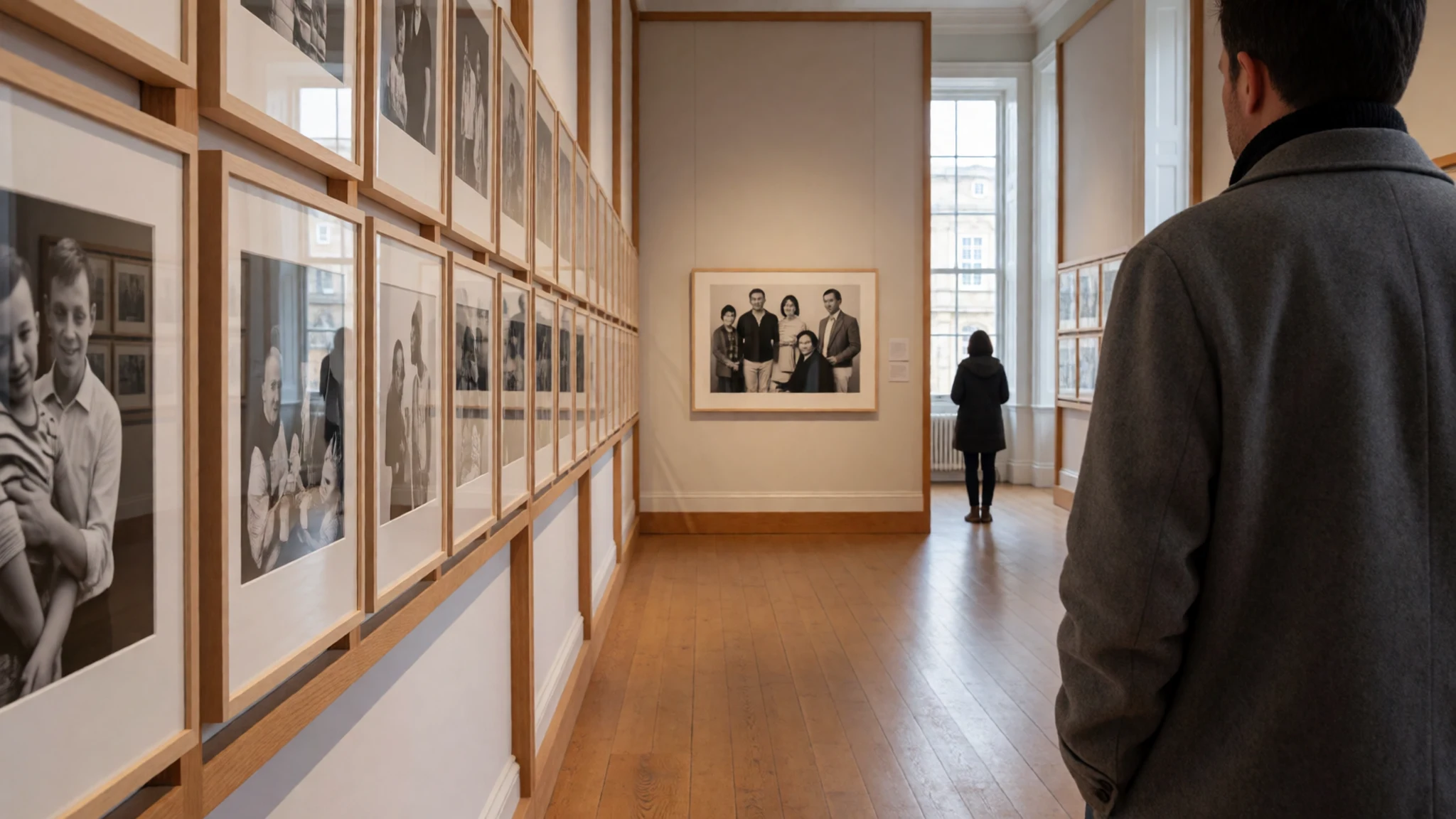
- Battle of the Bulge Museum — Town centre, beside the castle
This small museum beside the castle puts the December 1944 fighting in local context. Clervaux lay in the path of the German advance, and its battle forms one chapter of the wider Battle of the Bulge. Expect maps, equipment and photographs of the kind such museums hold. Opening hours change by season, so check ahead.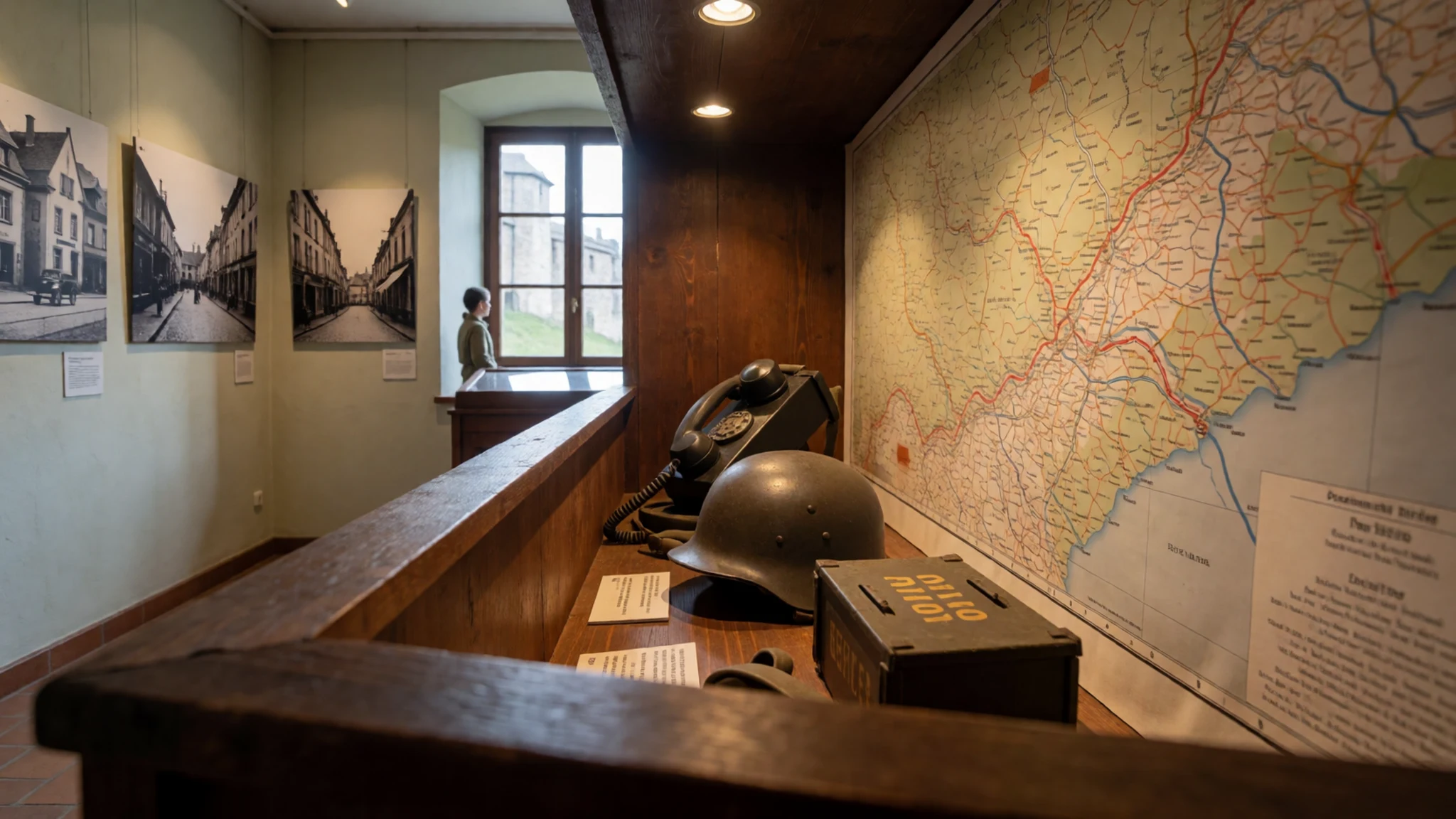
- Abbey of St Maurice and St Maurus — Hillside north-west of the centre
The abbey stands on the slope north-west of the centre, a neo-Romanesque complex begun in 1909 for monks who had left France. It is a working monastery, not a museum, so visits fit around the community's prayer. Walk up from the town and check the abbey's own website for services and visiting rules.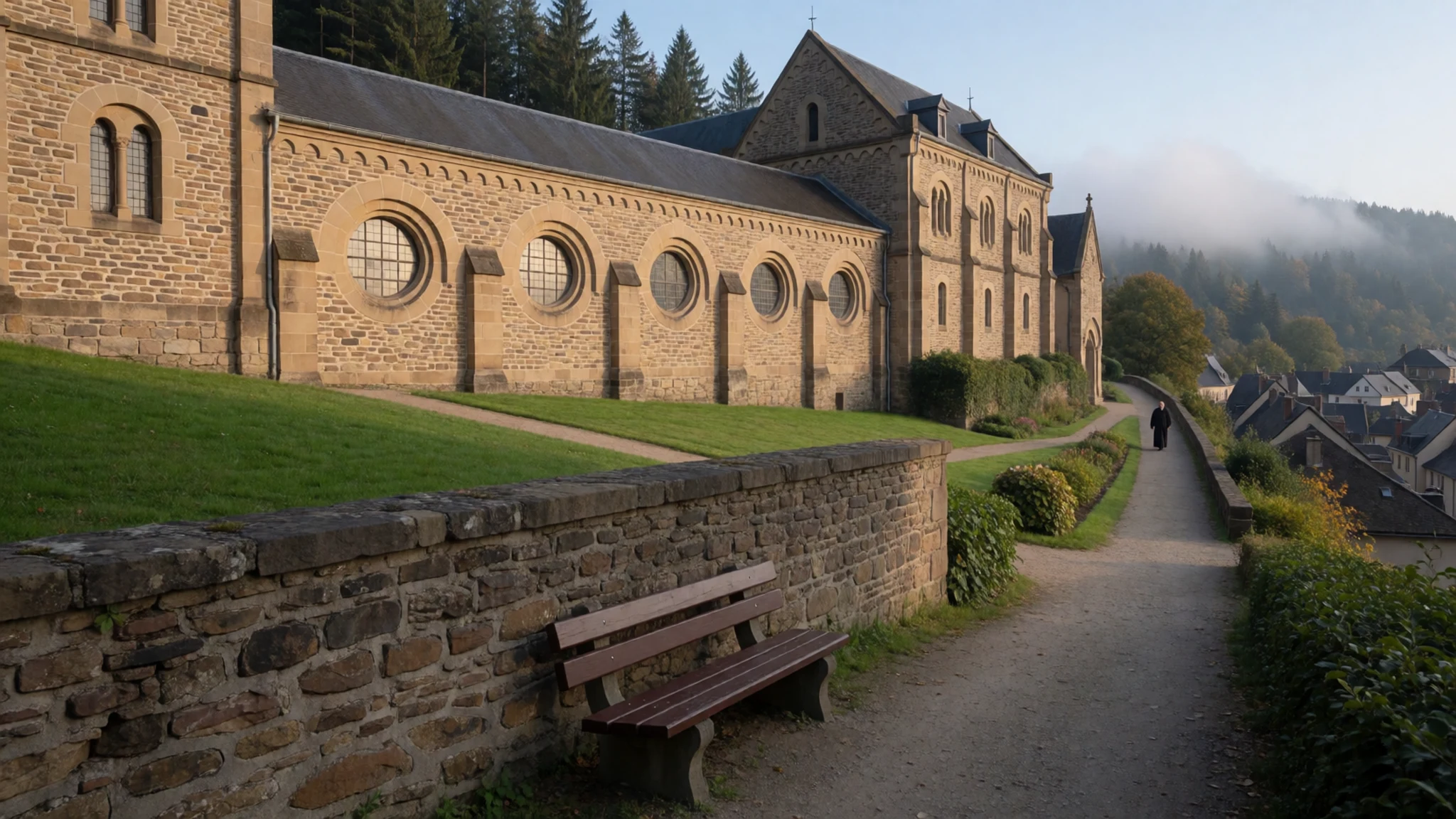
- Walks around Clervaux — Town and surrounding hills
Plenty of walking routes start in or near Clervaux and head into the surrounding forest and across hill farmland. Use the town website for current route maps and waymarks. Paths climb steeply out of the valley, so even a short loop can feel like hard work, and stout footwear matters after rain.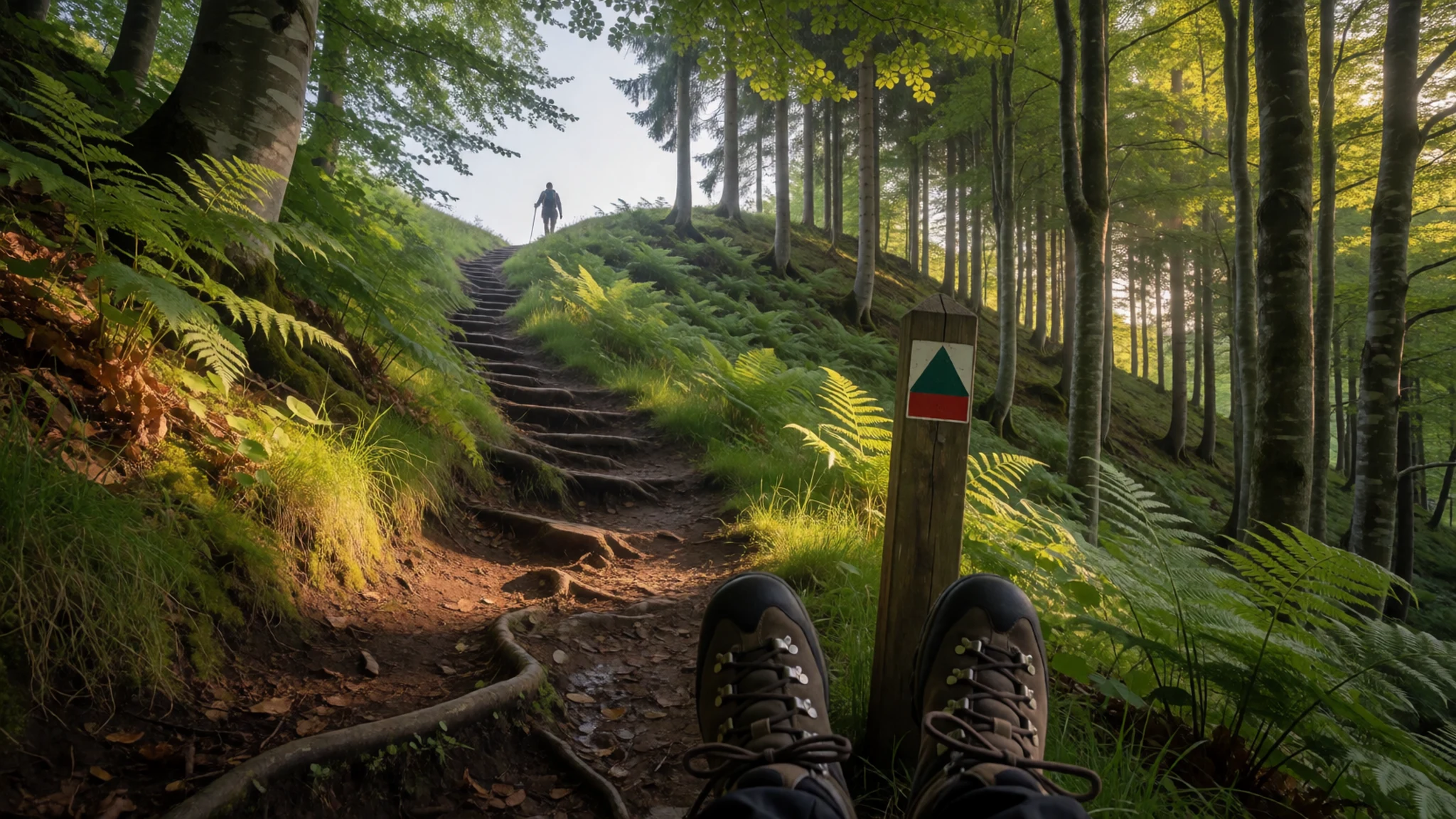
Culture
Clervaux sits in a country where three languages share daily life, and the town shows it. People speak Luxembourgish with one another, French and German turn up on signs, forms and menus, and English usually gets visitors through. A greeting in any of them is welcomed. Catholic heritage runs deep here: the deanery church and the abbey were both built in the early twentieth century, and the monks' daily round of prayer still gives the hillside a calm rhythm. The memory of war is just as present. The December 1944 fighting is marked in the museum and in local commemoration, and older residents may carry family stories tied to it. Photography has a quiet standing in the town too, thanks to Edward Steichen's exhibition, which draws people curious about how ordinary lives look in pictures from around the world. Village life runs at an unhurried pace, and evenings are early. Clervaux rewards patience rather than packed itineraries: a coffee on a terrace, a wander through the lanes below the castle and a walk into the woods are the local pleasures. At the abbey, keep your voice low, stay out of any area set aside for the monks, and do not photograph worshippers or the community during services without permission.
What to wear
Clervaux has no traditional costume that visitors will see on the street. Rural Luxembourg did have older working dress in wool and linen, with aprons, waistcoats and caps, but today it mostly appears in folklore groups, parades and village festivals rather than as daily wear. It is worth asking locally about events if costume interests you. What people wear now is practical and understated. Hill weather means waterproof jackets, fleeces and sturdy shoes are normal, with neater, darker clothes for a restaurant dinner or church. Walkers in technical outdoor gear are an everyday sight, and nobody dresses up much for the evening. Visitors should dress for changeable weather and for the terrain. Pack layers, a rainproof jacket and broken-in walking boots or shoes with a good grip, since paths and sloping streets turn slippery when wet. Winter needs a warm coat, hat and gloves. Even in summer, a light extra layer helps on cool evenings at 521 metres. For the abbey and the church, cover shoulders and knees and avoid beachwear or loud slogans. A small day pack for a flask, snacks and a spare layer suits the hill paths.
What to eat
- Judd mat Gaardebounen — Traditional brasseries and village restaurants
Smoked pork collar served with broad beans in a creamy sauce, usually with boiled potatoes. It is a staple of Luxembourgish menus and a hearty choice after a day of walking. Order it as a main course and expect a generous plate.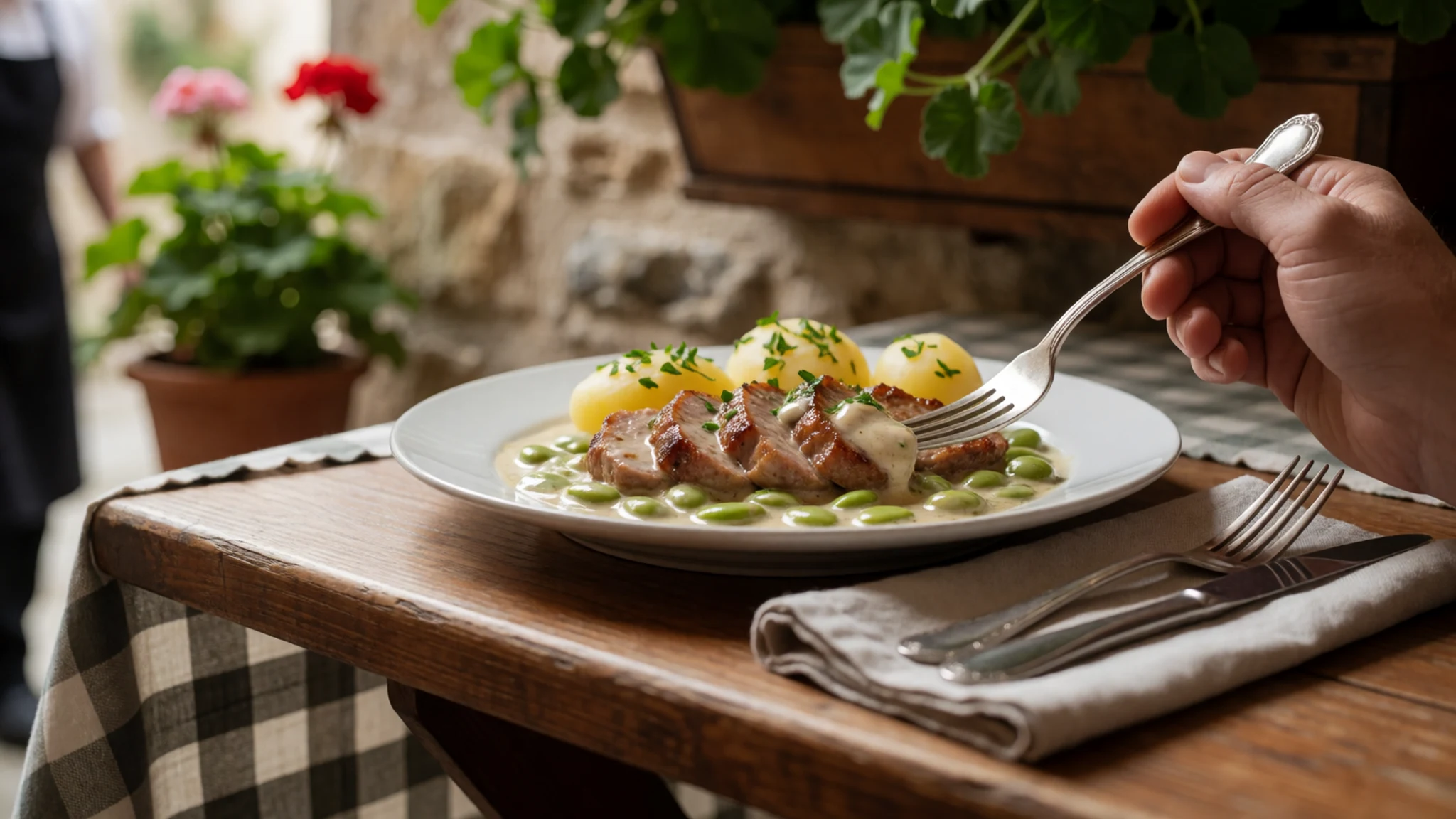
- Bouneschlupp — Local cafés and family-run restaurants
A green bean soup thickened with potato and flavoured with bacon, sometimes with sausage added. It is filling, plain and warming, and suits a cool, misty day in the hills. Many kitchens serve it as a starter or a light lunch.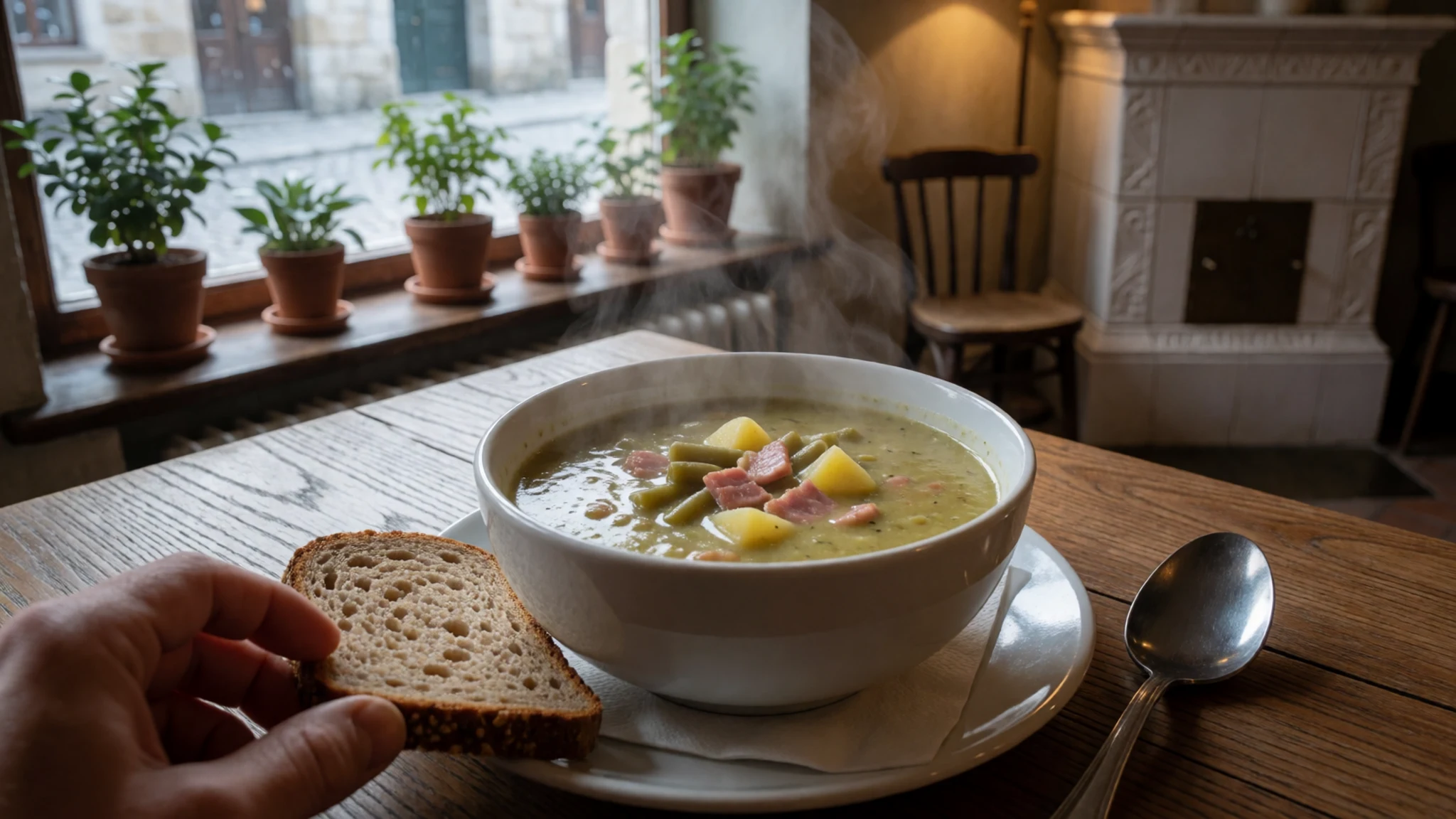
- Gromperekichelcher — Village fairs, markets and festival stalls
Crisp fried potato fritters, made with grated potato, onion and herbs and eaten hot, often with apple sauce. They are a classic fair food, salty and greasy in the right way, and good for sharing between two. - Jambon d'Ardenne — Butchers, delicatessens and market stalls
Smoked ham from the Ardennes tradition, sliced thin and served with bread, pickles and mustard. It makes a good picnic for a forest walk. Buy it from a butcher or delicatessen and ask for a small portion to try. - Quetschentaart — Bakeries and café terraces
A tart of baked purple plums on a thin pastry base, dusted with sugar or cinnamon. It is best in late summer and early autumn, when the plums are in season. Have a slice with coffee after a walk.
Plan it
Best time. May to June and September to October suit walking, with long days in early summer and colour in the woods in autumn. Winter is cold and can be snowy, and mist often fills the valley, so the town is quieter and the paths can be slippery.
How long. 1–2
Getting there. Luxembourg Airport and Luxembourg City are the usual gateways. Clervaux has a railway station on the Liège–Luxembourg line, about 1 km north of the town centre, and buses meet trains there for the town and nearby Vianden and Wiltz. By car, the N18 runs through the town and joins the N7 about 5 km to the east.
Budget. mid
Tips
- Check clervaux.lu and each attraction's own website for opening times before setting out, as hours change by season.
- The station is about 1 km from the centre, so allow time for the walk or take a connecting bus.
- Pack for changeable hill weather, including a waterproof jacket and shoes with grip.
- Book a bed ahead for summer weekends, as the town is small.
- Carry a bank card and a little cash, as small cafés may prefer one or the other.
Etiquette
- Greet people in the shop or café before asking a question, in any language you have.
- Keep quiet and stay out of private areas at the abbey, and ask before photographing people.
- Stay on waymarked paths and take rubbish away with you.
Nearby
Sources
- Wikidata Q836075 (CC0)
- Wikipedia: Clervaux (rev 1379733906) (CC BY-SA 4.0)
- Wikivoyage: Clervaux (rev 5429283) (CC BY-SA 4.0)
- Photo: Clervaux Castle (LGphotoOP) (CC BY-SA 3.0 lu)
- Photo: Clervaux, the city, castle and deanship's church (Jean-Pol GRANDMONT) (CC BY 3.0)
- Photo: Clervaux, the old castle (Jean-Pol GRANDMONT) (CC BY 3.0)
- Photo: Clervaux, the old castle (Jean-Pol GRANDMONT) (CC BY 3.0)
- Photo: Clervaux, rectory church façade (Jean-Pol GRANDMONT) (CC BY 3.0)
- Photo: Château de Clervaux (Jean-Pol GRANDMONT) (CC BY-SA 3.0 lu)
- Photo: People Scans poster, Clervaux (RG72) (CC BY-SA 4.0)
- Photo: Citroën 2CV in Clervaux (MMFE) (CC BY-SA 4.0)


