Valley of the Seven Castles
Valley of the Seven Castles, Luxembourg
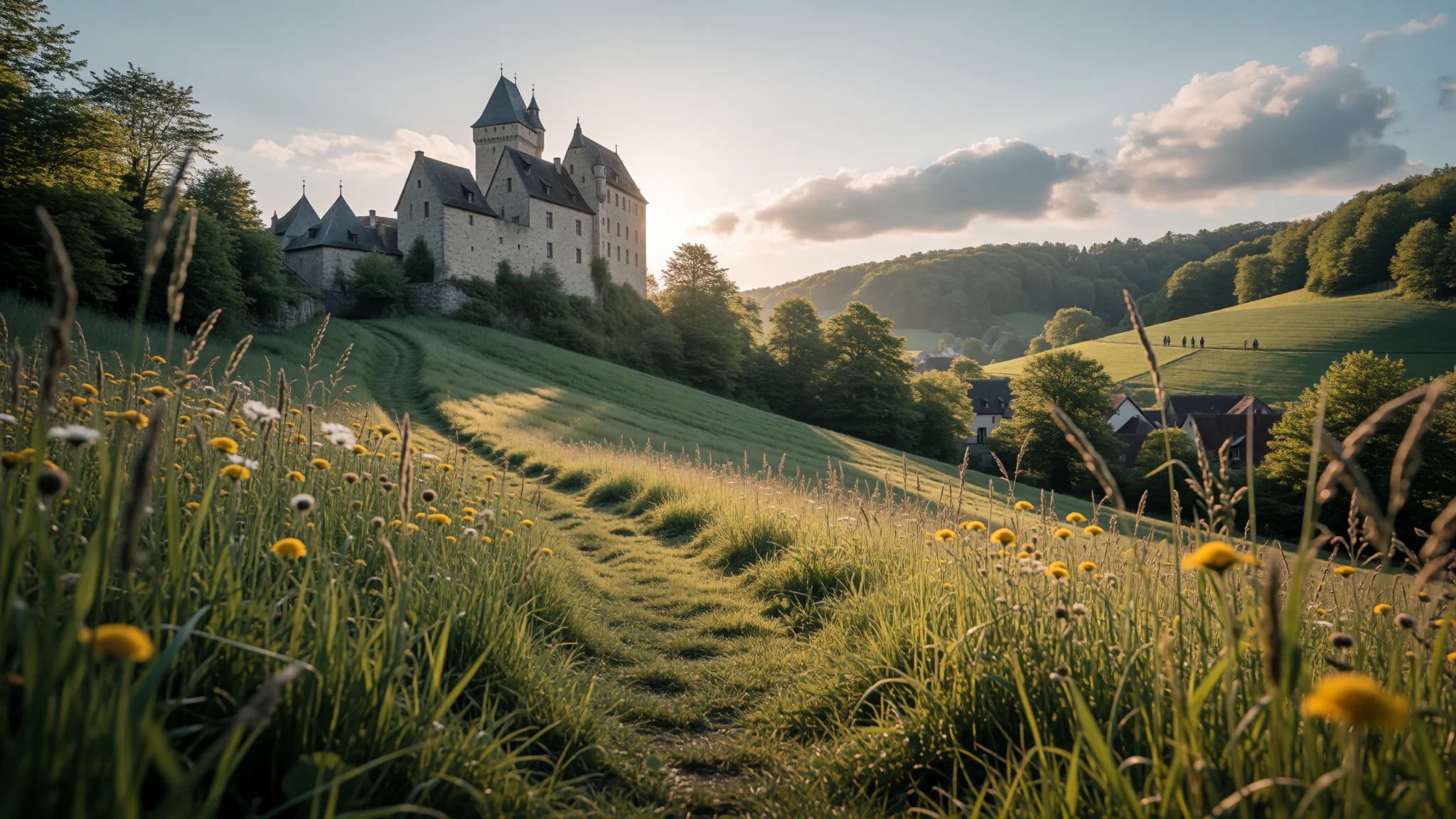
Seven small castles line a gentle river valley in central Luxembourg, close enough to see in a day and quiet enough to walk.
The place
The Valley of the Seven Castles is an informal name for the Eisch valley, called the Äischdall in Luxembourgish, in central Luxembourg. It is a label rather than an official region, and that is part of its charm: nobody has drawn a border around it, and the castles simply sit along a quiet river road. The valley begins where the Eisch meets the Alzette, near Mersch, and runs upstream to Steinfort on the Belgian border. Heading that way, the seven are Mersch, Schoenfels, Hollenfels, the old castle at Ansembourg, the New Castle of Ansembourg, Septfontaines and Koerich. Driven without stopping, the whole route takes about an hour, which says a lot about how compact the country is. Few people manage it that fast for long. The castles are scattered between villages, fields and wooded slopes, and some are private or used for other purposes, so much of the pleasure lies in glimpsing them from a lane, walking up to a gate or viewpoint, and moving on. A 37-kilometre footpath follows the valley past the castles, and it suits walkers who like to split a long route into village-to-village stages. The scenery is gentle: a narrow river, meadows, small stone villages and patches of woodland. It is not dramatic and it is not crowded. Expect a day of pottering, a few photographs, a café stop and the odd castle that cannot be entered. Anyone wanting ticketed interiors, queues and gift shops should look elsewhere in Luxembourg; those who enjoy quiet roads and a sense of how a small country's history is laid out along a river will be well served.
Its story
The story of the Valley of the Seven Castles is partly one of geography and partly one of naming. A small river cutting through central Luxembourg gave medieval landowners a natural line to defend, water to power mills, and a route between settlements. Strongholds and manor houses gathered along it over the centuries, and they were rebuilt, extended and sometimes left to decay as ideas about defence and comfort changed. Ansembourg shows this well, with an older castle and a newer one in the same village, the second a sign that families eventually wanted a more comfortable house than a fortress could offer. The name itself is looser than the buildings. Seven is a tidy number for a tidy route, and it gives drivers and walkers a simple list to tick off, but it is a modern, informal tag rather than an official designation. The order runs upstream from Mersch, near the meeting of the Eisch and the Alzette, to Koerich towards the Belgian border, so the valley reads almost like a timeline in stone that can be followed in one direction. The individual castles each have their own owners, restorations and stories, and these differ a good deal from one to the next. Local information boards and tourist offices are the best place to learn the details of any single building. What the valley offers as a whole is a clear picture of how power, farming and water once shared a small stretch of countryside.
What to see
- Mersch Castle — Mersch, at the meeting of the Eisch and the Alzette
Mersch Castle is the first stop heading upstream, and it stands in a town rather than open countryside, with cafés and shops close by. Look at the building from the street, then use Mersch as a base for supplies and a coffee before heading up the valley towards the quieter villages.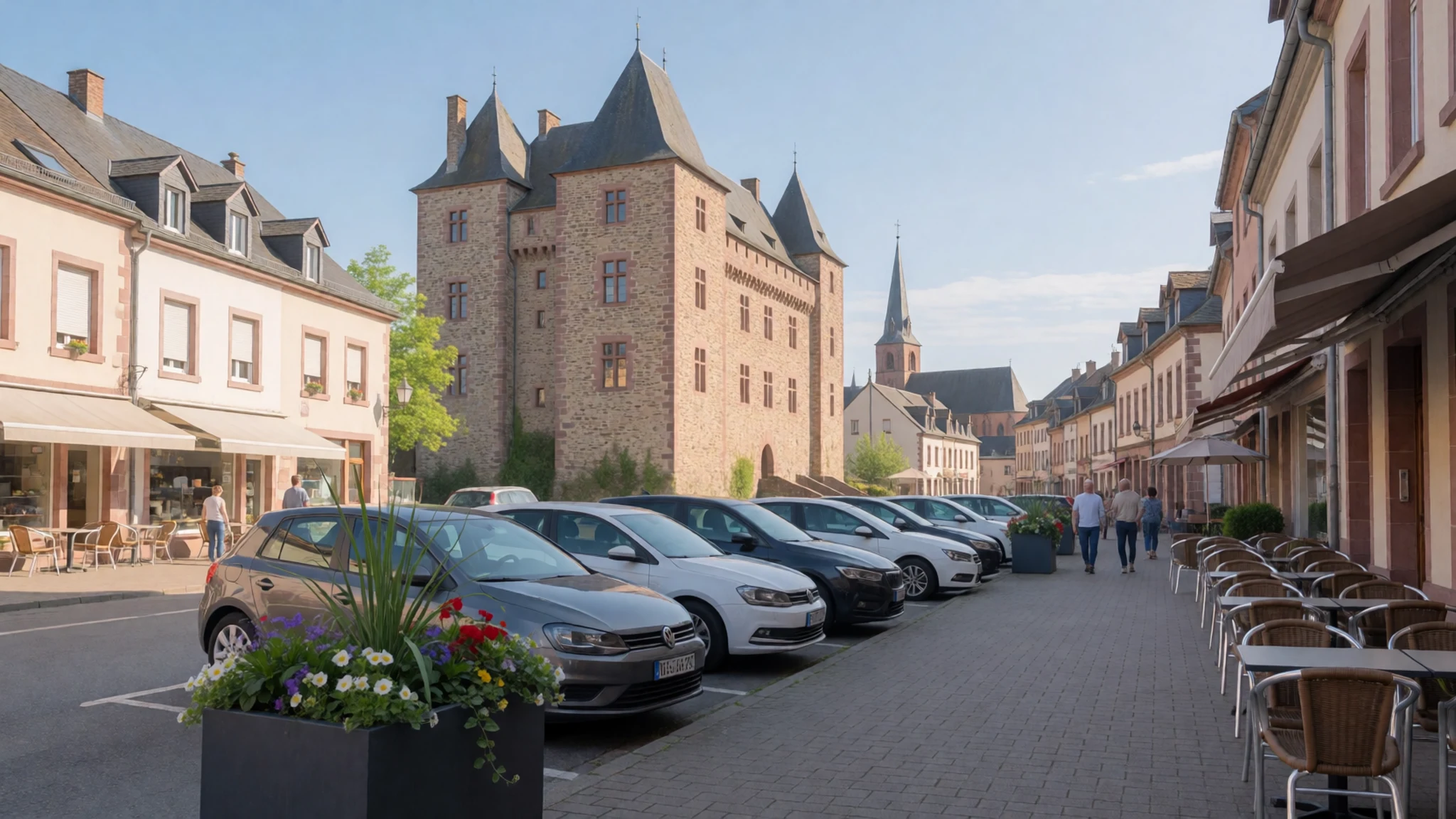
- Schoenfels Castle — Schoenfels, near Mersch
Schoenfels Castle is the second in the chain, set in a small village among fields and trees. Its walls and roofs rise above the greenery and are best appreciated from the road and nearby paths. Access to the grounds is not guaranteed, so treat any visit inside as a bonus.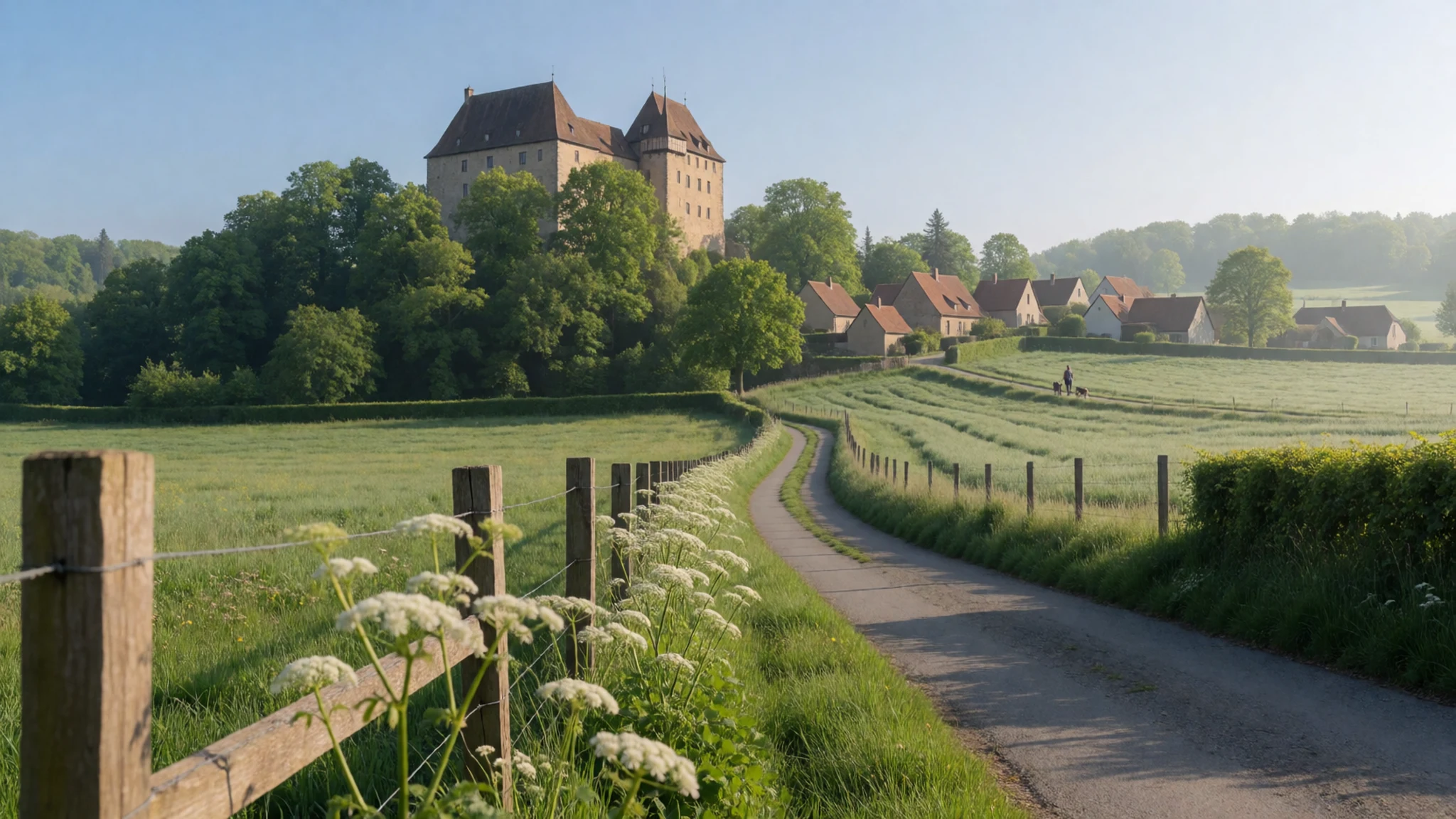
- Hollenfels Castle — Hollenfels, upper valley slopes
Hollenfels Castle stands above its village on the valley side, and the approach on foot gives the best sense of its position. Views over the surrounding countryside make the climb worthwhile. Check locally for opening arrangements before planning to go in, because these can change with the season.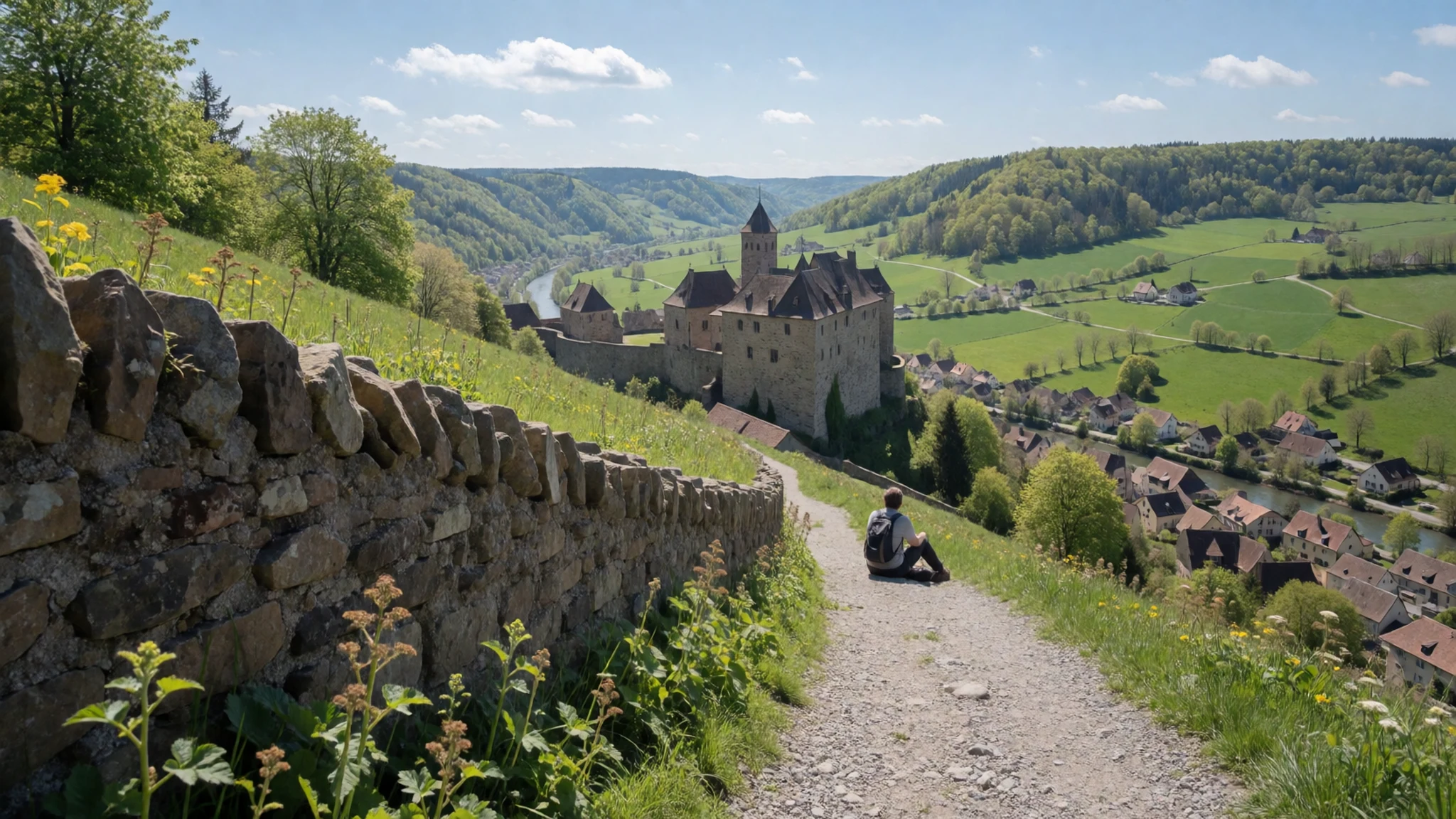
- Ansembourg: the old and new castles — Ansembourg, mid-valley
Ansembourg holds two of the seven castles in one village: the old castle and the New Castle of Ansembourg. Seeing both together shows how tastes changed from defence towards comfort. The surroundings are leafy and calm, which makes this a good place for a slow walk and a photograph.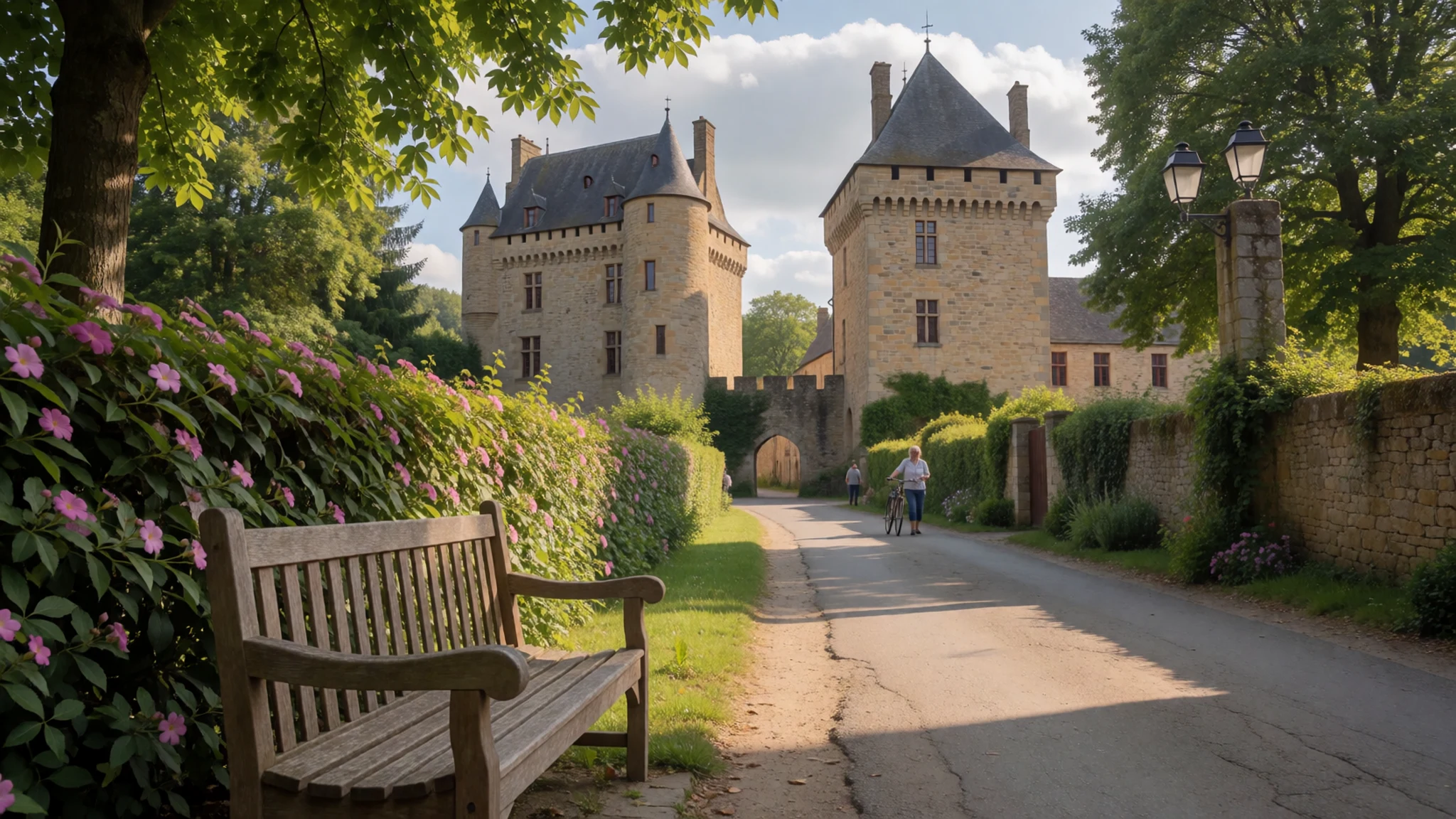
- Septfontaines Castle — Septfontaines, upper valley
Septfontaines Castle sits on the upper stretch of the valley, where the landscape becomes quieter and more rural. The south side is the most photographed view. Walkers on the long footpath often use the village as a pause between stages, so it is a sensible place for a rest.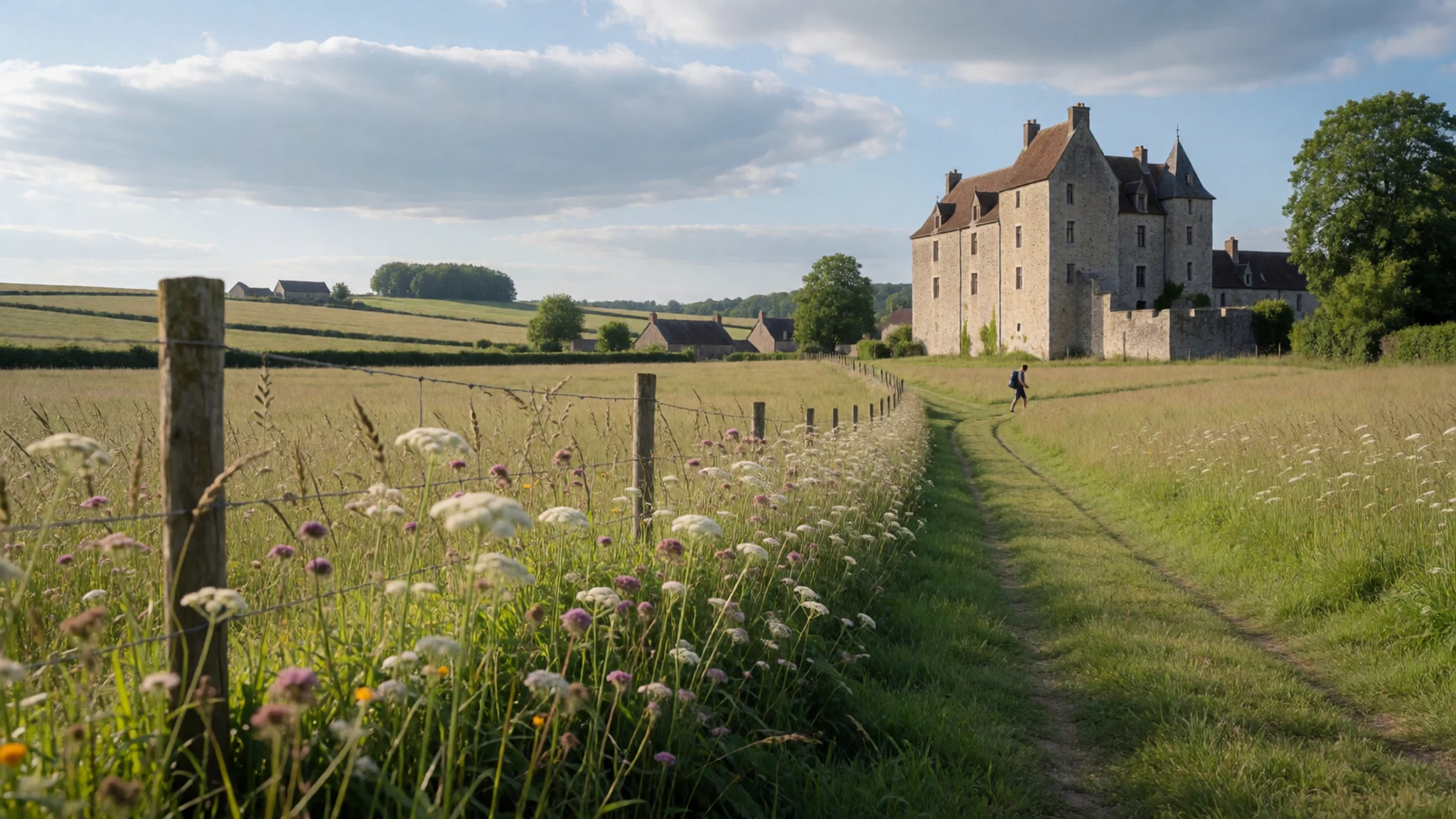
- Koerich Castle — Koerich, near the Belgian border
Koerich Castle is the last of the seven heading upstream, close to the Belgian border and the end of the valley route. It is more ruin than house, which gives it a different character from the others. Allow time to wander around it and enjoy the open surroundings.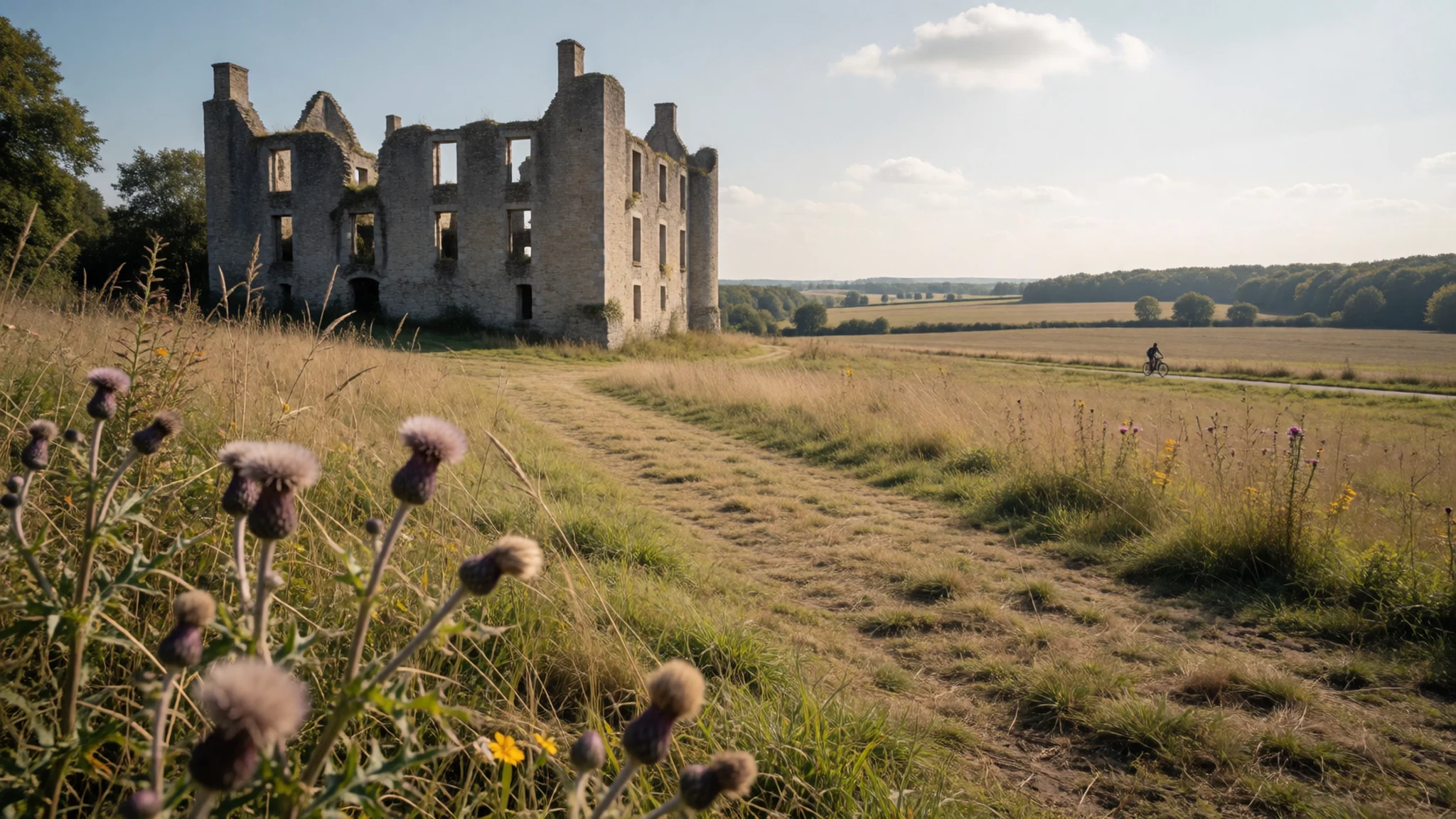
Culture
Culture in the Valley of the Seven Castles is that of rural Luxembourg: small, tidy villages, a mix of languages and a strong sense of local pride. Luxembourgish is the everyday language, French and German are widely used, and English works well in most places visitors go. A greeting in any of them is welcome. Many of the castles are lived in, used for events or looked after by local associations rather than set up as heritage attractions, so opening is patchy and a closed gate is normal rather than a failure of planning. Village life tends to centre on the church, the café and the bakery, and Sundays are quieter than weekdays. Local fairs and church feast days bring out brass bands, stalls and sometimes traditional costume, and they are worth catching if the dates fall right. Walking is a popular pastime, and walkers share lanes with farm vehicles, cyclists and the occasional horse rider. Locals tend to value tidiness, punctuality and quiet, and the same goes for visitors on the trail. Respect for private property matters especially here, because a castle courtyard may also be someone's front garden. Keep to marked paths, greet people you pass on the footpath, and stay outside any gate or grounds unless a sign says visitors are welcome.
What to wear
Traditional dress in the Luxembourg countryside now belongs to festivals rather than daily life. Folk groups and village societies may bring out older costume at fairs and parades, typically a long skirt, apron and bodice for women and a waistcoat with a cotton shirt for men, made in wool, linen and cotton. Details differ from group to group, so ask locally rather than assuming a single style. In the Eisch valley, people dress as they would in any northern European village: jeans, fleeces and light jackets, walking boots at weekends, and smart casual for restaurants and family occasions. Outdoor brands are common on the trail. Visitors should dress for walking and for changeable weather. Layers, a waterproof jacket and a sun hat cover most seasons, and sturdy shoes with a good grip matter, because field paths and forest tracks can be muddy after rain. Long trousers help against nettles and ticks in summer grass. Evenings by the river can be cool even after a warm day. No castle in the valley has a strict dress code, but if you step into a village church, cover bare shoulders and avoid beachwear. Smart but relaxed clothes are fine for a meal at a village inn.
What to eat
- Judd mat Gaardebounen — traditional village inns and family-run restaurants along the valley
A classic Luxembourg dish of smoked collar of pork served with broad beans in a creamy sauce, usually with boiled potatoes. It is hearty and salty, best after a long walk. Order it where locals eat a proper Sunday lunch.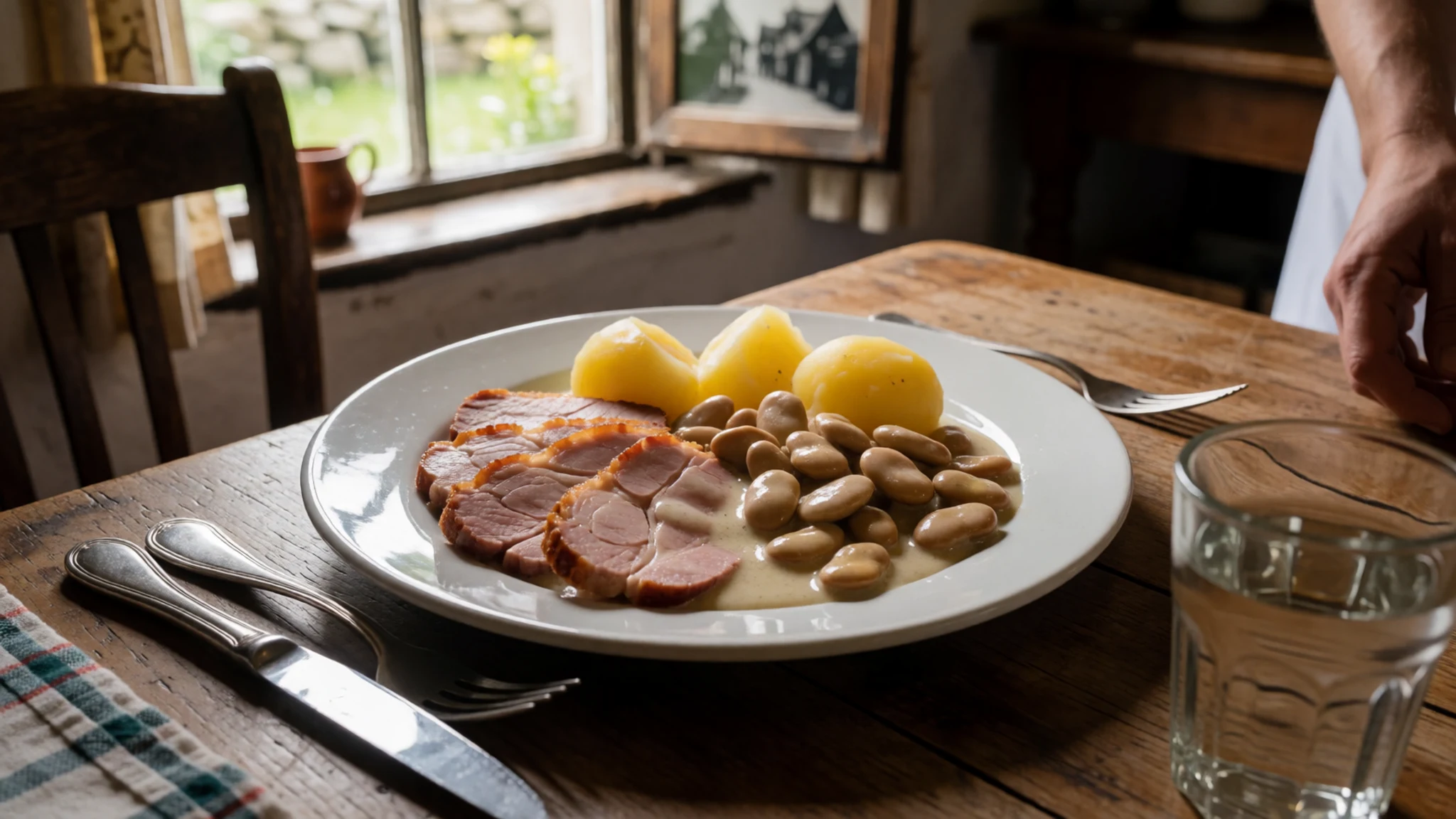
- Bouneschlupp — village cafés and home-style eateries in Mersch and the smaller villages
A green bean soup thickened with potatoes and often flavoured with bacon or sausage. It is plain, filling and a good choice on a cool day, and it shows how much local cooking relies on garden vegetables and simple, smoky meat.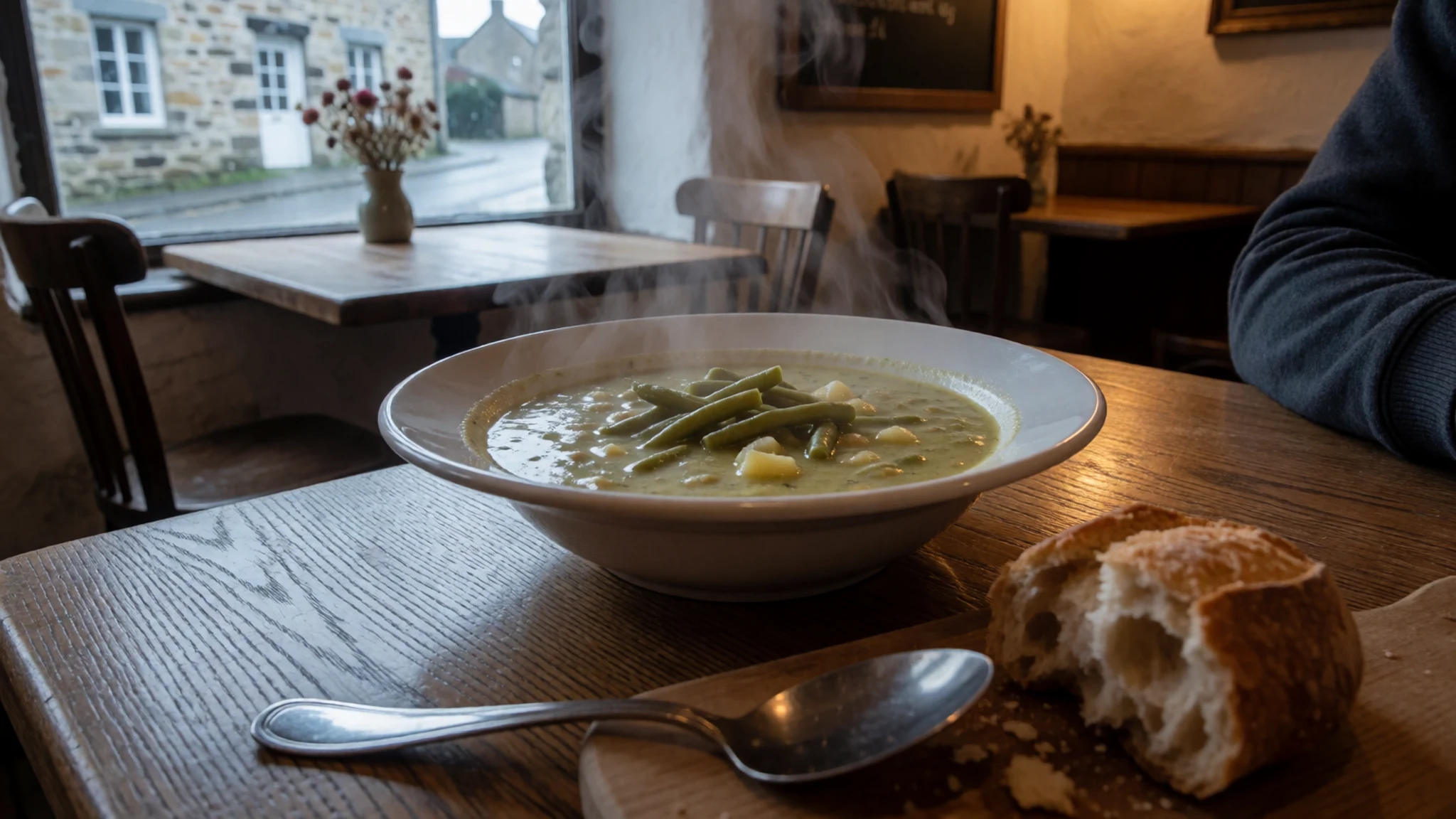
- Gromperekichelcher — fair stalls, village festivals and weekly markets
Crisp potato fritters, made from grated potato with onion and parsley and fried until golden. They are often eaten with apple sauce or a bit of salt. Fairs and festivals are where they turn up most reliably. - Kniddelen — traditional restaurants in the valley towns
Soft flour dumplings, usually served with bacon and cream sauce. They are a comforting dish rather than a refined one, and portions tend to be generous. Pair them with a local white wine or a beer. - Quetschentaart — village bakeries and café counters when plums are in season
A tart of dark plums, baked on a thin pastry base and served in late summer and autumn, when the fruit is in season. It is lightly sweet and tart, and goes well with a coffee after a walk.
Plan it
Best time. May to June and September to October suit walking, with generally mild weather and green or golden scenery. Summer is fine for a drive but can bring heat and storms; winter is quiet, and some castle grounds and cafés may be shut.
How long. 1–2
Getting there. Fly to Luxembourg Findel airport and continue to Luxembourg City, then reach Mersch by regional train or bus; check the national public transport journey planner for current services. For the whole valley, a car is easiest, driving upstream from Mersch to Steinfort in about an hour without stops.
Budget. mid
Tips
- Check each castle's official page or the local tourist office before going, since access to interiors and grounds varies.
- Walk the 37-kilometre footpath in stages and plan lunch stops in villages, because cafés can be few and may close on Sundays.
- Carry some cash and a card for small cafés and bakeries.
- Bring water and a waterproof jacket, as weather can change quickly and shade is patchy on field paths.
- Start early to see the castles in good light and to have the lanes mostly to yourself.
Etiquette
- Stay outside gates and grounds unless a sign says visitors are welcome, as many castles are private homes.
- Greet people you pass on the footpath and keep to marked paths across farmland.
- Keep voices low in villages and take litter with you.
Nearby
Sources
- Wikidata Q2078549 (CC0)
- Wikipedia: Valley of the Seven Castles (rev 1324552588) (CC BY-SA 4.0)
- Wikivoyage: Valley of the Seven Castles (CC BY-SA 4.0)
- Le château de Mersch, Emmanuel Brunner (CC BY-SA 2.5)
- Schoenfels Castle, Ipigott (CC0 1.0)
- Le château de Hollenfels, Lordjim (CC BY 3.0)
- Old castle, Ansembourg, Donarreiskoffer (CC BY 3.0)
- New Castle of Ansembourg, Ipigott (CC0 1.0)
- Südseite der Burg von Septfontaines, Schlassfrenn (CC BY-SA 3.0 lu)
- Koerich Castle, Ipigott (Public domain)
- Map of the Valley of the Seven Castles, Solipsia (Public domain)


