Wiltz
Wiltz, Luxembourg
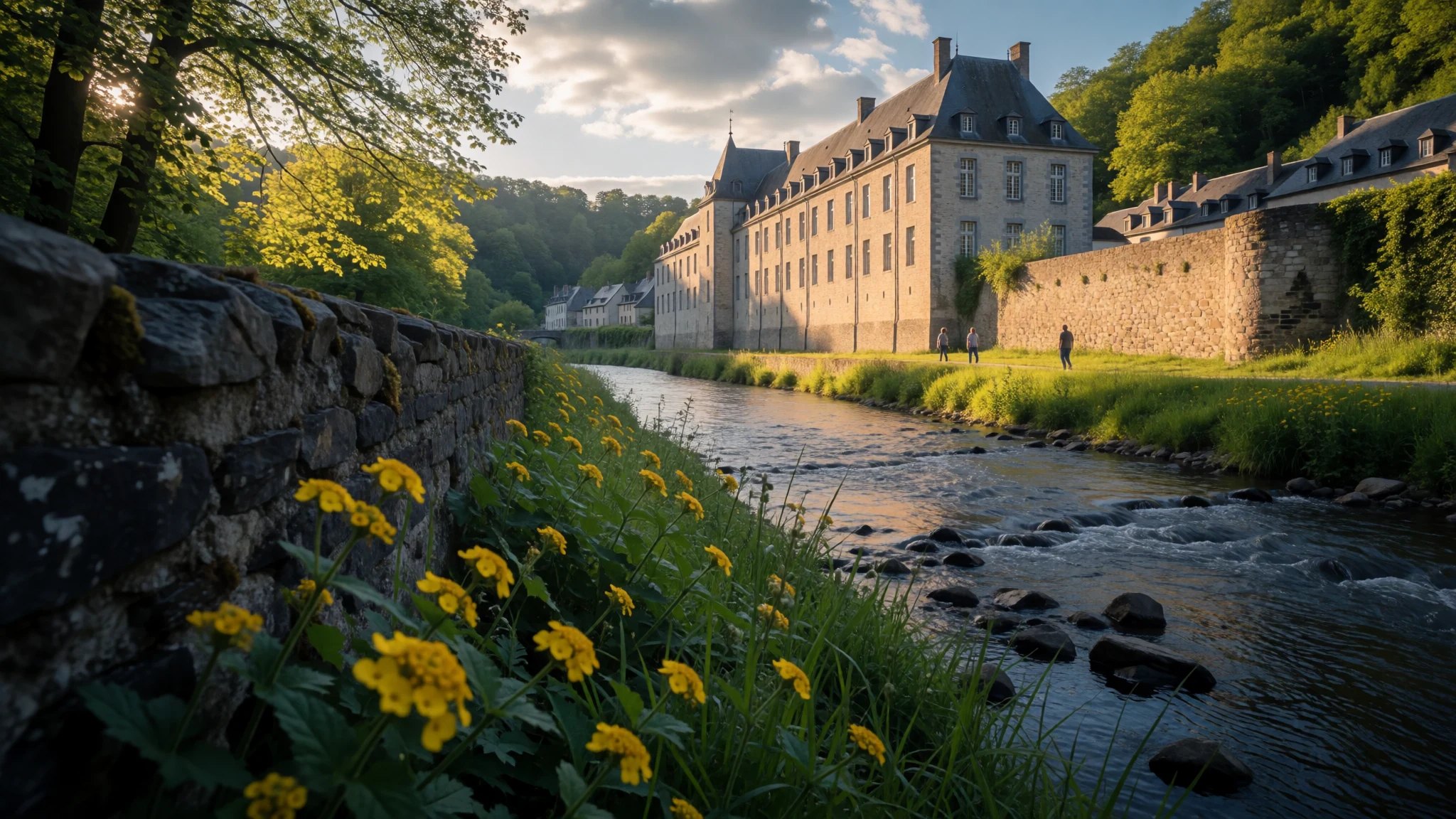
Wiltz is a quiet Ardennes town of castle grounds, forest walks and wartime memory, with few crowds outside its summer festival and lantern night.
The place
Wiltz is a small town in north-western Luxembourg, part of a commune of 8,538 people, standing about 477 metres above sea level on the river that shares its name. It is the seat of its own canton, and the built-up town lies in the southern part of the commune, with villages and farmland spreading north. The setting explains the feel of the place. Streets climb and drop between the valley floor and the upper town, woodland closes in at the edges, and the weather tends to be cool, damp and changeable rather than postcard-sunny. The centre is compact enough to cross on foot in a few minutes, organised around the town hall, a main road that runs straight through, and a modest scatter of cafés and shops. Above it stands the castle, whose lawns and gardens double as the stage for a summer festival and as the starting point for many walking routes into the forest. Wiltz is not a famous stop, and that is part of its appeal: it is thin on crowds outside festival weeks, though Luxembourg as a whole is not a cheap country. The town's identity rests on two things. Leather once powered its economy, and the Second World War made it both a centre of civil resistance and a battleground in the winter fighting of the Ardennes. Museums, memorials and a restored tank keep that history in view. Wiltz suits a slow day or two, ideally combined with other villages and castles in the region.
Its story
Wiltz takes its name from a Celtic word usually read as meaning something like 'on the creek', and the settlement is older than its written record, which begins in the eighth century. Town rights followed in the thirteenth century, and the counts of Wiltz became one of the long-established noble families of Luxembourg. Their castle was finished in the early eighteenth century, and the last count died near the end of that century. Wikidata gives 1795 for the commune itself. The building then found new roles, first as a private girls' school from the mid-nineteenth century into the mid-twentieth, then as a retirement home. Industry arrived around the turn of the twentieth century, when a large tannery, owned by a trust, turned leather into the town's main employer and brought a wave of prosperity. The Second World War changed the town's story again. After Luxembourg was occupied, Wiltz became the place where a general strike began, a protest against the forced enlistment of young Luxembourgers into the German army. It spread across the country and drew violent reprisals. In the last winter of the war, the German army launched its surprise offensive in the Ardennes. The American divisional commander and his staff pulled out of Wiltz as the Germans approached, and the town was then fought over before American infantry retook it. Today the strike and the battle are the two threads local museums and memorials follow.
What to see
- Château de Wiltz — Upper town, by the castle grounds
The château above Wiltz was home to the town's counts and later served as a girls' school and a retirement home. Today its terraces and lawns work as the town's open living room, with paths leading into the woods and a stage for the summer festival. Go in the morning for the views over the rooftops and the quiet.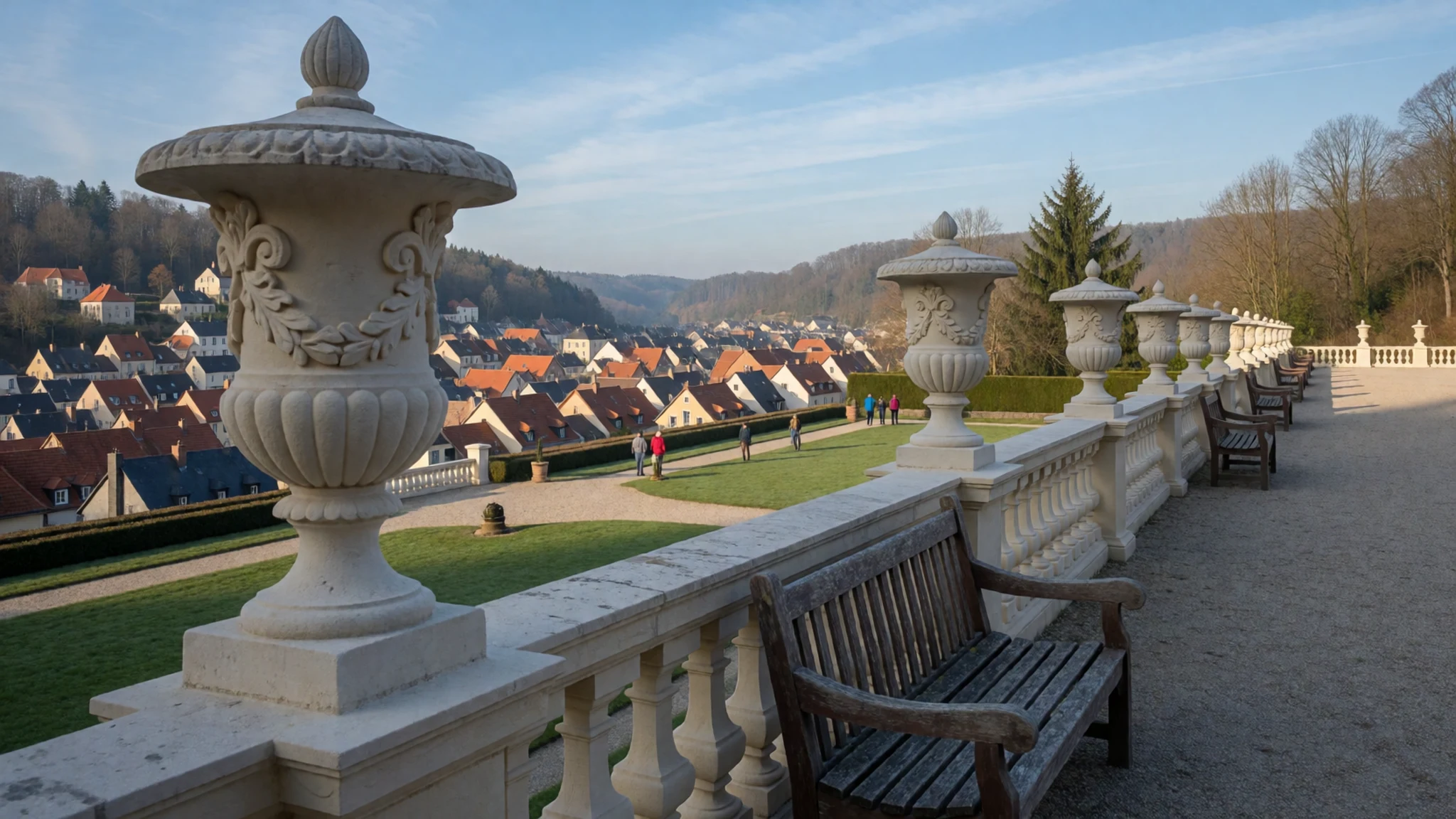
- National strike memorial — Town centre
This memorial tower honours the people who suffered after Wiltz called a general strike against the German occupiers. It stands a short walk from the centre and is a sober place to pause for a few minutes. Reading about the strike beforehand, or visiting the museum first, gives the monument far more weight.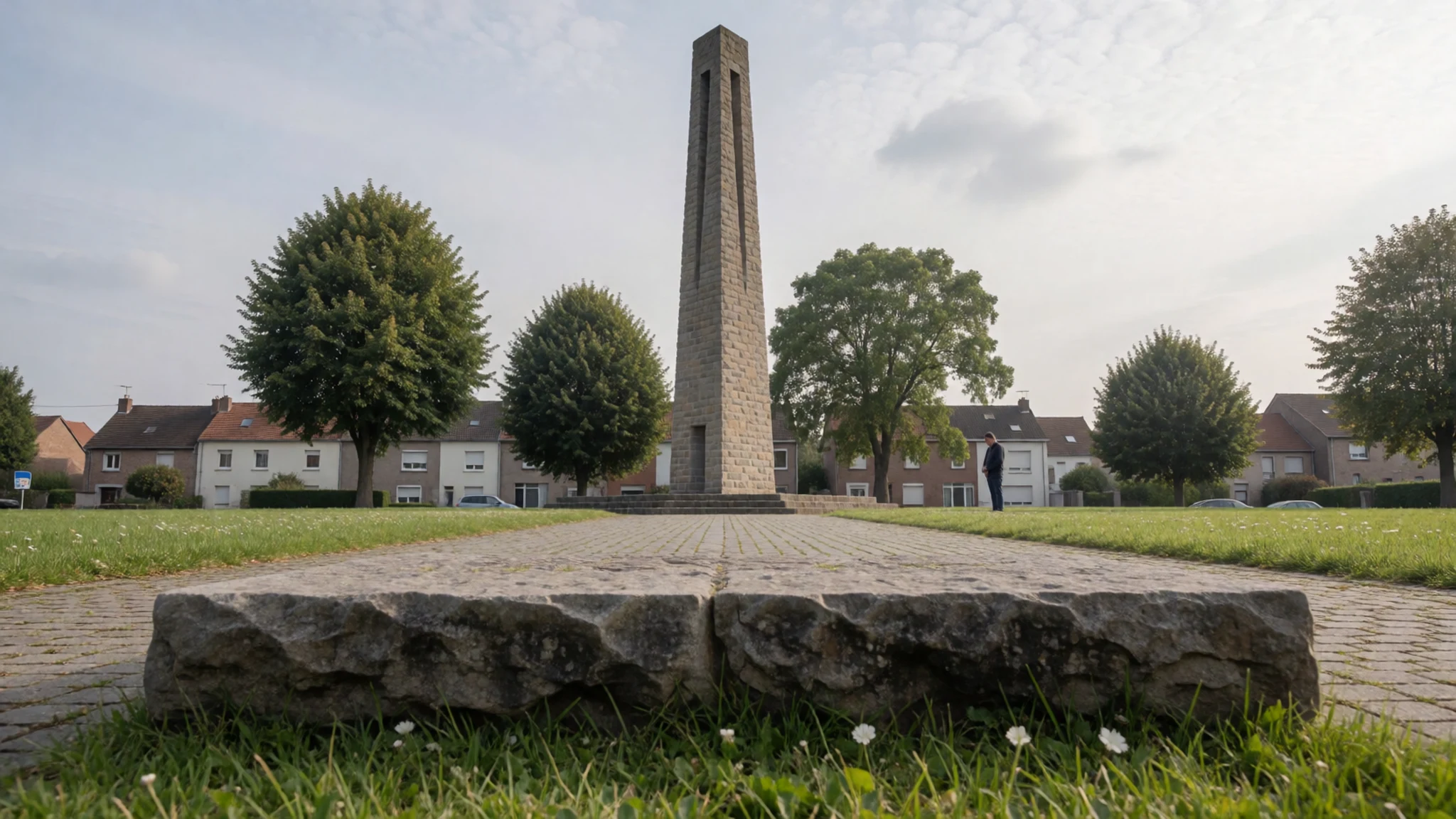
- Museum of the Ardennes Offensive — Near the castle
This museum covers the winter fighting at the end of the Second World War, when Wiltz changed hands and its people were caught between two armies. Expect photographs, uniforms and maps rather than spectacle. Opening times vary by season, so check the town's official site, https://www.wiltz.lu, before planning the trip around it.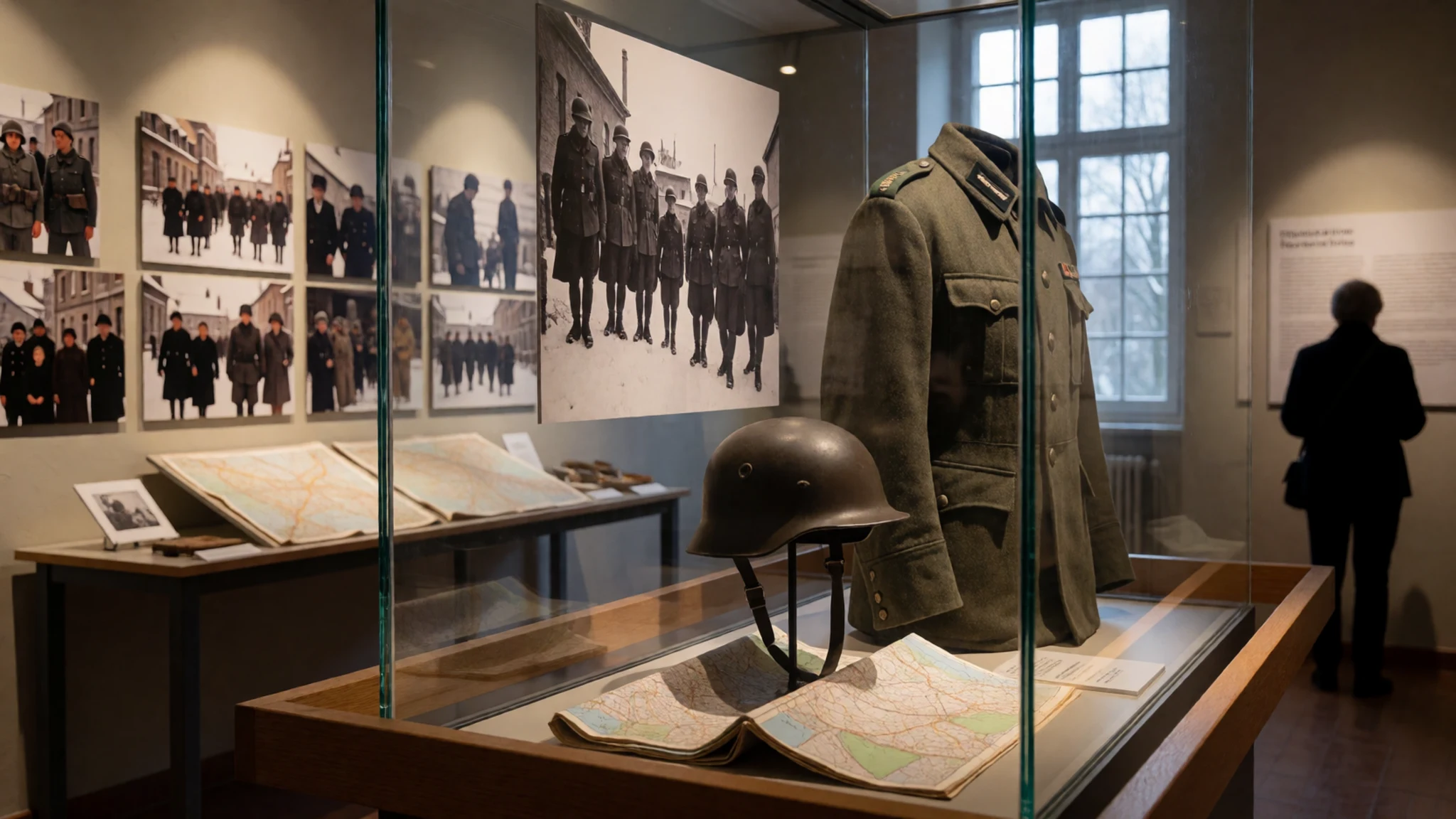
- Tank memorial — Southern edge of town
A restored Sherman tank stands on the edge of Wiltz as a memorial to the American soldiers who fought for the town. It is a quick stop, easily paired with the museum, and a useful reminder of how close the front line came to ordinary streets. It is a monument, not a climbing frame.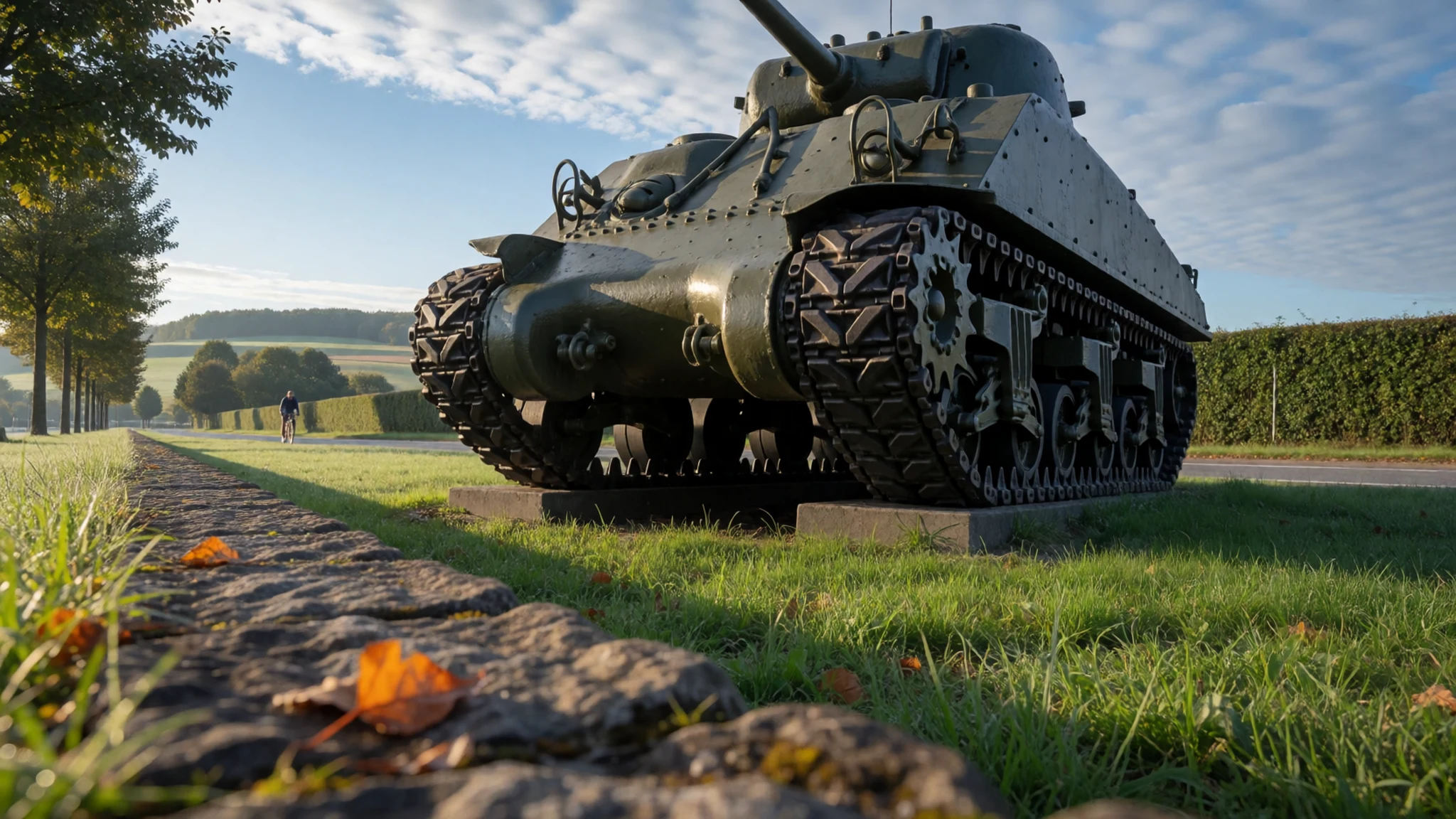
- National Museum of Brewery and Leather works — Town centre, near the river
This museum explains the trades that built Wiltz, from tanning hides to brewing beer. It is a good way to understand how a small market town became an industrial one, and why old workshop buildings still stand near the river. Check the official site for opening days before going.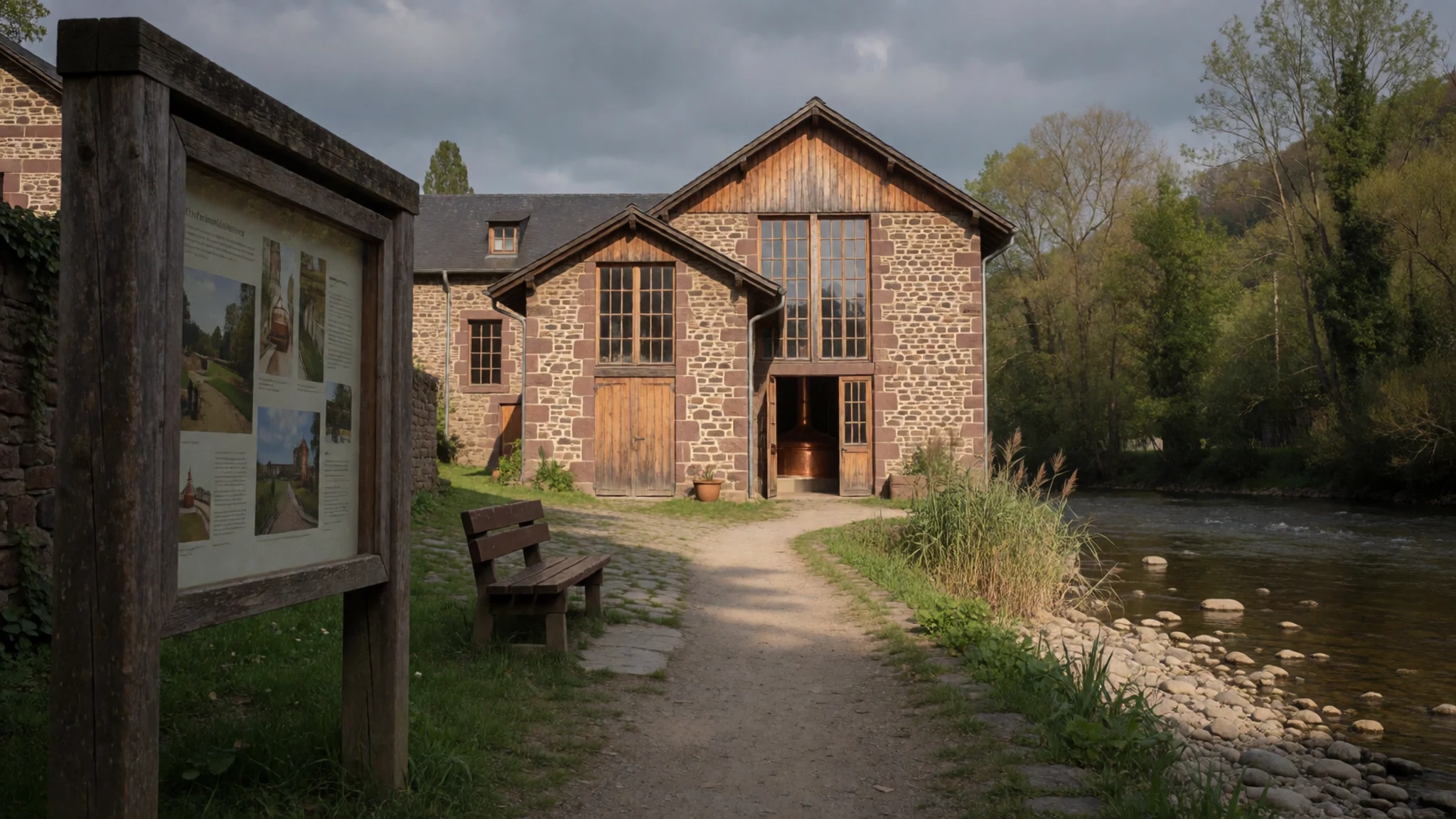
- Garden of Wiltz — Town centre
The Garden of Wiltz is a landscaped park of plants, sculptures and lakes, billed as a living monument. It suits families and anyone who wants a gentle hour after a museum or a steep walk. The planting is fullest in late spring and summer, and the lakes draw birds through much of the year.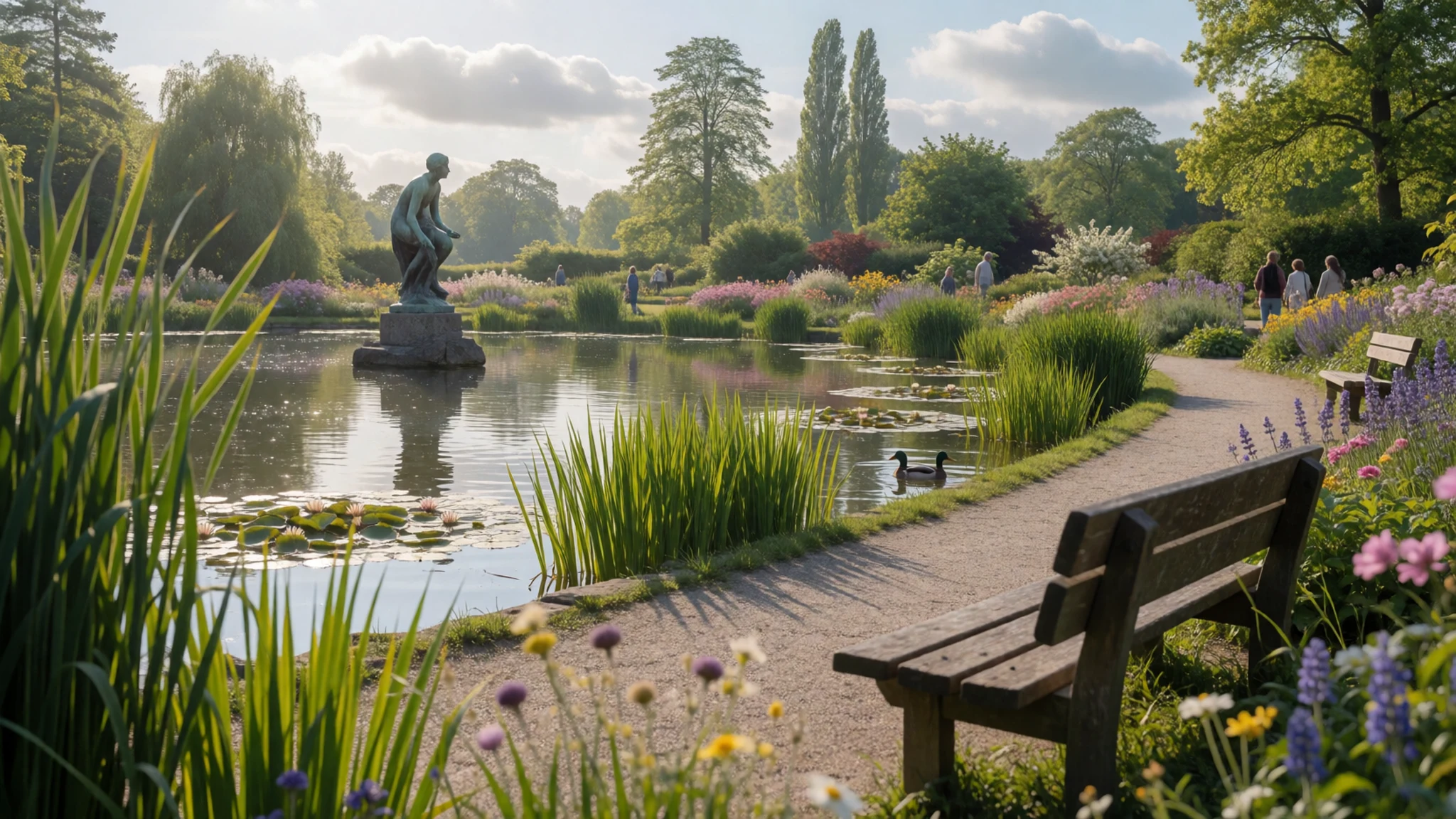
Culture
Wiltz is a town where daily life runs in several languages at once: Luxembourgish in shops and on the street, French on menus and official signs, German in newspapers and on the radio. A simple greeting in any of them is usually met warmly, and English often works in cafés and museums. Local memory has been shaped by industry and by war. The leather and brewing trades gave the town its working backbone, and the family firms and unions that grew around them still colour how people talk about work. The wartime strike against conscription is a source of real civic pride, remembered with a memorial tower and with ceremonies. Many residents grew up with grandparents' stories of the winter fighting, so the museum and the tank are treated as places of remembrance rather than curiosities. The cultural calendar leans outdoors: an open-air season of theatre, opera, ballet and concerts below the castle from late June into July, and a night of lanterns and music in mid-September. Dates shift from year to year, so check the official site, https://www.wiltz.lu. Keep your voice low at the strike memorial and the tank, and do not climb on them or pose on them for photographs.
What to wear
Wiltz has no everyday national costume, and visitors should not expect to see one on the street. The older rural dress of the Ardennes was practical: wool and linen, dark waistcoats, long skirts with aprons, and sturdy leather boots, which suits a region that once lived on farming and tanning. Folklore groups and festival parades may bring historic dress out for special days, but it is a performance rather than a daily habit. What people wear now is plain and outdoorsy. Waterproof jackets, fleeces, jeans and walking shoes are normal, with something a little smarter for dinners, concerts and the evening festival performances. Locals dress for the weather first, and the weather changes quickly. Visitors should do the same. Pack layers, a proper rain jacket, and shoes with grip, because the town is hilly and woodland paths turn muddy after rain. Summer evenings can be cool, so carry a light jacket even in July. Winter brings real cold, so add a hat and gloves. There is no strict dress code at churches or memorials, though covered shoulders and quiet clothes are a courteous choice at remembrance sites. Cycling and hiking gear is entirely at home here.
What to eat
- Judd mat Gaardebounen — Traditional cafés and brasseries in the town centre
Smoked collar of pork served with broad beans in a creamy sauce, usually with boiled potatoes. It is a classic of Luxembourgish cooking and hearty enough to need a long walk afterwards.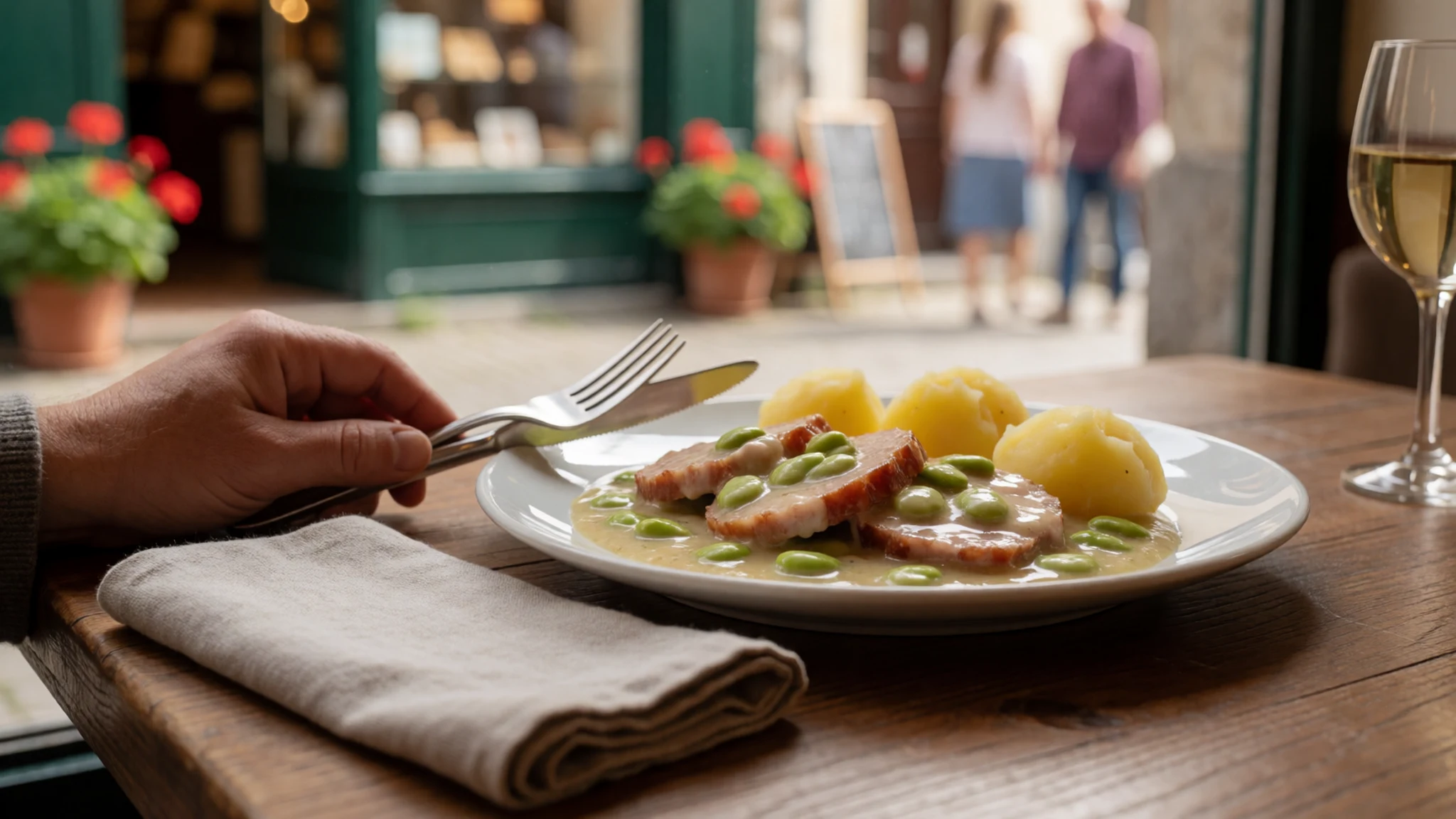
- Bouneschlupp — Village inns and cafés, especially in cooler months
A thick green bean soup built on potatoes, bacon and often sausage. It is filling, homely and welcome after a cold day on the forest paths.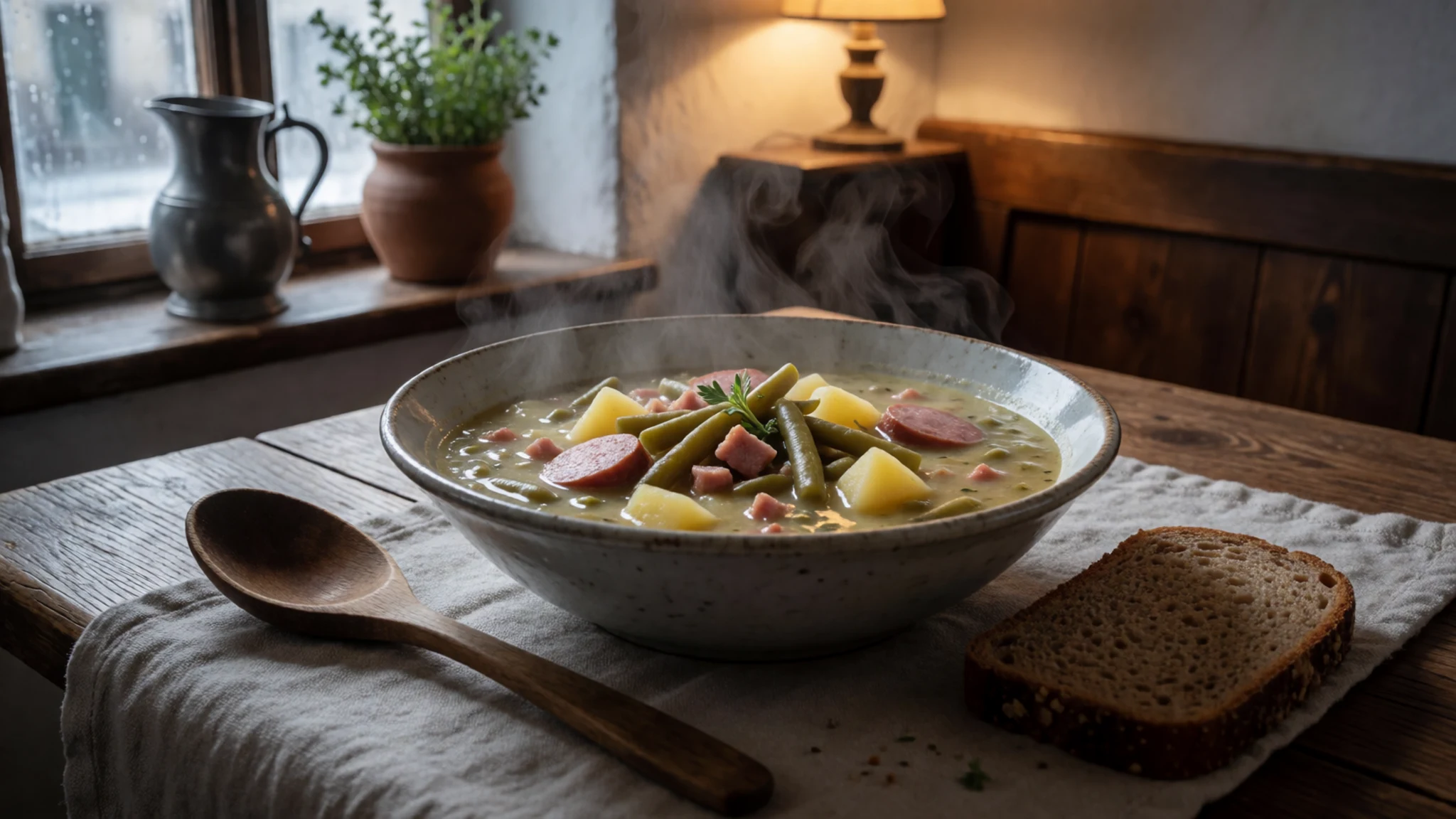
- Gromperekichelcher — Festival stalls, such as during the summer season and lantern night
Crisp fried potato fritters flavoured with onion and parsley, eaten hot with a little salt or apple sauce. They are a fair and festival food. - Träipen — Butchers' counters and café menus in cooler months
Luxembourgish blood sausage, usually served with mashed potato and apple sauce. It is rich and strongly flavoured, a dish for autumn and winter more than for midsummer. - Smoked Ardennes ham — Butchers and delicatessens in town
Dry-cured, smoked ham sliced thinly and eaten with bread, pickles and a glass of local beer. It is simple, salty and a very good picnic food for forest walks.
Plan it
Best time. May to September suits walking, the castle gardens and the open-air festival season. Late June to mid-July and mid-September are the liveliest weeks. The Ardennes is cool and damp, so bring rain gear in any month. Winters are cold and grey, better for museums than hiking.
How long. 1–2
Getting there. The nearest major airport is Luxembourg Airport, followed by a train towards the north. Rail travellers change at Kautenbach onto the short branch line to Wiltz Station. Buses link the town with Ettelbruck, Clervaux and Esch-sur-Sûre, and with Bastogne in Belgium. By car, the main road through the town centre connects Wiltz to Luxembourg City and the Belgian border.
Budget. mid
Tips
- Check train times in advance: the change at Kautenbach means the last leg can be slow and infrequent in the evening.
- Look up museum opening days on the official site, https://www.wiltz.lu, before travelling, as hours vary by season.
- Book festival performances and accommodation early if you plan to come in late June to mid-July or mid-September.
- The town is hilly: wear shoes with grip and allow extra time for walks between the lower town and the castle.
- Carry a card and a little cash, as small cafés and festival stalls may prefer one or the other.
Etiquette
- Greet shopkeepers and café staff before ordering; a short hello in Luxembourgish, French or German goes a long way.
- Treat war memorials and the tank as places of remembrance, not photo props.
- Keep to marked paths in the woods and take litter back with you.
Nearby
Sources
- Wikidata Q741589 (CC0)
- Wikipedia: Wiltz (rev 1380495217) (CC BY-SA 4.0)
- Wikivoyage: Wiltz (rev 5422624) (CC BY-SA 4.0)
- Photo: D'Stadhaus zu Wolz (GilPe) (CC BY-SA 4.0)
- Photo: Stadhaus vu Wolz, viischt Face (Zinneke) (CC BY 3.0)
- Photo: National strike memorial in Wiltz (MMFE) (CC BY-SA 4.0)
- Photo: Third Army corpsman near Wiltz (Signal Corps Archive) (Public domain)
- Photo: Infantryman awaiting removal outside Wiltz (Signal Corps Archive) (Public domain)
- Photo: HQ Battery, 102nd F.A., near Wiltz (Signal Corps Archive) (Public domain)
- Photo: Patrol of 26th Division near Wiltz (Signal Corps Archive) (Public domain)


