Berg Castle
Berg Castle, Luxembourg
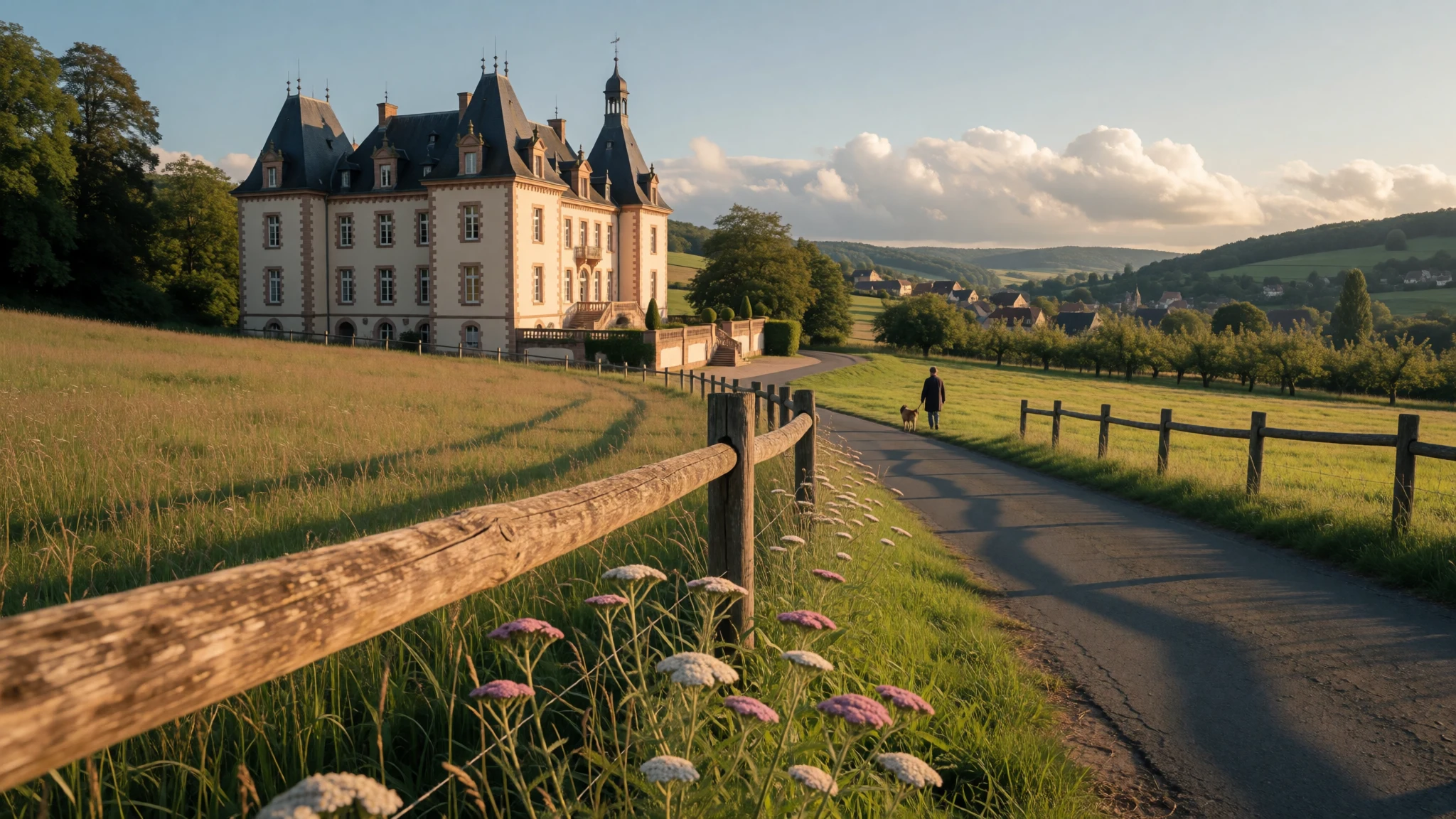
Berg Castle is a royal family home in a quiet Luxembourg village, best enjoyed as an easy stop on a wider trip.
The place
Berg Castle stands beside the small town of Colmar-Berg in central Luxembourg, and it was for generations the principal residence of the Grand Dukes. Today it remains a family home first and a sight second. The present building dates from 1911, a large house set in parkland with woods behind it, and the town lies where two rivers, the Alzette and the Attert, come together. The setting is gentle: low hills, farmland, and the road and railway running north from the capital towards Ettelbruck. Colmar-Berg itself is a modest place of about 2,020 people, at 230 metres above sea level, and most travellers pass through on the way to somewhere else. Honest expectations help. The castle is a private family residence, so there is no ticketed tour to plan a day around, and the grounds are not a public park. What a visitor gets is a view from outside the boundary, a glimpse of how a small monarchy lives in a village rather than a palace quarter, and a pleasant stop on a longer trip around the Grand Duchy. Photographers do best from the road approach and from open ground on the edge of town, where the roofline sits against the trees. Luxembourg names the place three ways: Schlass Bierg in Luxembourgish, Château de Berg in French and Schloss Berg in German. All three turn up on signs and in conversation. A visit pairs well with a morning in Luxembourg City or a walk in the surrounding countryside.
Its story
Berg Castle came to the Grand Dukes of Luxembourg in 1845, when William II bought the Colmar-Berg estate. Belgium's revolution had split the old territory and weakened Dutch control of the fortress in Luxembourg City, and William hoped that a home in the country, with his time shared between The Hague and Luxembourg, would win over a largely Catholic population. The constitution of 1848 later confirmed the castle as the Grand Duke's home. When the Dutch and Luxembourg royal lines parted in 1890, Adolphe took over the estate, and the older house on the site did not last: it was pulled down in 1906 and rebuilt to designs by Max Ostenrieder of Munich and the local architect Pierre Funck-Eydt. The new castle was finished in 1911 and became the family's main residence. The Depression strained the family's finances, and in 1934 Grand Duchess Charlotte agreed a deal under which the state took ownership of Berg and part of the Grünewald forest, while the family kept the right to live there. Only one other residence, the Grand Ducal Palace in the capital, is handled in this way, and the right is written into the constitution. During the Second World War German occupiers took over the castle, removed its most valuable art and altered the interior so that local girls could be put through a re-education scheme. The building seen today therefore carries layers of royal, financial and wartime history.
What to see
- The castle from the N7 — Colmar-Berg, valley road
The N7 road runs through the valley below the town, and from it the castle appears above the roofs and trees of Colmar-Berg. This is the easy, honest way to see Berg: a clear sightline without approaching the private grounds. Autumn and winter, when the leaves are down, show more of the building. Stay on public ground and mind the traffic.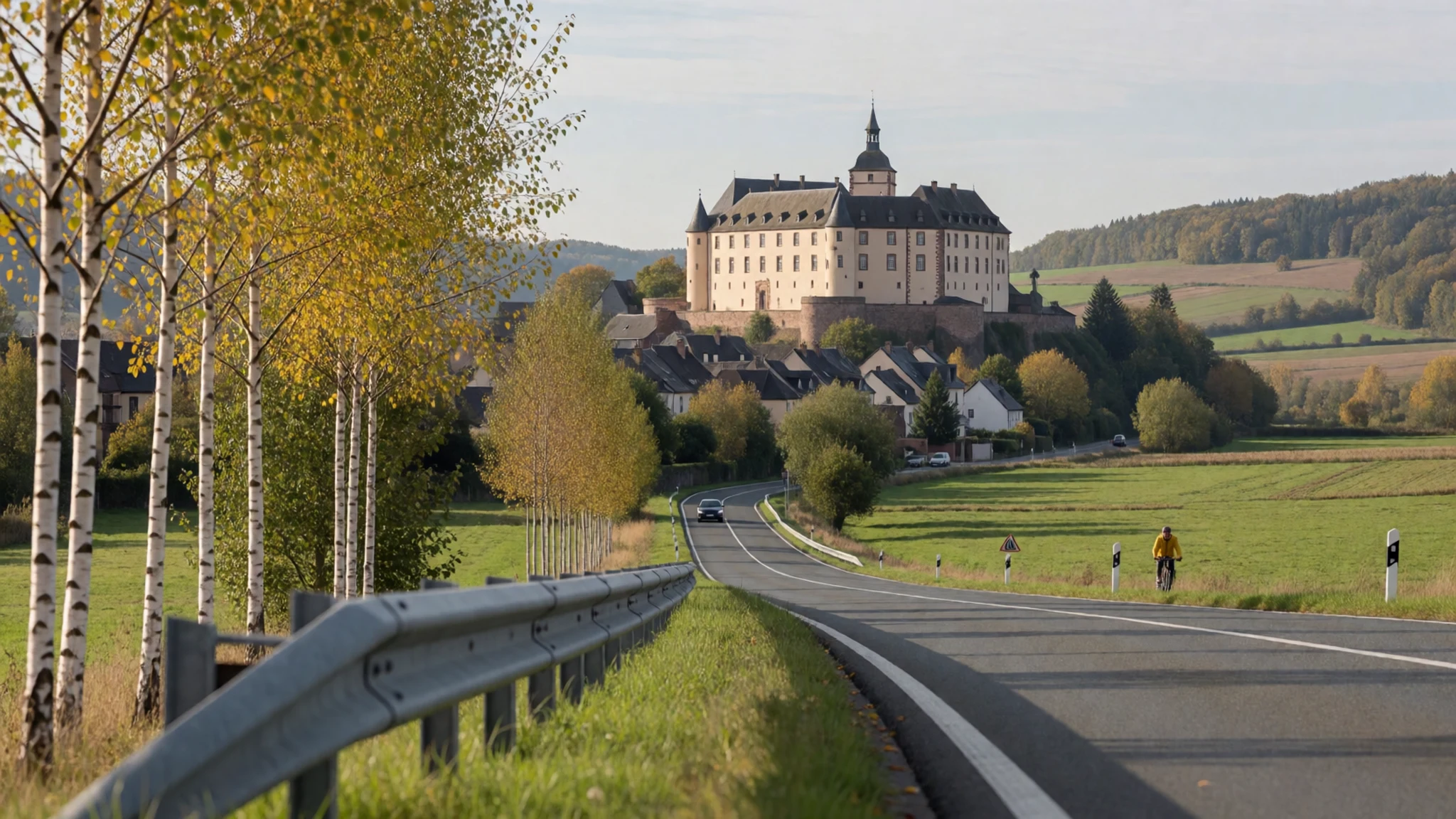
- View across the town rooftops — Edge of Colmar-Berg
Open ground at the edge of Colmar-Berg gives a wider picture, with the castle rising behind village roofs and gardens. It shows the scale of the place well: a large house, but set in an ordinary small town rather than behind city walls. Bring a zoom lens if photographing, and keep to public paths and lanes.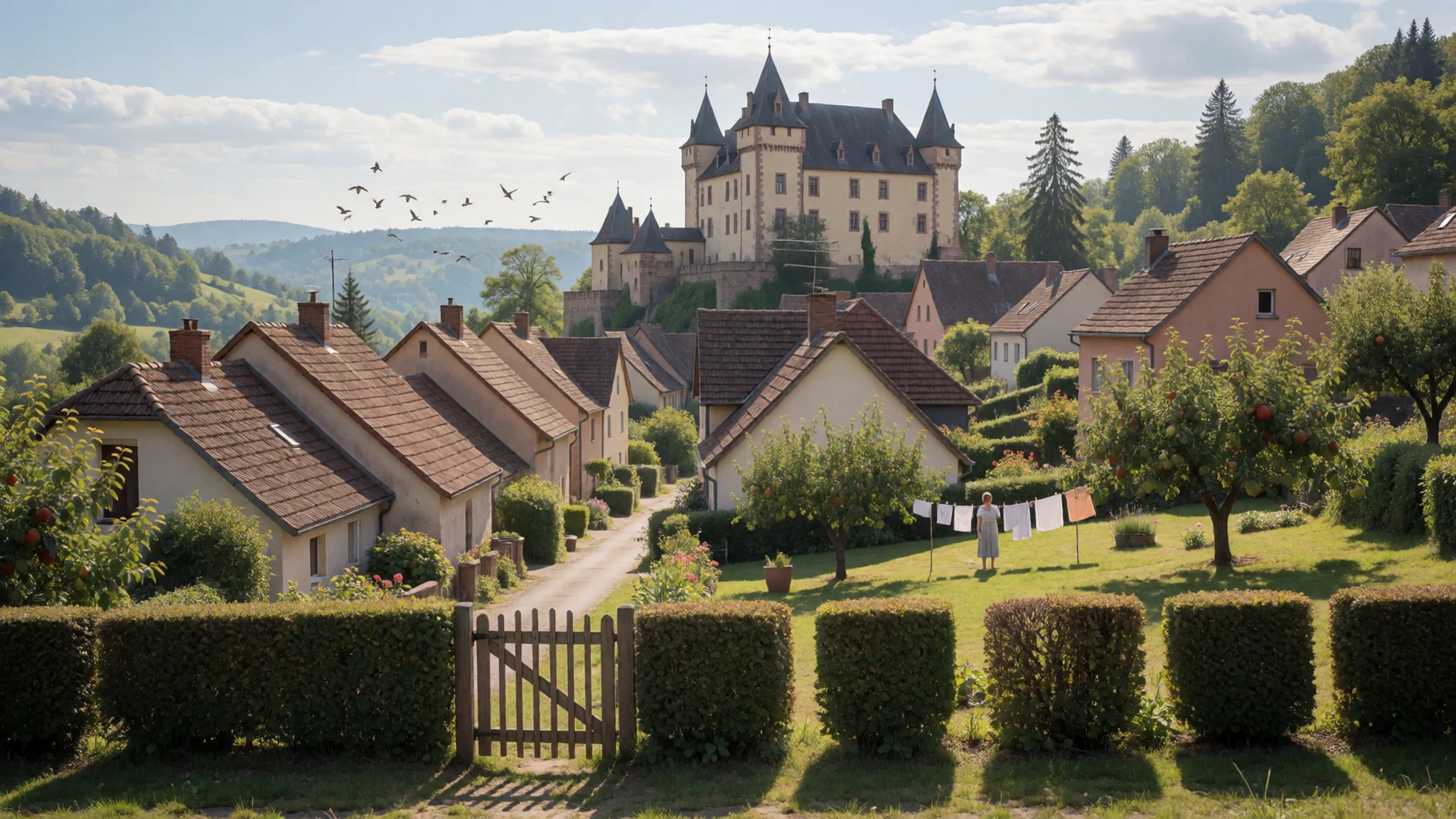
- Where the Alzette meets the Attert — Riverside meadows near Colmar-Berg
Colmar-Berg sits where the Alzette is joined by the Attert. Both are modest rivers, and the meeting is quiet meadow and willow rather than a set-piece viewpoint, but it explains why the estate had water, pasture and woodland. Local lanes and the riverside make an easy half-hour walk, best in spring and early autumn.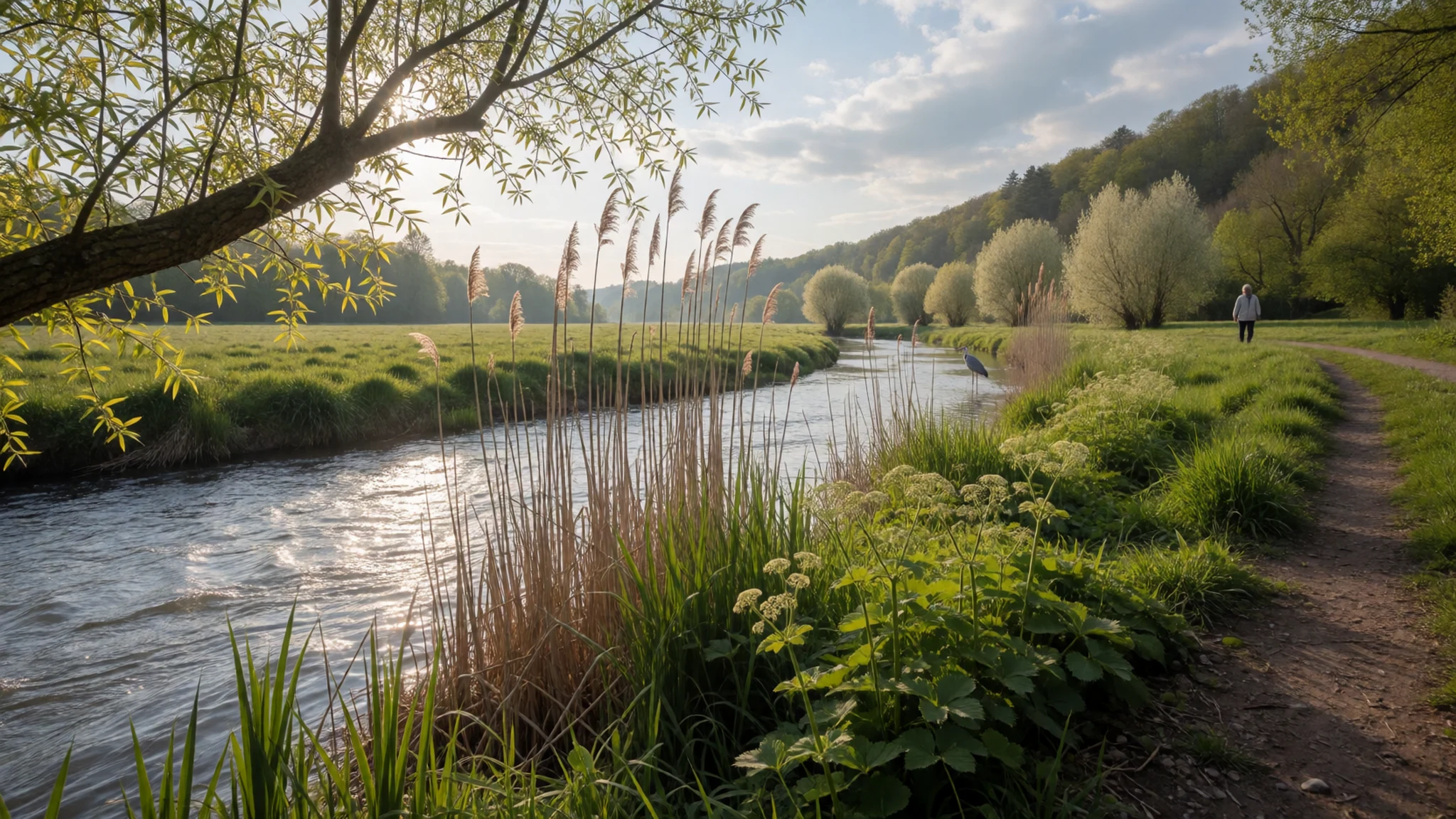
- Koekkoek's painting in Vienna — Kunsthistorisches Museum, Vienna
Barend Cornelis Koekkoek painted a Luxembourg landscape with Berg Castle in the view, and the work belongs to the Kunsthistorisches Museum in Vienna. Since he painted before the rebuilding of the castle, it shows the older house, a useful contrast with what stands today. Check the museum's official site to see whether it is on display.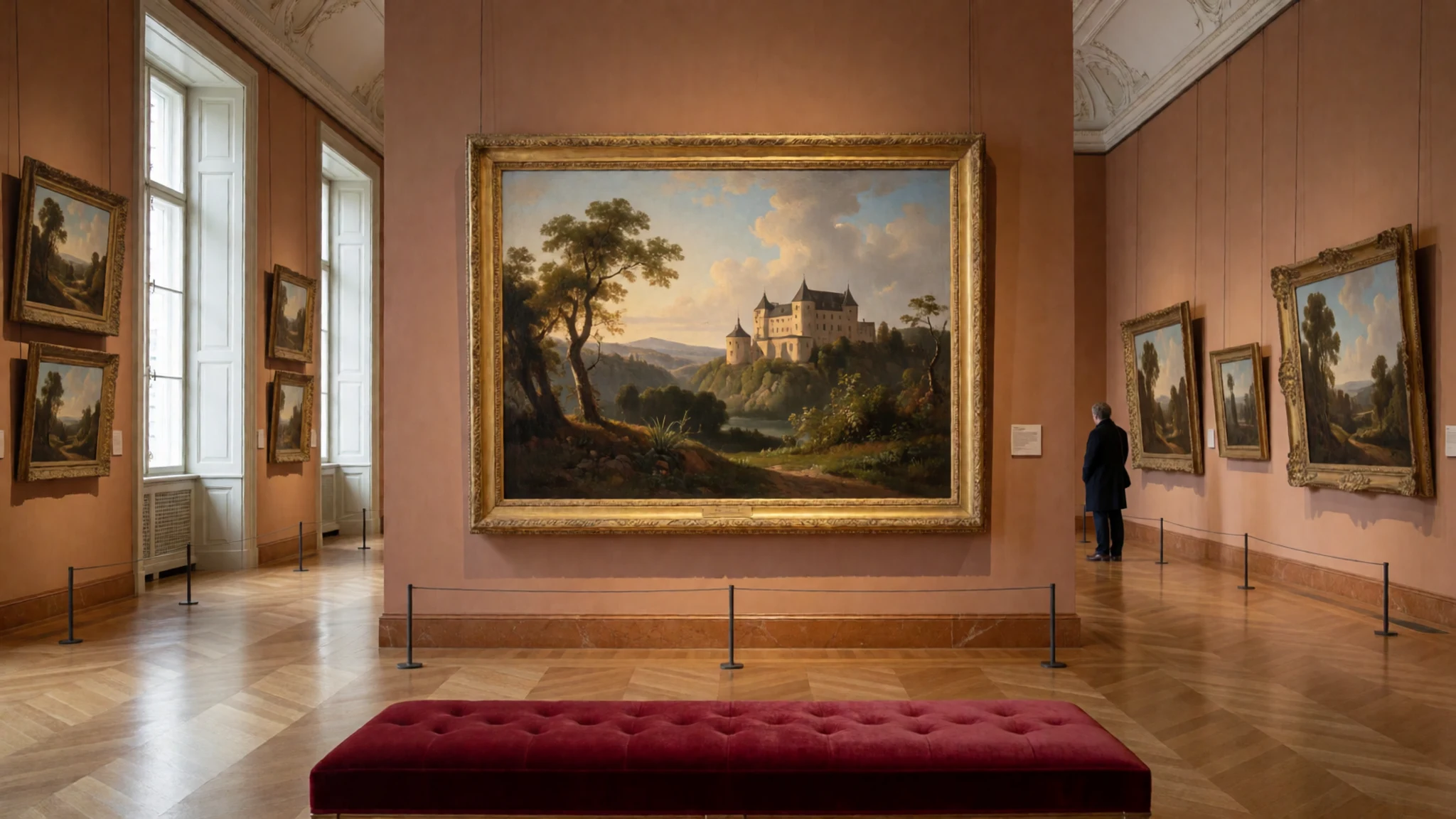
Culture
Culture at Berg Castle is really the culture of a constitutional monarchy living in a village. Luxembourg is a Grand Duchy, and the reigning Grand Duke's family lives at Fischbach Castle, while Berg is home to former Grand Duke Henri and Grand Duchess Maria Teresa, and the capital holds a second official residence. The arrangement is set out in the constitution, which is why the castle belongs to the state while the family has the right to live in it. Day to day, the royal presence is low-key, and the town carries on as an ordinary Luxembourg village. The big public moments happen elsewhere, mainly in Luxembourg City around National Day in summer, when the family appears at official events. Language is part of the culture too. Luxembourgish is the everyday tongue, French and German are used on signs, in schools and in the press, and many residents move between all three, plus English, without noticing. A greeting in Luxembourgish, Moien for hello, usually earns a smile. Catholicism shaped village life for generations, and church towers, wayside crosses and parish festivals still mark the calendar in the surrounding countryside. Remember that this is a family home with working staff, and respect for privacy is the unwritten rule: keep to public roads and paths, do not fly a drone over the grounds, and do not photograph the family or staff at the gates.
What to wear
Fashion around Berg Castle is a quiet story, because Luxembourg has no single national costume worn day to day. Rural dress of earlier centuries followed the wider pattern of north-west Europe: wool and linen, dark skirts and aprons, waistcoats and hats, all made for farm work. Folklore societies still bring such outfits out for parades and village festivals, and the court and military wear formal uniform and evening dress on state occasions in the capital. Everyday clothing now matches Belgium or northern France: neat, practical, mostly dark or neutral, with good coats and waterproofs doing most of the work. Office wear in the capital leans smart, while Colmar-Berg and the countryside are relaxed, with walking shoes and fleeces common. A visitor needs layers and a light waterproof in any month, since the climate is changeable and rain can arrive in any season. Winter is cold enough for a proper coat, hat and gloves, and summer days are often very hot, with July highs near 39 °C and August the wettest month. Comfortable shoes matter more than anything: pavements and lanes are easy, but a walk by the rivers or through the hills can be muddy. There is no dress code for looking at the castle from outside; churches and any official ceremony call for tidy dress with shoulders and knees covered.
What to eat
- Judd mat Gaardebounen — Traditional restaurants and village inns across the Grand Duchy
Smoked collar of pork served with broad beans in a creamy sauce, usually with boiled potatoes. It is a staple of Luxembourgish menus, hearty and salty, and best taken as a proper lunch before a walk along the river.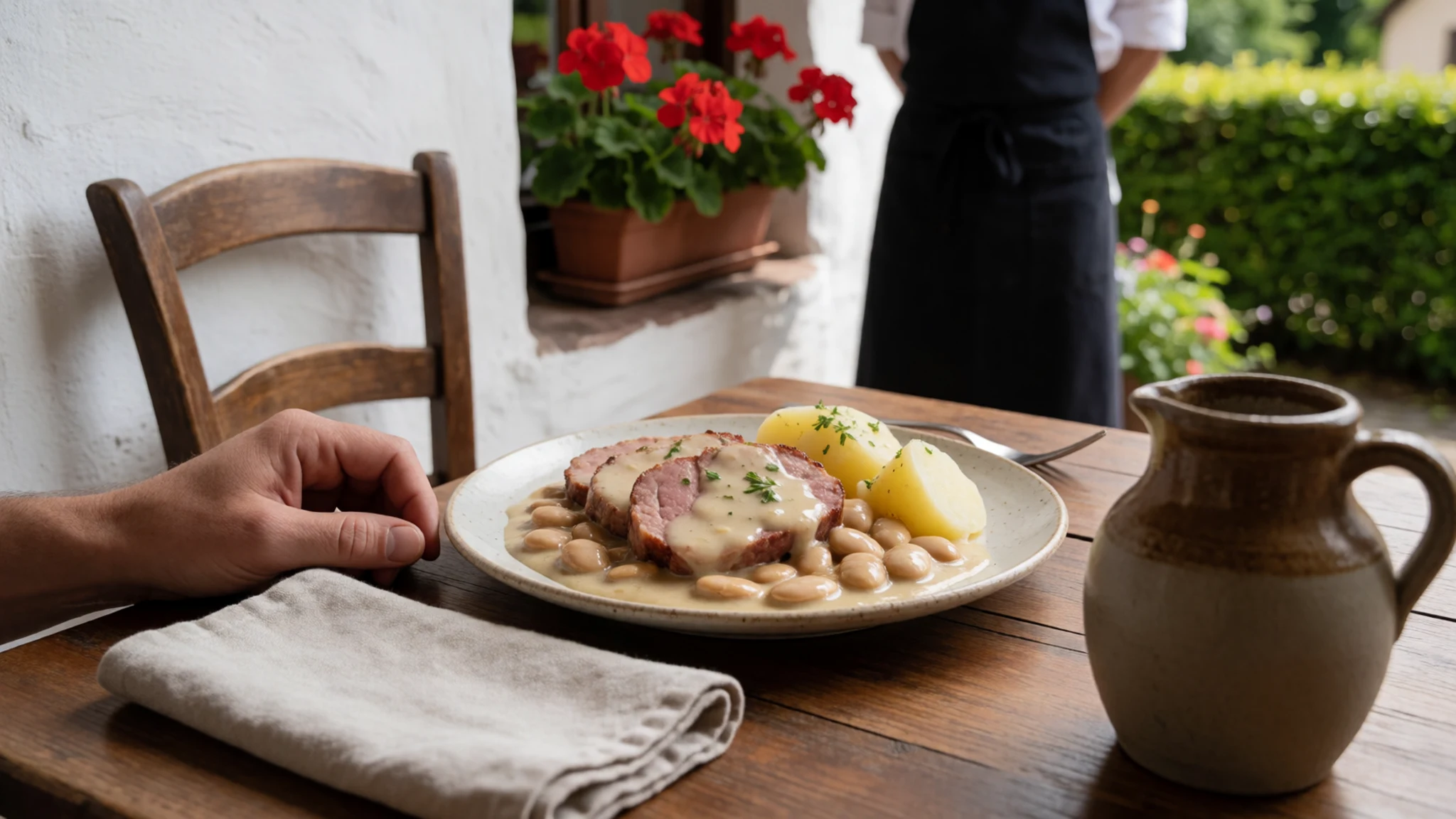
- Bouneschlupp — Village inns and cafés serving a lunchtime set menu
A green bean soup thickened with potato and flavoured with bacon and onion. It is plain, filling cooking from farm kitchens, and a sensible choice on a cool or wet day in the countryside.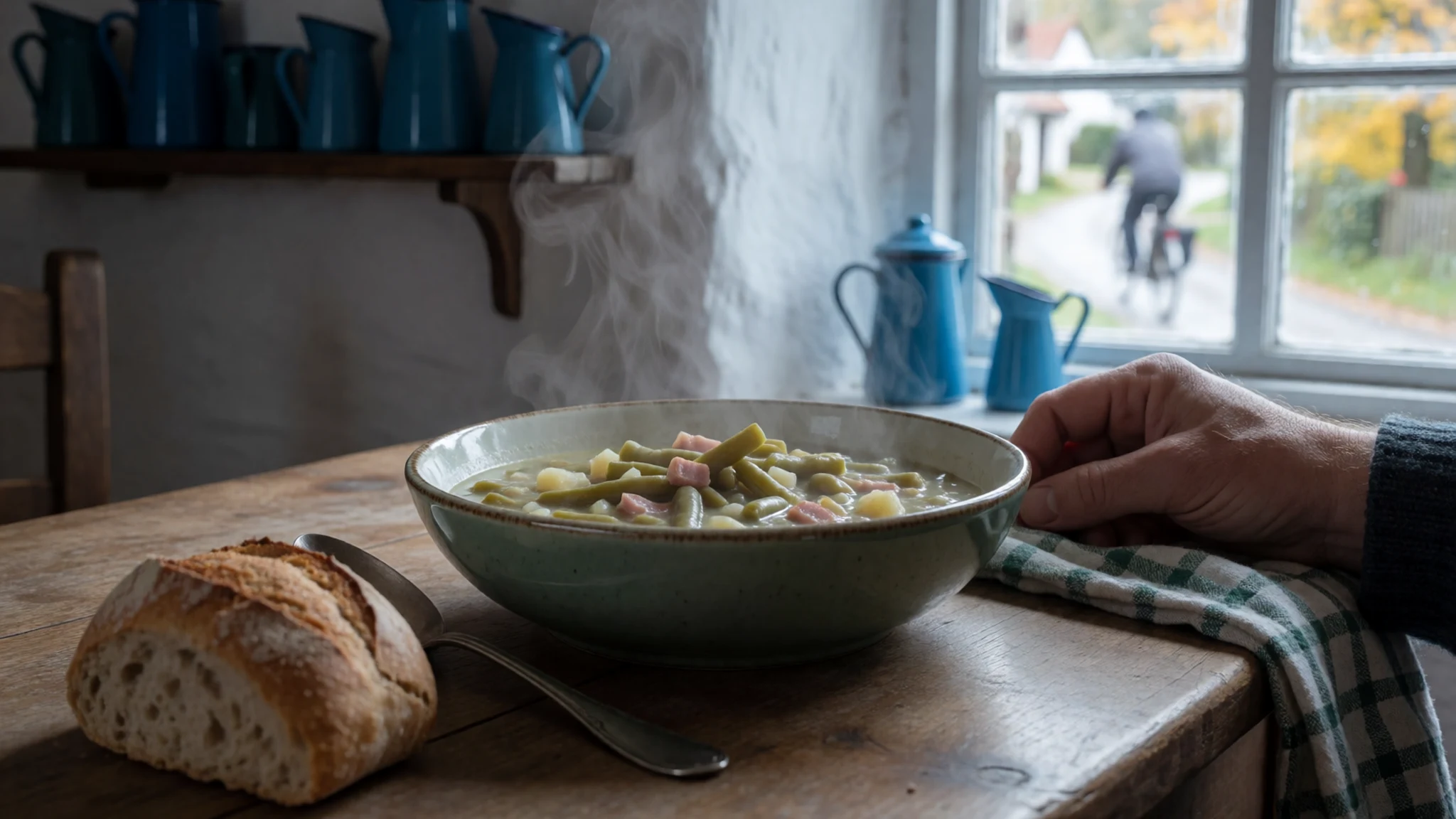
- Gromperekichelcher — Fairs, village festivals and Christmas markets
Crisp fried fritters of grated potato, onion and parsley, often eaten with apple sauce or smoked fish. They are fair food, eaten standing and still hot from the pan, and taste best in cold weather. - Kniddelen — Traditional restaurants and family-run eateries
Soft flour dumplings, usually served with bacon and a cream sauce, sometimes alongside smoked pork. The dish is heavy but comforting, and similar to dumplings from neighbouring Germany and Belgium. - Quetschentaart — Bakeries and pâtisseries in towns and villages
A tart of purple plums baked on a thin base, eaten in late summer and autumn when the fruit is ripe. It is tart rather than sugary, and pairs well with coffee after a morning's walking.
Plan it
Best time. April–May and October, when days are mild, the countryside is green or turning, and the walking is pleasant. Winters are cold and grey, and rain can fall in any month.
How long. 1
Getting there. Fly to Luxembourg Airport (Findel), then take a train from Luxembourg City on the northern line towards Ettelbruck to Colmar-Berg station. The last leg is a short walk into town.
Budget. mid
Tips
- Treat the castle as a view from outside; it is a private residence, so check the Grand Ducal Court's official site for any open days
- Combine it with Luxembourg City or a river walk, as Colmar-Berg alone fills only a short visit
- Pack a light waterproof, as weather changes quickly in any season
- Carry a little cash for village cafés, though cards are widely accepted
- Check current rules and timetables for local trains and buses before you travel
Etiquette
- Keep to public roads and paths and respect the boundary of the grounds
- Do not fly drones near the castle or photograph staff and family at the gates
- Greet people with Moien or a polite bonjour in shops and cafés
Nearby
Sources
- Wikidata Q615735 (CC0)
- Wikipedia: Berg Castle (rev 1364372685) (CC BY-SA 4.0)
- Wikivoyage: Luxembourg (CC BY-SA 4.0)
- Residenz der Grossherzoglichen Familie, Viatoris (CC BY 3.0)
- Berg and Castle Berg seen from the N7, MMFE (CC BY-SA 4.0)
- Berg Castle (Luxembourg), unknown author (Public domain)
- Plate with Berg Castle decoration, Antoine Jans (CC0 1.0)
- Luxemburgische Landschaft mit Blick auf Schloss Berg, Barend Cornelis Koekkoek (CC BY-SA 4.0)
- Berg Castle, Ernmuhl at lb.wikipedia (CC BY 3.0)
- Berg and Castle Berg seen from the N7 (2), MMFE (CC BY-SA 4.0)
- Bléck op d' Schlass vu Colmer-Bierg, Jwh (CC BY-SA 3.0 lu)


