Echternach
Echternach, Luxembourg
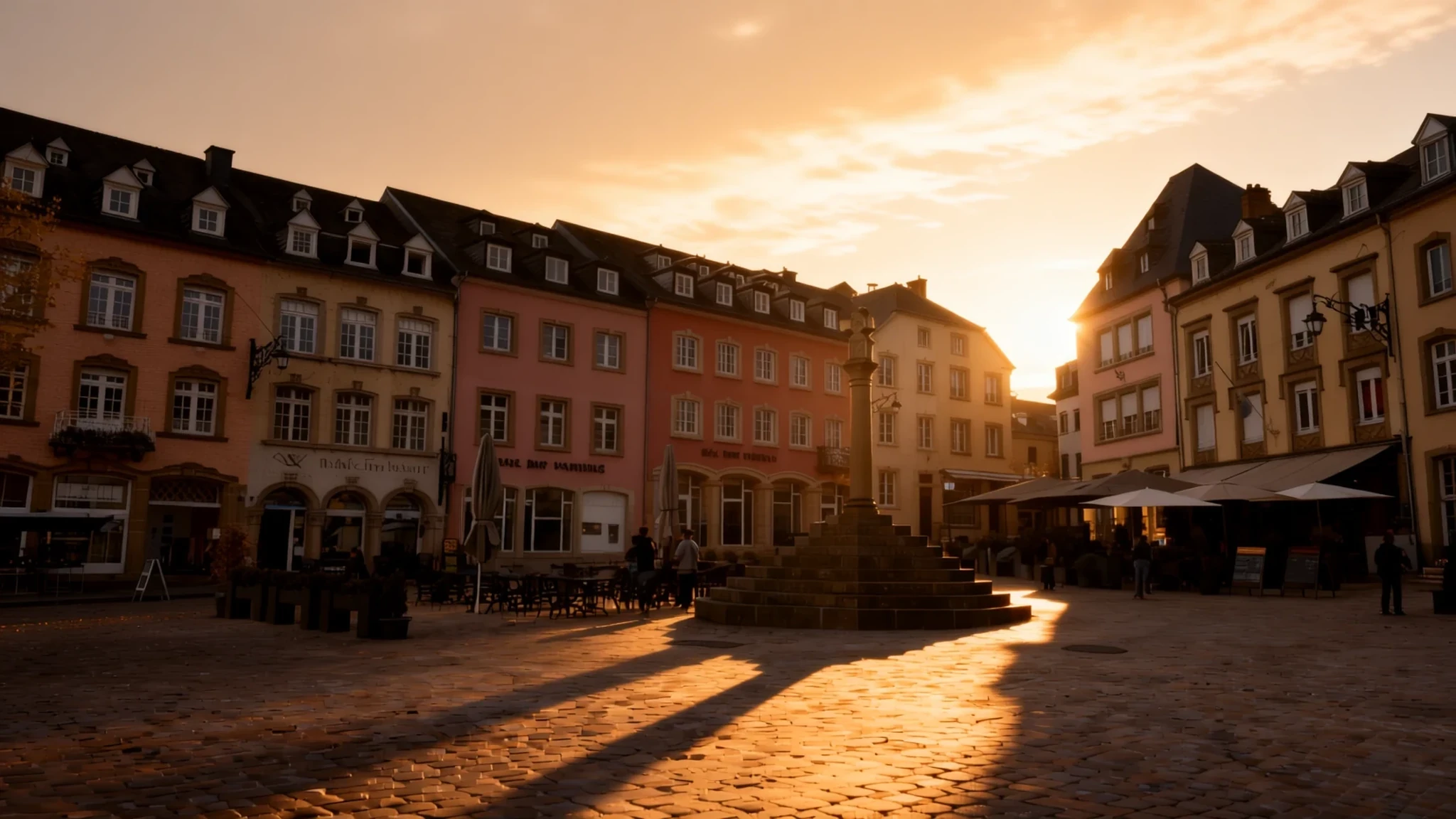
Echternach is a small Luxembourg border town where a medieval abbey, river walks and a hopping Whit Tuesday procession still set the pace.
The place
Echternach sits in eastern Luxembourg on the River Sûre, which German speakers call the Sauer, with the far bank already in Germany. The town is small and compact: a market square, a basilica raised on old abbey ground, and pieces of medieval wall with a watchtower still standing. Behind the roofs the land rises into sandstone gorges and beech woods called the Müllerthal, nicknamed Little Switzerland, though the relief is gentle and the paths are forest tracks. The river is the true boundary. Bridges and a former customs house recall a working border, and people still wander over to the German villages opposite for an afternoon. Street names in French, German and Luxembourgish sit side by side, which is also how speech works here: French in many offices, German often in shops, Luxembourgish at home. Summer brings day-trippers from Luxembourg City and from Trier into the woods; winter leaves the same lanes quiet under low grey cloud. The pleasure of Echternach is that small scale — a bakery, a square, the sound of water — rather than a long catalogue of monuments. It is a place for walking and for watching how a border town actually lives. Cafés spill onto the paving when the sun is out, and the basilica bells carry across a centre that can be crossed without hurry.
Its story
Echternach's story is bound to St Willibrord, the Anglo-Saxon missionary who founded a monastery here and became the town's patron saint. The abbey grew into an important religious house of the region, with a scriptorium whose books were copied and carried far beyond the valley. The basilica visitors see now stands on that same sacred ground as a Romano-Gothic church, with Willibrord's tomb still in the crypt, so the stonework mixes survival with later repair. Around the abbey a walled market town took shape on the river, with ramparts, a watchtower and a justice cross that marked civic authority. Devotion to Willibrord produced the dancing procession: on Whit Tuesday, rows of people hop in step through the streets to a traditional melody, a practice that still draws participants from Luxembourg and from the German districts next door. Trade and farming carried ordinary life between those feast days, and the river crossing made Echternach a border post as well as a shrine. The former customs office belongs to that later chapter, when the Sûre was a line to be checked. The abbey was rebuilt in Baroque style in 1737 and the church sacked in 1794; the Second World War struck the town and the old streets hard, which is why so much that looks medieval has been pieced back together. The town's pride is in keeping the procession and the saint's name alive, not in claiming the fabric is untouched.
What to see
- St Willibrord Basilica — historic centre
Echternach's basilica stands on the ground of the old abbey and is dedicated to St Willibrord. The interior is bright and relatively plain after repeated rebuilding, and the saint's cult is still why most people step inside. The west front closes a side of the historic centre. It is a working church as well as a monument, so a service may be under way.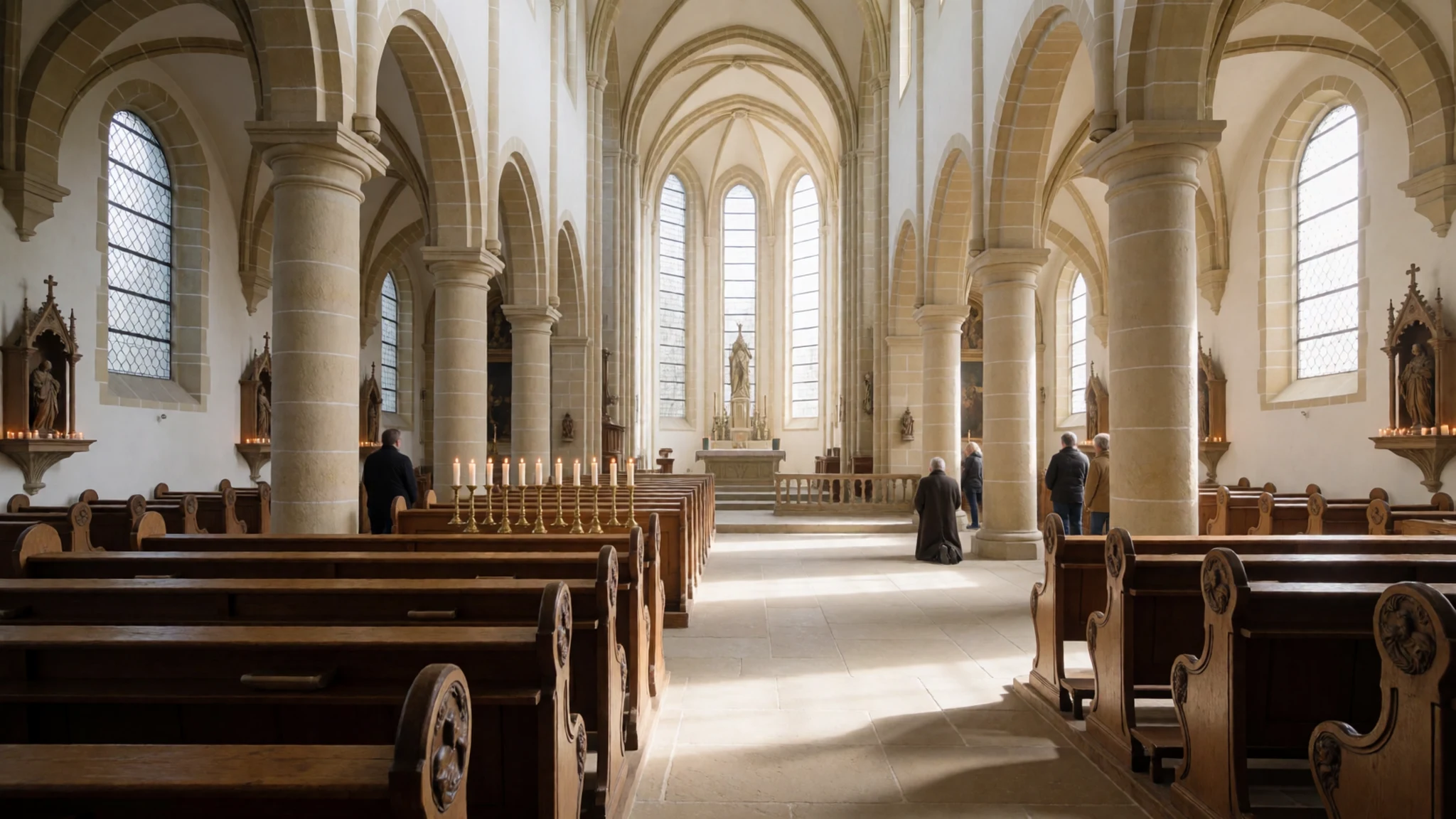
- Town walls and eastern watchtower — southern and eastern edge of the old town
Echternach keeps stretches of its medieval town wall, clearest along the southern edge, and an eastern watchtower that once looked along the rampart. The stone is low, and houses have grown up against it in places, so this is not a complete circuit. The tower shows how small and enclosed the old town was. It reads as a fortified market as well as an abbey town.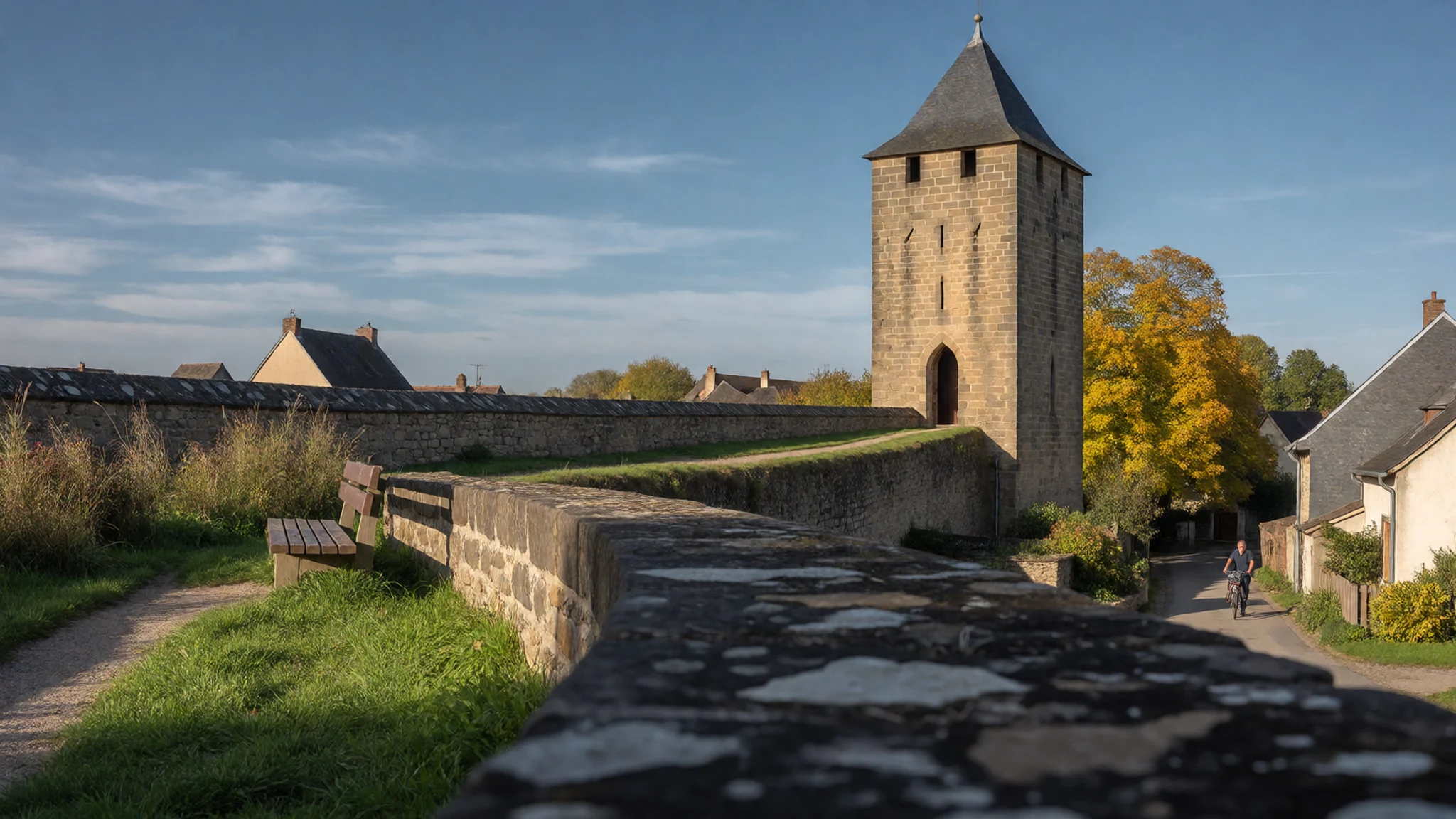
- Justice cross — old centre
The justice cross in Echternach is a stone marker of the town's old legal life, set in the open near the historic centre. It is easy to miss beside the basilica and the wall, yet it belongs with the town hall and the ramparts. The carved stone is the whole exhibit. The cross shows a self-governing little town, not only a monastery gate.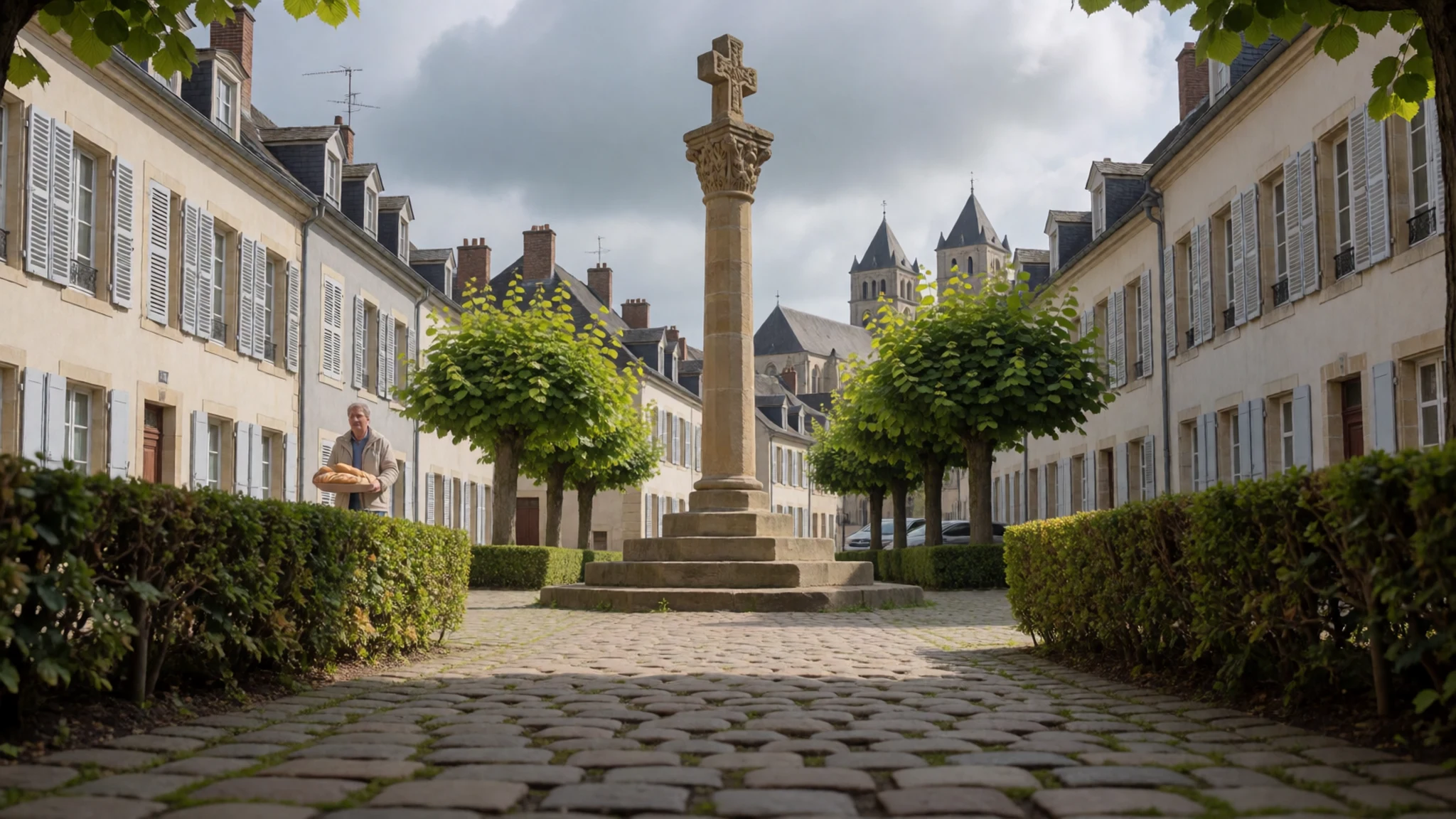
- Chapel on Rue de la Chapelle — Rue de la Chapelle
The chapel on Rue de la Chapelle is a small devotional building in Echternach, on a side street off the skyline. Beside the basilica dedicated to Willibrord, quieter chapels of this kind served everyday prayer. When the door is open the room is plain, with none of a treasury's display. The lane is part of the visit: a residential street where worship sat next to ordinary houses.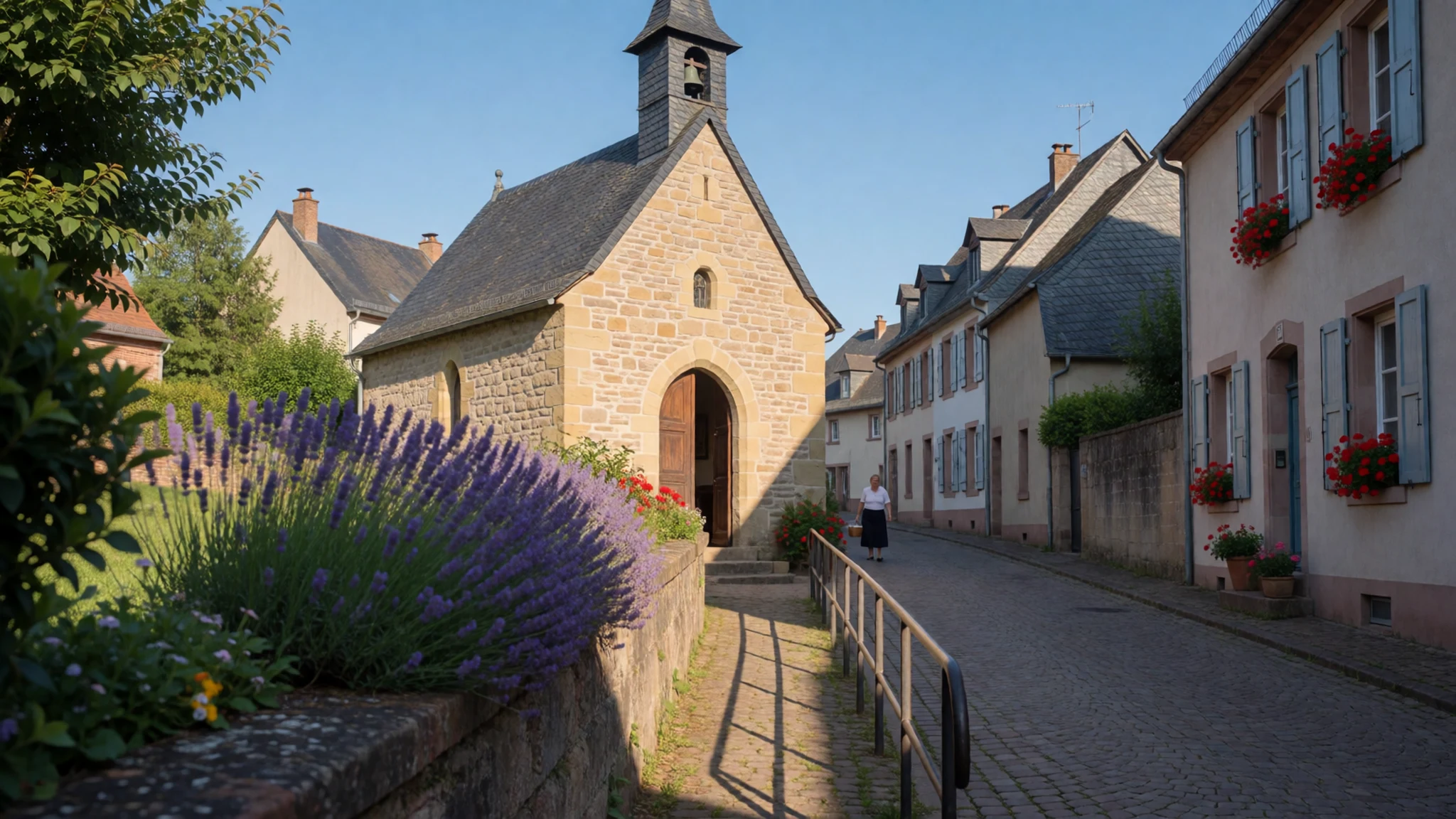
- Town hall — market square
The town hall of Echternach faces the centre with the front of a small civic building, more town house than palace. It is the secular counterpart to the basilica nearby, the place where the commune presents itself. The square in front is where markets, festival crowds and ordinary café life overlap. The façade and the paving show how the town gathers.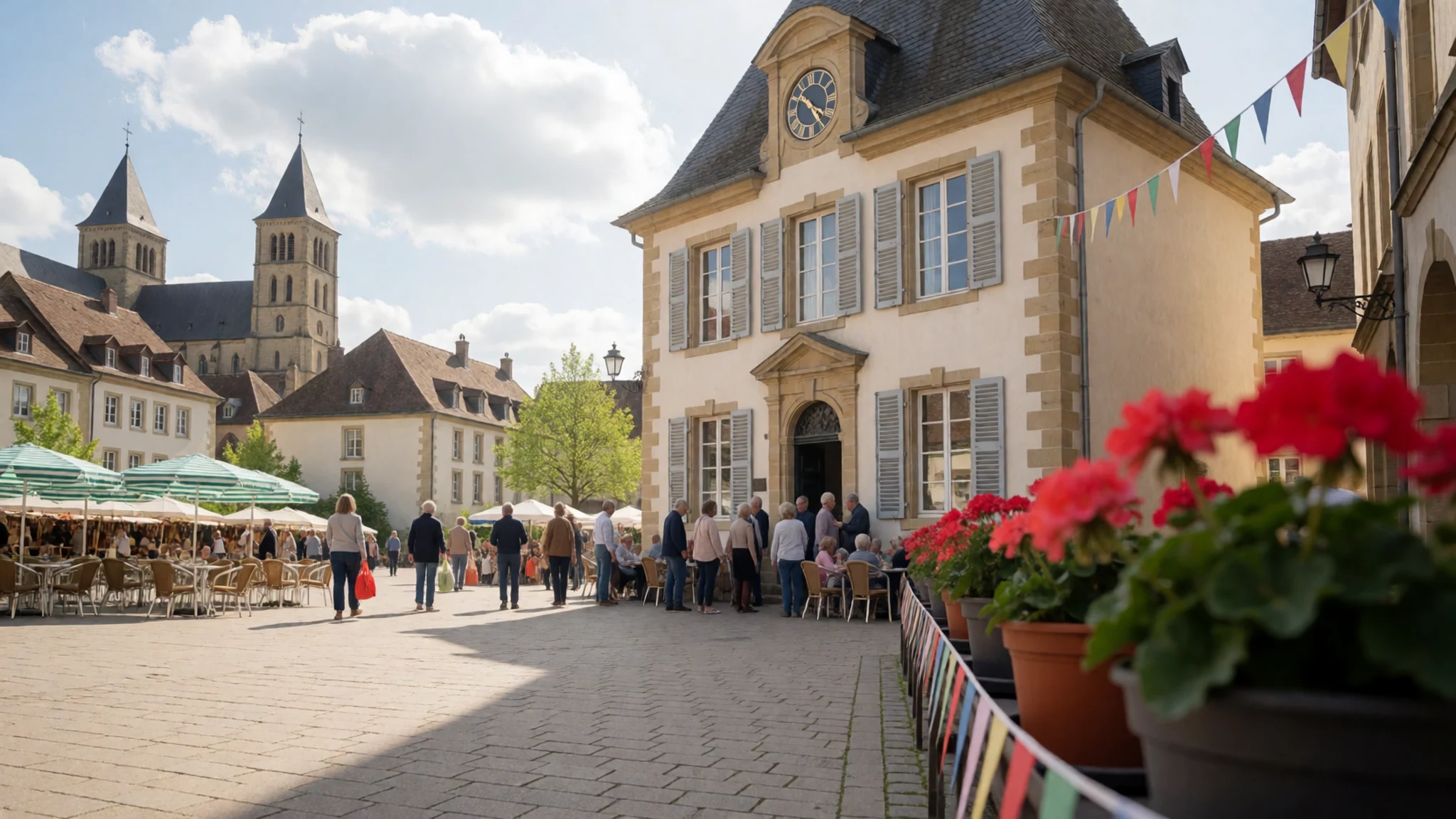
- Müllerthal — wooded hills east of town
The Müllerthal beside Echternach is a sandstone landscape of narrow gorges, beech woods and small streams, reached on foot from the edge of town. In Luxembourg this district is known as Little Switzerland; the nickname oversells the height and undersells the paths. Waymarked trails run between rock walls and wooden footbridges. The town is the usual base, with the woods as a day's walk and the square afterwards.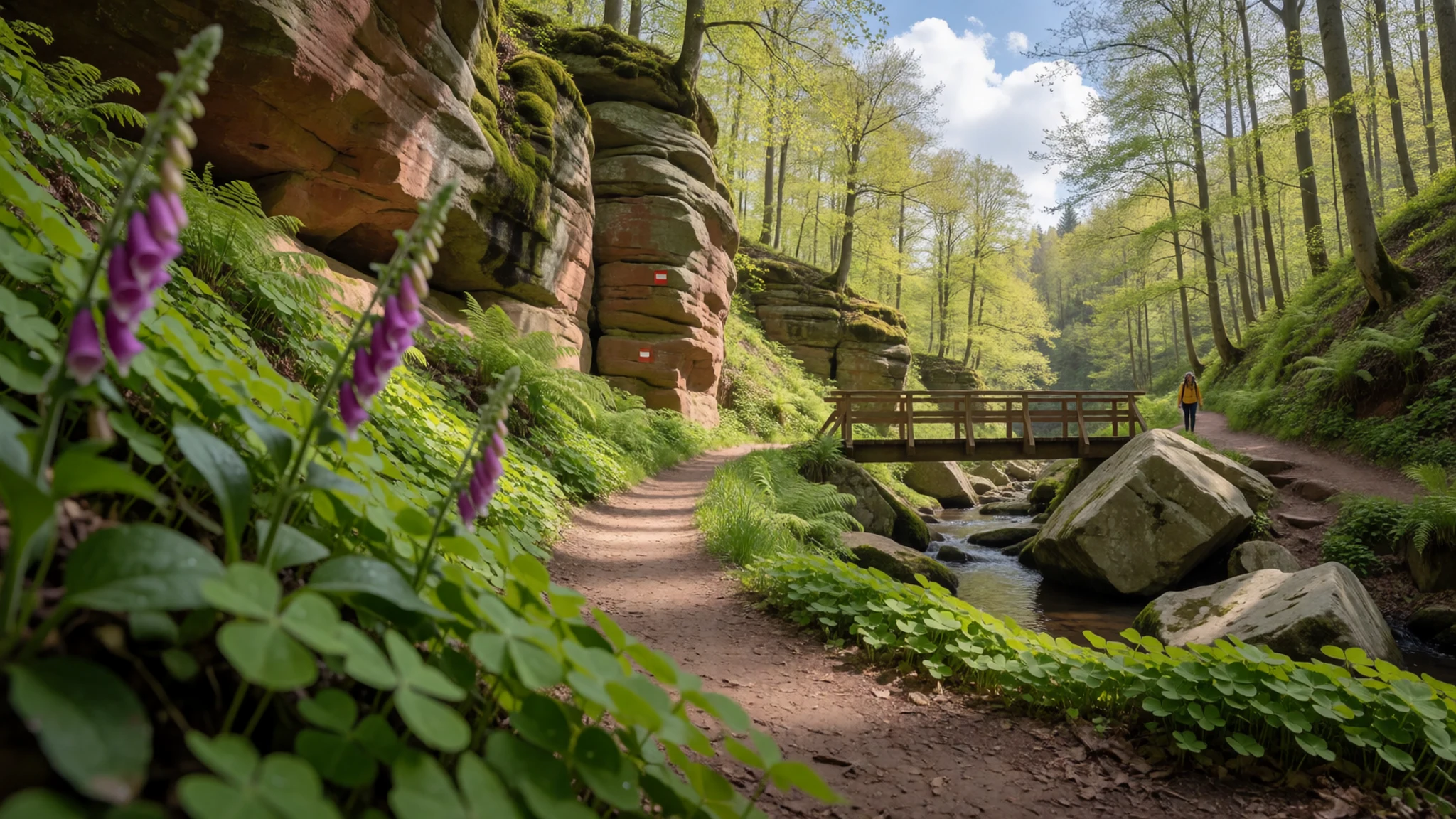
Culture
Echternach's culture is still organised around St Willibrord and the dancing procession on Whit Tuesday. Rows of pilgrims and residents move through the streets in a hopping step, in time to a slow traditional tune, heading toward the basilica. The hop is a votive act, not a stage show, and families come back for it year after year. Outside that week the town feels like many small Luxembourg communes: music in the church, a fair on the square, and a habit of crossing the river for errands or a meal in Germany. Language is part of daily culture. A conversation may move from Luxembourgish to German to French without a formal switch, and a greeting in any of them is enough to start. Pride in the old abbey as a home of learning still surfaces in how the town talks about itself, even though that library is long dispersed. Cafés on the square fill before the procession and empty onto the route when the music starts; the rest of the year they are simply where neighbours meet. On Whit Tuesday, stay on the pavement, do not break a row, and ask before you photograph participants' faces.
What to wear
Echternach does not dress up for ordinary weekdays. Traditional Luxembourgish festive dress — dark full skirts, embroidered bodices, lace caps and white blouses for women, and dark suits with a waistcoat for men — appears at folklore events and in old photographs, not in the bakery queue. The cloth was wool, linen and cotton, with embroidery as the decorative note, and that costume is no longer what people wear to work. What people wear in Echternach today matches Luxembourg City or Trier: jeans, trainers, raincoats, and a smarter jacket when the occasion asks for it. On Whit Tuesday many procession participants choose white shirts and dark trousers so the rows look uniform, though there is no single compulsory costume. A visitor should pack for changeable oceanic weather and for walking. Layers, a waterproof and shoes with grip matter more than formal clothes, because the Müllerthal paths are rocky, rooty and often wet. In the basilica, covered shoulders and quiet shoes are the right choice; beachwear and club clothes look out of place. Cobbles in the centre are hard on thin soles.
What to eat
- Judd mat Gaardebounen — brasseries on or near the market square
Judd mat Gaardebounen, smoked pork collar with broad beans, turns up on Echternach brasserie menus with boiled potatoes. The meat is salty, the beans soft, and the plate suits cool weather. Look for it at a traditional eatery on or near the market square, not at a snack counter.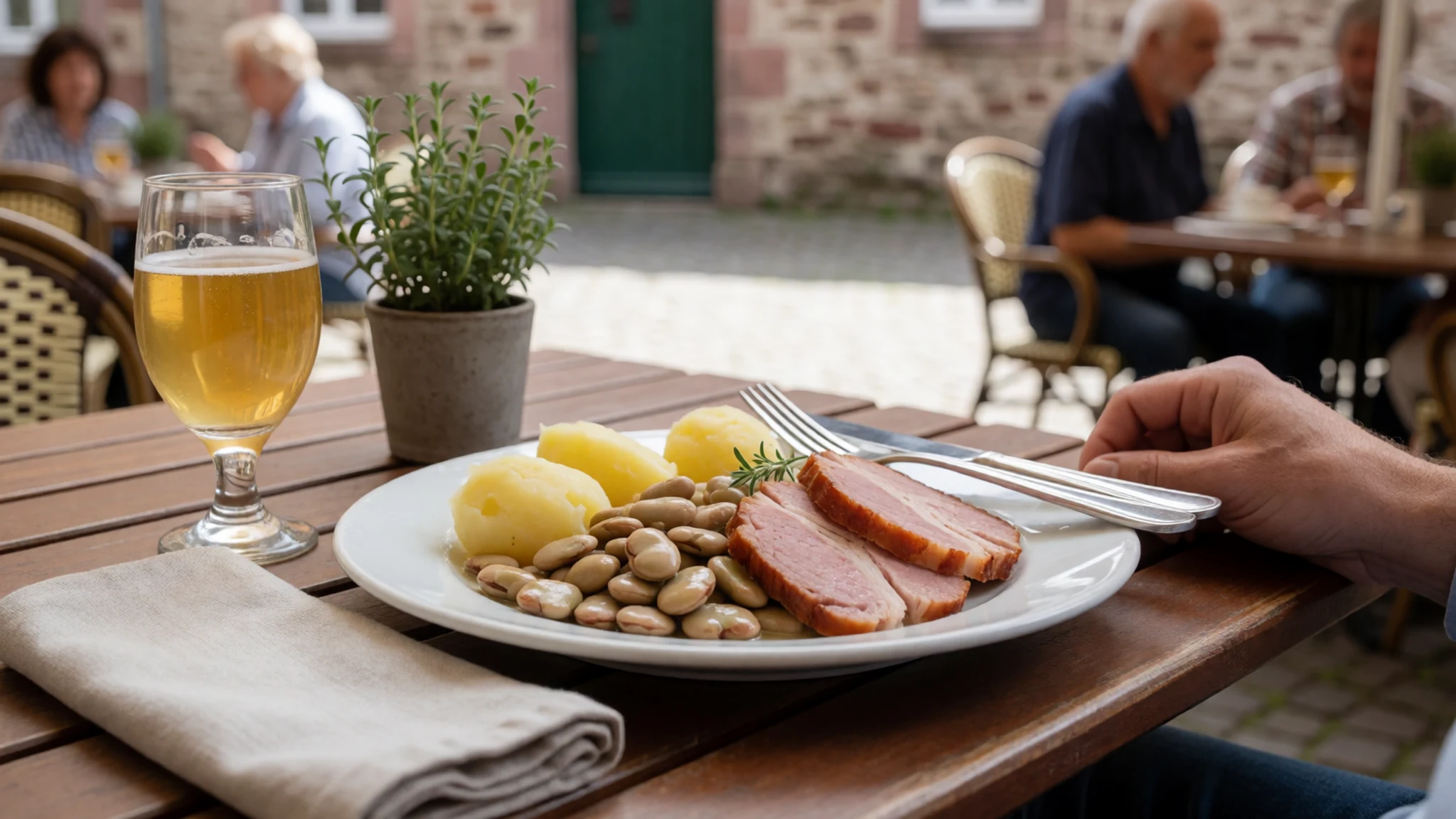
- Bouneschlupp — traditional restaurants in the centre
Bouneschlupp is a green-bean soup that Echternach kitchens serve with sausage and potato. It is everyday food, and it appears in simple eateries when the weather turns. A bowl with bread makes a light meal. Traditional restaurants around the centre are the place to ask.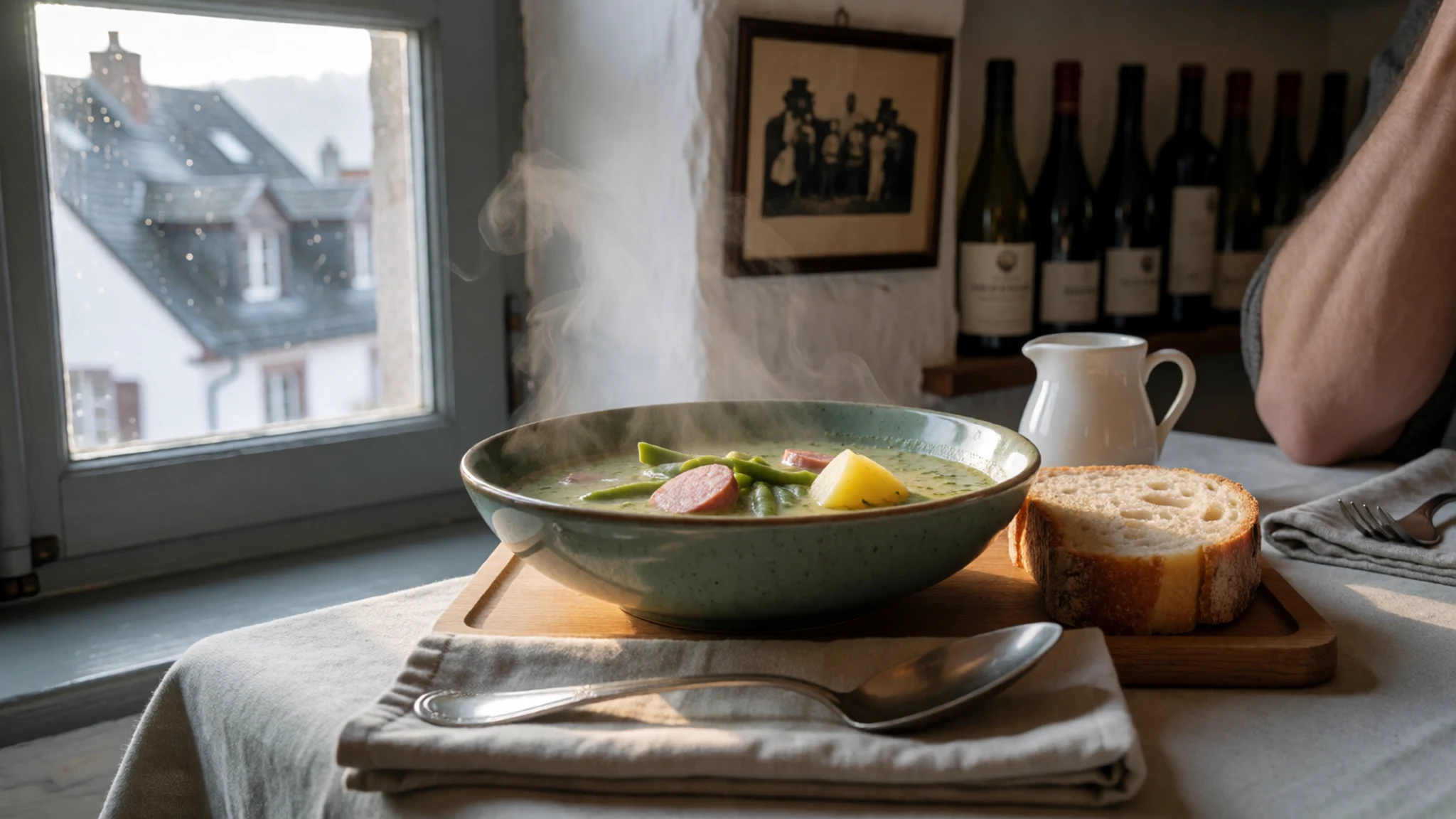
- Gromperekichelcher — fair and market stalls on the square
Gromperekichelcher are shredded-potato fritters, fried until the edges crisp, and sold hot at Echternach fairs and from snack stalls on procession days. They are eaten with the fingers, often with apple sauce. In town, look for them when a market or festival takes over the square. - Quetschentaart — bakeries facing the centre
Quetschentaart is an open plum tart that bakeries in Echternach sell in season, when the local plums are ripe. The fruit sits on yeast or short dough and bakes until the edges jam. Buy a slice from a bakery facing the centre. - Moselle crémant and Riesling — wine bars and brasseries around the square
Crémant and still Riesling from the Luxembourg Moselle are poured in Echternach even though the vines lie to the south. Elbling, Auxerrois and Pinot also show up on cards. A glass marks an ordinary meal. Wine bars and brasseries around the square are the place to order. - Kachkéis — brasseries in the old centre
Kachkéis is a strong cooked cheese that pubs in Echternach serve warm, with mustard, bread and a gherkin. The smell announces it before the plate arrives. It is salty sharing food and sits well with a beer. Brasserie boards in the old centre are where to ask.
Plan it
Best time. May and June for Whit Tuesday and long evenings in Echternach; July is the hottest month and December the wettest, while April and October are the most comfortable for the gorges. High summer brings more day-trippers from Luxembourg City and Trier, and winter is quiet, grey and cold.
How long. 2–3
Getting there. Luxembourg Airport is the usual arrival point for Echternach, with a bus connection onward; the town has no railway station, so the last leg from Luxembourg City is by bus. Trier, on the German side of the border, is the other useful hub, linked by cross-border bus.
Budget. high
Tips
- Book a room early if Whit Tuesday is the aim; Echternach is small and fills for the procession.
- Begin gorge walks early in the day, before coach parties reach the Müllerthal car parks.
- Pack a waterproof; the woods hold damp air even when the square looks dry.
- Walk from the market square; the old centre is compact and a car is a nuisance inside it.
- Ask the tourist office about procession-day closures, since no official timetable is given here.
Etiquette
- Do not step into a moving row of the dancing procession.
- In the basilica, cover shoulders, remove hats, and keep phones silent.
- Ask before you photograph participants in the procession.
- Speak quietly in the chapels; they are still used for prayer.
Nearby
Sources
- Wikidata (CC0)
- Wikipedia: Echternach (CC BY-SA 4.0)
- Wikivoyage: Echternach (CC BY-SA 4.0)