Luxembourg
Luxembourg, Luxembourg
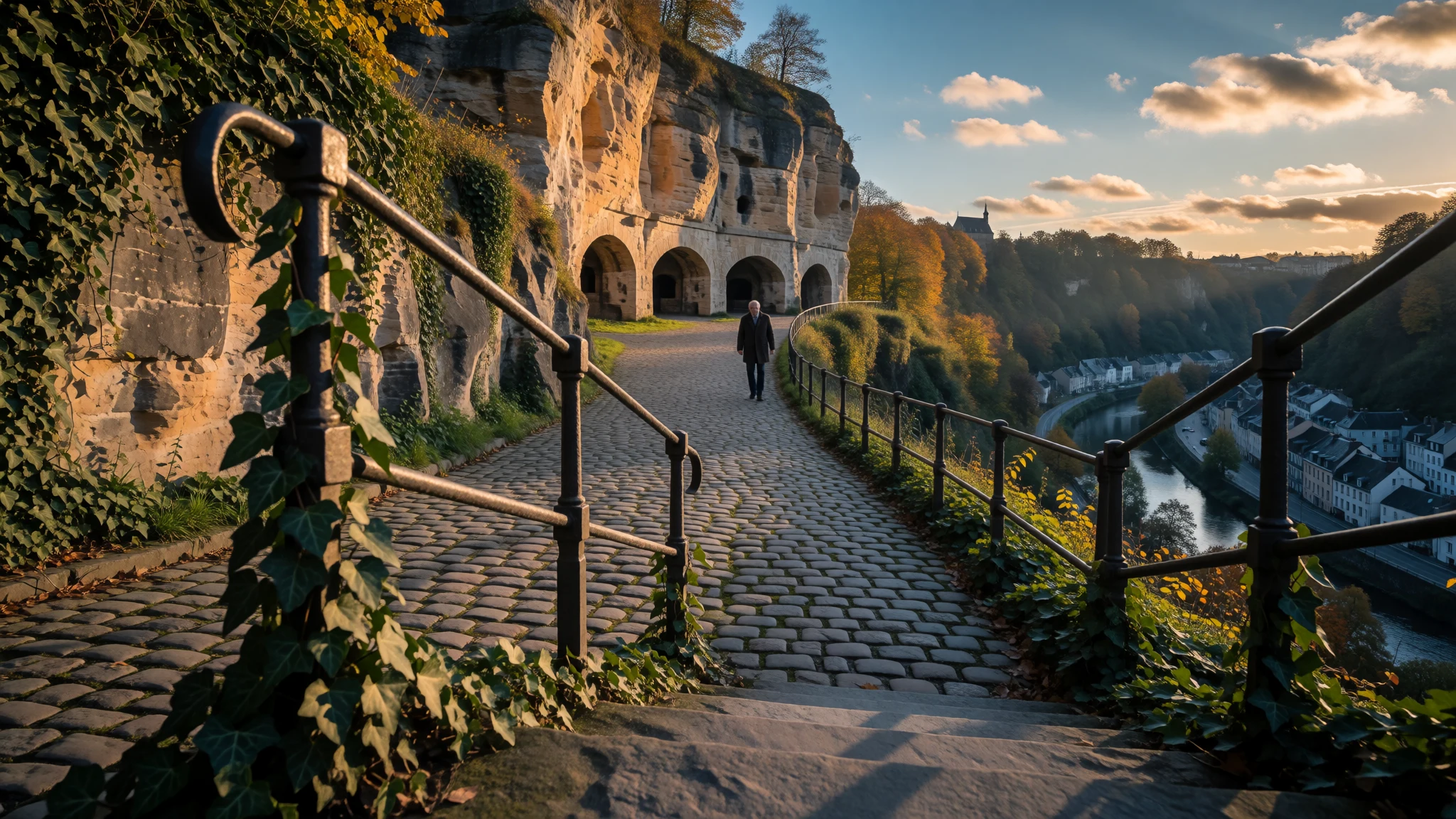
Luxembourg is a small, walkable capital built on cliffs and river valleys, where old fortress walls, quiet gardens and modern European business sit side by side.
The place
Luxembourg, the capital of the Grand Duchy of the same name, sits where the Alzette and Pétrusse rivers meet, in the south of the country and close to the middle of Western Europe. The old centre stands on a rocky plateau about 300 m above sea level, while deep, wooded valleys cut around it, so the city is arranged in layers: the upper town with its squares and government buildings, and the lower quarters such as the Grund, Pfaffenthal and Clausen beside the water. Bridges, lifts and steep paths link the levels, and walking between them is the best way to understand the layout. With a population of 137,678, it is small for a capital, yet it feels busy on weekdays because banks, European institutions and administrative offices draw workers in from across the borders. Foreign residents outnumber Luxembourgers inside the city, and many nationalities live side by side, which shows in the languages heard on buses and in the range of eateries. The wealth of the country shows in tidy streets, good public spaces and well-kept parks rather than in display. Visitors should expect a compact centre, quiet evenings away from the main squares, and a contrast between medieval rock and the glass offices of the Kirchberg plateau to the north-east. Rain can arrive in any season, and the steps are many.
Its story
Luxembourg began as a fortress, and the rock still explains the city. Frankish settlers had already farmed and built in the Alzette valley, around places now called Pfaffenthal, the Grund and Dommeldange, long before anything grand rose above them. The turning point came in 963, when Siegfried of the Ardennes, a nobleman with ties to French and imperial royalty, swapped lands with the abbey of Saint Maximin in Trier and gained a small fort called Lucilinburhuc, on the rocky spot where the Bock stands today. He then began a larger castle on the Bock, the rocky promontory above the valley. That exchange is the date the city counts as its founding. A few decades later, in 987, the archbishop of Trier consecrated altars in a church that became St Michael's, a sign that the settlement was gaining a religious life beside its military one. Over the following centuries the position, on a crossing of routes and with cliffs on most sides, made Luxembourg a prize that passing powers wanted to hold. Each new ruler strengthened the defences, and the military engineer Vauban left a strong mark on the works. In the 18th century the underground galleries known as the casemates were cut into the rock. Much of the fortress has since gone or lies in ruins, but surviving walls, tunnels and valley-bottom quarters still show how the stronghold worked.
What to see
- The Bock — Upper town, east side
The Bock is the rocky headland where Siegfried began his castle after 963, and the city grew out from here. Little of the first stronghold survives, but the ruined walls and towers around it show later fortress-building, including work by Vauban. The edge gives wide views down into the Alzette valley and the Grund below.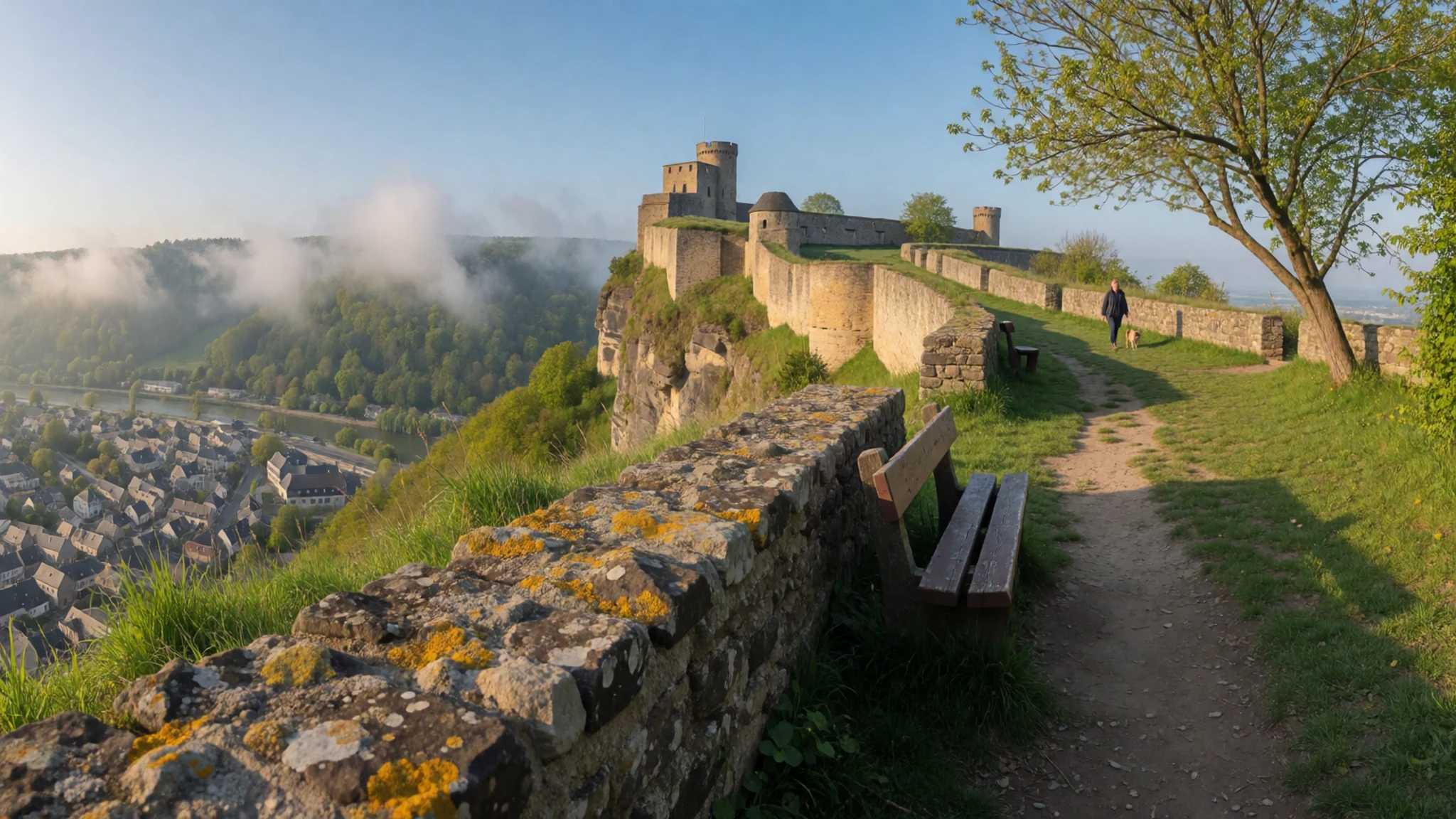
- Bock Casemates — Beneath the Bock
The Bock Casemates are a maze of tunnels and galleries cut into the cliff in the 18th century to shelter troops and guns. Walking through them is cool, dim and a little claustrophobic, with openings that look straight out over the valley. Check the official city site for opening times and ticketing before going.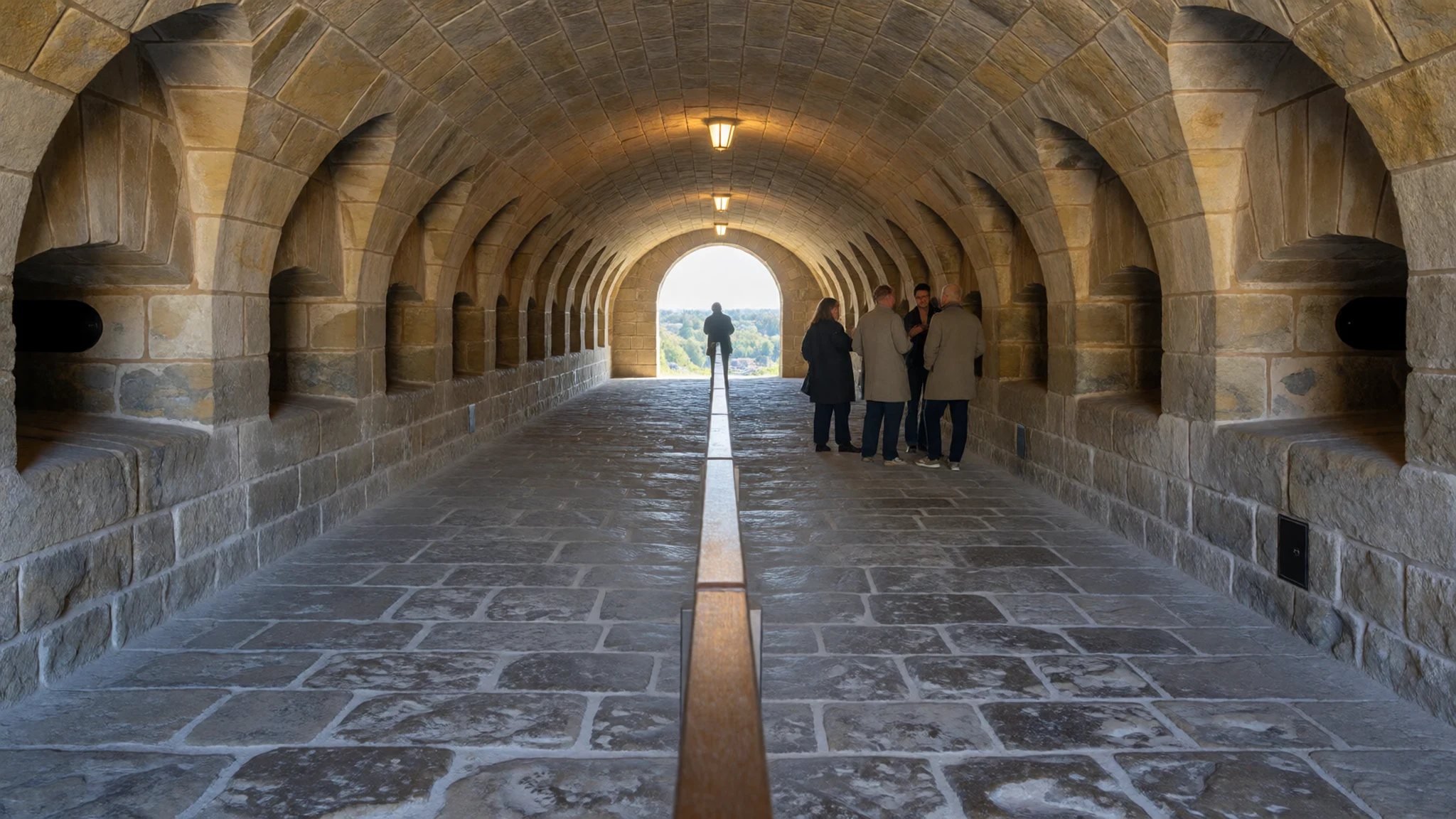
- St Michael's Church — Old town, near the Fish Market
St Michael's Church stands near the Fish Market on the site of the church whose altars were consecrated in 987. Its present form is later, and it was restored in recent decades. It is small and plain beside the cathedral, which makes it a calm stop between the Bock and the old town squares.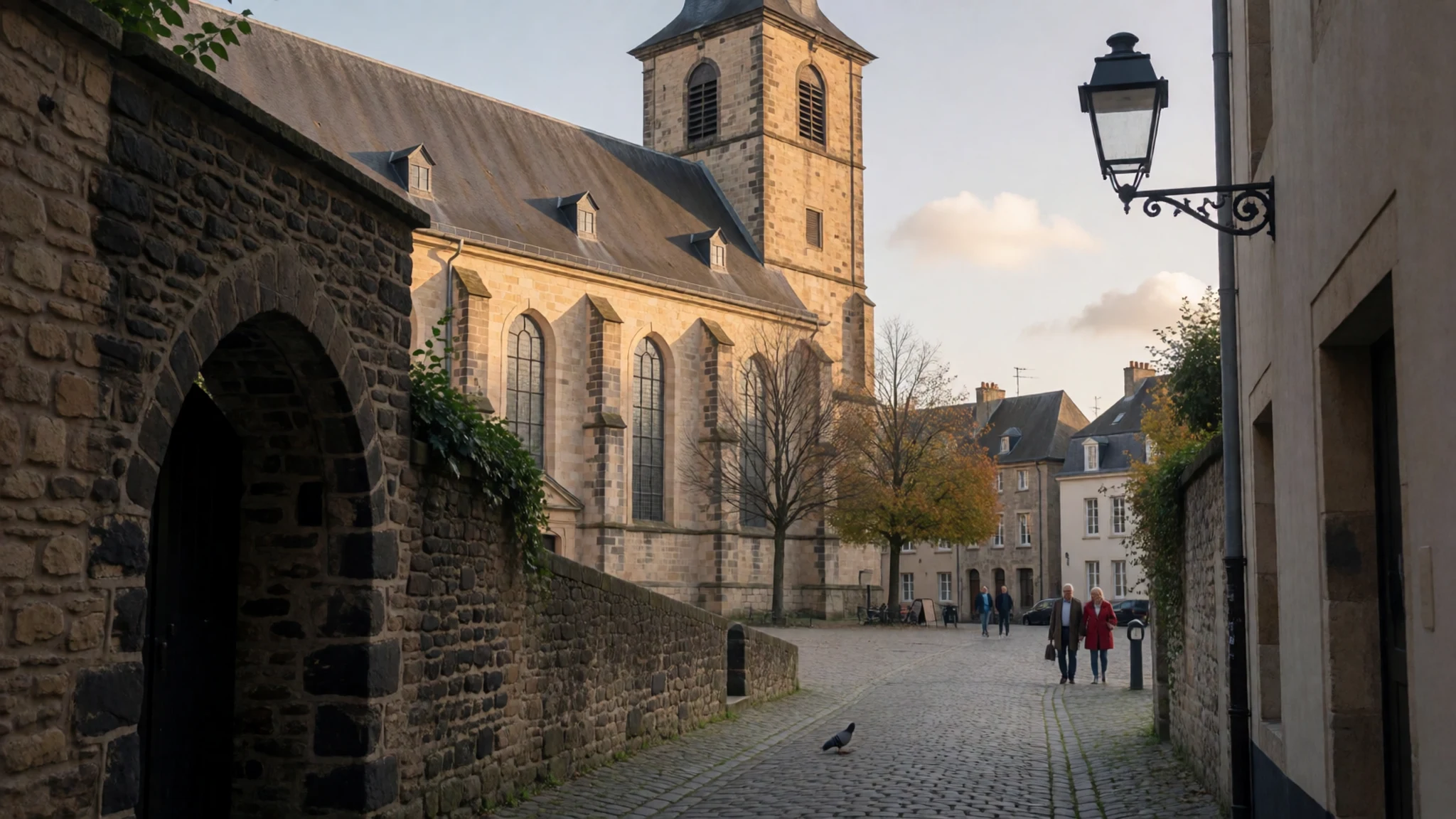
- National Museum of History and Art — Fish Market, old town
The National Museum of History and Art gathers archaeology, coins and medals, decorative arts and fine art under one roof. It suits a wet afternoon, and it gives useful background to the fortress story outside, from early settlers in the valley to the objects of later court and city life.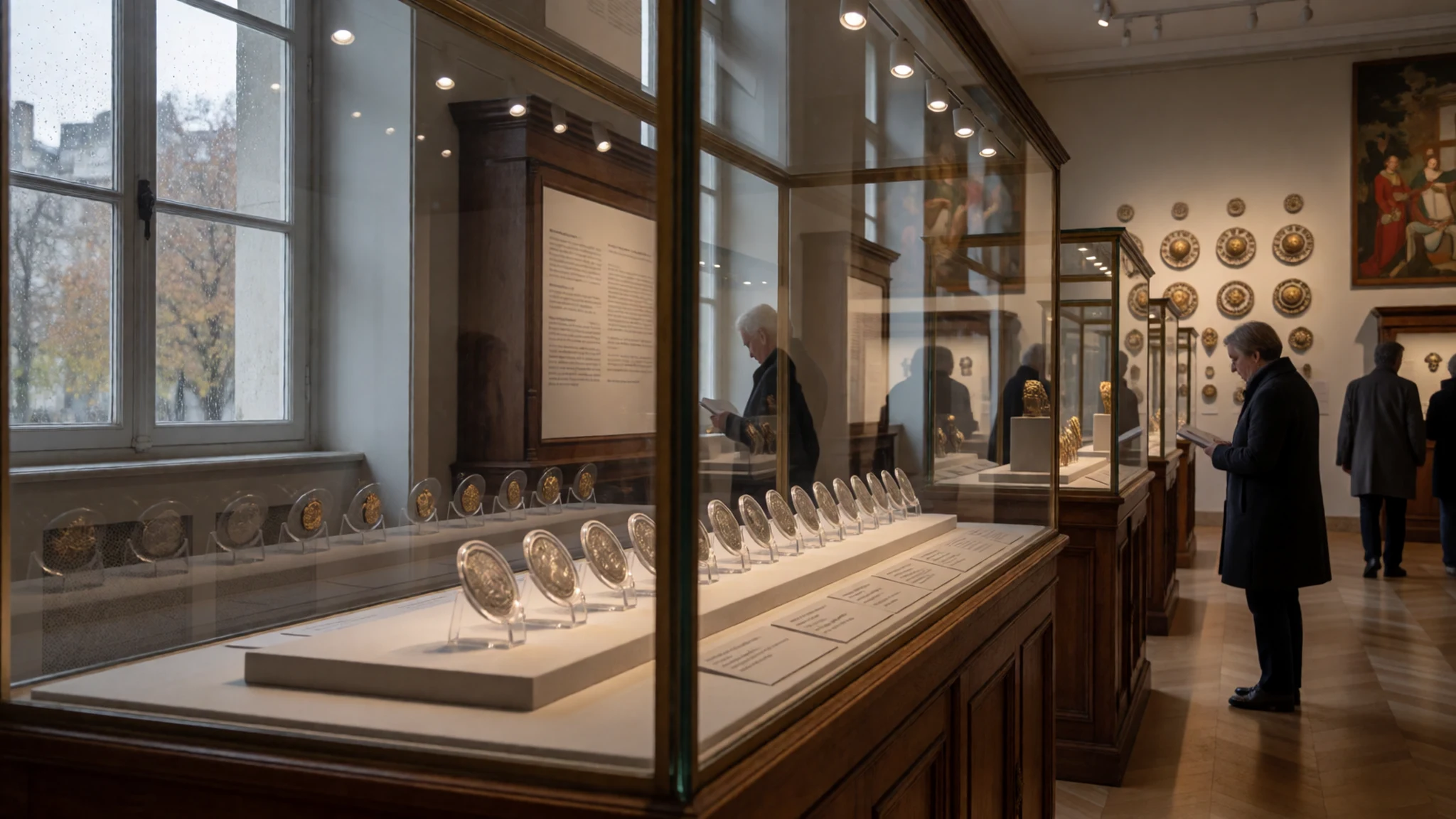
- Grand Ducal Palace — Rue du Marché-aux-Herbes, old town
The Grand Ducal Palace is the city residence of the ruling family, while the Chamber of Deputies, the national parliament, meets in its own building elsewhere in the city. It was fully restored in the 1990s. The façade is best seen from the street, where guards stand outside; the palace is open to visitors only on limited occasions, so check the city website.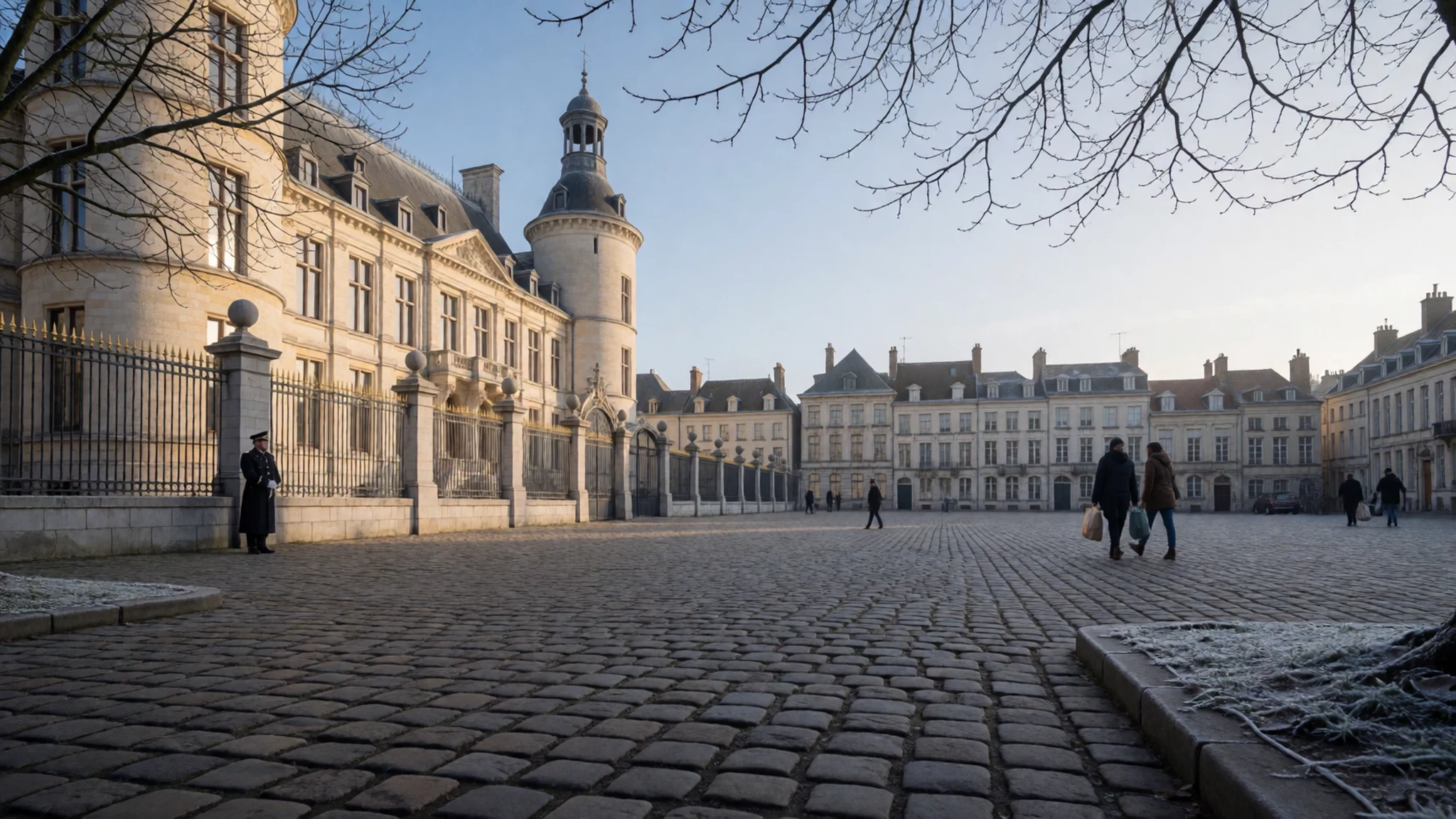
Culture
Luxembourg is a place where several cultures share one small city. Luxembourgish, French and German are all used daily, English is widely understood, and many residents come from Portugal, other European countries and further afield, so conversations often switch language mid-sentence. The city takes its arts seriously for its size. Museums cover national history, modern art, natural history and the story of its trams and buses, while the Philharmonie concert hall, the Grand Théâtre and the smaller Théâtre des Capucins fill the evenings. Galleries such as Villa Vauban, Casino Luxembourg and Am Tunnel show art in unusual buildings, from a former villa to a road tunnel. The city has held the title of European Capital of Culture twice, the first time in 1995, and its programmes since then have helped make festivals and open-air events part of the year. Daily life is orderly and polite. People queue properly, keep to quiet voices in public, and treat the pace of meals as unhurried, especially at lunch, when many office workers stop for a proper break. Sunday is calm, with many shops closed and families walking in the valley parks. Greet staff with a quick "Moien" or "Bonjour" when entering a shop or café, and keep your voice low on trams and in quiet residential streets.
What to wear
Luxembourg has no everyday national dress, and the city's style is mostly that of its working life. Traditional costume survives mainly in folklore groups, who wear regional outfits of wool, linen and cotton with embroidered or printed details, and who appear at festivals, parades and national celebrations in summer. Visitors rarely see it outside those occasions. What people actually wear now is neat and understated: dark suits and tailored coats in the financial district, smart-casual clothes in cafés, and good walking shoes or trainers on the weekend. Colours lean towards navy, grey and black, and wealth is shown through quality of cut rather than logos. A visitor should dress for a changeable climate with hot summers and cold winters, and a lot of walking. Bring layers and a light waterproof at any time of year, with a warm coat and scarf for winter and a hat or sunglasses for bright summer days. Shoes matter most. The old town has cobbles, and getting between the upper town and the valley means long flights of steps and slopes that become slippery when wet. For the cathedral and churches, cover bare shoulders and avoid beachwear. For a concert or a good dinner, smart-casual is enough; a jacket is optional, and nobody expects a tie.
What to eat
- Judd mat Gaardebounen — Traditional restaurants in the old town and the Grund
Smoked pork collar served with broad beans in a cream sauce, often with boiled potatoes. It is the dish most people name as the national plate. Look for it in traditional restaurants in the old town and the Grund, especially in colder months.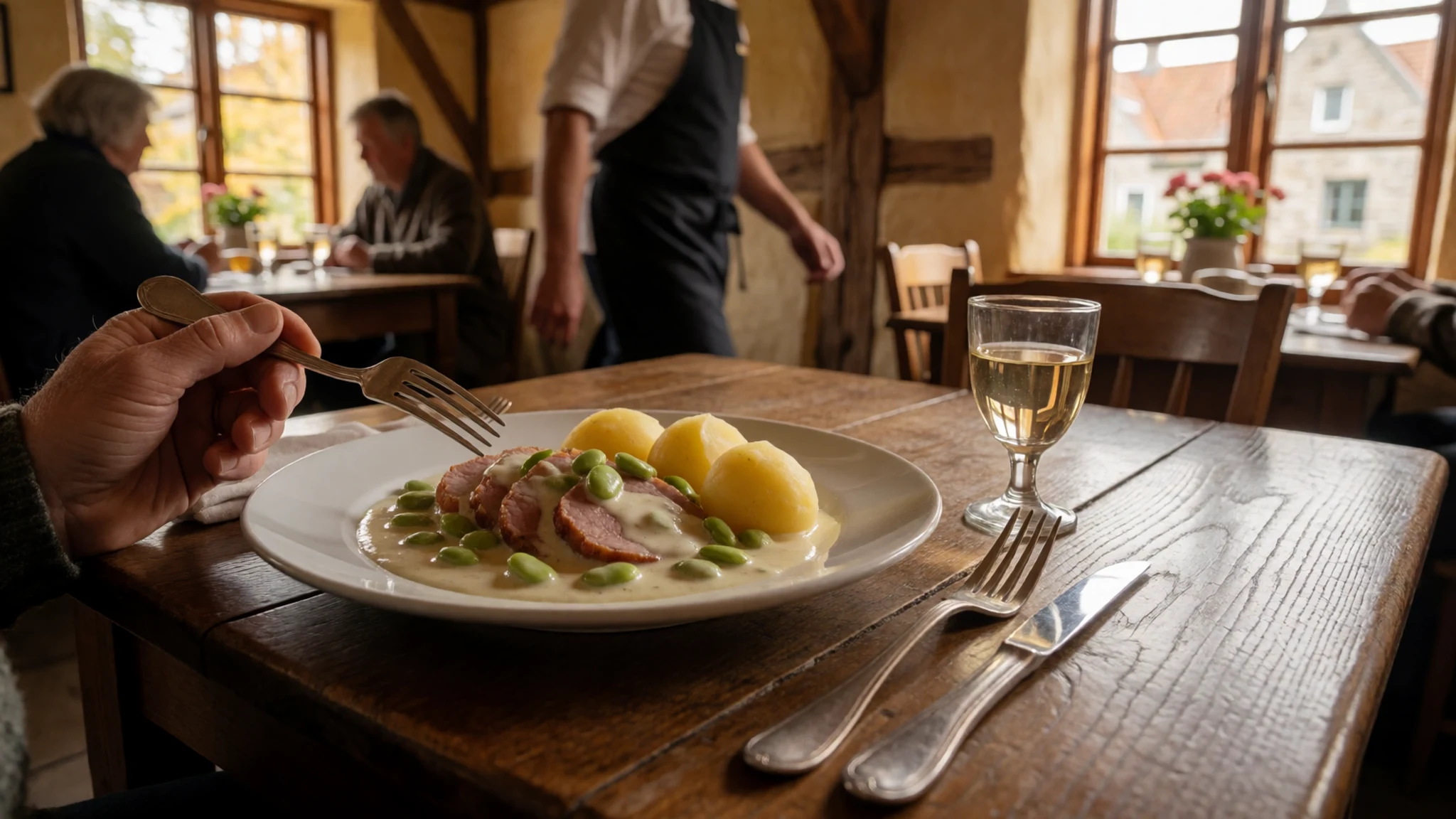
- Bouneschlupp — Local brasseries and lunch restaurants
A green bean soup with potato, bacon or sausage, and cream in some versions. It is homely, filling and best in cooler weather. Try it as a starter or a light lunch at local brasseries and family-run places.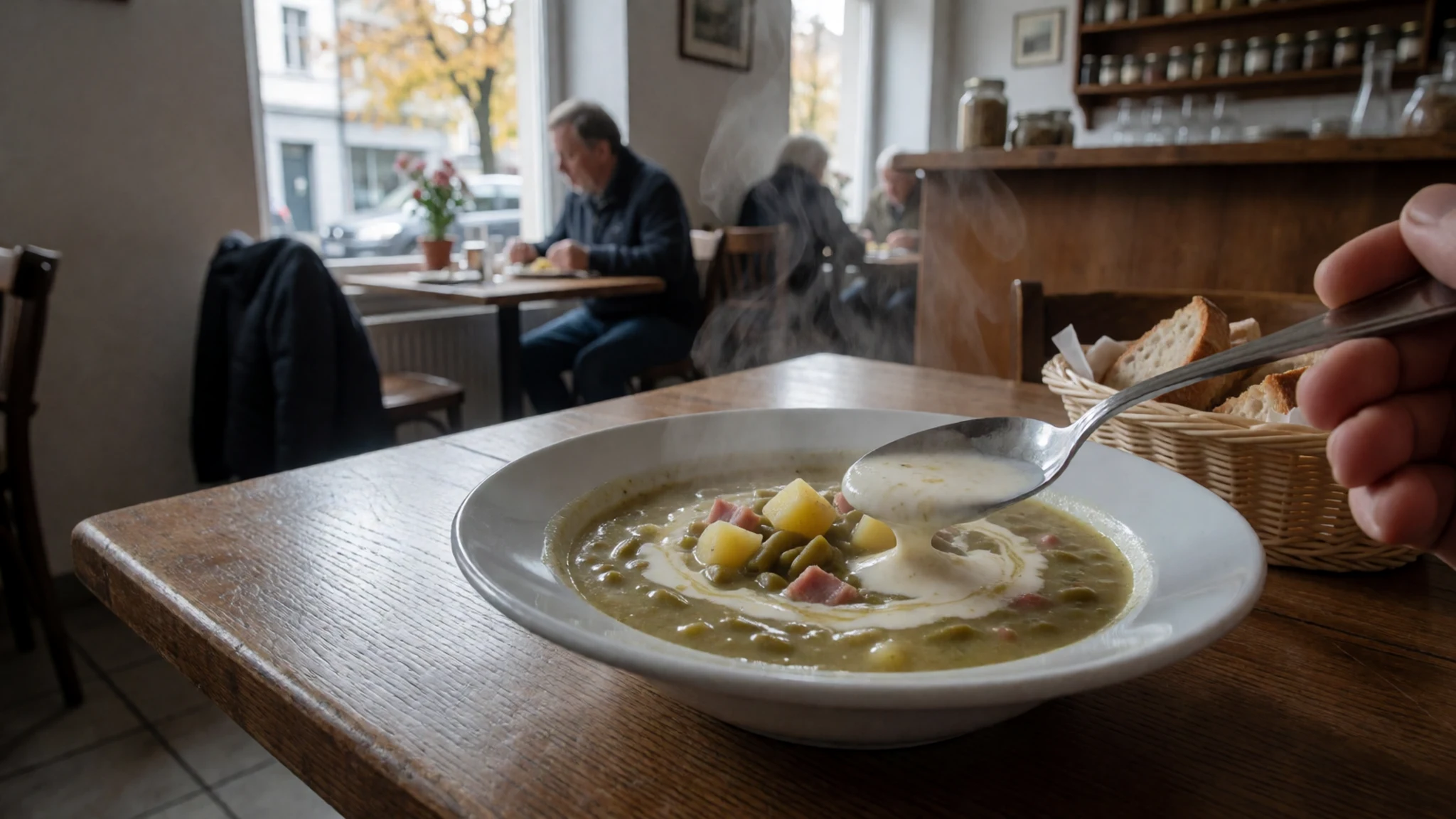
- Baked potato with toppings (kumpir) — Small counters near the station district
A large baked potato split open and loaded with fillings, from cheese and salads to spiced meats. It is cheap, filling and easy to share, and a good choice for vegetarians. Look for small counters near the station and the shopping streets. - Portuguese canteen lunch — Lunch canteens in the Gare and Bonnevoie neighbourhoods
Portuguese cooking is part of everyday Luxembourg, so simple canteens serve grilled fish, salt cod dishes, rice and stews at lunchtime to local workers. Choose the dish of the day and follow the crowd. These places are plain, friendly and good value for the city. - Kebab and mashamlah snacks — Snack bars away from the old town centre
Late-night and lunchtime snack bars serve kebabs, grilled meats and Middle Eastern-style wraps. They suit a quick meal between sights or after a concert, and many places will adapt a plate for vegetarians if asked.
Plan it
Best time. April and September for the driest spells, good for walking the valleys; December for Christmas markets, though winter is cold and grey and summer can bring both heat and sudden rain.
How long. 2
Getting there. Findel Airport, which Luxair links to most European capitals, then a bus or tram into the centre; trains from neighbouring countries arrive at the central station, and the last leg to the old town is a short tram ride or walk.
Budget. high
Tips
- Wear flat, grippy shoes: the old town is cobbled and the valley paths involve many steps
- Walk down to the Grund and take the lift or a steep path back up rather than doing it all on foot twice
- Check the official city site (https://www.vdl.lu/) for casemate and palace visiting times before you go
- Carry a card as well as a little cash; most places accept cards
- Book dinner ahead on Friday and Saturday evenings, and expect many shops to be closed on Sunday
Etiquette
- Greet shop and café staff when you enter and say thank you when you leave
- Keep voices low on public transport and in residential streets
- Respect quiet in churches and avoid photographing worshippers
Nearby
Sources
- Wikidata Q1842 (CC0)
- Wikipedia — Luxembourg City (rev 1384663668) (CC BY-SA 4.0)
- Wikivoyage — Luxembourg (city) (rev 5409934) (CC BY-SA 4.0)
- Luxembourg City Hall — Pierre Blaché (CC0 1.0)
- Luxembourg City Night — Benh LIEU SONG (CC BY 3.0)
- Luxembourg Grand Ducal Palace — Cayambe (CC BY 3.0)
- Notre-Dame Cathedral, Luxembourg City — Michał Jaroszczyk (CC BY 3.0)
- Alzette River winding through Grund — Wolfgang Staudt (CC BY 2.5)
- Luxemburg map (Hellwig) — unknown author (CC BY-SA 3.0 de)
- Map of Luxembourg City communal boundaries — Procrastineur49 (CC BY 4.0)
- The Passerelle over the Pétrusse valley — Jwh (CC BY-SA 3.0 lu)


