Enchanted River
Enchanted River, Philippines
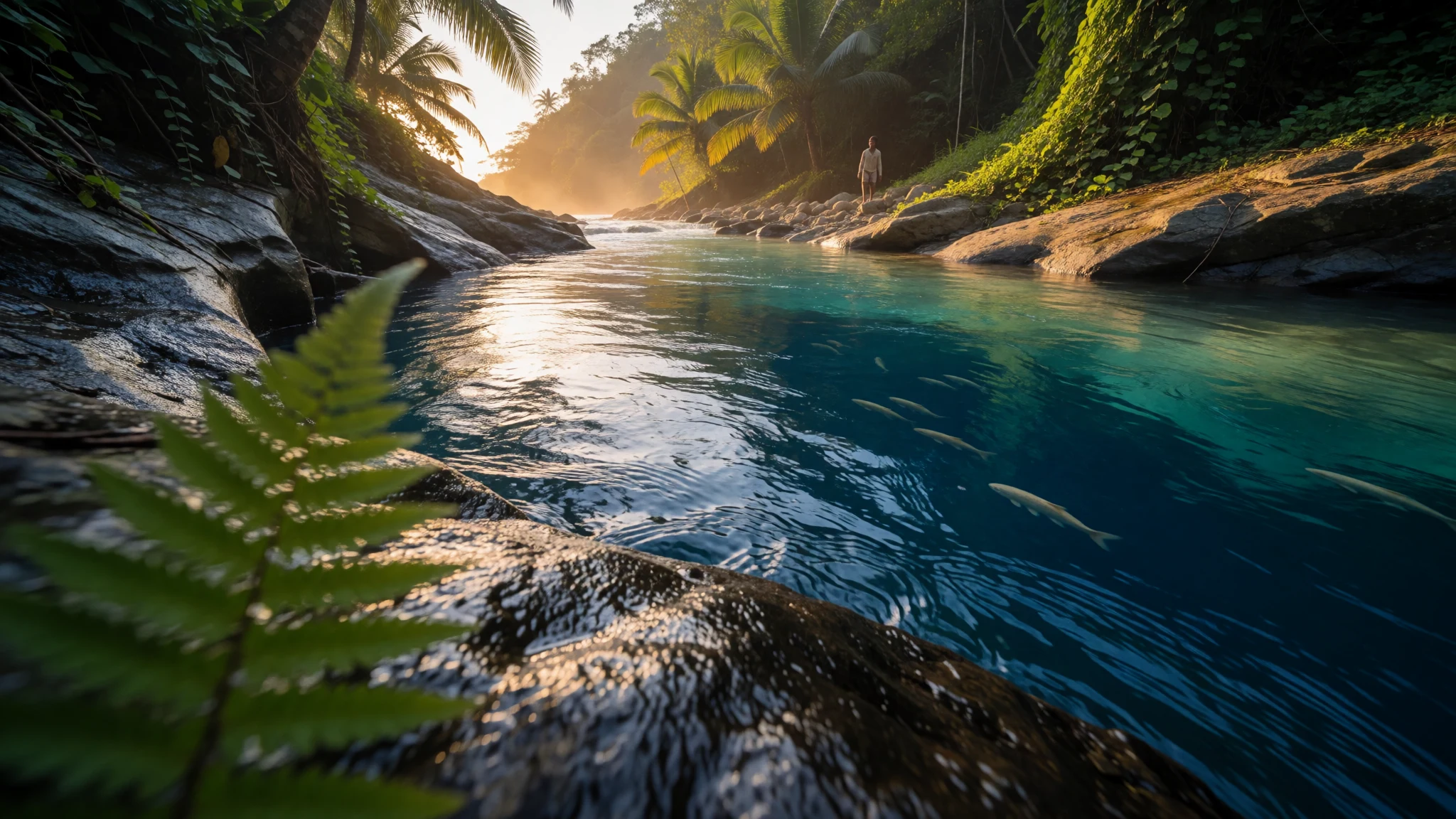
A spring-fed river in eastern Mindanao whose water runs from turquoise to deep blue, in a part of the Philippines few visitors reach.
The place
The Enchanted River lies in Hinatuan, a coastal town in Surigao del Sur on the eastern side of Mindanao. It is a spring-fed river that is deep almost from the start. It runs only a short way before it empties into the Philippine Sea, which is the Pacific by another name, at Barangay Talisay, close to the boundary with Cambatong. The water is the whole attraction. It is a strong blue at the centre, shading to turquoise and green near the edges, and set against dark rock and dense tree cover. Fish drift close to the surface, so the colour and the movement are easy to read from the banks. Near the mouth sits Hinatuan Bay, a habitat for several species of turtle and a sheltered anchorage when storms and typhoons blow in. The river belongs to Caraga, a region that is quiet by Philippine standards. Its tourism is far more relaxed than on Siargao, and many of its natural sites are still being found by outsiders. Most people nearby speak Cebuano, and Surigaonon, Butuanon and Lumad communities live in the area too. This is not the usual island-hopping circuit. Journeys are long, facilities are simple, and the river is best treated as a day out from a base in Hinatuan or a nearby city, with realistic expectations about comfort and a respect for how local people regard the place.
Its story
The Enchanted River in Hinatuan owes its English name to a poem. The diplomat Modesto Farolan wrote about it as "Rio Encantado", and the label stuck. The river is also called the Hinatuan Sacred River, a name that says more about how people nearby regard it. Local belief holds that the water is shared with spirits, and stories of unseen guardians in the deep pool are passed on to children and visitors alike. The wider region carries the same thread. Caraga takes its name from kalagan, a Cebuano or Surigaonon word for spirits or souls, though the true origin is wrapped in legend and cannot be fixed with certainty. For most of its history the river was known mainly to the communities along this stretch of coast. In recent years photographs of its improbable colour have carried its fame much further, and visitor numbers have grown in steps rather than in a rush. That slow growth still shapes the experience. Caraga is one of the poorer regions of the Philippines, so income from visitors matters locally, and facilities remain modest. Understanding the river as a living, respected site, rather than a backdrop for photographs, is closer to the spirit of its names. The story told here is local and oral, so details vary from one teller to the next, and a conversation with a guide is worth more than any single account.
What to see
- The main pool and viewing platforms — Barangay Talisay, Hinatuan
Enchanted River's main pool is where most of the visit happens. Walkways and platforms look down on water that shifts from pale turquoise at the edges to deep blue in the middle, with fish easy to spot near the surface. Arrive early, when the light is soft and the groups are few.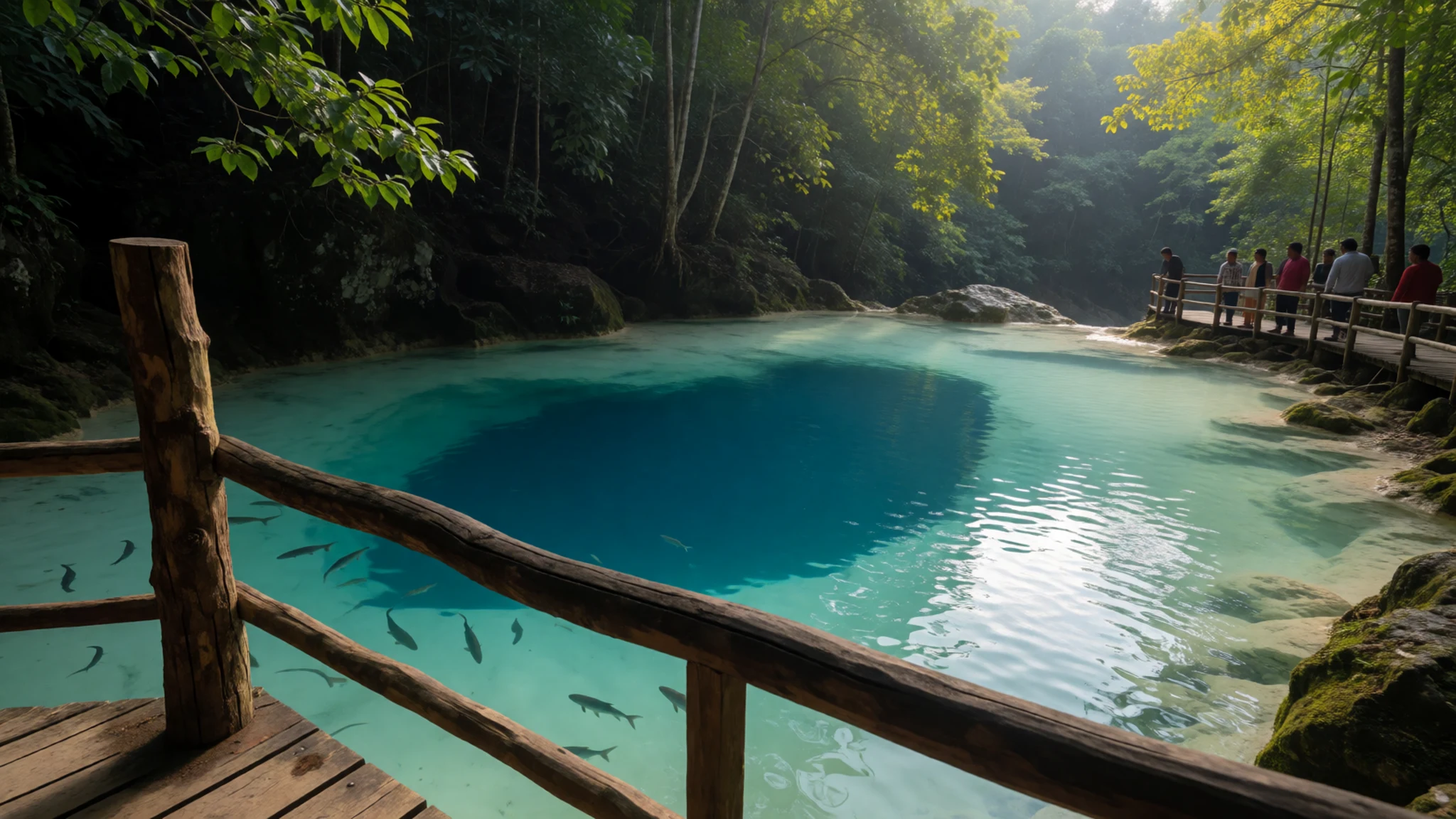
- The river mouth at Talisay — Barangay Talisay, Hinatuan
Downstream, the Enchanted River gives way to the Philippine Sea and the Pacific. The mouth is worth a short walk to see how the blue of the spring meets the tide, with rocky hills rising behind. The view is quieter than the main pool and good for photographs.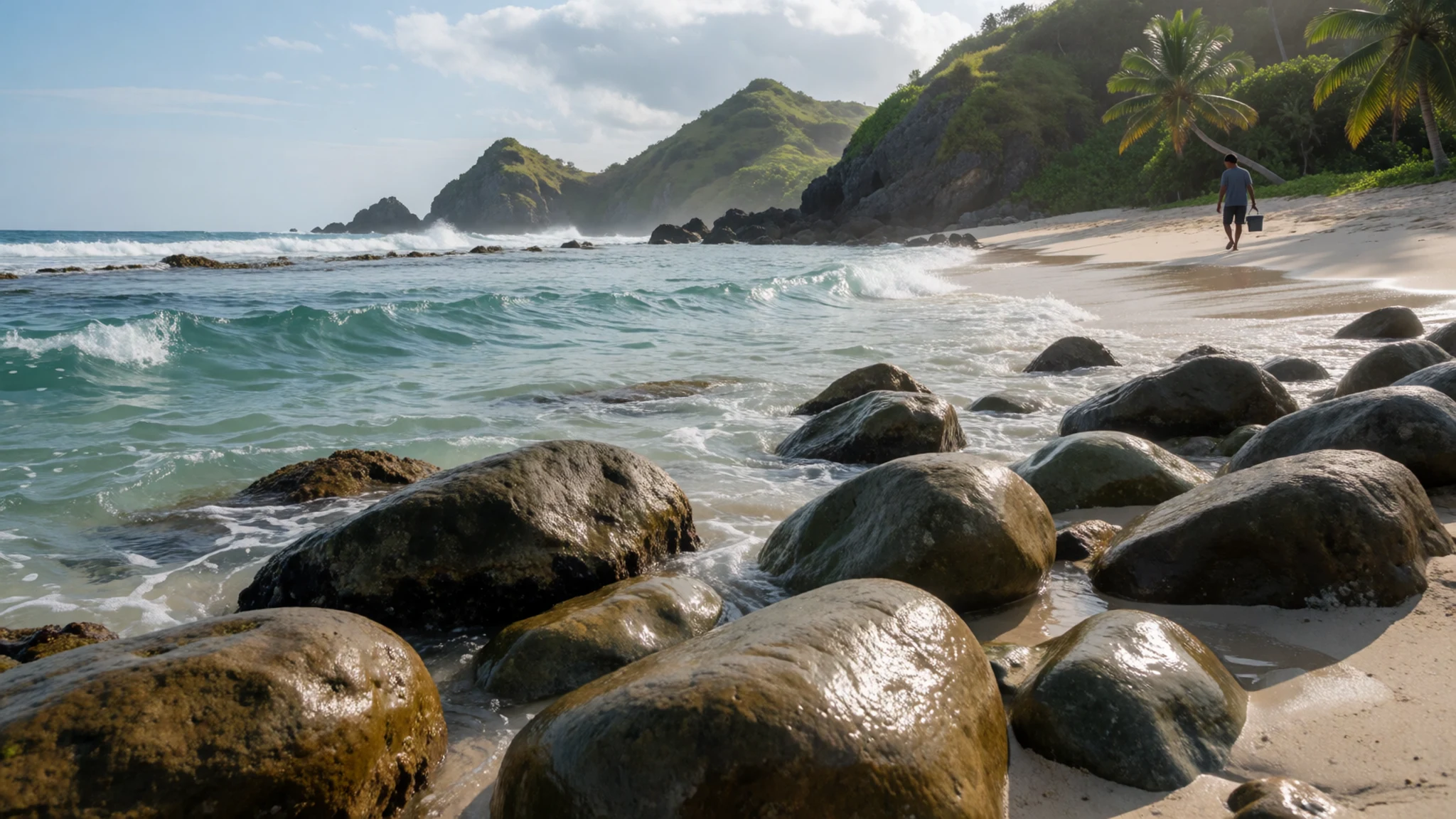
- Hinatuan Bay — Hinatuan, Surigao del Sur
Hinatuan Bay lies at the river's mouth and is home to several species of turtle. Its shelter against storms has long made it useful for boats. Visitors can enjoy the shoreline and watch local fishing life, but should ask locally before boarding any boat or entering the water.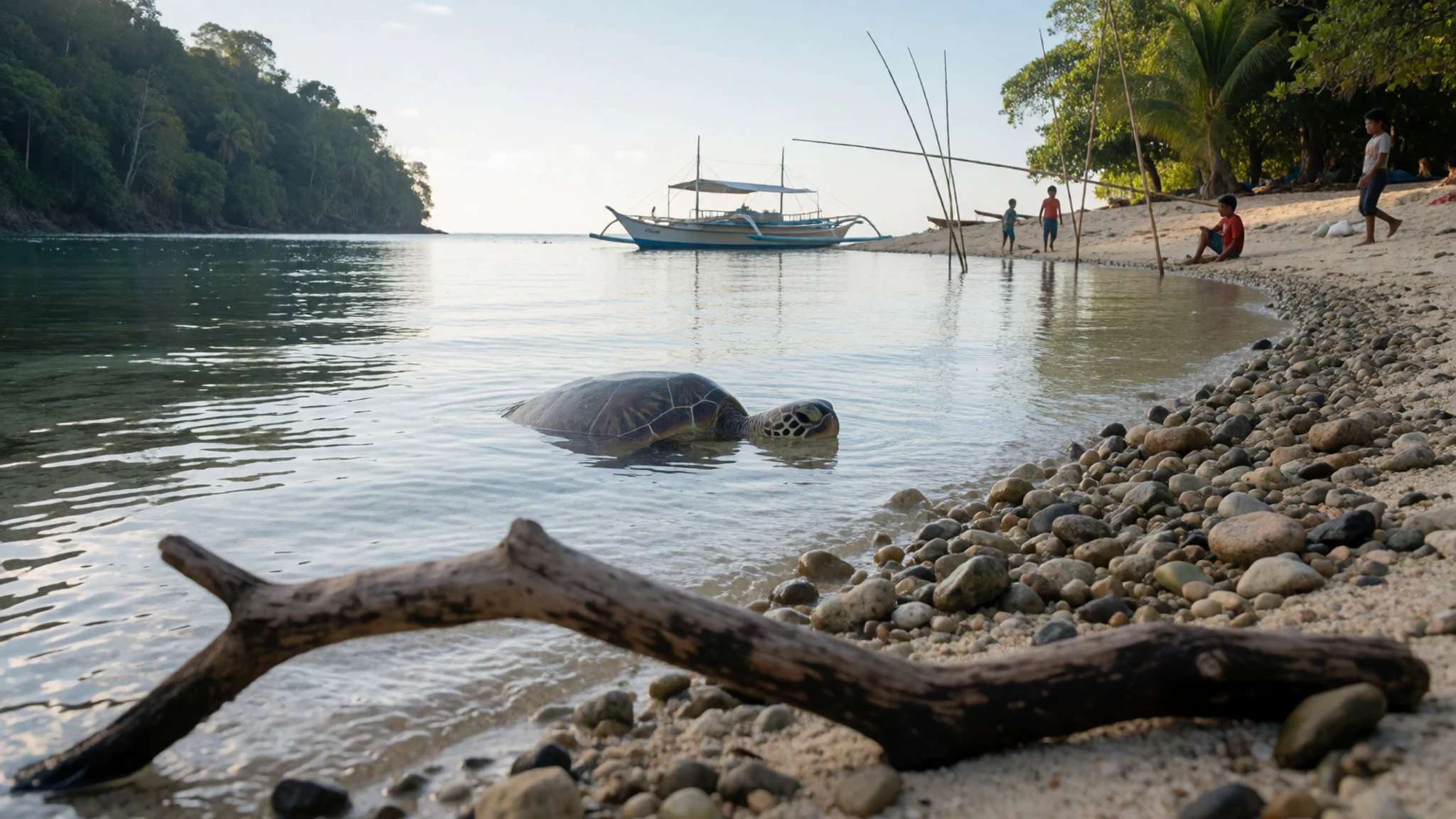
- Hinatuan town and its market — Hinatuan town centre
Hinatuan is the practical base for the river and the best place to see everyday life in this corner of Surigao del Sur. Walk the market and the waterfront, eat where locals eat, and ask at the municipal tourism office about current access rules for the river.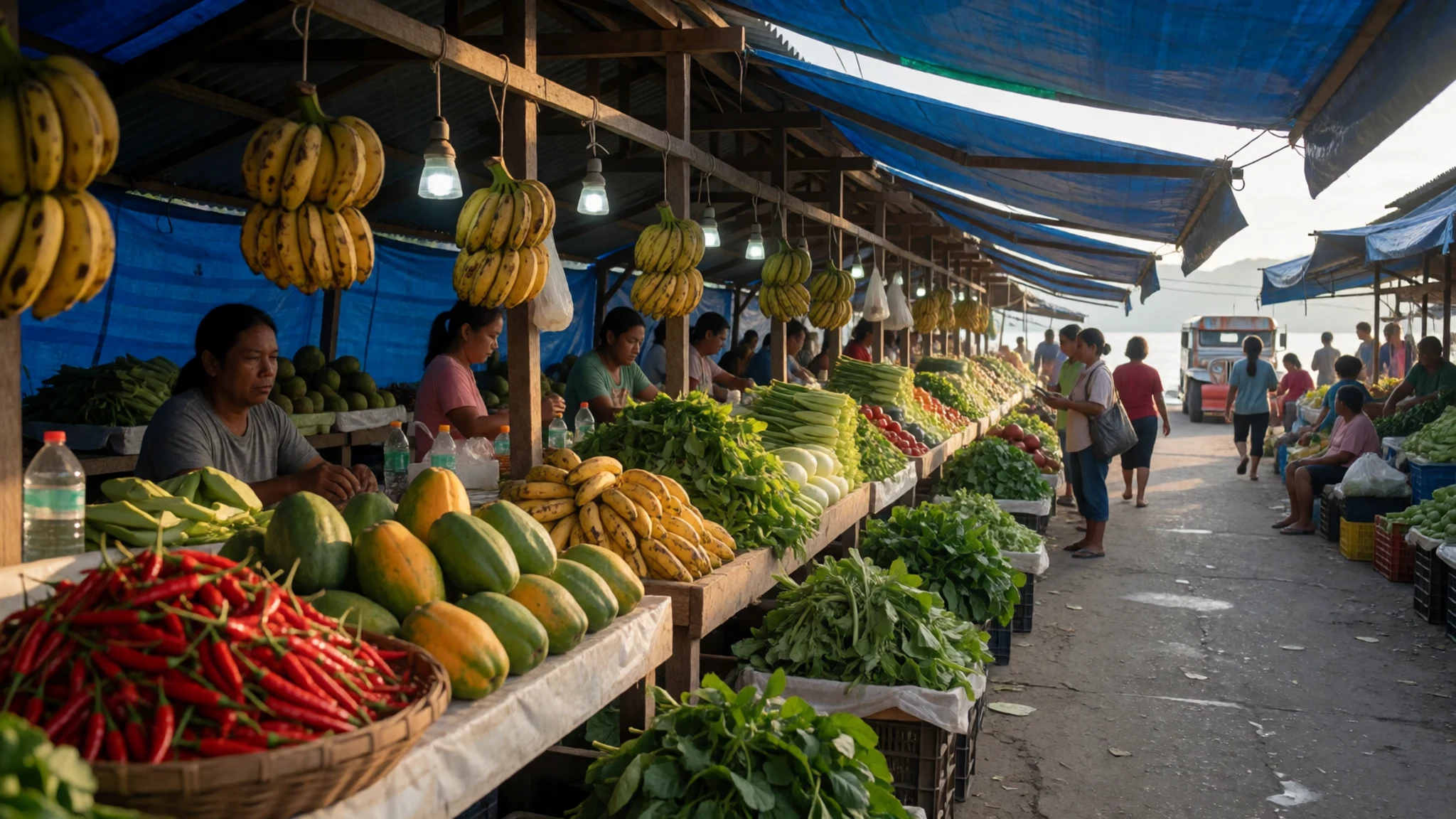
- The Pacific coast road — Surigao del Sur coast
The drive along the Surigao del Sur coast is part of the trip. Sea views, small coastal villages and rocky hills appear between long stretches of road. Traffic can be reckless, so choose a driver you trust and stop at villages for water, snacks and directions.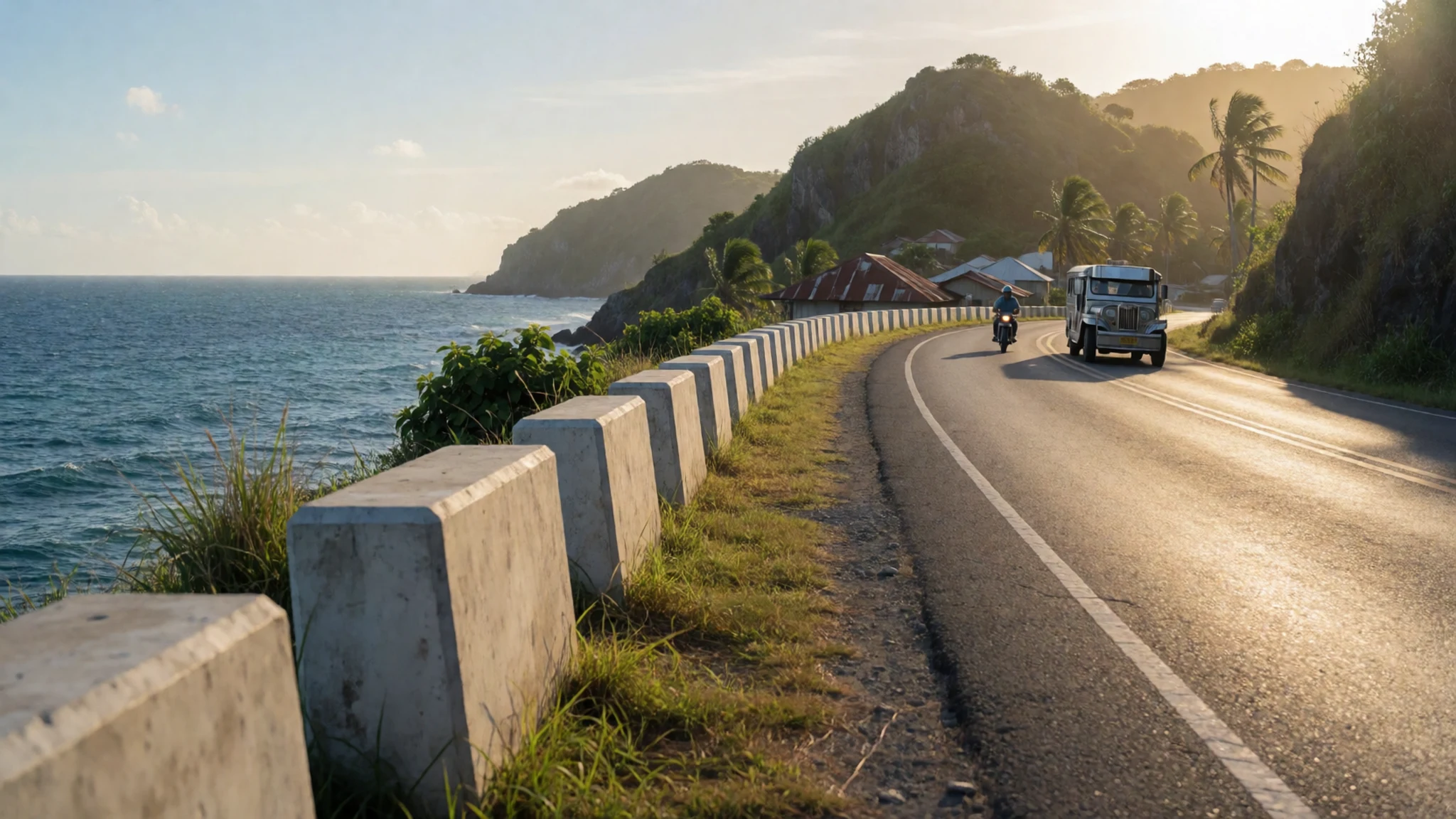
Culture
Enchanted River sits in a part of Mindanao where Catholic faith, older spirit beliefs and indigenous traditions overlap. Most people in the area speak Cebuano, and there are Surigaonon, Butuanon and several Lumad communities too, each with its own customs. Many locals see the river as more than scenery. The name Hinatuan Sacred River reflects a sense that the water is inhabited and deserves care, and the region's own name, taken from a word for spirits or souls, points the same way. Visitors will notice that guides speak about the river with a mix of pride, humour and real seriousness. Hospitality is warm but unhurried. People are glad to chat, share a meal or give directions, and a few words of Cebuano or Tagalog are noticed and appreciated. Caraga is also among the poorer parts of the country, so fees, guiding and small purchases are a real contribution to local households. Dress and behaviour tend to be modest outside the river area, and public displays of affection or loud drinking are likely to draw frowns. Gatherings such as fiestas and church services are community events and not sights, so stand back, ask before photographing, and let people set the pace. Follow the rangers' rules at the river, keep to the platforms and out of the water unless they say it is allowed, and ask before photographing local people or any ritual.
What to wear
Enchanted River is in Surigao del Sur, where dress mixes Filipino national styles with the textile traditions of Lumad communities. Formal Filipino wear includes the barong tagalog for men and the baro't saya or terno for women, worn at weddings, fiestas and official events. Lumad groups, including the Manobo, traditionally weave plant fibres such as abaca into cloth and decorate garments with beadwork and embroidery. These pieces are mostly worn for ceremonies and festivals, so a visitor may see them on special days rather than in daily life. Day to day, people in Hinatuan wear what suits a hot, humid coast: cotton T-shirts, shorts, light trousers, sandals and caps. Visitors at the river should wear quick-drying clothes, a hat and plenty of sun protection, with water shoes or sandals with a firm grip, because boards and rocks get slippery. Bring a light rain jacket, since showers can arrive suddenly on the Pacific side. In town, in churches and when visiting villages, cover shoulders and knees, as modest dress is the norm and makes conversations easier. Swimwear belongs to the water, so carry a cover-up for the walk back, and keep valuables in a dry bag. Pack a spare set of dry clothes for the long road home, because humid travel is uncomfortable in damp cotton.
What to eat
- Kinilaw — Seaside eateries and the market in Hinatuan
Kinilaw is raw fish cured in vinegar or citrus with onion, ginger and chilli, a staple of Visayan and Mindanao coasts. It is best made from the day's catch, so ask what came in that morning and eat it fresh and cold.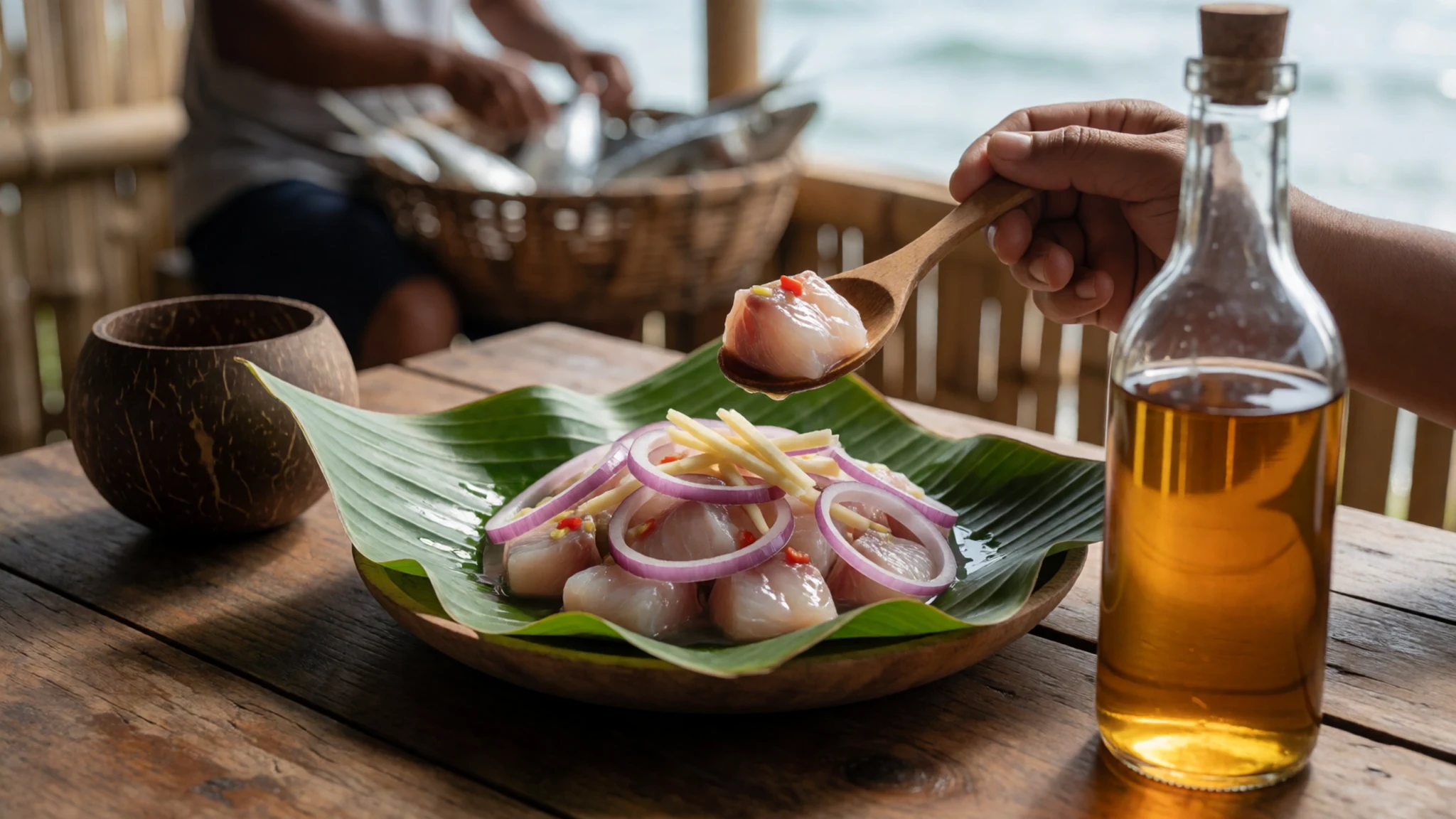
- Inihaw na isda — Roadside grill stalls and local eateries near the river
Grilled fish is the simple, reliable choice after a day at the river. The fish is cooked over charcoal and served with rice and a dipping sauce of vinegar, soy or calamansi. Choose a stall with a steady local crowd.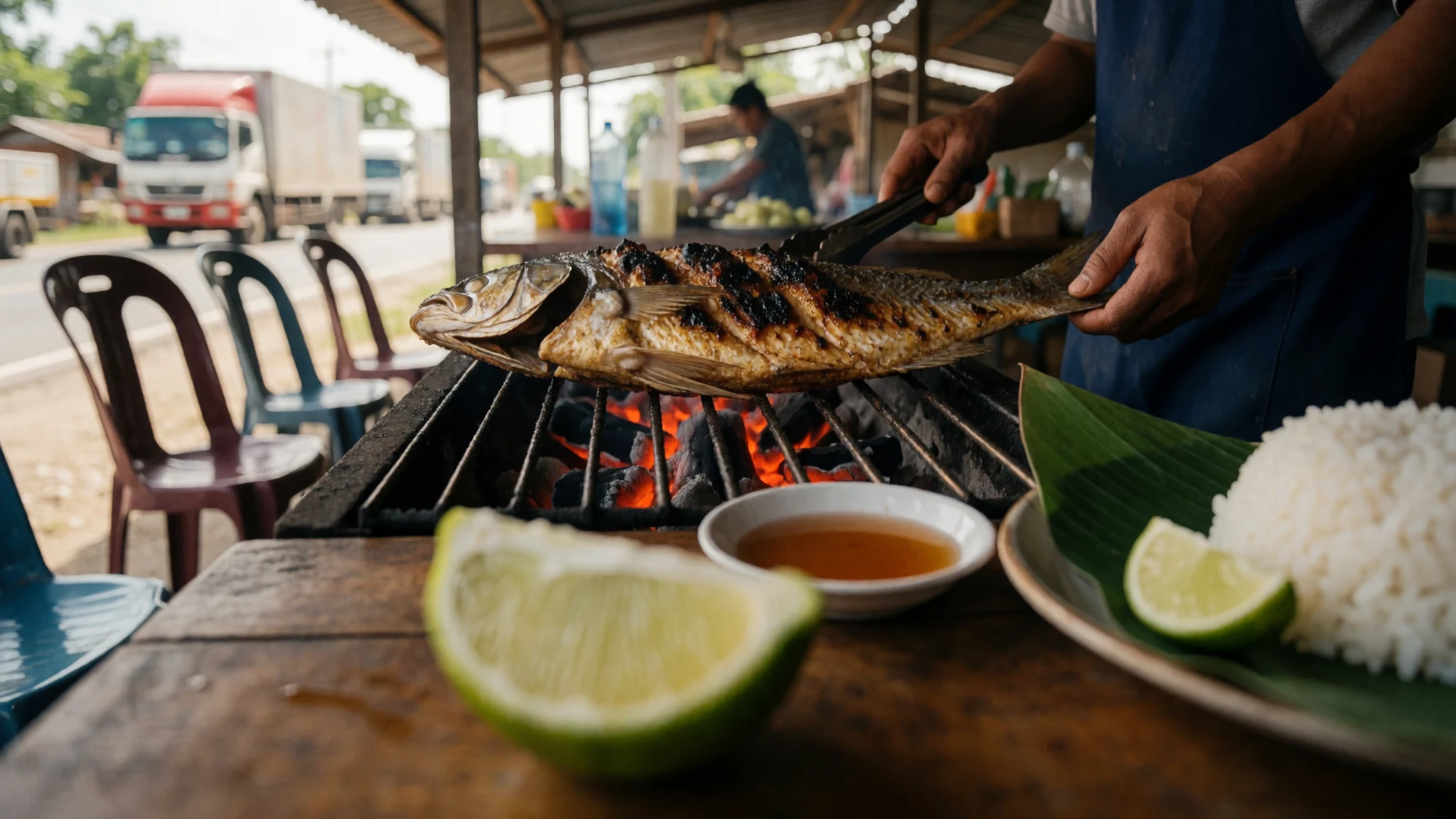
- Fish tinola — Family-run eateries in Hinatuan town
Tinola is a light, gingery soup, often made with chicken but also cooked with fish near the coast. Green leaves and sometimes papaya or squash add body. It is gentle on the stomach, which is welcome after a long, bumpy journey. - Puso — Market stalls and grill stalls in Hinatuan
Puso is rice boiled in a woven coconut-leaf pouch, a hanging rice common in Cebuano areas. It is sold alongside grilled meat and fish. Unwrap the pouch, break the rice with your hand and eat it with the grilled dish. - Fresh buko — Roadside coconut sellers along the coast
Buko is young coconut, opened with a bolo knife and drunk straight from the shell, then scraped for the soft flesh. It is a cheap, safe way to rehydrate on a hot day. Look for sellers near the river entrance or along the highway.
Plan it
Best time. March to May is a sensible window, as the Pacific coast of Mindanao is generally calmer and less wet then, which helps with both the long road and the colour of the water. The wetter northeast monsoon months from about December to February and typhoon season later in the year can bring heavy rain, rough seas and disrupted travel. Check the forecast before you commit.
How long. 1–2
Getting there. Fly to Butuan (BXU) or Surigao City (SUG) from Manila or Cebu, or to Siargao (IAO) and continue by ferry and road. Ferries link Caraga with Leyte, Cebu and Bohol. The last leg to Hinatuan and the river is by road, by bus, van or hired car with a driver; allow a long day.
Budget. low
Tips
- Contact the Hinatuan municipal tourism office before you go to confirm access, entry arrangements and any rules on swimming, as these can change. No official website is listed in the brief.
- Arrive early to enjoy the colour of the water and quieter platforms before groups come.
- Carry cash, because card payments and cash machines are scarce outside the larger towns.
- Bring water, sun protection and a rain layer, and keep valuables in a dry bag.
- Choose drivers carefully, as local driving can be reckless; if renting a motorbike, wear a helmet and do not drink and ride.
Etiquette
- Follow rangers' and guides' instructions about where to stand and whether to enter the water.
- Ask before photographing local people, ceremonies or children.
- Take all rubbish with you and do not feed the fish.
Nearby
Sources
- Wikidata Q15224141 (CC0)
- Wikipedia: Hinatuan Enchanted River (rev 1367434665) (CC BY-SA 4.0)
- Wikivoyage: Caraga (rev 5401108) (CC BY-SA 4.0)
- Photo: Hinatuan Enchanted River, Kapgomez (CC BY-SA 4.0)
- Photo: Enchanted River, Bro. Jeffrey Pioquinto, SJ (CC BY 2.5)
- Photo: Enchanted River, Hinatuan, Surigao del Sur, P.A.V. Mahusay (CC0 1.0)
- Photo: Enchanted River, Hinatuan, Colneri001 (CC BY-SA 4.0)
- Photo: Enchanted River, MaiaGarcia (CC BY-SA 4.0)
- Photo: Hinatuan River, Froirivera (CC BY-SA 4.0)


Wildlife
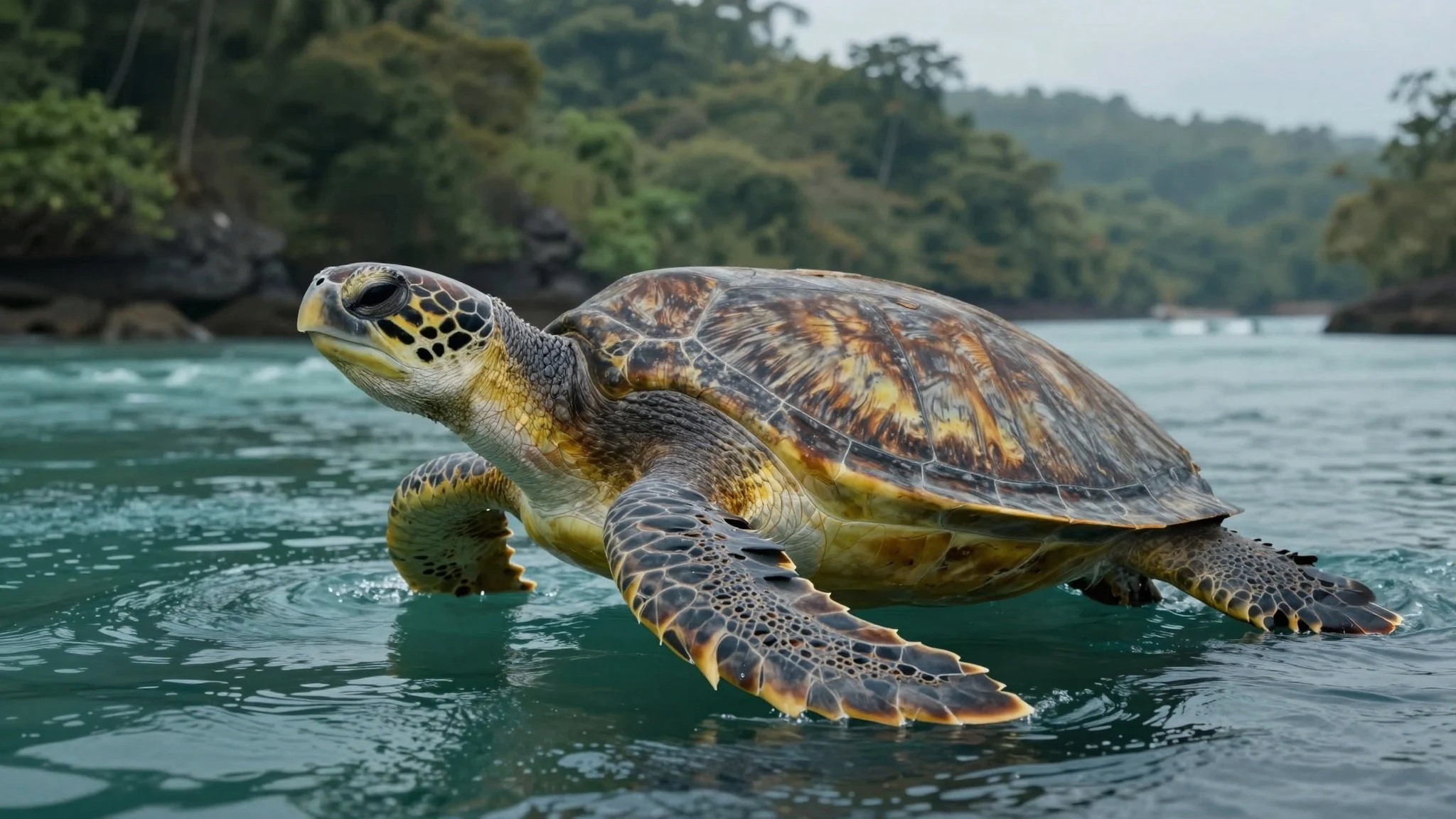
- Green sea turtle (animal)
The green sea turtle is a large sea reptile that eats only seagrass, and it is named for the green fat under its shell, not for its olive-to-black back. Near the river's mouth, Hinatuan Bay shelters several kinds of turtle, so that is where to hope for one. No season or hour is known, so ask a local guide when to look. Keep well back, stay quiet, and never feed it.