Elis
Elis, Greece
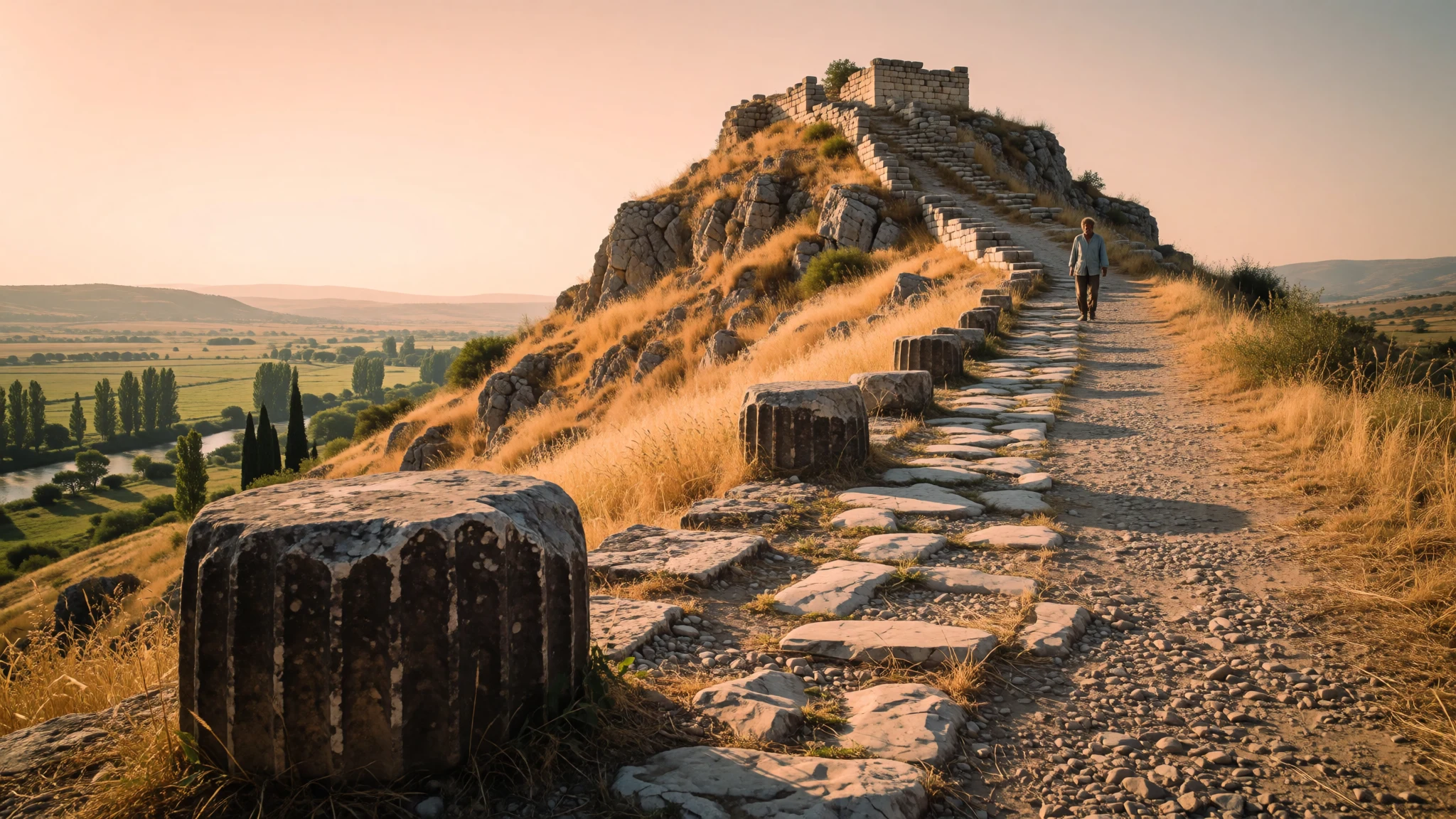
Elis is a quiet, uncrowded field of ruins where the Olympic Games were organised, set among the fields and hills of the western Peloponnese.
The place
Elis lies in the north-west of the Peloponnese, west of Arcadia, on the plain of the river Peneius. Just before the river leaves the hills, a peaked hill rises on the south side of the valley. That hill was the acropolis, and it watched over both the narrow valley and the open plain beyond. The ancient city spread at its foot and across the river, so that the water ran through the middle of town.
Today the site is an archaeological area of low walls, foundations, fallen stone and a theatre, scattered across farmland rather than fenced into a tidy park. Orange and olive groves, grass and wildflowers grow between the remains, and in most seasons the loudest things are birds and insects. It feels very different from Olympia, which draws the crowds, and that contrast is much of the appeal.
The ruins are those of a place that Pausanias, writing in the 2nd century AD, counted among the populous and splendid cities of the Greek world. Much of that splendour is now imagined rather than seen, so a little reading beforehand helps. Visitors who like to fill in the picture themselves, with an agora, sanctuaries and a theatre to anchor it, will enjoy Elis most. Those expecting standing temples and grand reconstructions may find it plain.
The modern area is rural and quiet. Pyrgos and Olympia are the usual bases, and a car makes the countryside far easier to explore. Services near the site are few, so water, sun protection and a charged phone are worth bringing. Opening arrangements change, so check the Greek Ministry of Culture's site before travelling.
Its story
Homer mentions Elis in the Iliad, in the Catalogue of Ships, as a town of the Epeii. In the earliest times, though, other settlements seem to have mattered more, among them Ephyra in the interior and Buprasium on the coast. Ancient authors place the first union of nearby townships, along with the settling of Aetolians and Dorians under King Oxylus, at the end of the 12th or the start of the 11th century BC, and excavation supports that. Growth continued through the following centuries.
The city's lasting fame comes from the Olympic Games. During the Archaic period Elis gradually took charge of organising them at Olympia, 58 km away. Tradition names its first king, Aethlius, as the founder, and credits King Iphitos with the Olympic truce around 776 BC, agreed with Lycurgus of Sparta and Kleosthenes of Pisa. The truce made the lands of Elis and Olympia sacrosanct. No armed force could enter, and wars paused for the festival, a period later extended to three months. A bronze disc in the Temple of Hera at Olympia recorded the terms, and breaches brought heavy fines.
Athletes had to train for at least a month at Elis or Olympia beforehand, so the city filled with competitors and followers. Before the games, the judges (the Hellanodicai), athletes and trainers walked the sacred way to Olympia at the head of a procession of pilgrims and visitors bringing offerings and animals for sacrifice. The walk took two days, with a stop at the spring of Piera and a night at Letrinoi.
Elis also organised the Heraia, the women's games in honour of Hera, run by a body of sixteen women at a separate time from the men's festival.
What to see
- The theatre — Archaeological area of Elis
The theatre of Elis is the clearest piece of architecture on the site. The curved seating and the circular orchestra can be read from the western side, where the stage building once stood. It is a good place to sit, get your bearings and picture the city as a working civic centre.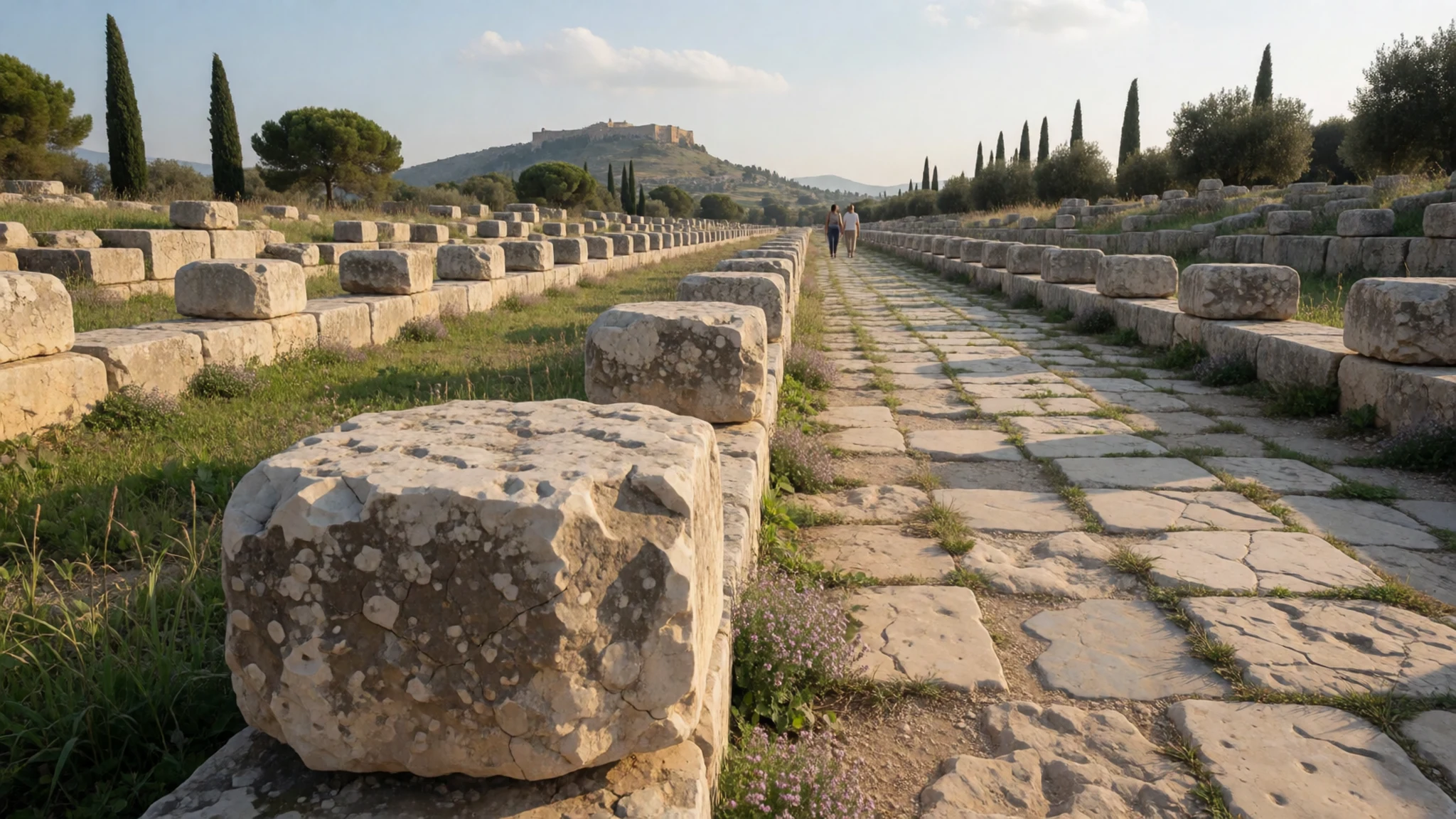
- The agora — Centre of the ancient city
The agora was the open heart of the city, where public life, business and politics gathered. What survives is mostly foundations and bases of colonnades laid out on level ground. Walking its outline helps the scale of the place make sense, and the grass here is pleasant to cross in spring.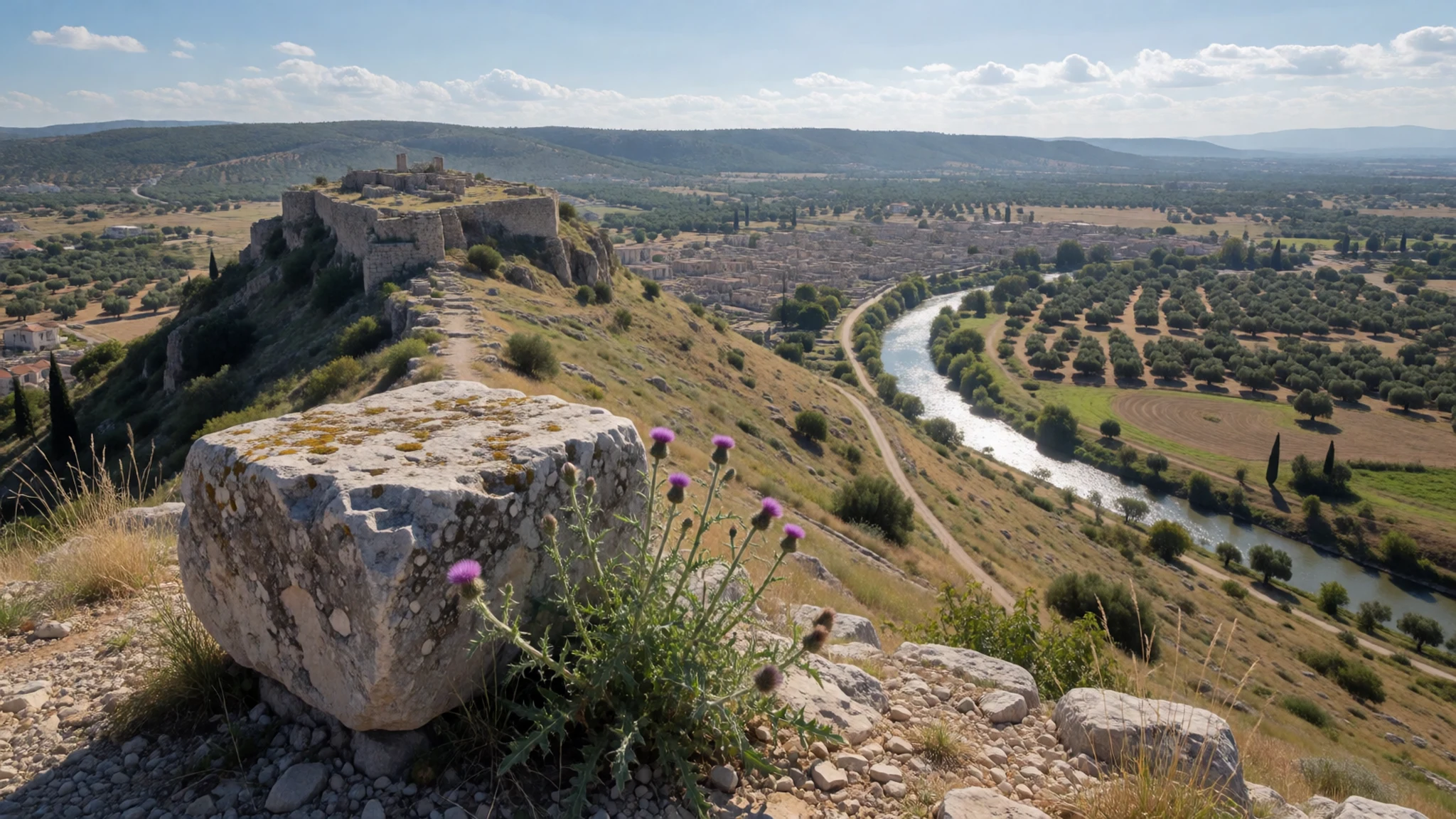
- The acropolis hill — South of the river valley
The peaked hill above the valley served as the city's citadel and gave command of the Peneius. A temple of Athena stood here. The ruins on top are modest, but the view back over the plain shows exactly why the site was chosen. Wear sturdy shoes, as the ground is uneven.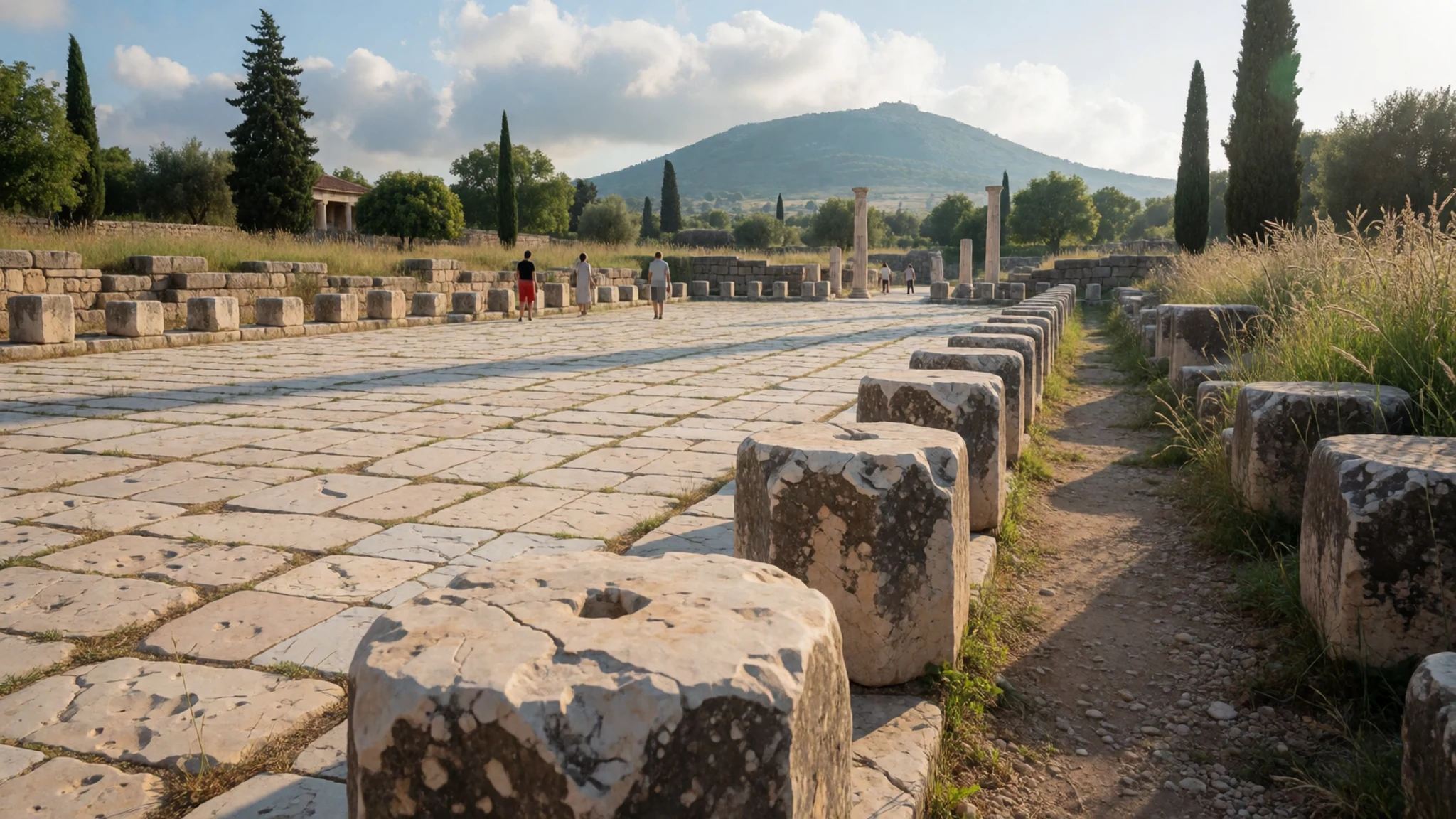
- The sanctuaries — Within the archaeological area
Scattered religious foundations mark the sanctuary area, a reminder that Elis was a place of ritual as well as athletic organisation. Signs are limited, so a printed plan or a guidebook is useful. The quiet makes it easy to linger and take in the foundations.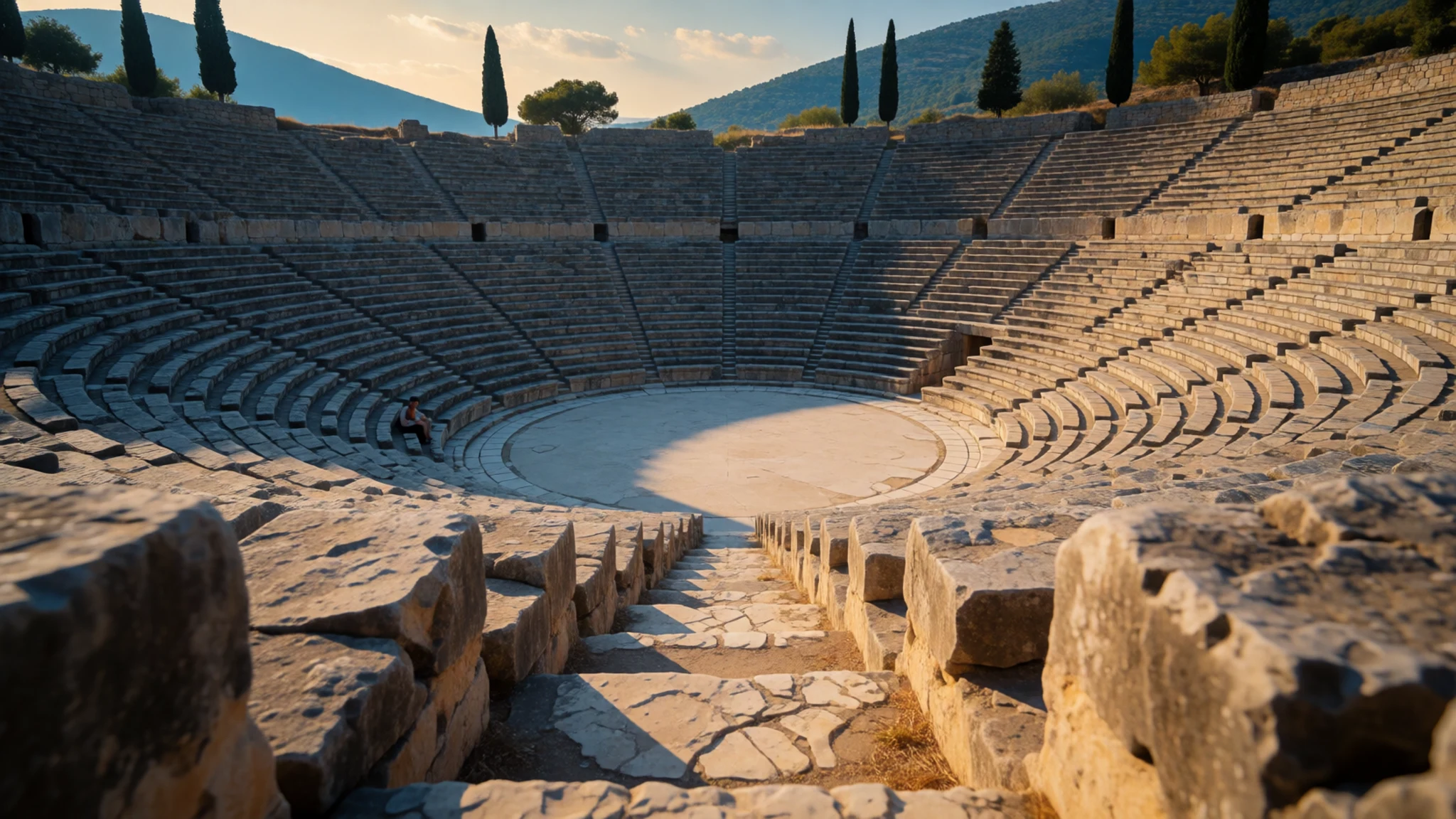
- Temple of Apollo Epicurius at Bassae — Bassae, Arcadian hills
Further inland in the hills, this temple is inscribed on the World Heritage List, in 1986. It is a longer drive than the other sights here, on mountain roads, and best treated as its own half-day trip. Check the official site for access arrangements before setting out.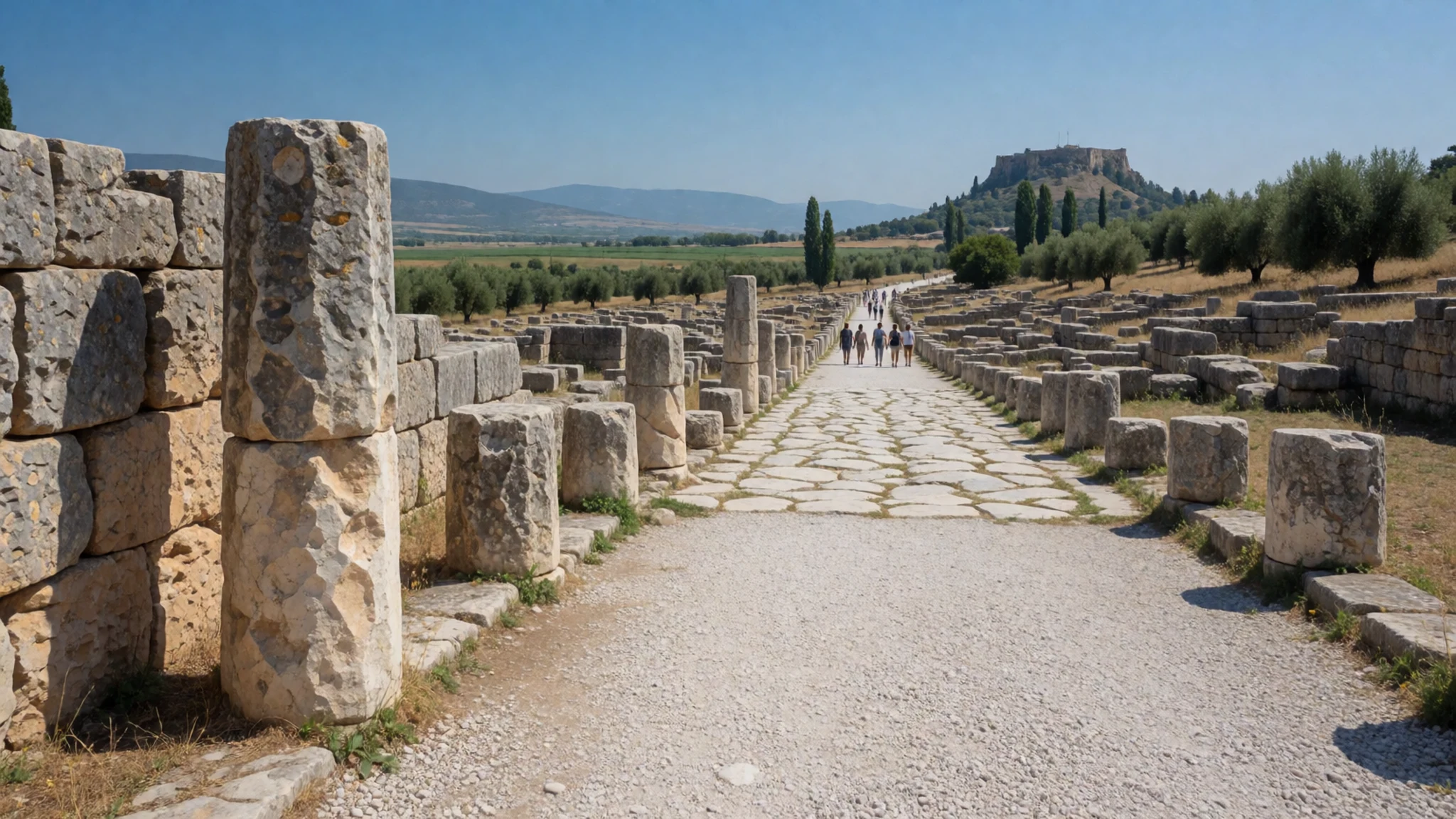
Culture
Elis is a place where Greek ideas about competition, truce and hospitality took shape. The Olympic truce treated the land of Elis and Olympia as sacred ground, and the idea that conflict should pause for sport is still one of the best-known legacies of ancient Greece. Elis was the organiser behind that arrangement, and it kept the role for more than a thousand years.
The city's religious life ran alongside its sporting life. Sacrifices, processions and offerings marked the road to Olympia, and women's games honoured Hera. Modern Greece keeps a strong link to this past, and the Olympic flame is lit at Olympia before each modern Games begins, though the ceremony takes place there rather than at Elis.
Today the area is mostly agricultural, and local life revolves around farming, small towns and family-run eateries. Hospitality is a point of pride, and a coffee or a short chat with a shopkeeper is often how a visit becomes memorable. Greek Orthodox churches and roadside shrines dot the countryside, and Easter is the most important celebration of the year, with processions, lamb roasts and a great deal of family travel. Many people speak some English, especially younger people, but a few words of Greek are always appreciated.
Visitors who come with curiosity and patience tend to enjoy Elis most. The site rewards reading and imagination more than spectacle, and the sense of walking where the Games were organised is the real draw. Do not climb on the ancient walls or take stones, pottery or any fragments away, as removing antiquities is a criminal offence in Greece.
What to wear
Elis has no distinctive costume of its own that visitors will see in daily life, but the wider Peloponnese has a tradition of regional dress. Women's festival outfits used embroidered linen and cotton, wool for cold months, and woven sashes and aprons, while men wore the pleated white fustanella, waistcoats and leather shoes. These are mostly seen today at folk festivals, school parades and national days such as 25 March, when children dress in traditional costume.
In the ancient world, Elis was famous for athletes who competed unclothed, a custom of the Games, while ordinary citizens wore the chiton and himation, draped garments of wool or linen, fastened with pins.
Everyday clothing now is simple and practical: shorts, jeans, cotton shirts, trainers and sandals in summer, and light jackets in winter. Smart casual is the norm for eating out. In rural areas, locals dress modestly and without fuss.
For visitors, the main concern is sun and ground. Summer is hot and shade is scarce, so wear a hat, loose breathable cotton or linen, sunglasses and sunscreen. Closed, grippy shoes or sturdy sandals are better than flip-flops on uneven stone and grass, and long trousers help against thistles and ticks in spring. Bring a light waterproof for showers in autumn and winter. If you visit a church or monastery in the area, cover shoulders and knees; shawls are often kept at the door, but it is wise to carry your own.
What to eat
- Souvlaki and gyros — Street eateries and grill shops in Pyrgos
Grilled meat on skewers or carved from a spit, wrapped in flatbread with tomato, onion and tzatziki. It is the standard quick lunch, easy to find in any town square or bus-station street in Pyrgos.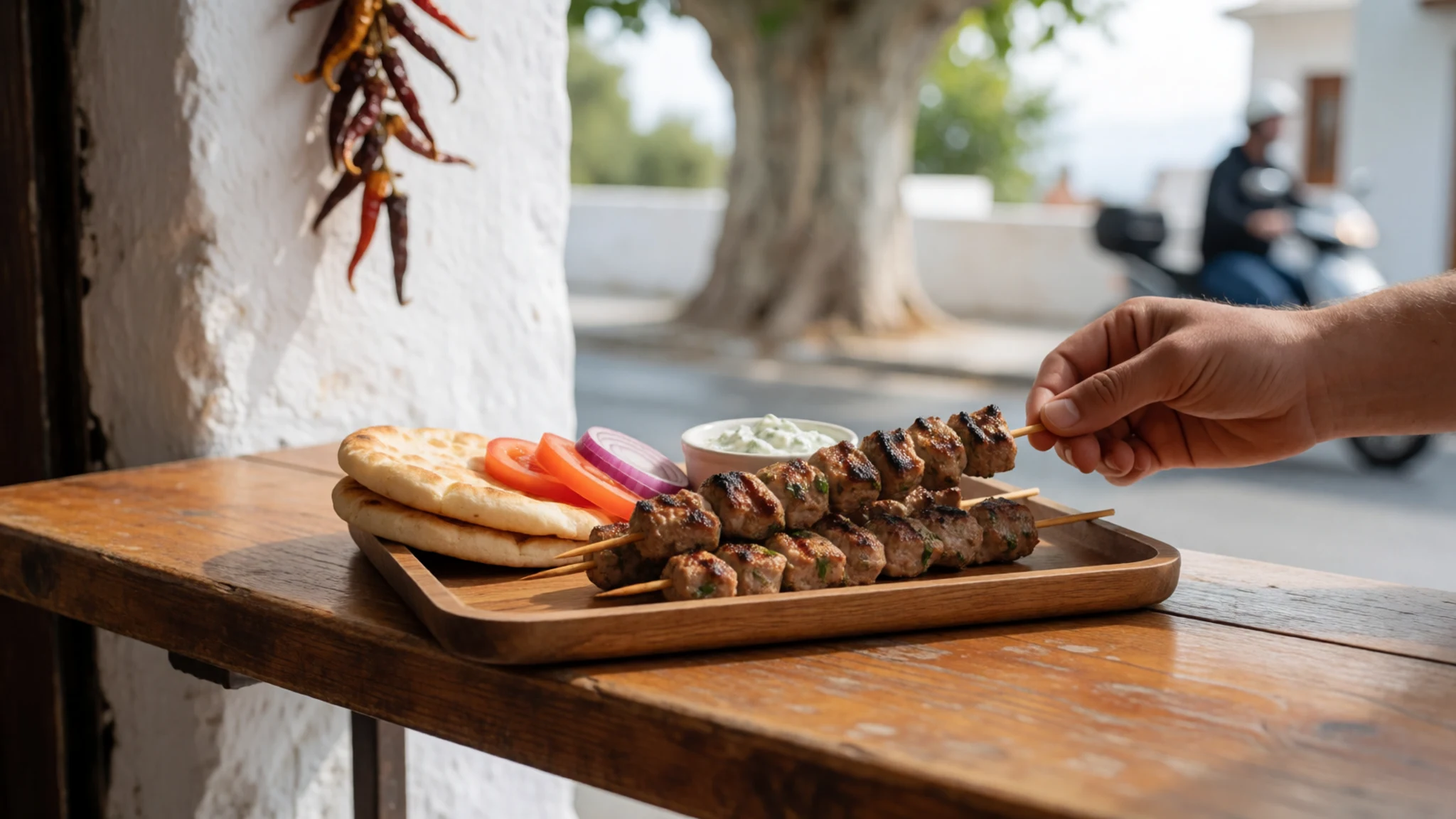
- Horiatiki salad — Any village taverna
Tomato, cucumber, onion, olives and a slab of feta dressed with local olive oil and oregano. It is simple and best in summer, when the vegetables come from nearby farms and taste sweet.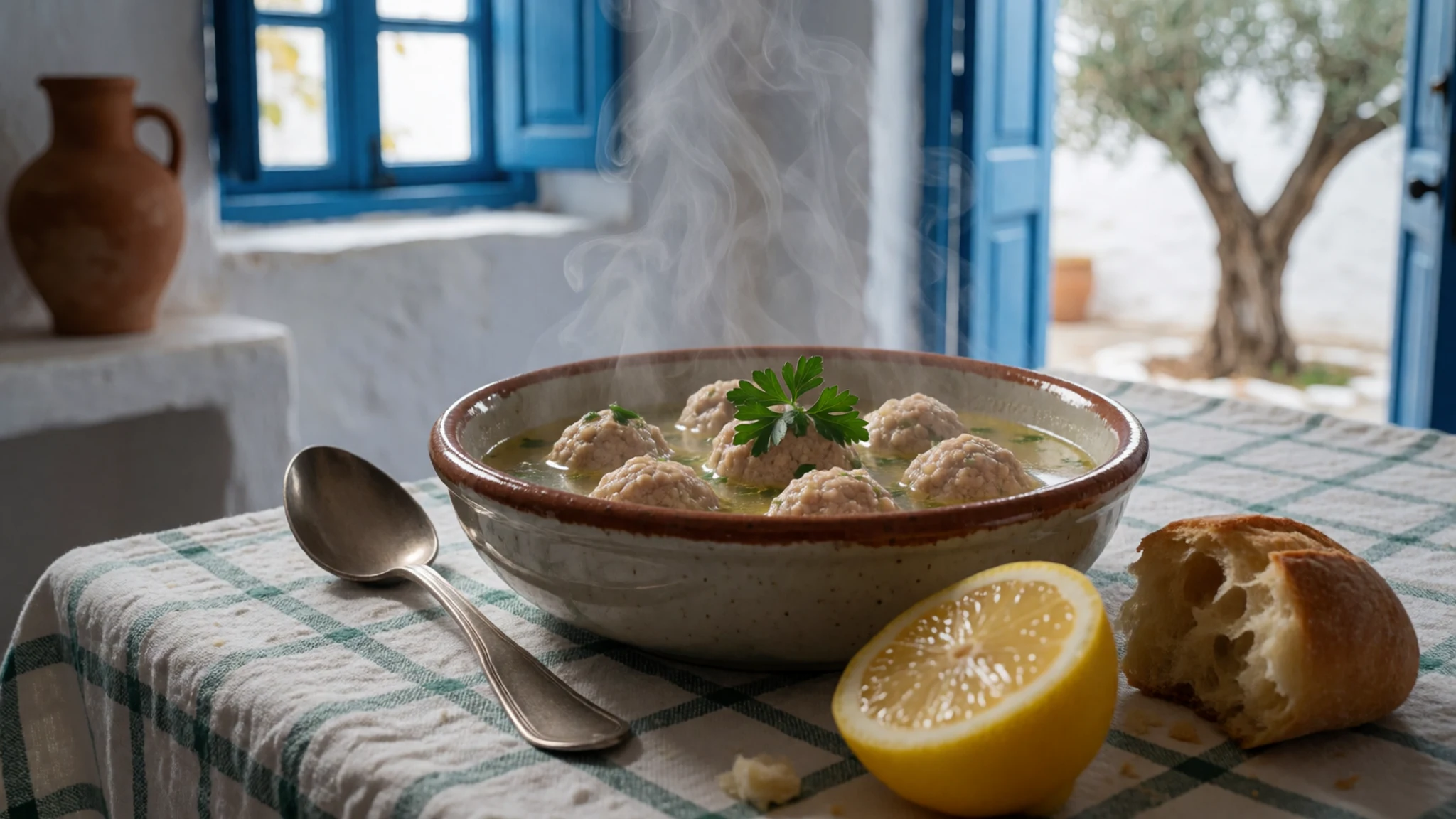
- Kleftiko — Family tavernas in the countryside
Lamb or goat baked slowly with garlic, lemon and herbs, traditionally sealed in paper or a clay oven until it falls apart. It is a hearty dish for cooler months and weekend family meals. - Spanakopita — Bakeries in Pyrgos and Olympia
Flaky filo pastry filled with spinach, feta and herbs. It is sold warm by the slice and makes a good, cheap breakfast or snack before a morning on the ruins. - Local olive oil and honey — Village shops and weekly street markets
The western Peloponnese is olive country, and the oil is a staple on everything. Thyme honey and fresh fruit are good additions at breakfast, and small bottles make easy gifts.
Plan it
Best time. April–June and September–October. Spring brings green fields and wildflowers, while autumn is warm and calmer. July and August are very hot with little shade, and winter can be wet and cool.
How long. 1–2
Getting there. Fly to Athens, then travel by KTEL intercity bus or hire a car towards Patras, Pyrgos and Olympia. Buses connect Pyrgos and Olympia to Athens, Ioannina and Thessaloniki via Patras. Ferries run daily from Zante and Kefalonia to the port of Kyllini. A car is the easiest way to reach the site itself.
Budget. low
Tips
- Visit early in the morning, especially in summer, to avoid the heat
- Carry water and sun protection, as there is little shade or shopping on site
- Check the Ministry of Culture website for current opening arrangements before you go
- Combine Elis with Olympia in a two-day trip, using Pyrgos or Olympia as a base
- Download an offline map, as signage in the countryside can be sparse
Etiquette
- Do not climb on ancient walls or remove any stones or fragments
- Cover shoulders and knees when entering a church or monastery
- Greet shopkeepers and hosts before asking questions
Nearby
Sources
- Wikidata Q217667 (CC0)
- Wikipedia: Elis (city), rev 1374325384 (CC BY-SA 4.0)
- Wikivoyage: Elis, rev 5301799 (CC BY-SA 4.0)
- Photo: A view of the ancient city of Elis (Tkoletsis) (CC BY 3.0)
- Photo: Elis theatre orchestra (Kritheus) (CC BY-SA 4.0)
- Photo: Elis acropolis (Tkoletsis) (CC BY-SA 1.0)
- Photo: Elis agora (Tkoletsis) (CC BY 3.0)
- Photo: Agora of ancient Elis (Kritheus) (CC BY-SA 4.0)
- Photo: Elis sanctuaries (Tkoletsis) (CC BY 3.0)


