Ek' Balam
Ek' Balam, Mexico
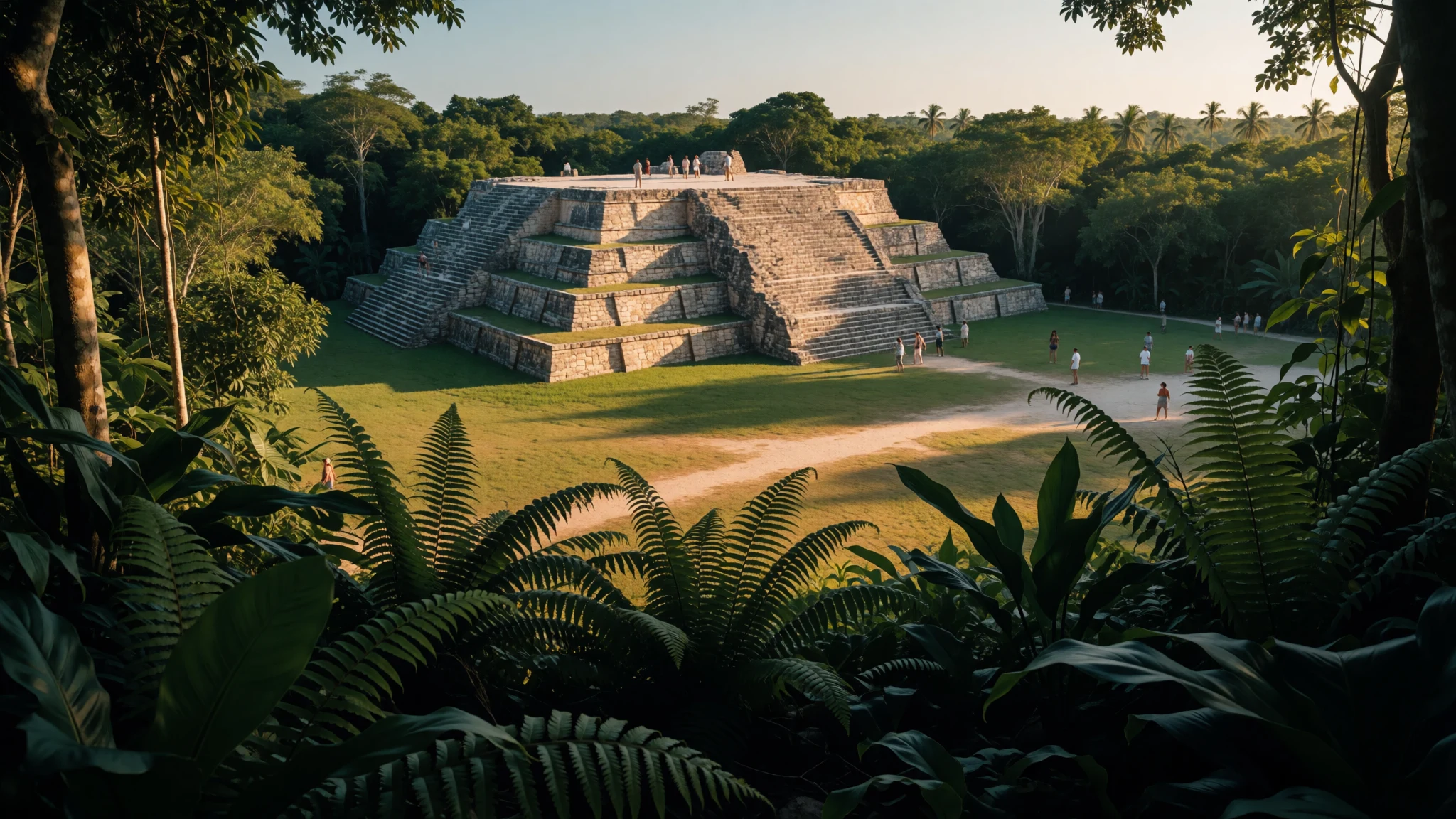
Ek' Balam is a quiet Maya city in the Yucatán forest where carved plaster, buried on purpose centuries ago, still survives on a climbable pyramid.
The place
Ek' Balam is a Maya archaeological site in the municipality of Temozón, in the Mexican state of Yucatán, about 25 km north of Valladolid and 56 km north-east of Chichen Itza. The name is usually translated from Yucatec Maya as Black Jaguar or Star Jaguar, though inscriptions found here suggest the ancient name was Talol. More than 45 structures have been recorded, scattered across a flat limestone plain under low forest and linked by short, shaded paths. What sets the place apart is the Acropolis, the great platform and pyramid on the northern side of the site. Modelled plaster figures survive on it because the Maya themselves covered them with later building, and plaster of this kind normally weathers away within a few seasons. Large thatched roofs now shelter the most delicate pieces, so the effect is of a working conservation shed as much as a ruin. There is no museum. A small visitor centre has toilets and collects the entry charge, and rooms and restaurants are found in towns such as Valladolid and Mérida rather than at the site. The little village of Ek Balam lies a short way off. The ruins are far quieter than Chichen Itza, which makes it easier to stand alone in a plaza and look. The main hardship is heat: the open courtyards have little shade by midday, and the Acropolis stairs bake in the sun.
Its story
Ek' Balam was lived in for a very long time, from the Middle Preclassic through to the Postclassic, and it grew steadily from the Late Preclassic onwards. It became the capital of a kingdom that held sway over the surrounding country. The city was at its most powerful in the late eighth and early ninth centuries, and because so many other northern Maya cities survive only in poor condition, Ek' Balam is a valuable reference for how a northern Classic city looked and worked. Its best-known ruler is Ukit Kan Le'k Tok', whose tomb lies inside the Acropolis. As Chichen Itza rose and overshadowed its neighbours, the people of Ek' Balam sealed the Acropolis under fresh construction, and that act protected the stucco and painted inscriptions for later centuries. The population then fell to roughly a tenth of its peak, and historians still debate how quickly and in what circumstances the city emptied; the defensive walls feature in that argument. A colonial survey of the late sixteenth century, the Relación Geográfica, records a local kingdom called Talol. According to that account, a founder named Ek' Balam, also called Coch Cal Balam, arrived from the east. Later the aristocratic Cupul family dominated the region. Excavation on the Acropolis has been under way since 1998, so the picture keeps changing.
What to see
- The Entrance Arch — Main approach into the ancient city
At Ek' Balam, the Entrance Arch spans the old causeway, or sacbe, that leads into the city. Passing under it is a good way to feel the layout of the place, with the roadway pointing towards the plazas beyond. It is a modest structure but a handy first stop for photographs before the heat builds.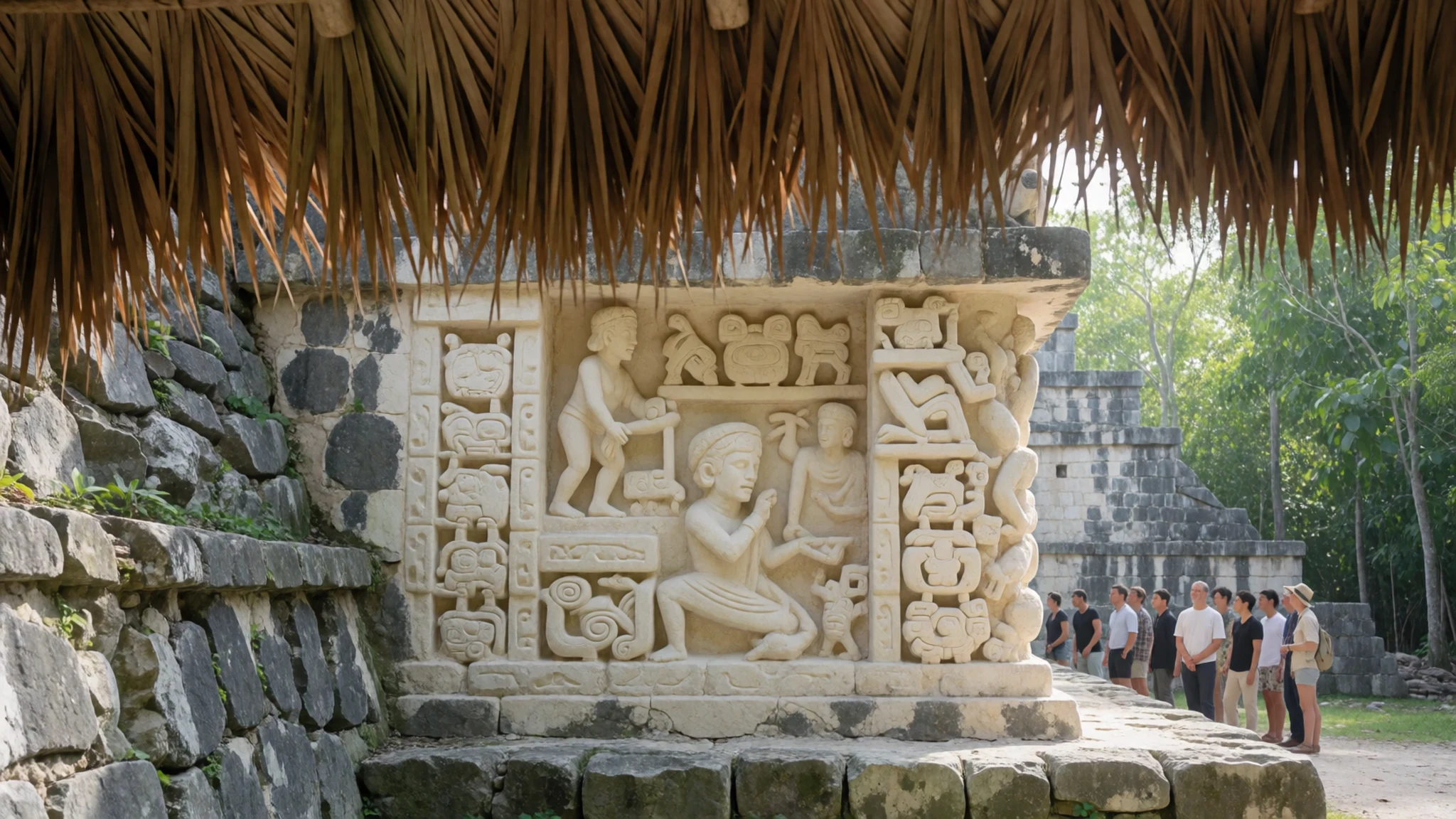
- The Oval Palace — South of the main plaza, near the city walls
The Oval Palace at Ek' Balam is a rounded building that held burial offerings, and its alignment suggests a link to ceremonies tied to the sky. It sits close to a stretch of the defensive walls, so one stop shows both the ritual and the military sides of the city.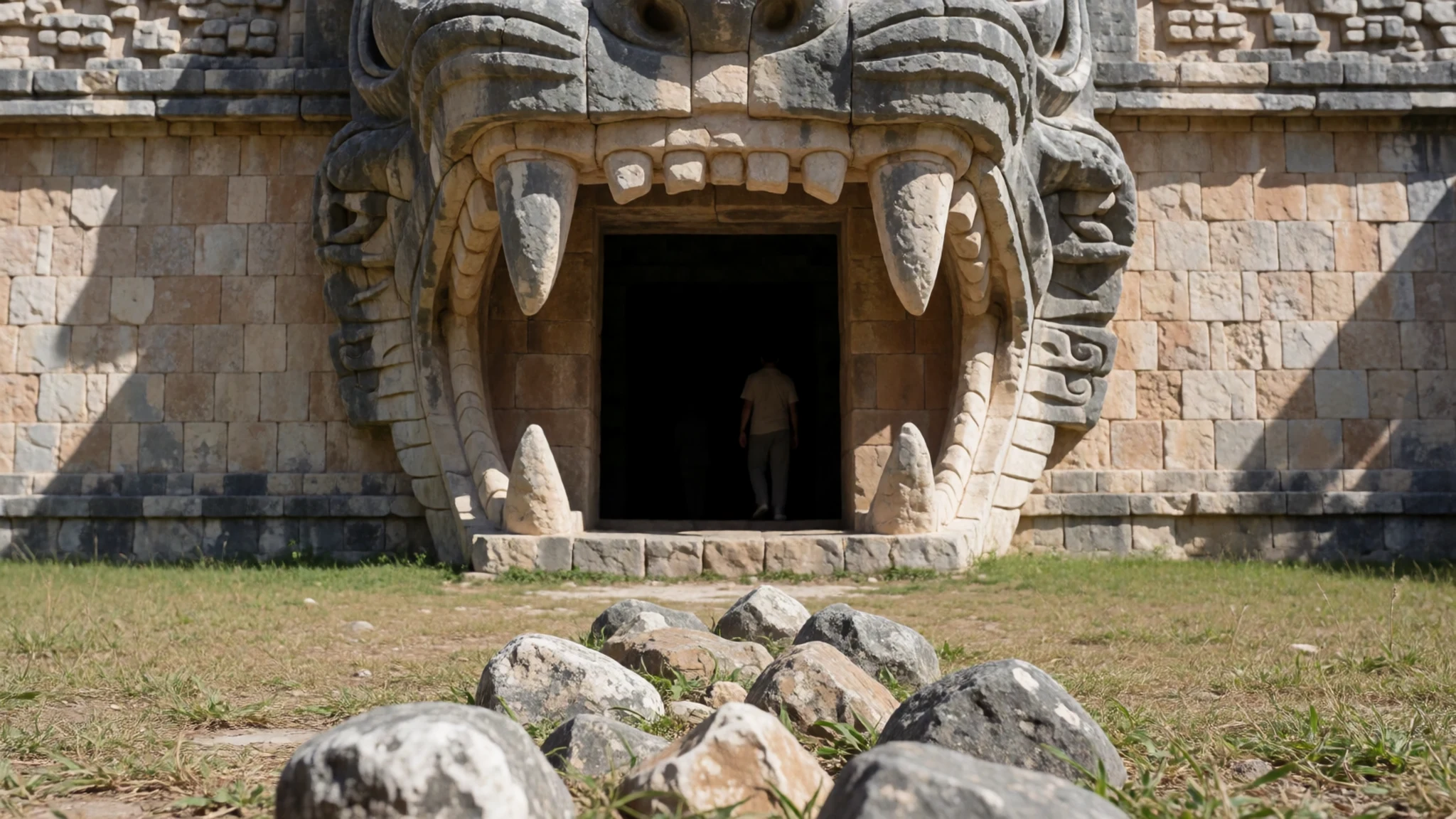
- The Twins — Central plaza area
The Twins at Ek' Balam is a structure topped by two matching temples, one on each side. The mirrored layout is the point: stand back across the plaza and compare them. Ek' Balam has several such platforms, and this one is among the easiest to read from ground level.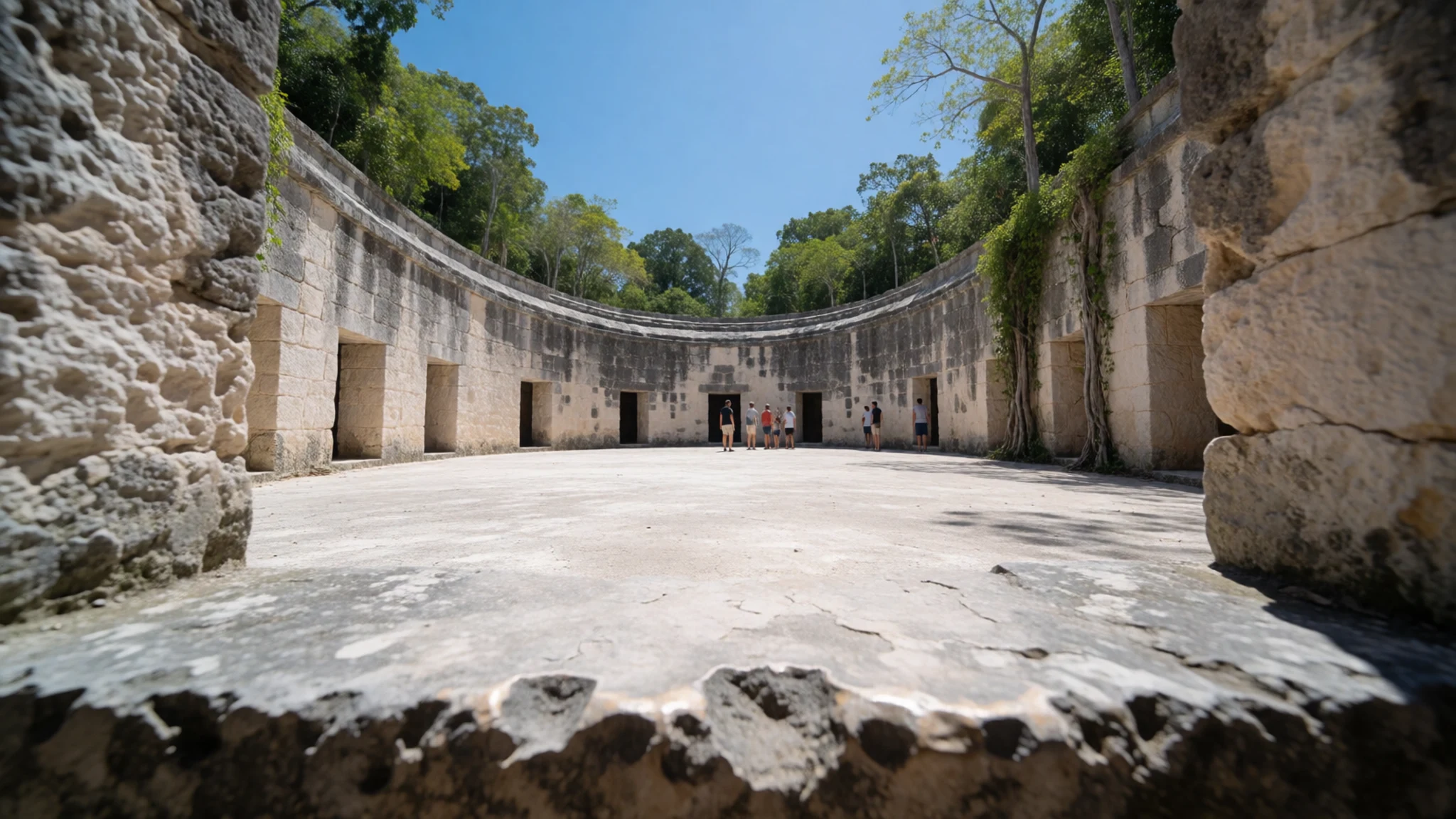
- The Acropolis — Northern side of the site
The Acropolis is the dominant pyramid on the north side of Ek' Balam, and the stairs are steep, so take them slowly, particularly coming down. From the top, forest stretches flat in every direction. Under the thatched shelters, plaster carvings and painted inscriptions are protected from rain.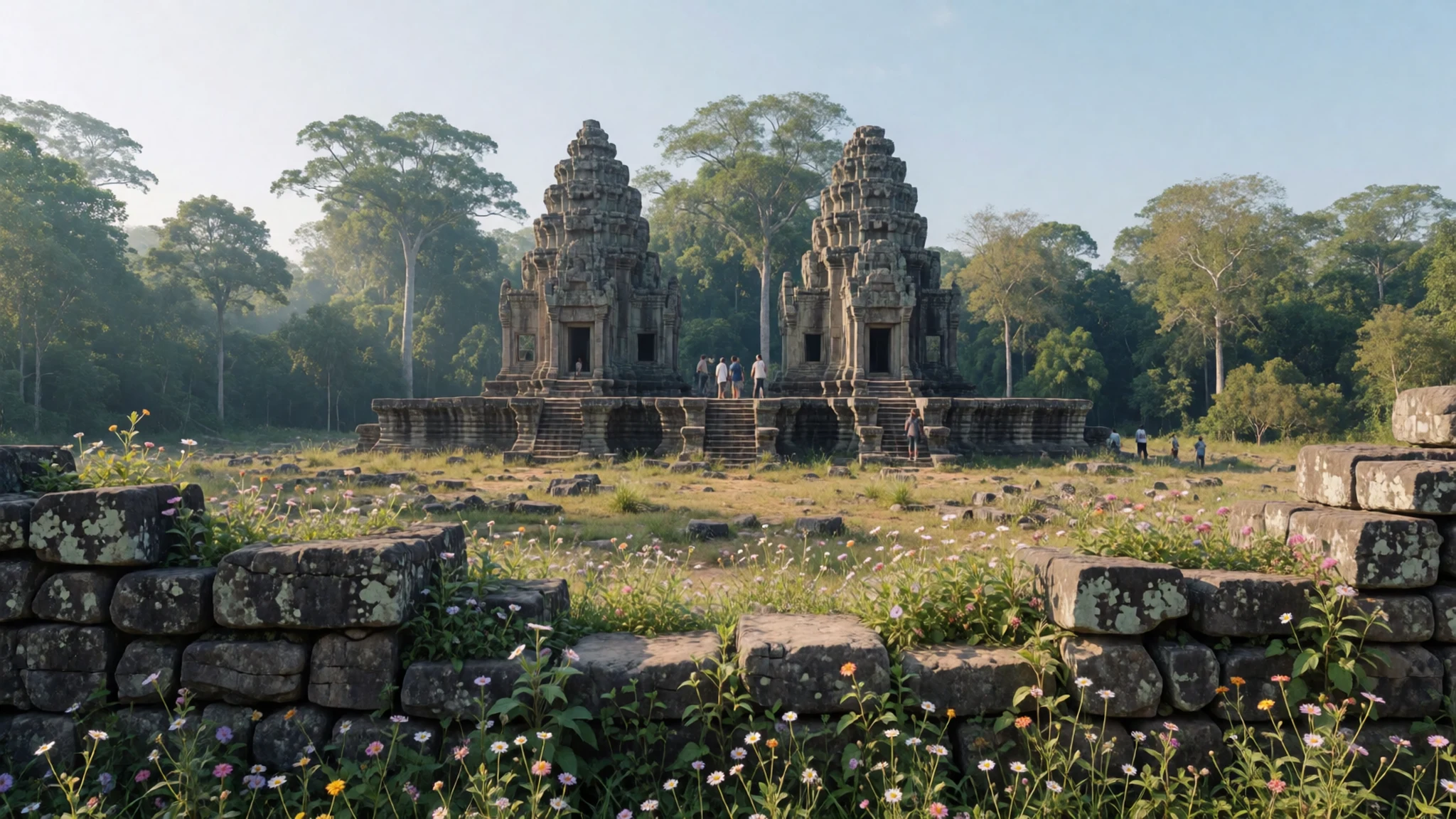
- El Trono, the throne tomb — Set into the Acropolis
El Trono is the temple where Ukit Kan Le'k Tok' was buried, built into the side of the Acropolis. Its doorway is shaped like a monstrous open mouth, possibly a jaguar. Modelled figures crowd around the entrance, and this is where the preserved plaster is easiest to appreciate.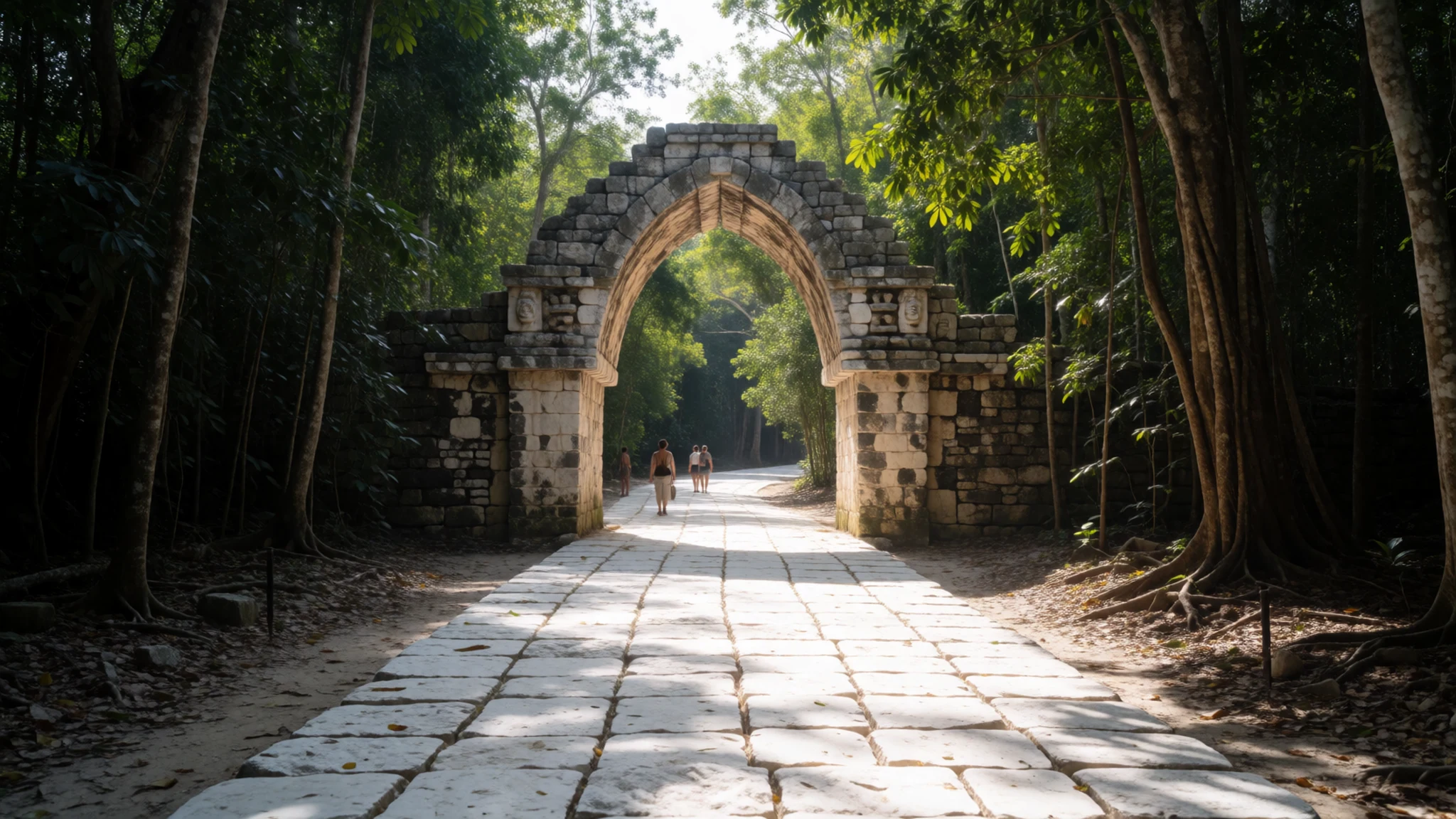
- Cenote Xcanche — About 2 km from the main entrance
Cenote Xcanche is a natural sinkhole with water, reached by a path of about 2 km from near the main entrance. Local people sometimes offer rickshaw rides along it, and bicycles may come with the ticket. A palapa restaurant stands along the road nearby, which makes a pleasant, cool end to a hot morning.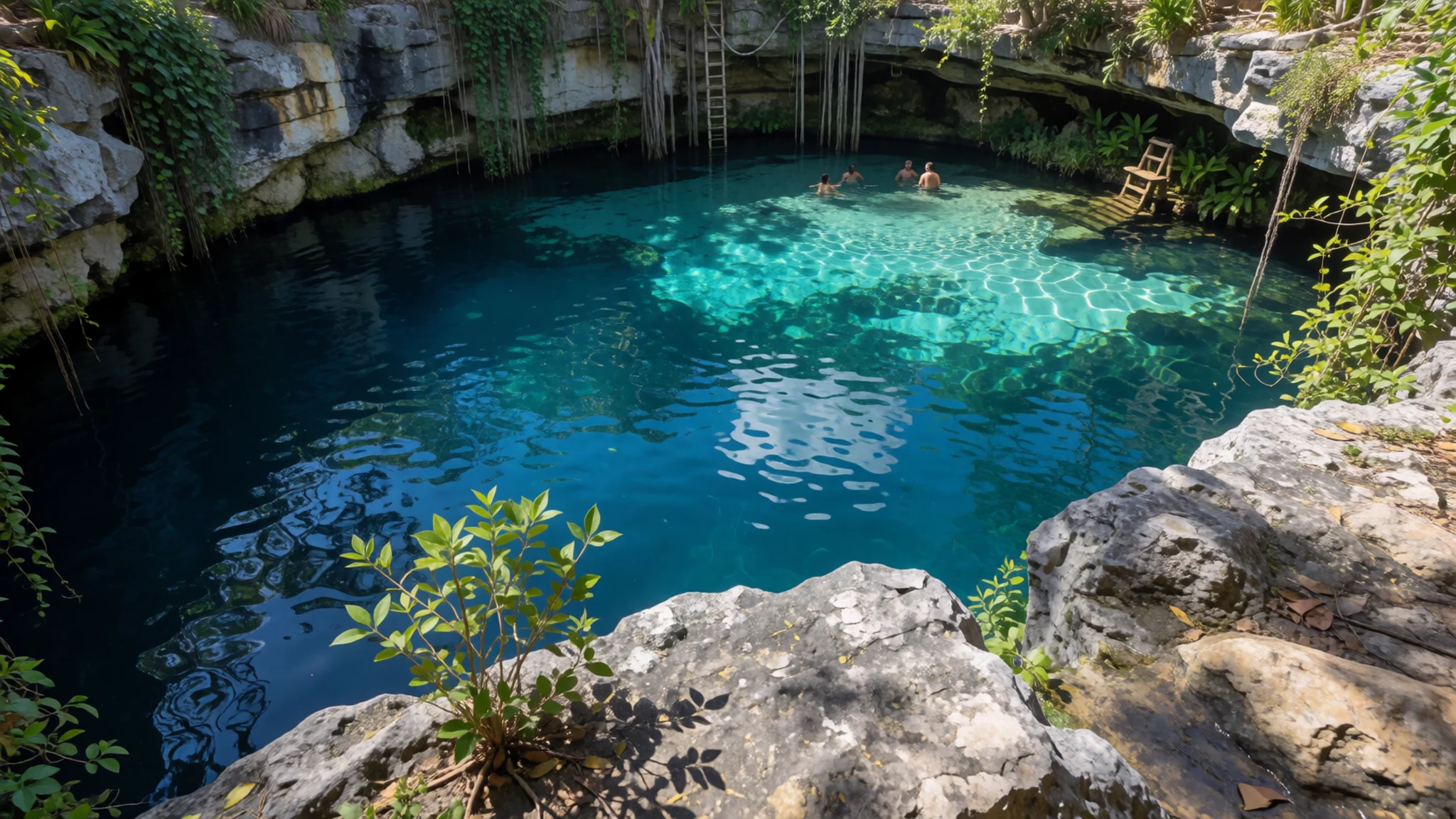
Culture
Ek' Balam sits in Yucatec Maya country, and the people living in the villages around it are Maya today, not just the builders of the ruins. Yucatec Maya is still spoken in the household and the fields, often alongside Spanish, and the language gives the site its name. The old city was a royal seat, and its stone, stucco and inscriptions record the claims of kings, their ancestors and their gods. The jaguar was a powerful symbol of rulership and the underworld, which is why the throne doorway, shaped like a great mouth, feels so deliberate. The sealed Acropolis also shows an attitude to sacred buildings: older temples were not simply knocked down but covered and carried forward inside new ones. Skies mattered to the Maya, and the alignment of the Oval Palace hints at ceremonies tied to the heavens. Today, the site is also a place of work for archaeologists, with excavation continuing on the Acropolis, and for local families who sell crafts, run the ticket office and guide visitors. Buying a hand-made item from a local vendor, or hiring a local guide, puts money into the community that lives beside the ruins. A few vendors near the car park may press visitors to pay them to watch a vehicle, and it is fine to decline politely. Do not climb on or touch the carved plaster and stucco, and stay on marked paths and stairs, because even a light touch damages work that has survived centuries.
What to wear
Around Ek' Balam, traditional Maya dress for women is the huipil, a loose cotton dress with a square neckline and bright cross-stitch flowers around the yoke and hem. A matching embroidered underskirt often shows below it. Men's traditional wear is the guayabera, a pleated cotton shirt, with a straw hat, and it appears at fiestas, weddings and saints' days. The finest huipiles are saved for festivals and are often passed down. In everyday life, people in the villages and in Valladolid wear much what is worn across Mexico: T-shirts, jeans or shorts, light dresses, and sandals or trainers, with older women still often in a plain cotton huipil at home or at the market. Visitors should dress for heat and for uneven stone. Light, loose cotton or linen, long enough to protect against the sun, works best, along with a wide-brimmed hat, sunglasses and sunscreen. Shoes with a good grip matter more than style, since the pyramid steps are steep and worn, and flip-flops are a poor idea on them. A light rain jacket helps during the wetter months. Because the site is an open archaeological area rather than a place of active worship, there is no strict dress code, but shoulders and knees covered suit both the sun and the respectful mood. For a swim at the cenote, bring swimwear and a towel, and a change of clothes.
What to eat
- Sopa de lima — Palapa restaurant on the road near Cenote Xcanche
A warm chicken broth sharpened with the local sour lime and topped with crisp tortilla strips. It is a classic of Yucatán cooking and is served at the palapa restaurant on the road near Cenote Xcanche.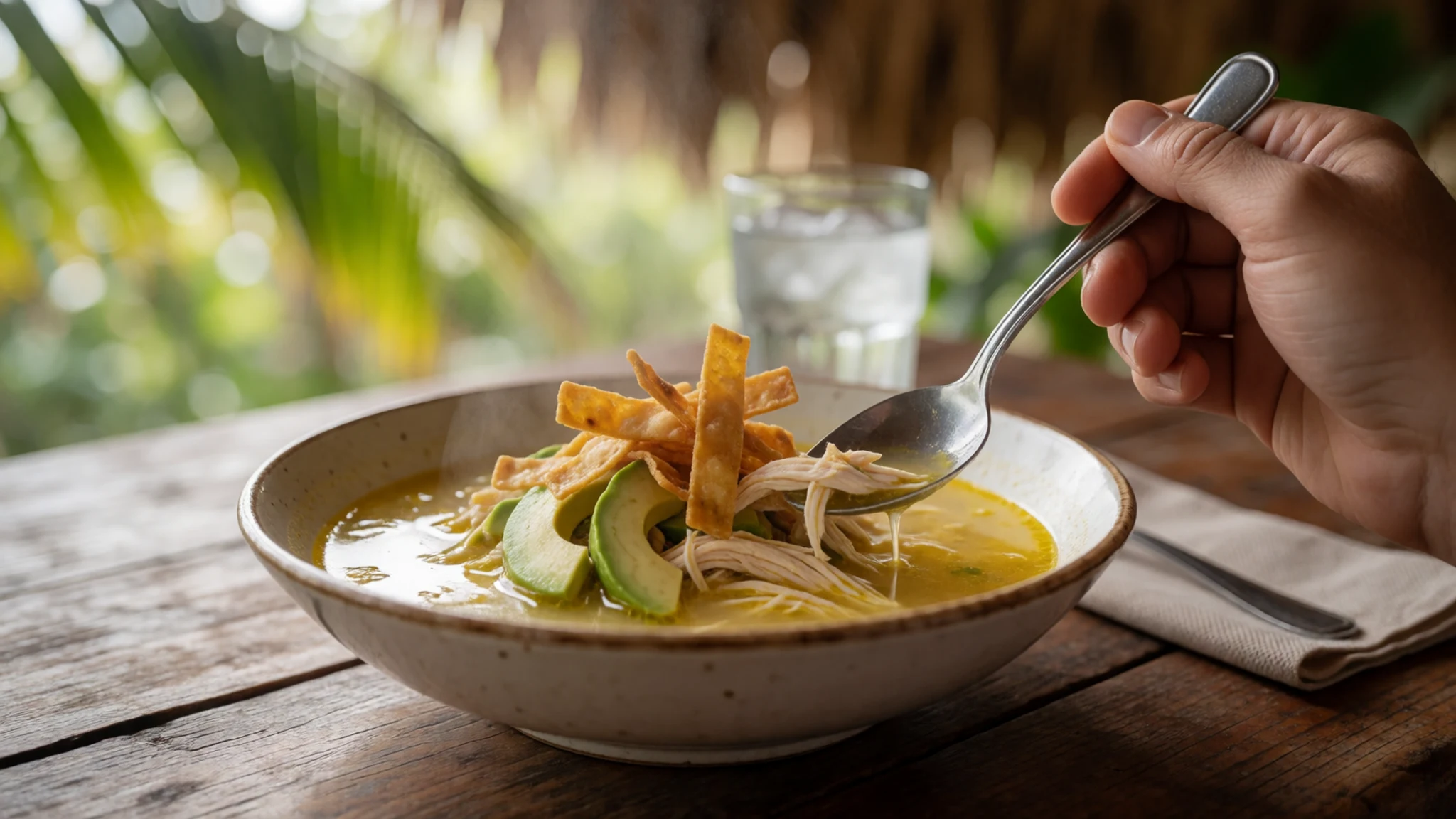
- Cochinita pibil — Valladolid market and simple local eateries
Pork marinated in sour orange and achiote, wrapped in banana leaf and slow-cooked until it falls apart, then served in tortillas with pickled red onion. Look for it at the market or at a simple eatery in Valladolid.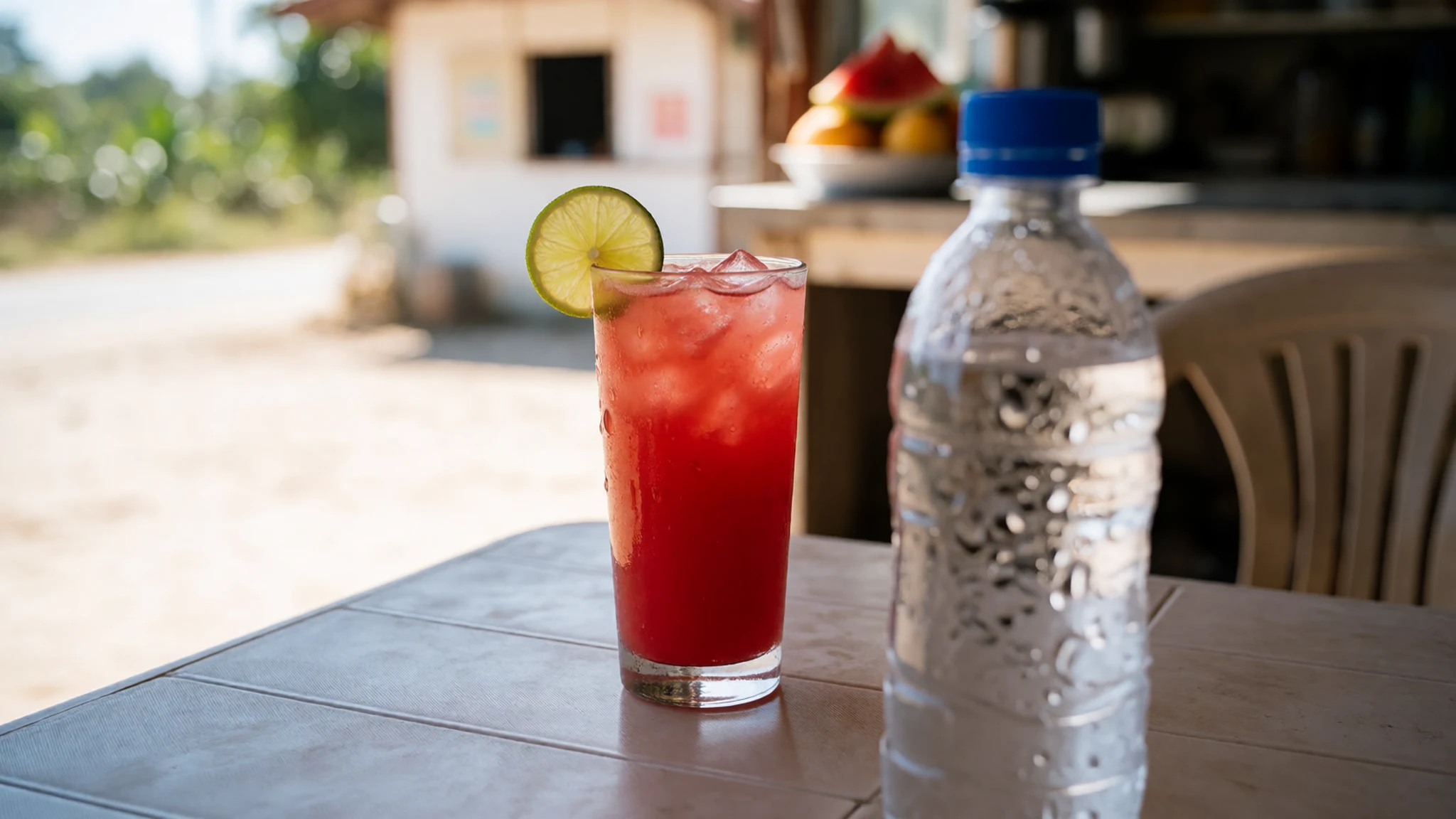
- Panuchos and salbutes — Street stalls and market counters in Valladolid
Fried tortillas, either stuffed with refried black beans (panuchos) or puffed and soft (salbutes), then topped with shredded turkey or chicken, lettuce and avocado. A popular late-morning snack in the towns around Ek' Balam. - Poc chuc — Family-run restaurants in Valladolid
Thin pork slices marinated in sour orange, grilled over charcoal and served with onion, beans and tortillas. It is straightforward, filling food that suits a day on the ruins. - Fresh fruit water — The small cafe near the entrance and market stalls
Agua fresca made from lime, hibiscus or tamarind keeps the heat at bay. Cold drinks are sold by a small cafe near the ruins, and nearby stands also offer ice cream.
Plan it
Best time. November to March, when the days are drier and the heat is easier to manage; the middle of the year is hot, humid and wetter, and midday on the open plazas is tough in any season.
How long. 1
Getting there. Fly to Mérida, or to a coastal airport and drive inland, then take the highway to Valladolid. Ek' Balam is a short drive north of Valladolid, and also close to Chichen Itza. No public buses run to the site, so use a car, a taxi, or a collectivo (a shared van) from the collectivo station in Valladolid, which leaves when full from early morning.
Budget. low
Tips
- Arrive early to climb the Acropolis before the heat and the tour groups
- Carry cash for tickets, parking, snacks and small purchases, and check the official site or ask locally for current entry fees and opening hours
- Bring plenty of water, a hat and sunscreen, as the plazas have little shade
- Combine the ruins with a swim at Cenote Xcanche to cool off
- Take the Acropolis stairs slowly, especially going down, if you are nervous of heights
Etiquette
- Do not touch or lean on carved plaster and stucco
- Stay on marked paths and stairs
- Politely decline unwanted offers to watch your car
Nearby
Sources
- Wikidata Q988570 (CC0)
- Wikipedia: Ek' Balam (rev 1379408151) (CC BY-SA 4.0)
- Wikivoyage: Ek Balam (rev 5304296) (CC BY-SA 4.0)
- Photo: Ekbalam-Wall-Round-Building.png, Dorothy Beals and Sarah Martin (CC BY 3.0)
- Photo: Ek-Balam Overview picture, Akke (CC BY 3.0)
- Photo: Arco de Entrada Ek Balam, Maurice Marcellin (CC BY-SA 1.0)
- Photo: Acropolis, Ek Balam, Adam Jones, Ph.D. (CC BY 3.0)
- Photo: Head of serpent with Mayan writing, Luis Miguel Bugallo Sánchez (CC BY 3.0)
- Photo: Ekbalam-Jaguar-Altar-Right.png, Elijahmeeks (CC BY 3.0)
- Photo: Ekbalam-left.png, Elijahmeeks (CC BY 3.0)
- Photo: Palacio Oval de Ek-Balam, Giovani Vazquez (CC BY 3.0)


