Dunhuang
Dunhuang, People's Republic of China
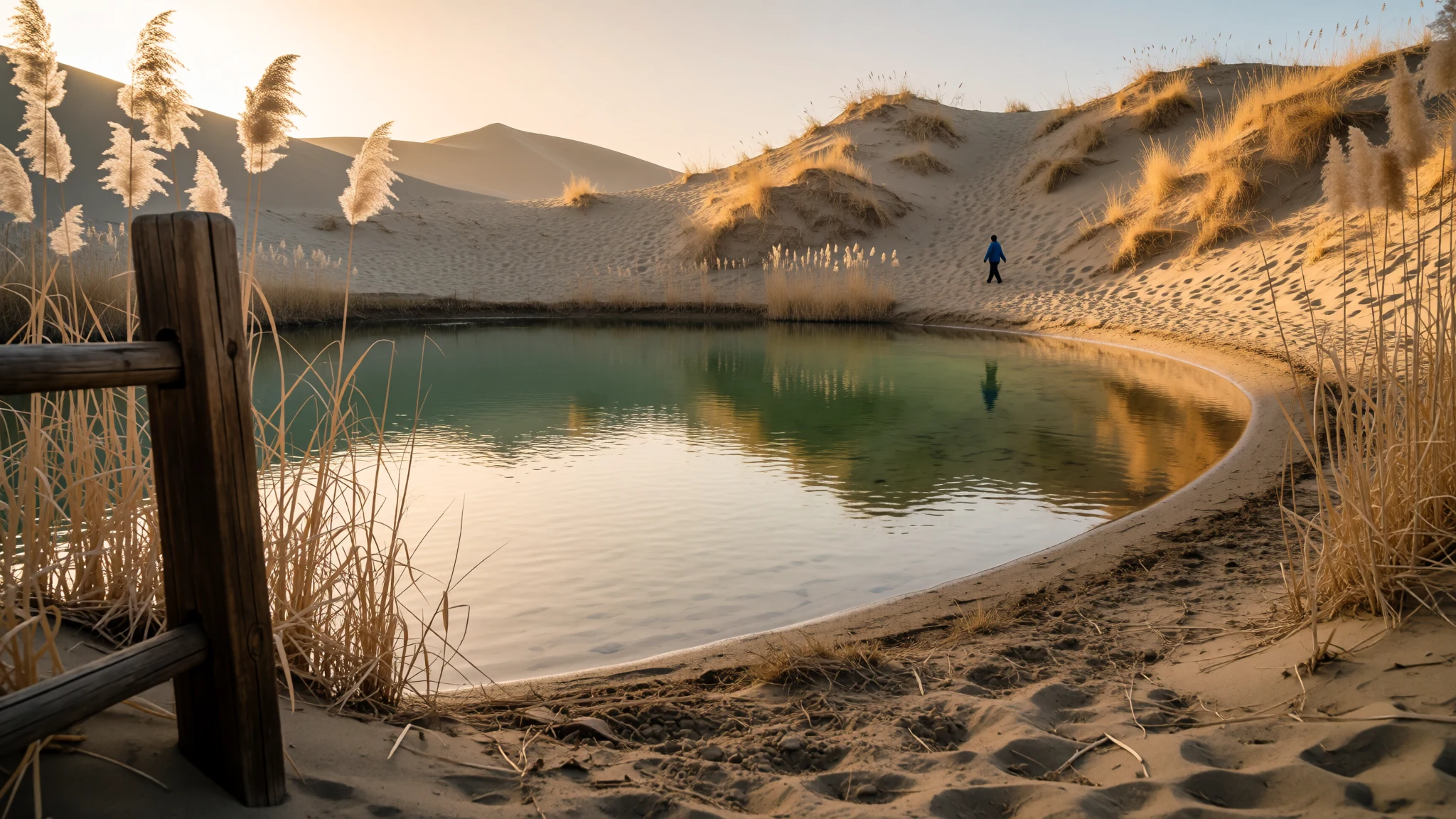
Dunhuang is a desert oasis where Silk Road monks left centuries of painted cave temples, with dunes and a lake nearby.
The place
Dunhuang is a small desert city in the north-west of Gansu Province, home to about 185,000 people and standing at 1,142 metres above sea level. It sits in an oasis, a patch of green and water pressed against open sand, and almost everything about the place follows from that. Administratively it belongs to Jiuquan prefecture. Older names for the area, Shazhou ("sand prefecture") and Guazhou ("melon prefecture"), sum up the two sides of the landscape: dunes on one hand, irrigated fields on the other.
The location mattered long before tourism. Two long-distance routes crossed here: the southern branch of the Silk Road, and the track that carried traffic from India through Lhasa towards Mongolia and southern Siberia. The oasis also lies at the western end of the Hexi Corridor, the passage that runs east towards the old capitals of Chang'an (now Xi'an) and Luoyang. Merchants, soldiers and monks all passed through, and the town grew up around their needs.
Today the centre is compact and easy to cover on foot, with a night market, a few cafés aimed at foreign travellers and a long-distance bus station. The sights lie outside it: the Mogao Caves about 25 km to the south-east, the Singing Sand Dunes and Crescent Lake a short way south of the city, and ruined frontier passes further out in the desert. Visitors should expect dry air, strong sun, cold mornings and evenings in the shoulder seasons, and distances that look short on a map but need a taxi, tour or hired car. Most people use Dunhuang as a base for two or three days before moving on along the Hexi Corridor or west by rail.
Its story
Dunhuang's story begins well before the caves. Evidence of people living in the area goes back to about 2,000 BC, and early Chinese texts link the region to Guazhou, a district known for its melons. The name also turns up in records about the Yuezhi, a people whose homeland scholars still debate; one suggestion is that Dunhuang echoes the name of the Tukhara, a Central Asian group widely thought to have branched off from them. By the Warring States period the oasis housed a mixture of peoples, among them the Dayuezhi, the Wusun and the Saizhong, which is the Chinese name for the Scythians.
That mixing set the pattern for what followed. As the Silk Road grew, Dunhuang became the last substantial stop before the empty desert to the west. The Han dynasty fortified passes out in that desert, Yang Pass and Yumen Pass, to protect the route. Merchants carried goods, soldiers kept watch and monks carried Buddhist ideas along the same tracks, and the oasis absorbed all of it.
Over the generations, worshippers cut shrines into the cliffs at Mogao, covering the walls with paint and filling niches with statues. The complex now counts 735 caves. At some point one cave was sealed up with a hoard of manuscripts inside, and these Dunhuang manuscripts have since become a major source for historians of the Silk Road. Finds have not stopped: they include part of a Christian Bible from the Yuan period, a reminder of how many faiths and languages once met in this one oasis.
What to see
- Mogao Caves — South-east of the city, in the cliffs above a dry valley
The Mogao Caves lie about 25 km south-east of Dunhuang and hold 735 caves with painted walls and Buddhist statues. A sealed cave here once held the Dunhuang manuscripts. Entry arrangements change, so check the official site before travelling and allow at least half a day.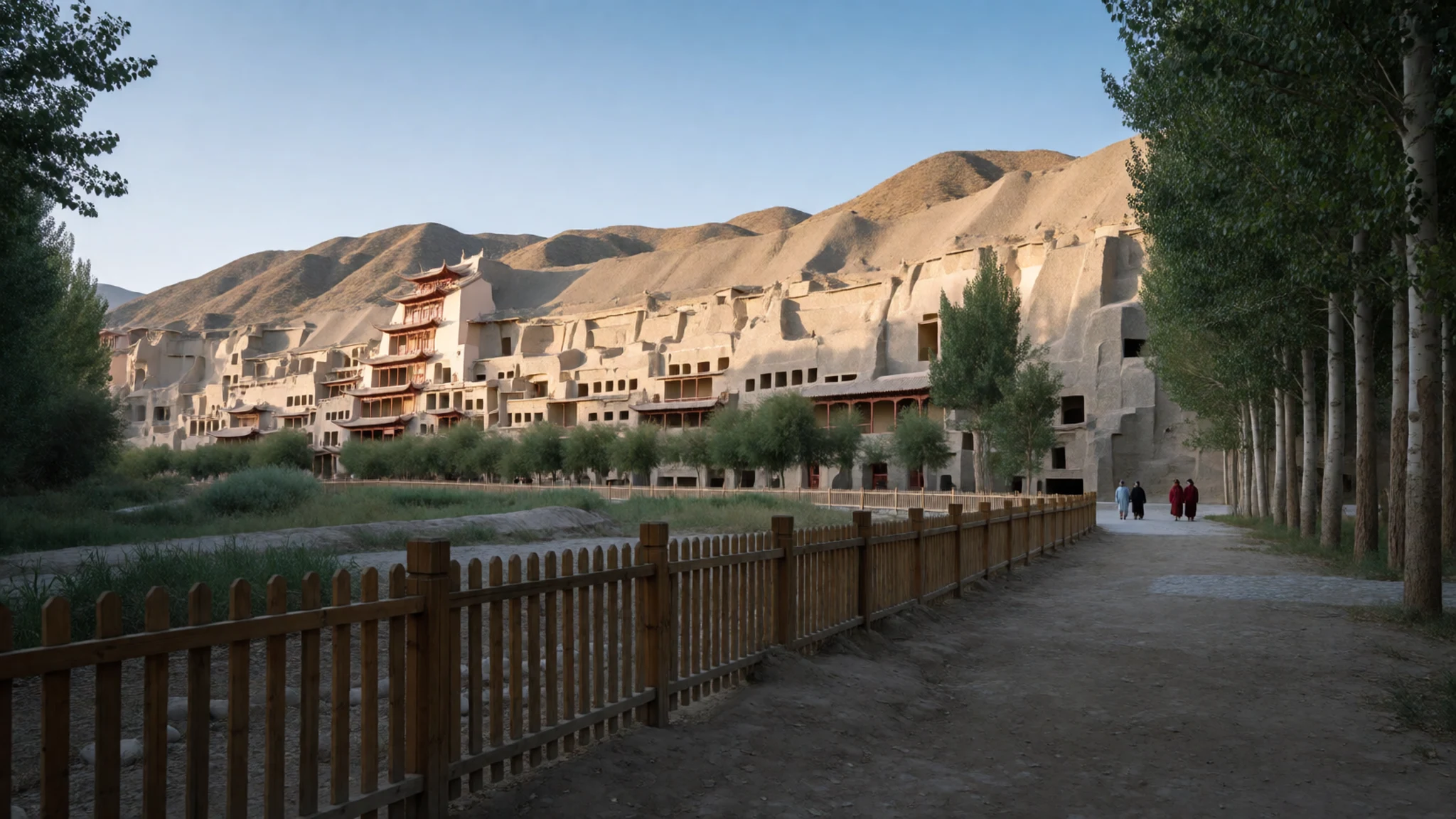
- Singing Sand Dunes and Crescent Lake — Just south of the city
The Singing Sand Dunes and Crescent Lake sit a short way south of the city, which makes them the easiest sight to reach. The dunes are walkable, the lake is a small pool held in dry sand, and a fence marks parts of the route. Go near sunrise or late afternoon, when the heat eases.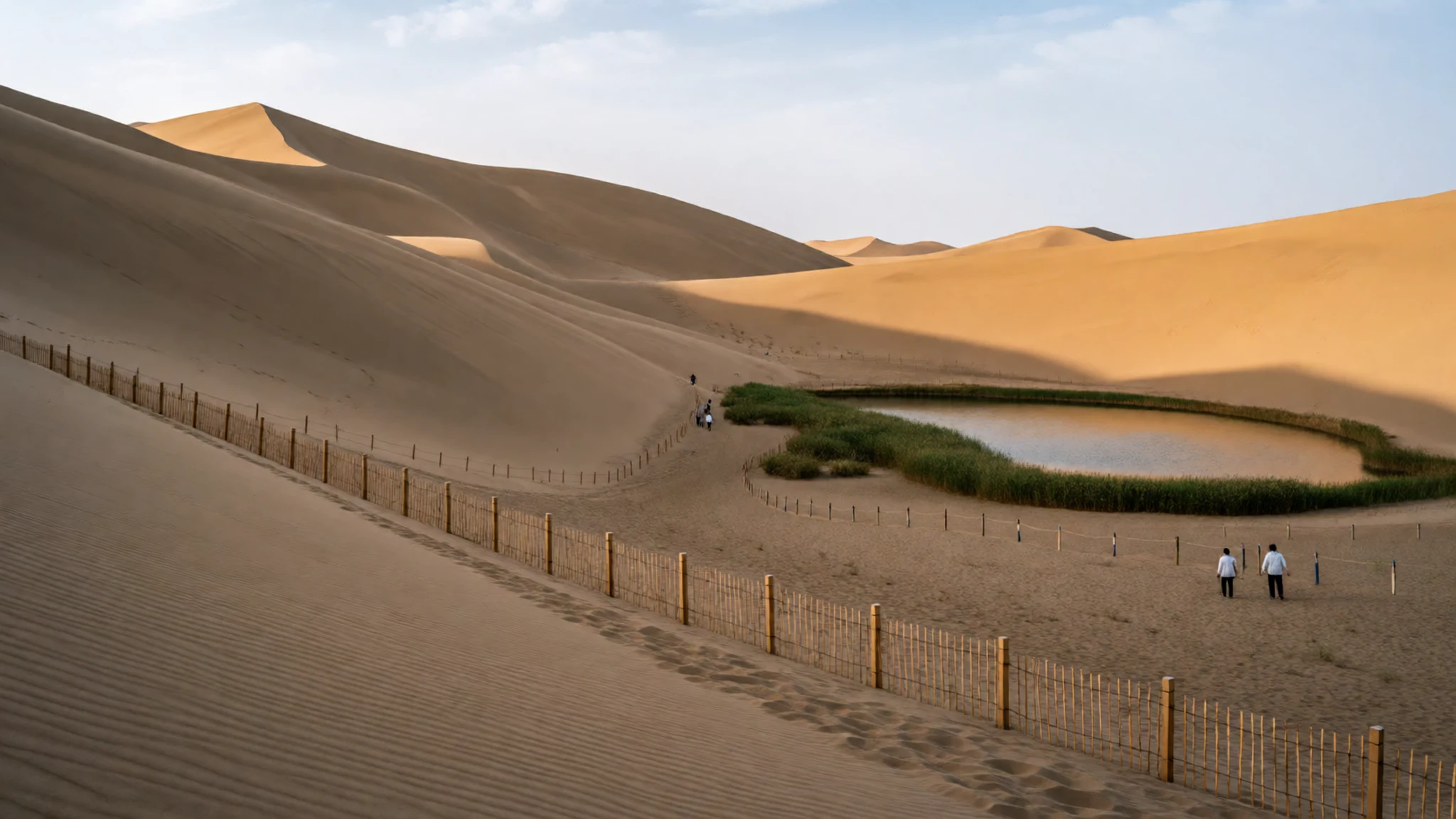
- Yang Pass and Yumen Pass — Desert west and south-west of the city
Yang Pass and Yumen Pass are ruined frontier posts out in the desert, both fortified under the Han dynasty to guard the Silk Road. Little survives beyond walls and earth, so they suit people who like empty landscapes and history more than finished monuments. They lie well beyond town, so arrange transport in advance.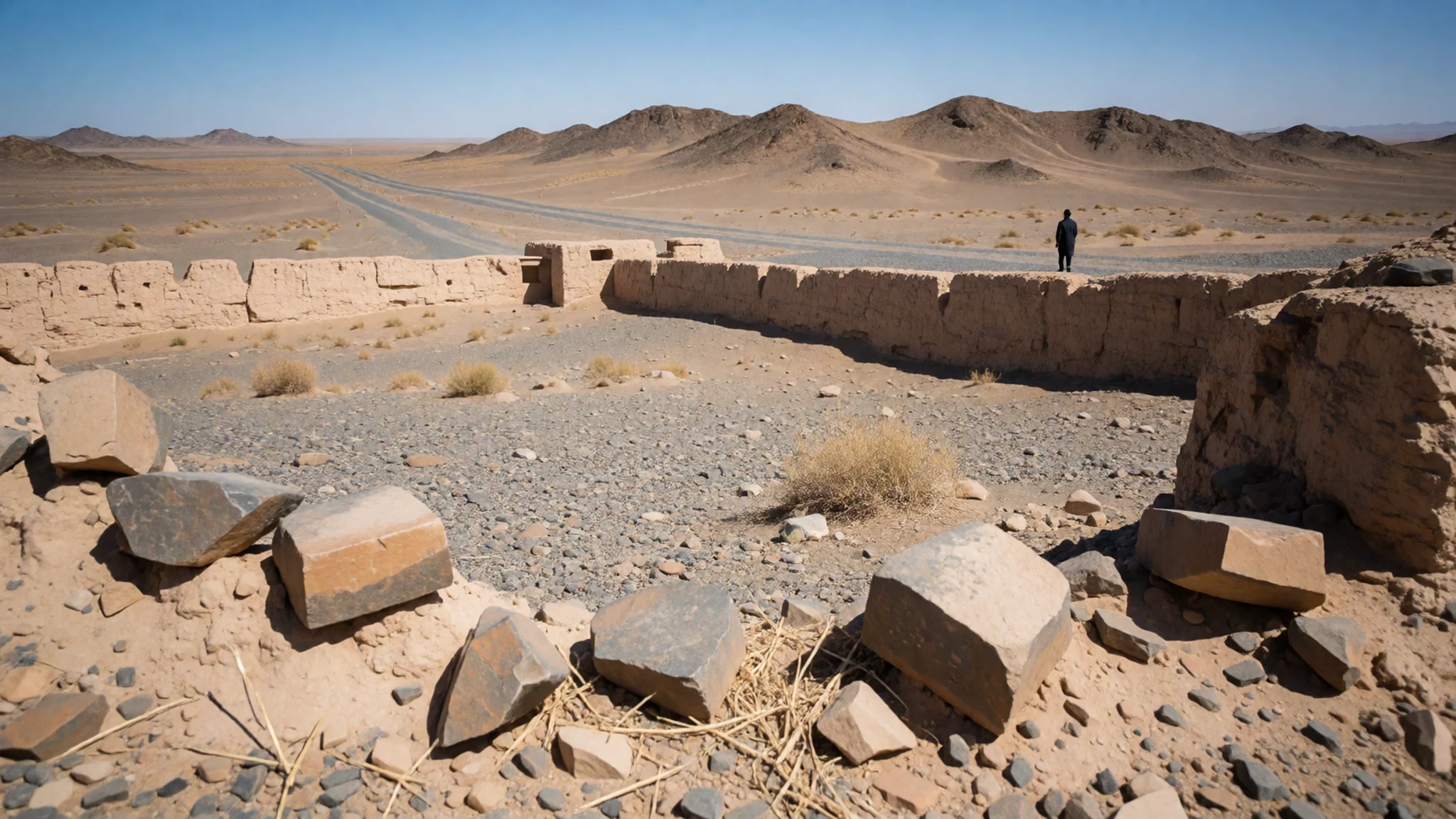
- Huyang Forest — North-east of the city
Huyang Forest is a small stand of rare poplars north-east of the city, where some trees are more than 600 years old. It makes a quiet walk away from the town and the tour groups. Do not confuse it with another forest of the same name in Jinta County.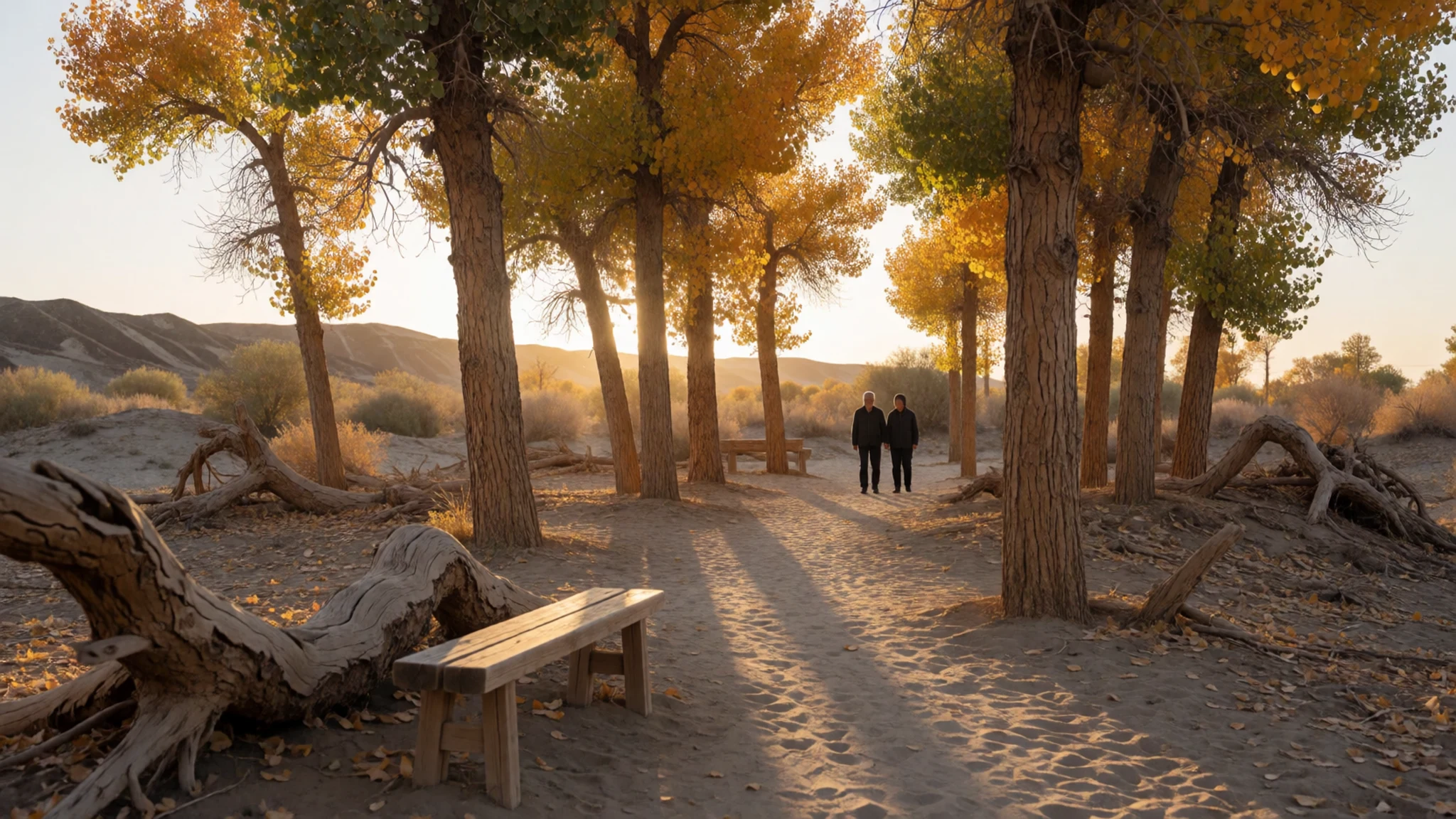
- White Horse Pagoda — Near the town
The White Horse Pagoda is a 12-metre stupa whose construction was ordered by the Buddhist translator Kumarajiva in 384. It is modest beside the caves and dunes, but it ties the town directly to the monks who travelled the Silk Road. Worth a short stop rather than a dedicated trip.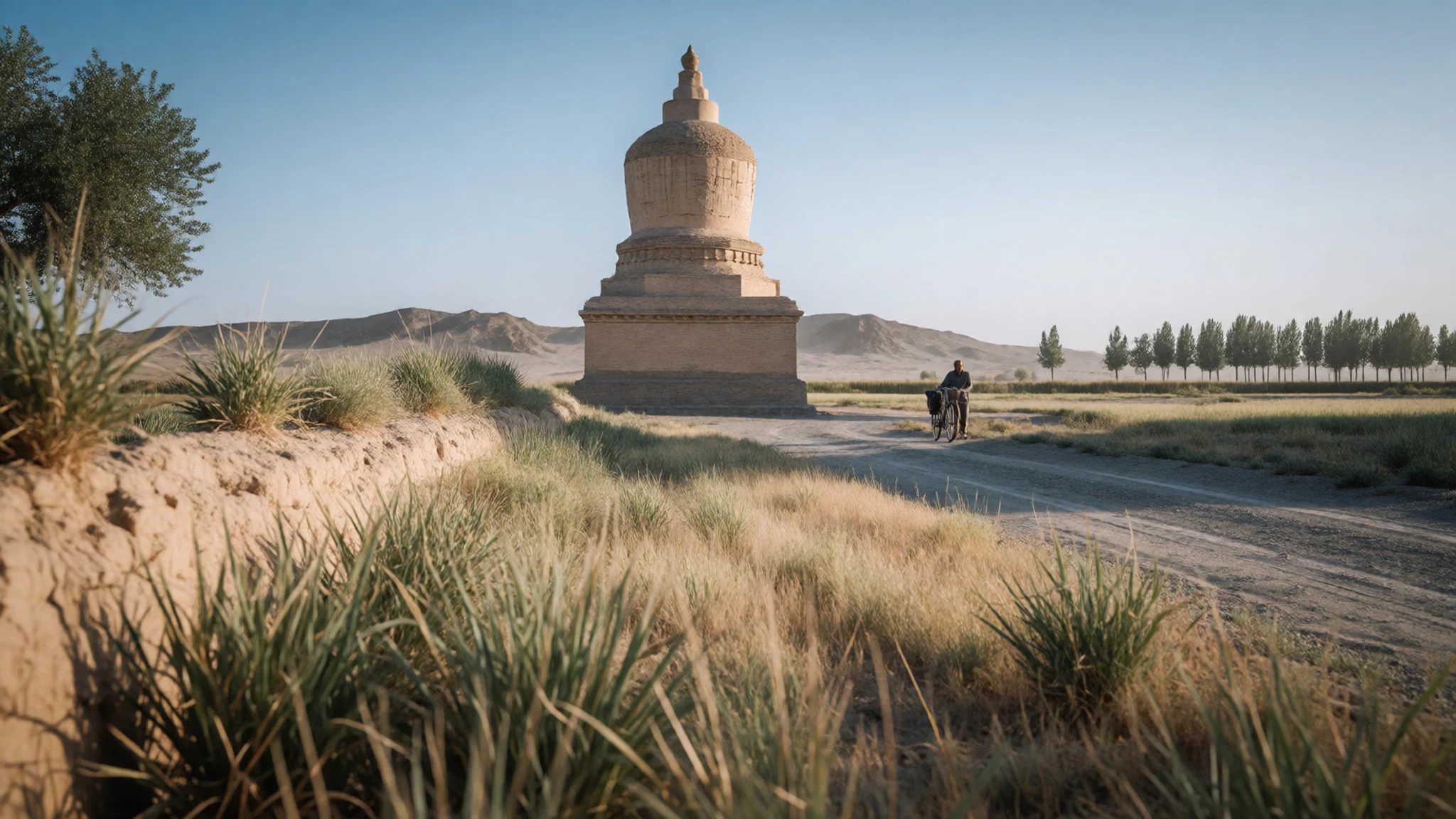
- Western Thousand Buddha Caves — Desert and cliffs outside the city
The Western Thousand Buddha Caves are one of several smaller Buddhist cave sites around Dunhuang, alongside the Eastern Thousand Buddha Caves and the Five Temple site. Their wall paintings include work from the Northern Wei period by anonymous artist-craftsmen. Access to the smaller sites can vary, so ask locally or check the official site before arranging transport.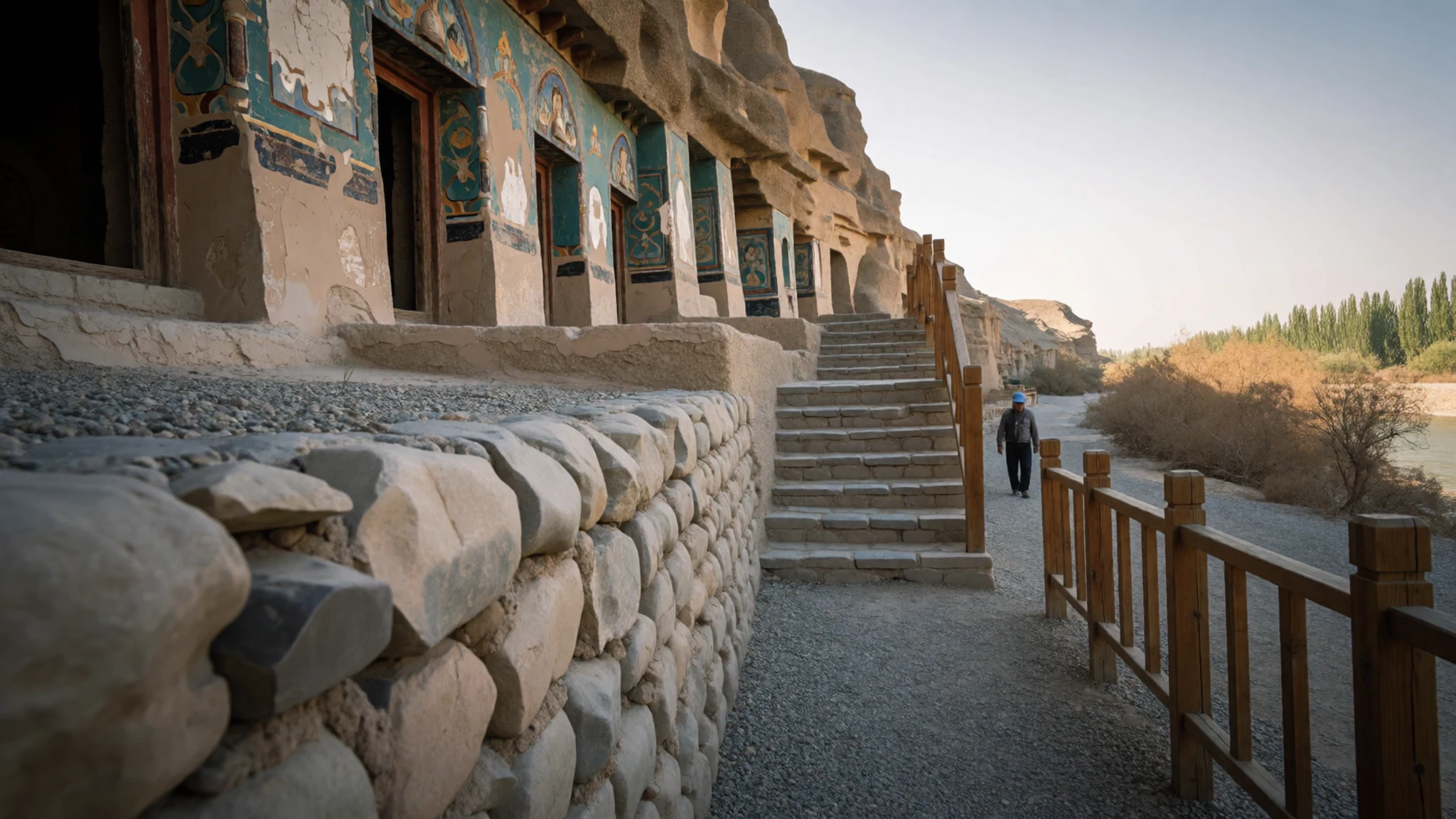
Culture
Dunhuang's culture is shaped by its role as a stopping place on the Silk Road, where Buddhism arrived with travelling monks and took lasting root. The cave temples cut into the cliffs around the oasis are the clearest result: walls covered in murals, niches filled with statues, and a tradition of worshippers adding to them over generations. The Mogao complex, with 735 caves, is the best known, but smaller sites such as the Western and Eastern Thousand Buddha Caves and the Five Temple site belong to the same tradition.
The manuscripts found sealed inside one cave show how mixed the old oasis was. Alongside Buddhist texts, later discoveries have included part of a Christian Bible from the Yuan period. Dunhuang was a place where languages, faiths and traders overlapped, and that layered past is what local guides and museums try to convey.
In the present-day town, the Silk Road identity is everywhere: in shop names, statues, souvenirs and the evening night market, where lamb skewers and yoghurt are sold under strings of lights. The caves, though, remain the real record, and most visitors come away with a sense of how much a small desert town contributed to the wider Buddhist world.
At Mogao and the other cave temples, follow the guide's rules on photography and touching, because flash and contact damage the old pigments, and keep your voice low inside the caves.
What to wear
Dunhuang has no single regional costume, and the best record of old dress is painted on the cave walls, where figures wear long robes, wide sleeves, flowing scarves and the silks that travelled the Silk Road. The celestial dancers known as feitian, trailing ribbons through the air, are the best-loved image from those murals and have shaped how the town presents itself. Traditional Han Chinese clothing, hanfu, is made from silk, cotton or hemp and is now worn mainly for festivals and photographs, and some visitors hire costumes for pictures on the dunes.
Day to day, people in Dunhuang wear the same practical modern clothes as elsewhere in northern China: jeans, jackets and trainers, with hats and sunglasses in summer and padded coats in the cold months. Evenings at the night market are casual.
For visitors, the desert sets the rules. Pack a wide-brimmed hat, sunglasses, sunscreen and a light long-sleeved shirt, plus a warm layer for early mornings and evenings, which can be cold even outside winter. Wear closed shoes with grip for sand and uneven paths, and carry a scarf to cover the face in wind. At cave temples and shrines, covered shoulders and knees are respectful, and the caves themselves can feel cool after the heat outside.
What to eat
- Lamb and vegetable skewers — The night market stalls in the town centre
Skewers of grilled lamb, potato, mushroom and bread are the standard evening snack in Dunhuang, cooked over charcoal and seasoned with cumin and chilli. Order a few of each and eat them standing or at the plastic tables beside the stall.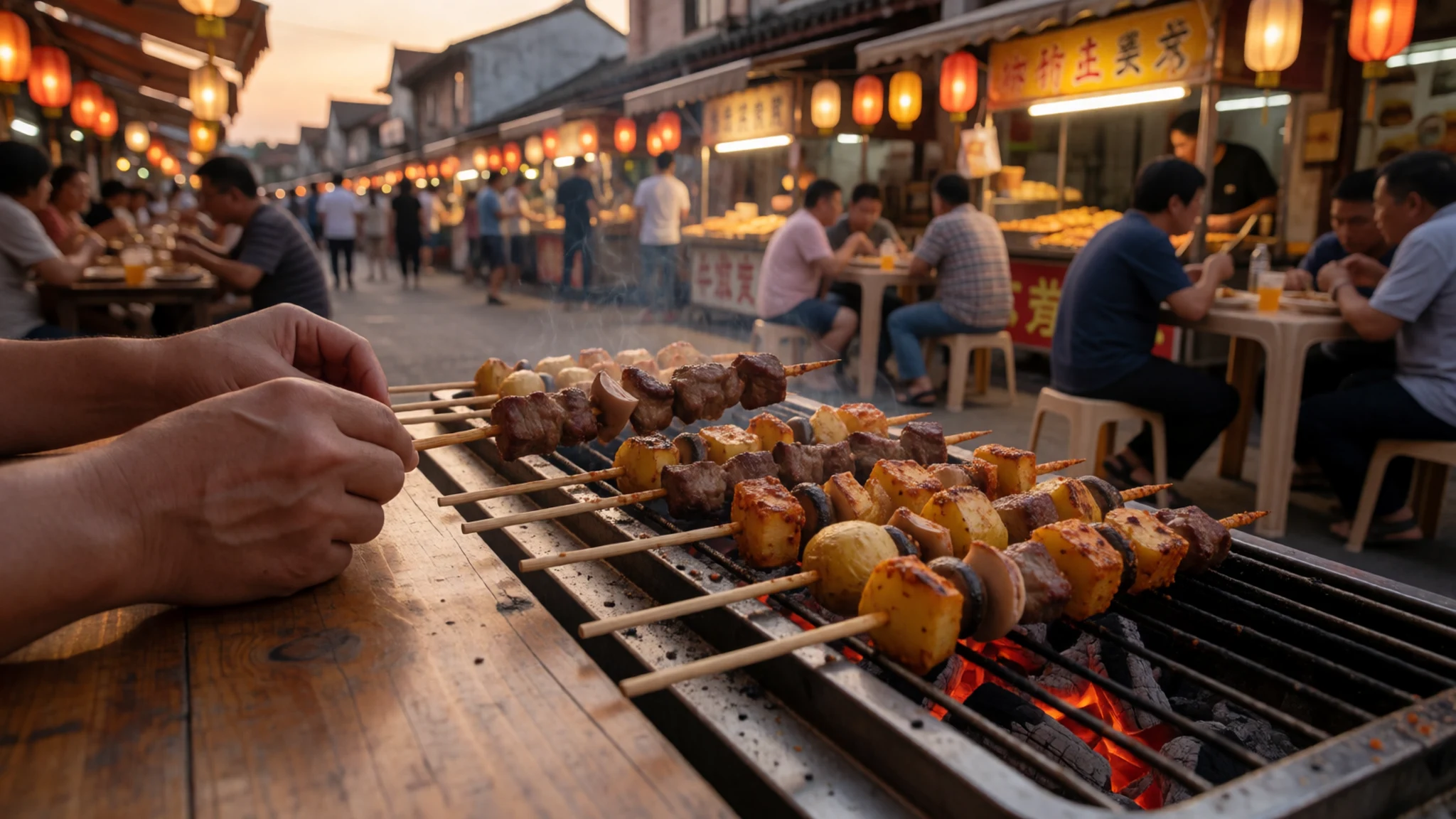
- Yoghurt — Night market stalls, next to the skewer sellers
Thick, cold yoghurt, often eaten from a small cup or bowl, is sold alongside the skewers and makes a cooling counterpoint to the spicy meat. It is a simple, inexpensive way to settle into the evening after a hot day in the desert.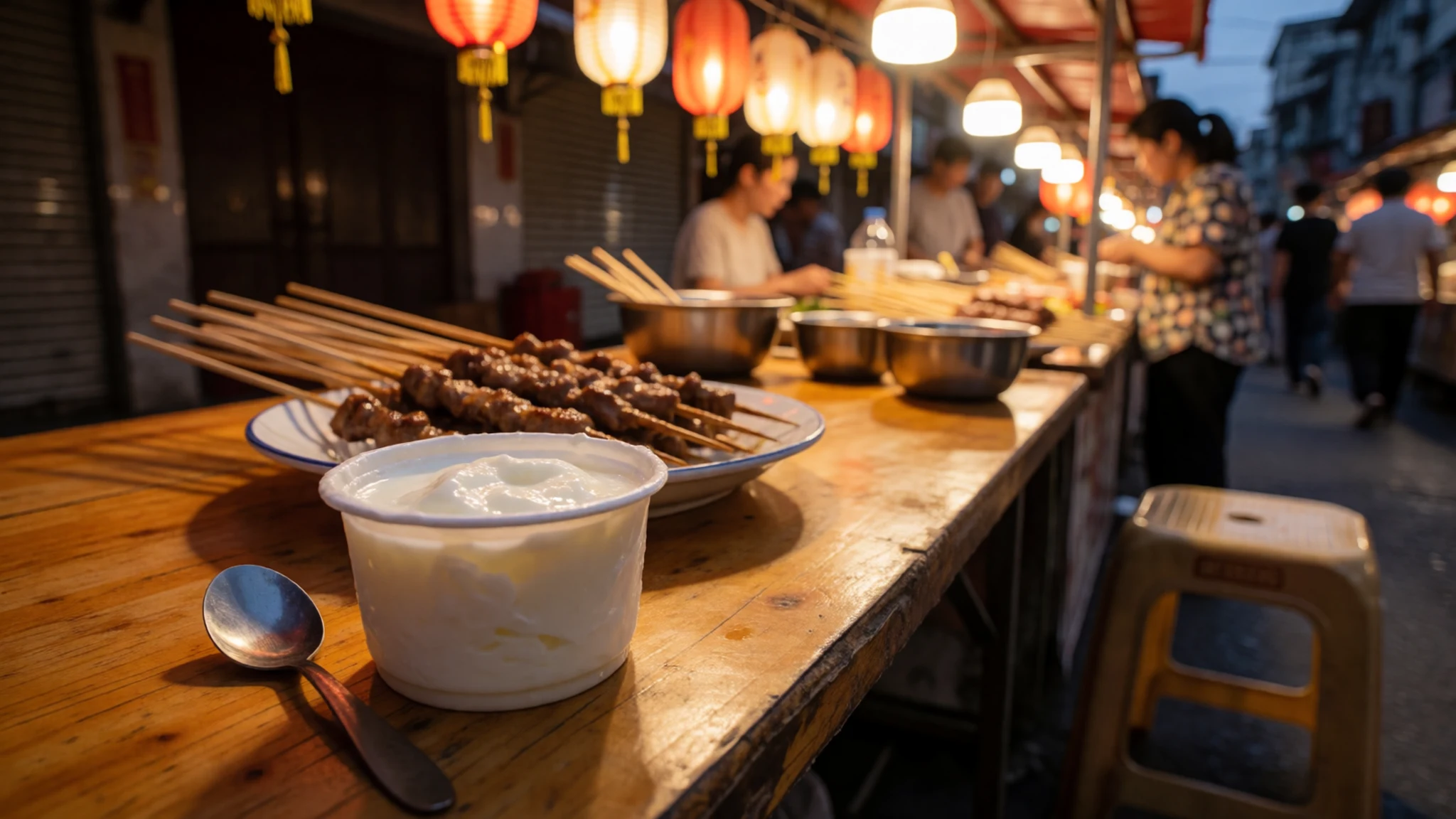
- Cross-bridge rice noodles (mixian) — Small noodle eateries in the town centre
Rice noodles served with a hot broth and a selection of sauces and toppings, a dish from Yunnan far to the south-west. A small Yunnan-run eatery in town serves a tasty version, and a Chinese speaker helps with the sauces. - Donkey-meat yellow noodles — Local noodle shops around the old town
Yellow noodles topped with sliced donkey meat are a common local speciality in this part of Gansu. The noodles are chewy and the meat is lean and savoury. Ask for it by name if you want to try it. - Melons — Fruit stalls and the night market, in season
Guazhou, an old name for the area, means "prefecture of melons", and fruit from the oasis is a good reason to linger over the market in season. Slices are cheap, cold and refreshing after a day among the dunes.
Plan it
Best time. April–May and September–October, when the desert heat is manageable and days are long enough for the caves, dunes and passes. Summer is hot and dry with strong sun, and winter is cold, so pack accordingly.
How long. 2–3
Getting there. The city has its own airport, so check current flights on official airline sites. By rail, Dunhuang has direct trains to Jiayuguan, Zhangye and Lanzhou; for Xi'an, change at Lanzhou rather than taking the direct train, which runs for about a day. For Urumqi, take a bus from Dunhuang Bus Station to Liuyuan and catch a train there. Check timetables before booking.
Budget. mid
Tips
- Book Mogao entry ahead through the official channels, and check the Dunhuang city website (http://www.dunhuang.gov.cn/) for current information
- Start long outings early, before the midday sun, and carry water and sun protection to the dunes and passes
- Carry some cash as well as cards, as foreign cards are not accepted everywhere
- Buy water and snacks at the supermarket opposite the long-distance bus station before heading out
- Arrange transport for the frontier passes and Huyang Forest in advance, as they lie well beyond the town
Etiquette
- Follow guide instructions in the cave temples, and do not touch the murals or use flash
- Keep your voice low and dress modestly at religious sites
- Ask before photographing people, especially at the night market
Nearby
Sources
- Wikidata Q319114 (CC0)
- Wikipedia: Dunhuang (rev 1384515737) (CC BY-SA 4.0)
- Wikivoyage: Dunhuang (rev 5401358) (CC BY-SA 4.0)
- Photo: The view from my room at the Yang Guan Hotel, Dunhuang (Randy Rambo) (CC BY 3.0)
- Photo: Jiucenglou of Mogao Caves (慕尼黑啤酒) (CC BY 3.0)
- Photo: Crescent Lake, Dunhuang (Sigismund von Dobschütz) (CC BY 3.0)
- Photo: Dunhuang watchtower in the morning light (The Real Bear) (CC BY 2.5)
- Photo: Yumenguan (张骐) (CC BY 3.0)
- Photo: Cave 7, Western Thousand Buddha Caves (Northern Wei artist-craftsmen) (Public domain)
- Photo: Solar panel field, Dunhuang (Popolon) (CC BY 3.0)
- Photo: Location of Dunhuang within Gansu (Croquant) (CC BY 3.0)


