Donghae
Donghae, South Korea
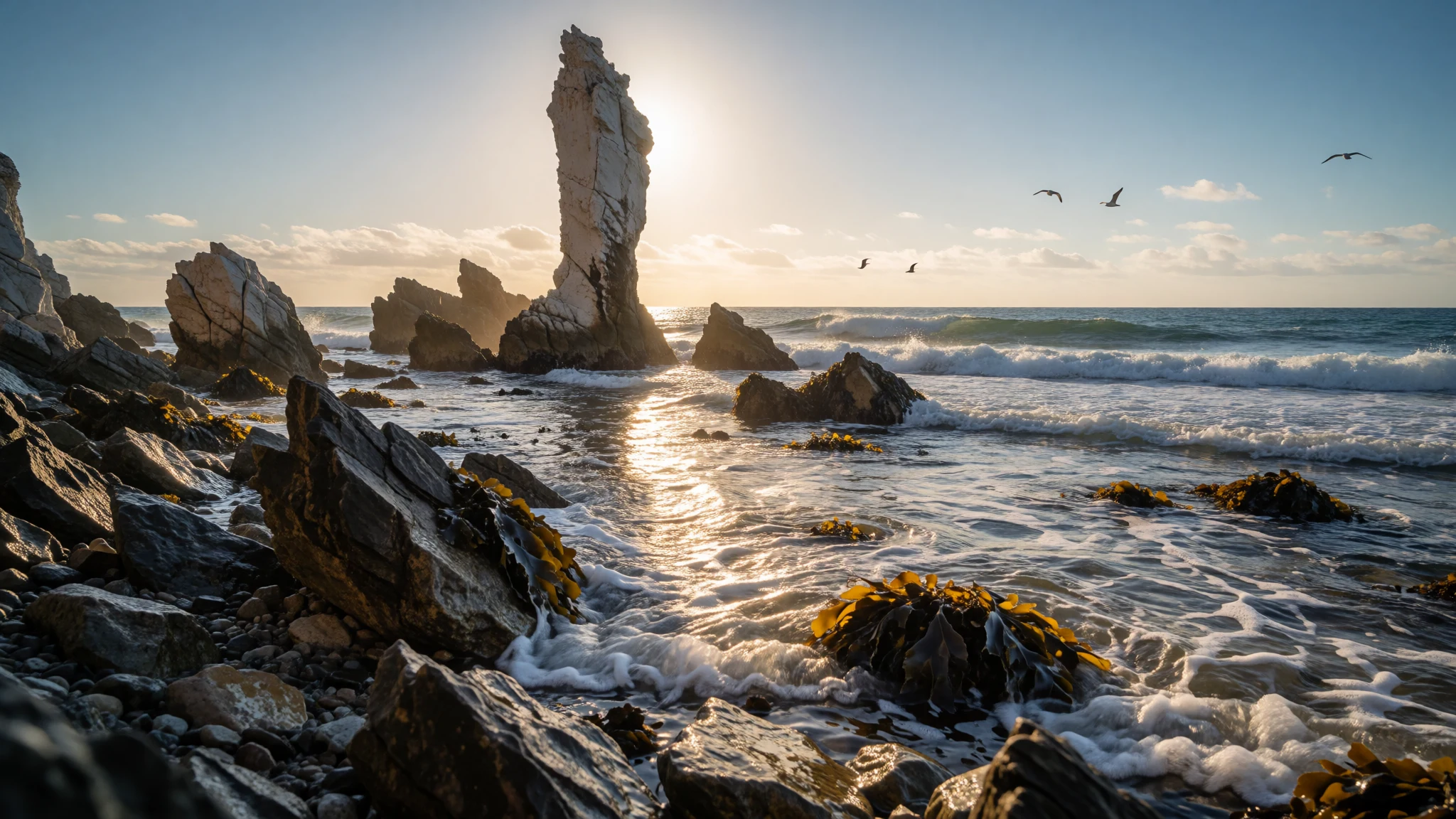
Donghae is a working east-coast port where sunrise sea-rocks, harbour lanes and fresh flounder sit close to the ferry for Ulleungdo.
The place
Donghae sits midway along South Korea's east coast in Gangwon Province, with Gangneung to the north and the hills of Jeongseon County to the west. Its name means 'East Sea', and the sea is the point. Two harbours, Mukho and Donghae, anchor the city, and the Taebaek Mountains rise close behind, squeezing everything into a narrow coastal strip. Caves and a wooded valley called Mureung lie in the hills, and the beaches are modest local ones rather than resort sands. Fewer than a hundred thousand people live here, and the feel is of a working town. Cement and cargo built the economy, and the central district around Cheongok-dong is functional, all concrete blocks and bus-station bustle. The charm is down at Mukho, where fishing boats, murals on hillside lanes and a lighthouse look over the water. Donghae is also the usual gateway to Ulleungdo, the island out in the East Sea, with ferries leaving from Mukho. The climate is gentler than much of Korea: the mountains block the worst of the winter wind, so winters are dry and sunny, while summers are warm and humid and the rain concentrates between July and September. Typhoon weather brings rough seas and cancelled sailings. Rail, expressway and bus all reach the city, so it works as an easy stop on a longer coastal trip as well as a short break on its own.
Its story
Donghae the city is young, even though the coast it occupies is not. In 1980 two separate towns, Mukho in Myeongju County and Bukpyeong in Samcheok County, were combined into one municipality under a single name. The reason was industry: heavy chemicals, a busy fishing fleet and trade through the port had turned the area into an urban cluster, and a city charter matched that reality. The new name, 'East Sea', was a plain geographical label rather than an old local tradition. That history explains the city's split personality. Mukho is the older fishing and port quarter, with lanes climbing a hill and a lighthouse first lit in 1963, later replaced by a taller tower in 2007. Bukpyeong, further south, grew around the railway and the newer international ferry terminal, closer to the cement and cargo side of the economy. In recent years the city has tried to soften its industrial image by renewing hillside neighbourhoods around Mukho, adding viewing platforms and painting murals along the lanes. The railway has changed too: a coastal line now runs south towards Pohang and Busan, so Donghae no longer feels like the end of a mountain route. The result is a place still defined by ships and rock, slowly learning how to receive visitors.
What to see
- Chuam Candle Rock — Southern edge of the city, near Chuam Beach
Chuam Candle Rock is a slender pillar rising from the sea among smaller rocks at the southern edge of the city. Images of the sunrise behind it are a fixture of Korean broadcasting, so photographers gather before dawn. Go early with a windproof layer, and expect company on clear mornings; cloud can leave the show flat.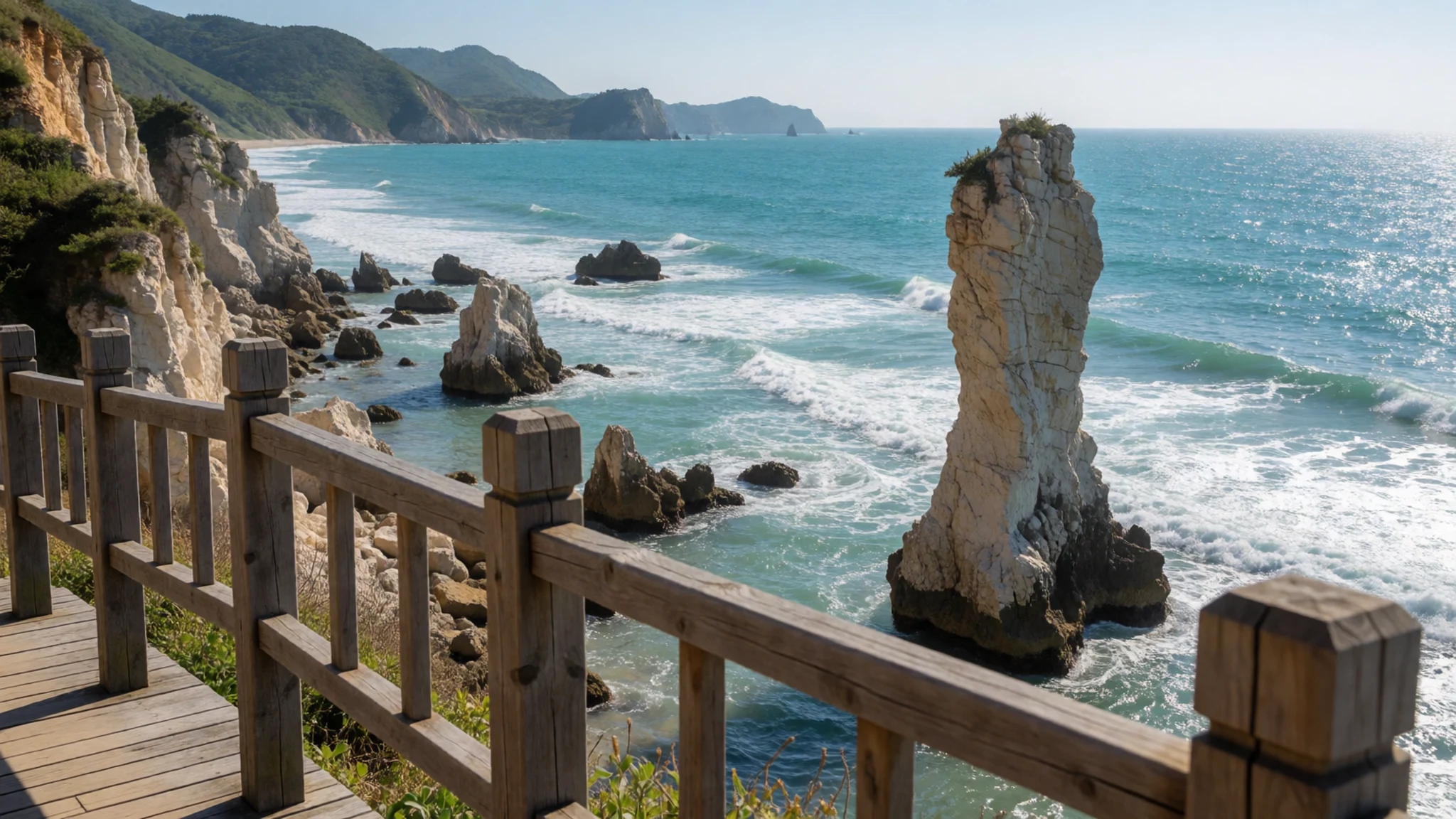
- Mukho Lighthouse — Mukho, above the port
Mukho Lighthouse stands on a hill above the harbour, and the current tower has an observation deck just under the lantern. The view takes in boats, rooftops and open sea. It is a short walk up from the port lanes, and a good first stop to get your bearings before heading downhill for lunch.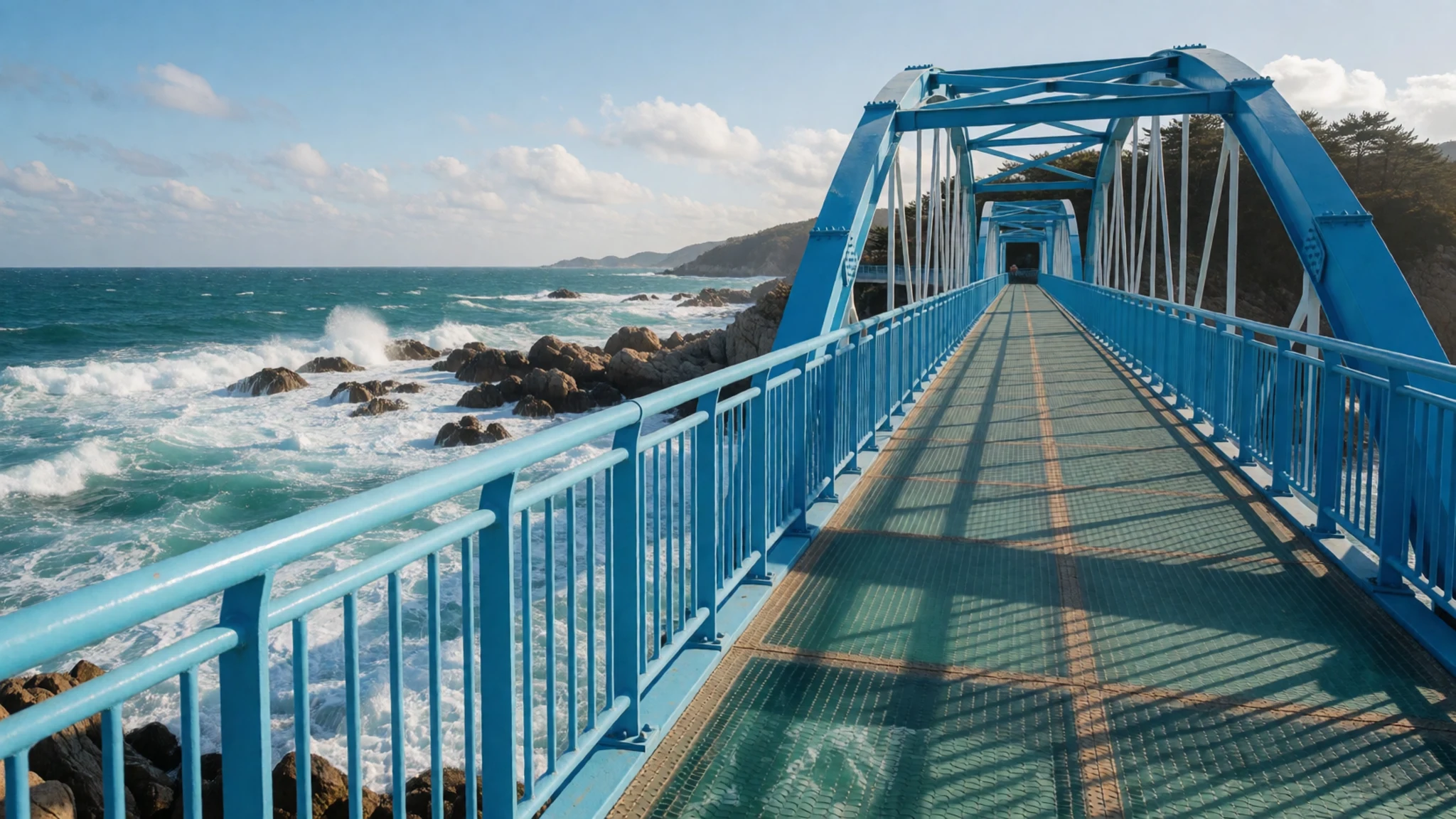
- Dojjaebigol Haerang Observatory — Mukho coast
Dojjaebigol Haerang Observatory is a footbridge that runs out over the water, with sections of glass and steel-mesh floor so waves can be seen breaking below. It closes in bad weather, so check conditions before making the trip. Anyone uneasy about heights can stay on the solid sections.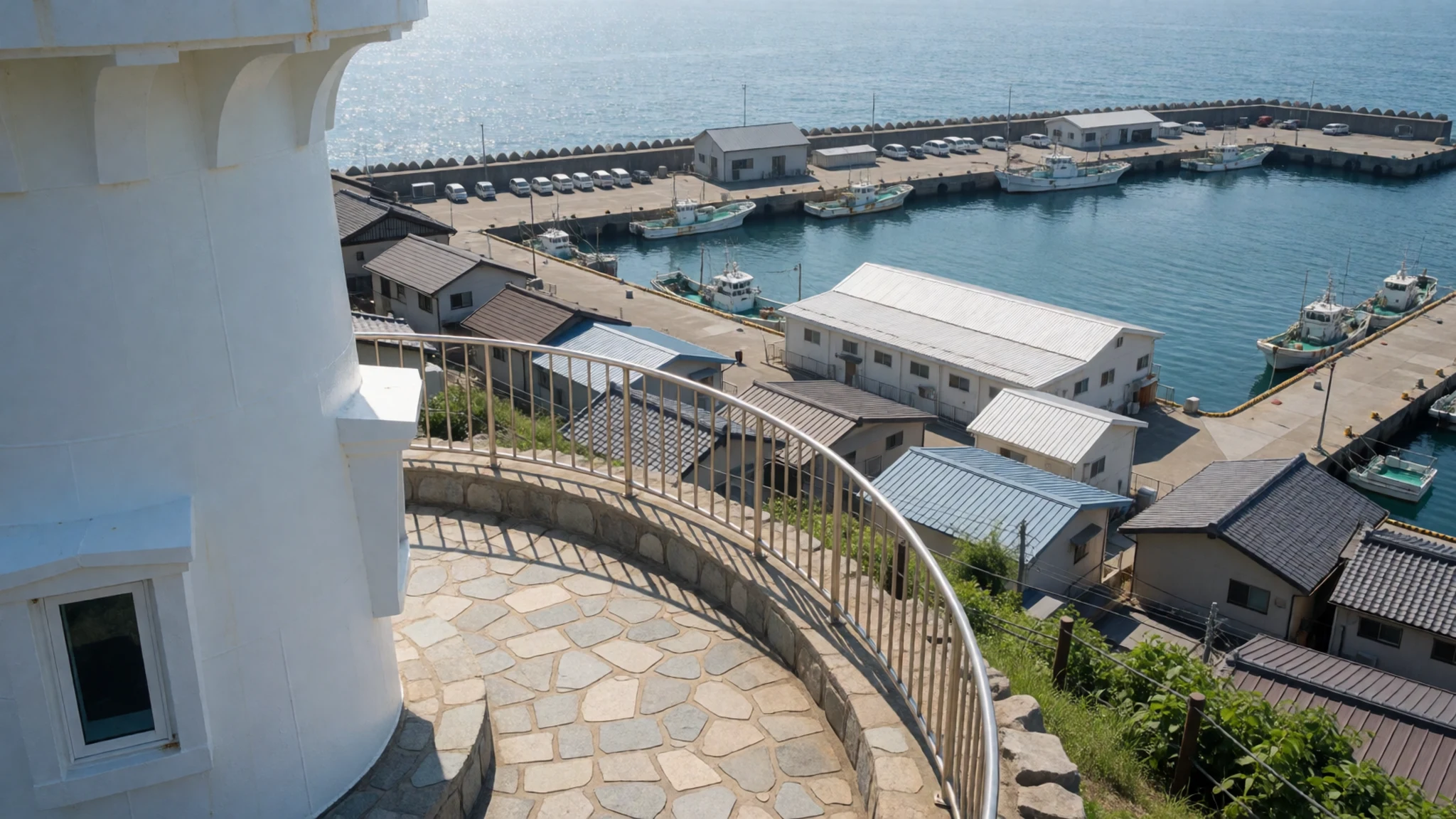
- Kkamak Rock — Mukho coast, north of the port
Kkamak Rock is a dark outcrop just offshore, named after the crows said to nest on it. Local lore places it due east of Seoul's Namdaemun gate, a neat piece of trivia for a rock that otherwise sits quietly in the surf. It pairs well with the coastal walk and the harbour nearby.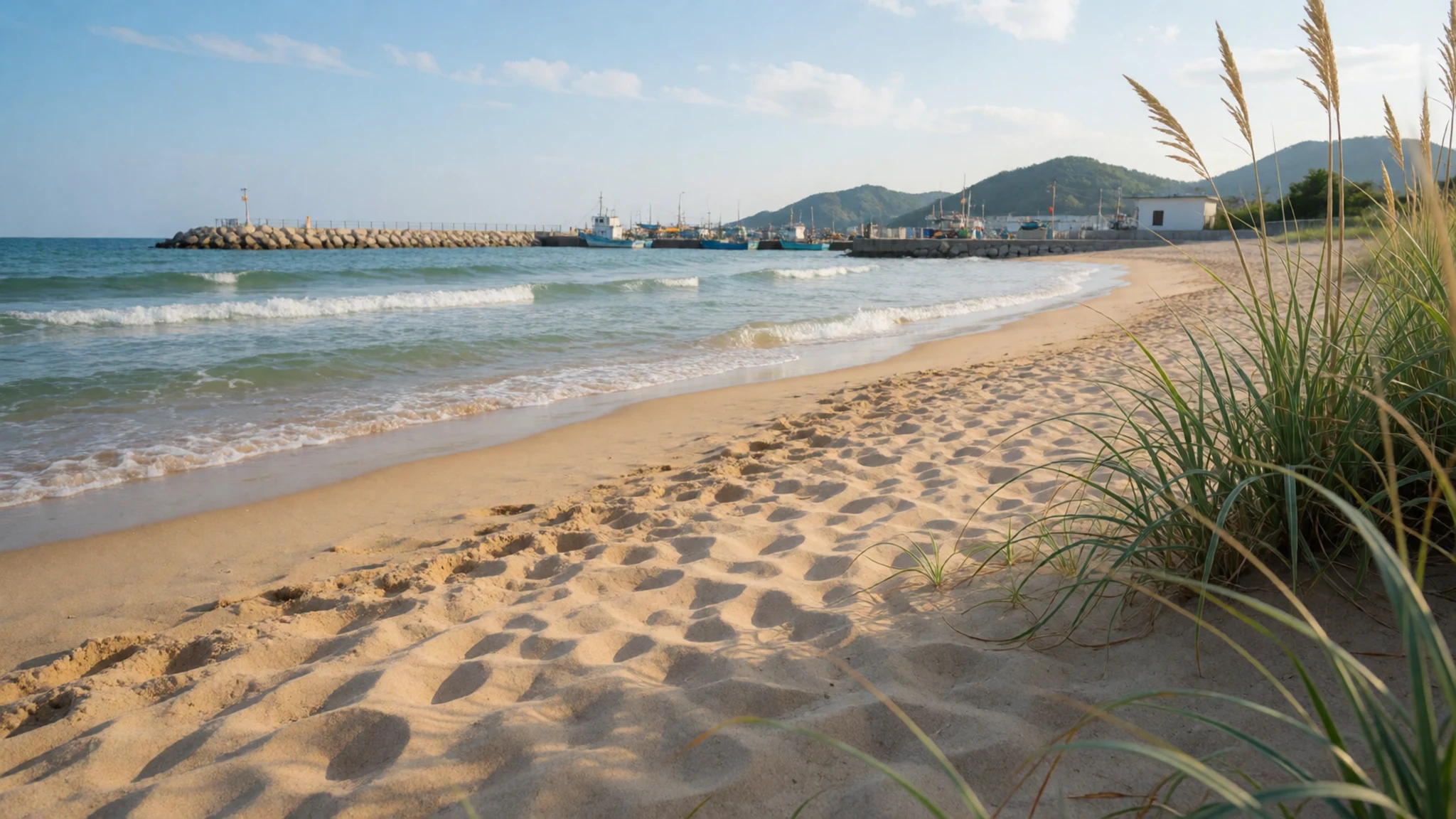
- Eodal Port — North of Mukho
Eodal Port is a small working fishing harbour with a modest fleet. It makes a quieter alternative to Mukho: boats tied up, gulls overhead and not much else, which is exactly the appeal. Mornings are busiest, when crews are unloading and mending gear, so keep out of their way.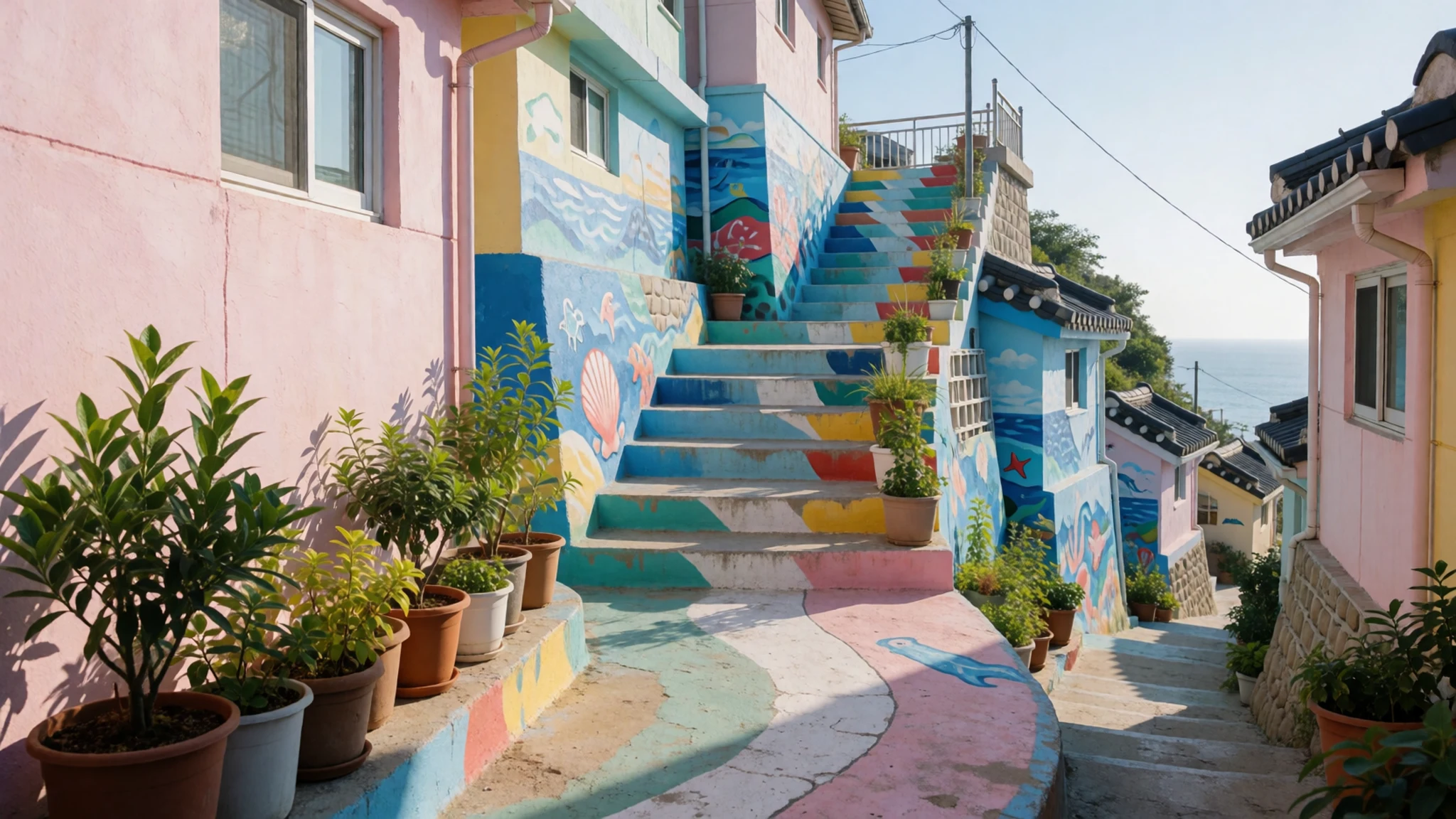
- Daejin Beach — Northern edge of the city, Daejin
Daejin Beach is a small beach beside a fishing port, with shallow water and moderate waves that suit beginner surfers. Free parking is available for a limited number of cars, so arrive early if driving. Outside summer it is a quiet place for a windy walk and a look at the boats.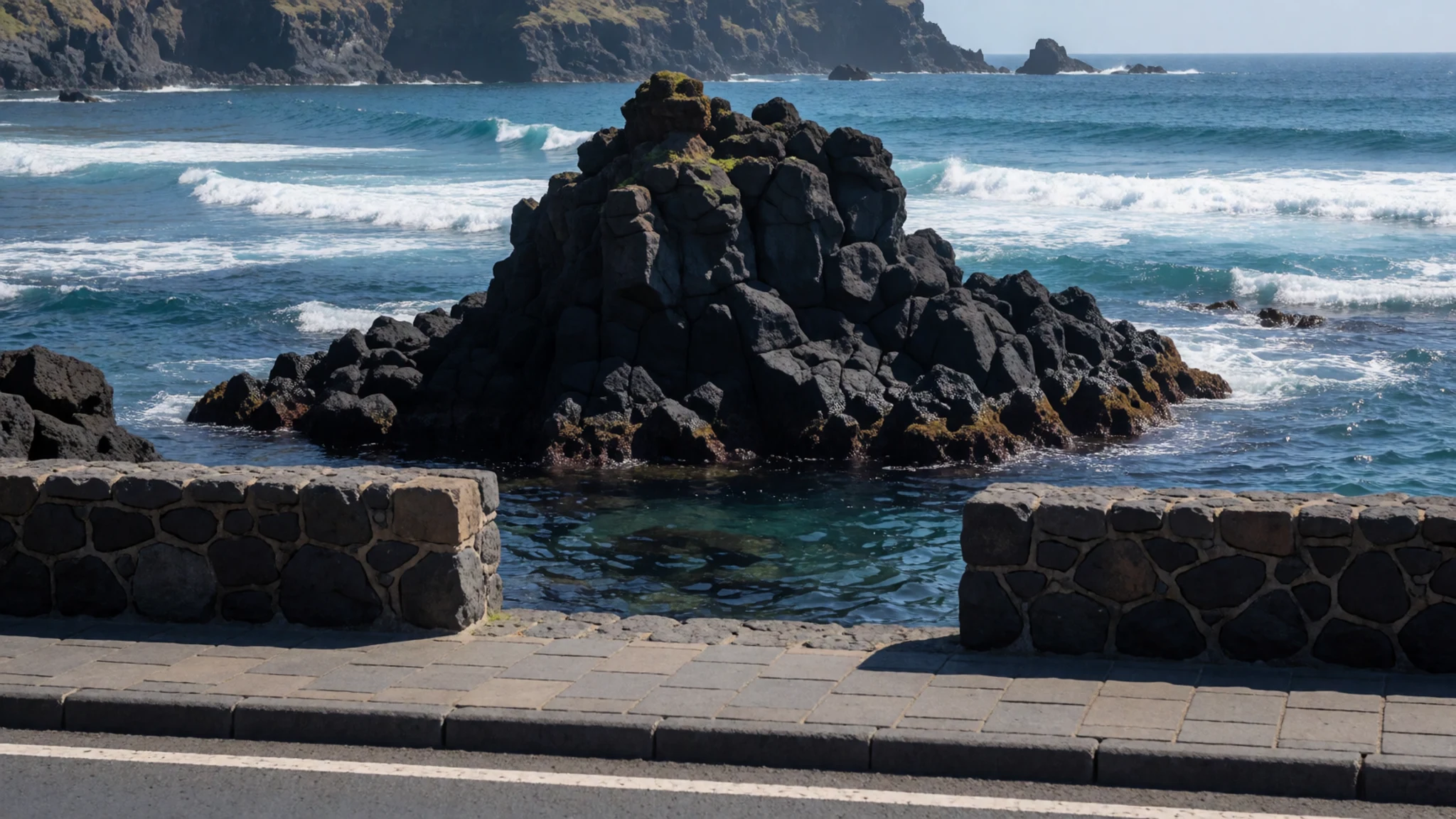
Culture
Donghae's culture is shaped by the sea and by work. Fishing families, dockworkers and cement-plant staff set the rhythm, with early starts and quiet evenings, and the city's identity is tied to the East Sea rather than to palaces or grand temples. Dawn is a social occasion: people gather on the coast to watch the sunrise, especially at New Year, when the first light is treated as a good omen for the months ahead. Meals are communal. Dishes arrive in the middle of the table and sharing is the norm, whether it is raw flounder, noodles or fried pork from a Korean-Chinese restaurant. Older residents are addressed with respect, and handing over or receiving anything, from a cup to a card, with both hands is a polite habit worth copying. Mukho's hillside lanes are real neighbourhoods, now brightened with murals, and people live and work behind those walls. Ulleungdo, the island reached by ferry from Mukho, has an identity of its own, and travellers heading there are a regular part of the port's daily flow. Humour here tends to be dry and plain-spoken, like the town itself. Keep your voice low when walking Mukho's hillside lanes, and do not photograph into windows or doorways of private homes.
What to wear
Donghae has no regional costume of its own; the traditional dress is the Korean hanbok, a short jacket (jeogori) with a wrap skirt (chima) for women, or a jacket with loose trousers (baji) for men. Textiles include silk for formal wear, ramie (mosi) and hemp for summer, and cotton for everyday use. Today the hanbok appears at weddings, at Seollal (Lunar New Year) and Chuseok, and at festivals or for photographs. Everyday dress in Donghae is practical. Fishing and port workers wear waterproof boots, aprons and caps, while townspeople favour casual layers, sports jackets and trainers. Younger residents follow Seoul trends, but the coastal wind keeps things functional. For visitors, climate leads. Winters are dry and sunny but cold, with sea snow possible, so pack a windproof coat, hat and gloves. Summers are warm and humid, so bring light, breathable clothes and a rain jacket for the wet months from July to September. Grippy, closed shoes help on slippery harbour stones and on the glass-floored footbridge. Dress is relaxed and no strict modesty rules apply at the sights, though covered shoulders and knees are sensible if you visit a temple elsewhere in Gangwon.
What to eat
- Jang-kalguksu — Noodle shops around Mukho
Jang-kalguksu is hand-cut noodles in a spicy broth seasoned with chilli and soybean paste, a Gangwon speciality. Look for the long-established noodle shops around Mukho. It is a warming bowl on a cold harbour morning.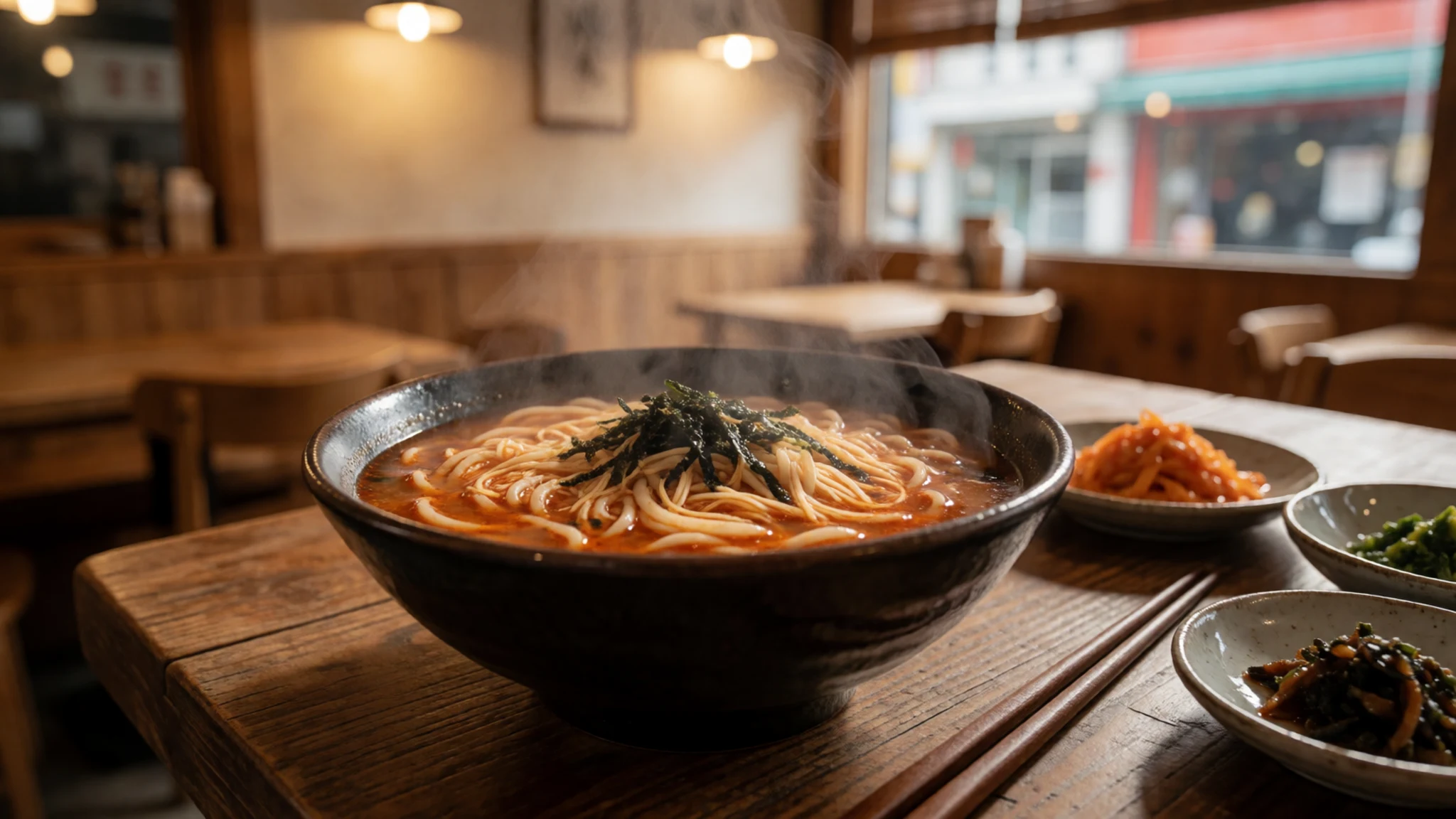
- Flounder mulhoe — Seafood restaurants near Mukho Port
Mulhoe is a cold, tangy raw-fish soup, here made with flounder, and the fish also comes as boneless hoe slices. Plain local seafood restaurants near Mukho Port are the place to try it. Pufferfish soup (bokjiri) appears on the same menus.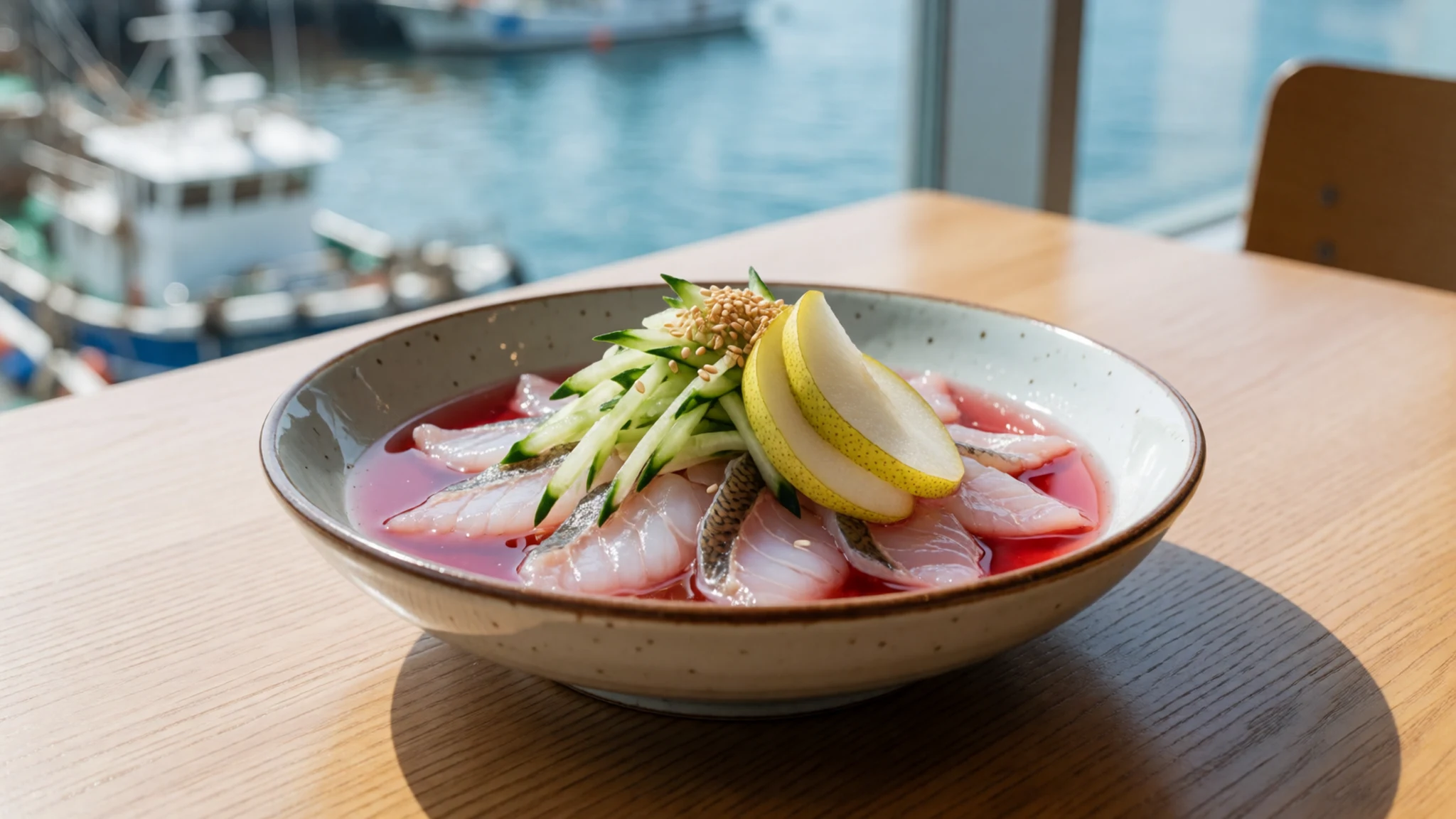
- Gamjappang — Bakeries in the city centre
Gamjappang, potato bread, is a Donghae bakery speciality. Neighbourhood bakeries in the city centre sell it fresh. Eat it in the seating area with a coffee, or carry a loaf to the train. - Chapssal doughnuts and kkwabaegi — Old neighbourhood bakeries, southern Donghae
Chapssal doughnuts are chewy glutinous-rice rounds filled with red bean paste, sold beside twisted kkwabaegi doughnuts at old-fashioned neighbourhood bakeries, especially in the southern part of the city. A cheap, filling snack. - Tangsuyuk — Korean-Chinese restaurants around Mukho
Tangsuyuk is sweet-and-sour fried pork from Korean-Chinese restaurants. In Mukho one place hides cubes of octopus inside the pork loin, in original and spicy versions. Order a plate to share with the table. - Egg gimbap — Takeout shops near Mukho Station
Gimbap is seaweed-wrapped rice with fillings, and in Mukho the rolls are often packed with egg. Small takeout shops near the station sell them for a cheap lunch or a snack before a train.
Plan it
Best time. April–May and October–November are mild and avoid the July–September rain and typhoon season, when rough seas often cancel Ulleungdo ferries. Winters are dry and sunny but cold, good for clear sunrises with warm layers; August is warm and humid.
How long. 2–3
Getting there. Express buses from Seoul and Incheon International Airport, plus other cities, use Donghae Bus Terminal in Cheongok-dong. KTX high-speed trains from Seoul run via Gangneung to Mukho and Donghae stations. A newer coastal railway runs south towards Samcheok, Pohang and Busan. Get off at Mukho for the harbour, lighthouse and fish market, or at Donghae Station, in Bukpyeong, for the Chuam area. Ulleungdo ferries leave from Mukho Port, a short walk from Mukho Station. Check Kobus, Bustago and Korail for timetables and fares.
Budget. low
Tips
- Check ferry status before travelling to Ulleungdo, as summer storms often cancel sailings
- Start early for Chuam Candle Rock at sunrise and bring a windproof layer
- Check conditions before visiting the glass-floored Dojjaebigol footbridge, which closes in bad weather
- Carry a bank card but keep some cash for small noodle shops and takeout stalls
- For sights, itineraries and tourist information centres, see the official site: http://donghae.gangwon.kr/
Etiquette
- Keep your voice low in Mukho's residential hillside lanes
- Pass and receive cups, cards and cash with both hands
- Take your shoes off where floor seating or a raised step is provided
Nearby
Sources
- Wikidata Q42093 (CC0)
- Wikipedia: Donghae, Gangwon (rev 1374998322) (CC BY-SA 4.0)
- Wikivoyage: Donghae (rev 5431644) (CC BY-SA 4.0)
- Photo: Mukhohang Line Mukhohang Station — Loewelad (CC BY-SA 2.0)
- Photo: 2015년 12월 강원도 동해시 — 최광모 (Choe Kwangmo) (CC0 1.0)
- Photo: 강원도 동해시에 있는 동해시공영버스터미널 — hyolee2 (CC BY-SA 4.0)
- Photo: 강원도 동해시에 있는 동해시청 — hyolee2 (CC BY-SA 4.0)
- Photo: 동해공영버스터미널 건물 — 안우석 (CC BY 3.0)
- Photo: South Korea (Mukho) — Sharon Hahn Darlin (CC BY 4.0)
- Photo: South Korea (Mukho) — Sharon Hahn Darlin (CC BY 4.0)
- Photo: South Korea (Mukho) — Sharon Hahn Darlin (CC BY 4.0)


Wildlife
- Crow (animal)
Think of the large-billed crow as a big, black, bold-beaked bird that can make a home almost anywhere. In Donghae, look towards the rock named for the crows said to gather on its dark ledges; the notes do not say which season or time of day is best. Stand well back, stay quiet and let the birds go about their business. Please never feed them: being so adaptable, they cope with nearly any food and are often seen as pests.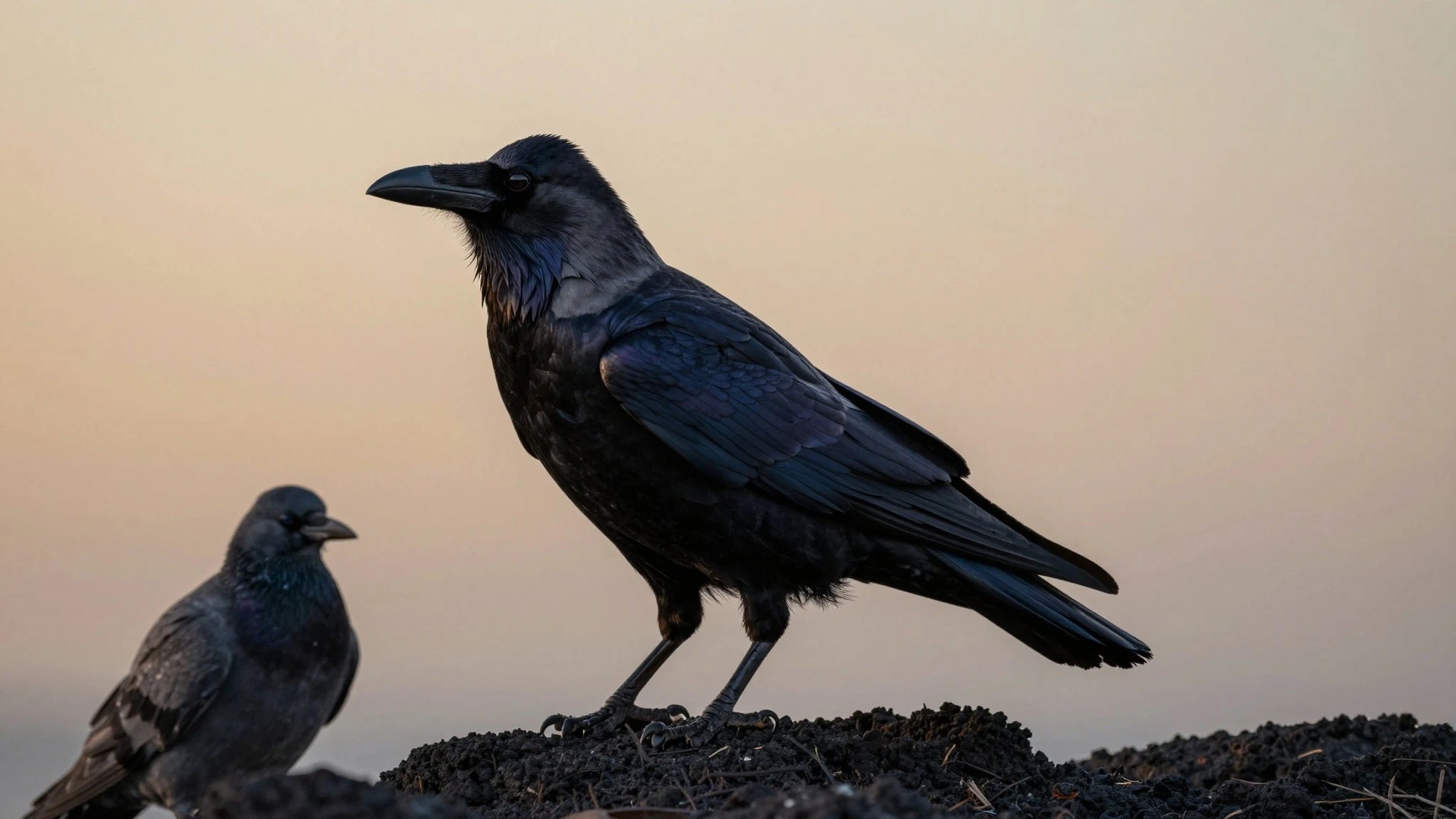
- Crow (bird)
Think of the large-billed crow as a big, black, bold-beaked bird that can make a home almost anywhere. In Donghae, look towards the rock named for the crows said to gather on its dark ledges; the notes do not say which season or time of day is best. Stand well back, stay quiet and let the birds go about their business. Please never feed them: being so adaptable, they cope with nearly any food and are often seen as pests.