Dharamshala
Dharamshala, India
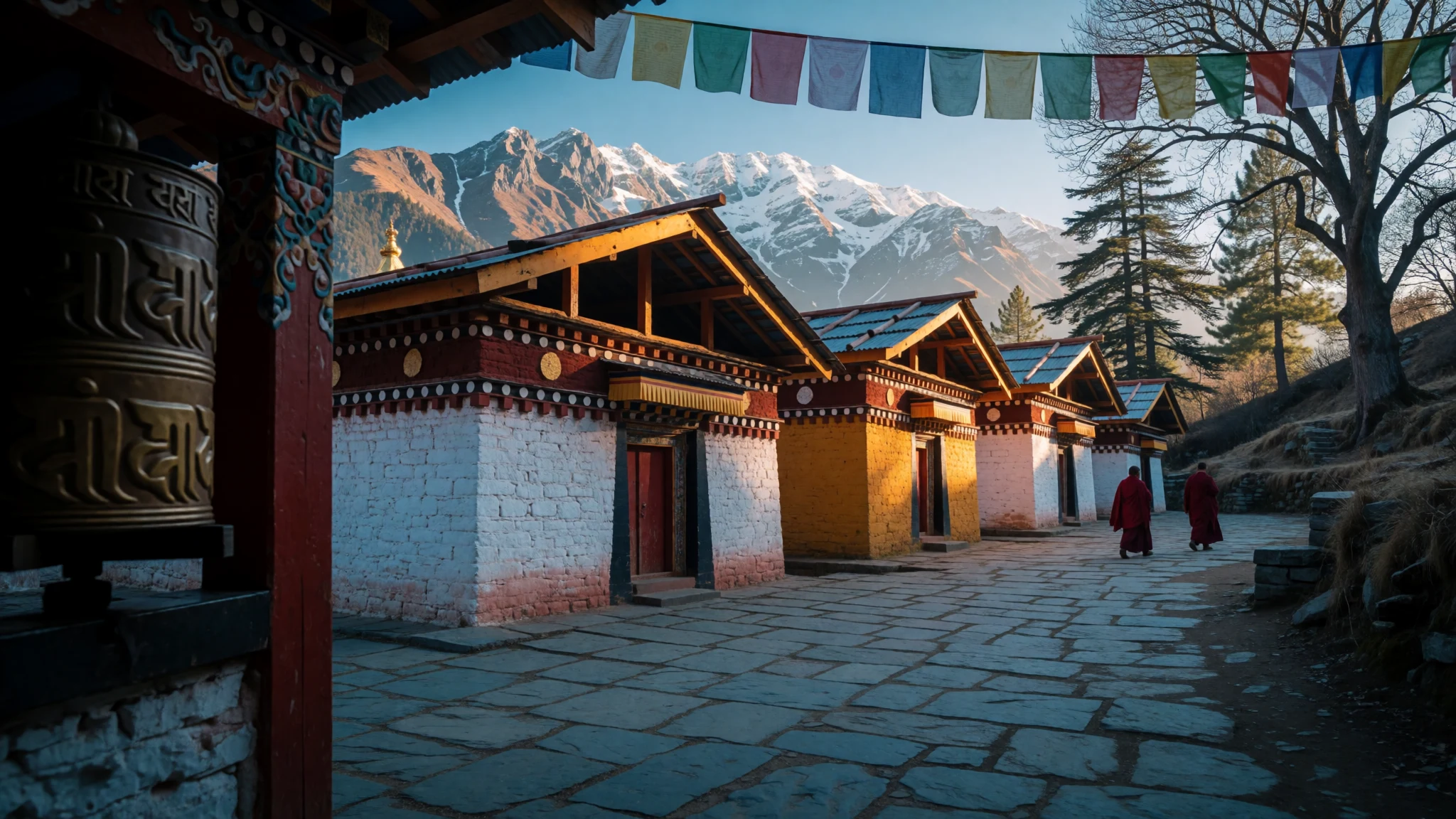
Dharamshala sets a Tibetan hill town against the Dhauladhar, with monasteries, tea and ridge walks in the same day.
The place
Dharamshala sits in the Kangra valley of Himachal Pradesh, a district town stacked up the first rise of the Dhauladhar. The lower settlement is the practical one: bus stands, courts, a cricket stadium and a long bazaar facing the open valley. A climbing road then reaches McLeod Ganj, with Dharamkot and Bhagsu on the same wooded shelf, and it is this upper town that most visitors mean when they say the name.
The two levels do not feel like one place. Below, the street is Kangri and Hindi, the shops sell cloth, grain and hardware, and the view runs out over fields and tea. Above, Tibetan is the language of the lane, prayer flags cross from balcony to balcony, and the mountain wall occupies the whole of the sky. Pine and deodar fill the gaps. Villages of Gaddi herders, older Hindu temples and the tea gardens of Kangra sit in between, so a short walk changes the accent, the food and the roofline.
The climate is the real timetable. Spring opens the ridges for walking and keeps the air clear enough to read every spur. Monsoon rain lasts for weeks, landslips close side roads, and the peaks disappear. Autumn brings the range back, sharp and often newly whitened. Winter is cold on the ridge, milder in the valley, and the upper lanes can be quiet while the stadium below still draws a crowd. Dharamshala is not polished for visitors. Pavements break, the climb from one neighbourhood to the next is real, and storms interrupt water and power. Its interest is that a working hill town and a Tibetan capital in exile occupy the same slope, and neither has cancelled the other.
Its story
Dharamshala takes its name from the word for a rest house, a place a pilgrim or traveller could stop. That older sense still fits the lower bazaars, which grew as a market and halting point on the roads of the Kangra valley, long before anyone came for the view.
The British turned the ridge into a cantonment and a hot-weather station for troops serving in the plains. Barracks, a church and a grid of lanes appeared at McLeod Ganj, named for a lieutenant-governor of Punjab, and for a while the station had the usual hill-cantonment life of bands, convalescents and a cool season. A violent earthquake in the Kangra valley brought that chapter down. Barracks collapsed, the station was badly ruined, and the official centre of gravity slipped back towards the lower town. What remained was a quiet ridge rather than a finished colonial resort.
The next remaking came from Tibet. After the Dalai Lama left Tibet, the Indian government offered him land at McLeod Ganj, and the upper town filled with monks, officials, families and the offices of a government in exile. Monasteries were rebuilt on a foreign slope. A parliament of the Central Tibetan Administration took its seat here. Schools, a medical institute, a library and workshops for thangka painting and carpets followed, until the ridge was as much a Tibetan town in exile as a Himachal village.
Kangra's older life did not leave. Hindu temples, the seasonal movement of Gaddi flocks, and the tea gardens stayed where they were, and the cricket ground in the lower town later gave the valley a public stage with the Dhauladhar behind it. Dharamshala's story is this stacking of uses — rest house, cantonment, ruin, Tibetan capital and district town — each one built over the last without quite replacing it.
What to see
- McLeod Ganj — McLeod Ganj
McLeod Ganj is the upper town of Dharamshala, a tight ridge of lanes above the Kangra valley. The main street passes cafés, bookshops, sweater stalls and Tibetan offices, and the Dhauladhar closes the view to the north. Winter can leave snow on the roofs while the bazaar stays noisy. From the temple road to the forest edge the slope is short, steep and thick with prayer flags.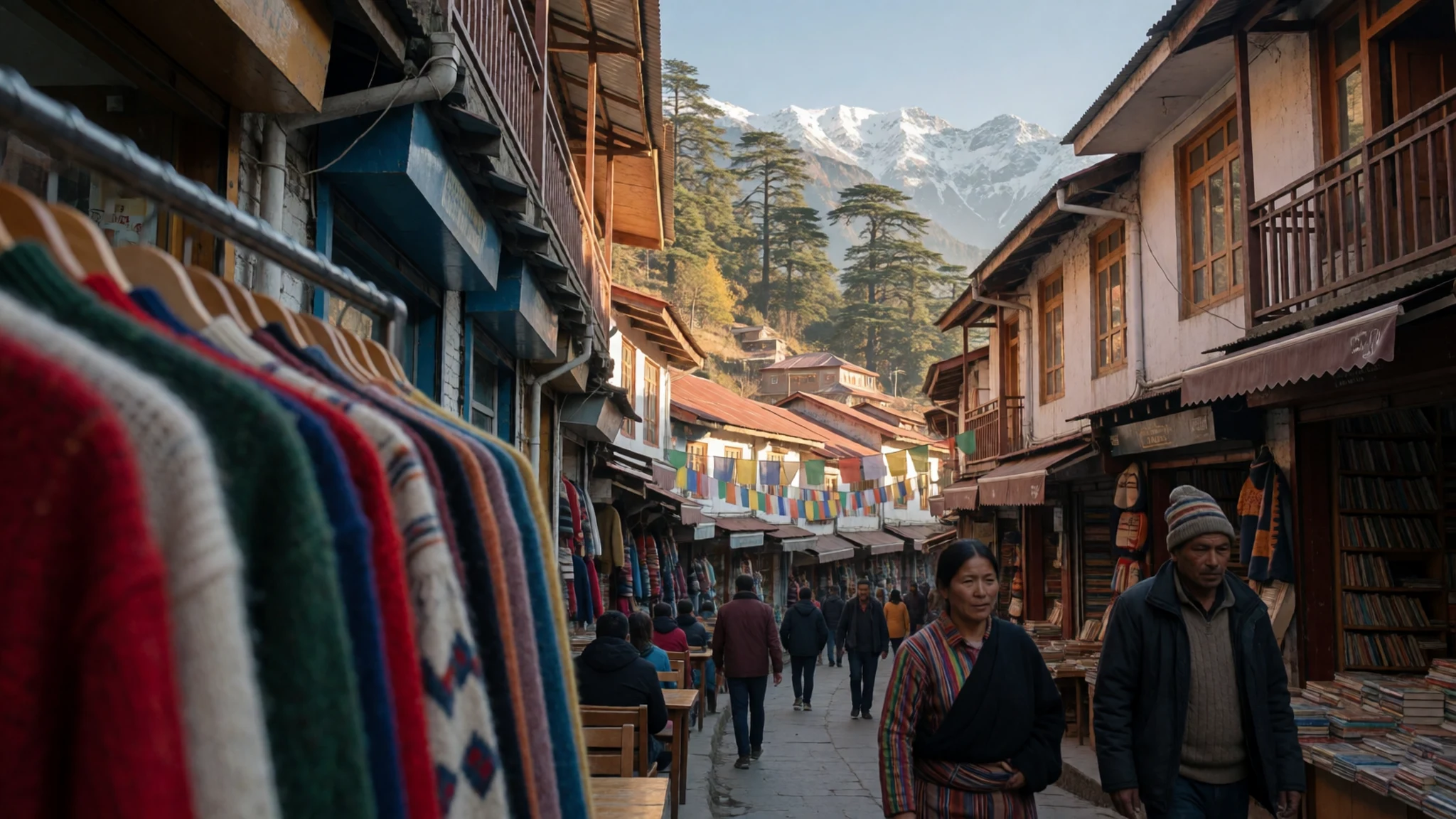
- Tsuglagkhang complex — McLeod Ganj
The Tsuglagkhang complex in McLeod Ganj is Dharamshala's Tibetan temple, joined to Namgyal Monastery and to the Dalai Lama's residence. Visitors walk the courtyard clockwise, past a large prayer wheel, a bodhi tree and painted walls. Teachings, when they are held, fill the approach roads early in the day. On an ordinary morning the compound is quieter, with monks, butter lamps and the ridge behind the roof.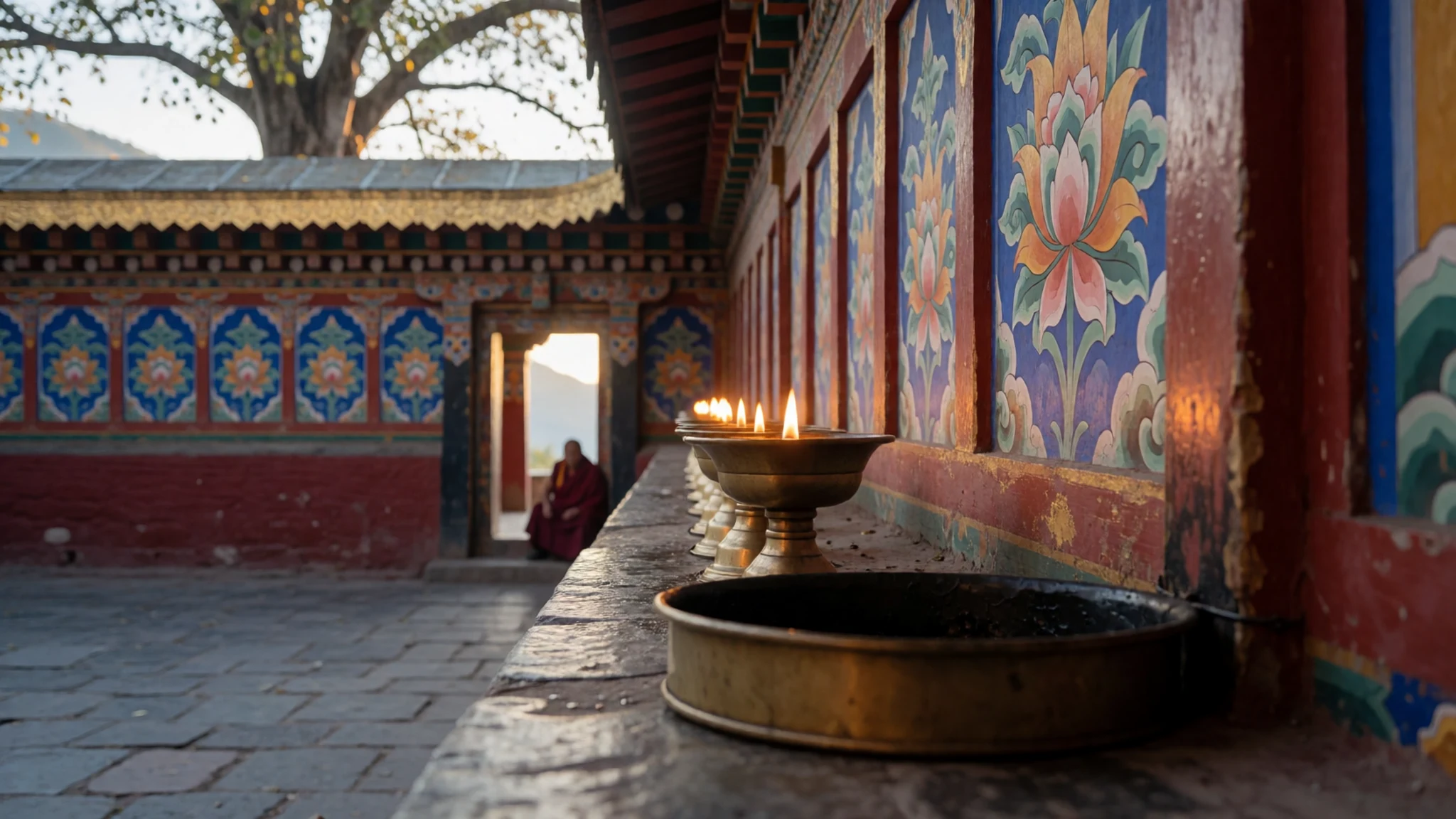
- Bhagsu Nag Temple — Bhagsu
Bhagsu Nag Temple stands in Bhagsu, just above McLeod Ganj in upper Dharamshala. The shrine belongs to a nag deity linked with the spring, and worshippers still come for that water. A path climbs past the temple to a waterfall in the same narrow gorge, crowded on clear weekends and slick in the monsoon. The courtyard mixes Himachali worship with the Tibetan and traveller life of the ridge.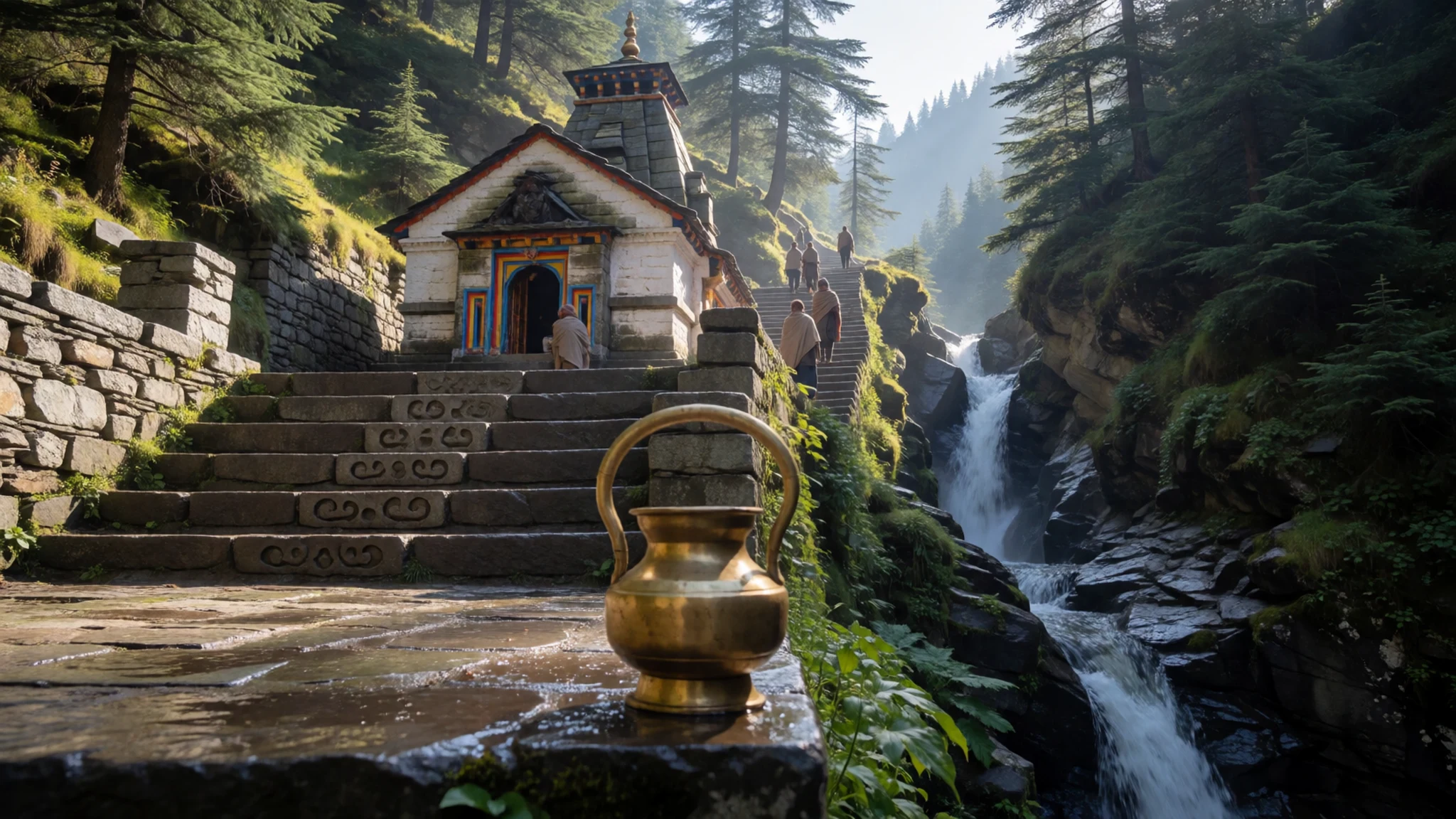
- Triund trail — Dharamkot
The trail towards Triund leaves upper Dharamshala from Dharamkot and Galu, climbing through oak and rhododendron to a meadow under the Dhauladhar. Tea stalls break the ascent, the middle stretch is steep, and the view opens back over McLeod Ganj and the Kangra valley. Snow shuts the top in winter. Monsoon cloud, leeches and wet rock make the same path a poor idea in the rains.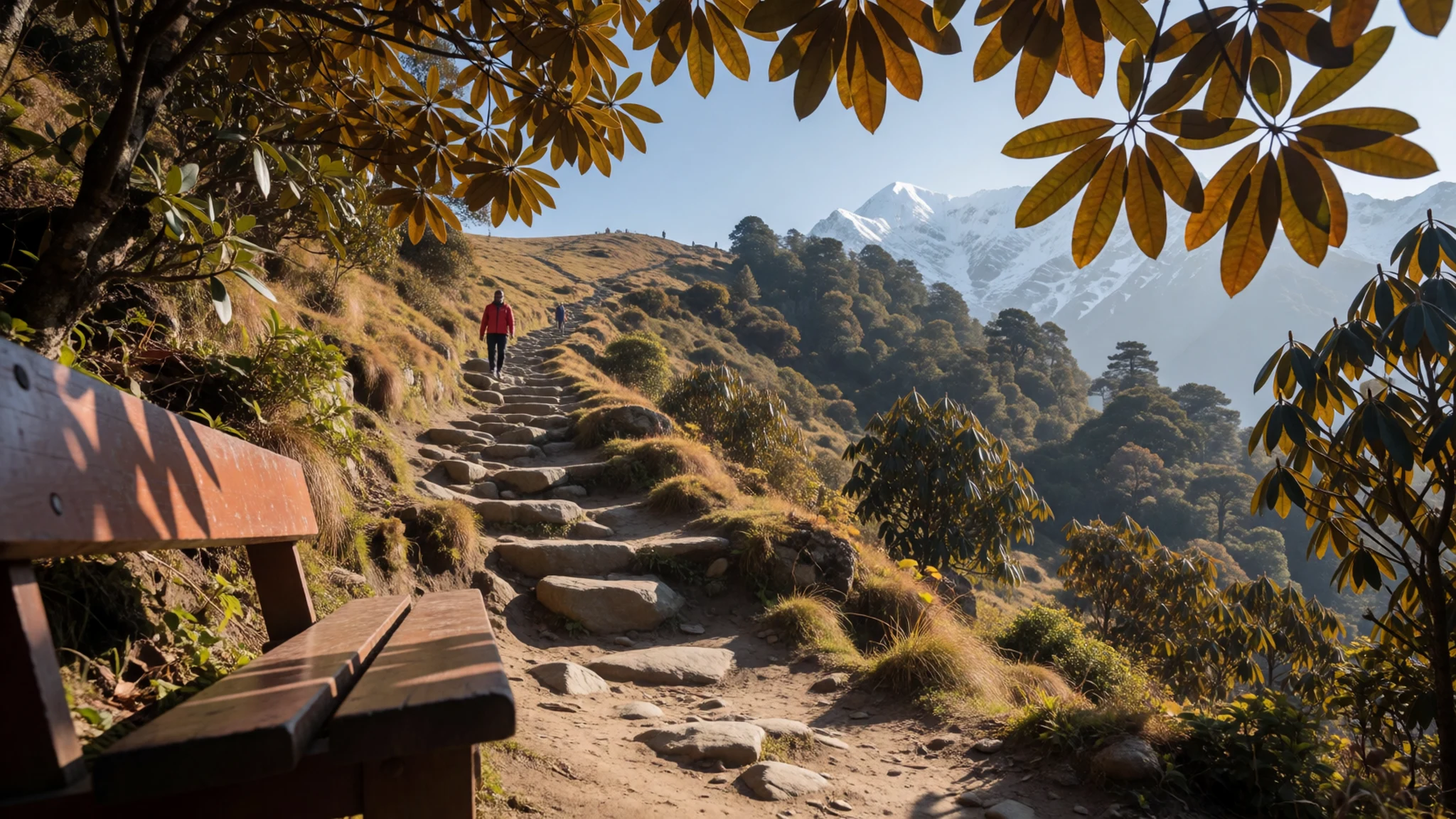
- HPCA cricket stadium — lower Dharamshala
The cricket stadium in lower Dharamshala sits on the valley floor with the Dhauladhar rising straight behind the stands. Matches are watched as much for that mountain wall as for the game, and the ground is part of the district town rather than the Tibetan ridge above. Fixtures, when they fall, fill the roads around the pitch.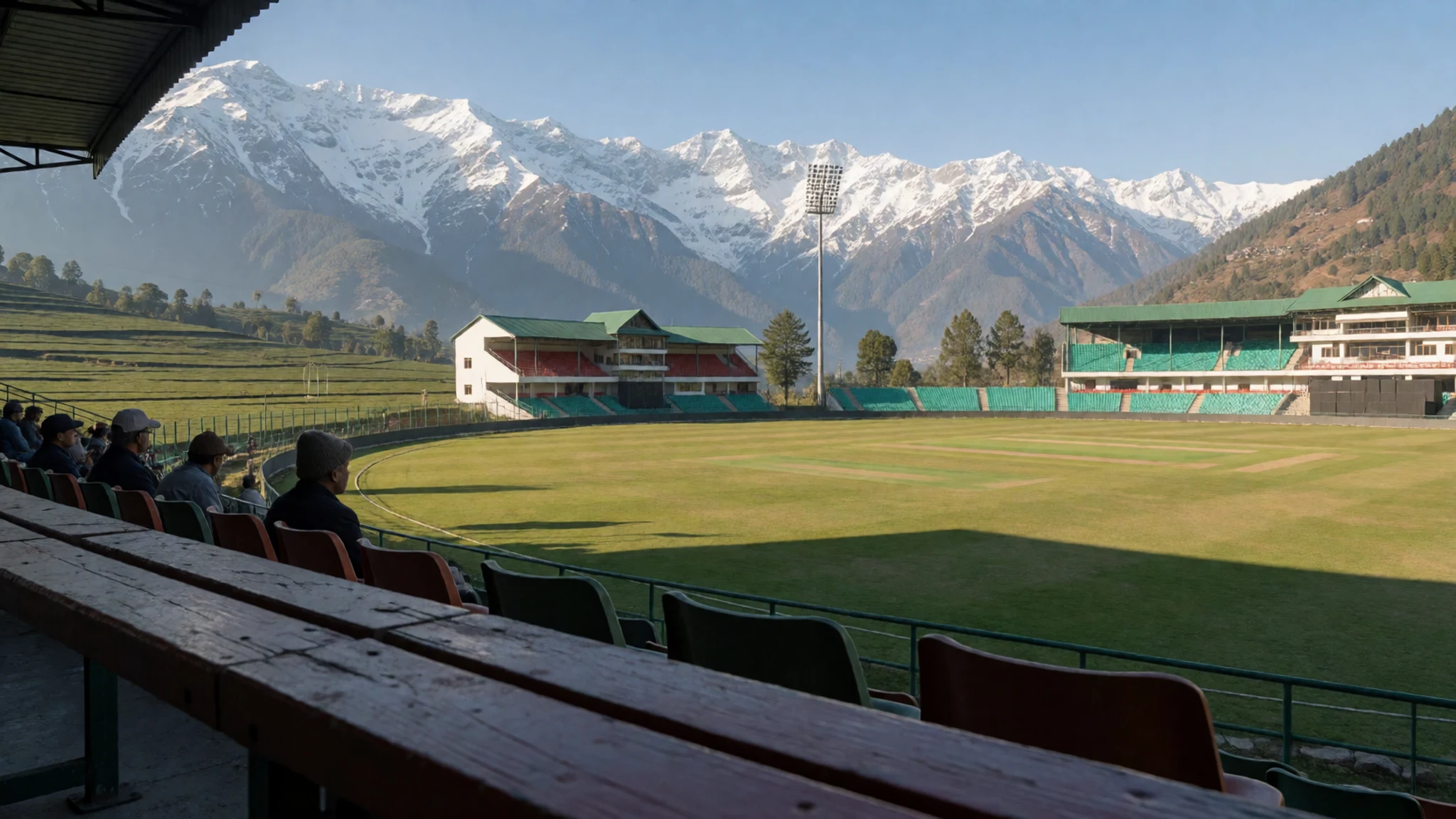
Culture
Dharamshala holds two religious cultures on one hillside, and they meet without blending into one. On the ridge, Tibetan Buddhist practice orders the day: a clockwise walk around the shrine, the sound of mantra, butter lamps, and a calendar of teachings that belongs to the community in exile. Losar, the Tibetan new year, fills the lanes, and some monasteries perform cham dances when their own calendar requires it. Exile here is not a backdrop. The parliament, the schools and talk of a country left behind are part of daily life, and the town is poorer if it is treated only as a view.
Below the ridge, and at Bhagsu, the year is Himachali and Hindu. Temple fairs, worship of the nag, and the movement of Gaddi flocks with the seasons belong to Kangra. The valley's older court culture, including the Kangra tradition of painting, remains part of how the region understands itself. A Hindu procession and a monastic horn can share the same afternoon without either stopping for the other.
That mix asks for attention at each doorway rather than one rule for the whole town. At Dharamshala's monasteries and temples, walk clockwise round shrines, take shoes off before you enter, and ask before you photograph monks or worshippers.
What to wear
Dharamshala dresses in two traditions, Himachali and Tibetan, and then in the ordinary clothes of a cold hill town. Traditional Kangra dress is built around wool: a shawl over a salwar-kameez or a full skirt, and the patterned Himachali topi at weddings and fairs. Gaddi herders add a heavier coat and their own cap for the high pastures. Tibetan formal dress is the chuba, a wrapped robe, with a striped pangden apron worn by many women over a blouse; monks wear maroon. Those clothes appear at Losar, at teachings and among older residents. The textiles a visitor can actually watch being sold are thangka cloth, carpet wool and the aprons. On a weekday the same streets are jeans, trainers and a jacket.
Current dress follows the work and the weather. The lower town looks like any north Indian district centre. The ridge, for much of the year, is down jackets and walking shoes, shifting to cotton when spring steadies. Stalls sell machine-knit sweaters beside handwork from exile cooperatives.
A visitor needs one outfit that can manage a path and a shrine. Covered shoulders and knees are the sensible choice at monasteries and temples. A layer helps, because the valley runs warmer than McLeod Ganj, and shoes should grip wet stone and come off easily at the door. Once cloud sits on the ridge, a light rain shell matters more than a smarter coat.
What to eat
- Momos — temple road and the main square, McLeod Ganj
Steamed or fried dumplings, vegetable or meat, are the everyday Tibetan snack of upper Dharamshala. Stalls and small eateries on McLeod Ganj's temple road and main square serve them with a sharp chilli dip from late morning onward. They are a between-errands plate, not a long meal.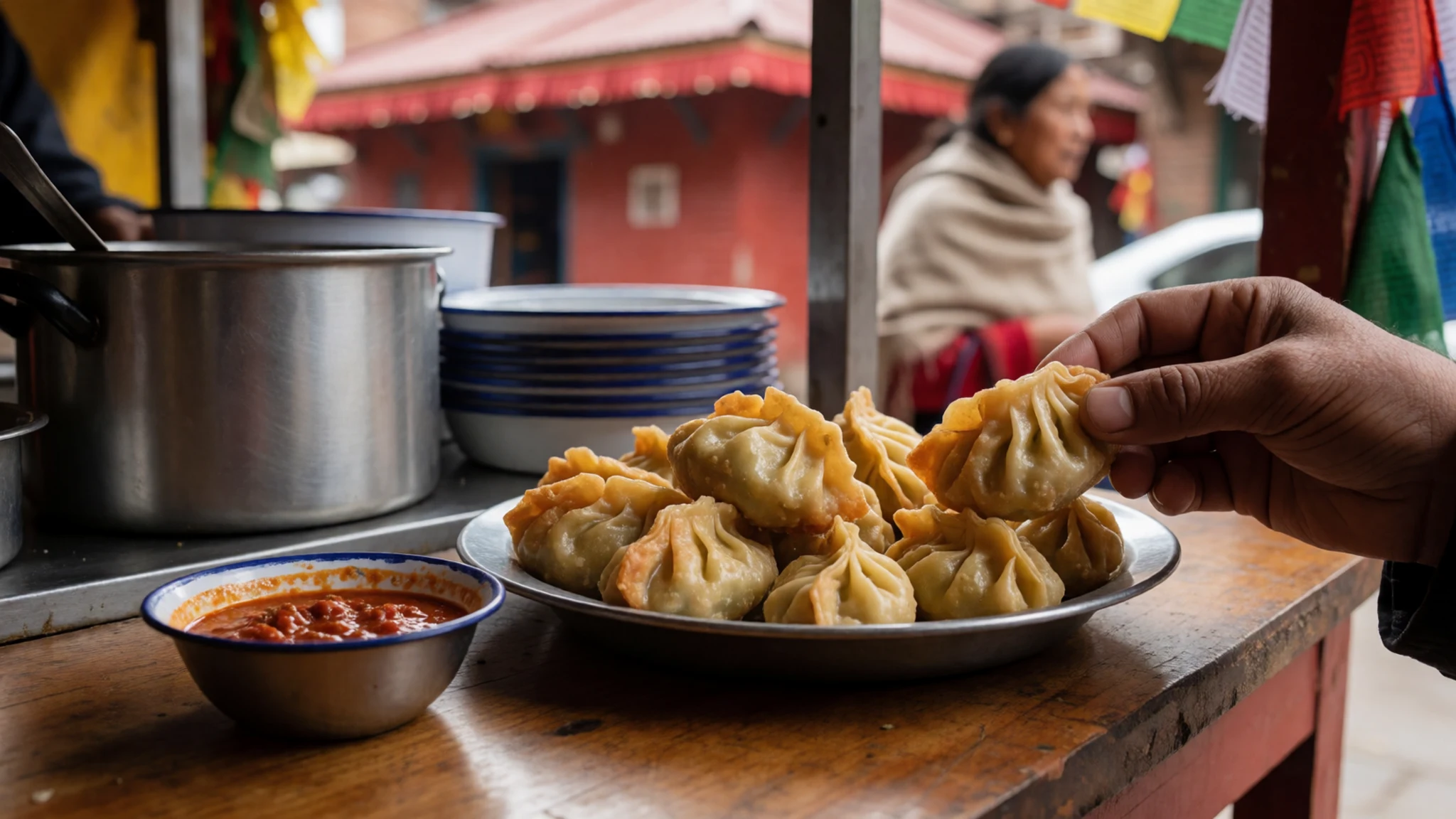
- Thukpa — cafés in the McLeod Ganj lanes and Dharamkot
Thukpa is a Tibetan noodle soup, chicken or vegetable, eaten when Dharamshala's ridge is cold or wet. Cafés in the McLeod Ganj lanes and in Dharamkot keep a pot going through the afternoon. Broth, wheat noodles and greens make a bowl that can stand in for supper.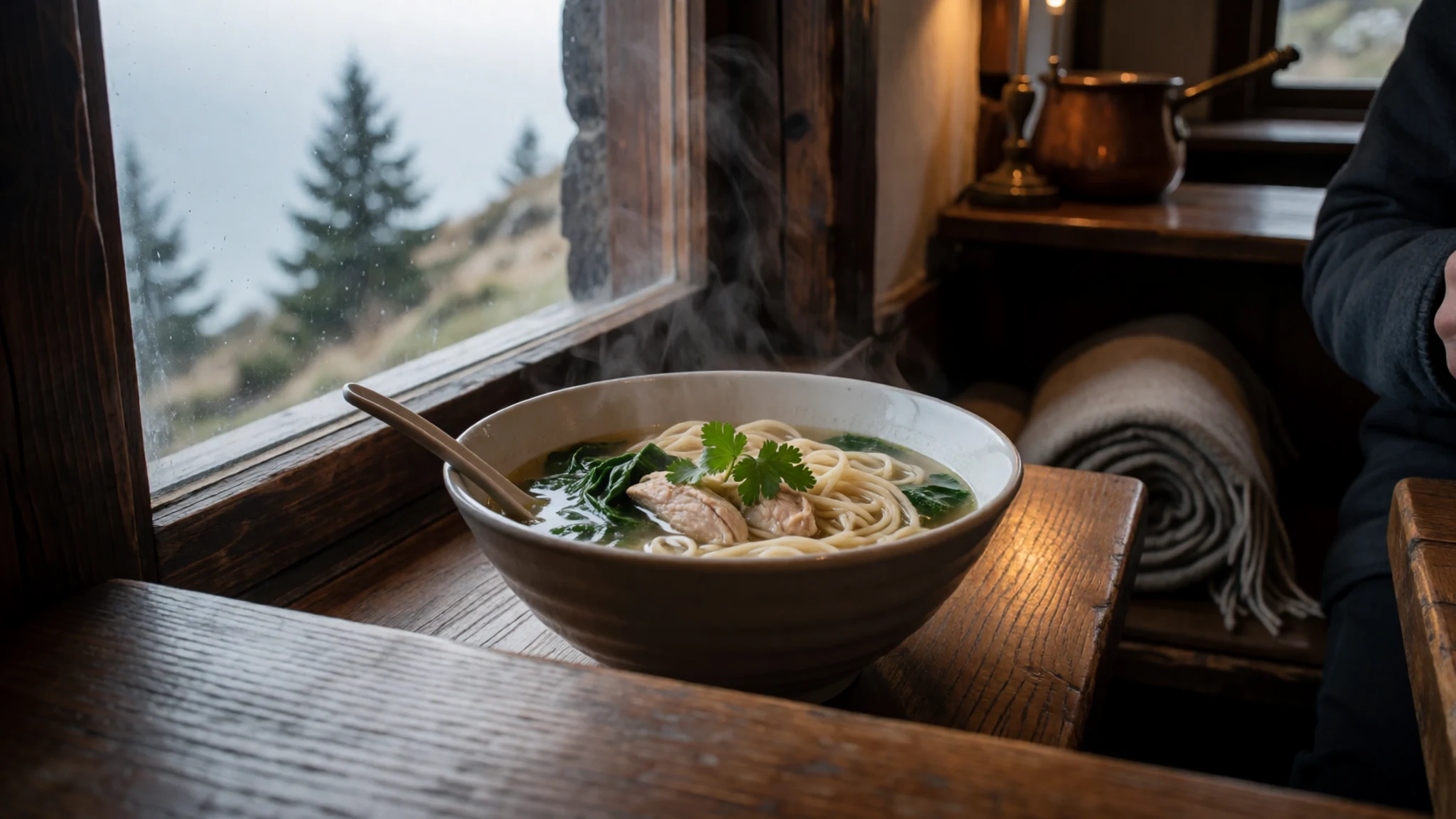
- Siddu — local eateries in the lower bazaar
Siddu is a Himachali steamed bread, wheat dough stuffed with spiced paste and eaten with ghee. In Dharamshala it turns up at local eateries in the lower bazaar, not in the Tibetan cafés. It is heavy, warming food for a cold evening in the valley. - Kangra tea — stalls in the lower bazaar and shops in McLeod Ganj
Kangra tea is the black tea grown on slopes around Dharamshala, lighter than a heavy Assam brew. Stalls in the lower bazaar and shops in McLeod Ganj sell it loose. Eateries often boil it with milk and sugar, though it is worth drinking plain. - Madra — local eateries in the lower bazaar
Madra is chickpeas cooked in spiced yoghurt, a Kangra dish served at festive meals and in local eateries in lower Dharamshala. It is mild and rich, and it comes with rice. The lower bazaar is the place to find it; McLeod Ganj's Tibetan boards rarely list it.
Plan it
Best time. March to May suit Dharamshala for clear walking, and October and November for a sharp view of the Dhauladhar. The monsoon, from June into September, brings cloud, leeches and landslips. Winter is cold on the ridge and can close the high trails.
How long. 3–4
Getting there. Fly into Kangra Airport at Gaggal, then take a taxi or bus up to Dharamshala and on to McLeod Ganj. The mainline railhead for Dharamshala is Pathankot, with a bus or taxi for the last leg through the valley. Overnight buses from Delhi arrive at the lower town.
Budget. mid
Tips
- Book a room on the ridge well ahead when teachings or a cricket fixture are announced
- Start the Triund path in the morning and turn back if cloud drops
- Carry cash; small stalls and temple offerings often cannot take cards
- Treat monsoon weeks as a time for the town, not the high trails
- In winter, keep the lower town as a fallback if the ridge is icy
Etiquette
- Remove shoes at monastery and temple thresholds
- Walk clockwise around Tibetan shrines and do not point feet at images or monks
- Ask before photographing people, especially monks and refugees
Nearby
Sources
- Wikidata Q255679 (CC0)
- Wikipedia: Dharamshala (CC BY-SA 4.0)
- Wikivoyage: Dharamshala (CC BY-SA 4.0)