Deshaies
Deshaies, France
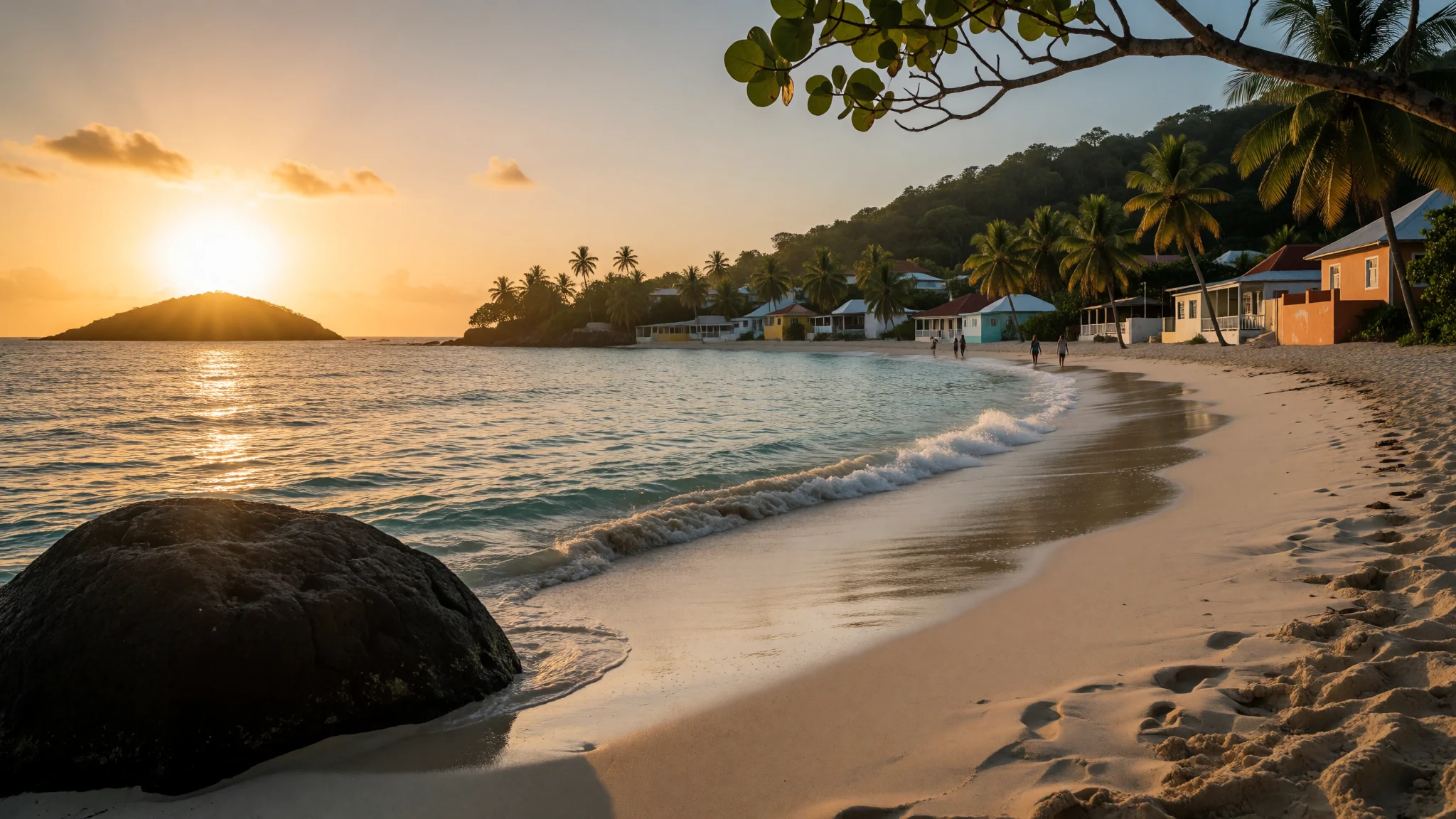
Deshaies is a quiet French-Creole fishing village on a sheltered Caribbean bay, with calm beaches, rainforest behind it and boat trips offshore.
The place
Deshaies (Guadeloupean Creole: Déhé) is a small commune of about 3,700 people on the northwest coast of Basse-Terre, the mountainous, forested wing of Guadeloupe in the Lesser Antilles. Guadeloupe is a French overseas department, so the town runs on French administration, bread and euros, with Creole speech and habits layered on top. The setting does most of the work. Two headlands curl round a bay, a mountain ridge rises behind the village, and the Caribbean Sea lies to the west, generally calmer here than on the Atlantic side of the archipelago. Boats swing at anchor below painted houses, and the pace stays slow even in the busy months. Just offshore is Kahouanne, an uninhabited islet that is a protected site, so it is something to admire from a boat rather than a place to land. Rain is spread fairly evenly through the year, with a wetter stretch from July to November that overlaps with hurricane season. Annual totals are heavy, which explains the thick green slopes behind the town. Deshaies works best as a base for beach days, short walks into the rainforest and sea outings, not as a place with a long list of monuments. It suits travellers who like a working harbour, a couple of good beaches within reach and very little nightlife. Most people arrive by hire car from the main airport, and the drive across or around the island is part of the experience.
Its story
Deshaies and the coastal strip around the Large Cape (Grand Cap) still carry traces of the original vegetation of Guadeloupe, the kind of cover that clothed the island when Christopher Columbus sailed past in 1493. The bay was well protected by its shape and depth, and that made it a refuge for pirates and privateers in later centuries. Local tradition says treasure is buried somewhere on this coast, though nobody has produced any. French colonists landed at Allègre point, at the northern end of the commune, in 1635. This part of the island is wet and densely wooded, and the terrain made the district hard to reach from other settlements, so the inhabitants organised themselves and even raised their own militia. Sugar brought money: a plantation called Potherie stood where the village centre now is, and by the late seventeenth century it counted among the wealthier estates in the colony. English privateers attacked and ruined the sugar plantations in 1696. In the early eighteenth century the village received its first cannons, was recognised as a parish community by the governor, and saw its church, dedicated to Saint Peter and Saint Paul (Saint Pierre et Saint Paul), consecrated. The arrival of Victor Hugues's forces and the end of slavery then upset the local economy again, and the area never returned to large-scale sugar. What remains is a fishing and farming village that grew up around a harbour.
What to see
- The bay and harbour (Anse de Deshaies) — Village centre
The curve of the bay is the village's main picture: fishing boats and yachts at anchor, painted houses along the waterfront and forested hills closing in behind. Walking the quay and the main street takes under an hour. Late afternoon, when the light softens and boats come in, is the best time.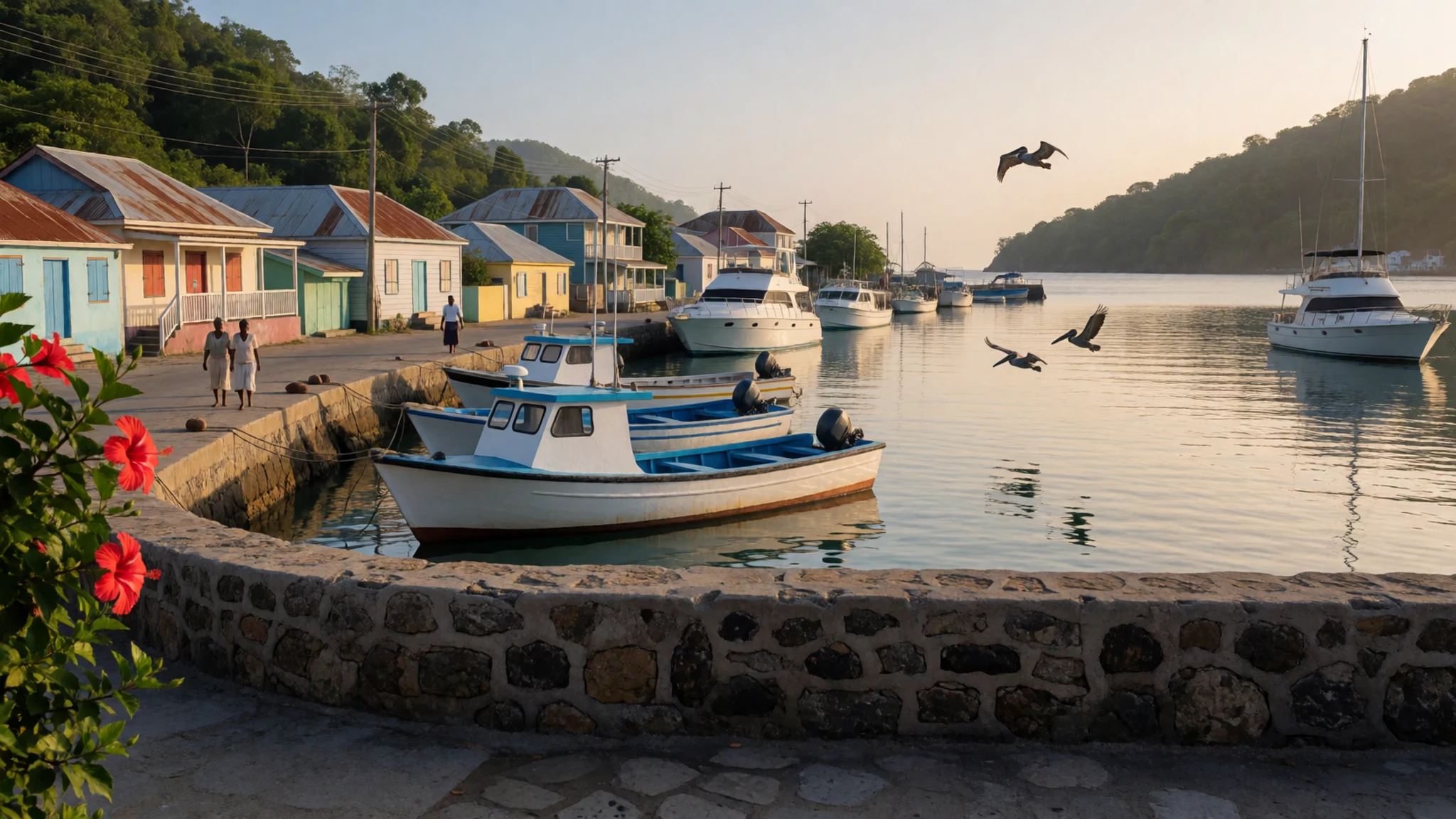
- Grande Anse — North of the village
A long sweep of sand a short drive from the village, backed by palms and sea-grape trees, with the Caribbean to the west. It is the obvious beach day, with room to spread out even in busy weeks. Swell can pick up, so check flags and local advice before swimming.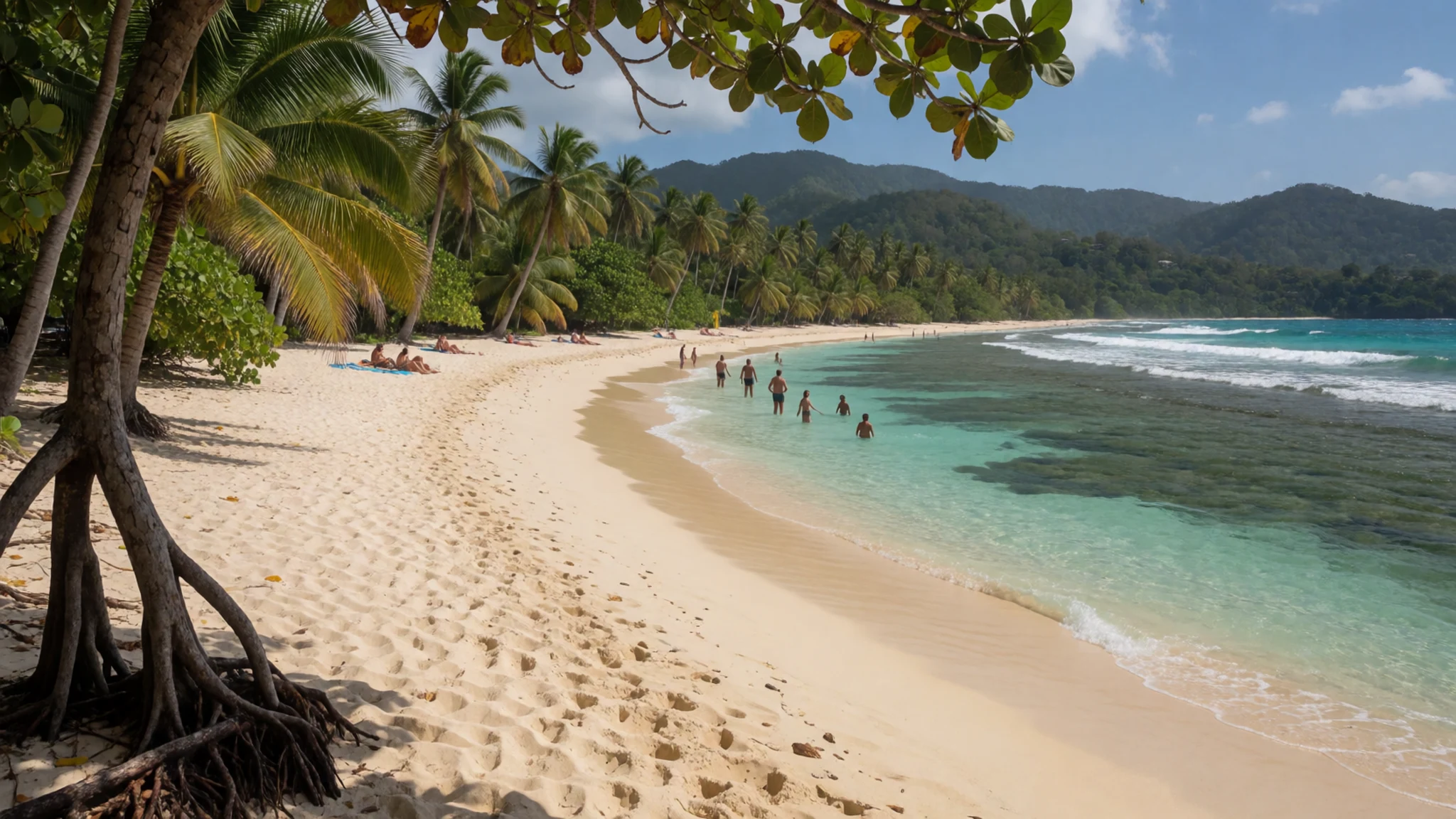
- Boat trips and Kahouanne — Harbour and offshore
Day cruises leave from the harbour and run along the leeward coast. Kahouanne, the protected, uninhabited islet offshore, is seen from the water rather than visited. Boats are a good way to appreciate the coastline, snorkel in calm spots and see how steeply the forest drops to the sea. Book through the harbour or tourist office.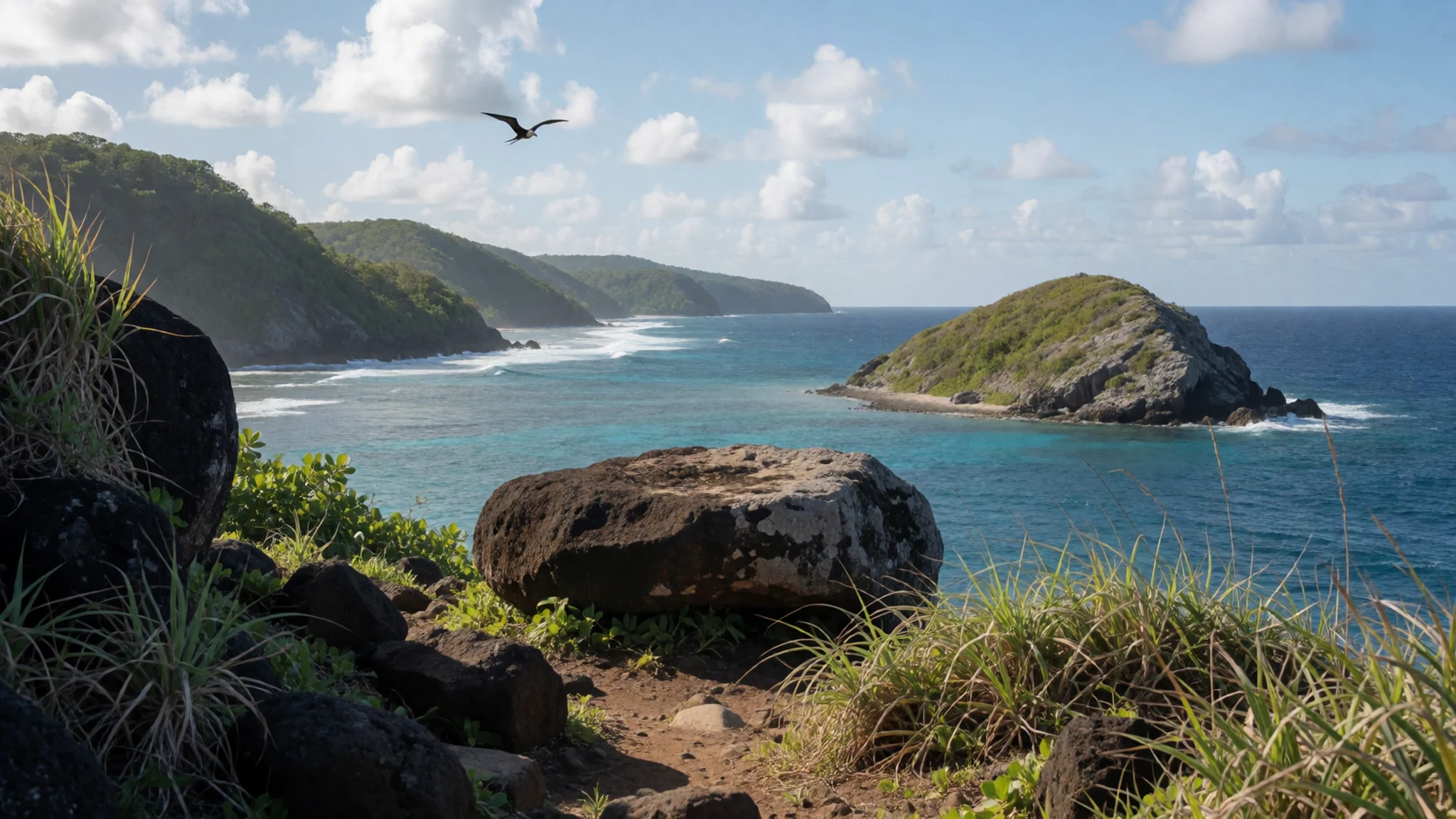
- Anse de la Perle — Near the village
A smaller, quieter cove near the village, with pale sand and clear shallow water. It is a good option when Grande Anse feels busy or when a morning swim is wanted before the heat builds. Facilities are limited, so bring water and shade, and take rubbish away.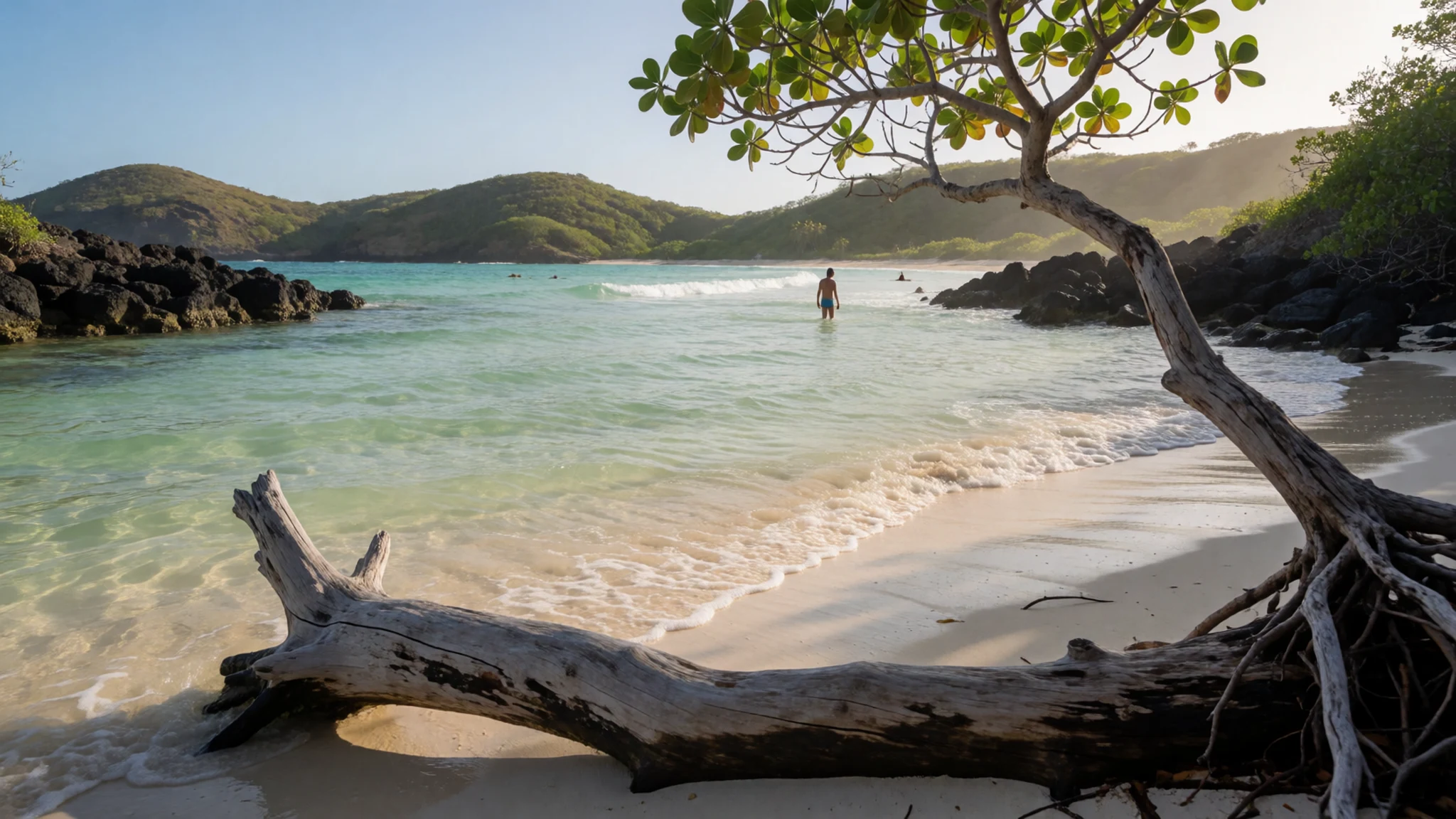
- Ravine Mazeau and the rainforest edge — Inland valleys
Streams such as the Ravine Mazeau run down from the mountain range through the wet forest, and the green, shaded valleys behind the village give a taste of the Basse-Terre interior. Paths vary in condition after rain, so wear sturdy shoes, ask locally about trail state, and consider a guide for longer walks.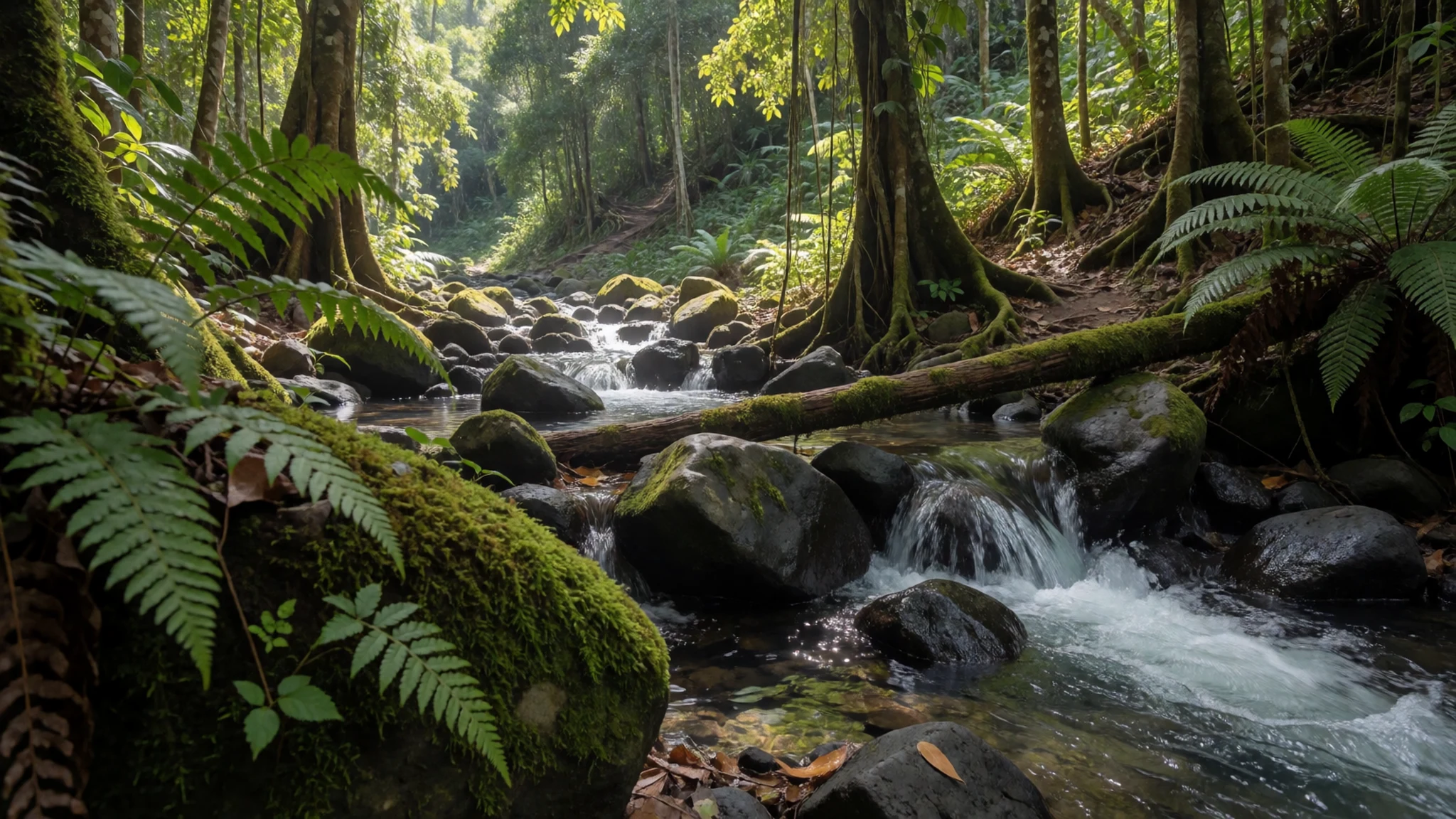
Culture
Deshaies belongs to the wider culture of Guadeloupe, which is French and Caribbean at once. French habits shape daily life: bakeries in the morning, long lunches, formal greetings and a strong sense of what is polite in public. Creole language, music and cooking sit on top, and many people move easily between French and Creole depending on who they are speaking to. The village is small, so life is shaped by the harbour, church and school calendar, and by weekend gatherings on the beach with family. Fishing has long been part of the local economy, and a boat returning with its catch still draws a small crowd. Religion matters here, and the church dedicated to Saint Peter and Saint Paul remains a focus of village life, especially on feast days and Sundays. Music, often zouk, gwoka drumming or whatever someone has brought on a speaker, can carry across the bay in the evening, and neighbours usually tolerate it as part of island life. Visitors who make the effort with a few words of French are generally met with warmth, even if the pace of service is relaxed. Patience is part of the arrangement, since shops may close for a long midday break and little happens in a hurry. When you enter a shop, café or market stall, say bonjour before asking for anything.
What to wear
Traditional dress in Guadeloupe centres on madras, a brightly checked cotton cloth traditionally woven or printed in strong colours. It is tied into the headwrap known as the tête, and used for wide skirts, aprons and shawls worn with white cotton blouses trimmed in lace or embroidery. The full costume, with gold jewellery, appears at festivals, cultural parades, weddings and folklore performances, and for some older women on feast days. Everyday clothing in Deshaies is far simpler. Locals wear light cotton or linen, shorts, T-shirts and sandals, with the usual French attention to being tidy once the swimwear comes off. Fishermen and boat crews tend to wear practical shorts, caps and rubber sandals. On Sundays, some residents dress up for church, and madras shows up in small touches such as scarves or shirts. Visitors should pack for heat and humidity: breathable cotton, a hat, sunglasses, reef-safe sun cream and a light waterproof for sudden showers. Swimwear belongs on the beach and boat, so put a shirt or sarong on when walking through the village, shops or restaurants. For forest paths and ravines, wear closed shoes with grip, since the ground can be slippery after rain. Covered shoulders and knees are sensible for a church visit.
What to eat
- Colombo — Creole eateries near the harbour and beach
Chicken, or sometimes goat or fish, stewed in a mild curry blend and served with rice. The dish came to the French Caribbean from India and is now the regional plate. Indian visitors will recognise the spicing, though it is gentler and more fragrant than many curries back home.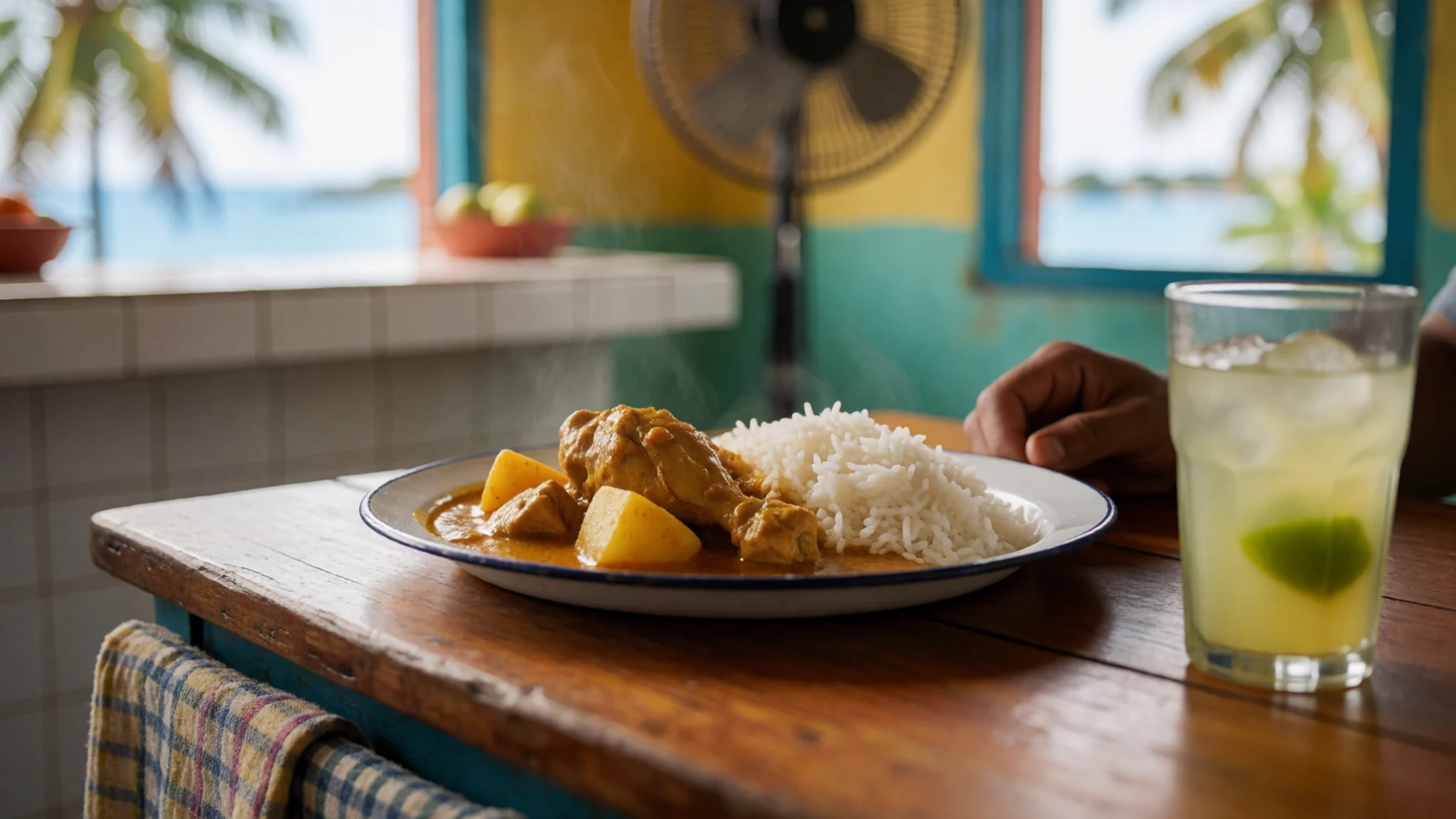
- Accras — Beachside snack bars and village eateries
Small, crisp fritters traditionally made with salt cod, though some versions use other fish, shrimp or vegetables. They are eaten hot as a starter or snack, often with a spicy dip, and they pair naturally with a cold drink after a swim.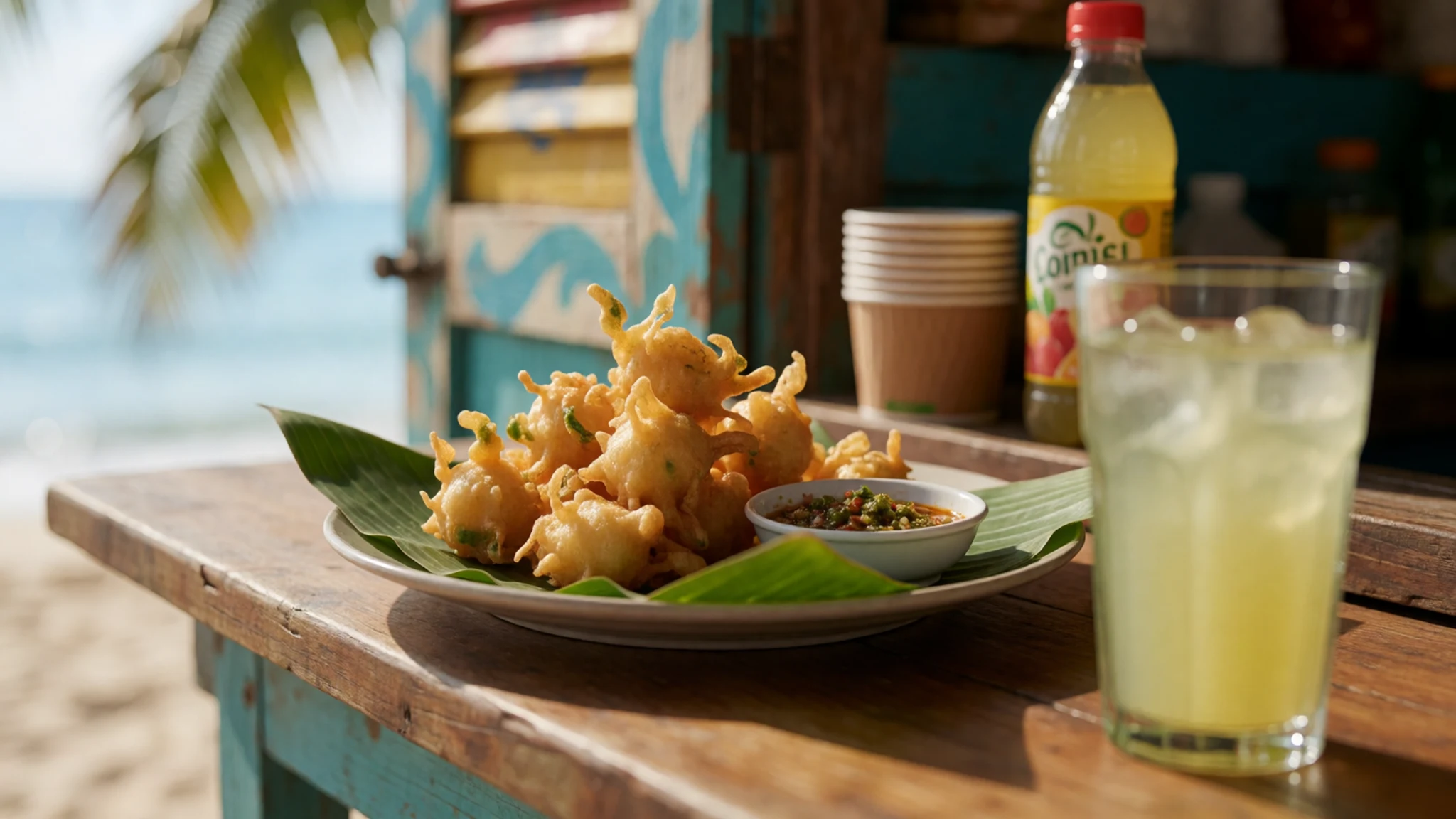
- Boudin créole — Bakeries, markets and casual lunch places
A spicy Creole black pudding, seasoned with local herbs and chilli and usually served as a starter or snack. It is rich, so one portion is plenty. Visitors who avoid pork or blood products should ask before ordering. - Féroce d'avocat — Creole restaurants and family-run eateries
A thick, fiery mash of avocado, usually with salt cod, cassava flour and chilli. It looks gentle but the heat varies by cook, so taste a little first. It works well with bread or as part of a Creole lunch. - Banana and plantain dishes — Village markets and lunchtime eateries
Sweet bananas appear in jams, cakes, tarts and flambéed with rum, while plantain is fried, grilled or boiled as a savoury side. Ripeness decides the sweetness, so ask which type is on the plate. - Ti' Punch and rhum agricole — Waterfront bars and restaurants
The local drink is white rum, often served as ti' punch, a small, strong mix of rum, lime and cane sugar or brown sugar. Rhum agricole is made from fresh sugar-cane juice and has a grassy flavour. Sip slowly, drink water alongside and avoid driving afterwards.
Plan it
Best time. December to April is the more comfortable stretch for beaches and walking, with less rain than the rest of the year. July to November is wetter and overlaps with hurricane season, so travel then needs flexible plans and good insurance. Rain can still fall at any time.
How long. 2–4
Getting there. Fly to Pointe-à-Pitre airport on Guadeloupe, then drive across or around Basse-Terre to Deshaies; a hire car is the most practical option, as public transport to the village is limited. Check the commune's official site, http://www.villededeshaies.fr, for local information.
Budget. mid
Tips
- Check entry rules early: Guadeloupe is not part of the Schengen Area, and a Schengen visa is not valid there, so travellers who need a visa must apply separately to a French diplomatic mission, while many visa-free visitors may stay up to 90 days.
- Hire a car well ahead in busy months, and plan fuel and parking before heading into the hills.
- Carry some cash and a card, since small snack stops and market stalls may not take cards.
- Start beach and boat days early, before the heat and cloud build, and bring water, sun cream and a light rain jacket.
- Ask locally about swell and trail conditions after heavy rain before swimming or walking in the forest.
Etiquette
- Greet people with bonjour in shops, cafés and market stalls before asking for anything.
- Keep swimwear to the beach and boat, and cover up when walking through the village or visiting the church.
- Take rubbish away from beaches and avoid landing on or disturbing protected places such as Kahouanne.
Nearby
Sources
- Wikidata Q996301 (CC0)
- Wikipedia: Deshaies (rev 1381964998) (CC BY-SA 4.0)
- Wikivoyage: Guadeloupe (rev 5413121) (CC BY-SA 4.0)
- Photo: Une balade bateau au départ de Deshaies, Hugo Elby (CC BY-SA 4.0)
- Photo: Lage der Gemeinde Deshaies, Tschubby (CC BY-SA 1.0)
- Photo: Plage de Grande Anse, Deshaies, Guadeloupe (CC BY-SA 1.0)
- Photo: Building at 343 boulevard des Poissonniers in Deshaies, Tournasol7 (CC BY 4.0)
- Photo: Restaurant at 7 rue de la Vague Bleue in Deshaies, Tournasol7 (CC BY 4.0)
- Photo: Affluent de la ravine Mazeau, Enrevseluj (CC BY-SA 4.0)
- Photo: Anse de Deshaies, Tournasol7 (CC BY 4.0)
- Photo: Anse de la Perle (Guadeloupe), Enrevseluj (CC BY-SA 4.0)


