Cunda Island
Cunda Island, Turkey
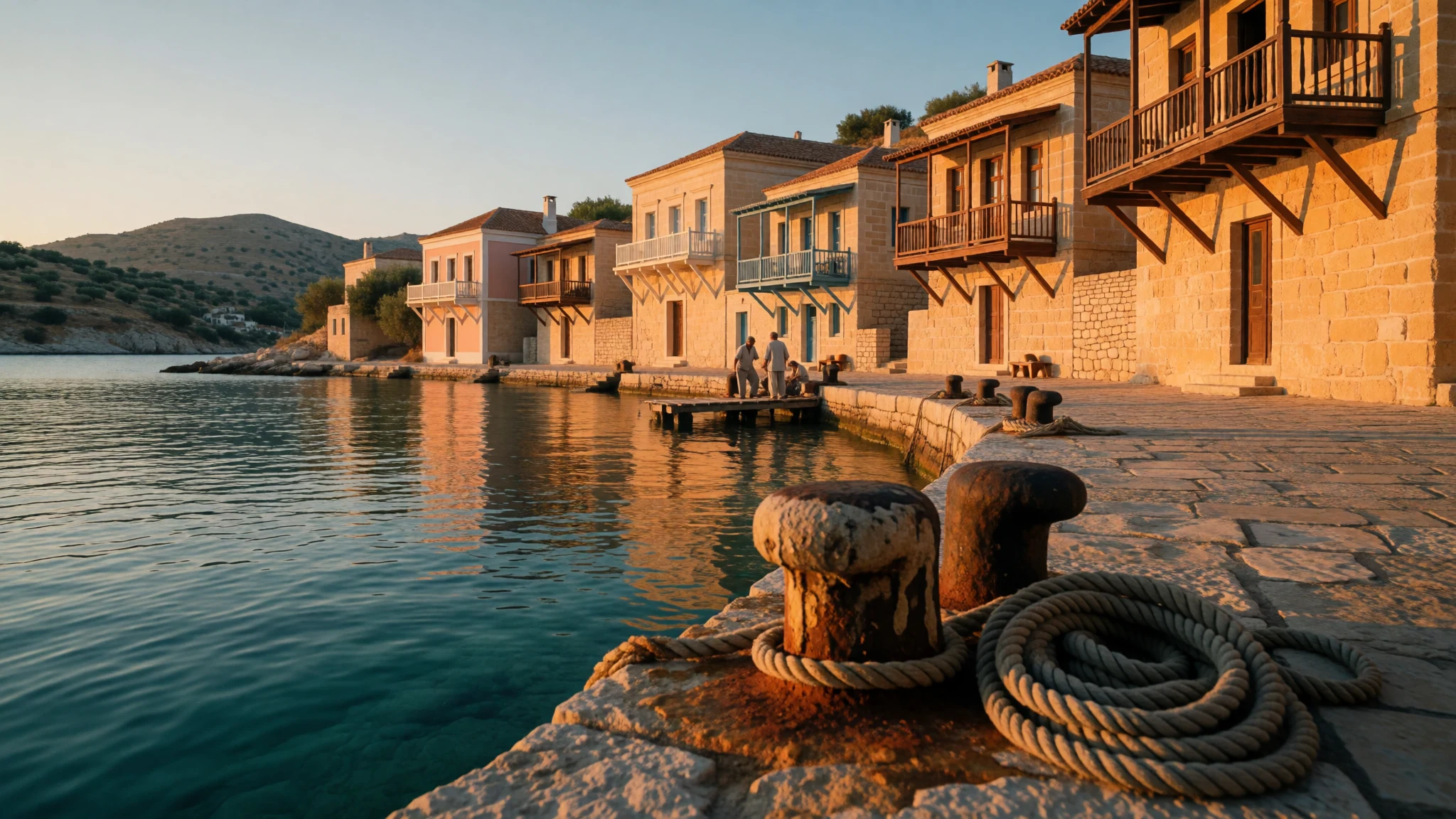
Cunda Island is a small Aegean island of old stone houses, olive groves and waterfront fish restaurants, reached by road from Ayvalık.
The place
Cunda Island lies in the Edremit Gulf off Turkey's north-western Aegean coast, a few minutes from the town of Ayvalık in Balıkesir Province. Turks call it Cunda Adası or Alibey Adası, while Greek speakers know it as Moschonisi. It is the biggest island of the Ayvalık archipelago, a scatter of islets once called the Hekatonisa in Greek, and Lesbos lies close enough to be seen on a clear day. Causeways carry a road across from the mainland, so no boat is needed to arrive. About 3,300 people live here, most of them in the main town on the eastern shore, where the harbour front is lined with fish restaurants, tea gardens and sweet shops. Behind the quay, lanes of two-storey stone houses climb in tight rows, many with tall windows and painted shutters, built by the Greek families who once lived here. The rest of the island is quieter: low hills of olive trees, dry stone walls, pine patches, a few old windmills and small rocky coves where locals swim. Summers are hot, and weekends and public holidays bring day-trippers from İzmir and Istanbul, so the waterfront fills quickly and parking becomes a chore. Out of season the mood changes completely, with fishermen mending nets, half the shops shuttered and cats on every doorstep. Cunda suits a slow stop: wander, eat, swim, and watch the light fade over the water.
Its story
Cunda Island has been settled since antiquity, and ancient writers name communities here called Nasos, Pordoselene and Chalkis, though almost nothing of them is visible today. The modern story is mainly a Greek one. Into the early twentieth century the islanders were Greek Orthodox, living from fishing, olives and trade across the gulf, and the harbour town was Greek in language, schooling and church life. That world ended violently. From 1914 the community came under growing pressure: priests and prominent men were arrested and mistreated, families were pushed across to Ayvalık with nothing but what they stood in, and churches were stripped and used as stores and stables. In 1921–1922 the island briefly became the seat of a Greek Orthodox metropolitan, Ambrosios, whose neoclassical mansion still stands on the seafront. He was executed by the Turkish army, and in September 1922 several hundred islanders were killed. After the 1923 Treaty of Lausanne the population exchange removed the remaining Greek presence, and Muslim families from Lesbos, Crete and other Aegean islands moved into the empty houses. Their descendants are today's islanders, with their own inherited memories of leaving a homeland. Visitors who look closely can read both chapters in the streets: churches abandoned or put to other uses, and Greek-built houses lived in by families who came from the other side of the sea.
What to see
- Harbour front and old town — Cunda town, eastern shore
Cunda Island's main town is best taken on foot. Start on the quay, where fishing boats and restaurant terraces face the mainland, then climb into the lanes behind. Stone houses with shuttered windows and carved doorways stand shoulder to shoulder, and many have been turned into guesthouses, cafés and craft shops. Go early, before the day-trippers arrive.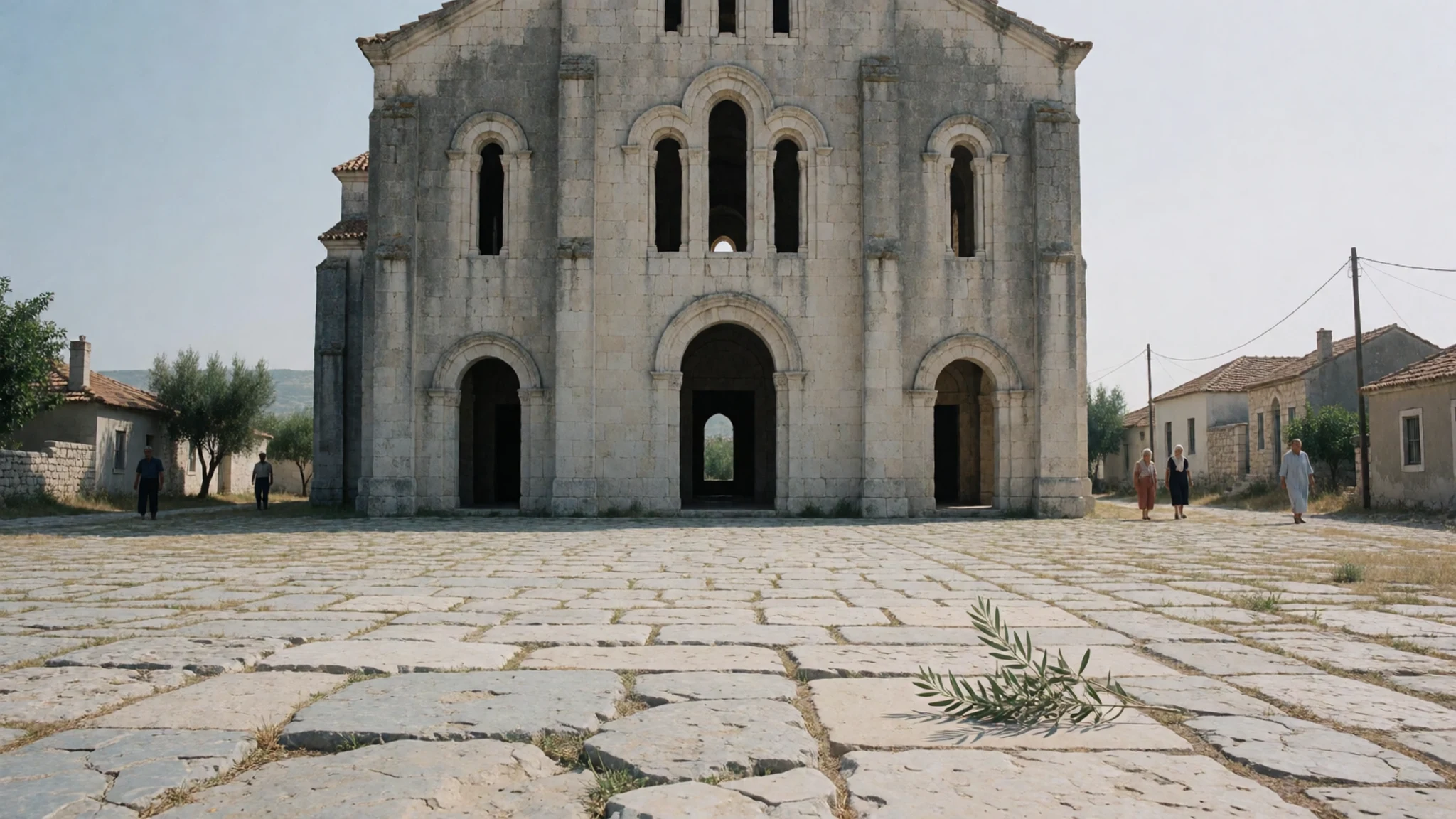
- The former Greek Orthodox cathedral — Cunda town
The big stone church above the town was the main landmark of the old Greek settlement. It has stood abandoned and decaying for decades, and visitors should check locally whether it can be entered or only seen from outside. Even from the street its scale shows how large and prosperous the island's Greek community once was.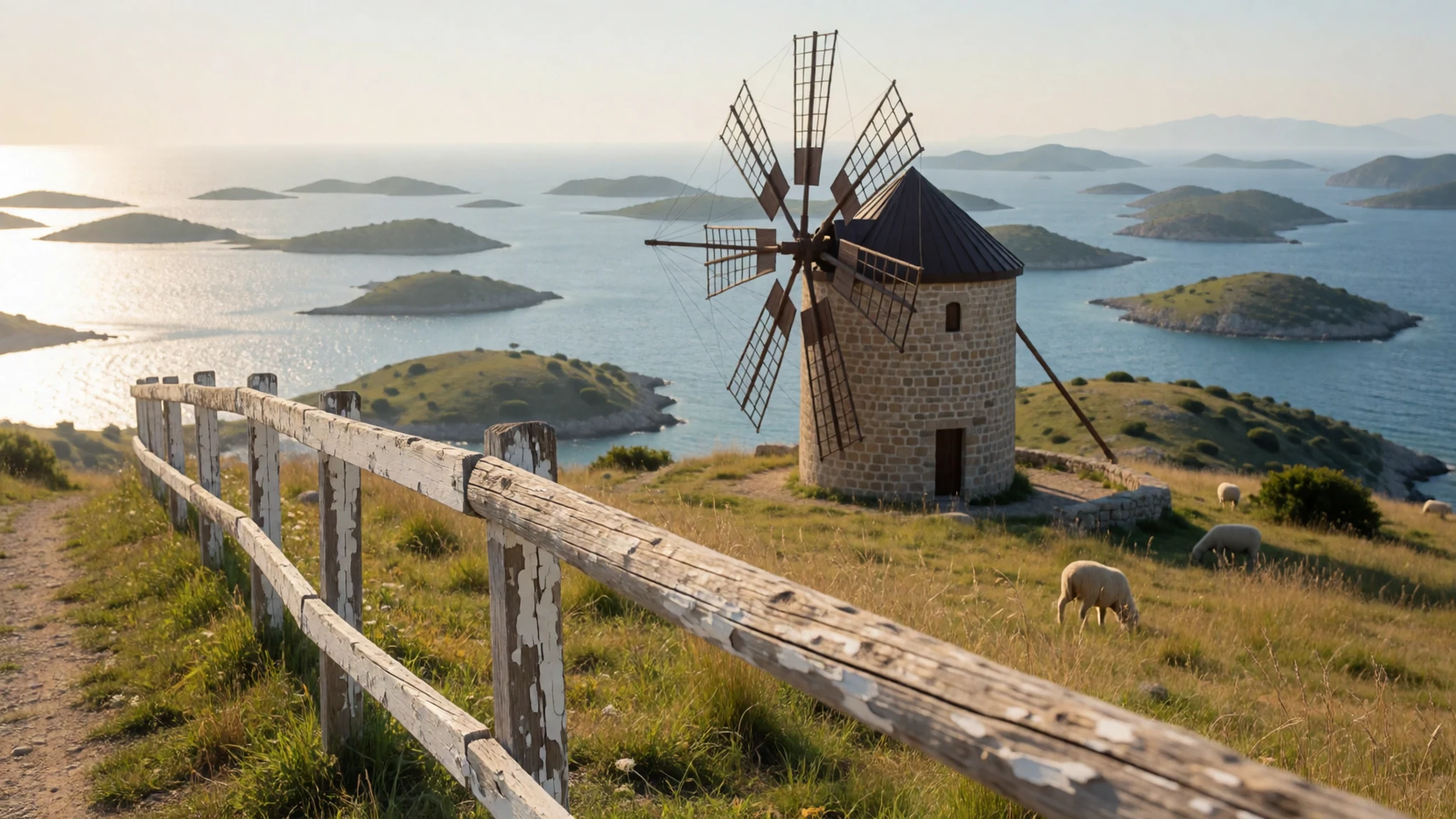
- The seafront mansion of Ambrosios — Cunda town seafront
Among the buildings on the town waterfront stands the neoclassical house of Ambrosios, the last Greek Orthodox metropolitan of the island, who was executed in 1922. It is a quiet stop with no spectacle, but it fixes the island's history in one building. Look at the proportions and stonework against the plainer houses nearby.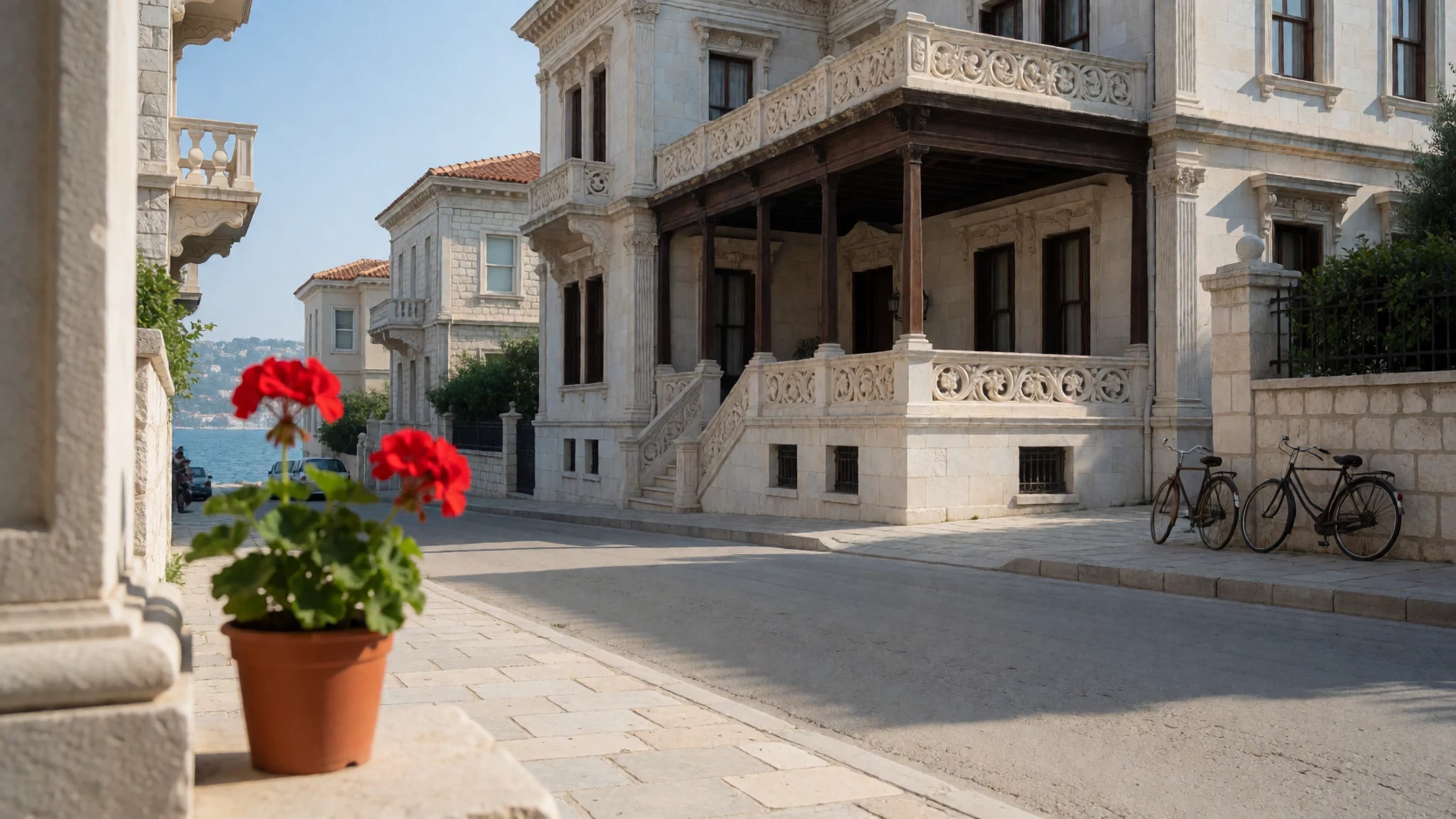
- Windmills and the island's interior — Island interior
Away from the town, Cunda turns rural. Old windmills stand on dry hillsides among olive groves and stone walls, reminders of the grain and oil economy that supported the island. A bicycle or scooter is the easiest way to cover the lanes; summer heat is strong, so carry water and keep rides to the morning or late afternoon.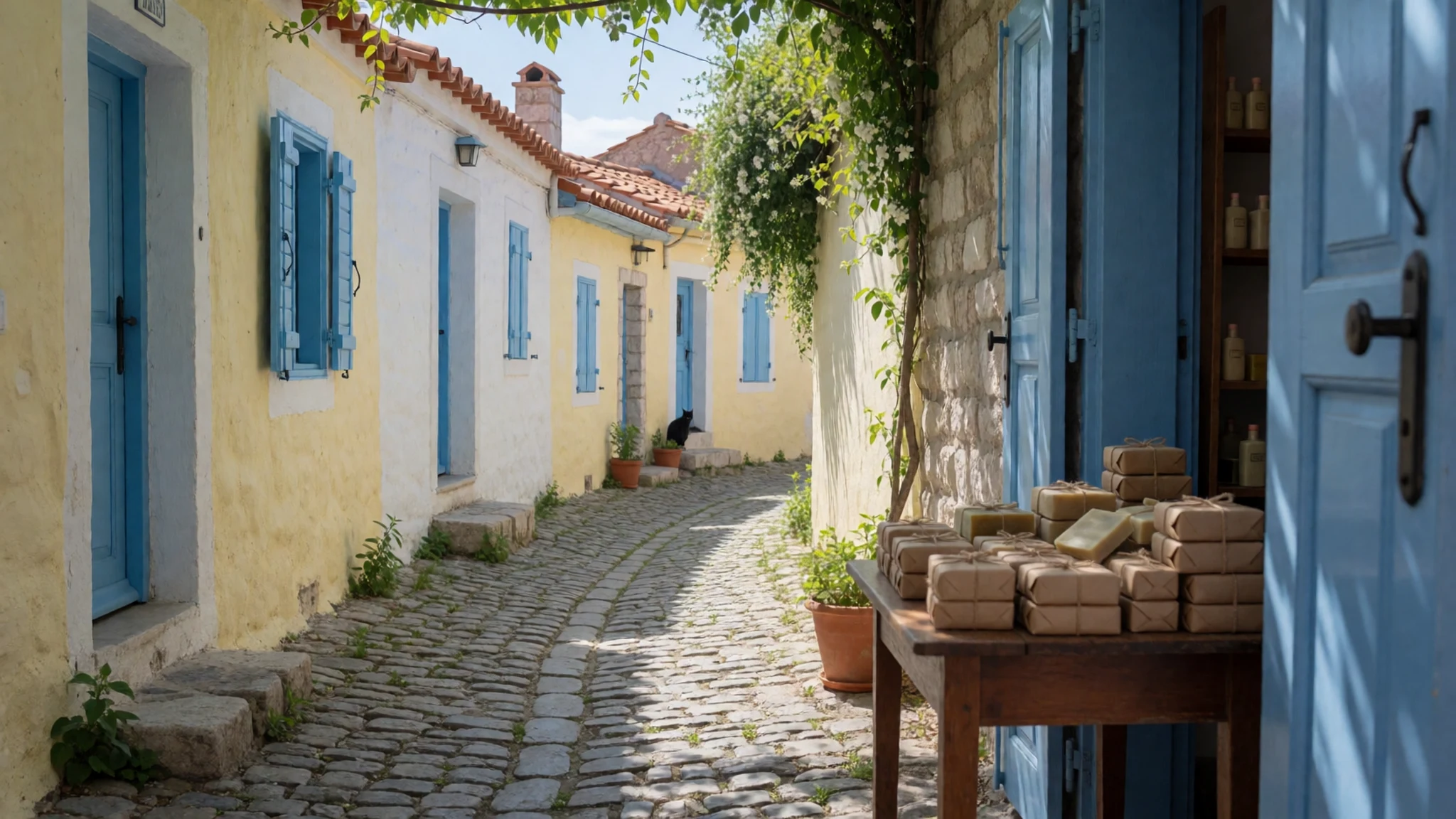
- Western coves and sunset — Western and northern coast
The western and northern shores break into small rocky coves, with olive trees running down almost to the water. Swimming is from rocks or small pebble patches rather than long sandy beaches, so water shoes help. In the evening, many locals head west to watch the sun set over the Aegean with Lesbos on the horizon.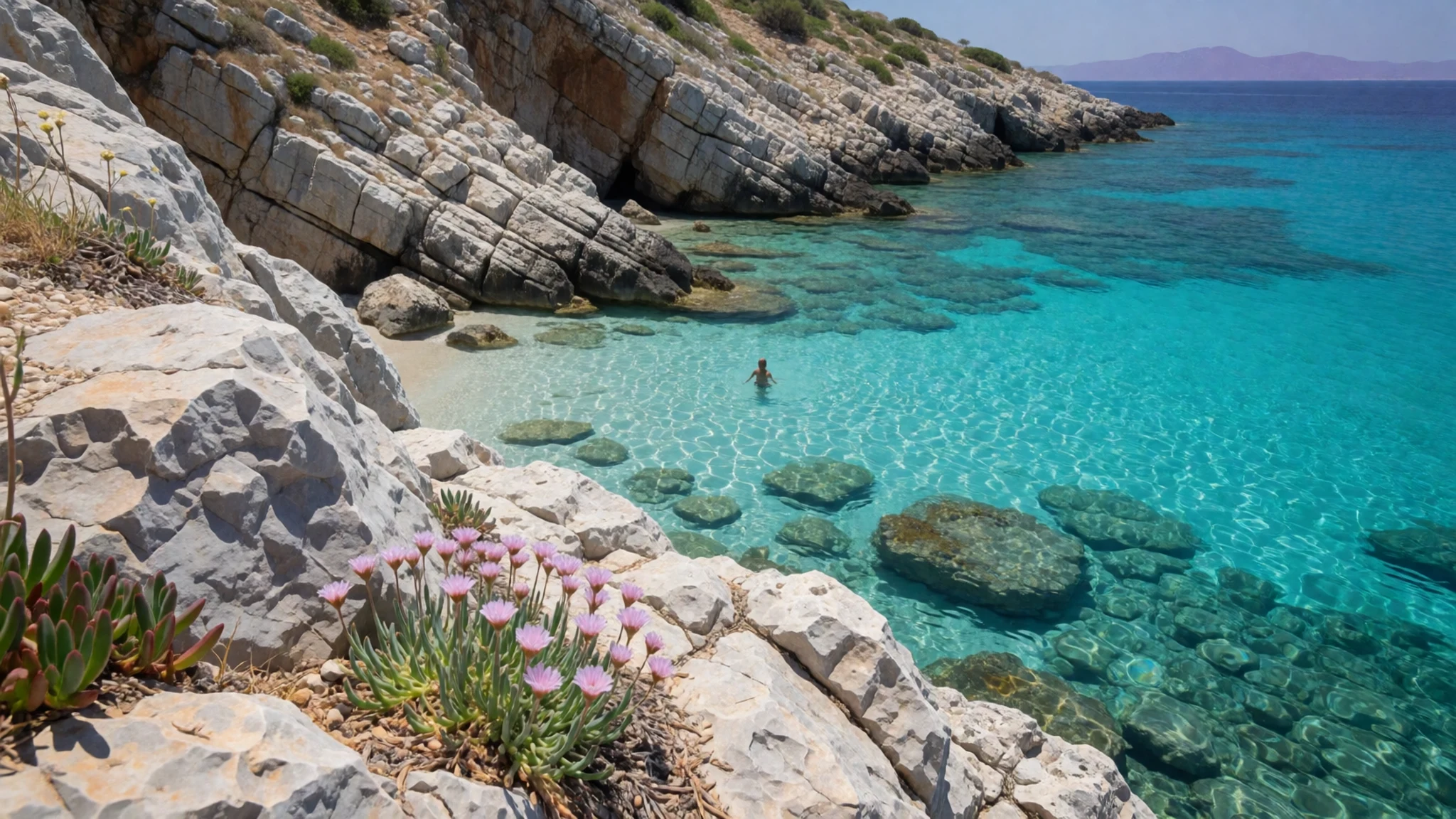
Culture
Cunda Island's culture is layered, and the layers are visible. The Greek Orthodox islanders who once filled the town left behind churches, mansions and street plans. The people who live here now are largely descended from Muslim families who came from Lesbos, Crete and other Aegean islands after 1923, and they brought their own dialects, recipes and ways of life. Today this mix shows in the island's cooking, which leans on olive oil, wild greens and fresh fish, and in an easy, coastal sociability: long meals, evening strolls along the quay and tea drunk slowly in the shade. Olive growing remains central to the economy, and the harvest and pressing season in autumn still shapes the rhythm of village life. The island is also a summer retreat for Turkish families, so the soundscape of July and August is of Turkish holiday chatter, boat engines and restaurant music rather than foreign tourism. Older residents often have family stories linked to the exchange of populations, and they may mention them if asked gently. The atmosphere is relaxed and conservative in a mild, Aegean way, and people appreciate a greeting in Turkish. Local history here includes real loss on both sides of the sea, so it is best approached with curiosity rather than judgement. When entering a working mosque or when photographing residents, cover your shoulders and knees, take your shoes off at the door, and ask before pointing a camera at anyone's face.
What to wear
Cunda Island has no single costume now, but the Aegean coast has long traditions that older residents still remember. Rural women in the region wore şalvar, wide gathered trousers, in printed cotton, with a cotton headscarf trimmed with oya, a delicate needle-lace edging worked in bright thread. Cotton, linen and wool were the main textiles, and woven towels and embroidered cloths are still made as souvenirs and family heirlooms. Such dress now appears mainly at festivals, weddings and folklore events, though oya scarves can still be seen on older women in villages. Day to day, islanders wear what suits a hot, salty climate: linen shirts, light dresses, cotton trousers, sandals and sun hats. Evenings along the quay are smart-casual rather than formal, and beachwear stays near the water. For visitors, light, loose cotton or linen clothing works best from May to September, with a hat, sunglasses and high-factor sun cream. Pack a light layer for breezy evenings and for spring and autumn. Cobbled lanes and rocky coves call for sturdy sandals or trainers, and water shoes for swimming. Carry a scarf or a shirt with sleeves for mosque visits, where shoulders and knees should be covered, and women usually cover their hair. Elsewhere dress is relaxed, and swimwear is accepted on beaches but not in town.
What to eat
- Zeytinyağlı otlar (wild greens in olive oil) — Family eateries behind the harbour
Cunda Island's cooking leans on foraged greens, boiled until tender and dressed with local olive oil and lemon. They are served cold as a meze, with a slight bitterness that goes well with fish. Find them in the small family eateries behind the harbour.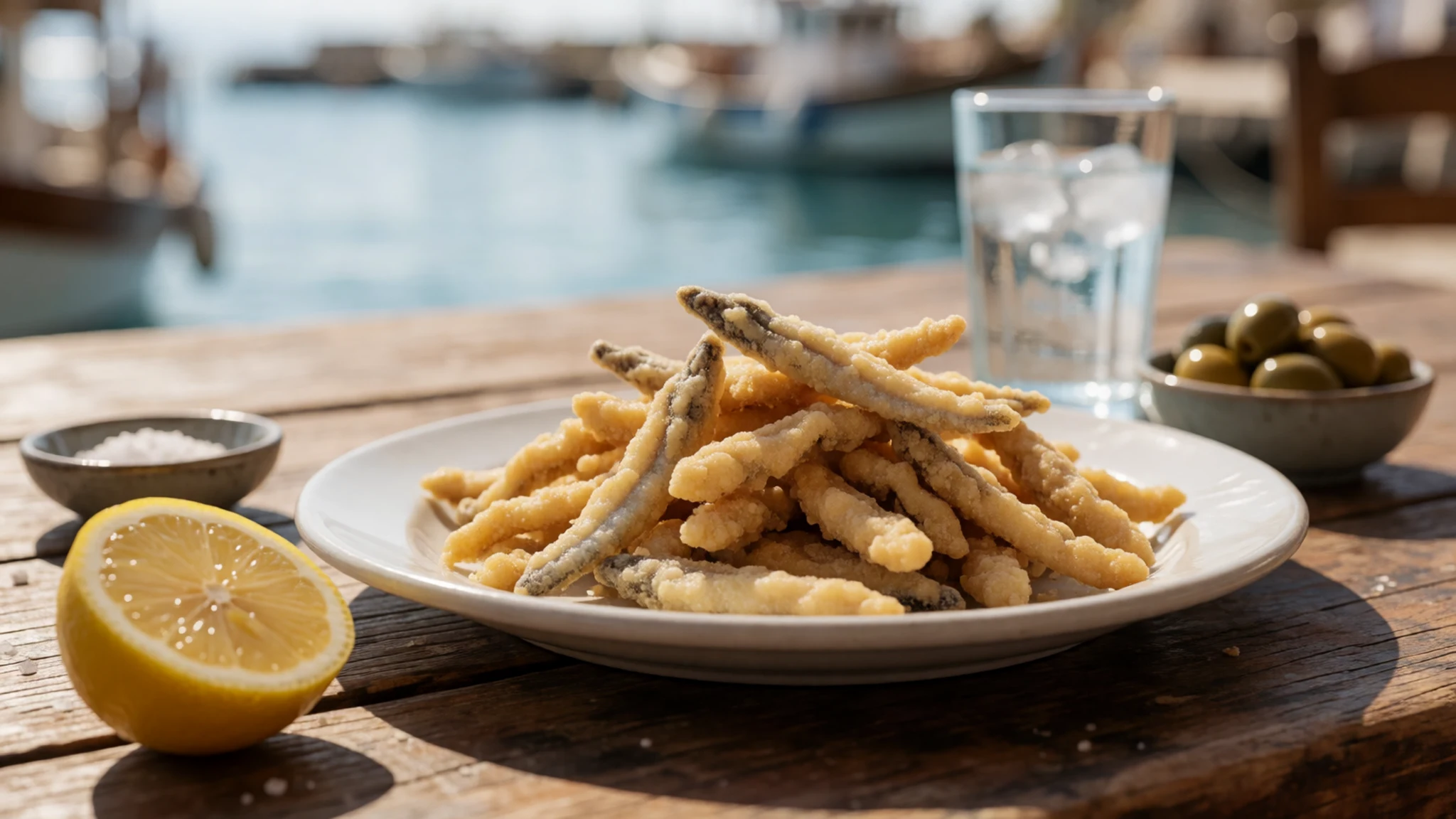
- Fresh grilled fish — Harbour-front restaurants, Cunda town
Fish is the island's main draw: sea bream, sea bass and whatever small fish the boats have landed, grilled simply with salt and olive oil. Choose from the day's catch when you sit down, and ask how it is priced before ordering. The harbour-front restaurants are the usual place.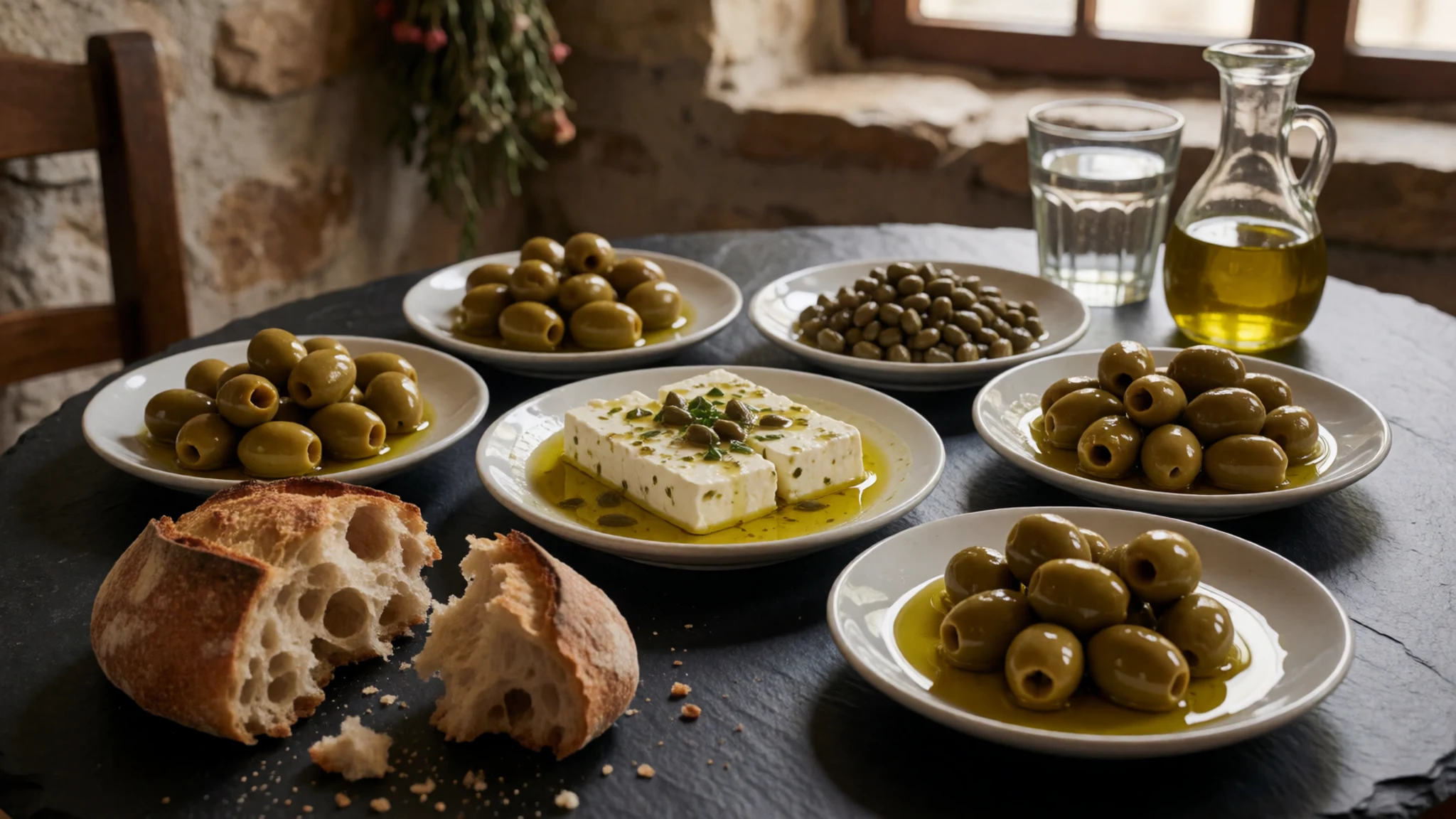
- Lakerda — Meze tables at fish restaurants
Lakerda is salted, cured bonito, sliced thin and served with onion and a squeeze of lemon. It is a long-established Aegean meze, rich and salty, and works well with rakı or just bread and olives. Look for it on meze tables at fish restaurants. - Sea urchin roe — Seafood restaurants on the quay, in season
Sea urchin roe is a seasonal speciality of the Ayvalık coast, eaten fresh from the shell with lemon or in a salad. The flavour is briny and sweet, and availability depends on the season and the catch. Ask at seafood restaurants whether it is on. - Ayvalık tostu — Snack counters and cafés in Cunda town and Ayvalık
The toasted sandwich of Ayvalık is a cult local snack: bread pressed with sausage, cheese and pickles, often with tomato and a sauce. It is more a mainland street-food tradition than an island one, but cafés on Cunda serve versions. Good for a quick, cheap lunch.
Plan it
Best time. May–June and September–October, when the sea is warm, the days are bright and the crowds are lighter than in high summer. July and August are hot and busy, especially at weekends and on public holidays. Winter is quiet and cool, and many seasonal businesses close.
How long. 2–3
Getting there. Fly to Edremit Körfez Airport (Koca Seyit), the nearest domestic airport, or to İzmir Adnan Menderes and continue by road. Reach Ayvalık by coach or car, then take a local minibus, taxi or your own vehicle over the causeway to Cunda. Seasonal ferries link Ayvalık with Lesbos, so check operators before planning.
Budget. mid
Tips
- Book rooms well ahead for summer weekends and public holidays
- Visit the old town early in the morning, before day-trippers arrive
- Carry some cash for small cafés and market stalls, though cards are widely accepted
- Carry water and sun protection for walks and rides in the island's interior
Etiquette
- Dress modestly and remove shoes when entering a working mosque
- Ask before photographing residents, especially older people and anyone at home or at work
- Greet people in Turkish and approach local history with care
Nearby
Sources
- Wikidata Q2740733 (CC0)
- Wikipedia: Cunda Island (rev 1381298860) (CC BY-SA 4.0)
- Wikivoyage: Balıkesir Province (rev 4494418) (CC BY-SA 4.0)
- Photo: Alibey Adasi, Ayvalık, Turkey — Arda Çetin (CC0 1.0)
- Photo: Cunda (Alibey Adası) view — Maurice Flesier (CC BY-SA 4.0)
- Photo: Agean non political — DEMIS Mapserver (CC BY 3.0)
- Photo: Cunda adası, Ayvalık — Haluk Comertel (CC BY 3.0)
- Photo: Cunda Island, Ayvalık — Maurice Flesier (CC BY-SA 4.0)
- Photo: Windmill in Cunda Island — Maurice Flesier (CC BY-SA 4.0)
- Photo: Cunda church — Nevit Dilmen (CC BY 3.0)
- Photo: Cunda'nın renkli evleri — Antoloji (CC BY-SA 4.0)


