Corfe Castle
Corfe Castle, United Kingdom
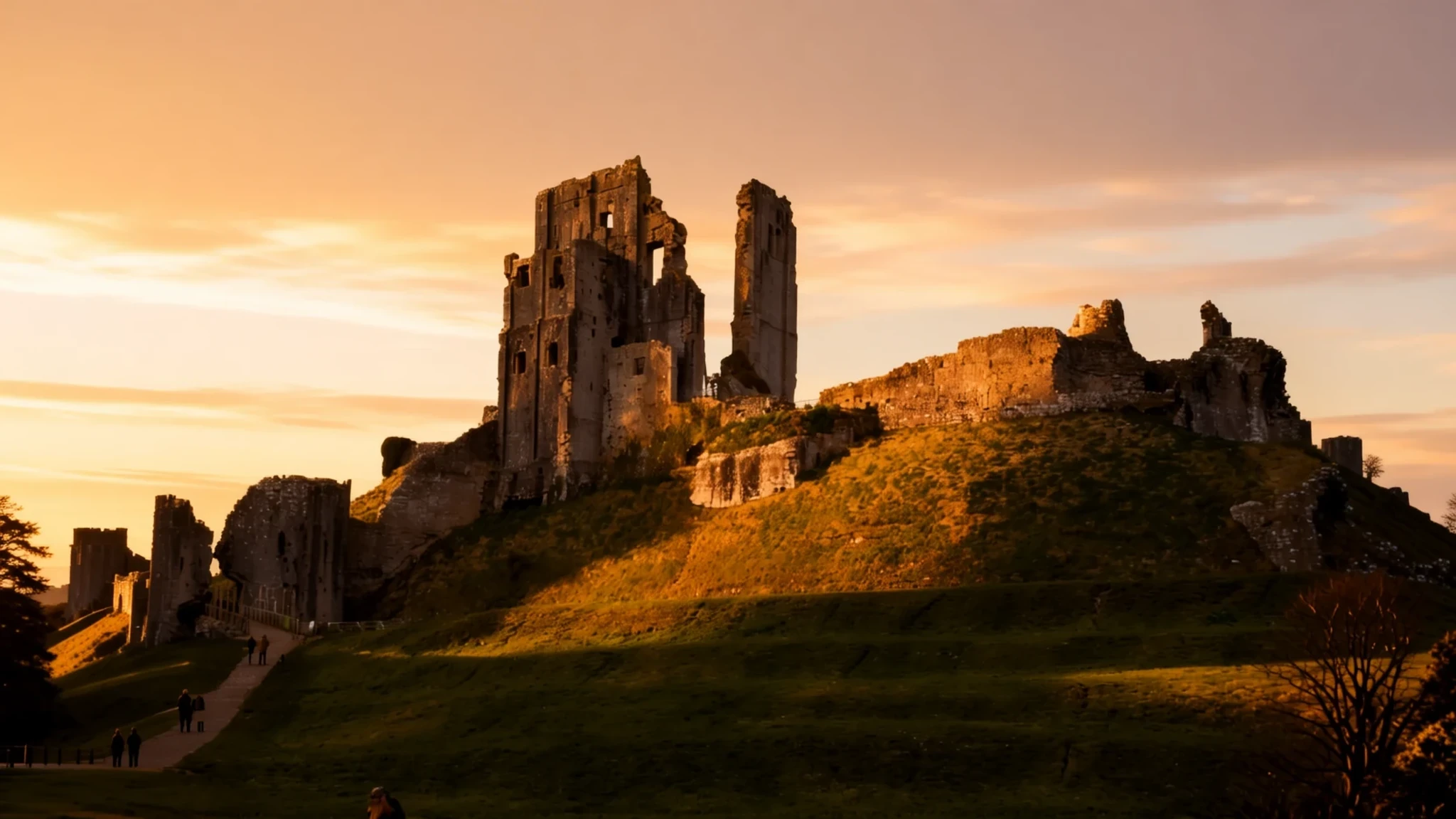
Go for the dramatic Norman ruins on a chalk hill, plus Dorset village life right at your feet.
The place
Perched on the hills overlooking the village of Corfe in Dorset's Isle of Purbeck sits the castle. You reach it by following the contours of the Purbeck Hills until the landscape opens up around a steep, sheltered gap in the chalk ridge. From ground level you quickly see why the site mattered: the castle stands where it can watch a pass between Wareham and Swanage.
This is a ruin you can actually “read” with your eyes. The surviving walls and earthworks outline the medieval layout, and the elevated position gives you a constant sense of scale—part settlement, part fortress, part vantage point. Even if you know very little history, the place feels strategic rather than decorative.
Corfe is also one of those stops where the castle and the village talk to each other. After time in the open air, you’ll find cafés and pubs nearby, with the village square and church giving a calmer contrast to the broken stone. In busy periods the sightlines and footpaths can get crowded because the visit is a mix of wandering and viewpoints, not a big indoor “queue-free” layout.
Plan for changing weather. Dorset can be breezy on the hill, and rain turns the footpaths slick—so proper footwear helps. May to September is the warmest stretch, with the hottest months being July (about 25.6°C) and August (about 25.9°C). It’s also drier around late spring and midsummer, while the wettest months are November (about 102 mm) and December (about 100 mm), with January (about 92 mm) and October (about 94 mm) also bringing a lot of rain. For the most comfortable mix of milder temperatures and lower rain, aim for April to June or September.
Its story
Corfe Castle’s story starts with the idea of a gap in the chalk hills. The castle is named from Old English for “a cutting”, pointing to the pass created by streams eroding the rock on either side. That geology shaped everything: the hilltop gives control, and the gap gives a route worth defending.
A fortress was established soon after the Norman conquest of England in 1066, and the castle became associated with William the Conqueror’s interests in the area’s royal forest. Over time, Corfe changed hands and functions like many medieval castles. Its defences were heavily altered in the 12th and 13th centuries, with major structural phases that reflect shifting military thinking.
By the mid-1600s, Corfe Castle was in the thick of the English Civil War. The owner during that period was Sir John Bankes, while his wife, Lady Mary Bankes, was at the centre of the castle’s defence when Parliamentarian forces twice besieged it. The first siege in 1643 did not succeed; by 1645 the castle fell to an assault after it had become one of the last royalist strongholds in southern England. Soon after, Corfe was “slighted” on Parliament’s orders—deliberately damaged so it could not be used again.
Today the castle’s ruins carry these layers—Norman fortification, Civil War drama, and the later turn to public access. Owned by the National Trust, Corfe is kept as a place to walk, look, and imagine how power was projected from a high hill above Purbeck.
What to see
- Corfe Castle (National Trust ruins)
Walk the castle’s surviving defences on the hillside above the village, reading the layout through stone remains and earthworks. The views over the Purbeck countryside make the “why here?” instantly obvious. Allow time to wander between viewpoints rather than rushing a single circuit.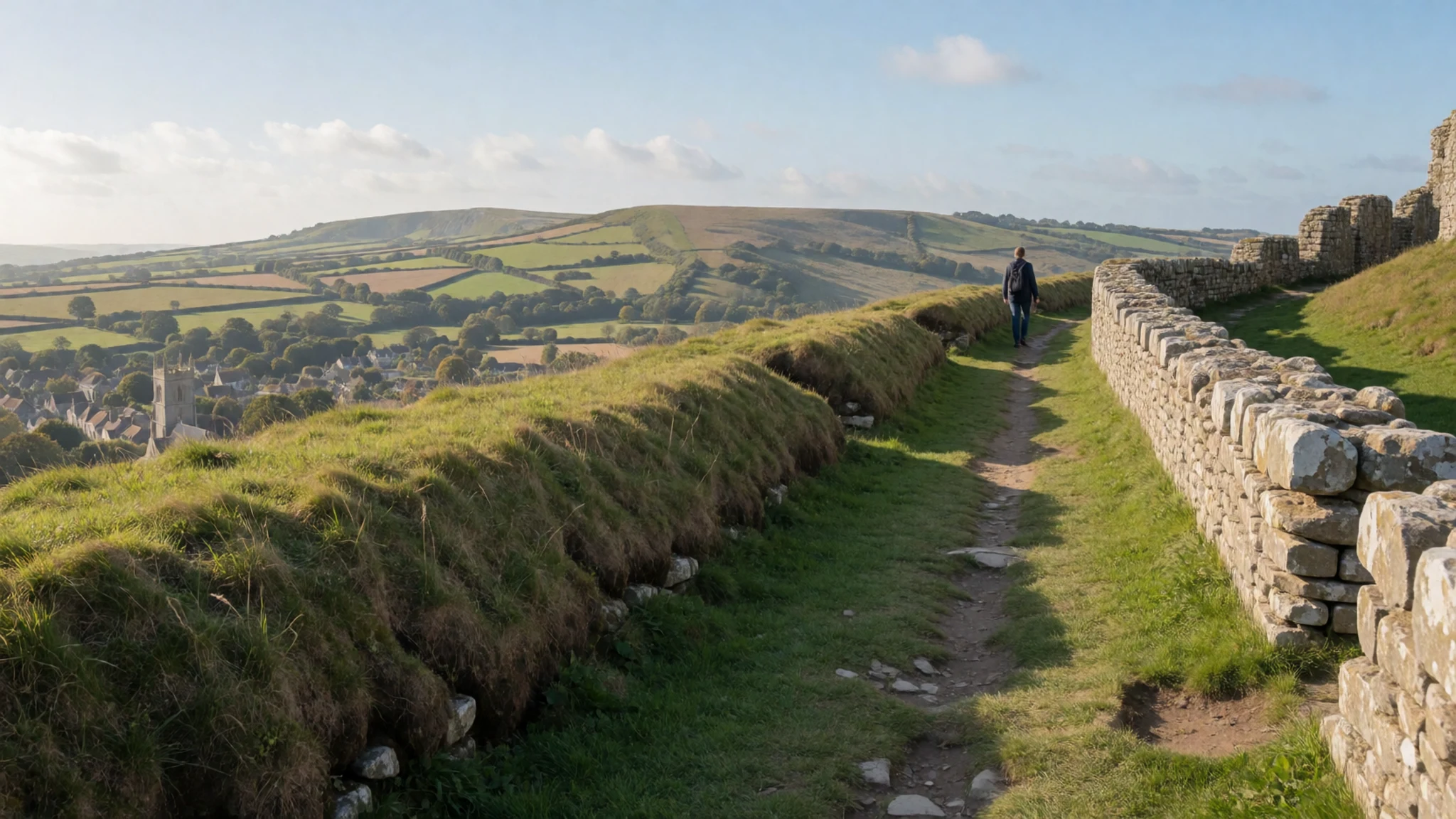
- Gatehouse and bridge remains
Look for the ruined south-west gatehouse area and the sense of how people would have moved in and out. The broken structure is a good prompt for understanding siege-era design—entry points matter, and the ground does the rest. Photos from slightly different angles show how the terrain slopes.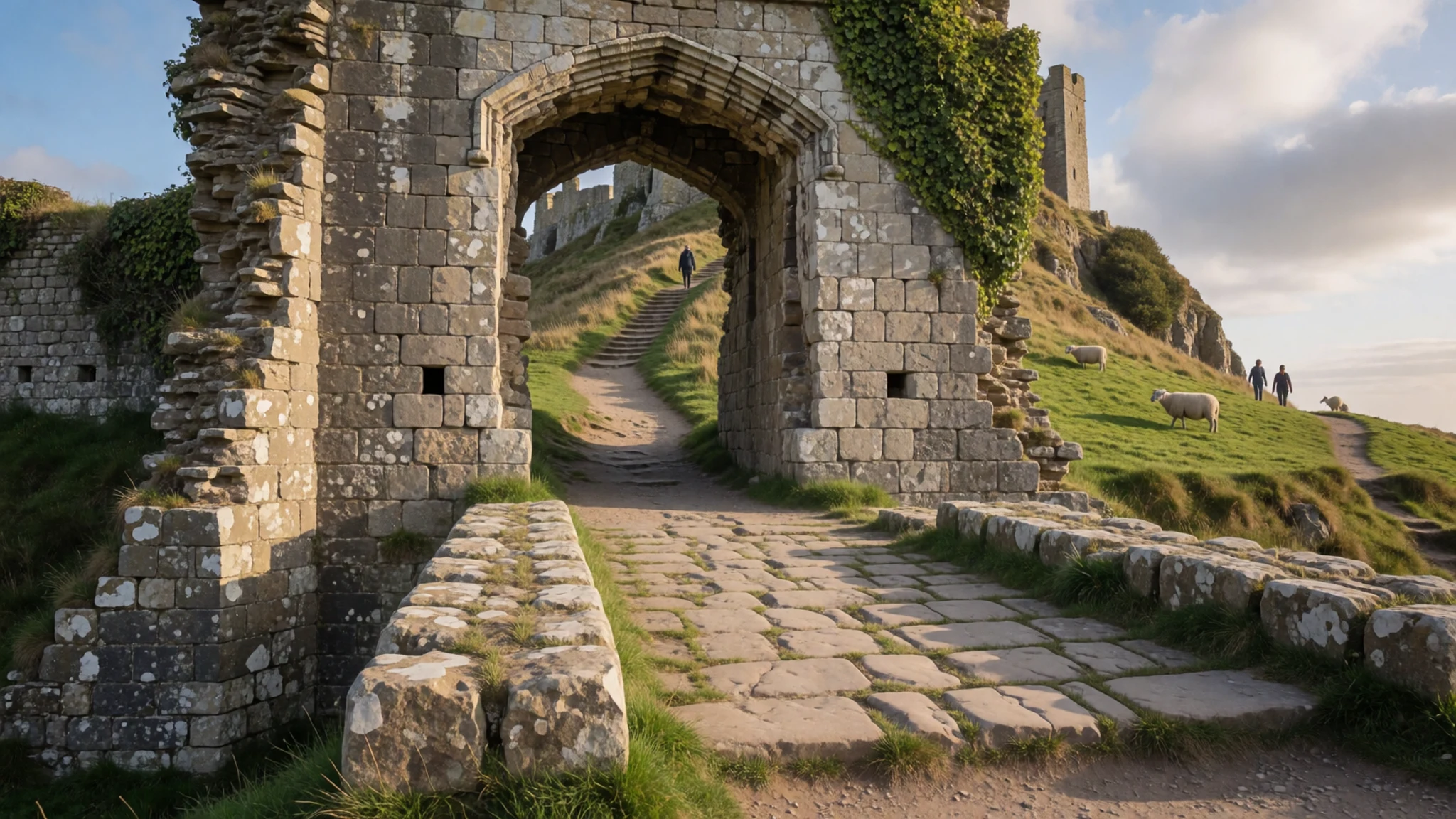
- Corfe village viewpoint
Get a perspective view from just outside the village to see how Corfe Castle sits above the settlement. From here the chalky hill and the gap in the landscape are easier to visualise than from inside the walls. It’s also where many visitors pause before heading back for a closer look.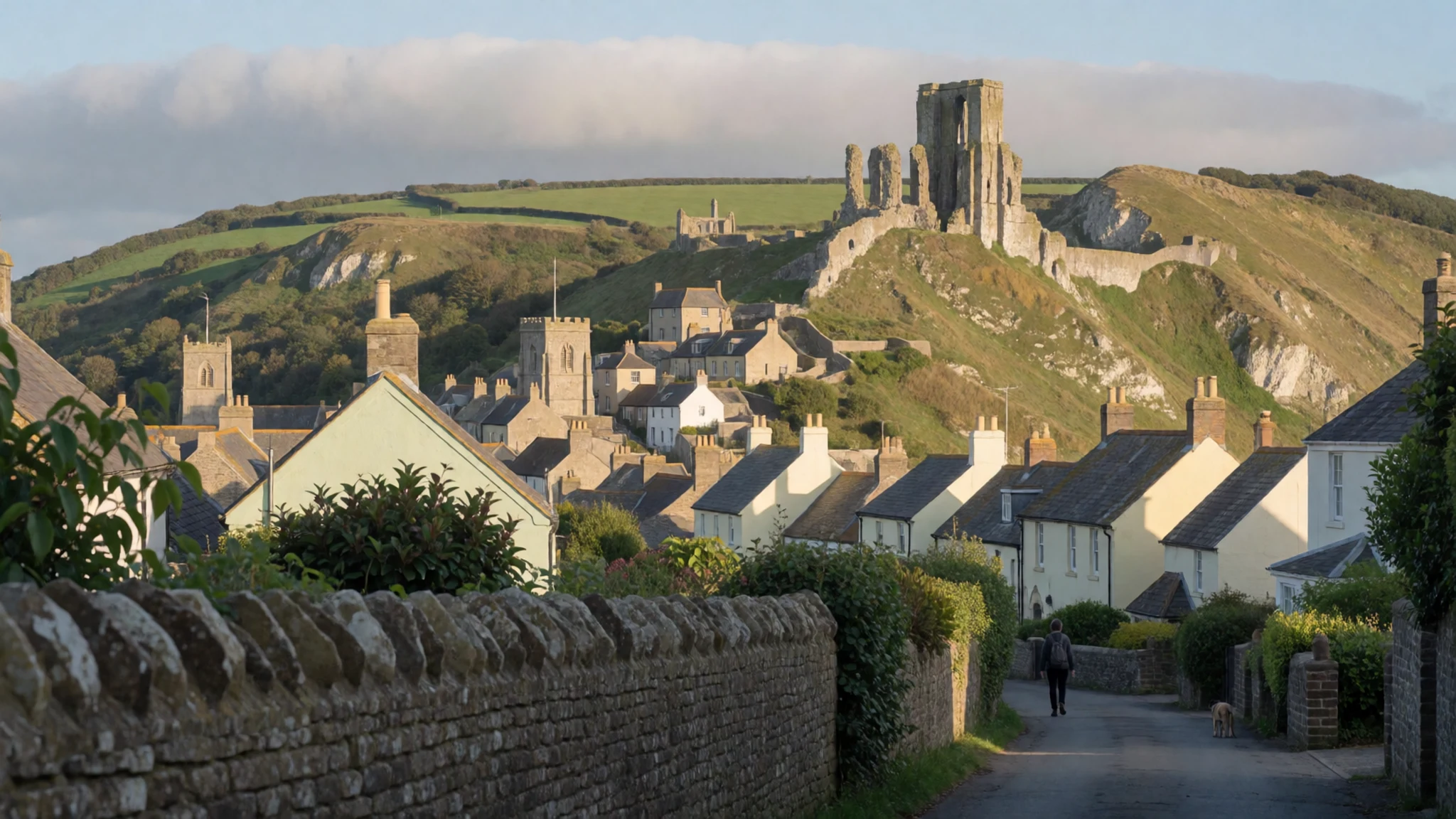
- Model Village Gardens
The Model Village Gardens & Cafe gives you a scale snapshot of what the village and castle might have looked like before the Civil War changes. It’s a slower, more digestible stop if the ruins feel a bit overwhelming, and it helps tie together the castle’s history with everyday life below.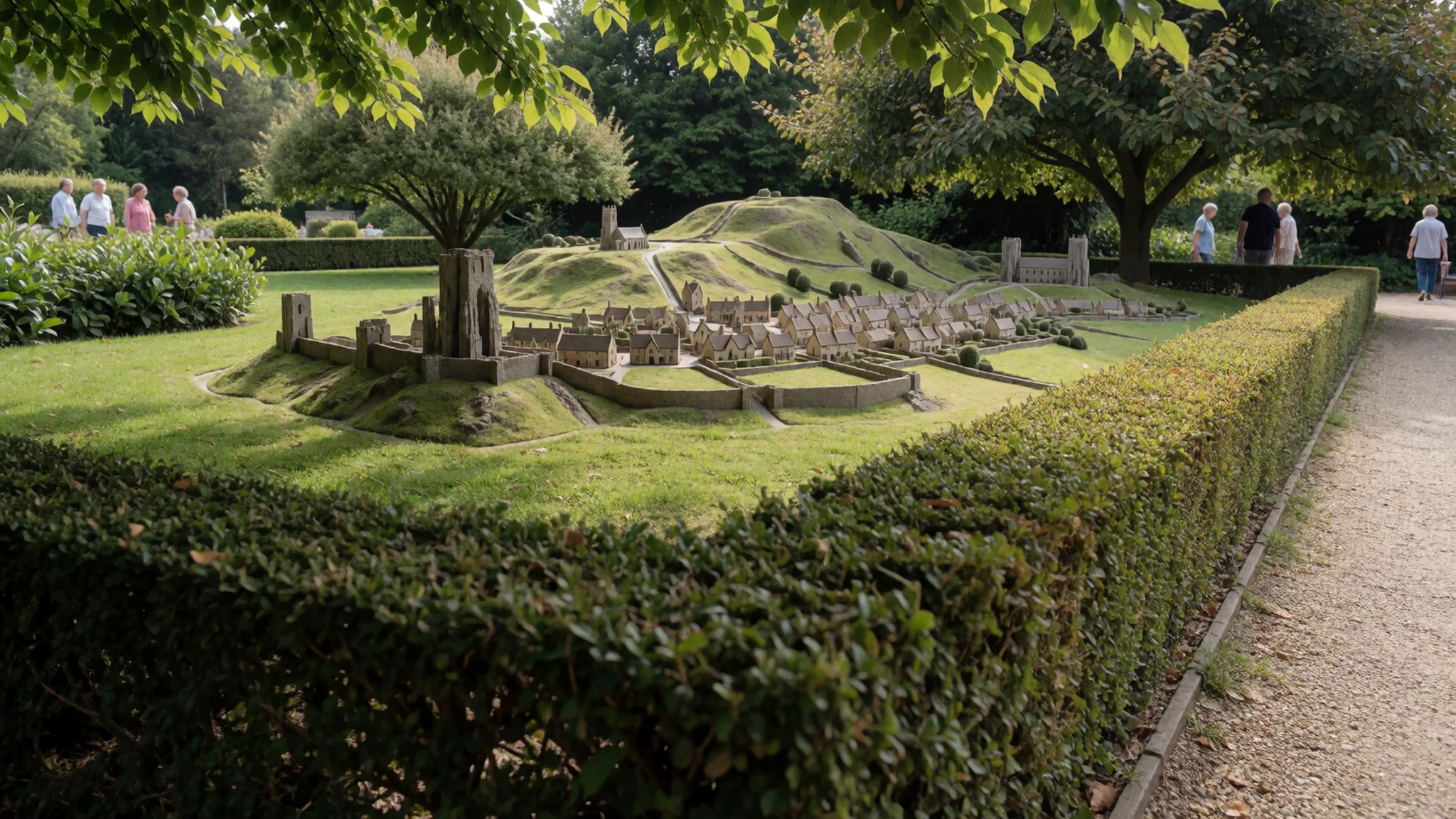
- Church of St Edward
Step into the Church of St Edward for an interior detail-focused break: the church is known for an alabaster reredos with carved elements set in white marble, designed by George Edmund Street. Even if you’re not a specialist, it’s a neat contrast to the open-air grit of the castle.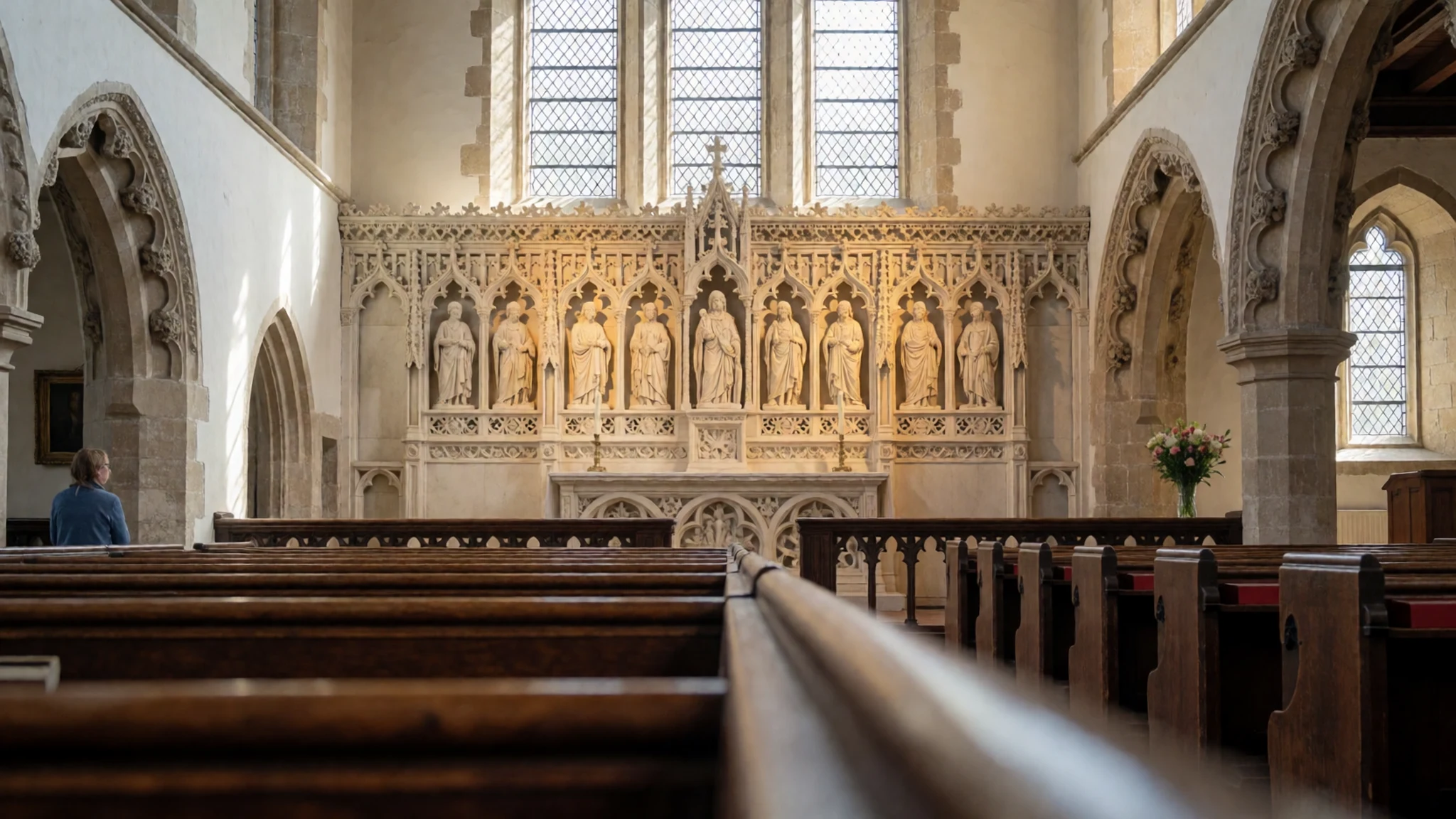
Culture
Corfe Castle is a historic site, but it’s also part of a living Dorset village—so behaviour matters in small, practical ways. The ruins and paths can be uneven, muddy after rain, and narrow in places where people stop to photograph the views. When crowds build, the bottlenecks are usually at viewpoints and along the main walking lines, so moving gently and spacing out helps everyone.
In and around the church, keep expectations simple: treat it as a working place of worship, not a backdrop. If you’re taking photos, be mindful of other visitors who are there quietly. Avoid blocking entrances and let people pass.
Corfe’s history involves conflict and commemoration, so it’s worth keeping the mood respectful—especially in spaces tied to remembrance in the village.
Visitor etiquette: keep to marked paths, don’t climb on fragile stone, and in the church dress modestly and keep voices low.
What to wear
Corfe Castle is outdoors first. The traditional textiles you’ll see in Dorset today are mostly local and occasion-based rather than a daily village uniform, but if you come across historic-style dress through events, look for structured wool fabrics and practical footwear shaped for uneven ground.
In day-to-day life around Corfe, most people wear weather-ready clothing: jeans or walking trousers, a breathable top, and a layer for wind. Because the castle sits on a hillside, light rain can turn the approach slick, so sturdy trainers or walking boots are genuinely useful rather than “extra”. A waterproof jacket and a hat help more than you’d expect.
If you’re visiting the church of St Edward too, aim for modest coverage—especially shoulders and knees—and bring something that reads “polite” in an indoor setting. Avoid very thin summer footwear if the ground is wet.
What to pack for Corfe: comfortable walking shoes, a waterproof layer, and a warm mid-layer for breezy hill air, plus something modest for the church.
What to eat
- Pub lunch at The Castle Inn — The village area near Corfe Castle
For a hearty, classic pause after walking, head to The Castle Inn in the village area. It’s the kind of place locals and visitors drift into for comforting mains and a proper sit-down before heading back out for the views.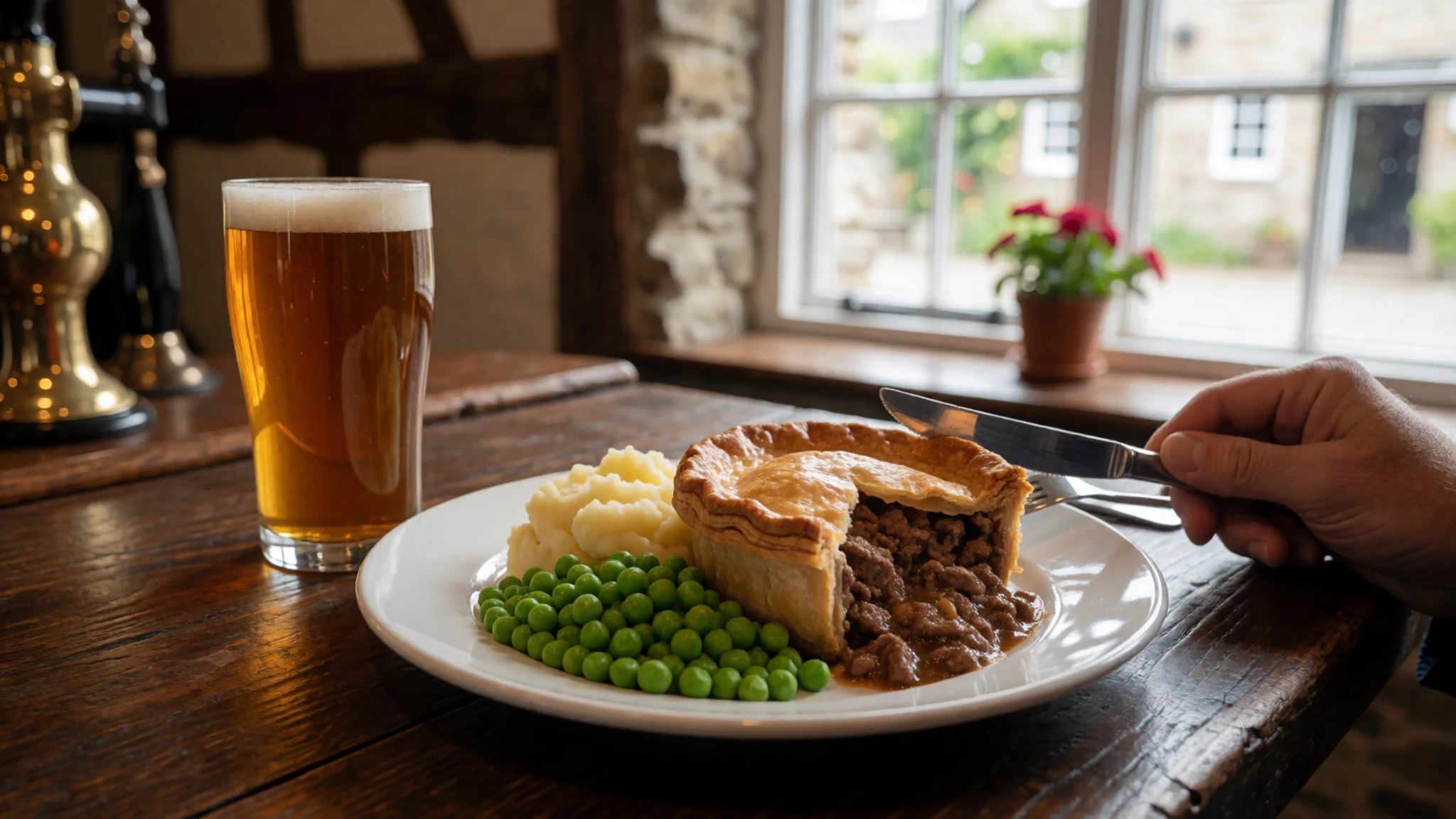
- A pint and pub meals at The Scott Arms — Corfe village
The Scott Arms is another straightforward option for a midday meal without fuss. It works well when the castle has you walking and you want something warm, filling, and easy—especially if the weather turns or crowds make sightseeing feel slower.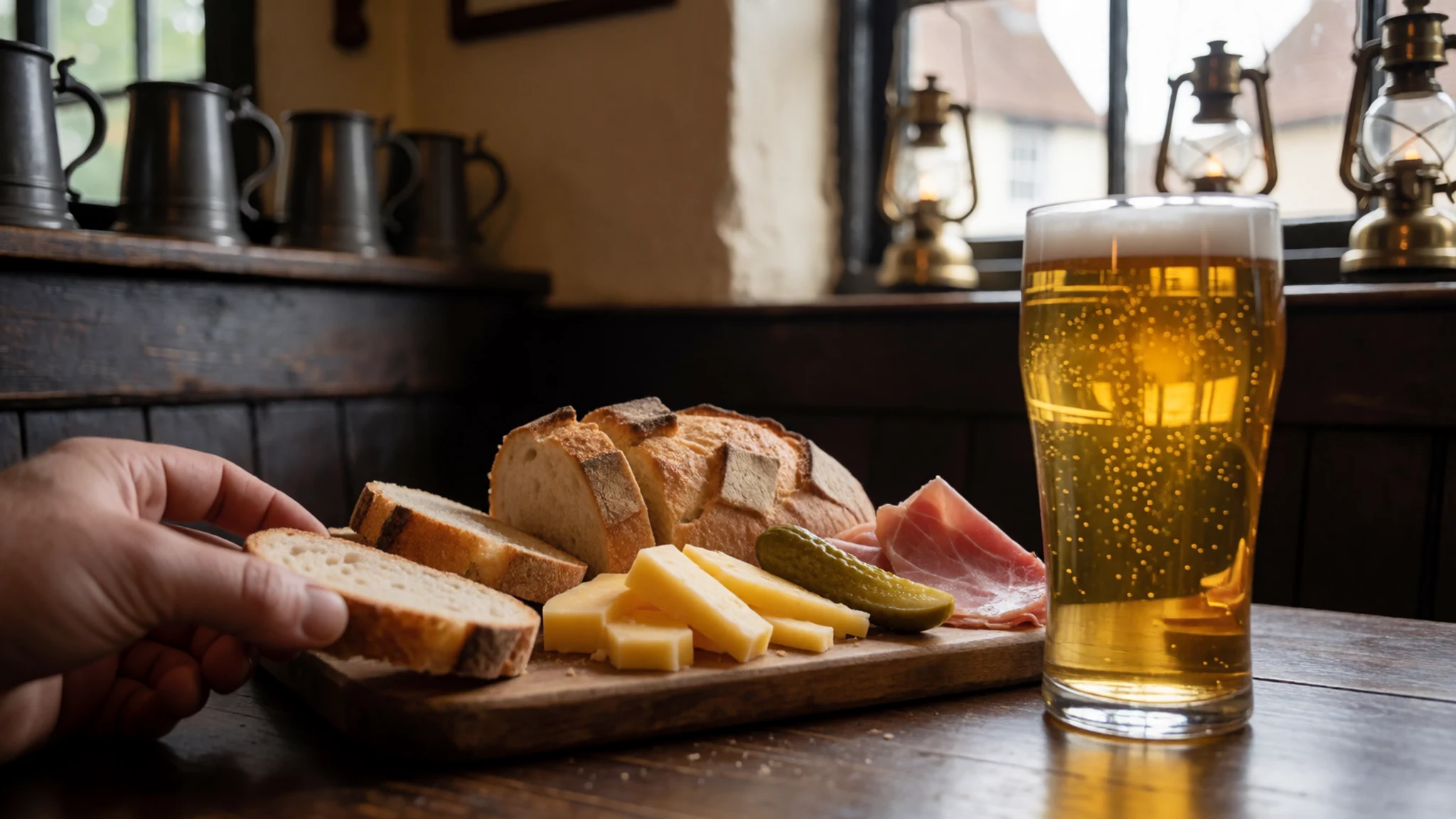
- Beer garden stop at The Fox Inn — Corfe village
The Fox Inn is known as a family-run pub with a beer garden, which makes it handy when the sun comes out. Go here for pub classics and a slower rhythm—ideal for resetting before an evening walk around the village. - Model Village Gardens & Cafe break — Model Village Gardens area
If you want a calmer break that also ties into the history display, try the cafe at Model Village Gardens & Cafe. It’s a good reset point between castle viewpoints, especially when you’re travelling with people who prefer shorter, indoor-ish stops.
Plan it
Best time. For comfortable hill walking, aim for April to June or September, when temperatures are milder and rainfall is generally lower. July and August are the warmest, while wetter stretches come later in the year, especially October through December.
How long. 2–3
Getting there. By car, Corfe is on the A351 about 4 miles (6.4 km) south-east of Wareham and about 4 miles north-northwest of Swanage. By train, look for a station around the area, then plan a short road transfer or local bus to Corfe for the final leg.
Budget. mid
Tips
- Arrive earlier in the day to beat the busiest viewing times near the main ruins and viewpoints
- Wear boots or grippy trainers—hill paths around the castle can be slick after rain
- Do the ruins at a steady pace, then switch to the village for an easier pace and indoor breaks if needed
- If you’re short on time, prioritise viewpoints first, then come back for the smaller details when the light is softer
Etiquette
- Keep to marked paths and avoid climbing on fragile stonework
- In the church, keep noise down and dress modestly
- Be considerate around stop-and-shoot viewpoints so people can pass
Nearby
Sources
- Wikidata Q1236511 (CC0)
- Wikipedia (rev 1370638516) (CC BY-SA 4.0)
- Wikivoyage (rev 5400532) (CC BY-SA 4.0)
- Photo photos/01-corfe-castle-57.jpg (CC BY 3.0)
- Photo photos/02-corfe-castle-dorset.jpg (CC BY 3.0)
- Photo photos/03-corfe-castle-gatetower-and-bridge.jpg (CC BY 3.0)
- Photo photos/04-mary-bankes-hawtry-by-henry-pierce-bone-after-john-hoskins.jpg (Public domain)
- Photo photos/05-corfe-castle-stitch-1.jpg (CC BY-SA 4.0)
- Photo photos/06-corfe-castle-entrance-geograph-org-uk-1722689.jpg (CC BY-SA 2.0)
- Photo photos/07-corfe-castle-with-the-rings-and-challow-hill-round-barrow.jpg (CC BY 4.0)
- Photo photos/08-corfe-castle-2.jpg (CC BY-SA 2.5)


