Chi Lin Nunnery
Chi Lin Nunnery, People's Republic of China
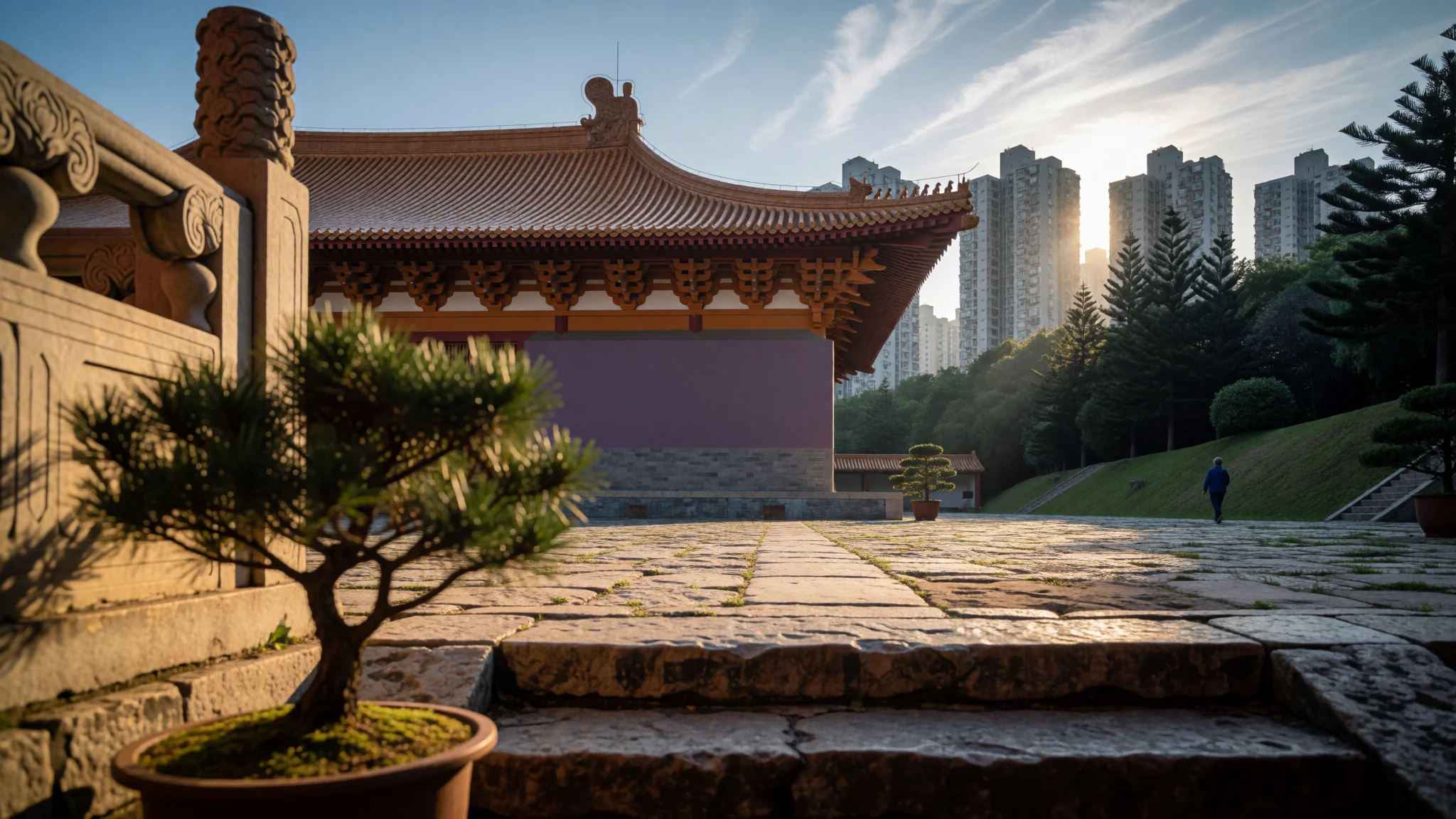
Chi Lin Nunnery is a calm Tang-style Buddhist complex in Kowloon, with a classical garden next door and apartment towers just beyond the walls.
The place
Chi Lin Nunnery stands in Diamond Hill, a residential district of Kowloon in Hong Kong, where apartment blocks rise right up to the edge of a Buddhist complex built in a very different tradition. The buildings are timber-framed, with broad tiled roofs, deep eaves and rows of carved brackets, arranged around courtyards and halls in the manner of Tang dynasty temples. Inside, the halls hold figures of Sakyamuni Buddha, of Guanyin, the goddess of mercy, and of a company of bodhisattvas, worked in gold, clay, wood and stone. The Chinese name is 志蓮淨苑, pronounced Jilìhn Jihng Yún in Cantonese. In front of the nunnery lies a formal Chinese garden, and a footbridge links the two, so the visit usually becomes a loop through temple, ponds, rockwork and trained trees. The effect is of unexpected quiet: traffic noise fades, water is never far away, and the high-rise skyline works like a borrowed backdrop. The halls and the garden are open to the public daily without charge, though the nunnery remains a working religious community, so visitors move through it as guests rather than as an audience. Opening times and any closures change, so the official site, http://www.chilin.org, is the place to check before setting out. Hong Kong is a Special Administrative Region of China with its own immigration system, so many visitors cross a border to reach it. Most of what there is to see here can be covered at an easy pace in a morning or afternoon.
Its story
Chi Lin Nunnery began in 1934 as a retreat for Buddhist nuns, a modest religious house on the edge of what was then a very different Kowloon. The city around it changed completely. Britain had gained the Kowloon Peninsula in 1860, after the Second Opium War, and in the decades that followed the districts north of the harbour filled with housing, factories and, later, towers. Diamond Hill grew dense, and the retreat became an island of timber and tile among concrete. The buildings seen today are largely a product of 1998, when the complex was rebuilt following the architecture of the Tang dynasty. That choice was deliberate: Tang temples are a reference point for Buddhist building across East Asia, and the rebuilt halls, with their wide roofs and exposed wooden structure, were meant to echo that heritage rather than copy any single surviving temple. Statues of the Buddha, Guanyin and other bodhisattvas were installed in the new halls. In 2018 a lighting scheme was added, designed to show the architecture as close as possible to its original conception, which means the complex now looks distinct after dark as well as by day. The story, then, is less one of antiquity than of continuity: a community of nuns, a tradition of building, and a determination to keep both alive in one of the densest cities on earth.
What to see
- The main timber halls — Chi Lin Nunnery, Diamond Hill, Kowloon
The central halls show the Tang style at its clearest: wide tiled roofs, deep eaves and repeating wooden brackets, all seen across open courtyards. Allow time to stand back and look at the roofline before going in. Photographs from the courtyard edge capture the structure better than close-ups.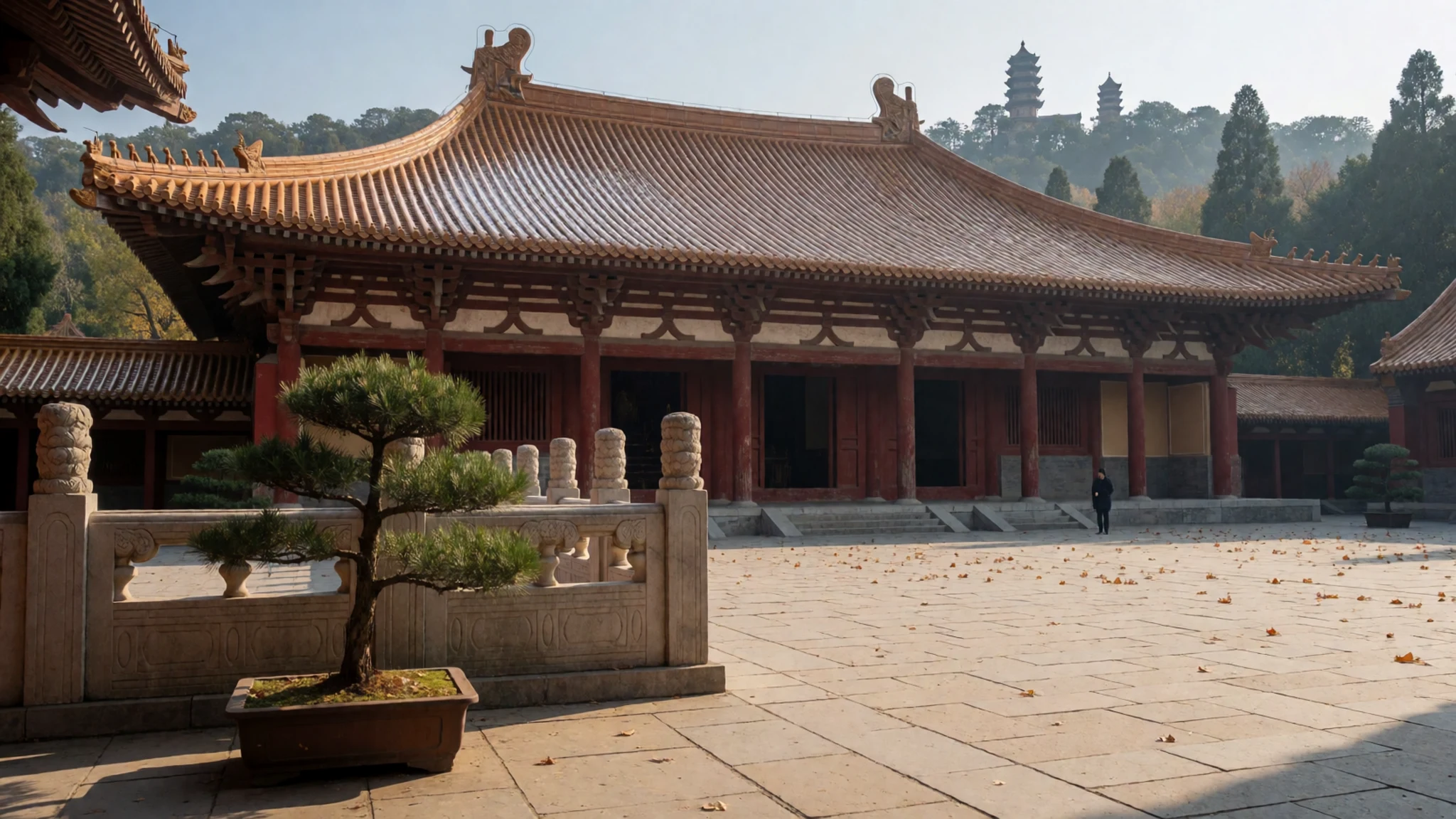
- The Buddha and bodhisattva halls — Inside the temple halls, Chi Lin Nunnery
Inside, the halls hold figures of Sakyamuni Buddha, Guanyin and other bodhisattvas, made of gold, clay, wood and stone. Lighting is low and the atmosphere is devotional, so visitors speak softly and keep to the edges. Incense and offerings show that this is a living place of worship.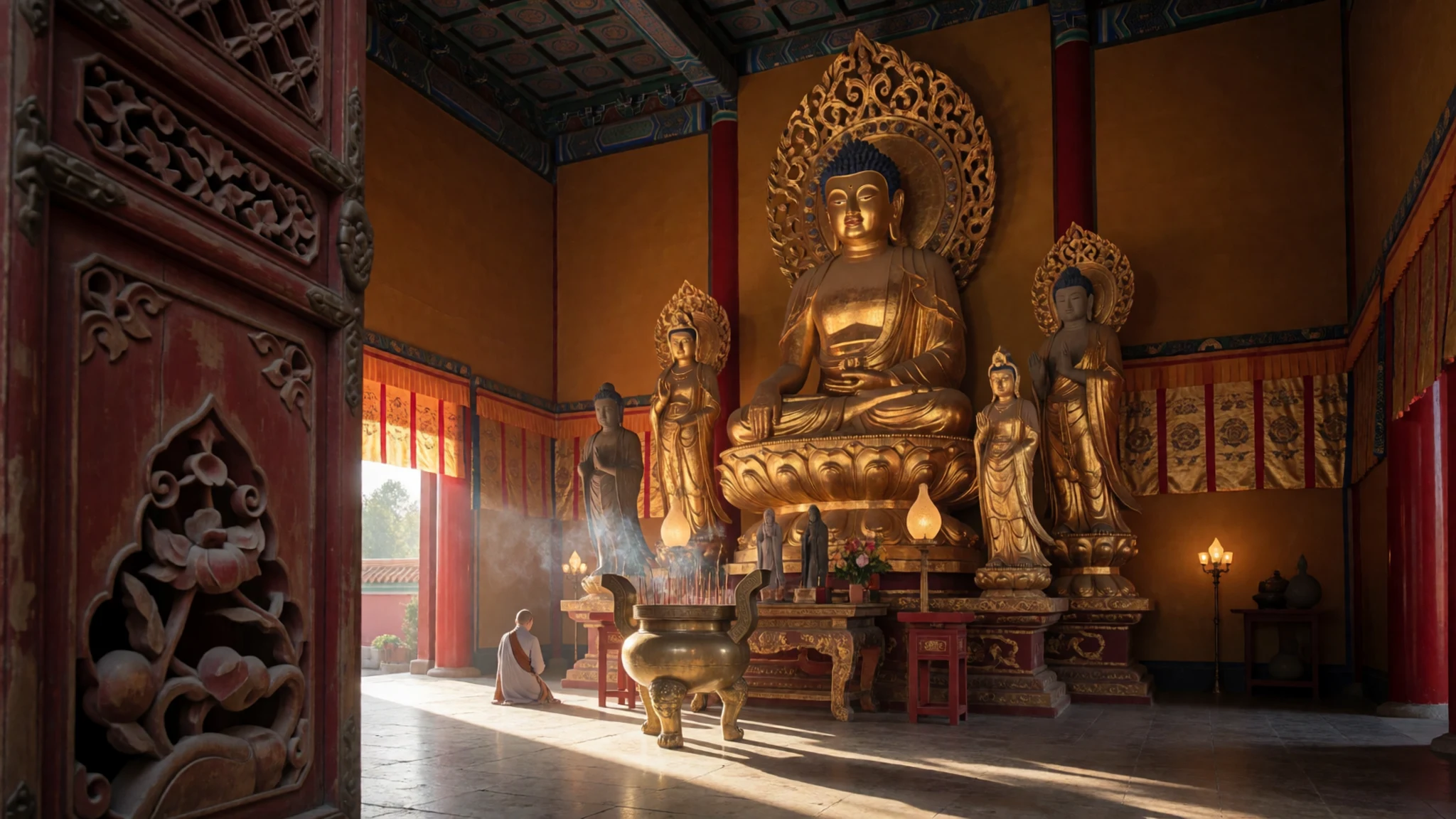
- The lotus ponds and courtyards — Courtyards between the halls, Chi Lin Nunnery
Water is built into the plan, with ponds between the halls reflecting roofs and sky. Lotus plants give the courtyards their name and symbolism, and are best seen in the warmer months. The reflections make this a good spot for slow looking rather than quick photographs.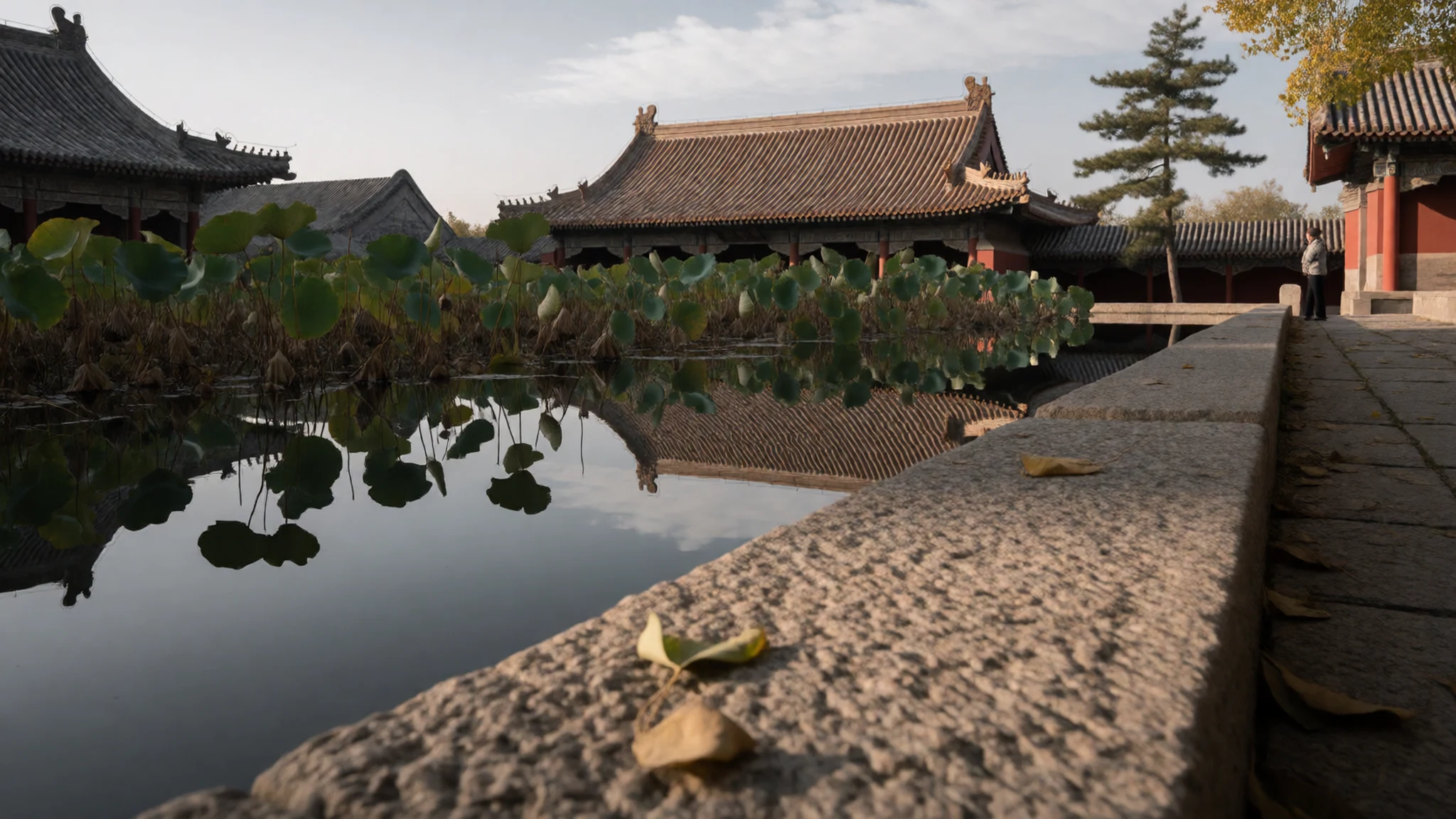
- The footbridge to Nan Lian Garden — Between the nunnery and Nan Lian Garden, Diamond Hill
A bridge links the nunnery to Nan Lian Garden, and crossing it is the natural way to turn one visit into two. From the span, the temple roofs sit above the greenery with the towers of Diamond Hill behind, which shows the contrast between old form and new city.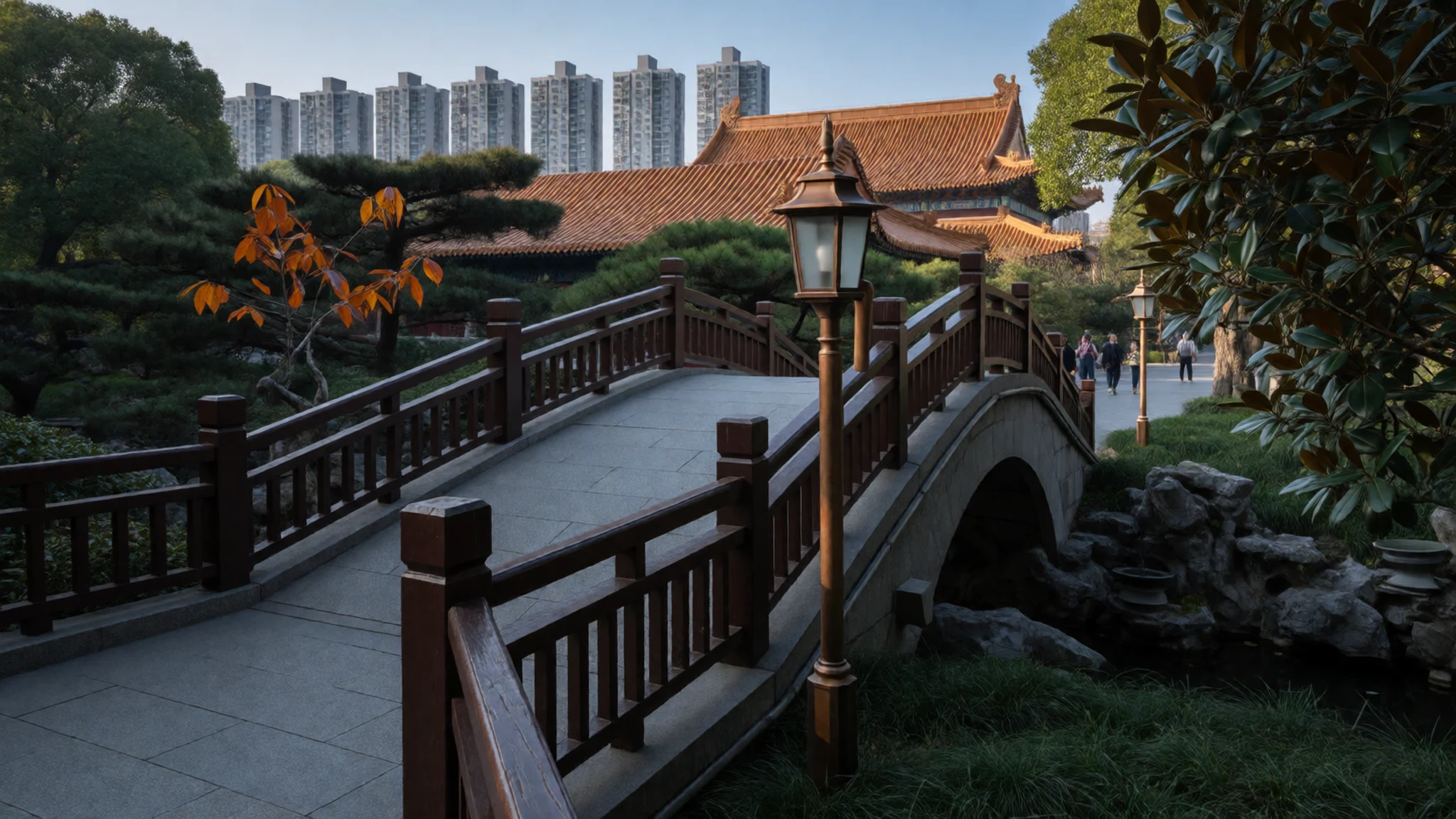
- Nan Lian Garden and its bonsai — Nan Lian Garden, in front of the nunnery
The Chinese garden in front of the nunnery is free to enter daily, and is laid out with rockwork, pavilions, water and carefully trained trees. Bonsai and pruned pines reward close attention, especially in soft light. Paths are short and flat, so it suits a relaxed hour or two.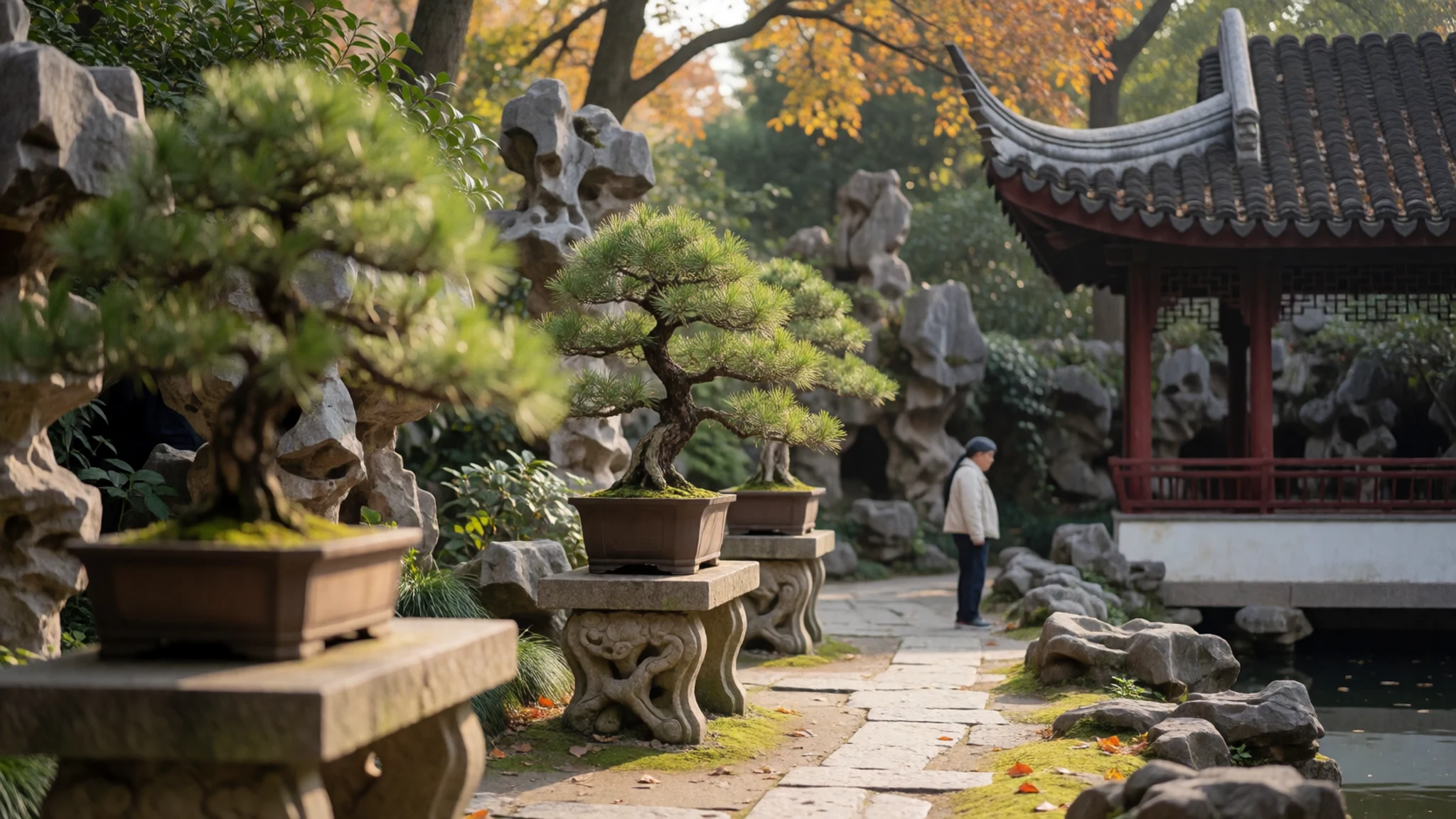
Culture
Chi Lin Nunnery belongs to the Chinese Buddhist tradition, and it still functions as a community of nuns rather than a museum. Offerings of incense, flowers and fruit are part of daily practice, and the halls are arranged around the figures that devotees come to honour, above all Sakyamuni Buddha and Guanyin, who is invoked as a source of compassion. Visitors will see people bowing, kneeling or standing quietly with burning incense, often on the way to or from work in the surrounding district. Hong Kong more broadly values consideration for others. The everyday phrase "mm goi" (唔該) serves for both "excuse me" and "thank you", and reflects a habit of not troubling people more than necessary. Noise is felt keenly in a crowded city, so loud phone calls are frowned on, and queuing is taken seriously, a legacy of British custom. Littering and spitting are offences. The nunnery and its garden are also a place where families, older residents and school groups come for calm, and the rhythm there is unhurried. Even for visitors with no religious interest, the courtesy that fits best is a quiet one: lowered voices, patience at doorways and respect for anyone praying. Speak softly inside the halls, do not point cameras at worshippers or at the statues without checking for signs, and never step over thresholds or touch offerings.
What to wear
Chi Lin Nunnery gives a good vantage on three kinds of dress. The traditional clothing of Buddhist nuns is the simple long robe, usually in grey, brown or saffron-toned cloth, worn with a shaved head and plain footwear. It is everyday religious dress rather than costume, and is worn at services and around the grounds. Beyond the temple, traditional Chinese dress in Hong Kong means the cheongsam, a close-fitting silk or brocade dress with a high collar, and the Tang-style jacket with knotted buttons, now mostly kept for festivals, weddings and Lunar New Year. What people wear day to day is far plainer: light cotton and synthetic shirts, trousers and sportswear, chosen for heat and humidity, with a thin layer carried because shops, trains and offices are often chilled. Visitors to the nunnery should dress modestly, with shoulders and knees covered, as in any Buddhist temple. Light, breathable fabrics suit most of the year, and a compact umbrella is useful for sun and showers alike. Comfortable, closed or well-strapped shoes matter, since Hong Kong offers few places to sit and a day on foot tires the feet quickly. Slip-on shoes make life easier if a hall asks for them to be removed, and a scarf or light shawl solves most covering questions at short notice.
What to eat
- Vegetarian dim sum — Vegetarian restaurants and eateries near the nunnery and Diamond Hill station
Small steamed and fried parcels filled with mushrooms, bean curd, vegetables and nuts, served with tea. Buddhist cooking in Hong Kong avoids meat, so these eateries make the dishes by other means. A natural meal after the temple walk.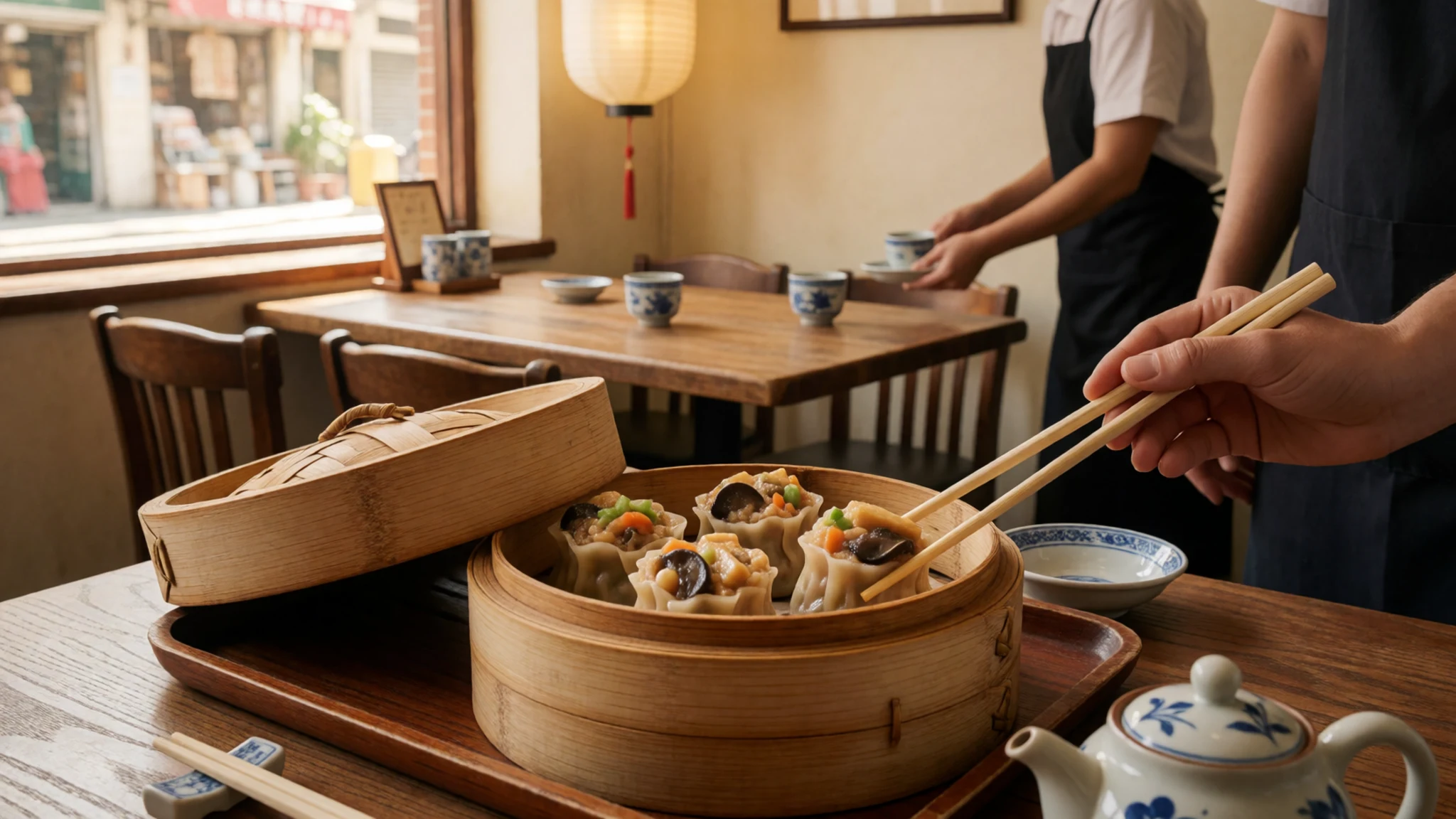
- Braised bean curd skin — Vegetarian restaurants around the nunnery
Layers of bean curd skin braised in a savoury sauce, often shaped and flavoured to resemble meat dishes. It shows how vegetarian Chinese cooking works with texture as much as taste. Order it with rice and greens to share.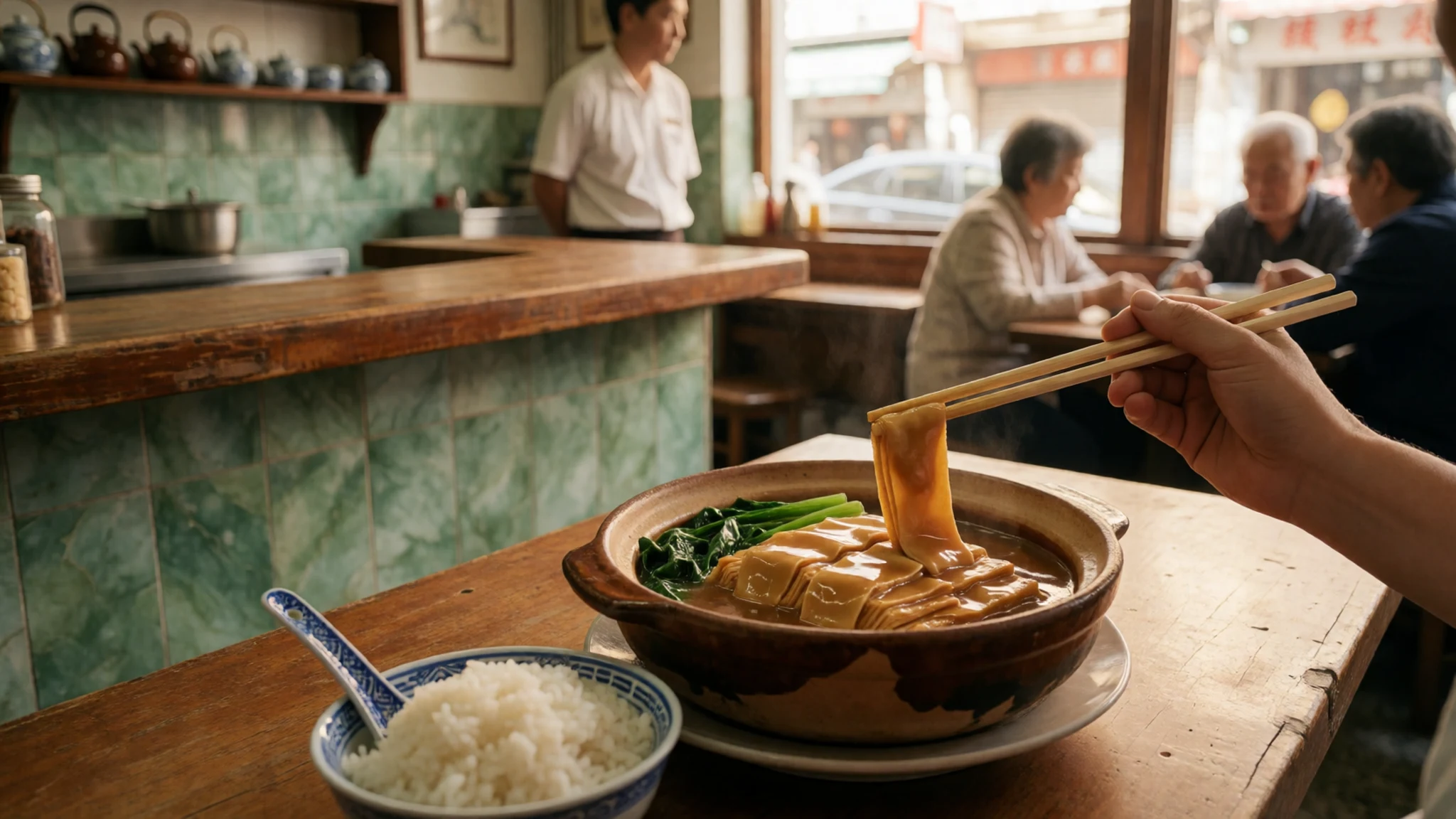
- Tofu pudding (dau fu fa) — Dessert shops and traditional snack counters across Kowloon
A soft, silky bean curd served warm or cold, usually with a light sugar syrup or ginger syrup. It is gentle, filling and inexpensive, and is one of the most typical sweet snacks of the region. A good finish after a morning of walking. - Egg tart — Bakeries and tea cafés in any Hong Kong neighbourhood
A small pastry shell filled with smooth egg custard, eaten warm. It reflects the British influence on Hong Kong baking and sits easily alongside Cantonese tea. Bakeries sell them throughout the day, and the best are those still warm from the oven. - Hong Kong milk tea — Local tea cafés (cha chaan teng) across the city
Strong black tea blended with evaporated or condensed milk, served hot or iced. It comes from the British habit of tea and the local taste for rich, creamy flavours. A reliable stop between sights, and often paired with toast or a simple bun.
Plan it
Best time. October to December is the most comfortable stretch, with cooler, drier and clearer weather for walking between temple and garden. Summer is hot, humid and wet, and can bring typhoon warnings, so sightseeing then is best kept to mornings. Late winter and spring can be damp and grey but are quieter.
How long. Half a day
Getting there. Fly into Hong Kong International Airport, take the Airport Express into the city, then change to the MTR for Diamond Hill station in Kowloon. From the station, the nunnery and garden are a short walk through the surrounding paths.
Budget. low
Tips
- Check the official site, http://www.chilin.org, for current opening hours and any closures before going
- Visit on a weekday morning for the quietest courtyards and softest light
- Wear comfortable shoes, as there is little seating in Hong Kong and paths involve a fair amount of walking
- Carry water and a small umbrella, since the weather swings between strong sun and sudden showers
- Combine the nunnery with Nan Lian Garden next door to make a full, unhurried visit
Etiquette
- Dress modestly, with shoulders and knees covered, and keep your voice low inside the halls
- Do not photograph worshippers or the statues unless there is clearly no sign forbidding it
- Queue patiently and do not litter, as both are taken seriously in Hong Kong
Nearby
Sources
- Wikidata Q2180716 (CC0)
- Wikipedia: Chi Lin Nunnery (rev 1367240805) (CC BY-SA 4.0)
- Wikivoyage: Hong Kong (rev 5408641) (CC BY-SA 4.0)
- Hong Kong - Chi Lin Nunnery main building — Kroisenbrunner (CC BY-SA 4.0)
- Chi Lin Nunnery — Rob Young (CC BY 2.5)
- Bonsai Trees — Francisco Anzola (CC BY 3.0)
- Bridge to the Chi Lin Nunnery — Mk2010 (CC BY 3.0)
- Carmona microphylla — User:Løken (CC BY-SA 1.0)
- Chi Lin Buddhist Monastery (2) — User:Løken (CC BY-SA 2.0)
- Chi Lin Buddhist Monastery — User:Løken (CC BY-SA 2.5)
- Chi Lin Nunnery — Rob Young (CC BY 2.5)


