Cheung Chau
Cheung Chau, People's Republic of China
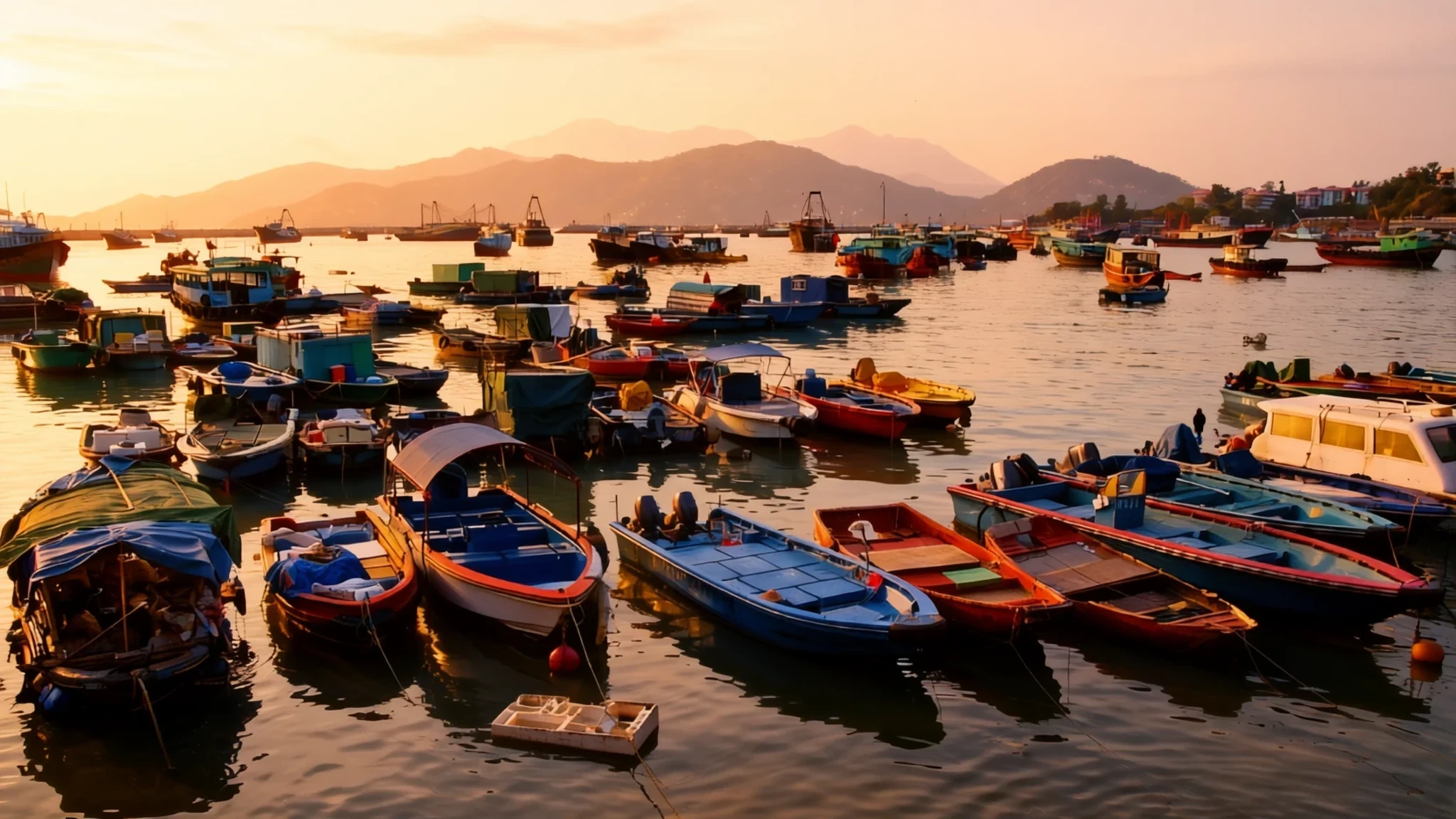
Cheung Chau is a fishing island of beaches, bicycles, a sea temple and a harbour small enough to walk.
The place
Cheung Chau sits off Hong Kong Island in the territory's outlying waters, and the only way onto it is by boat. Seen from the high ground above the harbour, the island narrows into a sandy neck and then rises again, and the town is packed onto that neck. The ferry comes in on the harbour side of that waist, and a waterfront praya runs past drying racks, bicycles and low shop-houses. Visitors do not drive. Lanes are narrow, and people move on foot or by bicycle, with only service vehicles allowed on the island. The main eastern beach, Tung Wan, faces open water just behind the town. Around the southern end and along the western shore the coast turns to rock, small coves and another beach, Kwun Yam Wan, named for the bodhisattva of mercy. The waist is flat enough to cross from harbour to sand in a short stroll. Houses crowd that flat land and climb a little way up both hills; beyond them, coastal paths pass boulders, small shrines and wind-bent pines. Work still follows the boats. Fishing households keep the typhoon shelter busy, and the morning air along the praya carries salt, diesel and dried seafood. Weekends change the volume: city ferries unload picnickers, the waterfront fills with bicycles and beach bags, and by evening the lanes grow quiet again. Summer is hot, humid and prone to heavy rain, and high typhoon signals stop the ferries. The cooler, drier months suit a full circuit of the shore. Cheung Chau is a town that happens to be an island, with the temple square, the beach and the harbour inside a single walk.
Its story
Cheung Chau, 長洲, takes its name from a long, narrow body of land stretched between a pair of higher heads. A rock carving on the island, kept as a monument, is the older mark a visitor can still stand beside. The town's memory runs through boats, a god and a shore that was hard to watch. Fishers and traders used the shelter of the waist. Families with boat-dwelling Tanka roots and land-based clans built a harbour settlement, and the praya is still its front door, with nets and catch set out to dry. Pirate lore clings to the same shore. Cheung Po Tsai, a pirate of this coast, is tied in local telling to a cave in the south-western rocks, a low crack in the stone that visitors still crawl through. The public story belongs to Pak Tai, the Northern Emperor, whose temple stands on the town side of the waist. Island tradition says the god was invited in when sickness spread, and that the Cheung Chau Bun Festival, the Tai Ping Ching Chiu, is both thanksgiving and a cleansing. Around those days many residents eat only vegetarian food, Taoist rites occupy the temple, and a parade carries children dressed as figures from myth and history, braced so they seem to float above the street. Towers faced with plain steamed buns rise on the open ground. The climb for those buns was stopped after a collapse and later returned on a metal frame, with harnesses and rules. The buns are offerings before they are prizes: peace, full nets, and a year without plague.
What to see
- Pak Tai Temple — town side of the waist, by the open ground
Cheung Chau's Pak Tai Temple, also called Yuk Hui Kung, honours the Northern Emperor, a guardian of seafarers. The hall faces an open ground where the festival bun towers rise, and a short stair leads to the courtyard. On ordinary days people come to offer incense. During the Bun Festival this courtyard is the ritual heart of the island, and the central way is best left clear for worshippers.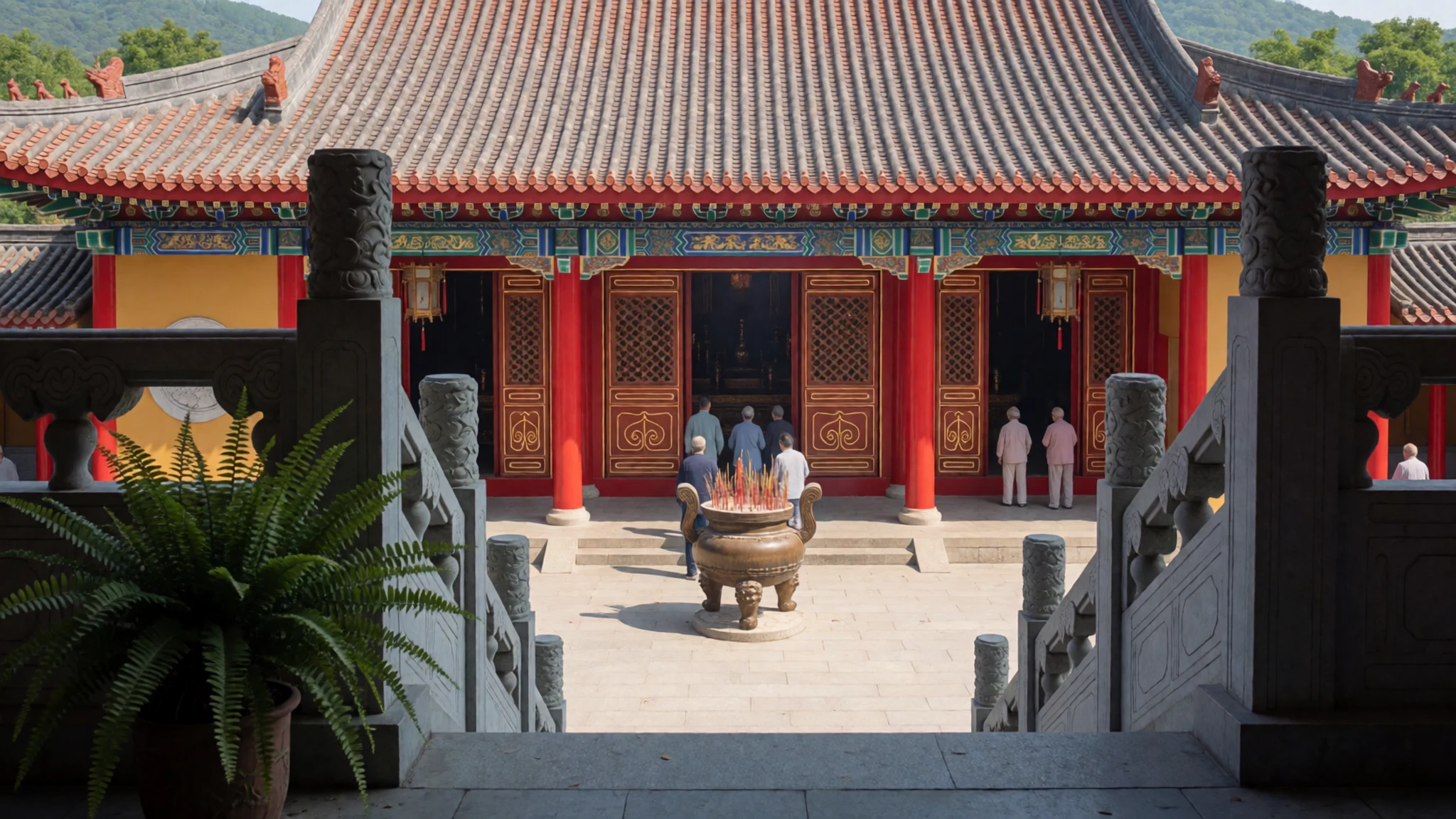
- Tung Wan — eastern side of the waist
Tung Wan is Cheung Chau's long eastern beach, a curve of sand on the seaward side of the waist, directly behind the town. Swimmers share it with walkers, and the afternoon wind can roughen the open water. Because the lanes sit immediately inland, food and the walk back to the ferry are close at hand.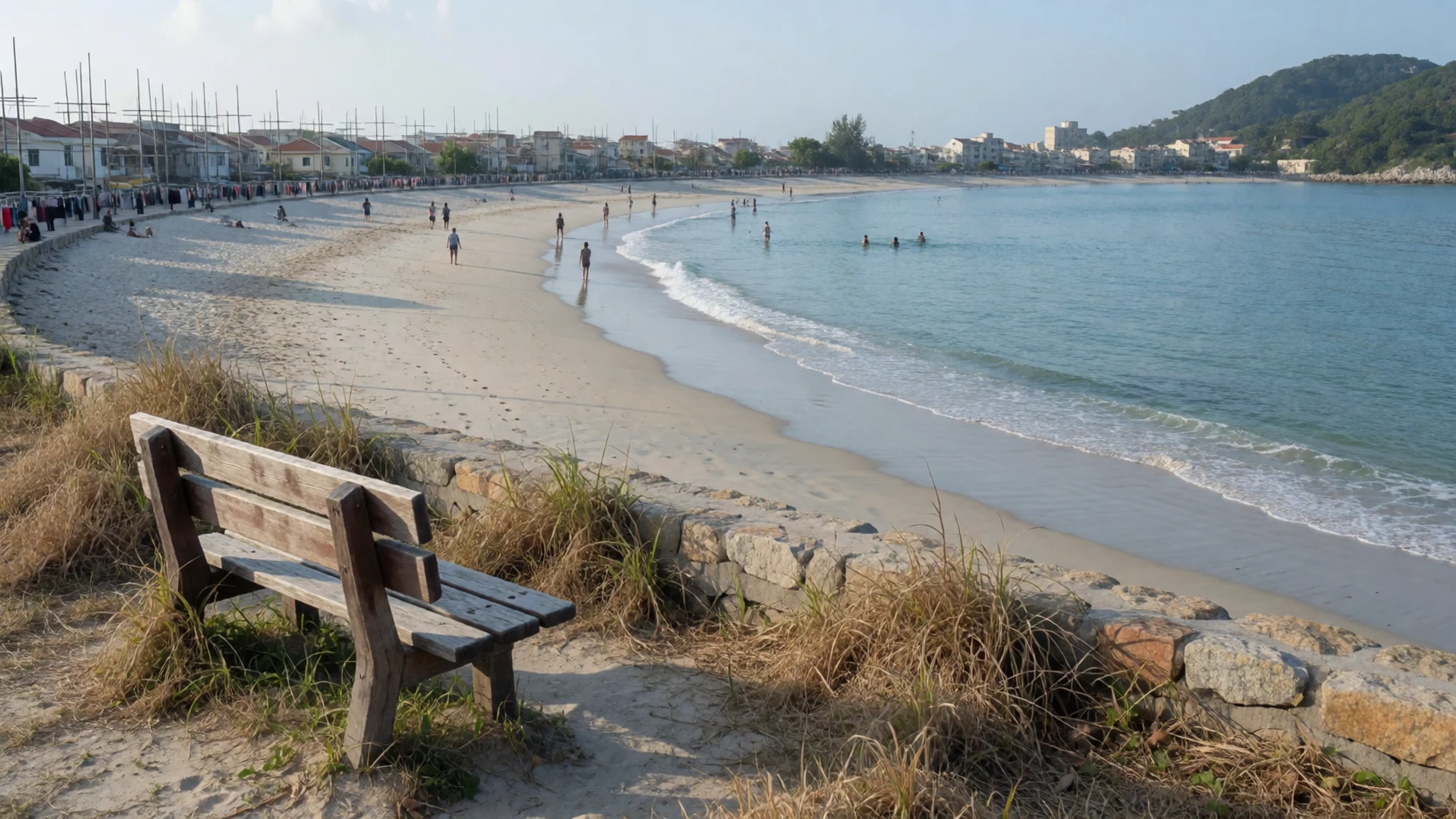
- Cheung Chau Rock Carving — eastern shore
The Cheung Chau Rock Carving is cut into a rock face on the island's eastern shore, below a slope. The design is abstract, a cluster of lines rather than a figure or a boat, and it is easy to miss when the eye is on the waves. It is kept as a monument. The visit is a look from the approach, and the carved surface stays untouched.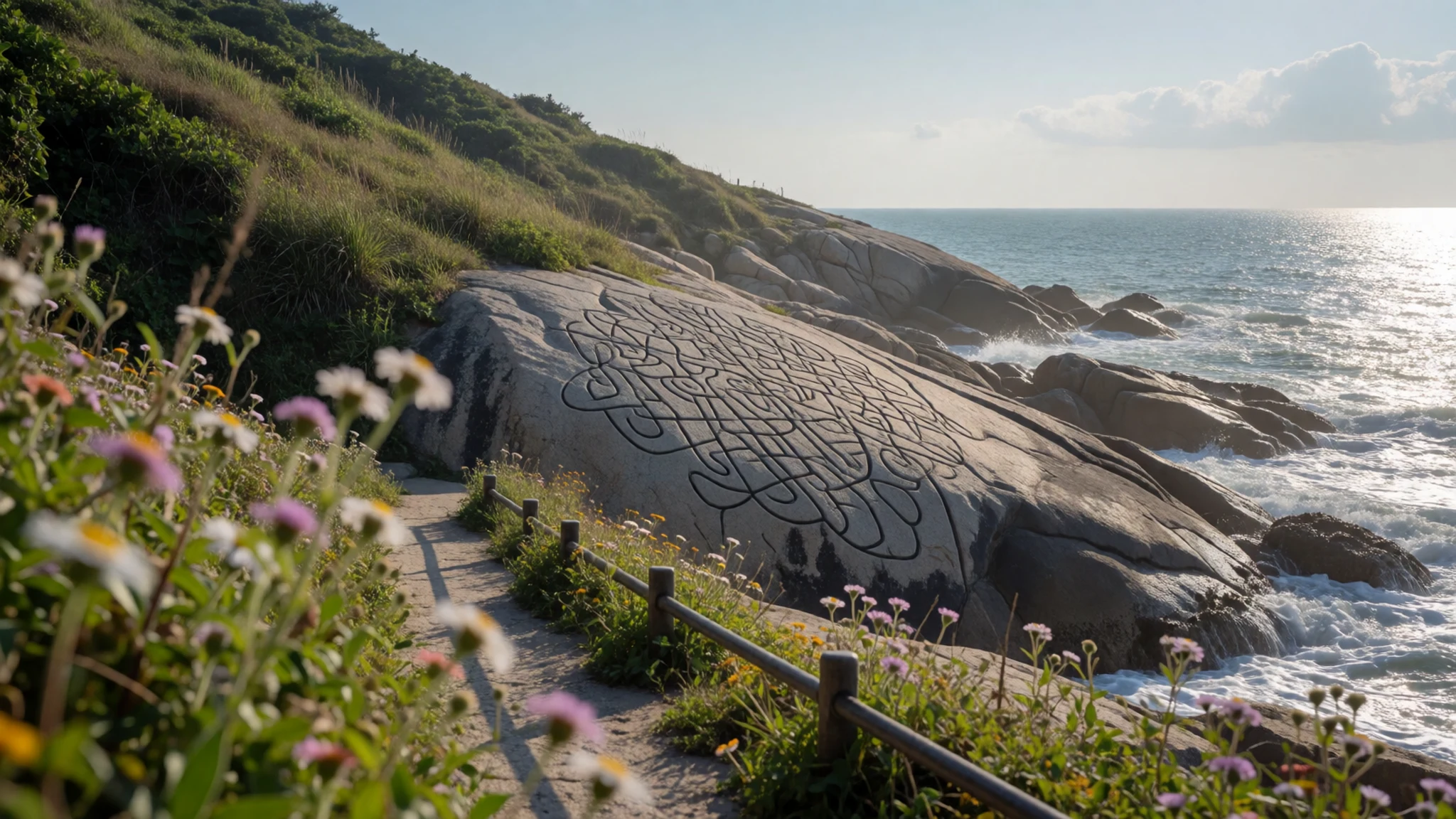
- Bun Festival ground — open ground in front of Pak Tai Temple
The open ground in front of Pak Tai Temple is where Cheung Chau raises the bun towers for the Tai Ping Ching Chiu. For most of the year it is an ordinary town space, used for games and gatherings. In festival days the towers, covered in steamed buns, become the stage for a scramble now run on a metal frame with harnesses.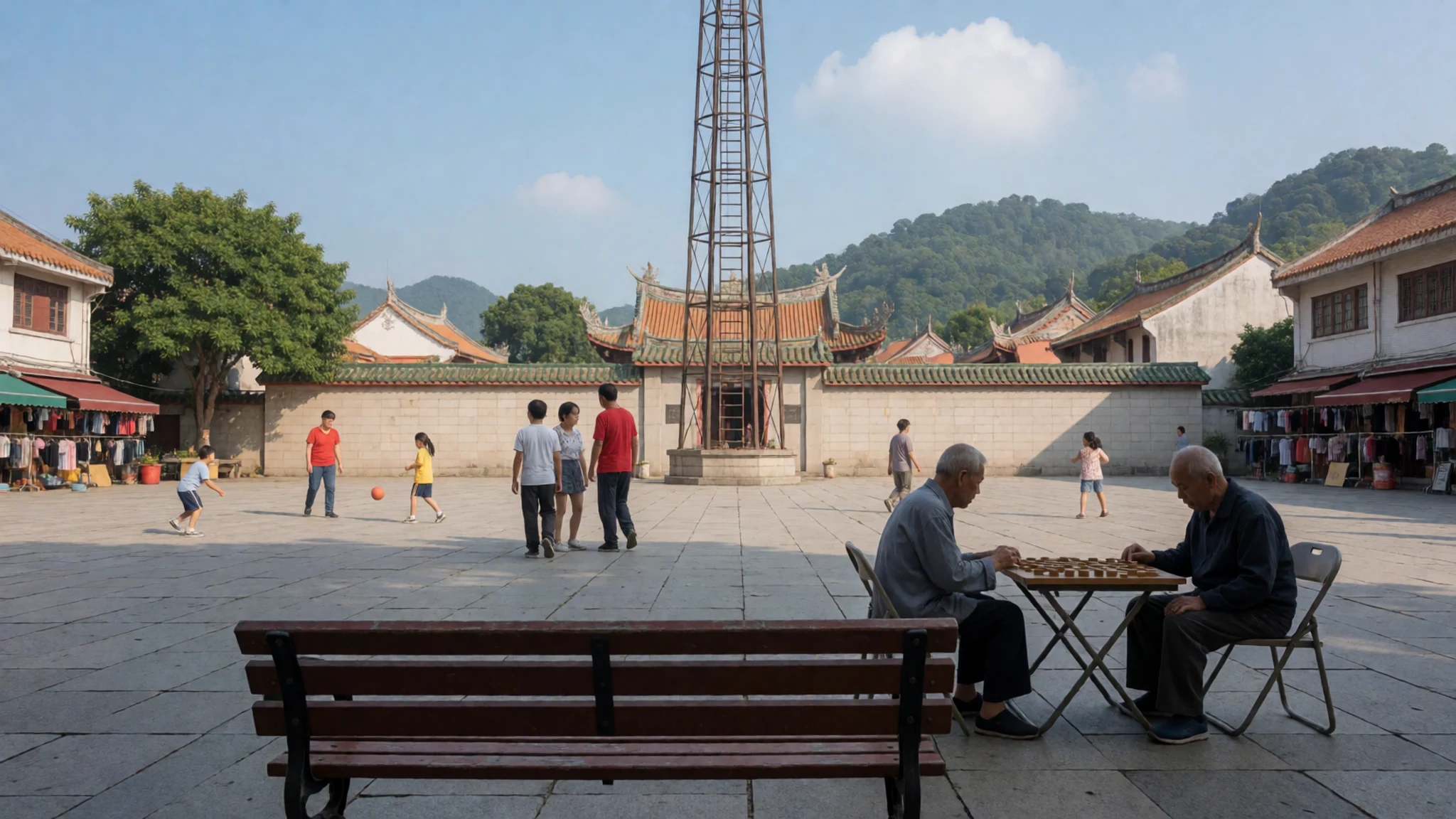
- Western shore and Cheung Po Tsai Cave — western and south-western coast
The western shore of Cheung Chau is rockier than Tung Wan: boulders, small coves and Kwun Yam Wan, the beach named for the bodhisattva of mercy. A coast path passes shrines and wind-bent trees. In the south-western rocks a low cave is linked to the pirate Cheung Po Tsai. It is a hands-and-knees passage and awkward when the stone is wet.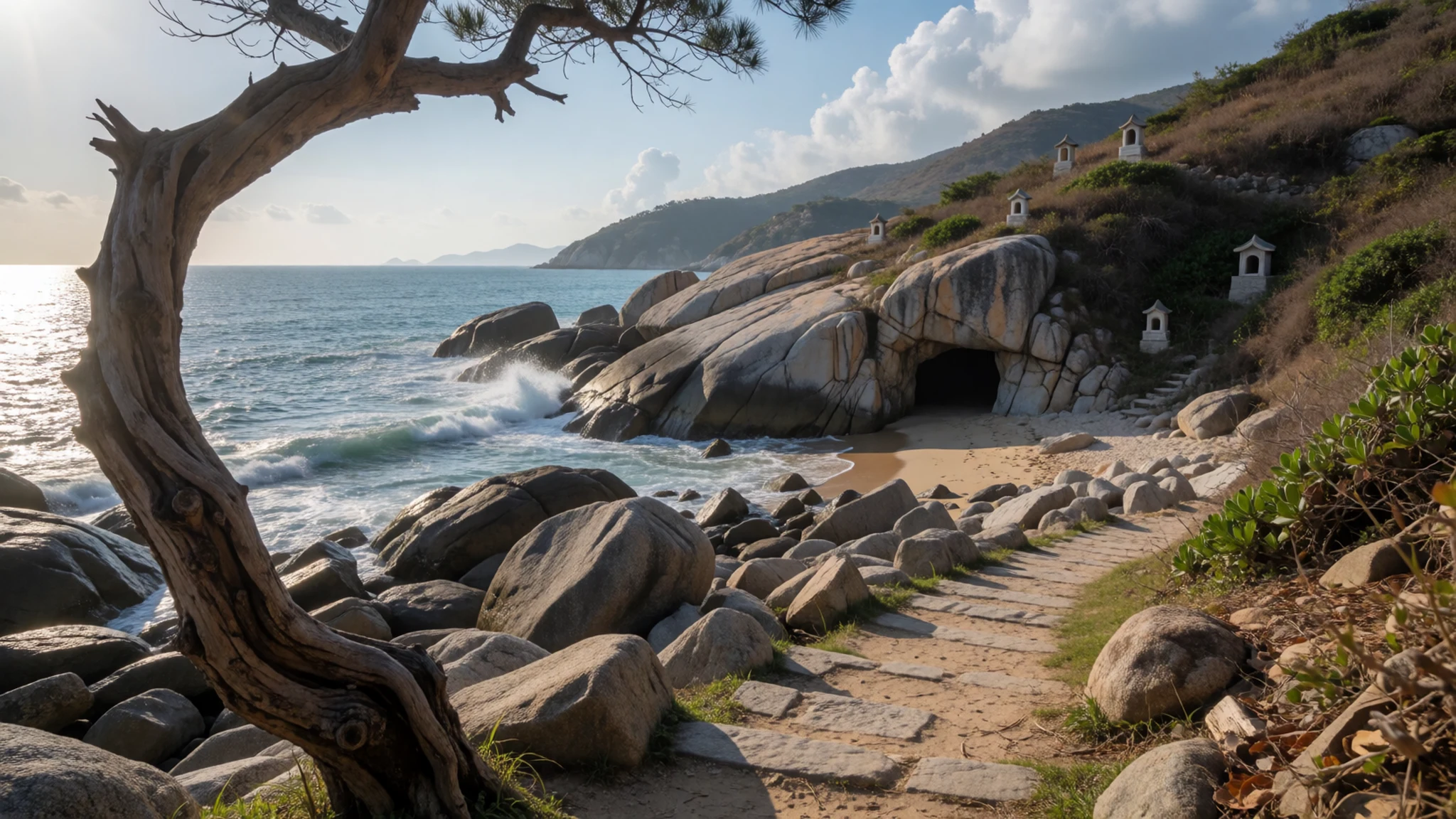
- Cheung Chau Ferry Pier — harbour side of the waist
Cheung Chau Ferry Pier is the island's front door, on the harbour side of the sandy waist. Boats from the city tie up here, and the praya leads off past seafood eateries, dried-goods shops and bicycles for hire. The building is a covered ramp and a timetable board, and the crowd swells each time a boat arrives. Temple, beach and lanes all start from this ramp on foot.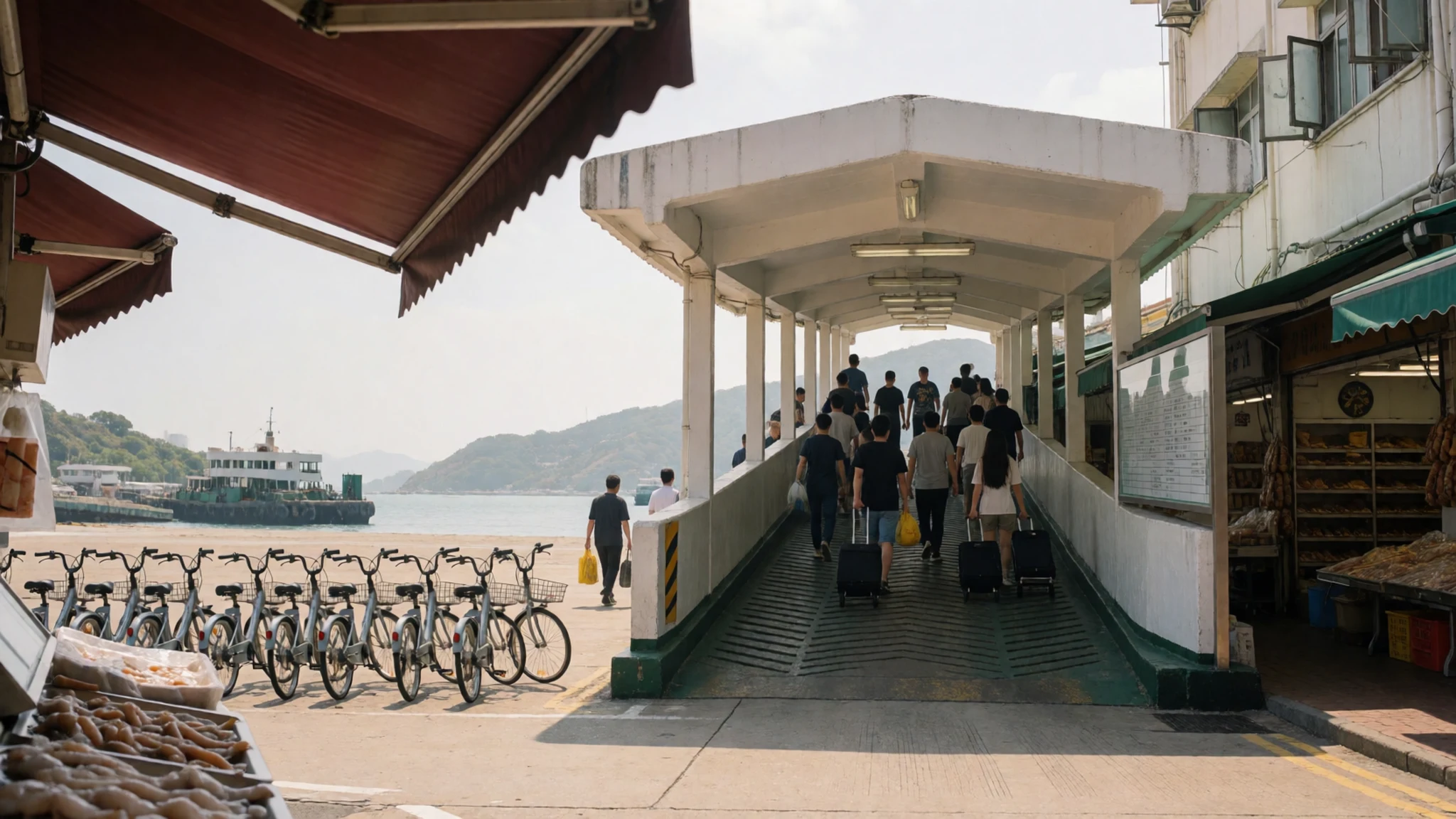
Culture
Cheung Chau's public life gathers around the sea and around Pak Tai. Its calendar turns on the Bun Festival, the Tai Ping Ching Chiu, a Taoist purification held in honour of the Northern Emperor. In the days around it, many islanders give up meat, the temple fills with rite and incense, and lion dancers and drums move through lanes that are barely wide enough. The parade's floating children, costumed, braced on hidden supports, are the image people come to see, and the bun towers on the temple ground turn thanksgiving into a scramble that is now harnessed and supervised. Away from festival week the culture is quieter and more daily. Shrines tuck into rocks along the coast path. Fishing households still land and dry seafood, and the typhoon shelter is a neighbourhood, not a backdrop. Bicycles, not cars, set the speed of the lanes, and the bell is part of local manners. At Pak Tai Temple, keep to the side while people are praying, speak quietly, and ask before you photograph worshippers.
What to wear
Cheung Chau's traditional clothing belongs to a fishing and working town, not a court. Older island women wore the samfu, a plain tunic and trousers in cotton, often dark indigo or black, cut for boats, markets and heat. Festival dress is different. During the Bun Festival, children in the parade wear bright theatrical costumes (officials, deities, opera figures) made to be seen from the street, while Taoist priests at Pak Tai Temple wear ritual robes. Those clothes are for rite and procession, not for the ferry queue. What people wear now is ordinary Hong Kong summer dress: T-shirts, shorts, sandals and a hat, with a light rain jacket stuffed in a bag from late spring through the typhoon months. A visitor does well in the same practical range. The island is walked and cycled, the coast path is uneven rock in places, and sandals that can get wet are more useful than smart shoes. Shoulders and knees covered are the respectful choice inside Pak Tai Temple even though the lanes outside are beachwear. A hat and sun cover matter on Tung Wan and the western rocks, and a compact waterproof layer earns its space in summer.
What to eat
- Fish balls — stalls along the praya and the lane just inland
Cheung Chau's fish balls are street food, sold from stalls along the praya rather than in formal dining rooms. They are bouncy spheres of pounded fish, some large and some on a skewer, with curry gravy or a plain dip. The point is the fresh, springy texture.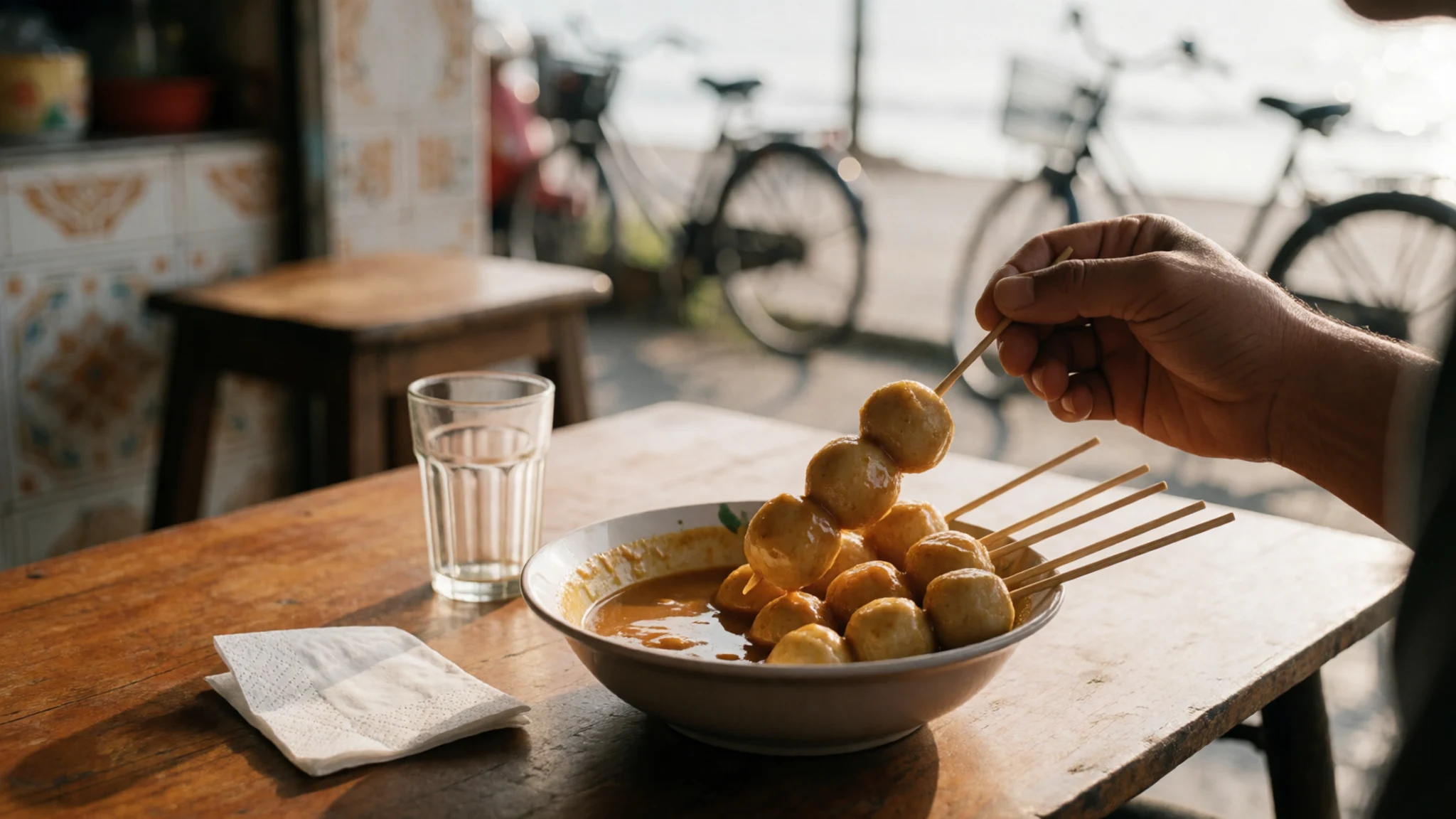
- Mango mochi — shops on the main street inland from the praya
Mango mochi, glutinous rice around fresh mango and a little cream, is the sweet visitors carry off Cheung Chau. Shops on the main street inland from the praya sell it in small boxes. It should be eaten the same day, before the rice skin firms.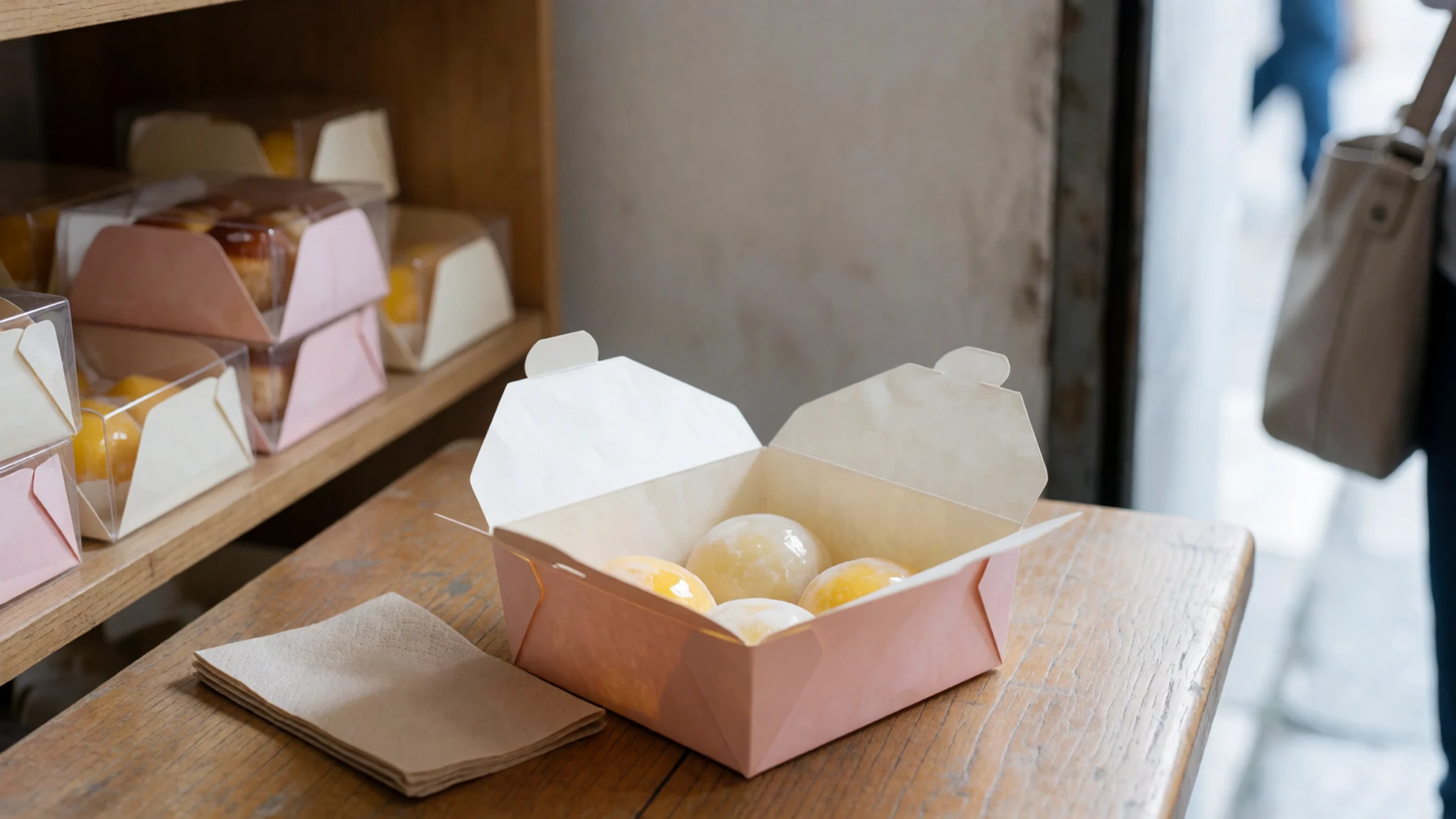
- Steamed seafood — eateries along the praya
Waterfront eateries on Cheung Chau's praya cook what the boats bring in: steamed fish with ginger and spring onion, prawns and small shellfish. Choosing the day's catch, rather than a fixed menu, suits this harbour. Ginger, soy and hot oil stay light so the seafood remains the point. - Salt-and-pepper squid — stalls and casual eateries on the praya
Salt-and-pepper squid is Cheung Chau's crunchy harbour snack: small squid dusted with salt, pepper and chilli and fried until the edges crisp. Stalls and casual eateries along the praya serve it by the plate, often beside a cold drink and the moored boats. - Ping on buns — temple ground during the festival, and bakeries in town then
Cheung Chau's ping on, or festival buns, are plain steamed buns covering the towers in front of Pak Tai Temple. They are offerings first; buns from the scramble are kept as luck more than as lunch. Bakeries in town sell the same soft sweet bun around festival time.
Plan it
Best time. On Cheung Chau the cooler, drier months suit a full walk of the coast. Late spring brings the Bun Festival and rising humidity. High summer is hot and wet, and typhoon signals can stop the ferries.
How long. 1-2
Getting there. Cheung Chau is reached through Hong Kong International Airport, then rail or bus to Central. The last leg is the outlying-island ferry from Central Ferry Pier to Cheung Chau Ferry Pier. Visitors' cars do not come across; from the ramp, walk or hire a bicycle. Check the ferry operator's notices before setting out, especially in typhoon season.
Budget. mid
Tips
- Take an earlier ferry at the weekend; late morning boats and the praya both fill with day-trippers.
- Carry some cash. Small stalls and bicycle hire may not take cards.
- In summer, look at the Hong Kong Observatory typhoon signal before you travel. High signals mean the ferry will not run.
- If the Bun Festival is the reason for the trip, check the official tourism calendar. The date follows the lunar year and is not fixed in the civil calendar.
- Bring drinking water and a hat. Shade is scarce on the coast path.
Etiquette
- Stand aside and speak quietly inside Pak Tai Temple, and ask before photographing people who are praying.
- During the festival's vegetarian days, do not eat meat beside the procession or the temple ground.
- Do not climb on the rock carving or take rubbings from it.
- Ring a bicycle bell and yield to people on foot in the narrow lanes.
Nearby
Sources
- Wikidata: Cheung Chau (CC0)
- Wikipedia: Cheung Chau (CC BY-SA 4.0)
- Wikivoyage: Cheung Chau (CC BY-SA 4.0)