Chesterfield Islands
Chesterfield Islands, France
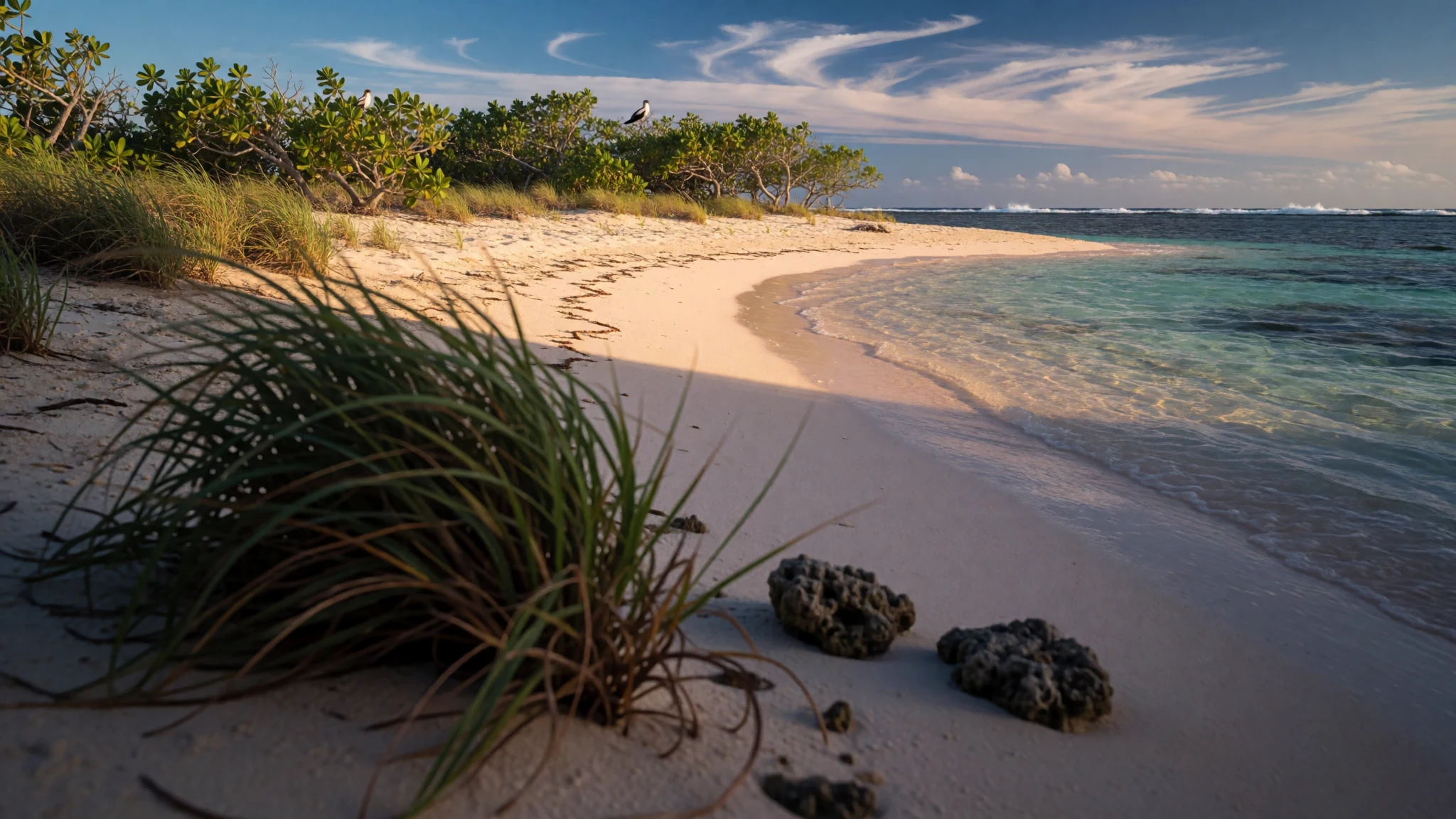
Chesterfield Islands are a ring of empty sand islets and reef in the Coral Sea, reached only by private yacht, for sailors wanting real isolation.
The place
The Chesterfield Islands belong to New Caledonia, though they sit far out in the Coral Sea, about 550 km north-west of the main island, Grande Terre. The group spreads across roughly 120 km by 70 km, but most of that is water and reef. There are 11 uninhabited islets, and together they hold less than 10 square kilometres of dry land. Nearly all of it is sand heaped on coral. Some cays are bare and shift with the wind, while others have been pinned down by grasses, creepers and low trees. Around them lies a lagoon of about 3,500 square kilometres, enclosed by a barrier reef with several wide gaps. On the eastern side the reef is open for a long stretch, so the lagoon takes the trade winds and the south-easterly swell with little shelter. That matters for anyone arriving by boat: this is big, exposed water, not a snug harbour. Bellona Reef lies about 164 km south-south-east. It is geologically separate, but it is usually counted with the group. Mainland Queensland is nearly 480 km to the west, so every neighbour is far off. During the ice ages, when the sea was much lower, a sizeable island stood where the reefs now are, and the modern archipelago is what remains of its edges. There are no shops, jetties or services of any kind, and no residents. The draw is the emptiness: seabirds on the sand, coral beneath the hull and a horizon with no lights on it.
Its story
Chesterfield Islands entered European charts through shipwreck risk rather than settlement. Lieutenant Henry Lidgbird Ball, sailing HMS Supply from Sydney towards Batavia, appears to have sighted Booby Reef, part of the Bellona Reefs complex, in 1790. Three years later Mathew Boyd, master of the convict ship Bellona, found the southern reefs while heading from Sydney to Canton. That same year the Indiaman Shah Hormuzeer and the whaler Chesterfield, whose name the group later took, were trapped for five days at the northern end. Their captain, William Wright Bampton, noted two wooded islets and plenty of birds, some of them familiar from Norfolk Island. For the rest of the century the reefs were a nuisance on the route between Australia and the trading ports of China and India. Captain Henry Mangles Denham surveyed the southern reefs aboard the Herald between 1858 and 1860 and recorded natural history as he went. His advice, engraved on a British Admiralty chart, was practical: with a lookout at the masthead, a ship could shelter in the lee of the reefs to repair rigging, check chronometers and take on turtles, fish and seabird eggs. Lieutenant G. E. Richards charted the northern reefs from HMS Renard in 1878, and French surveyors followed in 1879. The islands never gained a village or a port, and they remain a navigator's landmark.
What to see
- The lagoon and barrier reef — Central archipelago
The big lagoon is the reason to come, and its reef edge is the main sight. From a deck the water shows in bands of pale green and deep blue over sand and coral. Open gaps and a wide eastern side mean conditions change quickly, so anchorages need careful, weather-led choices.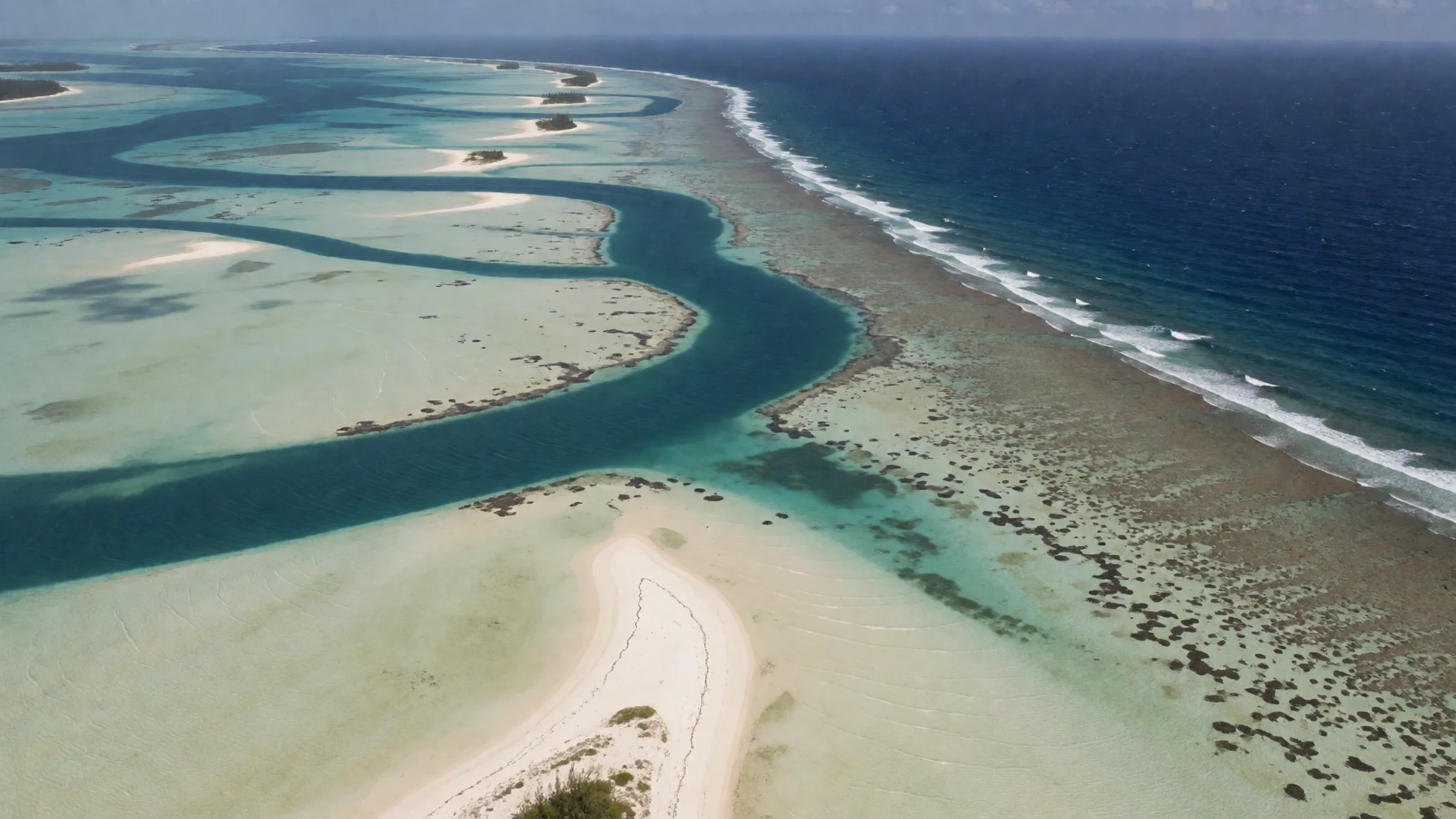
- Île Longue and its seabirds — Chesterfield islets
Île Longue is one of the islets where red-footed boobies nest, often visible sitting on eggs in low trees and scrub. Seabirds here have little reason to fear people, which is exactly why landings should be brief, quiet and kept well away from nests and chicks.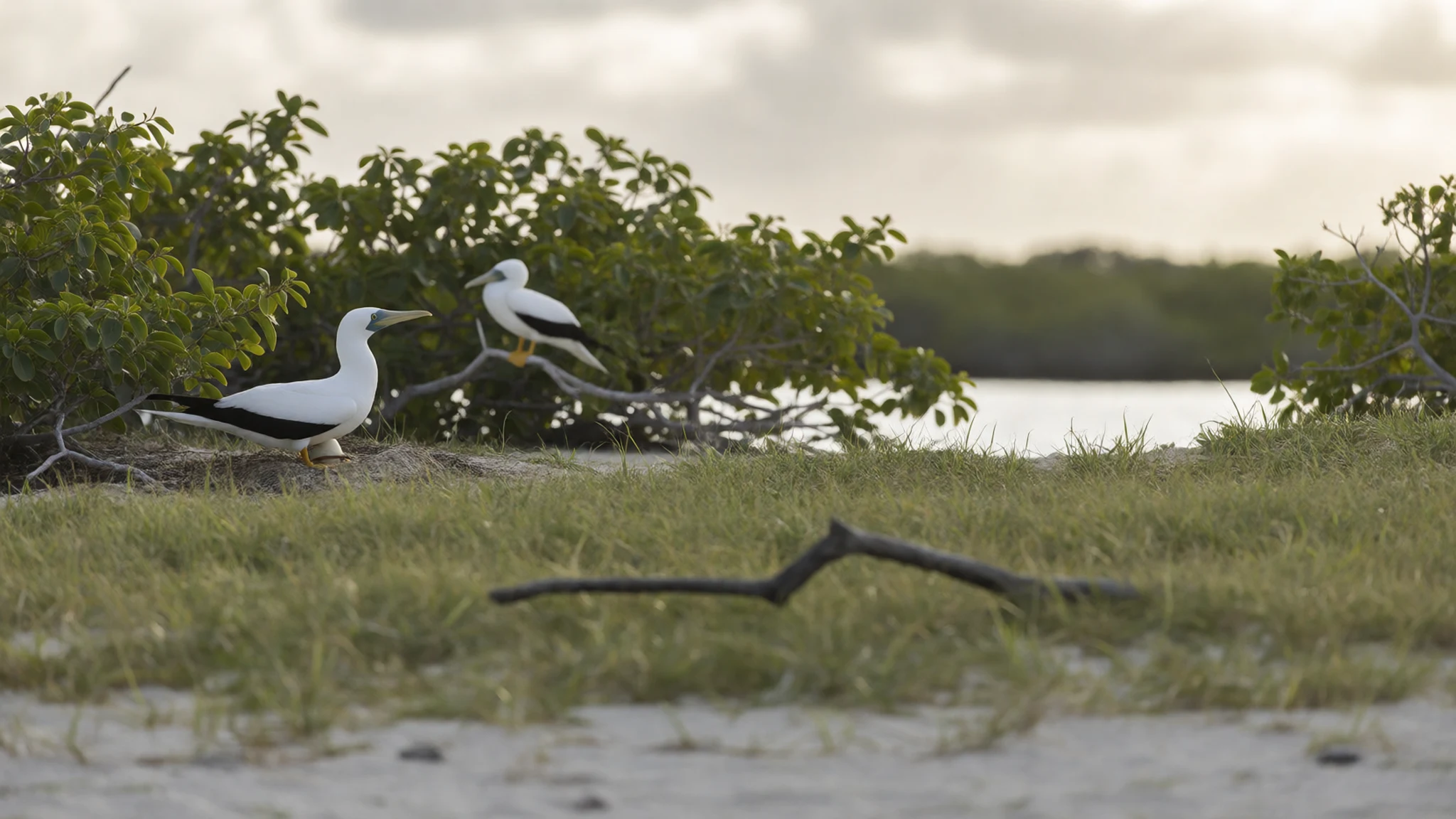
- Booby Reef and the eastern chain — Eastern reefs
Booby Reef is part of the Bellona Reefs complex and was probably the first part of the group to be sighted by Europeans. Its name hints at the birds that crowd the area. Today it is a place to look, photograph and move on.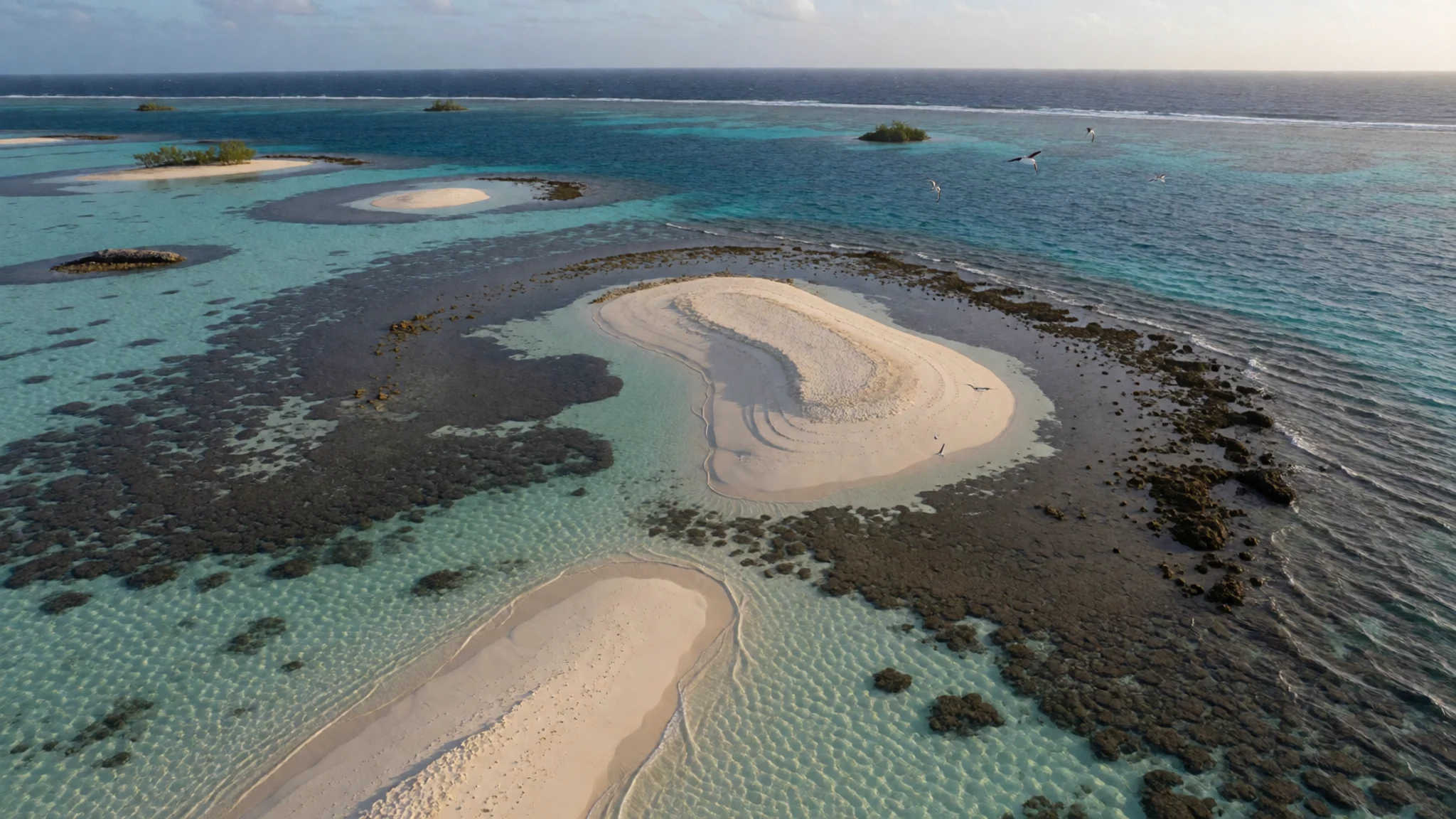
- Shifting sand cays — Throughout the archipelago
Many of the cays are only sand, some barely above the tide and some awash. Others are steadier thanks to grass and low trees. Their shapes change with wind and swell, so a chart or photograph can be out of date, and landing spots must be judged on the day.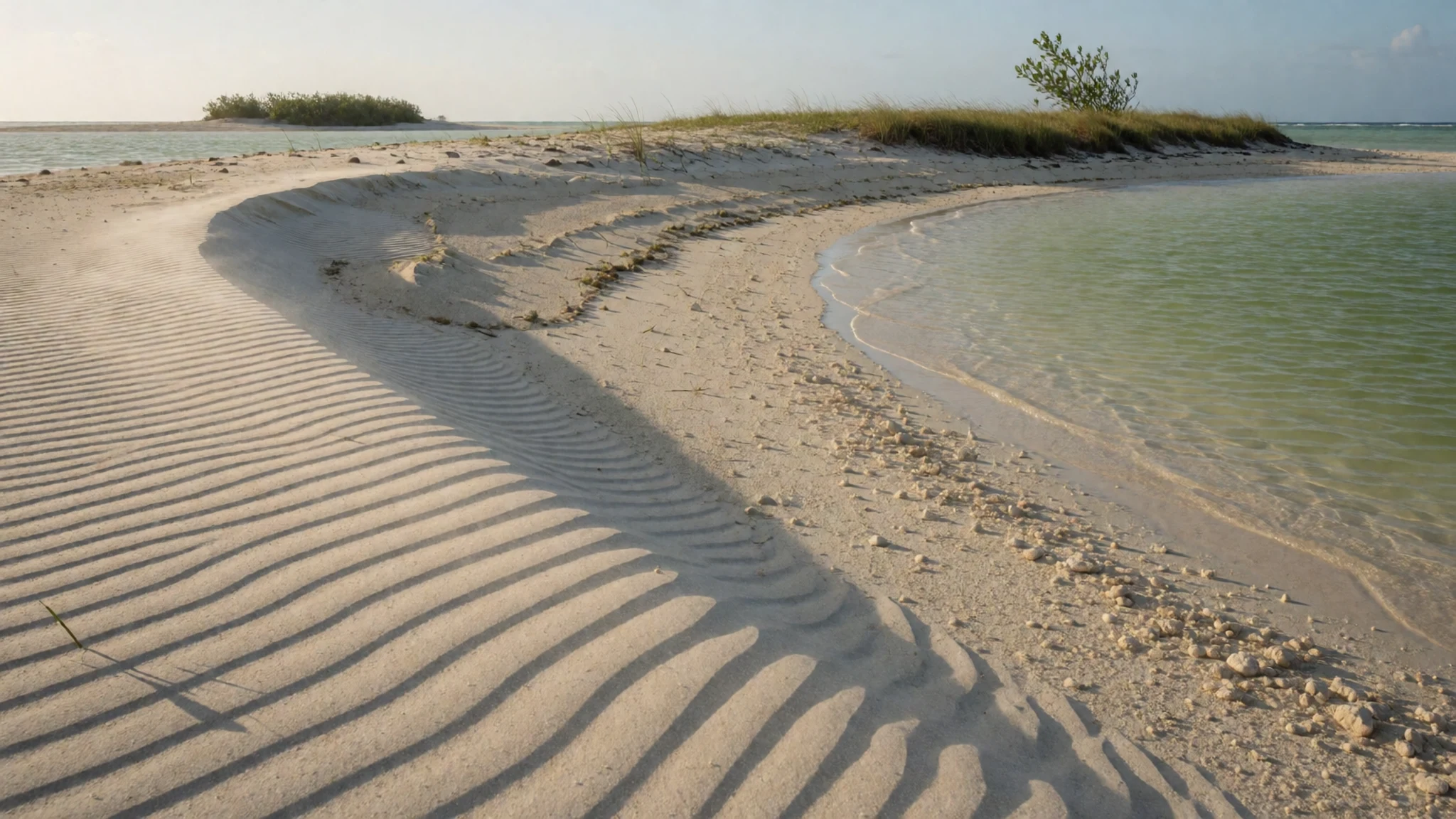
- Bellona Reef — South of the main group
Bellona Reef lies well to the south and is geologically separate from the main group, though trips often include it. From the air it looks like a pale ring of coral around dark water. It carries the name of the convict ship whose master found the southern reefs.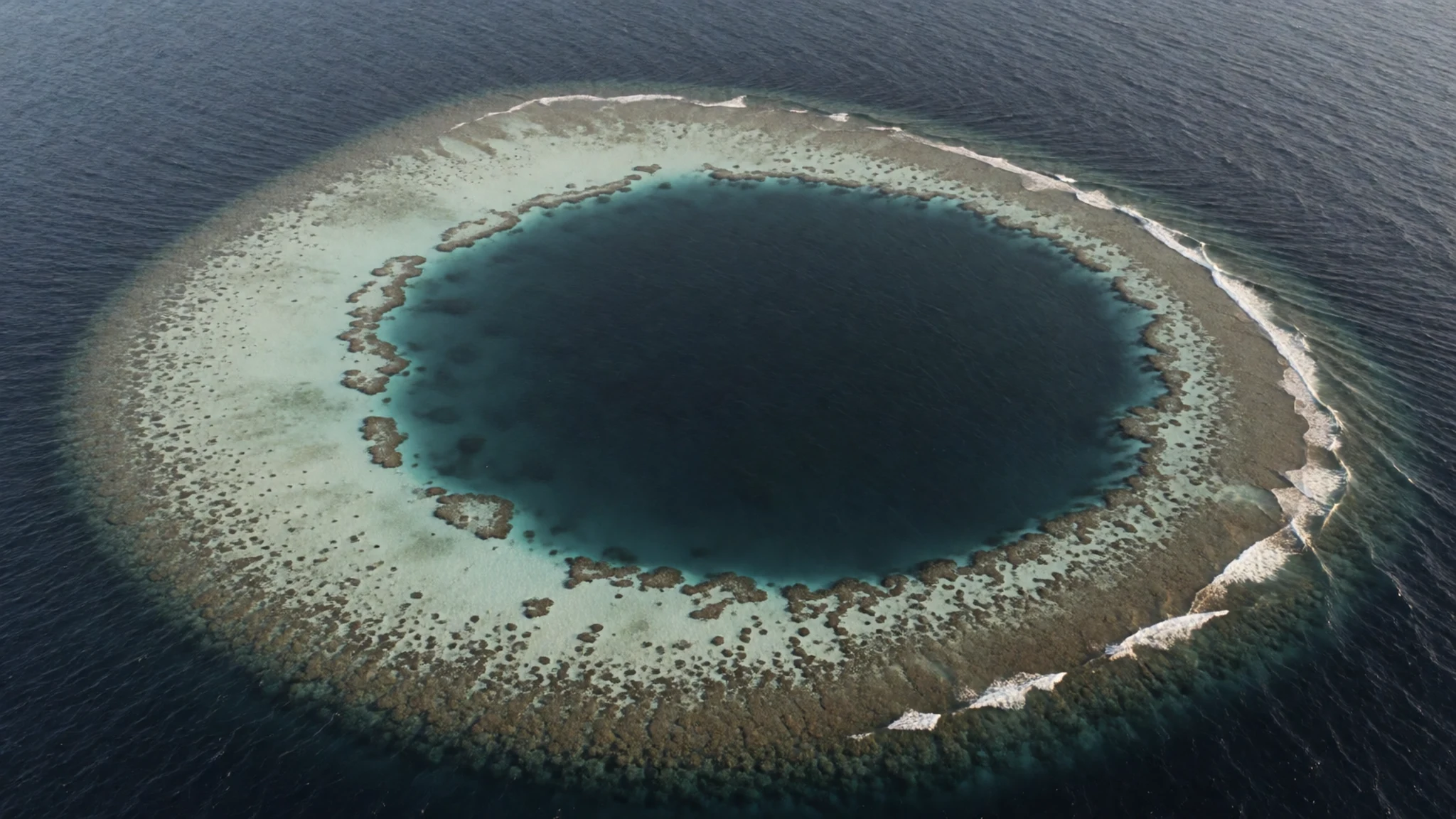
Culture
Chesterfield Islands have no resident community, so the culture here is that of the sea. The archipelago is administered as part of New Caledonia, a French territory, and the people who connect to it are the sailors, scientists and officials who pass through from Nouméa. Its European story is told in ships' logs and Admiralty charts: convict transports, whalers and survey vessels that treated these reefs as a hazard to avoid, and sometimes as a convenient lee for repairs and fresh food. That seafaring habit still shapes behaviour. Boats check on one another over the radio, share weather information and expect each crew to be self-sufficient, because the nearest help is days away. Visitors who come by yacht are guests in a wildlife area rather than tourists in a settlement, and the usual markers of place, such as markets, festivals and local crafts, belong to Grande Terre rather than to the reef. For many people the cultural interest lies in the contrast: an archipelago named by whalers, charted by the British and French, and used today by birds and turtles far more than by humans. Anyone interested in Kanak and Caledonian culture is better served spending time in Nouméa before or after the trip. Leave no rubbish ashore, keep well clear of nesting birds, and do not take eggs, shells or turtles.
What to wear
Chesterfield Islands have no residents, so there is no local dress or textile tradition on the reef itself. The nearest living clothing culture is on Grande Terre, where Caledonian women often wear the robe mission, a loose, long-sleeved cotton dress with a yoke and gathered skirt, introduced in the colonial era and still seen at church and community occasions. On the main island people now mostly dress for heat: cotton shirts, shorts, sandals and bright printed fabrics. On yachts, working crews tend to wear light long-sleeved sun shirts, quick-drying shorts, wide-brimmed hats and sailing gloves. A visitor should dress for sun, salt and a rough landing rather than for any social code. Pack long-sleeved UV-protective tops, long lightweight trousers, a hat with a chin strap and polarised sunglasses. Wear reef shoes or sturdy sandals for sharp coral sand and shallow ledges, and carry a waterproof jacket for spray and squalls. Swimwear is fine on the boat and beach, but bring a shirt and covered shorts for the shore at Nouméa, where modest, tidy clothing is expected in towns and churches. Pick sunscreen labelled reef-safe and use it sparingly, as the lagoon is shallow and its coral is easily stressed.
What to eat
- Line-caught reef and open-water fish — On board or on the beach
Fish is the one local food, and the old advice to fish for supper still stands. Crews grill or pan-fry the catch on deck or on a beach fire. Ask experienced sailors in Nouméa about which reef fish are safe to eat, as some carry toxins.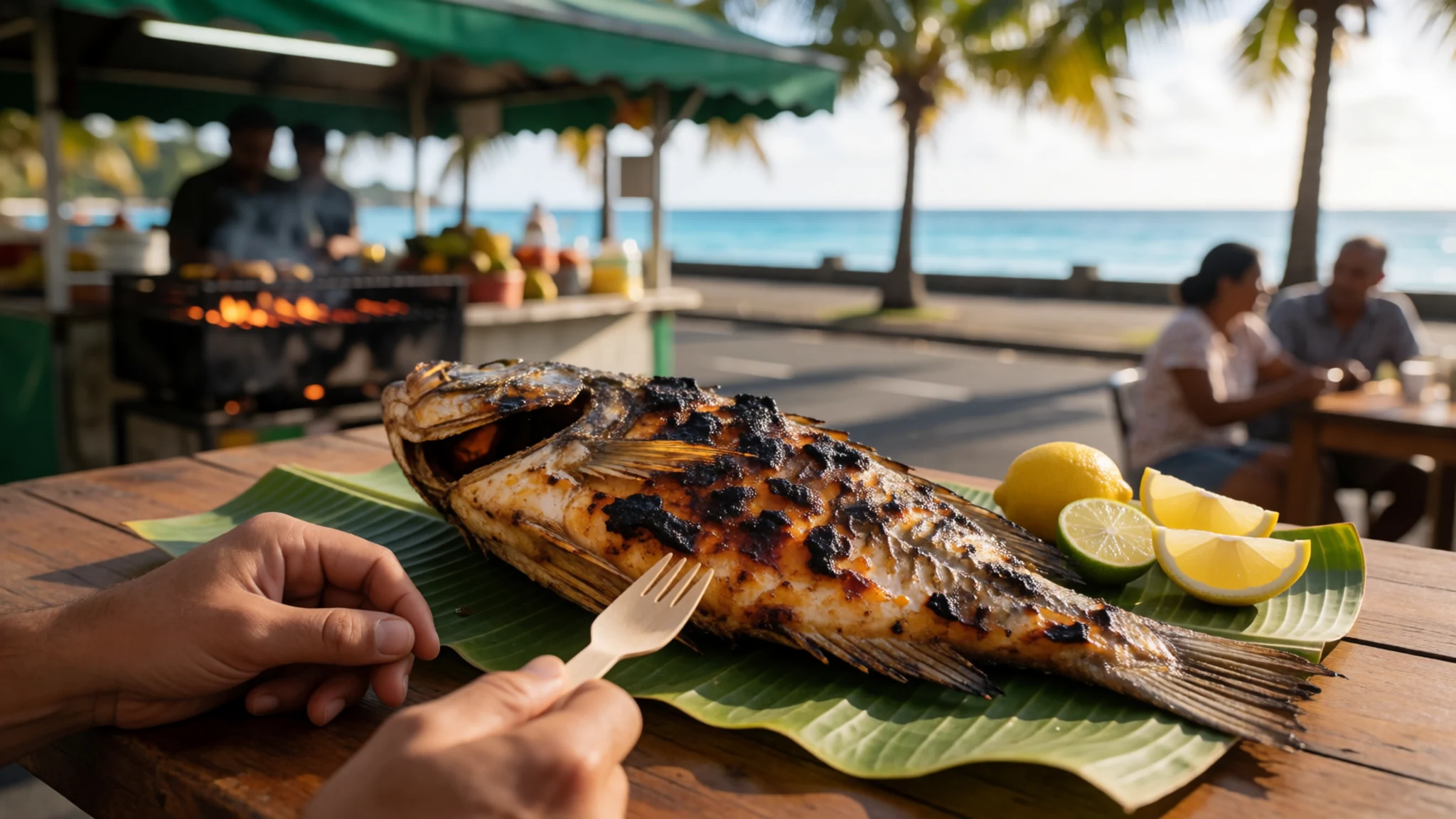
- Galley one-pot rice or pasta — The yacht's galley
A simple pot of rice or pasta with tinned vegetables, onions and spices is the usual meal when the fish are not biting. It keeps well, uses little water and suits a heaving boat better than anything fussy. Stock the ingredients before leaving.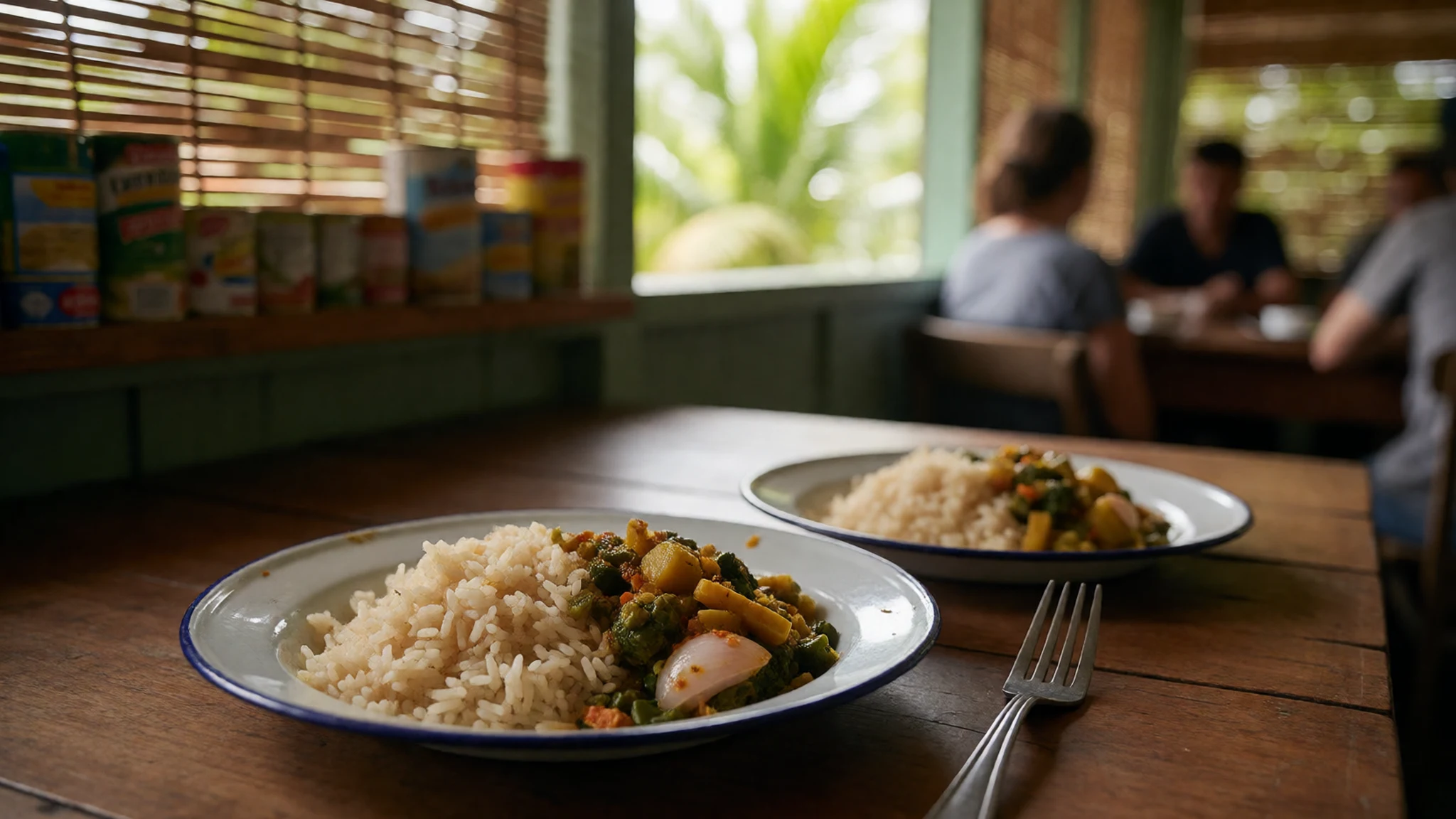
- Fresh fruit and vegetables from Nouméa — Markets and shops in Nouméa
Everything fresh has to be bought on Grande Terre before sailing, so crews usually provision at a Nouméa market. Hardy items such as cabbage, pumpkin, carrots, apples and citrus last longest, while salad leaves and tomatoes go first. - French bread and tinned provisions — Bakeries and supermarkets in Nouméa
New Caledonia keeps a French baking habit, and a baguette from a Nouméa bakery makes the first day or two of the passage easier. After that, crews rely on tinned fish, pâté, biscuits and long-life milk packed in dry storage.
Plan it
Best time. July–August and September–October are the sensible months, being the coolest and driest, falling outside the south-west Pacific cyclone season that runs roughly from November to April. The lagoon is open to trade winds and swell all year, so choose a settled weather window and be ready to leave if it changes.
How long. 10–14
Getting there. Fly to Nouméa, on the main island Grande Terre, and sail from there; there is no commercial transport to the islands. The passage is about 550 km north-west across open sea, so it needs a seaworthy private yacht and an experienced crew.
Budget. high
Tips
- Check the current rules and any permission needed for landing with the New Caledonian authorities before you sail
- Provision fully in Nouméa: there are no shops, fresh water, fuel or repairs at the islands
- Carry satellite communications, a full medical kit and spare parts, as help is days away
- Plan anchorages around the wind, because the east side of the lagoon is open to swell
- Pack out all rubbish and keep landings short during seabird nesting
Etiquette
- Stay well away from nesting birds and turtles
- Take nothing from the reef, including shells, coral and eggs
- Leave campsites clean and do not light fires on vegetated cays
Nearby
Sources
- Wikidata Q1070802 (CC0)
- Wikipedia: Chesterfield Islands (rev 1385990209) (CC BY-SA 4.0)
- Wikivoyage: Chesterfield Islands (rev 5311840) (CC BY-SA 4.0)
- Photo 01: Chesterfield Reef, Jacques Descloitres, MODIS Rapid Response Team, NASA/GSFC (Public domain)
- Photo 02: South Bellona Reef, NASA (Public domain)
- Photo 03: Carte de l'île Longue, Yanice HaJo (CC BY-SA 4.0)
- Photo 04: Chesterfield Islands, unknown author (Public domain)
- Photo 05: Fou à pieds rouges couvant ses oeufs, Bastien Preuss (CC BY-SA 4.0)
- Photo 06: Chesterfield Reef (a), Jacques Descloitres, MODIS Rapid Response Team, NASA/GSFC (Public domain)
- Photo 07: Chesterfield Reef (b), Jacques Descloitres, MODIS Rapid Response Team, NASA/GSFC (Public domain)
- Photo 08: Middle Bellona Reef, ISS photograph 2002, NASA (Public domain)


Wildlife
- Red-footed booby (animal)
Picture a large seabird of the booby family that always wears red feet, though its feathers may be pale or dark. It flies beautifully on the wind but lands rather clumsily, which is fun to watch. On Île Longue, one of its nesting islets, birds are often seen keeping eggs warm in short trees and bushes. Stay well back, keep quiet, and never feed them, since human disturbance harms these birds. - Red-footed booby (bird)
Picture a large seabird of the booby family that always wears red feet, though its feathers may be pale or dark. It flies beautifully on the wind but lands rather clumsily, which is fun to watch. On Île Longue, one of its nesting islets, birds are often seen keeping eggs warm in short trees and bushes. Stay well back, keep quiet, and never feed them, since human disturbance harms these birds.