Cayos Cochinos
Cayos Cochinos, Honduras
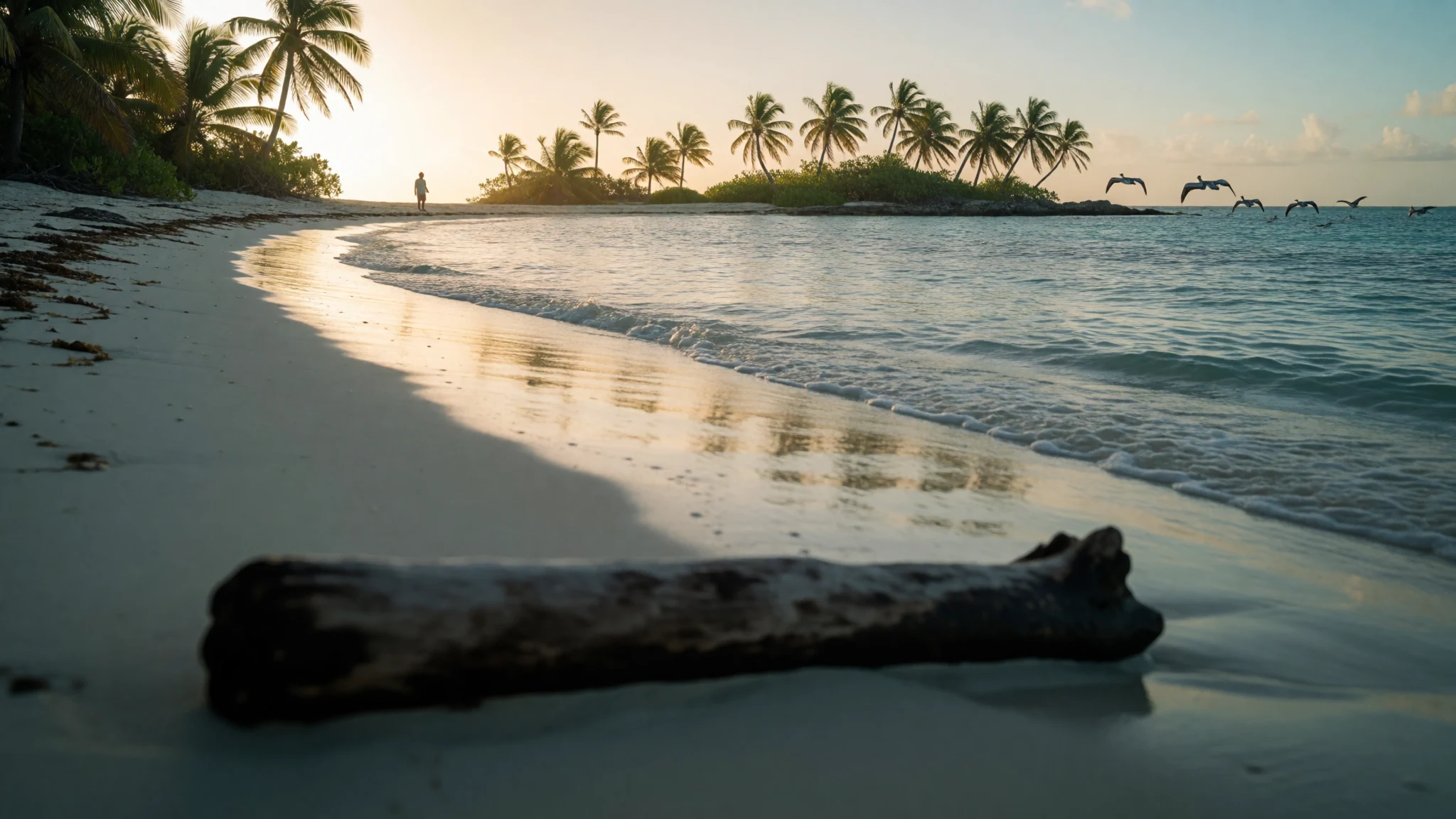
Cayos Cochinos keeps a quiet Caribbean reef, Garifuna villages and clear water a boat ride from the Honduran coast.
The place
Cayos Cochinos is a small archipelago in the western Caribbean, lying off the north coast of Honduras, where low green cays sit in water that runs from pale turquoise over sand to a hard reef blue. Maps of the group place it close against that coast rather than in the open ocean: a cluster of islands and islets, some edged with coconut palms and scrub, some little more than a beach, a dock and a few roofs. There is no town. Settlement is sparse, and the ordinary noise is an outboard, wind in the fronds, and the knock of a small fishing boat against a post. The larger islands rise only gently, with sandy or stony paths and a shore of coral rock, seagrass and small crescents of beach. Between the cays the sea is thin enough in places that a boatman reads the colour of the bottom as he steers, then suddenly deep where the reef falls away. Pelicans sit on gunwales; frigatebirds hang over the channels. Coral, sponge and reef fish sit close under the surface, which is why the water looks lit from below on a bright day and flat and grey when cloud comes in. People live in a few Garifuna communities and in a handful of simple lodges and ranger or research posts. Chachahuate, a cay of closely set houses, and the settlement at the eastern end of the main island are the lived-in parts of the group. Fresh water, fuel, ice and most food come in by boat from the mainland, so the archipelago feels supplied, not self-contained.
Its story
Cayos Cochinos enters the written record under a Spanish name that means pigs, a blunt label for animals that once foraged on the larger islands; English speakers on this coast still say Hog Islands. Long before that nickname settled, the north shore of Honduras was a Garifuna coast. Families whose ancestors had been exiled from the eastern Caribbean built villages from the Bay Islands down towards the mainland rivers, and the cays became part of a fishing life rather than a colony of planters. Spanish was the language of the ports; Garifuna remained the language of the beach. The islands stayed lightly occupied. Fish, turtle and conch mattered more than acreage, and the reef was a workplace. In recent decades Honduras set the archipelago aside as a marine reserve, asking Garifuna fishers to share the water with rules: zones where taking marine life is forbidden, gear that is banned, and a foundation that posts rangers and hosts scientists. That bargain is the modern story of Cayos Cochinos. Conservation kept the reef from the kind of building seen on busier islands, and it also narrowed a livelihood. A pink boa still turns up in the leaf litter, and biologists have used the islands as a living archive of reef and reptile. None of that erases the older claim. Cayos Cochinos is Garifuna home water: drums at a feast, cassava grated for bread, and children who swim off the same dock where a visiting boat ties up. The reserve only makes sense if that life is still in the picture.
What to see
- Cayo Mayor — Cayo Mayor, the larger island
Cayos Cochinos is easiest to read from Cayo Mayor, the larger island, where a path leaves the beach for low woodland and East End sits above a working shore. Houses, a schoolyard rhythm and boats on the sand make this a village first. The walk is short and hot, on coral stone, with the channel in view. Swimming starts where the bottom falls away from the beach.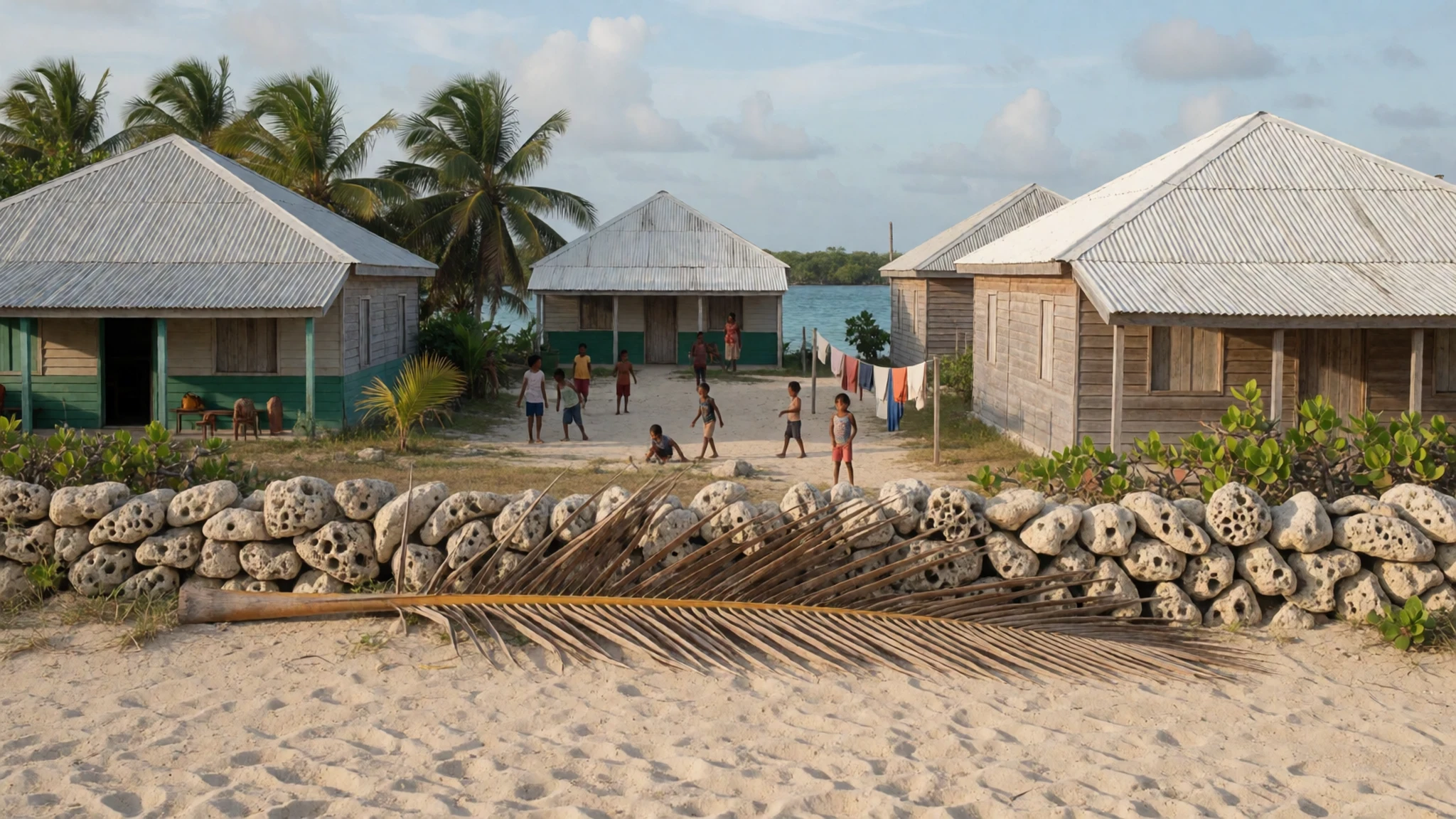
- Cayo Menor — Cayo Menor
Cayo Menor is the quieter main island of Cayos Cochinos, more thicket and shore than village, with a ranger presence. Most visitors meet it from the boat, as a snorkel stop, rather than by wandering among houses. Coral heads and fish sit in the shallow water off its edge, and the landing is only where the boatman says the bottom allows. Unmarked paths are not a public park.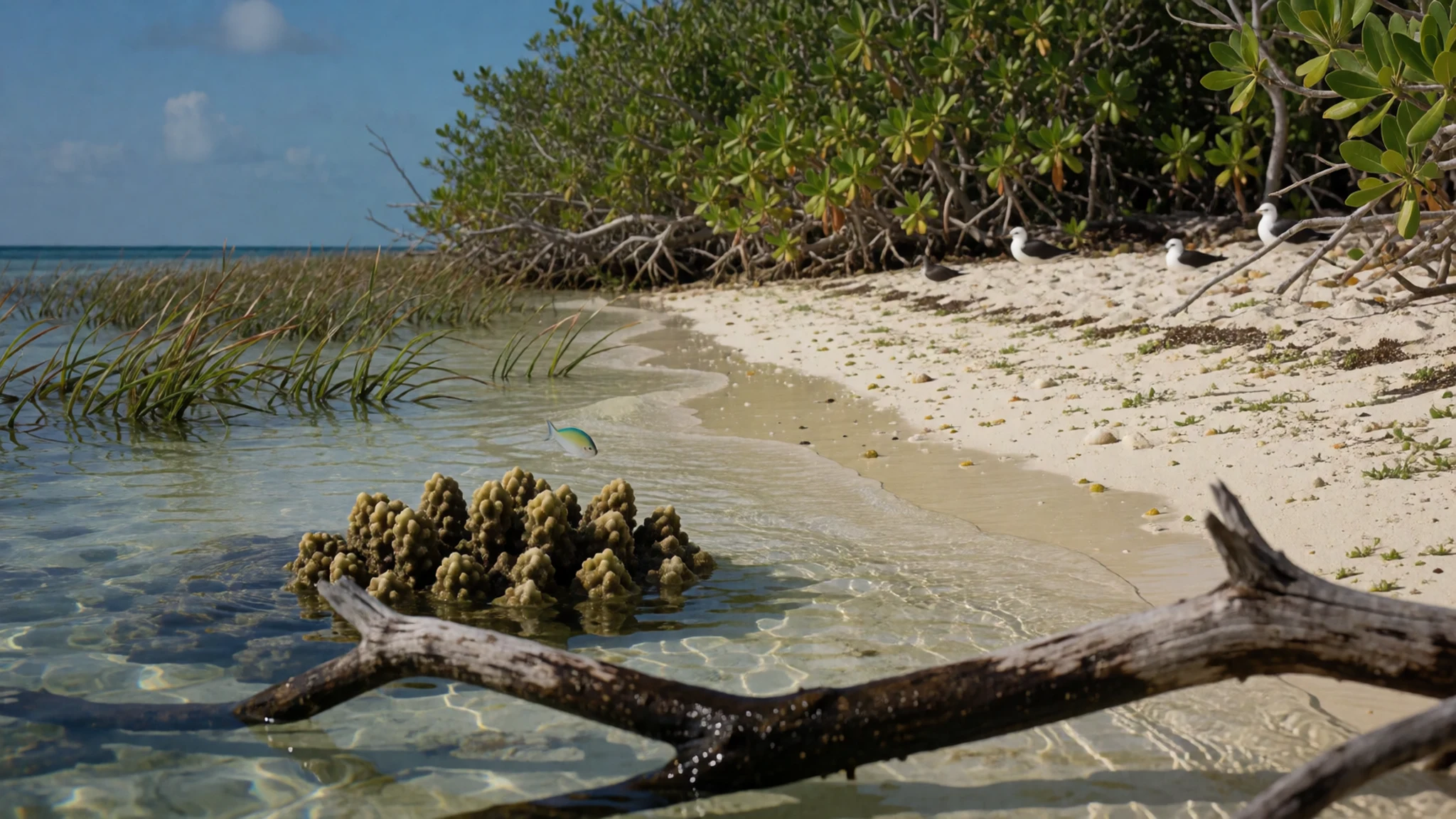
- Chachahuate — Chachahuate cay
Chachahuate is the cay in Cayos Cochinos where Garifuna life is packed onto a scrap of sand: houses close together, children in the shallows, and boats at the front step. People live in every part of it, so a visit means a greeting, a cold drink or a plate if someone is cooking, and lanes left clear. Swim outside the moored boats, and only in a calm.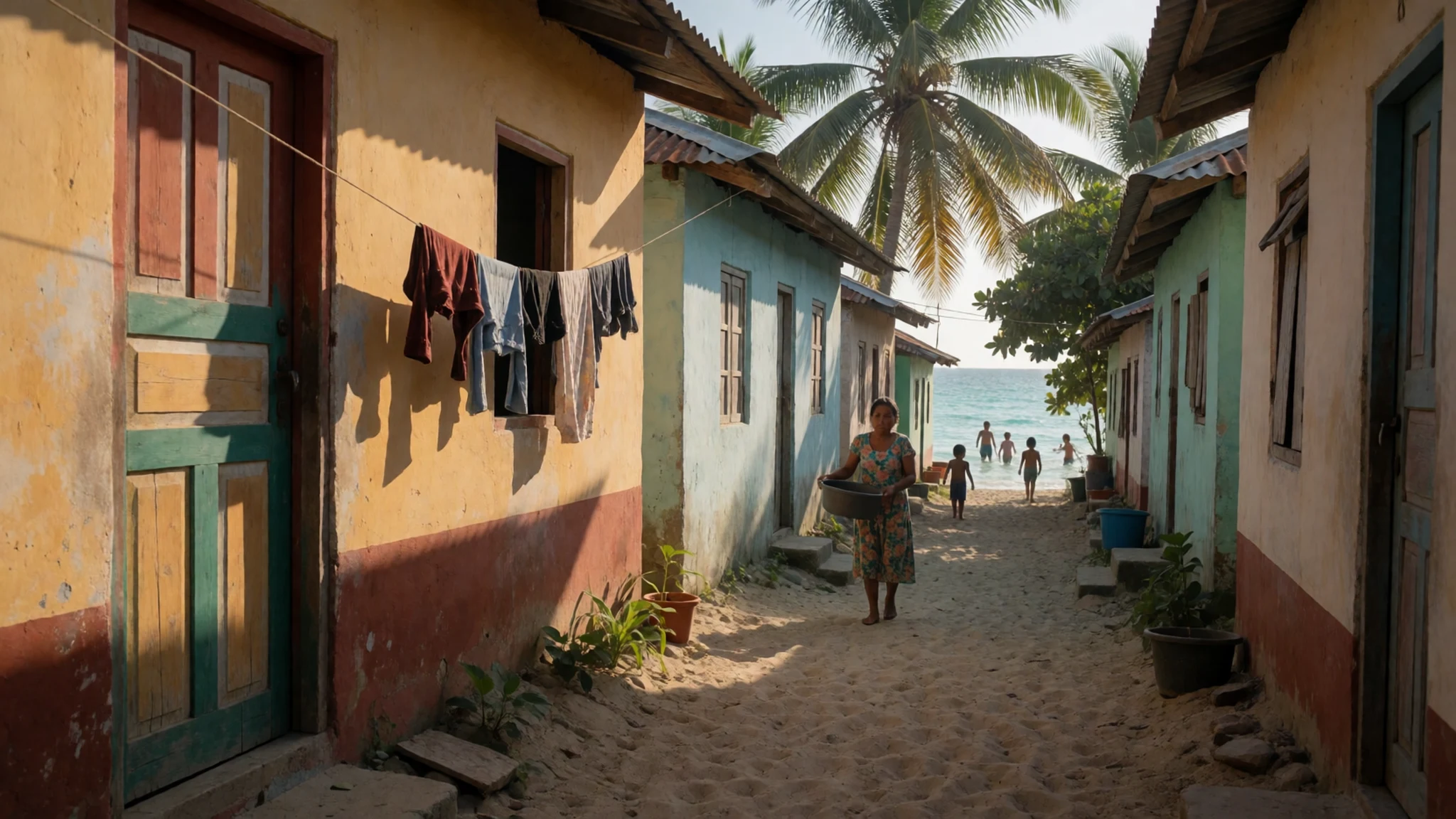
- The reef — the reefs around the cays
The reef around Cayos Cochinos is why the boats come: patch reefs and coral heads in water shallow enough for a mask. Fish life is the ordinary Caribbean mix of grunts, parrotfish and the odd ray. This is a reserve, so the visit is look-only — no standing on coral, no shells in the bag, no spear. A guide who works the cays knows which moorings are allowed.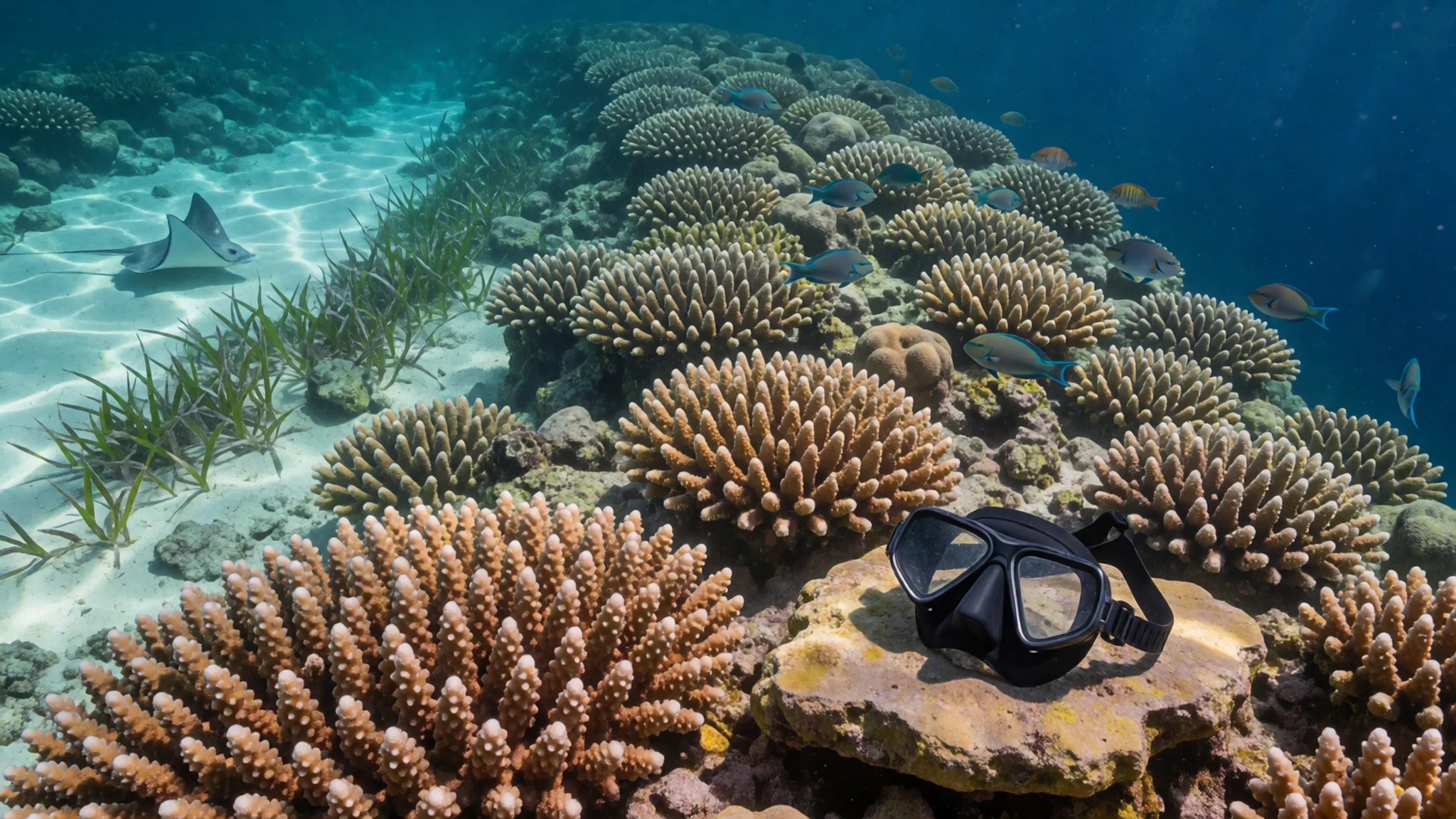
- The boat approach — the boat run from the mainland
The approach to Cayos Cochinos by lancha is part of the visit. From the mainland the cays appear as a low green line, then as beaches, roofs and moored boats. Private islets slide past with a dock and nothing else; fishing skiffs sit lower in the water, with a pelican on the gunwale. Ask the boatman to slow where the bottom shows, and to name the cays as they pass.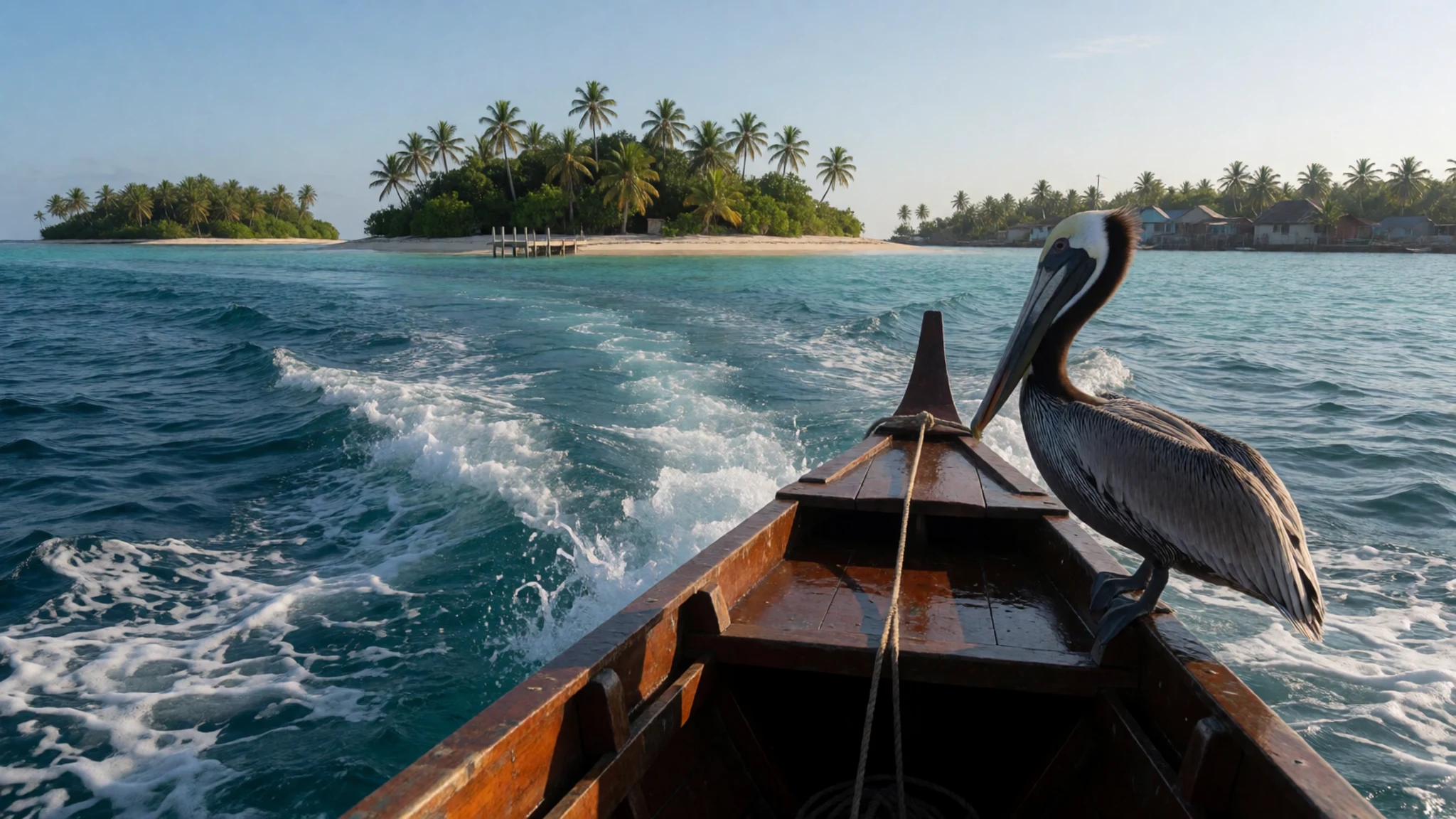
Culture
Cayos Cochinos is Garifuna country that happens to sit inside a marine reserve. The language in the yards is Garifuna, an Arawakan tongue shaped by Carib, French, English and Spanish, while Spanish carries official business and English turns up with sailors, scientists and visitors. Music is not a show staged for the boat: punta drums come out for a party, a saint's day or a send-off, and a dügü, the ancestral ceremony, is a community matter, not an attraction. Cassava, coconut and fish organise the day more reliably than a clock. Children swim as transport, and a boat is both a tool and a living. The reserve rules are part of culture now, not a poster at the dock. Families argue them because they limit what can be caught and where, even as those rules are what keep the reef worth fishing at all. A visitor who understands that will not ask a cook for lobster or conch out of season or out of the rules, and will not treat a research post as a ticket office. Religion on the cays is practical and mixed: Catholic feasts, ancestral respect, and little patience for being photographed in either. Ask before you photograph anyone in Cayos Cochinos, stay on the public shore unless you are invited into a yard, and do not collect coral, shells or fish.
What to wear
Cayos Cochinos dresses, on a feast day, in the Garifuna way still seen along this coast: women in full skirts and a bright headscarf, the cloth often a printed cotton, and men in a loose shirt kept for dancing rather than for the boat. The textile is not a court costume. It is party clothes, brought out for punta, a patron saint or a family gathering, and then folded away. Everyday cloth is much plainer. On an ordinary morning people wear what the work allows: football shirts, vests, shorts, a wrap against the sun, and flip-flops or bare feet on the sand. Children are in the water half dressed. A scientist or ranger may add a rash guard and a cap. Nobody is in formal shoes, because the ground is either beach, coral rock or a boat deck, and salt ruins anything delicate. Colour survives in headwraps and in Sunday clothes more than in a daily uniform. A visitor should copy the practical layer, not the feast costume, unless invited to a celebration. Swimwear is right on the boat and in the water; a shirt or a wrap goes on before walking through Chachahuate or East End, where people are at home. Reef shoes or sturdy sandals save feet on coral rock. A hat, a long-sleeve shirt and a rash guard matter more than extra outfits, and a light rain layer lives in the dry bag. Good trainers belong on the mainland.
What to eat
- Hudutu (machuca) — home kitchens on the cays and in Sambo Creek or Nueva Armenia
Hudutu, also called machuca, is the Garifuna plate of Cayos Cochinos: green plantain pounded to a mash beside a coconut-fish soup. Home kitchens on the cays and in Sambo Creek or Nueva Armenia make it when fishing is kind. It is a meal, served when the cook is ready.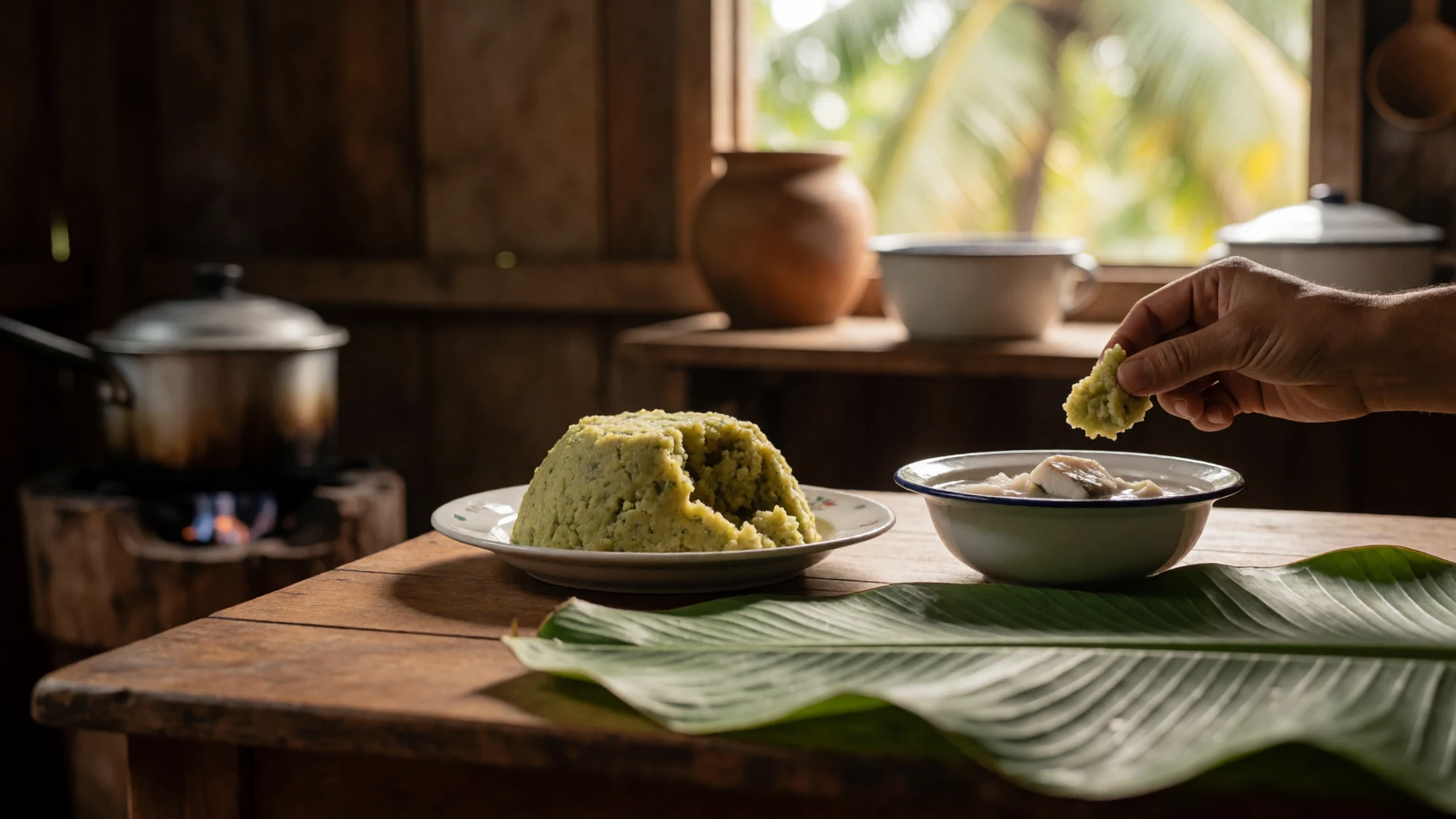
- Tapado — family kitchens on the cays and cookshacks at Sambo Creek
Tapado is a coconut stew of Cayos Cochinos and the Garifuna coast, loaded with fish or crab and root vegetables and left to cook until the broth goes thick. Look for it in family kitchens on the cays and in cookshacks at Sambo Creek before a boat leaves.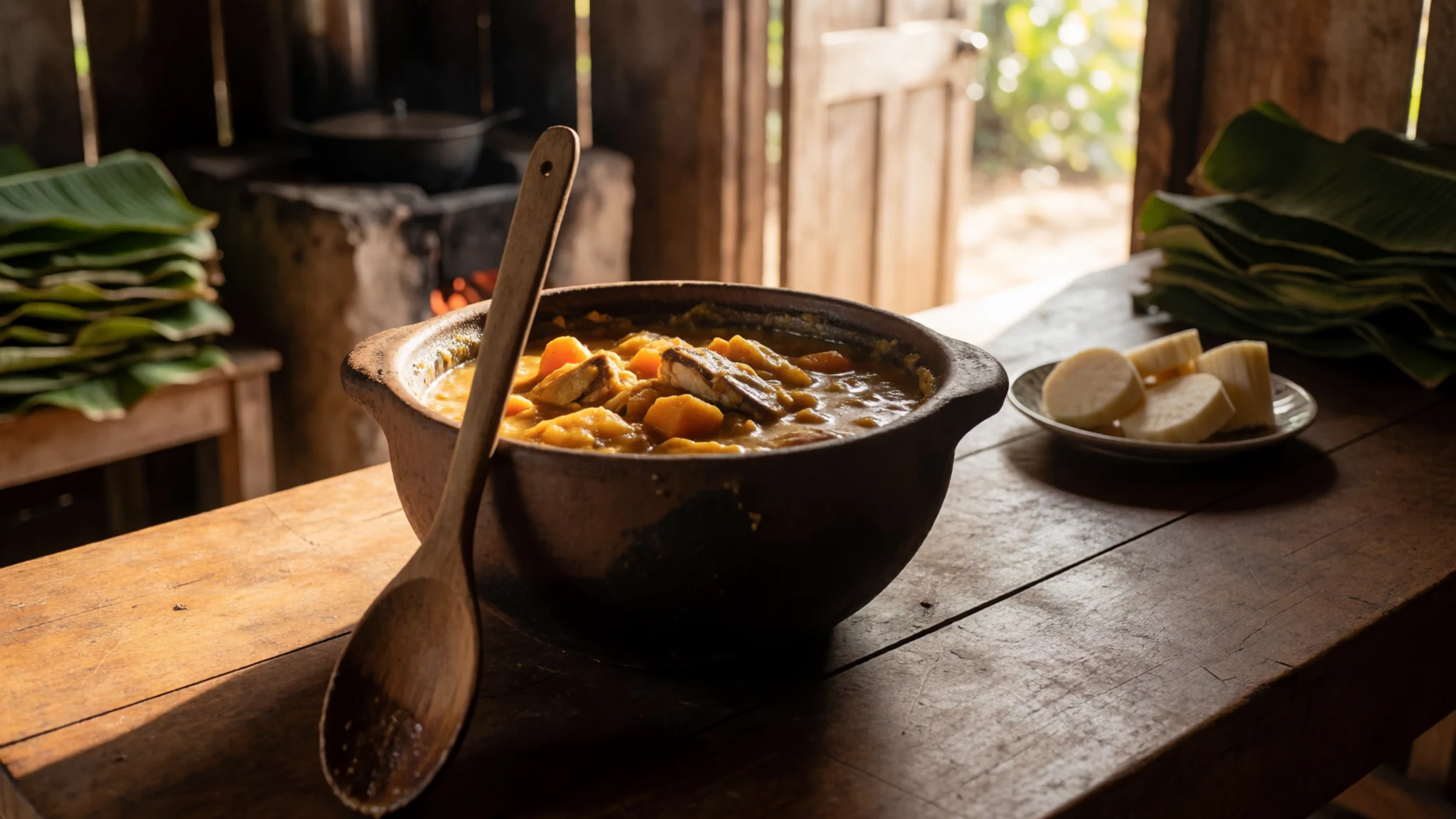
- Ereba — yards on the cays and the mainland shore
Ereba is the Garifuna cassava bread of Cayos Cochinos, a broad chewy round grated from bitter yuca, pressed and baked until it keeps. Women still make it in yards on the cays and along the mainland shore. Buy it where it is drying in the sun. - Fried fish — house fronts on Chachahuate and stands in Sambo Creek
Fried fish is the everyday plate on Cayos Cochinos: a whole fish, hot oil, lime and coconut rice or fried plantain. It is sold from house fronts on Chachahuate and from stands in Sambo Creek. Ask what was caught under the reserve rules. - Pan de coco — La Ceiba bakeries and the boats from the Garifuna villages
Pan de coco is a soft, slightly sweet coconut bread eaten on Cayos Cochinos with morning coffee. Bakeries and home ovens in La Ceiba and the Garifuna villages on the way to the boats turn it out daily; on the cays it arrives in a bag on the lancha.
Plan it
Best time. March to May is the kinder window for Cayos Cochinos, with more settled seas for the crossing and less chance of a storm day. The later rainy months, especially when hurricanes are in the Caribbean, mean more cancelled boats and greyer water.
How long. 2–3
Getting there. Fly into La Ceiba, then take the road east to Sambo Creek or on towards Nueva Armenia, both Garifuna communities that launch lanchas to Cayos Cochinos. The last leg is that boat, weather permitting; there is no airstrip on the cays. Some operators also cross from Roatán.
Budget. mid
Tips
- Book the boat, and any bed, before you travel; rooms on the cays are few and a day trip still depends on a willing captain.
- Carry cash. Card payments are normal in La Ceiba and unreliable to absent once you are on the water.
- Bring more drinking water than a hot day suggests, plus a dry bag, a hat and reef-safe sunscreen.
- Start the crossing early, before the afternoon wind stands the chop up in the channel.
Etiquette
- Ask before you photograph people, and do not shoot into doorways.
- The cays are homes; keep to the beach and the path you were shown.
- Do not take coral, shells or fish, and do not ask cooks for catch the reserve protects.
Nearby
Sources
- Wikidata (CC0)
- Wikipedia (CC BY-SA 4.0)
- Wikivoyage (CC BY-SA 4.0)
Wildlife
- Brown pelican (animal)
Imagine a seabird with a built-in scoop under its beak: that is the brown pelican, which dives into the water to feed. Around the cays it likes to rest on the sides of boats, so look there first. When it appears in the year or the day is not recorded, so no promises on timing. Keep your distance, stay quiet and calm, let your guide advise you, and never offer food to wild birds.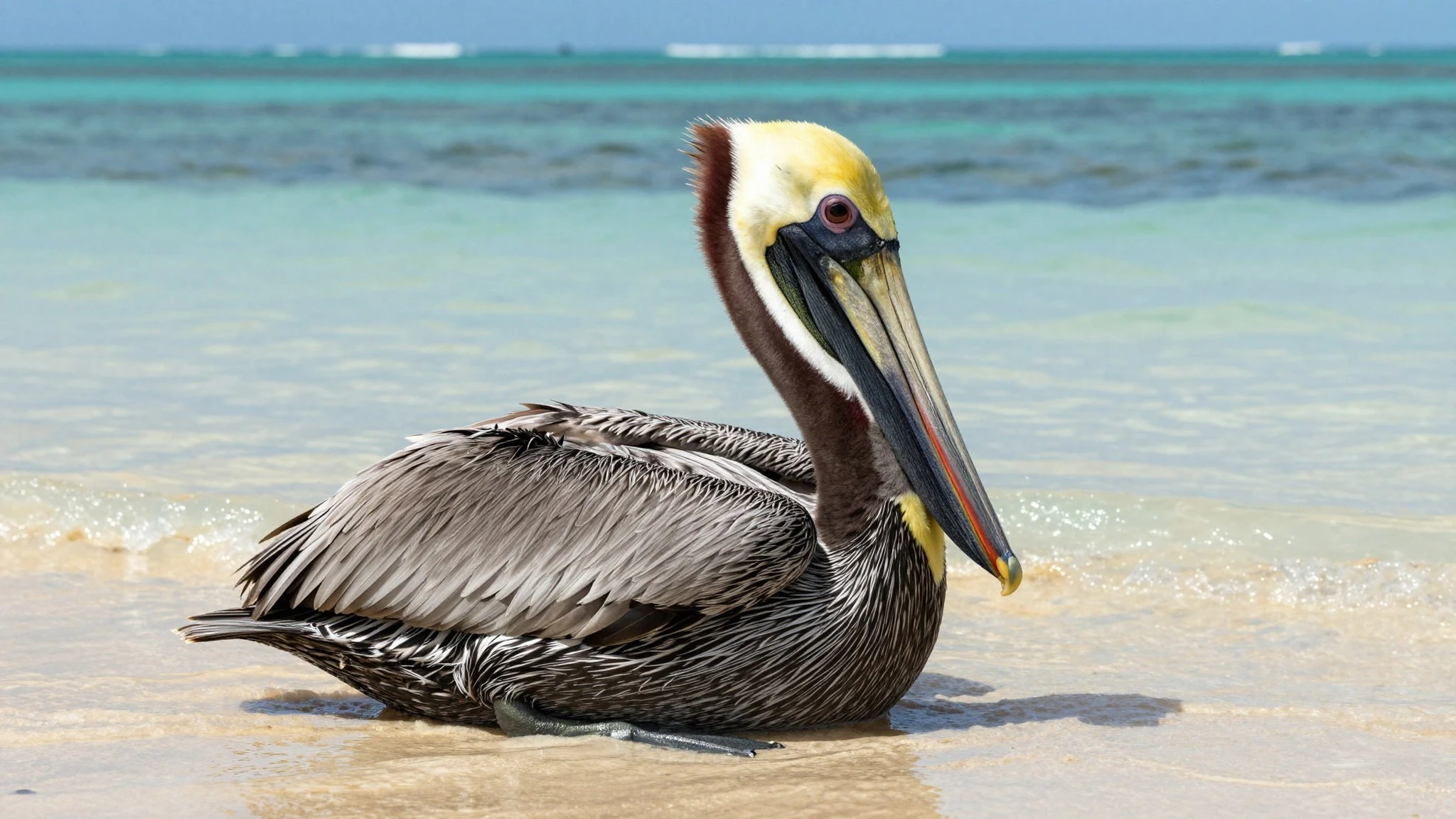
- Magnificent frigatebird (animal)
The frigatebird, also called the man o' war, is a giant seabird that cruises the sky on great wings and is one of the speediest birds anywhere. Over the channels of Cayos Cochinos it hovers high above the water. The notes do not name a season or hour, so enjoy it whenever it appears. Watch from where you stand, keep noise to a minimum, follow your guide's lead, and never feed it.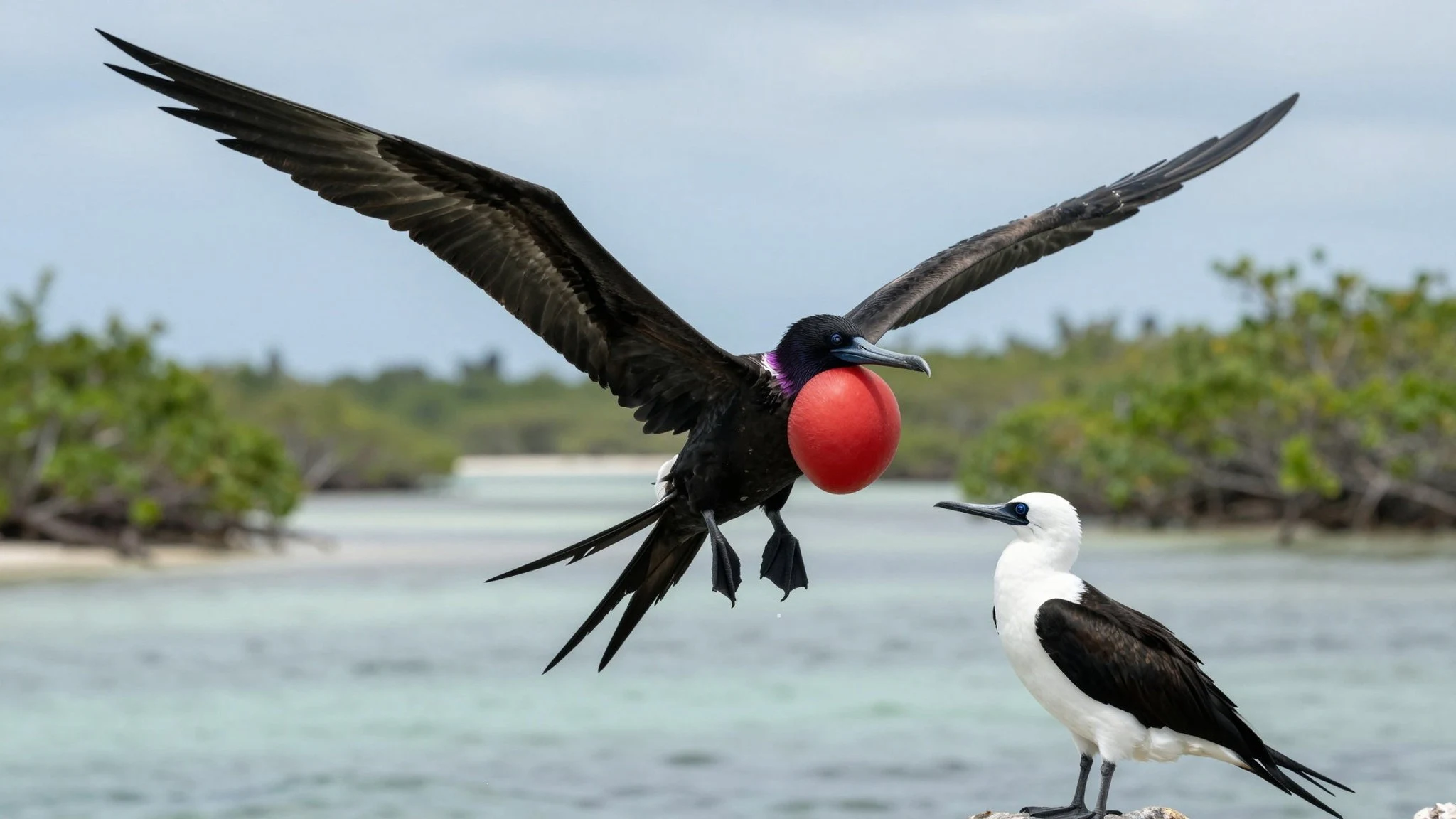
- Pelican (bird)
Imagine a seabird with a built-in scoop under its beak: that is the brown pelican, which dives into the water to feed. Around the cays it likes to rest on the sides of boats, so look there first. When it appears in the year or the day is not recorded, so no promises on timing. Keep your distance, stay quiet and calm, let your guide advise you, and never offer food to wild birds. - Frigatebird (bird)
The frigatebird, also called the man o' war, is a giant seabird that cruises the sky on great wings and is one of the speediest birds anywhere. Over the channels of Cayos Cochinos it hovers high above the water. The notes do not name a season or hour, so enjoy it whenever it appears. Watch from where you stand, keep noise to a minimum, follow your guide's lead, and never feed it.