Pulhapanzak Waterfalls
Pulhapanzak Waterfalls, Honduras
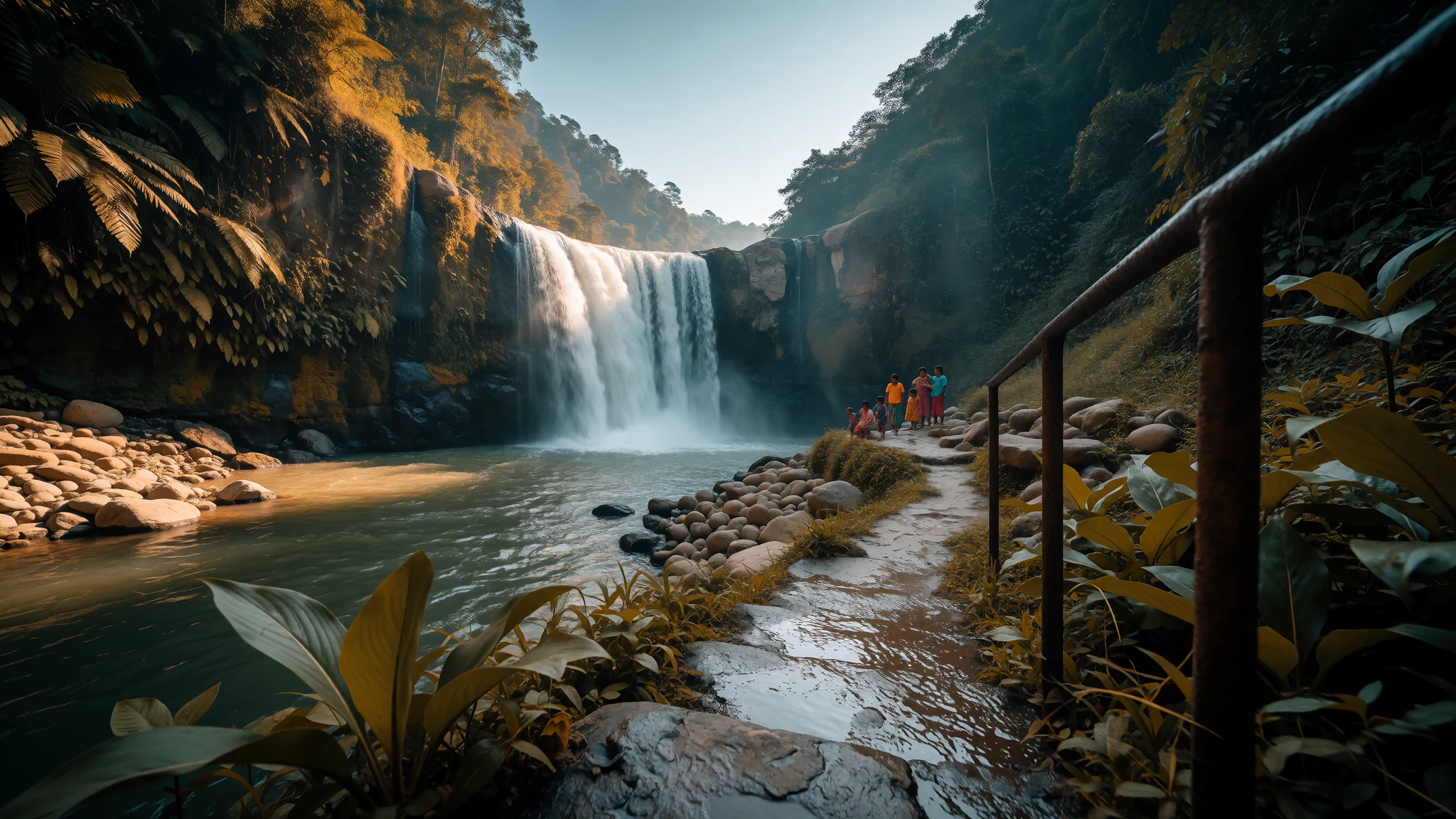
Pulhapanzak Waterfalls is a loud, misty river drop in northern Honduras, close enough to San Pedro Sula for an easy day out.
The place
Pulhapanzak Waterfalls sits on the Río Blanco in northern Honduras, a short run from San Pedro Sula, the country's big commercial city. The river flows north from here, passes the city and eventually joins the Ulúa River, so the falls are one stop on a working watercourse rather than a remote wilderness feature. The water drops in a broad curtain into a churning pool, and a haze of spray hangs over the rocks, wetting the paths and the leaves around them. The surroundings are tropical: dense green slopes, mossy stone and a constant roar that turns conversation near the base into shouting. Honduras is hot and humid almost all year, and temperatures depend more on altitude than on the calendar, so the mist is welcome rather than a nuisance. The site is set up for visitors, with a route down to the base and viewpoints along the way, and it draws Honduran families at weekends and holidays as much as foreign travellers. That mix gives it a lively, slightly noisy atmosphere on busy days and a much calmer one on weekday mornings. Lake Yojoa and its birdlife lie in the same general part of the north-west, which makes it easy to combine the falls with a longer loop. It is a modest, friendly place rather than a grand one, best enjoyed with realistic expectations: wet clothes, slippery steps, and a swim only where it is clearly allowed and the current looks tame.
Its story
Pulhapanzak Waterfalls belongs to a country whose name is often explained as meaning 'depths', a word that suits a land of steep valleys and fast rivers. Long before the Spanish arrived, the western part of what is now Honduras was Maya territory, and other Mesoamerican peoples lived across the rest. Rivers such as the Río Blanco served as routes and water supplies, and a fall like this one would have been a known landmark to anyone moving through the valleys. Columbus reached the coast in 1502 and Honduras became a Spanish colony. It declared independence in 1821 together with four neighbours, then left the Central American federation in 1838. The north later grew around its river plains and the city of San Pedro Sula. In 1998 Hurricane Mitch struck the country hard, killing about 5,600 people, and its floods remain a reminder of how violent these same rivers can become in heavy rain. That is worth keeping in mind at Pulhapanzak: the easy holiday scene depends on a river that can rise fast. Written history of the falls themselves is thin, so the story here is largely the country's. Today the site is a local leisure spot, popular for picnics and a paddle, and a small source of work for the people who look after it.
What to see
- The main curtain — Viewpoints near the entrance
The headline view is the full width of the falls from the viewpoints above and beside the pool, where the whole drop fits into one frame. Take a first look before descending: the spray soon coats lenses and glasses, and the light is softer early in the day, before the crowds and the heat build.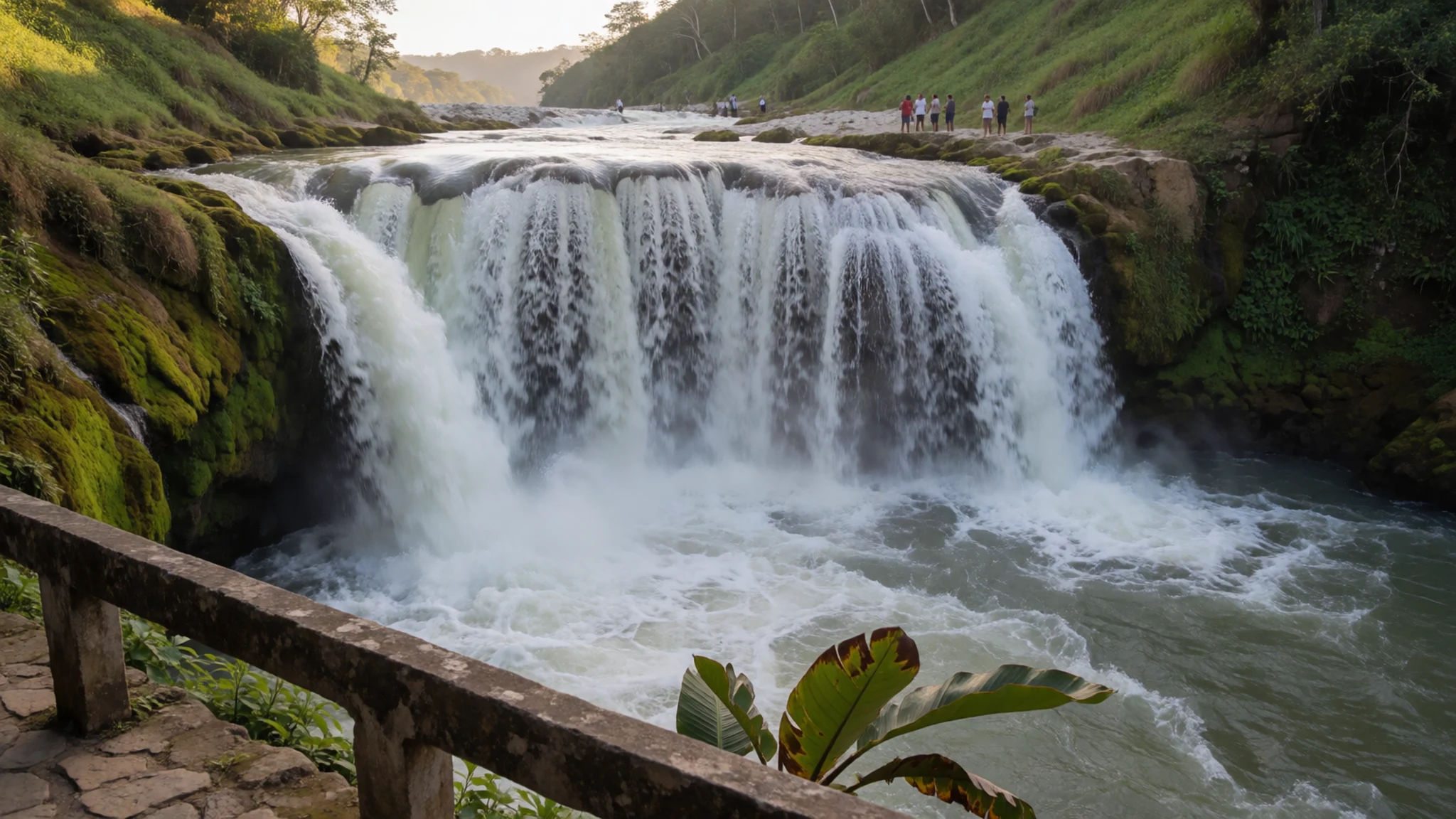
- The path to the base — Below the main viewpoints
A stepped route leads down towards the plunge pool, through damp forest and over stone that stays slick. The noise grows with every turn, and the last stretch is wet from drifting spray. Take it slowly, wear shoes with grip, and expect to be soaked at the bottom, which most visitors treat as part of the point.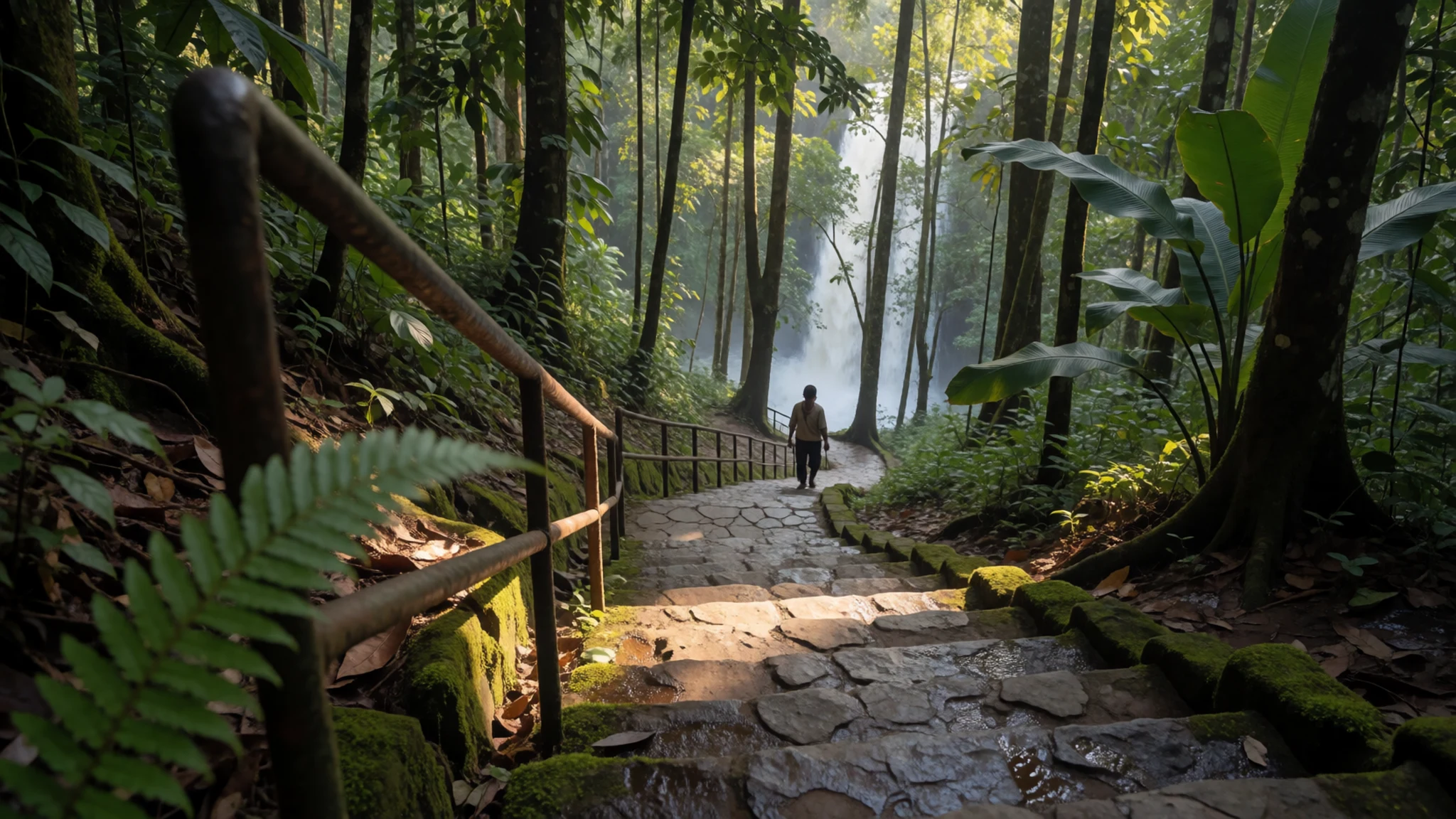
- Behind the falls — Foot of the falls
Where the site allows it, a narrow route takes visitors close to and behind the falling water, into a dim, roaring space between rock and curtain. It is loud, wet and slippery, and access can change with water levels and site rules, so ask staff at the entrance before setting out rather than assuming it is open.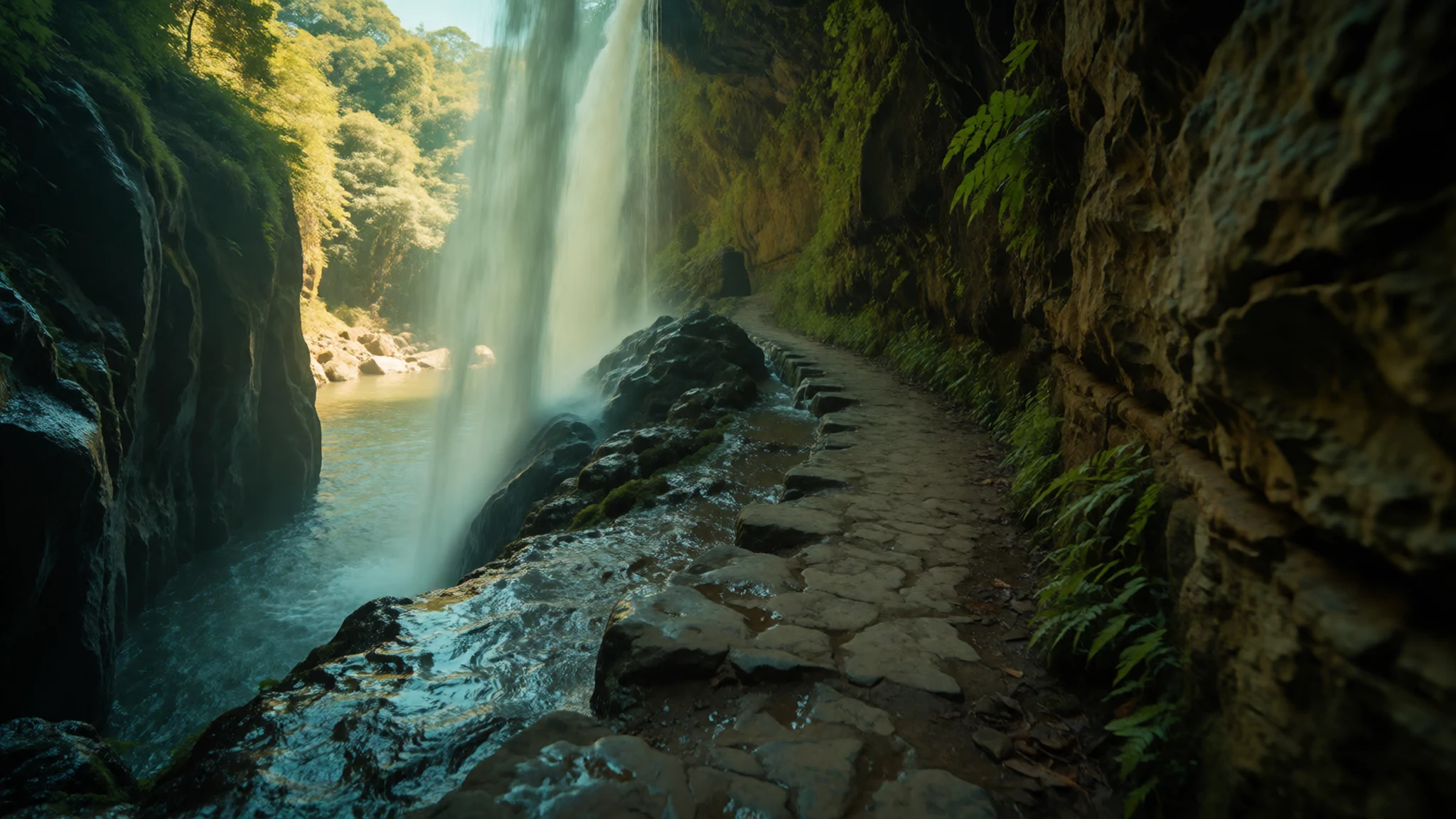
- The Río Blanco pool and banks — Downstream of the plunge pool
Below the drop the river spreads into calmer water where families wade and picnic on the rocks. Currents near the base can still be strong, so swim only in areas that staff or signs mark as acceptable. The banks are a good place to sit, dry off and watch the spray catch the light.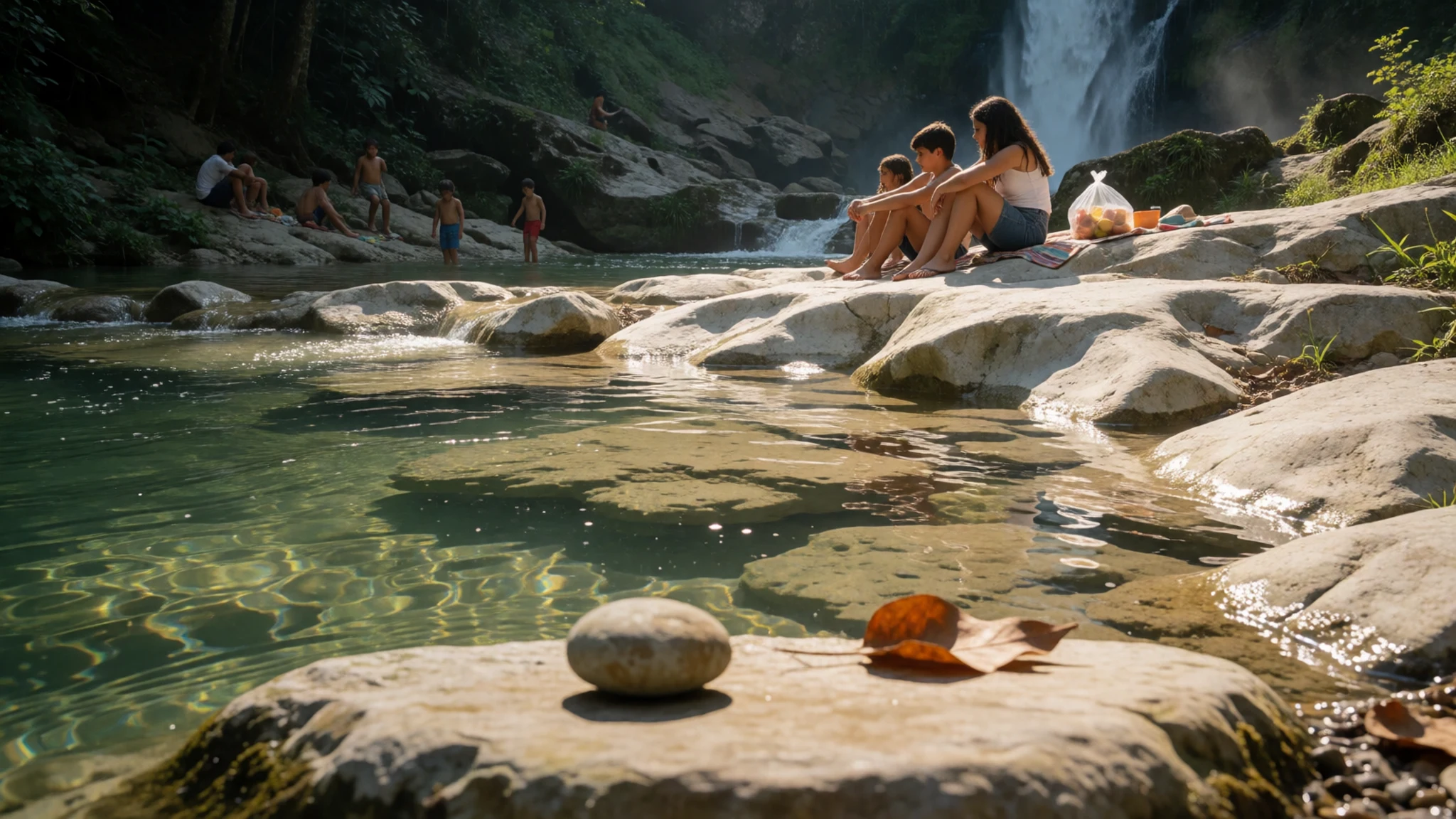
- Lake Yojoa — South of the falls, around the lake shore
A lake in the same part of the north-west, often added to the falls as a half-day extra. Its shores have simple eateries serving fried fish, and birdwatchers come for the surrounding hills. It suits a slower hour once the noise and spray of Pulhapanzak have worn off, and the drive links the two comfortably.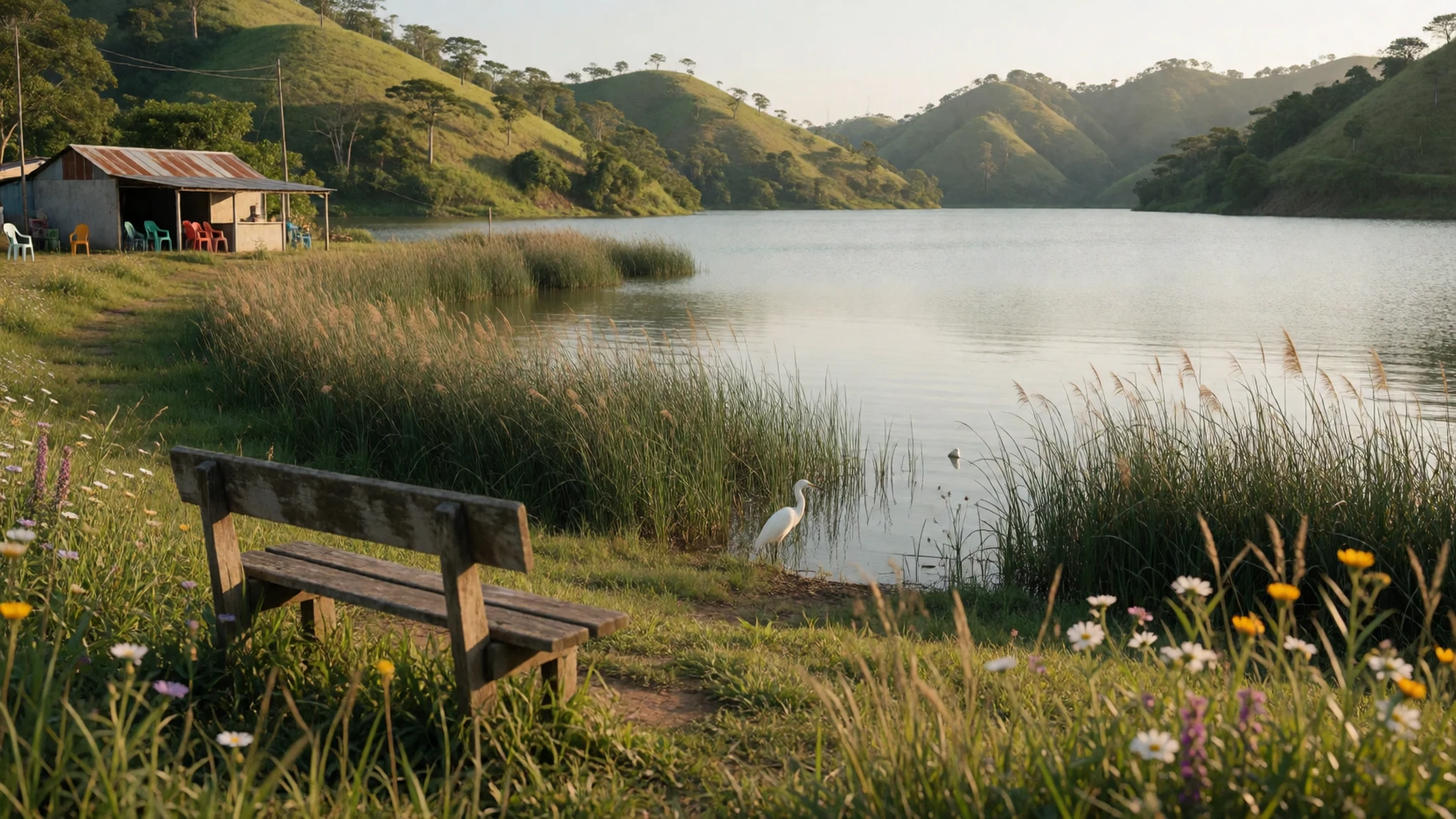
Culture
Pulhapanzak Waterfalls is visited as much by Hondurans as by outsiders, so manners here follow ordinary Honduran courtesy. A 'buenos días' to staff and other visitors is expected, and people tend to answer warmly. Hondurans are generally friendly and glad to help visitors who approach respectfully, even though poverty is widespread and the country has a hard reputation for violence. That respect should extend to everyone, from the people selling snacks near the entrance to the guides and site workers, and to men and women equally, since attitudes towards women vary from area to area. Weekends are social: families arrive with food, music and children, and the mood is easy-going rather than hushed. Aid and mission groups work across Honduras and travellers may well meet them; being polite about their work costs nothing, whatever one thinks of their message. Spanish is the working language, English is not widely spoken at small sites, and a few words of Spanish go a long way. Football is a shared passion and an easy way into conversation. Ask before photographing anyone, especially children and vendors, and follow the guides' instructions near the water, since the rocks are slippery and the current is stronger than it looks.
What to wear
Pulhapanzak Waterfalls is a casual outdoor site, and the clothes that matter most are practical ones, but Honduras has its own textile traditions. Traditional dress varies by community. Lenca women in the west are known for embroidered blouses and woven cloth, while Garífuna women on the Caribbean coast wear bright dresses and head wraps, especially for festivals and dances. Cotton, bold colour and ruffled skirts feature in the folk costume seen at national celebrations and school performances, and it is worn on those occasions rather than day to day. What people actually wear now is simple: jeans or shorts, T-shirts, football shirts, caps and trainers, with sandals on hot days. In San Pedro Sula smarter casual wear is common for work and evenings out. For a visit to the falls, quick-dry clothing is best, with swimwear underneath if a dip is planned. Footwear needs real grip: water shoes or trainers with a good sole beat flip-flops on wet steps. Bring a light rain jacket or poncho, a hat, sun protection and insect repellent, plus a dry set of clothes and a bag to keep phones and papers safe. In town churches and when visiting villages, covering shoulders and knees is polite, and flashy jewellery is best left at home.
What to eat
- Plato típico — Roadside comedores and family eateries around San Pedro Sula and Santa Cruz de Yojoa
The classic Honduran lunch plate: rice, beef, fried beans and fried plantain slices, sometimes with chimol, a fresh, non-spicy salsa of tomato, pepper, onion, coriander and lime. Filling, familiar and a good fuel stop before or after a morning at the falls.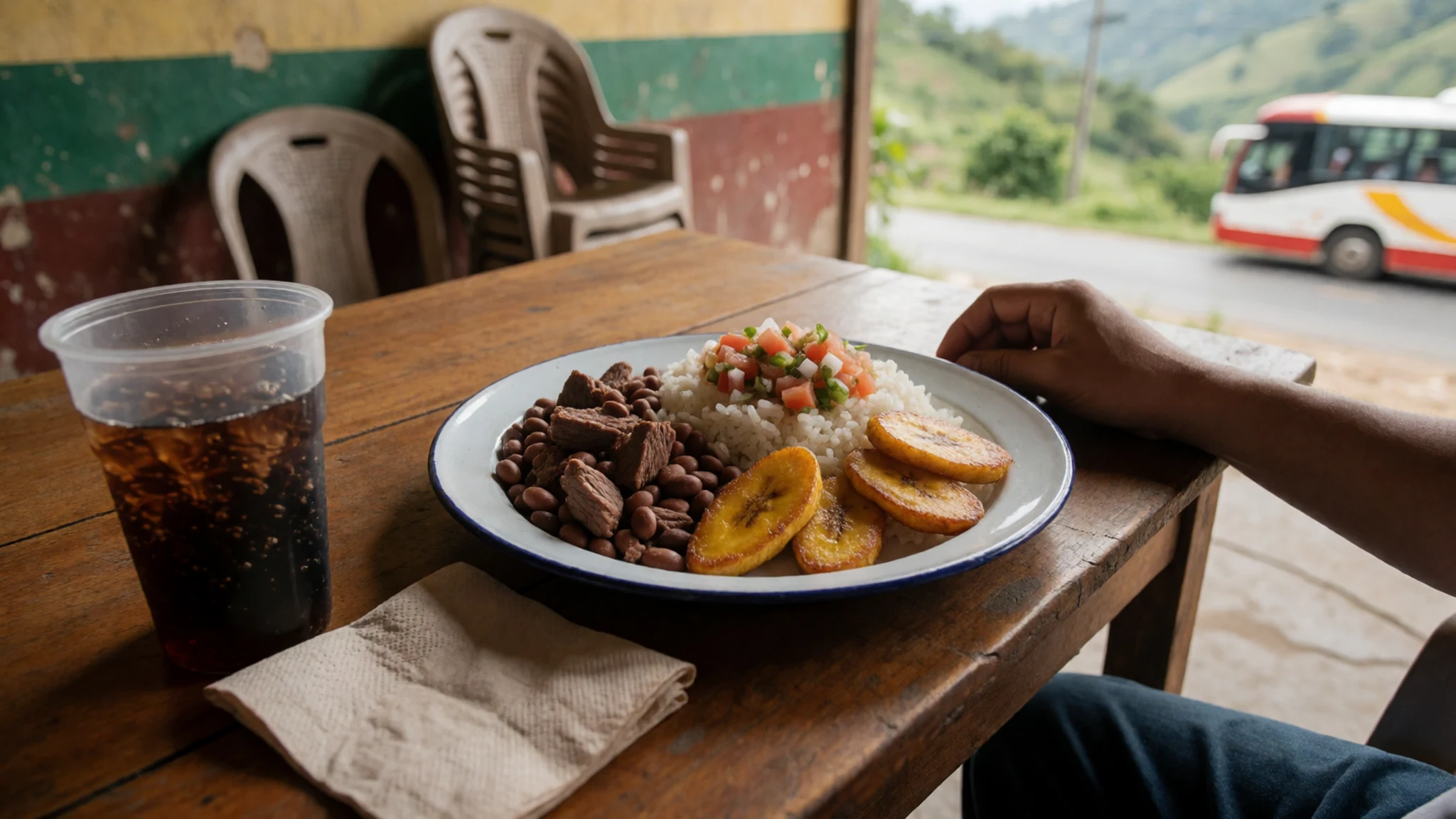
- Baleada — Street stalls and small snack counters in towns and near bus stops
A thick flour tortilla folded over refried beans, cheese and a soft cream. The special version adds egg, and sometimes avocado or meat. Quick, cheap and eaten all day, it is the easiest snack for a travelling day.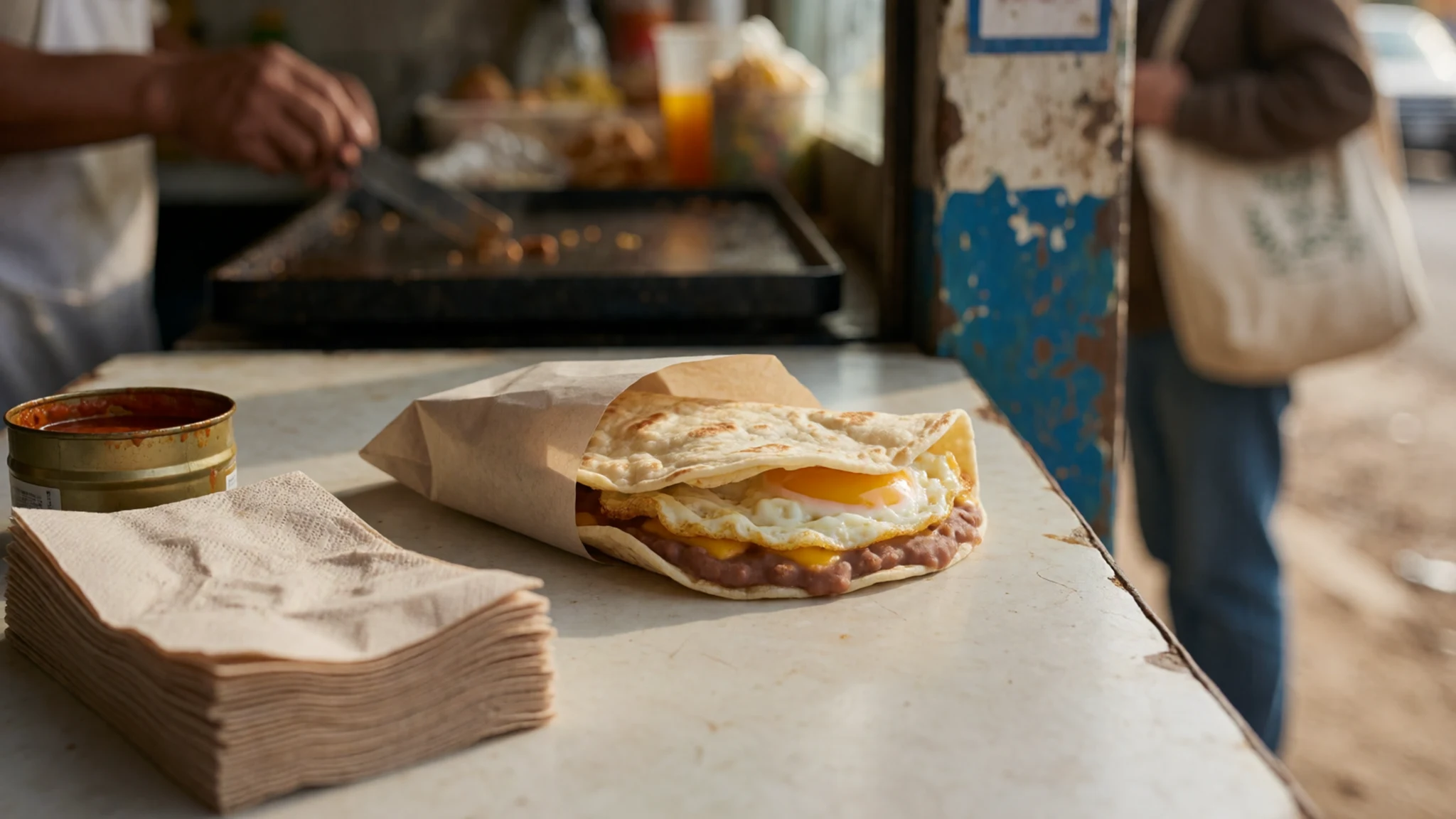
- Tajaditas — Eateries and food stalls along the main roads
Thin slices of fried plantain, crisp and lightly salty, served as a side or as a snack on their own. They pair well with chimol or a dollop of cream, and arrive hot and greasy in a paper cone at casual spots. - Fried fish by the lake — Open-air eateries along Lake Yojoa
Whole fish fried until crisp and served with rice, plantain and a squeeze of lime. It is a natural lunch after the falls, and the lake setting is part of the pleasure. Ask what is freshest on the day. - Macheteada — Snack stalls and bakeries in market towns
A well-known Honduran sweet treat, a tortilla filled with a sugary flour-and-sugar mixture. It is more of a curiosity than a meal, best tried in small amounts with coffee from a street vendor.
Plan it
Best time. February to April is usually the drier stretch in the north, with easier paths and clearer water; the rainy months bring a stronger flow but muddier water and slipperier steps. It is hot and humid almost all year, with temperatures depending more on altitude than season, so go early whatever the month.
How long. 1
Getting there. Fly into San Pedro Sula's international airport, then continue by road towards Santa Cruz de Yojoa and Lake Yojoa, where the falls are signposted; a hired driver or arranged transfer is easier than public transport for the last leg. Check the route and opening arrangements locally before you set out.
Budget. mid
Tips
- Arrive early on weekdays for the calmest visit; weekends and holidays fill with local families
- Carry some cash for entry, snacks and parking, and check the official local tourism listings for current arrangements
- Use pre-arranged transport and avoid arriving in San Pedro Sula after dark, as robberies are reported in the city
- Keep phones and papers in a waterproof bag; spray reaches well beyond the pool
- UK passport holders do not need a visa for up to 90 days; Indian passport holders should check with a Honduran consulate, and passports need at least three months' validity after departure
Etiquette
- Follow site signs and staff instructions near the water and on the steps
- Ask before photographing local people, especially children and vendors
- Take your rubbish with you and keep noise reasonable at the viewpoints
Nearby
Sources
- Wikidata Q5758249 (CC0)
- Wikipedia: Pulhapanzak Waterfalls (rev 980353905) (CC BY-SA 4.0)
- Wikivoyage: Honduras (rev 5426017) (CC BY-SA 4.0)
- Cataratas de Pulhapanzak — Chrishonduras (CC BY-SA 2.0)
- Cataratas de Pulhapanzak (II) — Chrishonduras (CC BY-SA 2.0)
- Cataratas de Pulhapanzak (III) — Chrishonduras (CC BY-SA 2.0)
- Cataratas de Pulhapanzak (IV) — Chrishonduras (CC BY-SA 2.0)
- Cataratas de Pulhapanzak (V) — Chrishonduras (CC BY-SA 2.0)
- Pulapanzak Falls — j2003af (CC BY 3.0)
- Catarata de Pulhapanzak, Honduras — Migdoniodiaz (CC BY 3.0)


