Copán
Copán, Honduras
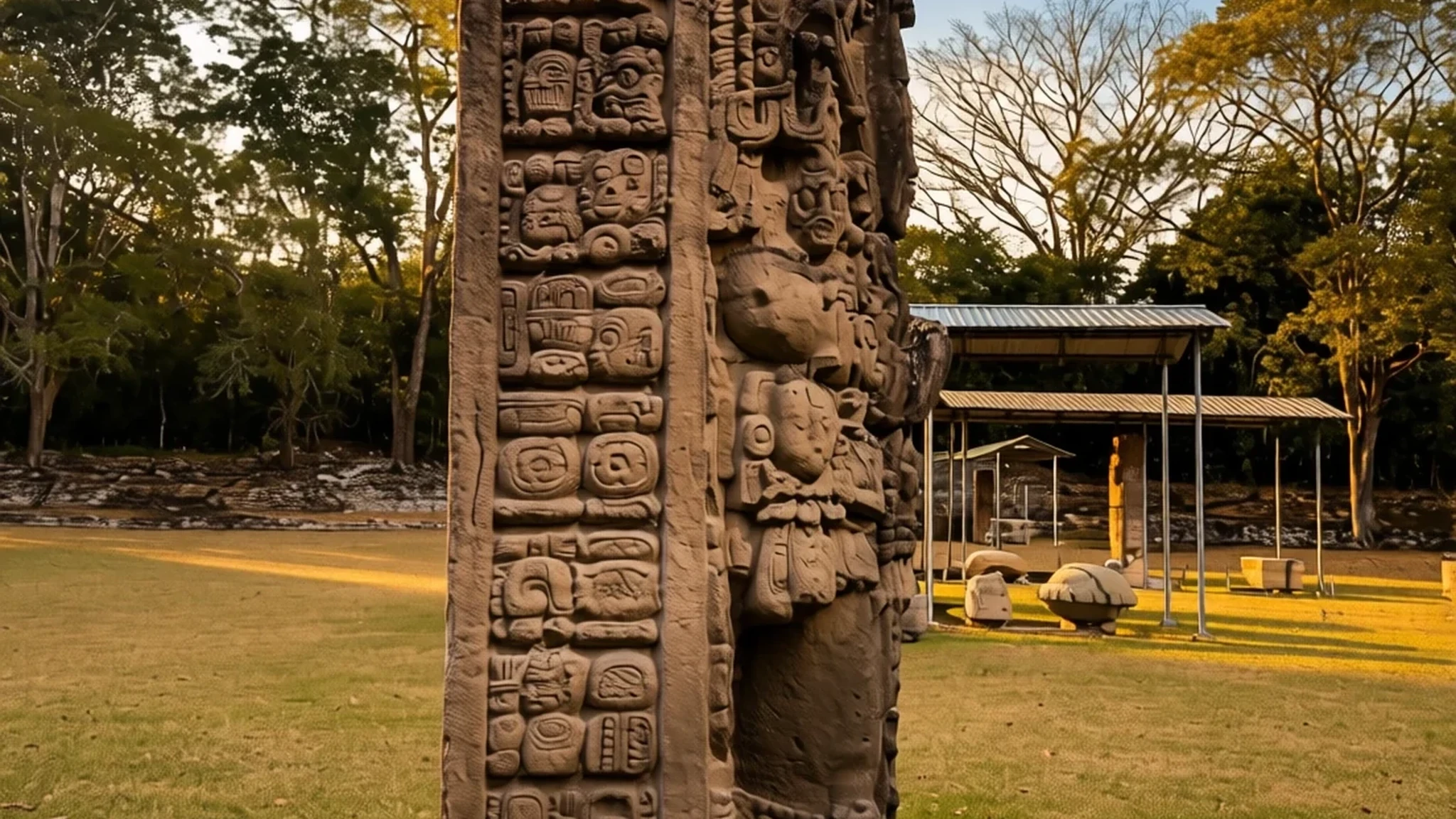
Copán is a Maya city in western Honduras, where carved stone monuments and a long dynastic story survive in a green valley near Guatemala.
The place
Copán is an archaeological site of the Maya civilisation in western Honduras, a short distance from the Guatemalan border. The ruins lie in a fertile valley among foothills, on the floor of a river basin that farmers worked for a very long time before any stone buildings went up. For a period the city was the capital of a kingdom that controlled much of the surrounding country, and it stood at a meeting point between the lowland Maya cities to the north and the peoples to the south and east.
Walking the site, you move through a sequence of plazas, stone terraces and a tall acropolis built up over many generations. The most distinctive monuments are the carved stelae, upright stone slabs covered in figures and dense glyphs. The sculpture follows the lowland Maya tradition but has a local character of its own, which archaeologists think may have been a way for the city's rulers to show their Maya identity.
The river has shaped the site as well. It once cut into the eastern edge of the acropolis, and it was later diverted to protect what remained. Plan your visit around the weather: rain makes the paths slippery, and the open plazas offer little shade in the middle of the day.
Copán Ruinas, the village beside the site, is a short journey away and makes a practical base, with simple guesthouses, cafés and local guides. The ruins are usually quieter early in the morning, and late morning can feel busy when day trips arrive.
Its story
Copán's story begins long before its best-known monuments. The valley was farmed for centuries before any stone buildings went up, and the early history is known mainly from later inscriptions, which name rulers and events but leave much unexplained. Around the time a new dynasty arrived, with roots at Tikal, Copán grew into one of the stronger Maya city states in the south, and its kings raised a long run of monuments recording their lineage and rituals.
The high point came under a long-reigning ruler whose name appears on many of the stelae. His reign ended in disaster when he was captured and executed by the king of Quiriguá, a former vassal city that Copán had once dominated. The defeat unsettled the city for a time, and the inscriptions fall quiet. Copán's rulers did return to building within a few decades, adding structures and carved monuments in the same distinctive style.
Over the following centuries the population fell sharply, from a large city to a much smaller one. The decline took a long time to show, which suggests a resilient core even after the royal line faded. By the time Spanish colonists reached the region, the great ceremonial centre had long been abandoned, and the valley supported only scattered farming hamlets.
The ruins were not studied in depth until the modern era. Archaeologists and epigraphers have since rebuilt the dynastic sequence in unusual detail, and that long work is a large part of why the site is understood as well as it is today.
What to see
- Stela B — Main plaza
Stela B is one of the carved stone slabs the site is famous for, set in the grass of the main plaza. Its carved face appears to show a figure in ceremonial dress surrounded by dense glyphs. Read the panels slowly, and look for the worn edges where weather has taken its toll, which shows how exposed these stones are.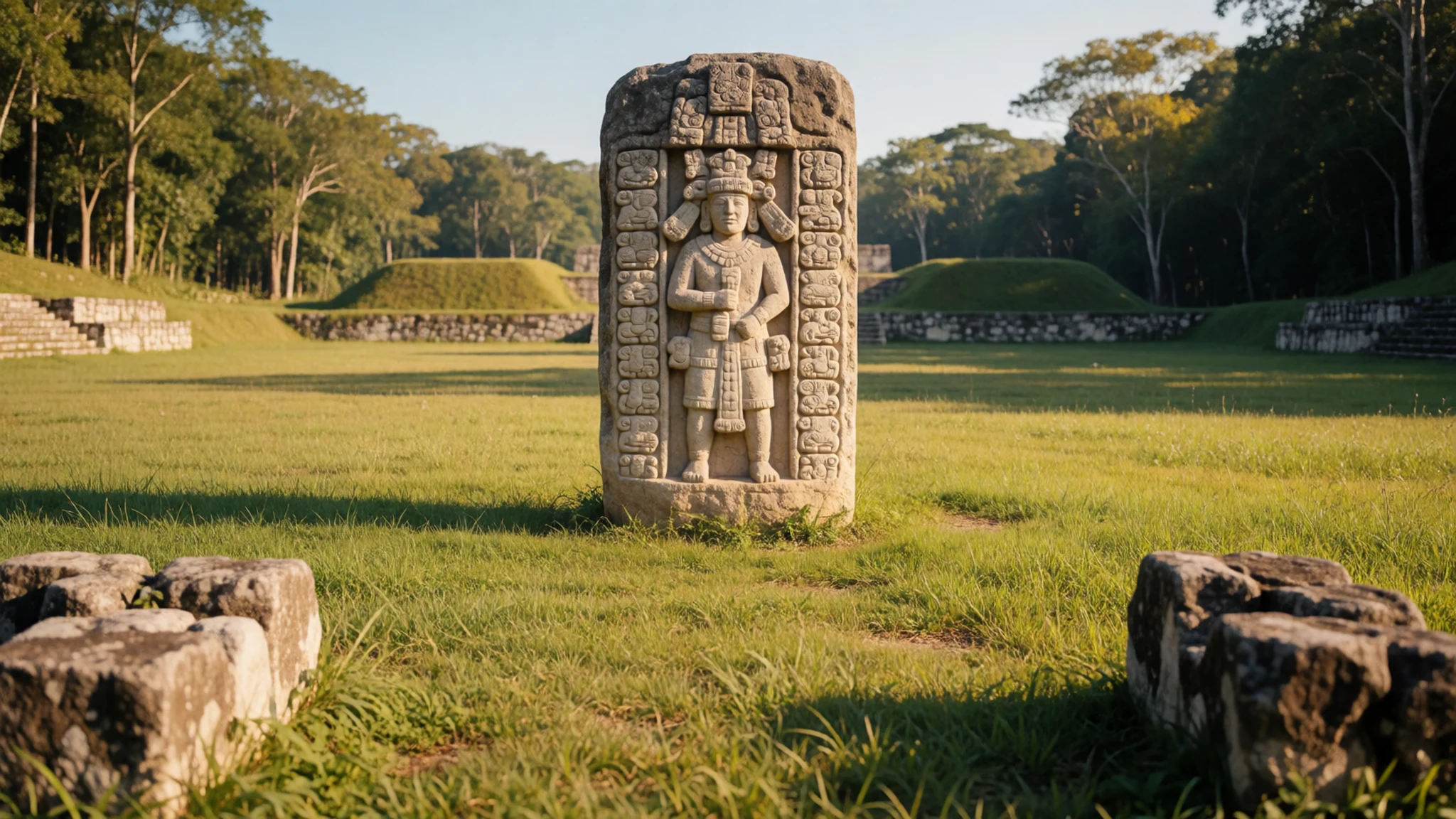
- The Acropolis — Site core, raised ground above the plazas
The acropolis is the raised core of the ancient city, a stepped complex of platforms and temples built up over many generations. Part of its eastern side was eroded by the Copán River, which has since been diverted to protect what survives. Climb carefully, because the steps are steep and worn, and allow time to take in the views across the valley.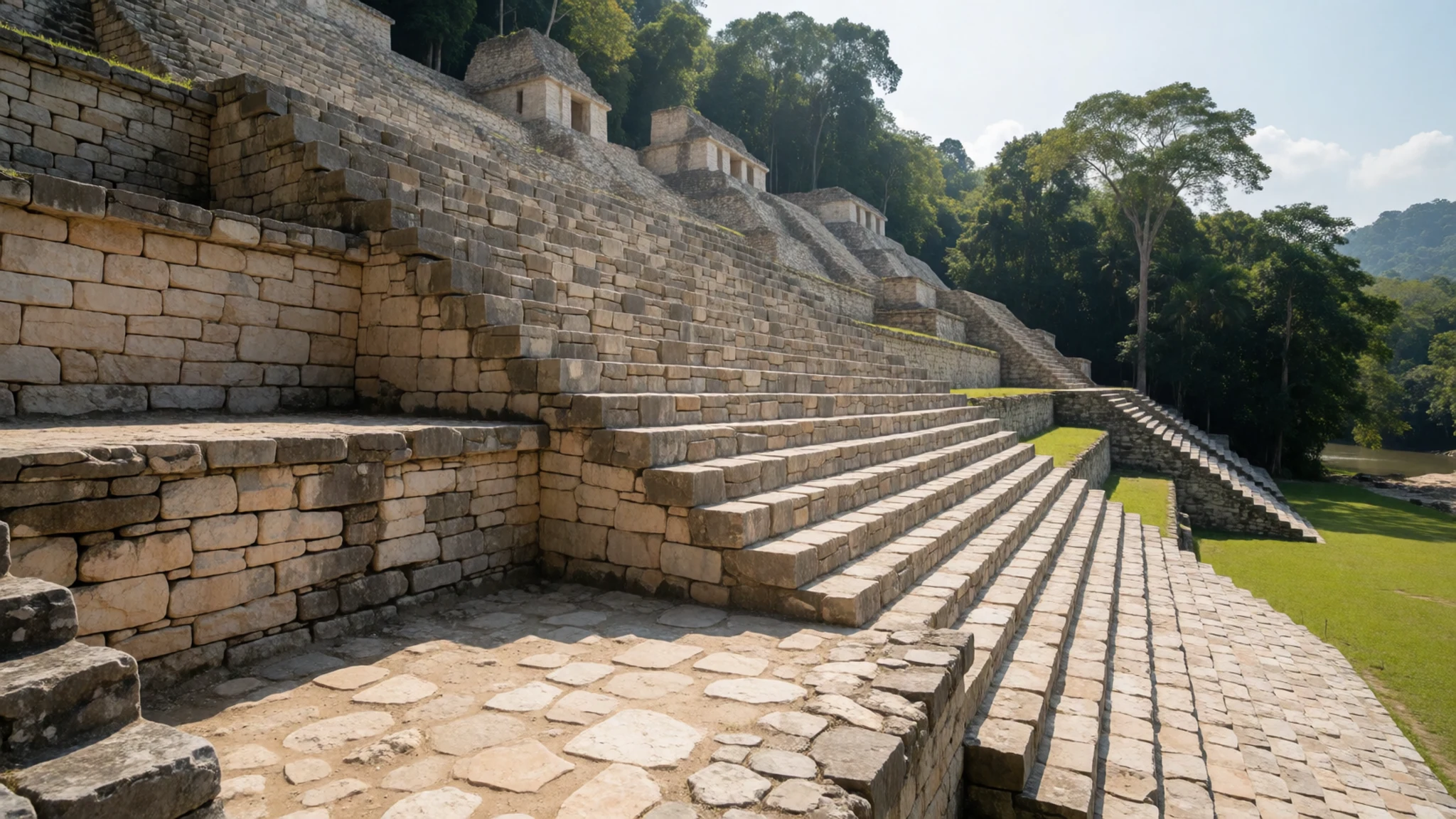
- Stela H — Main plaza, among the stelae
Stela H is another of the monuments that shows the city's sculptural skill. Stand back far enough to take in the whole stone, then move closer to see the fine detail. Ask your guide to point out the dated inscriptions, which help place the monument within the city's long dynastic sequence.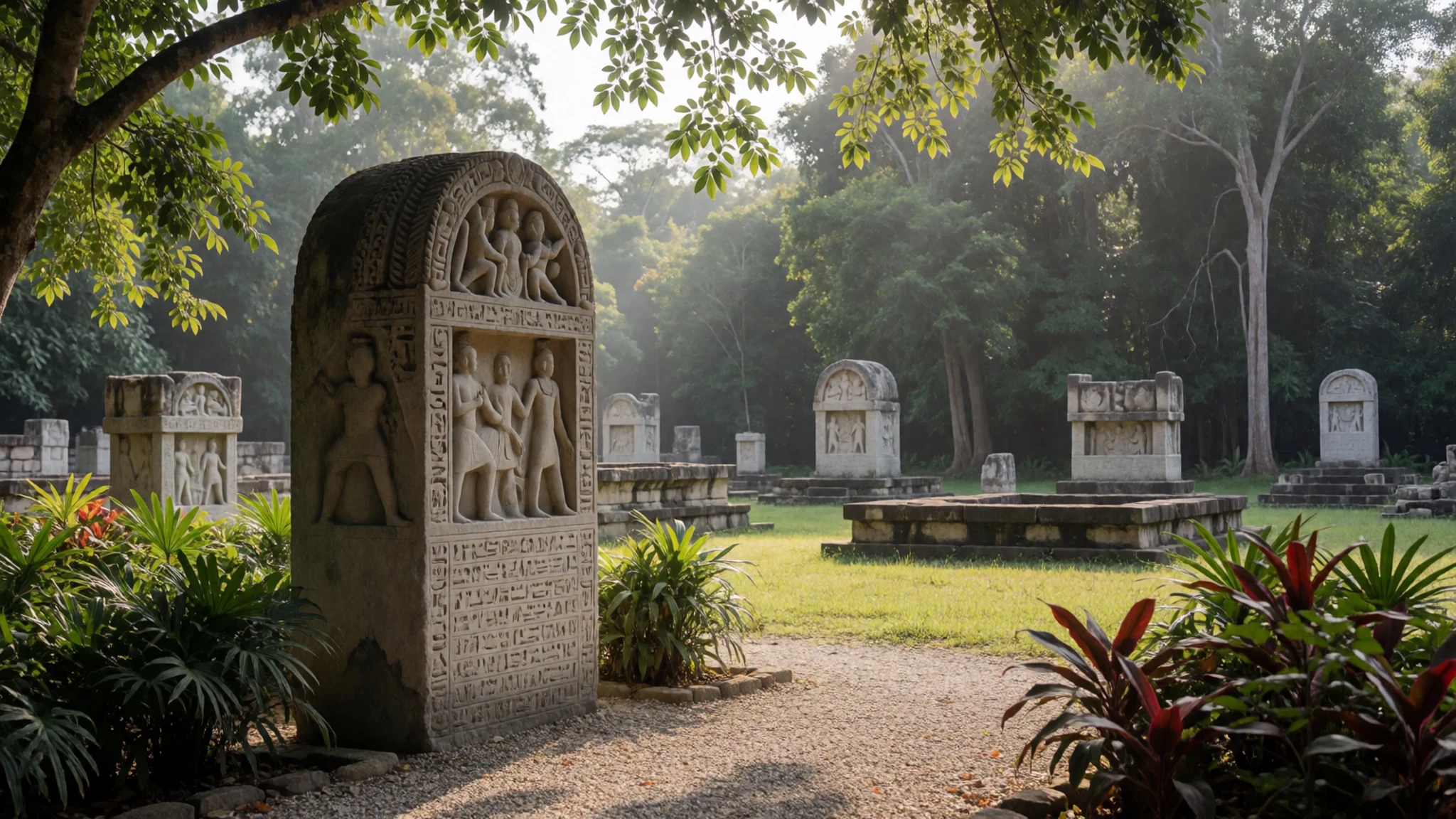
- A sculpture in the city's own style — Site core, among the carved monuments
This carving shows the distinctive style the city developed within the lowland Maya tradition. Compare several pieces side by side, and the differences in carving and dress become clear. Over time, the style is thought to have been a way for its rulers to show their Maya identity.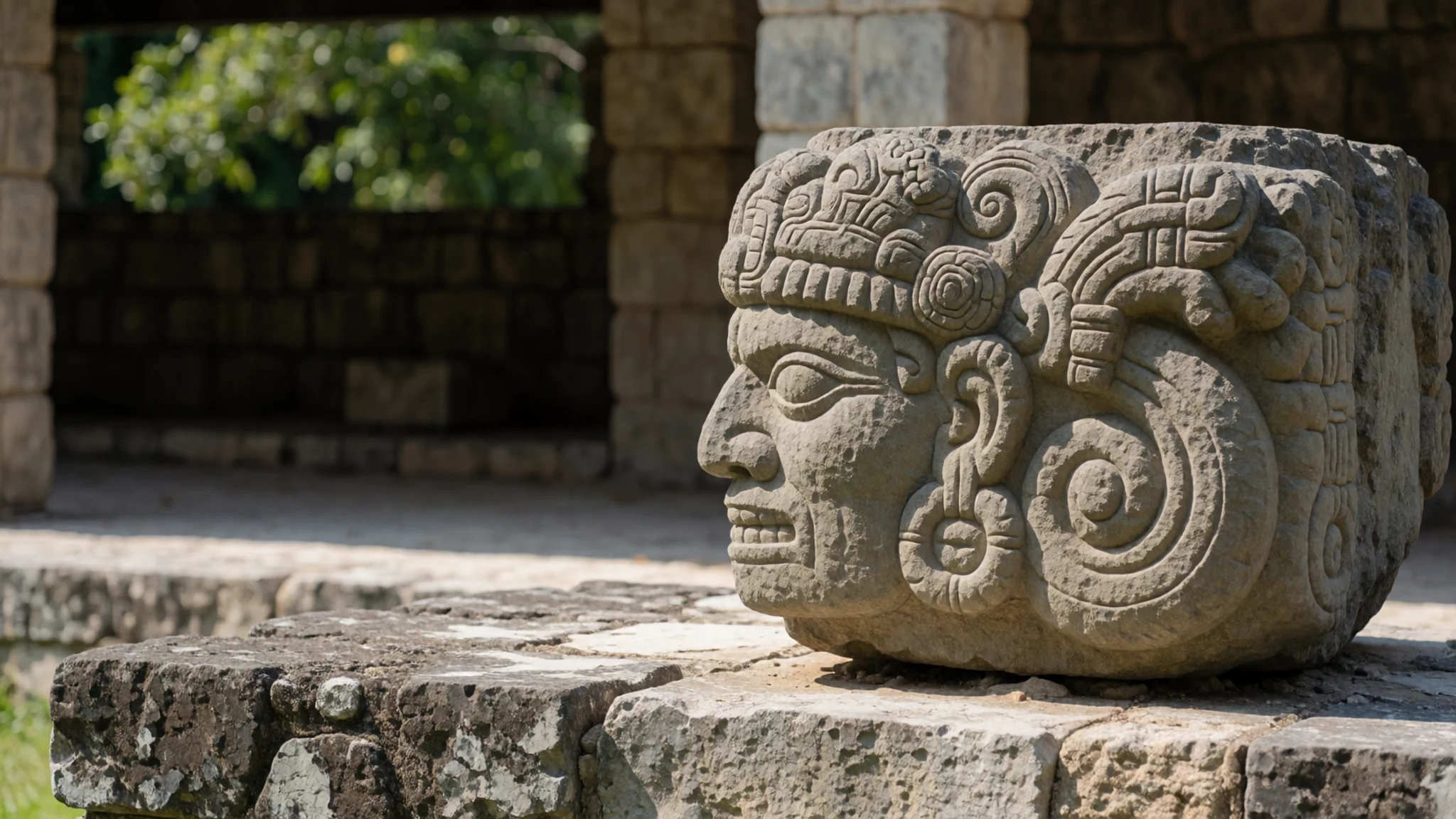
- The head from Structure 20 — Ask at the site entrance about on-site displays
A carved head from Structure 20 is held in a museum collection in the United States, not in the valley. Some carvings from the site are held abroad, so the pieces you see on the ground are not always the originals. Ask your guide which stones are originals and which are replicas.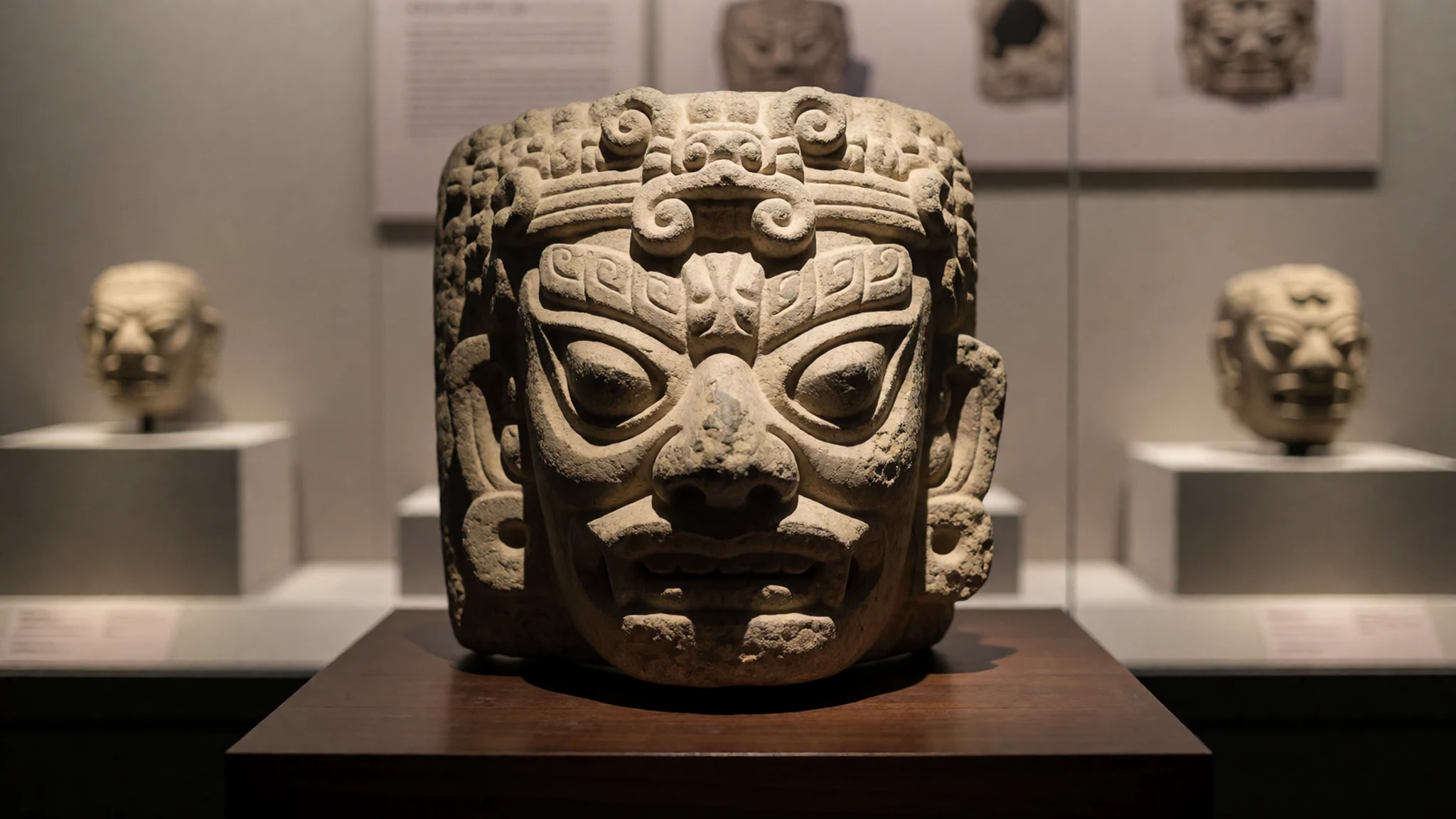
Culture
Copán is a protected archaeological site, and the ruins are treated as a World Heritage Site, so visitors are expected to behave with the same care they would in a church. Stay on marked paths and keep off steps and terraces that are not open to walk on, since the stone is old and uneven. A local guide knows the site well and can explain carvings that the signs leave out, and paying one directly supports the community that depends on visitors. In the village, greet people with a simple buenos días before asking a question; it is appreciated and makes conversations easier. Ask before photographing anyone who is working, selling or posing for a picture, and check the rules at the entrance about photography inside the ruins. Keep your voice down among the plazas, which feel best when they are quiet. Dress modestly when visiting churches in town. Do not climb on or touch the stelae, even where they look reachable, because oil from skin and the weight of visitors cause lasting damage.
What to wear
Traditional dress around Copán is tied to the Maya highlands and the textile traditions that continue there. Maya weavers in the wider region have long woven cloth on backstrap looms, and garments are often decorated with embroidery and woven bands, with designs that vary from village to village. Cotton and wool are the usual materials, and older patterns still appear in some communities, often worn for festivals, church days and market trips. Ask before photographing a weaver or her work.
Ordinary dress in the town today is much the same as across Honduras: jeans, T-shirts, sneakers, and simple shirts and skirts for work. Nobody expects visitors to dress up for the ruins.
For your own visit, think about the heat in the middle of the day, and choose light cotton or linen that covers the shoulders. Churches in the village call for modest clothing, with shoulders and knees covered. Sturdy closed shoes with good grip matter more than anything, because the ruin paths and stone steps can be steep, uneven and slippery after rain. A hat and sunglasses help on the open plazas.
What to eat
- Baleadas — Street stalls and breakfast counters around the central square in Copán Ruinas
A soft wheat flour tortilla folded around refried beans, crumbly cheese and a spoon of thin cream, and eaten with the hands. It is Honduras's everyday street food, cheap, filling and made fresh while you wait. Ask for one with egg or avocado for a heartier breakfast.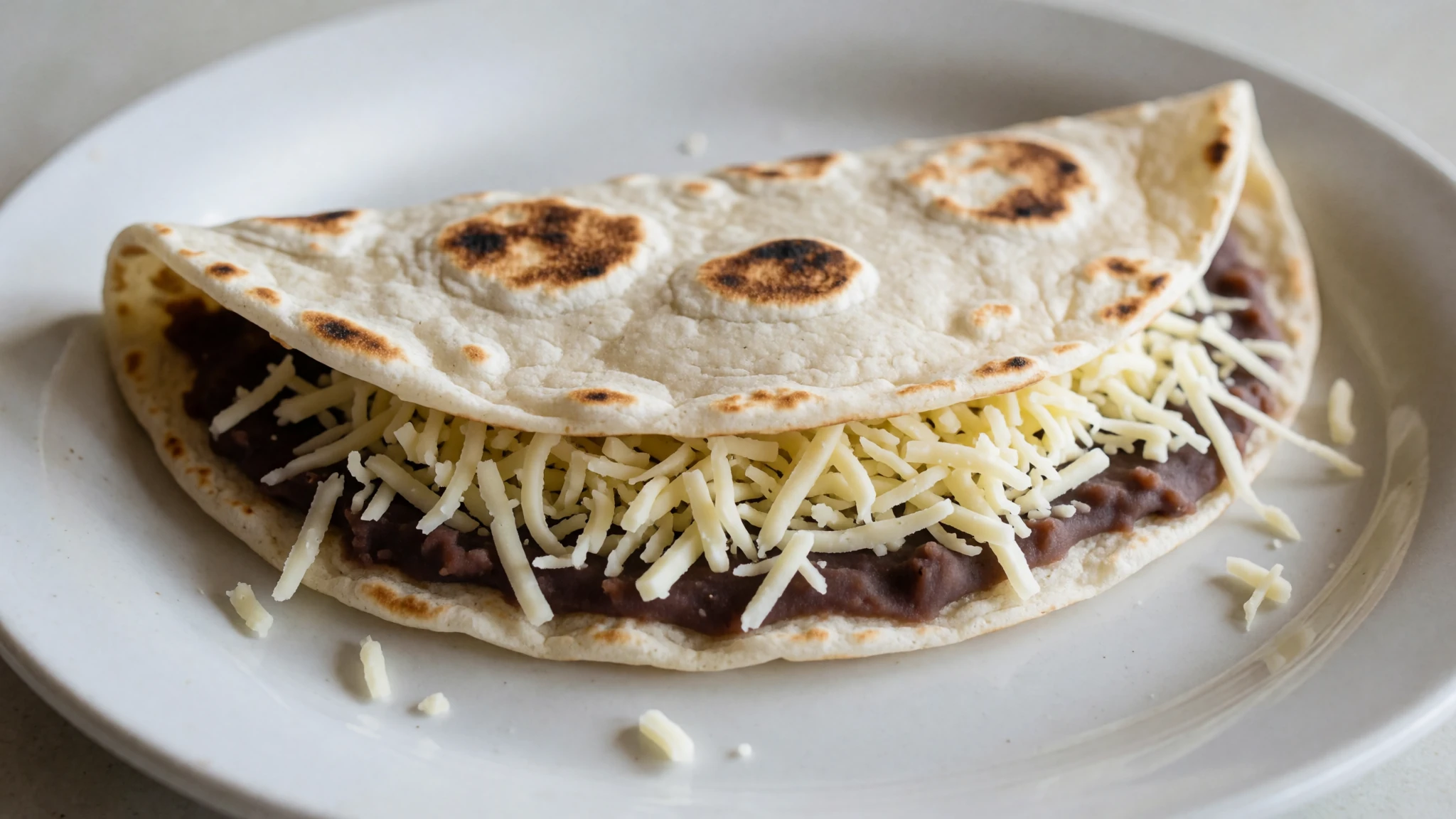
- Tamales — Market stalls and home kitchens; ask a cook whether today's batch is ready
Maize dough steamed in a banana leaf, with a filling of pork, chicken or sometimes beans and vegetables, depending on the cook. They are a festive food as well as an everyday one. Unwrap the leaf carefully and eat them with a little hot sauce.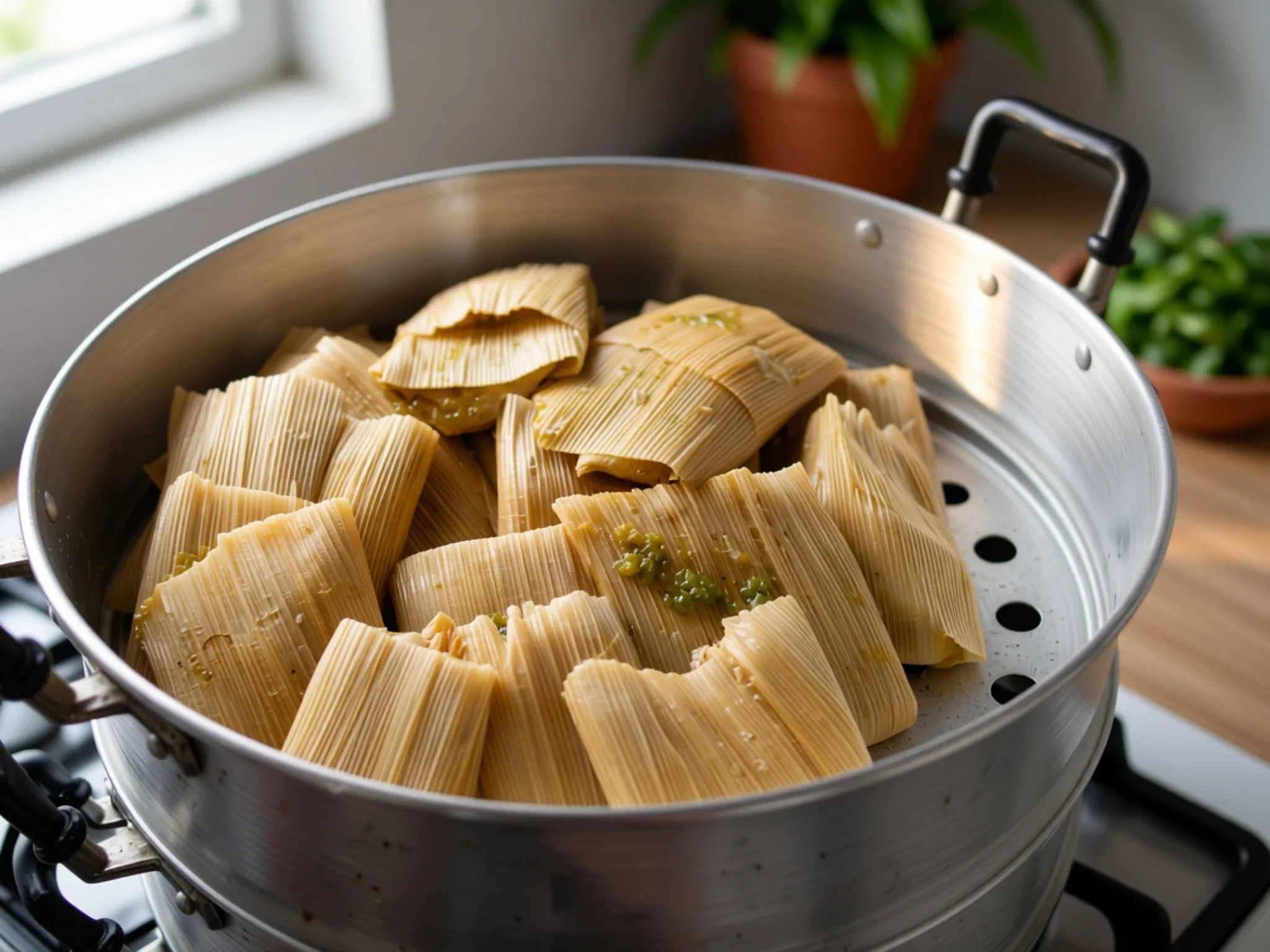
- Pupusas — Small family eateries along the village streets, especially at lunchtime
Thick hand-pressed corn cakes filled with cheese, beans or pork and cooked on a hot griddle until they blister. They are linked with El Salvador, but many Honduran eateries serve them too, usually with curtido, a pickled cabbage slaw. - Beans and fresh corn tortillas — Comedores, the simple local eateries near the market
Beans simmered until soft, served with fresh corn tortillas, this is the core of a Honduran meal. Beans come with almost everything, from breakfast to dinner, and in village kitchens the tortillas are still pressed by hand. It is simple, inexpensive and reliably good. - Local coffee — Cafés on the central streets of Copán Ruinas and the market
Coffee grows on the hillsides around the valley, and cafés in Copán Ruinas serve it strong. Ask for café de olla, sweetened with cinnamon and piloncillo. Bags of beans make a practical souvenir that supports local growers.
Plan it
Best time. The drier months from around January to April are generally the easiest for walking the site, while the rainy season brings heavy showers and slippery stone and paths. November can still be showery, so check the local forecast before you commit.
How long. 1–2
Getting there. Fly into San Pedro Sula or Tegucigalpa, then continue by road to Copán Ruinas, the village beside the site. The last leg is usually a bus or shared minibus lasting several hours, so confirm times locally.
Budget. low
Tips
- Start early, before the midday heat and the late-morning arrival of day trips
- Hire a local guide at the entrance to hear the stories behind the carvings
- Carry some cash in lempiras for small purchases and transport, and check whether cards are accepted before you rely on them
- Bring water and a hat, as shade is limited on the open plazas
Etiquette
- Stay on marked paths and keep off stone steps that are not open to walk on
- Ask before photographing people, especially those who are working or selling
- Dress modestly for village churches, with shoulders and knees covered
Nearby
Sources
- Wikidata Q214827 (CC0)
- Wikipedia (rev 1378840461) (CC BY-SA 4.0)
- Wikivoyage (rev 5093092) (CC BY-SA 4.0)
- Stela B, Nosferattus (CC0 1.0)
- World Heritage Site of Copan, Adalberto Hernandez Vega (CC BY 2.5)
- Copán, Honduras: Stela H, HJPD (CC BY 3.0)
- Incense burner, Yax Kuk Mo, DuendeThumb (CC BY 3.0)
- Maya stela 63, Adalberto.H.Vega (CC BY 2.5)
- Maya stone carving from Copan, unknown author (Public domain)
- Copan Ruinas, Honduras, Adalberto Hernandez Vega (CC BY 2.5)
- Head, Structure 20, Daderot (CC0 1.0)


