Caramoan
Caramoan, Philippines
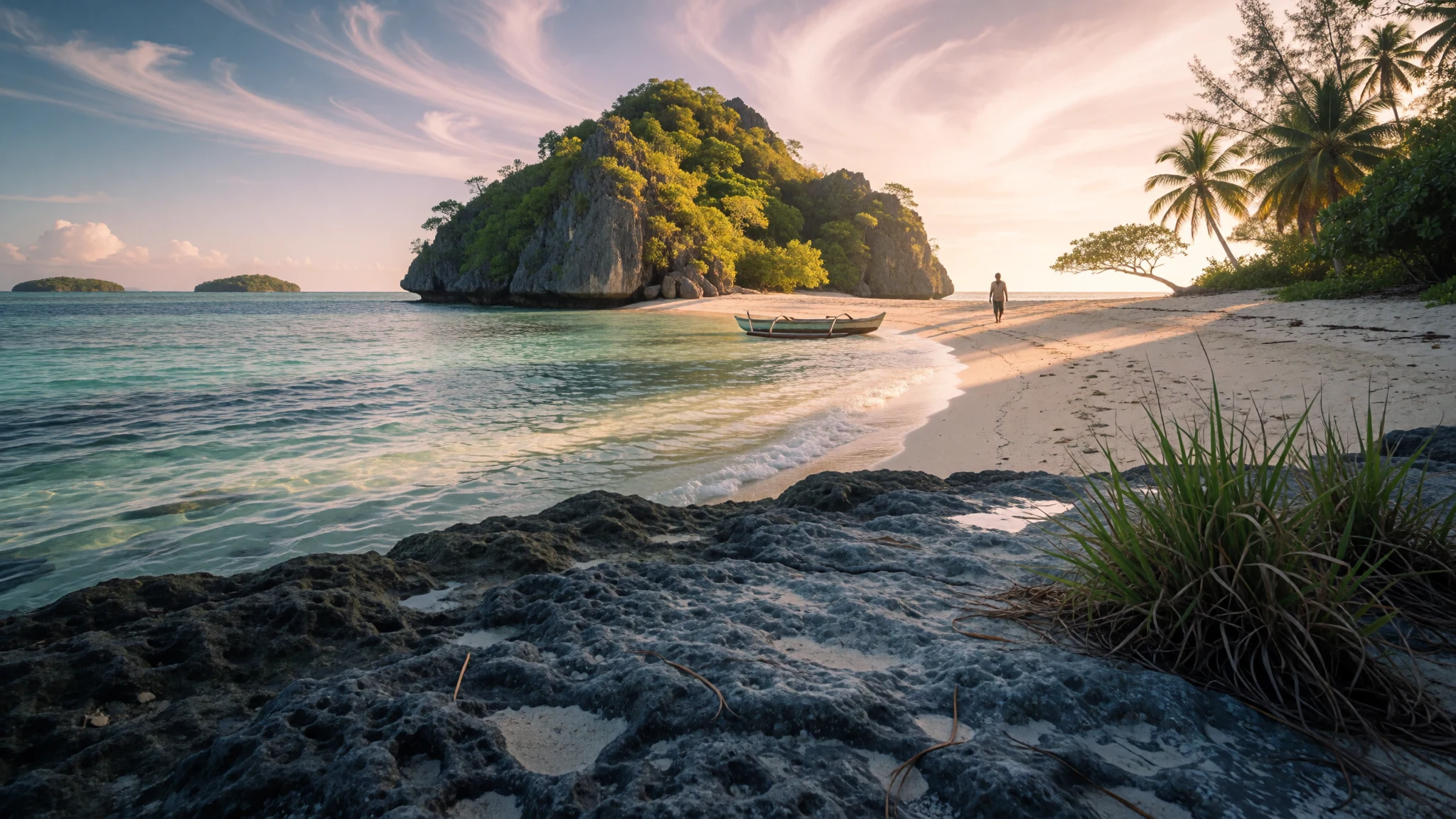
Caramoan is a quiet Bicol peninsula where small islands, pale-sand coves, lagoons and caves are reached by outrigger boat from a sleepy fishing town.
The place
Caramoan sits at the tip of a rugged peninsula in Camarines Sur, in the Bicol region of the Philippines, where the Maqueda Channel meets the Lagonoy Gulf. About 50,000 people live in the municipality, and the town itself is small, low-lying (about 14 m above sea level) and unhurried. Most visitors come for what lies offshore rather than in town: a scatter of islets with pale and pinkish sand, calm lagoons, caves and rocky cliffs, with plenty of marine life beneath the surface. The area was admired for its unspoiled feel well before an international television show carried it to a worldwide audience, and the nickname 'Emerging Paradise of the Pacific' dates from that attention. Distance shapes everything here. Metro Manila is far to the north-west, the nearest airport on the mainland side is the Naga Domestic Airport at Pili, and the last stretch is by sea, so Caramoan has not turned into a resort strip. Restaurants serve Filipino food only, and there are no international chains. The coastline is long and irregular, with swamps and bays as well as beaches. Two provincial-run beach resorts, Gota and Hunungan, offer organised stays, while many travellers base themselves in town and hire a boat by the day. Expectations are best kept honest: weather decides whether boats run, facilities on the smaller islands are basic, and the quiet is part of the appeal. Catanduanes lies across the water to the north-east, a reminder of how much open sea surrounds the peninsula.
Its story
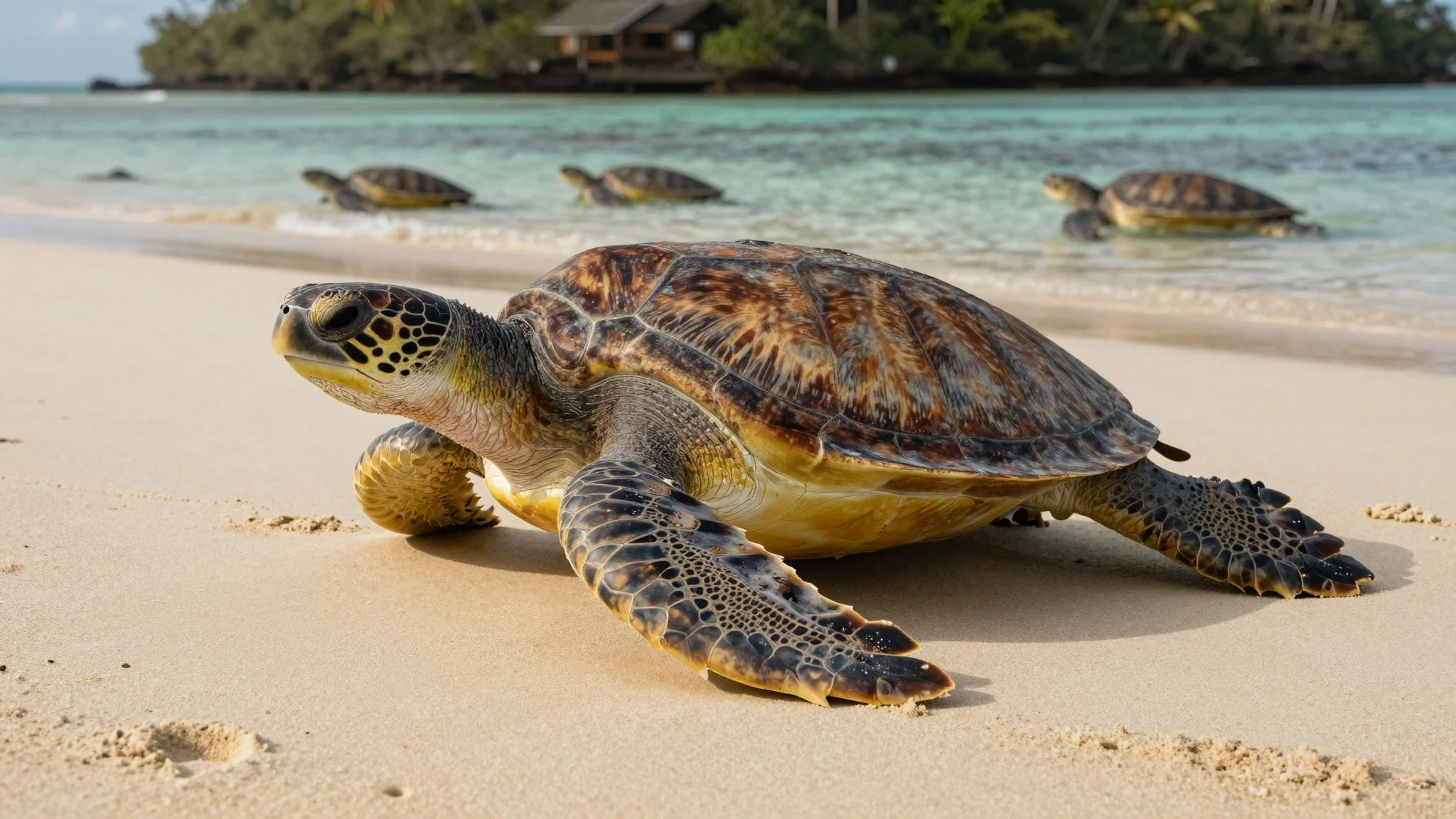
Caramoan has carried its present name since 1619, when a Spanish missionary friar, Francisco de la Cruz y Oropesa, pushed into the dense forest of the peninsula and founded a small settlement at a place called Baluarte. In 1696 that settlement passed into the care of the Church's bishopric, which tied the young community to the wider Spanish colonial order. The earlier names are more colourful. Dutch traders, who worked a gold mine on Lahuy Island and came to the coast to trade with local people, are said to have called the place Guta de Leche, 'drop of milk'. The likely source is the pale, dripping stalagmites among the rocks at Guta Port, which resemble frozen milk. When the Spaniards arrived they heard another name, Carahan, after the sea turtles that once came ashore in large numbers along the peninsula's beaches. So the town's history is written in layers of language: a Bikol coast named for its turtles, a Dutch trading nickname borrowed from a cave formation, and a Spanish mission name that stuck. What came before 1619 is thinly recorded, and visitors should expect more oral memory than monuments. The red-brick church in town, dedicated to Saint Michael the Archangel, is the clearest physical reminder of the mission era, and the islands and caves around it hold the older stories of fishing, trade and the sea.
What to see
- Saint Michael the Archangel Parish Church — Caramoan town
The red-brick parish church is the best stop in Caramoan town itself and a useful half hour before or after a boat day. It shows the mission-era roots of the settlement. Visit outside Sunday mass hours, and look around the plaza and nearby streets for a sense of ordinary local life.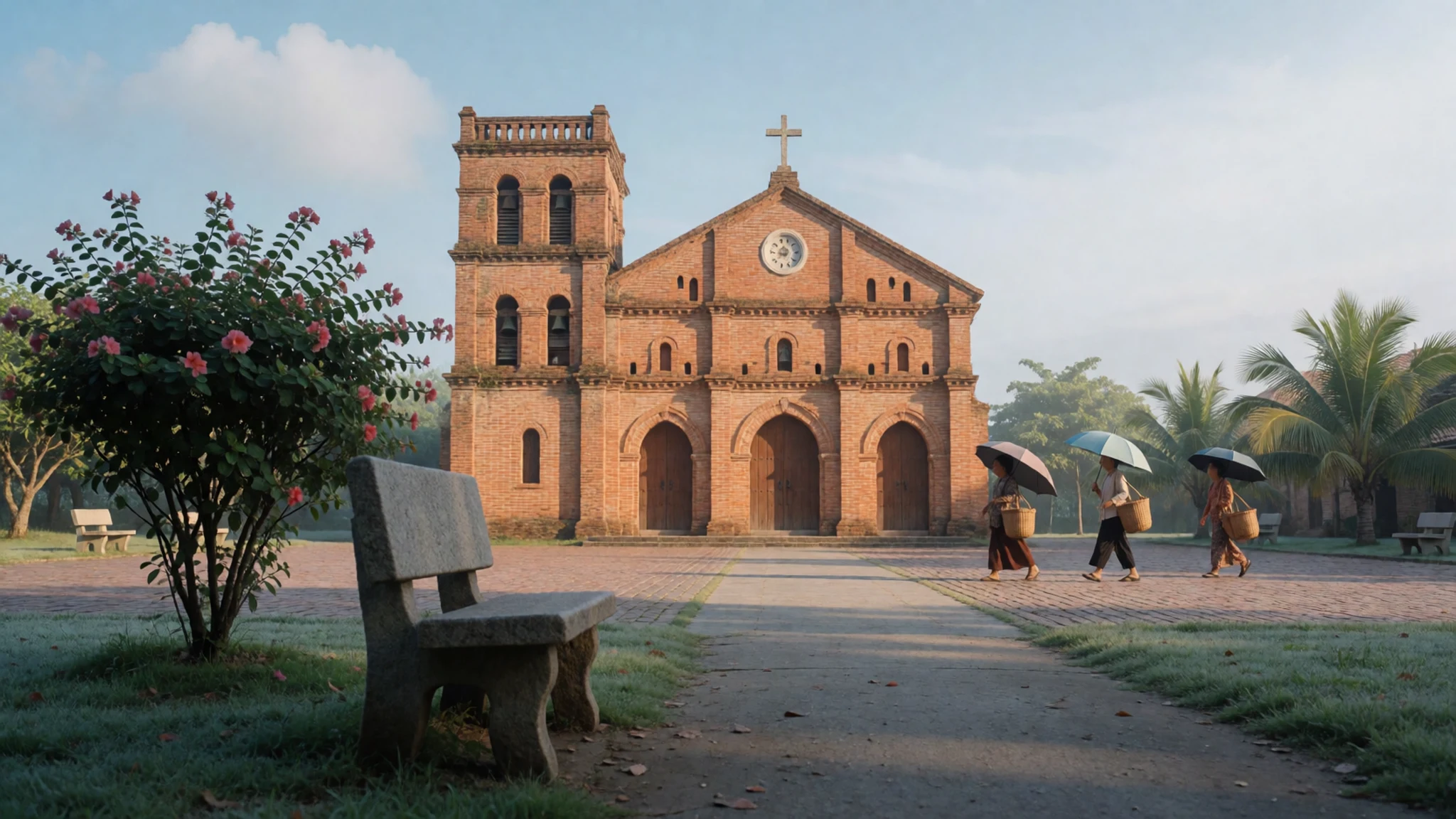
- Matukad Island — Offshore islands
Matukad is one of the islands on the standard island-hopping circuit, a green, rocky outcrop with pale sand and clear shallows around it. It looks best from the water or from above, and it suits a swim and a picnic stop. Go early, before the sun is high.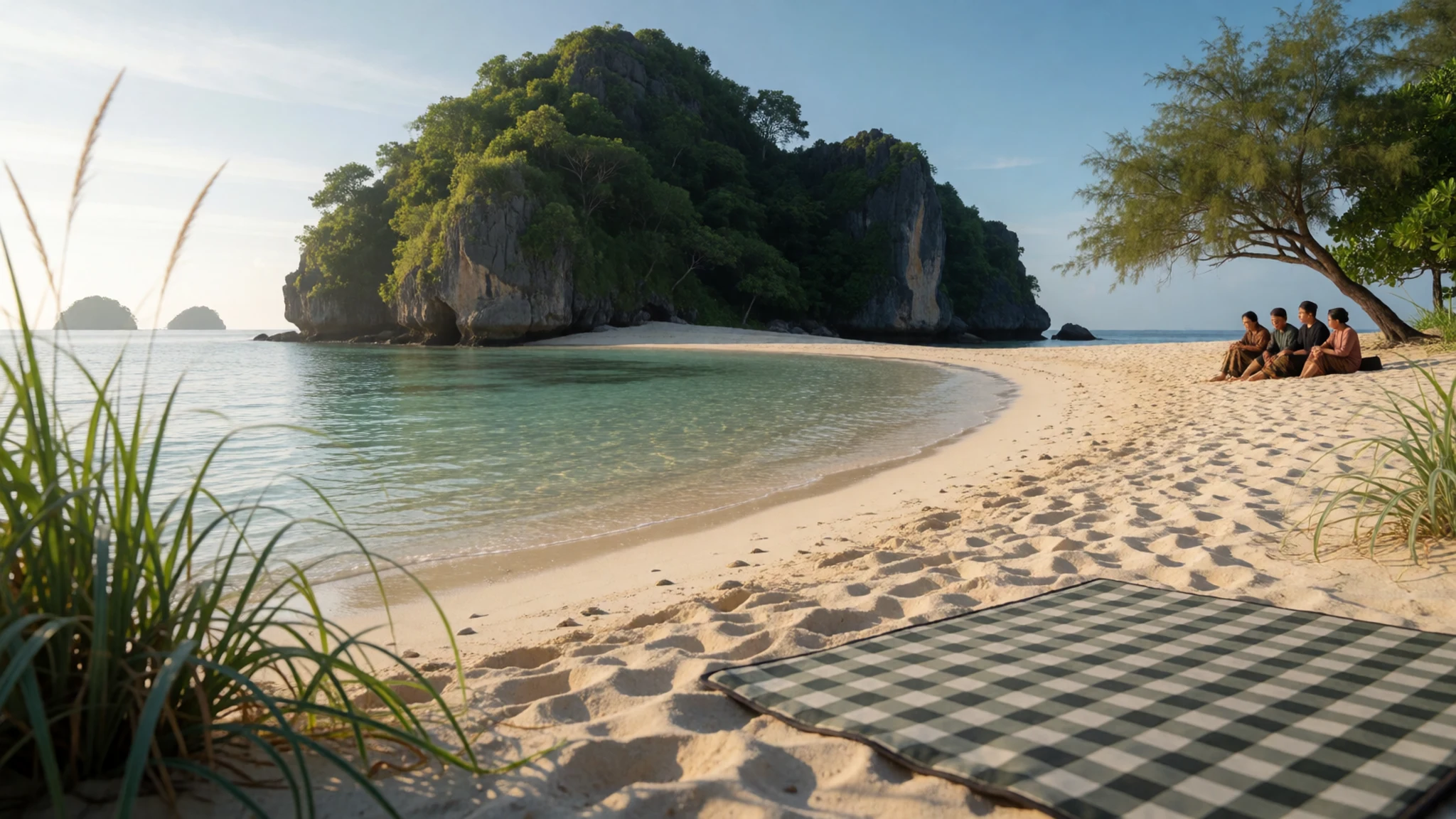
- Sabitang Laya Island — Offshore islands
Sabitang Laya is another stop on the usual boat circuit, known for its rocky shoreline and calm water. Boatmen usually include it in a day's route alongside neighbouring islets. Bring water shoes for the rocks, and ask your boatman about tide and swell before landing.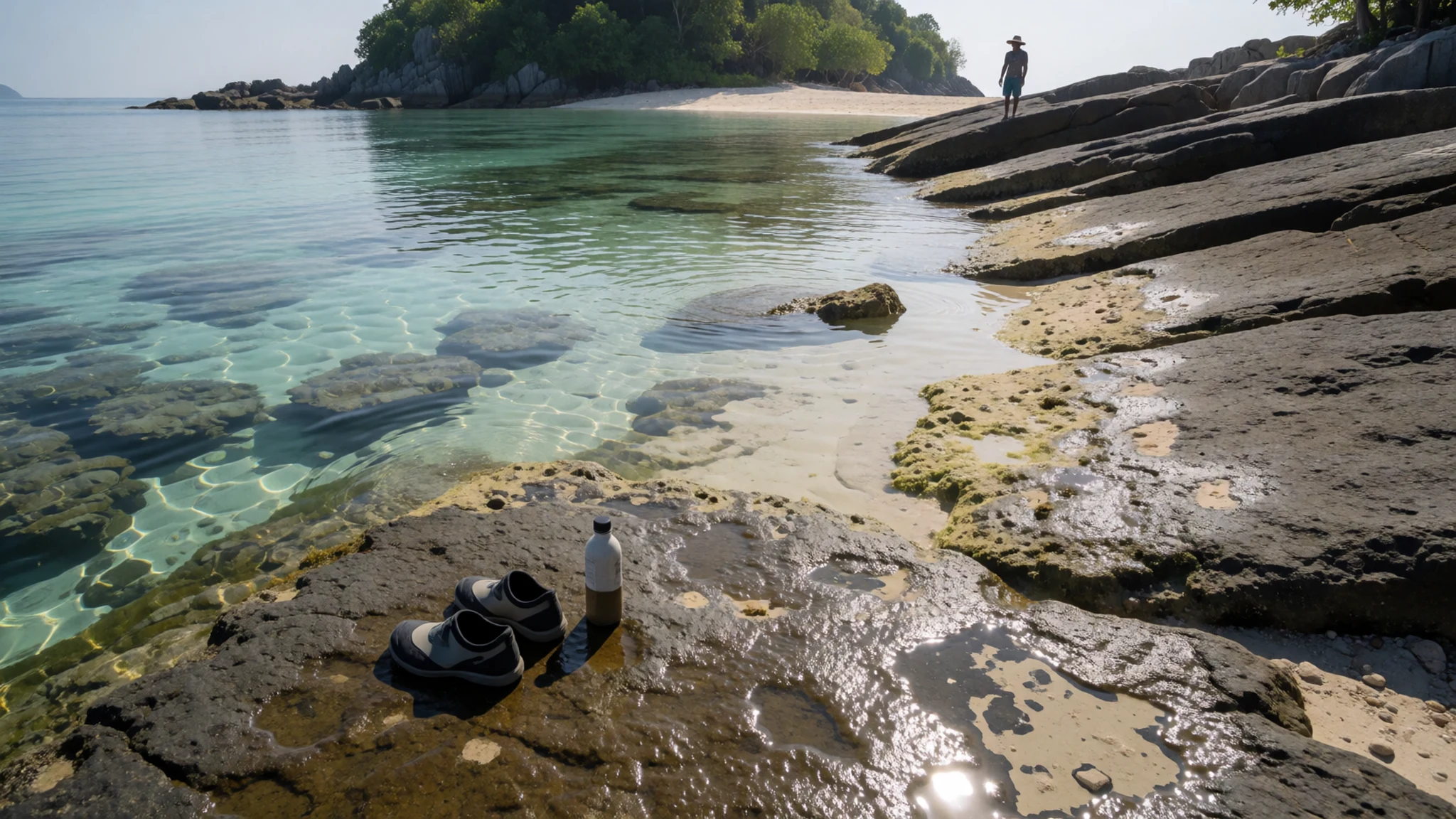
- Gota Beach — Mainland coast
Gota is on the mainland and has a provincial-run resort with organised activities. Day visitors can usually use its services without staying, which helps if overnight rates look steep. The nearby Guta Port rocks are linked to the old Guta de Leche name, with milk-like stalagmites.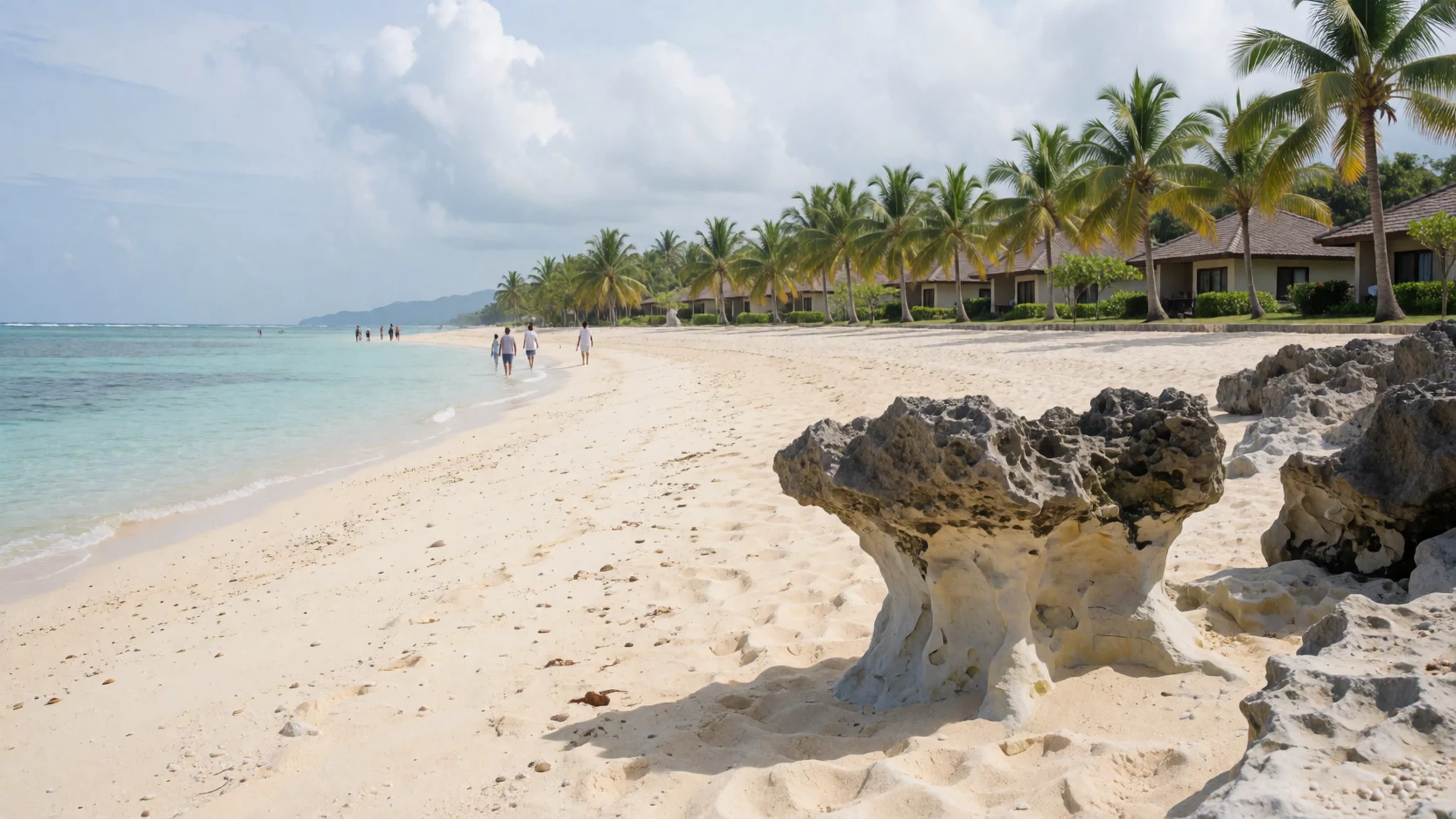
- Hunungan Cove — Mainland coast
Hunungan is a mainland cove with a second provincial-run resort. It is a practical alternative when the sea is too rough for the farther islands. Check conditions with the resort or your boatman, and expect more visitors on weekends and holiday periods than on weekdays.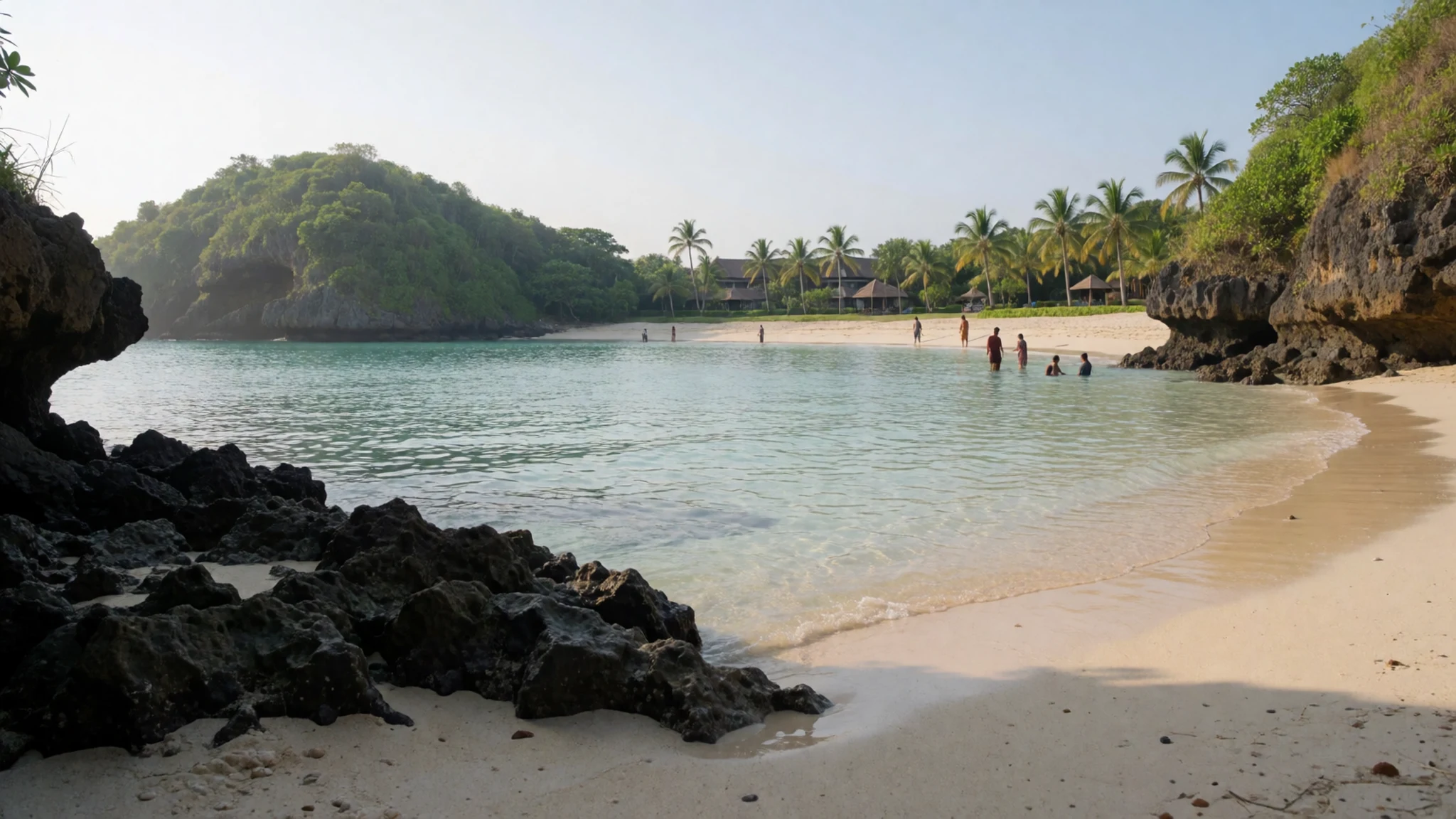
- Lahuy Island — Offshore islands
Lahuy Island is bigger and further out than the small islets of the circuit, and has a history as a Dutch gold-mining and trading site. It needs a longer boat trip and calmer weather, so plan it as its own outing and confirm sea conditions with local boatmen first.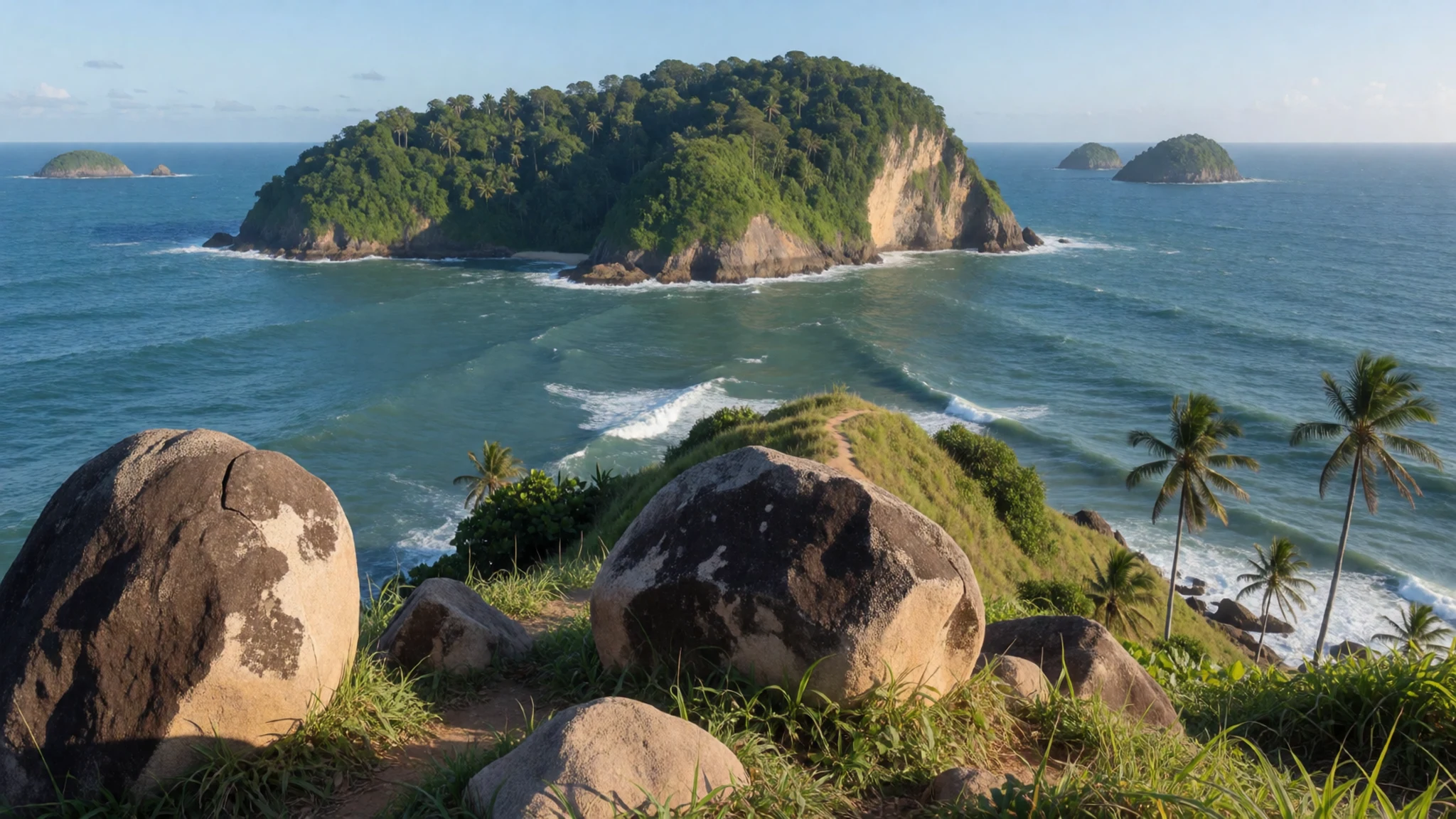
Culture
Caramoan is Bikol country, and daily life follows the sea and the parish calendar. Central Bikol is the everyday language, Filipino and English are widely understood, and most families are Catholic. The red-brick church of Saint Michael the Archangel anchors the town, and Sunday mass and the annual fiesta are when the streets fill. Fishing and farming carry the local economy, and tourism is a newer, welcome income, so hiring local boatmen and eating in town matters more here than it would in a big resort. A sizeable share of residents live below the poverty line, which makes the hospitality all the more generous. Water, fuel and electricity can be limited on the islands, and visitors who carry their rubbish back to the mainland are noticed. Weather commands respect: boat captains decide when a crossing is safe, and pressing them to sail in rough conditions goes down badly. Evenings are quiet, with karaoke the usual exception, and people turn in early. A smile and a polite good morning to boatmen, vendors and passers-by opens conversations easily. Ask before you photograph people, and never take sand, shells or coral from the islands.
What to wear
Caramoan's traditional dress follows wider Filipino and Bicol patterns. The baro't saya, a blouse and wrap skirt, and the barong tagalog, a lightweight embroidered shirt often made from pineapple-fibre or similar sheer cloth, appear at fiestas, weddings and formal occasions. Bicol is also known for abaca, the banana-family fibre woven into mats, bags and textiles, and you will see it in local crafts rather than daily wear. Day to day, people wear what suits heat, humidity and boats: T-shirts, shorts, long sleeves against the sun, rubber sandals and, on the water, quick-drying layers. Fishermen favour old, practical clothes and wide hats. Visitors should pack light, quick-dry clothing, a rash vest or long-sleeved top for sun, a wide-brimmed hat and a light rain jacket, since squalls can arrive suddenly. Water shoes protect against rocks and coral at landing points, and sandals are enough in town. Swimwear is fine on beaches and boats, but cover up with a shirt and shorts or a sarong in town and on the road. For church, keep shoulders and knees covered. Nights can feel cold on the water, so bring an extra layer for any evening fishing trip.
What to eat
- Fresh grilled fish — Small eateries near the pier and in town
Caramoan's seas supply a wide choice of fish, usually grilled or fried whole and served with rice and a dipping sauce of vinegar or soy with chilli. Order what the boats landed that morning and ask what is freshest.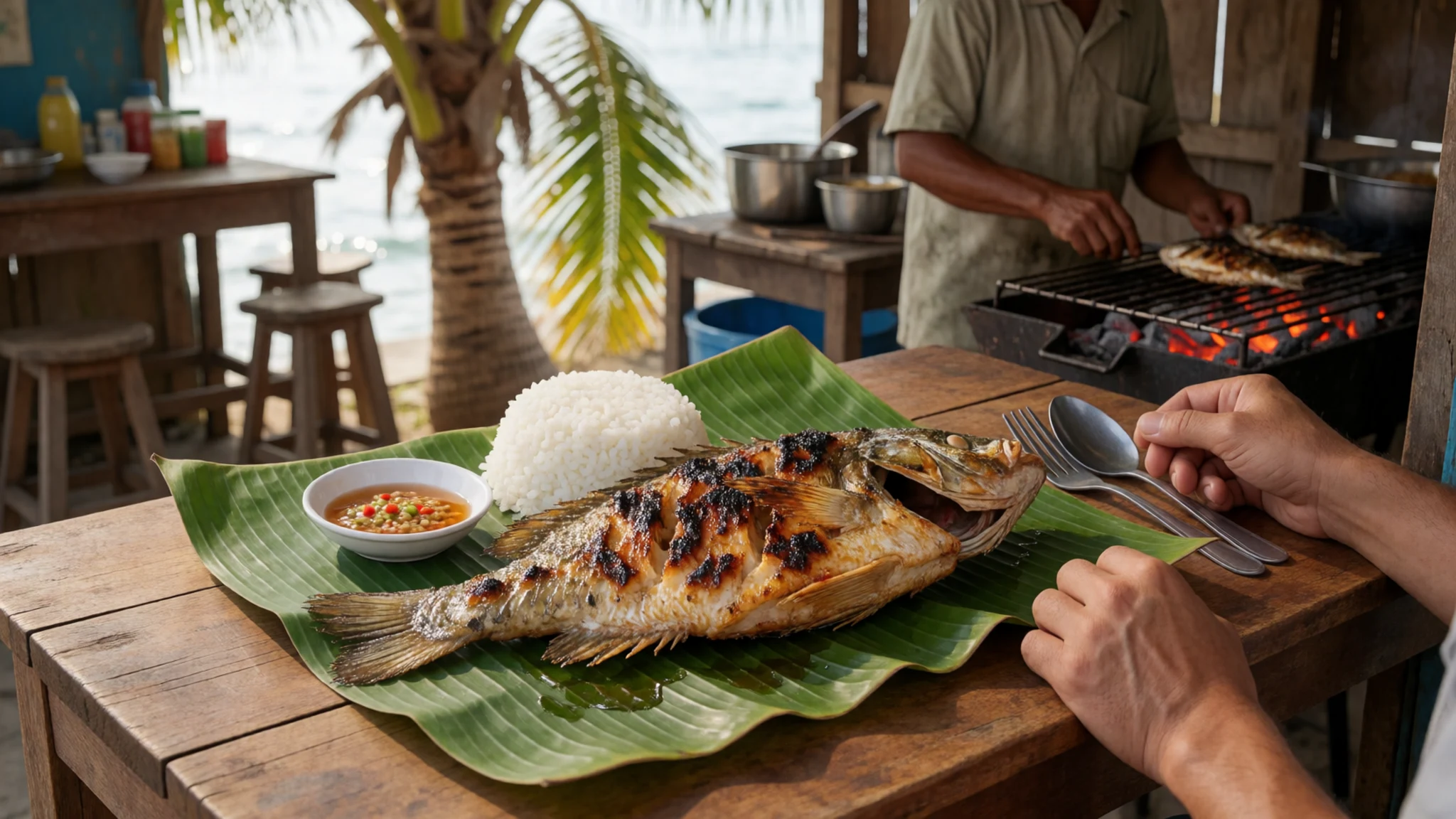
- Kinilaw — Seafront eateries and island picnic spreads
Raw fish or seafood cured in vinegar, with onion, ginger and chilli, a coastal Filipino staple. It is only as good as the fish, so choose busy places and ask when the catch came in. Often eaten as a starter or with drinks.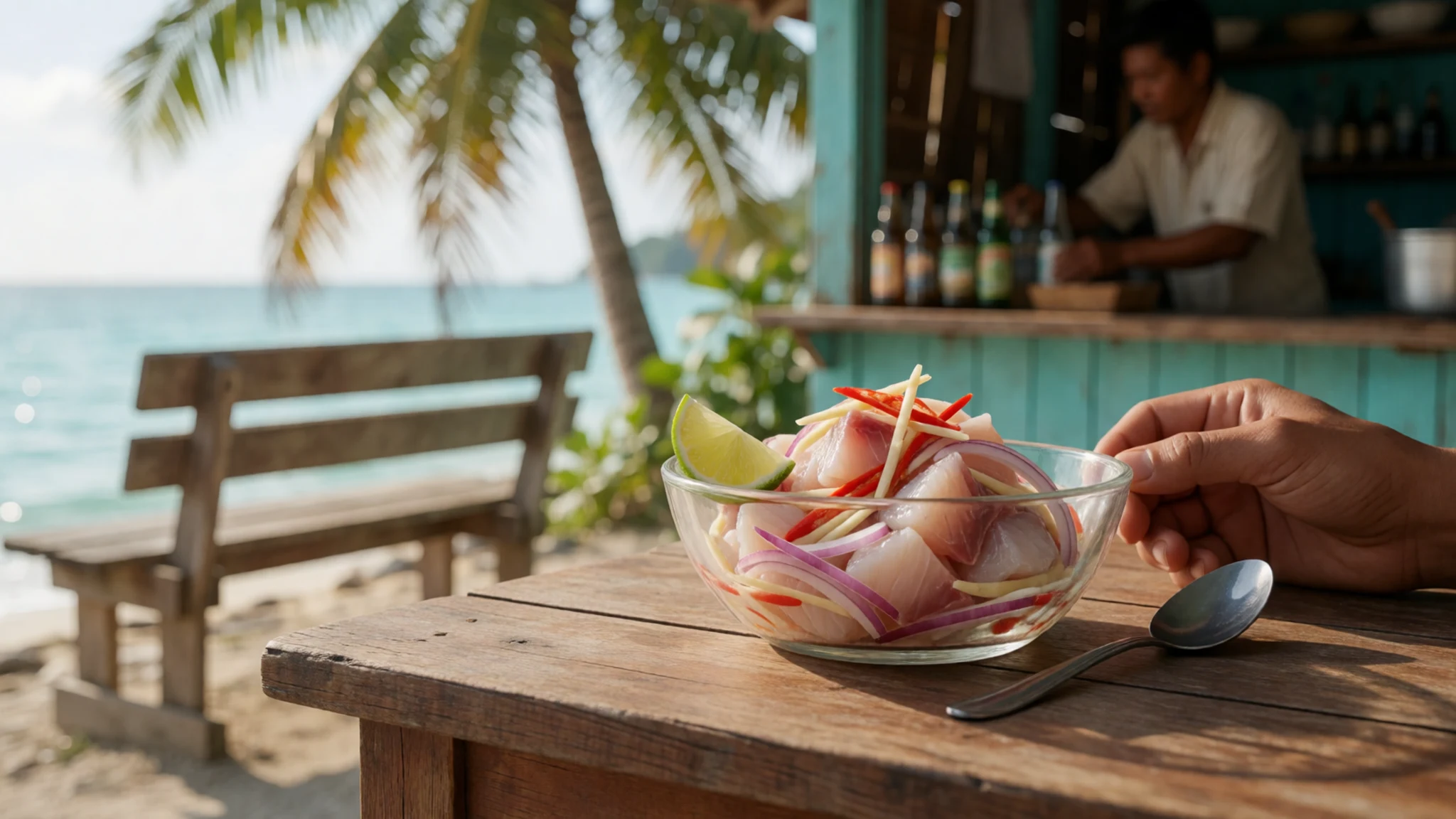
- Bicol express — Local eateries in Caramoan town
Pork stewed in coconut milk with plenty of chillies, the region's best-known dish. The heat varies by cook, so ask for it mild if unsure. Served with plain rice, it suits a hungry return from a day on the water. - Laing — Home-style eateries and market stalls
Dried taro leaves slowly cooked in coconut milk with chilli and often a little pork or fish. It is rich, earthy and very Bicolano, and it keeps well, so it often turns up on catered island lunches. - Pinangat — The town market and roadside food stalls
Taro leaves wrapped around small pieces of fish or shrimp and simmered in coconut milk, usually tied into little parcels. It is a good vegetable-forward option, and a fair test of how seriously a cook takes Bicol cooking.
Plan it
Best time. March to May is usually the drier, calmer stretch for boats and island hopping, though it is hot and sunny. The wetter months bring squalls and typhoons, when boat crossings can be dangerous, so check forecasts and the local typhoon tracker before travelling.
How long. 2–3
Getting there. Fly from Manila to Naga (Pili) or to Virac in Catanduanes. From Naga, take a van or jeep towards Sabang, then a boat across to Guijalo port in Caramoan, which takes a few hours. From Virac, go by road to a coastal barangay in San Andres and cross the Maqueda Channel by hired motorboat, about an hour. Boats leave early, and some only sail once full, so confirm times locally.
Budget. mid
Tips
- Overnight at Sabang before the crossing so you can catch the earliest boat, and plan an early exit when leaving too
- Allow at least two full days, since island hopping needs good weather and a boat for the day
- Bring cash, as cards and cash machines are scarce outside the town, and carry plenty of drinking water
- Check typhoon and storm forecasts before every crossing, and keep a spare day in the plan
- Pack out all rubbish, sun protection and a dry bag for phones and cameras
Etiquette
- Take only photographs and leave only footprints on beaches, reefs and caves
- Ask before photographing local people, especially children and working fishermen
- Follow your boatman's call on whether the sea is safe to cross
Nearby
Sources
- Wikidata Q208757 (CC0)
- Wikipedia: Caramoan (rev 1375329151) (CC BY-SA 4.0)
- Wikivoyage: Caramoan (rev 5396897) (CC BY-SA 4.0)
- Caramoan town — jekert gwapo (CC BY 2.5)
- Flag of Caramoan, Camarines Sur — Municipal Government of Caramoan (Public domain)
- St. Michael Parish Church of Caramoan — Ninya Regalado (CC BY 3.0)
- Matukad Island Aerial View — Carlo Jose Garcia (CC BY 3.0)
- Caramoan Municipal Hall — Pauline rsy (CC BY-SA 4.0)
- Sabitang-Laya Caramoan — Tuderna (CC BY 3.0)
- Abandoned campsite — Tuderna (CC BY 3.0)
- Approaching Bikal beach — Tuderna (CC BY 3.0)


Wildlife
- Sea turtle (animal)
The green sea turtle is a large sea turtle that feeds only on seagrass, and it gets its name from the green fat under its shell, not from the shell itself, which is olive to black. Caramoan once took its old name, Carahan, from turtles that came ashore on its beaches in great numbers. I can't say when you'll meet one today, so ask a local guide. Keep your distance, stay quiet and never feed it.