Caraíva
Caraíva, Brazil
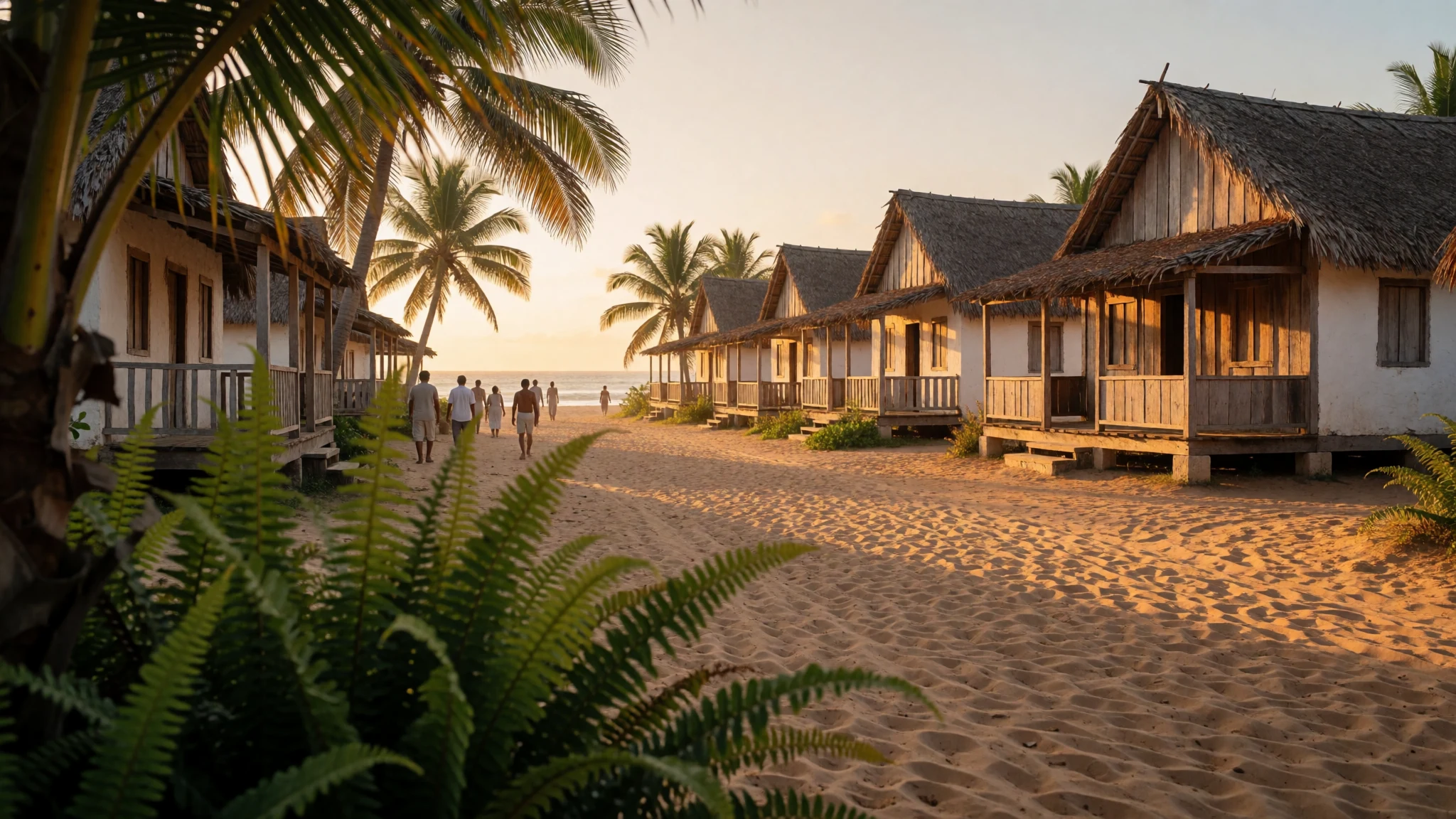
Caraíva is a car-free river-and-beach village on the Bahia coast, where the pace is slow and electricity is a matter of generators.
The place
Caraíva is a small village on the south coast of Bahia, administratively a district of Porto Seguro. It sits on the far side of a river from the nearest road, and that single fact explains most of its character. There are no cars in the village. Visitors leave their transport on the other bank and are rowed across in a canoe, with a fixed fare that is no more than small change. On the near side, the streets are sand, the buildings are low guesthouses, bars and houses, and the main sounds are voices, surf and the occasional generator.
The village has no mains electricity of the usual kind. Most bars and guesthouses run their own generators, so lighting and cold drinks exist, but the infrastructure is plainly rustic. Nobody pretends otherwise, and the unhurried atmosphere is the reason many people come. Locals and visitors alike are relaxed, even by Brazilian standards, and impatience gets nowhere.
The beaches stretch away on both sides of the river mouth. To the south lies a Pataxó Indigenous village, a walk along the sand. To the north, a longer walk or a horse ride leads to Praia do Espelho. Boats, from small fishing craft to the occasional stranded hull, rest around the river mouth, and fishing still gives the place part of its identity. Caraíva suits people who want sea, shade and very little to organise. It is a poor choice for anyone who needs reliable power, nightlife with a schedule or fast connections.
Its story
Caraíva's story is mostly the story of a place that stayed hard to reach. The river that separates the village from the road acted as a filter for generations. Anything arriving had to cross by canoe, so cars never took over, and the sandy lanes stayed as they were. The result is a settlement shaped by fishing, by the tide and by the Pataxó communities in the surrounding land, rather than by planners.
For a long time the dirt roads from Porto Seguro and Trancoso were the only practical overland links, and they remain unpaved. Walking the beach from Trancoso is also possible, though it is a serious day on foot rather than a stroll. Boats and fishing gave the village its livelihood, and a local pastry made from stingray, the pastel de arraia, is still talked about by people who have eaten it.
Tourism arrived gradually and unevenly. Guesthouses multiplied, a camping ground opened and bars spread along the lanes. Backpackers came first, then families, and in recent decades school-holiday crowds, especially teenagers, have made peak weeks lively. Even so, the absence of a conventional power grid and of vehicle traffic has kept the scale modest.
There is an honest tension here. The village's charm depends on how little has been built, yet visitors bring money that residents need. The Pataxó village to the south adds another layer, as a community that welcomes visitors on its own terms. A visit works best when treated as a guest's visit to a working village, not a stop on a resort circuit.
What to see
- The river crossing — River bank between the road and the village
The canoe ride across the river is the village's front door and a sight in itself. Rowers ferry passengers and bags to the sandy bank, and the fare is fixed, so there is nothing to haggle over. Go slowly, sit low in the boat and watch how the water, fishing boats and village life meet at this point.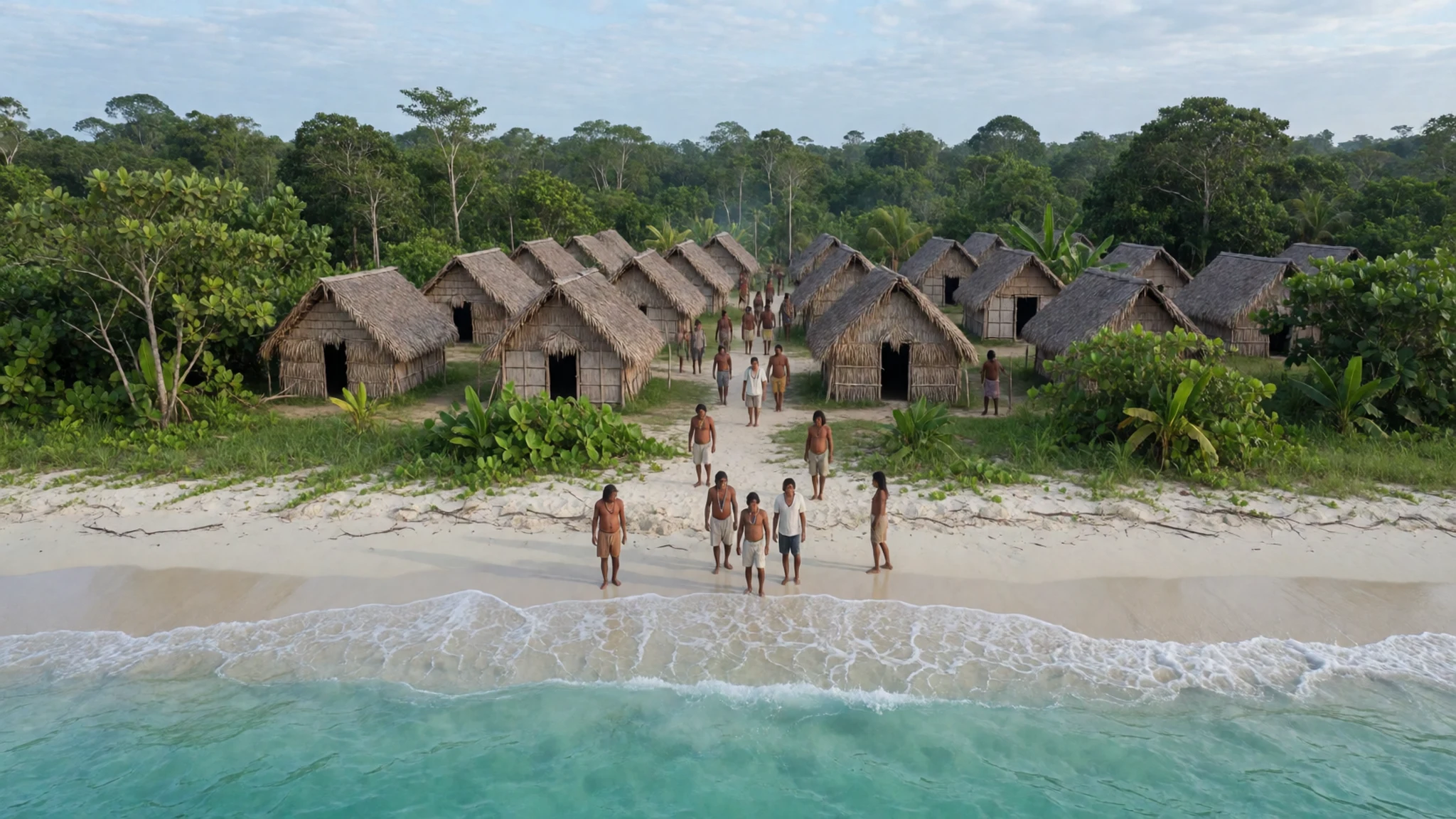
- The river mouth and beach — Beach at the river mouth
Where the river reaches the sea, sand bars, shallow channels and moored boats make a shifting landscape. Early morning and late afternoon are best for light and for watching fishing crews. Schooner trips to nearby beaches leave from this area in the high season, though they may not run when visitors are few.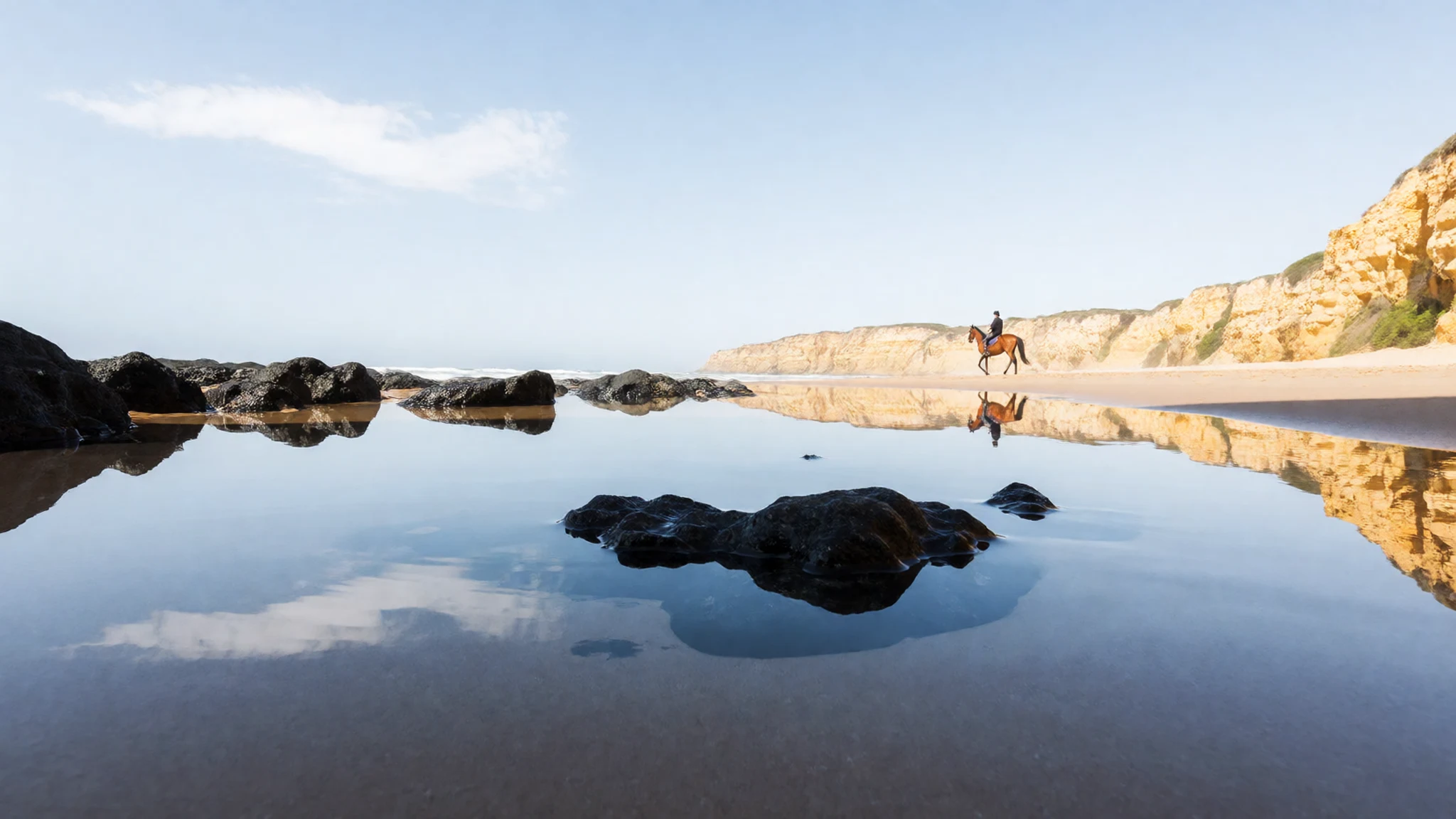
- The sand lanes of the village — Village centre
The village centre is a grid of sandy paths with low painted buildings, bars, craft stalls and guesthouses. Cars are absent, so walking is the only option and takes little time. Wander at dusk when generators hum and lamps come on, and notice how the trees and vegetation crowd the edges of the lanes.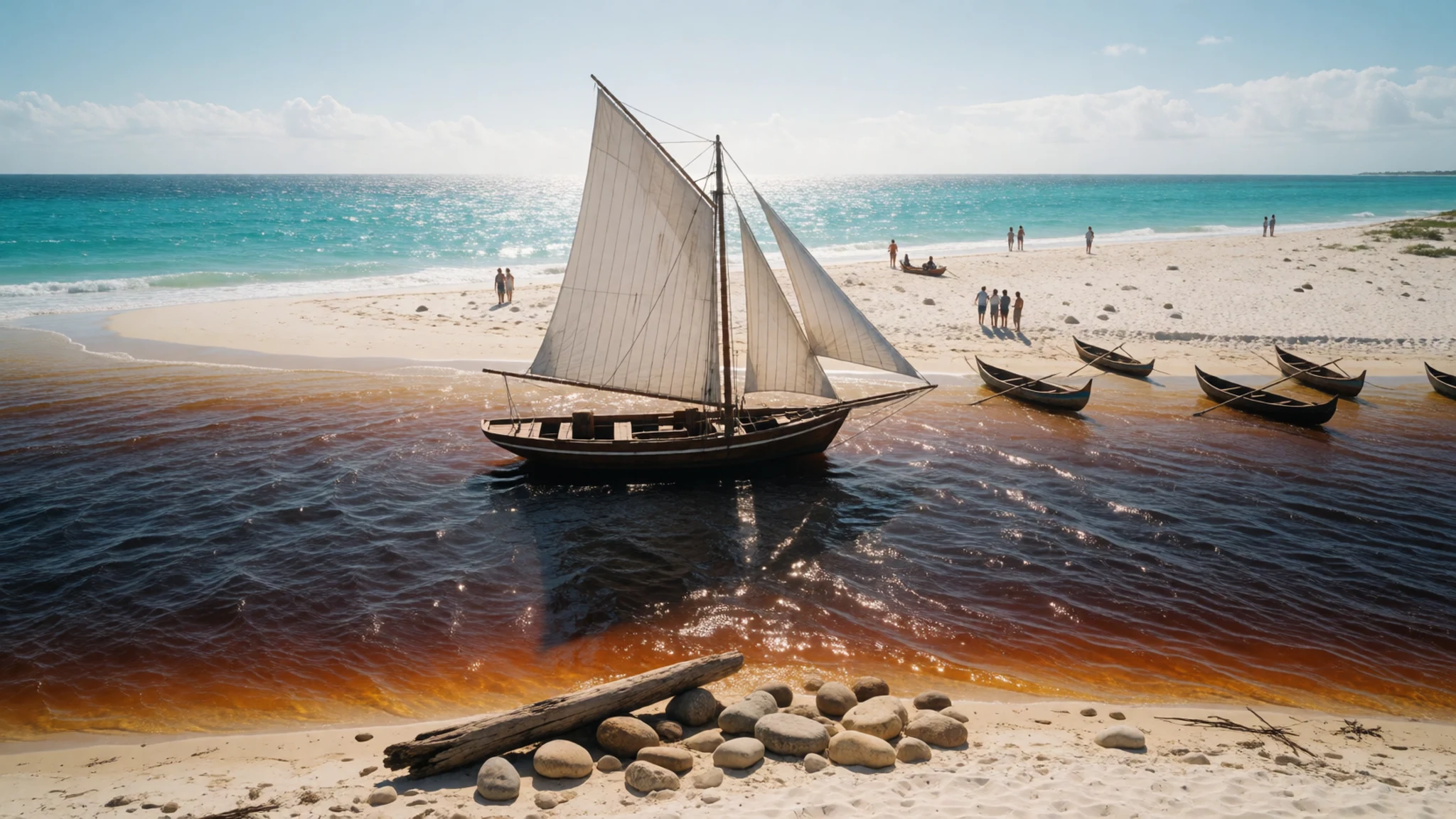
- Pataxó village — South along the beach
A Pataxó Indigenous community lies a walk south along the beach. Visitors can learn how people there live today, which is far from a museum picture. Go respectfully, ask before taking photographs, and consider buying crafts directly from makers. Check locally on current access arrangements before setting out.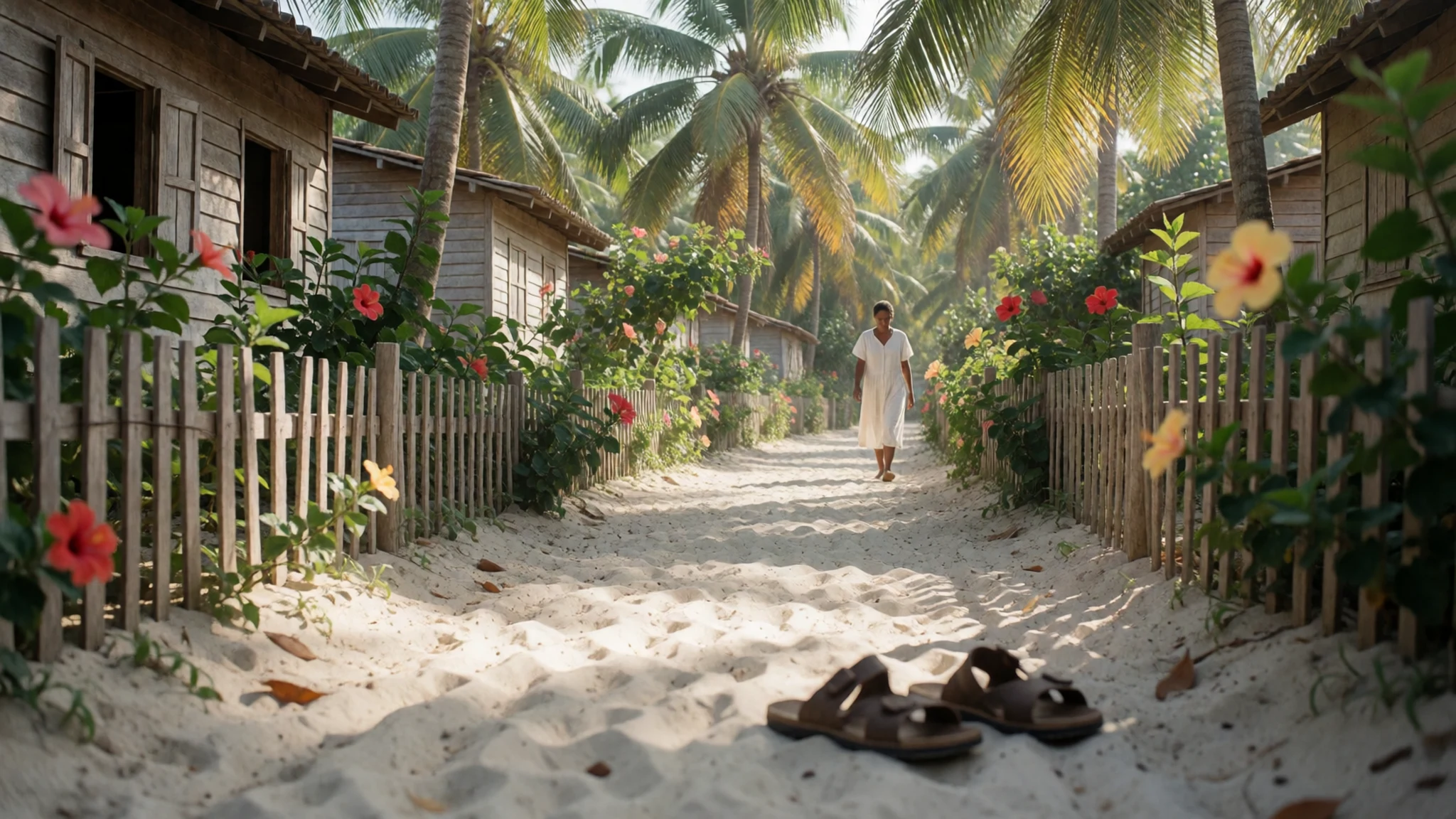
- Praia do Espelho — North along the coast
Praia do Espelho lies north of the village and is widely admired among the beaches of southern Bahia. It can be reached on foot along the sand, by hiring a horse and guide, or on a schooner trip in the high season. Allow a full day, carry water and plan the return before the heat peaks.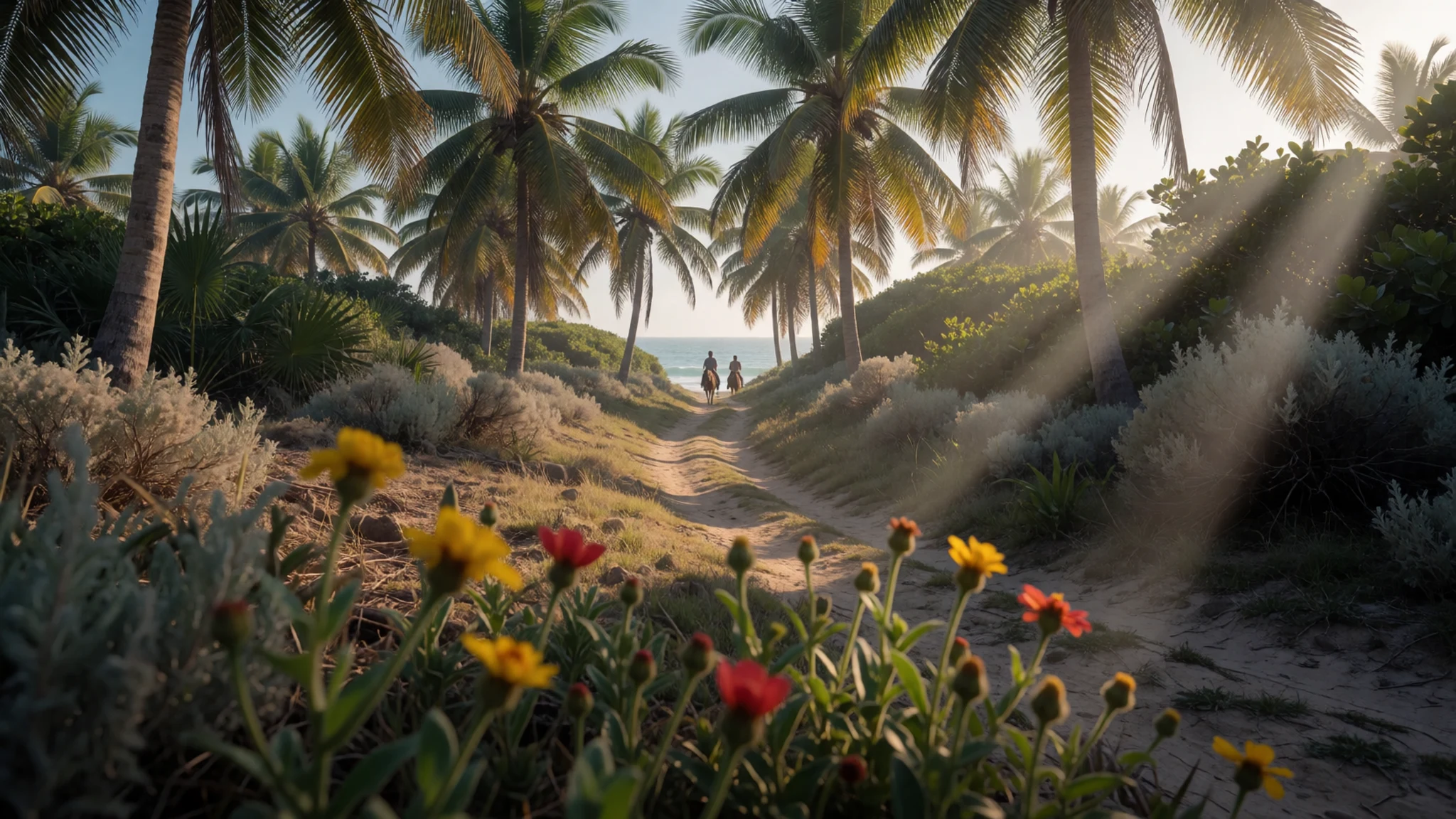
Culture
Caraíva's culture is a blend of Bahian coastal life, fishing traditions and the presence of Pataxó communities nearby. Daily rhythm follows the tides and the weather rather than the clock, and Brazilians who live here will tell any visitor that things happen on a different schedule. Conversations are unhurried and meals stretch out.
Music is part of evenings, usually from bars and small gatherings rather than staged shows. Expect Brazilian popular styles and the rhythms common to Bahia, played informally. Craft sales, especially seed jewellery and woven goods, are a visible way in which Pataxó families take part in the visitor economy.
There is no police presence in the village to speak of, and openly smoking marijuana in bars and on beaches has become normal, which draws some visitors. That does not make it legal in Brazil, and it can be uncomfortable for families or anyone who prefers not to be around it. It is wise to be discreet and to keep to your own choices.
Holidays change the mood sharply. Around New Year, January and the July school holidays, the village fills with younger visitors and becomes louder. Outside those times it is calm, and the sound of the sea dominates.
When visiting the Pataxó village or taking photographs of residents, ask permission first, accept a refusal without argument and buy crafts directly from the makers if you wish to support them.
What to wear
Traditional dress in the Caraíva area is best understood through the Pataxó communities nearby. Their ceremonial adornment draws on natural materials: feather headdresses, necklaces and bracelets of seeds, shells and fibre, woven straw, and body painting with plant-based pigments. These are mainly worn for ceremonies, dances and when welcoming visitors, rather than as everyday clothing, and the items sold as crafts are made by the same families.
What people actually wear in the village now is very simple. Locals and long-stay visitors wear shorts, cotton or linen shirts, sarongs, light dresses and flip-flops, and many go barefoot on the sand. Fishing crews wear practical working clothes that dry quickly. Nothing is formal, and a swimsuit under a cover-up is usual daytime wear.
Visitors should dress for a warm, humid coast and for sand lanes with no pavement. Light cotton or quick-dry clothing works best, with a hat, sunglasses and high-factor sun protection, because the sun on open beach is strong. Sandals or water shoes are enough for the village, but closed shoes with grip help on the longer walks to neighbouring beaches and on muddy dirt roads after rain.
Bring a small torch or head torch, since lighting in the lanes is limited at night, and insect repellent for the evenings. For the Pataxó village, wear a shirt over swimwear and keep dress modest and respectful, as it is a community and not a beach club.
What to eat
- Pastel de arraia — Beach snack stalls and small eateries near the river mouth
A fried pastry filled with stingray, a local speciality tied to the village's fishing. It makes a good snack after a beach walk. Ask whether the fish is locally caught and be prepared for a chewy, savoury filling.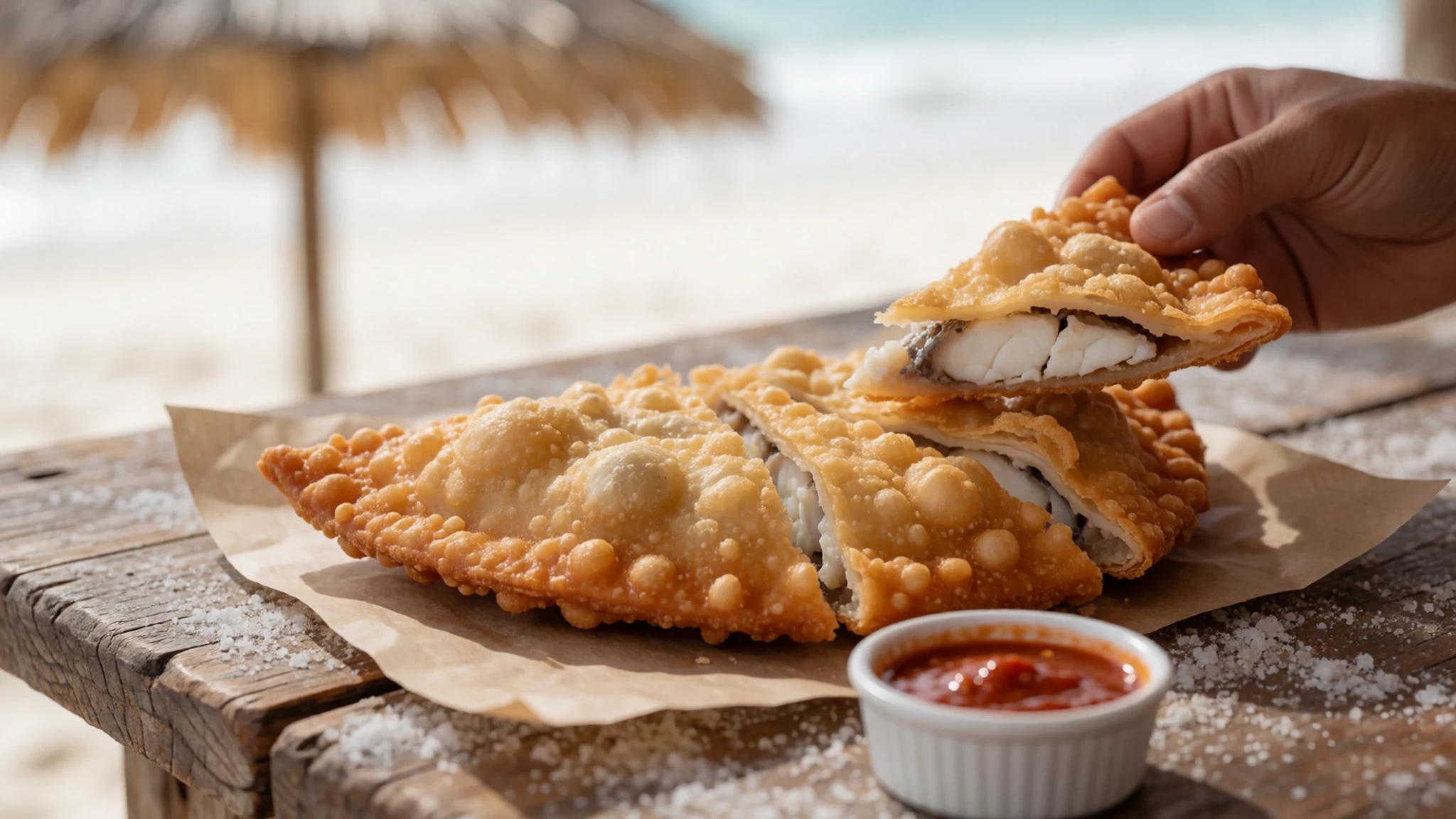
- Grilled fresh fish — Beachfront restaurants and village eateries
Fish caught off this coast is grilled whole or in fillets and served with rice, farofa and salad. The choice depends on the day's catch, which is the point of eating it here rather than elsewhere.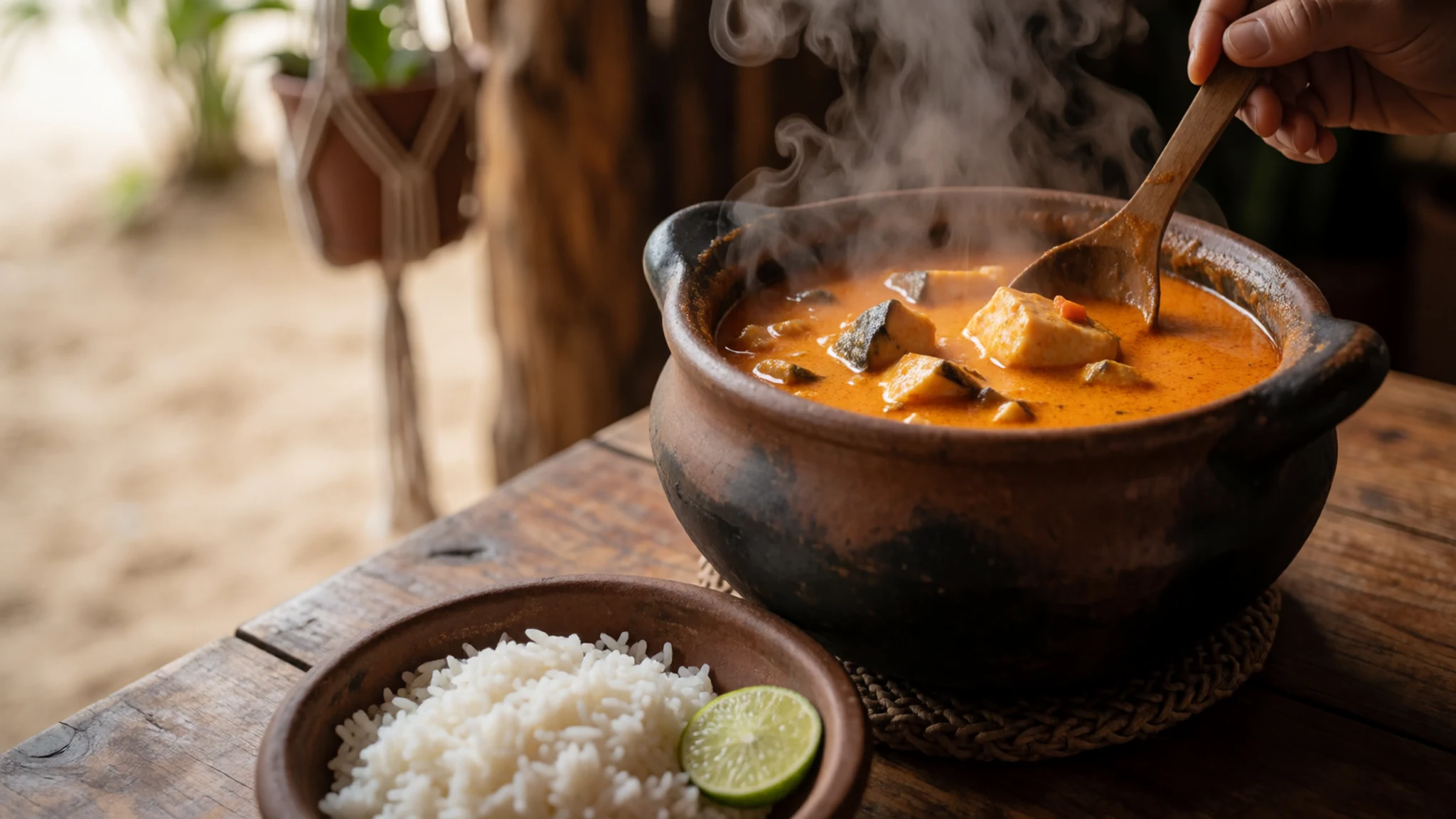
- Moqueca baiana — Sit-down restaurants in the village lanes
A Bahian stew of fish or shrimp cooked with coconut milk, tomato, peppers and palm oil, served bubbling with rice. It is rich and filling, and usually shared between two. Ask for it less spicy if you prefer. - Tapioca crepes — Breakfast stalls and cafés in the village centre
Thin pancakes made from cassava starch, folded around fillings such as coconut, cheese or banana. They are a light breakfast or afternoon snack, cooked fresh on a griddle, and suit anyone avoiding wheat. - Fresh coconut water and tropical juices — Beach kiosks and village bars
Coconuts are opened with a machete and drunk straight from the shell, ideal in the heat. Juices from local fruit are widely available. Cold drinks depend on generators, so supplies can vary.
Plan it
Best time. February–March and October–November, outside the busy periods of New Year, January and the July school holidays, when the village fills up. The coast is warm and humid all year, so pick dates for crowds first, and check the forecast for rain, which can make the dirt roads slow.
How long. 3–4
Getting there. Fly to Porto Seguro, the nearest main airport, then take a local bus or negotiate a fixed-price taxi along the dirt road to the river bank. Trancoso is the other approach by road. The last leg is a short canoe crossing to the village, as there are no cars inside it. Check the official village site, https://caraiva.com.br/, for current information.
Budget. mid
Tips
- Book guesthouses ahead for New Year, January and the July school holidays; outside those times a reservation is usually unnecessary
- Carry cash for the canoe fare, small eateries and craft stalls, as card machines and mobile signal can be unreliable
- Bring a torch, a power bank and insect repellent, because power runs on generators
- Start walks to Praia do Espelho or the Pataxó village early, carry water and plan the return before the heat peaks
- Confirm schooner trips locally, as they may not run in the low season
Etiquette
- Ask before photographing people, especially in the Pataxó village
- Take rubbish away with you from beaches and keep noise down late at night
- Be discreet about drugs and alcohol, since drug use is not legal even where it is visible
Nearby
Sources
- Wikidata Q2494176 (CC0)
- Wikipedia: Caraíva (CC BY-SA 4.0)
- Wikivoyage: Caraíva (rev 5396901) (CC BY-SA 4.0)
- Folhas e Galhos — Cristina C. Lima (CC BY 3.0)
- Barco a tempos encalhado em Caraíva — Eduardo Machado Freire (CC BY 3.0)
- Caraiva banner — Thomasilhabela (CC BY-SA 4.0)
- Caraiva mar aberto — Thomasilhabela (CC BY-SA 4.0)
- Caraíva — Otávio Nogueira (CC BY 2.5)
- Caraíva- BA (1) — Vilamir Azevedo (CC BY 3.0)
- Caraíva- BA (10) — Vilamir Azevedo (CC BY 3.0)
- Caraíva- BA (2) — Vilamir Azevedo (CC BY 3.0)


