Caraïbes
Caraïbes, France
Caraïbes is the Caribbean seen from French Martinique: rainforest gorges, black-sand coves, Créole cooking and a history of sugar that is told openly.
The place
Caraïbes, the French name for the Caribbean, covers a region of islands, cays, reefs and banks arranged around the Caribbean Sea, with North America above, Central America to the west and South America below. This reading is anchored at a point on Martinique, a French island in the Lesser Antilles, so the detail leans French and Créole. The islands share a sea but not a landscape. Barbados, the Bahamas and Antigua are low and flat, built on non-volcanic rock. Cuba, Jamaica, Dominica, Guadeloupe, Saint Lucia and Martinique rise into steep, forested ranges. On Martinique that means a green, folded north with rainforest and river gorges, and a drier, scrubbier south with long beaches and a stark, desert-like tip. Geographers do not fully agree on where the lines fall: the Greater and Lesser Antilles are defined slightly differently depending on who draws the map, and the Virgin Islands are counted with one group or the other. Offshore, the water carries migrating fish, turtles and coral reef. Martinique is part of France and the European Union, so French road signs, French pharmacies and the euro come with the scenery, which sets it apart from many of its neighbours. Sun and heat are constant. The trade winds help moderate the climate, but the sun is strong enough that a hat is necessary. Crowds depend on the cruise calendar, when ships tender passengers into Fort-de-France and the waterfront fills.
Its story
Caraïbes has a human story that begins much earlier than most visitors assume. Archaeologists have found traces of early foraging people in southern Trinidad, and dated sites in Cuba, Hispaniola and Antigua. The oldest are thousands of years old, though some early dates on Hispaniola are doubted. The gaps in the evidence are telling: few of these early sites turn up in the Windward Islands, and whether one group colonised the whole chain is still unsettled. DNA work has reshaped the older picture. Pottery-making farmers, related to today's Arawak-speaking peoples, paddled canoes from the north-east coast of South America and island-hopped north. On many islands they met foragers who had arrived long before, and they probably displaced them through disease or violence. The first of these farming cultures, the Saladoid, came into Trinidad from the Orinoco region and then spread rapidly up the chain. Later groups, the Barancoid and then the Arauquinoid, followed the same route as societies on the Orinoco rose and collapsed. European colonisation then rebuilt the islands around sugar, worked by enslaved people, and on Martinique that legacy is visible in plantation houses, distilleries and museums devoted to cane and slavery. Reading the region as a succession of migrations, rather than one arrival in one year, is the more accurate way into it.
What to see
- Habitation Clément — Le François, east Martinique
Habitation Clément is a historic sugar plantation on Martinique's Atlantic side, and a good way to see how cane shaped the island's land, houses and economy. Go in the morning before the heat builds, and check the official site for tour times before travelling.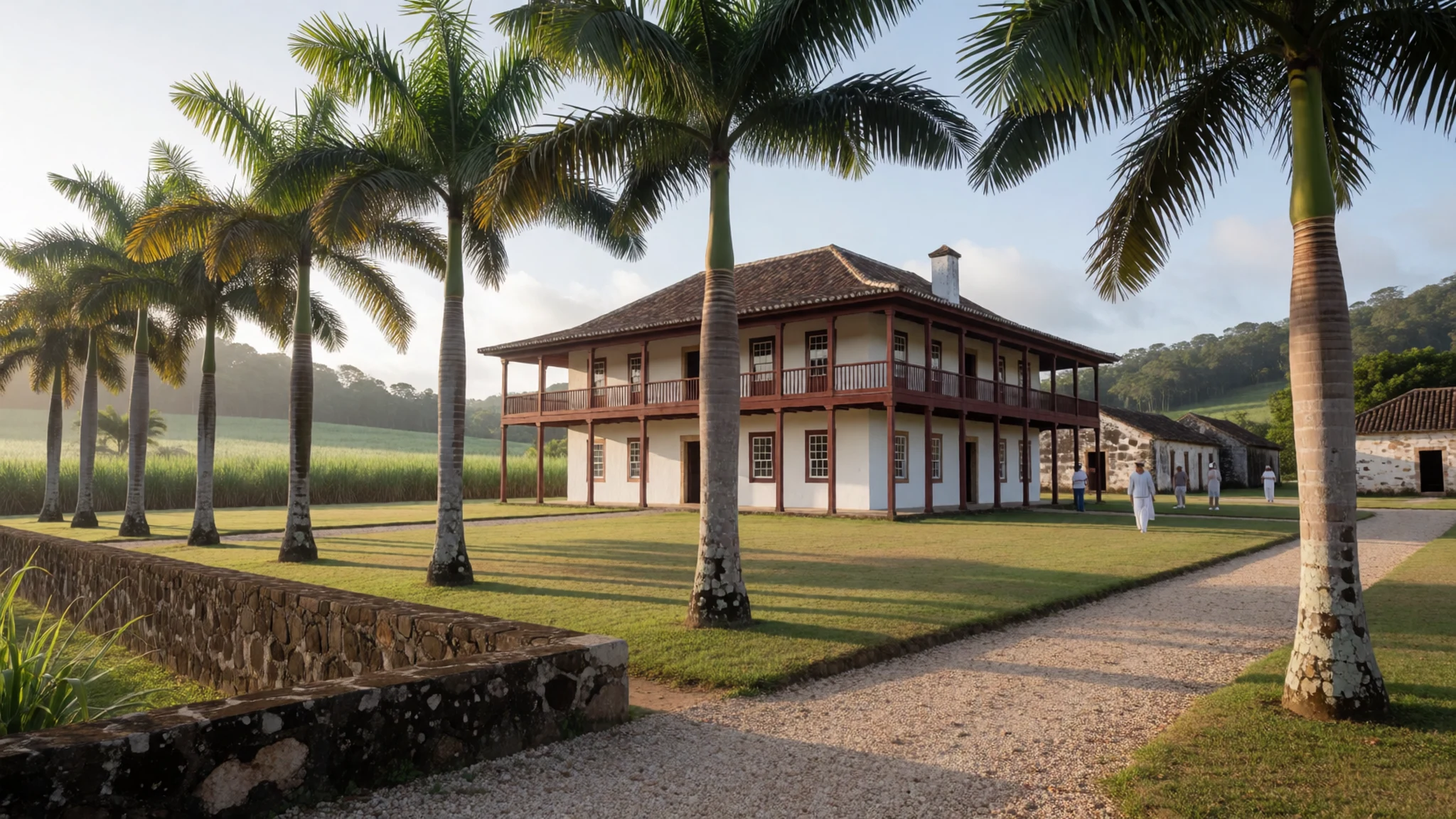
- Gorges de la Falaise — North Martinique, near Fond-Saint-Denis
The river Falaise cuts through a narrow, shaded canyon in the northern rainforest, and the way in is a mix of walking and swimming. The water is cool and the rock can be slippery, so wear shoes that grip and skip it after heavy rain.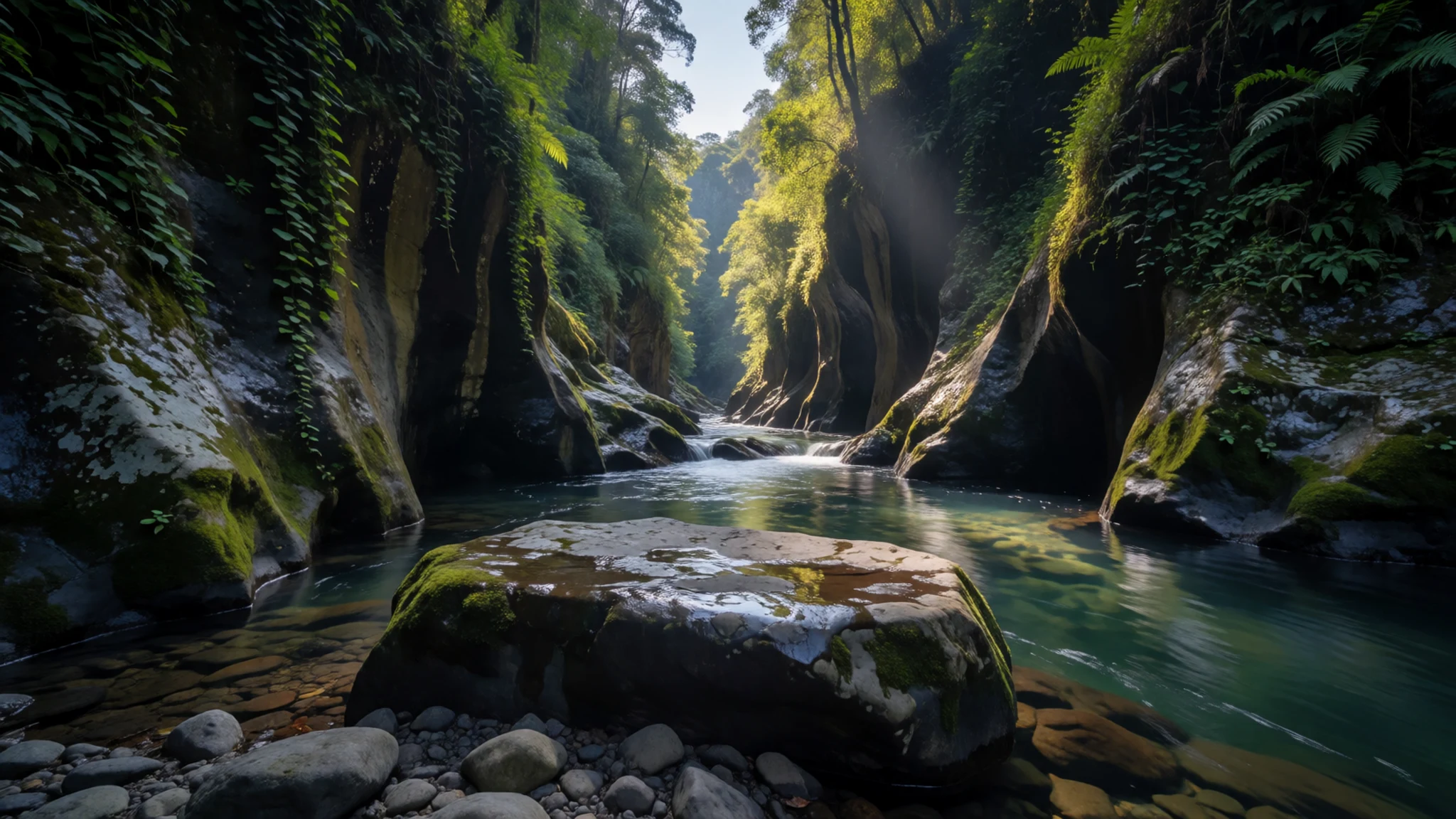
- Anse Noire — Les Anses-d'Arlet, south-west coast
Anse Noire is a small cove of black volcanic sand on the road towards Anse d'Arlet, backed by trees. The water is calm and clear. Take care during or just after rain, because the mangrove-type trees around the shore can leave stinging residue in the water.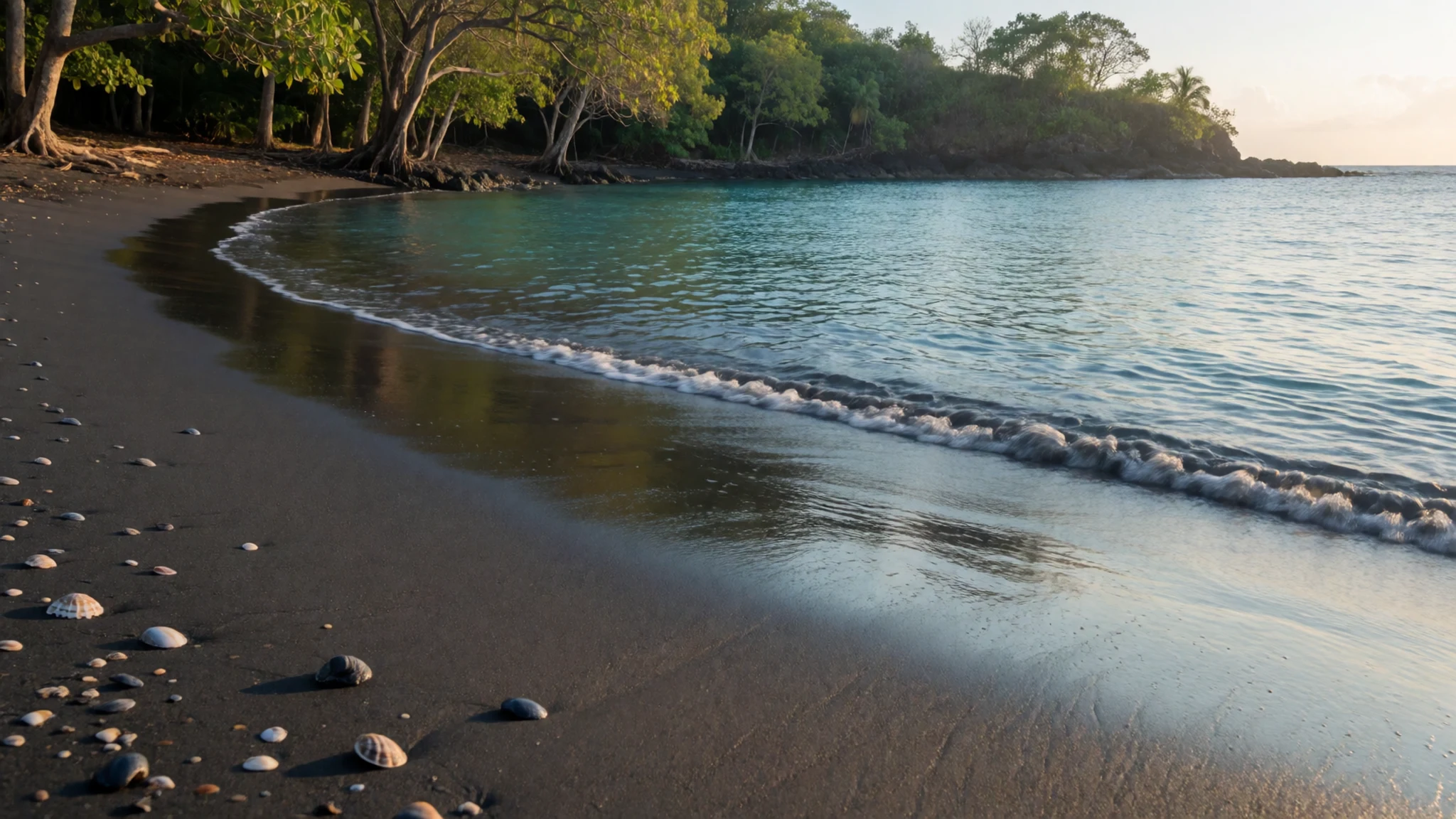
- La Savane des Esclaves — Near Trois-Îlets
La Savane des Esclaves is an open-air museum near Trois-Îlets about slavery and the lives of the people who worked the island's plantations. It is sombre and worth an unhurried visit. The nearby Maison de la Canne covers sugar-cane production and the labour behind it.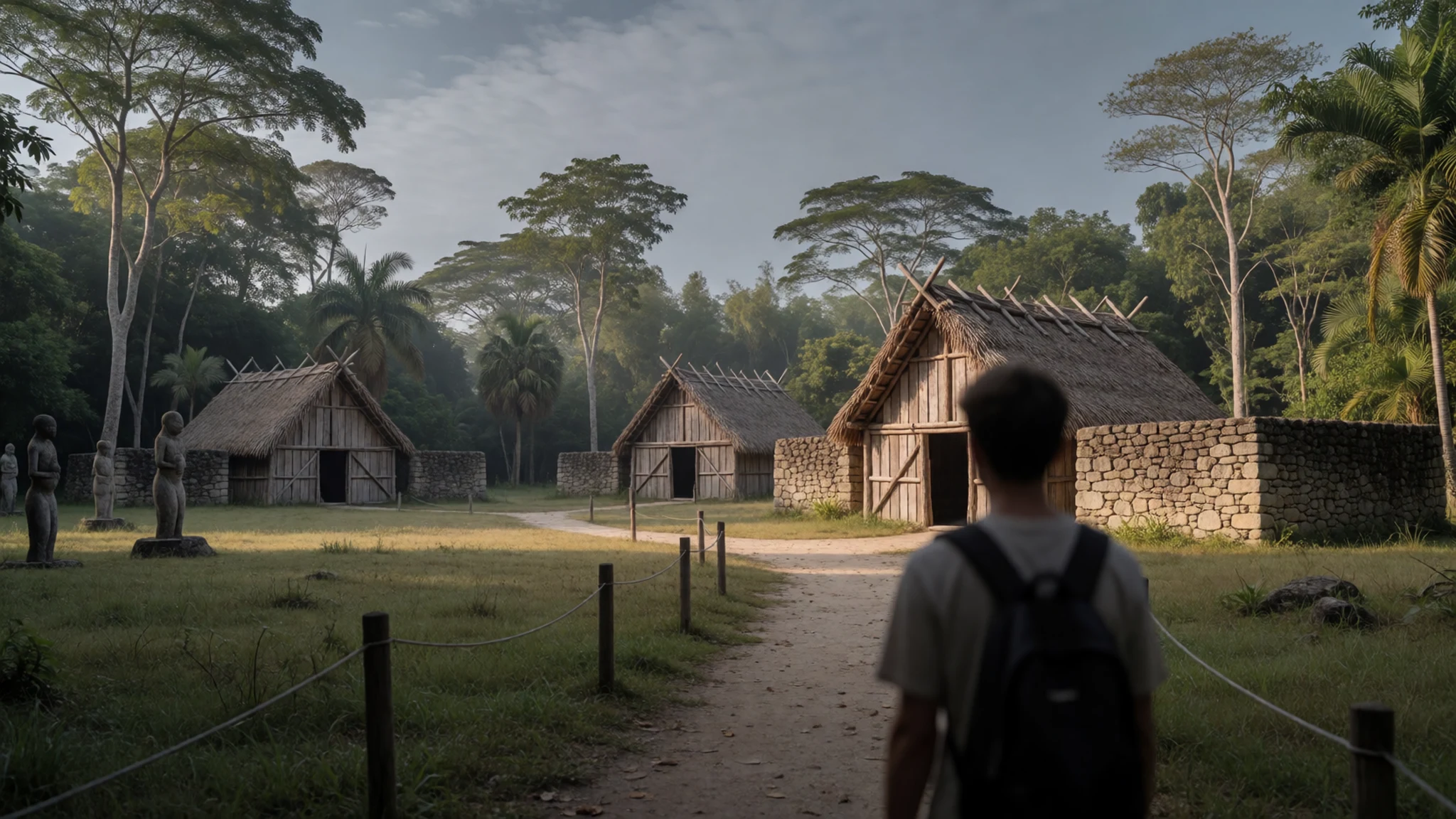
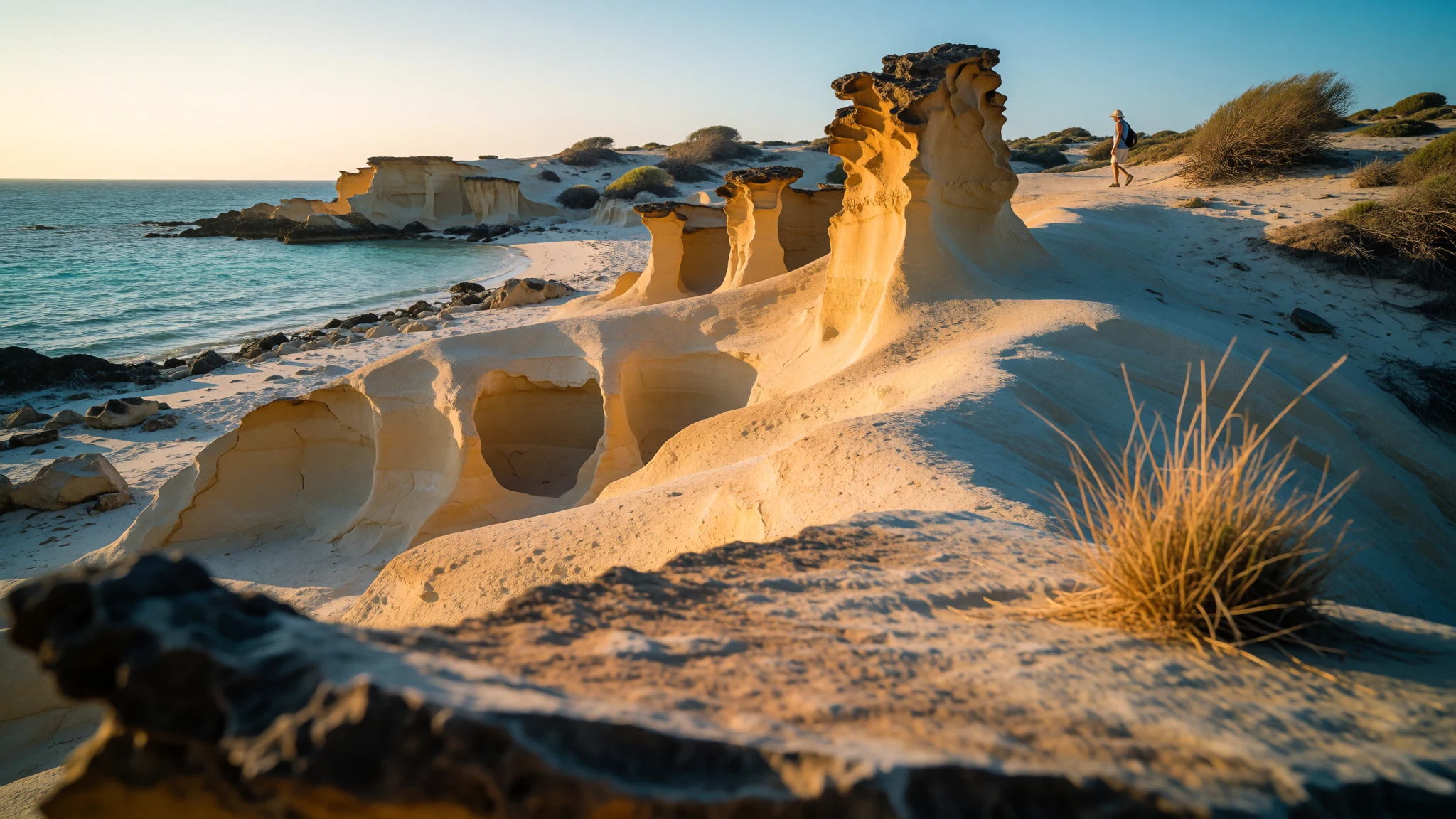
- Savane des pétrifications — Near Sainte-Anne, southern tip
The Savane des pétrifications is the dry, desert-like southern tip of Martinique near Sainte-Anne, a sharp contrast with the wet north. There is almost no shade, so go early or late, carry plenty of water and wear a hat and sturdy shoes.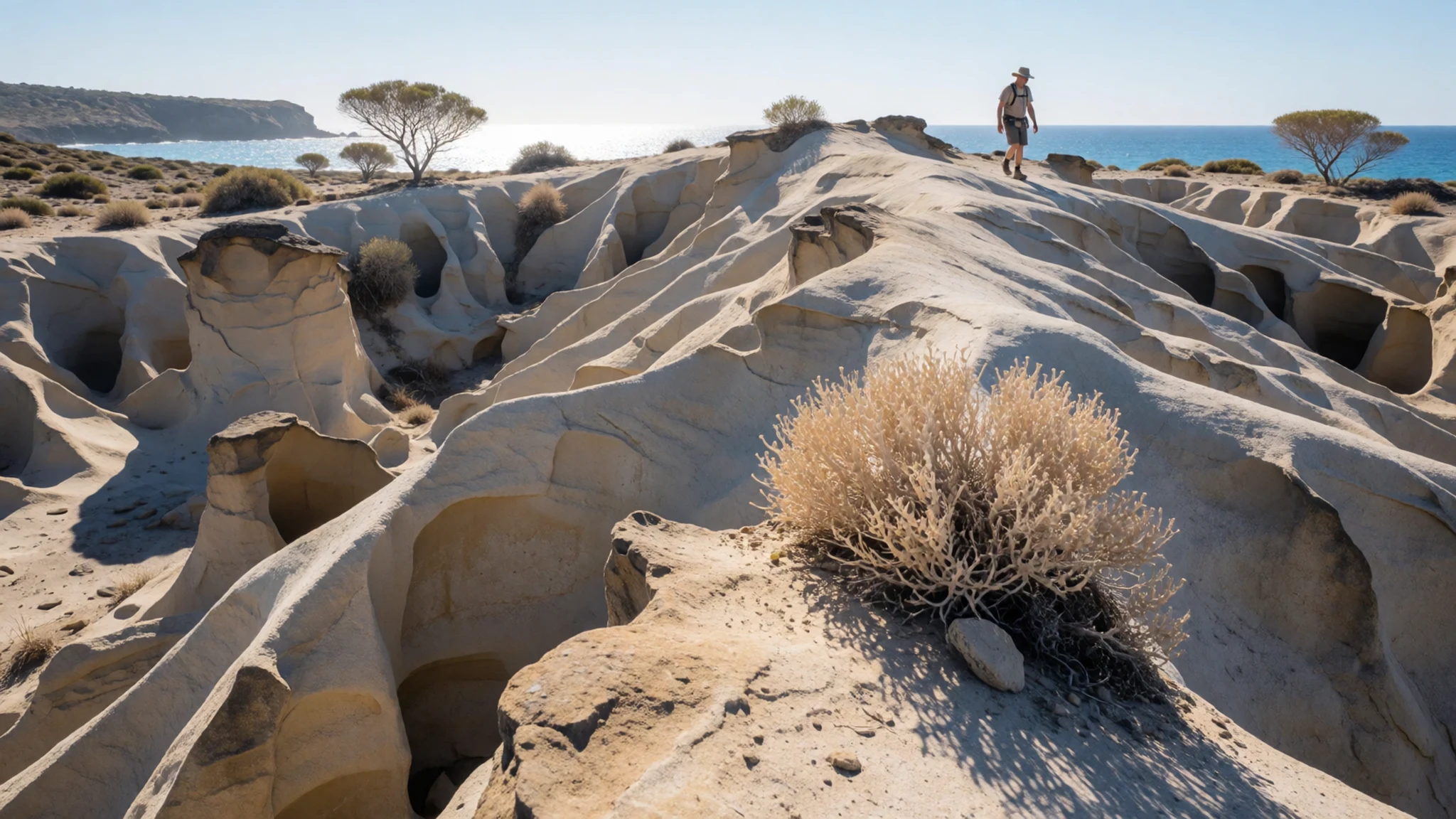
Culture
Caraïbes, in its Martinique form, is a French-Créole culture with its own pride and pace. French is the official language and Créole is spoken everywhere, and people are open about the island's history of plantation slavery, which is taught in its museums rather than hidden. Martiniquais people are often described as proud and dignified, and they can be wary of visitors who arrive impatient or without manners. Service tends to run slower in warm climates, and trying to hurry it usually backfires. Politeness is not a formality here: a greeting is the start of any exchange, whether in a bakery, a taxi or a roadside snack stand. Beach areas and tourist districts are lively, and unaccompanied women should expect frequent catcalling and similar attention from men; a firm, calm brush-off and staying in busier areas usually works. Food, rum, music and Sunday family gatherings are central to social life, and a good deal of the island's identity is carried in the kitchen. The wider Caribbean varies sharply from island to island, so what holds in Martinique does not automatically hold in Jamaica, Cuba or Haiti. Say 'Bonjour' when you enter any shop, café or office and 'Merci, au revoir' when you leave, and be patient rather than pushing for speed.
What to wear
Caraïbes, as seen through Martinique, has a clothing tradition built on madras: a brightly checked cotton cloth that is the island's best-known textile. Traditional Créole dress combines a long, full skirt, a white blouse trimmed with lace or embroidery, and a madras headtie whose knot was once read as a message. Gold jewellery, often chunky beads and chains, completes it. Today the dress appears mainly at festivals, folklore performances, weddings and Carnival, and on older women at ceremonies. Everyday clothing is light and practical: cotton shirts, linen, shorts, sundresses, sandals and swimwear, with French-style smartness in town and a little more care for church or dinner. Visitors should dress for heat and sun first. Choose breathable cotton or linen, a wide-brimmed hat, sunglasses and plenty of sunscreen, which is available in French-style pharmacies. Pack light rain gear, as showers can pass quickly. For gorges, forest trails and rocky coves, wear shoes with a firm grip or water shoes rather than flip-flops. Cover shoulders and knees when entering a church or cathedral, and put a shirt or sarong on when leaving the beach for town. Swimwear is fine on the sand but not in shops, restaurants or on the street.
What to eat
- Accras de morue — Beach snack stands and market stalls
Accras are small, crisp fritters made with salt cod, herbs and chilli. They are sold hot from snack stands and beach shacks and eaten by hand, often with a cold drink. They are a good first taste of Créole cooking.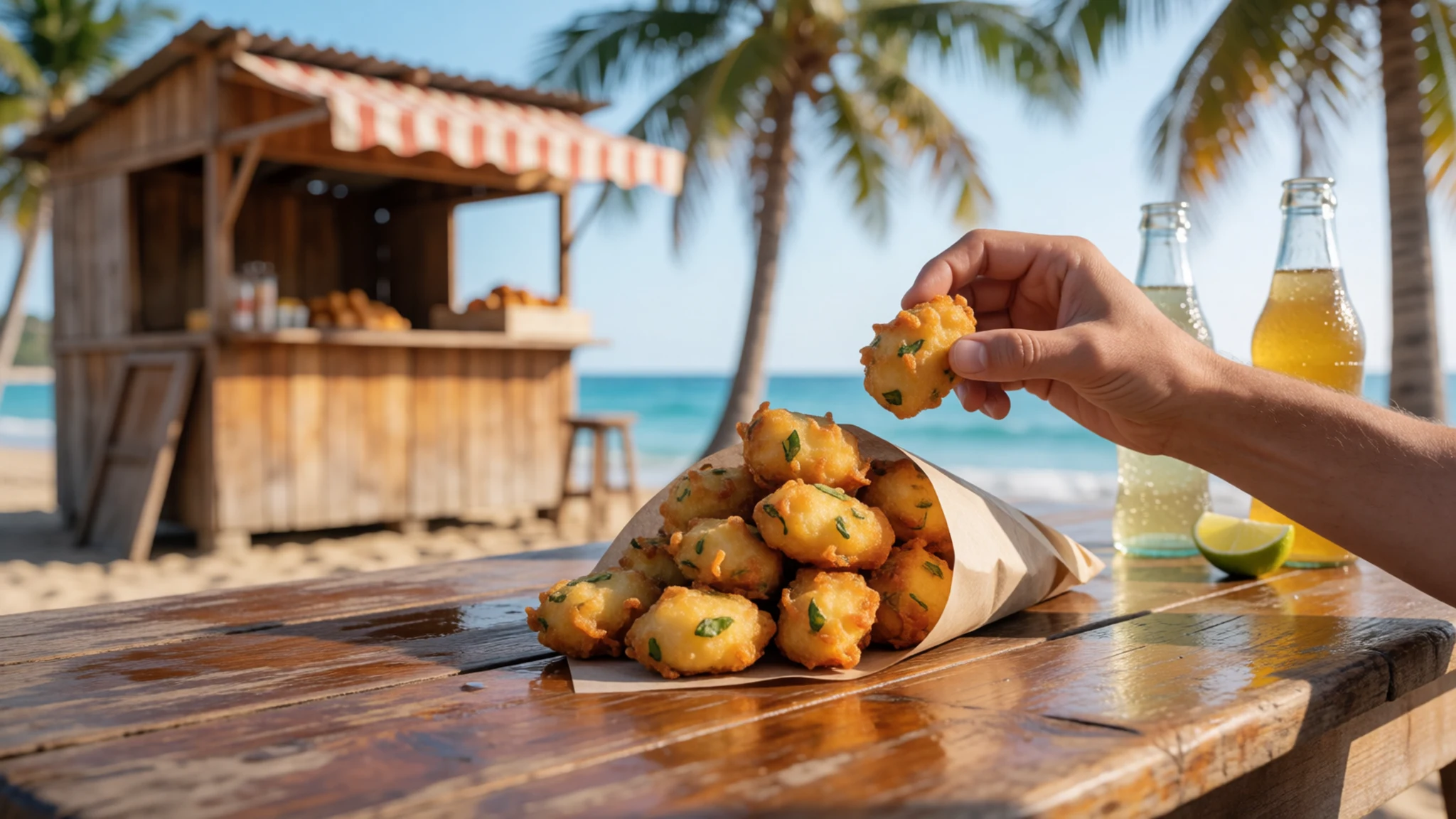
- Boudin créole — Roadside food stalls and local markets
Boudin créole is a spiced blood sausage, soft and peppery, usually served as a snack or a starter with bread or a salad. It is a staple of Martinique's food stalls and is most often eaten warm.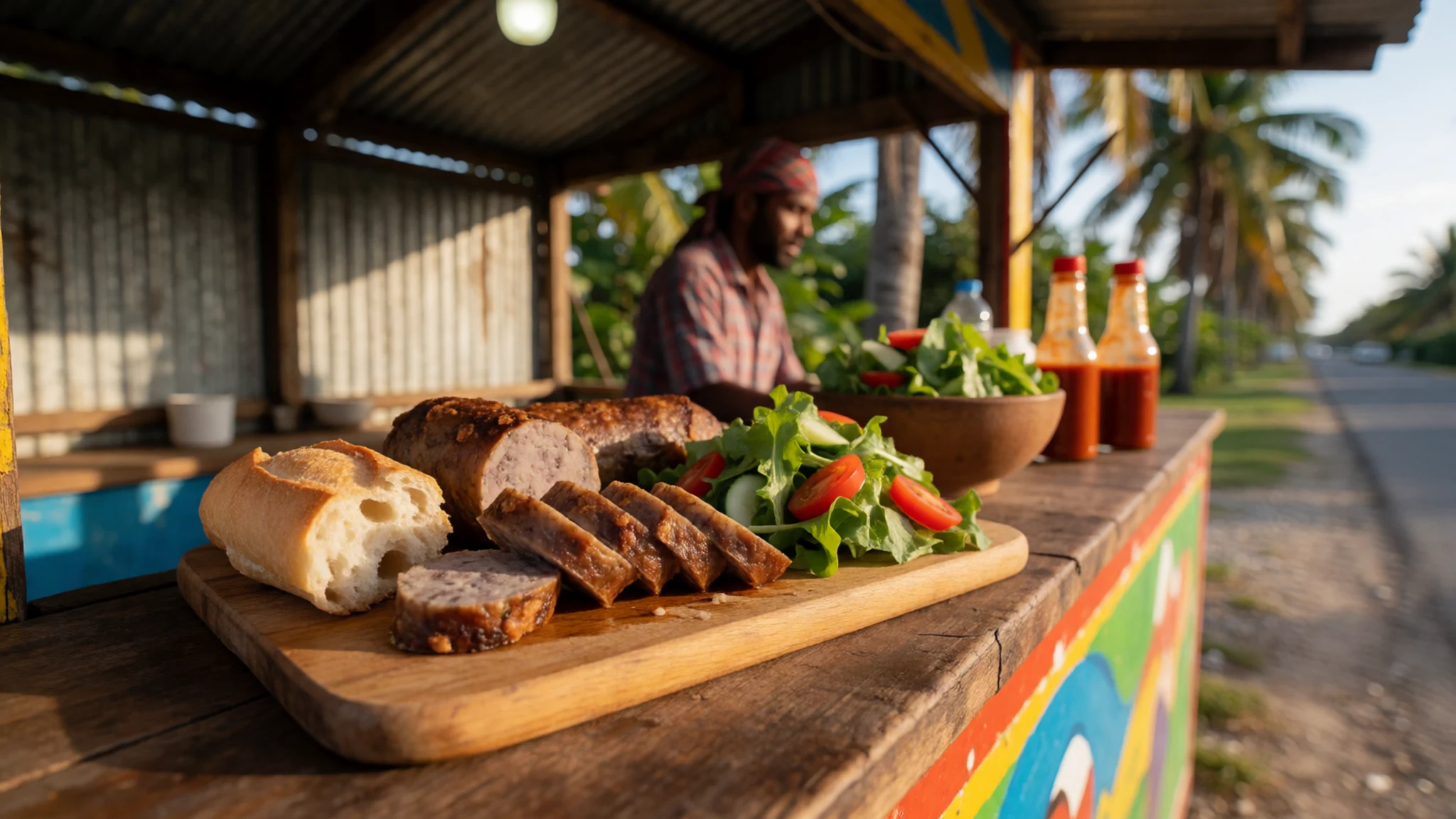
- Colombo — Créole restaurants and home-style eateries
Colombo is the island's curry-style stew, made with chicken, goat or fish and a mild spice blend, served with rice. It shows the Indian influence on the Caribbean kitchen and is easy to find at Créole eateries in most towns. - Court-bouillon de poisson — Fishing villages along the coast
Court-bouillon is fresh fish simmered in a tomato, onion, garlic, chilli and herb sauce, eaten with white rice. It is best in coastal villages, where the catch comes in the same day, and is usually mild enough for most tastes. - Fresh coconut water and fruit juices — Beach vendors and town market stalls
On Martinique, vendors on the beach and in town sell coconut milk and fresh fruit juices, often pressed to order. They are the simplest way to stay hydrated in the heat, and a sensible companion to a spicy snack.
Plan it
Best time. February to May, when it is generally drier and a little less humid, which suits hiking, beaches and city walking. June to November is the wetter, more humid hurricane season, with higher storm risk and heavier rain; check forecasts before booking.
How long. 4–6
Getting there. Fly to Martinique, with direct services from Paris and links from neighbouring Caribbean islands, North America and French Guiana; check airlines for current routes. Ferries connect nearby islands, and cruise ships anchor near Fort-de-France. EU, Icelandic, Norwegian, Liechtenstein and Swiss citizens need only a valid ID card. Martinique is outside the Schengen Area, so Schengen visas for metropolitan France are not valid there.
Budget. mid
Tips
- Pack plenty of sunscreen; French-style pharmacies on the island carry good brands, often cheaper than airport shops
- Carry water and a hat on hikes, since the sun is strong and the trails can be steep
- Check cruise-ship days before visiting Fort-de-France, as the waterfront and shops get crowded
- Test swimming conditions locally; rain and rough sea change coves such as Anse Noire quickly
- Plan for a slower pace in shops, restaurants and offices, and allow extra time for connections
Etiquette
- Greet with 'Bonjour' on entering any shop or eatery and say 'Merci, au revoir' as you leave
- Treat the slavery museums and former plantation sites with respect and quiet
- Avoid hurrying or snapping at staff; patience goes further than pressure
Nearby
Sources
- Wikidata Q106727130 (CC0)
- Wikipedia — Caraïbes (rev 1386325356) (CC BY-SA 4.0)
- Wikivoyage — Martinique (rev 5430929) (CC BY-SA 4.0)
Wildlife
- Green sea turtle (animal)
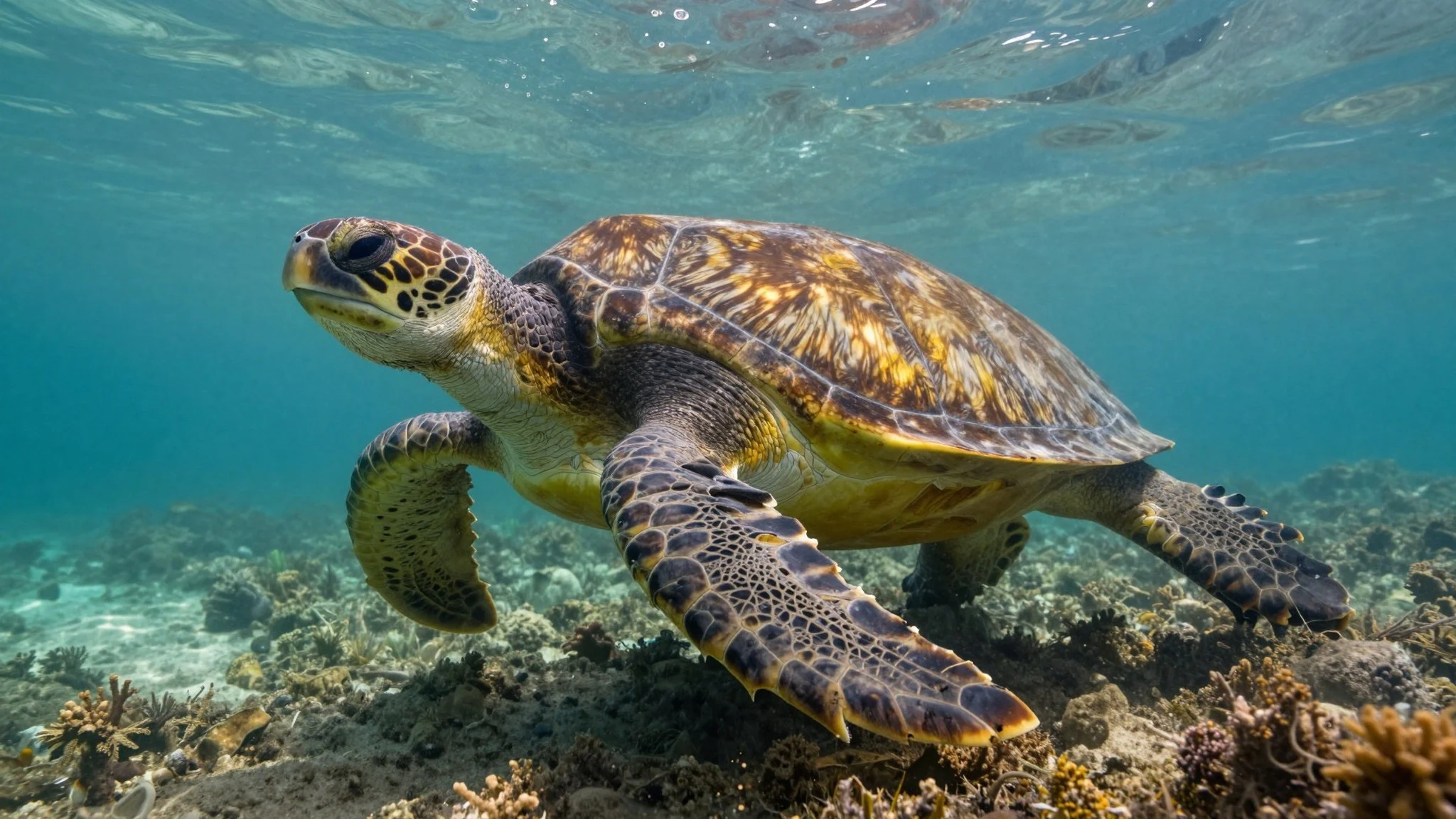
The green sea turtle is a large swimmer that grazes on seagrass, rather like an underwater cow. Its name comes from the green fat beneath its shell, though the shell itself is dark olive or black. In Caraïbes, turtles pass through the offshore waters, sharing them with travelling fish and coral reef. Ask a local guide when and where to look. Watch from a respectful distance, stay quiet and calm, and never feed it.