Cap Méchant
Cap Méchant, France
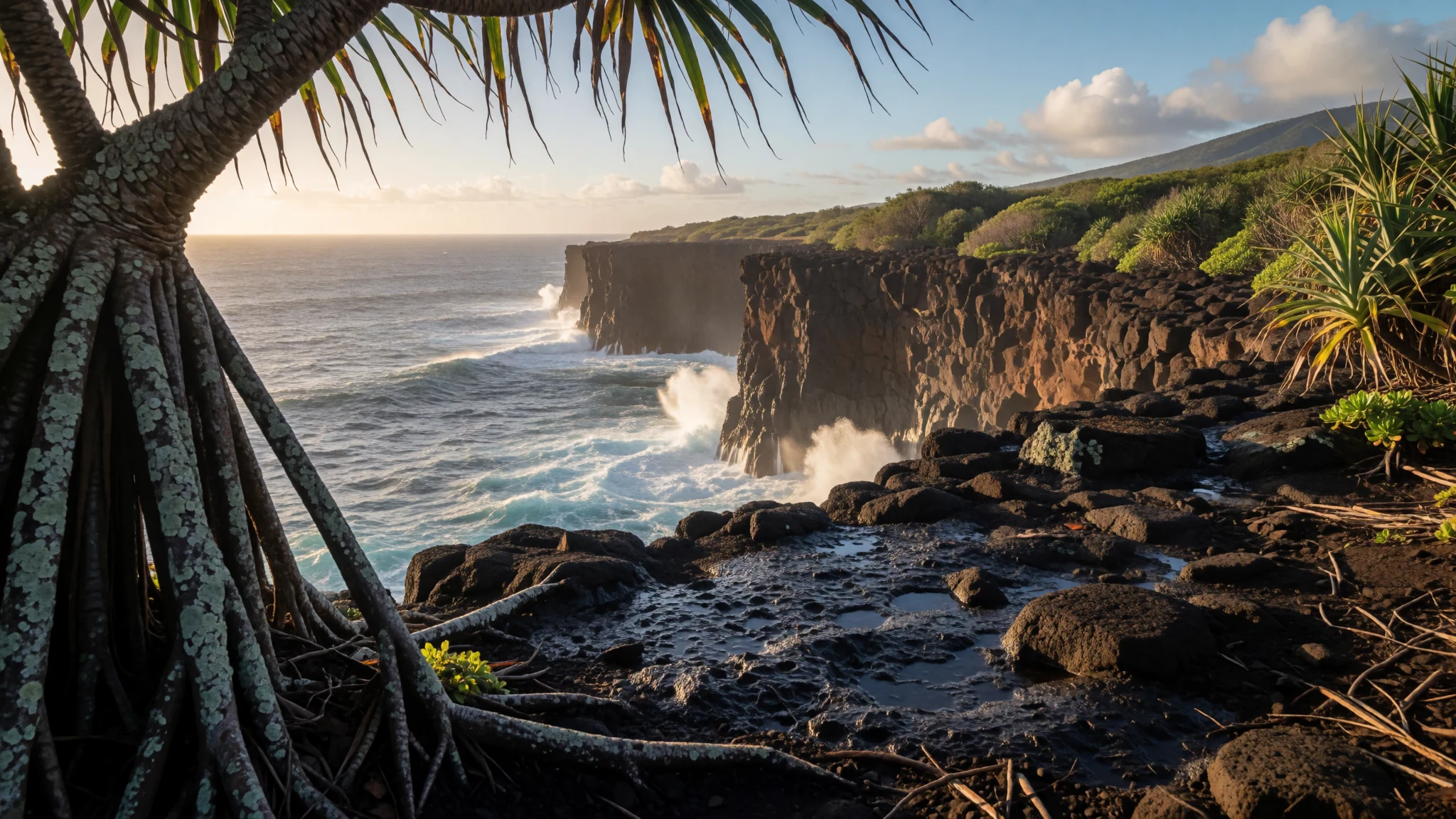
Cap Méchant is a raw volcanic headland on Réunion's wild south-east coast, where black lava cliffs meet an Indian Ocean swell that never seems to rest.
The place
Cap Méchant is a black lava headland on the wild south-east coast of Réunion, the French island in the Indian Ocean, within the commune of Saint-Philippe. Wikidata classes it as a cape and a cliffed coast, and both descriptions fit: the land ends in dark basalt cliffs, and the sea works at their base with hardly a pause. Beyond the edge there is only open water, and the swell arrives unbroken from the southern ocean. Behind the cliffs the ground is low and green. Screw pines, known locally as vacoas, shade the coastal path, and their stilt roots and spiky leaves give the shoreline a slightly prehistoric look. Further inland the land rises towards the volcano Piton de la Fournaise, whose eruptions have built much of this coast, and the road runs through fields, scrub and patches of forest rather than resort towns. This is the quiet end of Réunion. There is no beach here to lie on; the interest is the shape of the rock, the noise of the surf and the feeling of standing at the edge of an island. Most visits are short, an hour or two on the way between Saint-Joseph and the lava fields, though a slow morning with a flask of tea and a camera fills easily. The weather changes fast: bright sun can give way to a squall within minutes, and the wind is rarely absent.
Its story
Cap Méchant sits on a coast that is still being made. Réunion is a volcanic island, and Piton de la Fournaise, in the south-east, has sent lava towards the sea again and again, adding black rock to the shoreline and burying older ground. The cliffs at the cape belong to that long cycle of building and wearing away: lava pours out, cools into dark basalt, and the ocean at once begins cutting it back. The name is French for a wicked or nasty cape, and it probably records how sailors saw this shore, with a heavy swell, little shelter and no easy place to land. Crossing the Indian Ocean, a mariner had good reason to respect a headland like this one. The island itself was uninhabited when Europeans first reached it. French settlement later brought plantations of sugar cane, coffee and spices, worked first by enslaved people from Africa and Madagascar and, after abolition, by labourers from India and elsewhere. That layered history is why Réunion today has Creole speech, Tamil temples, mosques, churches and Chinese shops side by side. Saint-Philippe, the commune around the cape, remains one of the more rural and thinly settled corners of the island, and it still feels that way: farms, small villages and lava fields rather than development. The cape has become a stop for people who want the raw side of the coast, the version shaped by fire, wind and water.
What to see
- The Cap Méchant headland — Saint-Philippe
The headland itself is the main event: a ledge of dark lava above a sea that breaks hard on the rock below. A clear morning gives the best light on the cliffs. Keep well back from the edge, where spray makes the stone slick and the swell can surprise even careful visitors.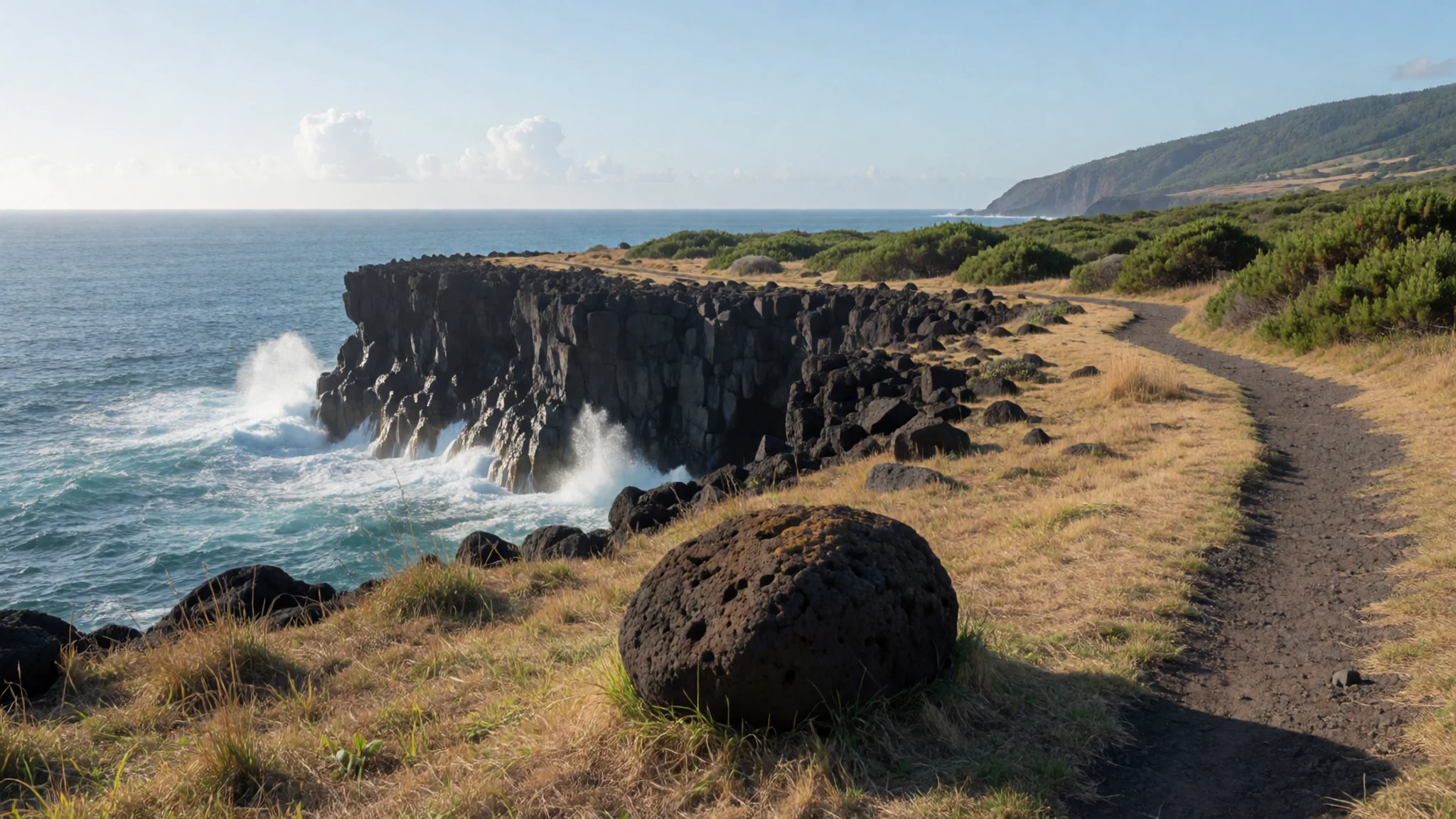
- The coastal path under the vacoas — Saint-Philippe
A short footpath follows the cliffs beneath screw pines, opening here and there onto views of black rock and surf. The shade is welcome on hot days. Wear shoes with real grip, because the ground is uneven and can be damp after rain, and expect to share the path with local families.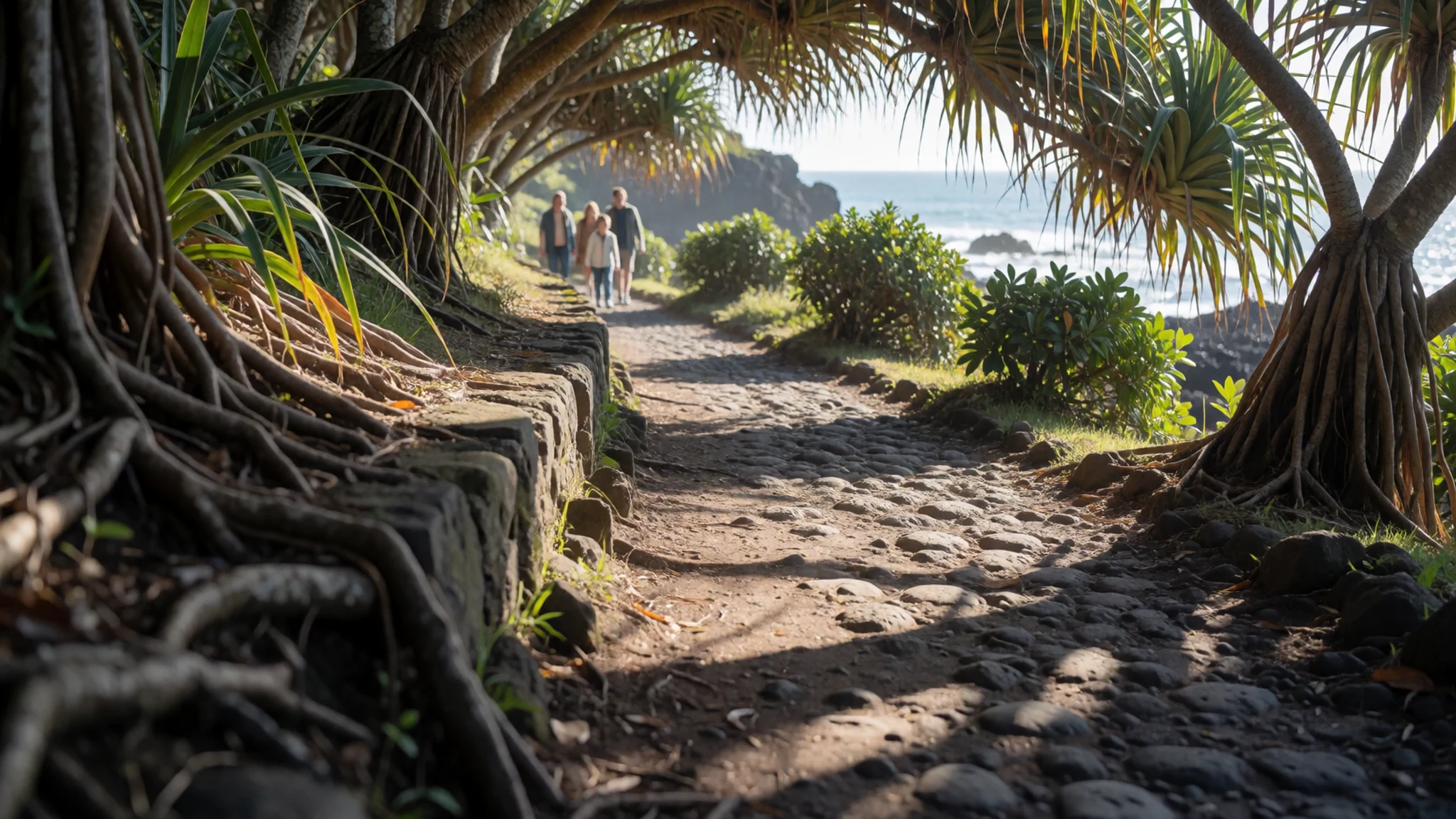
- The highline gap — Saint-Philippe
Cap Méchant has drawn highliners, who rig a narrow strip of webbing across a gap in the cliffs and walk it above the water. Even with no harness in sight, the photographs say plenty about the drop. Watching is fine; keep clear of anchors and ropes if a team is setting up.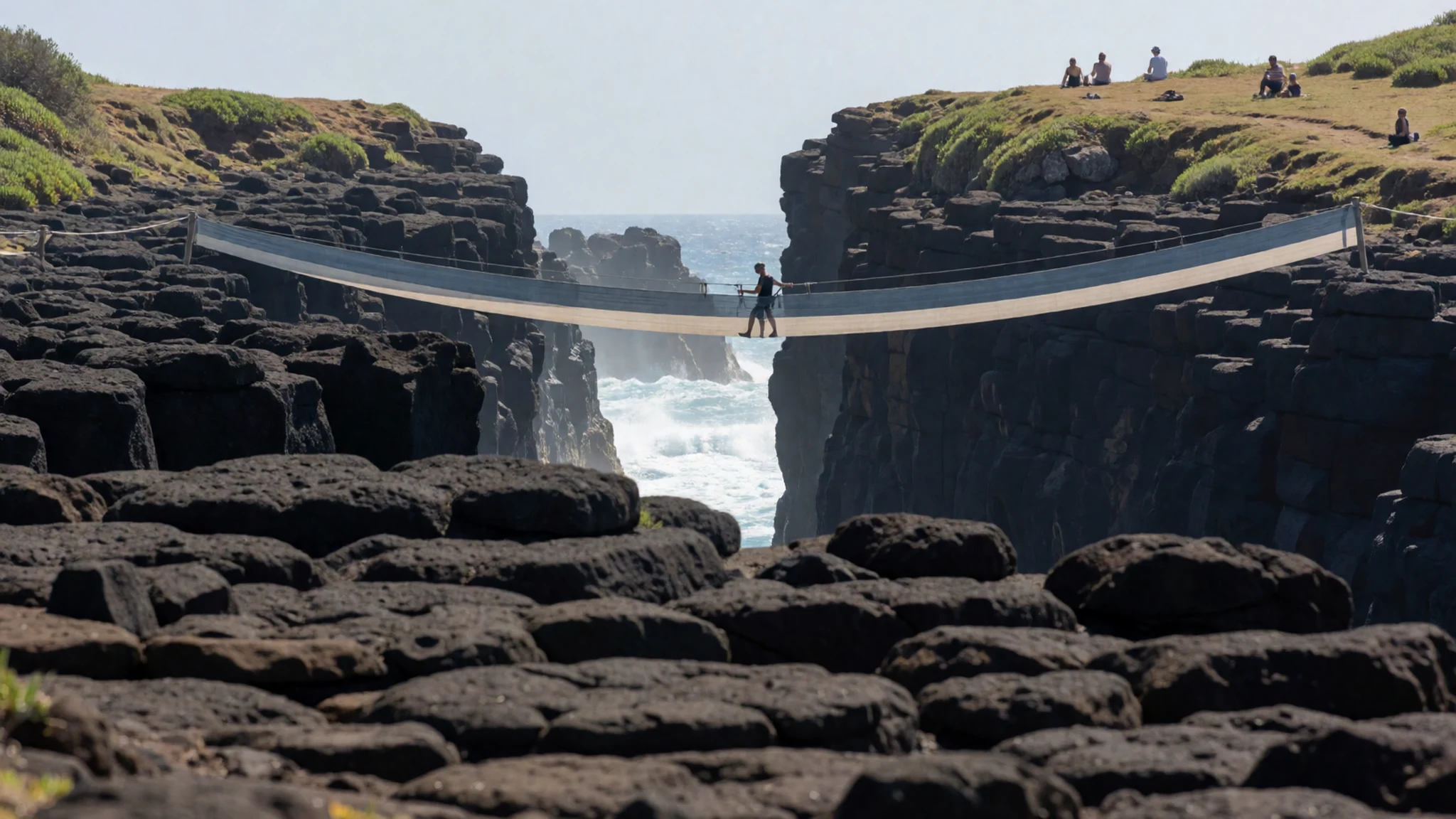
- The lava coast of Saint-Philippe — South-east coast
Seen from above, the cape is one tooth in a long line of black cliffs and green headlands. On the ground the same coast rewards a slow drive, with stops wherever the road meets the sea. Lava from Piton de la Fournaise has shaped this shoreline over a very long time.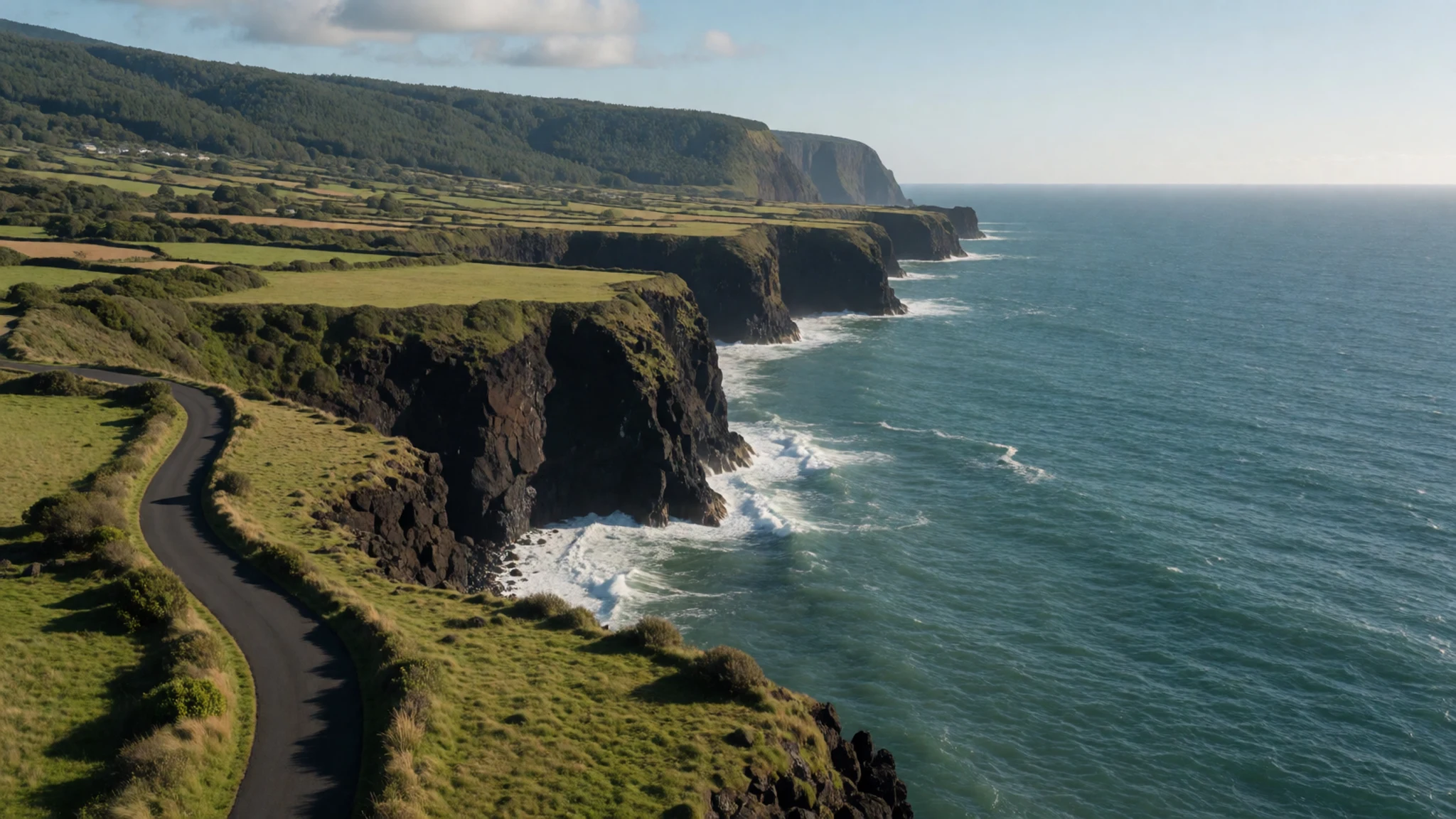
- Native forest inland — Saint-Philippe, inland
Inland from the cape, the commune of Saint-Philippe holds stretches of native forest growing on old lava. A marked or guided walk shows something of the coast before cane and farming, with ferns, moss and tall trees dripping after rain. Check locally for current trail access and conditions before setting out.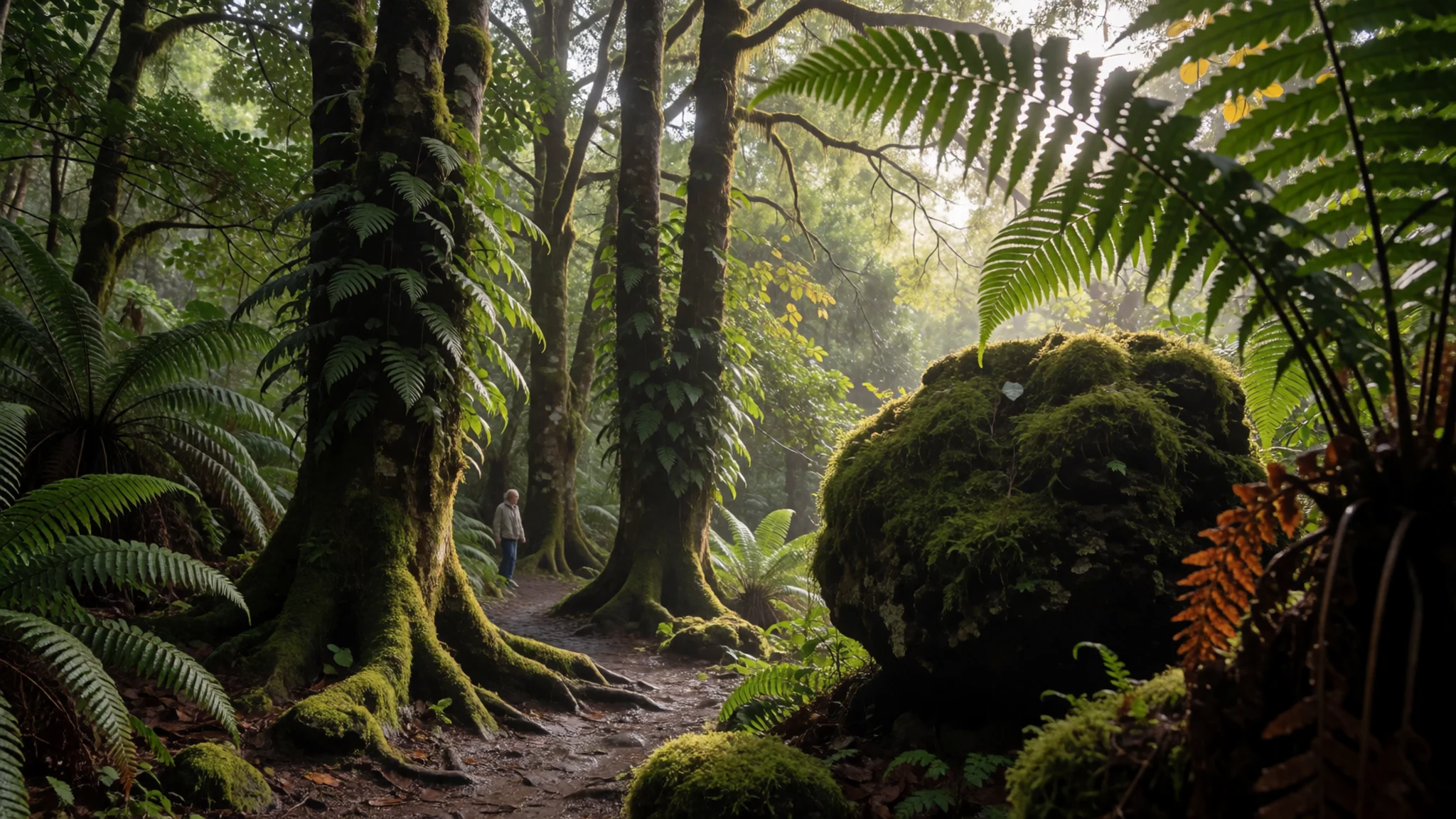
Culture
Cap Méchant belongs to Réunion, a French department where the everyday culture is a blend rather than a single tradition. Réunion Creole is the language of homes, markets and roadside chat, French is used for officialdom and school, and the island's heritage draws on Africa, Madagascar, India, China and Europe. Churches, Tamil temples, mosques and Chinese shrines sit within a short drive of each other, and festivals from several faiths are public events that visitors can often watch from a respectful distance. Family life spills outdoors. On weekends, local people head to the coast for long picnics with grills, music and cool boxes, and a viewpoint like this one may be busier on a Sunday than on a weekday. The south-east is more rural than the western resorts, so daily rhythms follow farming and the weather: early starts, a pause in the heat, and plans that shift when a squall comes through. A greeting matters. A simple bonjour when entering a shop, café or small eatery is expected, and a few words of French or Creole are warmly received. The sea here is part of local life but not a playground; people respect it, and many know someone who has been caught out by it. Keep to the marked path, stay well back from the wet cliff edge, and take every scrap of rubbish with you, since families use this coast for their own picnics.
What to wear
Cap Méchant lies in a part of Réunion where traditional dress now appears mainly at festivals and in family or religious settings. Tamil communities wear saris, often in bright silk or cotton, and men wear the veshti, a wrapped cotton cloth, for temple ceremonies. Creole heritage is associated with checked madras-style cotton, seen in headscarves, aprons, tablecloths and costumes at cultural events. Day to day, people on the island dress as in much of France in a warm climate: T-shirts, shorts, light dresses, sandals and trainers, with swimwear on the west coast and a rain jacket in the wetter south-east. Smart-casual is normal for restaurants and town outings, and nobody expects formal clothes at a headland. For a visit here, light quick-drying layers work best, with a windproof rain jacket because showers are common. Sturdy shoes with a good grip matter more than style, since the lava rock is sharp when dry and slippery when wet. A hat and sunscreen help when the cloud lifts. If the day includes a temple or church, cover shoulders and knees and carry a scarf, and expect to take shoes off at Tamil temple entrances.
What to eat
- Rougail saucisse — Roadside snack stands and family eateries along the south coast
Smoked sausage browned and simmered in a sauce of tomato, onion, ginger and chilli, served over rice. It is Réunion's everyday comfort dish, tasting smoky and fiery in turn. Order it with rice, beans and a side of pickled vegetables.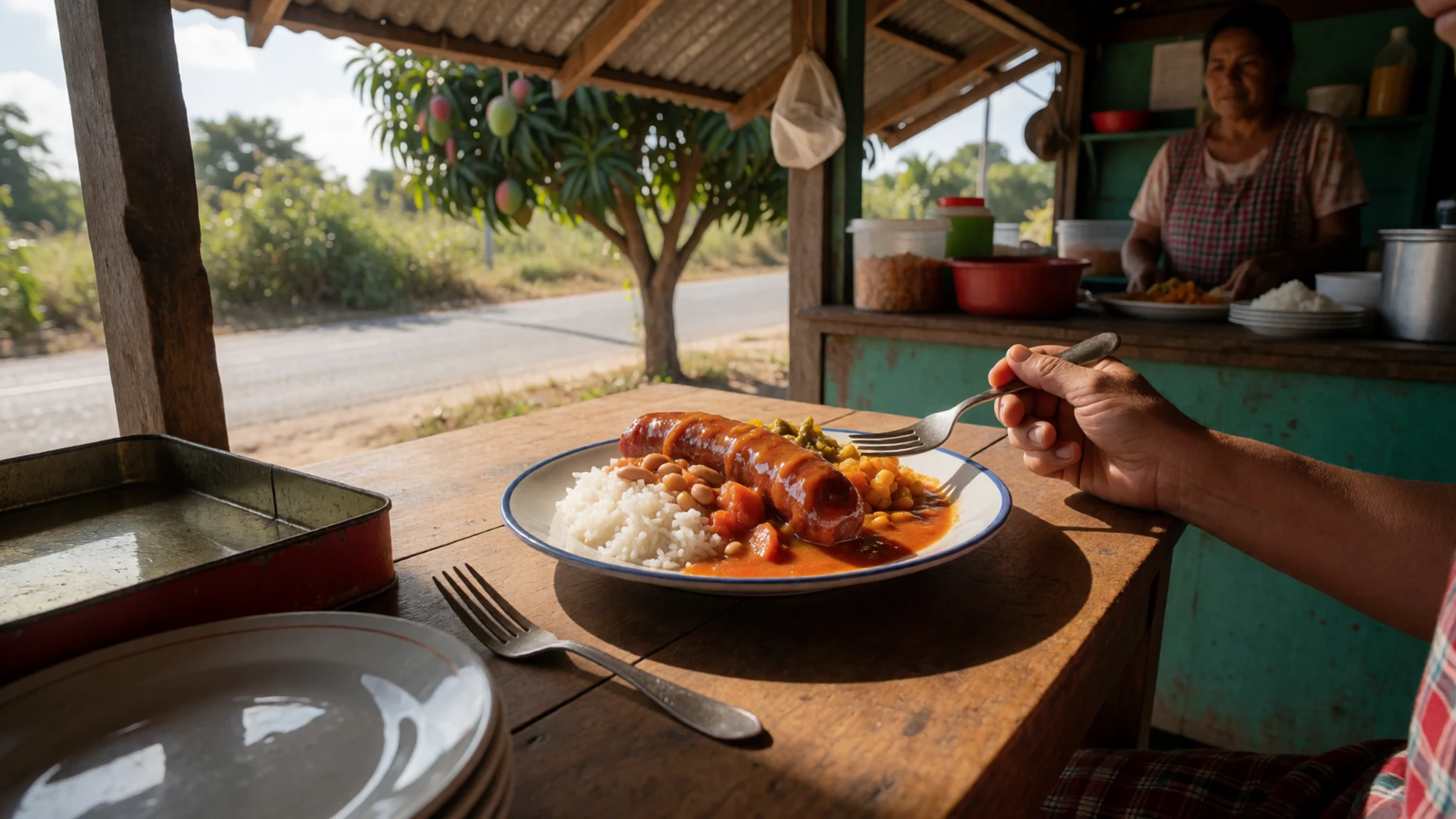
- Cari poulet — Family-run eateries in Saint-Philippe and Saint-Joseph
Chicken cooked slowly with turmeric, thyme, onion and ginger in a pot, then served with rice and lentils. The spicing is gentler than the Indian original and reflects the island's blended roots. Meat and fish versions also appear.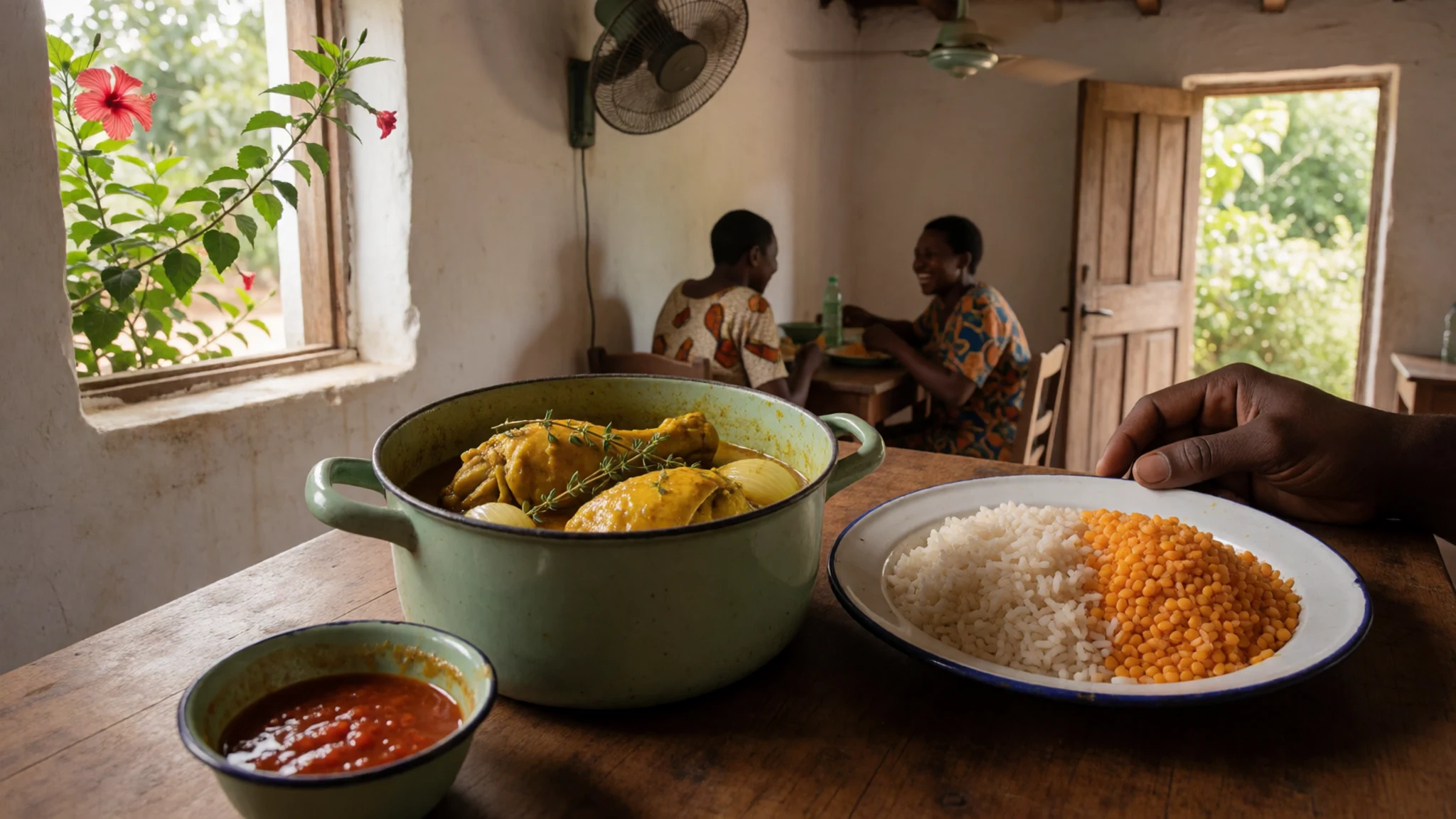
- Samoussas — Bakeries, snack counters and town markets
Small crisp triangles filled with spiced vegetables, cheese, chicken or fish, fried until the pastry shatters. They arrive hot in paper bags and make a good snack before a walk on the cliffs. Ask for the chilli sauce on the side. - Bouchons — Small Chinese-Creole snack shops in towns
Steamed dumplings filled with minced pork or chicken, carrying a Chinese influence. They are soft, savoury and usually served with soy sauce or a little pimento. They are cheap, filling and found across the island. - Gâteau patate — Village bakeries and market stalls
A dense, lightly sweet cake made from sweet potato, often with coconut or vanilla. Cut in thick slices, it goes well with coffee. Slightly crumbly and not too sugary, it is a typical local bake rather than a restaurant dessert.
Plan it
Best time. May to November, when the air is cooler and drier; the south-east still catches showers in any month, so carry a rain jacket. December to April is hot and humid, and the cyclone season brings a risk of sudden closures and heavy swell.
How long. 1–2
Getting there. Fly to Roland Garros Airport near Saint-Denis or Pierrefonds Airport near Saint-Pierre, then drive east along the south coast through Saint-Joseph to Saint-Philippe. A hire car is the easiest way to reach the cape; check local bus services if you are travelling without one.
Budget. mid
Tips
- Hire a car and fill the tank before heading into the quiet south-east
- Go early in the day, when the cloud is usually lighter and the cliffs are better lit
- Carry water, a rain jacket and shoes with good grip
- Bring a little cash for roadside stalls and village bakeries
- Check weather and sea conditions locally before you set out
Etiquette
- Stay behind any barriers and well back from the wet cliff edge
- Do not swim from the rocks, and do not climb down to the waterline
- Take all rubbish with you and leave the screw pines and plants untouched
Nearby
Sources
- Wikidata Q2937073 (CC0)
- Cap Méchant in Saint-Philippe, Réunion — Bouba ? (CC BY-SA 2.5)
- Cap Méchant — JarodFR (CC BY-SA 4.0)
- Cap Méchant — VillageHero (CC BY-SA 2.0)
- Vue depuis un sentier côtier ombragé par des vacoas — Clémenceau Lauret (CC BY-SA 4.0)
- Cap Méchant 2 — VillageHero (CC BY-SA 2.0)
- Drone picture of Cap Méchant on La Réunion — Froscha (CC BY-SA 4.0)
- Pratiquante de highline, Cap Méchant, 2016 — Ex Machina 007 (CC BY 3.0)
- Cap Méchant, Reunion Island — A FREE KA SMILE 4 ALL (CC BY-SA 4.0)
- Wikipedia (CC BY-SA 4.0)
- Wikivoyage (CC BY-SA 4.0)


