Chengdu
Chengdu, People's Republic of China
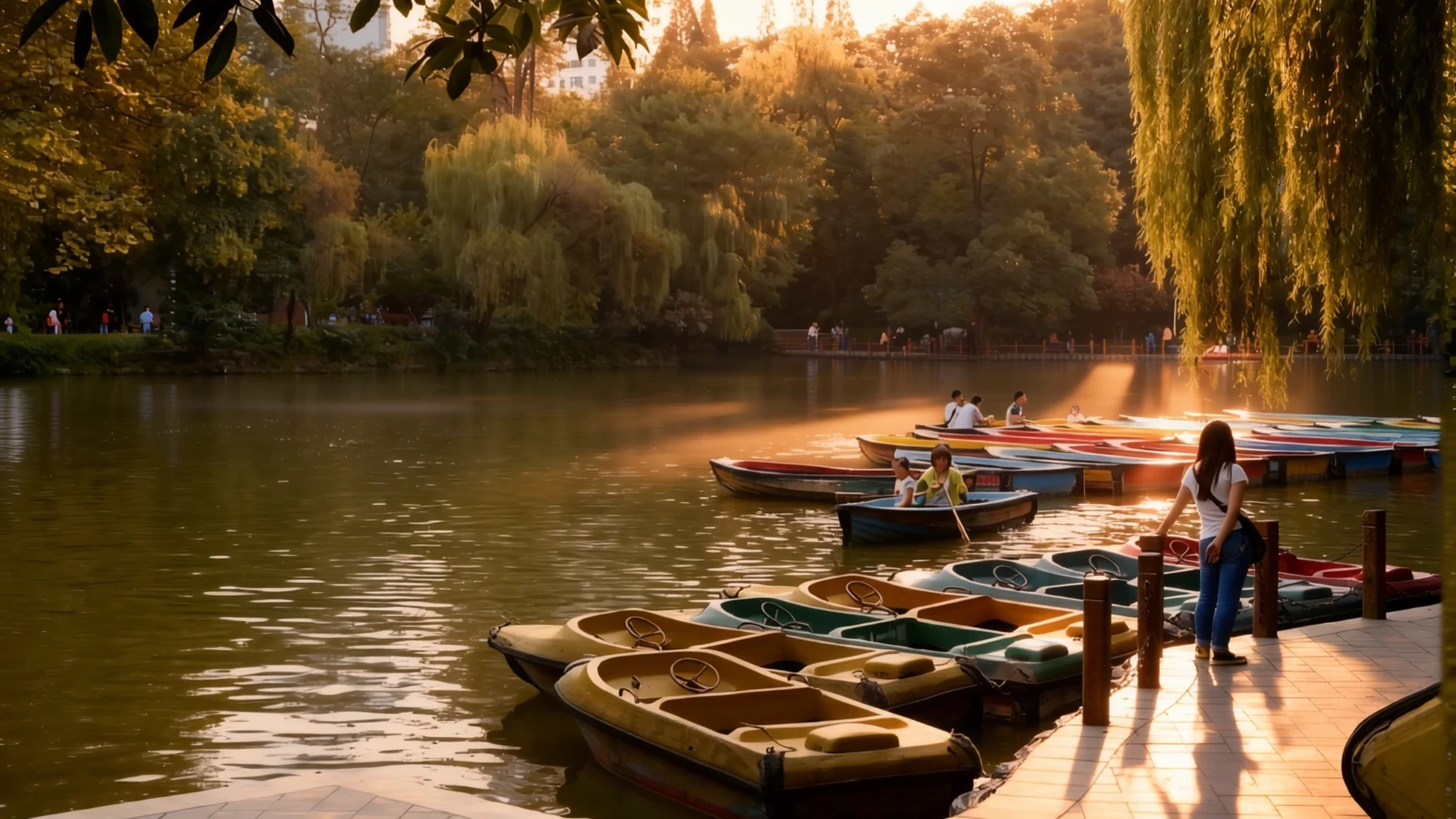
Sichuan's capital: teahouses, hotpot, pandas and a city that has kept its name for over two thousand years.
The place
Chengdu is the capital of Sichuan Province in western China, and it has about 21 million people, which makes it one of the largest cities in the country. It sits on the Chengdu Plain, a flat, fertile basin that people have long called the Country of Heaven and the Land of Abundance. The Jin River runs through the city, and its waters have shaped farming here for thousands of years. Beyond the plain, the mountains of western Sichuan rise sharply, and on a clear day the snowy peaks can be seen from the city's edge. Chengdu's character is that of its province: spicy food, slow afternoons in teahouses and a relaxed pace that visitors from bigger eastern cities often notice at once. The city is also the home base for the Chengdu Research Base of Giant Panda Breeding, which draws large crowds, and its food culture earned it recognition from UNESCO as a City of Gastronomy. Most of the sights are in the compact old city, so walking and taxis work well for a first visit. Nearby, the ancient irrigation system at Dujiangyan is a World Heritage Site and makes a rewarding day trip.
Its story
People lived on the Chengdu Plain long before the city existed. Excavations at Sanxingdui and Jinsha show a sophisticated bronze-working culture here more than four thousand years ago, with striking masks, figures and gold objects that now sit in museums. Over time this culture was absorbed into what the Chinese called Shu, a kingdom with its own capitals on the plain before the centre settled at the site of today's city. The fifth king of Shu moved the capital to Chengdu around the fourth century BC, and the name is said to echo an older capital from the Western Zhou period. The Qin state conquered Shu in 316 BC, and the settlement was refounded under a Qin general, who laid out the walled town that later grew into a regional hub. During the Three Kingdoms period, Chengdu became the capital of Liu Bei's Shu Han state, which gave the city a lasting place in popular historical memory. Through imperial, republican and communist eras, the city kept the same name, which is unusual among Chinese settlements. Scholars and poets also gathered here, and the city's literary reputation has stayed strong ever since.
What to see
- Jinli Ancient Street — Old city, south of the centre
Jinli is a reconstructed old street in the historic core, lined with timber-fronted shops, small hotels and stalls in an old-fashioned style. Antique dealers are a highlight, and the mix of souvenirs, snacks and craft shops makes it a good place for an unhurried stroll. It is busy in the evenings and at weekends, so arriving before the crowds gather gives the best views of the lanterns and facades. Expect plenty of visitors and a few tourist-priced items.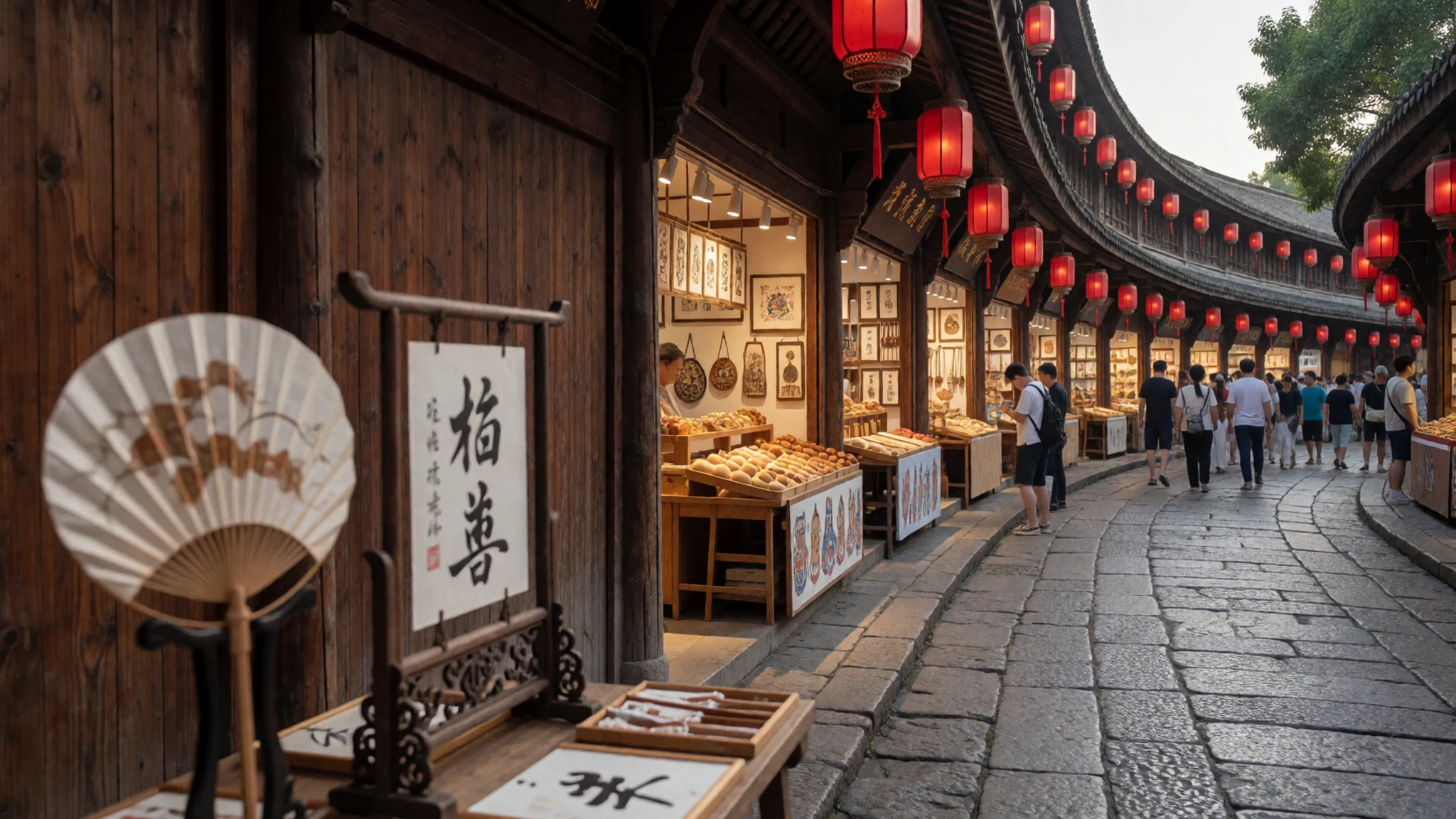
- Kuanzhaixiangzi — Qingyang district, central Chengdu
Kuanzhai Alleys are a cluster of narrow lanes with courtyard houses in a late Qing style. The streets were rebuilt, so the atmosphere is curated, but the tea houses, snack stalls and small courtyards still make it pleasant to linger. Many tea houses are on the pricier side for Chengdu, so it is worth comparing a few before sitting down. It is at its best in the late afternoon, when the lanterns come on.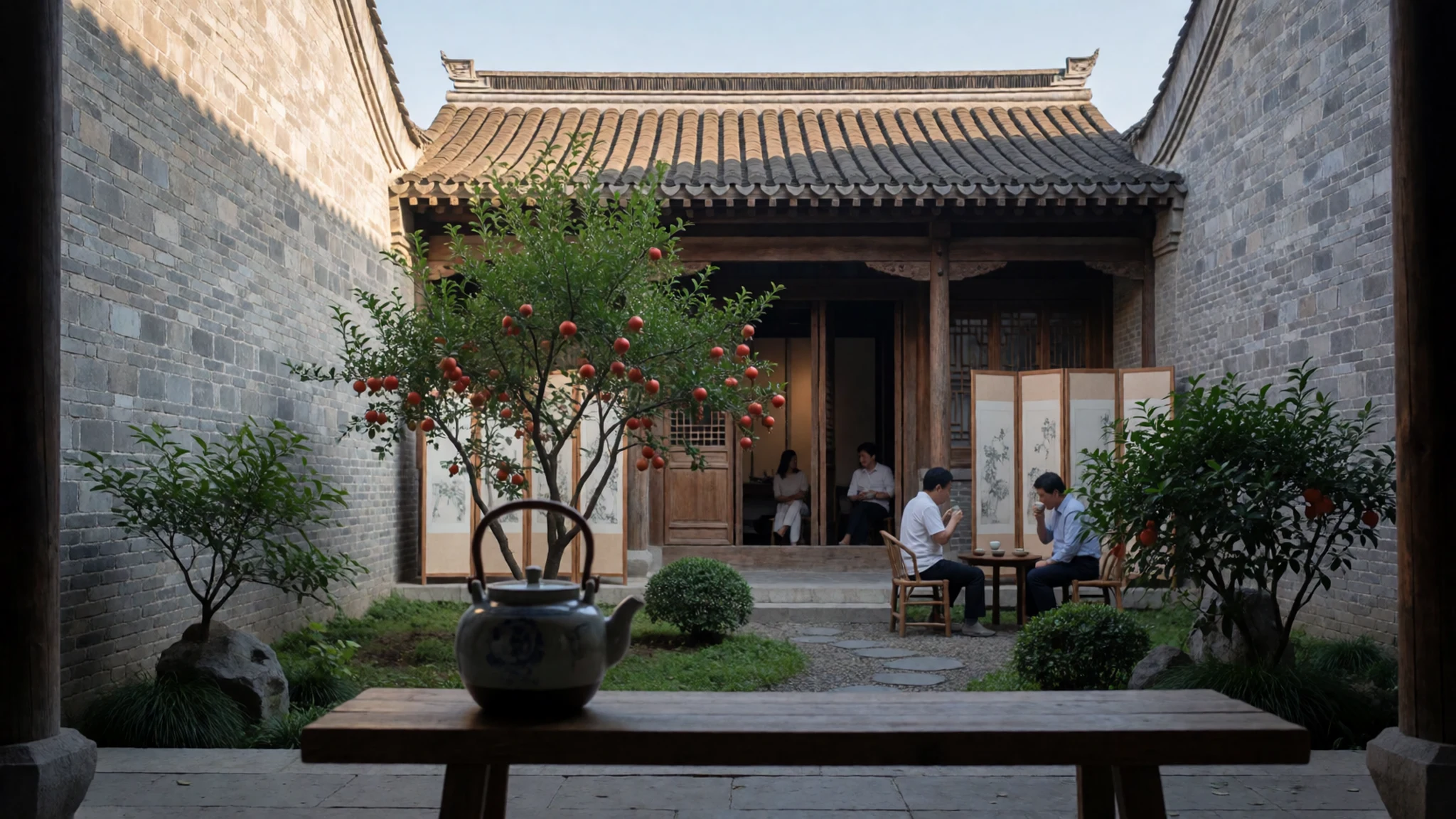
- Tianfu Square — City centre, Jinjiang district
Tianfu Square is the city's main civic space, with a large statue of Chairman Mao dominating the central axis. The square has been redeveloped into a clean, open plaza that suits a wander at dusk. Its fountain display, synchronised to music, is the crowd-pleaser here, and the evening shows draw families and couples. The space is exposed to the sun in summer, so an early evening visit is more comfortable.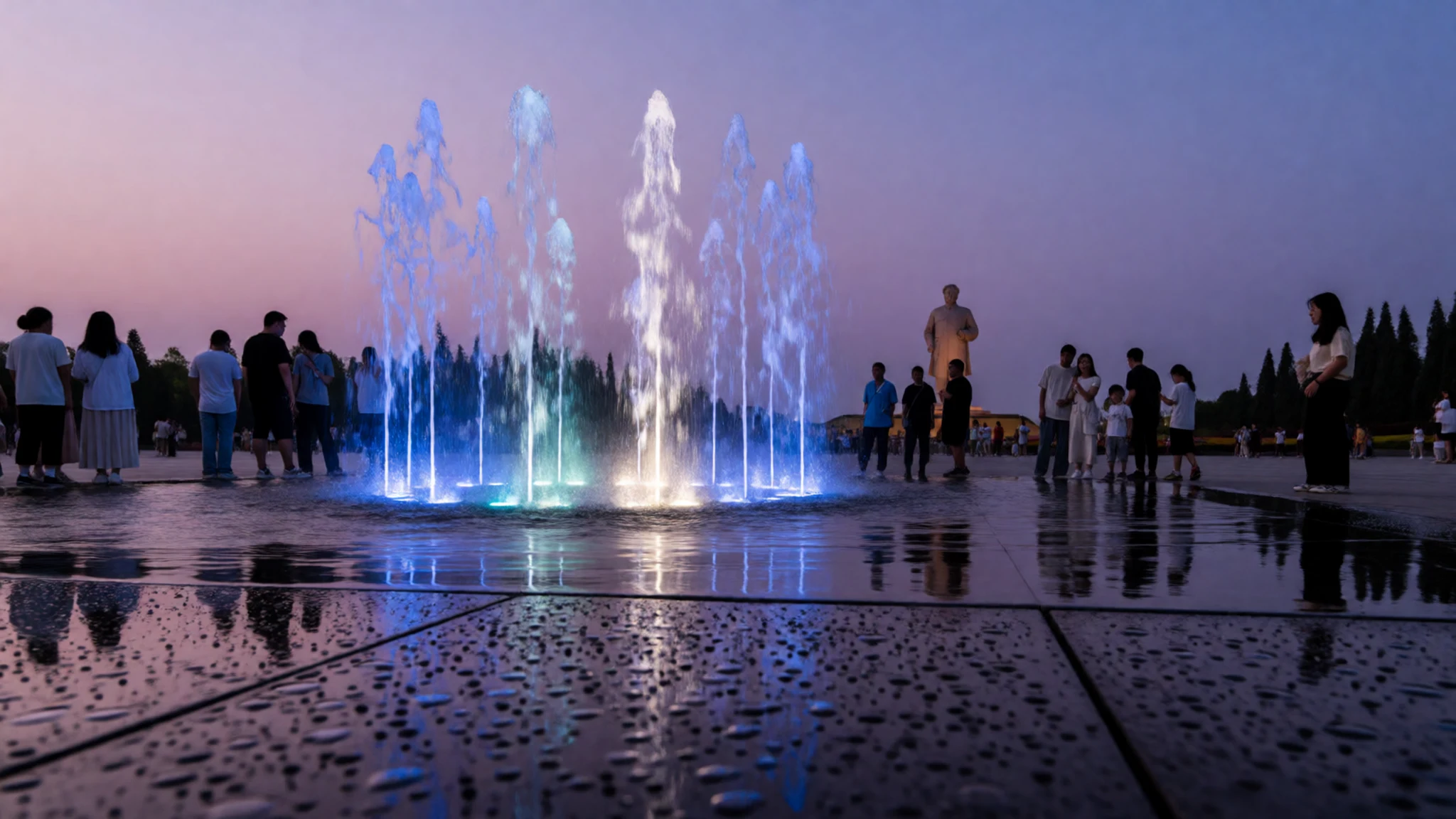
- A Thousand Plateaus Art Space — Southern outskirts, near the Tianfu area
This contemporary art gallery shows the work of Chinese and international artists, and it offers a change of pace from the historic lanes. Exhibitions rotate, so the programme is worth checking before you go. It is a short trip from the centre, and the quieter setting suits a rainy afternoon when the weather turns. Check the official site or the gallery's listings for current opening arrangements.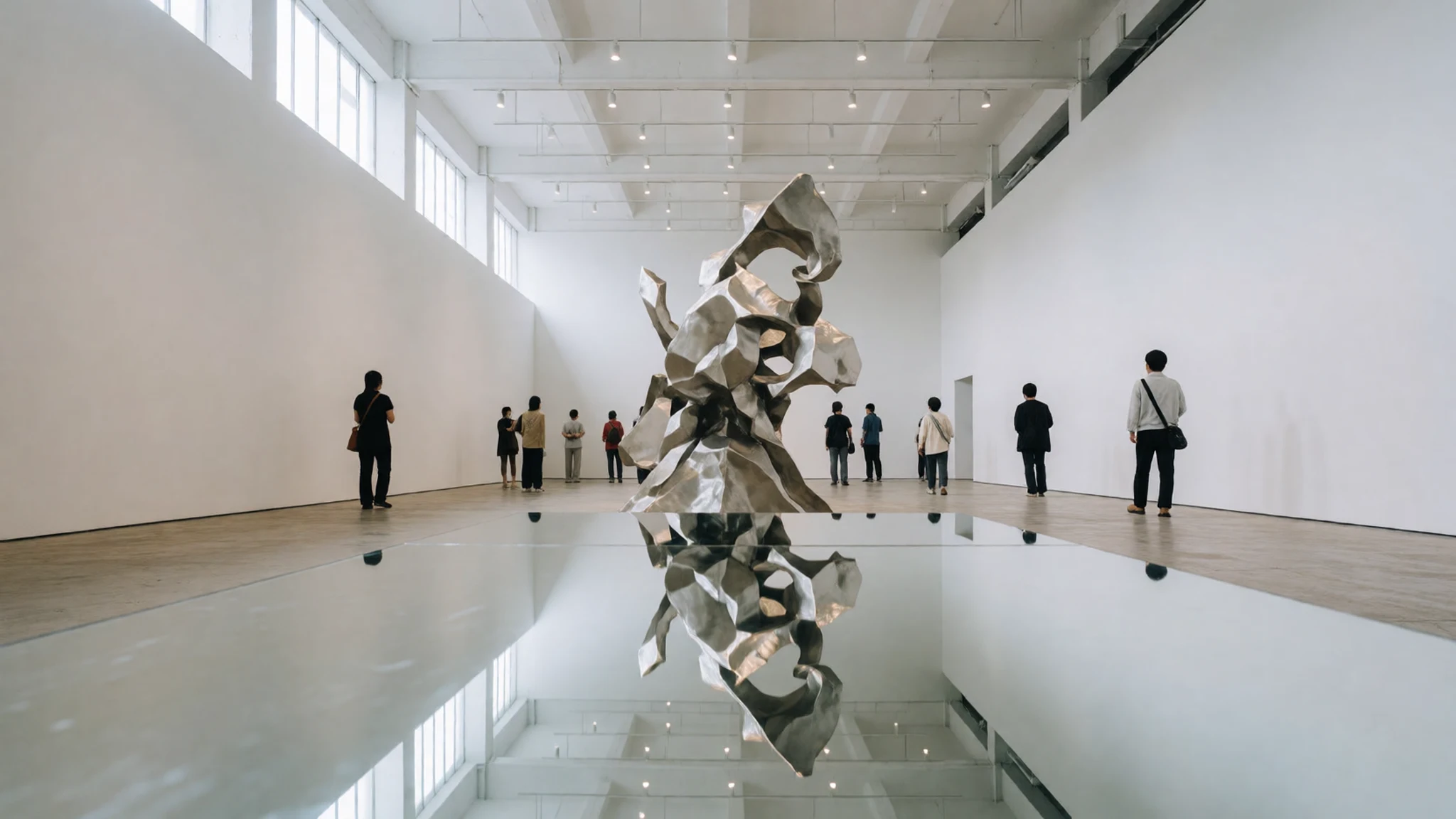
Culture
Chengdu has long been a city of writers, and its literary heritage is part of everyday pride. Sima Xiangru and Yang Xiong were masters of fu, a form that mixed description with verse, while Li Bai and Du Fu, the great poets of the Tang era, are closely linked with the city. Du Fu spent time here and his thatched cottage on the western side of the city is now a garden museum where visitors wander among bamboo and quiet courtyards. Later writers such as Guo Moruo and Ba Jin added to that tradition in modern times. Teahouses are the city's living room. People come to read the paper, play mahjong, chat and sometimes sleep in a chair for an afternoon, and nobody rushes them. Sichuan food is central to daily life, and locals take pride in their spice levels and their snacks. Chengdu was also named China's fourth most liveable city by China Daily in 2006, a point many residents still mention. When you sit in a teahouse or visit a garden, keep your voice low and ask before photographing people at their tables.
What to wear
Chengdu has no single regional costume that visitors will see on the street, because Sichuan dress followed the broader Han Chinese traditions of the empire. The city's most distinctive textile heritage is silk brocade, long woven in the region and known as Shu brocade, which was prized for its colour and patterning. Traditional garments such as the long robe and the qipao, which became popular in the twentieth century, appear mainly in performances, festivals and photo studios. Day to day, people in Chengdu dress much as people in other Chinese cities do: jeans, trainers, light jackets and practical clothing for the humid climate, with a noticeable taste for stylish, slightly relaxed looks in the cafe and shopping districts. Visitors should pack light, breathable clothing for summer heat and humidity, plus a layer for air-conditioned indoor spaces. Modest dress is sensible at temples and religious sites, where shoulders and knees should be covered. Comfortable, well-cushioned walking shoes matter more than fashion, as the old streets and museums involve a great deal of walking.
What to eat
- Yulinchuanchuanxiang — Neighbourhood skewer halls across the city centre
This is a cheap, fast style of skewered hotpot. You go to a back room, choose your own skewers from the display, and the cooks handle the rest. Costs stay low, and the spicy broth is the point. Pick a few vegetables alongside the meat to balance the heat.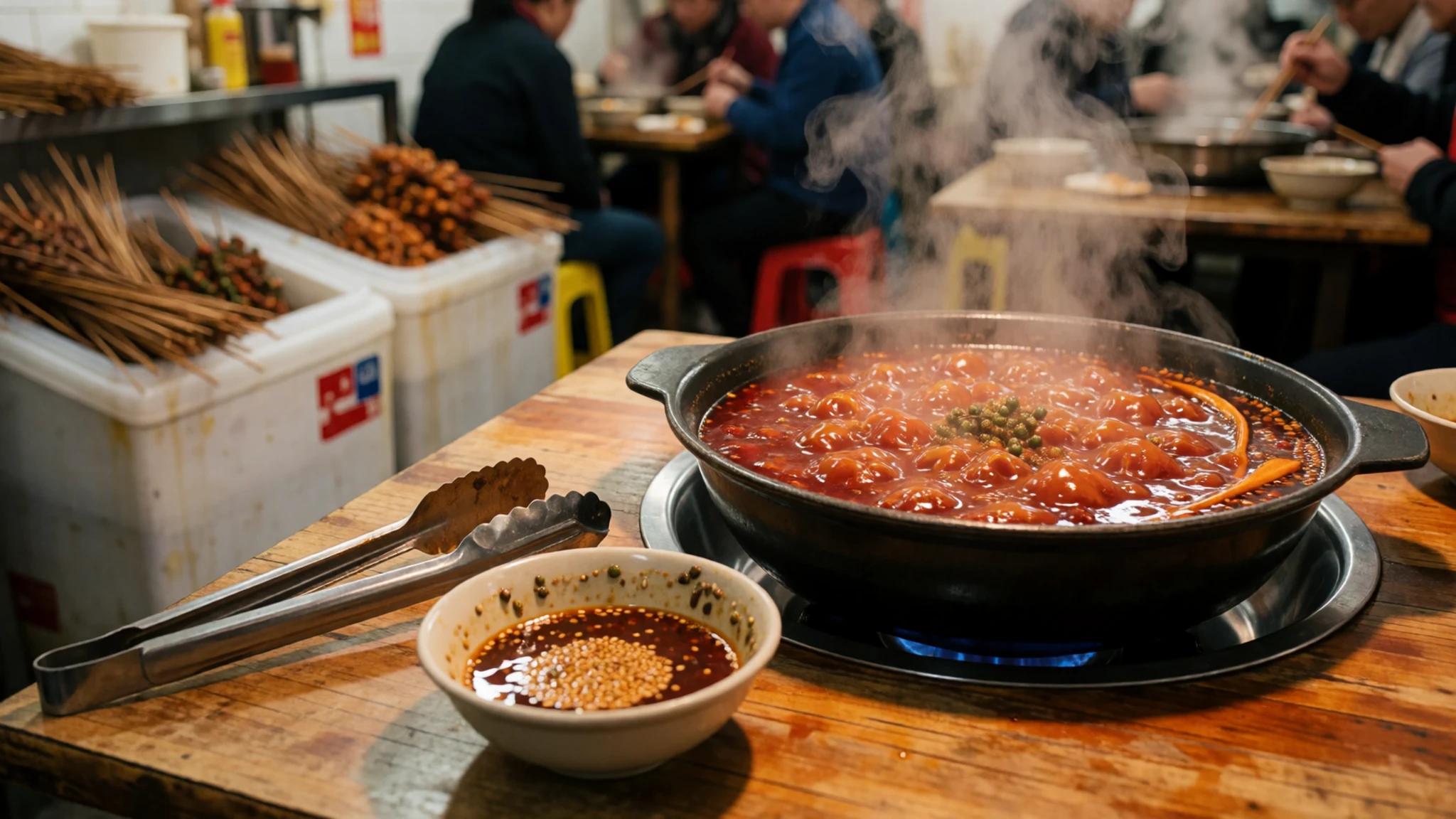
- Lanzhou beef noodles — Noodle counters on busy main streets
A bowl of hand-pulled noodles in a clear, savoury beef broth, offered with egg, lamb or beef toppings. It is a filling, budget-friendly lunch that locals eat quickly and without fuss. Ask for chilli oil if you like it hot.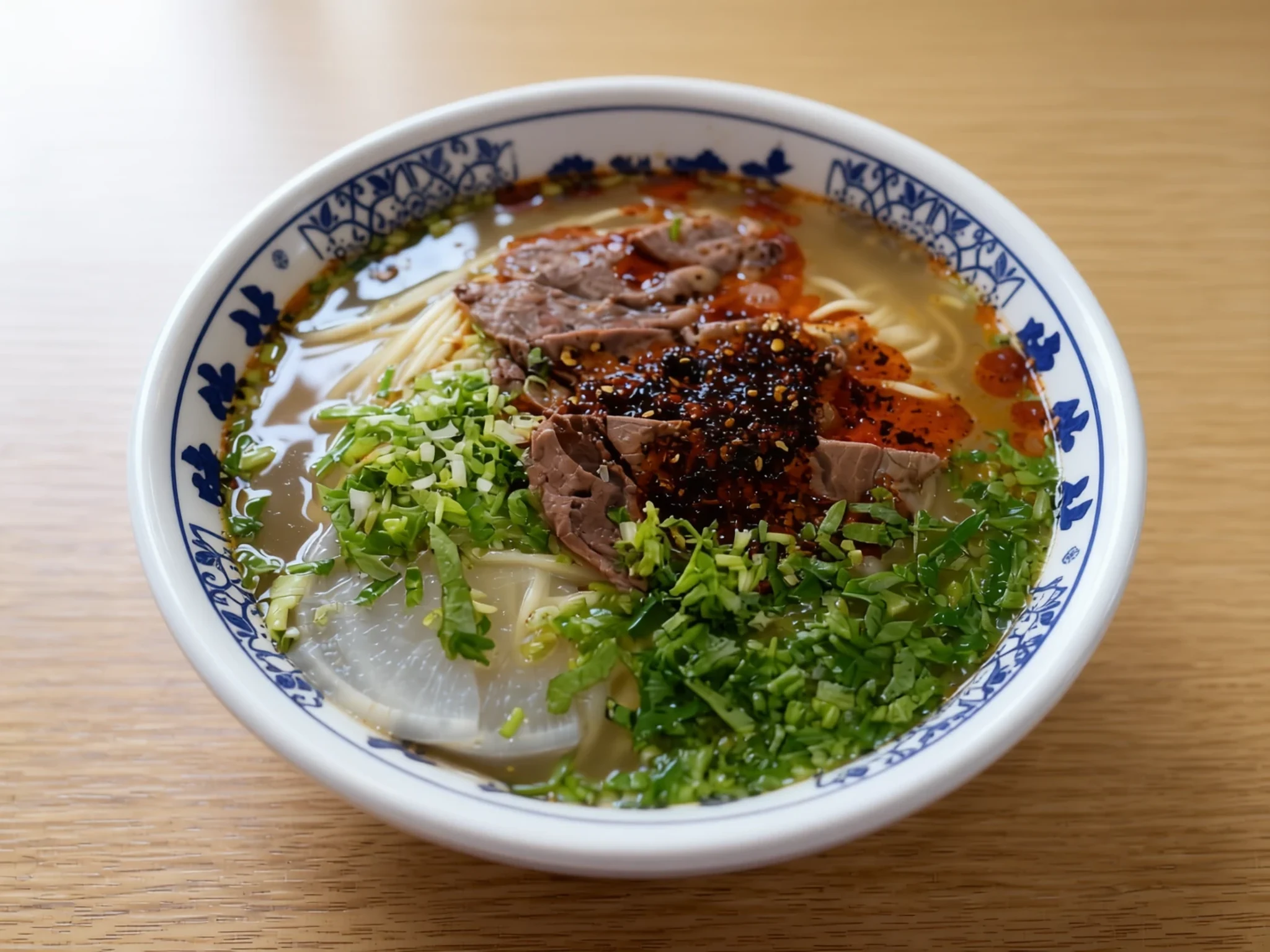
- Yagcai bao — Street vendors and breakfast stalls throughout the city
Steamed buns filled with yagcai, a local preserved vegetable, make a distinctly Sichuan breakfast. They are a regional speciality that is hard to find outside the province. Eat them warm from the steamer, usually with a bowl of soy milk. - San Yang Mian — A small budget noodle restaurant in the city centre
A budget Sichuan noodle dish with a rich, savoury broth, listed in the Michelin Guide. It is a reliable choice for a simple meal, and the restaurant style is no-frills. Go at a quieter hour to avoid queues.
Plan it
Best time. Spring and autumn are the most comfortable times to visit, with mild weather for walking the old streets. Summers are hot and humid, and winters can be misty and grey, though the teahouses are cosy in cold weather.
How long. 3–4
Getting there. Shuangliu Airport, the older airport, is linked to the city by metro, and the trip into the centre takes roughly half an hour to forty minutes. Tianfu Airport, the newer one, has a metro line to South Railway Station, where you change to other lines, and an express train to Shuangliu. Airport shuttle buses also run to the centre.
Budget. low
Tips
- Set up WeChat or Alipay before you travel, since many metro and taxi payments run through them and foreign cards are supported in the metro ticket machines.
- Go to the Chengdu Research Base of Giant Panda Breeding early in the morning, when the pandas are usually most active.
- Visit Jinli and Kuanzhai in the early evening for lanterns, and come back earlier in the day if you want quieter streets.
- Carry water and a small umbrella, especially in summer when heat and humidity build up quickly.
- Check the official city website before you travel for current information on attractions and transport: http://www.chengdu.gov.cn
Etiquette
- Queue politely at metro gates and food stalls, as the city is busy at peak times.
- Ask before photographing people at tea houses, markets or temples.
- Keep your voice low in teahouses and gardens, where people come to relax.
Nearby
Sources
- Wikidata Q30002 (CC0)
- Wikipedia: Chengdu (rev 1382998781) (CC BY-SA 4.0)
- Wikivoyage: Chengdu (rev 5397422) (CC BY-SA 4.0)
- Photo: Chengdu skyline with mountains (CC BY 3.0)
- Photo: Teahouse in Peoples Park (CC0 1.0)
- Photo: Kuanzhai Alleys street scene (CC0 1.0)
- Photo: Du Fu Thatched Cottage Garden (CC BY 3.0)
- Photo: Great Hall of the Wenshu Monastery (CC0 1.0)
- Photo: Chengdu Research Base of Giant Panda Breeding (CC BY 3.0)
- Photo: Anshun Bridge (CC BY-SA 4.0)
- Photo: Archaeological site of Jinsha (CC BY 3.0)


