Bhitarkanika National Park
Bhitarkanika National Park, India
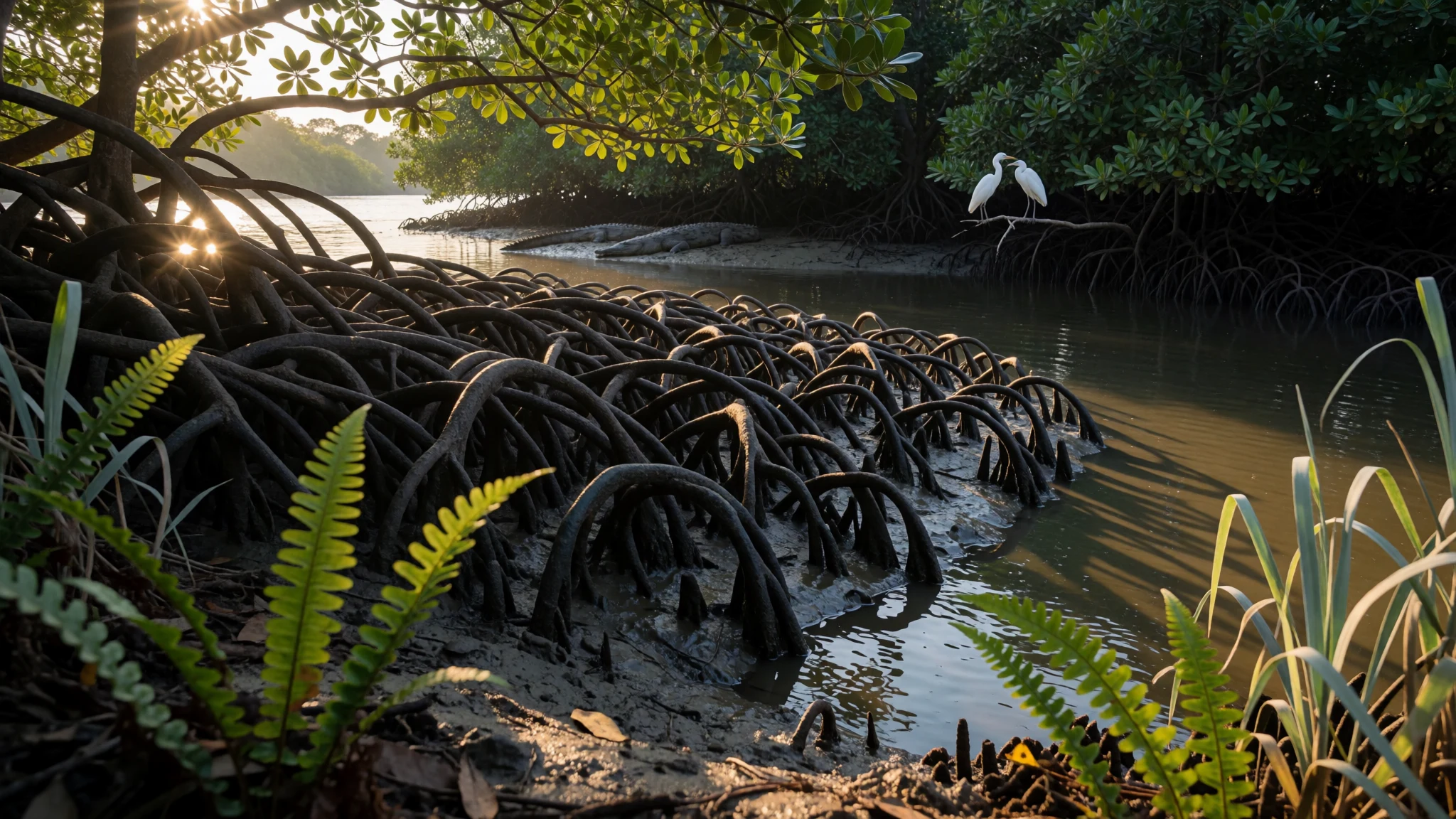
Bhitarkanika National Park is a slow boat ride through Odisha's tidal mangroves, where crocodiles bask on the mud and kingfishers work the creeks.
The place
Bhitarkanika National Park sits in Kendrapara district on the northeast Odisha coast, where the Brahmani, Baitarani, Dhamra and Pathsala rivers fan out into a tidal tangle of creeks, mudbanks and mangrove. The core national park is wrapped by a much larger wildlife sanctuary, and the whole area is a Ramsar-listed wetland. To the east, the Gahirmatha beach and marine sanctuary form a sandy barrier between the swamp and the Bay of Bengal, so the land behind it stays brackish and is flooded and drained by the tide. Dozens of mangrove species grow here, and the stilted roots, upright breathing stumps and salt-tolerant canopy make a landscape quite unlike the dry deciduous forest of inland Odisha. Wildlife is the draw: saltwater crocodiles basking on mud, monitor lizards, pythons, king cobras, spotted deer, wild boar, jungle fowl, and a crowd of waterbirds including darters and black ibis. Almost everything is seen from a boat, because the forest is mostly water and swamp, and walking is limited to marked paths with a guide. Villages sit along the edges, and their fields, ponds and embankments are part of the scenery. The park is quieter than the better-known tiger reserves, and the pace is slow: engines cut, binoculars out, waiting for a head to surface. Summers are somewhat milder than in much of Odisha, though still warm, and winter is the comfortable season. Entry is controlled by the forest department, so check the official channels before travelling.
Its story
Bhitarkanika National Park owes its survival to a mix of geography and conservation work. The area was set aside for protection in 1975, and the delta's own character helped: tidal swamp is hard to farm, hard to build on and hard to cross. Inside it, the saltwater crocodile found a stronghold, and the park is now known for its crocodile population, which guides still talk about with a mixture of pride and caution. Further east, Gahirmatha beach tells a different story. Olive ridley turtles come ashore here to nest each winter season, and have probably done so for thousands of years, yet conservationists identified the nesting ground only within living memory. Since then, patrols, fishing restrictions and awareness campaigns have tried to protect eggs and nesting females from poachers and from nets. The balance remains delicate. Fishing communities depend on the same waters, and storms and shifting channels press on the mangroves that shield the coast. The area has also been recognised as a wetland of international importance, which brings attention but not guaranteed funding. What survives today is a working compromise between people, reptiles, birds and tides, and it rests on forest staff, boatmen and villagers who know the creeks far better than any signboard does. Each season the story is rewritten a little, by the weather, the water level and the turtles themselves.
What to see
- Boat safari through the creeks — Khola and Dangmal, Kendrapara district
The main way to see Bhitarkanika is by motorised boat from the Khola or Dangmal side. Boatmen thread through narrow channels under mangrove roots, and the best sightings are of crocodiles on mudbanks, monitor lizards and kingfishers. Go early, ask the boatman to cut the engine near sightings, and expect patience rather than guarantees.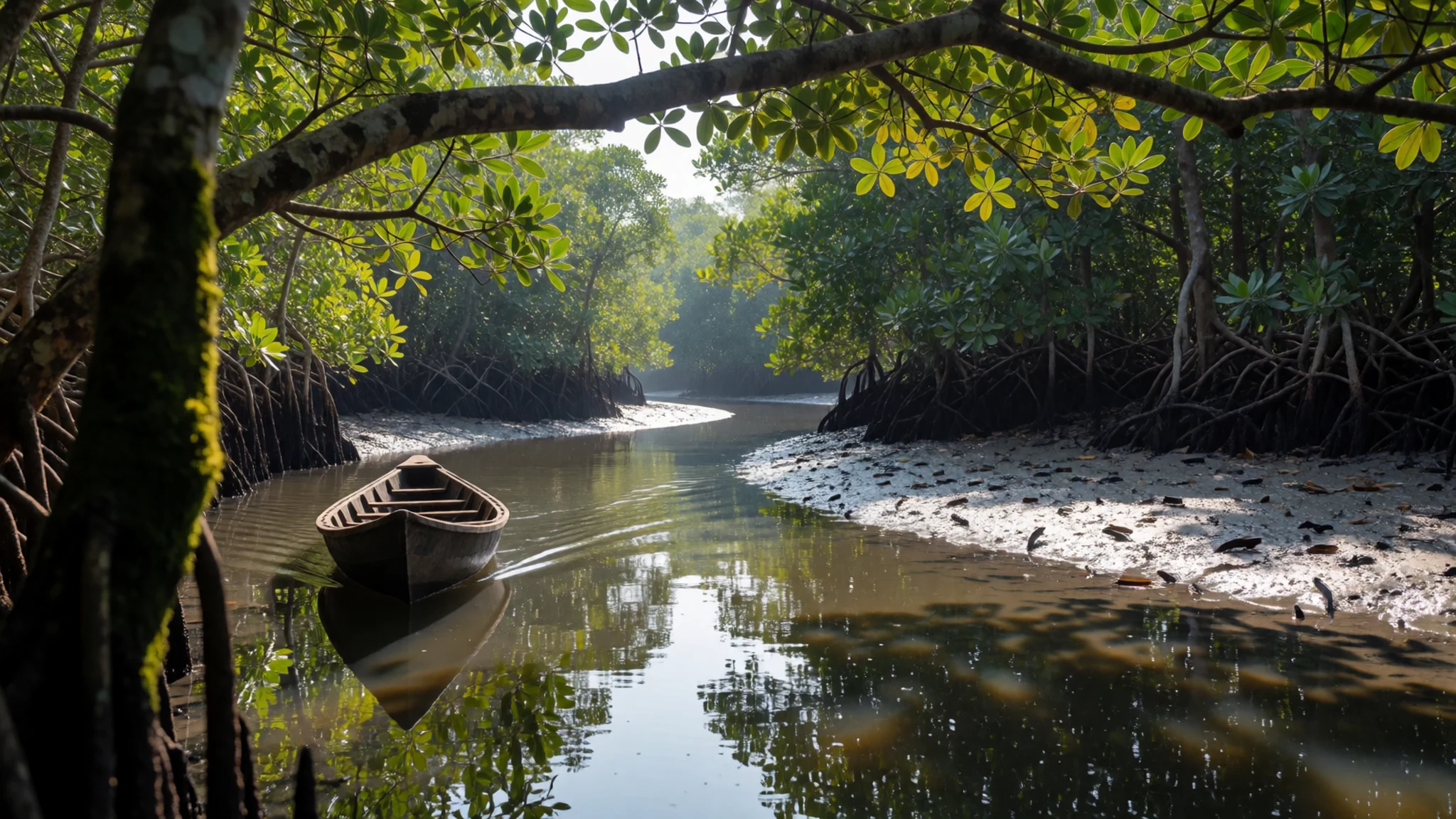
- Saltwater crocodiles on the mudbanks — Creeks around Dangmal
Bhitarkanika is best known for saltwater crocodiles, which lie on the creek banks with their jaws open, often motionless for hours. Viewing is from boats and watchtowers at a safe distance. Winter mornings are good, when the animals come out to warm up. Never lean over the boat's edge.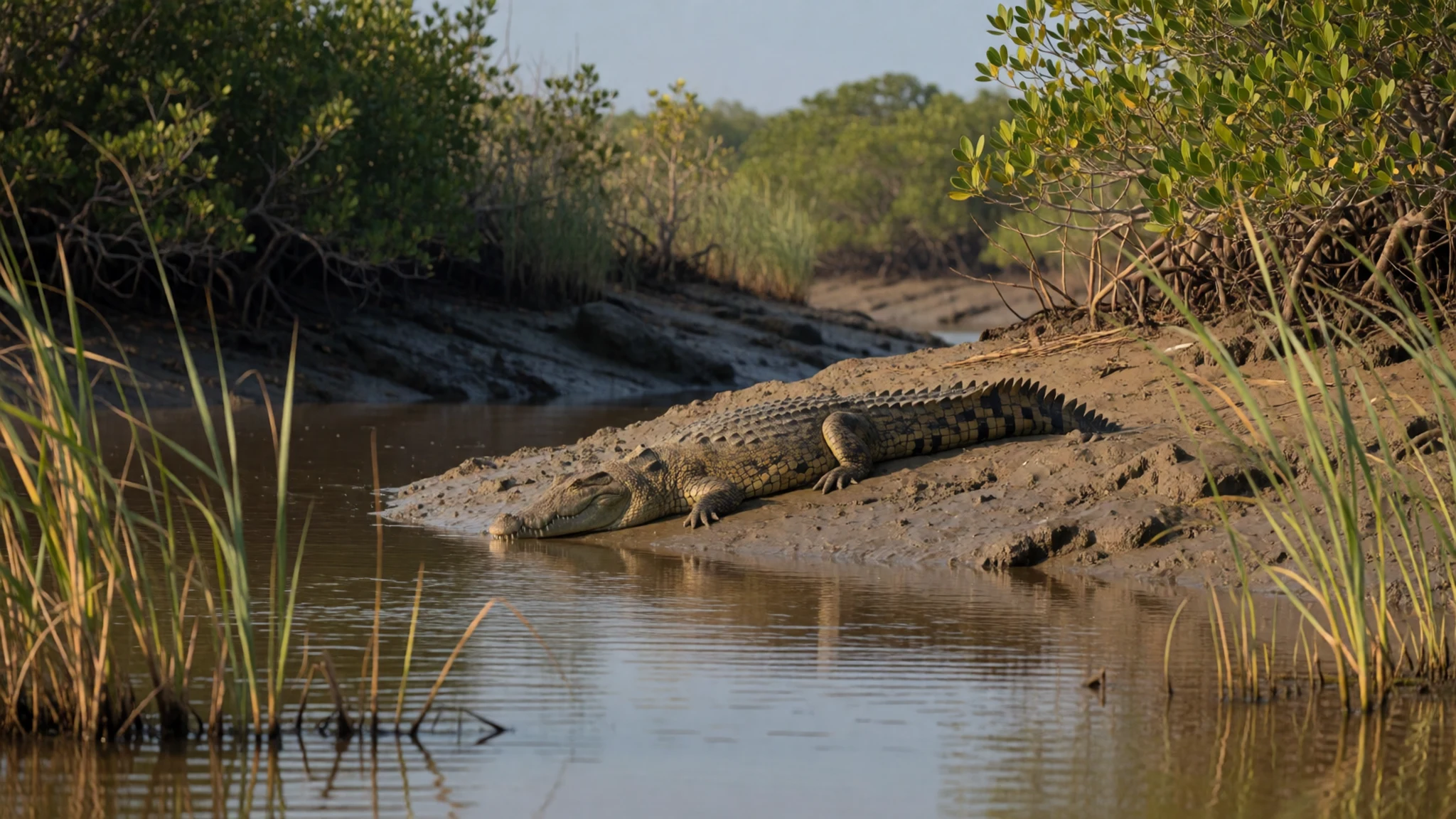
- Bagagahan bird sanctuary — Bagagahan, Bhitarkanika
Bagagahan is the bird-watching corner of the park, with waterbirds nesting in the mangrove canopy and kingfishers of several species working the water. It rewards early starts, a pair of binoculars and quiet. The nesting season brings the most activity; ask the forest staff about access, as it can change with conditions.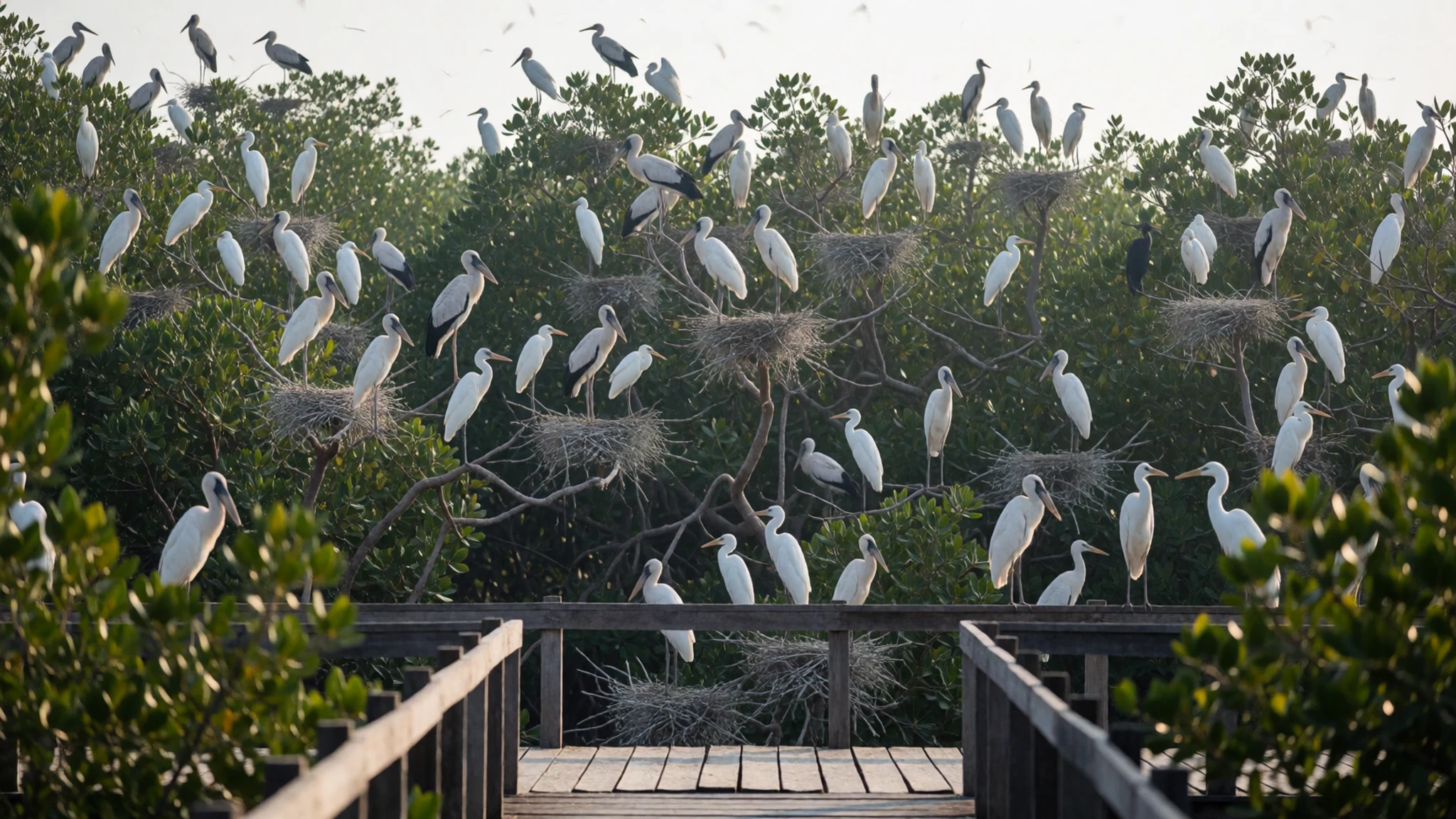
- Gahirmatha beach and turtle coast — Gahirmatha and Ekakula coast
Gahirmatha is the sandy strip between the mangroves and the Bay of Bengal, and a nesting ground for olive ridley turtles in the cooler months. Access is regulated to protect the turtles, so go with permission and a guide. Lesser-known beaches nearby, such as those near Ekakula, are quiet and windswept.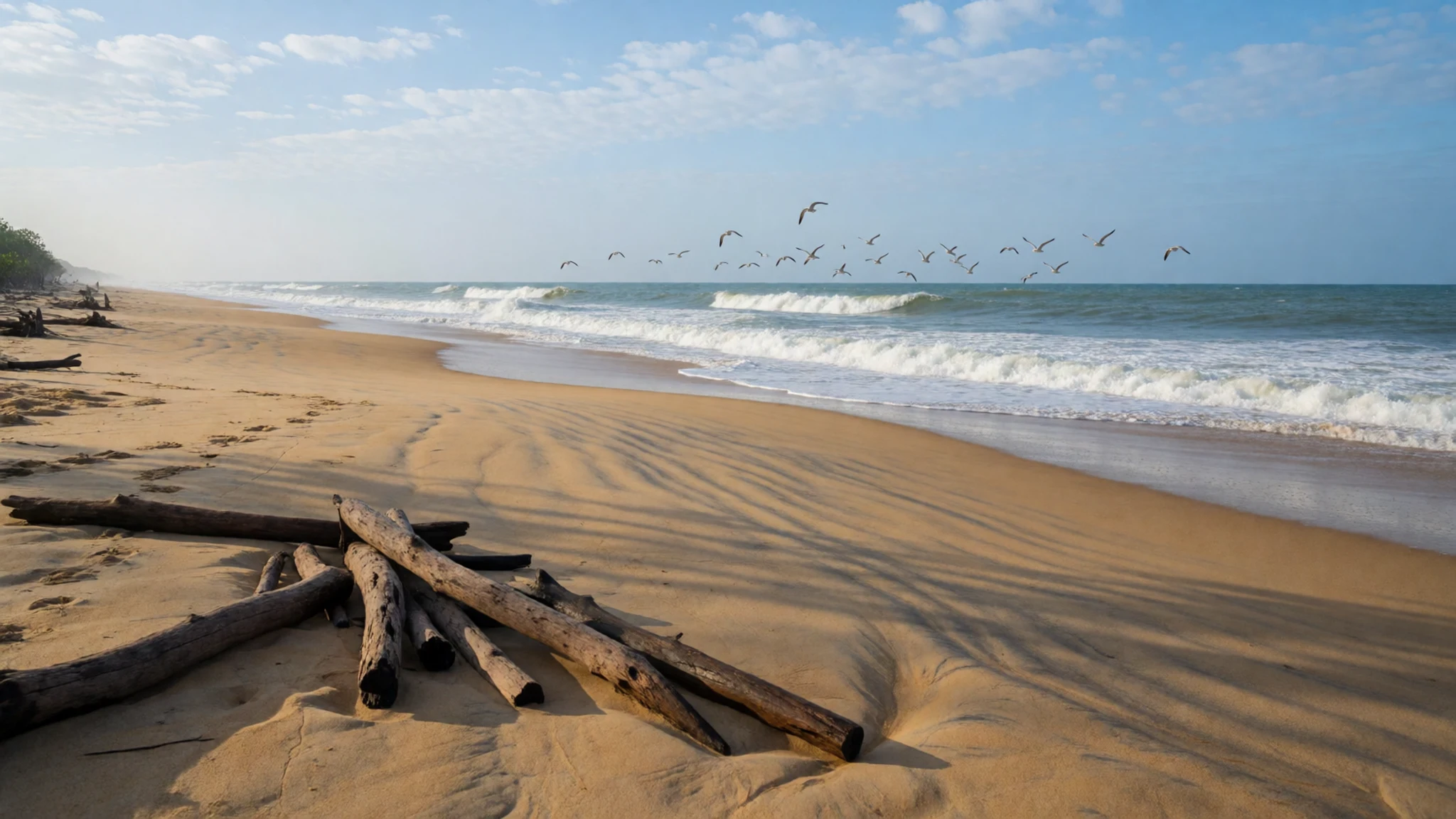
- Mangrove paths and spotted deer — Dangmal and Ekakula forest areas
Short walking paths near the forest rest houses let visitors see the mangrove floor up close: breathing roots, mudskippers and crab holes. Spotted deer graze on the drier embankments at dawn and dusk. Stay on marked routes, keep to the guide's pace and carry water, as shade is patchy.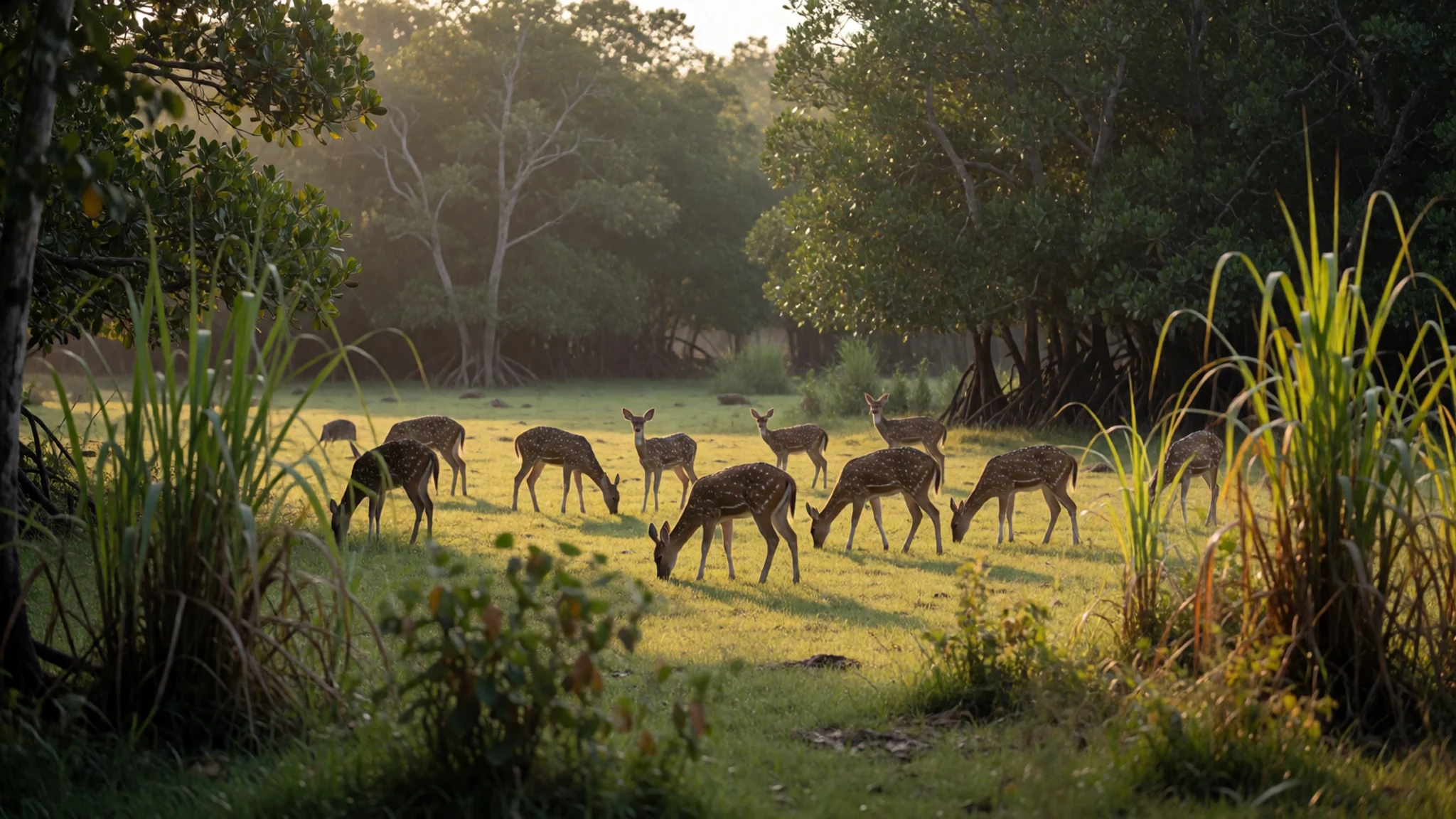
Culture
Bhitarkanika National Park is a place where wildlife and village life overlap, and the culture around it is that of the Odisha delta: fishing, rice farming and small riverside settlements connected by boat and embankment. Odia is the language of the area, and many families here read the tides and the weather as part of their living. The people who guide and row visitors often grew up beside the same creeks, and their knowledge of where a crocodile lies or when a bird will fly is the best interpretation the park has. Elsewhere in Odisha, the great temple towns of Puri, Bhubaneswar and Konark give the state its wider religious and artistic identity, and many visitors combine them with a trip to the mangroves. Around the park itself, daily life is quieter: small shrines at village edges, festivals timed to the farming and fishing year, and evenings that begin early because there is little electric light. The relationship with wildlife is practical rather than sentimental. Crocodiles and snakes share the water, and local people have learned to live with risk and to respect rules designed to keep both sides safe. Visitors who show interest, listen to their boatman and buy simple things from village stalls are generally made welcome. Follow your guide's instructions at all times, keep your voice low on the water, and ask before photographing any villager.
What to wear
Bhitarkanika National Park lies in coastal Odisha, a state famous for handloom textiles, and traditional dress here follows the wider Odia pattern. Women wear sarees, often in cotton, and the state's ikat weaving, known as Sambalpuri, as well as other regional handloom styles, is worn for weddings and festivals. Men traditionally wear a dhoti with a kurta, and the cotton gamchha, a thin checked towel, is carried or tied around the head or shoulders by almost everyone who works outdoors. In daily life around the park, clothing is practical: cotton shirts and trousers, lungis for men, simple sarees or salwar suits for women, rubber sandals, and caps or cloths against the sun. Fishing families favour quick-drying fabrics that cope with mud and spray. For a visitor, the priority is comfort in heat and humidity. Wear light, loose, long-sleeved cotton or quick-dry layers in muted greens, browns and greys, which are less likely to disturb animals than bright colours. A hat, sunglasses and sunscreen matter on the open water, and insect repellent is essential near the mangroves. Choose closed shoes or sandals with a firm grip for muddy jetties and boat decks, and bring a thin rain jacket outside the dry months. Keep shoulders and knees covered in villages and near any shrine, as local norms are conservative.
What to eat
- Chingudi (prawn) curry — Resort dining rooms and small eateries near Dangmal and Chandbali
Prawns are a staple of Odisha's coast, usually cooked in a spiced onion and mustard gravy and eaten with rice. It is a dish for riverside eateries and resort kitchens near the park, and tastes best when the prawns are freshly landed that morning.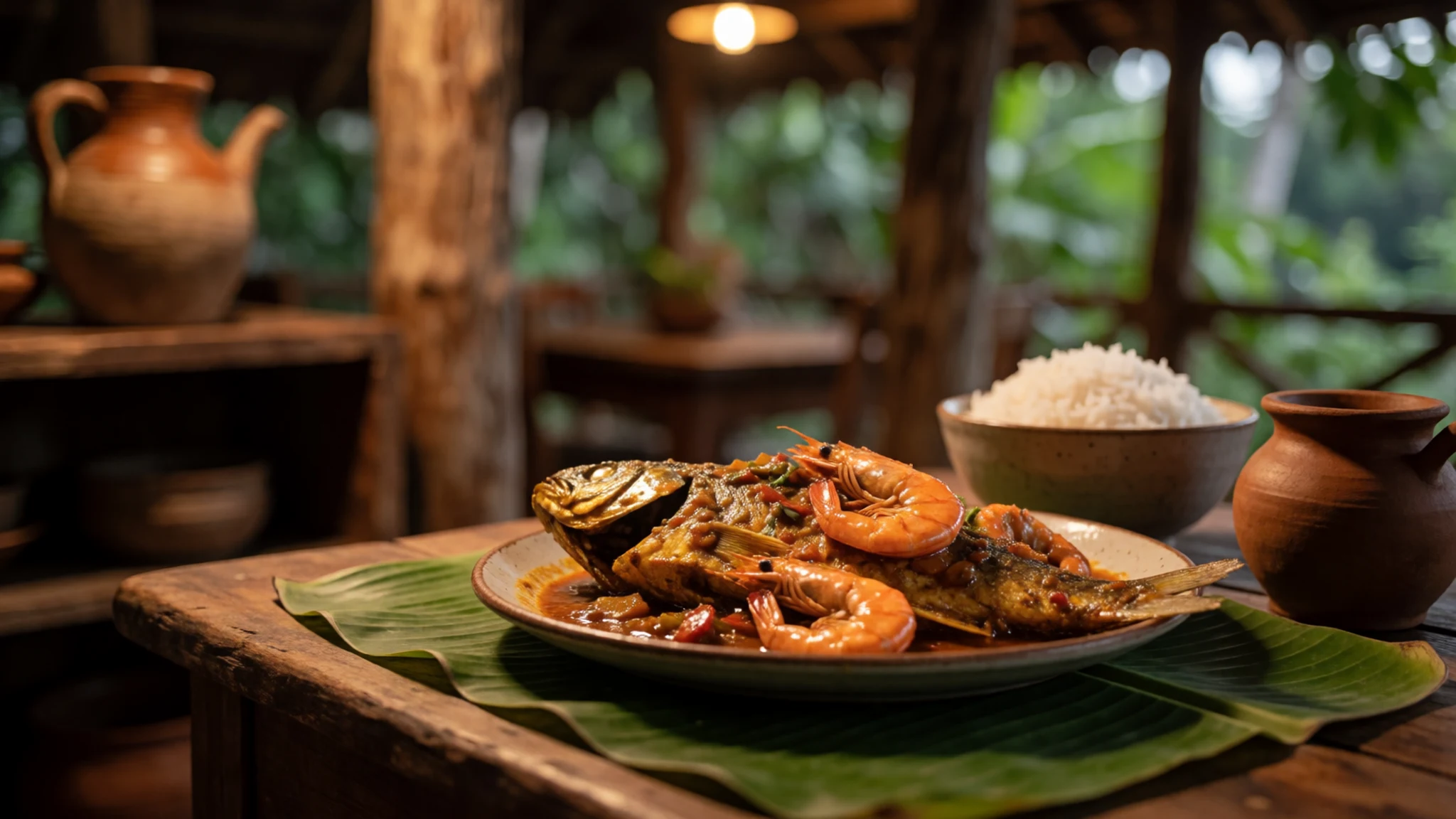
- Kakada (crab) masala — Resorts and local eateries on the delta
Mud crab is cooked whole in a thick masala with ginger, garlic and chilli. It is messy, rich and meant to be eaten with hands. Ask for it in resort kitchens or at village-run eating places along the delta.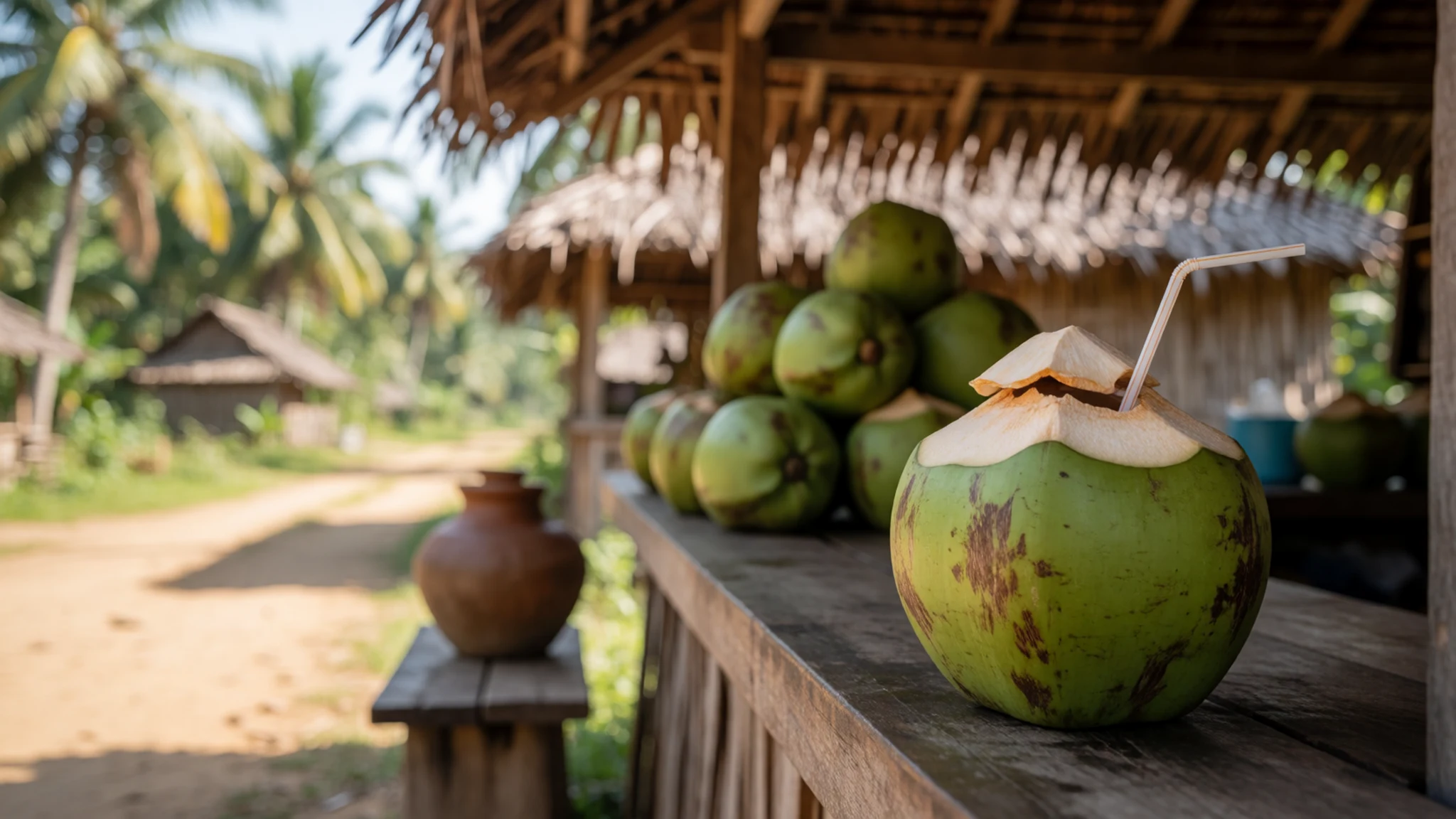
- Machha besara (fish in mustard) — Family-run eateries and rest-house kitchens
River and sea fish simmered in a pungent paste of ground mustard seed, garlic and green chilli is a classic Odia home dish. The sharp, nutty gravy is eaten with plain steamed rice, and the fish varies with the day's catch. - Pakhala bhata — Village eateries and roadside stops on the way to the park
Pakhala is rice soaked in water and lightly fermented, served cold with salt, curd, fried fish or vegetables. It is a cooling meal for hot afternoons and a real taste of Odisha. Look for it in simple local eating places rather than resort menus. - Fresh coconut water — Roadside stalls and jetties near the park entrances
Coconuts are plentiful around the delta, and a chilled one is the easiest way to cool down after a morning on the water. Vendors cut them open on the spot, and the soft flesh can be scooped out afterwards.
Plan it
Best time. October to March is the comfortable season, with cooler days and clear light for boat trips and birds. Summer is warm but milder than much of inland Odisha, and monsoon boating has its own charm. The forest closes to visitors for a spell from mid-May into the rainy months, so confirm dates with the forest department before booking.
How long. 2–3
Getting there. The nearest airport is Bhubaneswar. From there, go by road to Khola, the main entry point for boat trips, or by rail to Cuttack or Bhadrak and onward by road. Chandbali and Dhamra are the river crossing points, and the last leg to the forest rest houses is by boat.
Budget. low
Tips
- Book forest rest houses and boat permits well ahead, and check the official forest department site for current rules
- Start boat trips at first light, when animals are most active and the air is cooler
- Carry cash and enough water, as card machines and shops are scarce near the jetties
- Stay on the far bank near Dangmal rather than at Chandbali for easier access to the forest
- Bring insect repellent, a hat and a light rain jacket
Etiquette
- Do not swim in the rivers; enjoy them only from boats
- Stay on permitted paths and follow your guide, as straying can be dangerous
- Keep noise low and never feed or provoke wildlife
Nearby
Sources
- Wikidata Q2580141 (CC0)
- Wikipedia: Bhitarkanika National Park (rev 1384782911) (CC BY-SA 4.0)
- Wikivoyage: Bhitarkanika National Park (rev 5091494) (CC BY-SA 4.0)
- Photo: Bhitarkanika Mangrove Flora and Fauna, Devopam (CC BY-SA 4.0)
- Photo: Bhitarakanika National Park, Puru150 (CC BY-SA 4.0)
- Photo: Crocodile sleep, Bibhudutta1234 (CC BY-SA 4.0)
- Photo: Spotted Deers at Bhitarkanika National Park, Sayanti Sikder (CC BY-SA 4.0)
- Photo: Amazon of India, Sayanti Sikder (CC BY-SA 4.0)
- Photo: Mangroves of Bhitarkanika, Chinmaya kumar sahani (CC BY-SA 4.0)
- Photo: Bhitarkanika inside pathway, Rupeshsarkar (CC BY-SA 4.0)
- Photo: A journey through the boat, The Funky Writer (CC BY-SA 4.0)


Wildlife
- Saltwater crocodile (animal)
The saltwater crocodile is a big, toothy reptile that is at home in salty water and fresh alike. In Bhitarkanika you may see these giants sunning themselves beside the silent, tangled mangrove creeks as your boat drifts past. The notes name no particular season or hour, so ask your guide when your chances are best. Because crocodiles can be dangerous to people, stay seated, keep well back, speak softly, follow your guide's advice, and never feed them.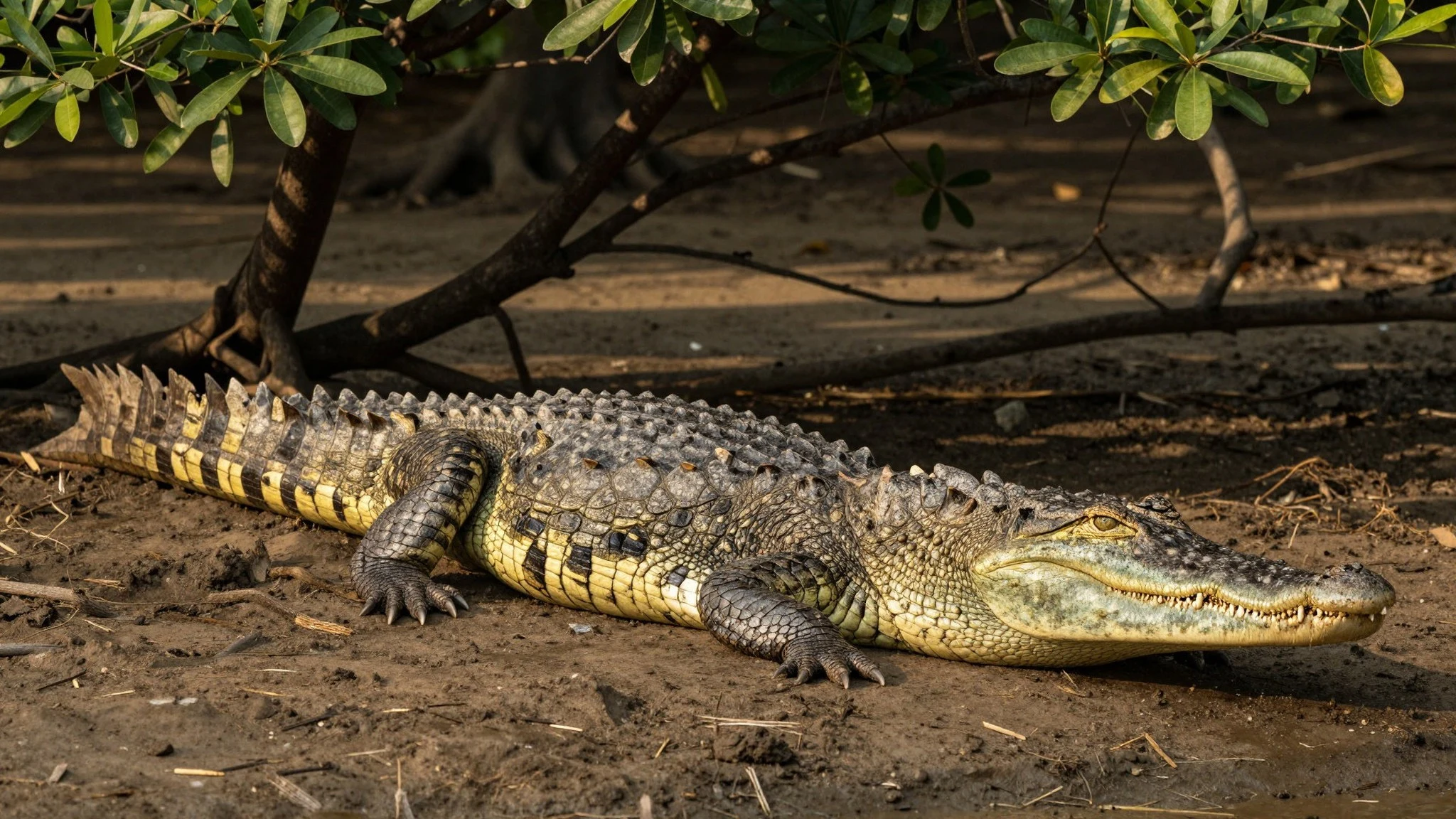
- Kingfisher (bird)
The common kingfisher is a small, bright bird that darts over the water to catch its meals. Bhitarkanika is famous for its kingfishers, and you may hear one calling as your boat slips along the narrow water channels. The notes do not give a season or time of day, so your guide is your best help. Sit still, keep your voice soft, watch from a distance, and never try to feed or lure the bird.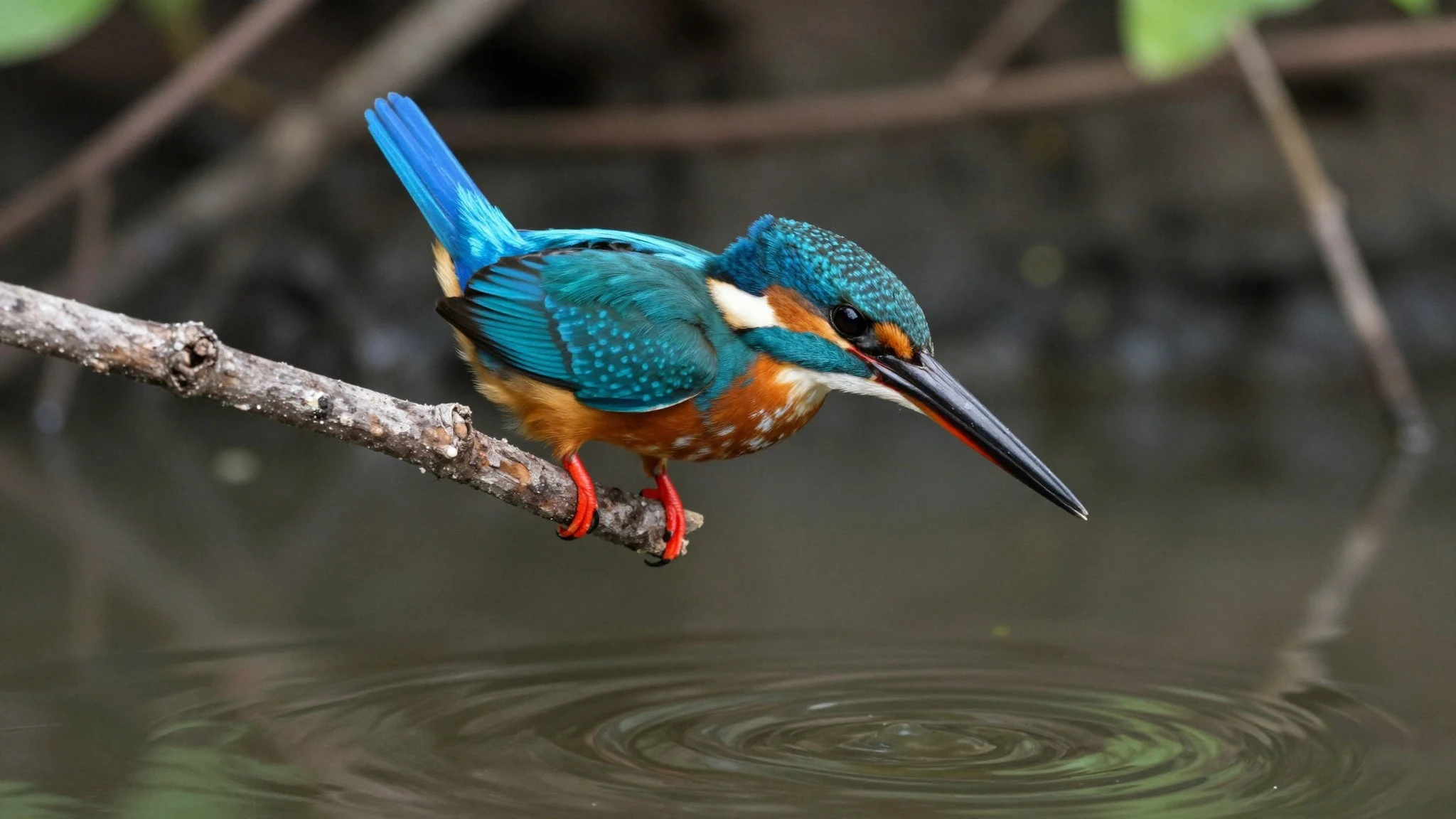
- Olive ridley turtle (animal)
The olive ridley is a small sea turtle, the second smallest in the world, yet one of the most plentiful. Just offshore from the park, along the Gahirmatha coast, hundreds of thousands come ashore together in great synchronised nesting gatherings called arribada. The notes give no month or hour, so ask a local guide about timing. Watch quietly from a respectful distance, follow the guide's rules, and never feed or touch these gentle visitors. - Open-billed stork (bird)
The Asian openbill is a large, long-legged wading bird whose bill has a curious gap, handy for handling its favourite snails. Bhitarkanika is known for hosting these storks, along with ibises and darters, though the notes do not say when or where in the park to look. Ask your guide for the best spots. Watch from the boat at a calm distance, keep your voice low, and never offer the birds food.