Beiteddine
Beiteddine, Lebanon
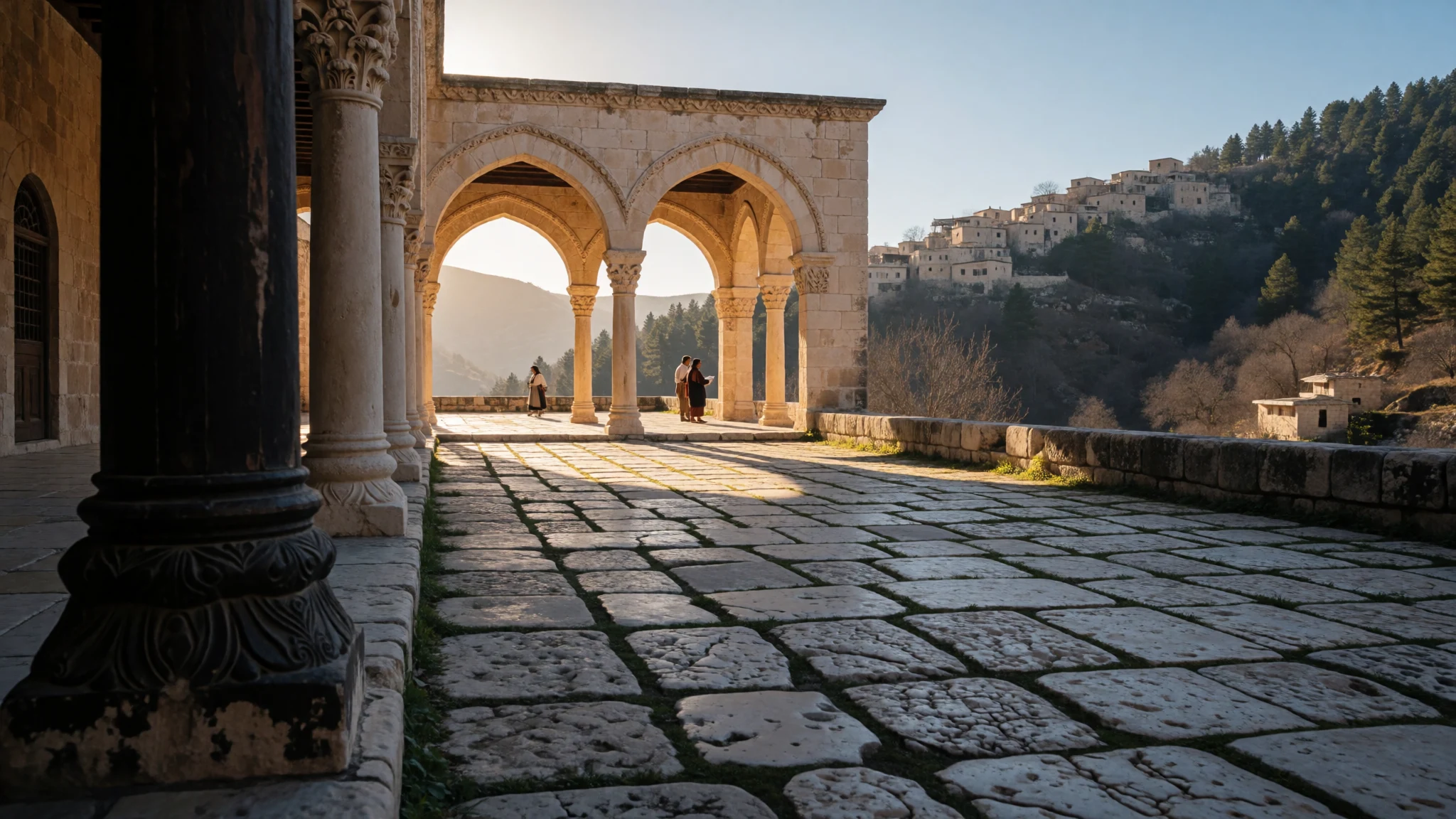
Beiteddine is a stone palace town in the cool Chouf mountains, where an emir's court, a summer music festival and quiet valleys sit close together.
The place
Beiteddine is a small hill town in the Chouf district of Mount Lebanon, about 45 km south-east of Beirut and roughly 850 m above sea level. It is the district's administrative seat, yet it feels more like a village strung along a ridge, separated from its neighbour Deir el-Qamar by a steep valley. Most residents are Christian, from the Maronite, Melkite and Greek Orthodox communities, while the wider Chouf is a patchwork of Druze and Christian settlements. That mix shows in the churches, shrines and stone houses scattered over the slopes. The town's reputation rests on one building, the palace, which anchors a summer festival season in July and August. Outside those weeks Beiteddine is calm, and the Chouf as a whole has escaped much of the heavy tourist building seen in other mountain areas. The air at this height is noticeably cooler than on the coast, which makes the town a welcome break from Beirut's summer heat, although festival evenings bring crowds and slow traffic on the narrow approach roads. Beiteddine works well as a half-day stop or as a base for the district: the palace in the morning, a walk above the valley, lunch in a village eatery, and a trip to the cedar reserve nearby. The scale is modest, the hills are green, and shopkeepers along the road are happy to point the way.
Its story
Beiteddine owes its fame to Emir Bashir II of the Shihab dynasty, who began building his palace here in 1788, on the site of a Druze hermitage. The town's name is usually rendered as 'house of faith', a nod to that earlier religious retreat. Bashir went on to rule the Mount Lebanon Emirate, and by 1811 he had moved its seat from Deir el-Qamar across the valley to Beiteddine. To keep the palace supplied he had a long canal cut to bring water from the Safa River. His rule ended in 1840, when he was sent into exile, and the Ottomans took the palace over as a government building. Its administrative role continued under the French Mandate, and in 1934 it was declared a national monument. The building has also witnessed darker days. During the civil war of 1860, Christians from Deir el-Qamar fled to the Ottoman barracks at Beiteddine hoping for protection, but the small garrison did not resist and the refuge was attacked. When a French-led international force arrived afterwards, its colonel chose Bashir's old palace as his headquarters, and in the following decade the Ottoman deputy governor of Mount Lebanon also based himself there. Today the palace is remembered both as the seat of a powerful emir and as a reminder of how fragile the balance between the mountain's communities could be.
What to see
- Beiteddine Palace courtyards — Beiteddine town centre
The heart of Beiteddine is the palace of Emir Bashir II, built around a sequence of open courtyards in pale local stone. Allow time to wander slowly, looking at arches, carved doorways and the views over the valley. Opening times and ticket details change, so check the official palace or festival site before travelling.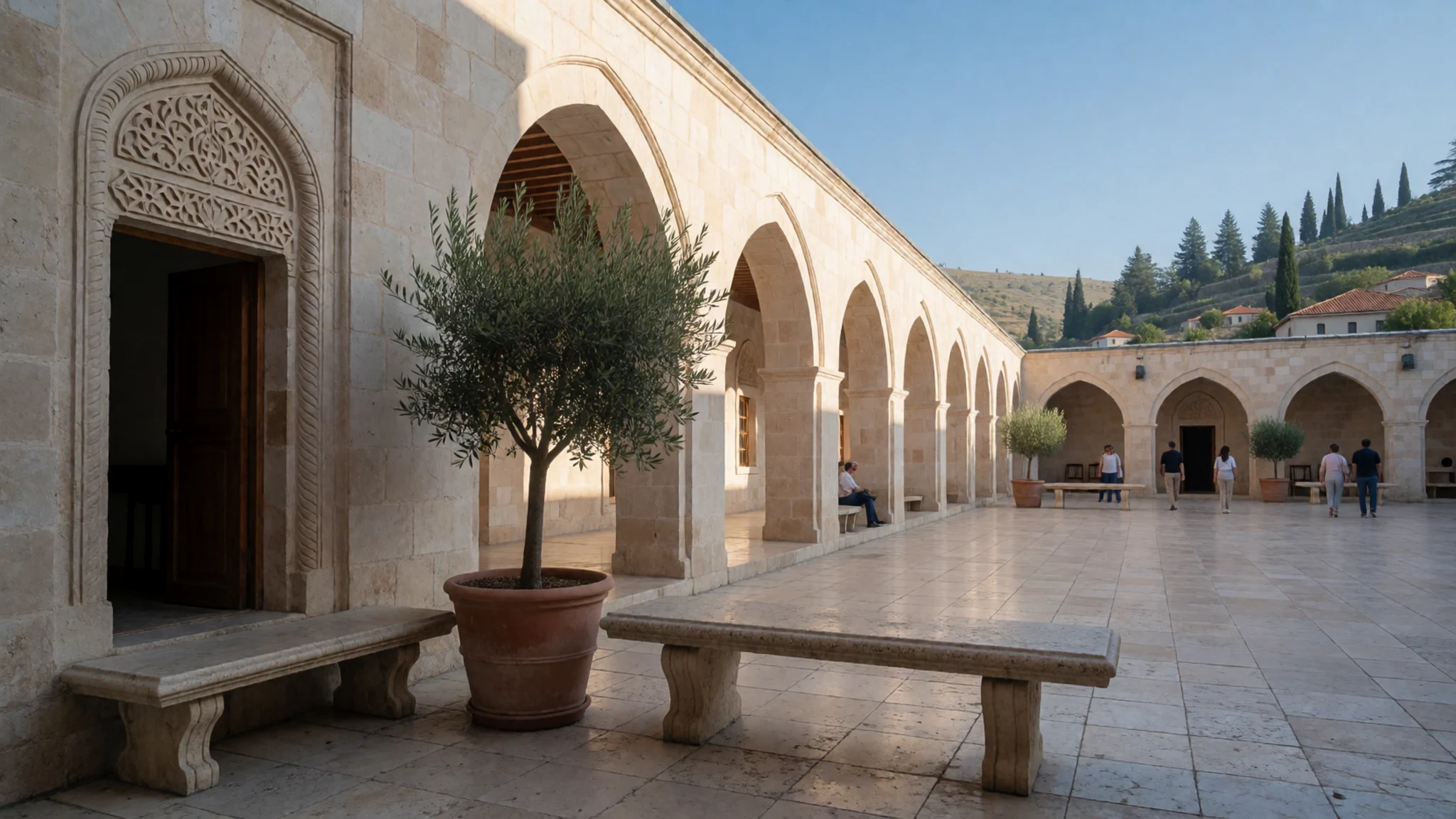
- The palace entrance door — Beiteddine Palace
The ornate entrance door shows the craftsmanship the emir wanted visitors to see first. It rewards a close look at the carving and the proportions of the arch around it. Early morning light is kind to the stone, and the approach is usually less busy before tour groups arrive.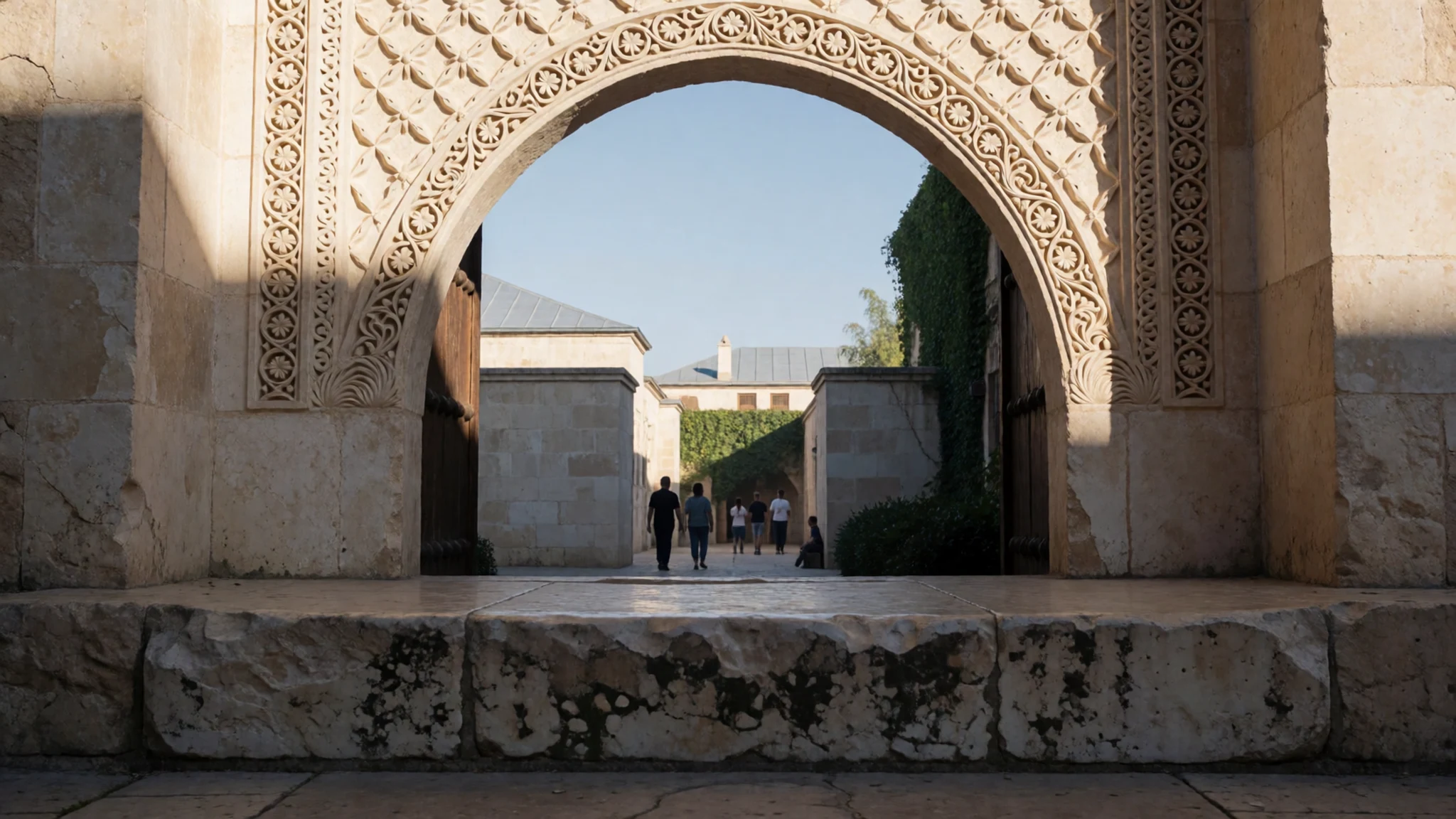
- The valley to Deir el-Qamar — Between Beiteddine and Deir el-Qamar
A steep valley divides Beiteddine from Deir el-Qamar, the older seat of the emirate, and the view across it explains why the two towns were rivals and neighbours. Deir el-Qamar, whose name means 'Monastery of the Moon', is worth an hour for its old stone lanes and village square.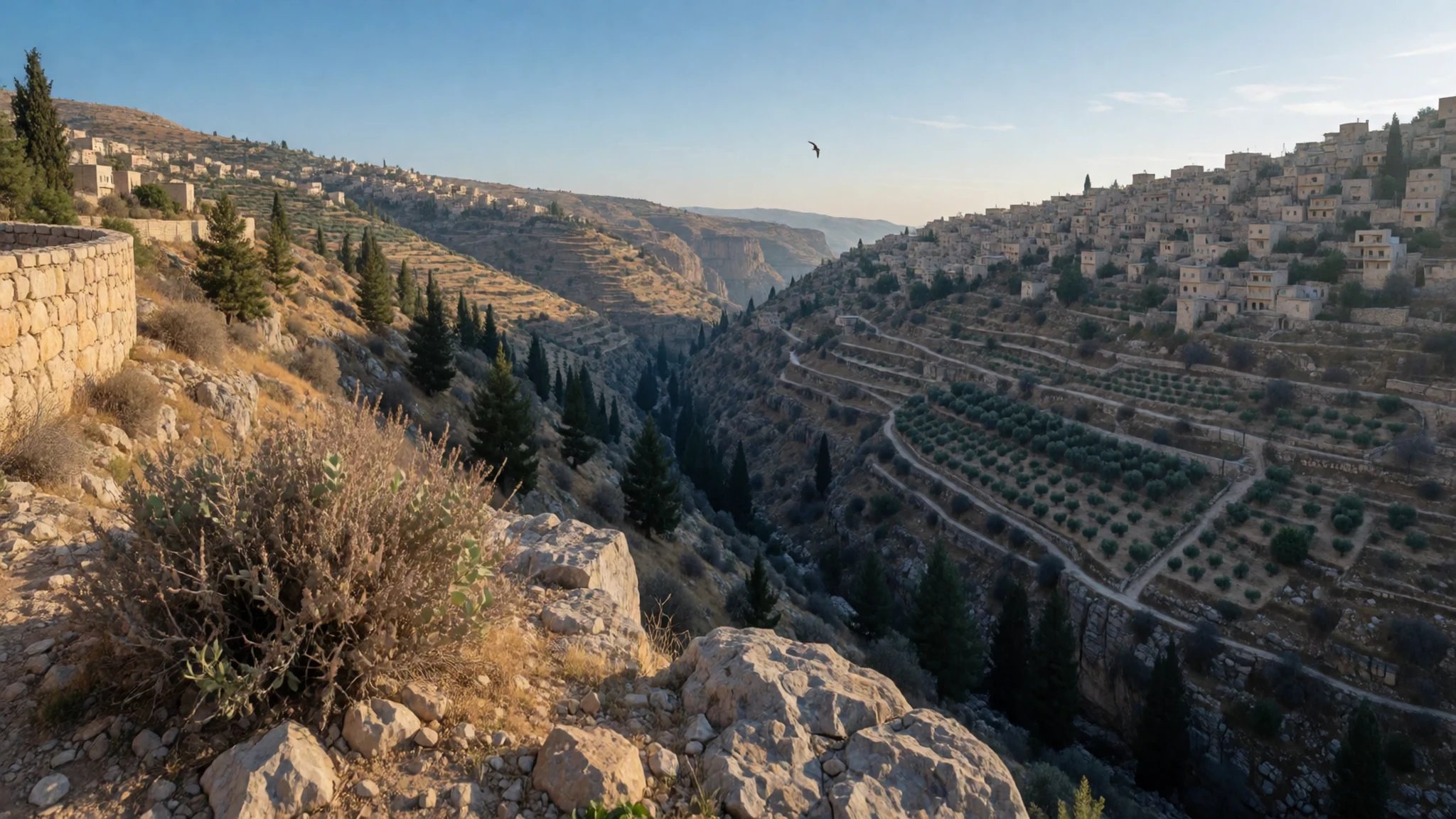
- Moussa Castle — Near Deir el-Qamar
Moussa Castle is the life's work of one man, Abdel Karim Al-Maamari, who started building it in 1951 and kept going for some 60 years. Across its three floors, figures and scenes show how people in Lebanon lived at different periods. It is quirky, personal and a good contrast to the palace.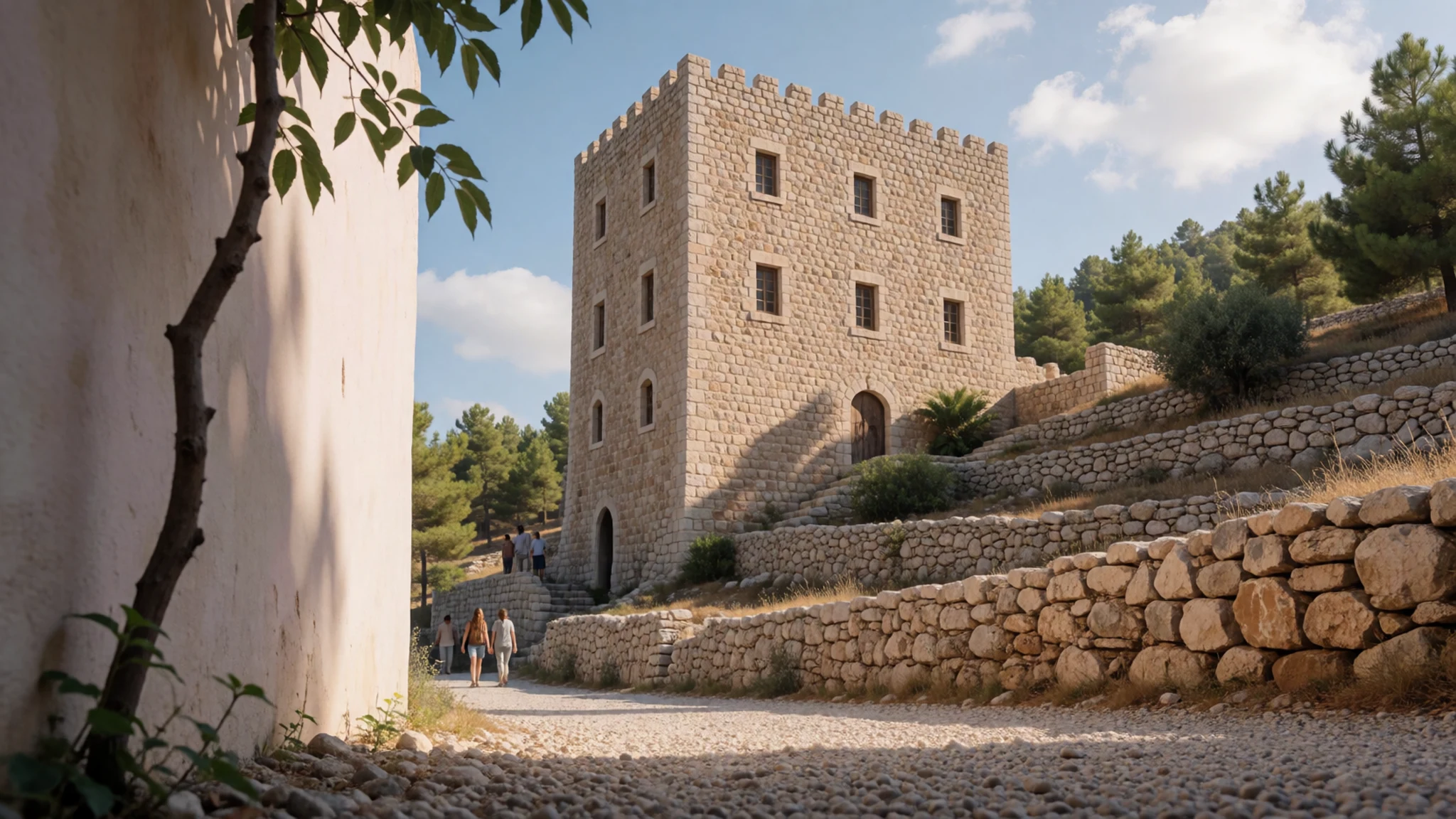
- Al Shouf Cedar Nature Reserve — Barouk, Niha and Maaser el Shouf
The Al Shouf Cedar Nature Reserve protects a large area of mountain forest famous for its ancient cedars. It can be entered from several villages, including Barouk, Niha and Maaser el Shouf. At Maaser el Shouf there is a short walk among old trees, and Barouk offers longer hiking.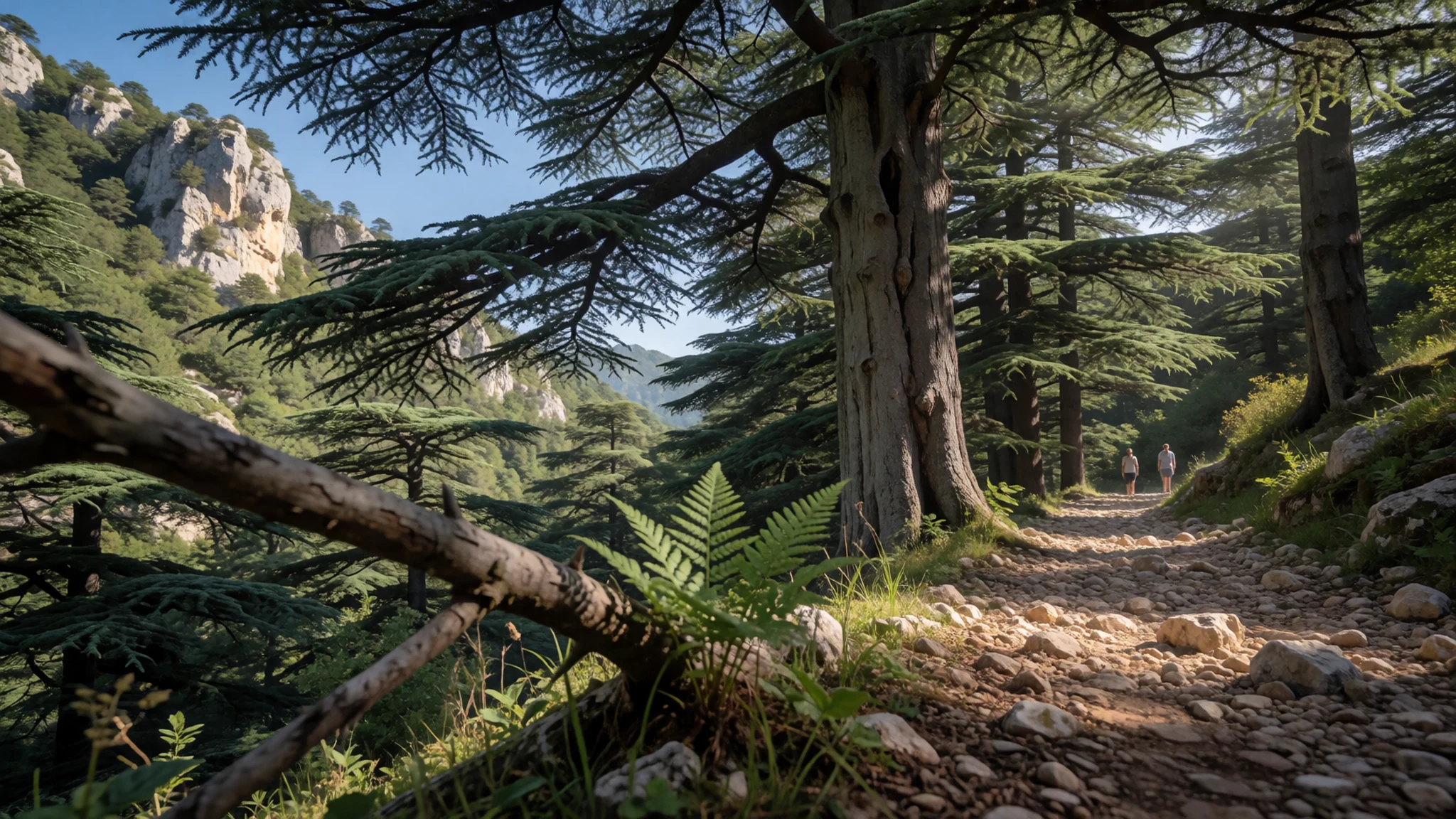
Culture
Beiteddine sits in a part of Lebanon where Druze and Christian communities have lived side by side for centuries, and the town's own population is mainly Maronite, Melkite and Greek Orthodox. Religion is part of everyday life here: church bells, roadside shrines and saints' feasts mark the calendar, and the nearby Druze villages keep their own quieter traditions. The palace gave the town a second identity as a place of music and performance, and the summer festival brings Lebanese and international artists to its courtyards in July and August. For many Lebanese families, a mountain evening in the Chouf means a long meal outdoors, conversation, and a slow drive home. The area's history is also sensitive. The emirate, the Ottoman years and the civil war of 1860 are remembered differently by different families, so it is wise to listen more than you lecture. Hospitality is a point of pride, and a visitor who stops to ask directions at a village shop will often be offered coffee as well. Arabic is the everyday language, with French and English widely understood in tourist settings. When you visit a church, mosque or private home in the Chouf, dress modestly, ask before photographing people, and follow local cues about removing shoes at the door.
What to wear
Beiteddine is a mountain town, and its traditional dress belongs mostly to the past and to festivals. In Ottoman-era Mount Lebanon, men of the emir's court wore long robes, sashes and turbans, and Druze elders still favour dark clothing with a white head covering, especially at religious gatherings. Village women once wore embroidered dresses and headscarves, usually in cotton, wool or silk depending on means. Today most people in and around Beiteddine dress much as they would in Beirut: jeans, shirts, light dresses and smart casual wear, with warmer layers in winter. Festival nights call for a little more effort, and many locals dress up for concerts at the palace. Visitors should plan for altitude and weather rather than formality. In summer, light cotton or linen is enough by day, but a jumper or jacket is useful for the cooler evenings. Sturdy, comfortable shoes matter, since the palace has stone floors and steps, and the lanes and valley paths are uneven. Churches and Druze religious sites expect covered shoulders and knees, so carry a scarf or light shirt. In winter, when the mountains can be cold and wet, bring a waterproof coat and warm layers.
What to eat
- Mezze spread — Village restaurants with terraces around Beiteddine and Deir el-Qamar
A table of small plates such as hummus, tabbouleh, labneh, stuffed vine leaves and pickles is the usual way to start a Lebanese meal. In the Chouf it is easy to find at family-run eateries with terraces looking over the valley.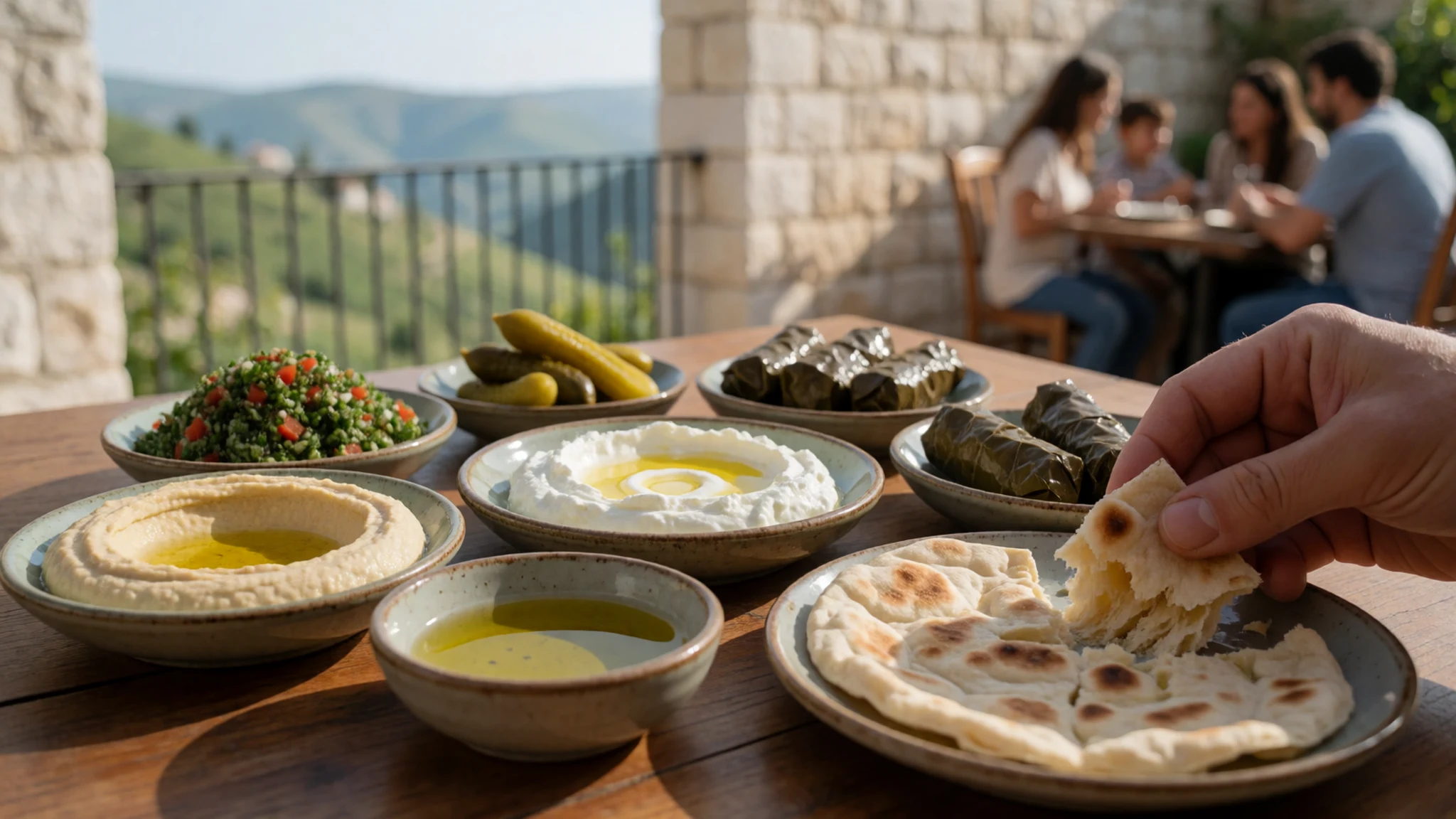
- Kibbeh — Family restaurants in the Chouf villages
Kibbeh is a mix of fine bulgur and minced meat, shaped into ovals and fried or baked, or served raw as a Lebanese speciality. Mountain households make it for Sunday meals and feasts, and local eateries usually offer it on mezze menus.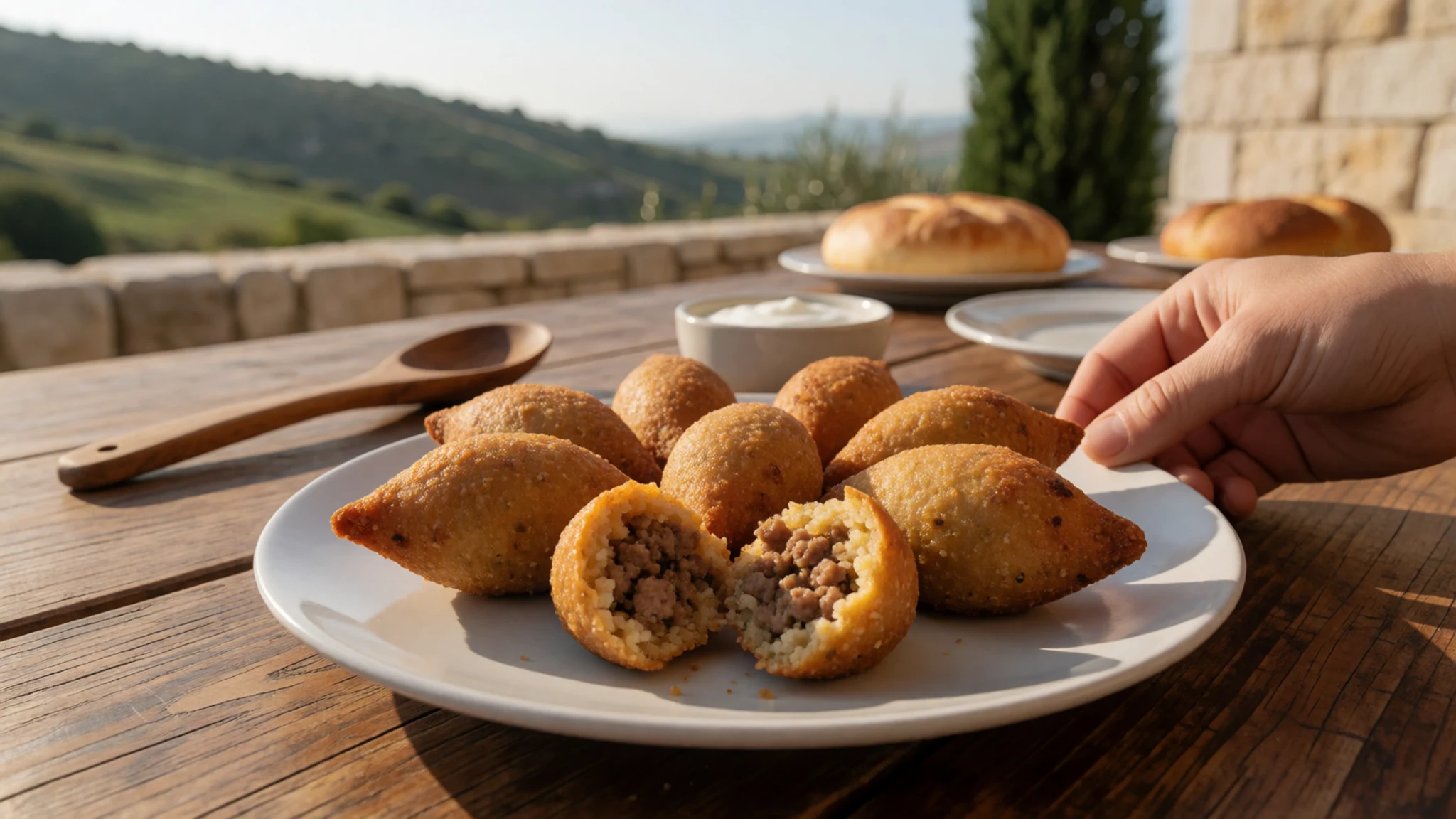
- Manakish — Neighbourhood bakeries in Beiteddine and nearby towns
Manakish are flatbreads baked with thyme and olive oil, cheese or other toppings, and they make a quick breakfast before a day of walking. Small bakeries in town centres bake them fresh and sell them hot. - Grilled meats and fresh salads — Grill restaurants along the Chouf roads
Skewers of chicken or lamb, eaten with bread, garlic sauce and a bowl of fattoush or other salad, are a staple of Lebanese eating out. Mountain restaurants often cook over charcoal, especially in summer. - Knafeh and Lebanese sweets — Pastry shops in the larger Chouf towns
Knafeh, a warm cheese pastry soaked in sugar syrup and often served in a sesame bun, is a favourite treat. Pastry shops also sell baklava-style sweets and are good for something to take back to the car.
Plan it
Best time. June to September suits Beiteddine best: the mountain air is cooler than on the coast, and the July–August festival season fills the palace courtyards. Spring and autumn are quieter and pleasant for walking, while winter is cold and the Chouf is very quiet out of season.
How long. 1–2
Getting there. Fly into Beirut–Rafic Hariri International Airport, then drive or take a taxi up into the Chouf, roughly 45 km south-east of the capital. The last stretch is by narrow mountain road, so allow extra time, especially on festival evenings.
Budget. mid
Tips
- Check the official palace or festival site for opening days, ticket prices and the festival programme before you go
- Arrive early in the day for the palace, and book festival evenings ahead as they draw crowds
- Carry some cash for village shops and small eateries, as cards are not accepted everywhere
- Bring a light jacket for evenings, since the town is higher and cooler than Beirut
- Check current government travel advice for Lebanon before travelling, and ask at local shops if you need directions
Etiquette
- Dress modestly at churches and religious sites, and cover shoulders and knees
- Ask before photographing people, especially women and elders
- Keep voices low in village lanes and during services
Nearby
Sources
- Wikidata Q246163 (CC0)
- Wikipedia — Beit ed-Dine (rev 1375111084) (CC BY-SA 4.0)
- Wikivoyage — Mount Lebanon (rev 5391738) (CC BY-SA 4.0)
- Courtyard at Beiteddine Palace — Peripitus (CC BY-SA 2.5)
- Beiteddine entrance door — Peripitus (CC BY-SA 1.0)
- Chouf mountains — Heretiq (CC BY-SA 2.5)
- Beteddein, Palace of the Prince of the Druses — John Carne, 1836 (Public domain)
- Der-el-Kamar and the Palaces of Betedein — John Carne, 1836 (Public domain)
- Beteddein, Palace of the Prince of the Druses — W. H. Bartlett, engraved by W. Floyd (CC0 1.0)
- Palace of Bteddin, Deir-el-Kamr — Harvey, 1861 (Public domain)
- Bet-Edin autochrome — Frédéric Gadmer, 1921 (CC BY 4.0)


