Cedars of God
Cedars of God, Lebanon
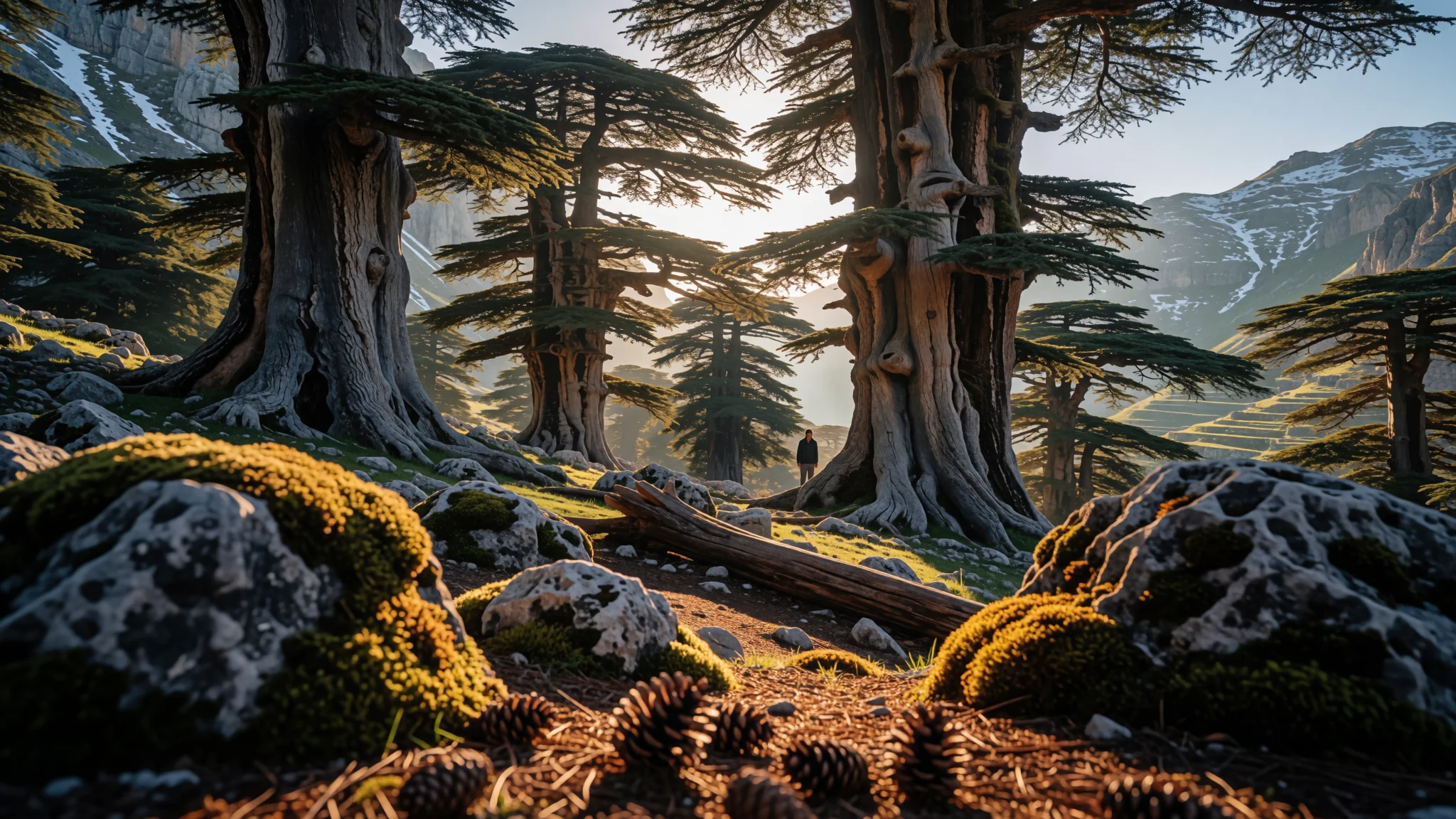
Walk among the surviving ancient Lebanon cedars in the high Kadisha Valley, where history and myth meet mountain air.
The place
The Cedars of God, known locally as Arz el-Rab, occupy a dramatic hollow in the Kadisha Valley high above the town of Bsharri. This grove is not merely a collection of old timber; it represents a living remnant of the vast evergreen forests that once blanketed Mount Lebanon in antiquity. For centuries, Christian monks from the monastic communities carved into the steep cliffs of the valley venerated these giant trees, protecting them from total ruin while the surrounding slopes were stripped bare by generations of empires.
The setting is rugged and deeply atmospheric. Encircled by grey limestone ridges that hold winter snow well into spring, the grove feels sheltered from the wider world. The trees themselves grow with thick, twisted trunks and broad, flat-topped branches that have withstood centuries of mountain gales. Visitors arrive via winding mountain roads that climb sharply from the coast, passing through terraced orchards and dramatic gorges before reaching the cooler air of the upper plateau. While Arabic is the primary language spoken locally, English and French are readily understood in the shopping district near the grove, where workers assist travellers exploring the highlands. Walking the quiet aisles between these ancient trunks with an authorised guide offers a rare sense of scale and continuity, connecting the modern visitor directly to the physical landscape that inspired the earliest written literature of the ancient Near East.
Its story
The history of the Cedars of God is intertwined with the rise and fall of ancient civilisations across the Mediterranean and Mesopotamia. Long before written records, these high mountain forests were mythologised. In the Epic of Gilgamesh, the cedar forest is described as the domain of the gods, guarded by divine forces before being felled for timber. Across the centuries, the wood was coveted by successive powers. The Phoenicians used the straight-grained timber to build the merchant fleets that established them as premier sea traders. Ancient Egyptians traded for cedar resin to use in mummification and timber for papyrus scrolls, while later empires—including the Assyrians, Babylonians, Persians, Romans, and Ottomans—all harvested the mountain slopes for construction and railways. King Solomon procured cedar timber from the region to build the Temple in Jerusalem, cementing the tree's place in religious texts.
By the early modern era, travellers began documenting the dwindling survivors. Pierre Belon visited the grove in the sixteenth century, recording his observations and counting the remaining mature trees in the high valley. Over subsequent centuries, naturalists, pilgrims, and early tourists made the arduous climb up from the coast to witness the grove. Successive generations gradually recognised the urgent need for preservation, transforming the ancient timber stands from a resource to be exploited into a protected cultural landscape of global significance.
What to see
- Kadisha Valley — Kadisha Valley
A dramatic UNESCO World Heritage ravine where medieval Christian monastic communities carved cells, chapels, and hermitages directly into the sheer cliff faces, hidden amongst wild walnut groves and steep footpaths.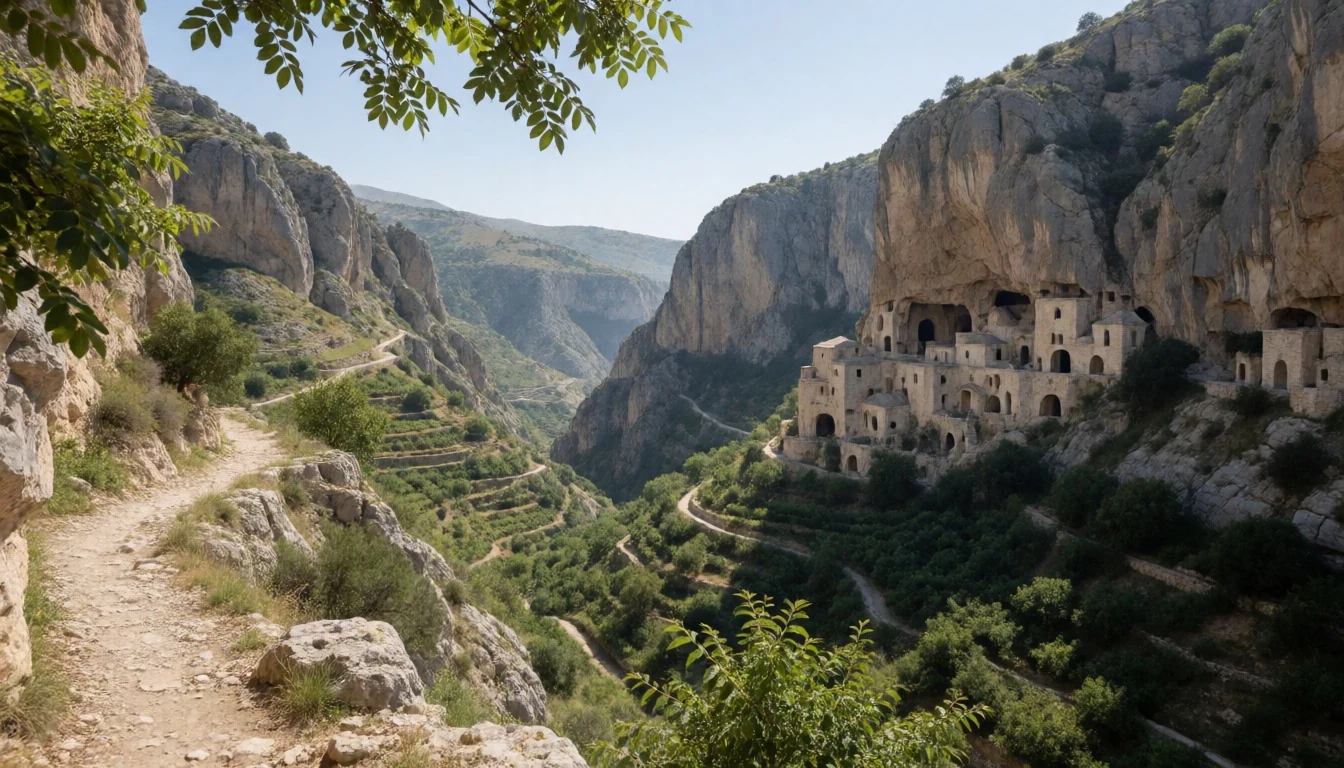
- The Baatara Gorge — Tannourine region
A striking natural geological formation featuring a waterfall that plunges through three distinct limestone bridges, creating a subterranean cavern of rushing water and echoing stone.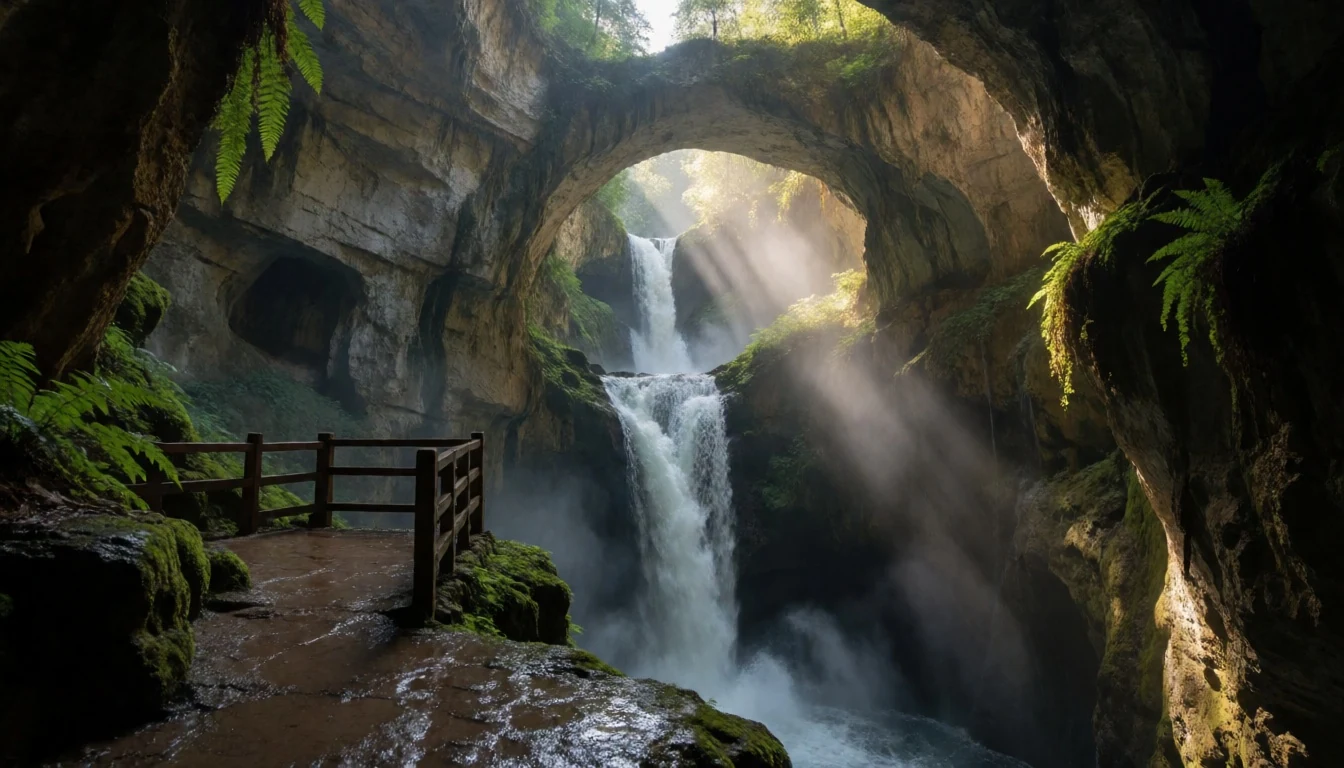
- Tripoli Castles and Souks — Tripoli
The historic northern city of Tripoli offers vast medieval Crusader fortresses, intricate Mamluk architecture, and bustling covered markets filled with traditional soap makers and sweet shops.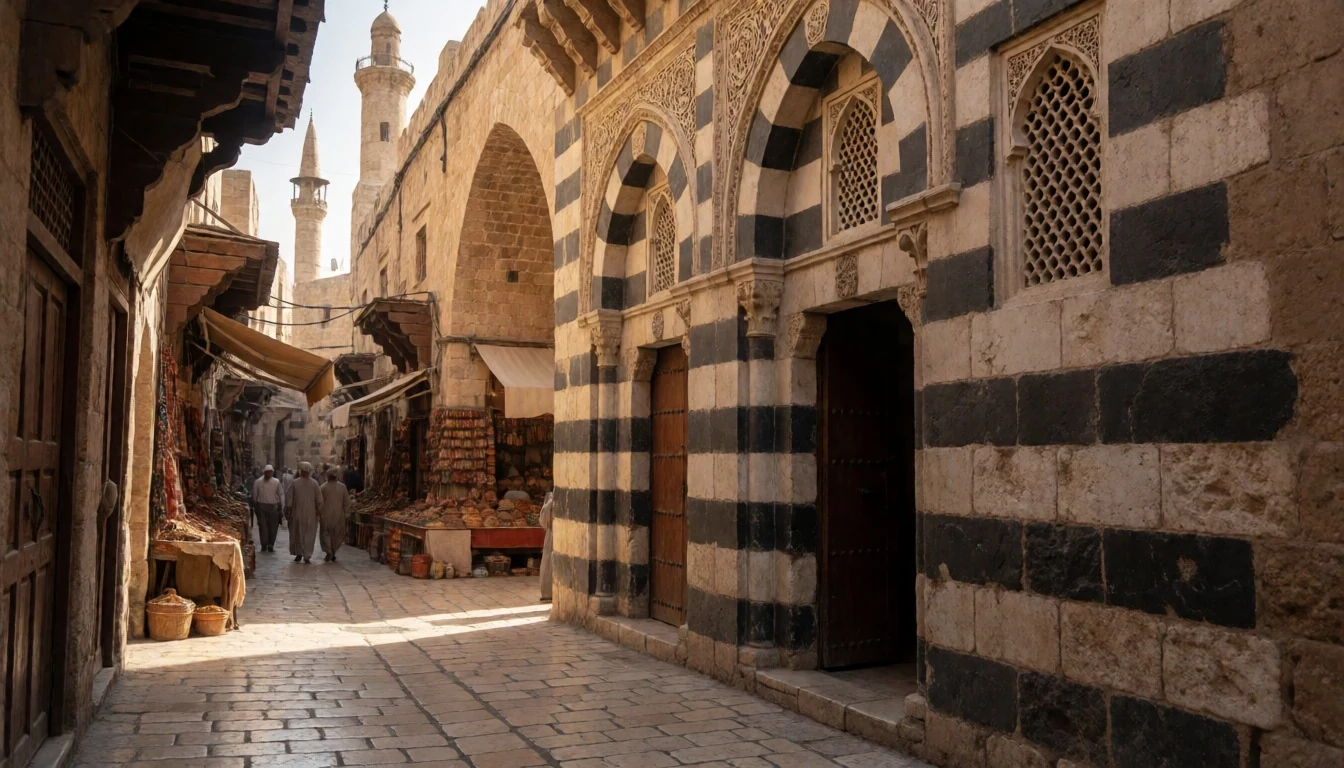
Culture
Mountain culture in northern Lebanon is shaped by centuries of Christian monastic tradition and rural community life rooted in the Kadisha Valley. Hospitality is paramount, and visitors are frequently greeted with warmth by local residents and monks who maintain the historic trails. Traditional village life revolves around seasonal agriculture, olive harvesting, and the upkeep of mountain terraces. While younger generations and tourism workers are comfortable switching between Arabic, French, and English, respectful greetings in Arabic are always appreciated. Dress in the mountain villages tends to be modest and practical, reflecting the cooler alpine climate and conservative values of rural communities, particularly when visiting active monasteries or churches. Always ask permission before photographing local residents or monks in the rural monasteries.
What to wear
Traditional dress in the Lebanese mountains historically featured heavy woolen robes, quilted jackets, and the distinctive traditional sarwal trousers suited for cold winters and rugged terrain, paired with cloth headwear. Today, everyday wear in Bsharri and the surrounding highlands matches contemporary Mediterranean styles—jeans, jumpers, and sturdy jackets dominate during cooler months, while lighter layers work for summer afternoons. Because the cedar grove sits at a high altitude, the weather can shift rapidly from warm sunshine to chilly mountain winds. Visitors should pack sensible layers, including a windproof jacket, fleece, and sturdy walking shoes or boots with good grip for uneven limestone paths. When visiting monasteries or churches in the Kadisha Valley, dress modestly by covering shoulders and knees out of respect for local religious customs.
What to eat
- Mountain Manakish — Local village bakeries in Bsharri
Fresh flatbread baked on a convex dome, traditionally topped with wild thyme, sumac, and local olive oil, best eaten hot in village bakeries. - Kebbeh Zghartawi — Traditional family-run eateries in northern Lebanon
A regional northern variation of layered minced lamb and bulgur wheat baked with generous amounts of local olive oil, onions, and pine nuts. - Labneh and Village Cheese — Morning markets and guesthouses
Strained strained yoghurt drizzled with estate olive oil, served alongside local salty white cheeses, fresh mint, and crisp mountain cucumbers. - Roasted Pine Nuts and Mountain Apples — Roadside stalls across the Kadisha Valley
Crisp apples harvested from the terraced orchards dropping down the mountain valleys, often paired with locally foraged nuts.
Plan it
Best time. May is the most comfortable month, with highs near 33°C and nights above freezing; avoid July and August, when highs reach about 39°C, and expect the most rain in January.
How long. 2–3
Getting there. Fly into Beirut-Rafic Hariri International Airport, then hire a private taxi or rent a car for the roughly two-hour scenic drive north into the mountains towards Bsharri.
Budget. mid
Tips
- Rent a car or hire a reliable local driver, as public transport into the high mountain valleys is extremely limited.
- Bring sturdy walking footwear suitable for uneven, rocky paths around the grove and valley trails.
- Carry cash in both Lebanese Pounds and US Dollars for small village shops, cafes, and monastery donations.
- Check weather conditions before heading into the mountains, as winter snow can close high-altitude roads.
Etiquette
- Dress modestly with covered shoulders and knees when visiting churches or active monastic sites.
- Always ask permission before taking photographs of monks, locals, or private homes.
Nearby
Sources
- Wikidata Q60945 (CC0)
- Wikipedia (CC BY-SA 4.0)
- Wikivoyage (CC BY-SA 4.0)
- Photo 01 (CC BY 3.0)
