Baalbek
Baalbek, Lebanon
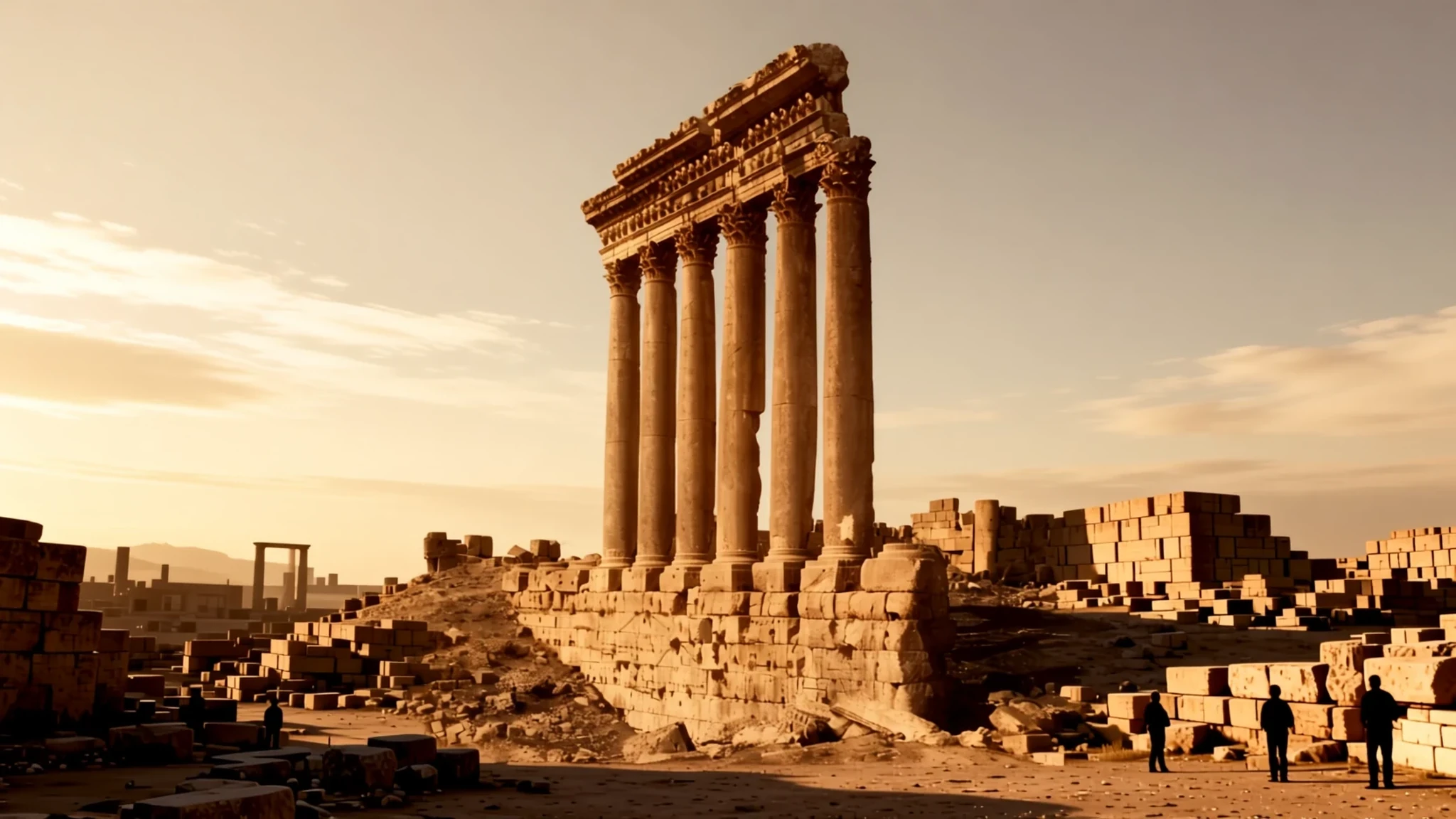
Baalbek holds Roman temple ruins of striking scale, set in the Beqaa Valley of eastern Lebanon.
The place
Baalbek sits east of the Litani River in Lebanon's Beqaa Valley, about 67 km northeast of Beirut, and it is the capital of Baalbek-Hermel Governorate. The city has a population of around 81,000 and lies at an elevation of about 1,170 metres, so winters are cold and the air is drier than on the coast. Most residents are Shia Muslims, with Sunni Muslims and Christians also present, and the town has absorbed many Syrian refugees in recent years.
The reason most visitors make the detour is the Roman temple complex at the heart of the town. Its two main temples, the Temple of Jupiter and the Temple of Bacchus, have endured earthquakes, sackings and centuries of reuse. The site was inscribed as a UNESCO World Heritage site in 1984, and the ruins are what bring most people here.
Beyond the Roman core lie the Great Umayyad Mosque, the mausoleum of Sit Khawla and the quarry at Hajar al-Hubla on the edge of town. Modern Baalbek is quieter than its monuments suggest. Tourism shrank during the civil war and again during later conflicts, so the town often feels underused, with small shops and a handful of eateries near the main roads. The summer festival is the main event of the year, filling the Roman courtyard with concerts and theatre.
Its story
Baalbek's hilltop, Tell Baalbek, shows signs of settlement over a very long span, and the valley's water and fertile soil explain why people kept returning. Springs and seasonal meltwater from the mountains made the site useful for farming. Its position on the route from Tyre to Palmyra gave it a strategic value that was never matched by its prominence in written records. In the early Canaanite period, its temples honoured a triad of local deities: a male god, his consort and their son.
Alexander the Great took the city and renamed it Heliopolis, Greek for Sun City. Under Roman rule it grew into a prosperous centre, and the great temples visitors see today were raised in that period, on earlier sanctuaries. The city's fortunes shifted with the spread of Christianity, which reshaped the older religious buildings, and again after the Arab conquest, when the site was reused and a mosque was later built in the surrounding town.
The Mongols sacked the city, and a sequence of earthquakes damaged its monuments. Its importance declined through the Ottoman period and into modern times, leaving a large Roman core standing above a smaller town. Visitors today walk through the remains of several religious eras at once, and each layer of building is still legible in the stone.
What to see
- Temple of Jupiter — the central Roman complex
The Temple of Jupiter dominates the Roman complex and is the structure most photographs show. Its tall columns and courtyard were laid out in the first century AD, and the scale of the stonework is hard to take in from the ground. Walk around the perimeter slowly to see how the masonry was assembled, and give the whole site a long, unhurried visit.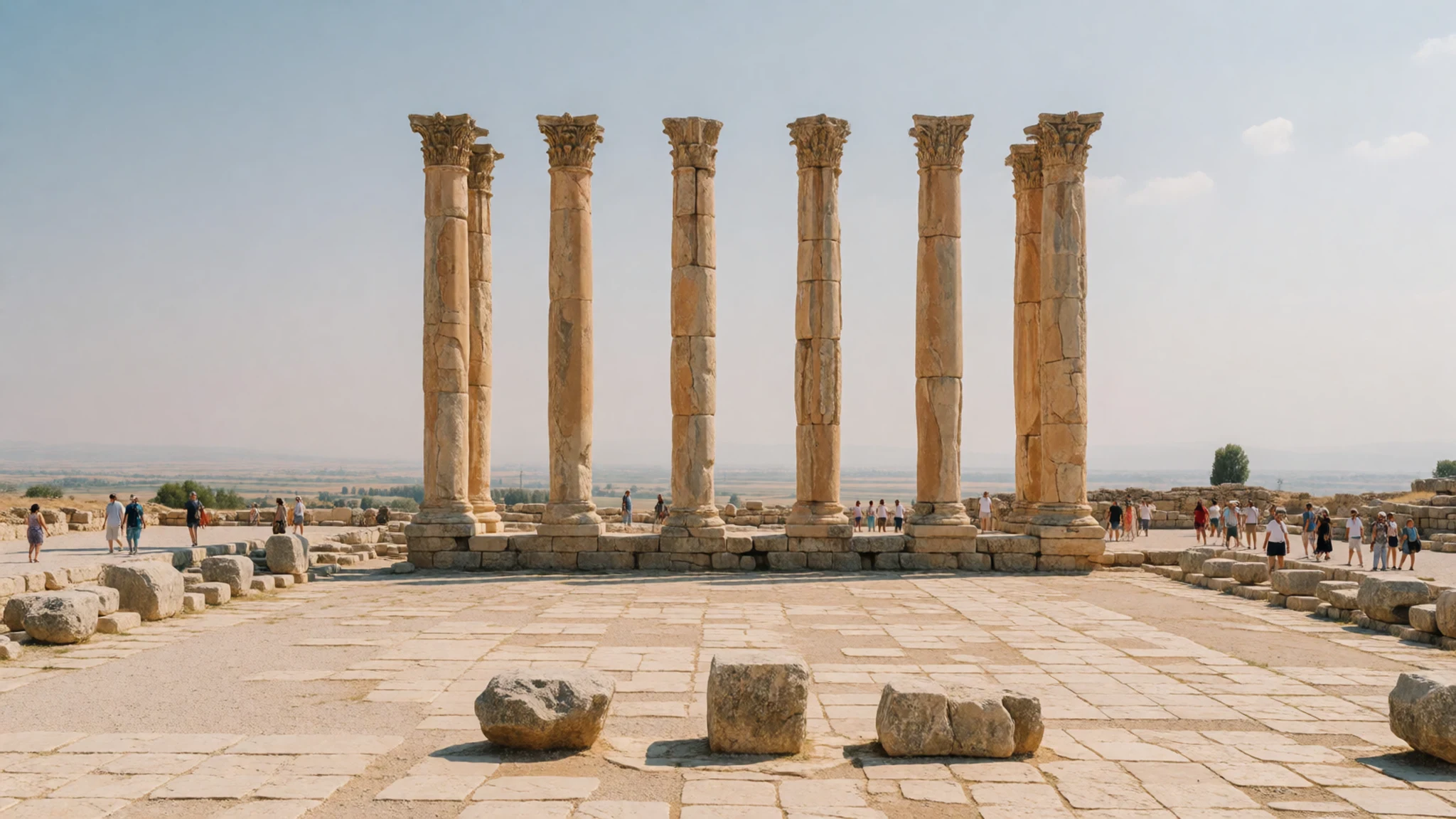
- Temple of Bacchus — the Roman complex, beside the Temple of Jupiter
The Temple of Bacchus is smaller than the Temple of Jupiter, yet its columns and carved ceiling still give a clear sense of how the interior was arranged. Stand in the courtyard and then at the entrance to judge the size of the blocks. Plan to walk slowly, since the uneven ground between the temples is easy to misjudge in the heat.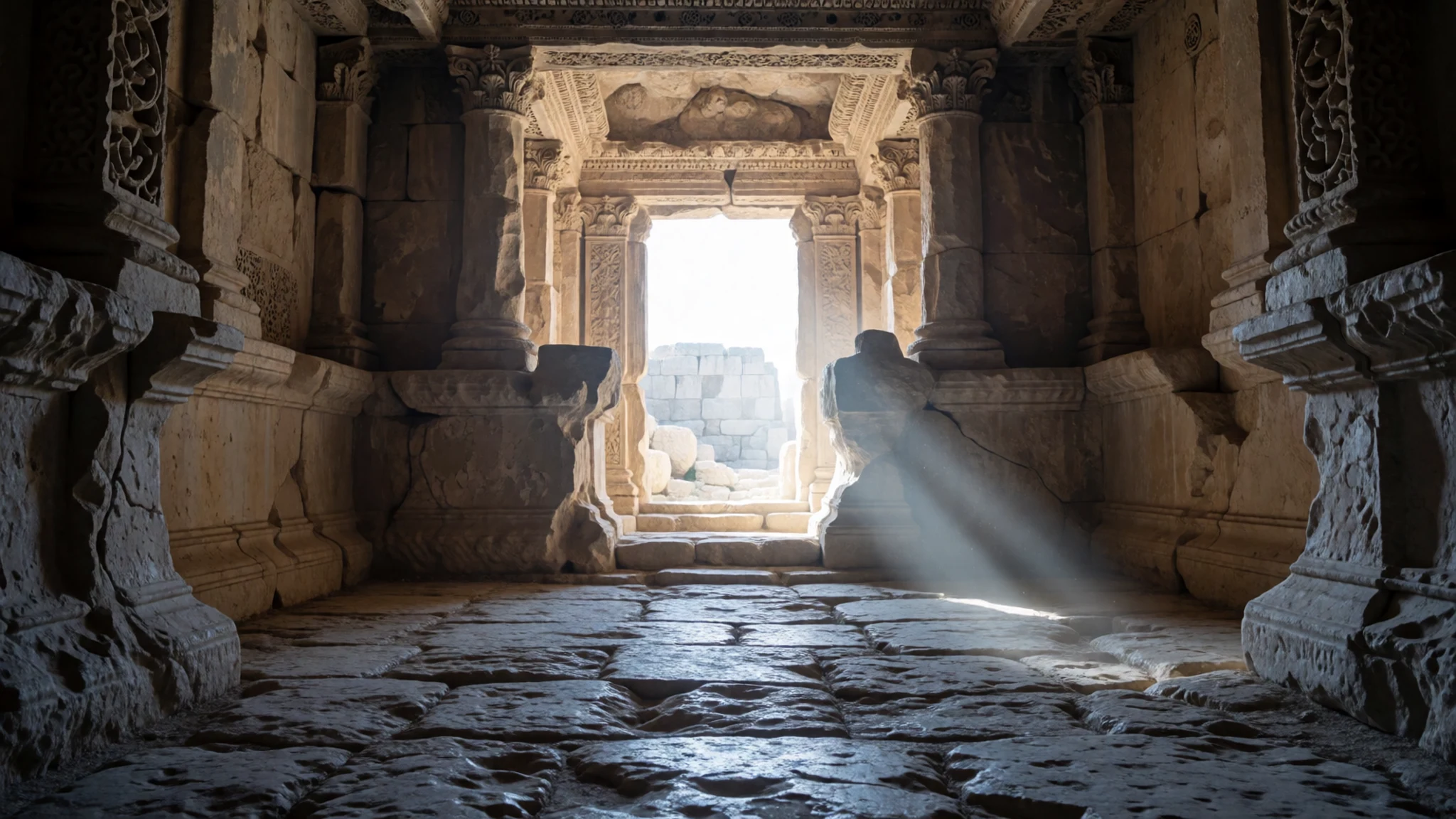
- Temple of Venus — a short walk from the main complex
The Temple of Venus is a smaller, quieter building set apart from the main axis, and many visitors reach it after the larger monuments. Its round plan stands out among the site's buildings, which makes it easy to recognise from a distance. Spend a few minutes sitting in the shade nearby, because it is one of the easier places on the site to pause and look properly.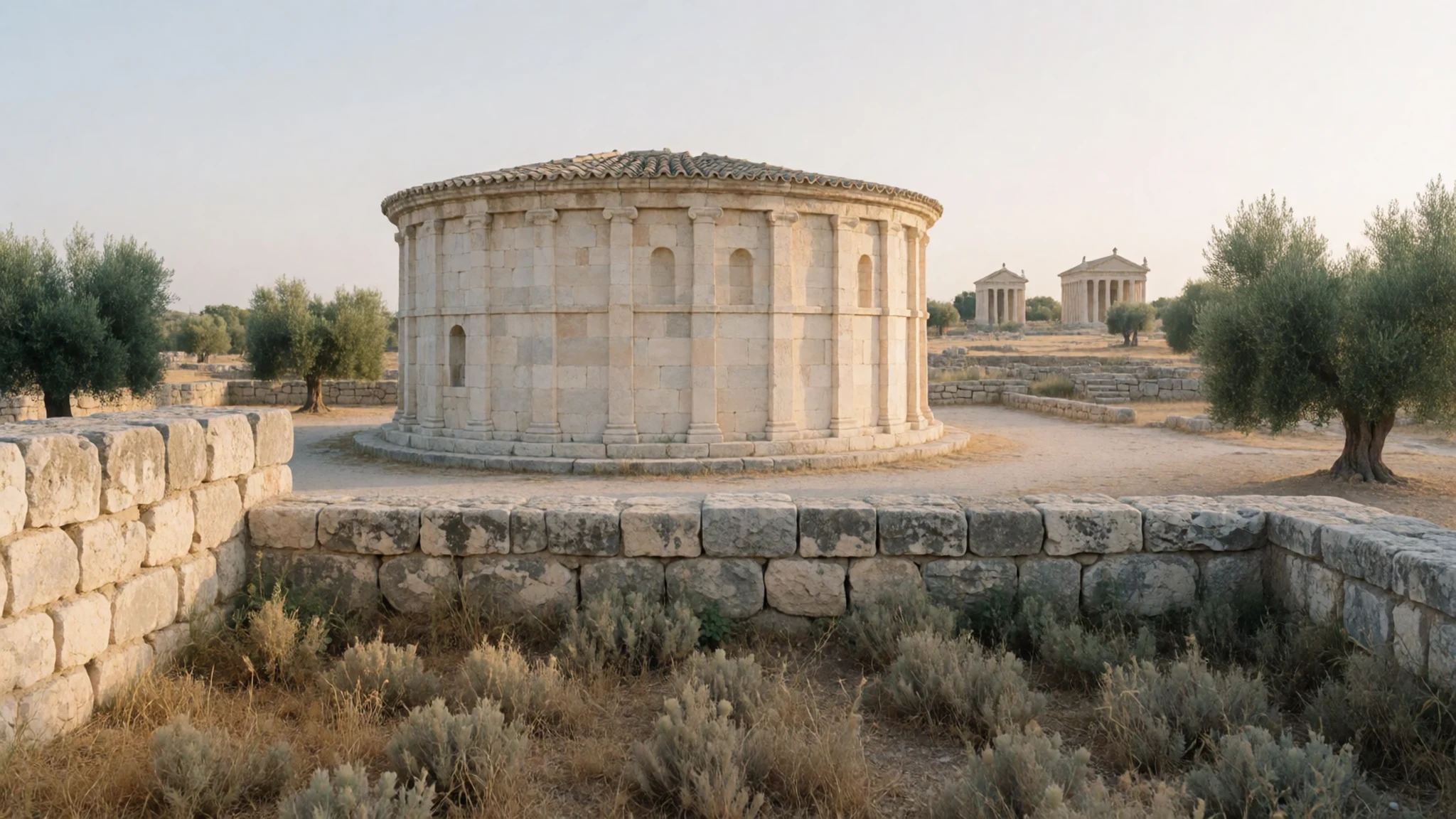
- Great Court — the central courtyard of the complex
The Great Court is the wide, open space that once framed ceremonies around the Temple of Jupiter. Today it gives the best overview of how the complex was laid out, with the temples arranged around it. In summer the festival is staged among the ruins, so the courtyard may be fitted with seating and lighting, and it is worth checking the programme before you travel.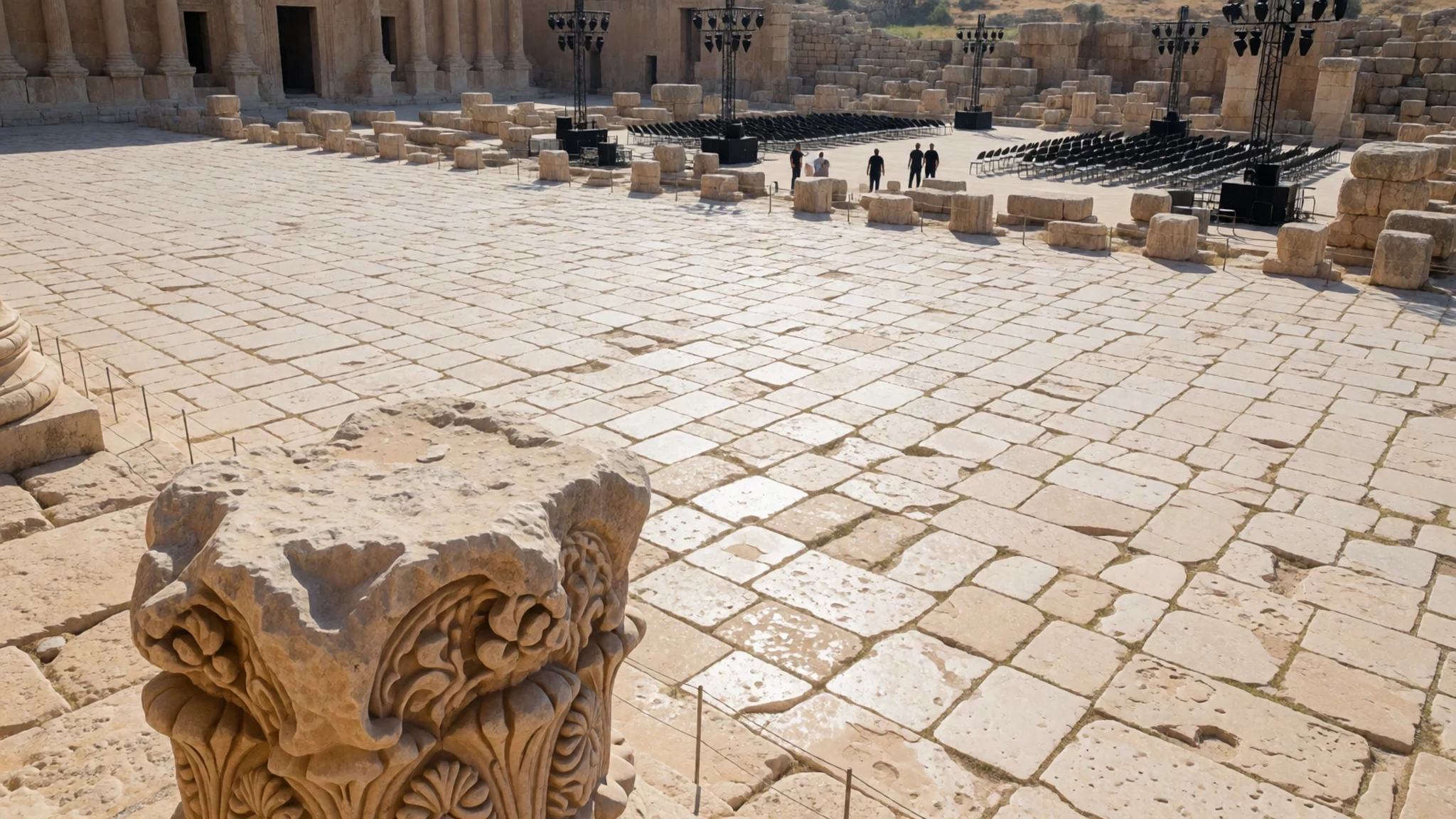
- Hajar al-Hubla — a Roman quarry site on the edge of town
Hajar al-Hubla is a Roman quarry on the edge of town, where a single cut stone is often described as possibly the largest such block anywhere on Earth. Its scale is hard to judge until you stand beside it. A local caretaker looks after the site, so ask locally about access before you set out.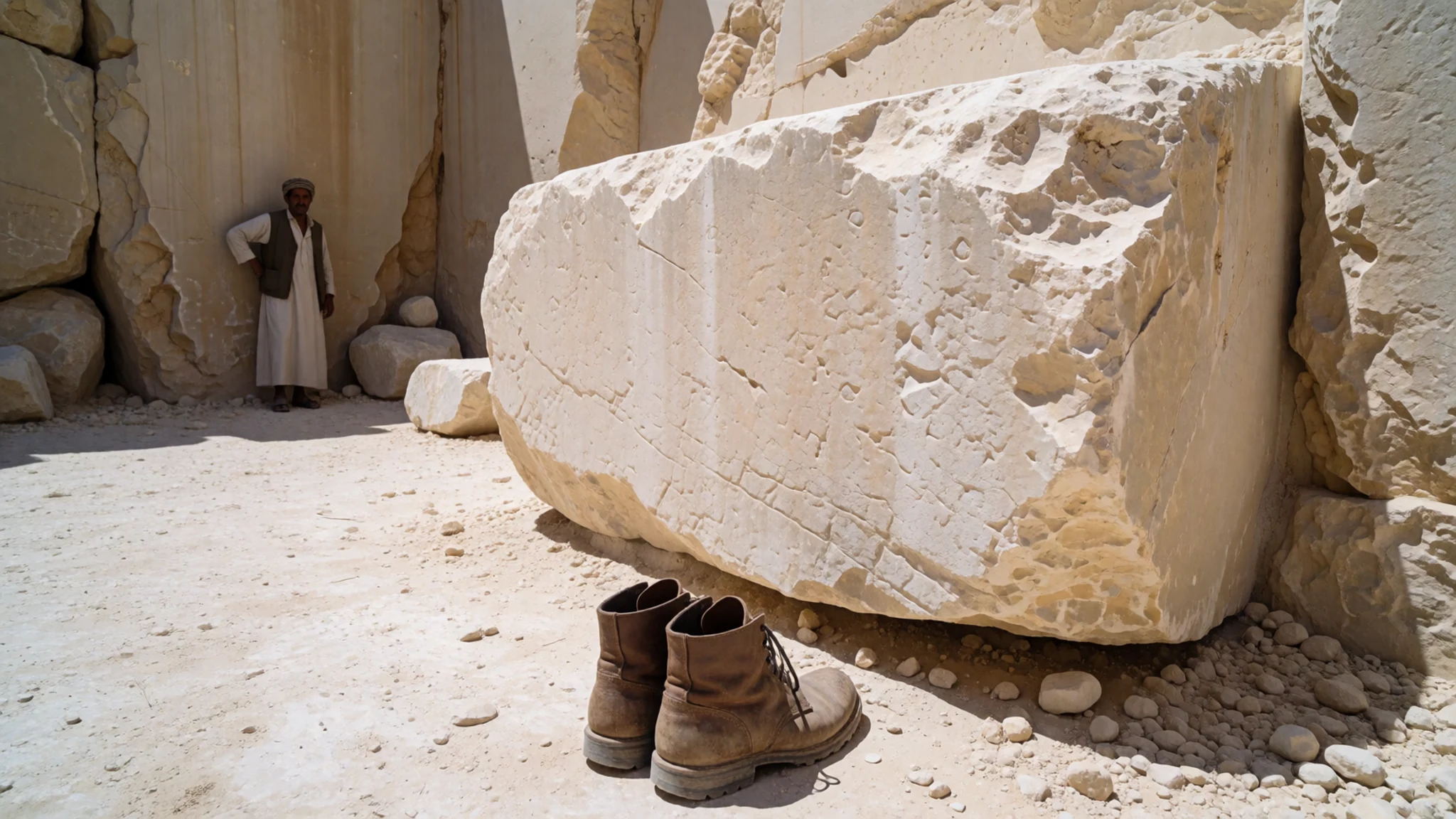
Culture
Baalbek is a town of mixed religious communities, and its ruins are visited by families, students and groups from Beirut as well as foreign travellers. The Roman site is an open monument rather than a place of worship, but the Great Umayyad Mosque is an active mosque and expects respectful behaviour. Around the town, modest dress is appreciated; in summer heat, shorts and sleeveless tops are common in Beirut but attract more attention here. Women are often asked to cover their hair inside the mosque, so a light scarf is a sensible thing to carry. The stonework is fragile and the steps are uneven, and staff discourage climbing on fallen blocks. Ask before photographing people, especially women and worshippers, and at the Great Umayyad Mosque take your shoes off before the prayer hall and ask before photographing anyone at prayer.
What to wear
Baalbek's traditional dress belonged mainly to village life in the Beqaa Valley, where women wore long embroidered dresses and wide cotton or linen trousers for work in the fields, with headscarves and shawls for going further afield. Heavy woven cloth and printed cotton were common, and the embroidery, often worked in red, blue and gold thread, varied from village to village. These garments are now seen mostly at weddings, folk performances and museum displays, though older women in outlying villages may still wear them day to day.
What people wear now is close to what is worn in Beirut. In town, jeans, long skirts, shirts and loose trousers are ordinary, and dress ranges from fully covered to fashionable. Many women wear headscarves and many do not, and men commonly wear trousers with short-sleeved shirts. Summer visitors and the presence of refugee families add variety to the streets.
A visitor should dress for the climate and the ground. Summer sun on pale stone is strong, so light cotton or linen that covers the shoulders, a wide-brimmed hat and sunglasses work well. Knees and shoulders should be covered for the Umayyad Mosque, with a scarf ready for the hair. For the ruins, closed walking shoes with good grip are the sensible choice, because the paving and fallen blocks are uneven and dusty. In winter, a warm layer helps, since the valley is cold at elevation.
What to eat
- Namoura bel ashta — a traditional pastry shop in town, such as Patisserie Jawhari
A semolina cake soaked in syrup and topped with ashta, a thick cream skimmed from fresh boiled milk. It is the sweet the town's pastry shops are best known for, and it is usually served cold.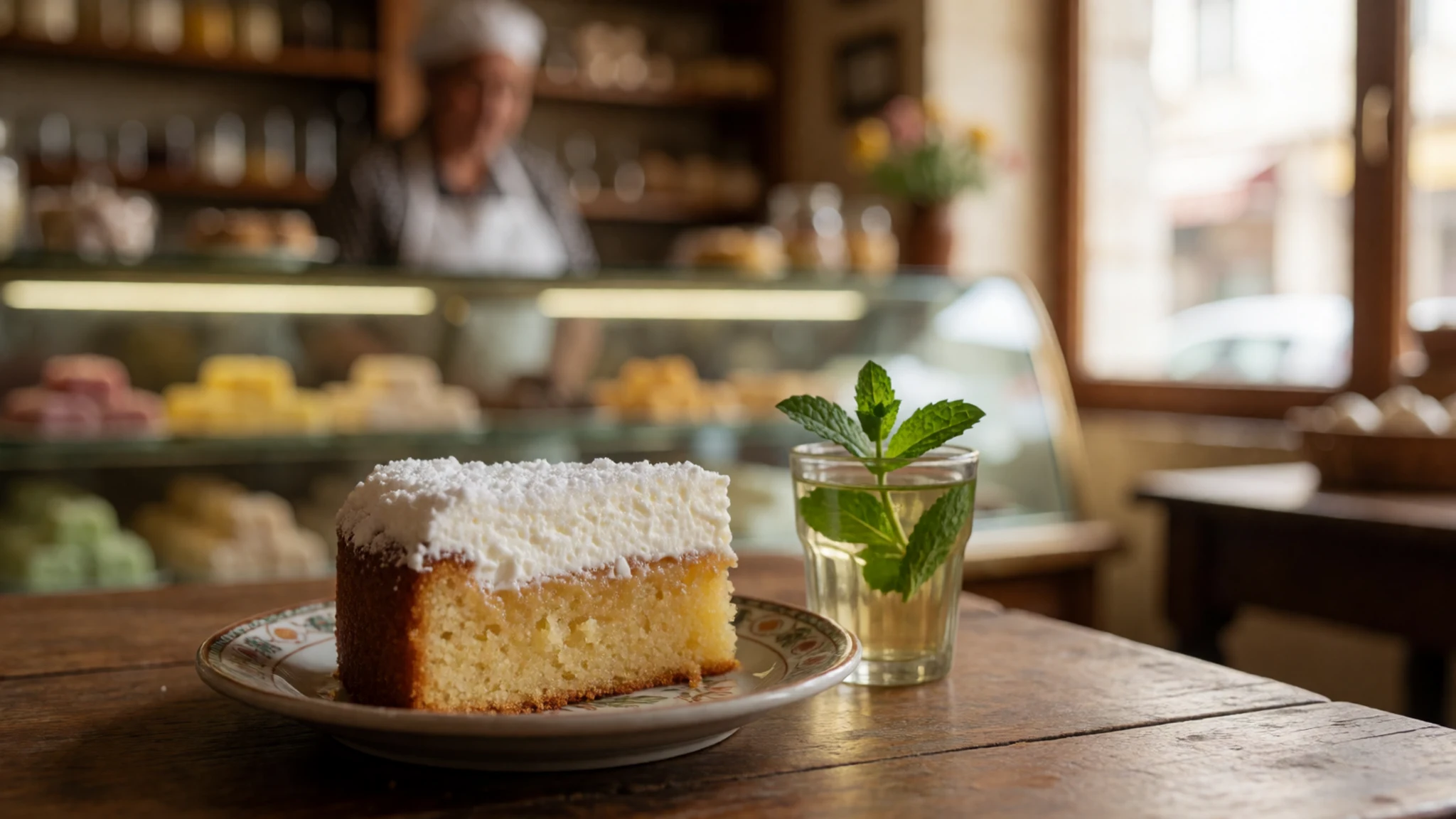
- Knefe — the pastry shops in town
A shallow dish of fine golden pastry layered over soft cheese, then soaked in sugar syrup and sometimes finished with crushed pistachios. Best eaten warm, it is a common afternoon treat across the Levant.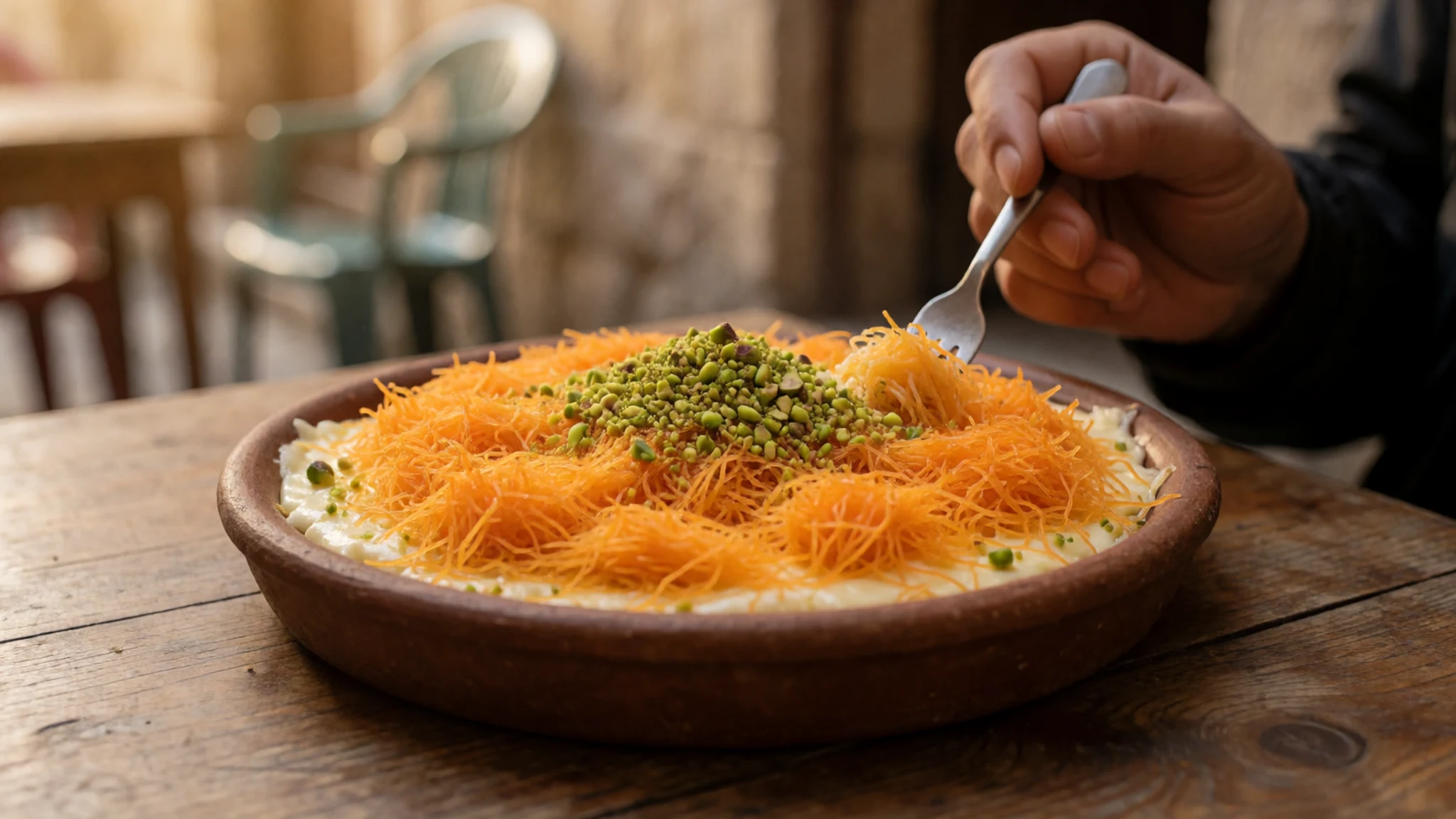
- Neqlawa — the sweet counters of the older pastry shops
Thin layers of pastry wrapped around cream and nuts, baked until crisp and sweetened with syrup. It sits alongside namoura and knefe in the town's traditional pastry shops. - Manakish — a neighbourhood bakery, best visited in the morning
A round flatbread topped with za'atar, cheese or minced meat and baked fresh. Eat it standing at a corner bakery, as many locals do to start the day. - Mezze on summer terraces — the outdoor terraces near the ruins that open in summer
Summer outdoor terraces serve sheesha alongside plates of mezze, small dishes such as hummus, fattoush and grilled meats shared at the table. Order several plates and let them arrive in waves.
Plan it
Best time. April to May and September to October suit Baalbek best: the valley is green in spring and the light is clear in autumn. Winters are cold at elevation and summers are hot and dry, but the summer festival season is the busiest time to visit.
How long. 2
Getting there. Buses to Baalbek leave Beirut from the Cola intersection and take about two hours each way; from Homs in Syria, buses cross into Lebanon at al-Qa'a. Beirut's airport is the usual gateway, and the bus or a shared taxi is the last leg.
Budget. low
Tips
- Go early in the morning, before tour groups arrive and before the heat builds
- Book festival tickets well ahead if your trip coincides with the summer programme
- Carry small cash for the site, shops and small eateries
- Bring water and a hat, as there is little shade among the ruins
- Check current access and security advice with your hotel or the official site before setting out
Etiquette
- Keep off fallen blocks and temple steps unless a guide invites you onto them
- Ask before photographing people, particularly women and worshippers
- Dress modestly for the mosque and remove your shoes at its entrance
Nearby
Sources
- Wikidata Q178835 (CC0)
- Wikipedia (Baalbek, rev 1379564091) (CC BY-SA 4.0)
- Wikivoyage (Baalbek, rev 5394132) (CC BY-SA 4.0)
- Temple of Bacchus, Saadedine AL SAIDI (CC BY-SA 4.0)
- Temple of Bacchus, Lodo (CC BY-SA 2.0)
- Umayyad Mosque of Baalbek, Marsupium (CC BY 4.0)
- Hotel Palmyra, Baalbek, DIMSFIKAS (CC BY 3.0)
- Temple of Jupiter, Baalbek, Vyacheslav Argenberg (CC BY 4.0)
- 1865 Spruner Map Israel or Palestine post 70 AD, Geographicus (Public domain)
- Baalbek temple complex, Roman columns, Vyacheslav Argenberg (CC BY 4.0)
- Ruins of Old Mosque, Baalbek, American Colony in Jerusalem (Public domain)


