Banská Bystrica
Banská Bystrica, Slovakia
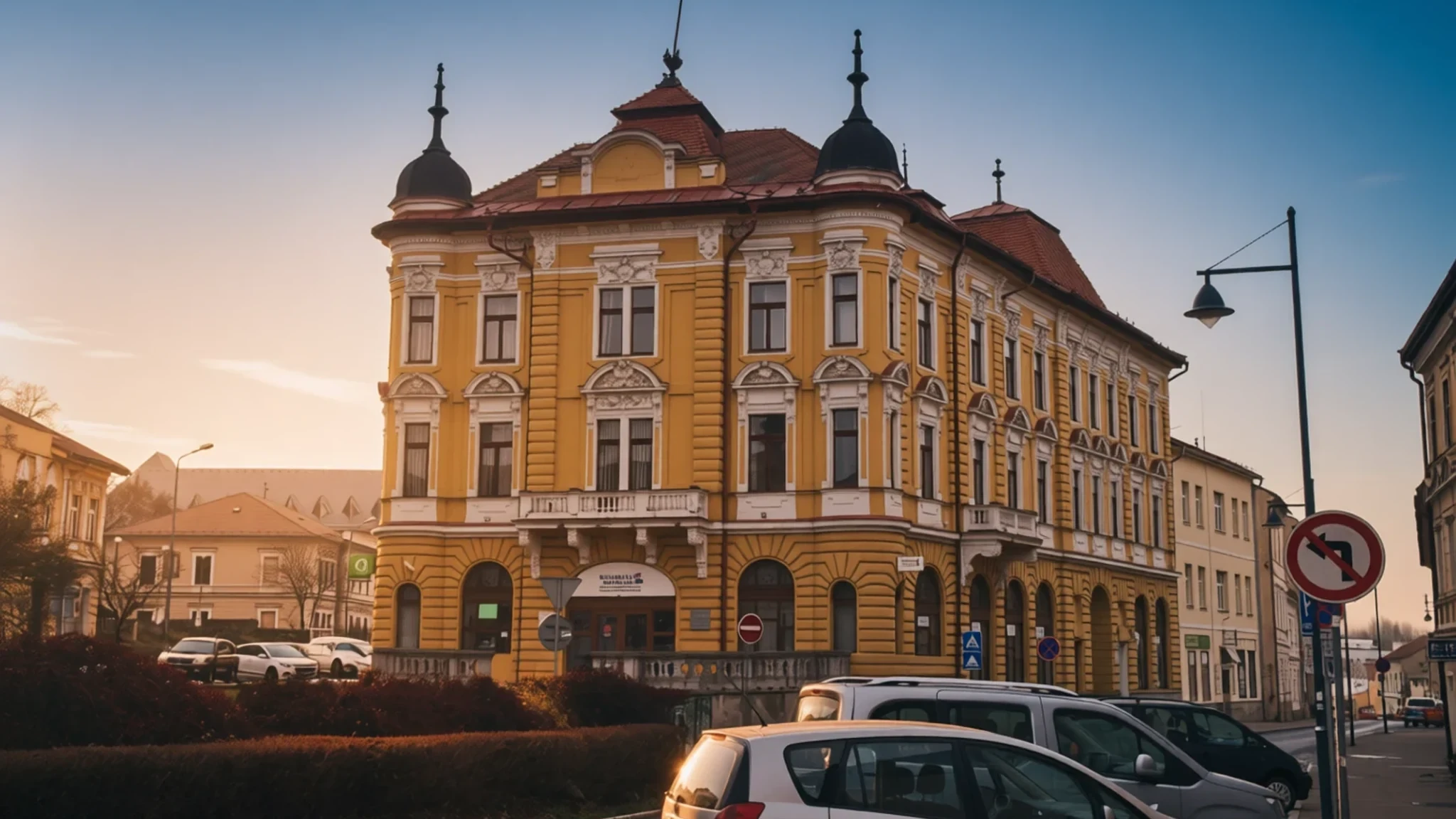
Banská Bystrica is a mining-era town square in a mountain bowl, a calm base for Slovakia's Low Tatras and Veľká Fatra country.
The place
Banská Bystrica sits in central Slovakia at about 362 m above sea level, on the Hron River, in a broad valley ringed by the Low Tatras, the Veľká Fatra and the Kremnica Mountains. It is home to roughly 73,000 people, and it is the capital of its region and district. It is also a university town, thanks to Matej Bel University, which gives the cafés and pedestrian streets a younger edge than the old walls suggest.
The heart of the place is the long, gently sloping SNP Square, named after the Slovak National Uprising. Burgher houses in faded pastels line both sides, with arcaded ground floors, carved stone doorframes and the odd coat of arms still visible on a façade. At the top end stand the Barbakan fortifications and a Baroque cathedral; a leaning clock tower and a plague column punctuate the middle.
The town grew rich on copper, and the late medieval wealth of its mining families explains why a modest regional capital has so many solid mansions and church towers. Today it feels unhurried. Traffic thins out around the square, shops close early in the evening, and the hills begin almost at the edge of the centre, so a walk in the woods is a short bus ride or even a stroll away.
The city has several names, which tells you something about its past: Besztercebánya in Hungarian and Neusohl in German. Visitors come mostly from elsewhere in Slovakia and neighbouring countries; it remains far quieter than Prague or Vienna, with more room to wander at a slow pace.
Its story
Banská Bystrica's story is a story of metal. Prehistoric miners were already working copper at nearby Špania Dolina, and their tools have been dated to 2000–1700 BC. Later, people of the Lusatian culture settled around the same hills, and hill-fort sites survive in local names such as Hrádok, meaning a small fort. The Celtic Cotini lived here in the 3rd century BC, and the Germanic Quadi followed in Roman times, leaving a hoard of silver objects in the Bat Cave.
The town itself grew from a Slavic settlement, and Slovak archaeologists see a permanent community here from the 9th century. After the Hungarian conquest the area passed into Zólyom County. Saxon incomers built the first known stone church in Sásová in the first half of the 13th century, while the land still belonged to the king.
A decisive moment came in 1255, when King Béla IV granted municipal privileges as a free royal town. German settlers, many from Thuringia, arrived to work the mines and trade, and their descendants shaped the town's German name, Neusohl. Prosperous burghers then spent their copper money on churches, mansions and fortifications, which is why the late Middle Ages gave the centre the look it still has.
The layers of language, Slovak, Hungarian and German, remain visible on old signs, family names and museum labels. A modern chapter, the Slovak National Uprising, gave the main square its name and is remembered in a museum in the city.
What to see
- SNP Square — Old town centre
The long main square is the best place to start, and the best place to simply sit. Pastel burgher houses, arcades and carved doorways line it, and the gradient lets you see the whole sweep from the top. Early morning is quietest; evenings bring locals to the café terraces.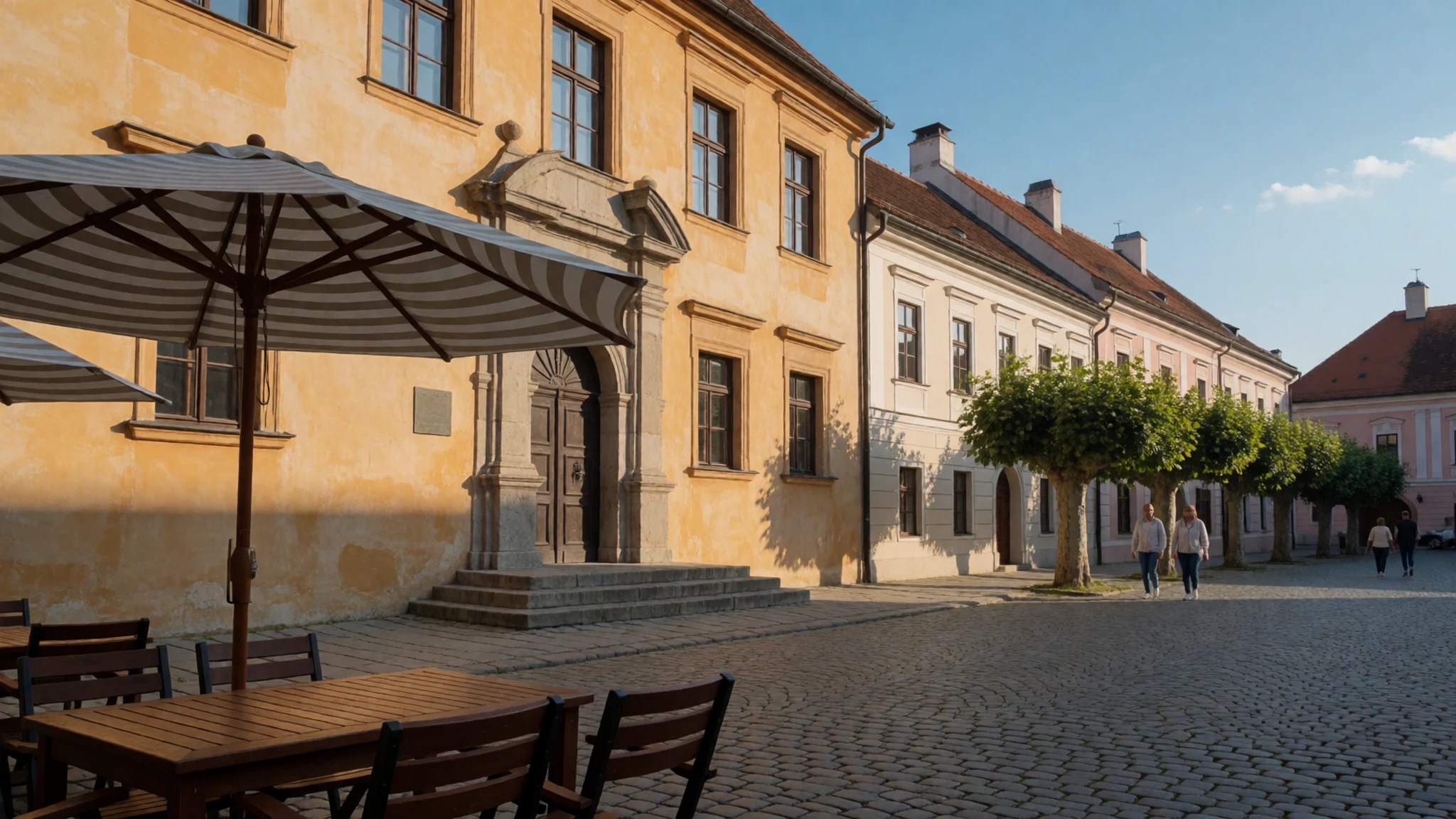
- The Clock Tower — SNP Square, upper end
This leaning tower dates from around 1552 and was built as part of the town market. It is a short climb to the top for views across red roofs to the surrounding hills. Check the opening times and the ticket price locally before going, as they change with the season.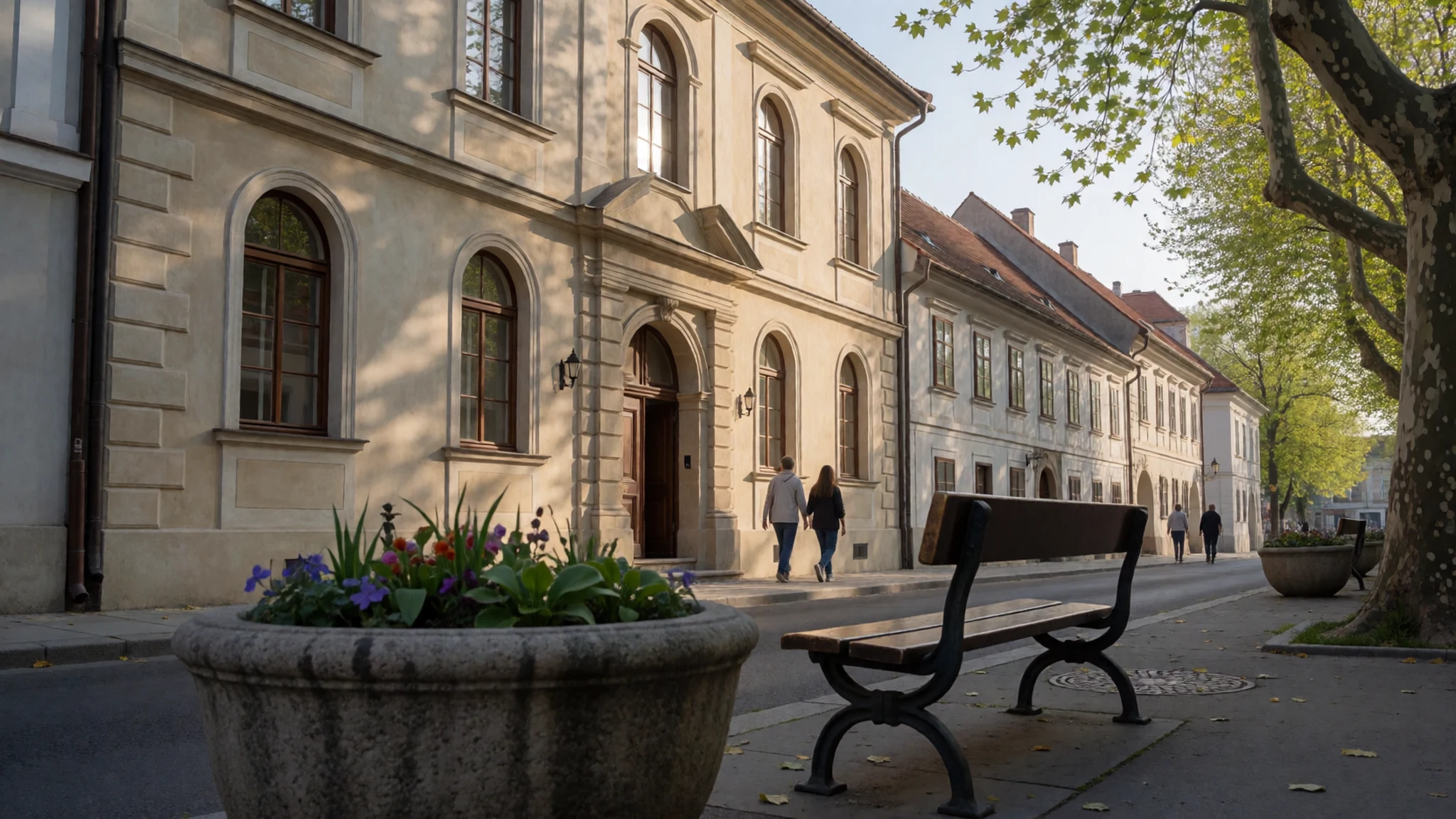
- Barbakan — Top of the old town
The main fortification complex of the old town and its most dominant point, with the Petermann bell tower. Stone walls and gateways recall the late medieval years when burghers needed to protect their copper wealth. It is a pleasant place to wander and photograph, especially in late afternoon light.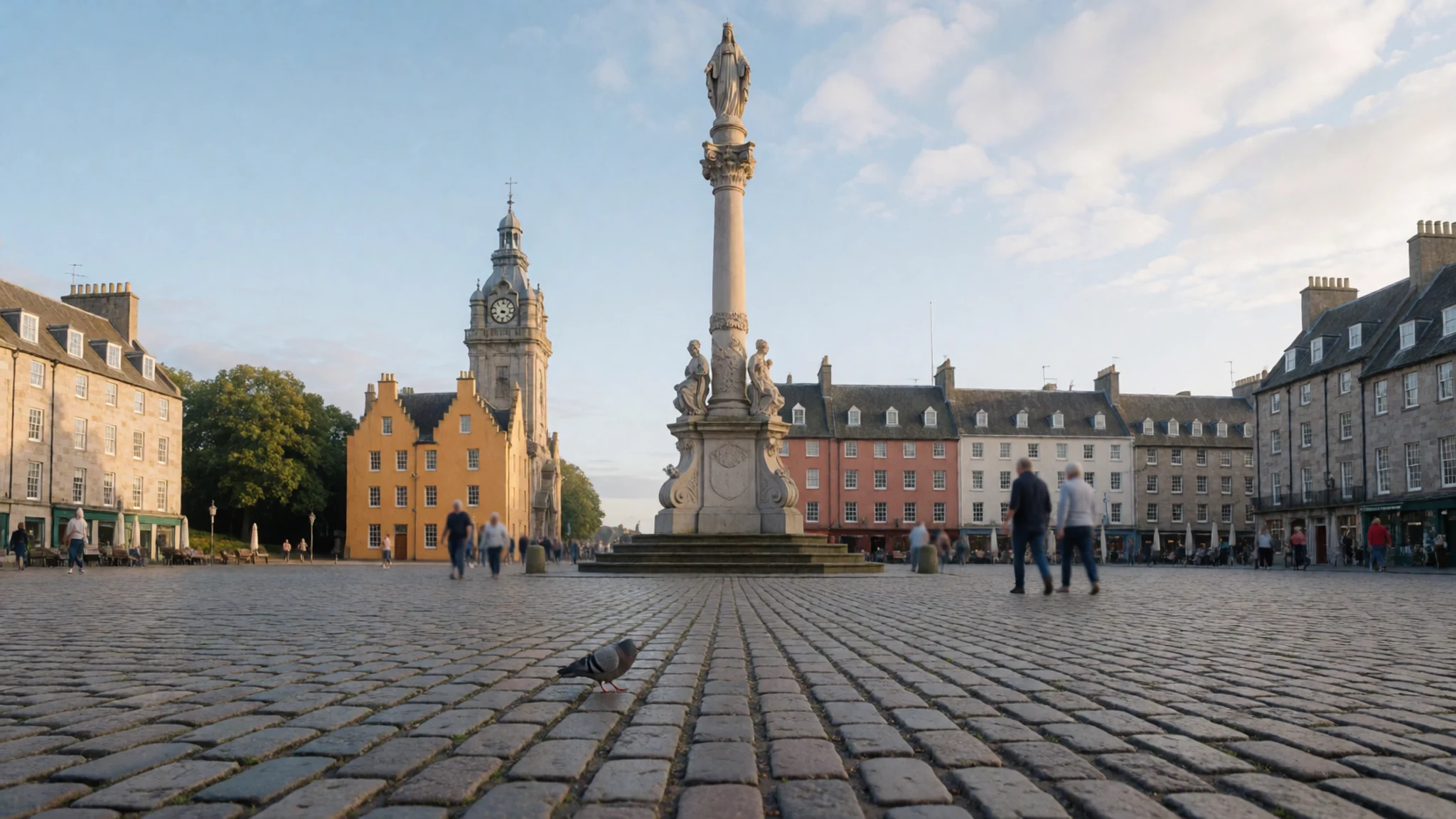
- St Francis Xavier Cathedral — Upper old town
A Baroque Roman Catholic church from the early 18th century, close to the upper square. Inside, expect the ornate gilding and painted ceilings typical of the style in central Europe. Visit outside service times if you want to look around quietly.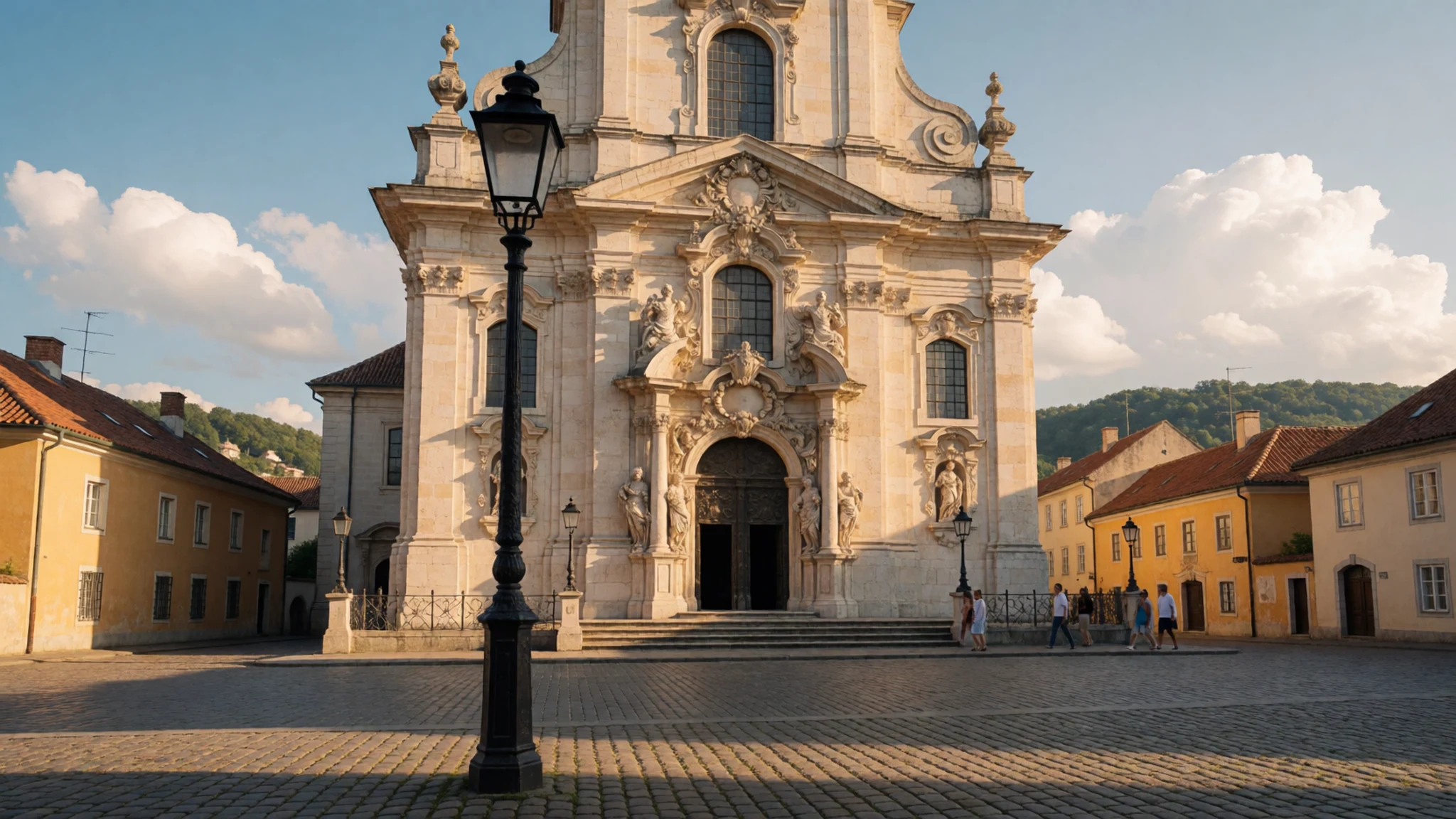
- Central Slovakia Museum — SNP Square
Housed in a renovated Renaissance house on the square, with displays in two other historic buildings in the city. It is a good way to understand the mining past and regional crafts. Check the official site for current exhibitions and opening hours.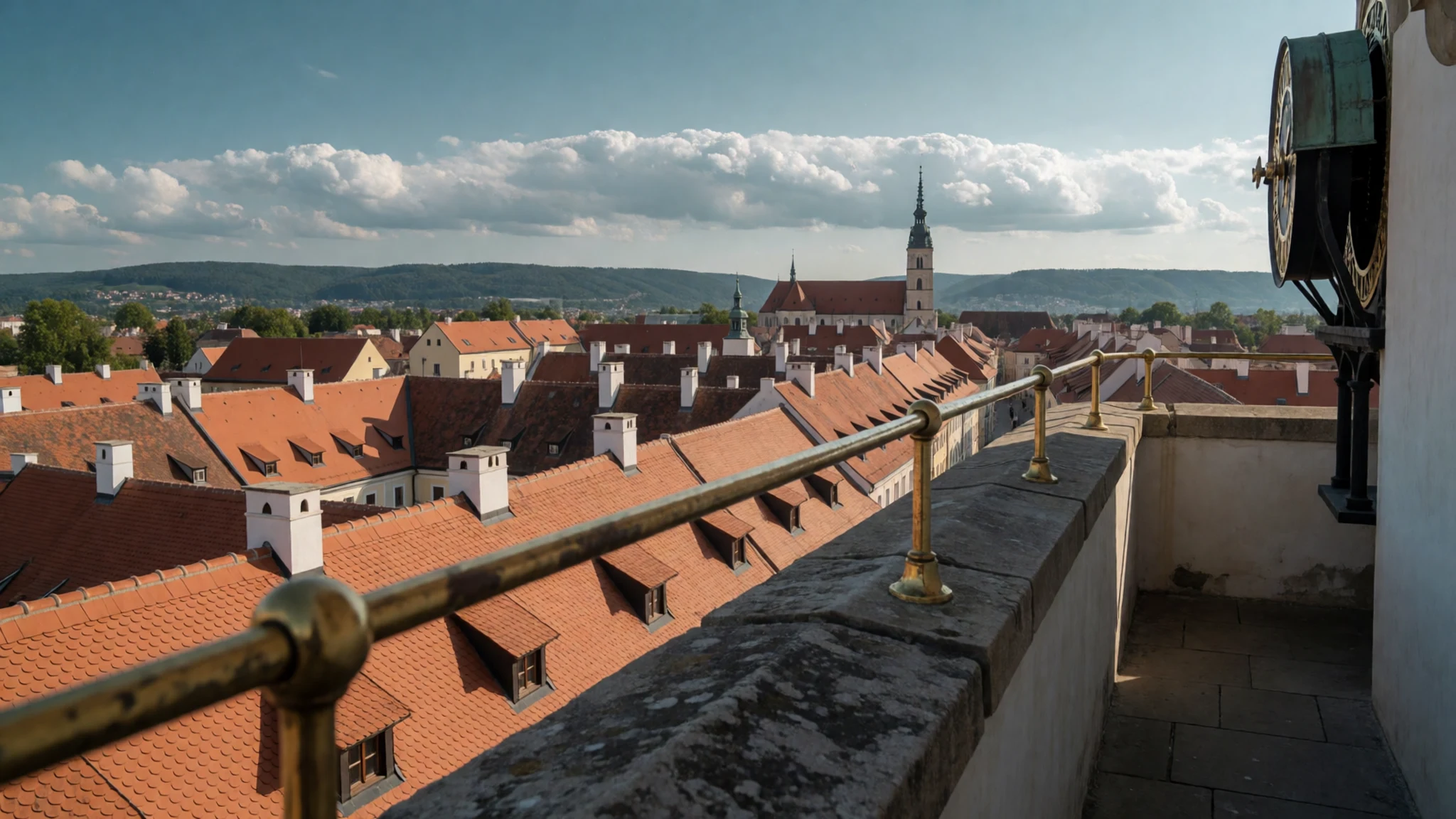
- Marian Plague Column — SNP Square
This Baroque pillar was raised in 1719 as thanks to the Virgin Mary after a plague ended. Such columns appear in many central European squares; this one gives a focal point to the square's middle and a good vantage for photographing the façades on either side.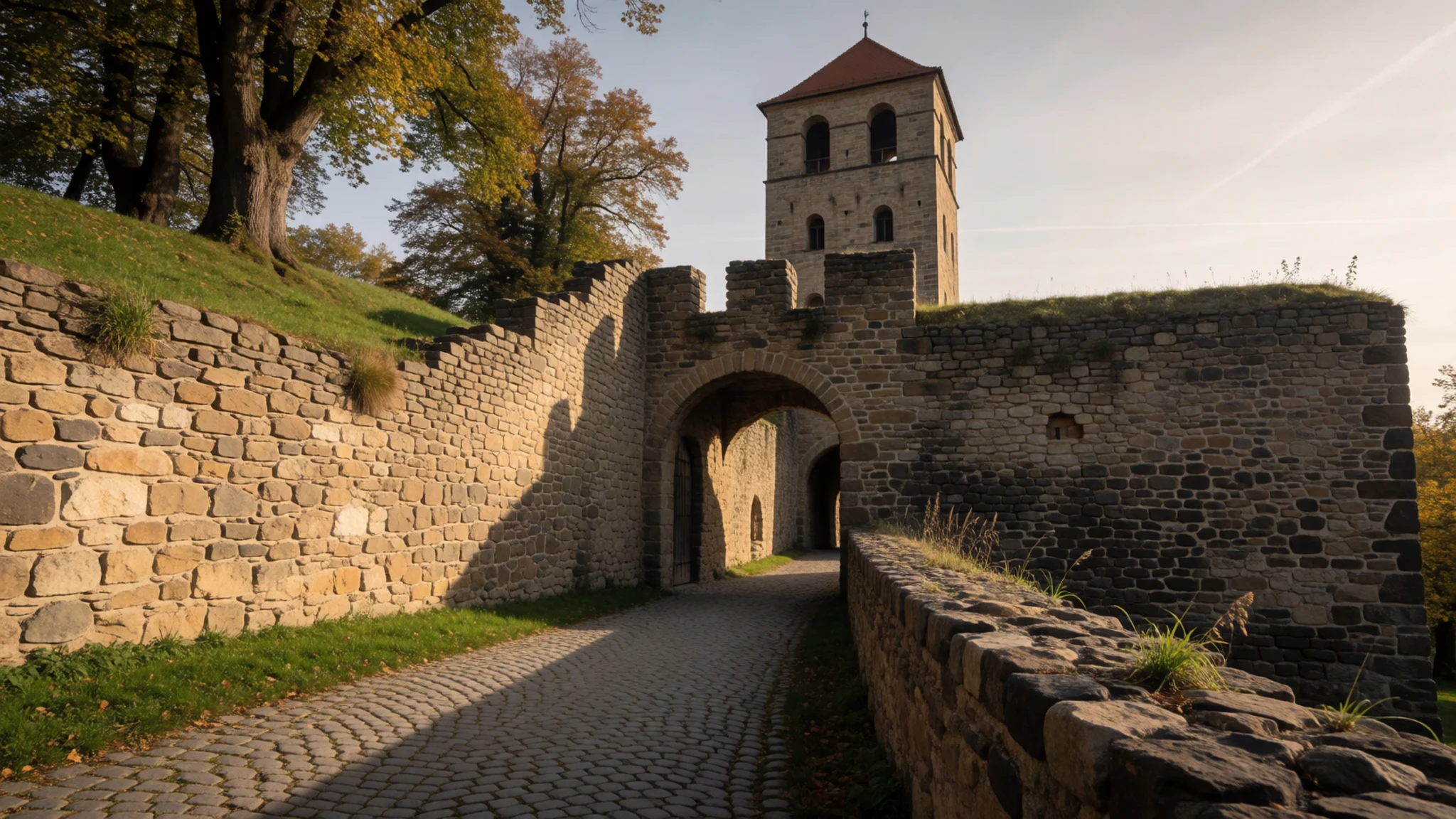
Culture
Banská Bystrica has a lively performing arts scene for a city of its size. The State Opera, founded in 1959, has launched several singers onto international stages, and every summer it stages a popular open-air festival at Zvolen Castle. Divadlo Štúdio Tanca, a professional contemporary dance company, was established in 1998, and the Puppet Theatre at the Fork in the Road, founded in 1960, hosts what is described as Slovakia's only marionette festival. Theatre from the Passage is notable for its cast of people with learning disabilities, working to bring them into the cultural mainstream.
The Central Slovakia Museum, founded in 1889, is the city's oldest museum and a good starting point for local history. Beyond the stage and gallery, daily life is shaped by the university, so term time brings a youthful, café-centred energy to the old town, while summer weekends are quieter as students leave.
Slovak is the main language, and a few words go a long way: dobrý deň (good day) as a greeting, and ďakujem for thanks. Many younger people speak English, while older residents may know German or Hungarian. Memory of the 1944 uprising is taken seriously here, and monuments to it are treated as places of respect rather than backdrops.
When visiting the uprising monuments and churches, keep your voice low, avoid climbing on memorials, and remove your hat if you step inside a church.
What to wear
Traditional Slovak dress, called kroj, varies by village and region. Women's costumes typically combine embroidered blouses, pleated skirts, aprons and sometimes brightly patterned shawls, made from linen, cotton, wool and in some areas lace. Men wore embroidered felt or wool jackets, sheepskin waistcoats and wide leather belts. Mining and mountain areas such as those around Banská Bystrica had their own variations. These costumes now appear mainly at folk festivals, weddings, church feast days and in performances by dance ensembles, rather than in daily life.
Everyday style in the city is practical and fairly understated. Students and professionals wear jeans, jackets and trainers; in the evenings people dress a little smarter for the theatre, opera or a restaurant, but rarely formally. Outdoor clothing is common, since hiking and skiing are a big part of local life.
For visitors, comfortable walking shoes are the main thing, as the square is cobbled and sloping. Summers can be warm, so bring light layers and a sun hat, but evenings cool quickly in the valley. Winters are cold, and snow is common, so pack a warm coat, hat, gloves and shoes with grip. If you plan to head into the hills, bring proper hiking boots and a waterproof layer. For churches, cover bare shoulders and avoid very short shorts as a courtesy.
What to eat
- Bryndzové halušky — Traditional Slovak restaurants around the old town
Small potato dumplings tossed in salty sheep's cheese and topped with crisp bacon. It is the dish most Slovaks name as their national comfort food, filling and rich. Look for it on the menu at traditional Slovak restaurants.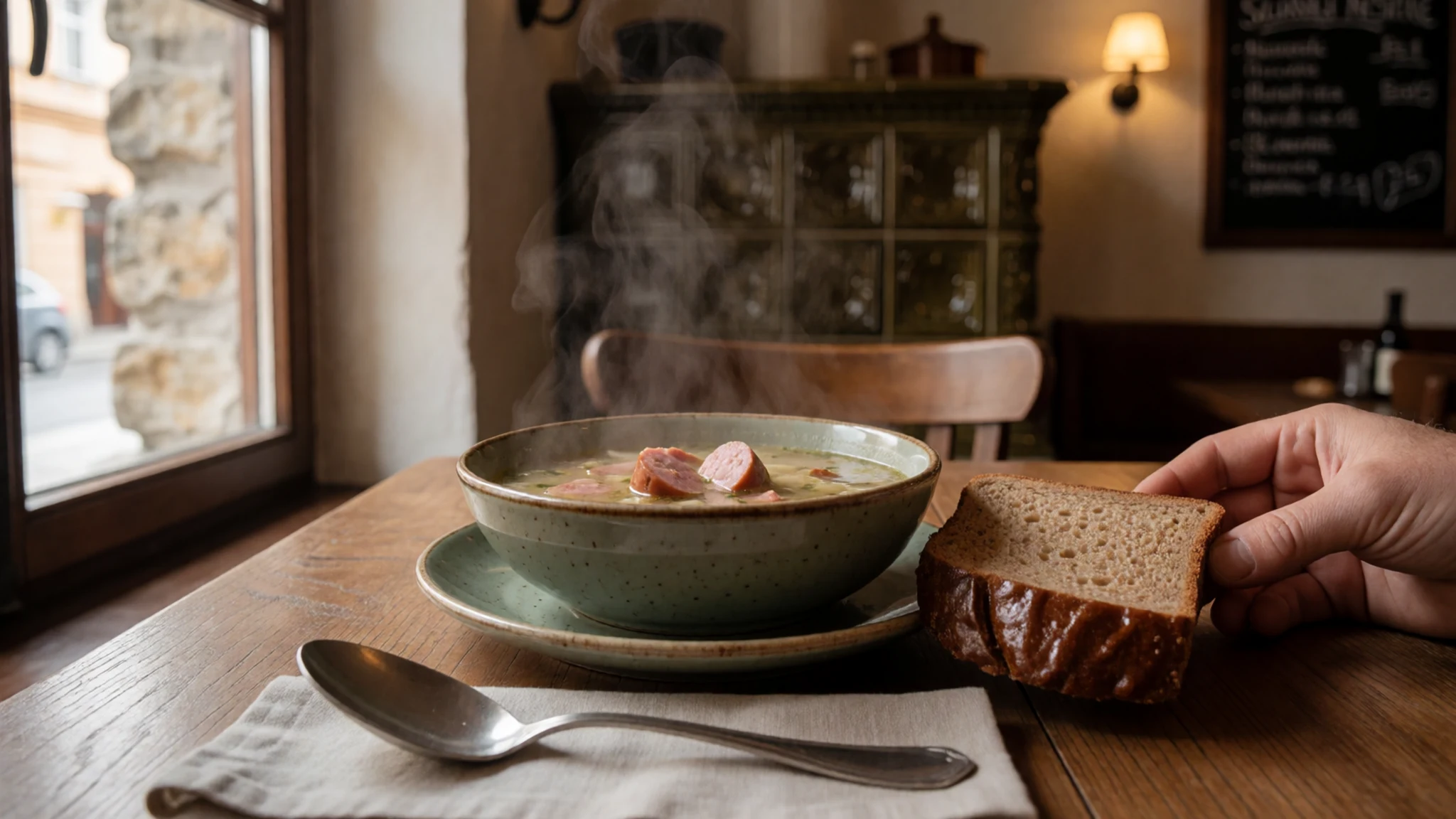
- Daily menu soups — Lunchtime eateries near SNP Square
Many cheaper eateries offer a set daily lunch menu that begins with a soup, often a hearty broth or a thick vegetable or potato soup, followed by a main. It is the easiest way to eat well on a modest budget.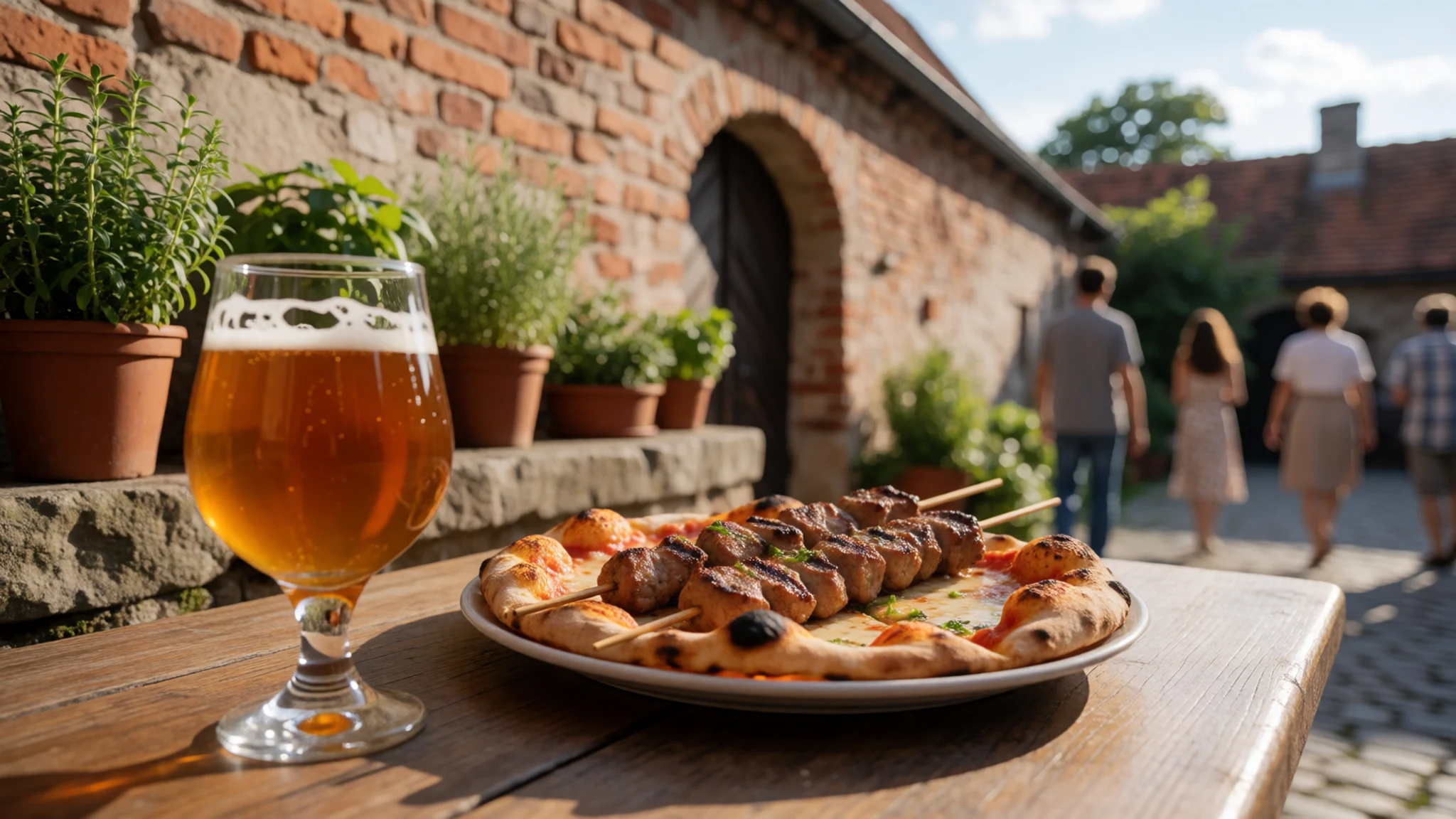
- Steaks and grilled meat — Restaurants near the old town with beer bars
Central European grilled meats, often served with potatoes or dumplings, appear on menus in more relaxed restaurants. Portions are generous, and the style is simple rather than elaborate. - Home-brewed beer — Brewery-style restaurants close to SNP Square
Some restaurants in the town brew their own beer, usually a pale lager, which pairs well with hearty Slovak cooking. It is a pleasant way to end a day of sightseeing in the square. - Vegetarian Slovak specialities — Vegetarian cafeterias in the centre
Vegetarian cafeterias serve Slovak-style dishes without meat, a useful option if you avoid it. Expect dumplings, cheese dishes, vegetables and soups cooked in a home-style manner. - Mountain-hut cooking — Koliba restaurants on the road towards Donovaly
Traditional wooden-style restaurants known as koliba, found on the roads towards the Low Tatras, serve rustic dishes such as halušky, grilled meats and sheep's cheese. They suit a meal after a day in the hills.
Plan it
Best time. May–June and September–October, when the valley is mild and the hills are green or turning gold. July and August are warmer and busier with hikers; winter is cold and suits skiing in the nearby mountains.
How long. 2–3
Getting there. The closest international airports are Poprad, Budapest, Bratislava and Vienna, with Bratislava and Budapest the usual choices. Trains run from the main Slovak cities and from Vienna, Budapest, Poland and the Czech Republic. Services are thinner in the evening, so check times before you travel. The old town is walkable from the station.
Budget. low
Tips
- Check train and bus times in advance, as evening services are limited.
- Carry some cash for small cafés, market stalls and the clock tower; cards are widely accepted elsewhere.
- Visit SNP Square early in the morning for quiet photographs.
- Use the city as a base for day trips into the Low Tatras and Veľká Fatra.
- Check the official city website for events and opening hours: https://www.banskabystrica.sk/
Etiquette
- Greet shopkeepers and staff with a short dobrý deň when you enter.
- Dress modestly and stay quiet when entering churches.
- Treat uprising memorials with respect and do not climb on them.
Nearby
Sources
- Wikidata Q144983 (CC0)
- Wikipedia: Banská Bystrica (rev 1383908001) (CC BY-SA 4.0)
- Wikivoyage: Banská Bystrica (rev 5394436) (CC BY-SA 4.0)
- Photo: Banská Bystrica, SNP Square (GSouthFace) (Public domain)
- Photo: Veža BB (Kohanluc) (CC BY-SA 4.0)
- Photo: Museum of Slovak National Uprising (MindBlocker) (CC BY 3.0)
- Photo: Barbakan detail (Miroslav Zlevský) (CC BY 2.5)
- Photo: Banská Bystrica from Urpín (Twisp) (Public domain)
- Photo: Beniczky house coat of arms (Public domain)
- Photo: Europa Shopping Center (Eryn Blaire) (CC BY 3.0)
- Photo: Námestie SNP (Stako) (Public domain)


