Devín Castle
Devín Castle, Slovakia
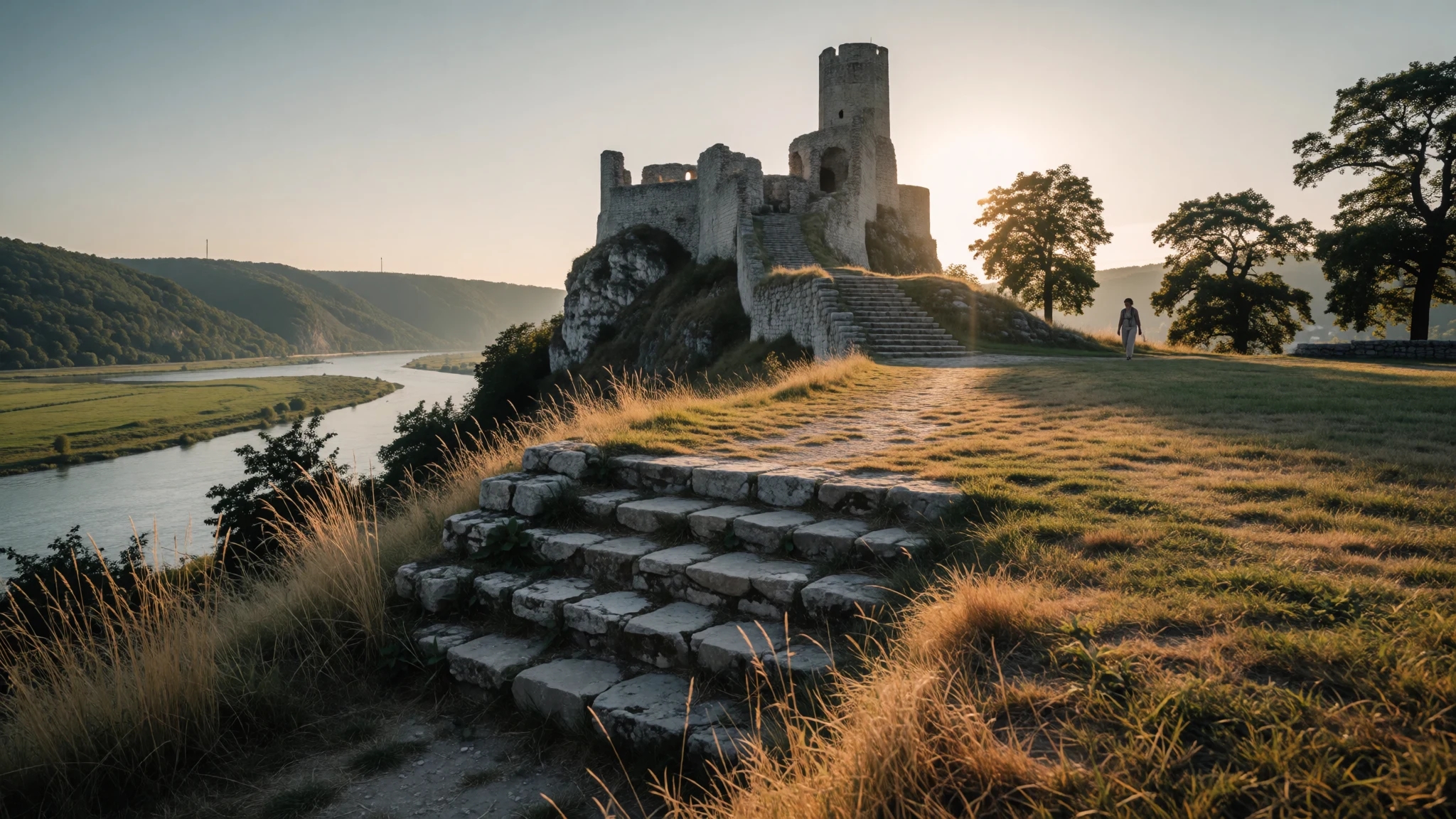
Devín Castle is a ruined fortress on a cliff where the Morava meets the Danube, once sealed off by the Iron Curtain.
The place
Devín Castle stands on a rocky headland at the western edge of Bratislava, in the borough of Devín, where the Morava runs into the Danube. Austria lies just across the water. The frontier follows the Morava and then the Danube, so these ruins sit right on the national border. The position explains the whole place. A fortress here could watch river traffic on the Danube and a branch of the old Amber Road, the trade route that carried amber south from the Baltic. People settled on the rock long before any stone castle was built, and Celts and Romans both used it, so the walls on view are layers from many periods rather than a single building.
What survives is a rambling ruin, not a tidy monument: tumbled walls, stairways, grassy terraces and the remains of gardens in varying states of repair. The Maiden Tower, a small watchtower on its own pillar of rock, is the part most often photographed. It comes with several local legends about young women who fell or jumped from the top. A museum run by the city looks after the site, and its official page carries current opening details.
The setting is political as well as scenic. For decades, until 1989, the Cold War frontier ran directly below the ruins. The castle itself could be visited, but the land around it was a closed military zone with fences and watchtowers. That zone was cleared after the Velvet Revolution, and the ground by the rivers is now used for walks, cycling and picnics. Devín is quieter than Bratislava's old town, though fine weekends bring families and school groups up the path.
Its story
Devín Castle has a long record, though part of it rests on informed guesswork. A written source from 864 describes the Frankish king Louis the German besieging Prince Rastislav of Moravia in a fortress called Dowina. Many historians identify it with Devín. Others doubt it, citing language arguments and the lack of firm archaeological proof, so the date is best treated as a possibility.
What is better supported is the Great Moravian period, when Devín was the centre of a wider settlement. Smaller hill forts on nearby Devínska Kobyla backed up its defences. Excavators found the base of a pre-Romanesque church from the ninth century. Its plan is unusual and resembles churches in Dalmatia and Noricum, regions where late Roman and Byzantine building habits lingered. The walls had once carried frescoes, and chemical analysis traced the pigments to northern Italy. Two writing styluses turned up in later digs, which hints that the priests here also kept records and taught.
The site later passed through Hungarian and Habsburg hands, which is why it has Slovak, Hungarian and German names: Devín, Dévényi vár and Burg Theben. During the Napoleonic wars French troops blew up the castle, and it has been a ruin since. Painters of the eighteenth and nineteenth centuries, among them Bernardo Bellotto and Joseph Holzer, recorded it as a romantic wreck above the river. The twentieth century brought the border zone. Today the stones carry all of these chapters at once.
What to see
- Maiden Tower — Lower castle rock, Devín
The Maiden Tower is a slim watchtower standing on a pillar of rock apart from the main castle, and it is the image on most postcards. Legends of doomed daughters cling to it. Its best views come from the path below, looking up at the tower against the sky.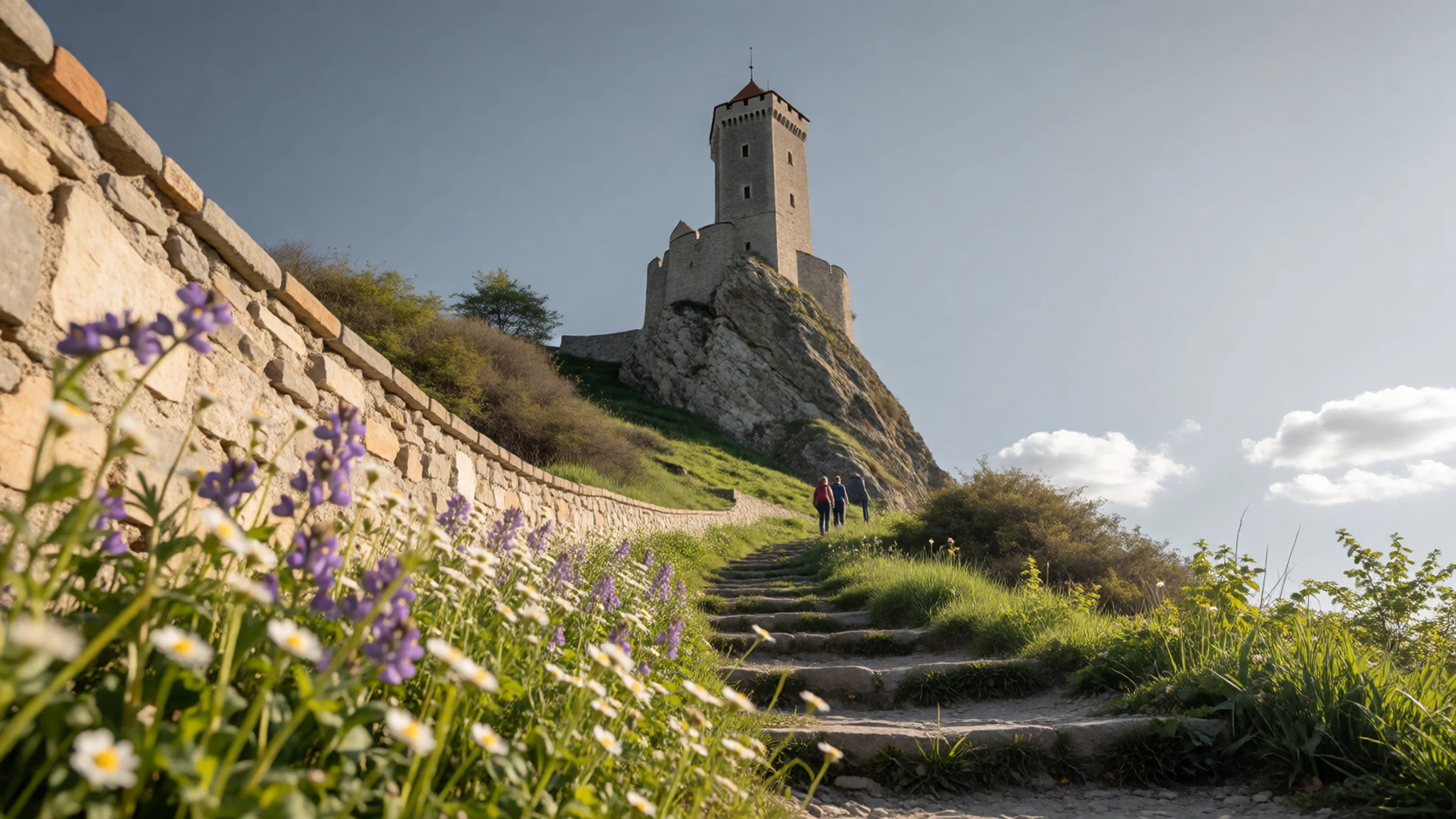
- Great Moravian church foundations — Upper castle, Devín
Low stone outlines mark the ground plan of the early church that stood here in the ninth century. They are modest to look at, but they are among the oldest traces of Christian building on the site. A reconstruction drawing helps in picturing the original shape.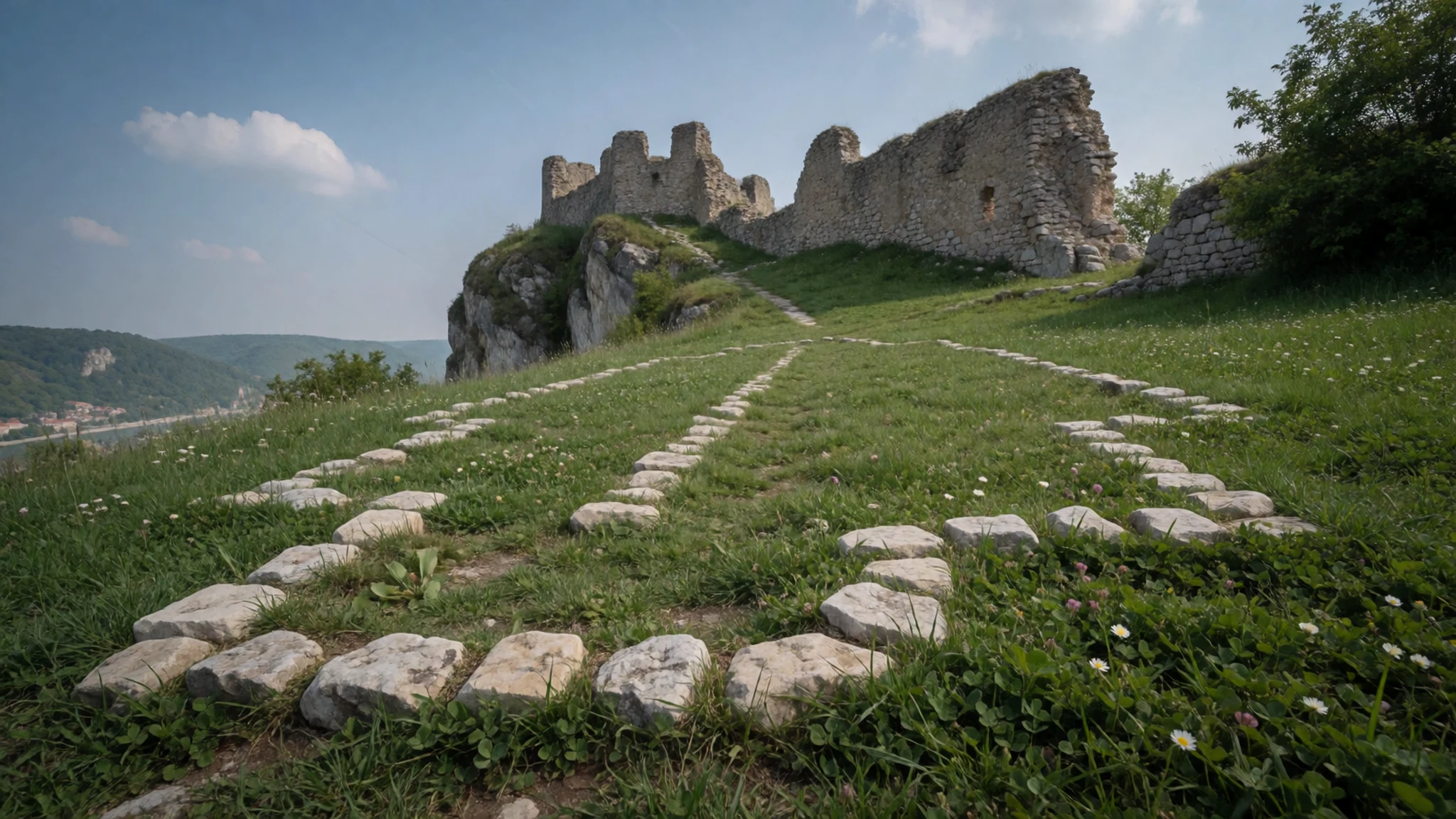
- Cliff terraces and the river confluence — Upper castle, Devín
The highest walls and terraces give the best view of the Morava joining the Danube, with the Austrian bank beyond. The landscape explains why anyone wanted this rock. Allow time to walk the stairways slowly, and expect wind on the exposed parts.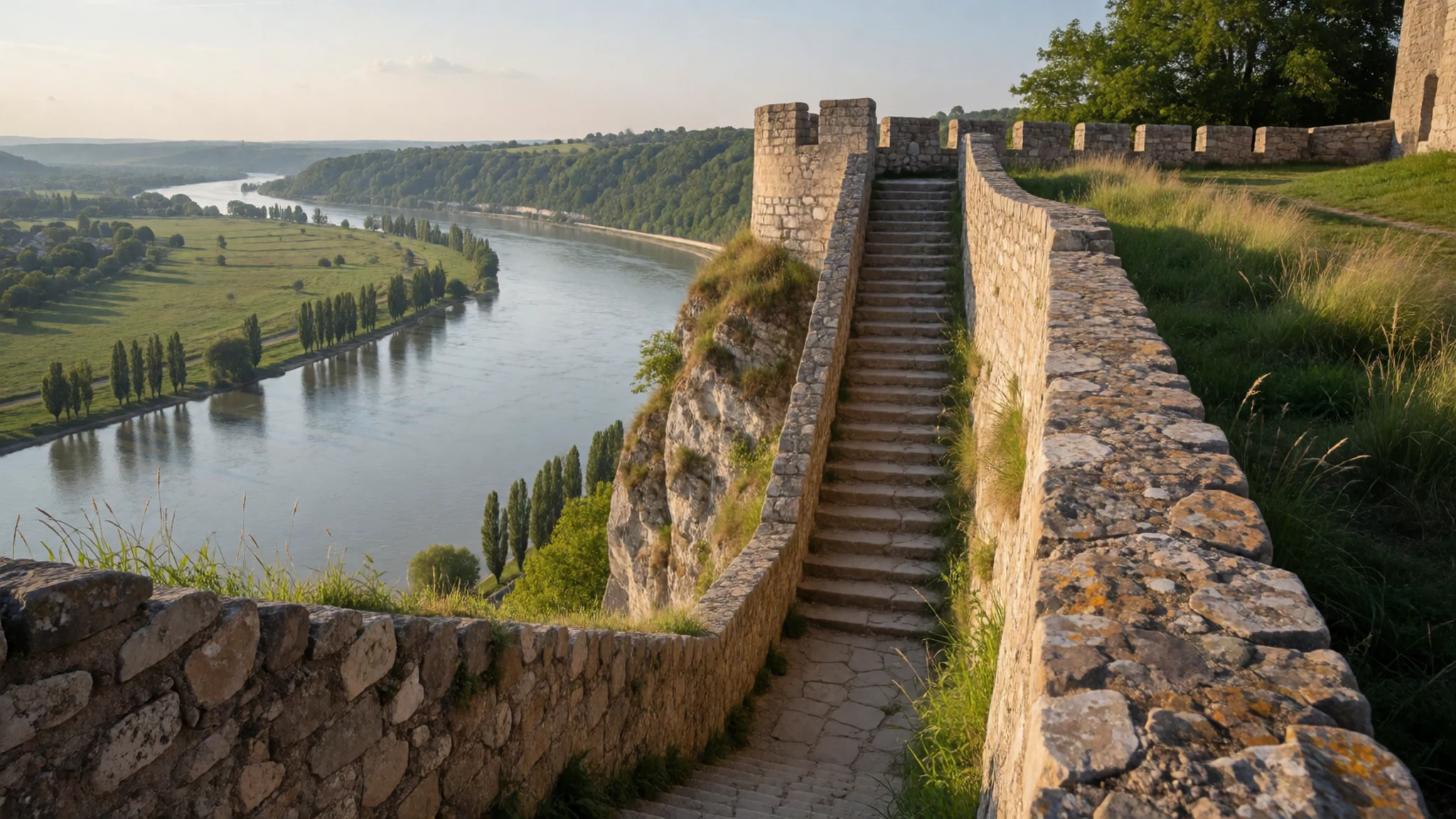
- Bratislava Castle — Old town hill, Bratislava
Bratislava Castle is a good companion visit in the city centre. It houses the Museum of Bratislava History and has a baroque-style garden. It is a rebuilt, furnished building, so it makes a useful contrast with the weathered stones at Devín.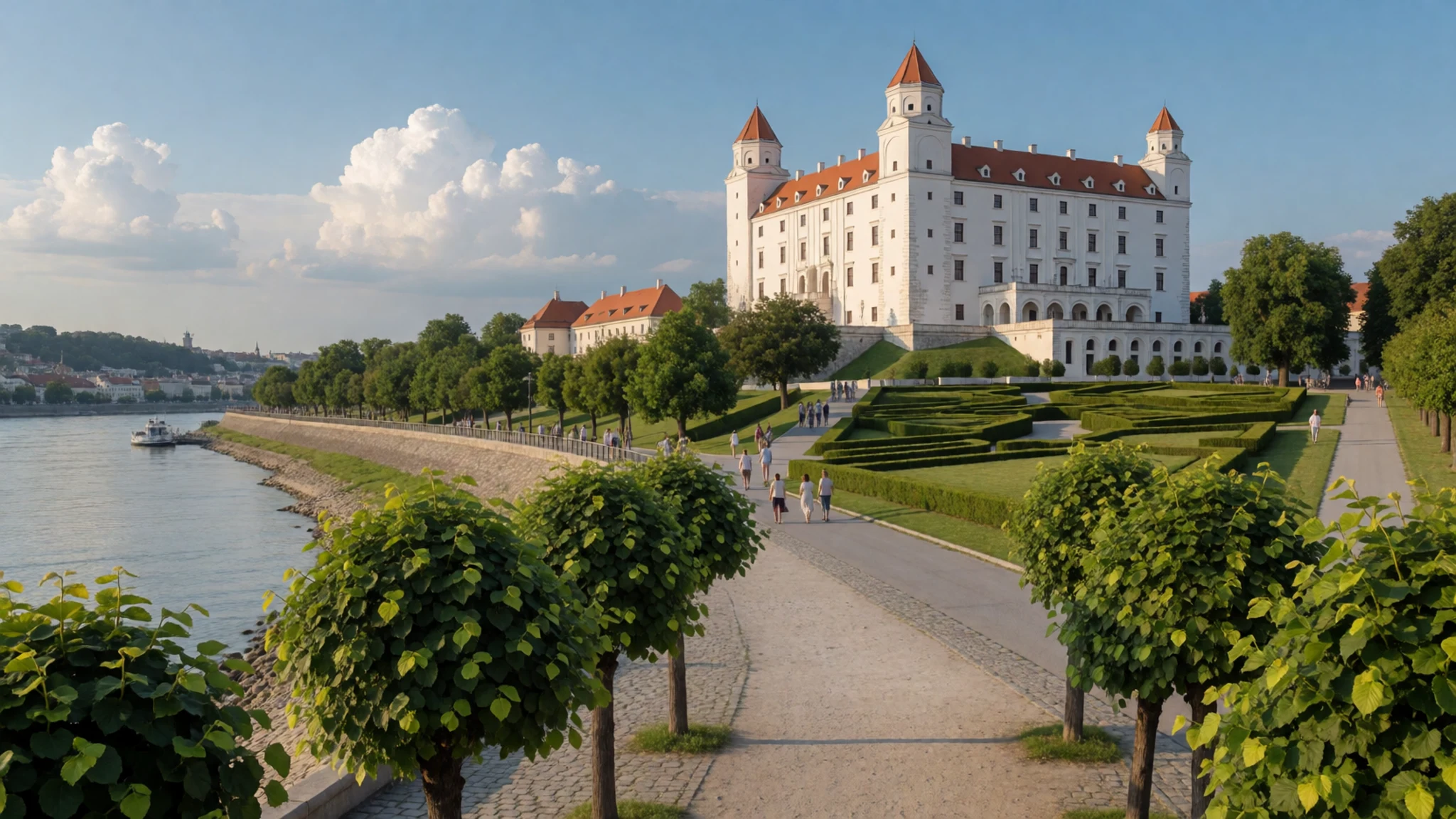
- Danubiana Meulensteen Art Museum — Southern edge of Bratislava
Danubiana is the choice for modern art, in a riverside setting south of the city. It is too far to walk from the centre, so plan transport. It suits a second half-day, and it pairs well with Devín for anyone who likes river scenery.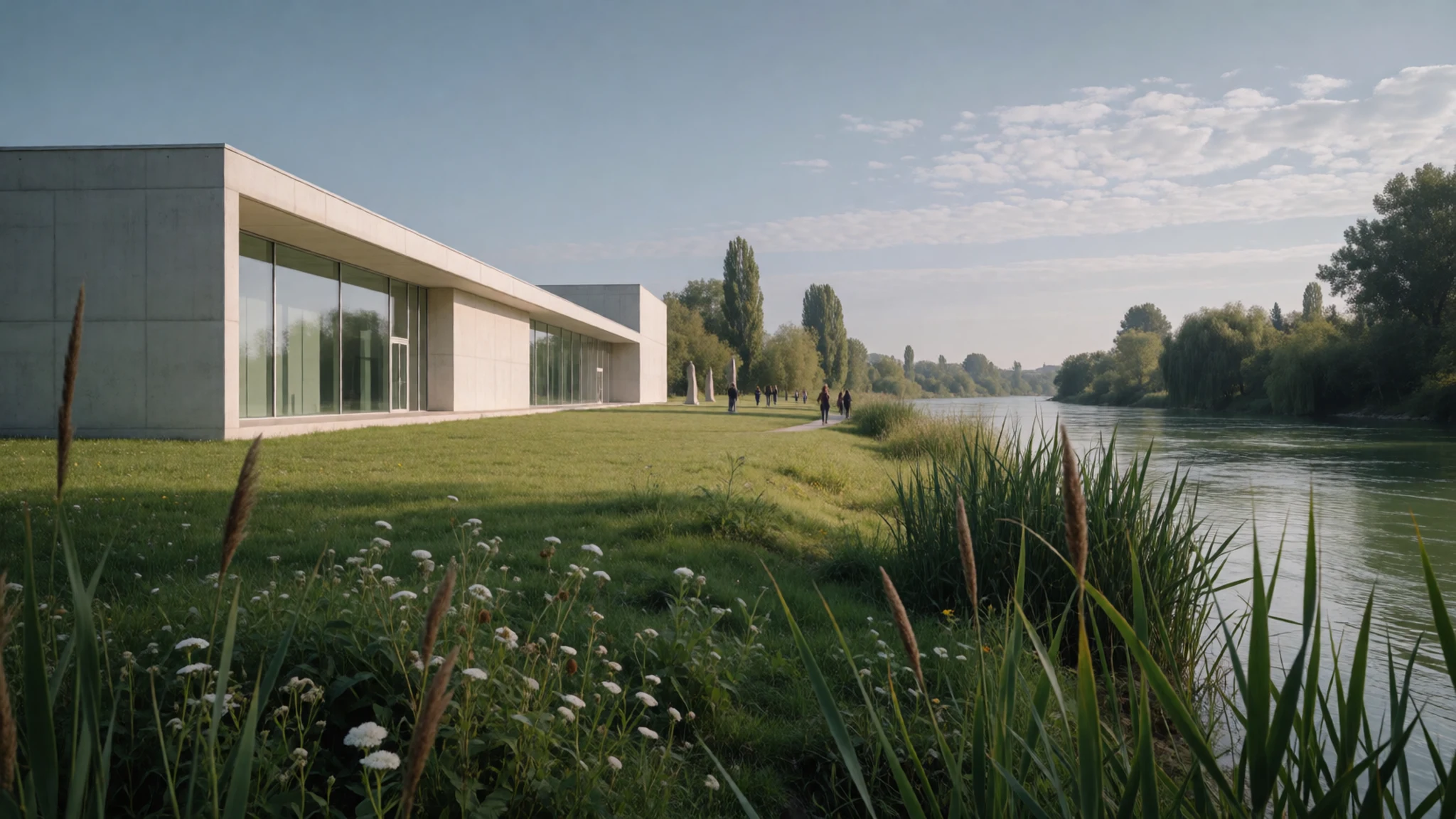
Culture
Devín Castle carries a heavier cultural load than its size suggests. For many Slovaks it is a symbol of early statehood, tied to the Great Moravian period and its Christian, literate court. School trips, commemorations and national holidays often bring people up to the ruins, and the site is treated more as a place of memory than a theme park.
The Cold War layer matters too. Many older residents of Bratislava and nearby Austria remember when the riverbank beyond the castle was a fenced border, with the West visible and out of reach. The Danube cycle route that now passes nearby follows land that was once closed, and locals tend to mention this with some feeling. Slovak and Austrian cyclists, walkers and anglers now share the same banks.
The legends help to keep the castle in people's minds. The Maiden Tower stories are told cheerfully by guides and in guidebooks, but they are folklore, not documented history, so it is best to enjoy them as tales. Slovak, Hungarian and German names for the castle also remind visitors that this crossroads has belonged to several peoples. Language at the site is mostly Slovak, with English information on the main routes, and a few words of Slovak such as dobrý deň (good day) are always appreciated.
Etiquette: stay on the marked paths and steps, do not climb on the old walls or the Maiden Tower rock, and keep to the barriers at drops, since the ruins are fragile and the cliff edges are steep.
What to wear
Devín Castle sits close to Bratislava, so the dress question has three parts. Traditional Slovak dress, called kroj, varies by region. Women's costume usually combines a white linen or cotton blouse with embroidered sleeves, a bodice, a gathered skirt and an apron, with wool or felted pieces for cold weather. Men wear a linen shirt, a waistcoat and trousers, often with a decorated leather belt. Modrotlač, linen printed with patterns in blue dye, is a long-standing local textile craft. Traditional dress now appears mainly at folklore festivals, weddings, church feast days and national celebrations, rather than daily life.
Everyday clothing around Bratislava is much like elsewhere in central Europe: jeans, trainers, light jackets, and a dressier look for the opera or an evening out. At Devín, hikers, cyclists and families dress for the outdoors, and nobody expects formality at a ruin.
Visitors should dress for the terrain and the weather. The approach has steep, uneven stone, so wear shoes with good grip, not sandals or smooth soles. The top is exposed, so carry a windproof layer even on mild days, plus a hat and sun cream in summer and a waterproof in spring and autumn. Winter calls for warm layers, gloves and boots, as stone steps can be icy. There is no dress code at the castle itself, but if a village church or a service is on, covered shoulders and knees are the polite choice.
What to eat
- Bryndzové halušky — Traditional Slovak eateries in Bratislava's old town
Small potato dumplings tossed in soft sheep's cheese and topped with crisp bacon pieces. It is the dish most often called the national meal. A good version is rich and salty, so share a portion if the day is hot.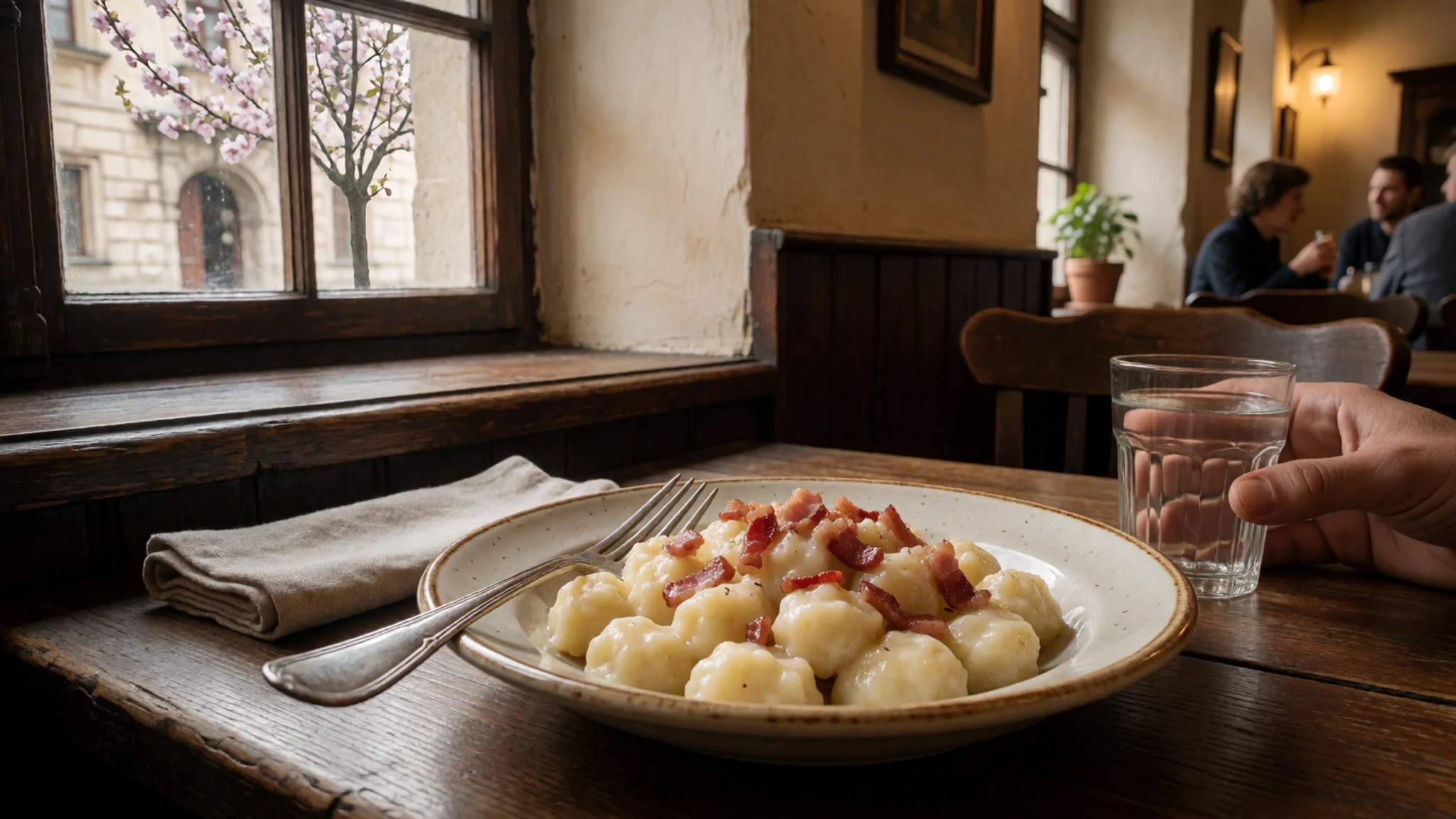
- Kapustnica — Slovak pubs and homely eateries, especially in cooler months
A sour cabbage soup, often with smoked sausage or dried mushrooms, and a Christmas favourite in many households. It is hearty, tangy and warming, and works well after a windy walk on the castle rock.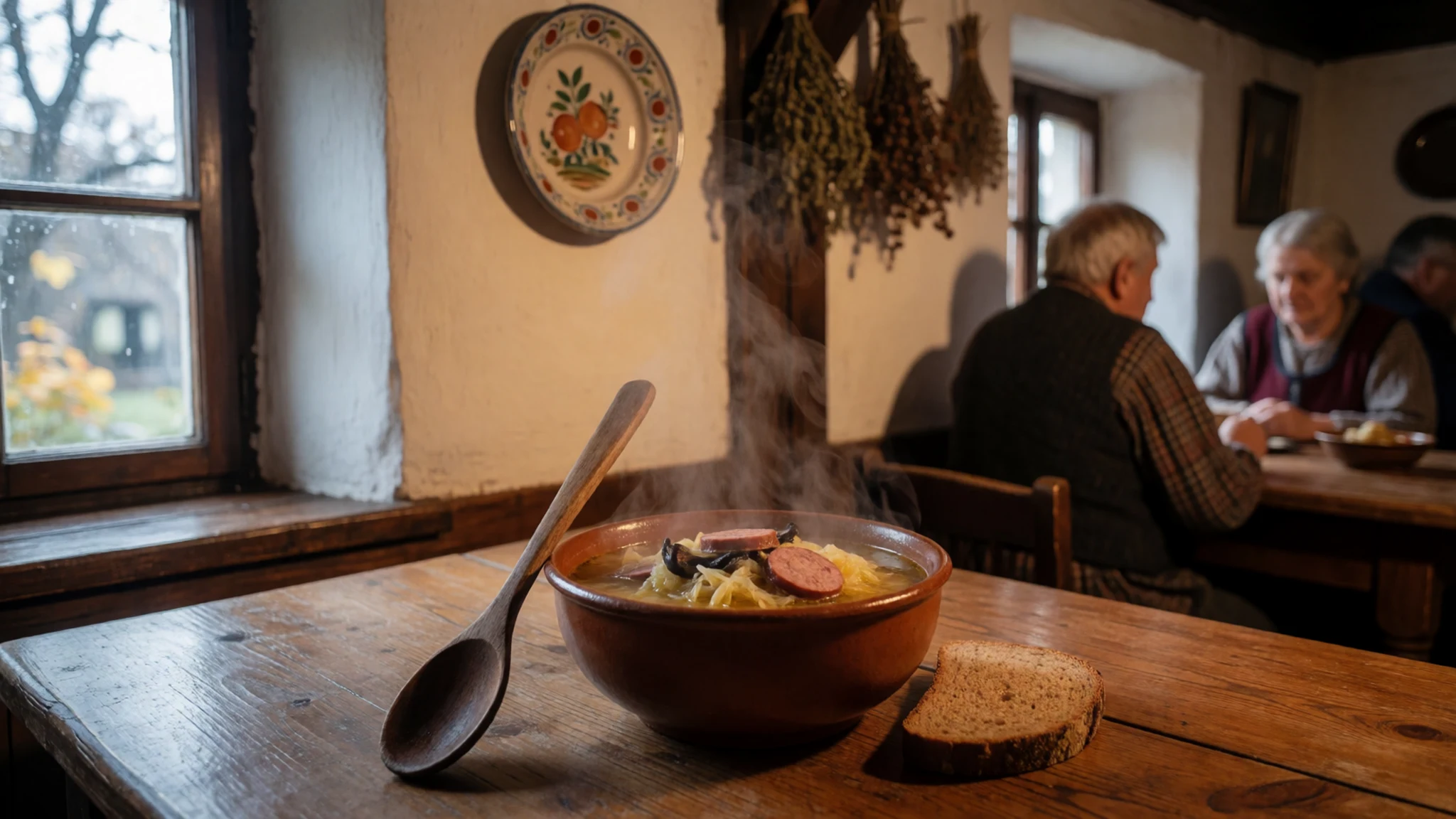
- Lokše — Stalls at village festivals and markets
Soft potato flatbreads cooked on a hot surface and served with toppings such as goose fat, poppy seeds or plum jam. They are a street-food treat, and the filling decides whether you get a savoury or sweet snack. - Langoš — Fairground stalls and snack counters near the Danube
A large disc of fried yeast dough, usually rubbed with garlic and topped with cheese or sour cream. It is heavy and satisfying, popular after a day of cycling or walking, and easy to share. - Local white wine from the Small Carpathians — Wine cellars and wine bars around Bratislava
The hills north of Bratislava produce white wines, often Grüner Veltliner, Riesling and the local Veltlínske zelené. Many wine bars pour by the glass, and some cellars offer tastings. Ask for a dry bottle to go with savoury Slovak dishes.
Plan it
Best time. Late spring (May–June) and early autumn (September–October) are the most comfortable for walking the exposed ruins, with milder temperatures and clear river views. Mid-summer can be hot on the open rock, and winter is cold and windy, with some seasonal limits on access.
How long. 1
Getting there. Fly to Bratislava Milan Rastislav Štefánik Airport and take bus 61 to the main railway station (Hlavná stanica), or change at Trnavské mýto for a tram into the centre. Vienna airport is the other common gateway, with road and rail links to Bratislava. For the last leg, take a city bus or a cycle along the Danube to Devín; check the current route and timetable on the Bratislava public transport site.
Budget. low
Tips
- Check the official site (https://muzeumbratislava.sk/hrad-devin) for opening days, seasonal hours and ticket details before you go.
- Buy bus tickets in advance, because drivers do not sell them; carry euro coins for the stop vending machines or use the card-accepting machines at the airport.
- Go early on weekends and fine days to avoid school groups and families on the narrow paths.
- Bring water and a windproof layer, since shade and shelter are limited on the upper terraces.
- Wear shoes with grip, as the steps and slopes are uneven and can be slippery after rain.
Etiquette
- Stay on marked paths and do not climb on the ruined walls or the Maiden Tower rock.
- Take litter away with you and keep noise low at the church foundations and memorial spots.
- Greet staff and locals with a simple dobrý deň; it is appreciated.
Nearby
Sources
- Wikidata Q830976 (CC0)
- Wikipedia: Devín Castle (rev 1365025677) (CC BY-SA 4.0)
- Wikivoyage: Bratislava (rev 5424481) (CC BY-SA 4.0)
- Devin02.jpg (CC BY-SA 2.5)
- Castle Devín, Bratislava (Devín village), Slovak Republic — Radovan Bahna (Public domain)
- Blick auf die Burgruine Devin — Joseph Holzer (Public domain)
- Základy veľkomoravského kostola na Devínskom hrade — Lure (CC BY 3.0)
- Predpokladaný vzhľad veľkomoravského kostola — Lure (CC BY 3.0)
- Devin Castle in Slovakia — Abrget47j (CC BY 3.0)
- Historische Landkarte, Theben, Marchmündung — Militärgeographisches Institut (Public domain)
- Die Ruine Theben an der March — Bernardo Bellotto (Public domain)


