Nitra
Nitra, Slovakia
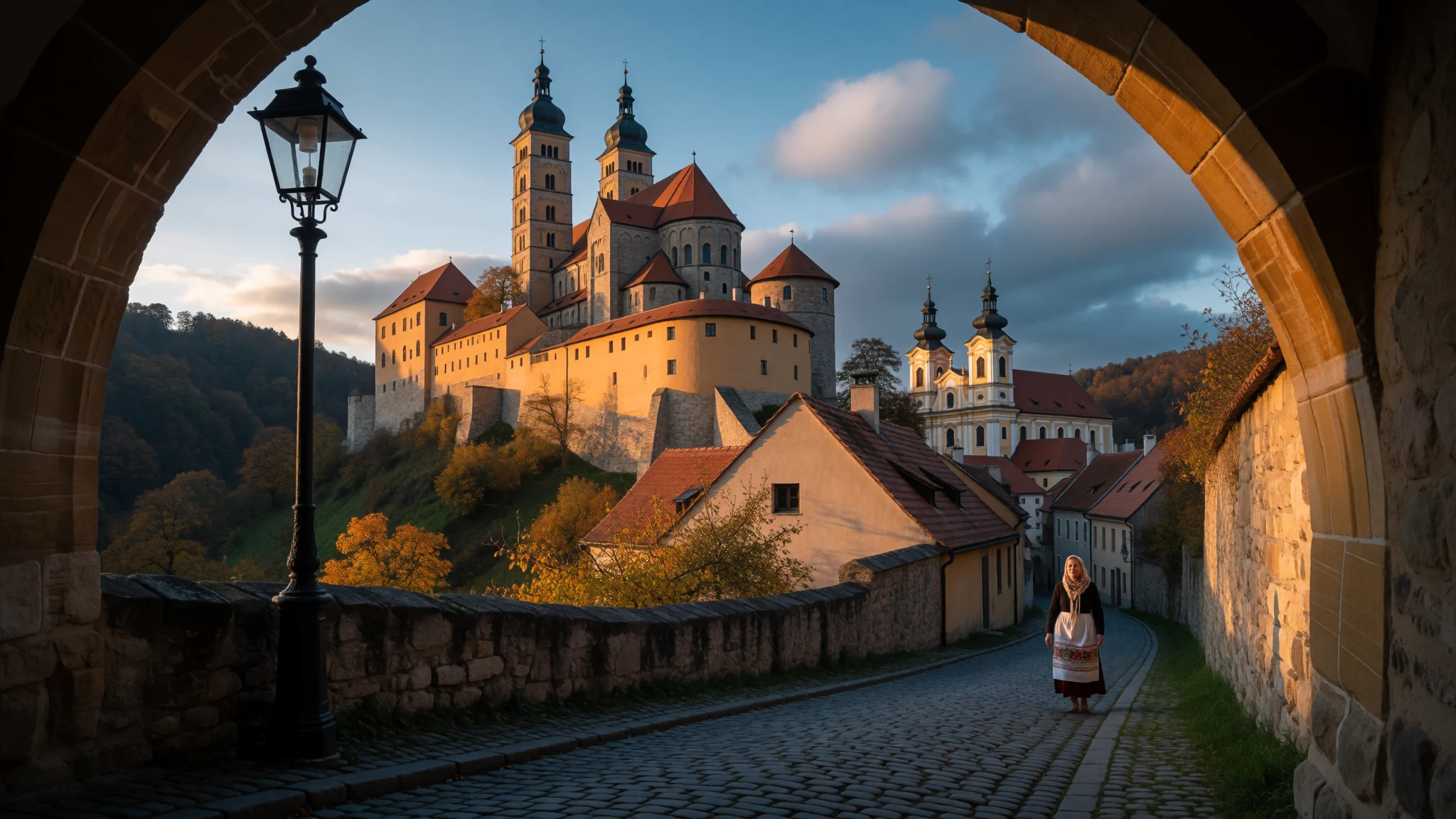
Nitra is a calm Slovak city where a hilltop castle, early Slavic history and farming country meet, easy to see in a day or two.
The place
Nitra sits in south-western Slovakia, where the flat Danubian Lowland runs into the first slopes of the Tribeč hills. The city lies at 167 metres above sea level, with the wooded ridge of Zobor rising behind its northern edge and the Nitra River winding through the lowland part. About 75,300 people live here, which makes it a compact regional centre rather than a metropolis. It is the administrative seat of its region and district, and farmland stretches away to the south and east, which explains the city's reputation as Slovakia's farming capital and the agricultural fairs and museum that go with it.
The old town is small and walkable. A castle hill carries the cathedral complex and its walls, a lower town of squares, Baroque façades and church towers sits beneath it, and a pedestrian spine links the two. Bratislava lies to the south-west and Banská Bystrica to the north-east, so Nitra works well as a stop between them or as a quiet base for a weekend. Trnava, Topoľčany, Levice and Nové Zámky are all within a short bus or train ride.
The feel is unhurried. Students and office workers fill the cafés on the squares, the castle precinct stays serious and quiet, and the evening scene is mostly east and south-east of the hill. Summers are warm, winters are cold and often grey. The climb to the castle and the paths up Zobor are short but steep enough that proper shoes make a difference.
Its story
Nitra's story begins long before the city existed. Stone Age finds have been made on and around the site, and archaeologists have named several prehistoric cultures after discoveries in Nitra and its surroundings. A Bronze Age community fortified Castle Hill, Iron Age builders raised a large hillfort on Zobor and smaller ones nearby, and Celts struck silver coins of a type that still carries the town's name. Later the Quadi, a Germanic people, settled the area, and a large settlement from that era has been excavated on the edge of today's town.
Slavs arrived in the early medieval period and favoured the lowlands beside the river, and the density of their settlements around Nitra is unusually high. The records give 826 as the founding year, by which time the castle was a seat of power. Prince Pribina ruled from here, and Svätopluk followed in the Great Moravian period, when Nitra was the centre of its own principality and an early foothold of Christianity in what is now Slovakia.
Later centuries placed the town in the Kingdom of Hungary, where it was known as Nyitra, and then in Czechoslovakia, before modern Slovakia. Folklore adds its own figures. Svorad, a hermit who lived on Zobor, is remembered for an austere life and a heavy chain worn around his waist. Corgoň, a blacksmith of enormous strength, became the city's legendary strongman and now stands as a statue in the old town.
What to see
- Nitra Castle and St Emmeram's Cathedral — Castle Hill, old town
Nitra Castle is a fortified church precinct on the hill above the old town, with thick walls, a cathedral and a seminary inside. It is the best place to feel the city's early importance. The Diocesan Museum here covers the arrival of Christianity. Check the official site for visiting times.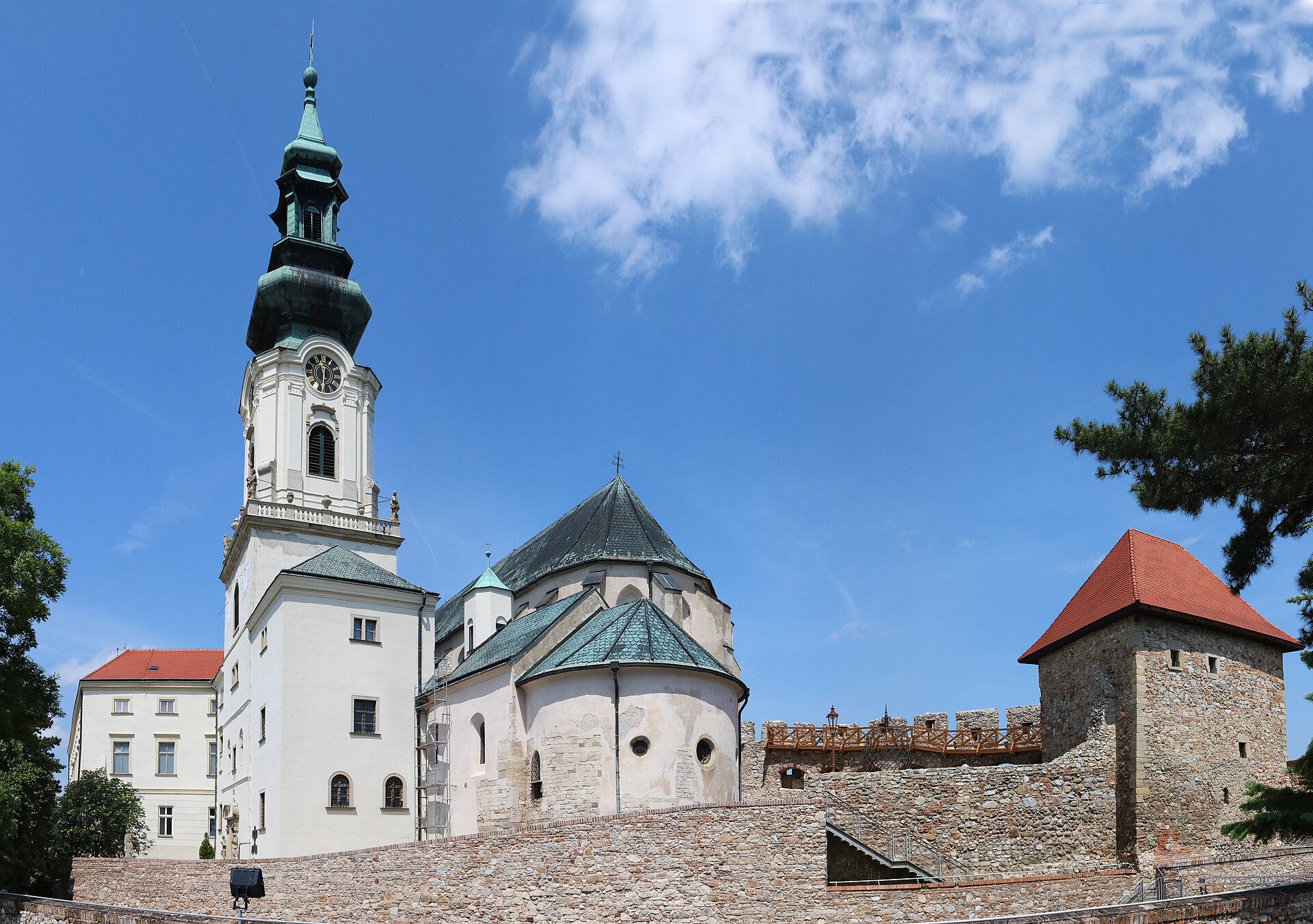
- Svätopluk Square and the Corgoň statue — Lower old town
Svätopluk Square is the open heart of the lower town, ringed with Baroque and later façades. Close by stands the statue of Corgoň, the legendary blacksmith of Nitra. Locals use the square for meeting, markets and festivals, so it is a good place to sit and watch the town.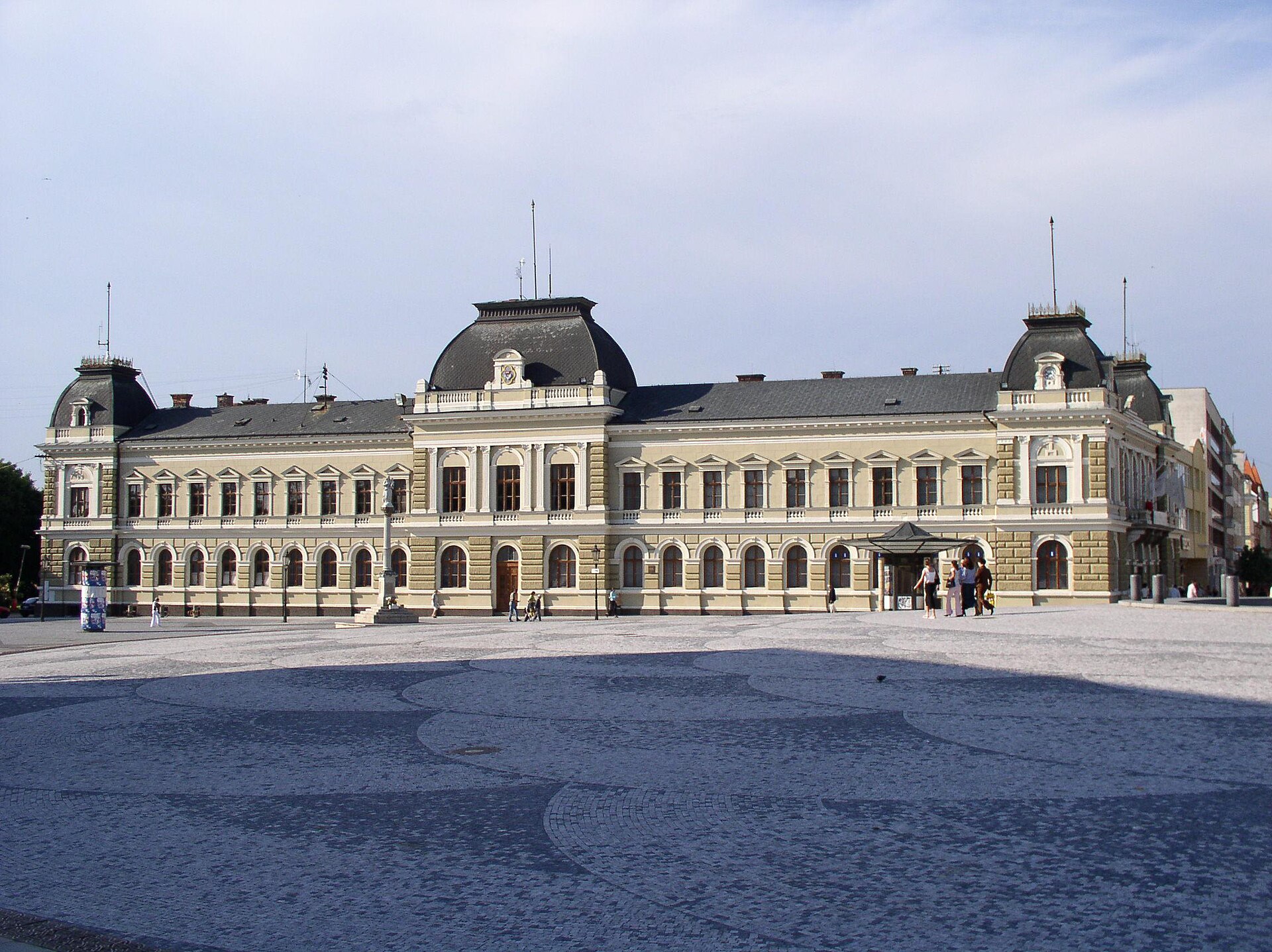
- Zobor hill and Svorad's cave — Northern edge of the city
Zobor is the wooded ridge behind the city, reached by footpaths from the northern streets. Its upper slopes give wide views over rooftops and farmland. A small cave linked with the hermit St Svorad can be visited freely. Paths are rough in places, and wet leaves make them slippery.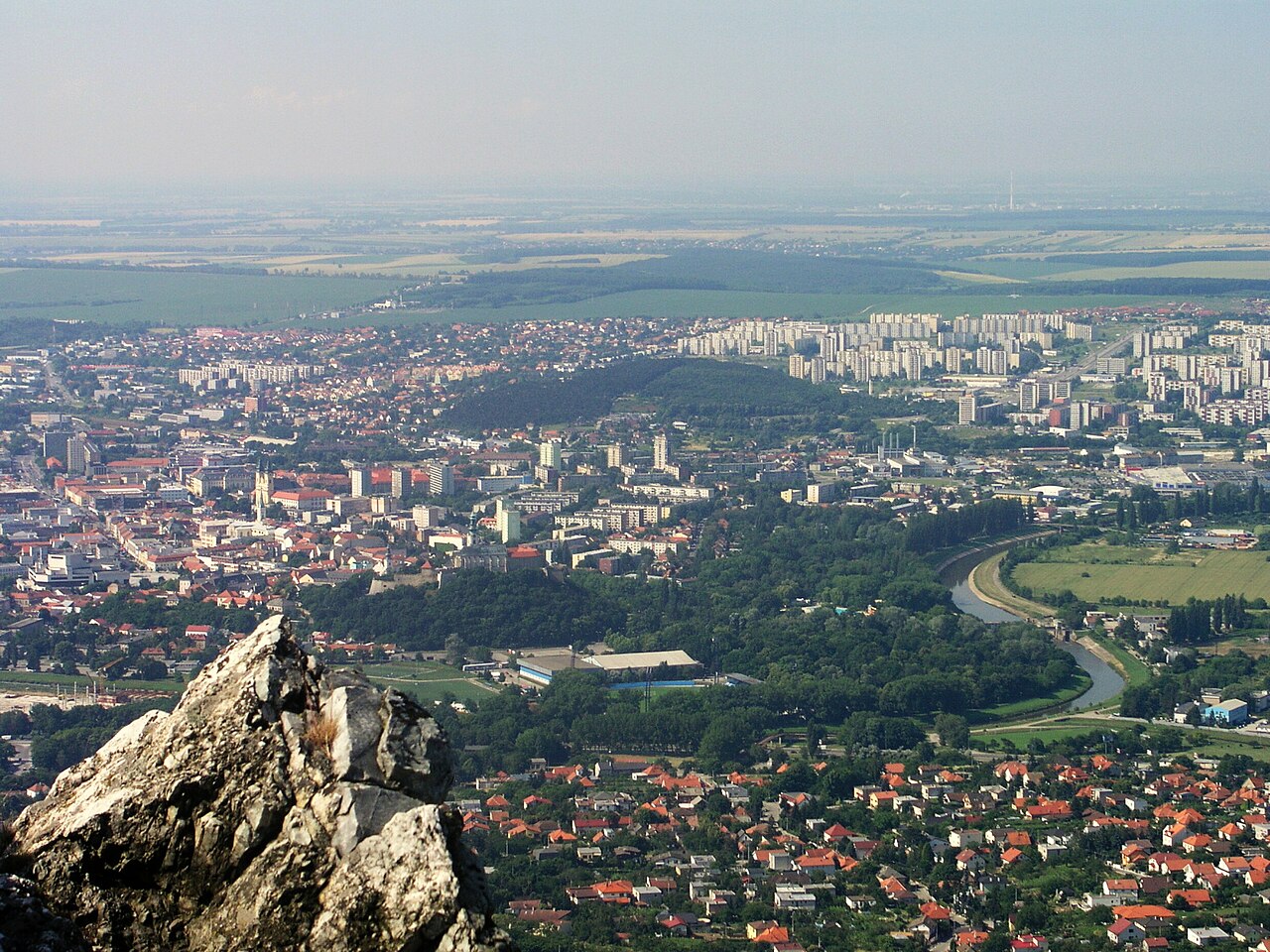
- Nitra Region Museum — Old town
The museum occupies the Town House, a nineteenth-century building, and ranges across archaeology, ethnography, history, botany, geology and zoology. The archaeology rooms suit anyone curious about the prehistoric cultures named after this area. Allow a morning, and check the official site for current opening hours. - Franciscan church and monastery — Below Castle Hill
The Church of Saints Peter and Paul and its monastery stand just below the castle hill. The building is calmer and more intimate than the cathedral above it. It is a useful stop for Baroque interiors and for a break from the climb, provided no service is under way. - The Synagogue — South of the old town
Nitra's synagogue stands a short walk south of the castle hill and recalls the Jewish community that was part of the town's life. It is worth finding for the architecture and for the context it gives the lower town. Check locally before visiting, as access depends on events and exhibitions.
Culture
Nitra's culture is shaped by its early history and by the land around it. Museums here take the past seriously. The Museum of the Nitra Region covers archaeology, ethnography, geology and zoology, and a gallery of precious finds from excavations by the local Archaeological Institute includes gold and silver objects from early Slavic hillforts. The Diocesan Museum on the castle shows documents and discoveries linked to the start of Christianity in Slovakia, and holds a facsimile of the Nitra Gospel Book, the earliest surviving manuscript from the country's territory.
Outside the old town, the open-air site called Osada Lupka reconstructs an early medieval Slavic village, and the Slovak Agricultural Museum, with its own open-air display, reflects the farming identity of the region. A mission museum shows objects gathered by missionaries from other parts of the world.
Religion is still part of daily life. Churches around the castle and the lower town hold regular services, and pilgrims and local families climb to the cathedral hill on feast days. Folk music has a strong tradition across Slovakia, and the collectors who recorded village singers early in the twentieth century did so in places much like those around Nitra. Dress modestly and keep your voice low inside the cathedral and the monastery church, and ask before photographing anyone during a service.
What to wear
Nitra's traditional dress belongs to the wider Slovak folk costume, known as kroj, which differs from village to village across the Nitra region. Women's outfits typically combine a white linen or cotton blouse with embroidered sleeves, a gathered skirt, an apron and a decorated bodice, often with ribbons and a headscarf. Men wore linen shirts, close-fitting trousers of wool or felt, embroidered waistcoats and sheepskin or leather outer layers in the cold months. Today these outfits appear mainly at folk festivals, church feast days, weddings and school performances.
Everyday clothing in Nitra is plain European city dress: jeans, trainers, jackets and shirts, with smarter clothes for the theatre and church. Students dress casually, and nothing about the way people dress will make a visitor stand out.
Visitors should pack for changeable weather. Summers are warm enough for light cotton and a hat, while winters need a proper coat, gloves and warm footwear. Cobbles in the old town and the slopes of the castle hill and Zobor call for sturdy shoes with grip, particularly after rain. For the cathedral, churches and monastery, cover shoulders and knees, and carry a light scarf or jacket for that purpose. In cooler months, layers work better than a single heavy garment.
What to eat
- Bryndzové halušky — Traditional Slovak restaurants in the old town
Small potato dumplings tossed in soft salty sheep cheese and topped with crisp bacon. It is the dish most often called Slovakia's national plate, filling and simple. Order it with a glass of buttermilk or a local beer. - Kapustnica — Inns and traditional restaurants, mainly in colder months
A sour cabbage soup, usually with smoked sausage or ribs, sometimes dried mushrooms and a spoon of sour cream. It is a winter and festive-season dish, warming after a cold walk up the castle hill. - Langoš — Street stalls and fair grounds, especially during festivals
A deep-fried flatbread rubbed with garlic and topped with cheese, sour cream or ketchup. It is cheap, hot and greasy in the right way, and it appears wherever there is a crowd. - Local wine from the Nitra region — Wine bars and cellar-style restaurants in the old town
The warm slopes and lowlands around Nitra support vineyards, and white wines are the usual choice with local food. A glass pairs well with a plate of cheese and cured meats after a day of sightseeing. - Cakes and coffee — Cake shops and cafés around Svätopluk Square and the city park
Central European cake culture is alive here: layered sponge, poppy seed, walnut and fruit pastries served with strong coffee. A slow afternoon over a slice is a pleasant way to wait for a bus or recover from the hill.
Plan it
Best time. May–June and September–October, when it is warm without being hot and walking up the castle hill and Zobor is pleasant; July and August can be hot, and winters are cold and grey.
How long. 1–2
Getting there. Fly to Bratislava, the capital, then take a bus to Nitra; the direct services known as the Žltý expres (Yellow express) run from several companies. Trains from Bratislava and Košice usually need at least one change, for example at Nové Zámky or Leopoldov, and connections are poorly timed, so the bus is usually quicker. Nitra's train and bus stations stand close together in the centre, a short walk from the old town.
Budget. low
Tips
- Start the castle hill early in the day for quiet courtyards and the best light over the lowland.
- Wear shoes with grip for cobbles and the steep paths up Zobor.
- Check opening times for museums and the synagogue on official sites before you go, as they vary by season.
- Carry some cash for small stalls and cafés, though cards are common in most restaurants.
- Nitra is a safe city, but keep the usual care with bags on buses and at night.
Etiquette
- Dress modestly and speak quietly in churches, especially during services.
- Ask before photographing people, particularly at religious events.
- Greet shop and café staff with a short 'dobrý deň' (good day) when you enter.
Nearby
Sources
- Wikidata Q26397 (CC0)
- Wikipedia: Nitra (rev 1384297596) (CC BY-SA 4.0)
- Wikivoyage: Nitra (rev 5339630) (CC BY-SA 4.0)
- View from Castle.JPG (CC BY 3.0)
- Panorama of Nitra (SharkyNR) (CC BY 3.0)
- Nitra - St. Emmeram's Cathedral and Castle Walls (Ingo Mehling) (CC BY-SA 4.0)
- Svätopluk's Square (Knieza) (Public domain)
- Mesto Nitra z vrchu Zobor (Igor Marhevský) (Public domain)
- Bela Bartok recording folk music (Public domain)
- Pohľad z nitrianskej kalvárii na mesto Nitra (Bojars) (CC BY-SA 4.0)
- Nitra Castle, general view (Xmetov) (CC BY 3.0)


