Badrinath
Badrinath, India
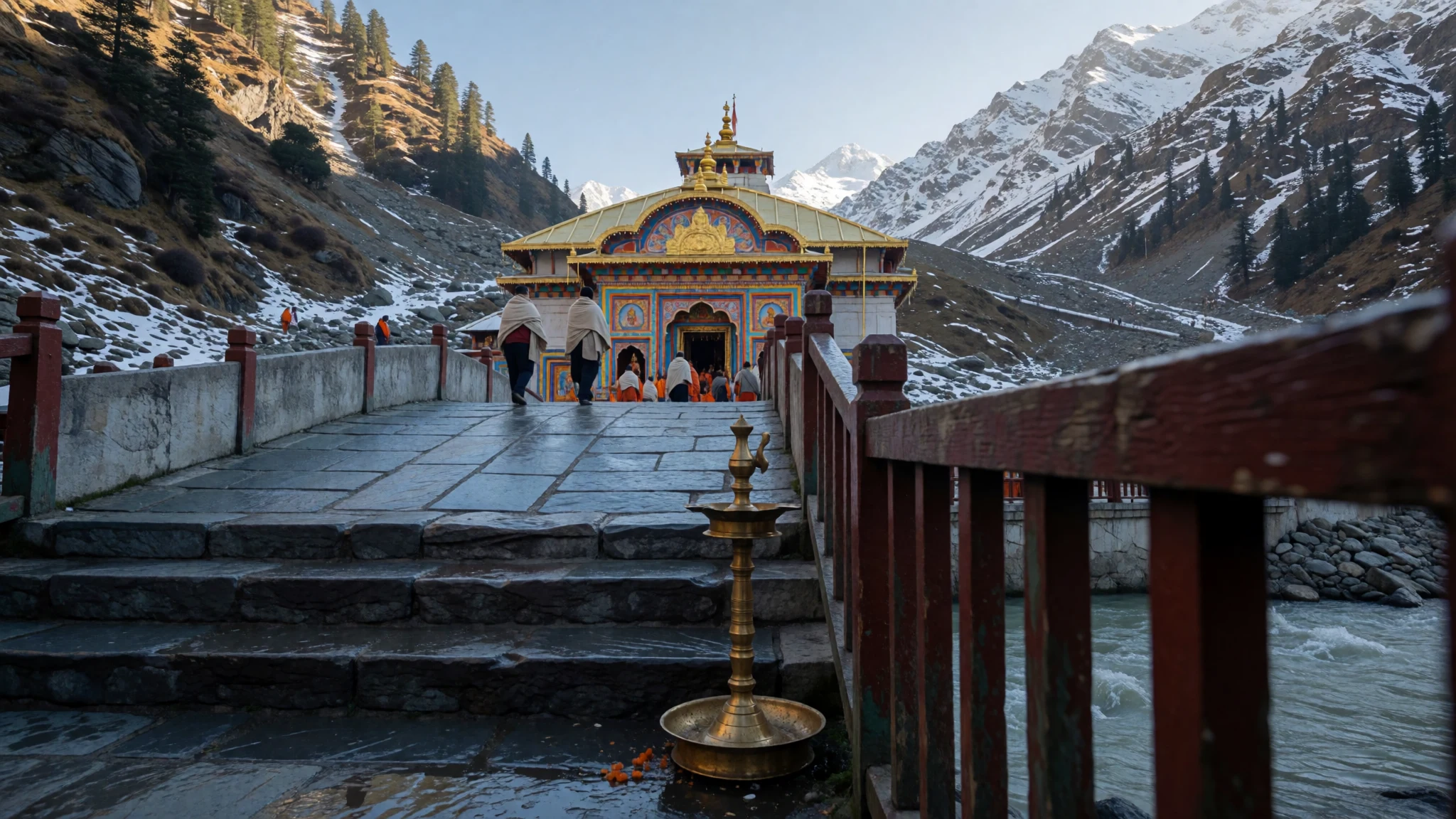
Badrinath is a high Himalayan pilgrim town beside the Alaknanda, where a Vishnu temple, a hot spring and a snow peak share one narrow valley.
The place
Badrinath sits at about 3,300 m in the Garhwal Himalayas, in Chamoli district of Uttarakhand, on the bank of the Alaknanda River. It is a small town built around one temple, dedicated to Vishnu, and it takes its name from that shrine. Steep ridges close in on both sides of the valley, and above the rooftops a snow peak, Neelkanth, catches the first light. Officially it is a nagar panchayat, a form of local government for small towns, and it feels like one: a single main stretch of lodgings, ashrams, shops and eateries running towards the temple bridge. For Hindus it is one of the Char Dham sites, and it also belongs to the Chota Char Dham circuit of Uttarakhand, so the crowds on the street are mostly devotees, many of them arriving after long days on mountain roads. Life here is seasonal. Lodgings, shops and eateries open for the yatra season and close when it ends, and winter is severe, with regular snowfall. The air stays cool all year, and nights are cold even in the warmer months. Late spring and early autumn are the usual choices for a visit, because the monsoon brings landslides and road blockages that can hold up a journey for days. Around the temple the surroundings mix worship and walking country: a hot spring, a riverbank used for rites, the last village before the Tibetan border, and trails towards glacial lakes. Altitude is the practical concern. Many travellers sleep lower down, in Joshimath, and make the shrine a long day trip.
Its story
The temple at Badrinath is described as being of Vedic origin, though it has been renovated many times, and earthquakes and avalanches have damaged it again and again. For Vaishnavites, the devotees of Vishnu, it is a sacred centre, and for many Hindus it completes a lifetime's pilgrimage. Pilgrims once walked all the way from the plains, and the journey itself was part of the devotion. Until around the time of the First World War the settlement was barely more than a huddle of huts for the temple's workers, yet thousands still arrived each year, and more at the periodic festival that returns on a long cycle. Numbers have risen steeply in recent decades, and the town now swells every season with a crowd far larger than its permanent community. Legend is written into the landscape here. Near the town is Vyas Gufa, a cave where the sage Vyasa is said to have dictated the Mahabharata while Ganesha wrote it down. Brahma Kapal on the riverbank is where families perform rites for ancestors. Tapt Kund, a natural hot spring, is where pilgrims traditionally bathe before entering the temple. Further up the valley, at Mana, a spot is said to be the source of the Saraswati, a river believed to flow underground until it meets the Ganga. Badrinath is also a gateway for mountaineering expeditions to peaks such as Nilkantha, so the town serves climbers as well as devotees.
What to see
- Badrinath Temple — Town centre, east bank of the Alaknanda
The shrine to Vishnu is the reason for the town. Its colourful front stands out against grey slopes, and a steady stream of pilgrims crosses the bridge towards it. Queues for darshan can be long in busy weeks, so early morning is calmer. Notices about phones and cameras are posted near the entrance.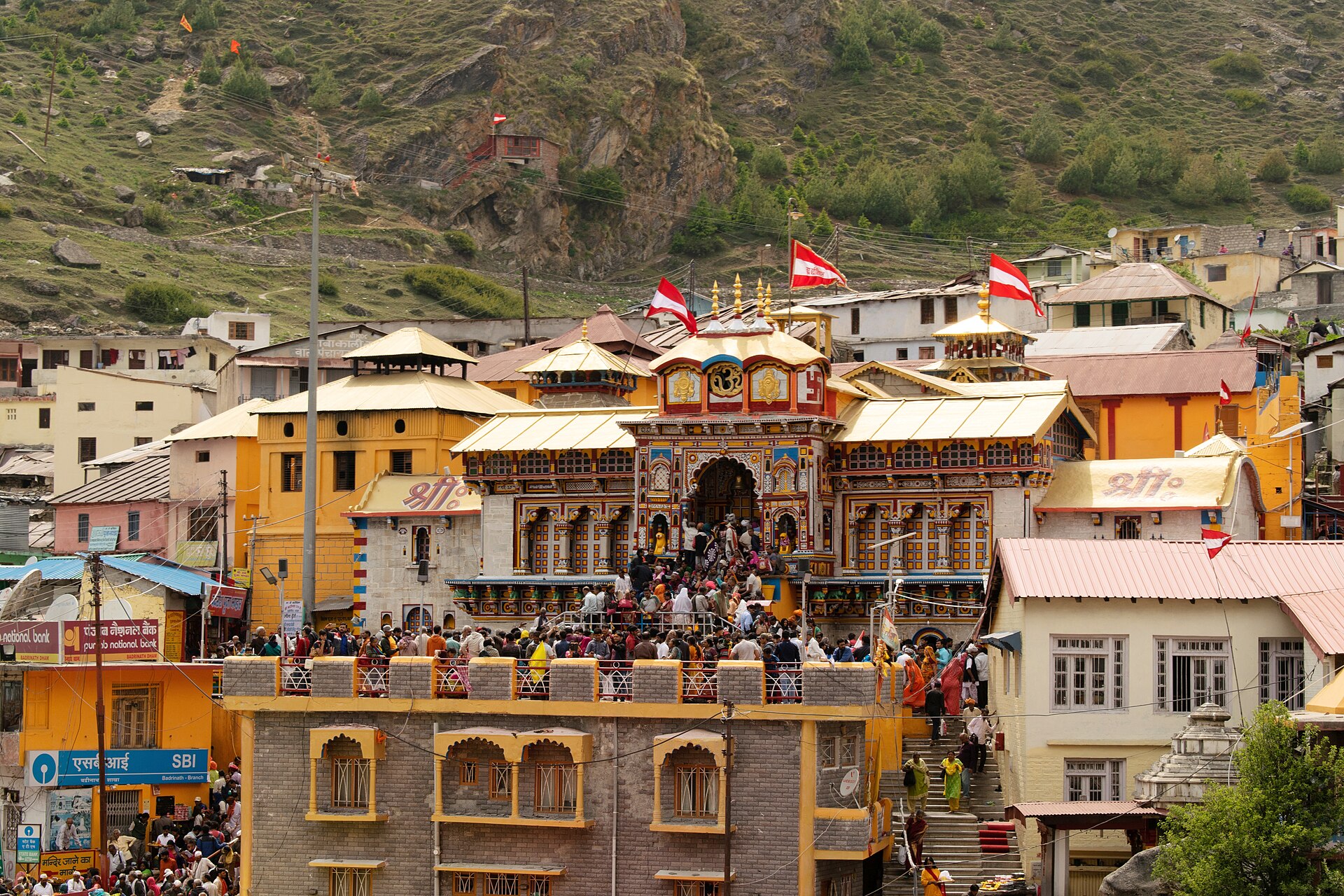
- Tapt Kund — Beside the temple steps
A natural hot spring below the temple, where pilgrims bathe before going in for darshan. Warm water in such a cold place explains its popularity on chilly mornings, and devotees also believe it helps skin complaints. The bathing area is shared, so modest clothing is expected and early hours are quieter. - Brahma Kapal — Alaknanda riverbank near the temple
A flat stretch of riverbank close to the temple where families perform pind daan and tarpan, rites for departed relatives. Priests guide each ceremony. The mood is sombre rather than touristy, so visitors do best as quiet observers and should avoid photographing mourning families. - Mana Village — North of Badrinath, towards the Tibetan border
A short road leads from the town to Mana, the first Indian village on the way to the Tibetan border. Stone houses, woollen goods and tea stalls line the lanes in season. Vyas Gufa, the cave tied to the Mahabharata, and the place said to be the Saraswati's source are close by. - Vasudhara Falls — Beyond Mana village
Beyond Mana the road gives way to a walking trail leading to the falls. The first stretch can be covered by car or bus, then Bhim Pool, a rock bridge over the river, is the first stop on foot. At this altitude the walk is tiring, so a slow pace and plenty of water help. - Neelkanth peak view — Skyline above the town, best from the riverside
Neelkanth rises above the valley, and photographs of it at dawn show the first sun turning the snow gold. Clear mornings give the best views; cloud can close in later in the day. The peak also draws mountaineering expeditions, which use Badrinath as their starting point.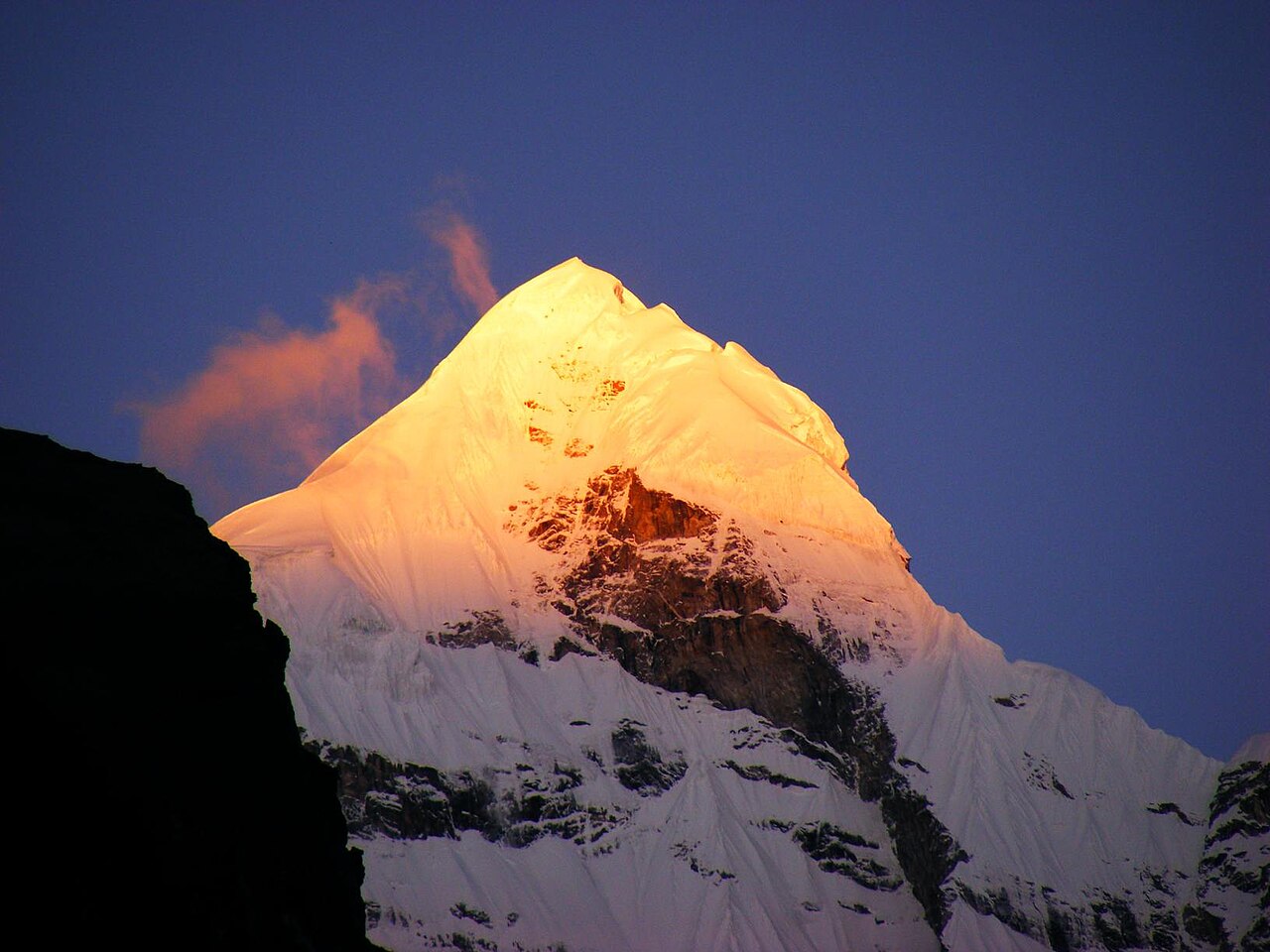
Culture
Badrinath is a living Vaishnava pilgrimage centre, and daily rhythm here follows worship rather than sightseeing. Devotees queue for darshan, the sight of the deity, and then collect prasad, the blessed food offering. Many bathe first at Tapt Kund, and families who come to honour ancestors perform rites at Brahma Kapal on the riverbank. The route to this shrine is vegetarian: non-vegetarian food is not allowed on this pilgrimage road beyond Rishikesh, and alcohol is not permitted. The atmosphere is devout but not hushed, with bells, chanting, loudspeaker announcements and the low murmur of long queues. Most visitors are Indian pilgrims, often travelling in family groups or with village associations, and the pace of the day depends on the crowd. Ashrams offer simple lodging and meals to pilgrims, and good manners matter there: a donation is a courtesy, not a payment, and quiet is expected near prayer spaces. Seasonal business shapes the town as well. Shops and eateries that feel busy in the yatra season are shuttered once it ends, so the place changes character completely from one month to the next. Sadhus and priests are part of the scene, and it is polite to ask before taking anyone's picture. Remove your shoes before the temple steps, dress modestly, and ask before photographing priests or people bathing, following any signs about phones and cameras.
What to wear
In Badrinath the traditional dress of the Garhwal hills is mostly seen at festivals and among older residents. Garhwali women have worn the ghagri, a full skirt, with a fitted blouse and a woollen shawl, often finished with the gulband, a choker necklace, and a nose ring. Men have traditionally worn woollen coats and churidar trousers with a cap. Wool is the key textile here, and Bhotia communities in the upper valley have long made woollen shawls, blankets and caps from it. What people wear now is practical. Shopkeepers and porters wear sweaters, jackets, caps and sturdy shoes. Pilgrims arrive in everything from saris and salwar kameez to tracksuits and fleeces, often with a woollen shawl over the top. Priests wear simple white or saffron cloth with a shawl against the cold. For a visitor, layers matter more than style. Nights are cold all year, and winter is severe, so bring a warm fleece, a windproof jacket, a woollen cap, gloves and thermal underlayers. A rain jacket is useful because weather changes quickly, and the monsoon is best avoided. Footwear should have good grip for wet stone, steps and uneven trails; shoes are removed at the temple, so slip-ons and warm socks are handy. Clothing should be modest for the shrine and the bathing area, covering shoulders and knees.
What to eat
- Vegetarian thali — Eateries around the temple and bus stand
Dal, rice, roti, seasonal vegetables and pickle make up the standard plate. The food along this pilgrim route is entirely vegetarian, so the menu is simple, reliable and easy on the stomach at altitude. - Puri sabzi or aloo paratha — Small breakfast eateries along the main street
Fried puris with spiced potato curry, or stuffed parathas with curd, are a common early breakfast before darshan. The portions are filling and suit the cold morning start. - Ashram meals — Ashrams near the river and the temple
Many ashrams provide simple food for pilgrims, usually dal, rice and vegetables eaten in a shared hall. It is plain and welcoming, and a donation is the polite way to say thanks. - Prasad — Temple offering stalls and the shrine itself
After darshan, the temple gives out a small blessed offering. Sweet items such as rock sugar are typical, and it is meant to be eaten with respect, using the right hand. - Vegetarian Chinese dishes — Multi-cuisine restaurants near the bus stand
Noodles, fried rice and vegetable manchurian appear on the menus of several multi-cuisine eateries here, alongside North and South Indian dishes. A change from dal and roti, and all of it vegetarian. - Hot tea — Tea stalls on the main street and at Mana
Sweet milky tea, often with ginger, is served from small stalls throughout the town. Hot drinks matter in the cold, and many pilgrims stop for one in the queue or on the way back from Mana.
Plan it
Best time. May–June and September–October, when the road is usually open and the days are cool but workable. Winter is severe with regular snowfall, and shops close after the yatra season. July to mid-September is the monsoon, when landslides and road blocks are common.
How long. 2–3
Getting there. Fly to Dehradun or take a train to Rishikesh or Haridwar, then travel by road via Joshimath. Regular buses run to Badrinath from Delhi, Haridwar and Rishikesh, especially early morning from the last two. The final stretch from Pandukeshwar is narrow, with timed road openings and a checkpost, so check timings before setting off.
Budget. low
Tips
- Allow time to acclimatise: Badrinath is high, so sleep lower down if possible, drink plenty of water and avoid rushing.
- Many visitors start early from Joshimath, have darshan and return the same evening to reduce altitude problems.
- Book lodgings ahead for peak yatra weeks, or consider ashrams and tourist rest houses as simple, low-cost options.
- Carry cash, warm layers and rain gear, since services are seasonal and the weather changes fast.
- Check road status and timings before any journey, especially in the monsoon.
Etiquette
- Remove shoes before the temple steps and dress modestly at the shrine and at Tapt Kund.
- Ask before photographing priests, pilgrims or families performing rites, and follow signs about phones and cameras.
- Respect the vegetarian route: do not bring meat or alcohol into the pilgrimage area.
Nearby
Sources
- Wikidata Q588804 (CC0)
- Wikipedia: Badrinath (rev 1376678829) (CC BY-SA 4.0)
- Wikivoyage: Badrinath (rev 5394196) (CC BY-SA 4.0)
- Photo 01: Subarno Banerjee, Badrinath Valley, along the Alaknanda River (CC BY 2.5)
- Photo 02: Arpita Tripathy, Badrinath Temple (CC BY-SA 4.0)
- Photo 03: Naresh Balakrishnan, Badrinath Temple, Oct 2014 (CC BY-SA 4.0)
- Photo 04: Anumeha Shukla, Badrinath Temple at night (CC BY 3.0)
- Photo 05: Raji.srinivas, Neelkanth Parvath (Public domain)
- Photo 06: Aurobindo Ogra, Badrinath town, May 2005 (CC BY 3.0)
- Photo 07: Badrinath landscape (Public domain)
- Photo 08: Alokprasad, Neelkanth at first light (CC BY 3.0)


