Badami
Badami, India
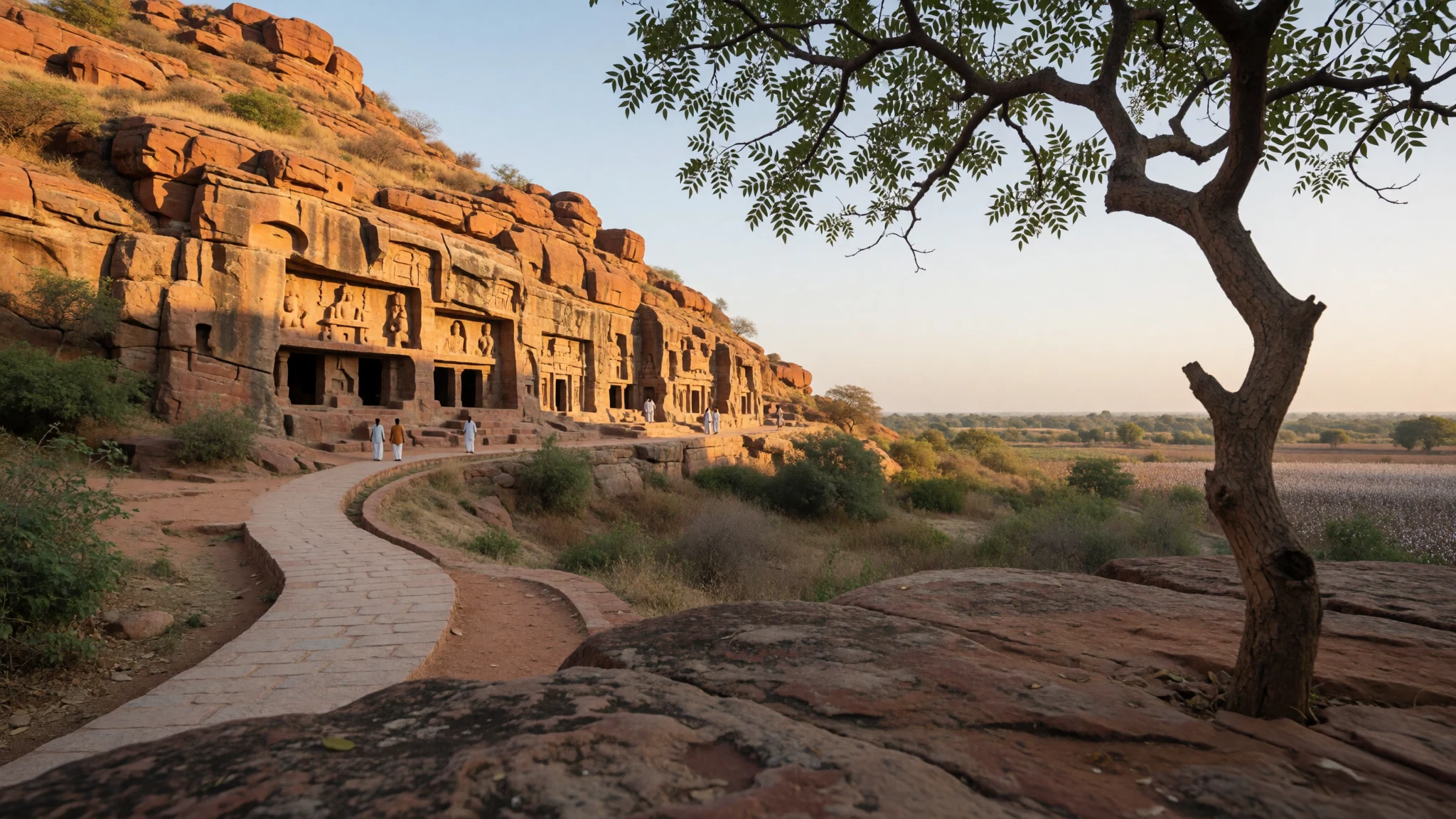
Badami's red sandstone cliffs hold cave temples and a green lake, a quiet, walkable introduction to early Chalukya art in north Karnataka.
The place
Badami is a small town in northern Karnataka, sitting at about 586 metres above sea level in dry, rocky country. Two steep ridges of red sandstone close in around it, and in the gap between them lies Agastya Lake, a man-made reservoir whose water shifts from green to brown with the seasons. Cave temples are cut into the face of the southern ridge, a fort and shrines crown the northern one, and older temples crowd the water's edge. The town itself is low-rise and unhurried: a bus stand, a bazaar of small shops, horse carts that now mostly carry visitors, and modest lodges along the roads toward the lake. Most sights lie within walking distance of one another, so Badami is easy to see on foot, though the climbs are steep and the stone holds heat well into the afternoon. The landscape does much of the work here. Sandstone weathers into orange, rose and ochre, glowing at dawn and again in late afternoon. Monkeys patrol the steps and will take anything left unguarded. Visitor numbers are modest compared with Hampi or the big Rajasthan forts, so crowds are rarely a problem except on weekends and holidays, when school groups and pilgrims fill the cave stairs. Badami also works as a base for Pattadakal and Aihole, two villages with further temples a short drive away, so many travellers treat the town as the middle stop of a three-part trip rather than a destination on its own.
Its story
Badami was once called Vatapi, and it served as the capital of the early Chalukya dynasty, whose kings ruled a large part of the Deccan plateau from here. Local legend explains the name. Two demon brothers, Vatapi and Ilvala, tricked travellers into eating a meal that secretly contained Vatapi, who would then burst out of their bodies; the sage Agastya ate the meal, digested the demon and ended the scheme. The lake bears the sage's name. The real history is quieter but more lasting in stone. Chalukya builders worked with both northern and southern temple ideas, trying them out in Badami, Aihole and Pattadakal, which is why historians often treat the three as a workshop for later Indian temple design. The caves were carved rather than built, with masons cutting into the cliff and shaping pillars, brackets and sculpture out of the living rock. Power later passed to other dynasties, and the town was held in turn by regional kingdoms, the Vijayanagara rulers and the Deccan sultanates, each leaving some trace in the forts and walls on the hills. Badami then settled into the life of a market town. Today the Archaeological Survey of India cares for the main monuments, while the lakeside temples still see worship and daily use.
What to see
- Cave temples on the south ridge — South ridge, above the town
The cave temples are cut into the sandstone face of the southern ridge and reached by stairs climbing from the lakeside. Separate caves honour Shiva, Vishnu and the Jain tirthankaras. Carvings include a dancing Shiva, a boar-headed Vishnu lifting the earth and a striding Vishnu. Go early, before the stone heats and the stairs fill.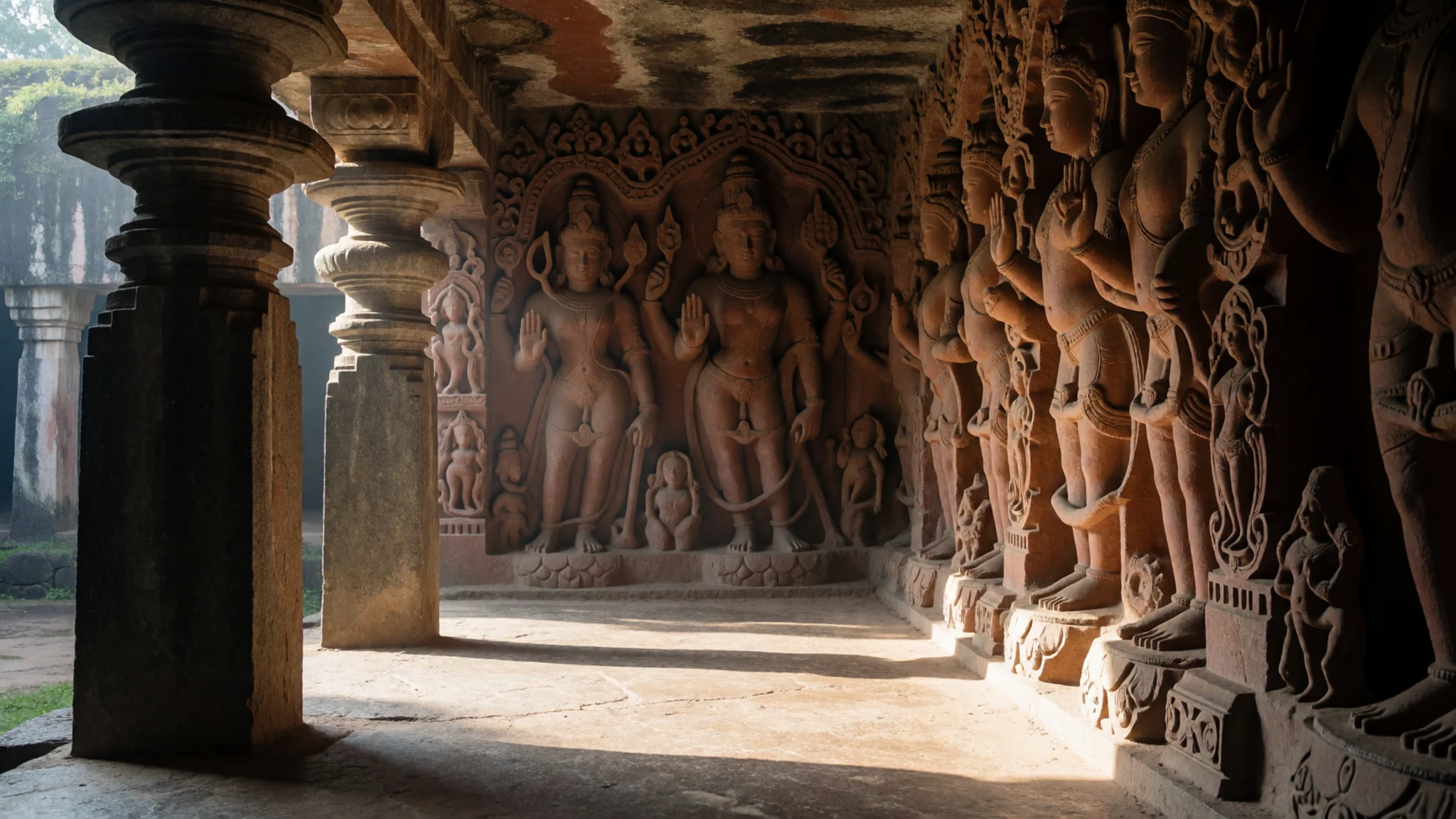
- Agastya Lake and the Bhutanatha temples — Eastern shore of Agastya Lake
The Bhutanatha group stands on the eastern shore, a cluster of temples with shaded porches and steps leading down to the water. Locals bathe, wash clothes and sit here in the evenings, so the setting feels lived-in rather than preserved. Late afternoon light on the stone is the pleasing time to arrive.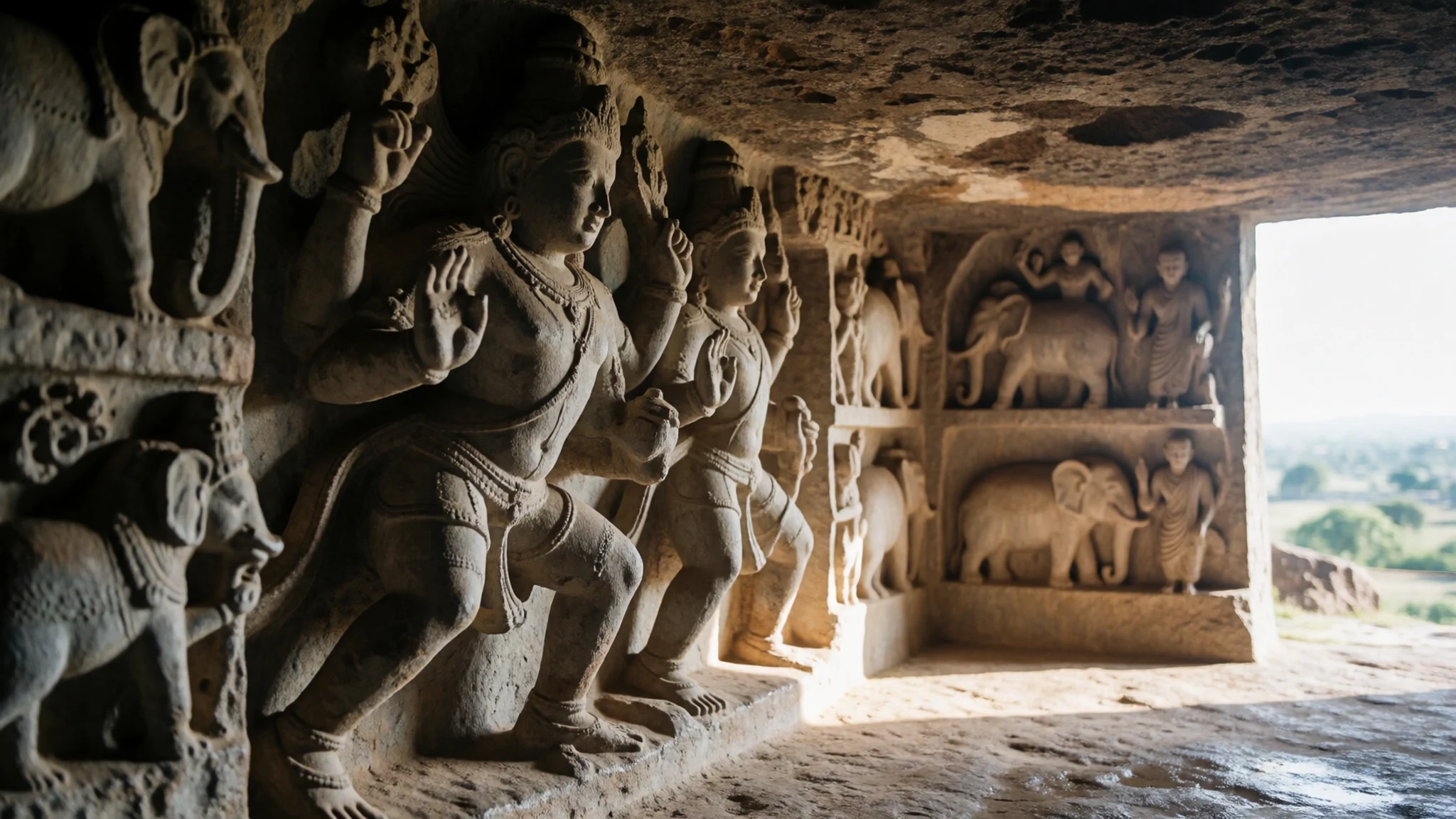
- North fort and Upper Shivalaya — North ridge
The northern ridge carries a fort and the Upper Shivalaya, and the climb is steeper and less crowded than the cave stairs. Narrow stone gateways, old storehouses and watch posts survive along the path, and the top gives a view over the lake, the town roofs and the ridge opposite. Wear grip footwear and carry water.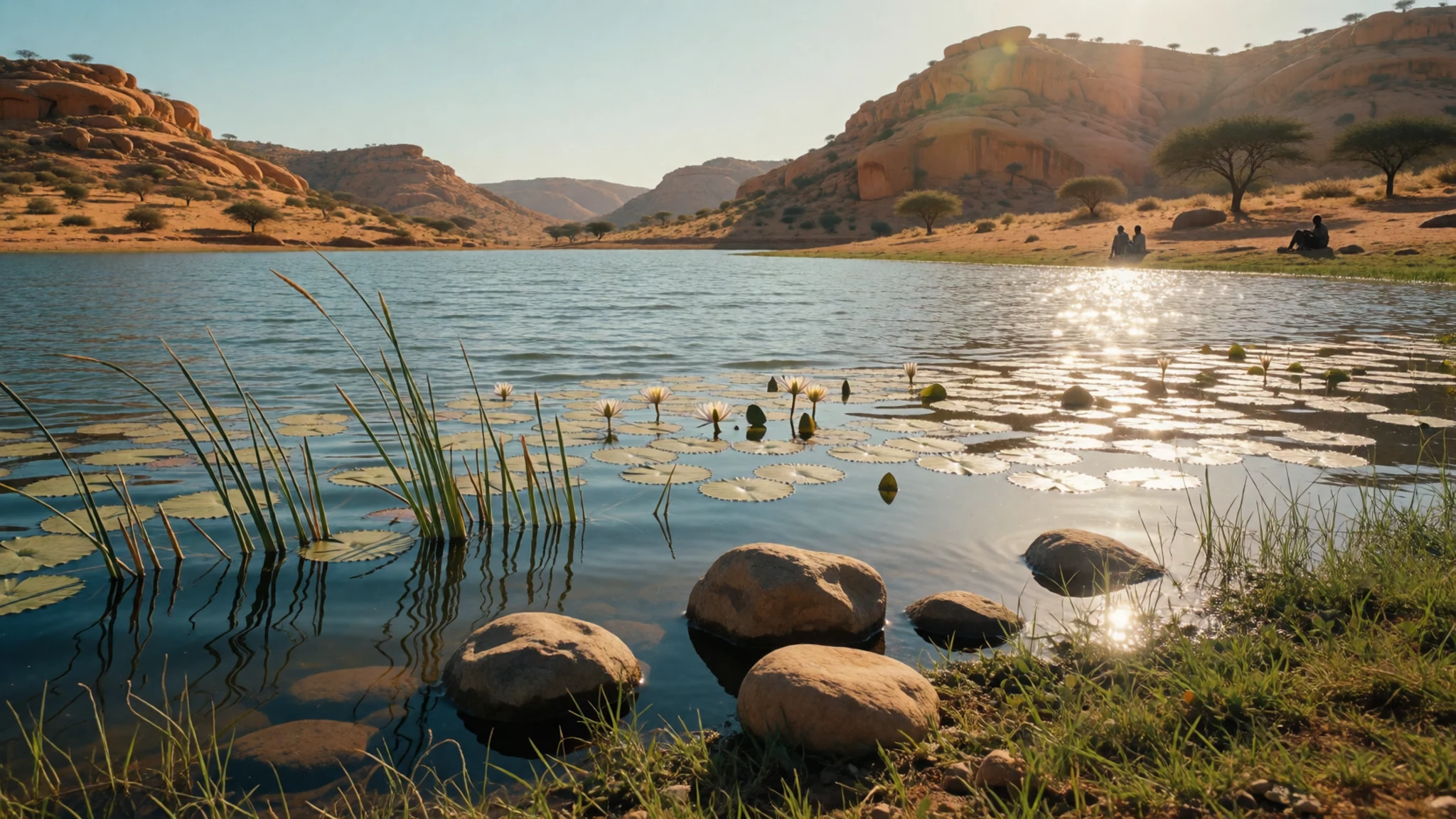
- Malegitti Shivalaya — North ridge, near the fort path
The Malegitti Shivalaya is a small stone temple on a rocky shelf of the north ridge. Its compact, balanced shape shows the southern style at an early stage, with carved niches and shrine figures on the walls. The scale is modest, so the pleasure lies in the proportions and the quiet.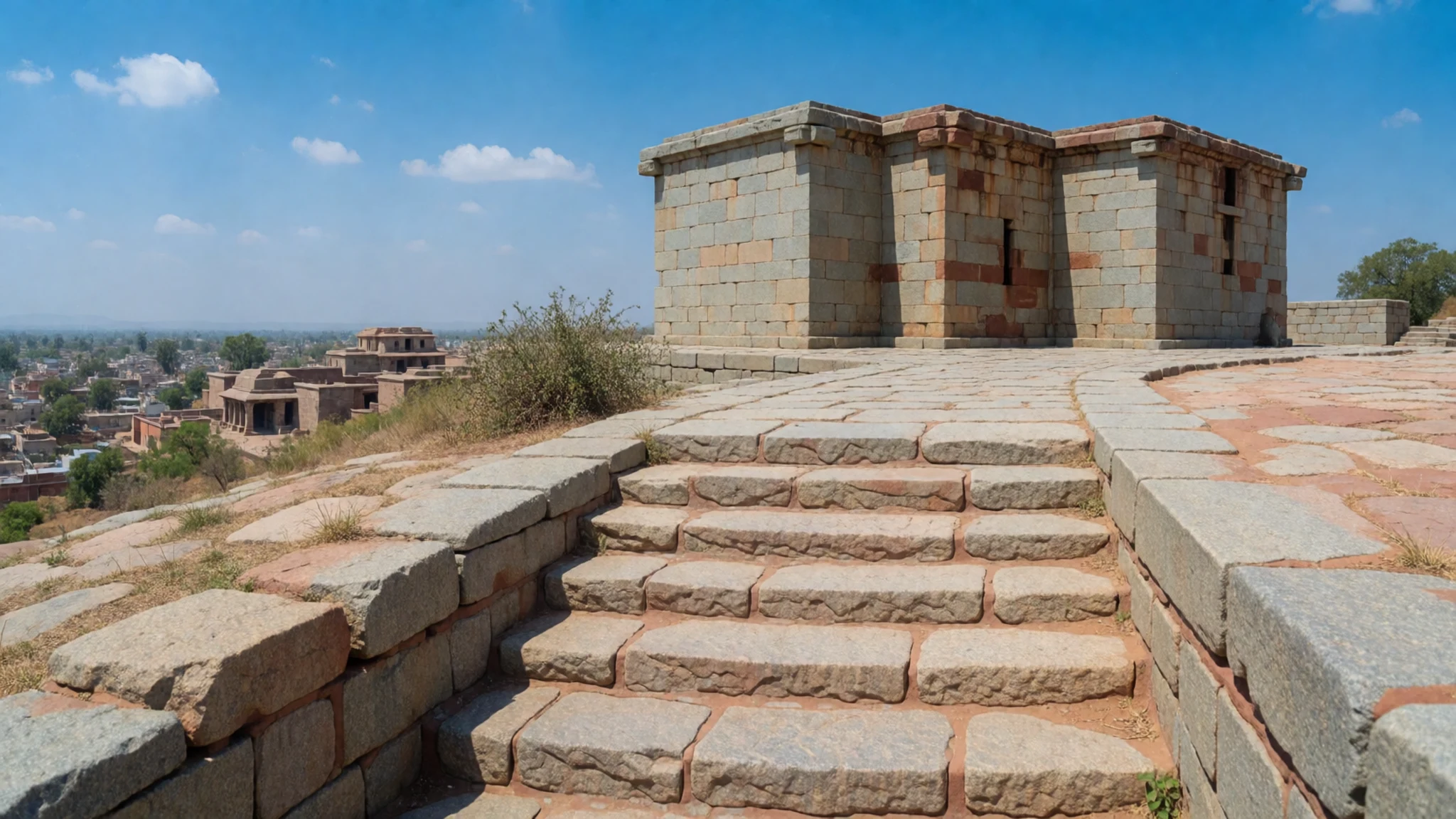
- Archaeological museum — Near the lake, town side
The archaeological museum in town gathers sculpture from Badami and nearby villages, including pieces too fragile to leave in the open. English labels help sort out the Chalukya styles, and the building offers a cool pause from the heat. Opening days and entry terms change, so check with the Archaeological Survey of India before going.
Culture
Badami lies in the Kannada-speaking heartland of north Karnataka, and daily life here is shaped by Kannada, by Hindu temple worship, and by the Lingayat and Jain communities that have long been part of the region. The ancient caves hold Shaiva, Vaishnava and Jain imagery within a short walk of each other, a reminder that these traditions shared the same town and the same patrons. Some temples are protected monuments, while others, such as those on the lakeshore, remain places of worship, where families bring offerings, priests tend small shrines and festivals fill the lanes with music and flowers. The Hindustani classical tradition runs strong across north Karnataka, and a winter dance and music festival in the area celebrates the Chalukya heritage, though dates vary, so check locally. Village life around Badami is agricultural, built on sorghum, groundnuts, cotton and sunflowers, and many people still rise early to beat the heat. Hospitality is warm but unhurried; asking for directions often turns into a conversation, and a few words of Kannada, such as namaskara for hello, are appreciated. Remove your shoes before entering any active shrine, and ask permission before photographing priests or worshippers.
What to wear
Badami and the wider Bagalkot district have a strong handloom identity. The Ilkal sari, woven in a nearby town, is a well-known local textile: a cotton body joined to a silk or art-silk border and pallu using a technique called tope teni, often in deep reds and maroons. Guledgudda khana, a hand-woven cotton fabric, is traditionally used for women's blouses and pairs naturally with Ilkal saris. Saris are worn for weddings, temple visits and festivals, while men wear a dhoti and white shirt on ceremonial occasions, sometimes with a turban or cap. Kasuti, a fine counted-thread embroidery from the neighbouring Dharwad area, decorates blouses and borders. Day to day, women in town wear salwar kameez or simple cotton saris, men wear shirts with trousers or a lungi, and younger people favour jeans and T-shirts. Visitors should dress for dry heat and for temples. Choose light, loose cotton, with shoulders and knees covered at shrines. Wear sturdy sandals or trainers with good grip for the sandstone steps and uneven paths, and slip-on footwear is easiest where shoes must come off. A hat, sunglasses and sunscreen matter more than anything fashionable, especially between March and June.
What to eat
- Jowar rotti with ennegayi — Local meal eateries near the bus stand and bazaar
Flatbread of sorghum flour, served with ennegayi, a spiced curry of small brinjals stuffed with peanut and coconut masala. It is the everyday north Karnataka meal, found at simple local eateries near the bus stand and in the bazaar.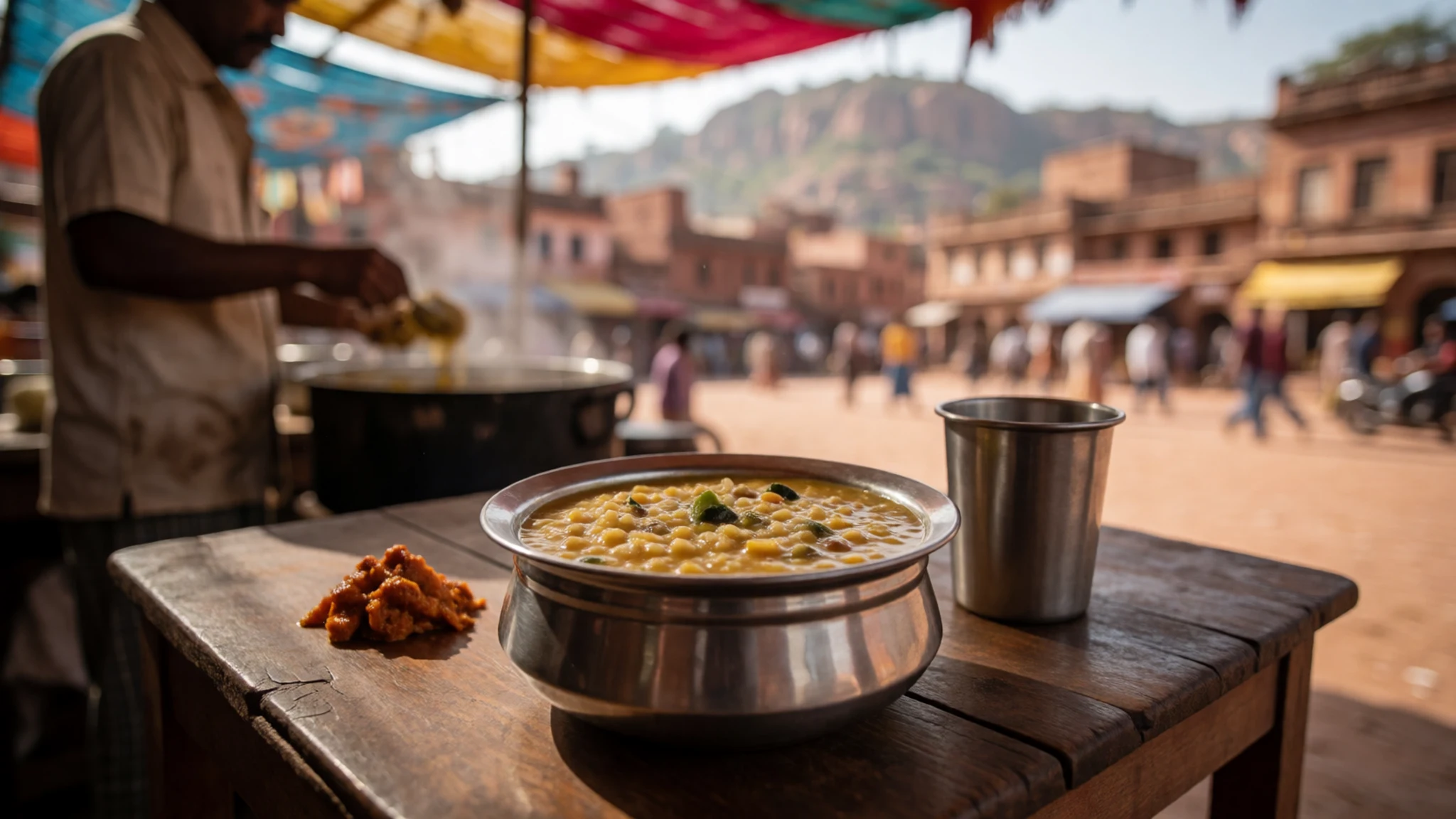
- Shenga chutney pudi — Grocery shops and market stalls in town
A dry chutney powder of roasted groundnuts, garlic and chilli, eaten with rotti or rice and a spoon of oil or curd. It is fiery, keeps well and is often sold packed in small bags to carry home.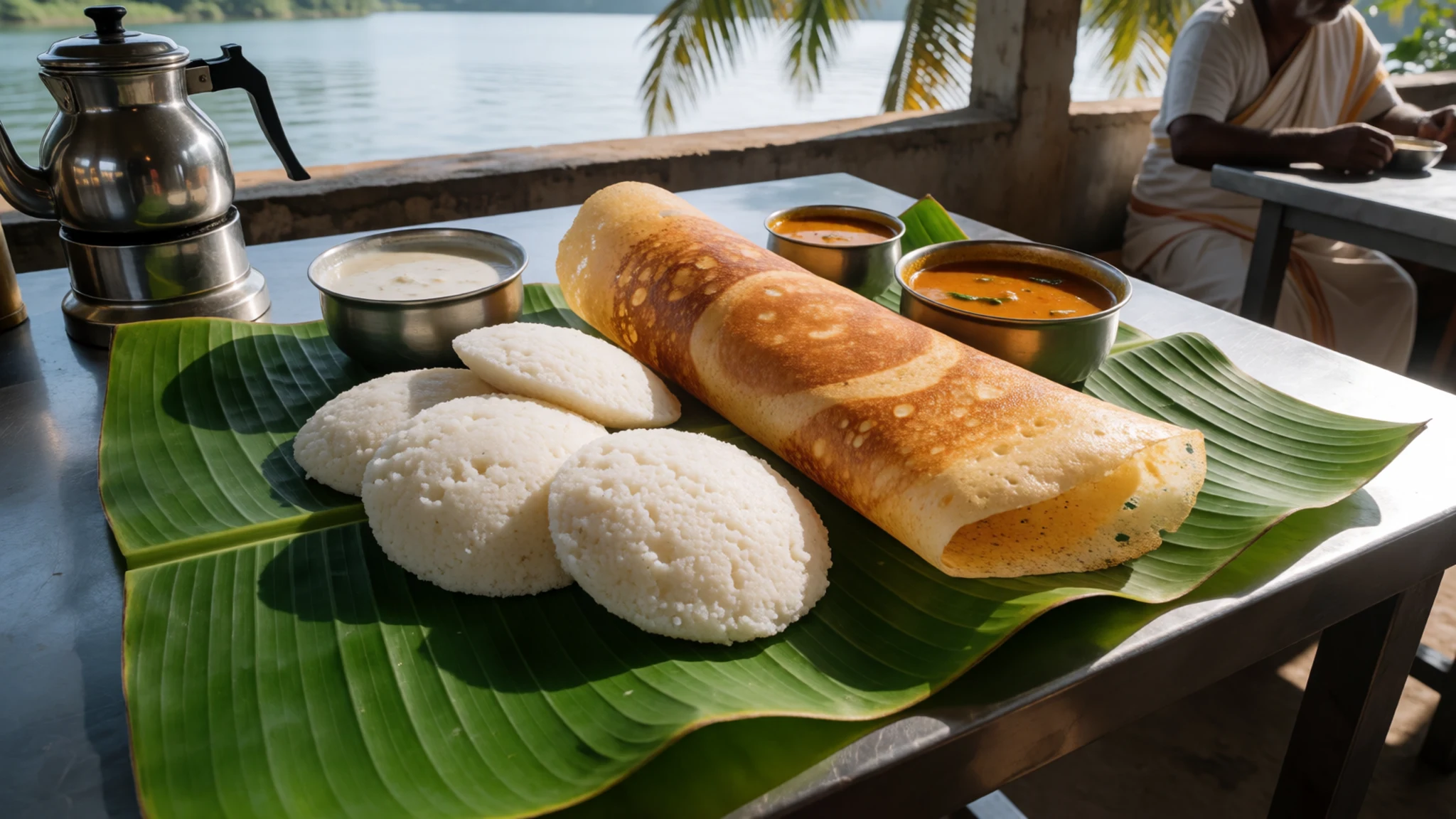
- Girmit and mirchi bajji — Street carts around the bus stand and lake road
Girmit is a tangy snack of puffed rice with onion, spices and chutney, often served alongside crisp chilli fritters. It is an evening street snack, best eaten fresh while the bajjis are still hot. - Shenga holige — Sweet shops and festival stalls in town
A sweet flatbread filled with a sweet paste of groundnut or lentil and jaggery, cooked on a griddle and served with ghee. It appears at festivals and in family homes, and some sweet shops sell it in season. - Dharwad pedha — Sweet shops in the main bazaar
A soft, caramelised milk sweet from the Dharwad region, deep brown and slightly grainy. It is a popular gift across north Karnataka and sold by weight in neat boxes.
Plan it
Best time. October to February, when days are warm rather than hot and the sandstone stairs are comfortable to climb. March to June is very hot and dry. The monsoon months bring green fields and fuller water, but also humidity and slippery steps.
How long. 2–3
Getting there. The nearest major airport is Hubballi, a few hours away by road; Belagavi is another option. Badami has its own railway station on the line through north Karnataka, a short auto-rickshaw ride from town. Buses link Badami with Hubballi, Bagalkot, Vijayapura and Hampi, and local autos or taxis cover the last leg to the caves and lake.
Budget. low
Tips
- Start at the caves or north ridge soon after sunrise, before the heat and the crowds build
- Carry water, a hat and a bag with a zip, since monkeys steal food and bottles
- Keep some cash for autos, horse carts and small eateries, as cards are patchy
- Check monument timings and ticket terms with the Archaeological Survey of India before going
- Hire a taxi for a day trip to Pattadakal and Aihole, as public transport is slow
Etiquette
- Remove your shoes before entering active temples and shrines
- Dress modestly, with shoulders and knees covered
- Ask before photographing priests, worshippers or people bathing at the lake
Nearby
Sources
- Wikidata Q590751 (CC0)
- Wikipedia — Badami (CC BY-SA 4.0)
- Wikivoyage — Badami (CC BY-SA 4.0)