Azraq Castle
Azraq Castle, Jordan
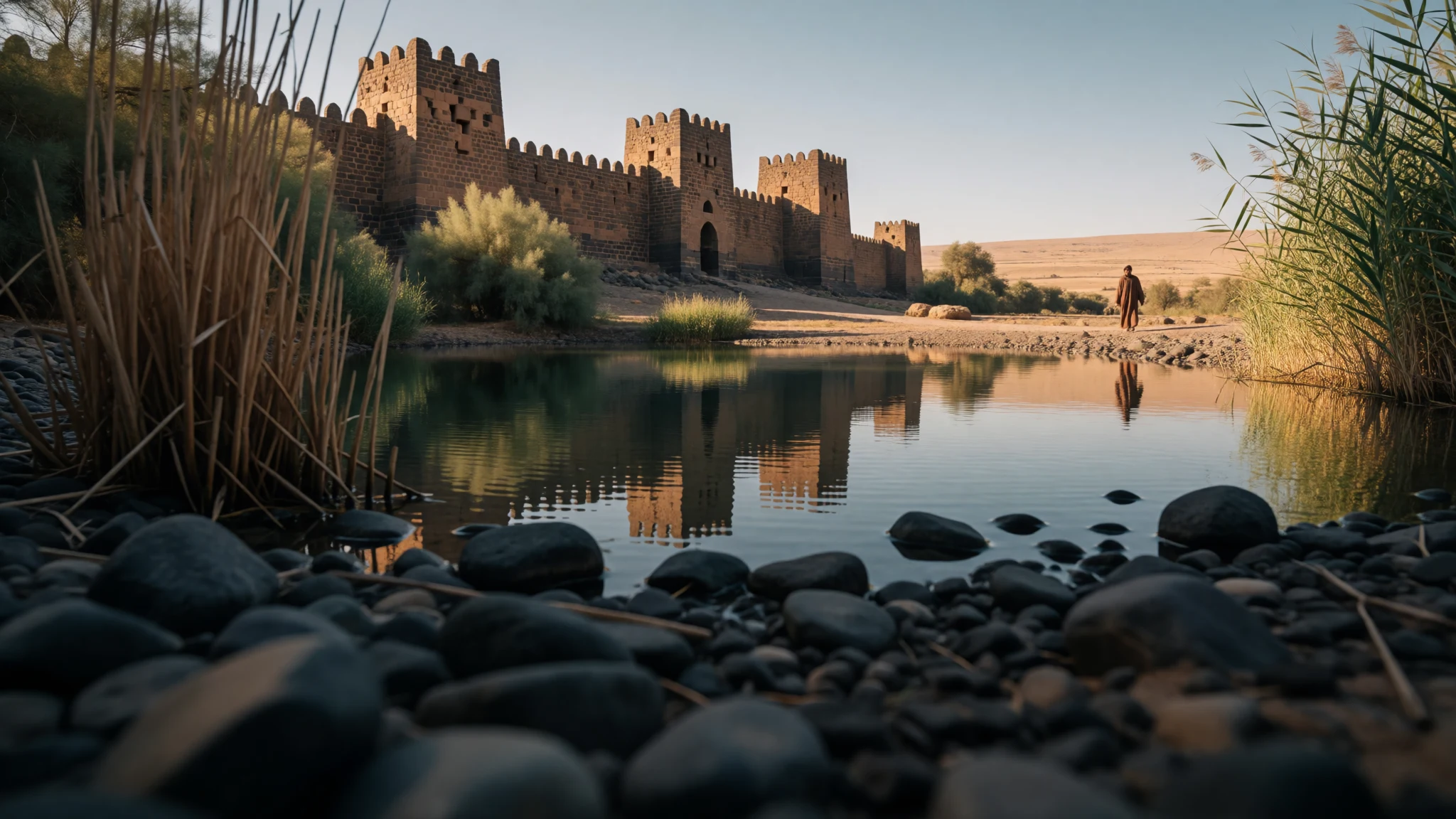
Azraq Castle is a dark basalt fortress guarding a desert oasis in eastern Jordan, where Roman, Ayyubid and Arab Revolt history meet.
The place
Azraq Castle (Qasr Azraq, in Arabic قصر الأزرق, the "Blue Fortress") stands beside the town of Azraq in eastern Jordan, roughly 100 km east of Amman. It belongs to the loose family of desert castles in the country's arid east, and of them it is the one most bound up with water. The reason is the oasis next to it, which for centuries was the only reliable supply across a vast tract of dry land. Whoever held the springs shaped the routes, and both the town and the fortress took their name from that oasis.
The building is dark. Basalt quarried close by gives the walls a charcoal tone that sets them apart from the paler buildings around them, and from a distance the castle reads as a solid black-grey block rather than a picturesque ruin. Inside, a courtyard holds a small mosque at its centre, a reminder that the site was a place of worship and of garrison life long before the present walls went up. The fortress took its current form in a major rebuilding in the thirteenth century, though the stonework carries earlier layers.
The setting is a flat, open plain, and the castle sits close to the town's streets rather than in empty wilderness. That makes it easy to fold into a day out from Amman or a loop through the eastern desert. Most visits are short: a walk around the courtyard, a look into the rooms, a view over the dark basalt land. The link with T. E. Lawrence, who based himself here in 1917–18 during the Arab Revolt, is a large part of why people come.
Its story
Azraq Castle owes its long history to a single fact: the oasis beside it was the only permanent fresh water for a very wide stretch of desert. Nabataean people lived in the area, and around 200 CE the Romans took control. They raised a basalt structure here that later rulers kept building on. The Byzantines and the Umayyads used it as well, so the site passed through several empires without ever losing its purpose as a watering point and lookout.
The fortress seen today is mostly the work of 1237, when an Ayyubid emir, 'Izz ad-Din Aybak, redesigned and strengthened it. His builders again used the local black stone, and the thirteenth-century plan is what visitors walk through now. An early mosque had already been built in the middle of the enclosure, which is why a place of prayer sits at the heart of a military building.
Ottoman rule came next. By the sixteenth century the Ottomans had put soldiers in the fort, and it served their armies in a region where distances were long and water was scarce.
The best-known chapter is much more recent. In the winter of 1917, during the Arab Revolt against the Ottomans, T. E. Lawrence made the fort his desert headquarters and worked from the chamber above the gatehouse. Beyond the walls, the level ground suited an airfield, a real advantage in a modern war. Lawrence judged the old fort a convenient base despite the cold, and he wrote about his time here in Seven Pillars of Wisdom. That book is the main reason the castle features on so many itineraries today.
What to see
- The basalt gateway — Main entrance, Azraq Castle
The entrance to Azraq Castle is a dark basalt gateway that sets the tone for the whole visit. The stone is heavy and plain, and the approach shows how little decoration the builders wanted: this was a place to hold, not to impress. Pause outside for the contrast between black walls and pale ground before stepping into the shade of the passage.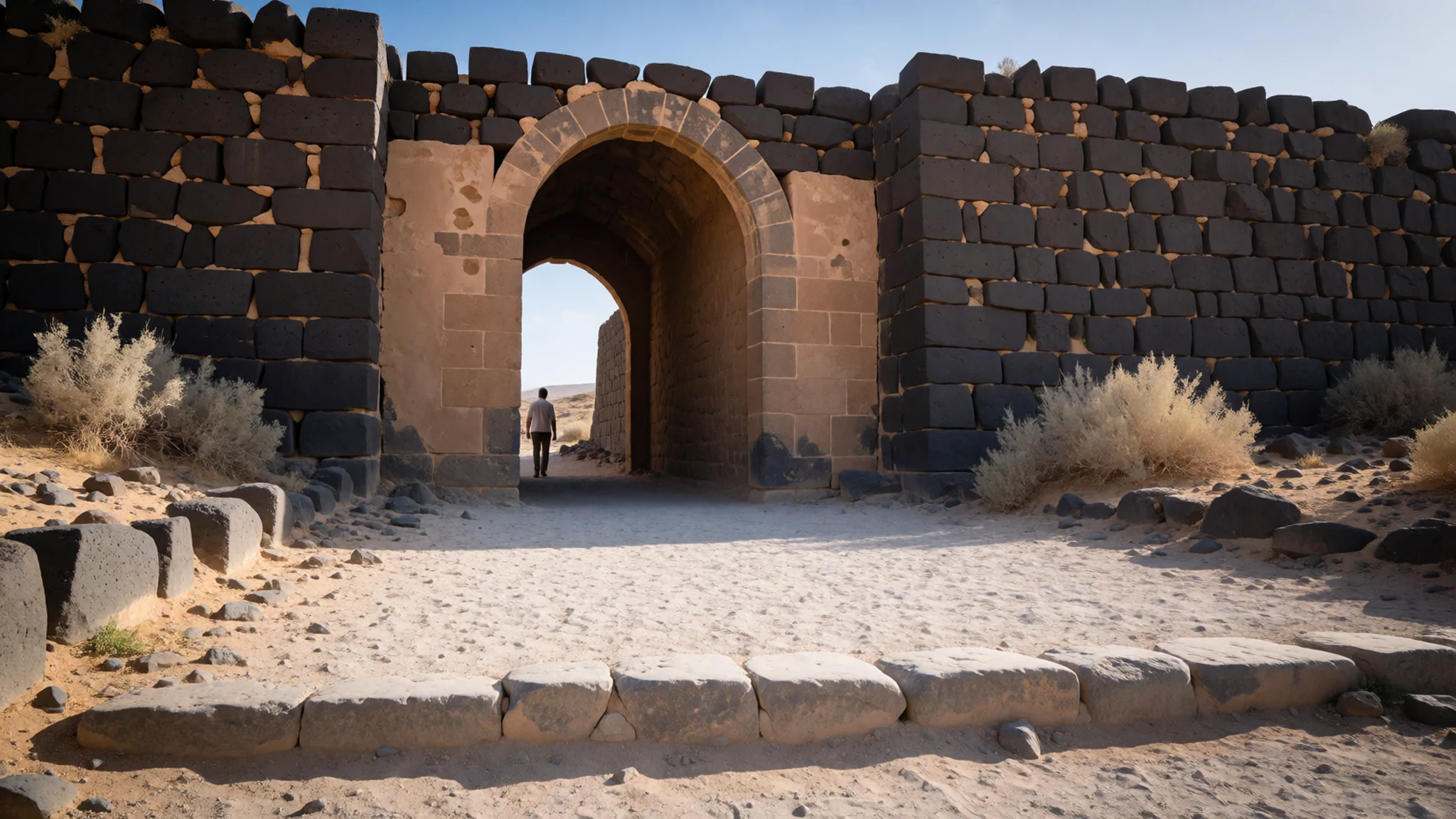
- Lawrence's room above the gatehouse — Upper level over the gatehouse, Azraq Castle
Above the entrance of Azraq Castle is the chamber that T. E. Lawrence used as his office in the winter of 1917. It is a modest space, and the interest lies in the setting rather than in any furnishings. Reading a few pages of Seven Pillars of Wisdom beforehand makes the small room land much harder.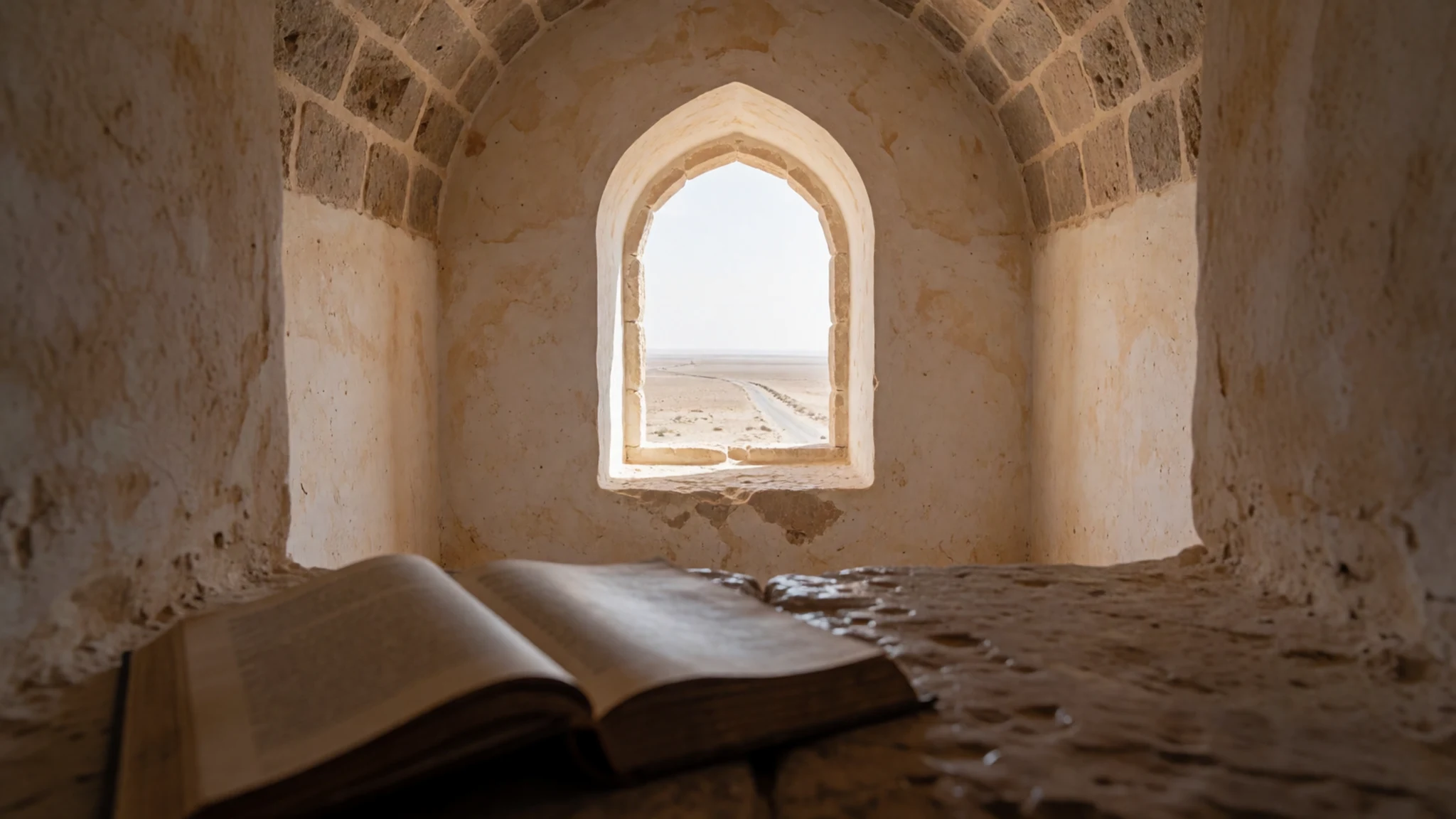
- The courtyard and its mosque — Centre of Azraq Castle
The central courtyard of Azraq Castle holds the small mosque that predates the thirteenth-century rebuilding. Standing in the middle gives the clearest sense of the fortress as a compact, self-contained world, with the walls shutting out the plain. Early or late light brings out the grain of the basalt and softens the heat.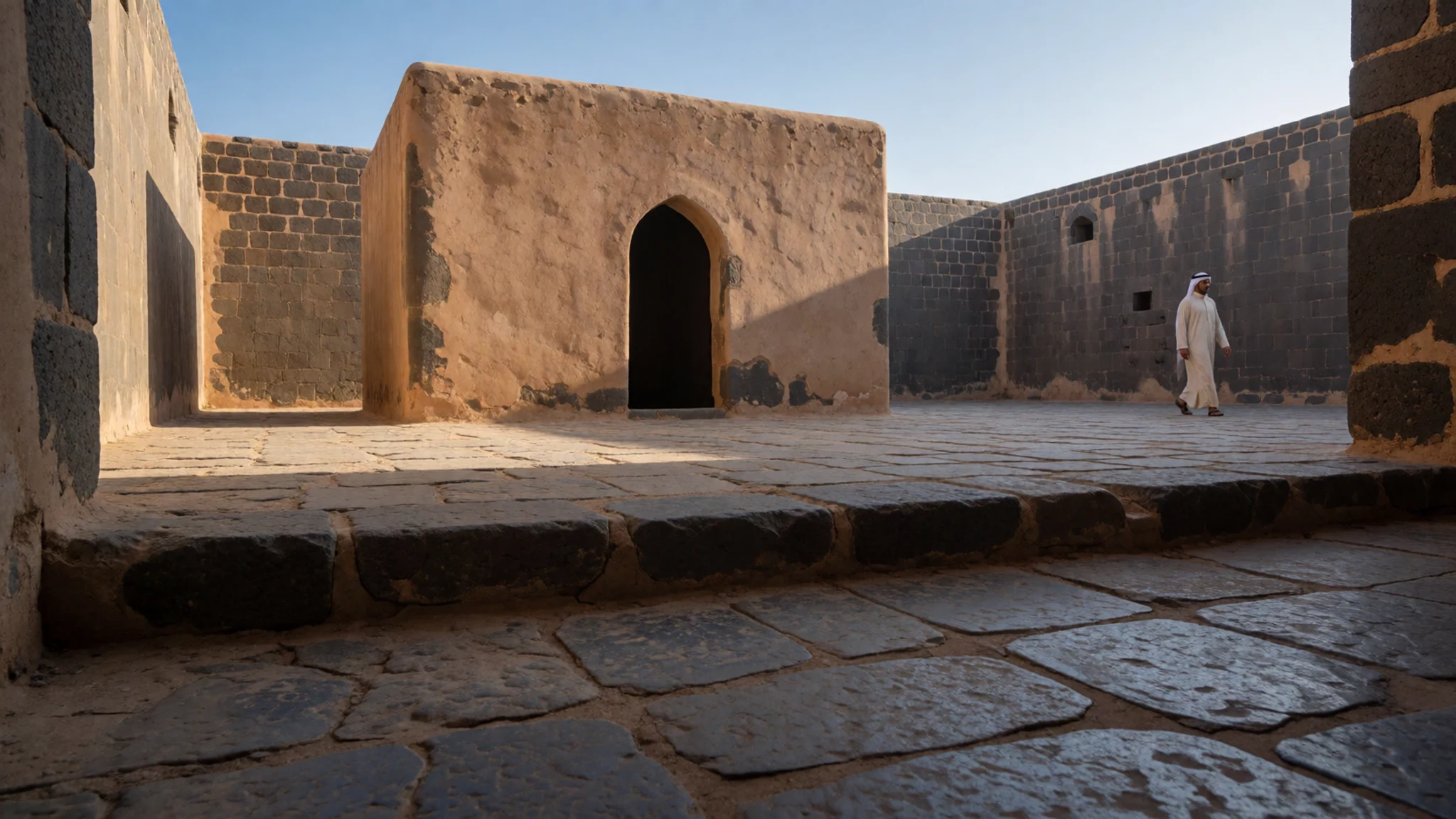
- The outer wall — Perimeter of Azraq Castle
A slow walk around the outside of Azraq Castle shows how the black masonry meets the open ground. The wall is the best place to appreciate the scale of the enclosure and the choice of local stone. Photographs work well from a little distance, where the dark mass stands out against the sky.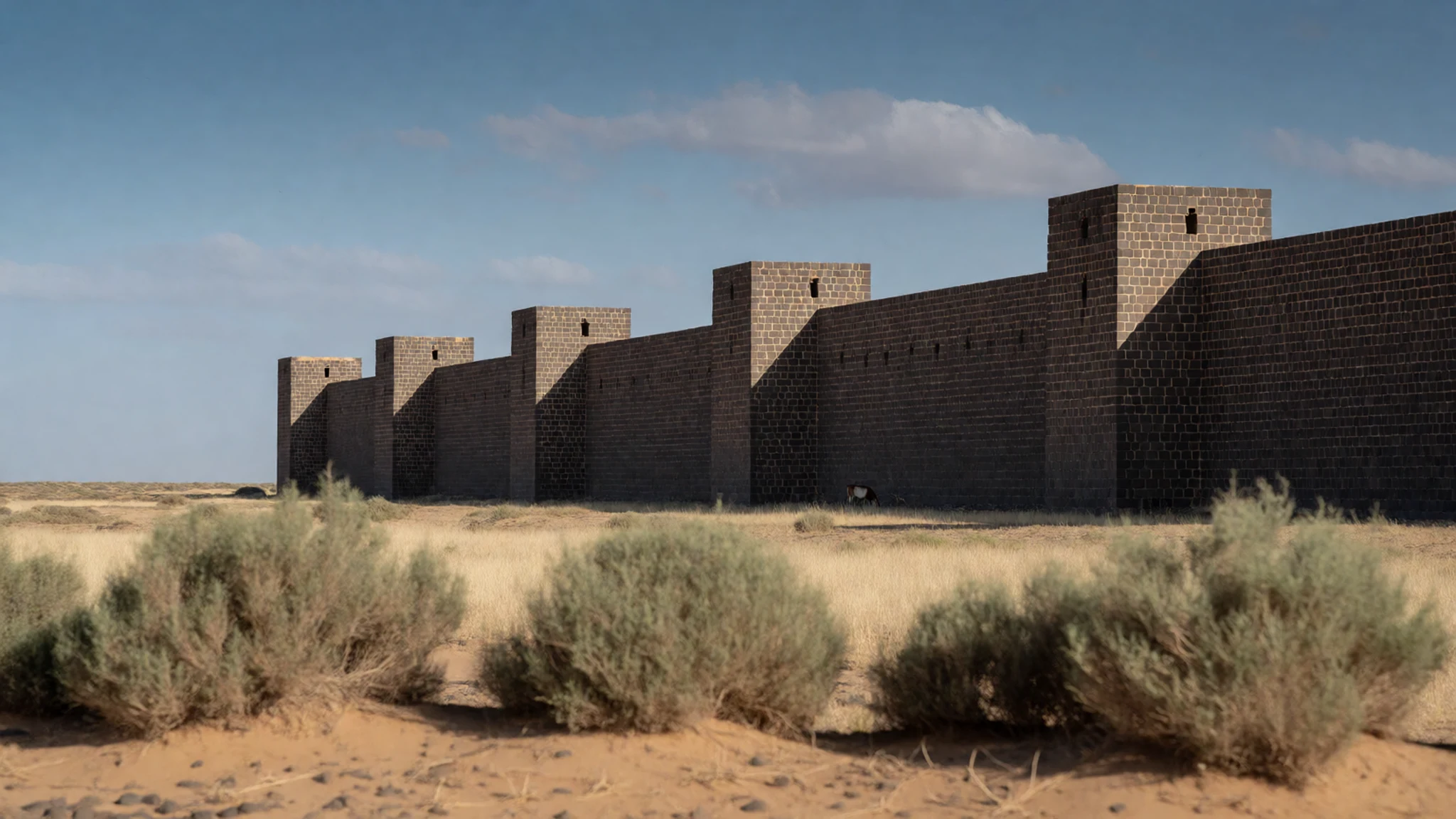
- Views from the upper levels — Upper walls and rooms, Azraq Castle
Wherever the upper levels of Azraq Castle are open, they give a wide look over the flat desert and the edge of the town. The view explains the site's purpose better than any plaque: a lookout at a rare water source, watching long approaches from every side. Check locally which areas can be climbed.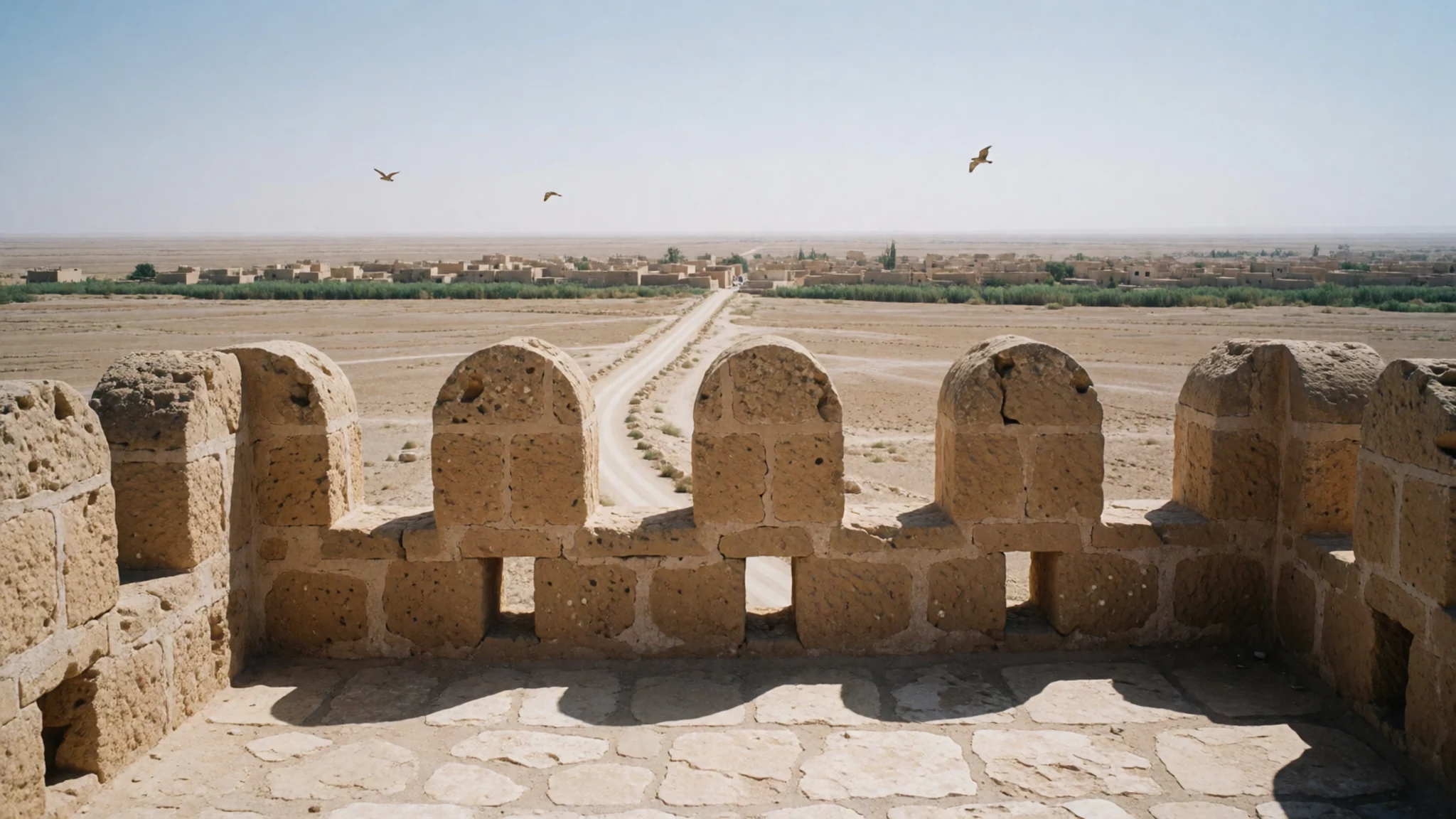
- Azraq town and the oasis — Azraq town
The oasis that gave Azraq Castle its reason for being lies close by, and the town that grew around it is worth a short wander. Ask in the town about which wetland areas are open to visitors and how to reach them, since access can change. The road in from Amman is itself a lesson in how empty the surrounding land is.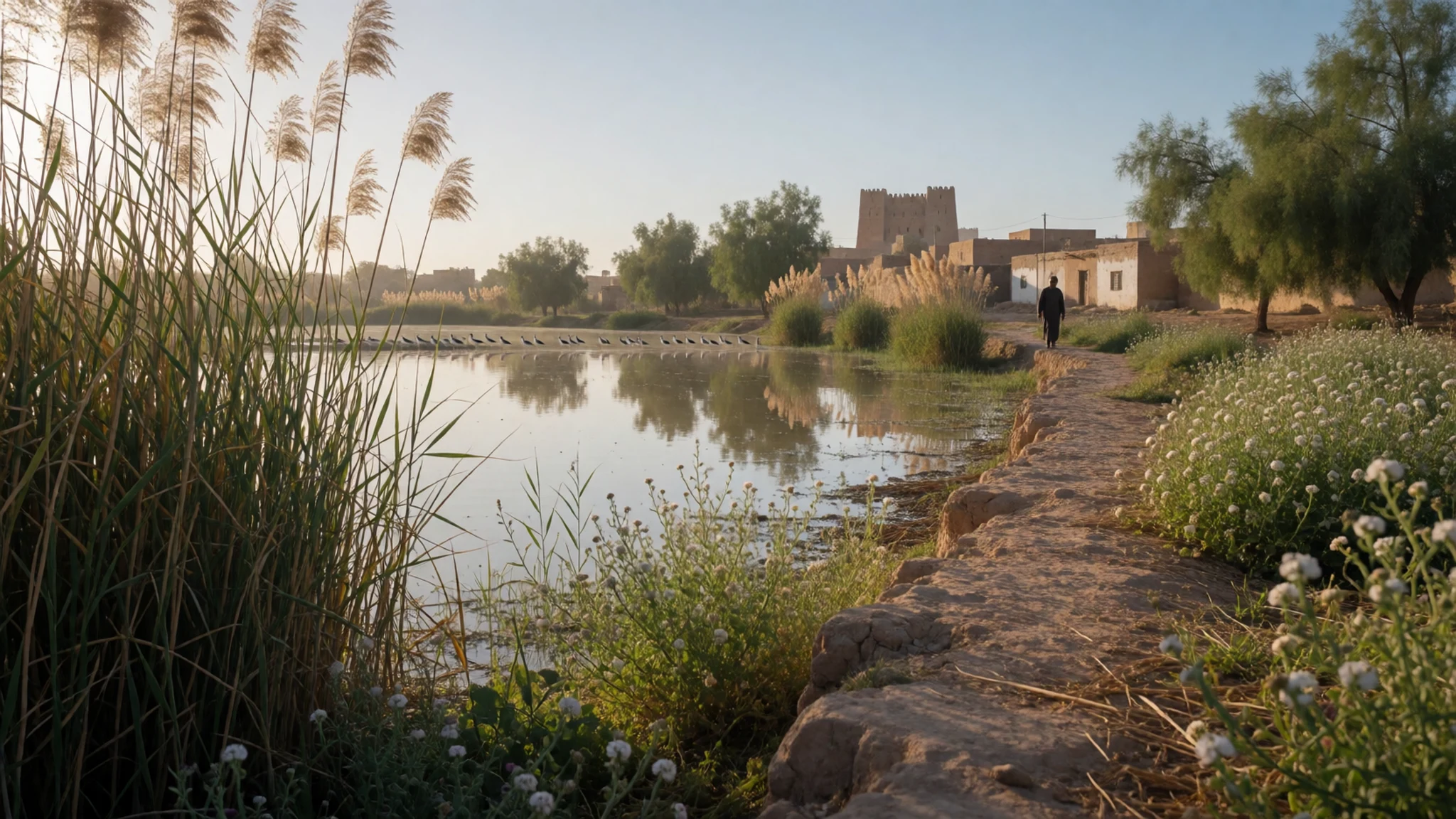
Culture
Azraq Castle sits in a country where hospitality is taken seriously, and the town around it reflects that. Jordan is majority Muslim with a sizeable Christian minority, and visitors are generally met with patience and practical help when they ask for it. People understand that travellers cannot know every custom, and small mistakes are usually forgiven.
The castle carries two kinds of heritage. It is a historic monument, and it contains a small mosque, so a respectful tone suits the place. Modest clothing is expected at religious and old historical sites, and the castle counts as both. Local people are often glad to talk about the oasis, which once decided who could cross this desert and who could not.
Conversation is where visitors most often stumble. The royal family is popular and protected by law, so public criticism or jokes about them are a poor idea. Regional politics, Israel in particular, stirs strong feelings and is best left alone unless a local raises it. Questions about family, travel and food are easier ground, and a few words of Arabic, such as shukran for thank you, are noticed and appreciated.
The Lawrence story is a natural opener, but a light touch helps: for many Jordanians the Arab Revolt is part of the region's own history, not only a British adventure story. Cover shoulders and knees at the castle, and ask before photographing local people, especially women.
What to wear
Around Azraq Castle, traditional dress follows the wider Jordanian and Bedouin pattern. Men wear the long, loose thobe, often in cotton or lighter wool, with a keffiyeh, the square scarf in red-and-white or black-and-white check, held in place by a black cord. Women's traditional dresses are long and often decorated with cross-stitch embroidery in thread colours that vary by family and region. These garments are most visible at weddings, festivals and family occasions.
Day to day, most people in Azraq wear ordinary modern clothes: trousers and shirts, long skirts, headscarves worn by many women, and tailored jackets in the cooler months. Western fashions are popular with younger people, and the keffiyeh is still common as a practical cover against sun, dust and cold.
Visitors should dress for the desert and for the setting. Light, loose cotton or linen with long sleeves and trousers or long skirts works for sun and for modesty, with shoulders and knees covered at the castle. A hat, sunglasses and a scarf help against glare and dust. Winters can be cold on the exposed plain, so a warm layer is sensible. Wear closed, grippy shoes: the castle floors and the surrounding ground are uneven basalt, and sandals are a poor choice.
What to eat
- Mansaf — Family-style restaurants in Azraq town and along the Amman road
Jordan's national dish, mansaf is meat served over rice with a sauce made from jameed, a sun-dried yogurt. It is a dish for gatherings and celebrations, with a sharp, salty tang. Look for it at family-style eateries in Azraq town or in larger towns on the road from Amman.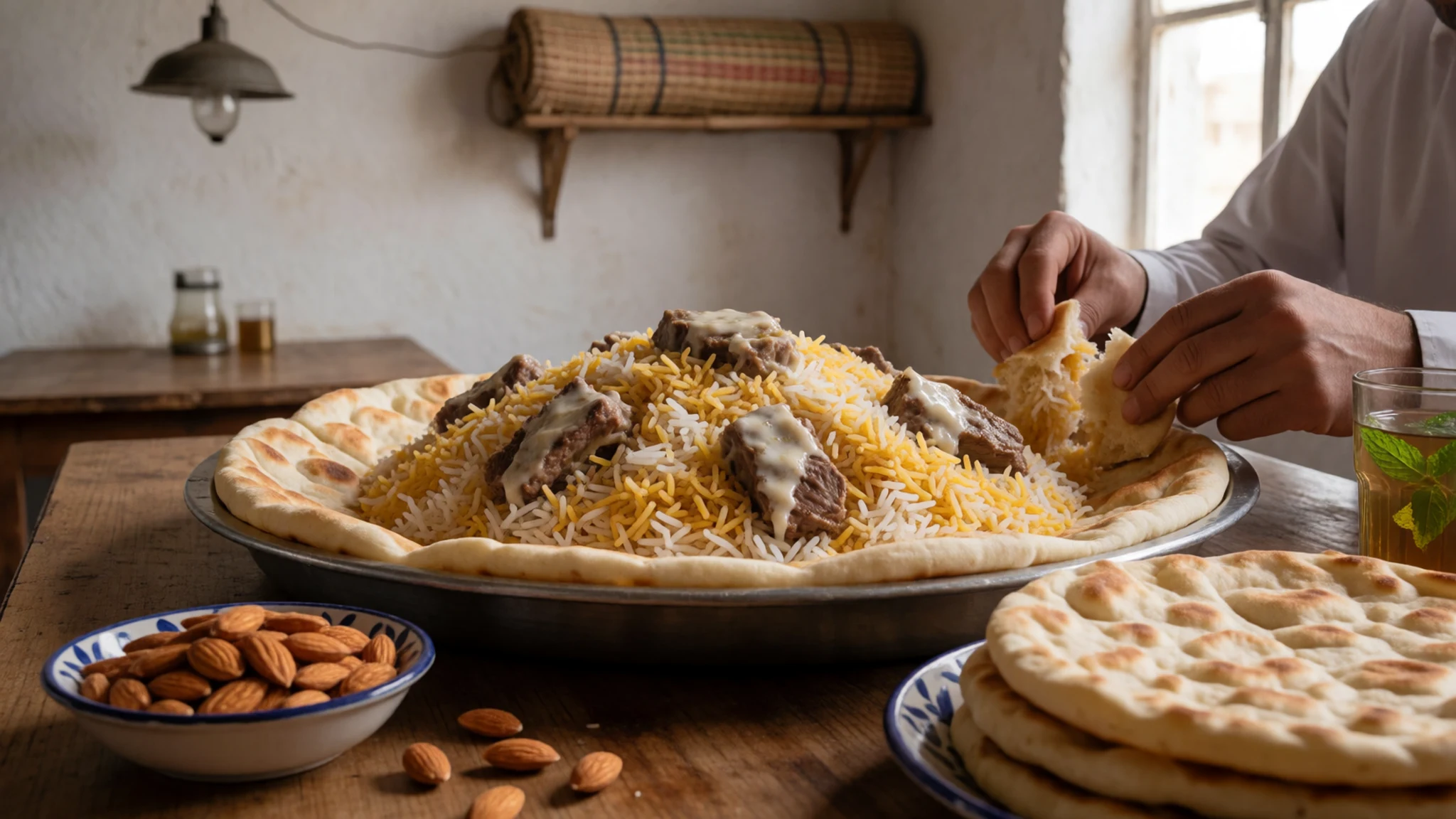
- Khobez — Neighbourhood bakeries in Azraq town
The everyday flat bread of Jordan, khobez is large, soft and best eaten warm from the oven. It comes with almost every meal and works as plate, scoop and snack. Neighbourhood bakeries sell it by the bag, and a fresh batch is a good picnic base.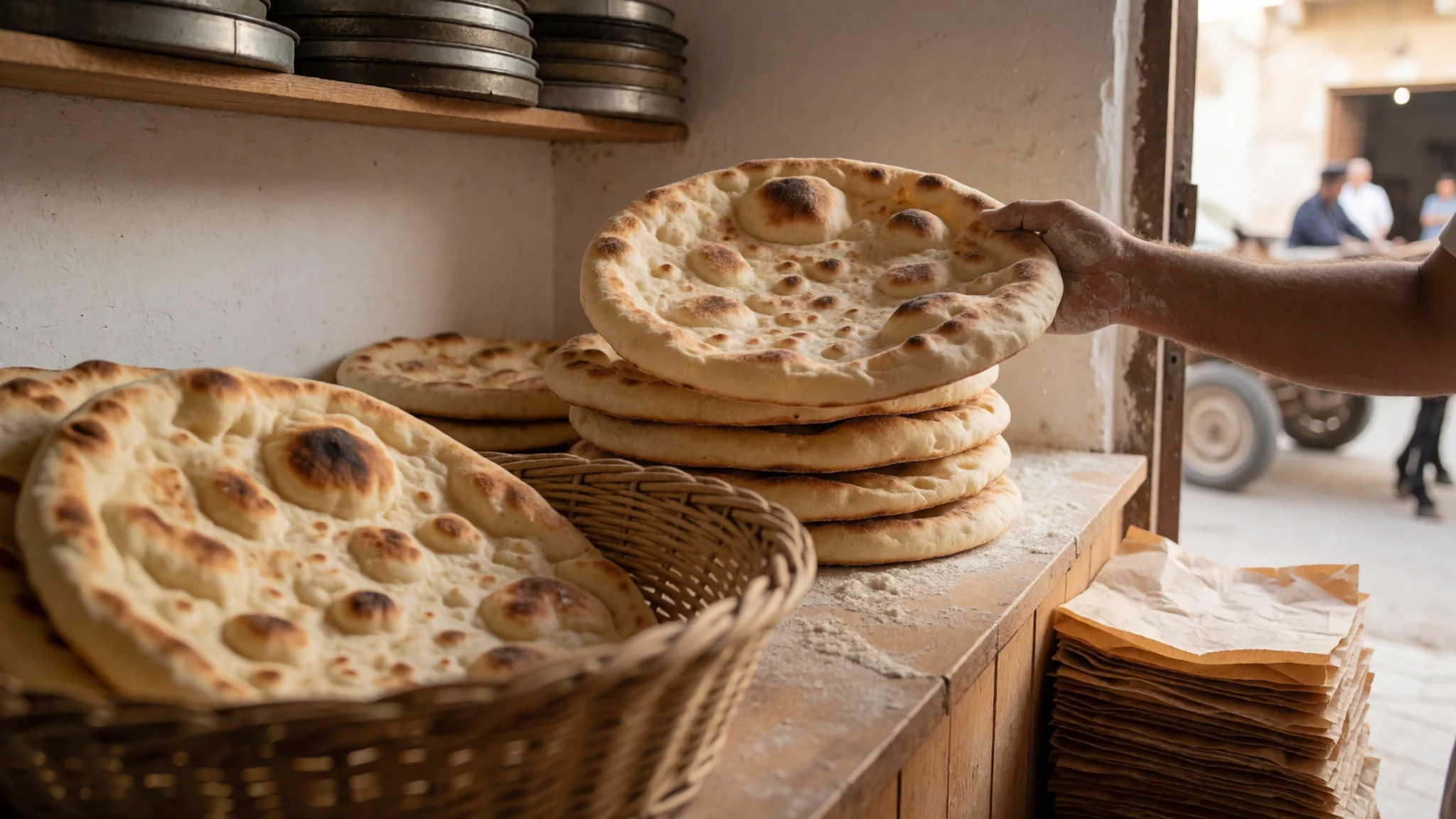
- Labaneh with zaatar and olive oil — Breakfast counters and small cafés in Azraq or Amman
A typical Jordanian breakfast pairs thick strained yogurt, labaneh, with zaatar, olive oil, cheese and bread, often with fried eggs and sweet tea. The mix of tang, herbs and richness suits an early start before the drive to the castle. - Falafel and hummus — Small falafel counters near the town centre
Chickpea fritters and creamy hummus, eaten with bread, make a quick, filling and cheap lunch. Some families eat them mostly at weekends, while others have them often. They are easy to order by pointing and are reliable choices for vegetarians. - Manousheh — Bakeries and pastry shops in Azraq and Amman
A flat baked bread topped with zaatar and oil, or sometimes cheese, manousheh is a popular breakfast and snack alongside other pastries. It is best eaten hot, folded in paper, and works well for the road to or from the castle.
Plan it
Best time. March–April and October–November, when the desert is mild enough for walking around the exposed castle. Summer days on the open plain are hot with little shade, and winters can be cold and bleak, as Lawrence found in 1917.
How long. 1
Getting there. Fly to Queen Alia International Airport or reach Amman, then travel about 100 km east by road to Azraq town; a taxi, hired car or organised day tour is the simplest last leg, and the castle is close to the town's streets. Check current bus options locally.
Budget. low
Tips
- Check the official Jordan Tourism Board site for current opening times, ticket details and visa rules before travelling
- If buying a Jordan Pass, check on the official site whether this castle is covered
- Go early or late in the day for cooler air and softer light on the black stone
- Carry water and a sun hat, as shade on the plain is limited
- Carry some cash for small eateries and bakeries in Azraq
Etiquette
- Cover shoulders and knees at the castle and its mosque
- Ask before photographing people, especially women
- Avoid criticising the royal family or raising regional politics
Nearby
Sources
- Wikidata Q2121495 (CC0)
- Wikipedia: Qasr al-Azraq (rev 1365016917) (CC BY-SA 4.0)
- Wikivoyage: Jordan (rev 5428312) (CC BY-SA 4.0)
- Photo: Qasr Azraq Desert Castle, Jordan — Steffen Sledz (Zone42) (CC BY 3.0)
- Photo: Inside the fortress Qasr Azraq in Jordan — High Contrast (CC BY 3.0 de)
- Photo: Qasr al Azrak, stone gate — Jeanhousen (CC BY 3.0)
- Photo: Qasr Azraq Jordan — David Holt (CC BY-SA 2.0)
- Photo: Qasr al-Azrak — Jean Housen (CC BY 3.0)
- Photo: The road in front of Qasr Al-Azrak — Jean Housen (CC BY 3.0)
- Photo: Temsa Safir coach in Azraq — Jean Housen (CC BY 3.0)
- Photo: Qasr Al-Azrak, outer wall — Jean Housen (CC BY 3.0)


