Qasr Amra
Qasr Amra, Jordan
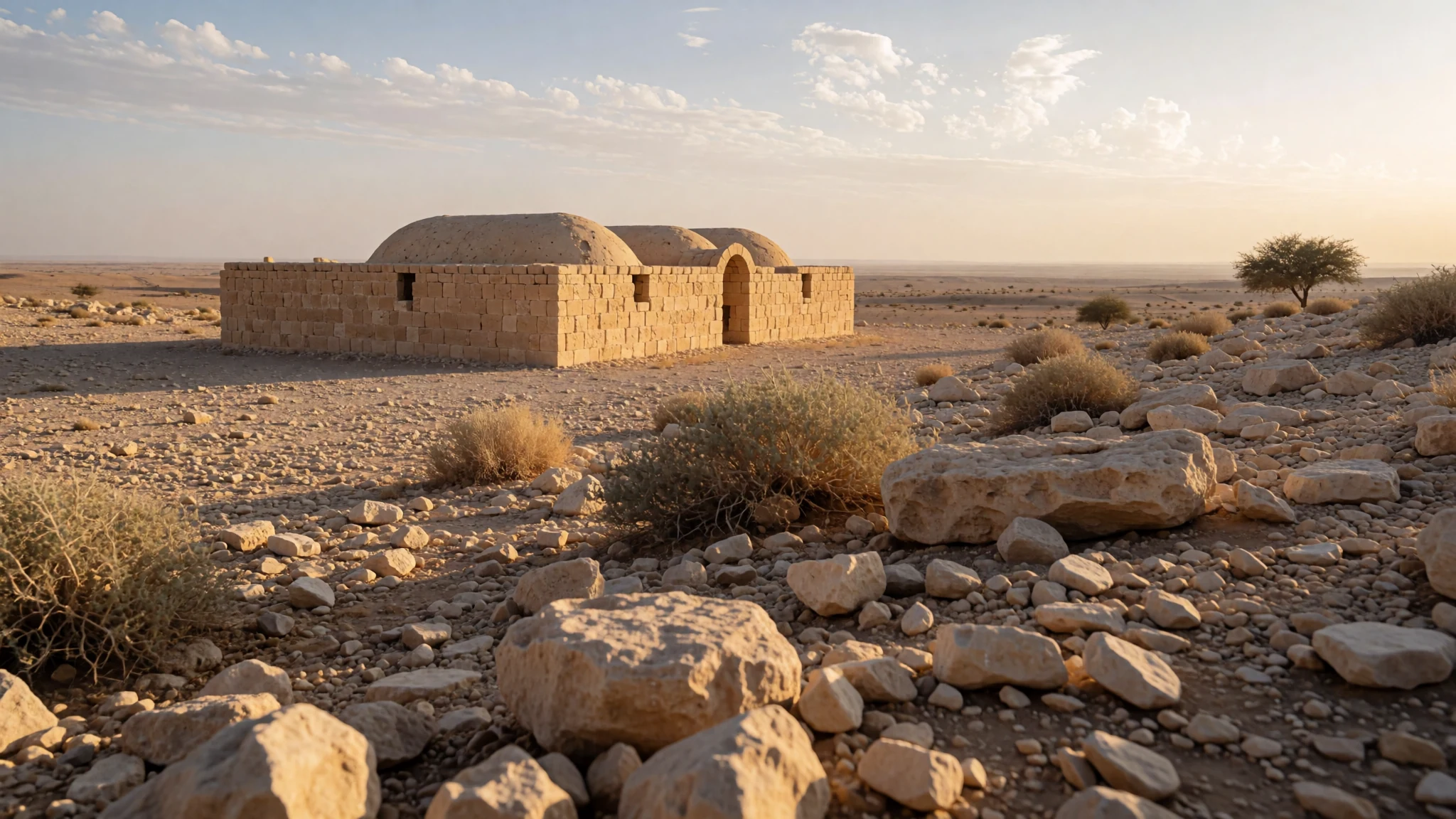
A small Umayyad desert palace in Jordan whose walls and ceilings are covered in frescoes, a rare survival from early Islamic art.
The place
Qasr Amra sits on the north side of Highway 40 in eastern Jordan, roughly 85 kilometres from Amman and a short drive from Al-Azraq. The site is enclosed by barbed wire, with a paved car park at one corner and a small visitor centre where admission is collected. What stands today is a modest single building, the surviving core of a larger royal retreat whose other parts have largely disappeared. The retreat had no military role; it was built for leisure. Its foundations show a rectangular audience hall, water-handling structures and a bathhouse. Most of the site's fame rests on the painted surfaces inside, mainly on the ceilings. The scenes include a group of rulers, hunting, dancing, craftsmen at work, and a cycle of the story of Jonah. Above one bath chamber, a dome carries what is believed to be the earliest surviving picture of the heavens on a curved surface, with the constellations shown reversed and the signs of the zodiac set among them. The World Heritage listing reflects this painted interior. Its position beside a major highway, close enough to Amman for a day trip, has made it a frequent destination. The desert setting means midday heat can be strong, so early hours suit most visitors.
Its story
For a long time scholars assumed the building belonged to the caliph Walid I. A painting of six kings in the hall includes the Visigothic king Roderick, whose short reign points to about 710, which seemed to fit an early date. Doubt grew, and attention moved to two princes who later became caliphs, Walid and Yazid. An inscription found during work in 2012 narrowed the date to two decades between 723 and 743, when the complex was commissioned by Walid ibn Yazid, then crown prince. He later ruled briefly, and before taking the throne he spent long stretches away from Damascus, the Umayyad capital. Written accounts describe him as fond of lounging by water with music or verse, the kind of pleasure the frescoes seem to celebrate. One story tells of entertainers costumed as the night sky performing for him, which some historians link to the painted dome. His mother was a Persian princess, and Yazid too was known for similar pastimes. The desert retreats were placed with care. Routes ran north from Arabia towards Syria, and this site lay along one of them, a logic shared by nearby forts such as Qasr al-Kharanah. The building was later abandoned, and it was rediscovered in 1898 by Alois Musil. His book carried drawings of the frescoes by the Austrian artist Alphons Leopold Mielich, which brought the paintings to a wider audience.
What to see
- Bathhouse dome with the zodiac — Bathhouse, central chamber
The dome above the hot chamber of the bathhouse holds the site's most discussed painting. It shows the sky as a curved surface, with constellations drawn as mirror images and the signs of the zodiac set among them. Scholars treat it as the earliest known example of this kind of picture. The light inside is dim, so the detail takes a few minutes to pick out.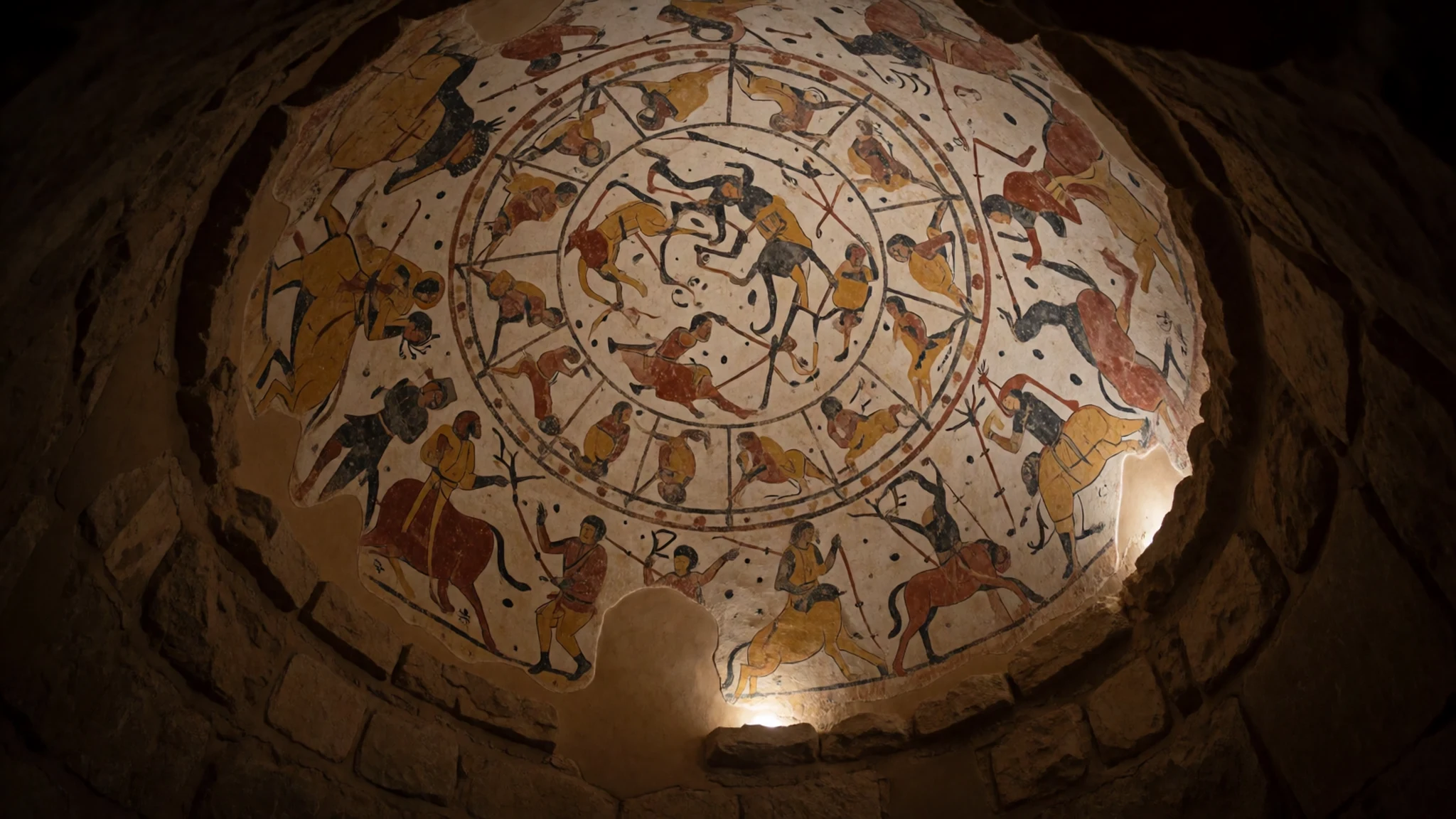
- Painted rulers and the prince — Audience hall and bath rooms
The painted rulers form one of the main groups of images in the building. Six kings are shown among the scenes, and a fresco is identified with the prince who commissioned the building, Walid ibn Yazid. The imagery favours leisure over warfare, a choice that suits a retreat rather than a fortress.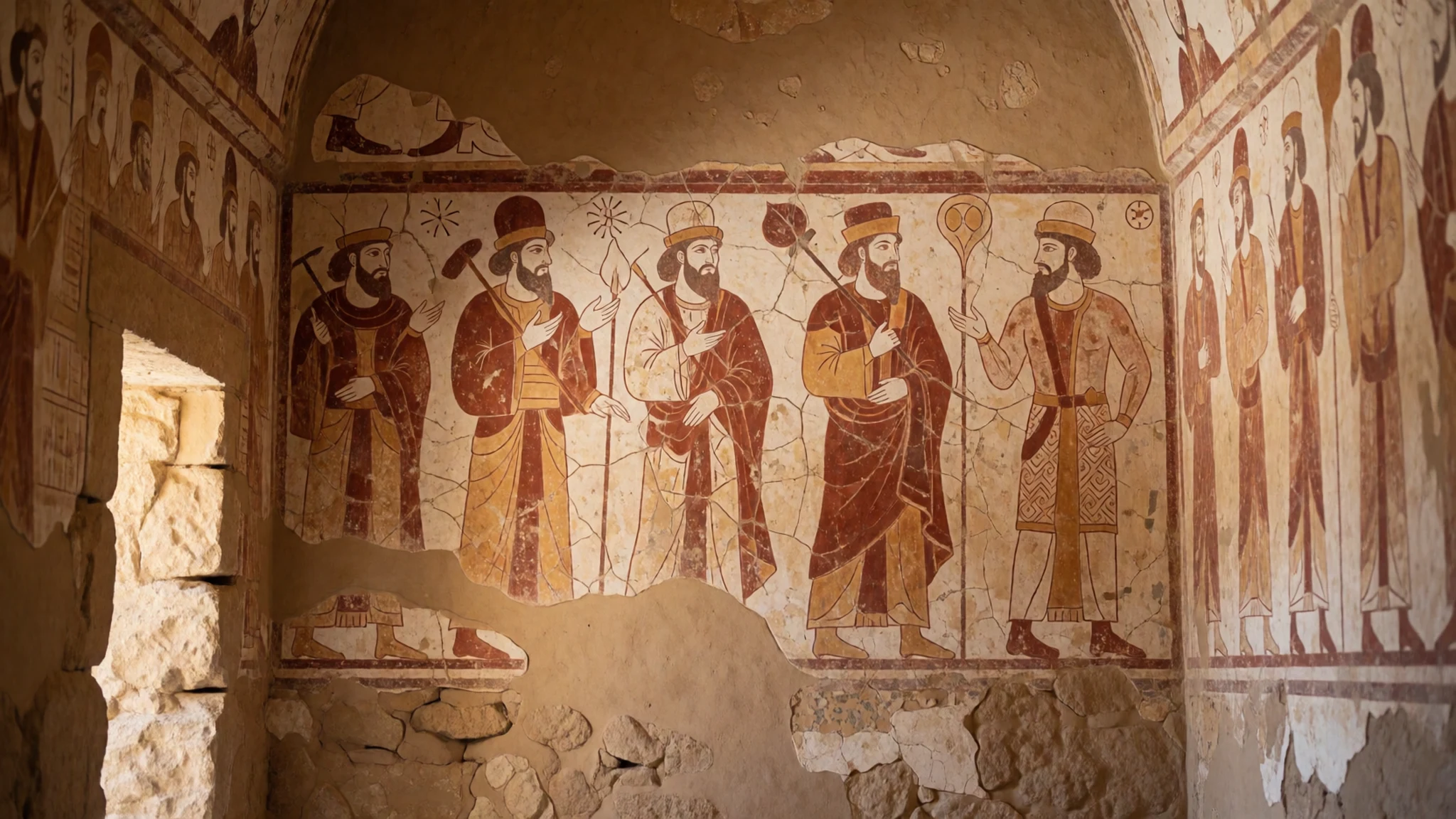
- The bathing woman fresco — Bathhouse
The bathing woman is among the figures that made the site famous. She is shown nude in the bath, and such imagery is unusual in the Islamic world, where depictions of people are not generally permitted. The bathhouse scenes sit alongside dancing and music, so the figure reads as one part of a larger picture of leisure.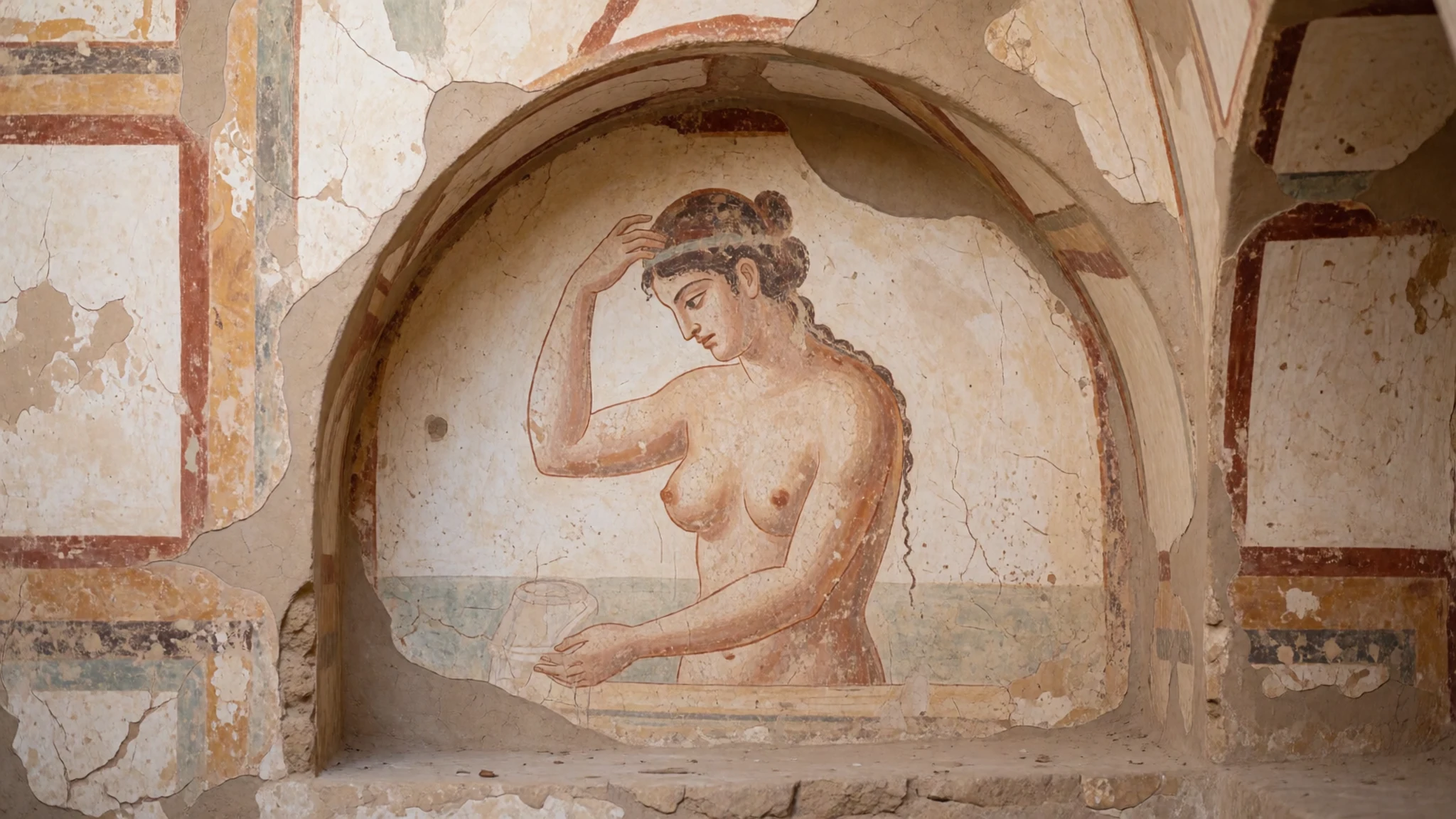
- Audience hall and foundations — Whole site, Highway 40 side
The surviving structure is only part of what once stood here. The foundations show a rectangular audience hall, hydraulic works and the bathhouse, laid out around the remains of a larger royal retreat. Walking the plan helps make sense of how the spaces fitted together, even though little of the outer complex remains above ground.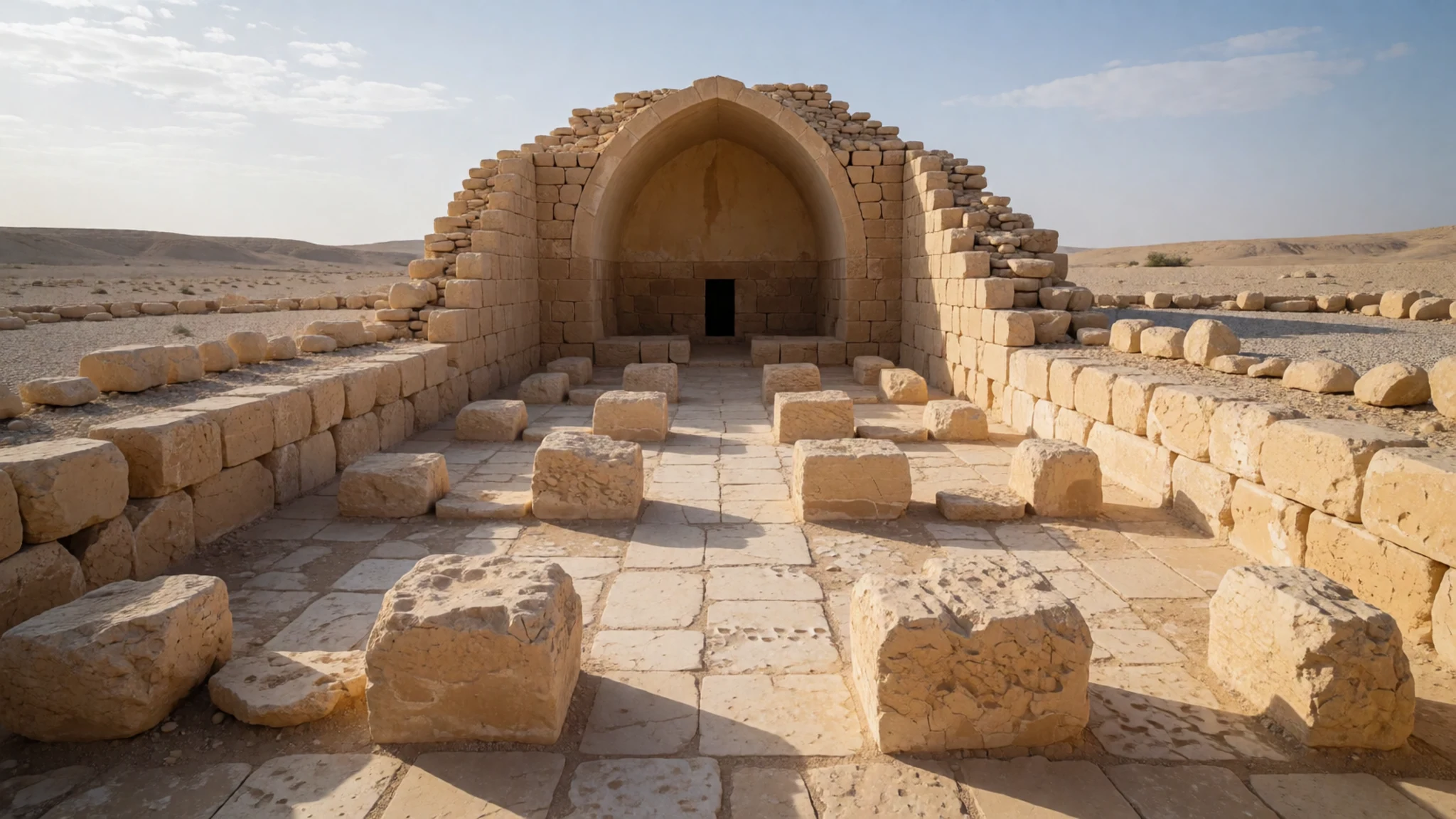
- Hunting and craft scenes — Bathhouse and audience hall ceilings
Hunting scenes and craftsmen are among the painted subjects spread across the walls and ceilings. They offer a view of everyday activity at the court's country retreat, a less formal side of the Umayyad world than the royal portraits. Their scale is modest, and they reward a slow walk around the room.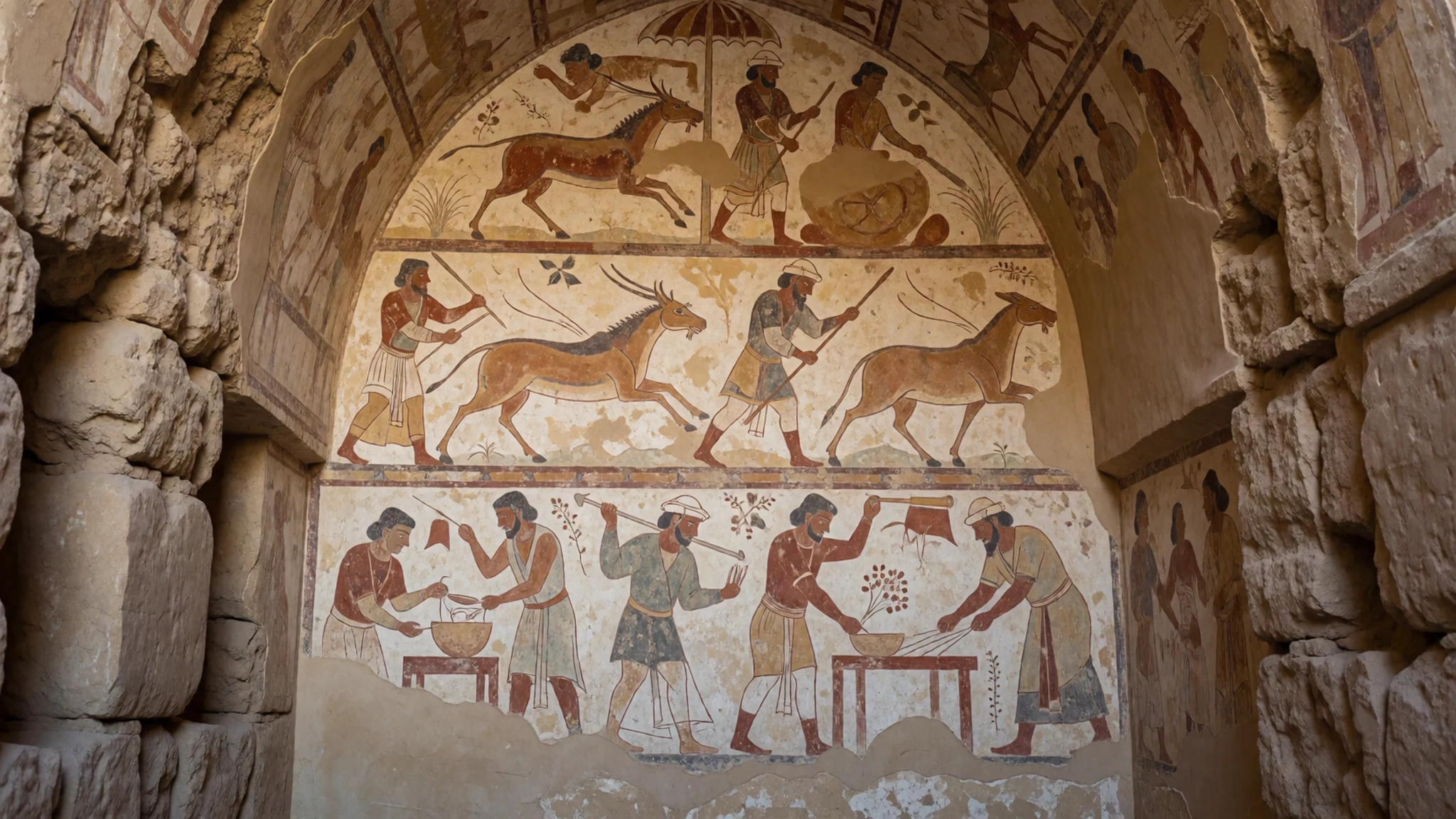
Culture
Qasr Amra is an early Islamic site, and its paintings are the main cultural matter here. Its walls and ceilings show people, animals and courtly activity, which is unusual in a tradition that generally avoids depicting people, so the figures are best approached as rare survivals rather than as decoration to be treated casually. The site has been the subject of long conservation work, starting with cleaning and a protective coating that later proved harmful, and a newer project supported by international partners is still active. Scaffolding, covers and cordoned areas can appear during this work, and they are not a sign that the site is closed. Jordanian hospitality is warm in the towns along the highway, and a polite greeting in Arabic is welcome with staff and drivers. Dress modestly, since this is a country where Islam shapes everyday life and the site is open to strong sun. Do not touch the frescoes or lean on the walls, and keep to marked paths during conservation work.
What to wear
Traditional dress in the desert east of Amman grew out of tent life and ordinary work. Men wore the long cotton or wool thobe, often with a headcloth called the keffiyeh, held in place by a black cord known as the agal. Bedouin families wove black cloth from goat hair, used for tents and sometimes for clothing, and women in many communities wore loose dresses decorated with cross-stitch embroidery in bright thread, known as tatreez. The colours and motifs of that embroidery varied by village and family. Today most people in towns and along the highway wear Western clothes for work and school, though the thobe and keffiyeh remain everyday wear for many men, especially older men, and for formal occasions. Women's dress ranges widely, from fashionable Western styles to headscarves and long sleeves. Visitors to Qasr Amra should dress for sun and dust: loose cotton or linen in light colours, sleeves and hems that cover the shoulders and knees, and a hat with a good brim. Closed shoes with grip suit the rough ground and gravel paths.
What to eat
- Mansaf — Family-style restaurants in Amman and in the towns along Highway 40
Jordan's national dish is lamb cooked in a sauce of dried, fermented yoghurt called jameed, then set over rice and flatbread on a shared tray and topped with toasted nuts. It is a dish for guests and celebrations.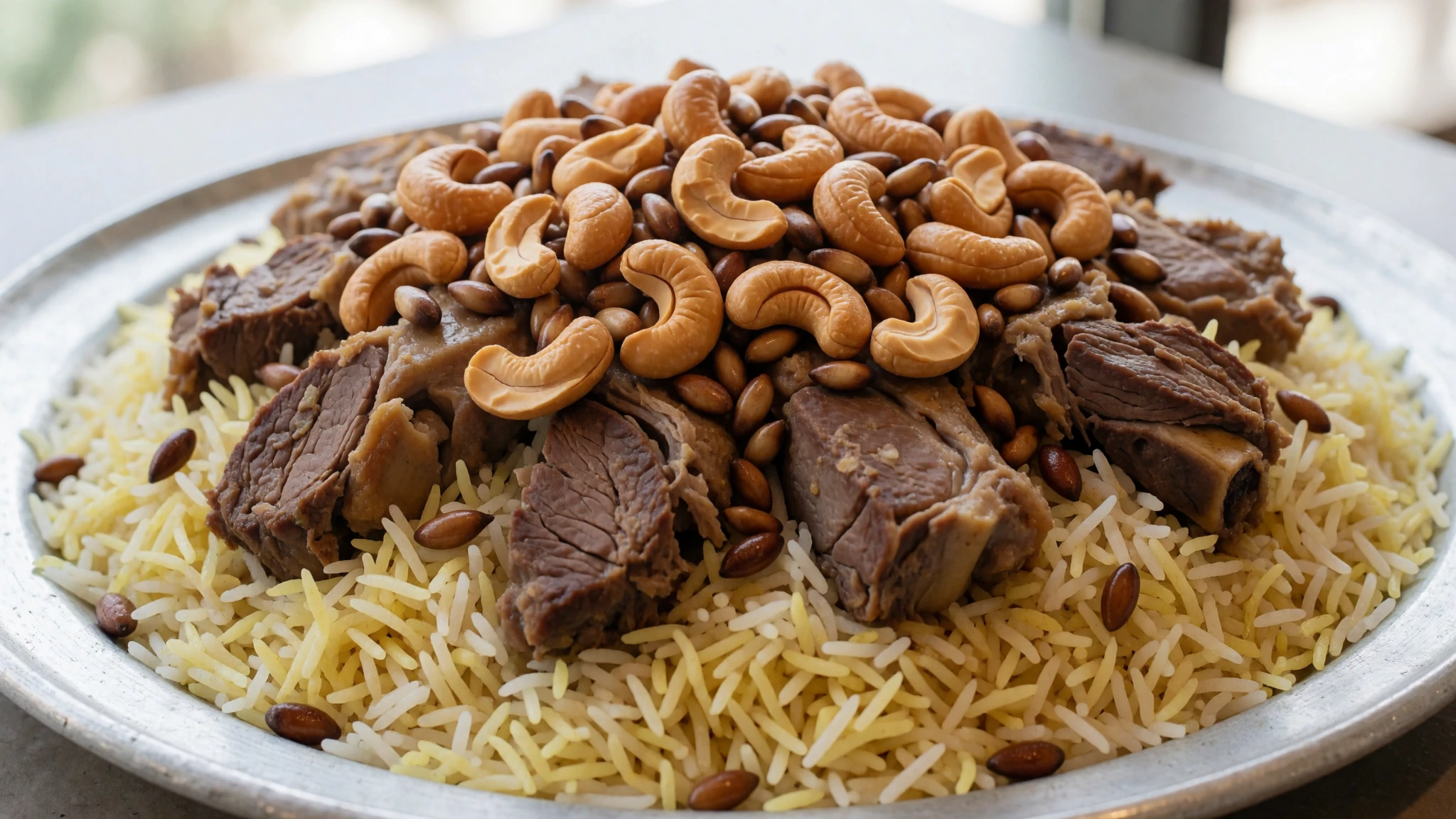
- Foul medames — Neighbourhood eateries in Amman, usually open in the morning
Foul medames, stewed fava beans dressed with oil, cumin and lemon, is a breakfast staple, eaten with bread and often with hummus and salad. It is filling and a good start before a long drive through the desert.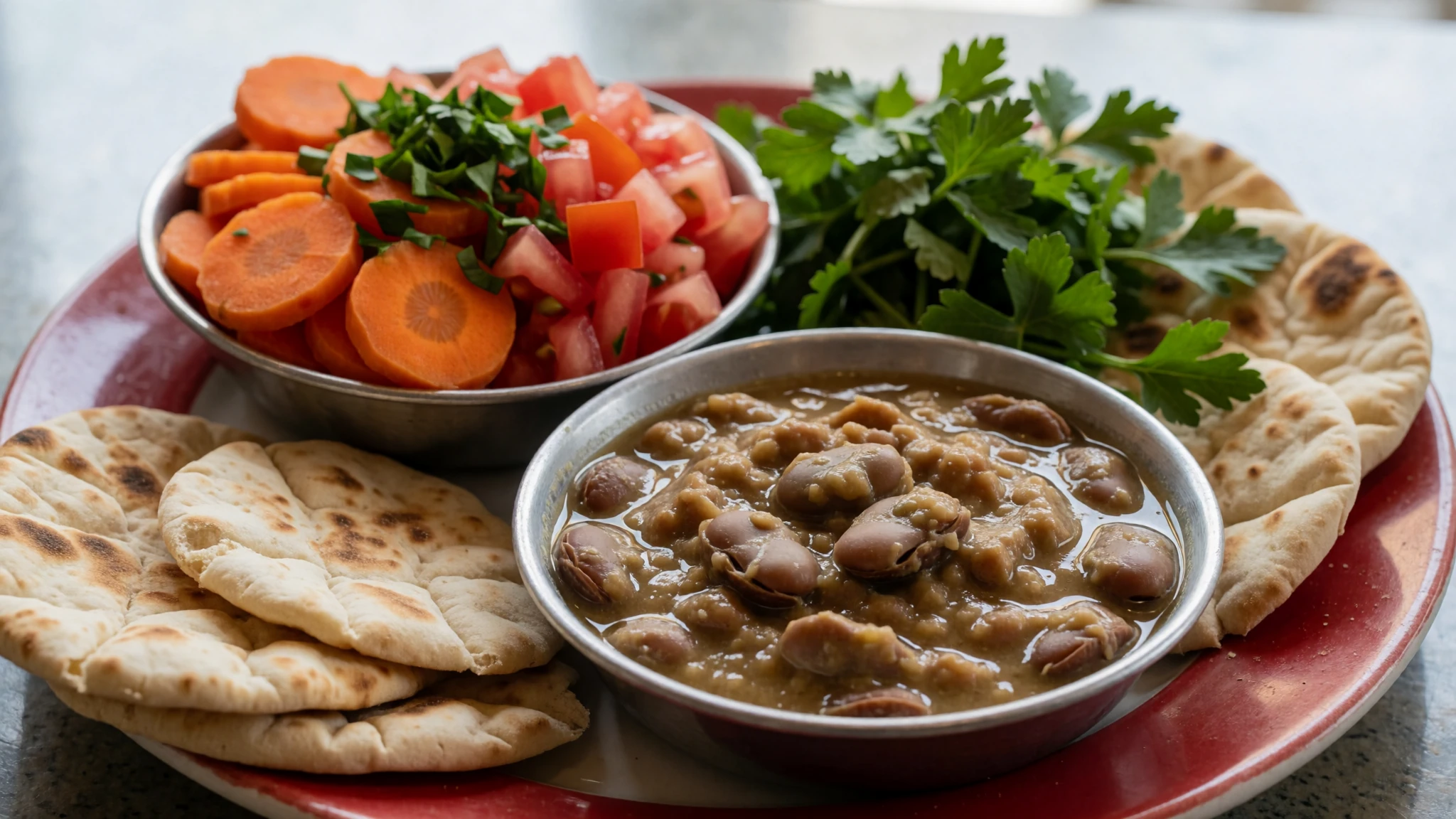
- Khubz — A town bakery on Highway 40 or in Al-Azraq, early in the morning
Fresh flatbread, baked in a domed clay or stone oven, is the bread of every meal. Bakeries in small towns tend to sell it warm in the morning, and it makes the best wrap for grilled meat or cheese. Ask for it hot.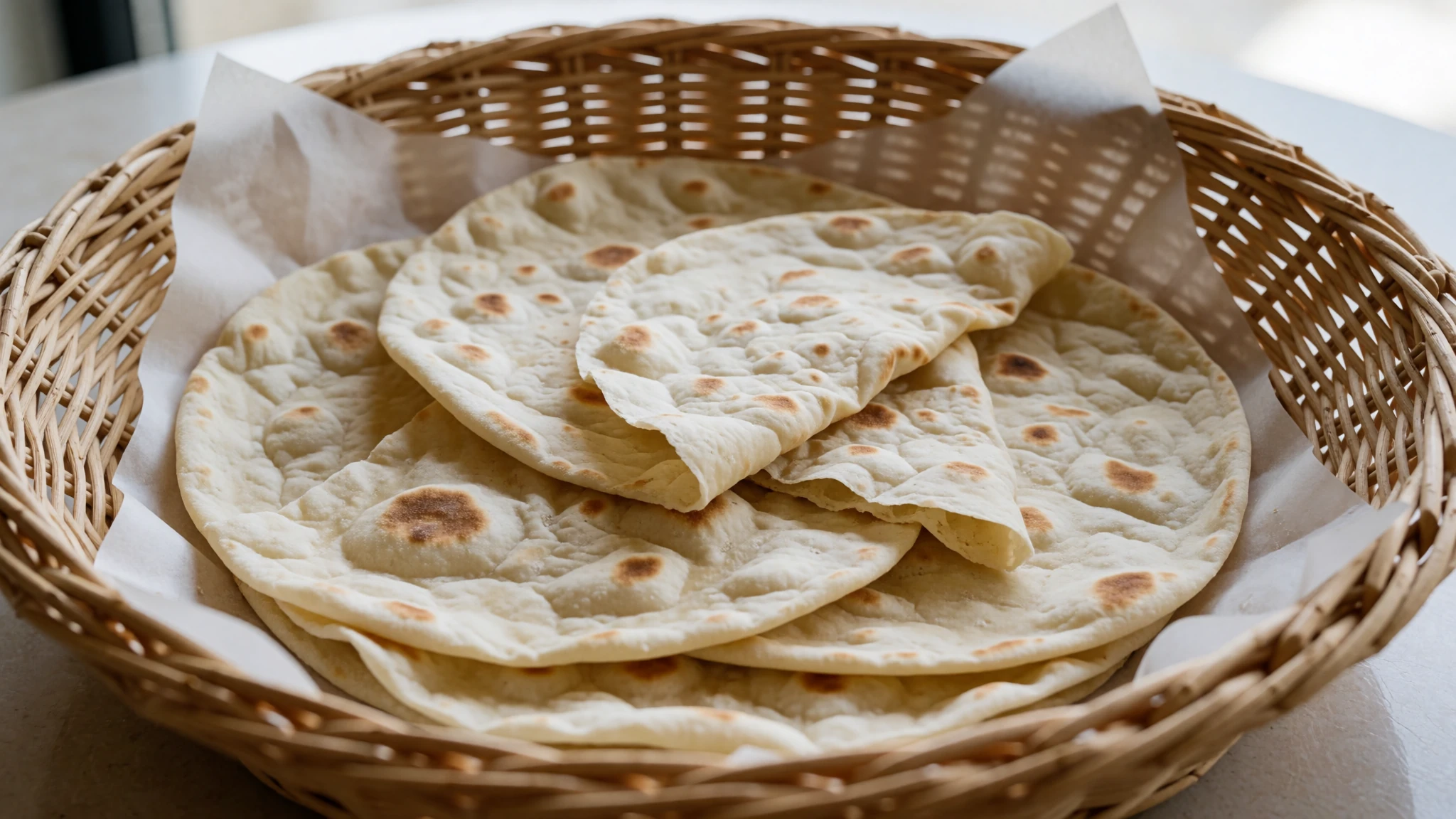
- Knafeh — Sweet shops and pastry counters in Amman's downtown and older quarters
A sweet made from thin shredded pastry or fine semolina, layered with soft cheese, baked golden and soaked in sugar syrup, often finished with crushed pistachios. It is served hot, and good ones come out of the oven as you order. - Arabic coffee — Roadside cafés on Highway 40 and downtown coffee houses in Amman
Light, cardamom-scented coffee poured from a long-spouted pot into small cups, served as a gesture of welcome. Only a small amount is poured, and it is polite to accept at least one cup before refusing.
Plan it
Best time. Late winter through spring and autumn are the most comfortable seasons for a desert site like this. Summer heat on open ground is hard going, and the cooler months also bring shorter opening hours.
How long. 1–2
Getting there. Fly into Amman, then drive or take an organised tour; public transport is scarce, so independent visitors need a car. The site sits on the north side of Highway 40, roughly 85 kilometres east of Amman.
Budget. mid
Tips
- Go early or late in the day, when the open ground is cooler
- If driving yourself, mark the site's GPS position in advance and check the distances on the route
- Bring water and sun protection for the whole visit
- Check the official site for current hours, which are shorter from October to April
- Carry some cash and check the official site about payment methods before you go
- Plan a stop at Al-Azraq on the way back
Etiquette
- Keep to marked paths and do not touch the frescoes
- Ask before photographing staff or local people
- Dress modestly for the sun and for a country where Islam shapes daily life
Nearby
Sources
- Wikidata Q499517 (CC0)
- Wikipedia: Qusayr 'Amra (CC BY-SA 4.0)
- Wikivoyage: Qasr Amra (CC BY-SA 4.0)
- Photo 01-qusayr-amra.jpg, Daniel Case (CC BY 3.0)
- Photo 02-quseir-amra-world-heritage.jpg, Harry Van den Bulck (CC BY-SA 4.0)
- Photo 03-umayyad-fresco-of-prince-future-caliph-walid-bin-yazid.jpg, Taha b. Wasiq b. Hussain (CC BY-SA 4.0)
- Photo 04-quseir-amra-fresque.jpg, C. Vibert-Guigue (Public domain)
- Photo 05-quseir-amra-zodiac.jpg, Bontenbal (Public domain)
- Photo 06-qasr-amra-interior-02.jpg, High Contrast (CC BY 3.0 de)
- Photo 07-jordan-qusair-amra-2013-0506.jpg, Dosseman (CC BY-SA 4.0)
- Photo 08-qasr-amra-1.jpg, David Bjorgen (CC BY-SA 1.0)


