Shobak Castle
Shobak Castle, Jordan
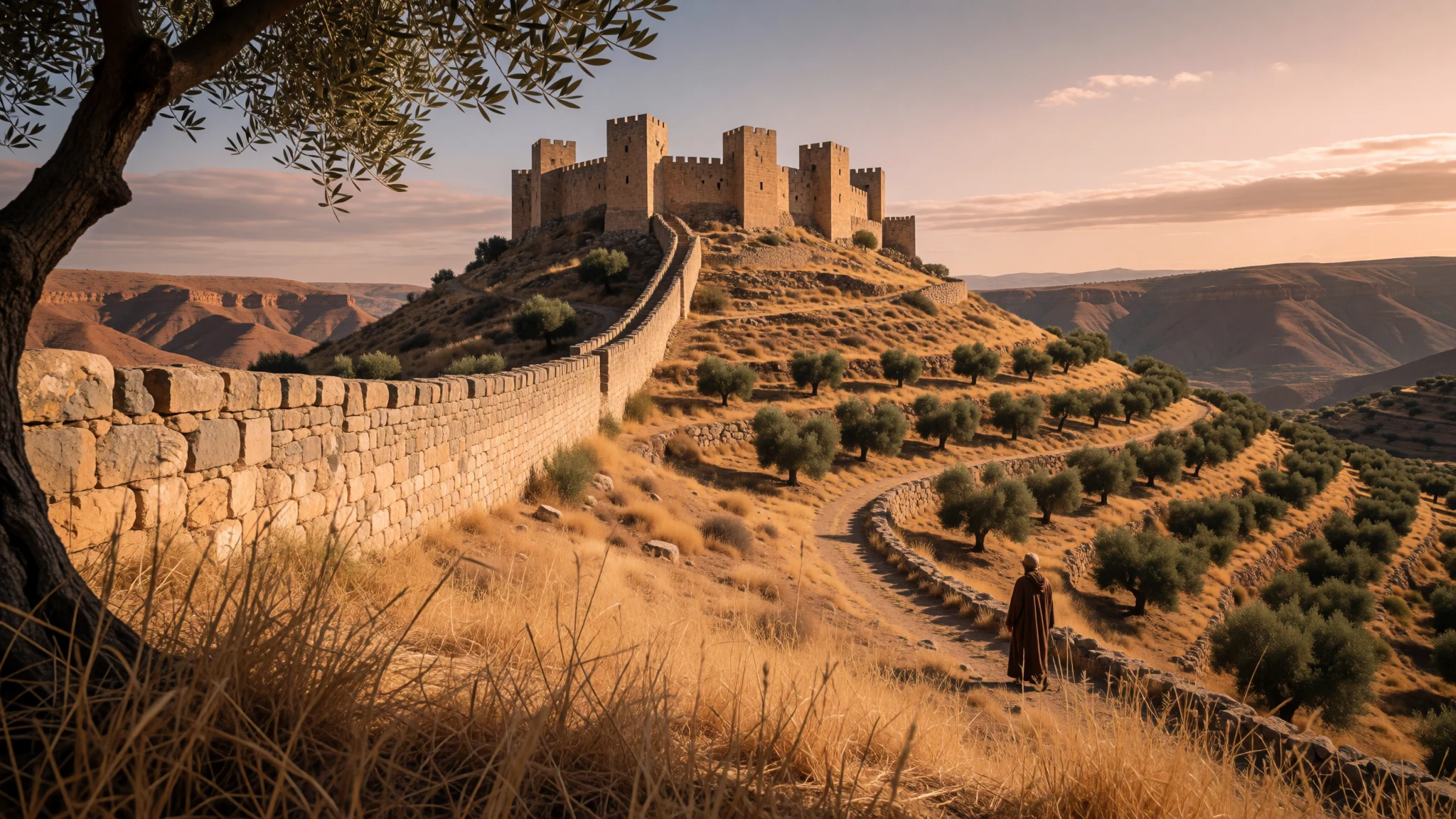
Shobak Castle is a Crusader fortress on a lonely hilltop in southern Jordan, with a hidden water tunnel and wide orchard views.
The place
Shobak Castle, known to the Crusaders as Montréal and in Arabic as Qal'at ash-Shawbak (قلعة الشوبك), stands on a steep, rounded hill in southern Jordan, beside the modern town of Shoubak. The ridge belongs to the mountains of Edom, which drop westwards towards the Arabah Valley, the long rift running between the Dead Sea and the Red Sea. From the ruins the ground falls away into terraces of fruit orchards, and on a clear day the view across the valley explains why anyone wanted this spot. The castle began as a Crusader foundation that later Muslim rulers, the Mamluks above all, repaired and extended, so the stonework reads as layers rather than a single design. Much of it is roofless and rough, with walls hugging the slope, stairways cut into the rock and dark passages leading inwards. It is far quieter than Petra, which lies to the south and often shares an itinerary, and most visitors arrive by car or taxi rather than on a coach tour. Expect an exposed hilltop: sun and wind in equal measure, little shade, and uneven steps that turn slippery after rain. Shoubak town below is small and practical, useful for water, bread and a hot tea but not a destination in itself. The castle rewards a slow circuit more than a quick look, and the best moments are the odd corners where a stair drops into the hill or a window frames the orchards below.
Its story
Shobak Castle began in 1115 as a Crusader outpost, raised by Baldwin I of Jerusalem during a push south towards the Red Sea. The Franks called it Mons Regalis, the King's Mountain, a nod to the king's own part in building it. The choice of hill was practical. It overlooked the road linking Egypt and Syria, so a garrison could tax merchants and also pilgrims bound for Mecca and Medina, while the surrounding upland was fertile enough to help feed it. Water was the weak point, as at many Crusader sites. The builders answered by cutting a passage down inside the hill to spring-fed cisterns, so defenders could fetch water without stepping into an enemy's sight. In time the region's administrative centre shifted north to Kerak, and Montréal became part of the wider lordship of Oultrejordain. Its best-known lord, Raynald of Châtillon, used it to raid caravans and, so the story goes, to assemble ships that were carried overland to the Red Sea. That provoked Saladin, who besieged the castle after taking Jerusalem. The hill ruled out siege engines, so the contest became a long wait, and the accounts of hunger inside are grim. The castle finally fell to him, and he handed it to his brother al-'Adil. The Mamluks later rebuilt and enlarged it, which is why Muslim-period work now stands beside Crusader masonry.
What to see
- The approach and visitor centre — Shoubak, below the castle
Shobak Castle is reached by a short climb from the visitor centre, which gives a first sense of how the hill isolates the fortress from the plateau around it. Pause on the way up and look back: the lines of the walls follow the contours, which shows how much the builders relied on the slope.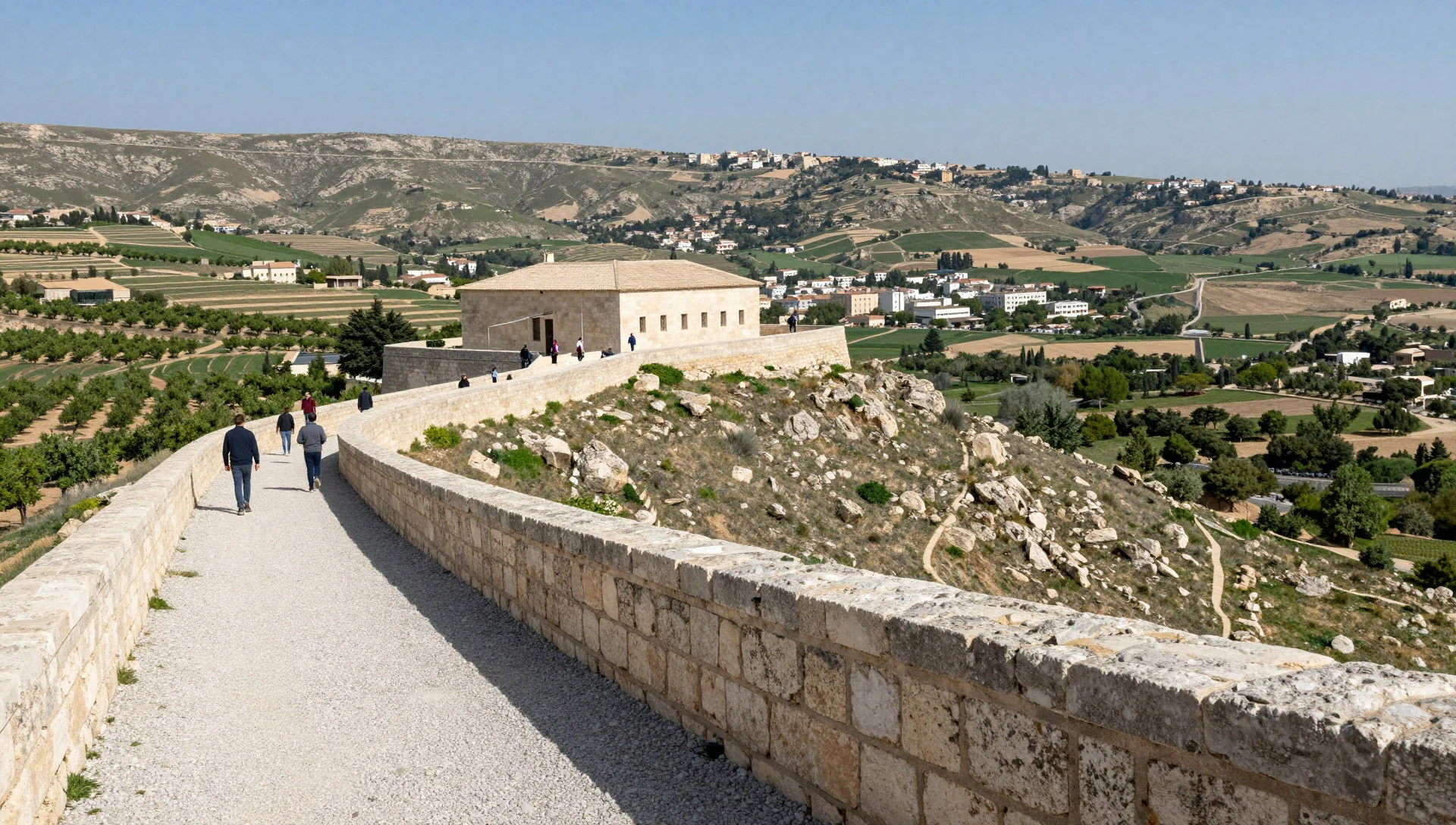
- The outer walls and gateways — Castle summit
The circuit of walls and towers is where Crusader and Mamluk work meet, with later repairs set against earlier masonry. Walk the perimeter slowly and compare the stone courses. The walls are broken in places, so the ruin feels more like an excavated hillside than a tidy monument.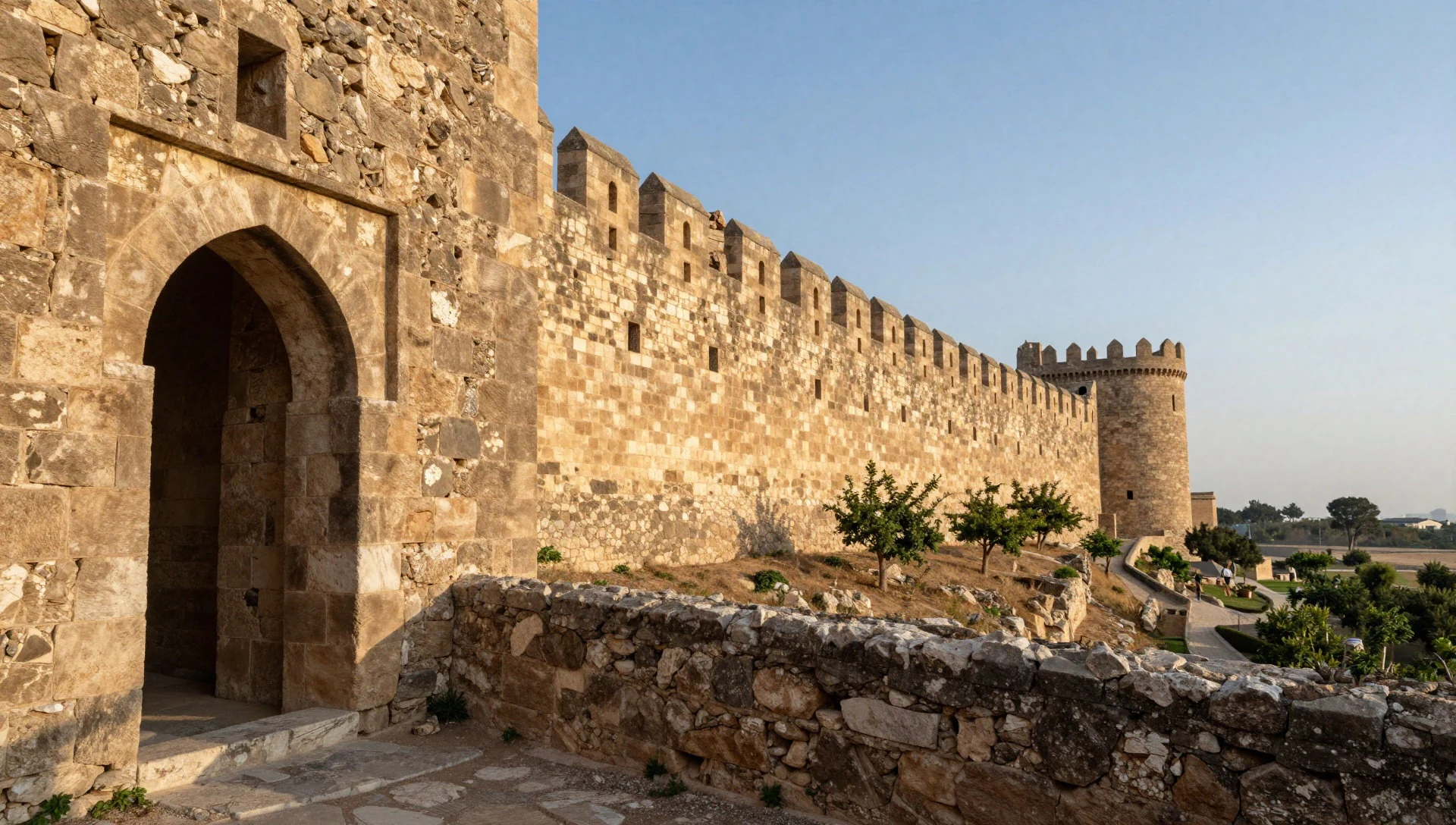
- The water tunnel and cisterns — Inside the hill, castle slope
The defenders' answer to thirst was a passage cut down through the hill to spring-fed cisterns. The route is dark and the steps are uneven, so a phone torch is useful. It is the most memorable part of the visit and gives a clear picture of life under siege.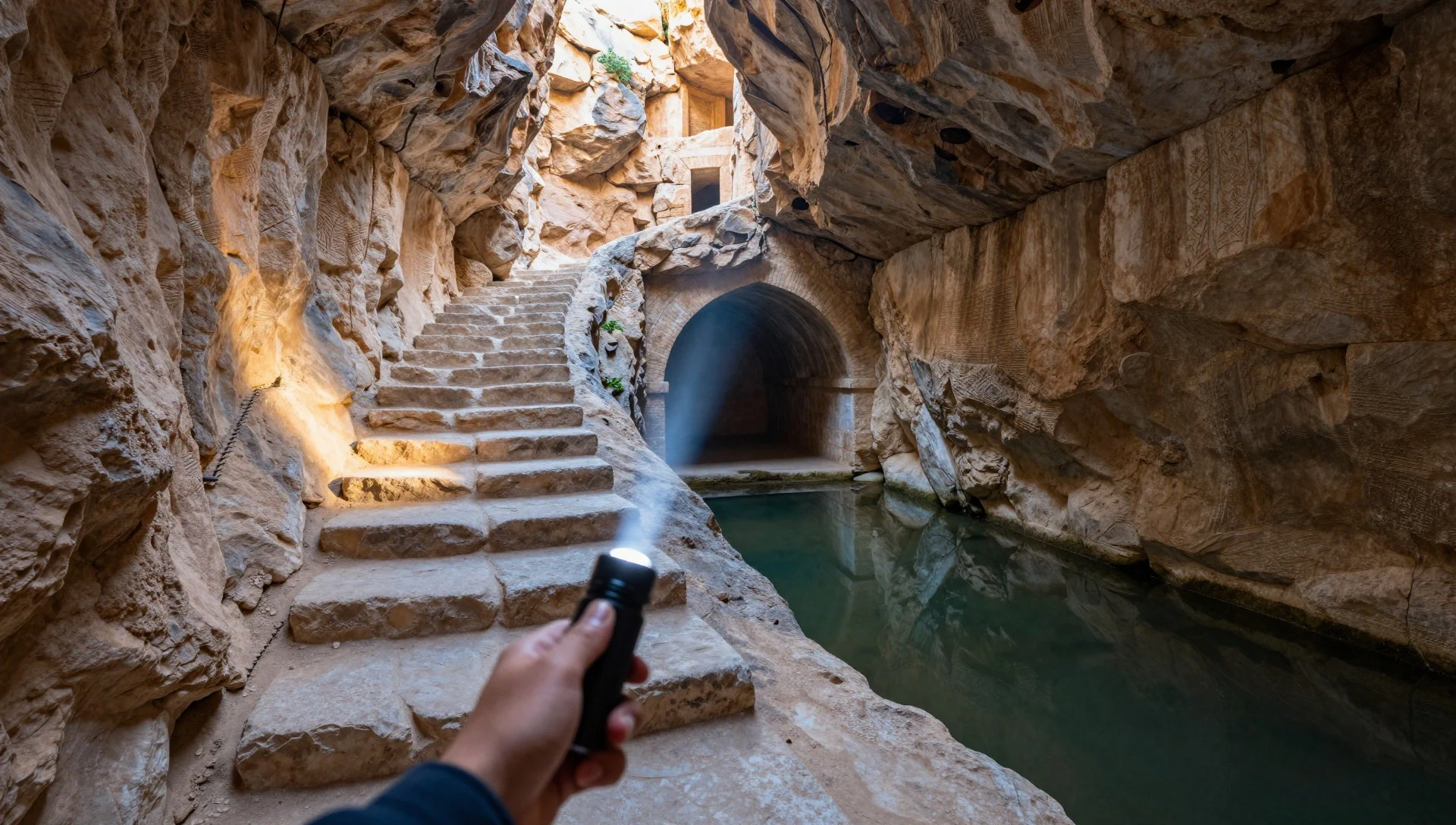
- The ruined halls and stairways — Upper castle
Higher up, vaulted rooms, stairs cut into rock and empty window openings make up the castle's interior. Most of it is roofless, and the useful skill here is imagining the layout from the footprints. Look out for Arabic inscriptions that mark the later building phases.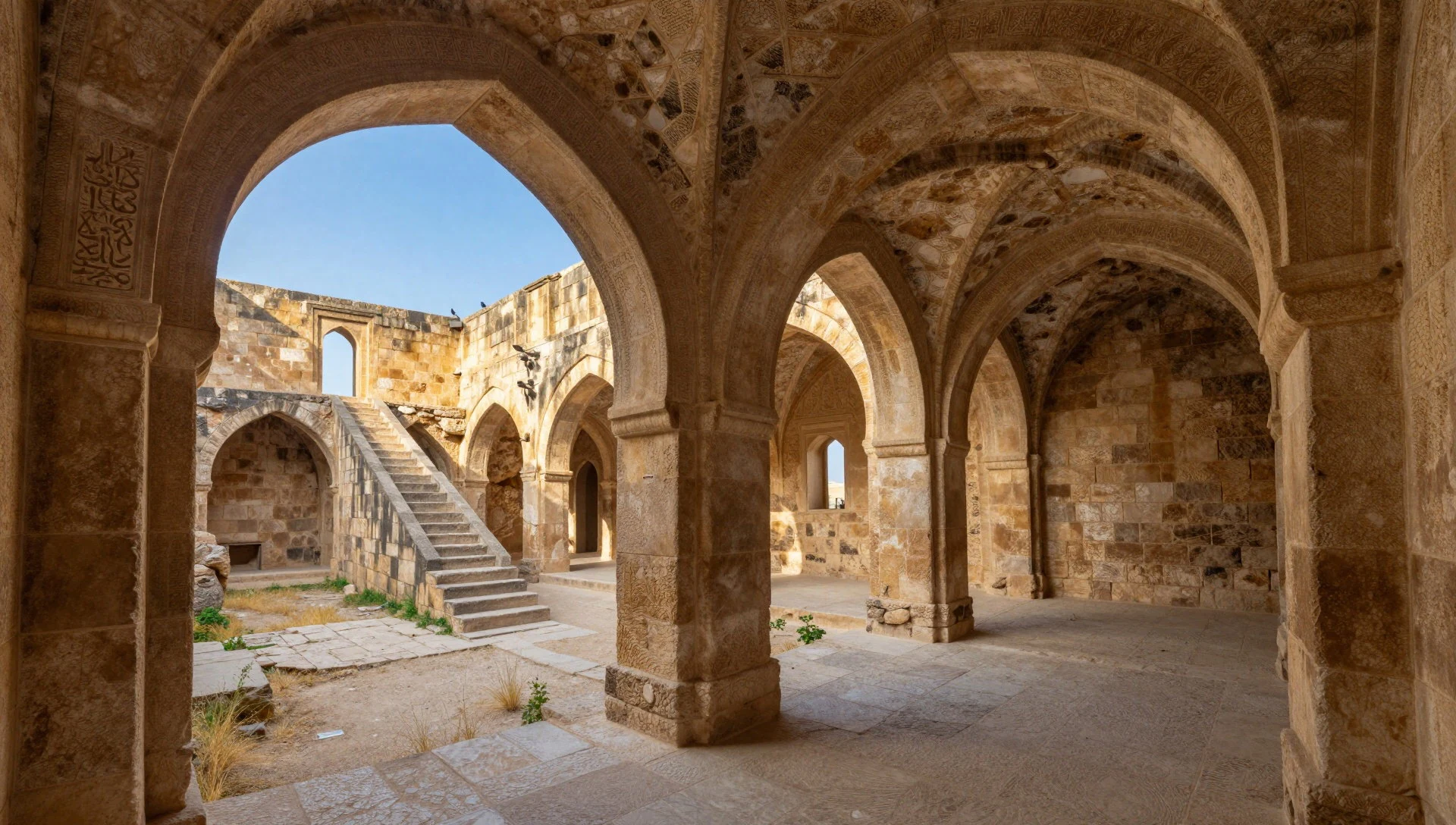
- The orchard view — West-facing walls
From the upper walls the land falls away to fruit orchards, with the Arabah Valley beyond. The outlook makes the castle's purpose obvious: it watched the route between Egypt and Syria. Late afternoon light is gentler on the stone, though the wind on the summit can be sharp.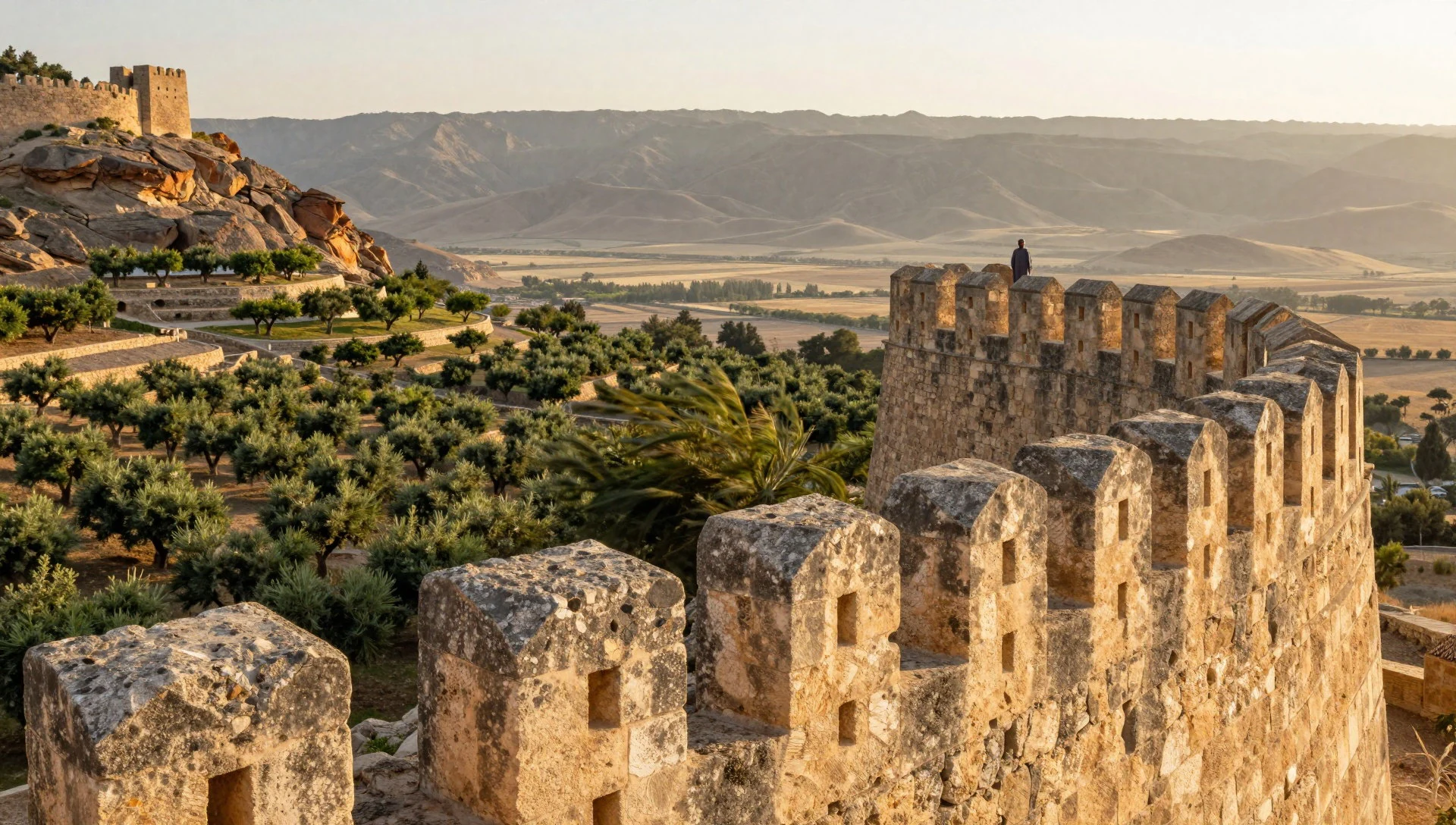
Culture
Shobak Castle sits in a part of southern Jordan where Bedouin tradition and settled town life overlap. Families around Shoubak have long worked the orchards and kept livestock on the upland, and hospitality is central to local manners: tea or coffee offered to a guest is a real gesture, not a sales tactic. The castle itself carries two histories. For European visitors it is a Crusader story, for people in the region it is also part of the Ayyubid and Mamluk past, when the fortress helped guard the route to the holy cities. Arabic is the everyday language, and a few words of greeting, such as marhaba for hello and shukran for thank you, are warmly received. Islam shapes the rhythm of the week, with Friday the main day of prayer and quieter mornings, and during Ramadan eating and drinking openly in the town is discouraged during daylight. Shops and eateries may keep different hours then, so plan your meals accordingly. Jordanians are generally welcoming to foreign visitors, and conversation about the castle, the weather or football is an easy way to start. Photograph the ruins freely, but ask before pointing a camera at local people, especially women, and be a little careful about drones around the site.
What to wear
Around Shobak Castle, traditional dress draws on Bedouin and village styles found across southern Jordan. Men wear the thobe, a long cotton or wool robe, with the keffiyeh or shemagh, the red-and-white or black-and-white checked headcloth held by a black cord, and these are most visible at weddings, festivals and among older men. Women's traditional dresses are made of cotton or heavier cloth and carry cross-stitch embroidery in red, black and other colours, with patterns that traditionally varied by village. Today, most people in Shoubak wear everyday clothes much like elsewhere in Jordan: jeans or trousers and shirts for men, and for many women long coats or loose dresses with a headscarf, with some in abayas. Younger people mix in trainers and sportswear. For a visitor, the castle calls for practical clothing first. Wear sturdy shoes with grip, since the stairs and slopes are uneven and sometimes slippery, and bring a hat and sunglasses for the exposed summit. The upland is cooler than the valley floor, so in winter bring layers and a windproof jacket. Modest dress is appreciated in town: shoulders and knees covered for both men and women, and a light scarf is handy for women if you visit a mosque or wish to be extra respectful.
What to eat
- Mansaf — Family-run restaurants in Shoubak town
Lamb cooked in a tangy dried-yoghurt sauce and served over rice, often with pine nuts or almonds. It is the dish of celebrations in Jordan, so it appears at weddings and family gatherings. Ask at family-run restaurants in Shoubak town.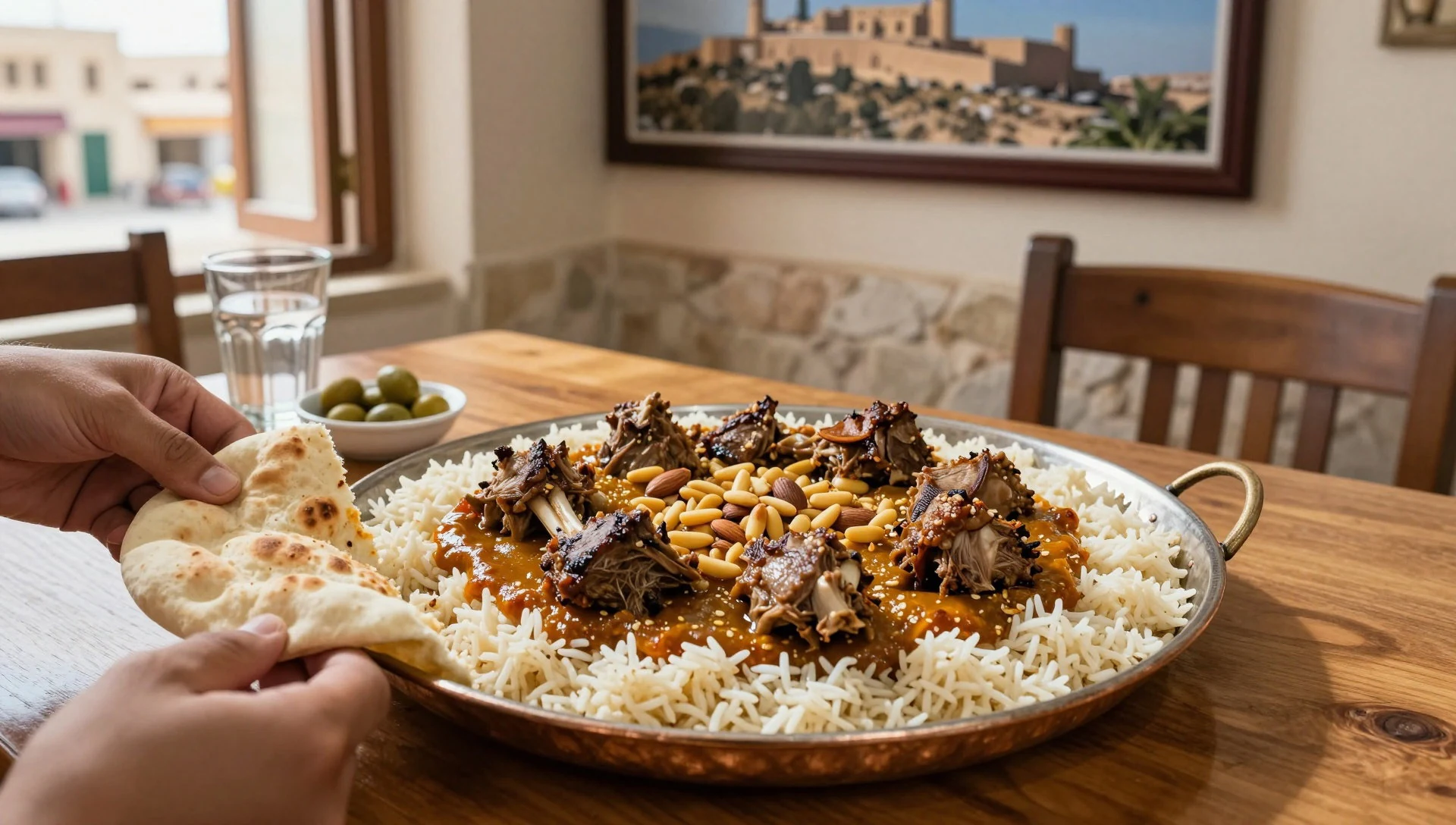
- Za'atar manakish — Local bakeries in Shoubak
Flatbread baked with a topping of thyme-based za'atar and olive oil, eaten warm in the morning. It is simple, cheap and good fuel before climbing the castle. Look for the small bakeries that open early.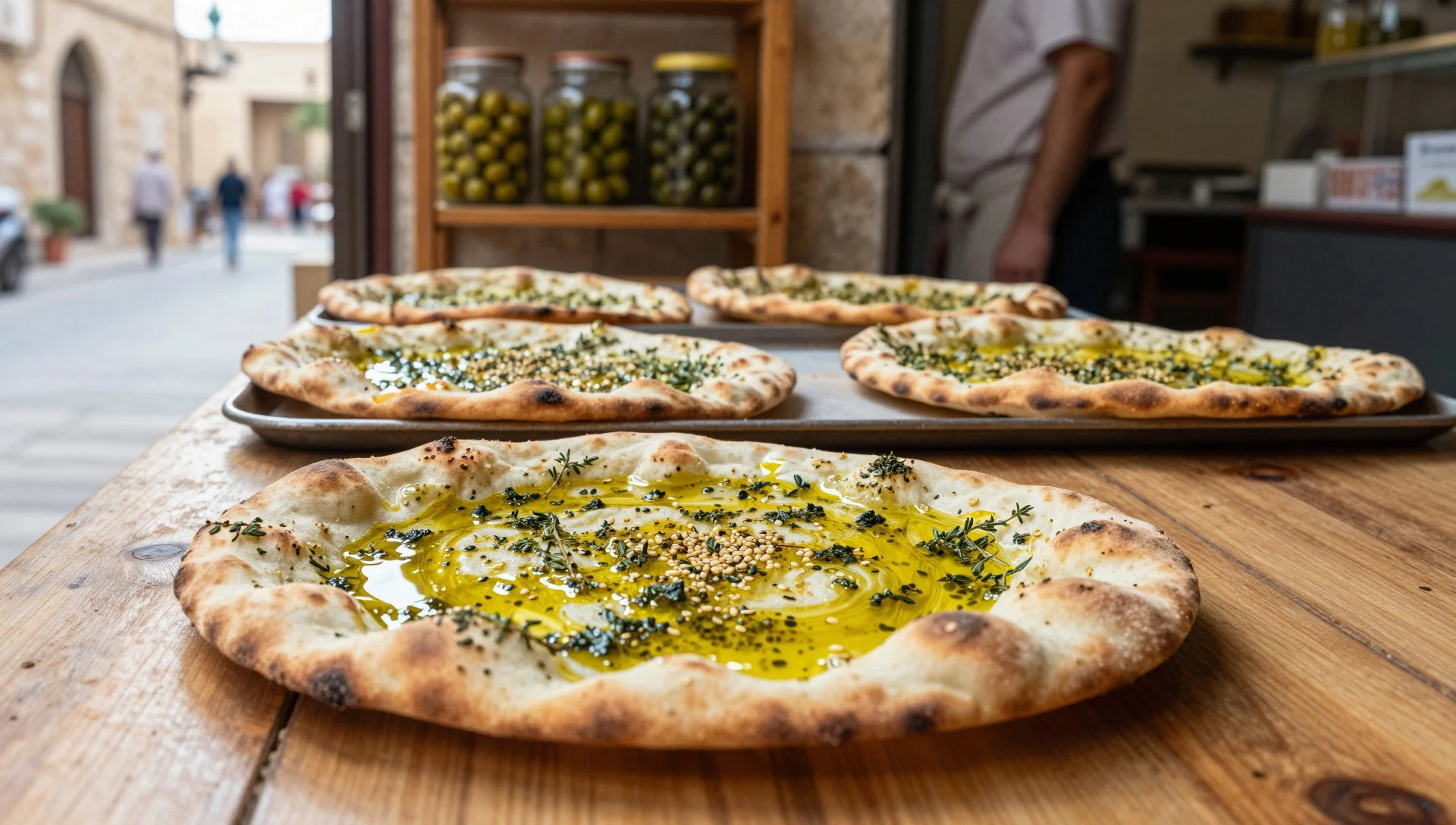
- Falafel, hummus and foul — Small breakfast eateries on the main street
A classic Jordanian breakfast of fried chickpea balls, creamy hummus and slow-cooked fava beans with olive oil and lemon, scooped up with flatbread. Several small eateries along the main street serve it fresh in the morning. - Bedouin tea — Roadside tea stalls and shops around the castle
Sweet black tea, often scented with sage or mint, served in small glasses. Accepting a cup is part of the local welcome. It is also welcome on a windy hilltop afternoon after the castle visit. - Orchard fruit — Roadside stalls near the orchards below the castle
The slopes around Shoubak are planted with fruit trees, and in season roadside sellers offer fresh produce. Buy what is ripe, wash it, and eat it as a snack on the way to or from the castle.
Plan it
Best time. November to March, when days are cooler, suit walking the exposed hilltop best, though nights often fall below freezing. Summer is hot and sunny with little shade, and winter can be cold, windy and wet on the upland.
How long. 1
Getting there. Fly to Aqaba or Amman, then continue by road. Shoubak lies on the route between Amman and Petra, so a car or taxi is easiest, though local buses run along the highway towns. The last stretch is a short drive or walk up from town to the castle gate.
Budget. low
Tips
- Check opening hours and ticket arrangements on the official site or locally before you go, as they can change
- Bring water, sun protection and a torch for the water tunnel
- Wear shoes with good grip, as the steps are uneven and slippery after rain
- Visit in the morning for softer light and fewer people, and combine with Petra by road if you have time
- Carry some cash for small purchases in Shoubak, as not every stall takes cards
Etiquette
- Dress modestly in town, with shoulders and knees covered
- Ask before photographing people, especially women
- Stay on marked paths and avoid climbing on fragile walls
Nearby
Sources
- Wikidata Q1362749 (CC0)
- Wikipedia, Montreal (castle), rev 1374429019 (CC BY-SA 4.0)
- Montreal Castle Visitor center, Bernard Gagnon (CC BY-SA 1.0)
- Montreal Castle 02, Bernard Gagnon (CC BY-SA 1.0)
- Shobak (Montréal) Castle, Jstplace (Public domain)
- Shobak Castle (17), xorge (CC BY-SA 2.0)
- Shobak Castle (18), xorge (CC BY-SA 2.0)
- Shobak Castle (26), xorge (CC BY-SA 2.0)
- Shobak Castle (31), xorge (CC BY-SA 2.0)
- Shobak Castle (39), xorge (CC BY-SA 2.0)
- Wikivoyage (CC BY-SA 4.0)


