Jerash
Jerash, Jordan
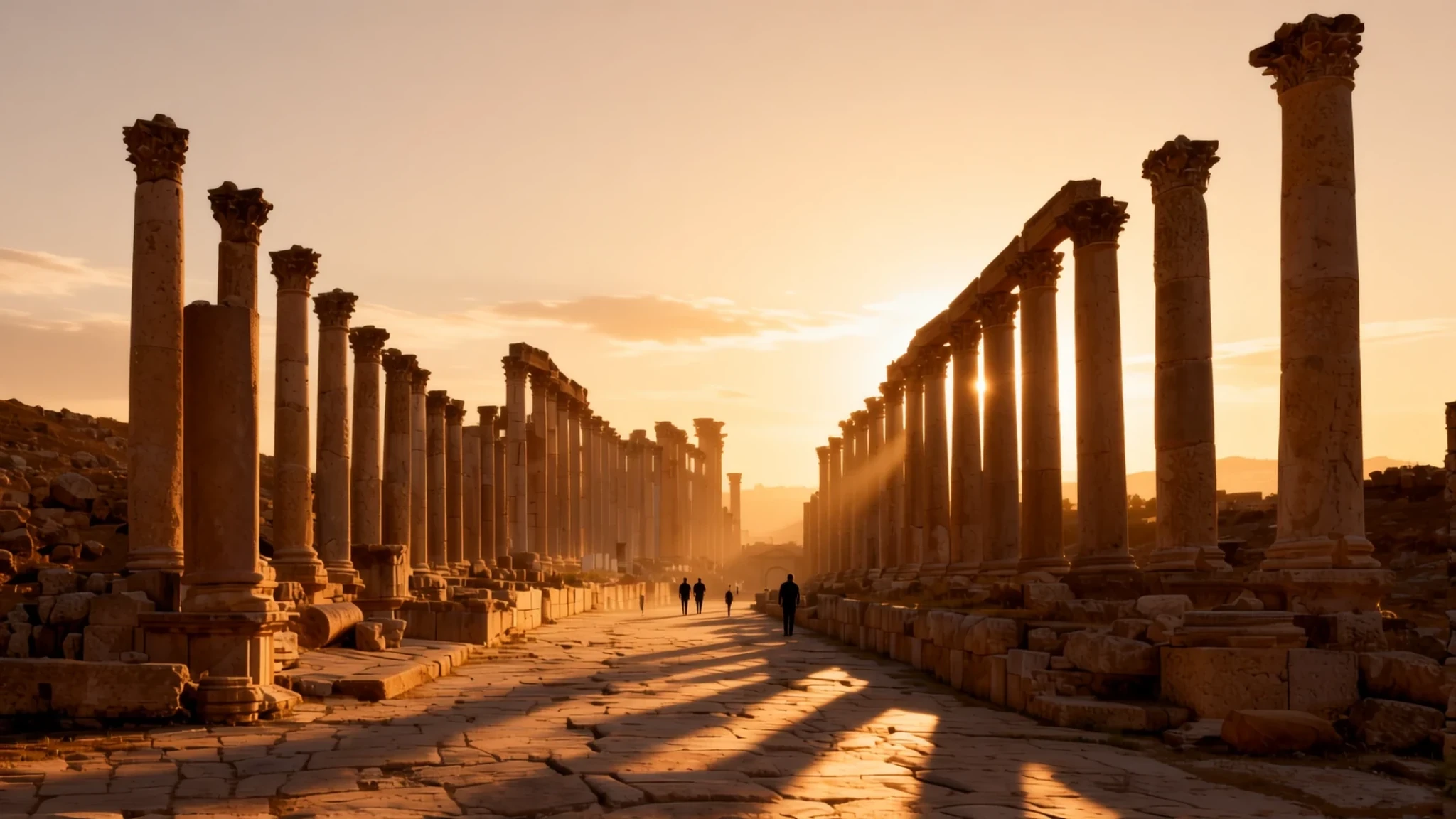
Jerash is a ruined Roman and Byzantine city of colonnades and plazas, an easy day trip north of Amman.
The place
Jerash sits in the hills of northern Jordan, about 48 km north of Amman, and is the administrative centre of its governorate. The modern town has around 50,000 people, with the 2015 count at 50,745, and stands at roughly 600 metres above sea level. Most visitors come for the ancient city beside it, known in antiquity as Gerasa, which is one of the most complete provincial Roman towns in the region. Its main street, the Cardo, runs between colonnades, and the wide Oval Plaza opens at its head. Temples, churches, a theatre, fountains and a hippodrome line the route, so several centuries of building can be seen in a single morning.
The site is easier to enjoy in the cooler months, and the paved route is long enough that a full visit fills most of a morning. Stone columns still stand in long rows, some with capitals intact, others fallen into drums along the verges. Several churches of the early Christian period were built into older temple fabric, and their changing plans make the town a useful place to study how Christian buildings took shape. The modern town sits right alongside the ruins, with houses and shops climbing the hillside and the road threading between them. The atmosphere is busy and lived in rather than sealed under glass.
Its story
Jerash has a history that runs far back before the Roman city most people see today. Archaeologists working at the site have uncovered human skulls from the Neolithic period, around 7500 BC, a rare find, since only a handful of sites worldwide hold comparable remains. Evidence of settlement from the Bronze Age has also turned up in the wider region.
The city's classical identity dates to the Hellenistic period, when it was known as Gerasa and was also called Antioch on the Golden River. Greek inscriptions from the city credit Alexander the Great and his general Perdiccas with its founding, and say that aged Macedonian soldiers were settled there in 331 BC during Alexander's march east through Syria. Gerasa later became one of the Decapolis, a loose group of cities with shared Greek culture.
Under Rome the city flourished. A triumphal arch was raised in 129 AD to mark the emperor Hadrian's visit, and it was planned as a new southern gate. Early Christian communities built churches here, some on the foundations of earlier temples, and the city remained prosperous into the Byzantine era.
The prosperity did not last. In the mid-eighth century a large earthquake, the Galilee earthquake, destroyed much of the city, and later tremors added to the damage. In 1120 a garrison sent by the ruler of Damascus fortified a spot among the ruins, but in 1121 Baldwin II of Jerusalem took it and destroyed it. Afterwards the site lay largely buried until excavation began in the twentieth century.
What to see
- Oval Plaza — Main ruins, southern entrance
The Oval Plaza is an unusual wide, asymmetrical space at the start of the Cardo, the colonnaded main street. Built in the 1st century AD, it was laid out as a gathering place where the town's life came together. Its ring of columns is still largely standing, and the central area is a good place to get your bearings before heading north. It is best seen early in the day, before the coach groups arrive.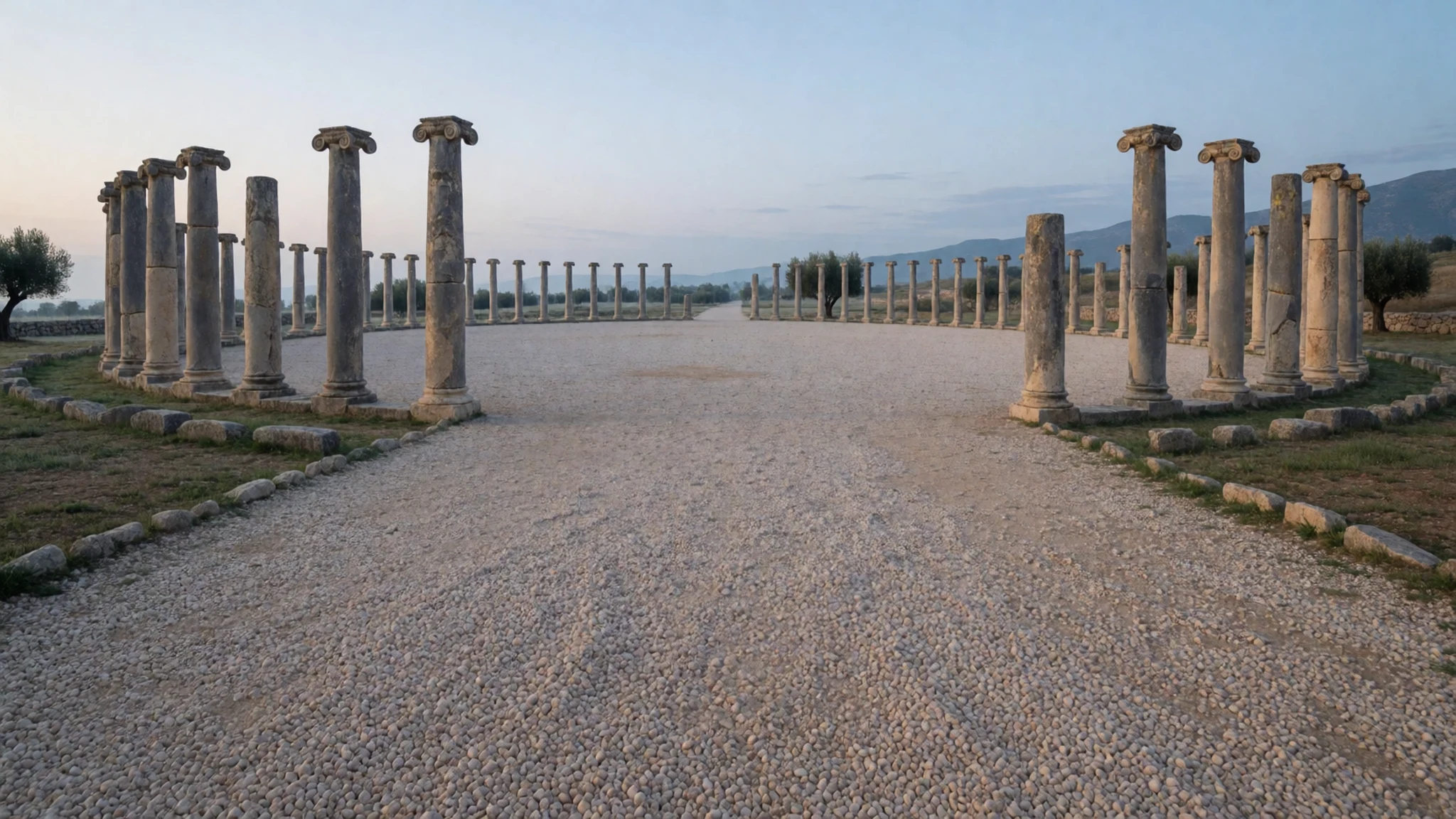
- Hadrian's Arch — Southern edge of the ruins
Hadrian's Arch was built in 129 AD to mark the emperor's visit. It was intended to become the new southern gate of the city, so it stands as a monument to the ambitions of a Roman provincial town. Its carved stone is the kind of detail that rewards a closer look, and it photographs well from the road below in the late afternoon light.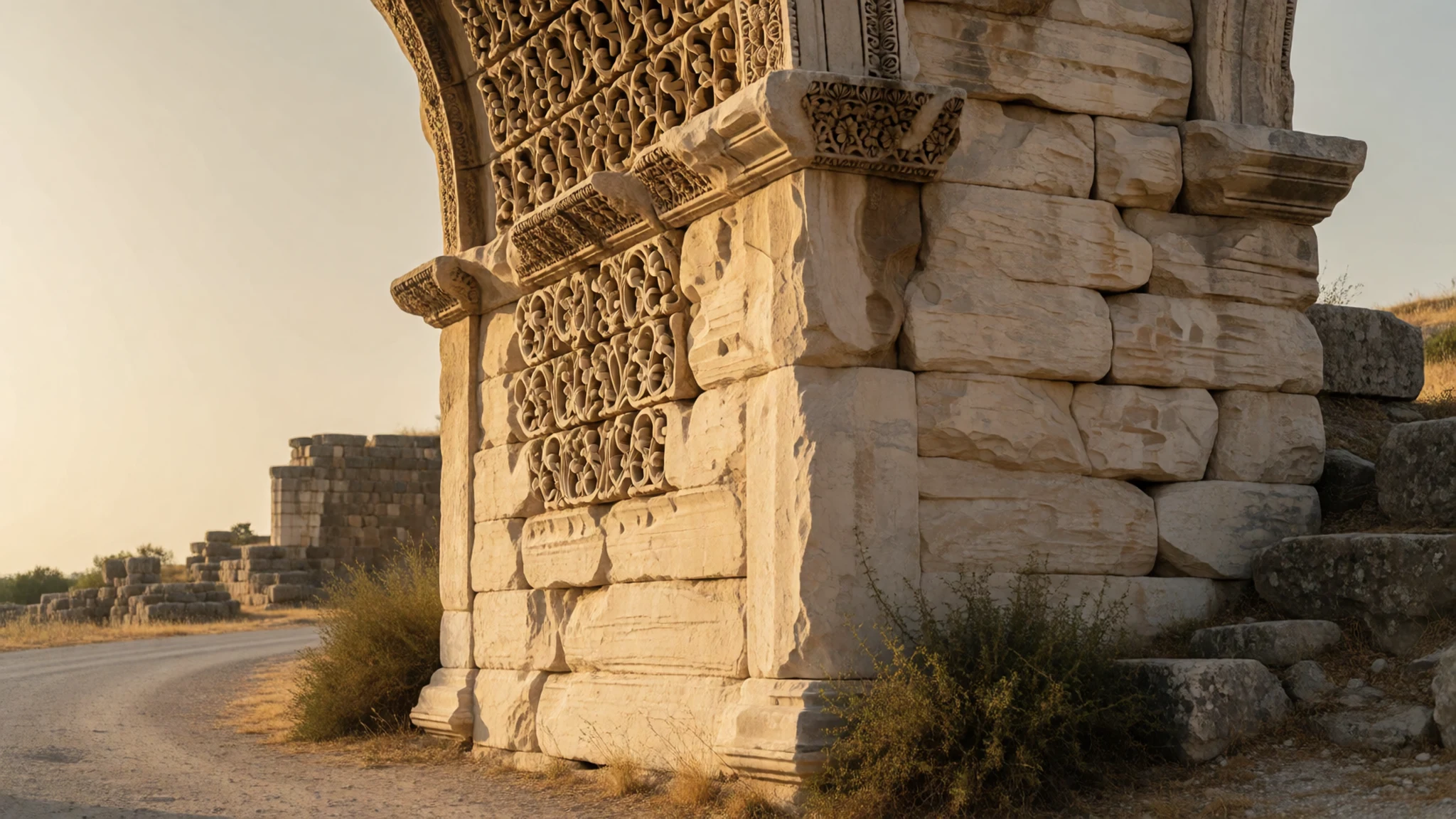
- Hippodrome — Eastern side, by the main junction
The hippodrome is a partially restored Roman-era stadium, and it is the smallest hippodrome in the Roman Empire, according to Wikivoyage. Chariot races once filled its tiers. Today it is a good place to sit in the shade and picture the crowds, and it often hosts displays during festival season, when the stands are busier.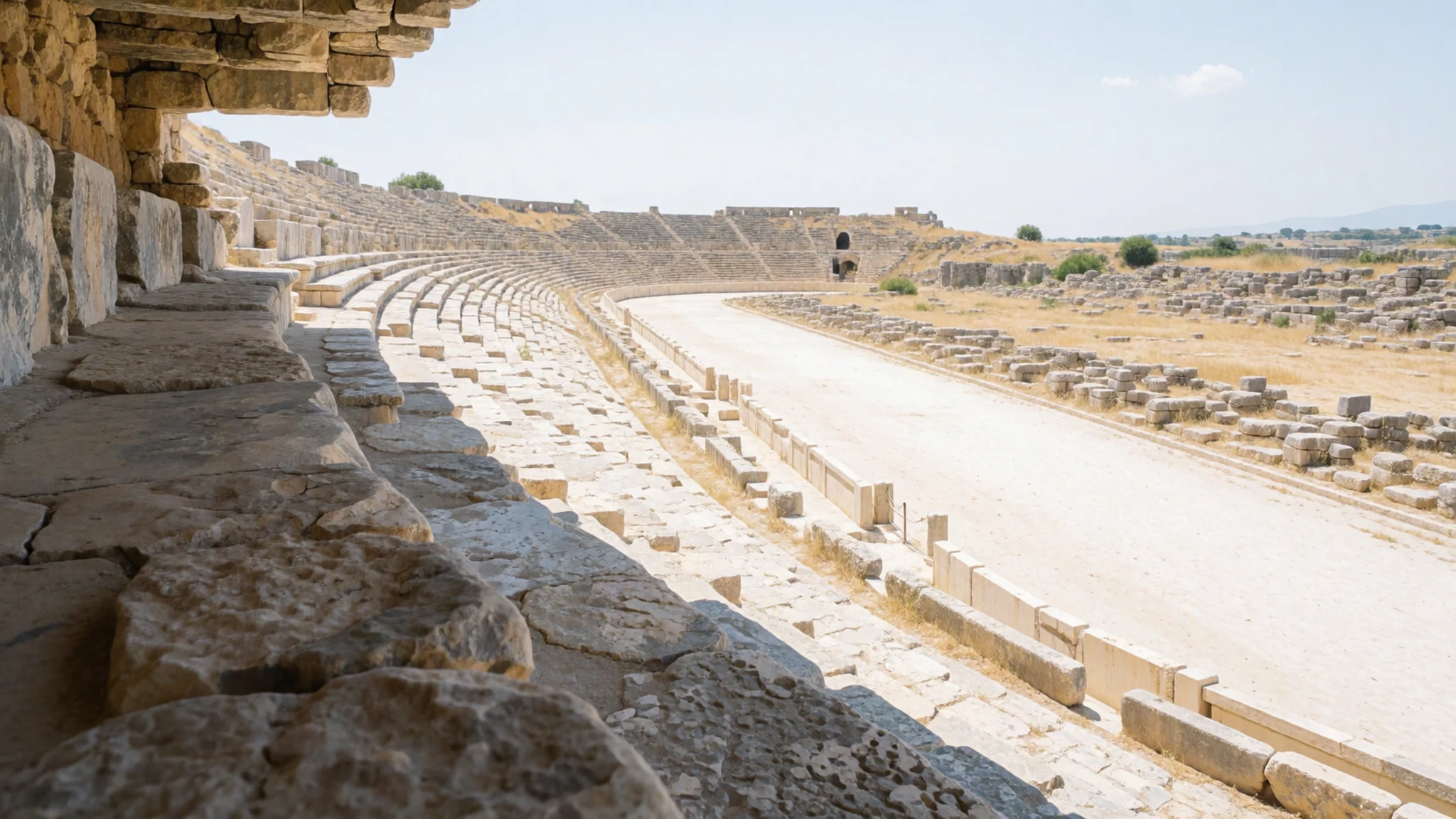
- Jerash Archaeological Museum — Near the visitor entrance
The site museum holds a collection of finds from the excavations, including coins, statuary and sarcophagi. It gives useful context before or after a walk through the ruins, and the objects help explain the everyday life of the city, from trade to religion. Allow a short visit, and check the official site for opening arrangements before you go.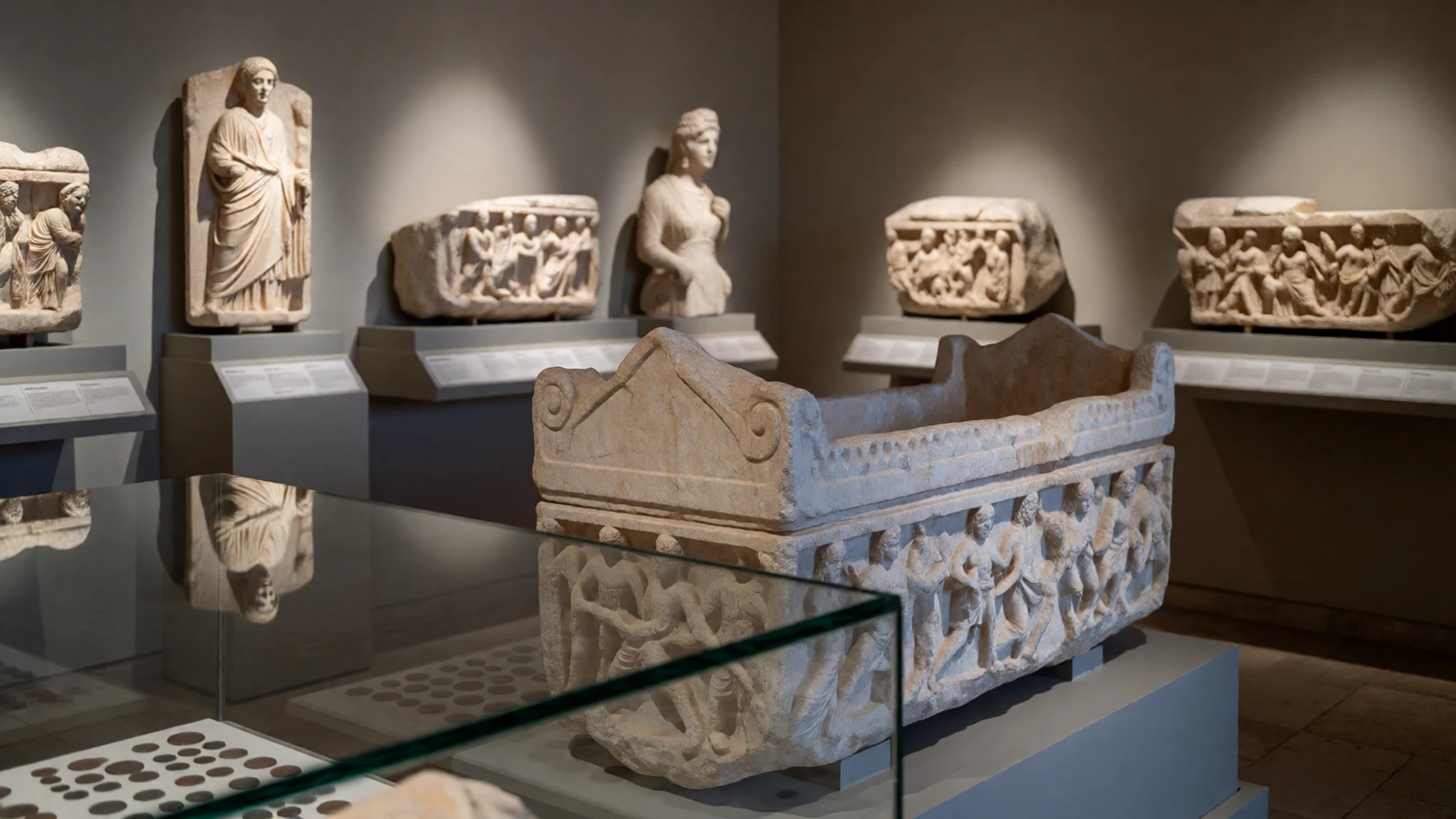
- Temple of Artemis
The Temple of Artemis stands in the ruins with a hidden staircase built into its walls, which allows climbing for a wider view across the site and the surrounding hills. The temple was dedicated to the goddess Artemis, a deity whose cult was important in the city. The climb is short but the stone can be uneven and slippery, so take care with footing and avoid it in crowds.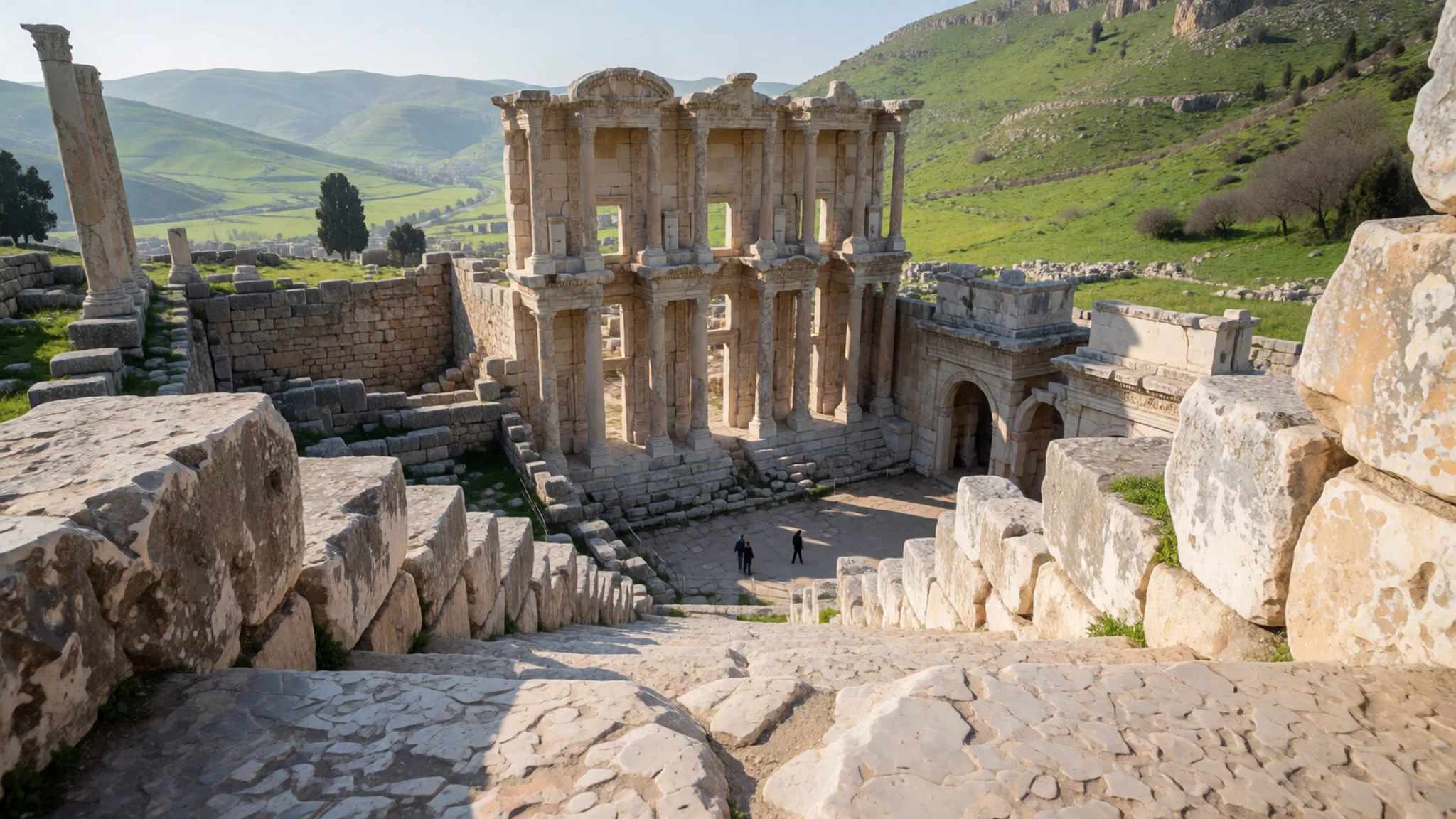
Culture
Jerash is a traditional town in a conservative country, and its culture shows most clearly in its festivals. Since 1981 the old city has hosted the Jerash Festival of Culture and Arts, a three-week summer programme of dance, music and theatre. The programme draws audiences from across Jordan and abroad, and the evening performances in the ruins give the stone a second life.
A popular highlight is the Roman army display at the hippodrome. Legionaries in full armour demonstrate drill and battle tactics, gladiators perform, and chariots race round the ancient track in a show that is part history lesson and part entertainment. The performances are staged for visitors, so they reflect how the site is presented today as much as how the Romans lived.
Outside festival time the town is quieter and more everyday, with families, shopkeepers and students moving through the streets. Modest dress is expected in town, with shoulders and knees covered, and a scarf is useful for visiting churches and any village mosques. Ask before photographing people, especially women, and do not climb on the columns or sit on the fragile stonework where signs ask you not to.
What to wear
Jerash, like much of Jordan, has a dress tradition built around practicality, modesty and the textiles of the region. Traditional village dress for women is the long embroidered robe, often cut from cotton or lightweight wool, with tatreez cross-stitch embroidery at the neckline and cuffs. Men traditionally wore the loose thobe, a full-length cotton garment, with a head cloth held by a cord. These garments were worn for work, weddings and religious occasions, and older people in the area still wear them on feast days.
In the town today most people dress in modern western clothes, with many women in headscarves and many men in trousers and short-sleeved shirts. The thobe remains common for men at prayer and on formal occasions, and the embroidered dress appears at weddings and family events. Casual wear is the norm across the streets, though conservative dress is the safer choice away from the busier tourist stretch.
For a visit, choose loose cotton or linen that covers the shoulders and knees, since the ruins are open and the sun is strong for most of the year. Bring a wide-brimmed hat and sunglasses, and wear a light scarf that can be draped over the shoulders for churches or a mosque. The ground is paved with uneven stone and worn slabs, so sturdy closed shoes with good grip matter more than fashion.
What to eat
- Mezza — The Lebanese House, in the town near the ruins
Mezza is a spread of small plates, usually including hummus, baba ghanoush, tabbouleh and grilled meats, shared at the table. The Lebanese House in Jerash is known for cooking it well, so it is a good place for a long lunch after the ruins. Order a few dishes and share them, since the portions are generous.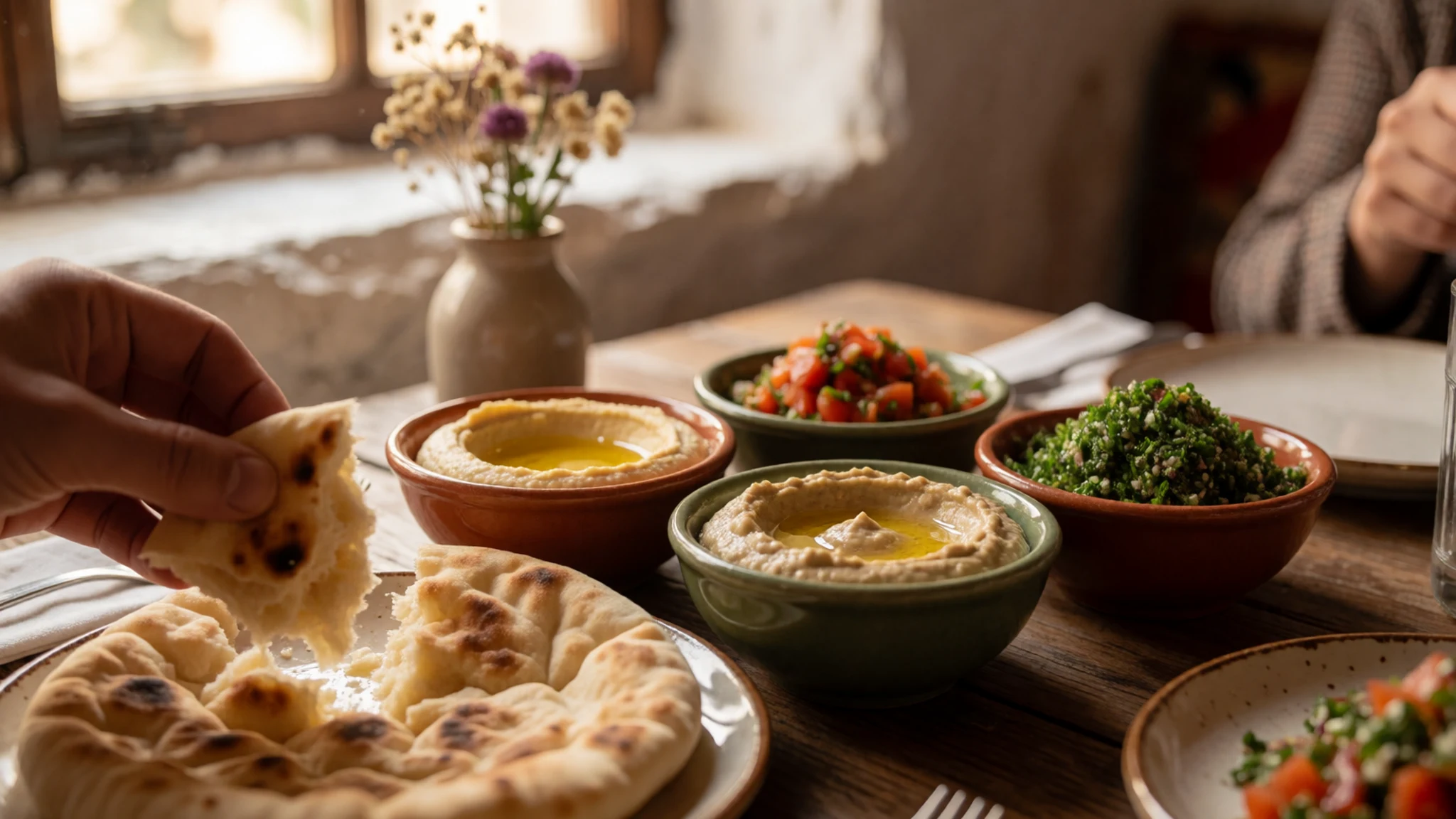
- Mansaf — Family-style restaurants along the main road into town
Mansaf is the Jordanian national dish, made with lamb cooked in a yoghurt sauce and served over rice and flatbread. It is a dish for family gatherings and celebrations, so it is best eaten in a restaurant that specialises in it. Expect a large communal plate and the traditional hand-eating method if you are offered it.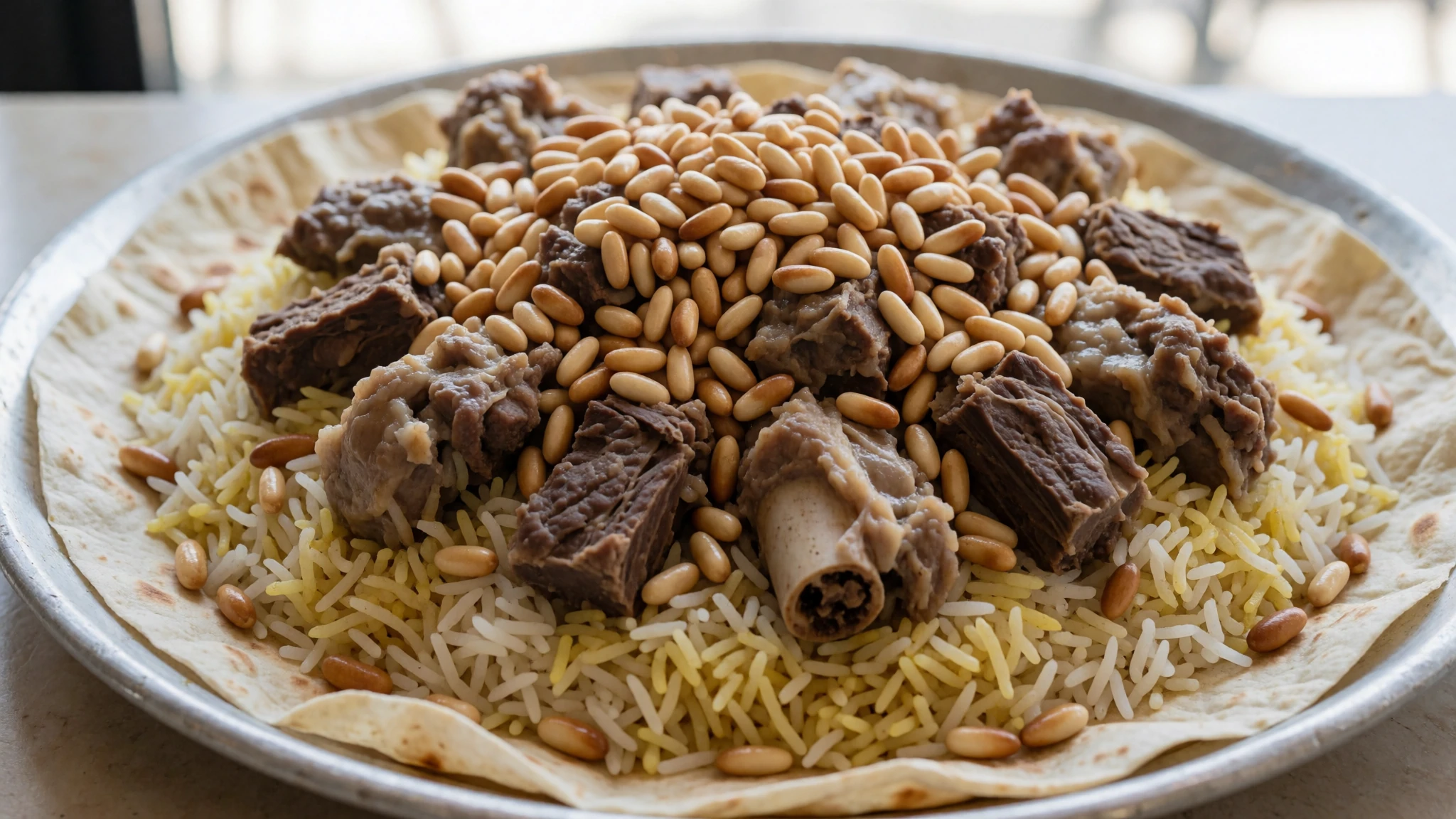
- Falafel and fresh bread — Street stalls near the main junction and bus stops
Falafel is sold hot from small frying stalls, served in warm flatbread with salad and tahini. It makes a cheap, filling snack between visits to the ruins. Choose a stall where the oil looks fresh and the bread is baked in front of you.
- Knafeh — Sweet shops and bakeries in the town centre
Knafeh is a sweet cheese pastry soaked in syrup and topped with crushed pistachios. It is served warm and is a classic end to a meal. Sweet shops in town sell it by the piece, and it is best eaten fresh on the day it is made.
Plan it
Best time. Winter, from December to February, is the most comfortable time to visit, with highs near 30 C and cool nights, though January is the wettest month. The climate is hot-summer Mediterranean, so July and August are very hot and dry, while winter can be cool and occasionally wet.
How long. 1–2
Getting there. Jerash is about 48 km north of Amman. Buses and shared minibuses run from Amman's northern Tabarbour station and from the Sweileh area, and minibuses return from a junction near the handicraft building in Jerash. A private taxi from Amman is the simplest option for a day with several stops.
Budget. low
Tips
- Go early in the morning, before the tour coaches arrive around midday
- Carry water and a sun hat, since there is little shade across the ruins
- Carry cash for small purchases and food stalls
- Check bus times locally, as services can be less frequent than expected
- Check the official site for the latest visiting arrangements before travelling
Etiquette
- Dress modestly in town and at religious sites
- Ask before photographing people
- Stay off fragile stonework and follow posted signs
Nearby
Sources
- Wikidata Q31565 (CC0)
- Wikipedia, Jerash (rev 1382950936) (CC BY-SA 4.0)
- Wikivoyage, Jerash (rev 5405780) (CC BY-SA 4.0)
- Photo: The Cardo Colonnaded Street in Jerash, Jordan (CC BY-SA 2.5)
- Photo: Oval Plaza (Forum Romanum, Gerasa - Jerash, Jordan) (CC BY-SA 4.0)
- Photo: The Oval Forum in Jerash, and the Cardo Maximus (CC BY 3.0)
- Photo: Ancient Jerash against the modern city (CC BY-SA 4.0)
- Photo: Colonnaded street in the ancient city of Jerash (Public domain)
- Photo: The Nymphaeum in Jerash (CC BY-SA 2.5)
- Photo: Sculpted marble head at Jerash (CC BY-SA 4.0)
- Photo: Arch of Hadrian (Gerasa, Jerash; Jordan) (CC BY-SA 4.0)


