Dana Biosphere Reserve
Dana Biosphere Reserve, Jordan
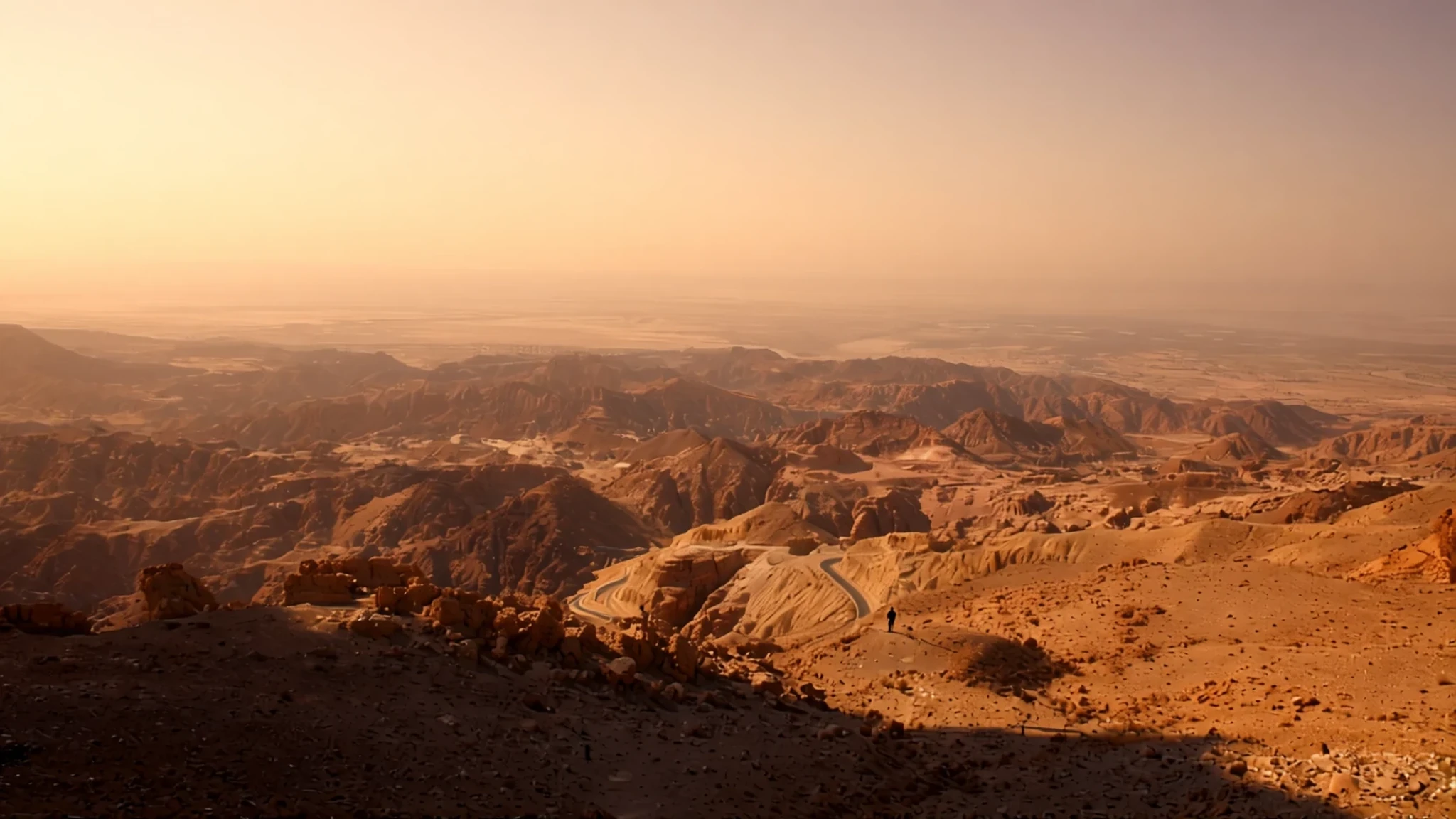
Jordan's largest nature reserve packs limestone, sandstone and granite into canyons and mountain villages, with hiking from half-day walks to two-day treks.
The place
Dana Biosphere Reserve covers 308 square kilometres (119 sq mi) of south-central Jordan, centred on the village of Dana and the Wadi Dana valley. Established in 1989, the reserve has been run by the Royal Society for the Conservation of Nature ever since. The land drops from about 1,500 metres on the Qadisiyah plateau to the low desert of Wadi Araba, so the reserve reads more like a series of landscapes stacked on top of one another than a single park. Cool highland slopes give way to canyons and gorges, and then to hot, dry ground in the south. The geology is just as mixed. Limestone, sandstone and granite all appear here, and the sandstone cliffs of Wadi Dana have been cut by wind into smooth, banded faces. Because the reserve lies where several bio-geographical zones meet, its plant and animal life is unusually varied. Dana village perches on a cliff edge at about 1,400 metres above the reserve, and its winters can be cold and foggy. Two families still live there, while most houses now serve as accommodation for walkers. Hiking is the main reason to come, and the reserve is best understood on foot.
Its story
The story of Dana is partly the story of a village that nearly emptied out. Dana was built in Ottoman times on a ledge above the canyons, where the highland meets the desert. Over the years most of its houses were left to decline, and by the time the reserve was set up it was a place of ruins and a handful of residents. The turn towards the present began with conservation. The Royal Society for the Conservation of Nature took over management in 1989, when the reserve was founded around the village and Wadi Dana, and it set out to protect a landscape that spans several ecological zones. Its work has included rebuilding parts of the village, a process supported in part by USAID funds. The restored houses have largely become accommodation for visitors, so a walk into town now often means arriving at a small guesthouse rather than a farm. Two families still live in the village, and many police officers also live there, so the village is generally regarded as very safe. The reserve's trails tell another part of the story. Routes run down through gorges towards Wadi Araba and across to Feynan, and some of them can only be walked with a guide. Dana now sits where conservation, tourism and a settlement still being rebuilt meet.
What to see
- Dana village on the cliff edge — Eastern edge of the reserve
Dana village sits on the eastern edge of the reserve at about 1,400 metres, perched on a cliff above the valley. Walk the lanes between restored stone houses and look out over the canyons from the edge. Expect cold and fog at times in winter, and quiet evenings.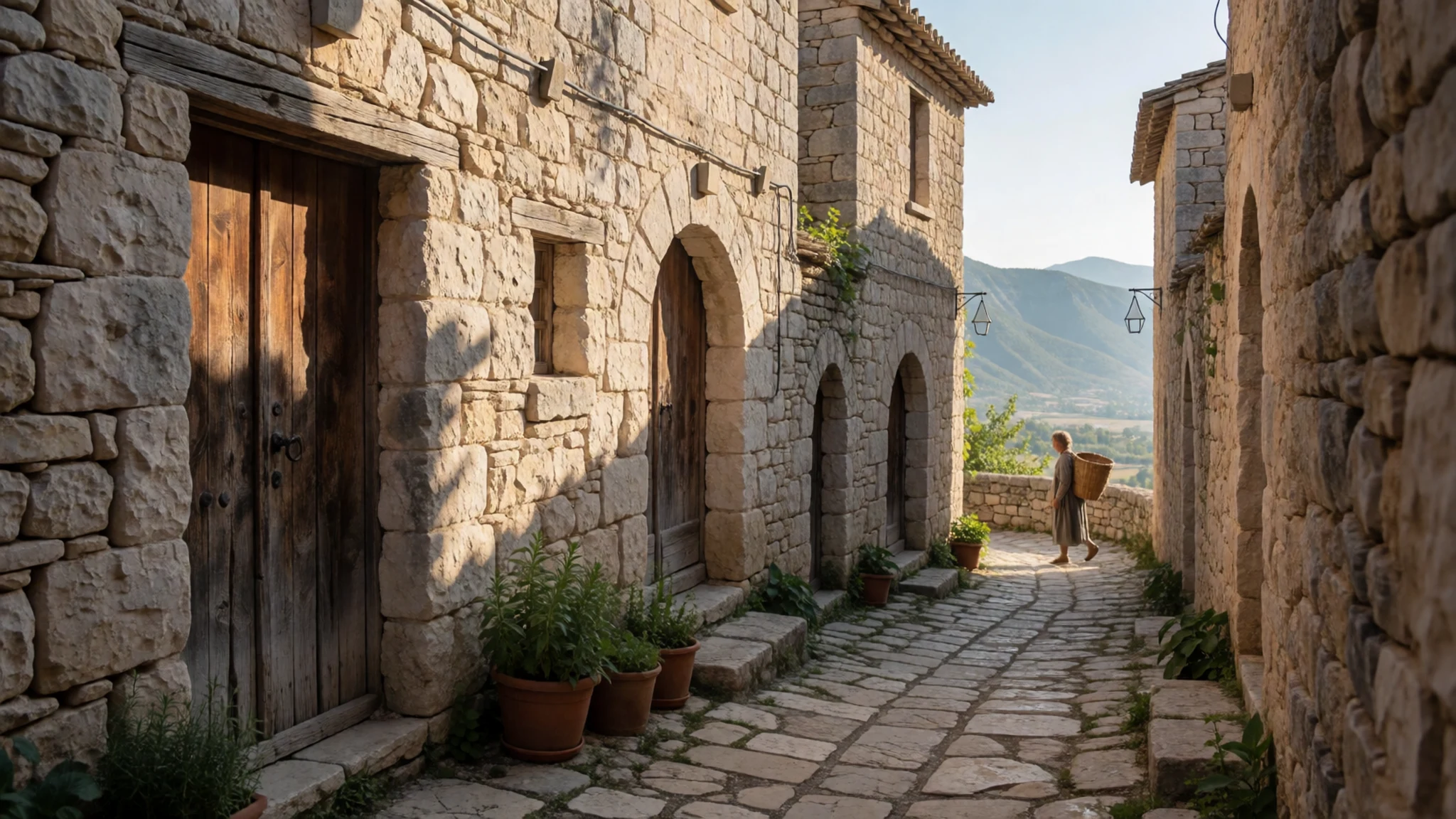
- Canyons of Wadi Araba — Wadi Araba, south of Dana village
Below the village the land falls through canyons and gorges towards Wadi Araba, the low desert at the reserve's lower edge. Wind has cut the sandstone walls into smooth, layered faces, and their colour shifts through the day. Hiking is the main way to explore, and the lower you walk, the drier and hotter the ground becomes.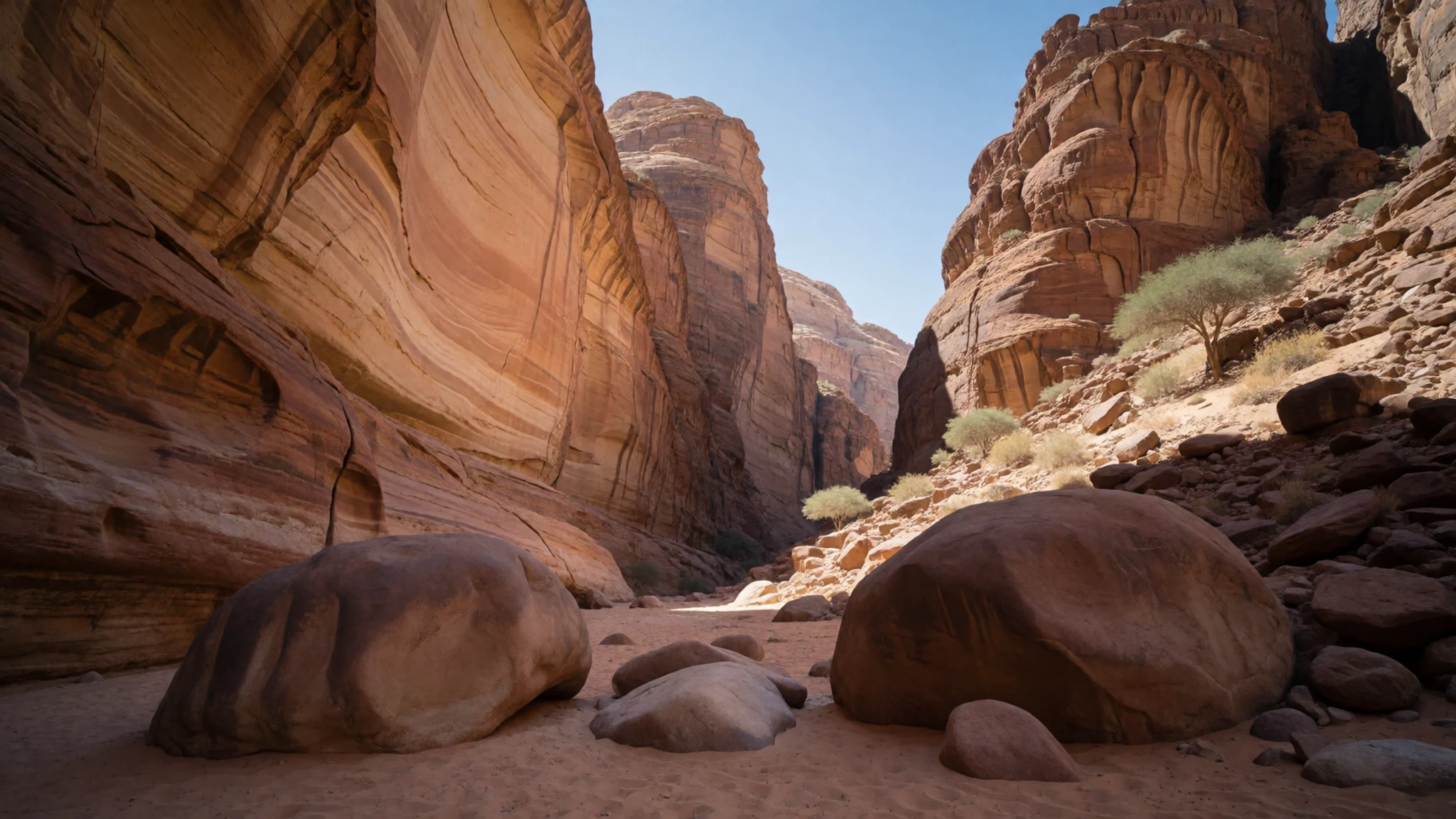
- Rummana Mountain Trail — Reserve entrance, above Dana
Rummana Mountain Trail begins at the reserve entrance and climbs towards the Rummana campsite, with views back across the valley towards Dana village. Treks run from half-day outings to two-day routes, and some need a 4x4 to reach or leave the route. Most treks in the reserve need a guide, so arrange one before setting out.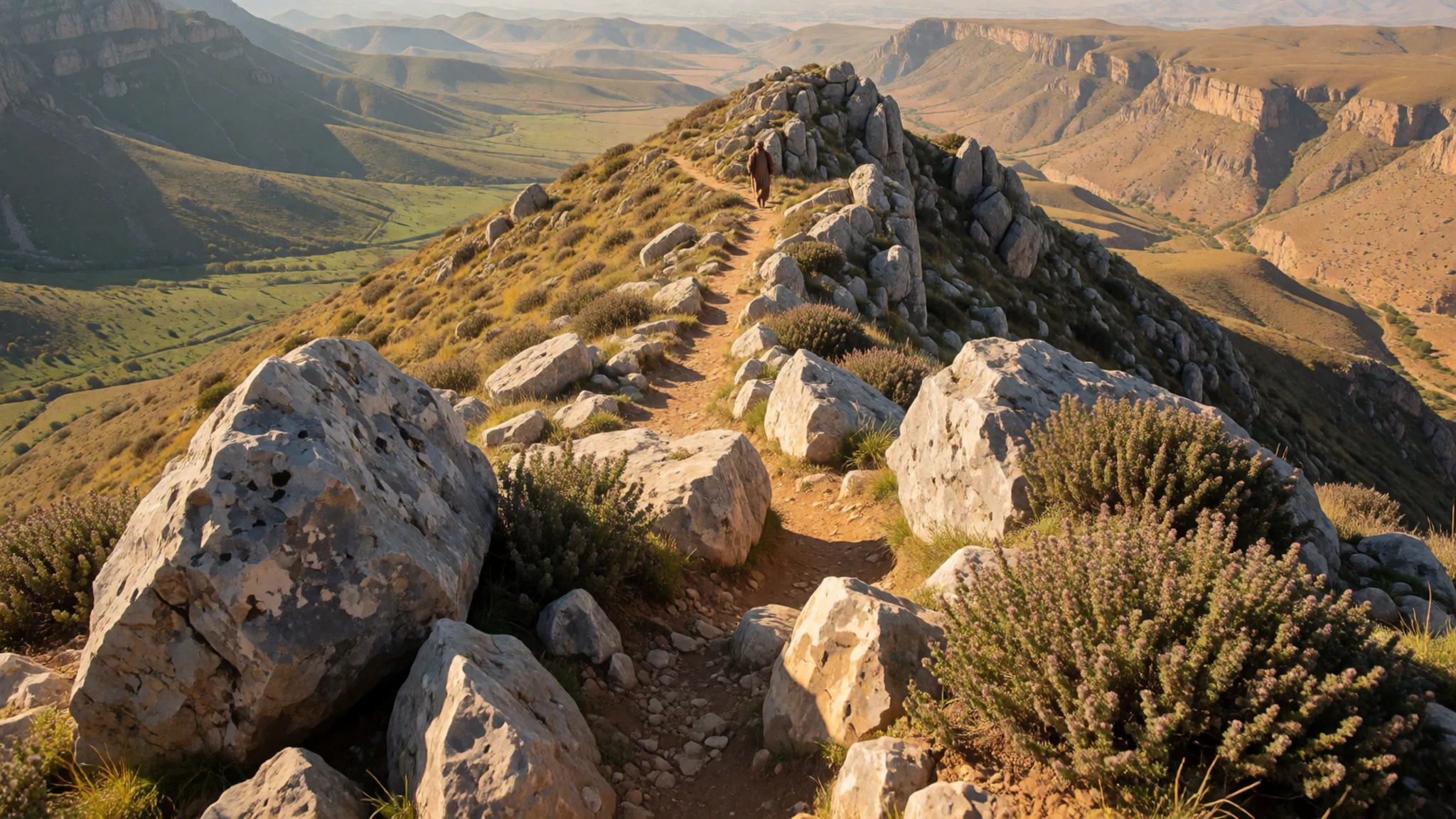
- Dana to Feynan track — From Dana village to Feynan Ecolodge
The track from Dana village down to Feynan Ecolodge can be walked without a guide, and it is a demanding route. Allow three to five hours to reach the lodge, then two to three hours to the villages beyond, and an hour more to the highway. Carry a good map and a GPS, and know how to get back onto the road, since hitching is an option.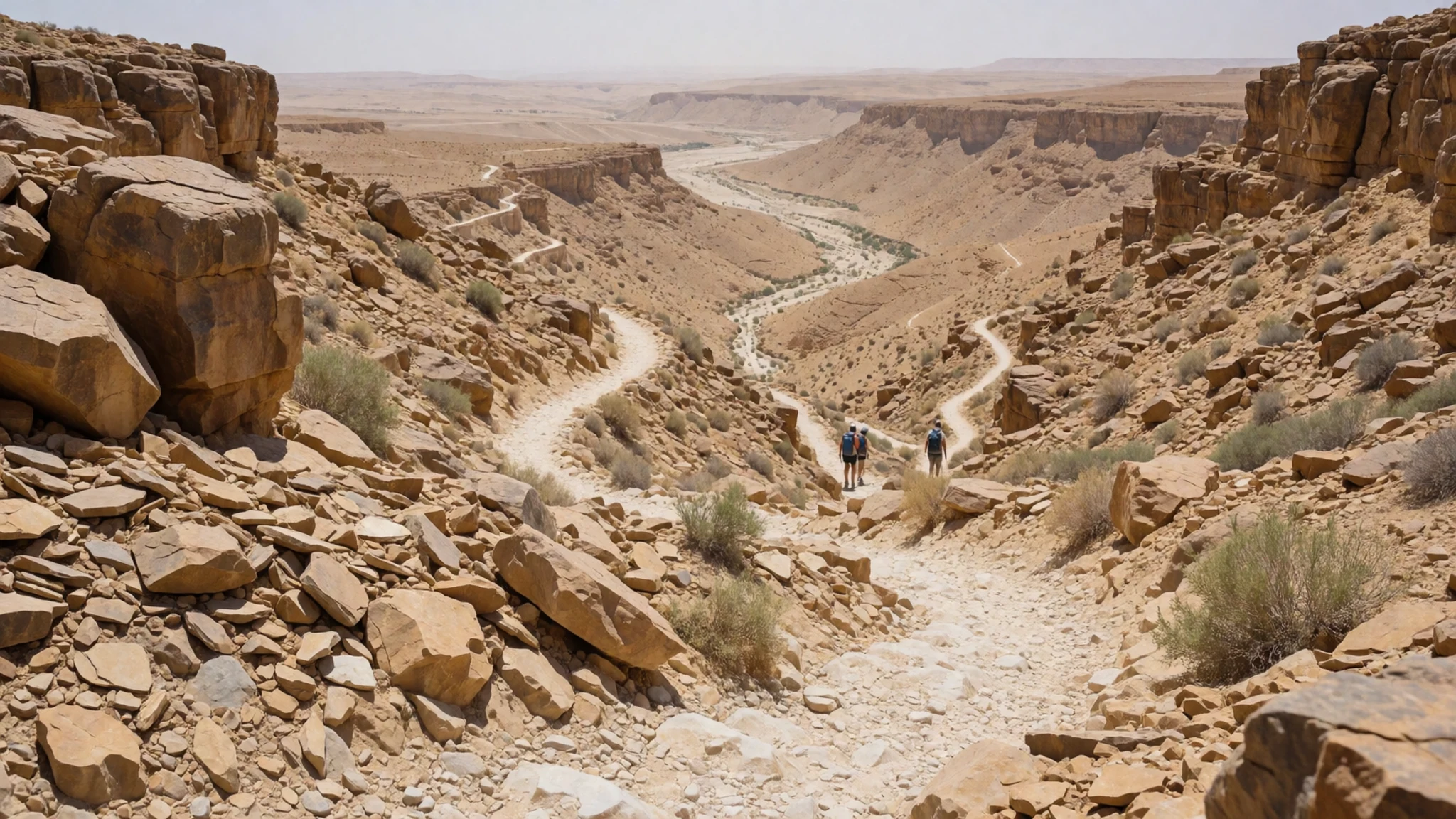
- Shoubak Castle — Shoubak, on the road south to Petra
Shoubak Castle stands on a hill with wide views, and makes a good stop on the way south to Petra. Most of the castle is rubble now, but underground rooms and a staircase can still be explored. It is a short break rather than a full visit, so plan it as a pause on the drive.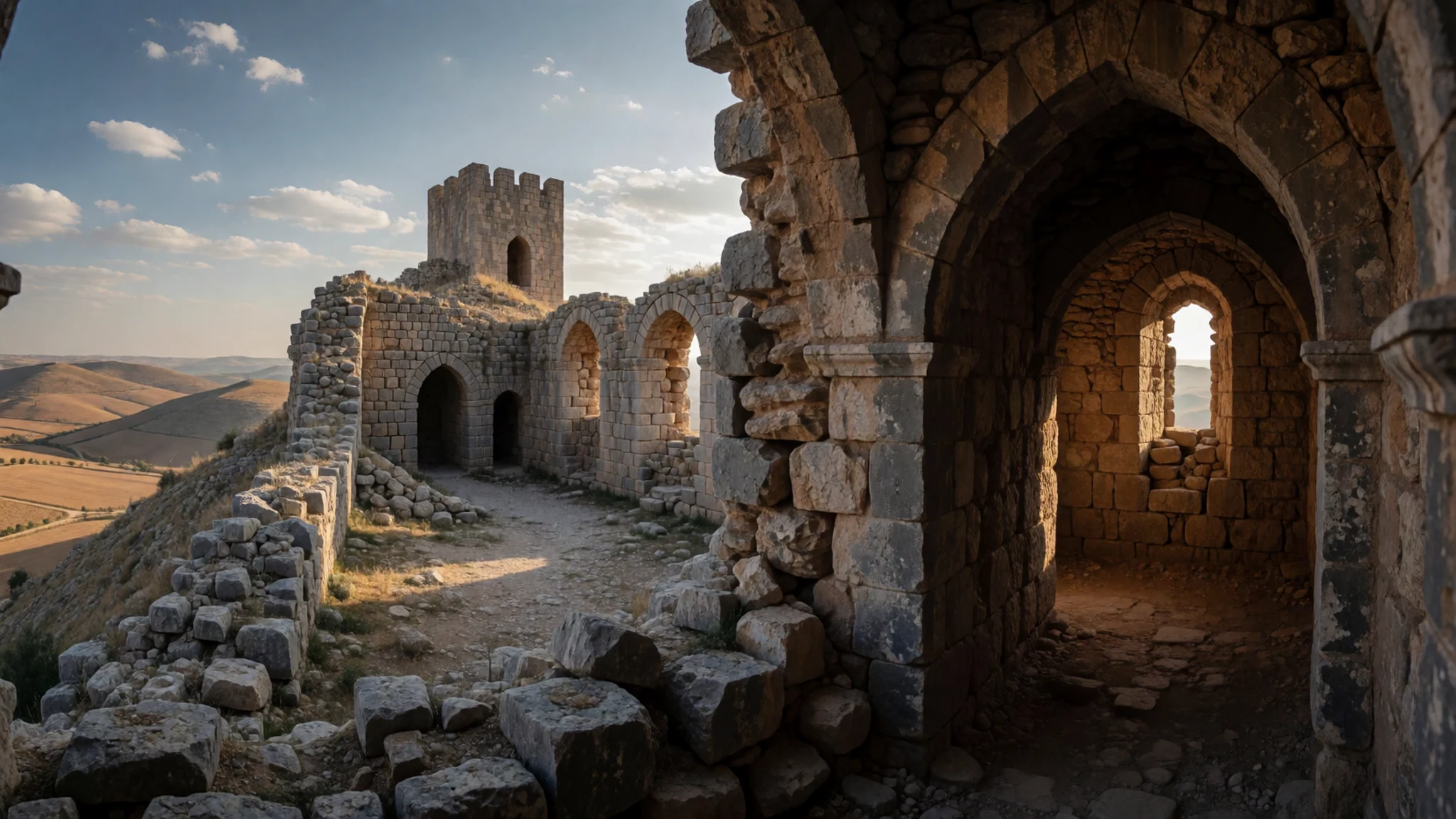
Culture
Dana's village is small and hospitable, and its customs are easy to observe. Tea is offered freely by anyone you do business with, so accepting a cup is a simple way to start a conversation. Alcohol is prohibited in the reserve, so the evening meal is often the most social part of the day. Two families still live in the village alongside the guesthouses, so late noise carries across the lanes. Many restaurants close in the middle of the day during low season, but the owner may open up if he is around, so ask rather than assume. Support is spread across the village rather than concentrated in the larger hotels, which is why visitors are encouraged to eat and sleep in different places. Many police officers also live in the village, and the area feels calm, but walkers should still carry their own water and litter out of the reserve. When you walk through the village, dress modestly and ask before photographing anyone, especially women and families.
What to wear
Traditional dress in the Dana area follows a wider Jordanian pattern. Men wear the long thobe, a loose robe, usually under a head cloth called a ghutra, often held in place with a black cord known as an agal. Women in rural communities traditionally wore long embroidered dresses, with cross-stitch and colour patterns that vary between families and districts, and many older women still keep one for weddings and festivals. Woven wool and goat-hair cloth has a long history in the highland villages, and dark woven fabrics remain part of the regional craft. Today most people in Dana wear everyday clothes much like those in towns elsewhere in Jordan, such as jeans, t-shirts and simple tunics, with the thobe for prayer, weddings and formal occasions. For a visitor, the climate and terrain decide most choices. Dana's winters can be cold and foggy, so pack warm layers and a windproof shell. Walking the canyon tracks needs sturdy closed shoes with good grip, because the rock is uneven and sometimes loose. In the village, cover shoulders and knees, and carry a light scarf for entering any religious site. Lightweight long trousers and a hat help in the lower canyons, where the sun is strong.
What to eat
- Mansaf — Hotel dining rooms in Dana village
The main dish of a Jordanian dinner, usually made with mutton, rice and a yogurt-based sauce. Dana's hotel dining rooms serve it as part of the evening meal, often with a mutton option alongside vegetarian dishes. Menus change with supplies, so ask what is on that night.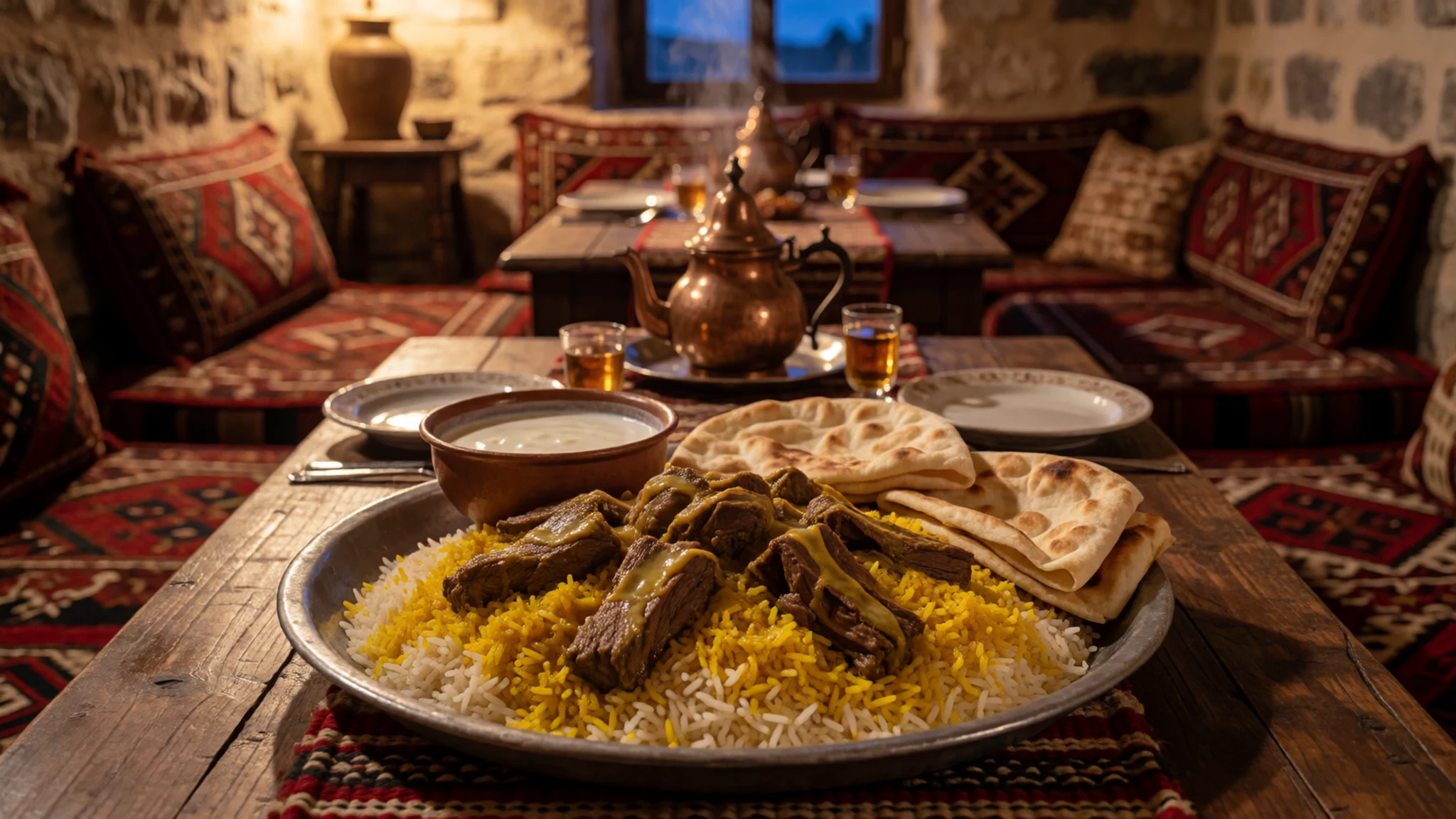
- Maqluba — Village hotel kitchens, by arrangement
A layered rice dish cooked in a pot and turned out upside down onto the plate, with meat, aubergine and cauliflower beneath the rice. The name means upside down. It is a dish for sharing, and it suits a group that has booked dinner in advance.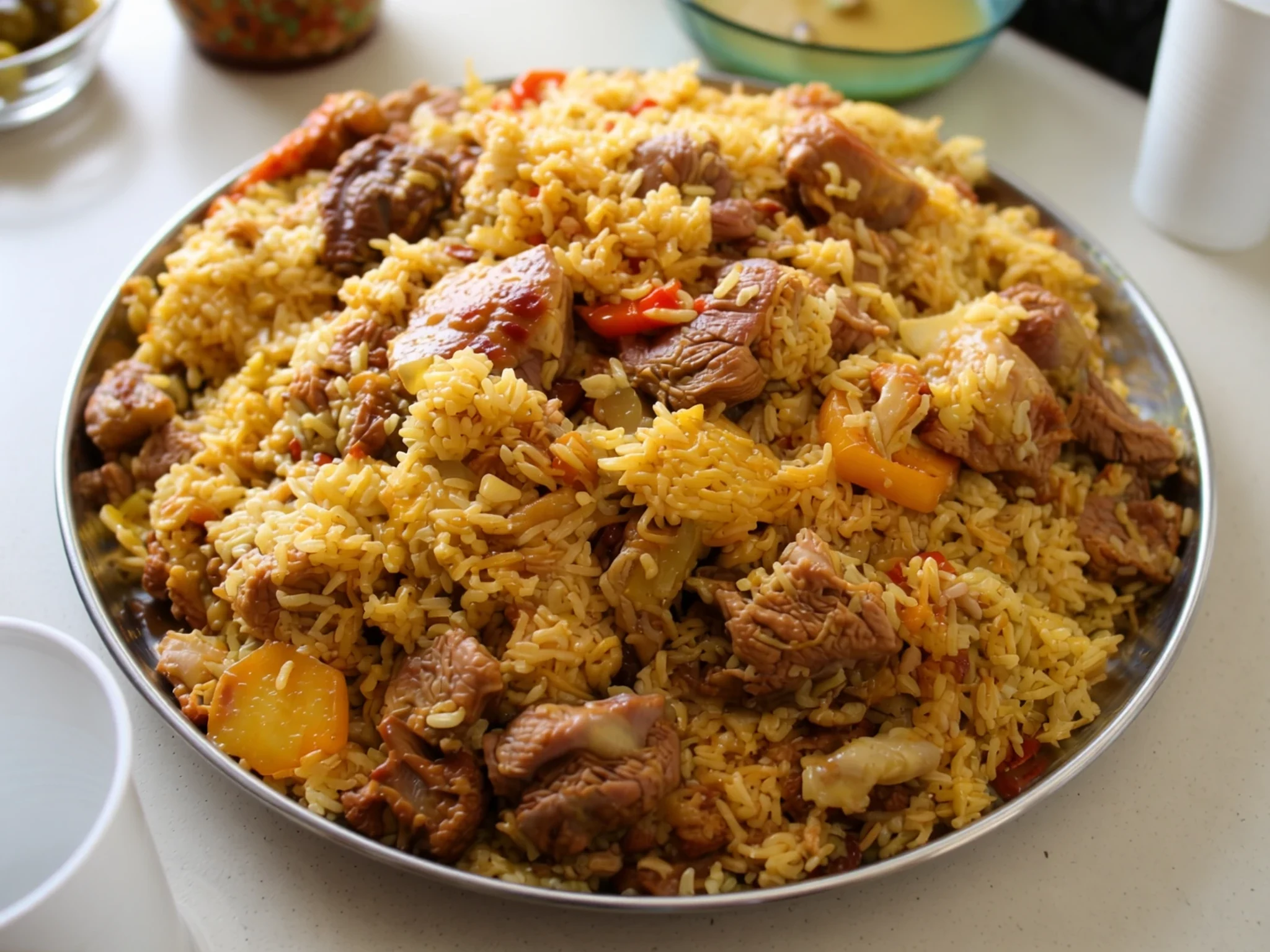
- Hummus and fresh bread — Guesthouse tables and lunch packs from village hotels
Chickpea hummus served with warm flatbread, often with olive oil and a little paprika on top. It is a simple starter that works well with the vegetarian mezze and makes a good lunch from a packed snack bag. - Sage and mint tea — Guesthouse lounges and village hotel terraces
Tea is offered freely here, and hosts often bring a cup without being asked. Sage and mint are the usual herbs, brewed strong and sweet. Accepting a cup is a sign of hospitality, and it is rarely a sales pitch. - Vegetarian mezze — Dana hotel restaurants and the Feynan Ecolodge restaurant
A spread of small dishes, typically including lentils, vegetables, salads and cheese, that can make up a full meal without meat. Dana's menus usually include vegetarian options next to the mutton dishes. Order a few to share across the table.
Plan it
Best time. November to February are the most comfortable months, with daytime highs below 30 °C, though nights can fall well below freezing. Winter in the village can be cold and foggy, and the lower canyons are likely to be hot in summer.
How long. 2–3
Getting there. The village sits roughly 3 km away from the Qadisiyyeh junction on the Kings Highway. Drive down the short, steep road, or walk. Public transport is difficult, so arrange a pickup through a hotel, and hitching is easy in fine weather.
Budget. low
Tips
- Start walks early in the day, before the lower canyons get hot
- Check whether restaurants are open at midday in low season, and carry snacks
- Eat and sleep at different places to spread spending across the village
- Book a guide for any trek other than the Feynan track
- Carry a map and GPS for the Feynan track
Etiquette
- Alcohol is prohibited in the reserve, so leave it behind
- Ask before photographing people, especially women and families
- Dress modestly when walking through the village
Nearby
Sources
- Wikidata Q864750 (CC0)
- Wikipedia: Dana Biosphere Reserve (rev 1362719616) (CC BY-SA 4.0)
- Wikivoyage: Dana Nature Reserve (rev 5400793) (CC BY-SA 4.0)
- Landscape of Dana Biosphere Reserve, Jordan (Bernard Gagnon) (CC BY 3.0)
- Landscape of Dana Biosphere Reserve, Jordan (Bernard Gagnon) (CC BY-SA 1.0)
- Landscape of Dana Biosphere Reserve, Jordan (Bernard Gagnon) (CC BY 3.0)
- View of Rummana Campsite in Dana Biosphere Reserve (Bernard Gagnon) (CC BY-SA 1.0)
- Rummana Mountain Trail, At the Entrance (hikinginjordan) (CC BY 3.0)
- Rummana Mountain Trail, A View of the Reserve (hikinginjordan) (CC BY 3.0)
- Rummana Mountain Trail, The Campsite in the Distance (hikinginjordan) (CC BY 3.0)
- Rummana Mountain Trail, Looking towards Dana Village (hikinginjordan) (CC BY 3.0)


