Aqaba
Aqaba, Jordan
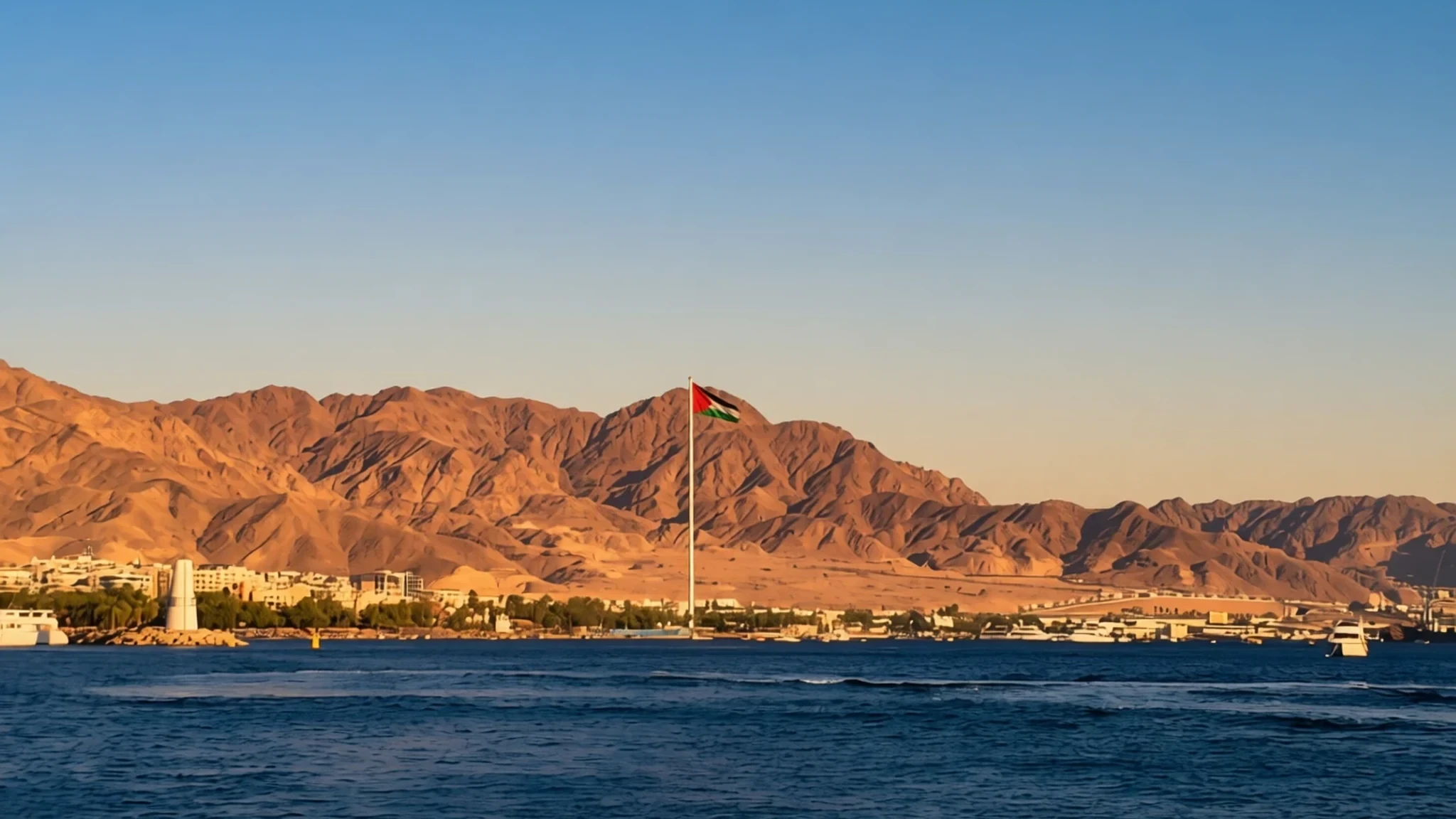
Aqaba is Jordan's only sea city, a calm Red Sea base for snorkelling, with desert trips to Wadi Rum and the old port within easy reach.
The place
Aqaba is the only coastal city in Jordan, at the northern tip of the Red Sea, where Asia and Africa come close together. It sits almost at sea level, about 6 metres above it, so the air by the water stays humid for much of the year even when the desert inland is dry. The city is the administrative centre of its governorate and home to the country's main port, so cargo cranes stand in view of the swimming areas. Most of the town is a grid of plain modern streets running down to the shore, with a resort strip to the south and a denser old centre near the citadel and the fish market.
Its appeal is partly the sea and partly its position. Snorkelling and diving in the gulf draw many visitors, and the marina and hotel beaches are where most people spend their afternoons. Inland, the red sand and rock of Wadi Rum and the ruins of Petra lie within reach by road, so Aqaba works well as a base for a few nights before or after the desert. Its population of about 140,000 keeps the town small enough to cross on foot in parts, and it feels quieter than the big cities of the Gulf. Nightlife has grown in recent years as tourist numbers rose, but most evenings still centre on the seafront, a meal and a slow stroll.
Its story
The site has been settled for a very long time. Excavations at two mounds a few kilometres north of the modern city show inhabited settlements from around 4000 BCE, in the Chalcolithic period, when people here produced copper on a large scale. Archaeologists from the University of Jordan found a small building whose walls carry human and animal drawings, which suggests a religious use. The inhabitants had built a water system to irrigate crops of grapes, olives and wheat, and they made clay pots of several sizes for melting and reshaping copper. This era left no written records, so much of what we know comes from the ground itself.
Later the settlement was called Elath, and its nearness to copper mines kept it a trading hub. Under Byzantine control the town took the name Aela and became a bishopric. The Aqaba Church was also erected here, and it is the oldest known Christian church built for that purpose anywhere in the world. After the Islamic conquest the town became known as Ayla. The name Aqaba itself only came into common use in the late medieval period. During the Great Arab Revolt, a battle fought here saw joint Arab and British forces defeat Ottoman troops, and that episode remains part of how the city tells its story.
What to see
- Aqaba Castle — Old town, by the shore
A fortress on the shore whose present structure was built in the early 16th century by the Mamluk sultan Qansawh el-Ghawri, possibly on top of an older Crusader fort, and has been revised many times since. Its walls and gateway sit close to the old town and the fish market, which makes it an easy first stop. Allow about an hour to walk the courtyard and look out over the water. Opening arrangements change, so check the official site before you go.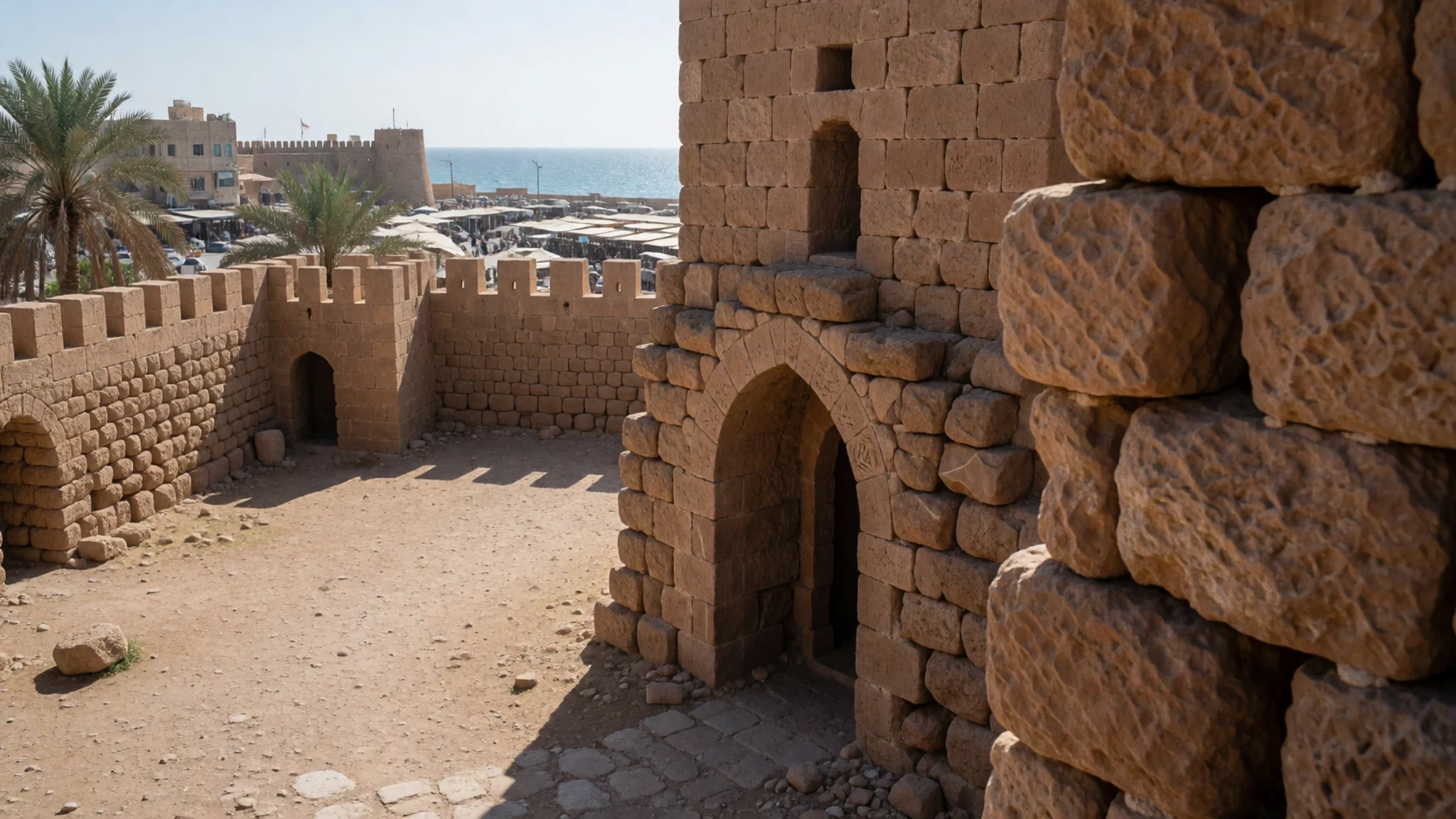
- Aqaba Church — Old town, near the castle
The ruins of what is described as the oldest purpose-built Christian church known. The foundations are low and easy to walk around, and a posted sign explains the building and its age. Look also at the Byzantine-era city wall behind it. Go in the morning, when the light is clear and the stones are cooler. The sign is easy to miss, so read it from the right angle.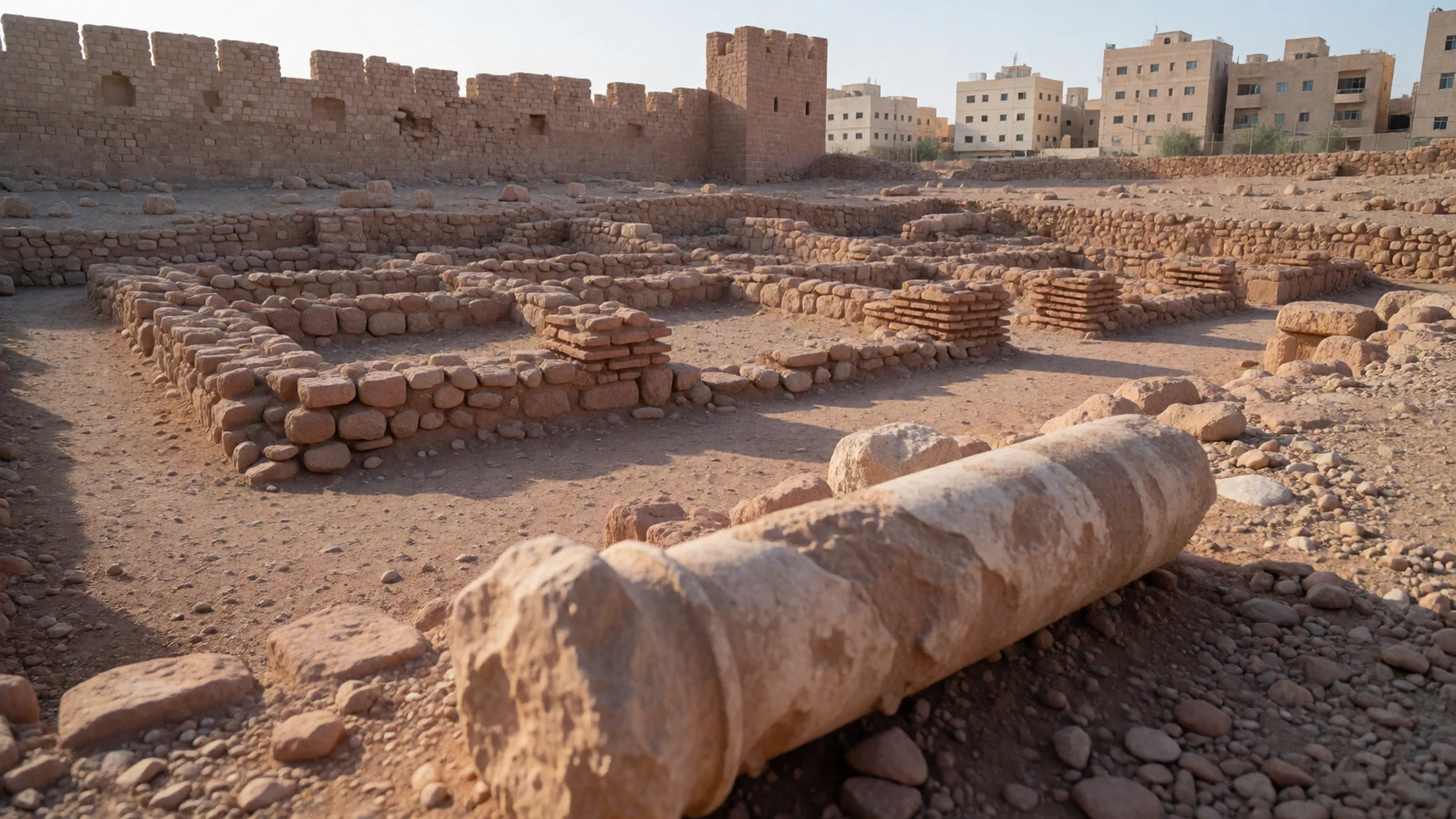
- Ayla old city — The old town centre
The old city that grew up when Islam came to the area, and the name the town took after the Islamic conquest. Its remains and street layout give a sense of the older settlement beneath the modern grid. It rewards a slow walk without a fixed plan. Try the smaller lanes in the mid-morning, when the shops and eateries are most local and the heat has not yet built.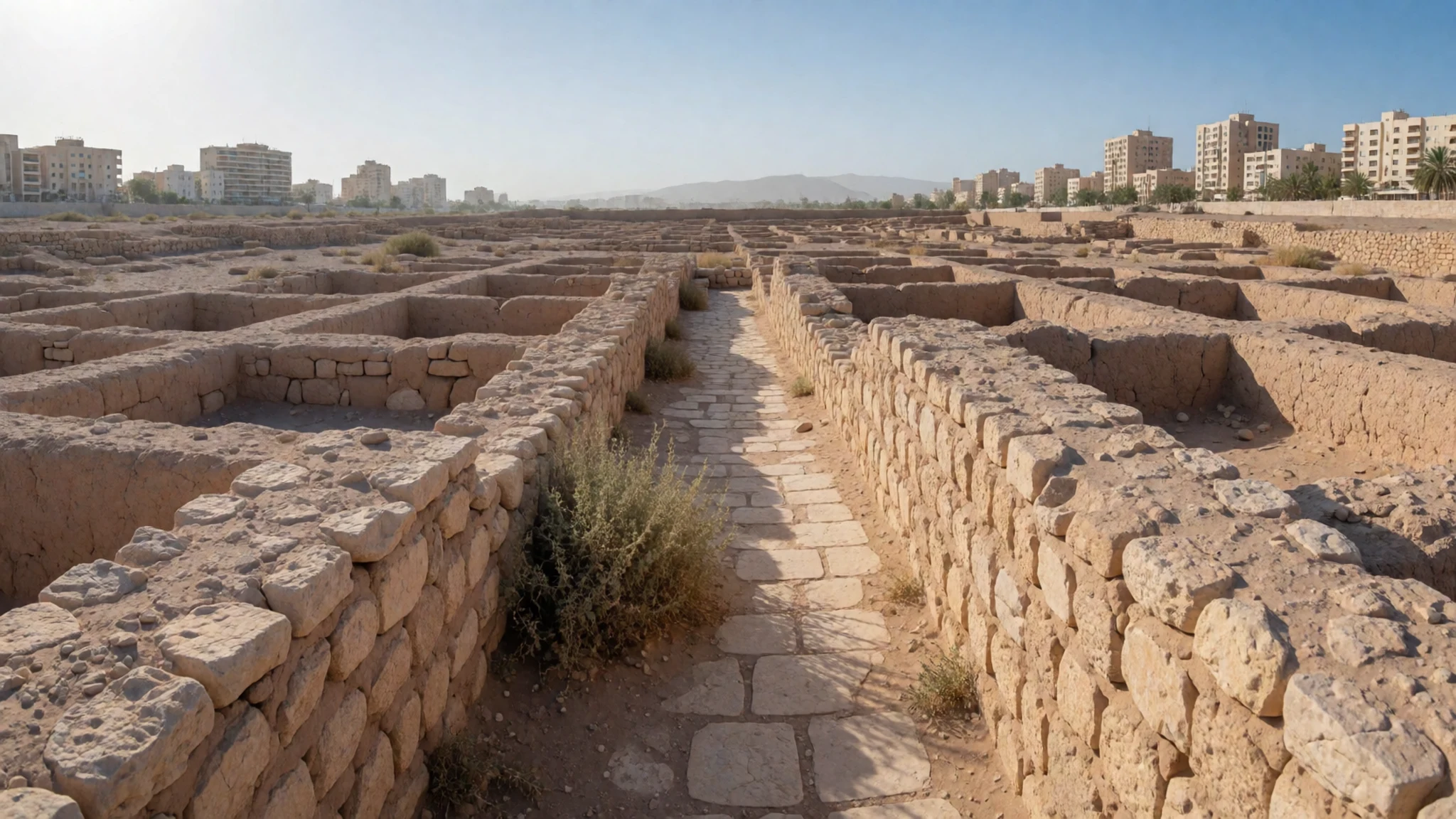
- Aqaba Flagpole — Waterfront
The flagpole stands about 130 metres high, making it the sixth tallest freestanding flagpole, and it carries the flag of the Arab Revolt. It is visible from much of the waterfront, so you will see it on the way to the beach or the marina. Visit at a calm hour in the morning for the clearest view and the easiest photographs. Wind can be strong near the water, so hold onto your hat.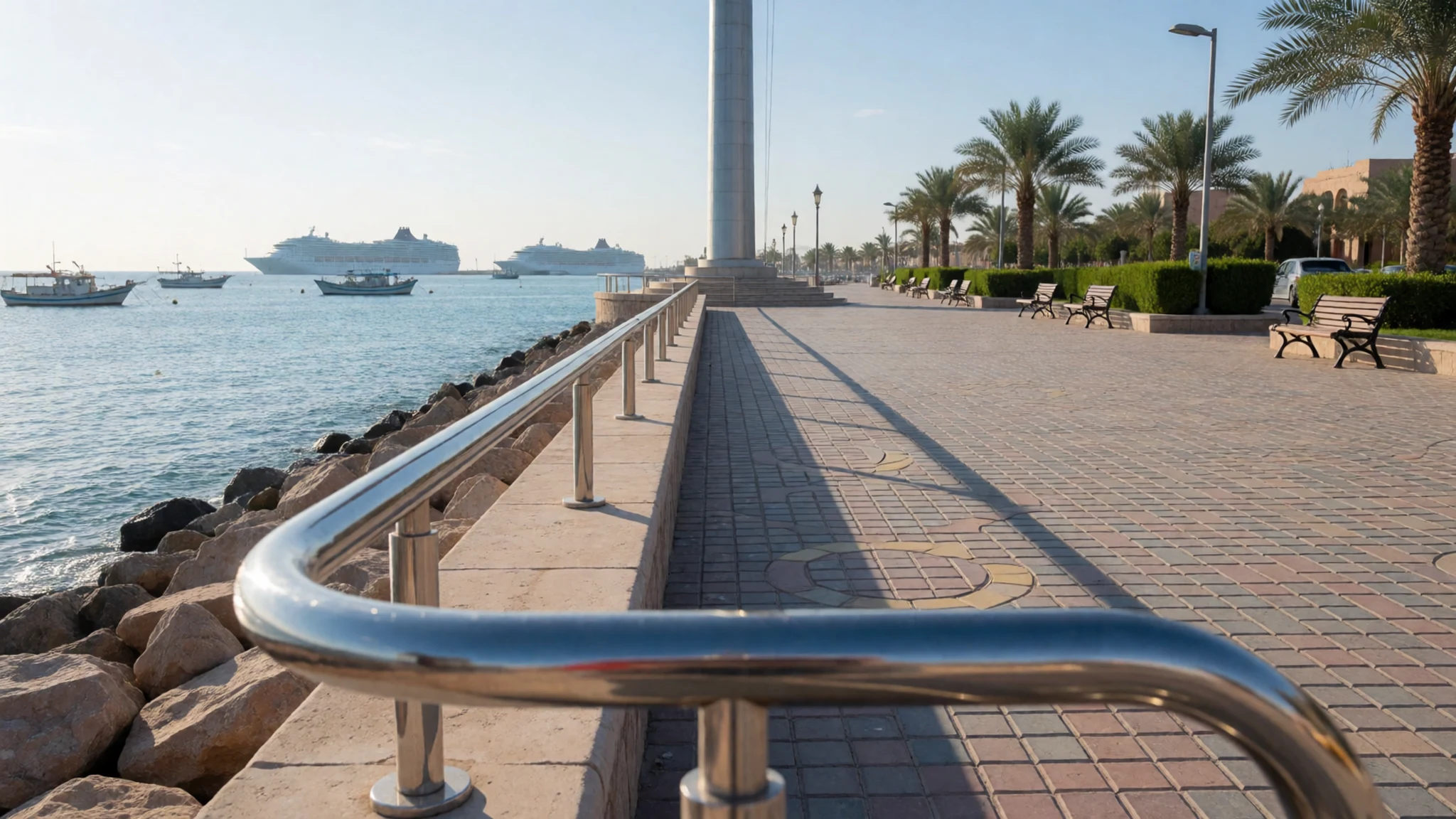
- Sheikh Zayed Mosque — East of the highway
This mosque sits on the east side of the highway and gives a good overview of the city and its bay. Visiting a working mosque means dressing modestly and taking your shoes off at the entrance, as you would anywhere in Jordan. Go outside prayer times for a quieter visit. Check the official site for current visiting arrangements before you set out.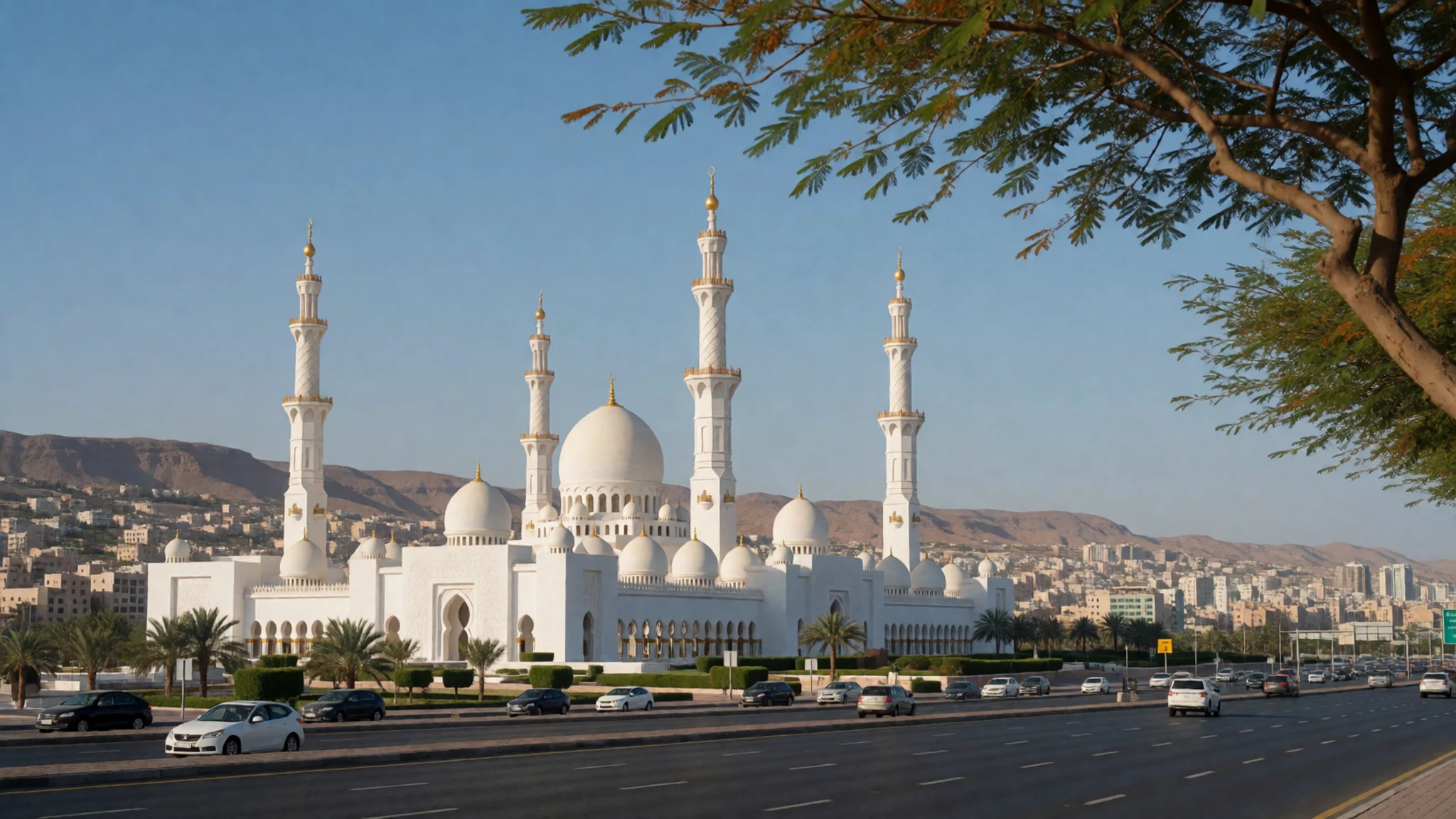
- Marine Science Centre Aquarium — South of the city
A small aquarium with a few local and exotic fish, worth a short visit if you want a break from the sun. It is modest rather than a major attraction, so an hour is plenty. Combine it with a swim or a walk along the nearby coast. Bring a little cash in case there is a small entry charge.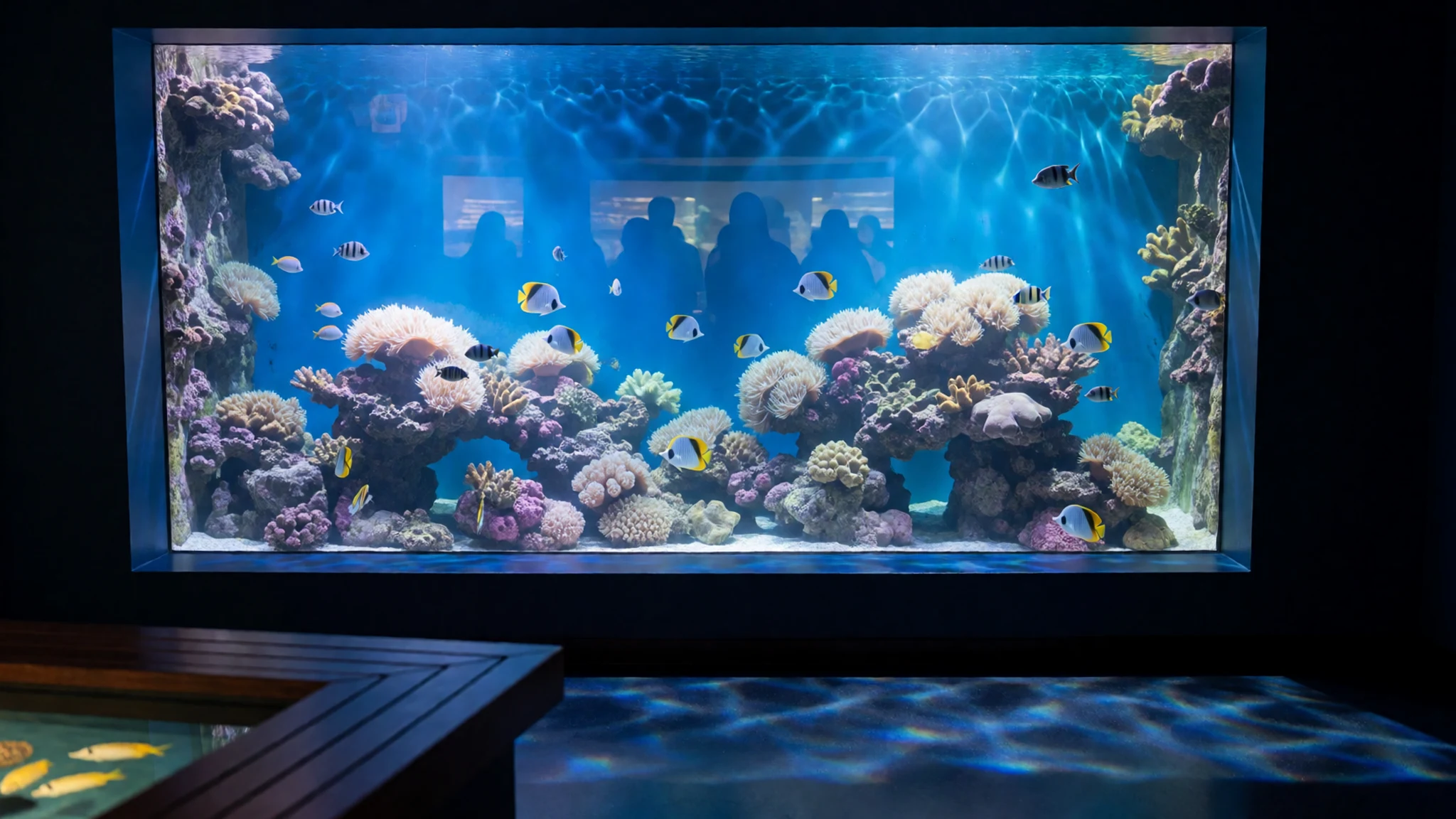
Culture
Aqaba is a Muslim city with strong family life, and the conservative habits of Jordan apply here even on the beaches and in the resort areas. Public life is calm in the middle of the day, and many shops and eateries slow down through the afternoon heat. The city has a long Christian history, visible in its early church ruins, and people of different faiths mix easily in the markets and on the seafront. Nightlife has grown in recent years around the marina and the resort hotels, but the old centre remains a family neighbourhood. Greetings are warm and conversation is part of the day, so take time over tea when it is offered. Dress modestly in the old centre and near mosques, remove your shoes before entering any mosque or home, and ask before photographing anyone, especially women.
What to wear
Traditional dress in Aqaba follows the wider Jordanian and Bedouin style. Men wear long robes called thobes, usually in white or pale cotton for the heat, often with a headcloth known as the ghutra, held in place by a black cord called the agal. Women's traditional dress is a long, loose gown, and in the Bedouin tradition these are often decorated with coloured cross-stitch and bands of embroidery, a craft still practised across the desert south. Wool and goat hair were historically used for tents and heavy cloth, while cotton suits the coast. Today most people wear Western clothes for work, such as jeans and shirts, and many women wear loose coats, headscarves or the abaya. At weddings, festivals and religious occasions, many people still wear traditional dress. For a visitor, lightweight cotton or linen that covers the shoulders and knees is the easiest choice in the sun, with a scarf to carry for mosques and the old town. Swimwear belongs on the beach and at hotel pools. Walking shoes or sturdy sandals suit the rock and sand of the desert trips, and a wide-brimmed hat matters for most of the year.
What to eat
- Falafel and hummus — Local eateries in the city centre
Crisp chickpea falafel and smooth hummus served with warm pita are the staples of the city's small eateries. Order a plate of both with pickles and salad and you will be full for very little. Look for places busy at lunchtime, when the bread is freshest.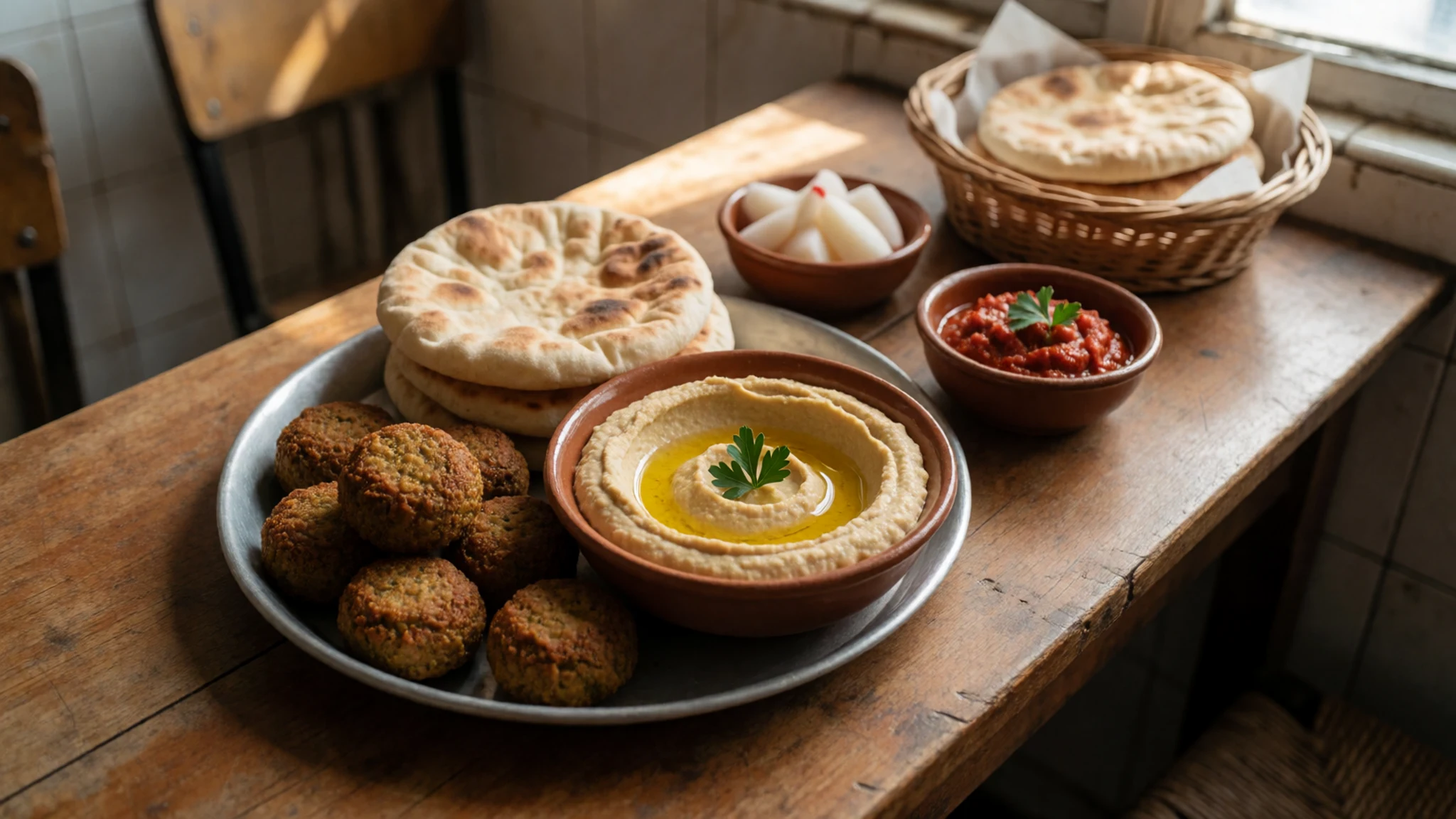
- Shawarma — Street stalls and sandwich shops near the centre
Thin slices of lamb cooked on a vertical spit and folded into pita with tahini and pickles. Shawarma here is a quick lunch, usually eaten standing or on a plastic chair. Pick a stall where the meat turns on the spit, which means it is being carved fresh.
- Fatayer — Bakeries and small cafeterias in the centre
Small pastry pies filled with spinach, cheese or seasoned meat, sold as a snack or a breakfast bite. They are cheap enough to try several, and they make a good mid-morning stop while you walk the old town. Ask for them fresh from the oven if you can. - Grilled fish from the catch — The fish market near the citadel
The fish market near the citadel, on the street locals call Souq As-Samak, is the place for seafood, with the day's catch laid out on ice. Choose your fish and ask for it grilled, usually served with bread, lemon and a simple salad. Simple restaurants nearby will cook what you buy. - Clay-pot dishes — Family restaurants along the main street
Restaurants in the centre serve meat, vegetables and rice in hot pottery pans, brought to the table still bubbling. The style is similar to a tagine and is popular with locals and visitors alike. Sit near the window and take your time while the dish keeps cooking.
Plan it
Best time. December to February is the most comfortable time, with highs of about 29 to 31 °C, while the rest of the year is much hotter. Summer is very hot, so swim early or late and keep the middle of the day for shade.
How long. 2–3
Getting there. Aqaba has a small airport served by a few airlines, but most visitors arrive by road. The Desert Highway runs from Amman to Aqaba, about four hours' drive, with frequent buses and taxis from Petra.
Budget. mid
Tips
- Book Wadi Rum trips with a licensed operator a few days ahead
- Swim and walk early, before the heat builds
- Carry cash for small eateries and taxis
- Carry water on the desert road, as service stops are not frequent
- Check the official tourism site, visitaqaba.com, before you travel
Etiquette
- Dress modestly in the old centre and near mosques
- Remove your shoes before entering a mosque or a home
- Ask before photographing people, especially women
Nearby
Sources
- Wikidata Q180522 (CC0)
- Wikipedia (rev 1382952430) (CC BY-SA 4.0)
- Wikivoyage (rev 5378111) (CC BY-SA 4.0)
- Photo: Marina at Tala Bay (Sana Janakat) (CC BY-SA 4.0)
- Photo: Aqaba skyline and fort montage (Freedom's Falcon) (CC BY 3.0)
- Photo: Tall Hujayrat al-Ghuzlan excavations (Ana al'ain) (CC BY 3.0)
- Photo: Aqaba Archeological Museum milestone (Bel Adone) (Public domain)
- Photo: Early church of Aqaba (Bel Adone) (Public domain)
- Photo: Aqaba Fort (Michael Goodine) (CC BY 2.5)
- Photo: T E Lawrence on a camel at Akaba (British official photographer) (Public domain)
- Photo: Air films (1937), Akkaba (Matson Collection) (Public domain)


