Athirappilly Falls
Athirappilly Falls, India
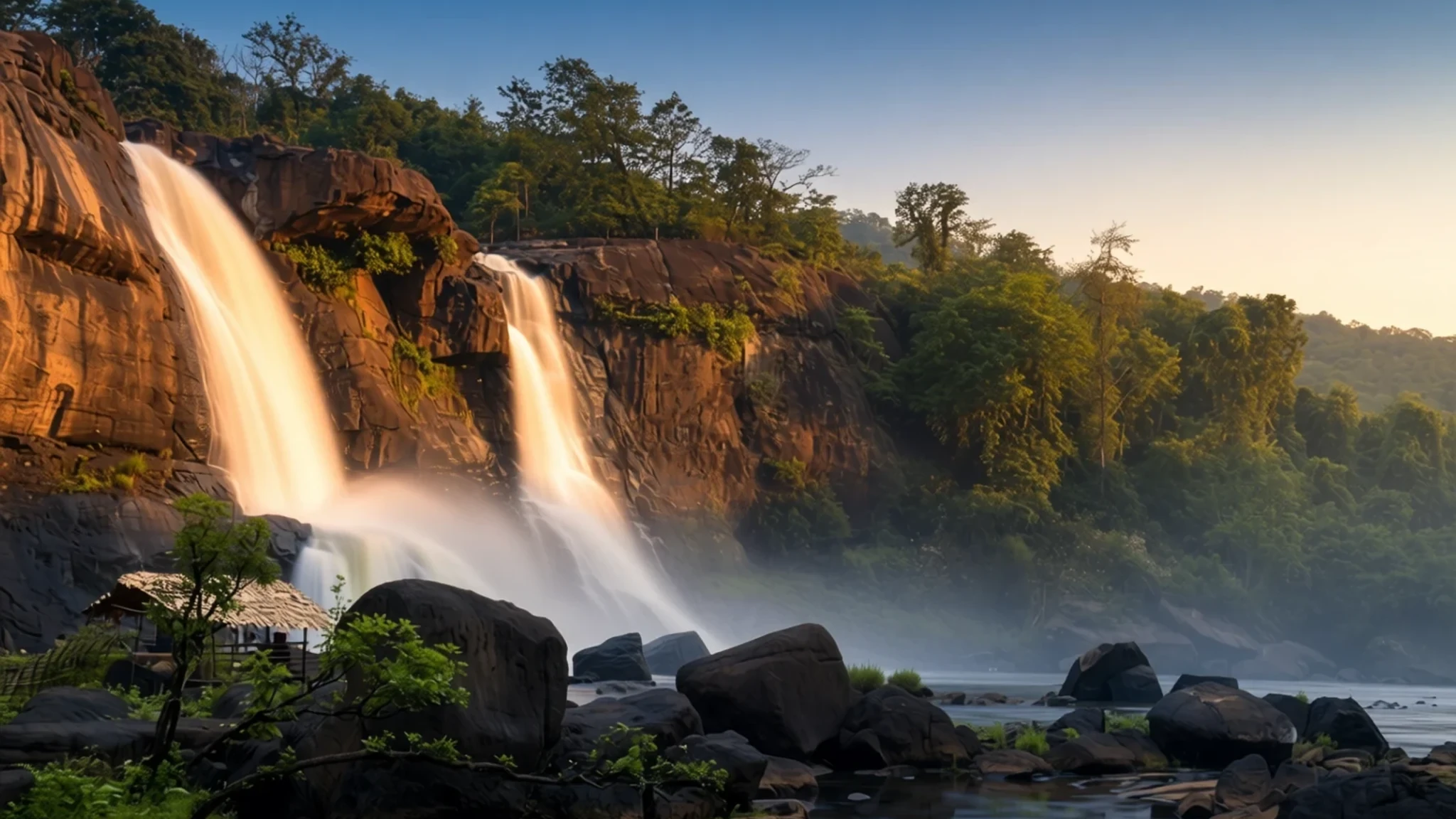
Witness Kerala's largest waterfall as it thunders through the lush green forests of the Western Ghats.
The place
Athirappilly Falls stands as a dramatic natural wonder in the Thrissur district of Kerala, India. Situated on the Chalakudy River, which gathers its strength from the upper reaches of the Western Ghats near the Sholayar ranges, the cascading waters carve through dense tropical rainforests. Often described as a majestic spectacle, the river plunges in a wide, powerful arc that commands the surrounding landscape. Visitors approaching the site travel along winding roads canopied by thick bamboo clusters and towering trees. Near the main cascade, the terrain drops away into lush gorges where rare and endemic species of flora and fauna thrive undisturbed. A short distance away, the Vazhachal Falls offers another encounter with the rushing river amidst protected woodlands. The environment here remains profoundly green and humid, shaped entirely by the heavy seasonal rains that sweep across southern India. The riverbed is strewn with massive boulders and smooth rock formations polished by centuries of rushing water, creating a rugged expanse that feels wonderfully remote despite its accessibility from nearby towns. The continuous roar of the falls echoes through the evergreen canopy, setting a hypnotic rhythm that draws naturalists, photographers and curious travellers alike into the heart of the Western Ghats.
Its story
Athirappilly Falls has long been intertwined with the ecological rhythms and cultural heritage of Kerala. For generations, the surrounding forests have sustained indigenous communities who rely on the rich biodiversity of the Sholayar ranges for foraging, medicinal plants and traditional livelihoods. The Chalakudy River itself has served as a vital lifeline, nurturing downstream agrarian settlements and supporting an intricate ecosystem of freshwater fish and riverine birds. In recent decades, Athirappilly Falls transitioned from a localized natural secret into a celebrated landmark, largely due to its striking appearances in Indian cinema, where filmmakers frequently utilized its roaring torrents and misty backdrops to capture the raw drama of nature. This cinematic fame brought widespread recognition, transforming the sleepy forest tract into a bustling destination. Yet, this exposure also catalysed intense ecological debates. Beginning in the 1990s and extending through 2017, the river became the centre of a fierce environmental controversy regarding a proposed hydroelectric dam upstream. Conservationists, local residents and scientists mobilized powerful campaigns to protect the fragile riparian ecosystem from submergence, arguing that altering the natural flow would devastate endangered wildlife and disrupt the hydrological balance of the entire region. Today, the falls stand not only as a monument to natural beauty, but also as a symbol of grassroots environmental advocacy in southern India.
What to see
- The Main Cascade — Athirappilly Panchayat
At Athirappilly Falls, visitors can stand at designated viewing platforms or follow a steep, stepped path down to the rocky base where the full force of the rushing river hits the pool. The sheer volume of water creates a perpetual mist that cools the air and coats the surrounding foliage in glistening droplets.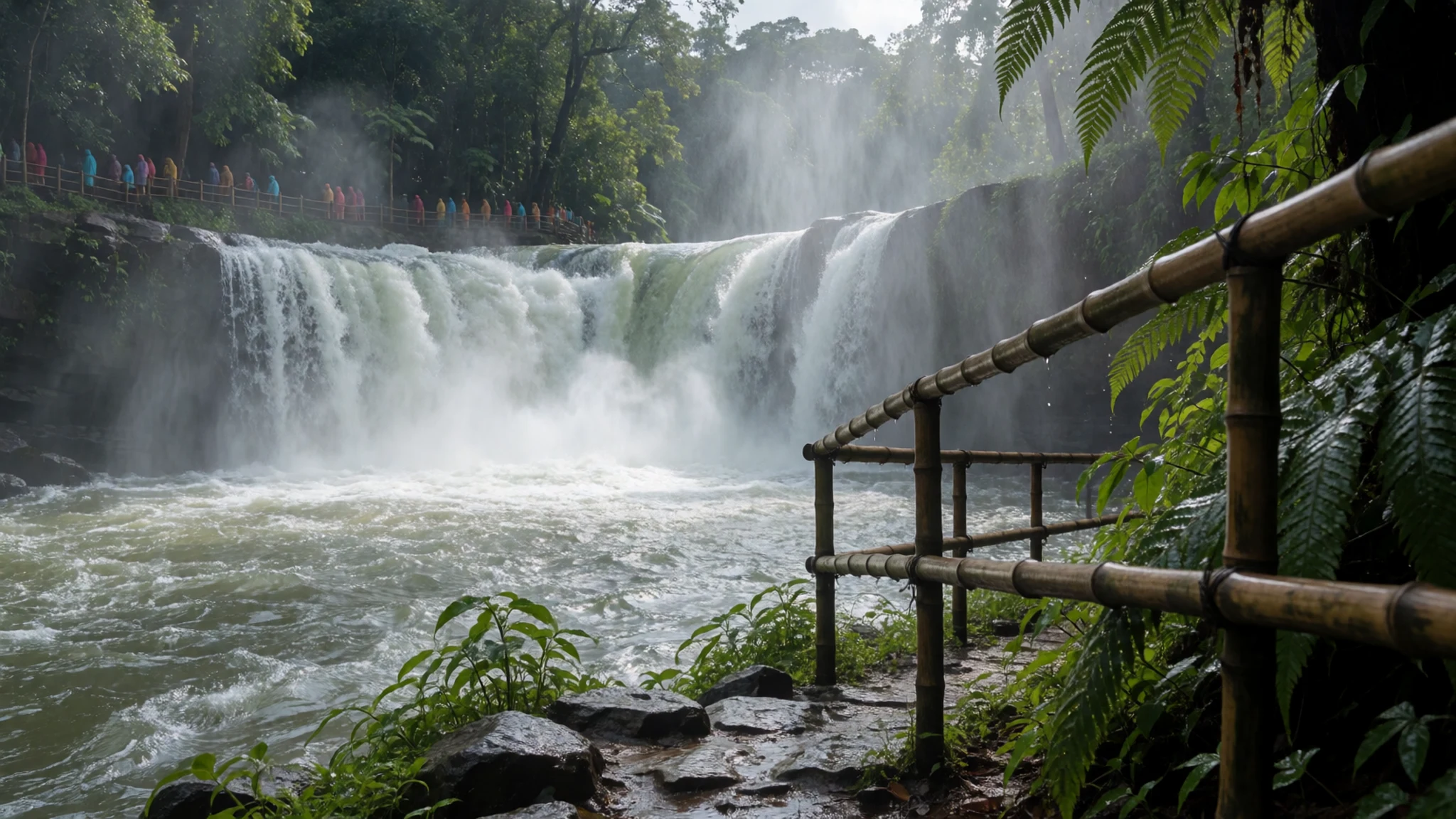
- Chalakudy River Gorge — Chalakudy River Valley
Following the river downstream reveals deep, rocky gorges carved through ancient bedrock. The water slows into calmer pools flanked by dense riverine forests, offering quieter vantage points away from the main viewing areas to observe local bird life and listen to the cascading rapids.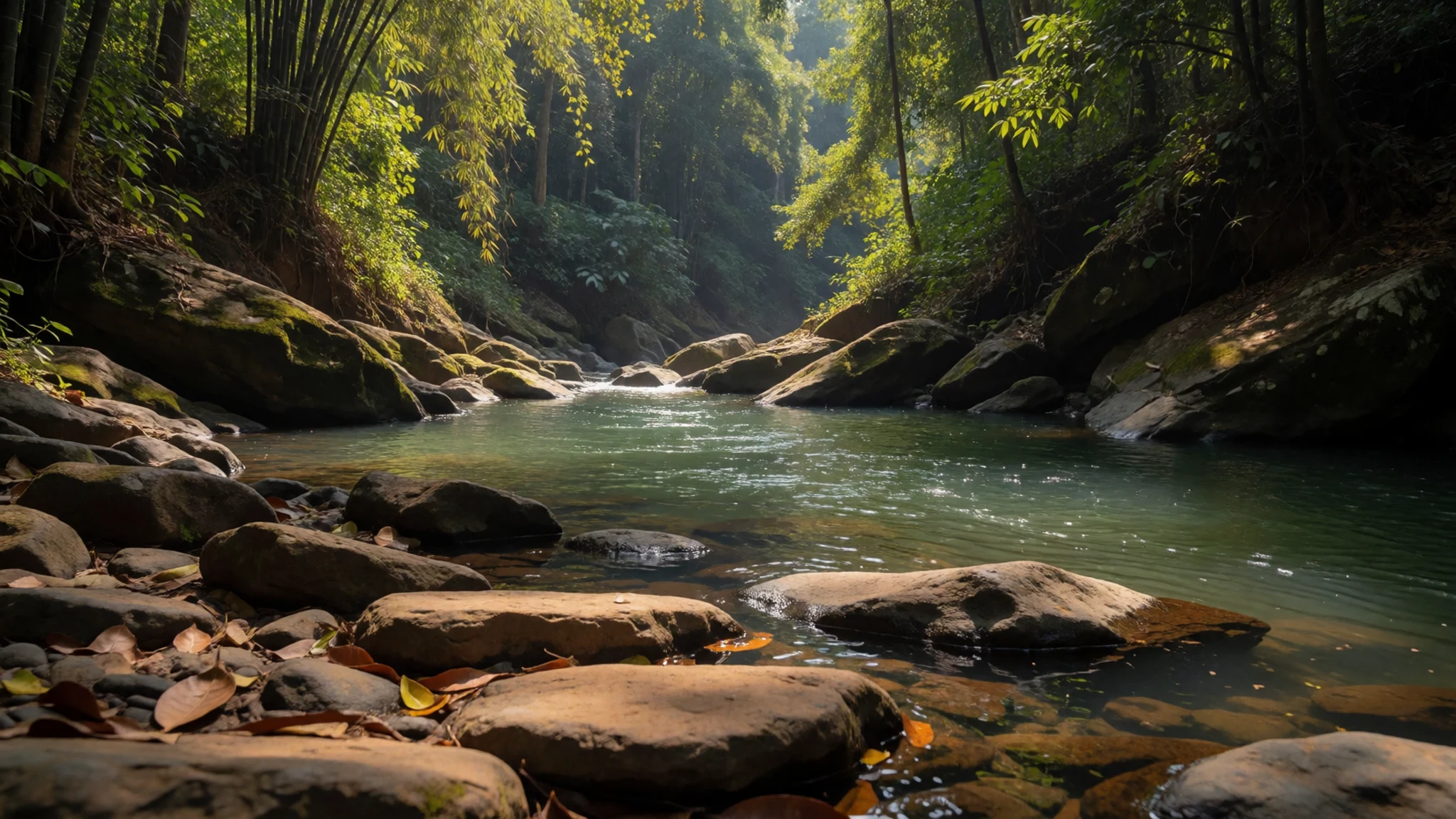
- Vazhachal Falls — Vazhachal Forest Division
Located a short drive upstream from the main cascade, Vazhachal Falls presents a different character where the river spreads across a rocky, tiered slope surrounded by dense, protected canopy. It is an ideal spot to observe the dense evergreen forests and the rich biodiversity of the Sholayar ranges.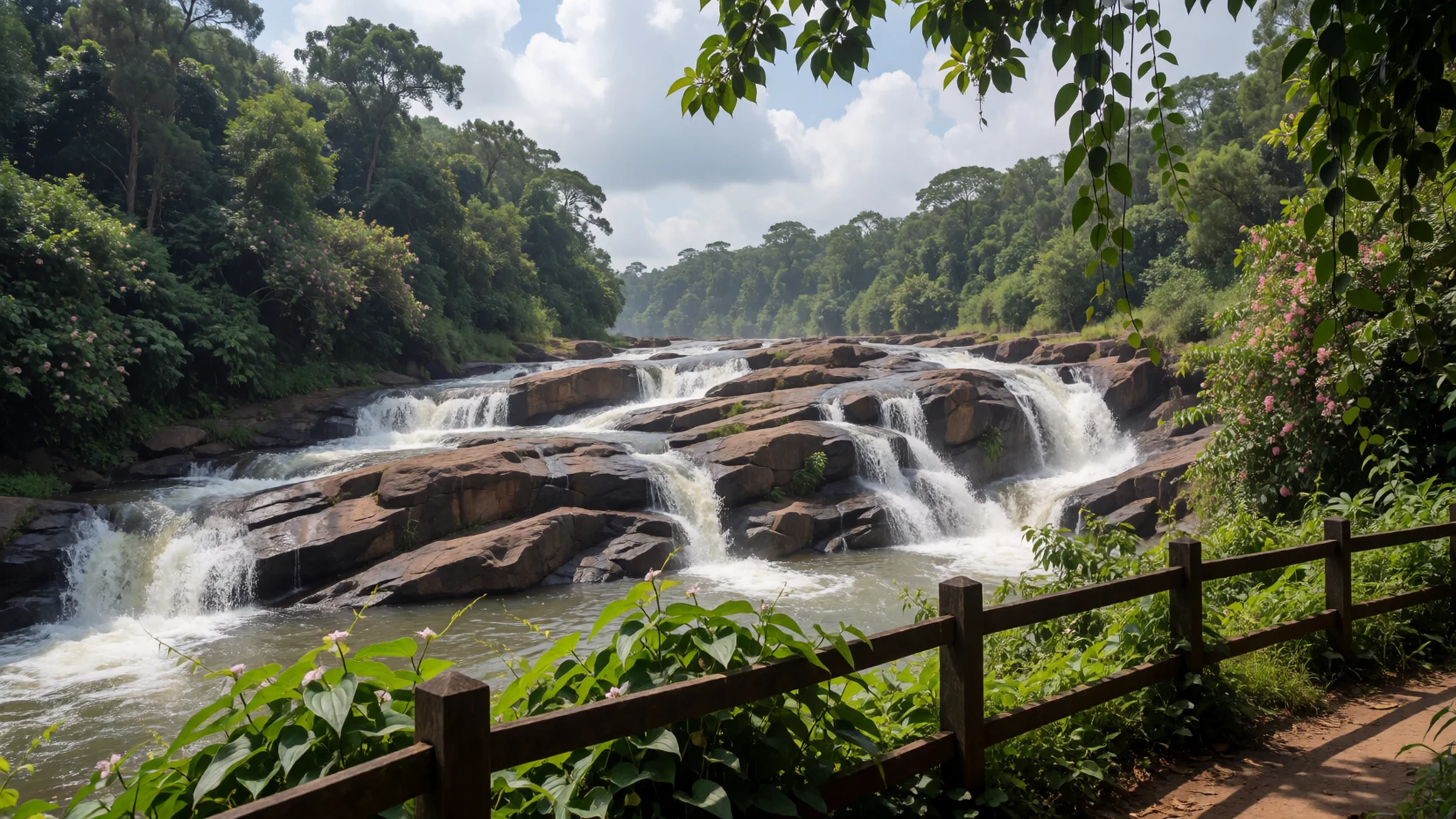
- Ezhattumugham Nature Village — Ezhattumugham
Situated near Angamaly along the approach route, this ecotourism village sits amidst a vast oil palm reserve. Visitors can walk along shaded pathways, view the river flowing between small islets, and experience the quiet agricultural and forest interface characteristic of rural central Kerala.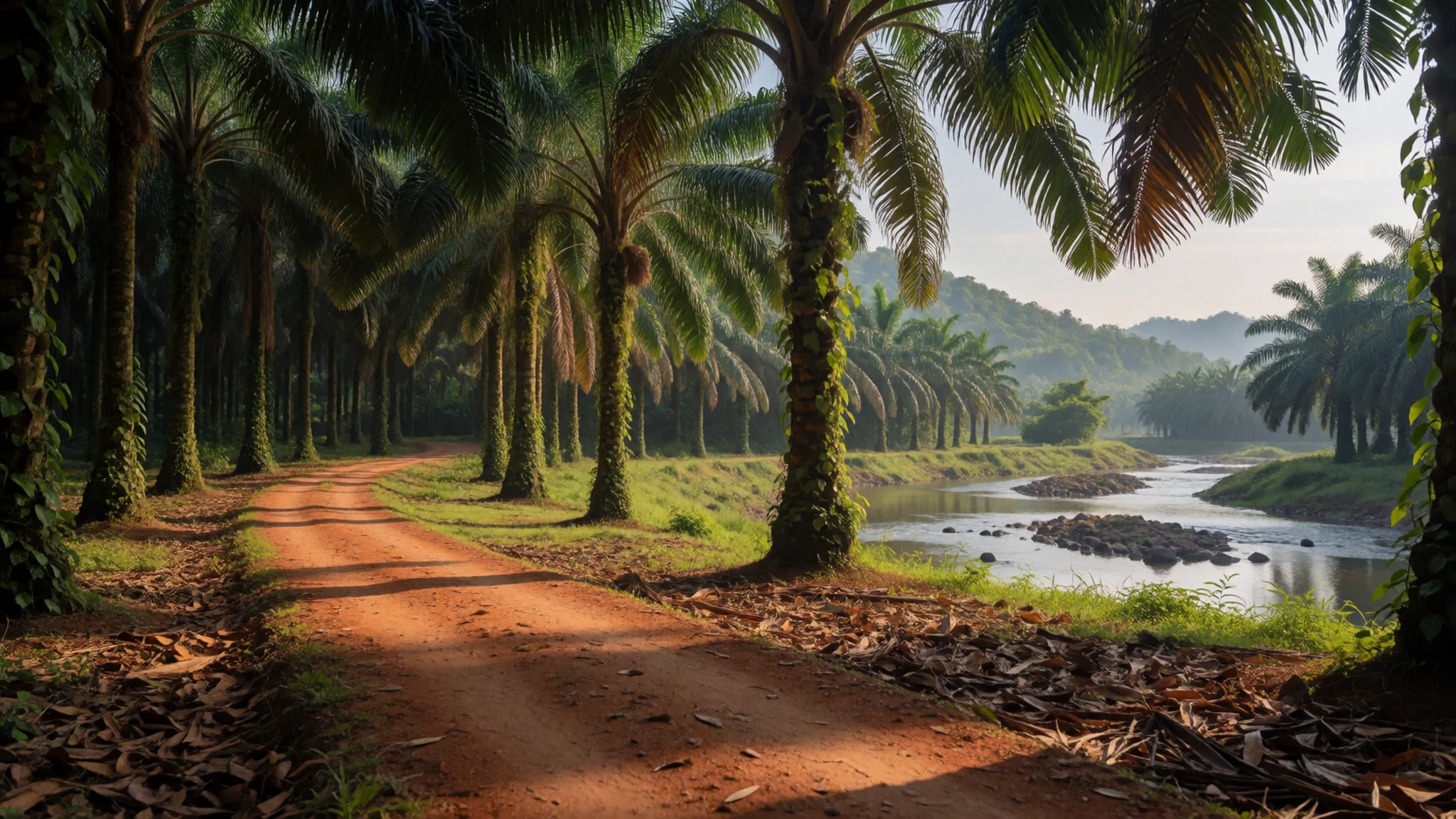
Culture
At Athirappilly Falls, culture is deeply rooted in the traditions of central Kerala, where daily life moves to the rhythm of agrarian seasons and riverine cycles. The region reflects a harmonious blend of Malayalam literary heritage, traditional festivals like Onam, and deep reverence for the natural environment. Local communities possess a profound knowledge of the surrounding Sholayar forests, utilizing indigenous botanical wisdom passed down through generations. Visitors interacting with local vendors, guides and villagers will encounter traditional hospitality, often characterized by respectful greetings and a willingness to share local folklore regarding the river and its forest spirits. While modern influences have reached the area, traditional customs remain visible in village households and local gathering spaces. When visiting forest reserves and sacred groves near Athirappilly Falls, always dispose of your waste responsibly and refrain from littering in the protected natural areas.
What to wear
At Athirappilly Falls, traditional dress reflects the tropical climate and cultural heritage of Kerala. For formal occasions and festivals, women traditionally wear the kasavu saree—a crisp, unstitched cream-coloured cotton garment bordered with fine gold zari work. Men traditionally wear the mundu, a white cotton wrap tied around the waist, often paired with a simple cotton shirt. Today, everyday wear across Kerala has largely shifted to contemporary styles. Younger generations and working locals typically wear casual western-style clothing such as jeans, t-shirts and shirts, while older men and women continue to favour comfortable cotton lungis, mundus and loose kurtas suited to the high humidity. For visitors exploring Athirappilly Falls, practical attire is essential. Lightweight, breathable cotton or moisture-wicking synthetic clothing helps manage the tropical heat and humidity. Sturdy walking shoes or sandals with good grip are necessary for navigating the steep, damp paths down to the riverbed, and carrying a light waterproof jacket or umbrella is strongly advised due to sudden tropical downpours.
What to eat
- Kerala Sadya — Local eateries in Chalakudy town
A grand vegetarian feast served on a fresh plantain leaf, featuring dozens of dishes including rice, sambar, rasam, avial, and payasam. Find this traditional banquet at local dining halls and family-run eateries throughout the Thrissur district.
- Appam with Stew — Morning tea stalls near the bus terminal
Lacy, bowl-shaped fermented rice pancakes with crispy edges and soft centres, paired with a mild, fragrant vegetable or chicken stew simmered in fresh coconut milk. Enjoy this comforting breakfast at roadside tea stalls.
- Karimeen Pollichathu — Riverside dining spots along the Chalakudy River
Pearl spot fish marinated in fiery spices, wrapped in a banana leaf along with shallots and curry leaves, and gently pan-roasted until tender and aromatic. Look for this coastal delicacy at regional backwater and riverside restaurants. - Puttu and Kadala Curry — Traditional breakfast canteens in nearby villages
Cylindrical steamed cakes made from layers of ground rice flour and freshly grated coconut, served alongside a dark, spicy chickpea curry cooked in roasted coconut gravy. This is a staple morning dish across local breakfast shops. - Malabar Parotta with Beef Fry — Evening roadside grills along state highways
Flaky, multi-layered flatbread paired with tender beef chunks slow-roasted with crushed shallots, black pepper, garlic and aromatic spices. This popular pairing is widely available at local evening diners and roadside grills.
Plan it
Best time. June to September for the monsoon season when the waterfall is at its most powerful and full; December to February offers drier weather for exploring the surrounding forests.
How long. 1–2
Getting there. Fly into Cochin International Airport, then take a taxi or bus north via Chalakkudy; the nearest railway station is Chalakkudy, located thirty kilometres to the west.
Budget. low
Tips
- Arrive early in the morning to avoid heavy weekend crowds and tour buses
- Wear sturdy, slip-resistant footwear for the steep and wet paths down to the base
- Carry sufficient cash as digital payments may not work reliably in remote forest areas
- Pack an umbrella or waterproof cover for sudden tropical rain showers
- Ensure you exit forest checkpoints before evening closing times
Etiquette
- Dispose of all plastic and waste responsibly to protect the fragile forest ecosystem
- Respect local wildlife and refrain from feeding or disturbing wild animals
- Dress modestly when visiting nearby villages and local religious shrines
Nearby
Sources
- Wikidata Q37563 (CC0)
- Wikipedia (rev 1376744863) (CC BY-SA 4.0)
- Wikivoyage (rev 5340796) (CC BY-SA 4.0)
- Photo 01 (CC BY-SA 4.0)
- Photo 02 (CC BY-SA 4.0)
- Photo 03 (CC BY 4.0)
- Photo 06 (CC BY-SA 4.0)


