Zuma Rock
Zuma Rock, Nigeria
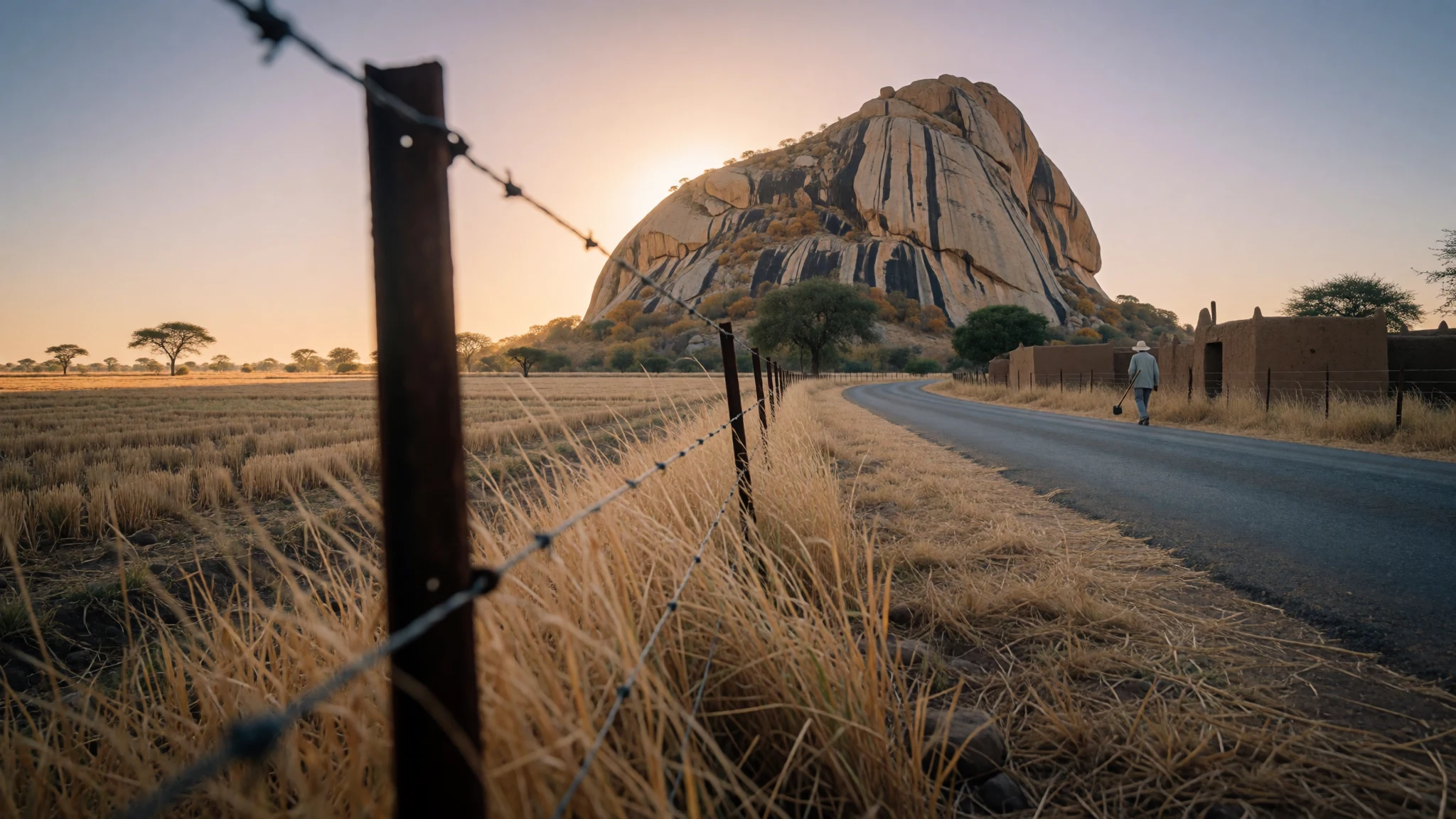
Zuma Rock is a bare stone dome that rises abruptly from the plain beside the Abuja–Kaduna road, an easy and striking day out from the capital.
The place
Zuma Rock stands beside the main road from Abuja towards Kaduna, at the upper edge of Madalla in Niger State, Nigeria. It is a single bare monolith, the kind geologists call an inselberg, and the facts record its elevation as 700 m above sea level. The stone is gabbro and granodiorite, igneous rock of Precambrian age that cooled underground and now stands alone because the ground around it has worn down over a very long time. Abuja is close enough that many people assume the rock belongs to the Federal Capital Territory, but it actually lies just across the line, in Suleja Local Government Area, in a rural settlement. Travellers heading out of the capital have long treated it as a landmark that marks the start of the road north. The land around is open farmland, scrub and small villages, so the dome fills the horizon from a long way off and changes with the light: pale and flat at midday, deeper and more textured at dawn and dusk. The climate is warm or hot through the year, with humidity that can feel heavy between June and September. Most visitors come as a half-day or day trip from Abuja, drive up to the base, look, photograph and move on. The rock is a place to stand and take in, rather than a site with an elaborate visitor complex.
Its story
Zuma Rock has served as a shelter and a symbol for the people who live around it. The Gbagyi, whose communities are spread across this part of central Nigeria, used the rock as a defensive retreat during the intertribal wars, when neighbouring groups were raiding. A tall, steep-sided mass of stone that can be seen from far across the plain is a useful thing to have when danger is approaching, because it gives warning and a place to withdraw to. In later years the rock took on a different role. Its outline became a familiar image on Nigerian currency, appearing on the banknote, so that people who have never travelled the Kaduna road still recognise its shape. It also picked up the nickname 'Gateway to Abuja', because travellers coming from the Suleja side meet it before they reach the capital. There is a small historical muddle attached to it as well: for a time it was thought to sit inside the Federal Capital Territory, a mistake that says something about how closely the rock is tied to Abuja in people's minds even though the boundary runs just short of it. Local stories and beliefs about the rock vary from village to village, and visitors who ask politely will often hear versions that no guidebook records.
What to see
- The rock from the Abuja–Kaduna road — Madalla, Niger State
Zuma Rock is best met first from the road itself, where the dome appears over the farmland well before the turn-off at Madalla. Pull in safely, or ask the driver to slow down, and take in the full outline against the sky. It is the view printed on the national banknote.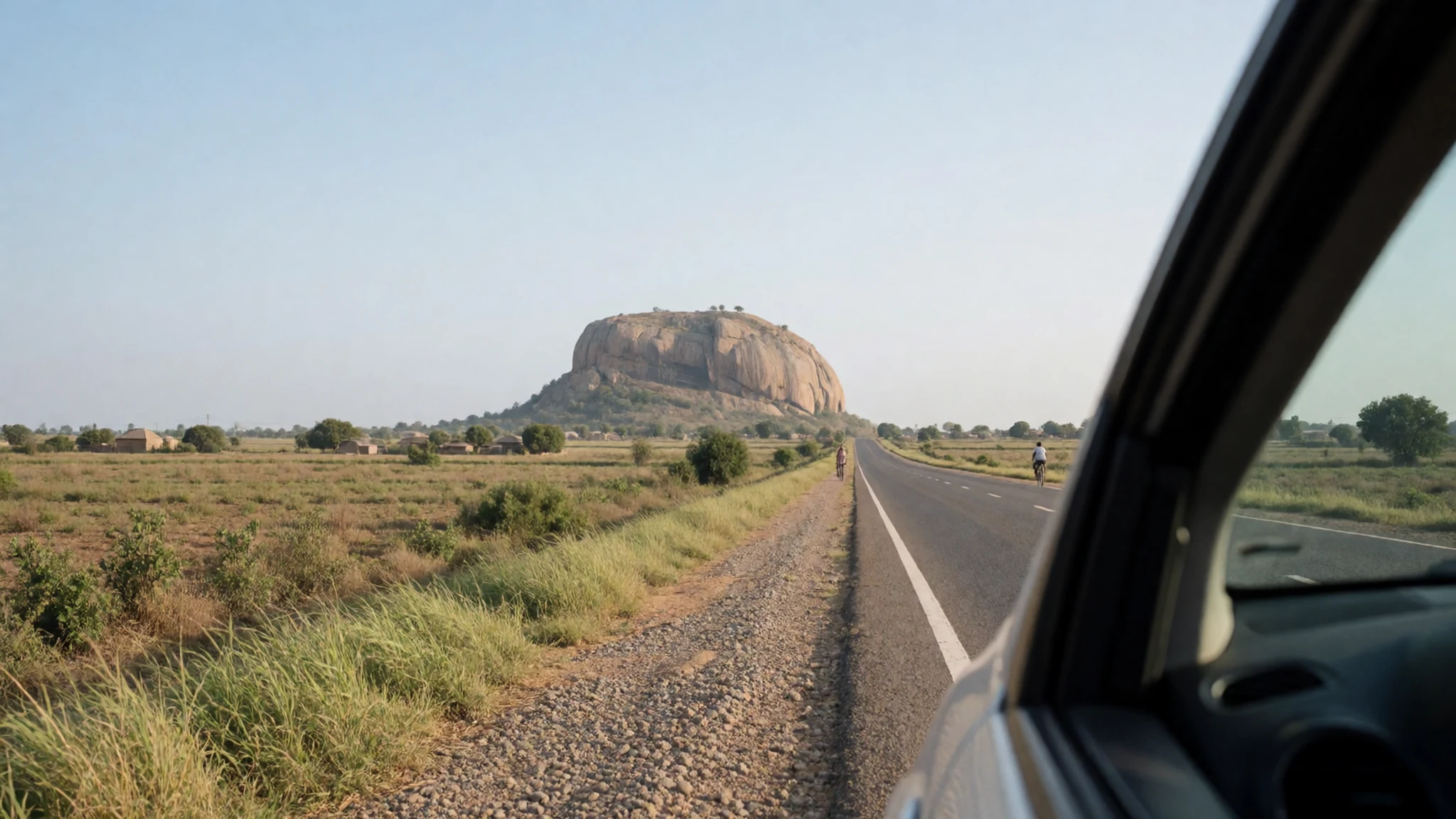
- The base of the monolith — Madalla, Suleja Local Government Area
A short drive from the main road brings you to the foot of Zuma Rock, where the scale becomes clear. The face is steep and bare, streaked and weathered, with little footing. This is a place for walking around the edge and looking, not climbing; ask local people before going any further.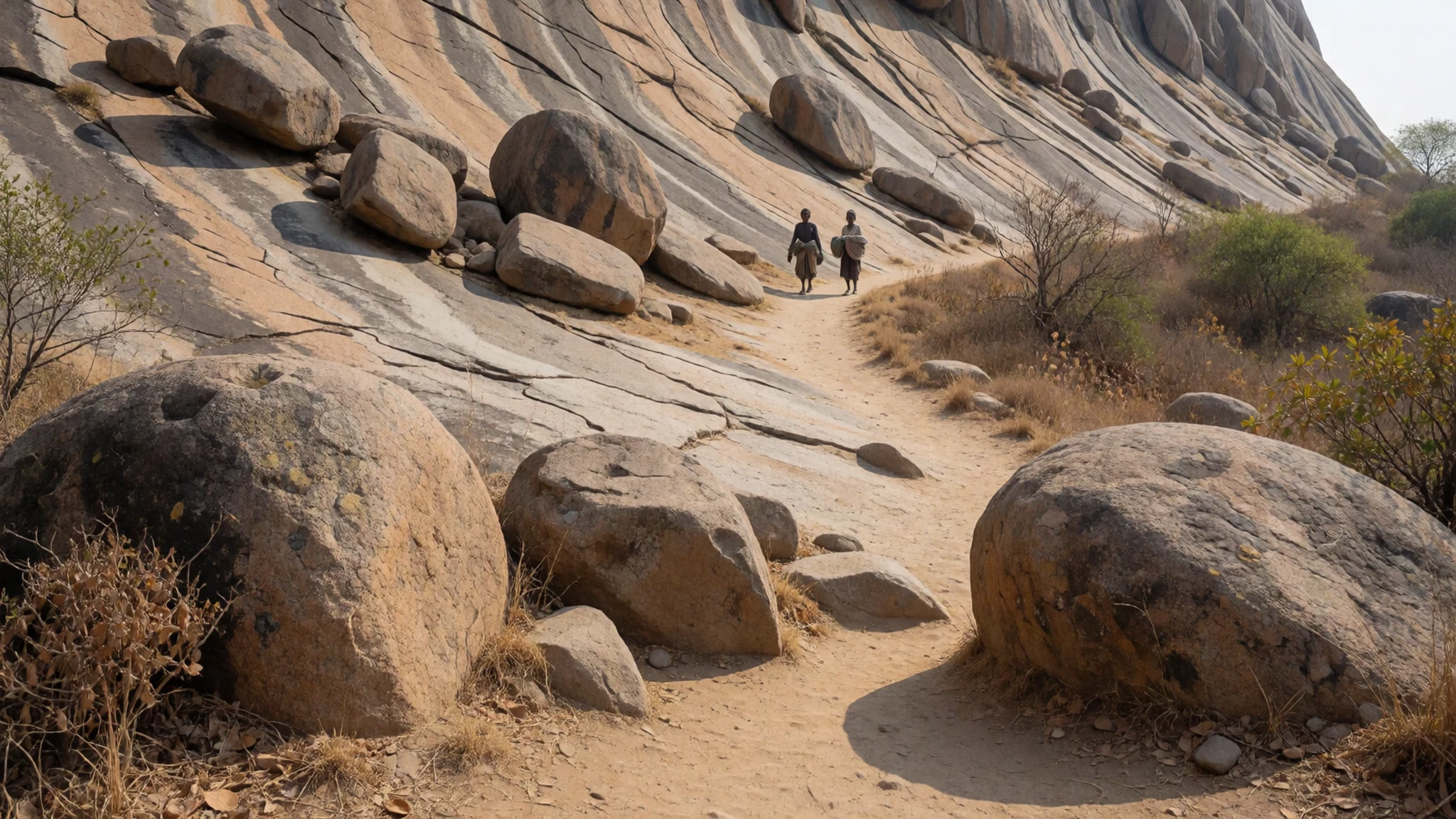
- Dawn and dusk light — Around the base of the rock
The rock changes character with the hour. Early morning gives soft colour and often clearer air, while late afternoon brings long shadows that bring out every crack and ridge. Photographers and painters tend to choose these hours, and the heat is easier to bear then as well.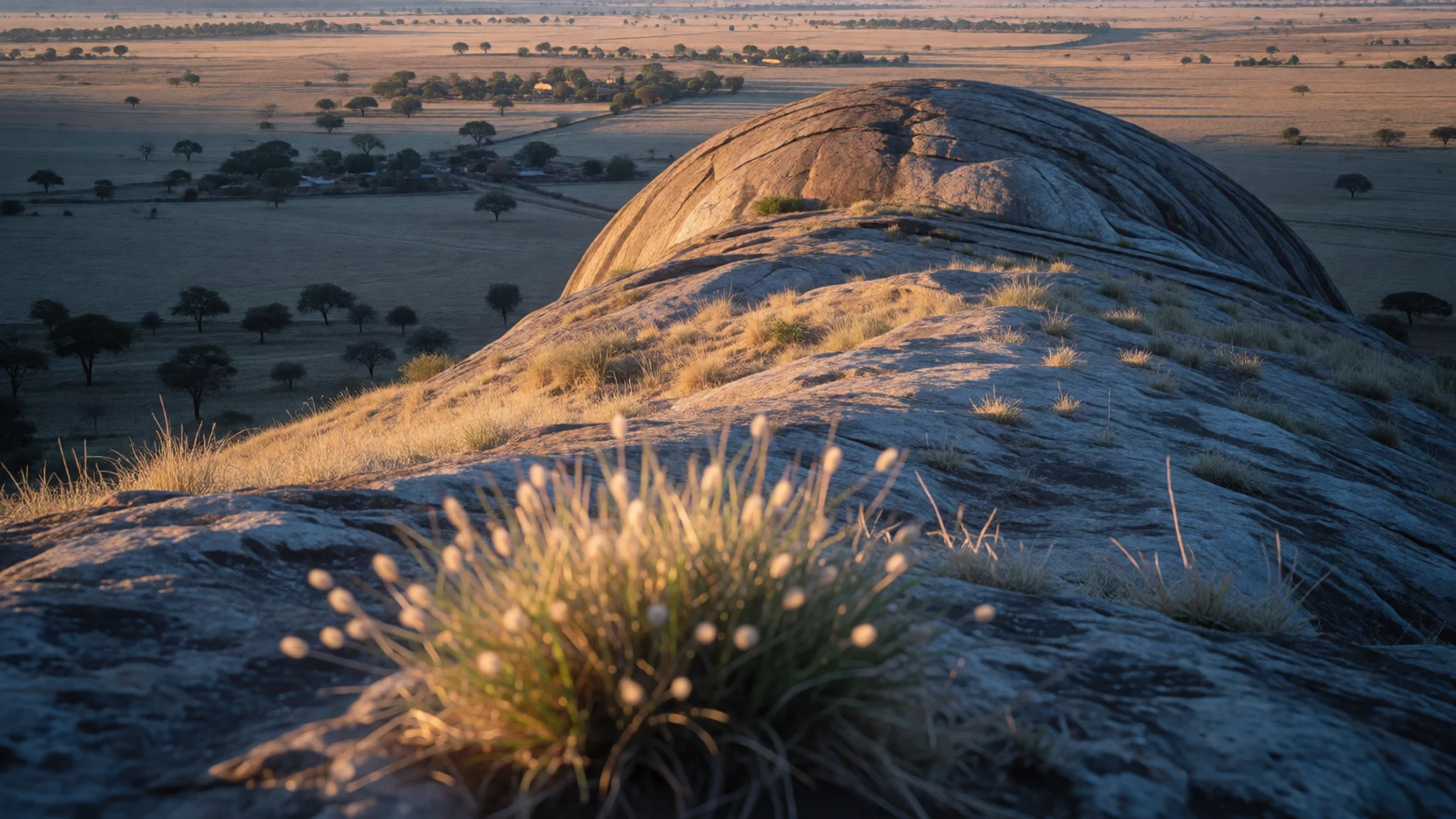
- Villages at the foot of the rock — Madalla and surrounding villages
Small farming settlements sit close to Zuma Rock, and the people who live there have shared this landscape for generations. A quiet walk through the edges of a village, with a local guide or driver to make introductions, gives a better sense of the rock as part of daily life.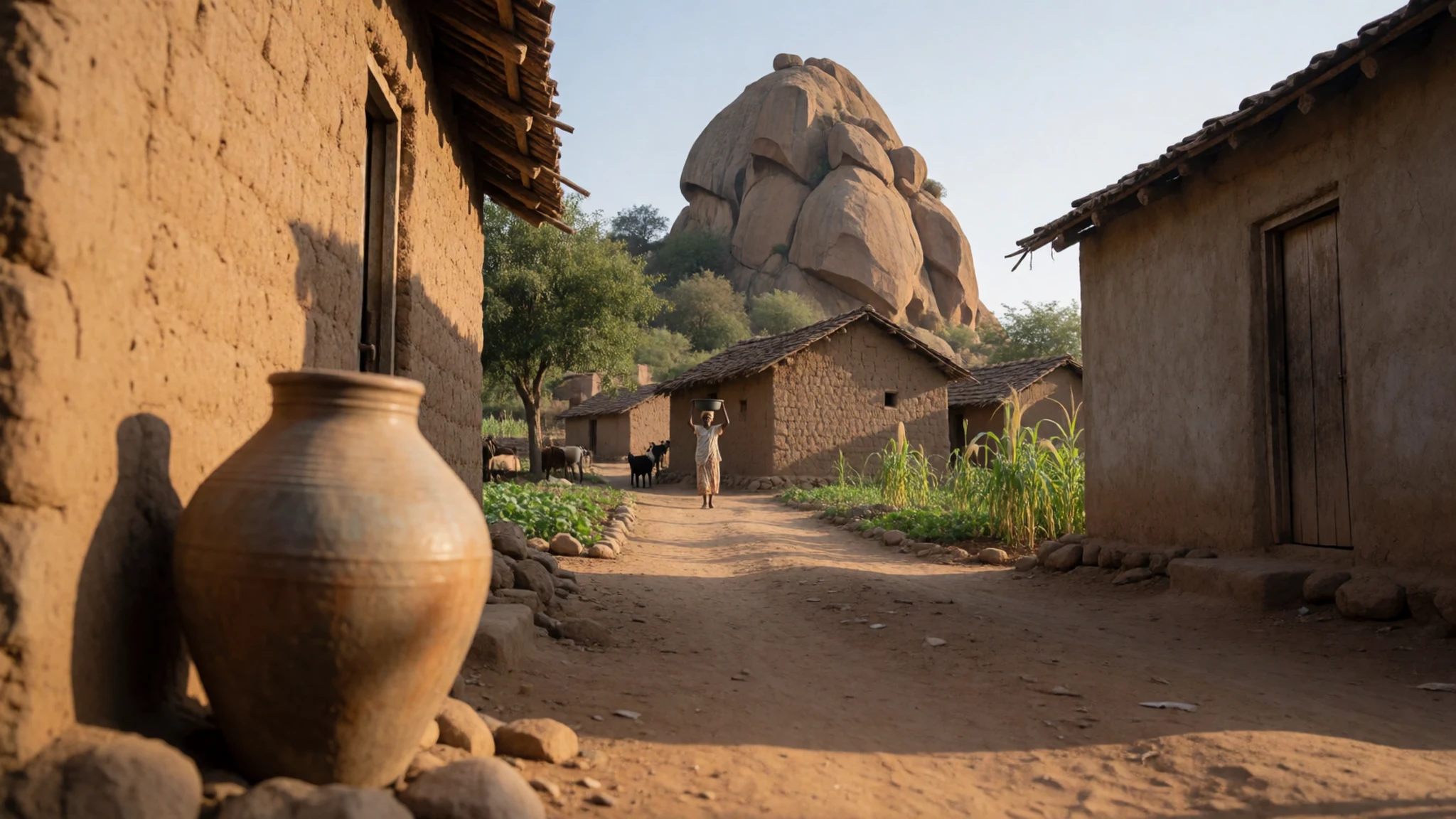
- Abuja's monuments and landmarks — Abuja
Many visitors combine Zuma Rock with a look at Abuja itself, where national monuments and public landmarks are spread across the capital. It makes a sensible pairing: the planned, modern city in the morning, and the older and rougher shape of the rock in the afternoon light.
Culture
Zuma Rock sits in a part of central Nigeria where several communities live side by side, among them Gbagyi, Hausa and Nupe people, and where Islam, Christianity and older local belief all have a place. The rock matters to them in different ways: as a landmark, as a refuge in the past, and in some accounts as a place with spiritual weight. Visitors will hear more than one story about its origins, and it is better to listen than to correct. Village life near the base follows the farming year, with the working day starting early and the hottest hours quiet. Greetings matter a great deal in Nigeria. A proper hello and a few words of enquiry before asking for anything are expected, and they usually change the tone of the whole conversation. Local people are often glad to explain what the rock means to them, particularly when approached with patience. Women and men may dress and behave more conservatively in the villages than in Abuja, and it is sensible to follow that lead. Visitors should not treat the rock or the surrounding land as a free-for-all; farmland, paths and homes belong to people, and children and adults alike will notice how guests behave. Greet the elders in the village first, and always ask permission before you photograph people, their homes or their farms.
What to wear
Around Zuma Rock, traditional dress follows the mix of communities in Niger State. Among Hausa and Nupe men the long flowing robe, often called a babariga or agbada, is worn with a cap for festivals, Fridays and formal visits, usually in cotton and sometimes with embroidered neck and chest panels. Women wear a wrapper and fitted blouse, with a matching headtie and shawl, in printed or dyed cotton. The Gbagyi are also known for hand weaving and pottery, and woven strips and cloth remain part of local heritage. Day to day, most people dress simply: trousers or a plain long shirt for men, a wrapper, skirt or long dress for women, and sandals or trainers for the farm and the road. In Abuja, styles are more varied and tailored outfits are common. A visitor should plan for heat and sun. Light cotton or linen that covers shoulders and knees is comfortable and respectful, and it suits village visits well. A wide-brimmed hat, sunglasses and sunscreen help, and so does a scarf or shawl for women if they want extra cover. Wear closed, sturdy shoes or trainers with a good grip; the ground at the base is uneven, dusty and loose in places, and open sandals are a poor choice for walking around it. Avoid military-style or camouflage clothing.
What to eat
- Dakuwa — Roadside stalls and local markets in Madalla and Suleja
Dakuwa is a northern Nigerian snack built on groundnuts and grain, pressed together and finished with a spiced, slightly sweet topping. It is the kind of local treat that the regional guide suggests trying, and it is easy to find from small vendors.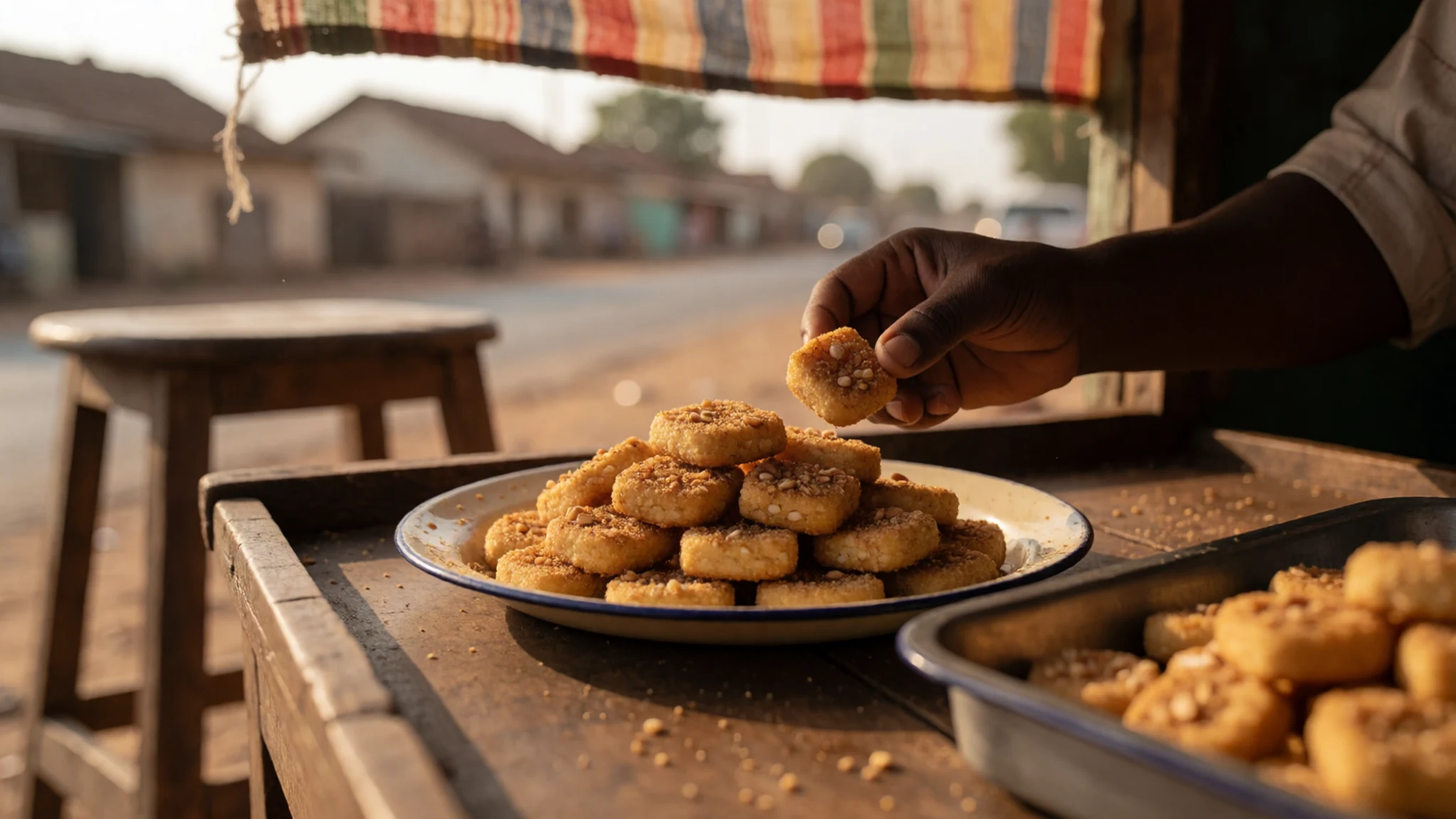
- Suya — Evening grill stands along the roadside and in Abuja neighbourhoods
Suya is thin-sliced meat, usually beef, grilled over charcoal and rubbed with a dry, peppery groundnut spice mix. It is eaten with raw onion and tomato, wrapped in paper, and is best bought fresh in the evening from a grill stand.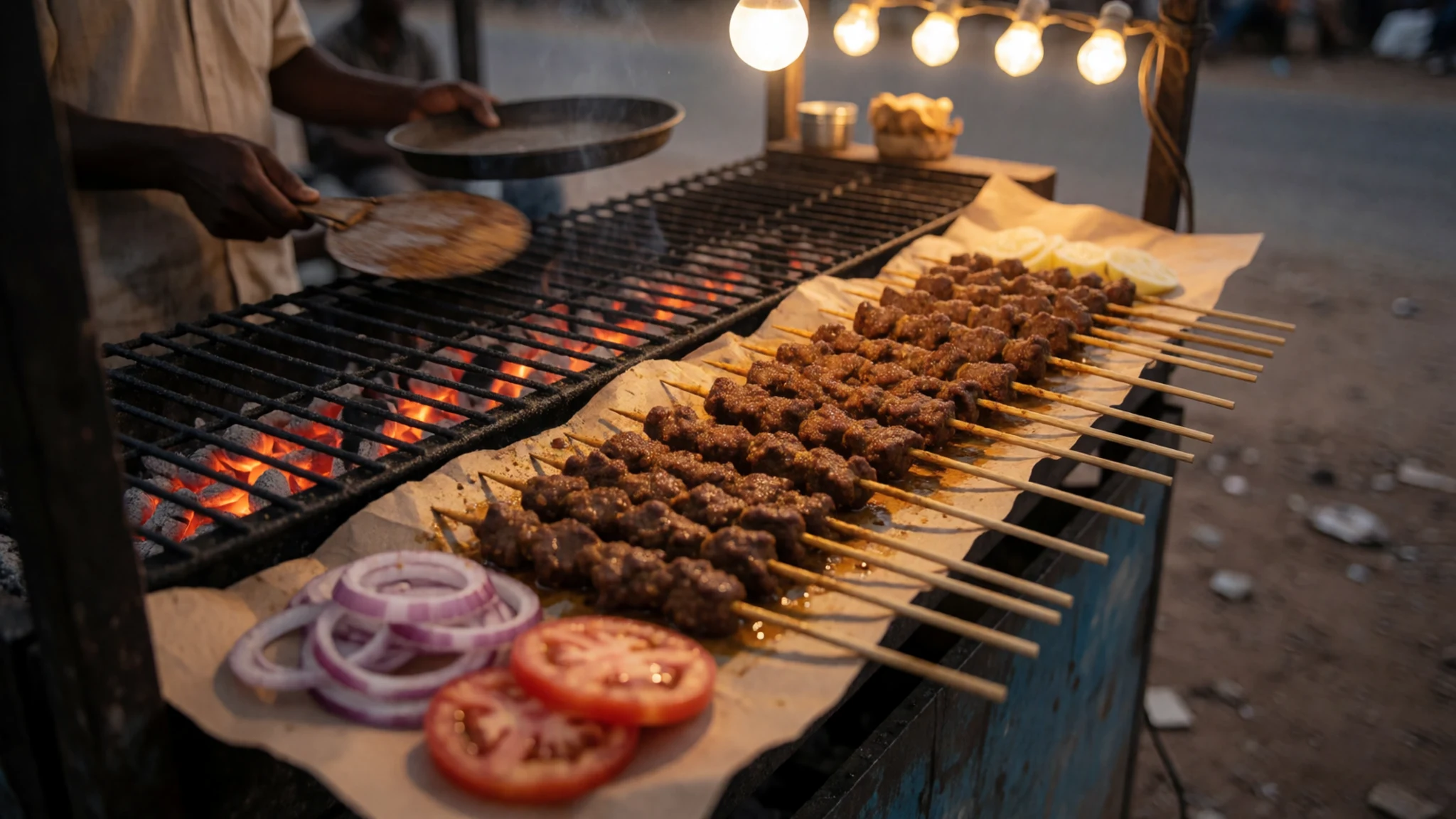
- Tuwo shinkafa with soup — Local eateries and family-run canteens near the main road
Tuwo is a soft, smooth ball of pounded or cooked rice, eaten by hand with a soup such as miyan kuka, made from baobab leaf, or a vegetable and groundnut soup. It is a filling, everyday meal across northern Nigeria. - Jollof rice — Local restaurants and eateries in Abuja and Suleja
Jollof rice is cooked in a rich tomato and pepper base until the grains take on a deep red colour and a faintly smoky edge. It is served at celebrations and in many simple eateries, often with fried plantain, chicken or fish. - Fura da nono — Roadside sellers and market stalls in the area
Fura da nono is a cooling drink of millet balls broken up in soured milk, traditionally associated with Fulani herders. It is sold in calabashes and plastic bottles, and is an acquired taste, but welcome on a hot afternoon.
Plan it
Best time. November to February, when the dry season keeps roads passable and the heat is more bearable; it is warm or hot all year, and humidity can be uncomfortably high from June to September. Dust and haze can reduce visibility in the dry months, so early mornings give the clearest views.
How long. 1
Getting there. Fly into Abuja, then go by road on the route towards Kaduna; the rock stands off the main road at Madalla in Niger State. Minna, the state capital, also has an airport. A hired car with a local driver is the simplest way to cover the last stretch.
Budget. mid
Tips
- Check current government travel advice before you go, as security conditions in parts of Niger State and nearby areas can change; the UK and Indian foreign ministries both publish updates
- Travel in daylight, arrange a trusted local driver from Abuja and share your plans with someone
- Go early in the morning for cooler air, softer light and clearer views of the rock
- Carry cash in small notes for snacks and small payments, plus plenty of drinking water
- Bring a hat and sunscreen, as there is little shade around the base
Etiquette
- Greet people before asking questions or taking photographs, and ask permission before photographing anyone
- Dress modestly in the villages, with shoulders and knees covered
- Do not climb the rock or enter farmland without local guidance
Nearby
Sources
- Wikidata Q229624 (CC0)
- Wikipedia: Zuma Rock (rev 1369749399) (CC BY-SA 4.0)
- Wikivoyage: Niger State (rev 5198622) (CC BY-SA 4.0)
- Photo: Zuma Rock formation in Nigeria — Jeff Attaway (CC BY 2.5)
- Photo: Relief location map of Nigeria — Uwe Dedering (CC BY 3.0)
- Photo: Abuja monuments — MediaMOF (CC BY-SA 4.0)
- Photo: Zuma Rock — Nigerian Magazine, Cultural Division, Federal Ministry of Information (CC0 1.0)
- Photo: Local inhabitants living close to Zuma Rock — Anass Sedrati (CC BY-SA 4.0)
- Photo: The incredible rock, Zuma Rock — Fatima (CC BY-SA 4.0)
- Photo: A rock in Abuja, Dei Dei — Aduragbemio Oladapo (CC BY-SA 4.0)
- Photo: Early morning Zuma Rock — GodwinPaya (CC BY-SA 4.0)


